

The DOI matches its Crossref record; 200 of the 200 references it cites were found in a registry or an index.
Interaction of language, auditory and memory brain networks in auditory verbal hallucinations
Open accessAbstract
Auditory verbal hallucinations (AVH) occur in psychotic disorders, but also as a symptom of other conditions and even in healthy people. Several current theories on the origin of AVH converge, with neuroimaging studies suggesting that the language, auditory and memory/limbic networks are of particular relevance. However, reconciliation of these theories with experimental evidence is missing. We review 50 studies investigating functional (EEG and fMRI) and anatomic (diffusion tensor imaging) connectivity in these networks, and explore the evidence supporting abnormal connectivity in these networks associated with AVH. We distinguish between functional connectivity during an actual hallucination experience (symptom capture) and functional connectivity during either the resting state or a task comparing individuals who hallucinate with those who do not (symptom association studies). Symptom capture studies clearly reveal a pattern of increased coupling among the auditory, language and striatal regions. Anatomical and symptom association functional studies suggest that the interhemispheric connectivity between posterior auditory regions may depend on the phase of illness, with increases in non-psychotic individuals and first episode patients and decreases in chronic patients. Leading hypotheses involving concepts as unstable memories, source monitoring, top-down attention, and hybrid models of hallucinations are supported in part by the published connectivity data, although several caveats and inconsistencies remain. Specifically, possible changes in fronto-temporal connectivity are still under debate. Precise hypotheses concerning the directionality of connections deduced from current theoretical approaches should be tested using experimental approaches that allow for discrimination of competing hypotheses.
Overview
The claims and statistics of this paper haven’t been checked yet.
Run the check — free, no account needed. It reads the open-access text and checks the sources it cites.
Integrity signals
Registry
Cites
Statistics
Figures
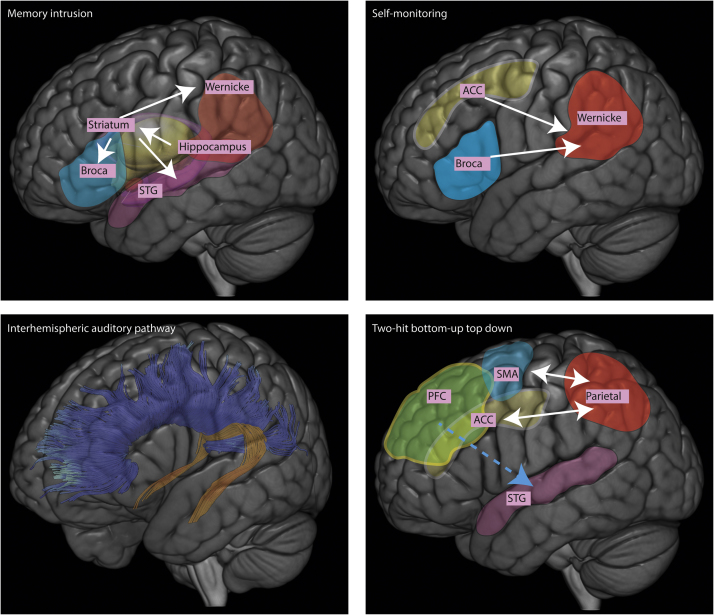
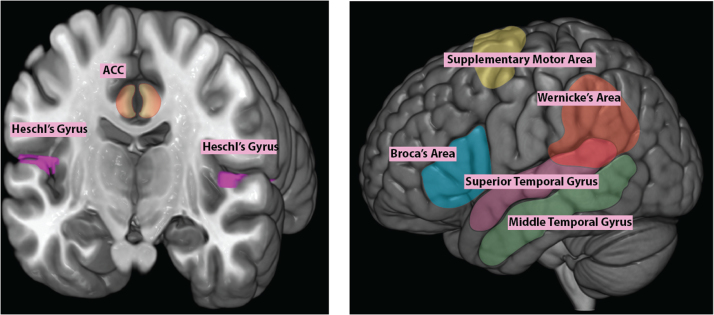
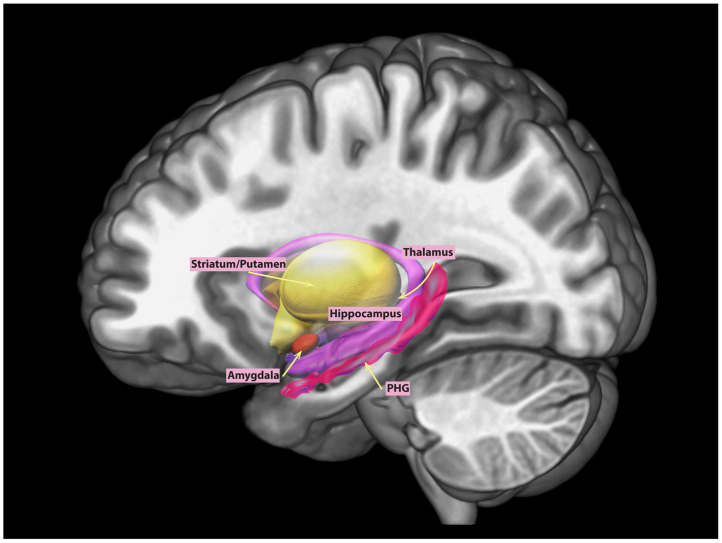
Verification
Claims the paper makes
The claims and statistics of this paper haven’t been checked yet.
Run the check — free, no account needed. It reads the open-access text and checks the sources it cites.
Claims other papers make about this one
Each is checked against this paper’s own text: does it say what the citing paper says it does?
In the citing paper
“In addition, evidence supports the hypothesis that hallucinations arise from release of those sensory signals by reduced top-down inhibition from higher-order centers such as frontal areas and their connections with the thalamus. 40-43”
From Towards an Integrative Account of Potential Mechanisms Mediating the Path From Sleep Dysfunction to Hallucinations (2025) · cites this paper as [41]
Self-check
Percentages, sums and reported differences re-computed from the paper’s own numbers.
The self-check needs the paper’s full text.
Citations
Cites
The organization of the human cerebral cortex estimated by intrinsic functional connectivity
Thomas Yeo, B. T., Krienen, F. M., Sepulcre, J., Sabuncu, M. R., Lashkari, D., Hollinshead, M., Roffman, J. L., Smoller, J. W., Zöllei, L., Polimeni, J. R., et al. (2011) · Journal of Neurophysiology · doi:10.1152/jn.00338.2011 · Cited by 9,182
The organization of the human cerebellum estimated by intrinsic functional connectivity
Buckner, R. L., Krienen, F. M., Castellanos, A., Diaz, J. C., & Yeo, B. T. T. (2011) · Journal of Neurophysiology · doi:10.1152/jn.00339.2011 · Cited by 7,304
Cognitive and emotional influences in anterior cingulate cortex
Bush, G., Luu, P., & Posner, M. I. (2000) · Trends in Cognitive Sciences · doi:10.1016/s1364-6613(00)01483-2 · Cited by 6,259 · cited 1×
“It comprises the following areas: the anterior cingulate, involved in error monitoring and emotional processing and learning (Bush et al., 2000); the hippocampus, generally involved in memory processes (Squire et al.”
BackgroundThe brainweb: phase synchronization and large-scale integration
Varela, F., Lachaux, J.-P., Rodriguez, E., & Martinerie, J. (2001) · Nature Reviews Neuroscience · doi:10.1038/35067550 · Cited by 4,761 · cited 1×
“It has been proposed that a potential mechanism for information processing by the brain is synchronization of distant neuronal assemblies (Varela et al., 2001; Fries, 2005; David and Friston, 2003).”
BackgroundThe basis of anisotropic water diffusion in the nervous system—A technical review.
Beaulieu, C. (2002) · NMR in Biomedicine · doi:10.1002/nbm.782 · Cited by 4,628
Friston, K. J., Harrison, L., & Penny, W. (2003) · NeuroImage · doi:10.1016/s1053-8119(03)00202-7 · Cited by 4,583
A mechanism for cognitive dynamics: neuronal communication through neuronal coherence.
Fries, P. (2005) · Trends in Cognitive Sciences · doi:10.1016/j.tics.2005.08.011 · Cited by 4,284 · cited 1×
“It has been proposed that a potential mechanism for information processing by the brain is synchronization of distant neuronal assemblies (Varela et al., 2001; Fries, 2005; David and Friston, 2003).”
BackgroundFunctional and Effective Connectivity: A Review
Friston, K. J. (2011) · Brain Connectivity · doi:10.1089/brain.2011.0008 · Cited by 3,415 · cited 2×
“EC approaches allow inferences about the influence one neural system exerts over another (Friston, 2011), have been used, to a lesser extent.”
BackgroundMethodContributions of the Amygdala to Emotion Processing: From Animal Models to Human Behavior
Phelps, E. A., & LeDoux, J. E. (2005) · Neuron · doi:10.1016/j.neuron.2005.09.025 · Cited by 3,203 · cited 1×
“These comprise the amygdala and “the memory regions”: the hippocampus, the para-hippocampal gyrus involved in emotional memory (Phelps and LeDoux, 2005; LeDoux, 1996; McGaugh et al., 1996) and together with striatum in associative memory (Sperling et al.”
BackgroundLarge-scale neurocognitive networks and distributed processing for attention, language, and memory
Mesulam, M. (1990) · Annals of Neurology · doi:10.1002/ana.410280502 · Cited by 2,684
Research works printed but not linked: 1
- Mulert, 2011, Hearing voices: a role of interhemispheric auditory connectivity?, World J. Biol. Psychiatry, 1
Cited by
Sorted by citations
Items 101–200 of 223
Yao, W., Zhou, H., Zhang, X., Chen, H., Bai, F., & Initiative, A. D. N. (2023) · CNS Neuroscience & Therapeutics · doi:10.1111/cns.14391 · Cited by 9
“16 However, it has been considered that functional connectivity is static over the entire time period of typical rs-fMRI protocols but not dynamic.”
Wójcik, J., Kochański, B., Cieśla, K., Lewandowska, M., Karpiesz, L., Niedziałek, I., Raj-Koziak, D., Skarzynski, P. H., & Wolak, T. P. (2023) · Scientific Reports · doi:10.1038/s41598-023-45024-3 · Cited by 10
Zhuo, C., Xu, Y. J., Zhang, L., Jing, R., & Zhou, C. (2019) · Frontiers in Genetics · doi:10.3389/fgene.2019.00092 · Cited by 9
“Many hypotheses of AVHs have been established in recent decades; each hypothesis explains AVHs from a different perspective (Jones, 2010; Liemburg et al., 2012; Cho and Wu, 2014; McCarthy-Jones et al., 2014; Northoff, 2014; Wilkinson, 2014; Alderson-Day et al., 2015, 2017; Hugdahl, 2015; Conde et al., 2016; Baumeister…”
BackgroundIs psychosis a dysmyelination-related information-processing disorder?
Giotakos, O. (2019) · Psychiatriki · doi:10.22365/jpsych.2019.303.245 · Cited by 14
Hallucination-Specific structure-function associations in schizophrenia
Roes, M., Yin, J., Taylor, L., Metzak, P. D., Lavigne, K. M., Chinchani, A. M., Tipper, C. M., & Woodward, T. S. (2020) · Psychiatry Research Neuroimaging · doi:10.1016/j.pscychresns.2020.111171 · Cited by 9
Network localization of genetic risk for schizophrenia and bipolar disorder
Yao, S., Mo, F., Rao, Z., Shi, Y., Zhu, J., & Yu, Y. (2025) · Psychological Medicine · doi:10.1017/s0033291725101992 · Cited by 10
Cognitive-Developmental Mechanisms in Hallucinations
Fernyhough, C., de Boer, J. N., Davis, P. E., Schneider, M., Moriguchi, Y., Alderson‐Day, B., Brederoo, S., & Jardri, R. (2025) · Schizophrenia Bulletin · doi:10.1093/schbul/sbaf144 · Cited by 8
Plinio, S. D., & Ebisch, S. J. H. (2020) · European Journal of Neuroscience · doi:10.1111/ejn.14883 · Cited by 9
“For example, disconnections or over-connections in psychopathologies (Fornito, Zalesky, Pantelis, & Bullmore, 2012; Ebisch and Aleman, 2016; Ćurčić-Blake et al., 2017; Romme, de Reus, Ophoff, Kahn, & van den Heuvel, 2017) or F I G U R E 1 Global and local trajectories of brain evolution.”
BackgroundMondino, M., Janin, D., Galvão, F., & Brunelin, J. (2022) · Biomedicines · doi:10.3390/biomedicines10112698 · Cited by 8
“montage was initially proposed based on the neurophysiological polarity-dependent properties of tDCS electrodes and neuroimaging studies demonstrating hyperactivity within temporoparietal areas and abnormal frontotemporal connectivity in patients with hallucinations [6,7].”
MethodSalisbury, D. F., Seebold, D., Longenecker, J., Coffman, B. A., & Yeh, F.-C. F. (2023) · Schizophrenia Research · doi:10.1016/j.schres.2023.06.001 · Cited by 8
Anhøj, S. J., Ebdrup, B. H., Nielsen, M. Ø., Antonsen, P. K., Glenthoj, B. Y., & Rostrup, E. (2023) · Biological Psychiatry Global Open Science · doi:10.1016/j.bpsgos.2023.06.003 · Cited by 8
Besso, L., Larivière, S., Roes, M., Sanford, N., Percival, C. M., Damascelli, M., Momeni, A., Lavigne, K. M., Menon, M., Aleman, A., et al. (2024) · Psychiatry Research Neuroimaging · doi:10.1016/j.pscychresns.2024.111824 · Cited by 10
Dwyer, G. E., Hugdahl, K., Specht, K., & Grüner, R. (2018) · Current Topics in Medicinal Chemistry · doi:10.2174/1568026619666181130103559 · Cited by 8
Lin, X., Zhuo, C., Li, G., Li, J., Gao, X., Chen, C., & Jiang, D. (2019) · Brain and Behavior · doi:10.1002/brb3.1487 · Cited by 8
“…and different pathological features of different AH subtypes should be explored to provide insight into the mechanisms underlying AHs (Allen et al., 2008; Ćurčić-Blake et al., 2017; Diederen, Daalman, et al., 2012; Diederen, van Lutterveld, et al., 2012; Hugdahl, 2015; Upthegrove et al., 2016).”
BackgroundHistorical pursuits of the language pathway hypothesis of schizophrenia
DeLisi, L. E. (2021) · Schizophrenia · doi:10.1038/s41537-021-00182-z · Cited by 8
Wang, Z., Xue, K.-K., Kang, Y.-M., Liu, Z., Cheng, J.-L., Zhang, Y., & Wei, Y.-R. (2024) · Frontiers in Neuroscience · doi:10.3389/fnins.2024.1478963 · Cited by 7
Fonteneau, C., Mérida, I., Redouté, J., Haesebaert, F., Lancelot, S., Costes, N., Mondino, M., & Brunelin, J. (2025) · Brain stimulation · doi:10.1016/j.brs.2025.05.006 · Cited by 7
Noninvasive direct current stimulation for schizophrenia: a review
Lindenmayer, J., & Fitapelli, B. (2021) · Current Opinion in Psychiatry · doi:10.1097/yco.0000000000000698 · Cited by 8
“AVH have primarily been associated with cortical language regions [16], in particular with the left temporo-parietal-occipital junction [17], a region covering the posterior left superior temporal gyrus (STG: Wernicke’s area), suggesting that these may be effective targets for”
BackgroundFilosa, M., Rossi, E. D., Carbone, G. A., Farina, B., Massullo, C., Panno, A., Adenzato, M., Ardito, R. B., & Imperatori, C. (2024) · Neuroscience Letters · doi:10.1016/j.neulet.2024.137686 · Cited by 6
“The discrepancy with our results may be due to the different approach to networks investigation (e.g., EEG vs. fMRI) and studies design (e.g., clinical vs. non-clinical samples).”
ResultBoisvert, M., Dugre, J. R., & Potvin, S. (2024) · Psychological Medicine · doi:10.1017/s003329172400165x · Cited by 9
Sun, J., Deng, H., Wang, S., Cui, Y.-P., Yang, X., Wang, C., Chen, Y., Yang, Q., Wang, H., & Qin, W. (2021) · Biological Psychiatry Cognitive Neuroscience and Neuroimaging · doi:10.1016/j.bpsc.2021.07.013 · Cited by 7
Liu, Y., Ma, X., Li, D., Ouyang, L., Fan, L., Li, C., Hé, Y., & Chen, X. (2022) · Schizophrenia · doi:10.1038/s41537-022-00305-0 · Cited by 6
Romeo, Z., Marino, M., Mantini, D., Angrilli, A., & Spironelli, C. (2023) · Biomedicines · doi:10.3390/biomedicines11061647 · Cited by 7
Zhuo, C., Ji, F., Lin, X., Tian, H., Wang, L., Xu, Y. J., Wang, W., & Jiang, D. (2020) · Brain and Behavior · doi:10.1002/brb3.1637 · Cited by 7
“YMRS score 2.8 ± 1.2 2.7 ± 1.4 – .677 AHRS score 18.7 ± 5.5 – – – TA B L E 1 Demographic and clinical characteristics of the subjects by group processing areas may constitute the basis of AVH (Curcic-Blake et al., 2017).”
BackgroundInfluentialSheaves, B., Cropley, V. L., Moseley, P., Woodruff, P. W. R., Punton, G., Speth, C., Speth, J., Meerlo, P., & Brederoo, S. G. (2025) · Schizophrenia Bulletin · doi:10.1093/schbul/sbaf107 · Cited by 6
Self-citationFernández-Sotos, P., García-Martínez, B., Ricarte, J. J., Latorre, J. M., Sánchez‐Morla, E. M., Fernández‐Caballero, A., & Rodríguez–Jiménez, R. (2020) · Schizophrenia Research · doi:10.1016/j.schres.2020.04.011 · Cited by 6
Langhein, M., Lyall, A. E., Steinmann, S., Seitz‐Holland, J., Nägele, F. L., Karayumak, S. C., Zhang, F., Rauh, J., Mußmann, M., Billah, T., et al. (2022) · The World Journal of Biological Psychiatry · doi:10.1080/15622975.2022.2112974 · Cited by 7
Multi feature fusion network for schizophrenia classification and abnormal brain network recognition
Wang, C., Wang, C., Ren, Y., Zhang, R., Ai, L., Wu, Y., Ran, X., Wang, M., Hu, H., Shen, J., et al. (2023) · Brain Research Bulletin · doi:10.1016/j.brainresbull.2023.110848 · Cited by 6
Qiu, L., Ye, J., Ji, F., Li, G., Li, G., Ma, X., Li, R., Tian, H., Wang, L., Chen, G., et al. (2020) · Brain Imaging and Behavior · doi:10.1007/s11682-019-00222-4 · Cited by 6
“Our finding of increased gFCD in the bilateral Broca and Wernicke regions and decreased gFCD in the bilateral hippocampus in patients with BD and AVH supports the “unstable memory” hypothesis, which holds that the failure to control the contents of memories may cause remembered experiences to rise into a person’s cons…”
BackgroundInfluentialTargeted neural network interventions for auditory hallucinations: Can TMS inform DBS?
Taylor, J. J., Krystal, J. H., D'Souza, D. C., Gerrard, J. L., & Corlett, P. R. (2018) · Schizophrenia Research · doi:10.1016/j.schres.2017.09.020 · Cited by 5
“…resonance imaging (fMRI) or electroencephalograph (EEG) signals signify the correlations between regions (functional connectivity) (Chang et al., 2017; Curcic-Blake et al., 2017) or the directional relationships between regions (effective connectivity) (Grana et al., 2017; Li et al., 2017).”
A Meta-Analysis of Functional Neuroimaging Studies of Ketamine Administration in Healthy Volunteers
Bentaleb, K. A., Boisvert, M., Tourjman, V., & Potvin, S. (2023) · Journal of Psychoactive Drugs · doi:10.1080/02791072.2023.2190758 · Cited by 7
Elyamany, O., Iffland, J. R., Lockhofen, D. E. L., Steinmann, S., Leicht, G., & Mulert, C. (2024) · Frontiers in Neuroscience · doi:10.3389/fnins.2024.1424746 · Cited by 5
Gao, X., Ni, Y., Hu, W., Wang, G., & He, X. (2024) · Postgraduate Medical Journal · doi:10.1093/postmj/qgae119 · Cited by 5
Shan, P., Zhuo, C., Ma, X., Sang, H., Zhong, B., Lin, X., Ji, F., Chen, M., Tian, H., Zhao, Y., et al. (2019) · Journal of International Medical Research · doi:10.1177/0300060519875830 · Cited by 5
Kubera, K. M., Hirjak, D., Wolf, N. D., & Wolf, R. C. (2021) · Der Nervenarzt · doi:10.1007/s00115-021-01175-0 · Cited by 5
Schutte, M. J. L., Voppel, A., Collin, G., Abramovic, L., Boks, M. P., Cahn, W., van Haren, N. E. M., Hugdahl, K., Koops, S., Mandl, R. C. W., et al. (2022) · Schizophrenia Bulletin · doi:10.1093/schbul/sbac007 · Cited by 5
Kubera, K. M., Rashidi, M., Schmitgen, M. M., Barth, A., Hirjak, D., Otte, M., Sambataro, F., Calhoun, V. D., & Wolf, R. C. (2023) · Schizophrenia Research · doi:10.1016/j.schres.2023.03.001 · Cited by 5
Mapping alterations in the local synchrony of the cerebral cortex in schizophrenia
Pujol, J., Pujol, N., Mané, A., Martínez‐Vilavella, G., Deus, J., Pérez, V., & Blanco‐Hinojo, L. (2023) · European Psychiatry · doi:10.1192/j.eurpsy.2023.2463 · Cited by 5
“Positive symptoms of schizophrenia (e.g., the experience of hallucinations) are associated with cortical hyperactivity [60, 61] and increased functional connectivity [62].”
BackgroundIllness-related variables and abnormalities of resting-state brain activity in schizophrenia
Giuliani, L., Pezzella, P., Giordano, G. M., Fazio, L., Mucci, A., Perrottelli, A., Blasi, G., Amore, M., Rocca, P., Rossi, A., et al. (2024) · Frontiers in Psychiatry · doi:10.3389/fpsyt.2024.1458624 · Cited by 7
Schmitgen, A., Saal, J., Sankaran, N., Desai, M., Joseph, I., Starr, P. A., Chang, E. F., & Shirvalkar, P. R. (2021) · Frontiers in Neurology · doi:10.3389/fneur.2021.669172 · Cited by 5
“Based on hypothesized models of hallucinations, such as the “two-hit bottom-up top-down” models (76), and their associated brain regions, a multi-site network analysis using stereoelectrocephalography (sEEG), for example, could enable simultaneous LFP recording from all regions of interest.”
MethodResultTime varying dynamics of hallucinations in clinical and non-clinical voice-hearers
Marschall, T. M., Koops, S., Brederoo, S., Cabral, J., Ćurĉić‐Blake, B., & Sommer, I. E. (2023) · NeuroImage Clinical · doi:10.1016/j.nicl.2023.103351 · Cited by 4
Lee, J. H. (2017) · Journal of Computational Neuroscience · doi:10.1007/s10827-017-0666-4 · Cited by 5
Gao, Z., Sun, H. G., Zhu, F., Tao, B., Zhao, Q., Yu, W., DelBello, M. P., Xiao, Y., Gong, Q., & Lui, S. (2025) · Translational Psychiatry · doi:10.1038/s41398-025-03748-y · Cited by 5
Asymmetry, cytoarchitectonic morphology and genetics associated with Broca’s area in schizophrenia
Zimmermann, S., Sakreida, K., Bludau, S., Camilleri, J. A., Hoffstaedter, F., Pelzer, D. I., Aleman, A., Brückner, T., Derntl, B., Frank, E., et al. (2024) · Nature Mental Health · doi:10.1038/s44220-023-00200-2 · Cited by 6
“We did not observe a relationship between the positive symptoms dimension and gray matter alterations of Broca’s subregions in patients with schizophrenia, despite previous evidence of the involvement of Broca’s area in auditory verbal hallucinations 35,36 .”
Variability in white matter structure relates to hallucination proneness
Johnson, J. F., Schwartze, M., Belyk, M., Pinheiro, A. P., & Kotz, S. A. (2024) · NeuroImage Clinical · doi:10.1016/j.nicl.2024.103643 · Cited by 4
Rieger, K., Rarra, M.-H., Moor, N., Hernandez, L. D., Bänninger, A., Razavi, N., Dierks, T., Hubl, D., & Koenig, T. W. (2017) · Clinical EEG and Neuroscience · doi:10.1177/1550059417708935 · Cited by 4
“An explicit review can be found in Ćurčić-Blake et al.(9) Shortly, psychological models point out the importance of the subjective experience of the context and the emotion expressed in the AVHs.”
InfluentialJing, R., Huang, J., Jiang, D., Lin, X., Ma, X., Tian, H., Li, J., & Zhuo, C. (2017) · Oncotarget · doi:10.18632/oncotarget.23631 · Cited by 5
“com/oncotarget self-reflection network and sensorimotor network and participate in top-down and bottom-up regulation [33].”
BackgroundSelf and the Brain. The Immune Metaphor
Sánchez‐Ramón, S., & Faure, F. (2020) · Frontiers in Psychiatry · doi:10.3389/fpsyt.2020.540676 · Cited by 5
“involved in aberrant gamma oscillations to endogenous inputs from pyramidal neurons (83) despite absence of actual external stimuli (81, 82, 85).”
BackgroundDetection of auditory hallucinations from electroencephalographic brain–computer interface signals
García-Martínez, B., Fernández-Sotos, P., Ricarte, J. J., Sánchez‐Morla, E. M., Sánchez-Reolid, R., Rodríguez–Jiménez, R., & Fernández‐Caballero, A. (2023) · Cognitive Systems Research · doi:10.1016/j.cogsys.2023.101176 · Cited by 4
Collin, G., Goldenberg, J. E., Chang, X., Qi, Z., Whitfield, S., Cahn, W., Wang, J., Stone, W. S., Keshavan, M. S., & Shenton, M. E. (2025) · Brain Sciences · doi:10.3390/brainsci15030314 · Cited by 3
Craven, A. R., Dwyer, G. E., Ersland, L., Kazimierczak, K., Lilleskare, L., Noeske, R., Sandøy, L. B., Johnsen, E., & Hugdahl, K. (2025) · Scientific Reports · doi:10.1038/s41598-025-03644-x · Cited by 3
Schizophrenia Research Under the Framework of Predictive Coding: Body, Language, and Others
Li, L., & Li, C. (2025) · Wiley Interdisciplinary Reviews Cognitive Science · doi:10.1002/wcs.70013 · Cited by 4
“Unstable memory is another main concept in cognitive mechanisms of AVH, which endorses that hallucinators mis-integrate intrusive memories into current context, and AVH is thus conceptualized as failure of accessing context cues (79-81).”
Zhuo, C., Xu, X., Lin, X., Chen, M., Ji, F., Jiang, D., Xu, Y. J., Wang, L., Li, Y., Tian, H., et al. (2020) · Neuroscience Letters · doi:10.1016/j.neulet.2020.135033 · Cited by 3
Millman, Z. B., Hwang, M., Sydnor, V. J., Reid, B. E., Goldenberg, J. E., Talero, J., Sylvain Bouix, A., Shenton, M. E., Öngür, D., & Shinn, A. K. (2022) · Schizophrenia · doi:10.1038/s41537-022-00323-y · Cited by 4
Chen, M., Zhuo, C., Ji, F., Li, G.-Y., & Ke, X. (2019) · Chinese Medical Journal · doi:10.1097/cm9.0000000000000419 · Cited by 3
Effect of Transcranial Direct Current Stimulation on Hallucinations in Patients with Schizophrenia
Adam, O., Mondino, M., & Brunelin, J. (2021) · Springer eBooks · doi:10.1007/978-3-030-76136-3_23 · Cited by 3
Dysconnectivity in Hallucinations
Ćurĉić‐Blake, B., Houenou, J., & Jardri, R. (2018) · Springer eBooks · doi:10.1007/978-3-319-75124-5_10 · Cited by 3
Zhuo, C., Cheng, L., Li, G., Xu, Y. J., Jing, R., Li, S., Zhang, L., Lin, X., & Zhou, C. (2019) · Brain Imaging and Behavior · doi:10.1007/s11682-019-00043-5 · Cited by 3
Hypersensitivity to passive voice hearing in hallucination proneness
Johnson, J. F., Belyk, M., Schwartze, M., Pinheiro, A. P., & Kotz, S. A. (2022) · Frontiers in Human Neuroscience · doi:10.3389/fnhum.2022.859731 · Cited by 3
“Multiple cognitive theories have been proposed delineating the emergence and phenomenology of AVH (Jones, 2010; Ćurčić-Blake et al., 2017; Rollins et al., 2019).”
BackgroundMethodFunctional MRI Findings in Schizophrenia
Pearlson, G. D. (2020) · Springer eBooks · doi:10.1007/978-3-030-35206-6_6 · Cited by 3
Zhang, J., Bauer, C. C. C., Morfini, F., Lee, Y. J., Stone, L., Awad, A., Okano, K., Hwang, M., Shinn, A. K., Niznikiewicz, M. A., et al. (2025) · bioRxiv (Cold Spring Harbor Laboratory) · doi:10.1101/2025.01.02.631107 · Cited by 3
Xia, J., Chan, Y. H., Girish, D., Chew, Q. H., Sim, K., & Rajapakse, J. C. (2025) · Communications Biology · doi:10.1038/s42003-025-08637-0 · Cited by 2
Gray matter abnormalities and memory impairment in left mesial temporal lobe epilepsy
Olejnik, A., Bala, A., Rejner, W., Gottman-Narożna, A., Rysz, A., Kopytek-Beuzen, M., Naumczyk, P., & Kunert, P. (2025) · Frontiers in Human Neuroscience · doi:10.3389/fnhum.2025.1554091 · Cited by 2
Phenomenology of Voice-Hearing in Psychosis Spectrum Disorders: a Review of Neural Mechanisms
Cruz, L. N., Pozzo, J. D., Zar, T., & Hansen, M. C. (2019) · Current Behavioral Neuroscience Reports · doi:10.1007/s40473-019-00196-z · Cited by 2
Localizing and lateralizing value of auditory phenomena in seizures.
Cossette-Roberge, H., Li, J., Citherlet, D., & Nguyen, D. (2023) · Epilepsy & Behavior · doi:10.1016/j.yebeh.2023.109327 · Cited by 2
Jiang, P., Xiao, Z., Geng, T., Sun, J., Xu, J., Huang, X., Li, J., Kendrick, K. M., Jiang, X., & Gong, Q. (2025) · Cerebral Cortex · doi:10.1093/cercor/bhaf062 · Cited by 2
Links between auditory verbal hallucinations and auditory emotional perception: A systematic review
Amorim, M., Marques, M., Kotz, S. A., & Pinheiro, A. P. (2025) · Neuroscience & Biobehavioral Reviews · doi:10.1016/j.neubiorev.2025.106351 · Cited by 2
Cancel, A., Rousseau, P., & Jardri, R. (2018) · Annales Médico-psychologiques revue psychiatrique · doi:10.1016/j.amp.2018.08.008 · Cited by 2
Zhuo, C., Ji, F., Lin, X., Tian, H., Wang, L., Liu, S., Sang, H., Wang, W., & Chen, C. (2019) · Brain Imaging and Behavior · doi:10.1007/s11682-019-00207-3 · Cited by 2
Tomalski, R., & Pietkiewicz, I. J. (2019) · Psychiatria i Psychologia Kliniczna · doi:10.15557/pipk.2019.0035 · Cited by 1
EEG Connectivity Pattern: A Window into the Schizophrenia Mind?
Steinmann, S., Nolte, G., & Mulert, C. (2020) · Springer eBooks · doi:10.1007/978-3-030-35206-6_13 · Cited by 2
Brain rhythms, neural synchrony, and networks in health and disease
Eggermont, J. J. (2021) · Elsevier eBooks · doi:10.1016/b978-0-12-819818-6.00009-1 · Cited by 2
Variability in white matter structure relates to hallucination pronenessPreprint
Johnson, J. F., Schwartze, M., Belyk, M., Pinheiro, A. P., & Kotz, S. A. (2021) · bioRxiv (Cold Spring Harbor Laboratory) · doi:10.1101/2021.06.10.447901 · Cited by 2
Editorial: Genetic Mechanisms of Biomarkers in Schizophrenia, Bipolar Disorder and Depression
Tang, Y., Gui, H., Tarbox, S. I., Hu, S., Ma, X., & Wang, Q. (2021) · Frontiers in Psychiatry · doi:10.3389/fpsyt.2021.736055 · Cited by 2
“Auditory verbal hallucinations (AVH), a core feature of schizophrenia, refer to hearing voices without external stimulation in the awake state (6, 7).”
BackgroundInfluentialHow voices change the brain. Two fMRI follow-up case reports
González-Vivas, C., Valdés-Florido, M. J., García‐Martí, G., Soldevila-Matías, P., Martí‐Bonmatí, L., Nácher, J., & Sanjuán, J. (2022) · Schizophrenia Research · doi:10.1016/j.schres.2022.09.016 · Cited by 2
Demler, V. F., Sterner, E., & Knolle, F. (2025) · medRxiv · doi:10.64898/2025.12.07.25341628 · Cited by 2
Sato, Y., Sakuma, A., Ohmuro, N., Katsura, M., Abe, K., Tomimoto, K., Iizuka, K., Ito, F., Tomita, H., & Matsumoto, K. (2021) · Psychiatry and Clinical Neurosciences · doi:10.1111/pcn.13284 · Cited by 1
ON THE ‘HALLUCINATIONS’ OF ARTIFICIAL INTELLIGENCE AND THE HALLUCINATION EXPERIENCE IN HUMAN
İnce, E., & Üçok, A. (2024) · Turkish Journal of Psychiatry · doi:10.5080/u27608 · Cited by 1
Guo, Z., Zhou, Z., Wang, S., Yang, L., Gao, X.-S., Xia, Y., Yang, Y., Shan, Z., Huang, H., & Tian, L. (2025) · Frontiers in Psychiatry · doi:10.3389/fpsyt.2025.1641190 · Cited by 1
Inner speech and the neurobiology of psychosis
Skipper, J. I., Lametti, D. R., & Green, D. W. (2026) · Neuroscience & Biobehavioral Reviews · doi:10.1016/j.neubiorev.2026.106805 · Cited by 1
Epileptic aura in medicine and literature
Vasilenko, А. V., Novichkova, D. A., Ismailov, S. G., Николаевич, Ч. С., Zaripov, A. S., Евгеньевна, Д. В., Pulotova, T. I., & Bannikov, E. R. (2025) · Epilepsy and Paroxysmal Conditions · doi:10.17749/2077-8333/epi.par.con.2025.234 · Cited by 1
Alotaibi, A. M., Orfali, R. S., Alorainy, A. I., Alosaimi, M. H., Alshanawani, M., Alwtban, A. A., Bentall, R. P., & Meyer, G. (2026) · NeuroImage · doi:10.1016/j.neuroimage.2026.121733 · Cited by 1
Huang, Z., Ma, Y., Wang, J., Song, Y., Zhang, J., Ye, Z., Ouyang, D., Ke, D., Cao, D., & Dong, W. (2026) · Translational Psychiatry · doi:10.1038/s41398-026-03839-4 · Cited by 1
“Although various explanatory models have been proposed, including source-monitoring de fi cit, and predictive-coding error models [11], the underlying mechanism of AVH remains unclear.”
InfluentialAntipsychotic-related remodeling of regional brain activity in schizophrenia
Liang, J., Chen, W., & Zhang, C. (2026) · Asian Journal of Psychiatry · doi:10.1016/j.ajp.2026.105067 · Cited by 1
A life in academia: My career in brief
Hugdahl, K. (2018) · Scandinavian Journal of Psychology · doi:10.1111/sjop.12406 · Cited by 1
Orlov, N. D., Garrison, J. R., & Allen, P. (2018) · Springer eBooks · doi:10.1007/978-3-319-75124-5_11 · Cited by 1
Hubl, D., Moor, N., Kindler, J., Kottlow, M., Dierks, T., & Koenig, T. W. (2020) · Timing & Time Perception · doi:10.1163/22134468-20191163 · Cited by 1
Lin, X., Li, G., Ji, F., Cheng, L., Chen, G., Zhang, W., Su, Z., Zhang, Z., Wang, W., Zhou, C., et al. (2020) · International Journal of Neuroscience · doi:10.1080/00207454.2020.1750387 · Cited by 1
Multilayer network instability underlying persistent auditory verbal hallucinations in schizophrenia
Li, J., He, J., Ren, H., Li, Z., Ma, X., Yuan, L., Ouyang, L., Li, C., Hé, Y., Hé, Y., et al. (2024) · Psychiatry Research · doi:10.1016/j.psychres.2024.116351 · Cited by 3
Auditory verbal hallucinations as ictal phenomena in a patient with drug-resistant epilepsy
Toro-Perez, J. E., Burneo, J. G., MacDougall, K. W., McLachlan, R. S., Mirsattari, S. M., Diosy, D. C., Hayman-Abello, B. A., Aluwari, M., Herrera, M. L., Arevalo, M., et al. (2022) · Clinical Neurology and Neurosurgery · doi:10.1016/j.clineuro.2022.107223 · Cited by 1
The Impact of Technology on the Developing Visual and/or Auditory Memory in School-Aged Children
Mayer, C. (2021) · doi:10.32597/honors/254/ · Cited by 1
Lee, J. H. (2016) · bioRxiv (Cold Spring Harbor Laboratory) · doi:10.1101/072504
Changes in the Brain Connectome With Age
Eggermont, J. J. (2019) · Elsevier eBooks · doi:10.1016/b978-0-12-815304-8.00008-6
Falkenberg, L. E., Westerhausen, R., Johnsen, E., Kroken, R., Løberg, E., Bereśniewicz, J., Kazimierczak, K., Kompus, K., Ersland, L., & Hugdahl, K. (2019) · bioRxiv · doi:10.1101/784942
Geng, H. (2020) · University of Groningen research database (University of Groningen / Centre for Information Technology) · doi:10.33612/diss.131330743
Brain Networks Detectable by fMRI during On-Line Self Report of Hallucinations in SchizophreniaPreprint
Gill, K., Percival, C. M., Roes, M., Arreaza, L., Chinchani, A. M., Sanford, N., Sena, W., Mohammadsadeghi, H., Menon, M., Hughes, M. E., et al. (2021) · bioRxiv (Cold Spring Harbor Laboratory) · doi:10.1101/2021.11.06.467564
A comprehensive study on the cognitive mechanisms and neural substrates of hallucination proneness
Johnson, J. F. (2022) · Research Publications (Maastricht University) · doi:10.26481/dis.20221101jj
Experimental Approaches to Understanding Thought Insertion
Brann, E., Walsh, E., Mehta, M. A., Oakley, D. A., & Deeley, Q. (2023) · doi:10.1093/med/9780192896162.003.0012
Metadata
- Authors
- Ćurčić-Blake, B., Ford, J. M., Hubl, D., Orlov, N. D., Sommer, I. E., Waters, F., Allen, P., Jardri, R., Woodruff, P. W., David, O., Mulert, C., Woodward, T. S., & Aleman, A.
- Affiliations
- San Francisco VA Medical Center (US)
- University of Bern (CH)
- King's College London (GB)
- University Medical Center Utrecht (NL)
- The University of Western Australia (AU)
- Centre National de la Recherche Scientifique (FR)
- University of Sheffield (GB)
- University Medical Center Hamburg-Eppendorf (DE)
- University of British Columbia (CA)
- University Medical Center Groningen (NL)
- ORCID
- Venue
- Progress in Neurobiology
- Publisher
- Elsevier BV
- Published
- 2017-01
- Volume
- 148
- Pages
- 1-20
- ISSN
- 0301-0082 (ISSN-L)
- PMC
- PMC5240789
- OpenAlex
- W2552561399
- Cited by
- 224
- References
- 200
- Citations by year
- 2026: 13 · 2025: 21 · 2024: 20 · 2023: 18 · 2022: 21 · 2021: 28 · 2020: 34 · 2019: 35 · 2018: 20 · 2017: 13
- FWCI
- 2.43
- Type
- journal article
- Language
- en
- Open access
- hybrid
- doi.org
- Licence
- Locations
- Progress in Neurobiology (publishedVersion, cc-by-nc-nd)
- Europe PMC (PubMed Central) (publishedVersion, cc-by-nc-nd)
- PubMed Central (publishedVersion, cc-by-nc-nd)
- PubMed (publishedVersion)
- University of Groningen research database (University of Groningen / Centre for Information Technology) (publishedVersion, cc-by-nc-nd)
- HAL (submittedVersion, cc-by-nc-nd)
- UWA Profiles and Research Repository (UWA) (submittedVersion, cc-by-nc-nd)
- BORIS (University Library Bern) (submittedVersion, cc-by-nc-nd)
- Utrecht University Repository (Utrecht University) (submittedVersion, other-oa)
- Research Portal (King's College London) (submittedVersion, cc-by-nc-nd)
- LillOA (Université de Lille (University Of Lille)) (submittedVersion, cc-by-nc-nd)
- University of Groningen research database (University of Groningen / Centre for Information Technology) (submittedVersion, cc-by-nc-nd)
- Open Access CRIS of the University of Bern
- Funders
- NWO VICI (453-11-004)
- Topics
- Life Sciences › Neuroscience › Cognitive Neuroscience › Hallucinations in medical conditions
- Health Sciences › Medicine › Psychiatry and Mental health › Schizophrenia research and treatment
- Life Sciences › Neuroscience › Cognitive Neuroscience › Functional Brain Connectivity Studies
- Keywords
- auditory verbal hallucinations, language network, auditory network, functional connectivity, structural connectivity, symptom association, interhemispheric connectivity, striatum, source monitoring, top-down attention, psychosis, first-episode psychosis, chronic psychosis, fronto-temporal connectivity
- MeSH terms
- Auditory Perception, Hallucinations, Humans, Language, Memory, Nerve Net
About these checks
Registry, retraction, Cites and statistics results are computed, not judged, with one exception: a printed reference that no index lists is read once by a model before it counts as a citation error. Claims are extracted by a model and kept only when their quote appears verbatim in the text; each cited source is then checked, with a model’s help, for whether it says what the claim relies on. Those verdicts can be wrong — read the claim’s quote and the cited source before relying on one.
Statistics and arithmetic are recomputed, not judged.
Confidence bands are shown only for fields calibrated on our annotated test set. None is calibrated yet, so no band is shown.
What counts as a claim ›How we measure confidence ›How we check this ›
Are you an author, or do you see a problem with this page? Request a review
