

The DOI matches its Crossref record; 200 of the 200 references it cites were found in a registry or an index.
Interaction of language, auditory and memory brain networks in auditory verbal hallucinations
Open accessAbstract
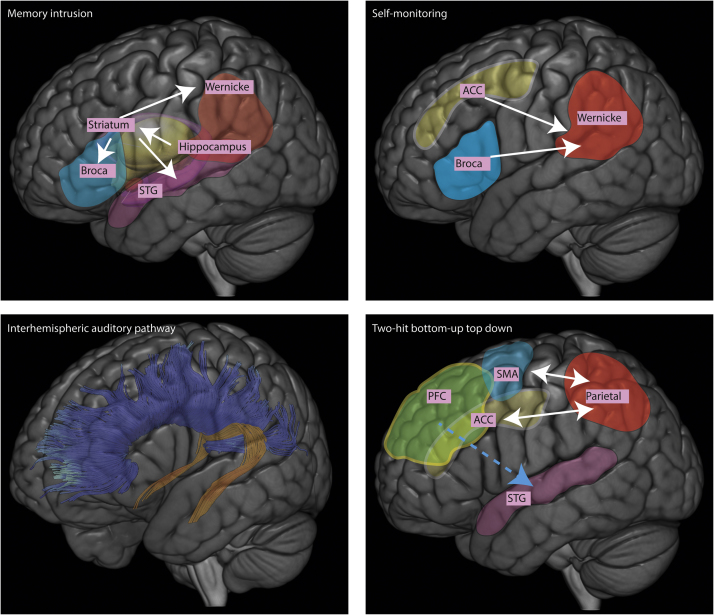
Auditory verbal hallucinations (AVH) occur in psychotic disorders, but also as a symptom of other conditions and even in healthy people. Several current theories on the origin of AVH converge, with neuroimaging studies suggesting that the language, auditory and memory/limbic networks are of particular relevance. However, reconciliation of these theories with experimental evidence is missing. We review 50 studies investigating functional (EEG and fMRI) and anatomic (diffusion tensor imaging) connectivity in these networks, and explore the evidence supporting abnormal connectivity in these networks associated with AVH. We distinguish between functional connectivity during an actual hallucination experience (symptom capture) and functional connectivity during either the resting state or a task comparing individuals who hallucinate with those who do not (symptom association studies). Symptom capture studies clearly reveal a pattern of increased coupling among the auditory, language and striatal regions. Anatomical and symptom association functional studies suggest that the interhemispheric connectivity between posterior auditory regions may depend on the phase of illness, with increases in non-psychotic individuals and first episode patients and decreases in chronic patients. Leading hypotheses involving concepts as unstable memories, source monitoring, top-down attention, and hybrid models of hallucinations are supported in part by the published connectivity data, although several caveats and inconsistencies remain. Specifically, possible changes in fronto-temporal connectivity are still under debate. Precise hypotheses concerning the directionality of connections deduced from current theoretical approaches should be tested using experimental approaches that allow for discrimination of competing hypotheses.
Overview
The claims and statistics of this paper haven’t been checked yet.
Run the check — free, no account needed. It reads the open-access text and checks the sources it cites.
Integrity signals
Registry
Cites
Statistics
Figures
Verification
Claims the paper makes
The claims and statistics of this paper haven’t been checked yet.
Run the check — free, no account needed. It reads the open-access text and checks the sources it cites.
Claims other papers make about this one
Each is checked against this paper’s own text: does it say what the citing paper says it does?
In the citing paper
“In addition, evidence supports the hypothesis that hallucinations arise from release of those sensory signals by reduced top-down inhibition from higher-order centers such as frontal areas and their connections with the thalamus. 40-43”
From Towards an Integrative Account of Potential Mechanisms Mediating the Path From Sleep Dysfunction to Hallucinations (2025) · cites this paper as [41]
Self-check
Percentages, sums and reported differences re-computed from the paper’s own numbers.
The self-check needs the paper’s full text.
Citations
Cites
The organization of the human cerebral cortex estimated by intrinsic functional connectivity
Thomas Yeo, B. T., Krienen, F. M., Sepulcre, J., Sabuncu, M. R., Lashkari, D., Hollinshead, M., Roffman, J. L., Smoller, J. W., Zöllei, L., Polimeni, J. R., et al. (2011) · Journal of Neurophysiology · doi:10.1152/jn.00338.2011 · Cited by 9,182
The organization of the human cerebellum estimated by intrinsic functional connectivity
Buckner, R. L., Krienen, F. M., Castellanos, A., Diaz, J. C., & Yeo, B. T. T. (2011) · Journal of Neurophysiology · doi:10.1152/jn.00339.2011 · Cited by 7,304
Cognitive and emotional influences in anterior cingulate cortex
Bush, G., Luu, P., & Posner, M. I. (2000) · Trends in Cognitive Sciences · doi:10.1016/s1364-6613(00)01483-2 · Cited by 6,259 · cited 1×
“It comprises the following areas: the anterior cingulate, involved in error monitoring and emotional processing and learning (Bush et al., 2000); the hippocampus, generally involved in memory processes (Squire et al.”
BackgroundThe brainweb: phase synchronization and large-scale integration
Varela, F., Lachaux, J.-P., Rodriguez, E., & Martinerie, J. (2001) · Nature Reviews Neuroscience · doi:10.1038/35067550 · Cited by 4,761 · cited 1×
“It has been proposed that a potential mechanism for information processing by the brain is synchronization of distant neuronal assemblies (Varela et al., 2001; Fries, 2005; David and Friston, 2003).”
BackgroundThe basis of anisotropic water diffusion in the nervous system—A technical review.
Beaulieu, C. (2002) · NMR in Biomedicine · doi:10.1002/nbm.782 · Cited by 4,628
Friston, K. J., Harrison, L., & Penny, W. (2003) · NeuroImage · doi:10.1016/s1053-8119(03)00202-7 · Cited by 4,583
A mechanism for cognitive dynamics: neuronal communication through neuronal coherence.
Fries, P. (2005) · Trends in Cognitive Sciences · doi:10.1016/j.tics.2005.08.011 · Cited by 4,284 · cited 1×
“It has been proposed that a potential mechanism for information processing by the brain is synchronization of distant neuronal assemblies (Varela et al., 2001; Fries, 2005; David and Friston, 2003).”
BackgroundFunctional and Effective Connectivity: A Review
Friston, K. J. (2011) · Brain Connectivity · doi:10.1089/brain.2011.0008 · Cited by 3,415 · cited 2×
“EC approaches allow inferences about the influence one neural system exerts over another (Friston, 2011), have been used, to a lesser extent.”
BackgroundMethodContributions of the Amygdala to Emotion Processing: From Animal Models to Human Behavior
Phelps, E. A., & LeDoux, J. E. (2005) · Neuron · doi:10.1016/j.neuron.2005.09.025 · Cited by 3,203 · cited 1×
“These comprise the amygdala and “the memory regions”: the hippocampus, the para-hippocampal gyrus involved in emotional memory (Phelps and LeDoux, 2005; LeDoux, 1996; McGaugh et al., 1996) and together with striatum in associative memory (Sperling et al.”
BackgroundLarge-scale neurocognitive networks and distributed processing for attention, language, and memory
Mesulam, M. (1990) · Annals of Neurology · doi:10.1002/ana.410280502 · Cited by 2,684
Squire, L. R., Stark, C. E. L., & Clark, R. E. (2004) · Annual Review of Neuroscience · doi:10.1146/annurev.neuro.27.070203.144130 · Cited by 2,680 · cited 2×
“, 2000); the hippocampus, generally involved in memory processes (Squire et al., 2004); the parahippocampal gyrus involved in contextual associations closely related to memory (Aminoff et al.”
Backgroundvan Os, J., Linscott, R. J., Myin-Germeys, I., Delespaul, P., & Krabbendam, L. (2009) · Psychological Medicine · doi:10.1017/s0033291708003814 · Cited by 2,343
Abnormal neural oscillations and synchrony in schizophrenia
Uhlhaas, P. J., & Singer, W. (2010) · Nature Reviews Neuroscience · doi:10.1038/nrn2774 · Cited by 2,120 · cited 1×
“In principle, the pathophysiology of AVH thus predict impaired EEG synchronisation during sensory processing in patient s with AVH, as shown in a series of studies (Kwon et al., 1999; Gallinat et al., 2004; Uhlhaas et al., 2008; Uhlhaas and Singer, 2010; Engel et al., 2013).”
ResultLearning the value of information in an uncertain world
Behrens, T. E. J., Woolrich, M. W., Walton, M. E., & Rushworth, M. F. S. (2007) · Nature Neuroscience · doi:10.1038/nn1954 · Cited by 2,053
When the brain plays music: auditory–motor interactions in music perception and production
Zatorre, R. J., Chen, J. L., & Penhune, V. B. (2007) · Nature reviews. Neuroscience · doi:10.1038/nrn2152 · Cited by 1,896
Voice-selective areas in human auditory cortex
Belin, P., Zatorre, R. J., Lafaille, P., Ahad, P. A., & Pike, G. B. (2000) · Nature · doi:10.1038/35002078 · Cited by 1,789 · cited 2×
“The auditory cortices consist of the posterior part of Heschl’s gyrus (known as the primary auditory cortex) and the secondary auditory cortex protruding to the planum temporale and the superior bank of the posterior superior temporal gyrus (Belin et al., 2000).”
BackgroundStructure and function of auditory cortex: music and speech
Zatorre, R. J., Belin, P., & Penhune, V. B. (2002) · Trends in Cognitive Sciences · doi:10.1016/s1364-6613(00)01816-7 · Cited by 1,582 · cited 1×
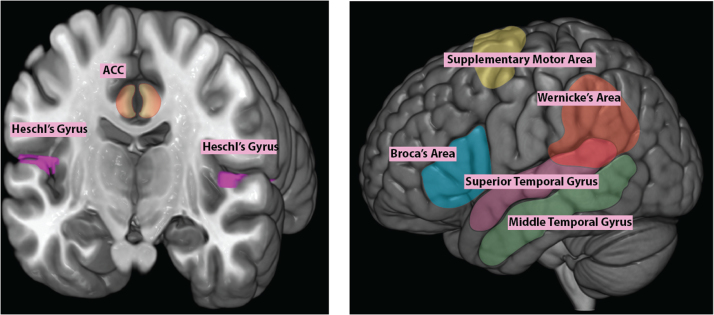
“Sounds are perceived and processed first in primary auditory cortex (PAC) which is located in the superior plane of the superior temporal gyri (STG) called Heschl’s gyrus (Zatorre et al., 2002) (Fig.”
BackgroundThe anatomy of language: a review of 100 fMRI studies published in 2009
Price, C. J. (2010) · Annals of the New York Academy of Sciences · doi:10.1111/j.1749-6632.2010.05444.x · Cited by 1,387
Memory Impairment in Schizophrenia: A Meta-Analysis
Aleman, A., Hijman, R., de Haan, E. H. F., & Kahn, R. S. (1999) · American Journal of Psychiatry · doi:10.1176/ajp.156.9.1358 · Cited by 1,093 · cited 1×
“Memory impairment is well documented in schizophrenia but has not been investigated intensively in relation to AH (Aleman et al., 1999).”
BackgroundBOLD correlates of EEG topography reveal rapid resting-state network dynamics
Britz, J., Van De Ville, D., & Michel, C. M. (2010) · NeuroImage · doi:10.1016/j.neuroimage.2010.02.052 · Cited by 1,070
The role of the parahippocampal cortex in cognition
Aminoff, E., Kveraga, K., & Bar, M. (2013) · Trends in Cognitive Sciences · doi:10.1016/j.tics.2013.06.009 · Cited by 903 · cited 1×
“, 2004); the parahippocampal gyrus involved in contextual associations closely related to memory (Aminoff et al., 2013); the amygdala, involved in emotional processing and emotional learning (McGaugh et al.”
BackgroundA hitchhiker's guide to diffusion tensor imaging
Soares, J. M., Marques, P., Alves, V., & Sousa, N. (2013) · Frontiers in Neuroscience · doi:10.3389/fnins.2013.00031 · Cited by 893 · cited 1×
“However, decreases in FA do not always imply aberrant integrity, but can also indicate crossing fibers (see for example (Hoeft et al., 2007; Soares et al., 2013)).”
BackgroundAssessing interactions in the brain with exact low-resolution electromagnetic tomography
Pascual-Marqui, R. D., Lehmann, D., Koukkou, M., Kochi, K., Anderer, P., Saletu, B., Tanaka, H., Hirata, K., John, E. R., Prichep, L. S., et al. (2011) · Philosophical Transactions of the Royal Society A Mathematical Physical and Engineering Sciences · doi:10.1098/rsta.2011.0081 · Cited by 844 · cited 1×
“While earlier studies using sensor-level EEG-coherence measurements were at increased risk of problems due to volume conduction, the analysis in source-space and the addressing of the phase-lag between brain regions have been successful steps towards valid EEG-based connectivity results (Pascual-Marqui et al., 2011).”
BackgroundDissecting the uncinate fasciculus: disorders, controversies and a hypothesis.
Von Der Heide, R. J., Skipper, L. M., Klobusicky, E., & Olson, I. R. (2013) · Brain · doi:10.1093/brain/awt094 · Cited by 829
The Emotional Brain: The Mysterious Underpinnings of Emotional Life
Evans, H. M. (2000) · Neuropsychoanalysis · doi:10.1080/15294145.2000.10773288 · Cited by 768
Activation of Heschl’s Gyrus during Auditory Hallucinations
Dierks, T., Linden, D. E. J., Jandl, M., Formisano, E., Goebel, R., Lanfermann, H., & Singer, W. (1999) · Neuron · doi:10.1016/s0896-6273(00)80715-1 · Cited by 752 · cited 1×
“Symptom capture studies The auditory system activated during the experience of AVH includes primary (Dierks et al., 1999) and secondary cortices (STG; MTG) as well as other regions such as anterior cingulate, SMA, insula, precentral gyrus, frontal operculum, inferior parietal lobule, hippocampus, and parahippocampal r…”
BackgroundInvolvement of the amygdala in memory storage: Interaction with other brain systems
McGaugh, J. L., Cahill, L. F., & Roozendaal, B. (1996) · Proceedings of the National Academy of Sciences · doi:10.1073/pnas.93.24.13508 · Cited by 747 · cited 2×
“, 2013); the amygdala, involved in emotional processing and emotional learning (McGaugh et al., 1996); the entorhinal cortex, which is closely associated with memory functions of the hippocampus(Squire et al.”
BackgroundSynchronization of neural activity across cortical areas correlates with conscious perception
Melloni, L., Molina, C., Pena, M., Torres, D., Singer, W., & Rodriguez, E. (2007) · The Journal of Neuroscience · doi:10.1523/jneurosci.4623-06.2007 · Cited by 716 · cited 1×
“The application of FC analyses to the study of AVHs is motivated by a range of studies demonstrating that inter-region functional coordination plays an important role in determining whether neural activity is experienced consciously as percepts (Cosmelli et al., 2004; Sergent and Dehaene, 2004; Melloni et al., 2007; J…”
MethodMitchell, K., & Johnson, M. K. (2009) · Psychological Bulletin · doi:10.1037/a0015849 · Cited by 712 · cited 1×
“A second approach has viewed these ‘source-monitoring’ problems as memory deficits, involving failure to correctly bind and retrieve memory features to form a cohesive representation of an experience (Mitchell and Johnson, 2009).”
BackgroundThe auditory hallucination: a phenomenological survey
Nayani, T. H., & David, A. S. (1996) · Psychological Medicine · doi:10.1017/s003329170003381x · Cited by 710 · cited 4×
“Certainly patients with stressful AVHs find relief by talking to themselves or to others (Nayani and David, 1996; Farhall and Gehrke, 1997; Farhall et al., 2007).”
BackgroundInfluentialA neural mass model for MEG/EEG:
Olivier David, A., & Friston, K. J. (2003) · NeuroImage · doi:10.1016/j.neuroimage.2003.07.015 · Cited by 705 · cited 1×
“It has been proposed that a potential mechanism for information processing by the brain is synchronization of distant neuronal assemblies (Varela et al., 2001; Fries, 2005; David and Friston, 2003).”
BackgroundMapping auditory hallucinations in schizophrenia using functional magnetic resonance imaging
Shergill, S. S., Brammer, M. J., Williams, S. C. R., Murray, R. M., & McGuire, P. K. (2000) · Archives of General Psychiatry · doi:10.1001/archpsyc.57.11.1033 · Cited by 666 · cited 1×
“, 1999) and secondary cortices (STG; MTG) as well as other regions such as anterior cingulate, SMA, insula, precentral gyrus, frontal operculum, inferior parietal lobule, hippocampus, and parahippocampal region (Shergill et al., 2000; Raij et al., 2009).”
BackgroundGamma frequency-range abnormalities to auditory stimulation in schizophrenia
Kwon, J. S., O'Donnell, B. F., Wallenstein, G. V., Greene, R. W., Hirayasu, Y., Nestor, P. G., Hasselmo, M. E., Potts, G. F., Shenton, M. E., & McCarley, R. W. (1999) · Archives of General Psychiatry · doi:10.1001/archpsyc.56.11.1001 · Cited by 654 · cited 1×
“In principle, the pathophysiology of AVH thus predict impaired EEG synchronisation during sensory processing in patient s with AVH, as shown in a series of studies (Kwon et al., 1999; Gallinat et al., 2004; Uhlhaas et al., 2008; Uhlhaas and Singer, 2010; Engel et al., 2013).”
ResultJardri, R., Pouchet, A., Pins, D., & Thomas, P. (2011) · American Journal of Psychiatry · doi:10.1176/appi.ajp.2010.09101522 · Cited by 651 · cited 6×
“One possible consequence is a predisposition to the over-activation of language regions in the absence of correct input (Jardri et al., 2011).”
BackgroundInfluentialSelf-citationUhlhaas, P. J., Haenschel, C., Nikolic, D., & Singer, W. (2008) · Schizophrenia Bulletin · doi:10.1093/schbul/sbn062 · Cited by 629 · cited 1×
“In principle, the pathophysiology of AVH thus predict impaired EEG synchronisation during sensory processing in patient s with AVH, as shown in a series of studies (Kwon et al., 1999; Gallinat et al., 2004; Uhlhaas et al., 2008; Uhlhaas and Singer, 2010; Engel et al., 2013).”
ResultEfference copy and corollary discharge: implications for thinking and its disorders
Feinberg, I. (1978) · Schizophrenia Bulletin · doi:10.1093/schbul/4.4.636 · Cited by 592 · cited 1×
“One approach has been to explain these impairments in terms of sensory-motor predictions from one’s own actions via forward modelling and efference copy mechanisms (Feinberg, 1978; Frith et al., 1992).”
BackgroundHanakawa, T., Dimyan, M. A., & Hallett, M. (2008) · Cerebral Cortex · doi:10.1093/cercor/bhn036 · Cited by 590 · cited 1×
“confounded by motor planning and imagery specifically for SMA/ ACC region (Hanakawa et al., 2008).”
BackgroundAllen, P., Larøi, F., McGuire, P. K., & Aleman, A. (2008) · Neuroscience & Biobehavioral Reviews · doi:10.1016/j.neubiorev.2007.07.012 · Cited by 579 · cited 1×
“, 2011) that incorporate both functional and anatomical connections (Allen et al., 2008).”
BackgroundFriederici, A. D., Meyer, M. E., & von Cramon, D. Y. (2000) · Brain and Language · doi:10.1006/brln.2000.2313 · Cited by 573 · cited 1×
“Lateral frontal and temporal regions of both hemispheres are involved in syntactic processing of connected speech with predominance in the left hemisphere (Friederici et al., 2000), while the right hemisphere has more important role in processing of emotional information (prosody) and tone of spoken language (Meyer et…”
BackgroundLawrie, S. M., Buechel, C., Whalley, H. C., Frith, C. D., Friston, K. J., & Johnstone, E. C. (2002) · Biological Psychiatry · doi:10.1016/s0006-3223(02)01316-1 · Cited by 529 · cited 2×
“(2002) are very similar to those of Lawrie and colleagues using fMRI (Lawrie et al., 2002): both reported diminished connectivity between the frontotemporal speech production region and speech comprehension areas in patients with AVH.”
BackgroundResultEEG oscillations: from correlation to causality
Herrmann, C. S., Strüber, D., Helfrich, R. F., & Engel, A. K. (2016) · International Journal of Psychophysiology · doi:10.1016/j.ijpsycho.2015.02.003 · Cited by 527 · cited 1×
“Moreover, recent developments of non-invasive brain stimulation such as transcranial alternating current stimulation offer a frequency- and probably mechanism-specific alteration of brain function (Herrmann et al., 2015), suggesting that an improved understanding of altered oscillatory coupling between brain regions u…”
BackgroundAuditory affective agnosia. Disturbed comprehension of affective speech.
Heilman, K. M., Scholes, R. J., & Watson, R. T. (1975) · Journal of Neurology Neurosurgery & Psychiatry · doi:10.1136/jnnp.38.1.69 · Cited by 518 · cited 1×
“In patients, these memories are more negative and this may be related to faulty interhemispheric communication (as the language areas in the right hemisphere are involved in the emotional connotation of speech (Heilman et al., 1975; Wildgruber et al., 2006) and memory impairment.”
BackgroundNeural substrates of vocalization feedback monitoring in primate auditory cortex
Eliades, S. J., & Wang, X. (2008) · Nature · doi:10.1038/nature06910 · Cited by 479
Intrinsic Coupling Modes: Multiscale Interactions in Ongoing Brain Activity
Engel, A. K., Gerloff, C., Hilgetag, C. C., & Nolte, G. (2013) · Neuron · doi:10.1016/j.neuron.2013.09.038 · Cited by 471 · cited 2×
“In principle, the pathophysiology of AVH thus predict impaired EEG synchronisation during sensory processing in patient s with AVH, as shown in a series of studies (Kwon et al., 1999; Gallinat et al., 2004; Uhlhaas et al., 2008; Uhlhaas and Singer, 2010; Engel et al., 2013).”
BackgroundResultHubl, D., Koenig, T. W., Strik, W. K., Federspiel, A., Kreis, R., Boesch, C., Maier, S. E., Schroth, G., Lövblad, K., & Dierks, T. (2004) · Archives of General Psychiatry · doi:10.1001/archpsyc.61.7.658 · Cited by 466 · cited 5×
“For example, some findings point towards increased connectivity within the language and memory networks (Hubl et al., 2004; Shergill et al., 2007), whereas others demonstrate a decrease in fractional anisotropy (FA), implicating decreased connectivity (Catani et al.”
BackgroundResultInfluentialIncreased blood flow in Broca's area during auditory hallucinations in schizophrenia
McGuire, P. K., Murray, R. M., & Shah, G. M. S. (1993) · The Lancet · doi:10.1016/0140-6736(93)91707-s · Cited by 425 · cited 1×
“Source monitoring hypothesis proposes that AVH comprise deficits in self-monitoring and reality discrimination (Bentall and Slade, 1985; McGuire et al., 1993; Allen et al., 2007), whereby internally events (thoughts, inner speech, actions) lack ‘self’ attributes, resulting in broad difficulties in self-recognition.”
BackgroundWaters, F., Allen, P., Aleman, A., Fernyhough, C., Woodward, T. S., Badcock, J. C., Barkus, E., Johns, L., Varese, F., Menon, M., et al. (2012) · Schizophrenia Bulletin · doi:10.1093/schbul/sbs045 · Cited by 423 · cited 2×
“Further studies should be directed towards discerning which of the four abovementioned scenarios (Ford and Hoffman, 2013a; Aleman and Larøi, 2011; Waters et al., 2012; Northoff, 2014) is most plausible by adopting a more specific experimental paradigm and using causal inference analysis methods.”
BackgroundD'Angelo, E., & Casali, S. (2013) · Frontiers in Neural Circuits · doi:10.3389/fncir.2012.00116 · Cited by 407 · cited 1×
“Cerebellum is important for brain synchrony and action prediction (D'Angelo and Casali, 2013) by coordinating and modulating cortical activity (Picard et al.”
BackgroundSergent, C., & Dehaene, S. (2004) · Psychological Science · doi:10.1111/j.0956-7976.2004.00748.x · Cited by 384
Auditory dysfunction in schizophrenia: integrating clinical and basic features
Javitt, D. C., & Sweet, R. A. (2015) · Nature reviews. Neuroscience · doi:10.1038/nrn4002 · Cited by 377 · cited 23×
“We can thus propose that AVHs are derived from auditory cortical activity, and it is highly likely that spontaneous activity caused by the intrusion of external auditory signals (that recruit neurophysiological resources overlapping with those responsible for AVH perception) is normally inhibited in this receptive sen…”
BackgroundInfluentialVerbal hallucinations and language production processes in schizophrenia
Hoffman, R. E. (1986) · Behavioral and Brain Sciences · doi:10.1017/s0140525x00046781 · Cited by 369 · cited 1×
“One early theory proposed that verbal hallucinations may be ‘parasitic’ memories due to disrupted language production processes which spontaneously and erroneously activate language based memory (Hoffman, 1986).”
BackgroundReality testing and auditory hallucinations: a signal detection analysis
Bentall, R. P., & Slade, P. D. (1985) · British Journal of Clinical Psychology · doi:10.1111/j.2044-8260.1985.tb01331.x · Cited by 362 · cited 1×
“Source monitoring hypothesis proposes that AVH comprise deficits in self-monitoring and reality discrimination (Bentall and Slade, 1985; McGuire et al., 1993; Allen et al., 2007), whereby internally events (thoughts, inner speech, actions) lack ‘self’ attributes, resulting in broad difficulties in self-recognition.”
BackgroundThe anatomo-functional connectivity of language revisited
Duffau, H. (2007) · Neuropsychologia · doi:10.1016/j.neuropsychologia.2007.10.025 · Cited by 350 · cited 2×
“The arcuate fasciculus is involved in both auditory and language processing (Duffau, 2008).”
BackgroundThe neural response to emotional prosody, as revealed by functional magnetic resonance imaging
Mitchell, R. L. C., Elliott, R., Barry, M., Cruttenden, A., & Woodruff, P. W. R. (2003) · Neuropsychologia · doi:10.1016/s0028-3932(03)00017-4 · Cited by 337
Reduced communication between frontal and temporal lobes during talking in schizophrenia
Ford, J. M., Mathalon, D. H., Whitfield‐Gabrieli, S., Faustman, W. O., & Roth, W. T. (2002) · Biological Psychiatry · doi:10.1016/s0006-3223(01)01335-x · Cited by 332 · cited 2×
“Human studies using EEG-based methods have mimicked this work and the findings (Ford et al., 2002).”
BackgroundWoodruff, P. W. R., Wright, I. C., Bullmore, E. T., Brammer, M. J., Howard, R. J., Williams, S., Shapleske, J., Rossell, S. L., David, A. S., McGuire, P. K., et al. (1997) · American Journal of Psychiatry · doi:10.1176/ajp.154.12.1676 · Cited by 331
The diagnostic interview for psychoses (DIP): development, reliability and applications
Castle, D. J., Jablensky, A. V., McGrath, J. J., Carr, V. J., Morgan, V. A., Waterreus, A. J., Valuri, G. M., Stain, H. J., McGuffin, P., & FARMER, A. E. (2005) · Psychological Medicine · doi:10.1017/s0033291705005969 · Cited by 323 · cited 2×
“Only Oestreich summarises AVH experiences (Oestreich et al., 2015) based on the Diagnostic Interview for Psychosis (DIP) (Castle et al., 2006).”
Role of perirhinal cortex in object perception, memory, and associations
Murray, E. A., & Richmond, B. J. (2001) · Current Opinion in Neurobiology · doi:10.1016/s0959-4388(00)00195-1 · Cited by 319 · cited 1×
“, 2004); the perirhinal cortex, which has a function in sensory integration, semantic and long-term memory (Murray and Richmond, 2001; Murray et al., 2005).”
BackgroundFMRI reveals brain regions mediating slow prosodic modulations in spoken sentences
Meyer, M. E., Alter, K., Friederici, A. D., Lohmann, G., & von Cramon, D. Y. (2002) · Human Brain Mapping · doi:10.1002/hbm.10042 · Cited by 310 · cited 1×
“, 2000), while the right hemisphere has more important role in processing of emotional information (prosody) and tone of spoken language (Meyer et al., 2002; Mitchell et al., 2003).”
BackgroundHoeft, F., Barnea‐Goraly, N., Haas, B. W., Golarai, G., Ng, D., Mills, D. L., Korenberg, J. R., Bellugi, U., Galaburda, A. M., & Reiss, A. L. (2007) · Journal of Neuroscience · doi:10.1523/jneurosci.3591-07.2007 · Cited by 305 · cited 1×
“However, decreases in FA do not always imply aberrant integrity, but can also indicate crossing fibers (see for example (Hoeft et al., 2007; Soares et al., 2013)).”
BackgroundMcCarthy‐Jones, S., Trauer, T., Mackinnon, A. J., Sims, E., Thomas, N., & Copolov, D. (2012) · Schizophrenia Bulletin · doi:10.1093/schbul/sbs156 · Cited by 305 · cited 1×
“, command hallucinations, third-person hallucinations, and thought echo (Blom and Sommer, 2010; McCarthy-Jones et al., 2014).”
BackgroundEncoding novel face‐name associations: A functional MRI study
Sperling, R. A., Bates, J. F., Cocchiarella, A. J., Schacter, D. L., Rosen, B. R., & Albert, M. (2001) · Human Brain Mapping · doi:10.1002/hbm.1047 · Cited by 303 · cited 1×
“, 1996) and together with striatum in associative memory (Sperling et al., 2001).”
BackgroundCerebral processing of linguistic and emotional prosody: fMRI studies
Wildgruber, D., Ackermann, H., Kreifelts, B., & Ethofer, T. (2006) · Progress in Brain Research · doi:10.1016/s0079-6123(06)56013-3 · Cited by 297
Auditory verbal hallucinations predominantly activate the right inferior frontal area
Sommer, I. E. C., Diederen, K. M. J., Blom, J.-D., Willems, A., Kushan, L., Slotema, K., Boks, M. P. M., Daalman, K., Hoek, H. W., Neggers, S. F. W., et al. (2008) · Brain · doi:10.1093/brain/awn251 · Cited by 297 · cited 1×
“This is consistent with ‘over-activation’ of Broca’s area during AVH (Sommer et al., 2008).”
ResultSelf-citationHallucinations: The science of idiosyncratic perception.
Aleman, A., & Larøi, F. (2008) · American Psychological Association eBooks · doi:10.1037/11751-000 · Cited by 291
Forms of memory failure in schizophrenia.
Gold, J. M., RANDOLPH, C. C., Carpenter, C. J., Goldberg, T. E., & Weinberger, D. R. (1992) · Journal of Abnormal Psychology · doi:10.1037/0021-843x.101.3.487 · Cited by 291 · cited 1×
“In patients with schizophrenia, errors already occur at the perception level (Gold et al., 1992).”
BackgroundPicard, H., Amado, I., Mouchet-Mages, S., Olié, J., & Krebs, M. (2007) · Schizophrenia bulletin · doi:10.1093/schbul/sbm049 · Cited by 290 · cited 1×
“Cerebellum is important for brain synchrony and action prediction (D'Angelo and Casali, 2013) by coordinating and modulating cortical activity (Picard et al., 2008).”
BackgroundKompus, K., Westerhausen, R., & Hugdahl, K. (2011) · Neuropsychologia · doi:10.1016/j.neuropsychologia.2011.08.010 · Cited by 286
Hyperconnectivity is a fundamental response to neurological disruption.
Hillary, F. G., Román, C. A. F., Venkatesan, U. M., Rajtmajer, S. M., Bajo, R., & Castellanos, N. P. (2014) · Neuropsychology · doi:10.1037/neu0000110 · Cited by 265 · cited 2×
“Their review of 126 studies showed that after the onset of illness overall connectivity is increased but diminishes in the later stages of the degeneration (Hillary et al., 2015).”
BackgroundResultThe neurophysics of consciousness
John, E. R. (2002) · Brain Research Reviews · doi:10.1016/s0165-0173(02)00142-x · Cited by 262 · cited 1×
“The application of FC analyses to the study of AVHs is motivated by a range of studies demonstrating that inter-region functional coordination plays an important role in determining whether neural activity is experienced consciously as percepts (Cosmelli et al., 2004; Sergent and Dehaene, 2004; Melloni et al., 2007; J…”
MethodVercammen, A., Knegtering, H., den Boer, J. A., Liemburg, E. J., & Aleman, A. (2010) · Biological Psychiatry · doi:10.1016/j.biopsych.2009.11.017 · Cited by 261 · cited 2×
“Symptom association studies Vercammen and colleagues used a region of interest analysis comprising neuronal networks involved in inner speech processing, based around a seed region in the tempo-parietal junction (Vercammen et al., 2010).”
BackgroundMeta-analysis of corpus callosum size in schizophrenia.
Woodruff, P. W. R., McManus, I. C., & David, A. S. (1995) · Journal of Neurology Neurosurgery & Psychiatry · doi:10.1136/jnnp.58.4.457 · Cited by 255
A Diffusion Tensor Imaging Study of Fasciculi in Schizophrenia
Shergill, S. S., Kanaan, R., Chitnis, X. A., O’Daly, O., Jones, D. K., Frangou, S., Williams, S. C., Howard, R. J., Barker, G. J., Murray, R. M. L., et al. (2007) · American Journal of Psychiatry · doi:10.1176/appi.ajp.164.3.467 · Cited by 254 · cited 4×
“Decreased FA in various parts of the cingulum has consistently been observed in schizophrenia patients (Hubl et al., 2004; Shergill et al., 2007; Knöchel et al., 2012).”
BackgroundInfluentialIntrusive Thoughts and Auditory Hallucinations: A Cognitive Approach
Morrison, A. P., Haddock, G., & Tarrier, N. (1995) · Behavioural and Cognitive Psychotherapy · doi:10.1017/s1352465800015873 · Cited by 252 · cited 1×
“In support, people who hear voices experience these as intrusive and unwanted (Morrison et al., 1995), as might be expected if memory systems fail to suppress mental associations which are not currently relevant.”
BackgroundForkel, S. J., Thiebaut de Schotten, M., Kawadler, J. M., Dell'Acqua, F., Danek, A., & Catani, M. (2014) · Cortex · doi:10.1016/j.cortex.2012.09.005 · Cited by 248 · cited 1×
“Another important tract involved in language processing is the inferior fronto-occipital fasciculus, connecting frontal with temporal and parietal parts of the brain and running inferior to the AF (Forkel et al., 2012).”
BackgroundSynch before you speak: Auditory hallucinations in schizophrenia
Ford, J. M., Roach, B. J., Faustman, W. O., & Mathalon, D. H. (2007) · American Journal of Psychiatry · doi:10.1176/ajp.2007.164.3.458 · Cited by 245 · cited 2×
“suppression, as the degree of connectivity between these areas during talking is related to the degree of suppression (Ford et al., 2007; Chen et al., 2011; Wang et al., 2014).”
BackgroundSelf-citationKuhn, S., & Gallinat, J. (2012) · Schizophrenia Bulletin · doi:10.1093/schbul/sbq152 · Cited by 245 · cited 1×
“The STG (left and right) are almost universally active during AVH (Jardri et al., 2011; Kuhn and Gallinat, 2010).”
BackgroundSzeszko, P. R., Robinson, D. G., Ashtari, M., Vogel, J., Betensky, J. D., Sevy, S. M., Ardekani, B. A., Lencz, T., Malhotra, A. K., McCormack, J., et al. (2007) · Neuropsychopharmacology · doi:10.1038/sj.npp.1301480 · Cited by 241
Allen, P., Modinos, G., Hubl, D., Shields, G., Cachia, A., Jardri, R., Thomas, P., Woodward, T., Shotbolt, P., Plaze, M., et al. (2012) · Schizophrenia Bulletin · doi:10.1093/schbul/sbs066 · Cited by 240 · cited 7×
“Functional MRI studies have investigated the functional brain networks during the experience of hallucinations but also compared the functional brain networks between patients who hallucinate and those that do not, based on reports of hearing hallucination during the past (Allen et al., 2012; Woodruff, 2004).”
BackgroundInfluentialGallinat, J., Winterer, G., Herrmann, C. S., & Senkowski, D. (2004) · Clinical Neurophysiology · doi:10.1016/j.clinph.2004.03.013 · Cited by 233 · cited 1×
“In principle, the pathophysiology of AVH thus predict impaired EEG synchronisation during sensory processing in patient s with AVH, as shown in a series of studies (Kwon et al., 1999; Gallinat et al., 2004; Uhlhaas et al., 2008; Uhlhaas and Singer, 2010; Engel et al., 2013).”
ResultAuditory hallucinations in schizophrenia: intrusive thoughts and forgotten memories
Waters, F., Badcock, J., Michie, P., & Maybery, M. (2006) · Cognitive Neuropsychiatry · doi:10.1080/13546800444000191 · Cited by 233 · cited 1×
“Inhibitory deficits would also contribute to the failure to control the contents of memories (Jardri et al., 2016; Waters et al., 2006).”
BackgroundModinos, G., Costafreda, S. G., van Tol, M., McGuire, P. K., Aleman, A., & Allen, P. (2012) · Cortex · doi:10.1016/j.cortex.2012.01.009 · Cited by 230 · cited 1×
“Furthermore, decreases in the primary (Modinos et al., 2013) and secondary auditory cortex GM volume (reviewed by Allen et al.”
BackgroundAbnormal brain white matter in schizophrenia: a diffusion tensor imaging study
Agartz, I., Andersson, J., & Skare, S. T. (2001) · Neuroreport · doi:10.1097/00001756-200107200-00041 · Cited by 225
White Matter Development in Adolescence: Diffusion Tensor Imaging and Meta-Analytic Results
Peters, B. D., Szeszko, P. R., Raduà, J., Ikuta, T., Gruner, P., DeRosse, P., Zhang, J., Giorgio, A., Qiu, D., Tapert, S. F., et al. (2012) · Schizophrenia Bulletin · doi:10.1093/schbul/sbs054 · Cited by 214 · cited 1×
“An increase in the total number of whole-brain DTI studies referring to validated whitematter templates would pave the way to coordinate-based metaanalyses, providing a peak effect size and signed maps of positive or negative differences in AVH patients (Peters et al., 2012).”
BackgroundMhuircheartaigh, R. N., Rosenorn-Lanng, D., Wise, R. G., Jbabdi, S., Rogers, R., & Tracey, I. (2010) · Journal of Neuroscience · doi:10.1523/jneurosci.5516-09.2010 · Cited by 213 · cited 1×
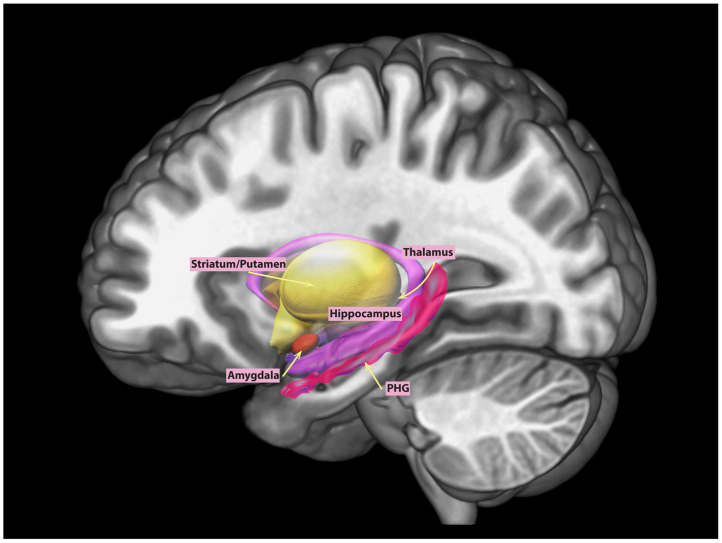
“1), and the putamen to translate memories into language experience (Price, 2010) and bring the experience into consciousness (Mhuircheartaigh et al., 2010), as well as speech and auditory network (Wernicke’s, Broca’s areas; Fig.”
BackgroundNorthoff, G., & Qin, P. (2010) · Schizophrenia Research · doi:10.1016/j.schres.2010.11.009 · Cited by 209 · cited 3×
“Northoff predicts that elevated resting state activity in the default mode network and auditory cortex coupled with their unaltered communication can enhance the development of AVH (Northoff, 2014; Northoff and Qin, 2011).”
BackgroundResultTop-down and bottom-up processes in speech comprehension
Zekveld, A. A., Heslenfeld, D. J., Festen, J. M., & Schoonhoven, R. (2006) · NeuroImage · doi:10.1016/j.neuroimage.2006.04.199 · Cited by 203
Deactivation of the Parahippocampal Gyrus Preceding Auditory Hallucinations in Schizophrenia
Diederen, K. M. J., Neggers, S. F. W., Daalman, K., Blom, J. D., Goekoop, R., Kahn, R. S., & Sommer, I. E. (2010) · American Journal of Psychiatry · doi:10.1176/appi.ajp.2009.09040456 · Cited by 202
Hugdahl, K. (2009) · Scandinavian Journal of Psychology · doi:10.1111/j.1467-9450.2009.00775.x · Cited by 197 · cited 1×
“also endorsed the idea of an imbalance in top-down/bottom-up influences and suggested that while AVHs originate in perisylvian regions (Hugdahl, 2009), they are in general not as constrained by the PFC in patients as they are in non-psychotic voice-hearers.”
Hallucinations and perceptual inference
Friston, K. J. (2005) · Behavioral and Brain Sciences · doi:10.1017/s0140525x05290131 · Cited by 196
How hallucinations may arise from brain mechanisms of learning, attention, and volition
Grossberg, S. (2000) · Journal of the International Neuropsychological Society · doi:10.1017/s135561770065508x · Cited by 192 · cited 2×
“This is in line with abnormal top-down influences on auditory perception in the case of hallucinatory experiences (Behrendt, 2006; Grossberg, 2000), as described in Section 3.”
BackgroundThe Neurodynamic Organization of Modality-Dependent Hallucinations
Jardri, R., Thomas, P., Delmaire, C., Delion, P., & Pins, D. (2012) · Cerebral Cortex · doi:10.1093/cercor/bhs082 · Cited by 192 · cited 1×
“found that primary auditory cortex was not systematically active during AVH but when active, this was linked with increased vividness in hallucinatory experiences (Jardri et al., 2013).”
BackgroundAllen, P., Aleman, A., & Mcguire, P. K. (2007) · International Review of Psychiatry · doi:10.1080/09540260701486498 · Cited by 188 · cited 1×
“Source monitoring hypothesis proposes that AVH comprise deficits in self-monitoring and reality discrimination (Bentall and Slade, 1985; McGuire et al., 1993; Allen et al., 2007), whereby internally events (thoughts, inner speech, actions) lack ‘self’ attributes, resulting in broad difficulties in self-recognition.”
BackgroundSelf-citationCognitive basis of hallucinations in schizophrenia: role of top-down information processing
Aleman, A., Böcker, K. B. E., Hijman, R., de Haan, E. H. F., & Kahn, R. S. (2003) · Schizophrenia Research · doi:10.1016/s0920-9964(03)00060-4 · Cited by 178 · cited 2×
“Another approach that focuses on perception and attentional processes is based on the idea that AVH may be caused by unbalanced mechanisms for bottom-up sensory processing on one hand and top-down mechanisms on the other hand (Behrendt, 1998; Grossberg, 2000; Aleman et al., 2003).”
BackgroundMisattribution of speech and impaired connectivity in patients with auditory verbal hallucinations
Mechelli, A., Allen, P., Amaro, E., Fu, C. H. Y., Williams, S. C. R., Brammer, M. J., Johns, L. C., & McGuire, P. K. (2007) · Human Brain Mapping · doi:10.1002/hbm.20341 · Cited by 175 · cited 5×
“One study used effective connectivity between monitoring and language areas and interpreted their findings as evidence of source monitoring deficits in the people with AVH and as support for the self-monitoring deficit theory of AVH (Mechelli et al., 2007).”
BackgroundResultInfluentialKindler, J., Hubl, D., Strik, W. K., Dierks, T., & Koenig, T. W. (2010) · Clinical Neurophysiology · doi:10.1016/j.clinph.2010.10.042 · Cited by 174 · cited 1×
“demonstrated the shortening of class D microstates during AVH (Kindler et al., 2011).”
BackgroundBenoit, R. G., Hulbert, J. C., Huddleston, E., & Anderson, M. C. (2014) · Journal of Cognitive Neuroscience · doi:10.1162/jocn_a_00696 · Cited by 174 · cited 1×
“Memory fragments are usually inhibited during focused attention (Benoit et al., 2015), but may become less inhibited during times of daydreaming and relaxation, when the default mode network is more active.”
BackgroundSeok, J.-H., Park, H.-J., Chun, J.-W., Lee, S.-K., Cho, H. S., Kwon, J. S., & Kim, J.-J. (2007) · Psychiatry Research: Neuroimaging · doi:10.1016/j.pscychresns.2007.02.002 · Cited by 168 · cited 3×
“These authors reported a positive correlation between AVH severity and the left superior longitudinal fasciculus FA – the region with the highest white matter density in AVH compared to all other groups (Seok et al., 2007).”
ResultAlderson-Day, B., McCarthy-Jones, S., & Fernyhough, C. (2015) · Neuroscience & Biobehavioral Reviews · doi:10.1016/j.neubiorev.2015.04.016 · Cited by 165
Long-range synchrony of gamma oscillations and auditory hallucination symptoms in schizophrenia
Mulert, C., Kirsch, V., Pascual-Marqui, R., McCarley, R. W., & Spencer, K. M. (2011) · International Journal of Psychophysiology · doi:10.1016/j.ijpsycho.2010.08.004 · Cited by 165
Self-citationAre hallucinations due to an imbalance between excitatory and inhibitory influences on the brain?
Jardri, R., Hugdahl, K., Hughes, M., Brunelin, J., Waters, F., Alderson-Day, B., Smailes, D., Sterzer, P., Corlett, P. R., Leptourgos, P., et al. (2016) · Schizophrenia Bulletin · doi:10.1093/schbul/sbw075 · Cited by 157
Self-citationHoffman, R. E., Fernandez, T., Pittman, B., & Hampson, M. (2011) · Biological Psychiatry · doi:10.1016/j.biopsych.2010.09.050 · Cited by 156
Childhood trauma and auditory verbal hallucinations
Daalman, K., Diederen, K. M. J., Derks, E. M., van Lutterveld, R., Kahn, R. S., & Sommer, I. E. C. (2012) · Psychological Medicine · doi:10.1017/s0033291712000761 · Cited by 153 · cited 2×
“This theory could provide a neurobiological explanation for the strong association between childhood trauma and AVH, which is present in patients with schizophrenia, with post-traumatic stress disorder and also in non-clinical populations (Daalman et al., 2012).”
BackgroundRole of the Corpus Callosum in Speech Comprehension: Interfacing Syntax and Prosody
Friederici, A. D., von Cramon, D. Y., & Kotz, S. A. (2007) · Neuron · doi:10.1016/j.neuron.2006.11.020 · Cited by 148 · cited 1×
“For example, lesion studies demonstrated a crucial role of this pathway in the integration of prosodic and syntactic information (Friederici et al., 2007).”
BackgroundThe multimodal connectivity of the hippocampal complex in auditory and visual hallucinations
Amad, A., Cachia, A., Gorwood, P. A. P. M., Pins, D., Delmaire, C., Rolland, B., Mondino, M., Thomas, P., & Jardri, R. (2013) · Molecular Psychiatry · doi:10.1038/mp.2012.181 · Cited by 144 · cited 1×
“(Amad et al., 2014) examined connectivity between the hippocampal complex and other regions that included STG in patients with auditory, and patients with auditory”
BackgroundShinn, A. K., Baker, J. T., Cohen, B. M., & Öngür, D. (2012) · Schizophrenia Research · doi:10.1016/j.schres.2012.11.037 · Cited by 136 · cited 3×
“Shinn and colleagues reported contradictory results (Shinn et al., 2013).”
BackgroundInfluentialNeural activity in speech-sensitive auditory cortex during silence
Hunter, M. D., Eickhoff, S. B., Miller, T. W. R., Farrow, T. F. D., Wilkinson, I. D., & Woodruff, P. W. R. (2005) · Proceedings of the National Academy of Sciences · doi:10.1073/pnas.0506268103 · Cited by 135 · cited 2×
“, who showed increased activity during rest in auditory sensory areas of people more prone to hallucinate (Hunter et al., 2006).”
BackgroundCui, L., Liu, K., Li, C., Wang, L., Guo, F., Tian, P., Wu, Y.-J., Guo, L., Liu, W.-M., Xi, Y., et al. (2016) · Schizophrenia Research · doi:10.1016/j.schres.2016.02.039 · Cited by 134
Rotarska-Jagiela, A., Oertel‐Knoechel, V., Martino, F. D., van de Ven, V. G., Formisano, E., Roebroeck, A. F., Rami, A., Schoenmeyer, R., Haenschel, C., Hendler, T., et al. (2009) · Psychiatry Research Neuroimaging · doi:10.1016/j.pscychresns.2009.03.002 · Cited by 133
Catani, M., Craig, M., Forkel, S. J., Kanaan, R., Picchioni, M., Toulopoulou, T., Shergill, S. S., Williams, S., Murphy, D., & McGuire, P. K. (2011) · Biological Psychiatry · doi:10.1016/j.biopsych.2011.06.013 · Cited by 133 · cited 2×
“, 2007), whereas others demonstrate a decrease in fractional anisotropy (FA), implicating decreased connectivity (Catani et al., 2011; De Weijer et al., 2013; Cur9 ci c-Blake et al., 2015) in the same pathway within the network (Geoffroy et al.”
BackgroundResultAlderson‐Day, B., Diederen, K. M. J., Fernyhough, C., Ford, J. M., Horga, G., Margulies, D. S., McCarthy‐Jones, S., Northoff, G., Shine, J. M., Turner, J. A., et al. (2016) · Schizophrenia Bulletin · doi:10.1093/schbul/sbw078 · Cited by 132 · cited 2×
“It is possible that the differences arise from different measurement or analysis techniques (Alderson-Day et al., 2016), or the use of different questionnaires.”
BackgroundWaves of consciousness: ongoing cortical patterns during binocular rivalry
Cosmelli, D., David, O., Lachaux, J.-P., Martinerie, J., Garnero, L., Renault, B., & Varela, F. (2004) · NeuroImage · doi:10.1016/j.neuroimage.2004.05.008 · Cited by 131 · cited 1×
“The application of FC analyses to the study of AVHs is motivated by a range of studies demonstrating that inter-region functional coordination plays an important role in determining whether neural activity is experienced consciously as percepts (Cosmelli et al., 2004; Sergent and Dehaene, 2004; Melloni et al., 2007; J…”
MethodAlonso-Solís, A., Vives‐Gilabert, Y., Grasa, E., Portella, M. J., Rabella, M., Sauras-Quetcuti, R. B., Roldán, A., Núñez-Marín, F., Gómez‐Ansón, B., Pérez, V., et al. (2014) · Schizophrenia Research · doi:10.1016/j.schres.2014.10.047 · Cited by 124
Gavrilescu, M., Rossell, S., Stuart, G. W., Shea, T. L., Innes-Brown, H., Henshall, K., McKay, C., Sergejew, A. A., Copolov, D., & Egan, G. F. (2010) · Psychological Medicine · doi:10.1017/s0033291709991632 · Cited by 121 · cited 1×
“Using RS fMRI, Gavrilescu and colleagues investigated interhemispheric connectivity in the primary and secondary auditory cortex in patients with and without AVH and healthy controls (Gavrilescu et al., 2010).”
BackgroundParacingulate sulcus morphology is associated with hallucinations in the human brain
Garrison, J. R., Fernyhough, C., McCarthy‐Jones, S., Haggard, M. P., Carr, V. J., Schall, U., Scott, R. J., Jablensky, A. V., Mowry, B. J., Patricia, M., et al. (2015) · Nature Communications · doi:10.1038/ncomms9956 · Cited by 121
Westerhausen, R., Grüner, R., Specht, K., & Hugdahl, K. (2008) · Cerebral Cortex · doi:10.1093/cercor/bhn173 · Cited by 120 · cited 1×
“Interestingly, there is a strong relationship between the structure and function of interhemispheric connectivity between the bilateral auditory areas and conscious auditory perception in general (Westerhausen et al., 2009; Steinmann et al., 2014b).”
BackgroundFarhall, J., Greenwood, K. M., & Jackson, H. J. (2007) · Clinical Psychology Review · doi:10.1016/j.cpr.2006.12.002 · Cited by 118 · cited 1×
“Certainly patients with stressful AVHs find relief by talking to themselves or to others (Nayani and David, 1996; Farhall and Gehrke, 1997; Farhall et al., 2007).”
BackgroundTuning in to the Voices: A Multisite fMRI Study of Auditory Hallucinations
Ford, J. M., Roach, B. J., Jørgensen, K. W., Turner, J. A., Brown, G. G., Notestine, R. J., Bischoff‐Grethe, A., Greve, D. N., Wible, C. G., Lauriello, J., et al. (2008) · Schizophrenia Bulletin · doi:10.1093/schbul/sbn140 · Cited by 118 · cited 1×
“The observation that auditory hallucinations reduce responsivity to external speech within STG and related regions such as MTG has led to the ‘saturation theory’ whereby the signal driving hallucinations competes for common neurophysiological resources with those used for perceivingexternal speech (Woodruff et al.,199…”
BackgroundKnöchel, C., Oertel‐Knöchel, V., Schönmeyer, R., Rotarska-Jagiela, A., van de Ven, V. G., Prvulovic, D., Haenschel, C., Uhlhaas, P. J., Pantel, J., Hampel, H. J., et al. (2011) · NeuroImage · doi:10.1016/j.neuroimage.2011.07.088 · Cited by 116 · cited 1×
“Meanwhile, Knöchel and colleagues investigated FA and mean diffusivity (Knochel et al., 2012), a measure of the compactness of axons and intercellular space (Beaulieu, 2002).”
BackgroundNot on speaking terms: hallucinations and structural network disconnectivity in schizophrenia
Ćurĉić‐Blake, B., Nanetti, L., van der Meer, L., Cerliani, L., Renken, R. J., Pijnenborg, G. H. M., & Aleman, A. (2013) · Brain Structure and Function · doi:10.1007/s00429-013-0663-y · Cited by 110
A computerized magnetic resonance imaging study of corpus callosum morphology in schizophrenia
Woodruff, P. W. R., Pearlson, G. D., Geer, M. J., Barta, P. E., & Chilcoat, H. D. (1993) · Psychological Medicine · doi:10.1017/s0033291700038836 · Cited by 109 · cited 1×
“, 1995b) may also be related to delusions which occur in the same condition (Woodruff et al., 1993).”
BackgroundCorrelated neural activity as the driving force for functional changes in auditory cortex
Eggermont, J. J. (2007) · Hearing Research · doi:10.1016/j.heares.2007.01.008 · Cited by 108 · cited 1×
“Based on findings of hyper-synchrony between the auditory cortices (Eggermont, 2007), Diesch and colleagues suggested that stronger interhemispheric auditory pathways may facilitate the development and persistence of a positive feedback loop between tinnitus generators located in both hemispheres (Diesch et al.”
BackgroundRolland, B., Amad, A., Poulet, E., Bordet, R., Vignaud, A., Bation, R., Delmaire, C., Thomas, P., Cottencin, O., & Jardri, R. (2014) · Schizophrenia Bulletin · doi:10.1093/schbul/sbu097 · Cited by 103 · cited 15×
“Specifically, two seed-based studies reported hyperconnectivity in networks involving STG and the dACC/SMA for AVH patients relative to NoAVH (Alonso-Solis et al., 2015; Rolland et al., 2015).”
ResultInfluentialResting State Functional Connectivity in Patients with Chronic Hallucinations
Sommer, I. E., Clos, M., Meijering, A. L., Diederen, K. M. J., & Eickhoff, S. B. (2012) · PLoS ONE · doi:10.1371/journal.pone.0043516 · Cited by 103 · cited 2×
“Two studies found evidence for a specific role of connections between memory regions and Broca’s area (the language production area) (Sommer et al., 2012; Diederen et al., 2013) and Hoffman showed that the FC between the putamen and language areas is very important for AVH (Hoffman et al.”
BackgroundIn search of occipital activation during visual mental imagery
Kosslyn, S. M., & Ochsner, K. N. (1994) · Trends in Neurosciences · doi:10.1016/0166-2236(94)90059-0 · Cited by 102 · cited 1×
“It has been known for some time that imagery activates the brain areas that overlap with those that sub-serve perception (Kosslyn and Ochsner, 1994; Zatorre et al., 2007).”
Backgroundde Weijer, A. D., Mandl, R. C. W., Diederen, K. M. J., Neggers, S. F. W., Kahn, R. S., Pol, H. E. H., & Sommer, I. E. (2011) · Schizophrenia Research · doi:10.1016/j.schres.2011.05.010 · Cited by 101
Time course of regional brain activation associated with onset of auditory/verbal hallucinations
Hoffman, R. E., Anderson, A. W., Varanko, M., Gore, J. C., & Hampson, M. (2008) · British Journal of Psychiatry · doi:10.1192/bjp.bp.107.040501 · Cited by 96 · cited 1×
“In support, hippocampal deactivations have been observed immediately prior AVH, pointing to the release of memory (Hoffman et al., 2008; Diederen et al., 2010).”
BackgroundReality of auditory verbal hallucinations
Raij, T. T., Valkonen-Korhonen, M., Holi, M., Therman, S., Lehtonen, J., & Hari, R. (2009) · Brain · doi:10.1093/brain/awp186 · Cited by 95
Action planning and predictive coding when speaking
Wang, J., Mathalon, D. H., Roach, B. J., Reilly, J. L., Keedy, S., Sweeney, J. A., & Ford, J. M. (2014) · NeuroImage · doi:10.1016/j.neuroimage.2014.01.003 · Cited by 95 · cited 2×
“These findings suggest that an efference copy from speech areas in prefrontal cortex is transmitted to auditory cortex, where it is used to suppress processing of anticipated speech sounds (Wang et al., 2014).”
BackgroundEffective and Structural Connectivity in the Human Auditory Cortex
Upadhyay, J., Silver, A. M., Knaus, T. A., Lindgren, K. A., Ducros, M. G., Kim, D., & Tager-Flusberg, H. B. (2008) · Journal of Neuroscience · doi:10.1523/jneurosci.4434-07.2008 · Cited by 94 · cited 1×
“(Upadhyay et al., 2008) found that passive listening to female voices revealed effective connectivity between primary auditory cortex and anterior and posterior STG, regions that have also been demonstrated to be responsible for attributing externality to perceived speech (Hunter et al.”
BackgroundGeoffroy, P. A., Houenou, J., Duhamel, A., Amad, A., De Weijer, A. D., Ćurčić-Blake, B., Linden, D. E. J., Thomas, P., & Jardri, R. (2014) · Schizophrenia Research · doi:10.1016/j.schres.2014.07.014 · Cited by 90
Hearing voices: A role of interhemispheric auditory connectivity?
Mulert, C., Kirsch, V., Whitford, T. J., Alvarado, J., Pelavin, P. E., McCarley, R. W., Kubicki, M. R., Salisbury, D. F., & Shenton, M. E. (2011) · The World Journal of Biological Psychiatry · doi:10.3109/15622975.2011.570789 · Cited by 89 · cited 2×
“These results suggest that interhemispheric miscommunication between bilateral auditory areas in patients with AVH is already present during the first episode (Hubl et al., 2004; Mulert et al., 2012), but alters during the course of the disease (Wigand et al.”
BackgroundResultde Weijer, A. D., Neggers, S. F. W., Diederen, K. M. J., Mandl, R. C. W., Kahn, R. S., Pol, H. E. H., & Sommer, I. E. (2011) · Human Brain Mapping · doi:10.1002/hbm.21463 · Cited by 86
The corollary discharge in humans is related to synchronous neural oscillations
Chen, C.-M. A., Mathalon, D. H., Roach, B. J., Cavus, I., Spencer, D. D., & Ford, J. M. (2011) · Journal of Cognitive Neuroscience · doi:10.1162/jocn.2010.21589 · Cited by 86 · cited 3×
“This can be interpreted as a gamma-band mediated neural instantiation of the transmission of a copy of motor commands (Chen et al., 2011).”
BackgroundSelf-citationA neural basis for the perception of voices in external auditory space
Hunter, M. D., Griffiths, T. D., Farrow, T. F. D., Zheng, Y., Wilkinson, I. D., Hegde, N., Woods, W., Spence, S. A., & Woodruff, P. W. R. (2003) · Brain · doi:10.1093/brain/awg015 · Cited by 85
Aberrant connectivity during self–other source monitoring in schizophrenia
Wang, L. Y., Metzak, P. D., & Woodward, T. S. (2010) · Schizophrenia Research · doi:10.1016/j.schres.2010.11.012 · Cited by 85
Auditory hallucinations and perception of external speech
Woodruff, P. W. R., Brammer, M. J., Mellers, J. D. C., Wright, I. C., Bullmore, E. T., Williams, S., Colover, J., Lawrie, S., & Abukmeil, S. S. (1995) · The Lancet · doi:10.1016/s0140-6736(95)91715-2 · Cited by 83
Behrendt, R. (2006) · Journal of Psychopharmacology · doi:10.1177/0269881105057696 · Cited by 83 · cited 1×
“This is in line with abnormal top-down influences on auditory perception in the case of hallucinatory experiences (Behrendt, 2006; Grossberg, 2000), as described in Section 3.”
BackgroundCoping with hallucinations: Exploring stress and coping framework
Farhall, J., & Gehrke, M. (1997) · British Journal of Clinical Psychology · doi:10.1111/j.2044-8260.1997.tb01411.x · Cited by 82 · cited 1×
“Certainly patients with stressful AVHs find relief by talking to themselves or to others (Nayani and David, 1996; Farhall and Gehrke, 1997; Farhall et al., 2007).”
BackgroundAuditory hallucinations: Insights and questions from neuroimaging
Woodruff, P. W. R. (2004) · Cognitive Neuropsychiatry · doi:10.1080/13546800344000165 · Cited by 82 · cited 1×
“Functional MRI studies have investigated the functional brain networks during the experience of hallucinations but also compared the functional brain networks between patients who hallucinate and those that do not, based on reports of hearing hallucination during the past (Allen et al., 2012; Woodruff, 2004).”
BackgroundEscartí, M. J., de la Iglesia-Vayá, M., Martí-Bonmatí, L., Robles, M., Carbonell, J., Lull, J. J., García-Martí, G., Manjón, J. V., Aguilar, E. J., Aleman, A., et al. (2010) · Schizophrenia Research · doi:10.1016/j.schres.2009.12.028 · Cited by 80
Self-citationCurcic-Blake, B., Liemburg, E., Vercammen, A., Swart, M., Knegtering, H., Bruggeman, R., & Aleman, A. (2013) · Schizophrenia Bulletin · doi:10.1093/schbul/sbs107 · Cited by 78
Functional Brain Imaging in Schizophrenia: Selected Results and Methods
Brown, G. G., & Thompson, W. K. (2010) · Current topics in behavioral neurosciences · doi:10.1007/7854_2010_54 · Cited by 75 · cited 1×
“Recent findings from brain imaging have revealed that auditory verbal hallucinations (AVH) in schizophrenia are associated with alterations in brain connectivity (Brown and Thompson, 2010; Jardri et al., 2011) that incorporate both functional and anatomical connections (Allen et al.”
BackgroundMcCarthy‐Jones, S., Oestreich, L., & Whitford, T. J. (2015) · Schizophrenia Research · doi:10.1016/j.schres.2014.12.041 · Cited by 75 · cited 2×
“The majority of large studies on chronic schizophrenia patients that incorporate both a control group and a group of patients without AVH find decreases in anatomical or functional connectivity of language areas (De Weijer et al., 2013; Oestreich et al., 2015; McCarthy-Jones et al., 2015; Cur9 ci c-Blake et al., 2013)…”
BackgroundResultBracht, T., Horn, H., Strik, W. K., Federspiel, A., Razavi, N., Stegmayer, K., Wiest, R., Dierks, T., Müller, T., & Walther, S. (2014) · Schizophrenia Research · doi:10.1016/j.schres.2014.01.015 · Cited by 75 · cited 1×
“However, this study did not aim to investigate AVH per se (Bracht et al., 2014).”
BackgroundWhitford, T. J., Lee, S. W., Oh, J. S., de Luis-Garcia, R., Savadjiev, P., Alvarado, J. L., Westin, C.-F., Niznikiewicz, M., Nestor, P. G., McCarley, R. W., et al. (2014) · NeuroImage: Clinical · doi:10.1016/j.nicl.2014.06.003 · Cited by 74
Behrendt, R. (1998) · Comprehensive Psychiatry · doi:10.1016/s0010-440x(98)90067-0 · Cited by 72 · cited 1×
“Another approach that focuses on perception and attentional processes is based on the idea that AVH may be caused by unbalanced mechanisms for bottom-up sensory processing on one hand and top-down mechanisms on the other hand (Behrendt, 1998; Grossberg, 2000; Aleman et al., 2003).”
BackgroundSemantic Expectations Can Induce False Perceptions in Hallucination-Prone Individuals
Vercammen, A., & Aleman, A. (2008) · Schizophrenia Bulletin · doi:10.1093/schbul/sbn063 · Cited by 72 · cited 1×
“However, healthy controls with a propensity to AVH are more likely to report hearing a word that fits the context of a sentence when it is not actually presented (Vercammen and Aleman, 2010).”
BackgroundThe Neuroscience of Hallucinations
Jardri, R., Cachia, A., Thomas, P., & Pins, D. (2012) · Springer eBooks · doi:10.1007/978-1-4614-4121-2 · Cited by 71
Conscious auditory perception related to long-range synchrony of gamma oscillations
Steinmann, S., Leicht, G., Ertl, M., Andreou, C., Polomac, N., Westerhausen, R., Friederici, A. D., & Mulert, C. (2014) · NeuroImage · doi:10.1016/j.neuroimage.2014.06.012 · Cited by 70
Clos, M., Diederen, K. M. J., Meijering, A. L., Sommer, I. E., & Eickhoff, S. B. (2013) · Brain Structure and Function · doi:10.1007/s00429-013-0519-5 · Cited by 70
Steinmann, S., Leicht, G., & Mulert, C. (2014) · Frontiers in Human Neuroscience · doi:10.3389/fnhum.2014.00055 · Cited by 68
Hallucinations: Synchronisation of thalamocortical γ oscillations underconstrained by sensory input
Behrendt, R. (2003) · Consciousness and Cognition · doi:10.1016/s1053-8100(03)00017-5 · Cited by 67
Lee, K., Yoshida, T., Kubicki, M. R., Sylvain Bouix, A., Westin, C., Kindlmann, G., Niznikiewicz, M. A., Cohen, A. S., McCarley, R. W., & Shenton, M. E. (2009) · Schizophrenia Research · doi:10.1016/j.schres.2008.11.024 · Cited by 67
Benetti, S., Pettersson‐Yeo, W., Allen, P., Catani, M., Williams, S., Barsaglini, A., Kambeitz‐Ilankovic, L., McGuire, P. K., & Mechelli, A. (2013) · Schizophrenia Bulletin · doi:10.1093/schbul/sbt172 · Cited by 67 · cited 2×
“Similar results were recently obtained when comparing ultra-high-risk and first-episode-psychosis individuals following AVH episodes with NoAVH subject (Benetti et al., 2015).”
ResultPET Imaging and Cognition in Schizophrenia
Frith, C., Friston, K. J., Liddle, P. F., & Frackowiak, R. S. J. (1992) · Journal of the Royal Society of Medicine · doi:10.1177/014107689208500414 · Cited by 66 · cited 1×
“One approach has been to explain these impairments in terms of sensory-motor predictions from one’s own actions via forward modelling and efference copy mechanisms (Feinberg, 1978; Frith et al., 1992).”
BackgroundKnöchel, C., O’Dwyer, L., Alves, G. S., Reinke, B., Magerkurth, J., Rotarska-Jagiela, A., Prvulovic, D., Hampel, H. J., Linden, D. E. J., & Oertel‐Knöchel, V. (2012) · Schizophrenia Research · doi:10.1016/j.schres.2012.06.001 · Cited by 65 · cited 3×
“Decreased FA in various parts of the cingulum has consistently been observed in schizophrenia patients (Hubl et al., 2004; Shergill et al., 2007; Knöchel et al., 2012).”
BackgroundThe physical basis of diffusion-weighted MRI
Cercignani, M., & Horsfield, M. A. (2001) · Journal of the Neurological Sciences · doi:10.1016/s0022-510x(01)00486-5 · Cited by 64 · cited 1×
“FA has been proven to reflect the integrity of the axonal membrane and myelin sheet (Beaulieu, 2002), as well as the local coherence of myelinated axons (Cercignani and Horsfield, 2001).”
BackgroundNorthoff, G. (2014) · Clinical Psychopharmacology and Neuroscience · doi:10.9758/cpn.2014.12.3.189 · Cited by 63 · cited 5×
“Northoff predicts that elevated resting state activity in the default mode network and auditory cortex coupled with their unaltered communication can enhance the development of AVH (Northoff, 2014; Northoff and Qin, 2011).”
BackgroundResultInfluentialEEG coherence measures during auditory hallucinations in schizophrenia
Sritharan, A., Line, P., Sergejew, A. A., Silberstein, R. B., Egan, G. F., & Copolov, D. (2005) · Psychiatry Research · doi:10.1016/j.psychres.2005.05.010 · Cited by 62 · cited 1×
“While they did not find significant changes in the coherence between Broca’s region and Wernicke’s area (as estimated from the scalp EEG electrode positions), the authors reported a significant increase of alpha-coherence between the left and the right superior temporal cortices during AVH (Sritharan et al., 2005).”
BackgroundWoodward, T. S., Metzak, P. D., Meier, B., & Holroyd, C. B. (2008) · NeuroImage · doi:10.1016/j.neuroimage.2007.12.049 · Cited by 60
Opposite links of positive and negative symptomatology with memory errors in schizophrenia
Brébion, G., AMADOR, X. F., SMITH, M. J., Malaspina, D., Sharif, Z. A., & Gorman, J. M. (1999) · Psychiatry Research · doi:10.1016/s0165-1781(99)00076-1 · Cited by 55 · cited 1×
“, 2010) and is specifically correlated with positive symptoms (Brebion et al., 1999).”
BackgroundMechanisms of Auditory Verbal Hallucination in Schizophrenia
Cho, R., & Wu, W. (2013) · Frontiers in Psychiatry · doi:10.3389/fpsyt.2013.00155 · Cited by 54
Aberrant resting-state connectivity in non-psychotic individuals with auditory hallucinations
Diederen, K. M. J., Neggers, S. F. W., de Weijer, A. D., van Lutterveld, R., Daalman, K., Eickhoff, S. B., Clos, M., Kahn, R. S., & Sommer, I. E. (2012) · Psychological Medicine · doi:10.1017/s0033291712002541 · Cited by 53 · cited 2×
“Two studies found evidence for a specific role of connections between memory regions and Broca’s area (the language production area) (Sommer et al., 2012; Diederen et al., 2013) and Hoffman showed that the FC between the putamen and language areas is very important for AVH (Hoffman et al.”
BackgroundResultTime course of regional brain activity accompanying auditory verbal hallucinations in schizophrenia
Hoffman, R. E., Pittman, B. P., Constable, R. T., Bhagwagar, Z., & Hampson, M. (2011) · The British Journal of Psychiatry · doi:10.1192/bjp.bp.110.086835 · Cited by 52
Chou, C., Marca, R. L., Steptoe, A., & Brewin, C. R. (2014) · Biological Psychology · doi:10.1016/j.biopsycho.2014.08.002 · Cited by 49
Auditory verbal hallucinations and the interhemispheric auditory pathway in chronic schizophrenia
Wigand, M. C. C., Kubicki, M. R., von Hohenberg, C. C., Leicht, G., Karch, S., Eckbo, R., Pelavin, P. E., Hawley, K. J., Rujescu, D., Sylvain Bouix, A., et al. (2014) · The World Journal of Biological Psychiatry · doi:10.3109/15622975.2014.948063 · Cited by 48 · cited 2×
“, 2012), but alters during the course of the disease (Wigand et al., 2015).”
BackgroundArcuate Fasciculus Abnormalities and Their Relationship with Psychotic Symptoms in Schizophrenia
Abdul-Rahman, M. F., Qiu, A., Woon, P. S., Kuswanto, C. N., Collinson, S. L., & Sim, K. (2012) · PLoS ONE · doi:10.1371/journal.pone.0029315 · Cited by 47 · cited 1×
“Abdul-Rahman and colleagues specifically investigated WM abnormalities in particular loci along the AF as well as its regional lateralization in schizophrenia (Abdul-Rahman et al., 2012) by examining different WM along the whole extent of the AF.”
BackgroundFormal thought disorder in non-clinical individuals with auditory verbal hallucinations
Sommer, I. E., Derwort, A. M. C., Daalman, K., de Weijer, A. D., Liddle, P. F., & Boks, M. P. (2010) · Schizophrenia Research · doi:10.1016/j.schres.2010.01.024 · Cited by 44 · cited 1×
“In support of this, tangentiality and loosening of associations, types of formal thought disorder have often been reported in patients and healthy individuals with AVH (Sommer et al., 2010).”
BackgroundSurprise! A unifying model of dorsal anterior cingulate function?
Egner, T. (2011) · Nature Neuroscience · doi:10.1038/nn.2932 · Cited by 44
Eliades, S. J., & Wang, X. (2012) · Journal of Neurophysiology · doi:10.1152/jn.00698.2012 · Cited by 42
Lavigne, K. M., Rapin, L., Metzak, P. D., Whitman, J. C., Jung, K., Dohen, M., venbruck, H. L., & Woodward, T. S. (2014) · Schizophrenia Bulletin · doi:10.1093/schbul/sbu004 · Cited by 42 · cited 2×
“This finding could explain why AVH are such realistic experiences of speech: increased coordinated activity in this circuitry has been observed during speech perception relative to inner verbal thought (Lavigne et al., 2015).”
BackgroundMurray, E. A., Graham, K. S., & Gaffan, D. (2005) · The Quarterly Journal of Experimental Psychology Section B · doi:10.1080/02724990544000077 · Cited by 41 · cited 1×
“, 2004); the perirhinal cortex, which has a function in sensory integration, semantic and long-term memory (Murray and Richmond, 2001; Murray et al., 2005).”
BackgroundAuditory hallucinations: Expectation–perception model
Nazimek, J. M., Hunter, M. D., & Woodruff, P. W. R. (2012) · Medical Hypotheses · doi:10.1016/j.mehy.2012.03.014 · Cited by 41 · cited 1×
“suggested that AVHs arise from attenuated prediction error processing (Nazimek et al., 2012).”
BackgroundInvoluntary Cognitions in Everyday Life: Exploration of Type, Quality, Content, and Function
Krans, J., de Bree, J., & Moulds, M. L. (2015) · Frontiers in Psychiatry · doi:10.3389/fpsyt.2015.00007 · Cited by 37 · cited 1×
“Indeed, patients often mention their hallucinations occurring most frequently at times when focused attention is low, at the beginning and end of the day (Krans et al., 2015; Nayani and David, 1996).”
BackgroundFridberg, D. J., Brenner, A., & Lysaker, P. H. (2010) · Psychiatry Research · doi:10.1016/j.psychres.2010.06.026 · Cited by 36 · cited 1×
“This is well documented in the study of schizophrenia (Fridberg et al., 2010) and is specifically correlated with positive symptoms (Brebion et al.”
BackgroundOestreich, L., McCarthy‐Jones, S., & Whitford, T. J. (2015) · Brain Imaging and Behavior · doi:10.1007/s11682-015-9421-5 · Cited by 35 · cited 3×
“The majority of large studies on chronic schizophrenia patients that incorporate both a control group and a group of patients without AVH find decreases in anatomical or functional connectivity of language areas (De Weijer et al., 2013; Oestreich et al., 2015; McCarthy-Jones et al., 2015; Cur9 ci c-Blake et al., 2013)…”
BackgroundMethodKoenig, T. W., van Swam, C., Dierks, T., & Hubl, D. (2012) · Schizophrenia Research · doi:10.1016/j.schres.2012.07.016 · Cited by 35
Locating voices in space: A perceptual model for auditory hallucinations?
Hunter, M. D. (2004) · Cognitive Neuropsychiatry · doi:10.1080/13546800344000174 · Cited by 32
Functional brain networks involved in reality monitoring
Metzak, P. D., Lavigne, K. M., & Woodward, T. S. (2015) · Neuropsychologia · doi:10.1016/j.neuropsychologia.2015.05.014 · Cited by 30 · cited 18×
“2), ACC, and insula (Mesulam, 1990).”
BackgroundInfluentialKoutsoukos, E., Angelopoulos, E. K., Maillis, A., Papadimitriou, G. N., & Stefanis, C. N. (2012) · Neuroscience Letters · doi:10.1016/j.neulet.2012.12.005 · Cited by 30 · cited 1×
“The average differences of theta-gamma-coupling between hallucinatory and resting stages were significant in the left temporal area (Koutsoukos et al., 2013).”
BackgroundGriškova-Bulanova, I., Hubl, D., van Swam, C., Dierks, T., & Koenig, T. W. (2016) · Clinical Neurophysiology · doi:10.1016/j.clinph.2016.02.009 · Cited by 29
Blom, J. D., & Sommer, I. E. (2010) · Cognitive and Behavioral Neurology · doi:10.1097/wnn.0b013e3181b2791e · Cited by 28 · cited 2×
“, command hallucinations, third-person hallucinations, and thought echo (Blom and Sommer, 2010; McCarthy-Jones et al., 2014).”
BackgroundHallucinatory Experiences in Non-clinical Populations
Hill, K., & Linden, D. E. J. (2012) · Springer eBooks · doi:10.1007/978-1-4614-4121-2_2 · Cited by 26 · cited 1×
“1 of this paper) and emotional processing, added to the negative emotional connotation of AVH in patients with schizophrenia (Hill and Linden, 2013), demands further investigation of the memory/limbic network.”
BackgroundCortical Interactions During the Experience of Auditory Verbal Hallucinations
Angelopoulos, E. K., Koutsoukos, E., Maillis, A., Papadimitriou, G. N., & Stefanis, C. N. (2011) · Journal of Neuropsychiatry · doi:10.1176/jnp.23.3.jnp287 · Cited by 26
de la Iglesia-Vayá, M., Escartí, M. J., Molina‐Mateo, J., Martí‐Bonmatí, L., Gadea, M., Castellanos, F. X., Aguilar, E. J., Robles, M., Biswal, B. B., & Sanjuán, J. (2014) · NeuroImage Clinical · doi:10.1016/j.nicl.2014.08.027 · Cited by 26
Thoma, R., Chaze, C., Lewine, J., Calhoun, V., Clark, V., Bustillo, J., Houck, J., Ford, J., Bigelow, R., Wilhelmi, C., et al. (2016) · Frontiers in Psychiatry · doi:10.3389/fpsyt.2016.00039 · Cited by 26
On the definition and interpretation of voice selective activation in the temporal cortex
Bethmann, A., & Brechmann, A. (2014) · Frontiers in Human Neuroscience · doi:10.3389/fnhum.2014.00499 · Cited by 25 · cited 1×
“The best such example is the superior temporal area where the secondary auditory cortex overlaps with Wernicke’s area (Bethmann and Brechmann, 2014).”
BackgroundInsights into hallucinations in schizophrenia: Novel treatment approaches
Aleman, A., & Larøi, F. (2011) · Expert Review of Neurotherapeutics · doi:10.1586/ern.11.90 · Cited by 24 · cited 1×
“Further studies should be directed towards discerning which of the four abovementioned scenarios (Ford and Hoffman, 2013a; Aleman and Larøi, 2011; Waters et al., 2012; Northoff, 2014) is most plausible by adopting a more specific experimental paradigm and using causal inference analysis methods.”
BackgroundVoice recognition and altered connectivity in schizophrenic patients with auditory hallucinations
Mou, X., Bai, F., Xie, C., Shi, J., Yao, Z., Hao, G.-F., Chen, N., & Zhang, Z. (2013) · Progress in Neuro-Psychopharmacology and Biological Psychiatry · doi:10.1016/j.pnpbp.2013.03.006 · Cited by 21
Henshall, K. R., Sergejew, A. A., Rance, G., McKay, C. M., & Copolov, D. (2013) · International Journal of Psychophysiology · doi:10.1016/j.ijpsycho.2013.05.005 · Cited by 20
Structural changes of the corpus callosum in tinnitus
Diesch, E. (2012) · Frontiers in Systems Neuroscience · doi:10.3389/fnsys.2012.00017 · Cited by 19 · cited 2×
“This might explain why a relationship between interhemispheric auditory connectivity and auditory phantom perception is found not only in the context of AVH in schizophrenia, but also for example in the context of tinnitus (Diesch et al., 2012).”
BackgroundFord, J. M., & Hoffman, R. E. (2012) · Springer eBooks · doi:10.1007/978-1-4614-4121-2_19 · Cited by 17
Thought echo reflects the activity of the phonological loop
David, A. S. (1994) · British Journal of Clinical Psychology · doi:10.1111/j.2044-8260.1994.tb01098.x · Cited by 17 · cited 1×
“Similar concepts have been put forward as the breakaway speech and unbidden thoughts account of AVH (David, 1994; Ford and Hoffman, 2013b; Hoffman, 2010).”
BackgroundRevisiting Arieti's "Listening Attitude" and Hallucinated Voices
Hoffman, R. E. (2010) · Schizophrenia Bulletin · doi:10.1093/schbul/sbq025 · Cited by 17 · cited 1×
“Similar concepts have been put forward as the breakaway speech and unbidden thoughts account of AVH (David, 1994; Ford and Hoffman, 2013b; Hoffman, 2010).”
BackgroundA white matter tract mediating awareness of speech
Koubeissi, M. Z., Vaca, G. F., Maciunas, R. J., & Stephani, C. (2015) · Neurology · doi:10.1212/wnl.0000000000002246 · Cited by 14
Henshall, K. R., Sergejew, A. A., McKay, C. M., Rance, G., Shea, T. L., Hayden, M. J., Innes-Brown, H., & Copolov, D. (2012) · International Journal of Psychophysiology · doi:10.1016/j.ijpsycho.2012.01.020 · Cited by 12 · cited 1×
“This finding can be attributed to transcallosal dysfunction in patients with AH (Henshall et al., 2012).”
BackgroundRockwood, K. J. (2008) · Psychiatry · doi:10.1016/j.mppsy.2007.11.003 · Cited by 7
Jones (1999) · doi:10.1002/(sici)1522-2594(199907)42:1
Lepage (1998) · doi:10.1002/(sici)1098-1063(1998)8:4
Research works printed but not linked: 1
- Mulert, 2011, Hearing voices: a role of interhemispheric auditory connectivity?, World J. Biol. Psychiatry, 1
Cited by
Sorted by citations
Li, S., Hu, N., Zhang, W., Bo, T., Dai, J., Gong, Y., Tan, Y., Cai, D., & Lui, S. (2019) · Frontiers in Psychiatry · doi:10.3389/fpsyt.2019.00482 · Cited by 212
Network Localization of State and Trait of Auditory Verbal Hallucinations in Schizophrenia
Mo, F., Zhao, H., Li, Y., Cai, H., Song, Y., Wang, R., Yu, Y., & Zhu, J. (2024) · Schizophrenia Bulletin · doi:10.1093/schbul/sbae020 · Cited by 135
Kalmady, S. V., Greiner, R., Agrawal, R., Shivakumar, V., Narayanaswamy, J. C., Brown, M. R. G., Greenshaw, A. J., Dursun, S. M., & Venkatasubramanian, G. (2019) · Schizophrenia · doi:10.1038/s41537-018-0070-8 · Cited by 131
Lesions causing hallucinations localize to one common brain network
Kim, N. Y., Hsu, J., Talmasov, D., Joutsa, J., Soussand, L., Wu, O., Rost, N. S., Morenas‐Rodríguez, E., Martí‐Fábregas, J., Pascual‐Leone, Á., et al. (2019) · Molecular Psychiatry · doi:10.1038/s41380-019-0565-3 · Cited by 118
Orlov, N. D., Giampietro, V., O’Daly, O., Lam, S.-L., Barker, G. J., Rubia, K., McGuire, P. K., Shergill, S. S., & Allen, P. (2018) · Translational Psychiatry · doi:10.1038/s41398-017-0067-5 · Cited by 101
Metadata
- Authors
- Ćurčić-Blake, B., Ford, J. M., Hubl, D., Orlov, N. D., Sommer, I. E., Waters, F., Allen, P., Jardri, R., Woodruff, P. W., David, O., Mulert, C., Woodward, T. S., & Aleman, A.
- Affiliations
- San Francisco VA Medical Center (US)
- University of Bern (CH)
- King's College London (GB)
- University Medical Center Utrecht (NL)
- The University of Western Australia (AU)
- Centre National de la Recherche Scientifique (FR)
- University of Sheffield (GB)
- University Medical Center Hamburg-Eppendorf (DE)
- University of British Columbia (CA)
- University Medical Center Groningen (NL)
- ORCID
- Venue
- Progress in Neurobiology
- Publisher
- Elsevier BV
- Published
- 2017-01
- Volume
- 148
- Pages
- 1-20
- ISSN
- 0301-0082 (ISSN-L)
- PMC
- PMC5240789
- OpenAlex
- W2552561399
- Cited by
- 224
- References
- 200
- Citations by year
- 2026: 13 · 2025: 21 · 2024: 20 · 2023: 18 · 2022: 21 · 2021: 28 · 2020: 34 · 2019: 35 · 2018: 20 · 2017: 13
- FWCI
- 2.43
- Type
- journal article
- Language
- en
- Open access
- hybrid
- doi.org
- Licence
- Locations
- Progress in Neurobiology (publishedVersion, cc-by-nc-nd)
- Europe PMC (PubMed Central) (publishedVersion, cc-by-nc-nd)
- PubMed Central (publishedVersion, cc-by-nc-nd)
- PubMed (publishedVersion)
- University of Groningen research database (University of Groningen / Centre for Information Technology) (publishedVersion, cc-by-nc-nd)
- HAL (submittedVersion, cc-by-nc-nd)
- UWA Profiles and Research Repository (UWA) (submittedVersion, cc-by-nc-nd)
- BORIS (University Library Bern) (submittedVersion, cc-by-nc-nd)
- Utrecht University Repository (Utrecht University) (submittedVersion, other-oa)
- Research Portal (King's College London) (submittedVersion, cc-by-nc-nd)
- LillOA (Université de Lille (University Of Lille)) (submittedVersion, cc-by-nc-nd)
- University of Groningen research database (University of Groningen / Centre for Information Technology) (submittedVersion, cc-by-nc-nd)
- Open Access CRIS of the University of Bern
- Funders
- NWO VICI (453-11-004)
- Topics
- Life Sciences › Neuroscience › Cognitive Neuroscience › Hallucinations in medical conditions
- Health Sciences › Medicine › Psychiatry and Mental health › Schizophrenia research and treatment
- Life Sciences › Neuroscience › Cognitive Neuroscience › Functional Brain Connectivity Studies
- Keywords
- auditory verbal hallucinations, language network, auditory network, functional connectivity, structural connectivity, symptom association, interhemispheric connectivity, striatum, source monitoring, top-down attention, psychosis, first-episode psychosis, chronic psychosis, fronto-temporal connectivity
- MeSH terms
- Auditory Perception, Hallucinations, Humans, Language, Memory, Nerve Net
About these checks
Registry, retraction, Cites and statistics results are computed, not judged, with one exception: a printed reference that no index lists is read once by a model before it counts as a citation error. Claims are extracted by a model and kept only when their quote appears verbatim in the text; each cited source is then checked, with a model’s help, for whether it says what the claim relies on. Those verdicts can be wrong — read the claim’s quote and the cited source before relying on one.
Statistics and arithmetic are recomputed, not judged.
Confidence bands are shown only for fields calibrated on our annotated test set. None is calibrated yet, so no band is shown.
What counts as a claim ›How we measure confidence ›How we check this ›
Are you an author, or do you see a problem with this page? Request a review
