

The DOI matches its Crossref record; 336 of the 336 references it cites were found in a registry or an index.
11β-Hydroxysteroid dehydrogenases and the brain: From zero to hero, a decade of progress
Open accessAbstract
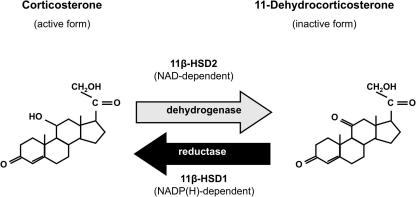
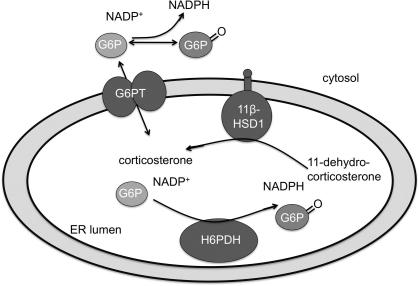
Glucocorticoids have profound effects on brain development and adult CNS function. Excess or insufficient glucocorticoids cause myriad abnormalities from development to ageing. The actions of glucocorticoids within cells are determined not only by blood steroid levels and target cell receptor density, but also by intracellular metabolism by 11β-hydroxysteroid dehydrogenases (11β-HSD). 11β-HSD1 regenerates active glucocorticoids from their inactive 11-keto derivatives and is widely expressed throughout the adult CNS. Elevated hippocampal and neocortical 11β-HSD1 is observed with ageing and causes cognitive decline; its deficiency prevents the emergence of cognitive defects with age. Conversely, 11β-HSD2 is a dehydrogenase, inactivating glucocorticoids. The major central effects of 11β-HSD2 occur in development, as expression of 11β-HSD2 is high in fetal brain and placenta. Deficient feto-placental 11β-HSD2 results in a life-long phenotype of anxiety and cardiometabolic disorders, consistent with early life glucocorticoid programming.
Overview
The claims and statistics of this paper haven’t been checked yet.
Run the check — free, no account needed. It reads the open-access text and checks the sources it cites.
Integrity signals
Registry
Cites
Statistics
Figures
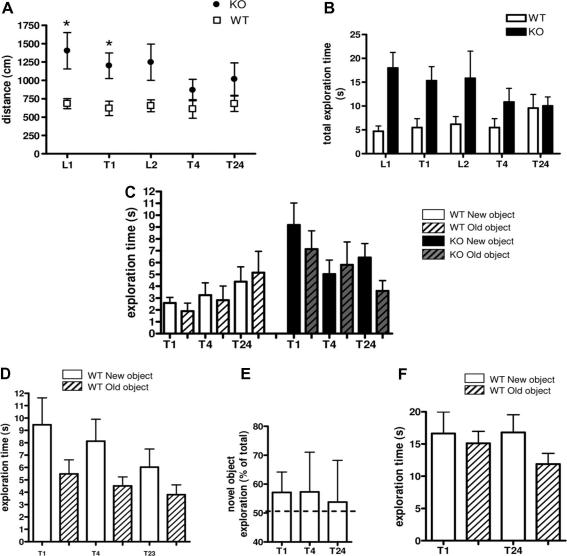
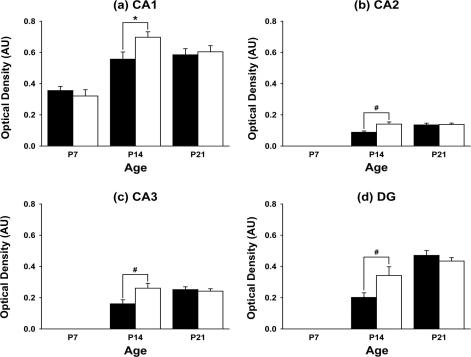
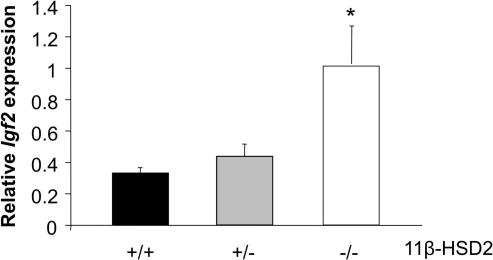
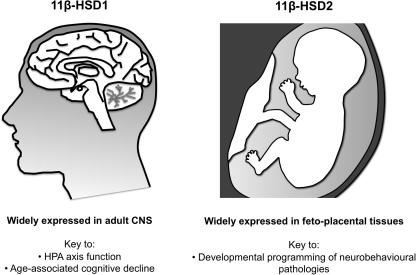
Verification
Claims the paper makes
The claims and statistics of this paper haven’t been checked yet.
Run the check — free, no account needed. It reads the open-access text and checks the sources it cites.
Claims other papers make about this one
Each is checked against this paper’s own text: does it say what the citing paper says it does?
In the citing paper
“Briefly, 11β-HSD type 1 generates the bioactive form (cortisol or corticosterone) from inactive 11-keto derivatives while 11β-HSD type 2 catalyzes the opposite reaction. Interestingly, 11-keto derivatives do not bind to CBG in plasma nor are expelled by the efflux pumps of the BBB. As a result, 11-keto-GCs reach the CNS more readily than the bioactive form. 11β-HSD type 1 is widely expressed by”
From The HPA – Immune Axis and the Immunomodulatory Actions of Glucocorticoids in the Brain (2014) · cites this paper as [68]
Self-check
Percentages, sums and reported differences re-computed from the paper’s own numbers.
The self-check needs the paper’s full text.
Citations
Cites
Epigenetic programming by maternal behavior
Weaver, I. C. G., Cervoni, N., Champagne, F. A., D'Alessio, A. C., Sharma, S., Seckl, J. R., Dymov, S., Szyf, M., & Meaney, M. J. (2004) · Nature Neuroscience · doi:10.1038/nn1276 · Cited by 6,177
Self-citationStress and the brain: from adaptation to disease
de Kloet, E. R., Joëls, M., & Holsboer, F. (2005) · Nature Reviews Neuroscience · doi:10.1038/nrn1683 · Cited by 4,621
Antenatal corticosteroids for accelerating fetal lung maturation for women at risk of preterm birth
Roberts, D., Brown, J., Medley, N., & Dalziel, S. R. (2017) · Cochrane Database of Systematic Reviews · doi:10.1002/14651858.cd004454.pub3 · Cited by 2,806
Two receptor systems for corticosterone in rat brain: Microdistribution and differential occupation
REUL, J. M. H. M., & KLOET, E. R. D. (1985) · Endocrinology · doi:10.1210/endo-117-6-2505 · Cited by 2,580
Hippocampal atrophy in recurrent major depression
Sheline, Y. I., Wang, P. W., Gado, M. H., Csernansky, J. G., & Vannier, M. W. (1996) · Proceedings of the National Academy of Sciences · doi:10.1073/pnas.93.9.3908 · Cited by 1,932
Disruption of the glucocorticoid receptor gene in the nervous system results in reduced anxiety
Tronche, F., Kellendonk, C., Kretz, O., Gass, P., Anlag, K., Orban, P. C., Bock, R., Klein, R., & Schütz, G. (1999) · Nature Genetics · doi:10.1038/12703 · Cited by 1,841
A transgenic model of visceral obesity and the metabolic syndrome
Masuzaki, H., Paterson, J., Shinyama, H., Morton, N. M., Mullins, J. J., Seckl, J. R., & Flier, J. S. (2001) · Science · doi:10.1126/science.1066285 · Cited by 1,766
Self-citationMineralocorticoid action: target tissue specificity is enzyme, not receptor, mediated
Funder, J. W., Pearce, P. T., Smith, R., & Smith, A. I. (1988) · Science · doi:10.1126/science.2845584 · Cited by 1,628
(1995) · American Journal of Psychiatry · doi:10.1176/ajp.152.7.973 · Cited by 1,610
Antenatal corticosteroids for accelerating fetal lung maturation for women at risk of preterm birth
Roberts, D., & Dalziel, S. R. (2006) · Cochrane Database of Systematic Reviews · doi:10.1002/14651858.cd004454.pub2 · Cited by 1,591
Cited by
Sorted by citations
11β-hydroxysteroid dehydrogenases: Intracellular gate-keepers of tissue glucocorticoid action
Chapman, K., Holmes, M., & Seckl, J. (2013) · Physiological Reviews · doi:10.1152/physrev.00020.2012 · Cited by 887
Self-citationThe Functional and Clinical Significance of the 24-Hour Rhythm of Circulating Glucocorticoids
Oster, H., Challet, E., Ott, V., Arvat, E., de Kloet, E. R., Dijk, D.-J., Lightman, S., Vgontzas, A., & Van Cauter, E. (2017) · Endocrine Reviews · doi:10.1210/er.2015-1080 · Cited by 548
Mikulska, J., Juszczyk, G., Gawrońska-Grzywacz, M., & Herbet, M. (2021) · Brain Sciences · doi:10.3390/brainsci11101298 · Cited by 450
The HPA – Immune Axis and the Immunomodulatory Actions of Glucocorticoids in the Brain
Bellavance, M.-A., & Rivest, S. (2014) · Frontiers in Immunology · doi:10.3389/fimmu.2014.00136 · Cited by 419
Metabolic disturbances connecting obesity and depression
Hryhorczuk, C., Sharma, S., & Fulton, S. E. (2013) · Frontiers in Neuroscience · doi:10.3389/fnins.2013.00177 · Cited by 322
Glucocorticoids and bone: consequences of endogenous and exogenous excess and replacement therapy
Hardy, R. S., Zhou, H., Seibel, M. J., & Cooper, M. S. (2018) · Endocrine Reviews · doi:10.1210/er.2018-00097 · Cited by 258
Provençal, N., Arloth, J., Cattaneo, A., Anacker, C., Cattane, N., Wiechmann, T., Röh, S., Ködel, M., Klengel, T., Czamara, D., et al. (2020) · Proceedings of the National Academy of Sciences · doi:10.1073/pnas.1820842116 · Cited by 209
11β-hydroxysteroid dehydrogenase 1: translational and therapeutic aspects
Gathercole, L. L., Lavery, G. G., Morgan, S. A., Cooper, M. S., Sinclair, A. J., Tomlinson, J. W., & Stewart, P. M. (2013) · Endocrine Reviews · doi:10.1210/er.2012-1050 · Cited by 196
The brain mineralocorticoid receptor and stress resilience
ter Heegde, F., De Rijk, R. H., & Vinkers, C. H. (2015) · Psychoneuroendocrinology · doi:10.1016/j.psyneuen.2014.10.022 · Cited by 187
Stratified medicine for mental disorders
Schumann, G., Binder, E. B., Holte, A., de Kloet, E. R., Oedegaard, K. J., Robbins, T. W., Walker-Tilley, T. R., Bitter, I., Brown, V. J., Buitelaar, J., et al. (2014) · European Neuropsychopharmacology · doi:10.1016/j.euroneuro.2013.09.010 · Cited by 186
Foetal and placental 11 β‐HSD 2: a hub for developmental programming
Cottrell, E. C., Seckl, J. R., Holmes, M. C., & Wyrwoll, C. S. (2014) · Acta Physiologica · doi:10.1111/apha.12187 · Cited by 123
Self-citationKino, T. (2015) · Frontiers in Physiology · doi:10.3389/fphys.2015.00230 · Cited by 111
Greater glucocorticoid receptor activation in hippocampus of aged rats sensitizes microglia
Barrientos, R. M., Thompson, V. M., Kitt, M. M., Amat, J., Hale, M. W., Frank, M. G., Crysdale, N. Y., Stamper, C. E., Hennessey, P. A., Watkins, L. R., et al. (2015) · Neurobiology of Aging · doi:10.1016/j.neurobiolaging.2014.12.003 · Cited by 70
The multifaceted mineralocorticoid receptor
Gomez‐Sanchez, E., & Gomez‐Sanchez, C. E. (2014) · Comprehensive Physiology · doi:10.1002/j.2040-4603.2014.tb00569.x · Cited by 55
Interferon therapy and its association with depressive disorders – A review
Lai, J. Y., Ho, J. X., Kow, A. S. F., Liang, G., Tham, C. L., Ho, Y.-C., & Lee, M. T. (2023) · Frontiers in Immunology · doi:10.3389/fimmu.2023.1048592 · Cited by 46
Prenatal Glucocorticoids: Short-Term Benefits and Long-Term Risks
Manojlovic-Stojanoski, M., Nestorovic, N., & Milosevic, V. (2012) · Glucocorticoids - New Recognition of Our Familiar Friend · doi:10.5772/51106 · Cited by 19
Metadata
- Authors
- Wyrwoll, C. S., Holmes, M. C., & Seckl, J. R.
- Affiliations
- The Queen's Medical Research Institute (GB)
- Corresponding author
- Wyrwoll, Caitlin S.
- Venue
- Frontiers in Neuroendocrinology
- Publisher
- Elsevier BV
- Published
- 2011-08
- Volume
- 32
- Issue
- 3
- Pages
- 265-286
- ISSN
- 0091-3022 (ISSN-L)
- PMC
- PMC3149101
- OpenAlex
- W2133069858
- Cited by
- 244
- References
- 336
- Citations by year
- 2026: 9 · 2025: 12 · 2024: 10 · 2023: 17 · 2022: 12 · 2021: 18 · 2020: 18 · 2019: 22 · 2018: 12 · 2017: 15 · 2016: 20 · 2015: 17 · 2014: 22 · 2013: 23 · 2012: 12
- FWCI
- 1.10
- Type
- journal article
- Language
- en
- Open access
- hybrid
- doi.org
- Licence
- Locations
- Frontiers in Neuroendocrinology (publishedVersion, cc-by)
- PubMed Central (publishedVersion, cc-by)
- PubMed (publishedVersion)
- UWA Profiles and Research Repository (UWA) (submittedVersion)
- Edinburgh Research Explorer (University of Edinburgh) (submittedVersion, other-oa)
- Funders
- Wellcome Trust
- MRC
- Topics
- Life Sciences › Neuroscience › Behavioral Neuroscience › Stress Responses and Cortisol
- Health Sciences › Medicine › Endocrinology, Diabetes and Metabolism › Hormonal Regulation and Hypertension
- Health Sciences › Medicine › Endocrinology, Diabetes and Metabolism › Adrenal Hormones and Disorders
- Keywords
- 11β-hydroxysteroid dehydrogenase, 11β-hydroxysteroid dehydrogenase type 1, 11β-hydroxysteroid dehydrogenase type 2, glucocorticoids, brain development, cognitive aging, hippocampus, neocortex, placenta, fetal programming, anxiety, cardiometabolic disease, glucocorticoid metabolism
- MeSH terms
- Aging, Animals, Brain, Glucocorticoids, Humans, Isoenzymes, Signal Transduction, Gene Expression Regulation, Enzymologic, 11-beta-Hydroxysteroid Dehydrogenase Type 1, 11-beta-Hydroxysteroid Dehydrogenase Type 2
About these checks
Registry, retraction, Cites and statistics results are computed, not judged, with one exception: a printed reference that no index lists is read once by a model before it counts as a citation error. Claims are extracted by a model and kept only when their quote appears verbatim in the text; each cited source is then checked, with a model’s help, for whether it says what the claim relies on. Those verdicts can be wrong — read the claim’s quote and the cited source before relying on one.
Statistics and arithmetic are recomputed, not judged.
Confidence bands are shown only for fields calibrated on our annotated test set. None is calibrated yet, so no band is shown.
What counts as a claim ›How we measure confidence ›How we check this ›
Are you an author, or do you see a problem with this page? Request a review
