

The DOI matches its Crossref record; 39 of the 40 references it cites were found in a registry or an index.
AAV-CRISPR Gene Editing Is Negated by Pre-existing Immunity to Cas9
Open accessAbstract
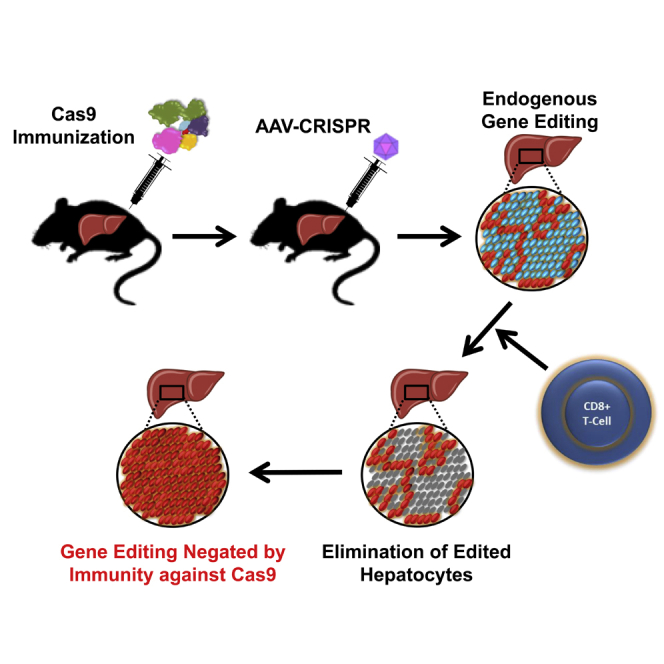
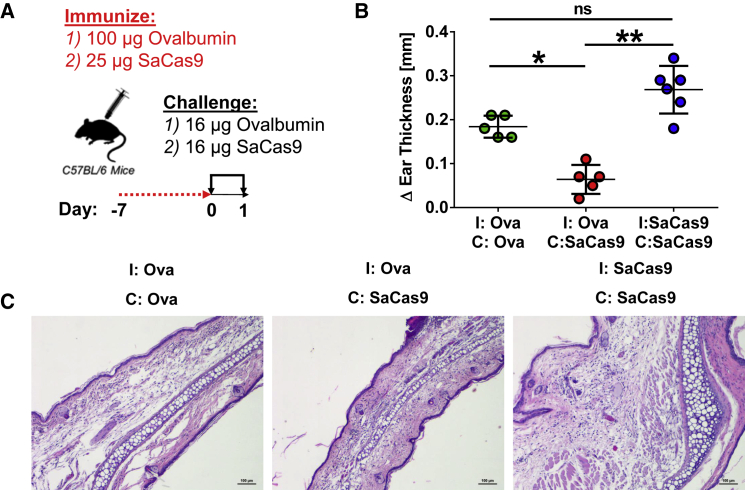
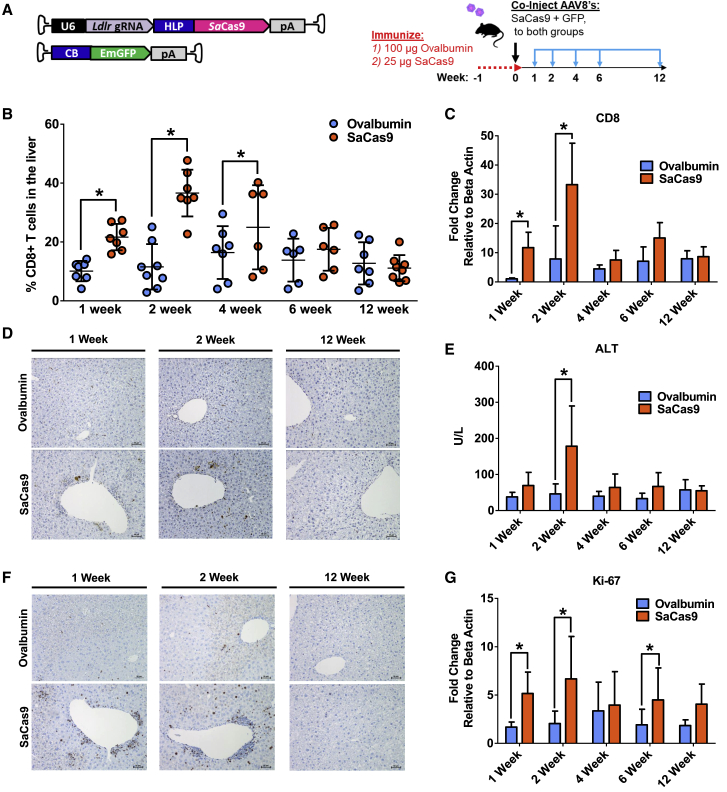
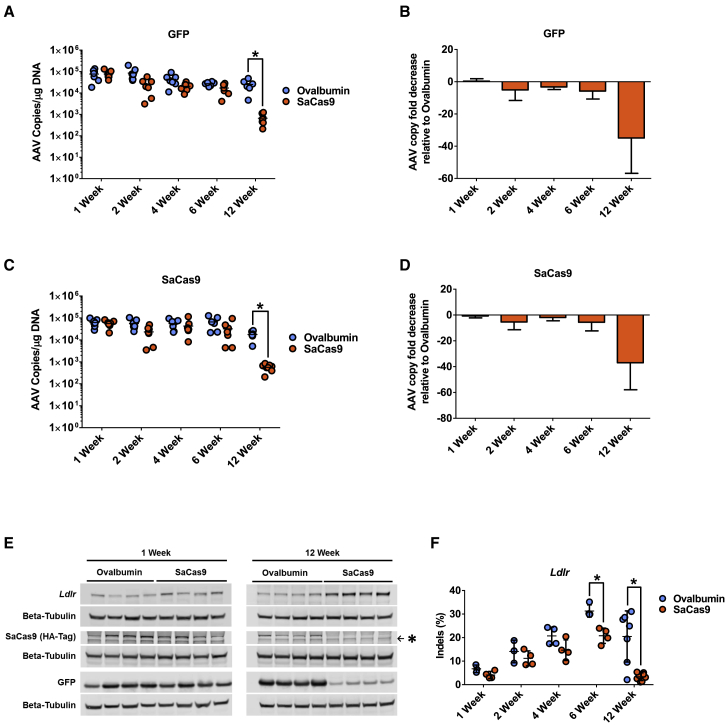
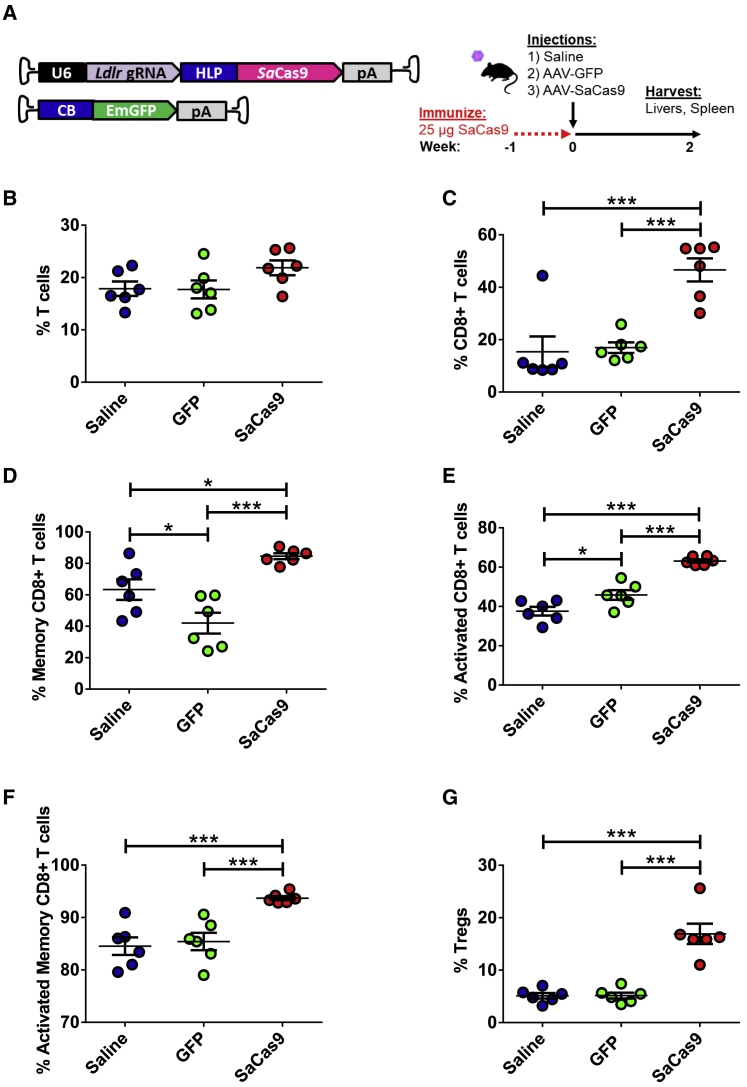
Adeno-associated viral (AAV) vectors are a leading candidate for the delivery of CRISPR-Cas9 for therapeutic genome editing in vivo . However, AAV-based delivery involves persistent expression of the Cas9 nuclease, a bacterial protein. Recent studies indicate a high prevalence of neutralizing antibodies and T cells specific to the commonly used Cas9 orthologs from Streptococcus pyogenes (SpCas9) and Staphylococcus aureus (SaCas9) in humans. We tested in a mouse model whether pre-existing immunity to SaCas9 would pose a barrier to liver genome editing with AAV packaging CRISPR-Cas9. Although efficient genome editing occurred in mouse liver with pre-existing SaCas9 immunity, this was accompanied by an increased proportion of CD8 + T cells in the liver. This cytotoxic T cell response was characterized by hepatocyte apoptosis, loss of recombinant AAV genomes, and complete elimination of genome-edited cells, and was followed by compensatory liver regeneration. Our results raise important efficacy and safety concerns for CRISPR-Cas9-based in vivo genome editing in the liver.
Overview
The claims and statistics of this paper haven’t been checked yet.
Run the check — free, no account needed. It reads the open-access text and checks the sources it cites.
Integrity signals
Registry
Cites
Statistics
Figures
Verification
Claims the paper makes
The claims and statistics of this paper haven’t been checked yet.
Run the check — free, no account needed. It reads the open-access text and checks the sources it cites.
Claims other papers make about this one
Each is checked against this paper’s own text: does it say what the citing paper says it does?
In the citing paper
“preexisting T-cell populations may represent a greater risk to gene-edited systemic tissues than antibodies at any prevalence or concentration4–6.”
From Investigation of Cas9 Antibodies in the Human Eye (2022) · cites this paper as [5]
In the citing paper
“This preexisting immunity indicates that Cas9 protein expressed by edited cells may lead to immunological activation, inflammation, and potentially killing of edited cells—as has been demonstrated in vitro and in vivo4–6.”
From Investigation of Cas9 Antibodies in the Human Eye (2022) · cites this paper as [5]
In the citing paper
“Studies showed pre-existing SaCas9 immunity in mice resulted in increased CTL response leading to hepatocyte apoptosis and loss of transgene (112).”
From Immunomodulation in Administration of RAAV: Preclinical and Clinical Adjuvant Pharmacotherapies (2021) · cites this paper as [112]
Self-check
Percentages, sums and reported differences re-computed from the paper’s own numbers.
The self-check needs the paper’s full text.
Citations
Cites
Analysis of Relative Gene Expression Data Using Real-Time Quantitative PCR and the 2−ΔΔCT Method
Livak, K. J., & Schmittgen, T. D. (2001) · Methods · doi:10.1006/meth.2001.1262 · Cited by 180,860
Mutation of the mouse klotho gene leads to a syndrome resembling ageing
Kuro-o, M., Matsumura, Y., Aizawa, H., Kawaguchi, H., Suga, T., Utsugi, T., Ohyama, Y., Kurabayashi, M., Kaname, T., Kume, E., et al. (1997) · Nature · doi:10.1038/36285 · Cited by 3,837
In vivo genome editing using Staphylococcus aureus Cas9
Ran, F. A., Cong, L., Yan, W. X., Scott, D. A., Gootenberg, J. S., Kriz, A. J., Zetsche, B., Shalem, O., Wu, X., Makarova, K. S., et al. (2015) · Nature · doi:10.1038/nature14299 · Cited by 2,687
Xiao, X., Li, J., & Samulski, R. J. (1998) · Journal of Virology · doi:10.1128/jvi.72.3.2224-2232.1998 · Cited by 1,381
In vivo genome editing improves muscle function in a mouse model of Duchenne muscular dystrophy
Nelson, C. E., Hakim, C. H., Ousterout, D. G., Thakore, P. I., Moreb, E. A., Rivera, R. M. C., Madhavan, S., Pan, X., Ran, F. A., Yan, W. X., et al. (2016) · Science · doi:10.1126/science.aad5143 · Cited by 1,144
Identification of preexisting adaptive immunity to Cas9 proteins in humans
Charlesworth, C. T., Deshpande, P. S., Dever, D. P., Camarena, J., Lemgart, V. T., Cromer, M. K., Vakulskas, C. A., Collingwood, M. A., Zhang, L., Bode, N. M., et al. (2019) · Nature Medicine · doi:10.1038/s41591-018-0326-x · Cited by 1,093
In vivo gene editing in dystrophic mouse muscle and muscle stem cells
Tabebordbar, M., Zhu, K., Cheng, J. K. W., Chew, W. L., Widrick, J. J., Yan, W. X., Maesner, C., Wu, E. Y., Xiao, R., Ran, F. A., et al. (2016) · Science · doi:10.1126/science.aad5177 · Cited by 1,046
Long, C., Amoasii, L., Mireault, A. A., McAnally, J., Li, H. Z., Sanchez‐Ortiz, E., Bhattacharyya, S., Shelton, J. M., Bassel‐Duby, R., & Olson, E. N. (2015) · Science · doi:10.1126/science.aad5725 · Cited by 973
Epitope spreading in immune-mediated diseases: implications for immunotherapy
Vanderlugt, C. L., & Miller, S. D. (2002) · Nature reviews. Immunology · doi:10.1038/nri724 · Cited by 947
Finn, J. D., Smith, A. R., Patel, M. C., Shaw, L., Youniss, M. R., van Heteren, J., Dirstine, T., Ciullo, C., Lescarbeau, R., Seitzer, J., et al. (2018) · Cell Reports · doi:10.1016/j.celrep.2018.02.014 · Cited by 878
Cited by
Sorted by citations
Long-term evaluation of AAV-CRISPR genome editing for Duchenne muscular dystrophy
Nelson, C. E., Wu, Y., Gemberling, M. P., Oliver, M. L., Waller, M. A., Bohning, J. D., Robinson-Hamm, J. N., Bulaklak, K., Rivera, R. M. C., Collier, J. H., et al. (2019) · Nature Medicine · doi:10.1038/s41591-019-0344-3 · Cited by 444
Immunogenicity of CAR T cells in cancer therapy
Wagner, D. L., Fritsche, E., Pulsipher, M. A., Ahmed, N. M., Hamieh, M., Hegde, M. G., Ruella, M., Savoldo, B., Shah, N. N., Turtle, C. J., et al. (2021) · Nature Reviews Clinical Oncology · doi:10.1038/s41571-021-00476-2 · Cited by 318
Kenjo, E., Hozumi, H., Makita, Y., Iwabuchi, K. A., Fujimoto, N., Matsumoto, S., Kimura, M., Amano, Y., Ifuku, M., Naoe, Y., et al. (2021) · Nature Communications · doi:10.1038/s41467-021-26714-w · Cited by 313
Delivery of CRISPR-Cas tools for in vivo genome editing therapy: Trends and challenges
Taha, E. A., Lee, J., & Hotta, A. (2022) · Journal of Controlled Release · doi:10.1016/j.jconrel.2022.01.013 · Cited by 259
Wan, T. Y., Pan, Q., & Yuan, P. (2021) · Science Advances · doi:10.1126/sciadv.abe2888 · Cited by 226
Hakim, C. H., Kumar, S. R. P., Pérez-López, D. O., Wasala, N. B., Zhang, D., Yue, Y., Teixeira, J., Pan, X., Zhang, K., Million, E. D., et al. (2021) · Nature Communications · doi:10.1038/s41467-021-26830-7 · Cited by 175
Drug delivery systems for CRISPR-based genome editors
Madigan, V. J., Zhang, F., & Dahlman, J. E. (2023) · Nature Reviews Drug Discovery · doi:10.1038/s41573-023-00762-x · Cited by 193
Covalently closed circular DNA: The ultimate therapeutic target for curing HBV infections
Martínez, M. G., Boyd, A. C., Combe, E., Testoni, B., & Zoulim, F. (2021) · Journal of Hepatology · doi:10.1016/j.jhep.2021.05.013 · Cited by 172
AAV-delivered suppressor tRNA overcomes a nonsense mutation in mice
Wang, J., Zhang, Y., Mendonca, C. A., Yukselen, O., Muneeruddin, K., Ren, L., Liang, J., Zhou, C., Xie, J., Li, J., et al. (2022) · Nature · doi:10.1038/s41586-022-04533-3 · Cited by 144
Transgenic mice for in vivo epigenome editing with CRISPR-based systems
Gemberling, M. P., Siklenka, K., Rodriguez, E., Eisinger, K. R. T., Barrera, A., Liu, F., Kantor, A., Li, L., Cigliola, V., Hazlett, M. F., et al. (2021) · Nature Methods · doi:10.1038/s41592-021-01207-2 · Cited by 155
Immunogenicity of CRISPR therapeutics—Critical considerations for clinical translation
Ewaisha, R., & Anderson, K. S. (2023) · Frontiers in Bioengineering and Biotechnology · doi:10.3389/fbioe.2023.1138596 · Cited by 153
Viral Vectors for the in Vivo Delivery of CRISPR Components: Advances and Challenges
Mengstie, M. A. (2022) · Frontiers in Bioengineering and Biotechnology · doi:10.3389/fbioe.2022.895713 · Cited by 146
CRISPR/Cas9 systems: Delivery technologies and biomedical applications
Du, Y., Liu, Y., Hu, J., Peng, X., & Liu, Z. (2023) · Asian Journal of Pharmaceutical Sciences · doi:10.1016/j.ajps.2023.100854 · Cited by 140
Moreno, A. M., Palmer, N. D., Alemán, F., Chen, G., Pla, A., Jiang, N. J., Chew, W. L., Law, M., & Mali, P. (2019) · Nature Biomedical Engineering · doi:10.1038/s41551-019-0431-2 · Cited by 132
The NIH Somatic Cell Genome Editing program
Saha, K., Sontheimer, E. J., Brooks, P. J., Dwinell, M. R., Gersbach, C. A., Liu, D. R., Murray, S. A., Tsai, S. Q., Wilson, R. C., Anderson, D. G., et al. (2021) · Nature · doi:10.1038/s41586-021-03191-1 · Cited by 127
Self-citationClinical delivery of circular RNA: Lessons learned from RNA drug development
Young, T. L., Wang, K. C., Varley, A., & Li, B. (2023) · Advanced Drug Delivery Reviews · doi:10.1016/j.addr.2023.114826 · Cited by 130
Tools for experimental and computational analyses of off-target editing by programmable nucleases
Bao, X. R., Pan, Y., Lee, C. M., Davis, T. H., & Bao, G. (2021) · Nature Protocols · doi:10.1038/s41596-020-00431-y · Cited by 106
Self-citationCRISPR/Cas9 gene editing for curing sickle cell disease
Park, S. H., & Bao, G. (2021) · Transfusion and Apheresis Science · doi:10.1016/j.transci.2021.103060 · Cited by 118
Self-citationReady for Repair? Gene Editing Enters the Clinic for the Treatment of Human Disease
Ernst, M. P. T., Broeders, M., Herrero-Hernandez, P., Oussoren, E., van der Ploeg, A. T., & Pijnappel, W. W. M. P. (2020) · Molecular Therapy — Methods & Clinical Development · doi:10.1016/j.omtm.2020.06.022 · Cited by 103
CRISPR-Cas9 gene editing of hepatitis B virus in chronically infected humanized mice
Stone, D., Long, K. R., Loprieno, M. A., Feelixge, H. S. D. S., Kenkel, E. J., Liley, R. M., Rapp, S., Roychoudhury, P., Nguyen, T., Stensland, L., et al. (2020) · Molecular Therapy — Methods & Clinical Development · doi:10.1016/j.omtm.2020.11.014 · Cited by 98
Self-citationApplication of CRISPR/Cas9 Technology in Cancer Treatment: A Future Direction
Rabaan, A. A., AlSaihati, H., Bukhamsin, R., Bakhrebah, M. A., Nassar, M. S., Alsaleh, A. A., Alhashem, Y. N., Bukhamseen, A. Y., Al-Ruhimy, K., Alotaibi, M. H., et al. (2023) · Current Oncology · doi:10.3390/curroncol30020152 · Cited by 89
Vaidyanathan, S., Baik, R., Chen, L., Bravo, D. T., Suarez, C. J., Abazari, S. M., Salahudeen, A. A., Dudek, A. M., Teran, C. A., Davis, T., et al. (2021) · Molecular Therapy · doi:10.1016/j.ymthe.2021.03.023 · Cited by 70
Self-citationWalther, J., Porenta, D., Wilbie, D., Seinen, C. W., Benne, N., Yang, Q., de Jong, O. G., Lei, Z., & Mastrobattista, E. (2024) · European Journal of Pharmaceutics and Biopharmaceutics · doi:10.1016/j.ejpb.2024.114207 · Cited by 80
Pickar‐Oliver, A., Gough, V., Bohning, J. D., Liu, S., Robinson-Hamm, J. N., Daniels, H., Majoros, W. H., Devlin, G. W., Asokan, A., & Gersbach, C. A. (2021) · Molecular Therapy · doi:10.1016/j.ymthe.2021.09.003 · Cited by 78
Immunological barriers to haematopoietic stem cell gene therapy
Charlesworth, C. T., Hsu, I., Wilkinson, A. C., & Nakauchi, H. (2022) · Nature reviews. Immunology · doi:10.1038/s41577-022-00698-0 · Cited by 71
Precision RNA base editing with engineered and endogenous effectors
Pfeiffer, L. S., & Stafforst, T. (2023) · Nature Biotechnology · doi:10.1038/s41587-023-01927-0 · Cited by 68
Is Viral Vector Gene Delivery More Effective Using Biomaterials?
Wang, Y., Bruggeman, K. F., Franks, S. J., Gautam, V., Hodgetts, S. I., Harvey, A. R., Williams, R. J., & Nisbet, D. R. (2020) · Advanced Healthcare Materials · doi:10.1002/adhm.202001238 · Cited by 69
Cas9-directed immune tolerance in humans—a model to evaluate regulatory T cells in gene therapy?
Wagner, D. L., Peter, L., & Schmueck-Henneresse, M. (2021) · Gene Therapy · doi:10.1038/s41434-021-00232-2 · Cited by 63
In utero adenine base editing corrects multi-organ pathology in a lethal lysosomal storage disease
Bose, S. K., White, B. M., Kashyap, M. V., Dave, A., De Bie, F. R., Li, H., Singh, K., Menon, P., Wang, T., Teerdhala, S., et al. (2021) · Nature Communications · doi:10.1038/s41467-021-24443-8 · Cited by 67
Delivery Approaches for Therapeutic Genome Editing and Challenges
Ates, I., Rathbone, T., Stuart, C., Bridges, P. H., & Cottle, R. N. (2020) · Genes · doi:10.3390/genes11101113 · Cited by 63
Immunomodulation in Administration of RAAV: Preclinical and Clinical Adjuvant Pharmacotherapies
Chu, W. S., & Ng, J. (2021) · Frontiers in Immunology · doi:10.3389/fimmu.2021.658038 · Cited by 59
Hematopoietic Stem Cell Gene-Addition/Editing Therapy in Sickle Cell Disease
Germino-Watnick, P., Hinds, M., Le, A., Chu, R., Liu, X., & Uchida, N. (2022) · Cells · doi:10.3390/cells11111843 · Cited by 63
Rational engineering of minimally immunogenic nucleases for gene therapy
Raghavan, R. S., Friedrich, M., King, C., Vo, C.-D.-T., Strebinger, D., Lash, B., Kilian, M., Platten, M., Macrae, R. K., Song, Y., et al. (2025) · Nature Communications · doi:10.1038/s41467-024-55522-1 · Cited by 56
Epigenetic basis and targeting of cancer metastasis
Banerjee, R., Smith, J., Eccles, M. R., Weeks, R. J., & Chatterjee, A. (2021) · Trends in cancer · doi:10.1016/j.trecan.2021.11.008 · Cited by 51
PCSK9 in metabolism and diseases
Ajoolabady, A., Pratico, D., Mazidi, M., Davies, I. G., Lip, G. Y. H., Seidah, N., Libby, P., Kroemer, G., & Ren, J. (2025) · Metabolism · doi:10.1016/j.metabol.2024.156064 · Cited by 49
Genome editing in the mouse brain with minimally immunogenic Cas9 RNPs
Stahl, E. C., Sabo, J. K., Kang, M. H., Allen, R., Applegate, E., Kim, S., Kwon, Y., Seth, A., Lemus, N., Salinas-Rios, V., et al. (2023) · Molecular Therapy · doi:10.1016/j.ymthe.2023.06.019 · Cited by 51
Li, G., Jin, M., Li, Z., Xiao, Q., Lin, J., Yang, D., Liu, Y., Wang, X., Xie, L., Ying, W., et al. (2023) · Journal of Clinical Investigation · doi:10.1172/jci162809 · Cited by 44
Emerging applications of gene editing technologies for the development of climate-resilient crops
Chavhan, R. L., Jaybhaye, S. G., Hinge, V. R., Deshmukh, A. S., Shaikh, U. S., Jadhav, P. K., Kadam, U. S., & Hong, J. C. (2025) · Frontiers in Genome Editing · doi:10.3389/fgeed.2025.1524767 · Cited by 55
“CRISPR/Cas functions as an adaptive immune defense in bacteria, safeguarding their genomic DNA from viral (phage) attacks by degrading the DNA with the help of RNA guidance and the Cas9 protein (Mallapaty, 2019; Li et al., 2020a).”
Liver‐directed gene therapy for inherited metabolic diseases
Baruteau, J., Brunetti‐Pierri, N., & Gissen, P. (2024) · Journal of Inherited Metabolic Disease · doi:10.1002/jimd.12709 · Cited by 46
Translating CRISPR-Cas Therapeutics: Approaches and Challenges
Tay, L. S., Palmer, N. D., Panwala, R., Chew, W. L., & Mali, P. (2020) · The CRISPR Journal · doi:10.1089/crispr.2020.0025 · Cited by 43
Current strategies employed in the manipulation of gene expression for clinical purposes
Tsai, H., Pietrobon, V., Peng, M., Wang, S., Zhao, L., Marincola, F. M., & Cai, Q. (2022) · Journal of Translational Medicine · doi:10.1186/s12967-022-03747-3 · Cited by 48
Loesch, R., Caruso, S., Paradis, V., Godard, C., Gougèlet, A., Renault, G., Picard, S., Tanaka, I., Renoux-Martin, Y., Perret, C., et al. (2021) · Journal of Hepatology · doi:10.1016/j.jhep.2022.02.023 · Cited by 46
Novel therapeutic strategies for chronic hepatitis B
Phillips, S., Jagatia, R., & Chokshi, S. (2022) · Virulence · doi:10.1080/21505594.2022.2093444 · Cited by 44
He, X., Zhang, Z., Xue, J., Wang, Y., Zhang, S., Wei, J., Zhang, C., Wang, J., Urip, B. A., Ngan, C. C., et al. (2022) · Nature Communications · doi:10.1038/s41467-022-34898-y · Cited by 43
Immunologically effective poly(D-lactic acid) nanoparticle enhances anticancer immune response
Xu, W., Su, Y., Ma, Y., Wei, Q., Yang, J.-Z., Zhuang, X., Ding, J., & Chen, X. (2023) · Science China Chemistry · doi:10.1007/s11426-022-1441-7 · Cited by 40
Lee, B., Lozano, R. J., & Dunbar, C. E. (2021) · Molecular Therapy · doi:10.1016/j.ymthe.2021.09.001 · Cited by 39
Duchenne Muscular Dystrophy Gene Therapy in 2023: Status, Perspective, and Beyond
Duan, D. (2023) · Human Gene Therapy · doi:10.1089/hum.2023.29242.ddu · Cited by 44
Understanding and Tackling Immune Responses to Adeno-Associated Viral Vectors
Verdera, H. C., Unzu, C., Valeri, E., Adriouch, S., González‐Aseguinolaza, G., Mingozzi, F., & Kajaste‐Rudnitski, A. (2023) · Human Gene Therapy · doi:10.1089/hum.2023.119 · Cited by 45
Building CRISPR Gene Therapies for the Central Nervous System
Salomonsson, S. E., & Clelland, C. D. (2024) · JAMA Neurology · doi:10.1001/jamaneurol.2023.4983 · Cited by 42
Immunity to Cas9 as an Obstacle to Persistent Genome Editing
Gough, V., & Gersbach, C. A. (2020) · Molecular Therapy · doi:10.1016/j.ymthe.2020.05.007 · Cited by 41
Reprogramming the anti-tumor immune response via CRISPR genetic and epigenetic editing
Alves, E., Taifour, S., Dolcetti, R., Chee, J., Nowak, A. K., Gaudieri, S., & Blancafort, P. (2021) · Molecular Therapy — Methods & Clinical Development · doi:10.1016/j.omtm.2021.04.009 · Cited by 40
Repurposing CRISPR-Cas13 systems for robust mRNA trans-splicing
Fiflis, D. N., Rey, N. A., Venugopal-Lavanya, H., Sewell, B., Mitchell-Dick, A., Clements, K. N., Milo, S., Benkert, A. R., Rosales, A., Fergione, S., et al. (2024) · Nature Communications · doi:10.1038/s41467-024-46172-4 · Cited by 36
Kayesh, M. E. H., Amako, Y., Hashem, M. A., Murakami, S., Ogawa, S., Yamamoto, N., Hifumi, T., Miyoshi, N., Sugiyama, M., Tanaka, Y., et al. (2020) · Virus Research · doi:10.1016/j.virusres.2020.198191 · Cited by 39
Molecular Therapies for Myotonic Dystrophy Type 1: From Small Drugs to Gene Editing
Izzo, M., Battistini, J. I., Provenzano, C., Martelli, F., Cardinali, B., & Falcone, G. (2022) · International Journal of Molecular Sciences · doi:10.3390/ijms23094622 · Cited by 37
Advances in CRISPR Delivery Methods: Perspectives and Challenges
Demirci, S., Essawi, K., Germino-Watnick, P., Liu, X., Hakami, W., & Tisdale, J. F. (2022) · The CRISPR Journal · doi:10.1089/crispr.2022.0051 · Cited by 37
CRISPR/Cas-Dependent and Nuclease-Free In Vivo Therapeutic Gene Editing
Dasgupta, I., Flotte, T. R., & Keeler, A. M. (2021) · Human Gene Therapy · doi:10.1089/hum.2021.013 · Cited by 38
Gene Editing Technologies to Target HBV cccDNA
Martínez, M. G., Smekalova, E. M., Combe, E., Gregoire, F. M., Zoulim, F., & Testoni, B. (2022) · Viruses · doi:10.3390/v14122654 · Cited by 37
Gene therapy for genetic diseases: challenges and future directions
Beibei, Q. I. E., Tuo, J., Chen, F., Ding, H., & Lyu, L. (2025) · MedComm · doi:10.1002/mco2.70091 · Cited by 38
Immune-based therapies in cardiovascular and metabolic diseases: past, present and future
Murphy, A. J., & Febbraio, M. A. (2021) · Nature reviews. Immunology · doi:10.1038/s41577-021-00580-5 · Cited by 35
Liver directed adeno‐associated viral vectors to treat metabolic disease
Chuecos, M. A., & Lagor, W. R. (2023) · Journal of Inherited Metabolic Disease · doi:10.1002/jimd.12637 · Cited by 34
Self-citationRouatbi, N., Walters, A. A., Costa, P. M., Qin, Y., Liam‐Or, R., Grant, V., Pollard, S. M., Wang, J. T.-W., & Al‐Jamal, K. T. (2024) · Journal of Controlled Release · doi:10.1016/j.jconrel.2024.09.019 · Cited by 36
Advancements in CRISPR/Cas systems for disease treatment
Xu, Y., Le, H., Wu, Q., Wang, N., & Gong, C. (2025) · Acta Pharmaceutica Sinica B · doi:10.1016/j.apsb.2025.05.007 · Cited by 35
Kostyushev, D. S., Kostyusheva, A., Brezgin, S., Ponomareva, N. I., Zakirova, N. F., Egorshina, A. Y., Yanvarev, D. V., Олеговна, Б. Е., Sudina, A., Goptar, I. A., et al. (2023) · Molecular Therapy — Nucleic Acids · doi:10.1016/j.omtn.2023.02.001 · Cited by 34
Design of efficacious somatic cell genome editing strategies for recessive and polygenic diseases
Carlson-Stevermer, J., Das, A., Abdeen, A. A., Fiflis, D., Grindel, B. I., Saxena, S., Akcan, T., Alam, T., Kletzien, H., Kohlenberg, L., et al. (2020) · Nature Communications · doi:10.1038/s41467-020-20065-8 · Cited by 32
Gene editing for dyslipidemias: New tools to “cut” lipids
Stankov, S. G., & Cuchel, M. (2023) · Atherosclerosis · doi:10.1016/j.atherosclerosis.2023.01.010 · Cited by 34
Kaur, S., Alley, S. C., Szapacs, M., Wilson, A., Ciccimaro, E., Su, D., Henderson, N., Chen, L., Garofolo, F., Hengel, S. M., et al. (2022) · Bioanalysis · doi:10.4155/bio-2022-0078 · Cited by 32
Pre-clinical non-viral vectors exploited for in vivo CRISPR/Cas9 gene editing: an overview
Rouatbi, N., McGlynn, T., & Al‐Jamal, K. T. (2022) · Biomaterials Science · doi:10.1039/d1bm01452h · Cited by 33
Robust genome and cell engineering via in vitro and in situ circularized RNAs
Tong, M., Palmer, N. D., Dailamy, A., Kumar, A., Khaliq, H., Han, S., Finburgh, E. N., Wing, M. K., Hong, C., Xiang, Y., et al. (2024) · Nature Biomedical Engineering · doi:10.1038/s41551-024-01245-z · Cited by 32
Botto, C., Dalkara, D., & El-Amraoui, A. (2021) · Frontiers in Genome Editing · doi:10.3389/fgeed.2021.737632 · Cited by 30
Investigation of Cas9 Antibodies in the Human Eye
Toral, M. A., Charlesworth, C. T., Ng, B., Chemudupati, T., Homma, S., Nakauchi, H., Bassuk, A. G., Porteus, M. H., & Mahajan, V. B. (2022) · Nature Communications · doi:10.1038/s41467-022-28674-1 · Cited by 28
Integrated epigenetic and genetic programming of primary human T cells
Goudy, L., Ha, A. S., Borah, A. A., Umhoefer, J. M., Chow, L., Tran, C., Winters, A., Talbot, A., Hernandez, R., Li, Z., et al. (2025) · Nature Biotechnology · doi:10.1038/s41587-025-02856-w · Cited by 38
Synthetic transcription factor engineering for cell and gene therapy
Bhatt, B., García-Díaz, P., & Wink, G. (2023) · Trends in biotechnology · doi:10.1016/j.tibtech.2023.09.010 · Cited by 28
Peeling back the layers of immunogenicity in Cas9-based genomic medicine
Stigzelius, V., Cavallo, A. L., Chandode, R. K., & Nitsch, R. (2025) · Molecular Therapy · doi:10.1016/j.ymthe.2025.06.045 · Cited by 30
Cas9-derived peptides presented by MHC Class II that elicit proliferation of CD4+ T-cells
Simhadri, V. L., Hopkins, L., McGill, J. R., Duke, B. R., Mukherjee, S., Zhang, K., & Sauna, Z. E. (2021) · Nature Communications · doi:10.1038/s41467-021-25414-9 · Cited by 29
Zhou, L., Su, J., Long, J., Tao, R. X., Tang, W., Qin, F., Liu, N., Wang, Y., Jiao, Y., Hu, Y. F., et al. (2022) · Molecular Therapy — Methods & Clinical Development · doi:10.1016/j.omtm.2022.01.001 · Cited by 24
Nonviral Delivery of CRISPR/Cas Systems in mRNA Format
Liu, Z., Li, Z., & Li, B. (2022) · Advanced NanoBiomed Research · doi:10.1002/anbr.202200082 · Cited by 25
CRISPR applications for Duchenne muscular dystrophy: From animal models to potential therapies
Chey, Y. C. J., Arudkumar, J., Aartsma-Rus, A. M., Adikusuma, F., & Thomas, P. Q. (2022) · WIREs Mechanisms of Disease · doi:10.1002/wsbm.1580 · Cited by 24
García, M., Bonafont, J., Martínez‐Palacio, J., Xu, R., Turchiano, G., Svensson, S., Thrasher, A. J., Larcher, F., Río, M. D., Hernández-Alcoceba, R., et al. (2022) · Molecular Therapy — Methods & Clinical Development · doi:10.1016/j.omtm.2022.09.005 · Cited by 25
Future Directions for Adrenal Insufficiency: Cellular Transplantation and Genetic Therapies
Graves, L. E., Torpy, D. J., Coates, P. T., Alexander, I. E., Bornstein, S. R., & Clarke, B. M. (2023) · The Journal of Clinical Endocrinology & Metabolism · doi:10.1210/clinem/dgac751 · Cited by 23
You can't keep a bad idea down: Dark history, death, and potential rebirth of eugenics
Liscum, M., & Garcia, M. L. (2021) · The Anatomical Record · doi:10.1002/ar.24849 · Cited by 26
CRISPR/Cas9 for hepatitis B virus infection treatment
Cai, B., Chang, S., Tian, Y., & Zhen, S. (2023) · Immunity Inflammation and Disease · doi:10.1002/iid3.866 · Cited by 21
Yao, J., Atasheva, S., Wagner, N. J., Paolo, N. C. D., Stewart, P. L., & Shayakhmetov, D. M. (2023) · Molecular Therapy · doi:10.1016/j.ymthe.2023.10.023 · Cited by 23
CRISPR Technology for Ocular Angiogenesis
Chung, S. H., Sin, T.-N., Ngo, T., & Yiu, G. C. (2020) · Frontiers in Genome Editing · doi:10.3389/fgeed.2020.594984 · Cited by 21
Singh, P., Kairuz, D., Arbuthnot, P. B., & Bloom, K. M. (2021) · World Journal of Gastroenterology · doi:10.3748/wjg.v27.i23.3182 · Cited by 19
In vivo genome editing at the albumin locus to treat methylmalonic acidemia
Schneller, J. L., Lee, C. M., Venturoni, L. E., Chandler, R. J., Li, A., Myung, S., Cradick, T. J., Hurley, A. E., Lagor, W. R., Bao, G., et al. (2021) · Molecular Therapy — Methods & Clinical Development · doi:10.1016/j.omtm.2021.11.004 · Cited by 20
Self-citationRathbone, T., Ates, I., Fernando, L. P., Addlestone, E., Lee, C. M., Richards, V. P., & Cottle, R. N. (2022) · The CRISPR Journal · doi:10.1089/crispr.2021.0134 · Cited by 23
Self-citationYashooa, R. K., Nabi, A. Q., Smail, S. W., Azeez, S. S., Nooh, W. A., Mustafa, S. A., Al-Farha, A. A.-B., Capitanio, N., & Shekha, M. S. (2026) · Frontiers in Neurology · doi:10.3389/fneur.2025.1737468 · Cited by 21
Fast and Efficient Genome Editing of Human FOXP3+ Regulatory T Cells
Zeebroeck, L. V., Hornero, R. A., Côrte‐Real, B. F., Hamad, I., Meissner, T. B., & Kleinewietfeld, M. (2021) · Frontiers in Immunology · doi:10.3389/fimmu.2021.655122 · Cited by 22
In Vivo Hematopoietic Stem Cell Genome Editing: Perspectives and Limitations
Psatha, N., Paschoudi, K., Παπαδοπούλου, Α., & Yannaki, E. (2022) · Genes · doi:10.3390/genes13122222 · Cited by 24
Toward the Treatment of Inherited Diseases of the Retina Using CRISPR-Based Gene Editing
Hernández-Juárez, J., Rodríguez‐Uribe, G., & Borooah, S. (2021) · Frontiers in Medicine · doi:10.3389/fmed.2021.698521 · Cited by 19
Non-viral approaches for gene therapy and therapeutic genome editing across the blood–brain barrier
Xie, R., Wang, Y., Burger, J. C., Li, D., Zhu, M., & Gong, S. (2023) · Med-X · doi:10.1007/s44258-023-00004-0 · Cited by 22
Nanotechnology in Retinal Disease: Current Concepts and Future Directions
Mehta, N. J., & Mehta, S. N. (2023) · Journal of Ocular Pharmacology and Therapeutics · doi:10.1089/jop.2023.0083 · Cited by 18
Efficient and multiplexed somatic genome editing with Cas12a mice
Hebert, J. D., Xu, H., Tang, Y. J., Ruiz, P. A., Detrick, C. R., Wang, J., Hughes, N. W., Donosa, O., Siah, V. P., Andrejka, L., et al. (2025) · Nature Biomedical Engineering · doi:10.1038/s41551-025-01407-7 · Cited by 18
In vivo liver targeted genome editing as therapeutic approach: progresses and challenges
Simoni, C., Barbon, E., Muro, A. F., & Cantore, A. (2024) · Frontiers in Genome Editing · doi:10.3389/fgeed.2024.1458037 · Cited by 20
Jalil, S., Keskinen, T., Juutila, J., Sartori-Maldonado, R., Euro, L., Suomalainen, A., Lapatto, R., Kuuluvainen, E., Hietakangas, V., Otonkoski, T., et al. (2024) · The American Journal of Human Genetics · doi:10.1016/j.ajhg.2024.03.004 · Cited by 18
New Directions in Pulmonary Gene Therapy
Vu, A., & McCray, P. B. (2020) · Human Gene Therapy · doi:10.1089/hum.2020.166 · Cited by 19
Therapeutic in vivo genome editing: innovations and challenges in rAAV vector-based CRISPR delivery
Gil, J.-S., Lee, S., & Koo, T. (2025) · Gene Therapy · doi:10.1038/s41434-025-00573-2 · Cited by 19
Shen, X., Lin, Q., Liang, Z., Wang, J., Yang, X., Liang, Y., Liang, H., Pan, H., Yang, J., Zhu, Y., et al. (2022) · The CRISPR Journal · doi:10.1089/crispr.2021.0142 · Cited by 16
Jin, Q., Liu, X., Zhuang, Z., Huang, J., Gou, S., Shi, H., Zhao, Y., Ouyang, Z., Liu, Z., Li, L., et al. (2023) · Genome biology · doi:10.1186/s13059-023-02851-x · Cited by 15
Liver-directed gene-based therapies for inborn errors of metabolism
Piccolo, P., Rossi, A., & Brunetti‐Pierri, N. (2020) · Expert Opinion on Biological Therapy · doi:10.1080/14712598.2020.1817375 · Cited by 16
Metadata
- Authors
- Li, A., Tanner, M. R., Lee, C. M., Hurley, A. E., De Giorgi, M., Jarrett, K. E., Davis, T. H., Doerfler, A. M., Bao, G., Beeton, C., & Lagor, W. R.
- Affiliations
- Rice University (US)
- Baylor College of Medicine (US)
- Corresponding author
- Bao, Gang
- Beeton, Christine
- Lagor, William R.
- ORCID
- Venue
- Molecular Therapy
- Publisher
- Elsevier BV
- Published
- 2020-06
- Volume
- 28
- Issue
- 6
- Pages
- 1432-1441
- ISSN
- 1525-0016 (ISSN-L)
- PMC
- PMC7264438
- OpenAlex
- W3016959969
- Cited by
- 230
- References
- 40
- Citations by year
- 2026: 26 · 2025: 33 · 2024: 33 · 2023: 36 · 2022: 38 · 2021: 43 · 2020: 19
- FWCI
- 11.02
- Type
- journal article
- Language
- en
- Open access
- hybrid
- doi.org
- Licence
- Locations
- Molecular Therapy (publishedVersion, cc-by-nc-nd)
- PubMed Central (publishedVersion, cc-by-nc-nd)
- PubMed (publishedVersion)
- Digital Commons-TMC (Texas Medical Center) (submittedVersion)
- Figshare (submittedVersion, cc-by)
- Health Research Alliance (cc-by)
- Funders
- American Heart Association (19POST34430092, 19PRE34380467, GM08231, HL007676, RR024574)
- Cancer Prevention and Research Institute of Texas (RR140081, RP180672)
- National Institutes of Health (RR024574, HL007676, GM08231, CA125123, UG3HL151545, HL132840, U42OD026645)
- Topics
- Life Sciences › Biochemistry, Genetics and Molecular Biology › Molecular Biology › CRISPR and Genetic Engineering
- Life Sciences › Biochemistry, Genetics and Molecular Biology › Genetics › Virus-based gene therapy research
- Life Sciences › Biochemistry, Genetics and Molecular Biology › Molecular Biology › RNA Interference and Gene Delivery
- Keywords
- adeno-associated virus vectors, CRISPR/Cas9, SaCas9, pre-existing immunity, neutralizing antibodies, T cell response, hepatocyte apoptosis, compensatory liver regeneration, SpCas9
- MeSH terms
- Gene Editing, CRISPR-Associated Protein 9, RNA, Guide, CRISPR-Cas Systems, Dependovirus, Animals, Genetic Vectors, Humans, Immunization, Immunologic Memory, Biomarkers, Gene Expression, Immunophenotyping, T-Lymphocyte Subsets, Transgenes, Hepatocytes, Gene Order, Mice, Clustered Regularly Interspaced Short Palindromic Repeats
About these checks
Registry, retraction, Cites and statistics results are computed, not judged, with one exception: a printed reference that no index lists is read once by a model before it counts as a citation error. Claims are extracted by a model and kept only when their quote appears verbatim in the text; each cited source is then checked, with a model’s help, for whether it says what the claim relies on. Those verdicts can be wrong — read the claim’s quote and the cited source before relying on one.
Statistics and arithmetic are recomputed, not judged.
Confidence bands are shown only for fields calibrated on our annotated test set. None is calibrated yet, so no band is shown.
What counts as a claim ›How we measure confidence ›How we check this ›
Are you an author, or do you see a problem with this page? Request a review
