

The DOI matches its Crossref record; 39 of the 40 references it cites were found in a registry or an index.
AAV-CRISPR Gene Editing Is Negated by Pre-existing Immunity to Cas9
Open accessAbstract
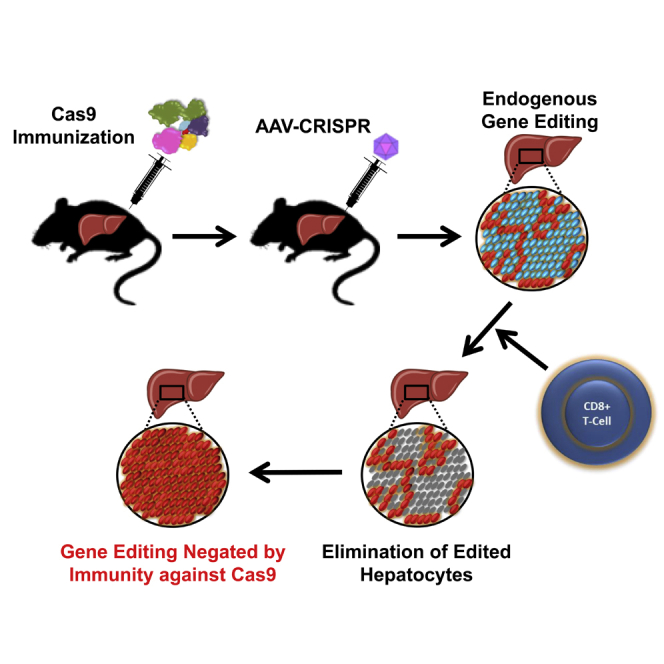
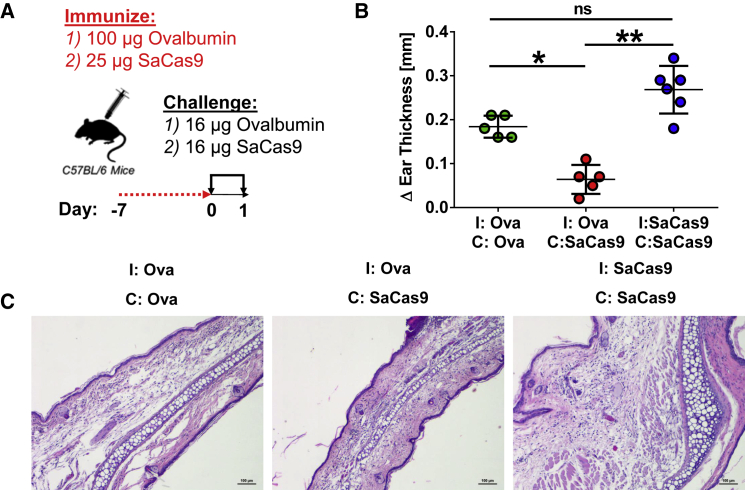
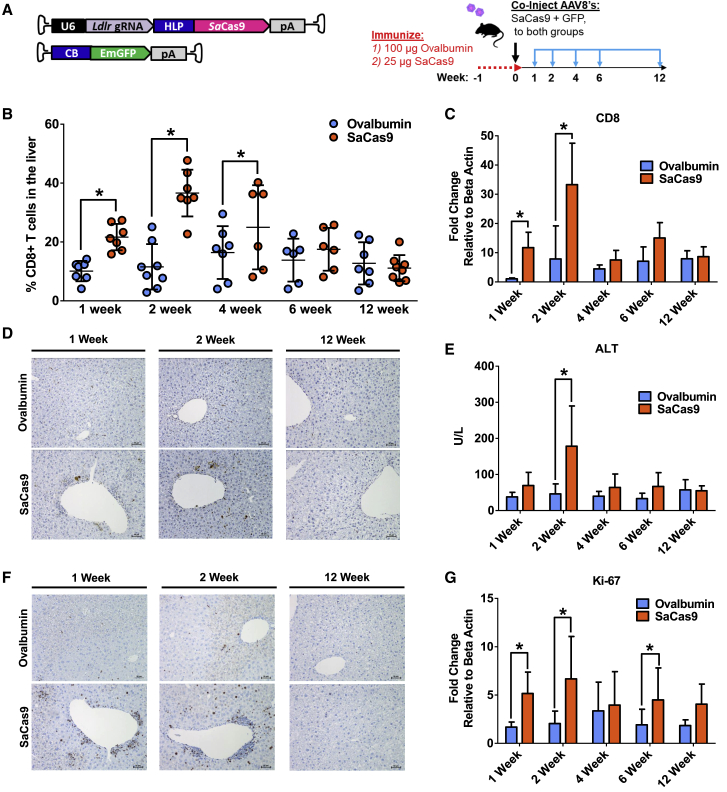
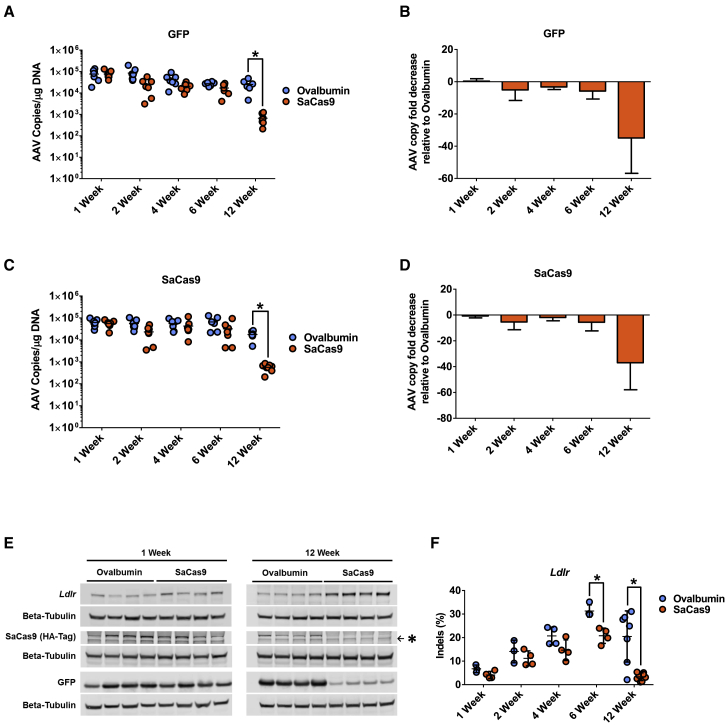
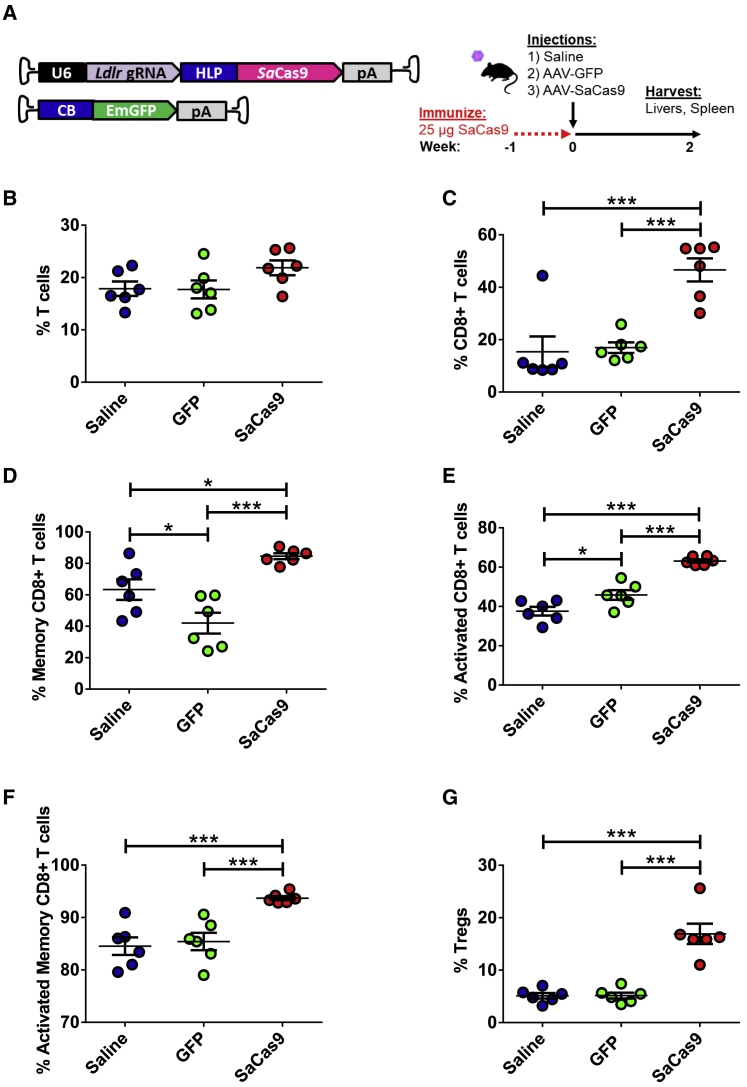
Adeno-associated viral (AAV) vectors are a leading candidate for the delivery of CRISPR-Cas9 for therapeutic genome editing in vivo . However, AAV-based delivery involves persistent expression of the Cas9 nuclease, a bacterial protein. Recent studies indicate a high prevalence of neutralizing antibodies and T cells specific to the commonly used Cas9 orthologs from Streptococcus pyogenes (SpCas9) and Staphylococcus aureus (SaCas9) in humans. We tested in a mouse model whether pre-existing immunity to SaCas9 would pose a barrier to liver genome editing with AAV packaging CRISPR-Cas9. Although efficient genome editing occurred in mouse liver with pre-existing SaCas9 immunity, this was accompanied by an increased proportion of CD8 + T cells in the liver. This cytotoxic T cell response was characterized by hepatocyte apoptosis, loss of recombinant AAV genomes, and complete elimination of genome-edited cells, and was followed by compensatory liver regeneration. Our results raise important efficacy and safety concerns for CRISPR-Cas9-based in vivo genome editing in the liver.
Overview
The claims and statistics of this paper haven’t been checked yet.
Run the check — free, no account needed. It reads the open-access text and checks the sources it cites.
Integrity signals
Registry
Cites
Statistics
Figures
Verification
Claims the paper makes
The claims and statistics of this paper haven’t been checked yet.
Run the check — free, no account needed. It reads the open-access text and checks the sources it cites.
Claims other papers make about this one
Each is checked against this paper’s own text: does it say what the citing paper says it does?
In the citing paper
“preexisting T-cell populations may represent a greater risk to gene-edited systemic tissues than antibodies at any prevalence or concentration4–6.”
From Investigation of Cas9 Antibodies in the Human Eye (2022) · cites this paper as [5]
In the citing paper
“This preexisting immunity indicates that Cas9 protein expressed by edited cells may lead to immunological activation, inflammation, and potentially killing of edited cells—as has been demonstrated in vitro and in vivo4–6.”
From Investigation of Cas9 Antibodies in the Human Eye (2022) · cites this paper as [5]
In the citing paper
“Studies showed pre-existing SaCas9 immunity in mice resulted in increased CTL response leading to hepatocyte apoptosis and loss of transgene (112).”
From Immunomodulation in Administration of RAAV: Preclinical and Clinical Adjuvant Pharmacotherapies (2021) · cites this paper as [112]
Self-check
Percentages, sums and reported differences re-computed from the paper’s own numbers.
The self-check needs the paper’s full text.
Citations
Cites
Analysis of Relative Gene Expression Data Using Real-Time Quantitative PCR and the 2−ΔΔCT Method
Livak, K. J., & Schmittgen, T. D. (2001) · Methods · doi:10.1006/meth.2001.1262 · Cited by 180,860
Mutation of the mouse klotho gene leads to a syndrome resembling ageing
Kuro-o, M., Matsumura, Y., Aizawa, H., Kawaguchi, H., Suga, T., Utsugi, T., Ohyama, Y., Kurabayashi, M., Kaname, T., Kume, E., et al. (1997) · Nature · doi:10.1038/36285 · Cited by 3,837
In vivo genome editing using Staphylococcus aureus Cas9
Ran, F. A., Cong, L., Yan, W. X., Scott, D. A., Gootenberg, J. S., Kriz, A. J., Zetsche, B., Shalem, O., Wu, X., Makarova, K. S., et al. (2015) · Nature · doi:10.1038/nature14299 · Cited by 2,687
Xiao, X., Li, J., & Samulski, R. J. (1998) · Journal of Virology · doi:10.1128/jvi.72.3.2224-2232.1998 · Cited by 1,381
In vivo genome editing improves muscle function in a mouse model of Duchenne muscular dystrophy
Nelson, C. E., Hakim, C. H., Ousterout, D. G., Thakore, P. I., Moreb, E. A., Rivera, R. M. C., Madhavan, S., Pan, X., Ran, F. A., Yan, W. X., et al. (2016) · Science · doi:10.1126/science.aad5143 · Cited by 1,144
Identification of preexisting adaptive immunity to Cas9 proteins in humans
Charlesworth, C. T., Deshpande, P. S., Dever, D. P., Camarena, J., Lemgart, V. T., Cromer, M. K., Vakulskas, C. A., Collingwood, M. A., Zhang, L., Bode, N. M., et al. (2019) · Nature Medicine · doi:10.1038/s41591-018-0326-x · Cited by 1,093
In vivo gene editing in dystrophic mouse muscle and muscle stem cells
Tabebordbar, M., Zhu, K., Cheng, J. K. W., Chew, W. L., Widrick, J. J., Yan, W. X., Maesner, C., Wu, E. Y., Xiao, R., Ran, F. A., et al. (2016) · Science · doi:10.1126/science.aad5177 · Cited by 1,046
Long, C., Amoasii, L., Mireault, A. A., McAnally, J., Li, H. Z., Sanchez‐Ortiz, E., Bhattacharyya, S., Shelton, J. M., Bassel‐Duby, R., & Olson, E. N. (2015) · Science · doi:10.1126/science.aad5725 · Cited by 973
Epitope spreading in immune-mediated diseases: implications for immunotherapy
Vanderlugt, C. L., & Miller, S. D. (2002) · Nature reviews. Immunology · doi:10.1038/nri724 · Cited by 947
Finn, J. D., Smith, A. R., Patel, M. C., Shaw, L., Youniss, M. R., van Heteren, J., Dirstine, T., Ciullo, C., Lescarbeau, R., Seitzer, J., et al. (2018) · Cell Reports · doi:10.1016/j.celrep.2018.02.014 · Cited by 878
Cited by
Sorted by citations
Items 201–229 of 229
CAMKV Kinase Signaling Is a Novel Therapeutic Avenue with Prognostic Relevance in NeuroblastomaPreprint
Yu, Y., Zhao, Y., Shi, Z., Feng, C., Wang, L. L., Choi, J. M., Li, K., Silverman, D., Qi, D., Wang, J., et al. (2024) · bioRxiv (Cold Spring Harbor Laboratory) · doi:10.1101/2024.02.19.581040
Plant Genome Editing Technologies: An Updated Overview
Agrawal, S., Kumar, P., Das, R., Singh, K., Singh, N., Singh, S., Singh, A. K., Shukla, P. K., Rajput, V. D., Minkina, T., et al. (2024) · Interdisciplinary biotechnological advances · doi:10.1007/978-981-99-9338-3_1
Sandhu, J. K., Thakur, K., Cai, D., Péladeau, C. L., Hewitt, M., & Ghadban, W. (2025) · Elsevier eBooks · doi:10.1016/b978-0-443-22300-6.00055-3 · Cited by 1
Bayraktar, C., Ozyildiz, I. S., & Onder, T. B. (2025) · bioRxiv (Cold Spring Harbor Laboratory) · doi:10.1101/2025.08.26.672521
Nonsurgical Control of Seizure Threshold with Acoustically Targeted Chemogenetics
Li, H., Nouraein, S., Lee, S., Link, S. S., Raisley, E. K., & Szablowski, J. O. (2025) · ACS Chemical Neuroscience · doi:10.1021/acschemneuro.5c00404
Turning Tables for CRISPR/Cas9 Editing System: From Scratch to Advanced Delivery Platforms
Chira, S., Nutu, A. M., Bica, C., Pop, L., Gherman, M., Angheluță, M.-D., & Berindan‐Neagoe, I. (2025) · Springer eBooks · doi:10.1007/978-3-032-00765-0_292
Feugang, J. M., Othman, O. E., Nandolo, W., Kugonza, D. R., & Osei-Amponsah, R. (2025) · Sustainable development goals series · doi:10.1007/978-3-031-92076-9_24
Jin, Q., Liu, X., Zhuang, Z., Huang, J., Gou, S., Shi, H., Zhao, Y., Ouyang, Z., Liu, Z., Li, L., et al. (2023) · Figshare · doi:10.6084/m9.figshare.22604410
Jin, Q., Liu, X., Zhuang, Z., Huang, J., Gou, S., Shi, H., Zhao, Y., Ouyang, Z., Liu, Z., Li, L., et al. (2023) · Figshare · doi:10.6084/m9.figshare.22604413
Jin, Q., Liu, X., Zhuang, Z., Huang, J., Gou, S., Shi, H., Zhao, Y., Ouyang, Z., Liu, Z., Li, L., et al. (2023) · Figshare · doi:10.6084/m9.figshare.22604404
Jin, Q., Liu, X., Zhuang, Z., Huang, J., Gou, S., Shi, H., Zhao, Y., Ouyang, Z., Liu, Z., Li, L., et al. (2023) · Figshare · doi:10.6084/m9.figshare.22604416
Synergistic integration of inducible RNA switches enhances the manipulation of vector expressionPreprint
Zhang, Y., Yang, Y., Liu, Z., Li, Y., Xue, Y., Zhang, Z., Chen, G., Lu, T., Zhang, Y., Zhao, D., et al. (2026) · bioRxiv (Cold Spring Harbor Laboratory) · doi:10.64898/2026.02.06.704328
Cytosine base editing of LPA in transgenic mice averts large deletions
Chuecos, M. A., Park, S. H., Bhakta, M., Too-Chiobi, U., Betancourth, D., Cao, M., Giorgi, M. D., Walkey, C. J., Tiwari, A., Godin, B., et al. (2026) · Molecular Therapy · doi:10.1016/j.ymthe.2026.02.049 · Cited by 1
Self-citationRapid multiplex liver gene-editing in mice using adeno-associated virus 8 or lipid nanoparticles
Wu, D., Bolt, I., Tolenaars, D., Duijst, S., Panhuis, W. I. H., Hofstraat, S. R. J., Zwolsman, R. C., van der Meel, R., Paulusma, C. C., & van de Graaf, S. F. J. (2026) · Molecular Therapy Advances · doi:10.1016/j.omta.2026.201720
Gene therapy for diabetic retinopathy
Capobianco, M., Nicolosi, S. G., Cappellani, F., Khouyyi, M., D’Esposito, F., Gagliano, C., & Zeppieri, M. (2026) · World Journal of Clinical Cases · doi:10.12998/wjcc.v14.i11.119413
Banerjee, R., Purhonen, J., Sultana, N., Ros, O., Nieminen, A. I., Kietz, C., Fellman, V., & Kallijärvi, J. (2026) · Molecular Therapy · doi:10.1016/j.ymthe.2026.04.044
Graham, J. P., Arteaga, A., Moghaddam, A. S., Spiller, K. L., Laverty, D. J., & Gonzalez‐Fernandez, T. (2026) · bioRxiv (Cold Spring Harbor Laboratory) · doi:10.64898/2026.05.29.728905 · Cited by 1
Porenta, D., Benne, N., Sijts, A. J. A. M., Broere, F., & Mastrobattista, E. (2026) · The CRISPR Journal · doi:10.1177/25731599261456887
Hoffmann, H. M., Finkelstein, A., Geremew, A. W., Xu, K., Meza, V. C., Mohanty, A., Velásquez, M. F., Liu, M., Engel, A., & Kyriakakis, P. (2026) · bioRxiv (Cold Spring Harbor Laboratory) · doi:10.64898/2026.08.04.742607
Zhang, Y., Yang, Y., Liu, Z., Li, Y., Xue, Y., Zhang, Z., Chen, G., Liu, J., He, M., Lu, T., et al. (2026) · Molecular Therapy · doi:10.1016/j.ymthe.2026.08.006 · Cited by 1
Akhtar, M. S., & Amin, A. (2026) · Functional & Integrative Genomics · doi:10.1007/s10142-026-02026-4
Alberti, S., Cutei, I., Broccardi, G. C., Broccoli, V., & Colasante, G. (2026) · Molecular Therapy · doi:10.1016/j.ymthe.2026.09.023
CAMKV kinase drives neuroblastoma growth and acts as a novel therapeutic target
Yu, Y., Zhao, Y., Shi, Z., Wang, L. L., Cheng, F., Cecil, A., Rudra, N., Choi, J. M., Li, K., Silverman, D., et al. (2026) · The Journal of Experimental Medicine · doi:10.1084/jem.20252078
Hammad, M. A., & Ashour, H. M. (2026) · Molecular Therapy · doi:10.1016/j.ymthe.2026.09.016
CRISPR/Cas based genome editing for liver diseases: Promise and challenge
Guan, J., Yang, M., Yang, X., He, Q., Wang, B., & Zhan, C. (2026) · Acta Pharmaceutica Sinica B · doi:10.1016/j.apsb.2026.09.027
Nano Delivery Systems for In Vivo CRISPR/Cas-Based Gene Therapy: From Vectors to Clinical Outcomes
Chen, R., Zhou, H., Wu, Q., & Gong, C. (2026) · ACS Nano · doi:10.1021/acsnano.6c12154
Retrotransposons: A New Frontier in In Vivo Genome Engineering
Kieffer-Kwon, P., Harris, M. T., Getts, D. R., & Hofmeister, R. (2026) · Pharmaceutics · doi:10.3390/pharmaceutics18101316
Wang, W., Song, J., Du, Y., Zhou, C., Zuo, X., You, G., Luo, C., Huang, Y., Jiang, Z., Li, X., et al. (2026) · Biotechnology Advances · doi:10.1016/j.biotechadv.2026.109083
Metadata
- Authors
- Li, A., Tanner, M. R., Lee, C. M., Hurley, A. E., De Giorgi, M., Jarrett, K. E., Davis, T. H., Doerfler, A. M., Bao, G., Beeton, C., & Lagor, W. R.
- Affiliations
- Rice University (US)
- Baylor College of Medicine (US)
- Corresponding author
- Bao, Gang
- Beeton, Christine
- Lagor, William R.
- ORCID
- Venue
- Molecular Therapy
- Publisher
- Elsevier BV
- Published
- 2020-06
- Volume
- 28
- Issue
- 6
- Pages
- 1432-1441
- ISSN
- 1525-0016 (ISSN-L)
- PMC
- PMC7264438
- OpenAlex
- W3016959969
- Cited by
- 230
- References
- 40
- Citations by year
- 2026: 26 · 2025: 33 · 2024: 33 · 2023: 36 · 2022: 38 · 2021: 43 · 2020: 19
- FWCI
- 11.02
- Type
- journal article
- Language
- en
- Open access
- hybrid
- doi.org
- Licence
- Locations
- Molecular Therapy (publishedVersion, cc-by-nc-nd)
- PubMed Central (publishedVersion, cc-by-nc-nd)
- PubMed (publishedVersion)
- Digital Commons-TMC (Texas Medical Center) (submittedVersion)
- Figshare (submittedVersion, cc-by)
- Health Research Alliance (cc-by)
- Funders
- American Heart Association (19POST34430092, 19PRE34380467, GM08231, HL007676, RR024574)
- Cancer Prevention and Research Institute of Texas (RR140081, RP180672)
- National Institutes of Health (RR024574, HL007676, GM08231, CA125123, UG3HL151545, HL132840, U42OD026645)
- Topics
- Life Sciences › Biochemistry, Genetics and Molecular Biology › Molecular Biology › CRISPR and Genetic Engineering
- Life Sciences › Biochemistry, Genetics and Molecular Biology › Genetics › Virus-based gene therapy research
- Life Sciences › Biochemistry, Genetics and Molecular Biology › Molecular Biology › RNA Interference and Gene Delivery
- Keywords
- adeno-associated virus vectors, CRISPR/Cas9, SaCas9, pre-existing immunity, neutralizing antibodies, T cell response, hepatocyte apoptosis, compensatory liver regeneration, SpCas9
- MeSH terms
- Gene Editing, CRISPR-Associated Protein 9, RNA, Guide, CRISPR-Cas Systems, Dependovirus, Animals, Genetic Vectors, Humans, Immunization, Immunologic Memory, Biomarkers, Gene Expression, Immunophenotyping, T-Lymphocyte Subsets, Transgenes, Hepatocytes, Gene Order, Mice, Clustered Regularly Interspaced Short Palindromic Repeats
About these checks
Registry, retraction, Cites and statistics results are computed, not judged, with one exception: a printed reference that no index lists is read once by a model before it counts as a citation error. Claims are extracted by a model and kept only when their quote appears verbatim in the text; each cited source is then checked, with a model’s help, for whether it says what the claim relies on. Those verdicts can be wrong — read the claim’s quote and the cited source before relying on one.
Statistics and arithmetic are recomputed, not judged.
Confidence bands are shown only for fields calibrated on our annotated test set. None is calibrated yet, so no band is shown.
What counts as a claim ›How we measure confidence ›How we check this ›
Are you an author, or do you see a problem with this page? Request a review
