

Vulnerability factors among children at risk for anxiety disorders
Open accessThe DOI matches its Crossref record; 86 of the 89 references it cites were found in a registry or an index.
Abstract
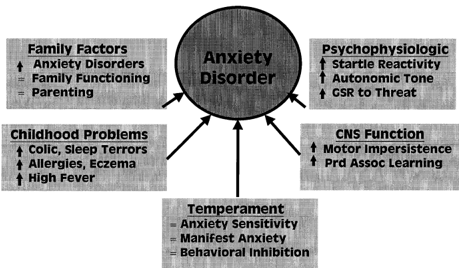
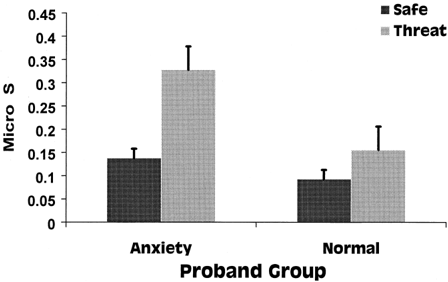
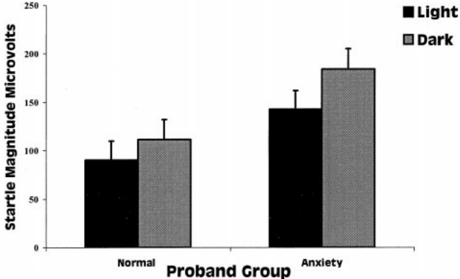
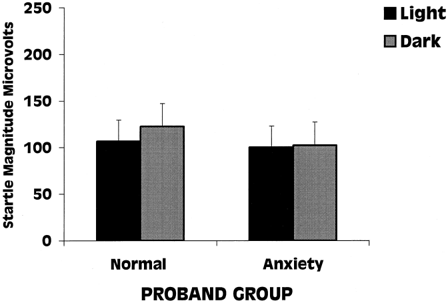
BACKGROUND: The high-risk strategy is one of the most powerful approaches for identifying premorbid risk factors and reducing etiologic and phenotypic heterogeneity characteristic of the major psychiatric disorders. METHODS: This paper reviews the methods of high-risk research and findings from previous high-risk studies of anxiety. The preliminary results of the 6-8 year follow-up of a high-risk study of 192 offspring of probands with anxiety disorders, substance abuse, and unaffected controls are presented. The key study measures include comprehensive diagnostic interviews, symptom ratings, indirect measures of brain functioning (neuropsychologic, neurologic and psychophysiologic function), developmental measures, and family functioning measures. RESULTS: The major findings reveal that there is specificity of familial aggregation of anxiety disorders among parents and children; children at high risk for anxiety have increased startle reflex, autonomic reactivity, and stress reactivity, higher verbal IQ, and deficits in paired associative learning as compared to other children. CONCLUSIONS: The finding that family environment and parenting do not differ between children at risk for anxiety disorders and other children, when taken together with the strong degree of specificity of transmission of anxiety disorders, suggests that there may be temperamental vulnerability factors for anxiety disorders in general that may already manifest in children prior to puberty.
Overview
The claims and statistics of this paper haven’t been checked yet.
Free: it reads the open-access text and checks the first 5 claims that cite a source we can check. Create a free account to check every claim.
Integrity signals
Registry
Cites
Statistics
Figures
Verification
Claims the paper makes
The claims and statistics of this paper haven’t been checked yet.
Free: it reads the open-access text and checks the first 5 claims that cite a source we can check. Create a free account to check every claim.
Claims other papers make about this one
Each is checked against this paper’s own text: does it say what the citing paper says it does?
The cited source says what the claim attributes to it.
In the citing paper
“Various vulnerability factors have been associated with risk for mood and anxiety disorders, including a parental history of anxiety disorders (Merikangas et al, 1999), early life stress (Nemeroff, 2004), and being female (Kessler et al, 1994).”
From Phasic vs Sustained Fear in Rats and Humans: Role of the Extended Amygdala in Fear vs Anxiety (2010) · cites this paper as Merikangas et al, 1999
Self-check
Percentages, sums and reported differences re-computed from the paper’s own numbers.
The self-check needs the paper’s full text.
Citations
Cites
Diagnostic and Statistical Manual of Mental Disorders
Williams, J. B. W., & First, M. (2013) · Encyclopedia of Social Work · doi:10.1093/acrefore/9780199975839.013.104 · Cited by 109,519
A Diagnostic Interview: The Schedule for Affective Disorders and Schizophrenia
Endicott, J. (1978) · Archives of General Psychiatry · doi:10.1001/archpsyc.1978.01770310043002 · Cited by 5,684
Diagnostic and Statistical Manual of Mental Disorders (3rd ed. rev.)
Drake, M. (1988) · The American Journal of Occupational Therapy · doi:10.5014/ajot.42.10.683b · Cited by 5,240
Gray, J. A. (1982) · Behavioral and Brain Sciences · doi:10.1017/s0140525x00013066 · Cited by 4,477 · cited 1×
“These results begin to test the pathways posited by Gray (1982) , Kagan et al (1998), and others that implicated the projections from the amygdala that control the cognitive, motor, and autonomic systems involved in the fear response.”
A parental bonding instrument.
Parker, G., Tupling, H., & Brown, L. B. (1979) · British Journal of Medical Psychology · doi:10.1111/j.2044-8341.1979.tb02487.x · Cited by 3,788
THE McMASTER FAMILY ASSESSMENT DEVICE*
Epstein, N. B., Baldwin, L. M., & Bishop, D. S. (1983) · Journal of Marital and Family Therapy · doi:10.1111/j.1752-0606.1983.tb01497.x · Cited by 3,510
Anxiety, sensitivity, anxiety frequency, and the prediction of fearfulness
Reiss, S., Peterson, R. A., Gursky, D. M., & McNally, R. J. (1986) · Behaviour Research and Therapy · doi:10.1016/0005-7967(86)90143-9 · Cited by 3,169
Children of depressed parents: An integrative review.
Downey, G., & Coyne, J. C. (1990) · Psychological Bulletin · doi:10.1037//0033-2909.108.1.50 · Cited by 2,355 · cited 1×
“The role of a family history of psychiatric disorders as one of the most potent risk factors for the development of psychopathology has generated a substantial body of research on offspring of parents with schizophrenia, alcoholism, anxiety disorders, and affective disorders (Downey and Coyne 1990; Erlenmeyer-Kimling…”
BackgroundWhat I Think and Feel: A Revised Measure of Children's Manifest Anxiety
Reynolds, C. R., & Richmond, B. O. (1997) · Journal of Abnormal Child Psychology · doi:10.1023/a:1025751206600 · Cited by 1,935
Pine, D. S., Cohen, P., Gurley, D., Brook, J., & Ma, Y. (1998) · Archives of General Psychiatry · doi:10.1001/archpsyc.55.1.56 · Cited by 1,753 · cited 2×
“This finding, when taken together with findings of similar sensitivity in children and adolescents with panic ( Pine et al 1998 ), suggests that CO2 sensitivity may be a promising trait marker for the development of panic.”
BackgroundResult
Research works printed but not linked: 4
- Downes J, Evenden J, Morris R, et al (1994): Cambridge Neurological Test Automated Battery (CANTAB): Instruction Manual. Waterbeach, UK: Paul Fray Ltd.
- Goddard, 1996, A critical review of the role of norepinephrine in panic disorder, 107
- Joynt RJ (1990): Behavioral Aspects of Neurological Disease, Vol 2. Philadelphia: J.B. Lippincott Company.
- Sylvester C, Hyde T, Reichler R (1988): Clinical psychopathol- ogy among children of adults with panic disorder. In: Dunner D, Gershon E, Barrett J, editors. Relatives at Risk for Mental Disorder. New York: Raven Press, 87-102.
Cited by
Beesdo, K., Knappe, S., & Pine, D. S. (2009) · Psychiatric Clinics of North America · doi:10.1016/j.psc.2009.06.002 · Cited by 1,703
Phasic vs Sustained Fear in Rats and Humans: Role of the Extended Amygdala in Fear vs Anxiety
Davis, M., Walker, D. L., Miles, L., & Grillon, C. (2010) · Neuropsychopharmacology · doi:10.1038/npp.2009.109 · Cited by 1,513
Self-citationEpidemiology of mental disorders in children and adolescents
Merikangas, K. R., Nakamura, E. F., & Kessler, R. C. (2009) · Dialogues in Clinical Neuroscience · doi:10.31887/dcns.2009.11.1/krmerikangas · Cited by 1,246
“There are consistent few differences in the distribution of anxiety disorders by ethnicity and social class.(56)”
BackgroundSelf-citationClassical fear-conditioning in the anxiety disorders: a meta-analysis
Lissek, S., Powers, A. S., McClure, E. B., Phelps, E. A., Woldehawariat, G., Grillon, C., & Pine, D. S. (2005) · Behaviour Research and Therapy · doi:10.1016/j.brat.2004.10.007 · Cited by 1,034
Self-citationConnell, A. M., & Goodman, S. H. (2002) · Psychological Bulletin · doi:10.1037/0033-2909.128.5.746 · Cited by 943
Metadata
- Authors
- Merikangas, K. R., Avenevoli, S., Dierker, L., & Grillon, C.
- Affiliations
- Yale University (US)
- Wesleyan University (US)
- Corresponding author
- Merikangas, Kathleen Ries
- Venue
- Biological Psychiatry
- Publisher
- Elsevier BV
- Published
- 1999-12
- Volume
- 46
- Issue
- 11
- Pages
- 1523-1535
- ISSN
- 0006-3223 (ISSN-L)
- OpenAlex
- W2012538001
- Cited by
- 229
- References
- 89
- Citations by year
- 2025: 3 · 2024: 3 · 2023: 2 · 2022: 9 · 2021: 8 · 2020: 8 · 2019: 3 · 2018: 2 · 2017: 6 · 2016: 15 · 2015: 10 · 2014: 9 · 2013: 10 · 2012: 12
- FWCI
- 12.69
- Type
- journal article
- Language
- en
- Open access
- hybrid
- doi.org
- Licence
- cc-by-nc-nd
- www.elsevier.com/tdm/userlicense/1.0/ (tdm)
- www.elsevier.com/legal/tdmrep-license (tdm)
- creativecommons.org/licenses/by-nc-nd/4.0/ (vor, 366 d)
- Locations
- Biological Psychiatry (publishedVersion, cc-by-nc-nd)
- PubMed (publishedVersion)
- Funders
- John D. and Catherine T. MacArthur Foundation
- U.S. Public Health Service (AA07080, DA05348)
- National Institute on Alcohol Abuse and Alcoholism (R01AA007080, AA-07080)
- National Institute of Mental Health (MH30929)
- National Institute on Drug Abuse (DA 05348)
- Topics
- Social Sciences › Psychology › Clinical Psychology › Child and Adolescent Psychosocial and Emotional Development
- Social Sciences › Psychology › Experimental and Cognitive Psychology › Anxiety, Depression, Psychometrics, Treatment, Cognitive Processes
- Health Sciences › Medicine › Public Health, Environmental and Occupational Health › Maternal Mental Health During Pregnancy and Postpartum
- Keywords
- anxiety disorders, high-risk offspring, familial aggregation, premorbid risk factors, startle response, autonomic reactivity, stress reactivity, verbal IQ, parenting, family functioning, substance abuse
- MeSH terms
- Adolescent, Adult, Anxiety Disorders, Child, Family, Female, Follow-Up Studies, Humans, Male, Neuropsychological Tests, Parents, Psychiatric Status Rating Scales, Risk Factors
About these checks
Registry, retraction, Cites and statistics results are computed, not judged, with one exception: a printed reference that no index lists is read once by a model before it counts as a citation error. Claims are extracted by a model and kept only when their quote appears verbatim in the text; each cited source is then checked, with a model’s help, for whether it says what the claim relies on. Those verdicts can be wrong — read the claim’s quote and the cited source before relying on one.
Statistics and arithmetic are recomputed, not judged.
Confidence bands are shown only for fields calibrated on our annotated test set. None is calibrated yet, so no band is shown.
What counts as a claim ›How we measure confidence ›How we check this ›
Are you an author, or do you see a problem with this page? Request a review
Data sources
Bibliographic data: Semantic Scholar, OpenAlex, Crossref.
Contains information from the Semantic Scholar Academic Graph Datasets, made available under the ODC Attribution License (ODC-BY 1.0).
Semantic Scholar’s data is described in: Kinney, R., et al. (2023). The Semantic Scholar Open Data Platform. arXiv:2301.10140.
