

Vulnerability factors among children at risk for anxiety disorders
Open accessThe DOI matches its Crossref record; 86 of the 89 references it cites were found in a registry or an index.
Abstract
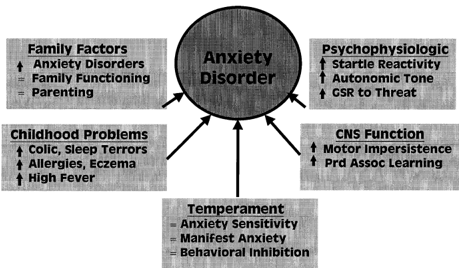
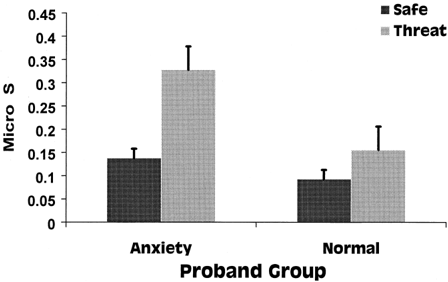
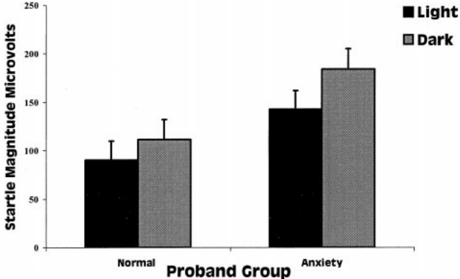
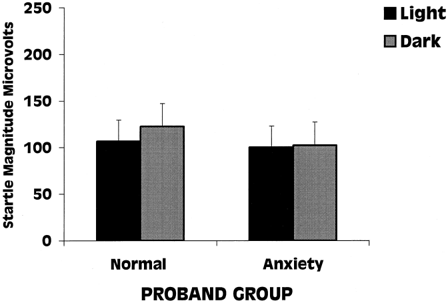
BACKGROUND: The high-risk strategy is one of the most powerful approaches for identifying premorbid risk factors and reducing etiologic and phenotypic heterogeneity characteristic of the major psychiatric disorders. METHODS: This paper reviews the methods of high-risk research and findings from previous high-risk studies of anxiety. The preliminary results of the 6-8 year follow-up of a high-risk study of 192 offspring of probands with anxiety disorders, substance abuse, and unaffected controls are presented. The key study measures include comprehensive diagnostic interviews, symptom ratings, indirect measures of brain functioning (neuropsychologic, neurologic and psychophysiologic function), developmental measures, and family functioning measures. RESULTS: The major findings reveal that there is specificity of familial aggregation of anxiety disorders among parents and children; children at high risk for anxiety have increased startle reflex, autonomic reactivity, and stress reactivity, higher verbal IQ, and deficits in paired associative learning as compared to other children. CONCLUSIONS: The finding that family environment and parenting do not differ between children at risk for anxiety disorders and other children, when taken together with the strong degree of specificity of transmission of anxiety disorders, suggests that there may be temperamental vulnerability factors for anxiety disorders in general that may already manifest in children prior to puberty.
Overview
The claims and statistics of this paper haven’t been checked yet.
Free: it reads the open-access text and checks the first 5 claims that cite a source we can check. Create a free account to check every claim.
Integrity signals
Registry
Cites
Statistics
Figures
Verification
Claims the paper makes
The claims and statistics of this paper haven’t been checked yet.
Free: it reads the open-access text and checks the first 5 claims that cite a source we can check. Create a free account to check every claim.
Claims other papers make about this one
Each is checked against this paper’s own text: does it say what the citing paper says it does?
The cited source says what the claim attributes to it.
In the citing paper
“Various vulnerability factors have been associated with risk for mood and anxiety disorders, including a parental history of anxiety disorders (Merikangas et al, 1999), early life stress (Nemeroff, 2004), and being female (Kessler et al, 1994).”
From Phasic vs Sustained Fear in Rats and Humans: Role of the Extended Amygdala in Fear vs Anxiety (2010) · cites this paper as Merikangas et al, 1999
Self-check
Percentages, sums and reported differences re-computed from the paper’s own numbers.
The self-check needs the paper’s full text.
Citations
Cites
Diagnostic and Statistical Manual of Mental Disorders
Williams, J. B. W., & First, M. (2013) · Encyclopedia of Social Work · doi:10.1093/acrefore/9780199975839.013.104 · Cited by 109,519
A Diagnostic Interview: The Schedule for Affective Disorders and Schizophrenia
Endicott, J. (1978) · Archives of General Psychiatry · doi:10.1001/archpsyc.1978.01770310043002 · Cited by 5,684
Diagnostic and Statistical Manual of Mental Disorders (3rd ed. rev.)
Drake, M. (1988) · The American Journal of Occupational Therapy · doi:10.5014/ajot.42.10.683b · Cited by 5,240
Gray, J. A. (1982) · Behavioral and Brain Sciences · doi:10.1017/s0140525x00013066 · Cited by 4,477 · cited 1×
“These results begin to test the pathways posited by Gray (1982) , Kagan et al (1998), and others that implicated the projections from the amygdala that control the cognitive, motor, and autonomic systems involved in the fear response.”
A parental bonding instrument.
Parker, G., Tupling, H., & Brown, L. B. (1979) · British Journal of Medical Psychology · doi:10.1111/j.2044-8341.1979.tb02487.x · Cited by 3,788
THE McMASTER FAMILY ASSESSMENT DEVICE*
Epstein, N. B., Baldwin, L. M., & Bishop, D. S. (1983) · Journal of Marital and Family Therapy · doi:10.1111/j.1752-0606.1983.tb01497.x · Cited by 3,510
Anxiety, sensitivity, anxiety frequency, and the prediction of fearfulness
Reiss, S., Peterson, R. A., Gursky, D. M., & McNally, R. J. (1986) · Behaviour Research and Therapy · doi:10.1016/0005-7967(86)90143-9 · Cited by 3,169
Children of depressed parents: An integrative review.
Downey, G., & Coyne, J. C. (1990) · Psychological Bulletin · doi:10.1037//0033-2909.108.1.50 · Cited by 2,355 · cited 1×
“The role of a family history of psychiatric disorders as one of the most potent risk factors for the development of psychopathology has generated a substantial body of research on offspring of parents with schizophrenia, alcoholism, anxiety disorders, and affective disorders (Downey and Coyne 1990; Erlenmeyer-Kimling…”
BackgroundWhat I Think and Feel: A Revised Measure of Children's Manifest Anxiety
Reynolds, C. R., & Richmond, B. O. (1997) · Journal of Abnormal Child Psychology · doi:10.1023/a:1025751206600 · Cited by 1,935
Pine, D. S., Cohen, P., Gurley, D., Brook, J., & Ma, Y. (1998) · Archives of General Psychiatry · doi:10.1001/archpsyc.55.1.56 · Cited by 1,753 · cited 2×
“This finding, when taken together with findings of similar sensitivity in children and adolescents with panic ( Pine et al 1998 ), suggests that CO2 sensitivity may be a promising trait marker for the development of panic.”
BackgroundResult
Research works printed but not linked: 4
- Downes J, Evenden J, Morris R, et al (1994): Cambridge Neurological Test Automated Battery (CANTAB): Instruction Manual. Waterbeach, UK: Paul Fray Ltd.
- Goddard, 1996, A critical review of the role of norepinephrine in panic disorder, 107
- Joynt RJ (1990): Behavioral Aspects of Neurological Disease, Vol 2. Philadelphia: J.B. Lippincott Company.
- Sylvester C, Hyde T, Reichler R (1988): Clinical psychopathol- ogy among children of adults with panic disorder. In: Dunner D, Gershon E, Barrett J, editors. Relatives at Risk for Mental Disorder. New York: Raven Press, 87-102.
Cited by
Beesdo, K., Knappe, S., & Pine, D. S. (2009) · Psychiatric Clinics of North America · doi:10.1016/j.psc.2009.06.002 · Cited by 1,703
Phasic vs Sustained Fear in Rats and Humans: Role of the Extended Amygdala in Fear vs Anxiety
Davis, M., Walker, D. L., Miles, L., & Grillon, C. (2010) · Neuropsychopharmacology · doi:10.1038/npp.2009.109 · Cited by 1,513
Self-citationEpidemiology of mental disorders in children and adolescents
Merikangas, K. R., Nakamura, E. F., & Kessler, R. C. (2009) · Dialogues in Clinical Neuroscience · doi:10.31887/dcns.2009.11.1/krmerikangas · Cited by 1,246
“There are consistent few differences in the distribution of anxiety disorders by ethnicity and social class.(56)”
BackgroundSelf-citationClassical fear-conditioning in the anxiety disorders: a meta-analysis
Lissek, S., Powers, A. S., McClure, E. B., Phelps, E. A., Woldehawariat, G., Grillon, C., & Pine, D. S. (2005) · Behaviour Research and Therapy · doi:10.1016/j.brat.2004.10.007 · Cited by 1,034
Self-citationConnell, A. M., & Goodman, S. H. (2002) · Psychological Bulletin · doi:10.1037/0033-2909.128.5.746 · Cited by 943
Rubin, K. H., Burgess, K. B., & Hastings, P. D. (2002) · Child Development · doi:10.1111/1467-8624.00419 · Cited by 617
“The findings pertaining to parenting, and specifically to maternal behaviors, are important given that previous research on behavioral inhibition has focused almost exclusively on biologically based “contributions” to childhood, adolescent, and adult social wariness, phobias, and anxieties (e.g., Fox et al., 1996; Kag…”
BackgroundConnolly, S. D., & Bernstein, G. A. (2007) · Journal of the American Academy of Child & Adolescent Psychiatry · doi:10.1097/01.chi.0000246070.23695.06 · Cited by 548
“Parental anxiety disorder has been associated with increased risk of anxiety disorder in offspring (Biederman et al., 2001; Merikangas et al., 1999) and high levels of functional impairment in children with childhood anxiety disorders (Manassis and Hood, 1998).”
BackgroundSocial anxiety disorder: questions and answers for the DSM-V
Bögels, S. M., Alden, L., Beidel, D. C., Clark, L. A., Pine, D. S., Stein, M. B., & Voncken, M. (2010) · Depression and Anxiety · doi:10.1002/da.20670 · Cited by 526
Lieb, R., Wittchen, H.-U., Höfler, M., Fuetsch, M., Stein, M. B., & Merikangas, K. R. (2000) · Archives of General Psychiatry · doi:10.1001/archpsyc.57.9.859 · Cited by 501
“Studies using both the family study and family history approach have found higher rates of social phobia in relatives of social phobic patients compared with relatives of controls.(30-37) Two studies suggest that familial social phobia might be particularly important in the development of the “generalized” subtype, a…”
ResultSelf-citationStartle reactivity and anxiety disorders: aversive conditioning, context, and neurobiology
Grillon, C. (2002) · Biological Psychiatry · doi:10.1016/s0006-3223(02)01665-7 · Cited by 494
“Anxious children and children at risk for anxiety disorders show deficits in declarative memory processes, such as paired-associate learning ( Merikangas et al 1999; Pine et al 1999).”
BackgroundSelf-citationMental health comorbidity in patients with atopic dermatitis
Yaghmaie, P., Koudelka, C. W., & Simpson, E. L. (2013) · Journal of Allergy and Clinical Immunology · doi:10.1016/j.jaci.2012.10.041 · Cited by 449
National Comorbidity Survey Replication Adolescent Supplement (NCS-A): I. Background and Measures
Merikangas, K. R., Avenevoli, S., Costello, E. J., Koretz, D., & Kessler, R. C. (2009) · Journal of the American Academy of Child & Adolescent Psychiatry · doi:10.1097/chi.0b013e31819996f1 · Cited by 351
“The methodological work performed in preparation for the UNOCCAP study was of great value in this regard, as was the methodological work in a number of other studies, including the Methods for the Epidemiology of Child and Adolescent Mental Disorders study,(10,64) the National Longitudinal Study of Adolescent Health,(…”
MethodSelf-citationDevelopmental epidemiology of anxiety disorders
Beesdo-Baum, K., & Knappe, S. (2012) · Child and Adolescent Psychiatric Clinics of North America · doi:10.1016/j.chc.2012.05.001 · Cited by 330
Parenting Related to Child and Parental Psychopathology: A Descriptive Review of the Literature
Berg-Nielsen, T. S., Vikan, A., & Dahl, A. A. (2002) · Clinical Child Psychology and Psychiatry · doi:10.1177/1359104502007004006 · Cited by 309
Research Review: A neuroscience framework for pediatric anxiety disorders
Pine, D. S. (2007) · Journal of Child Psychology and Psychiatry · doi:10.1111/j.1469-7610.2007.01751.x · Cited by 276
“…additive, such that at-risk/affected individuals show the highest level of bias, with atrisk/unaffected or low-risk/affected individuals showing intermediate levels, relative to low-risk/ unaffected individuals (Merikangas, Avenevoli et al., 1999; Pine et al., 2005; Pine, Klein et al., 2005).”
BackgroundCollishaw, S., Maughan, B., Natarajan, L., & Pickles, A. (2010) · Journal of Child Psychology and Psychiatry · doi:10.1111/j.1469-7610.2010.02252.x · Cited by 267
Granat, A., Gadassi, R., Gilboa-Schechtman, E., & Feldman, R. (2017) · Emotion · doi:10.1037/emo0000204 · Cited by 256
Family-based treatment of childhood anxiety disorders
Ginsburg, G. S., & Schlossberg, M. C. (2002) · International Review of Psychiatry · doi:10.1080/09540260220132662 · Cited by 255
“Four of these studies used child-report only (Kashani et al., 1999; Leib et al., 2000; Merikangas et al., 1999; Stark et al., 1993), four used parent-reports (Fristrad & Crayton, 1991; Hibbs et al., 1993; Kashani et al., 1990; Thomsen, 1994) and two used both child- and parent-report (Messer &…”
MethodRole of corticotropin releasing factor in anxiety disorders: A translational research perspective
Risbrough, V. B., & Stein, M. B. (2006) · Hormones and Behavior · doi:10.1016/j.yhbeh.2006.06.019 · Cited by 236
“Children of patients with anxiety and depressive disorders exhibit exaggerated startle (either baseline or only during threat) compared to children with no family history for these disorders, suggesting that startle responsiveness could be a marker of vulnerability for development of clinical anxiety (Grillon et al.,…”
BackgroundAssociative learning deficits increase symptoms of anxiety in humans
Grillon, C. (2002) · Biological Psychiatry · doi:10.1016/s0006-3223(01)01370-1 · Cited by 203
Self-citationHarvey, C.-J., Gehrman, P., & Espie, C. A. (2014) · Sleep Medicine Reviews · doi:10.1016/j.smrv.2013.11.004 · Cited by 200
Anxiety disorders in children: Family matters
Ginsburg, G. S., Siqueland, L., Masia-Warner, C., & Hedtke, K. A. (2004) · Cognitive and Behavioral Practice · doi:10.1016/s1077-7229(04)80005-1 · Cited by 200
Landman-Peeters, K. M. C., Hartman, C. A., van der Pompe, G., den Boer, J. A., Minderaa, R. B., & Ormel, J. (2005) · Social Science & Medicine · doi:10.1016/j.socscimed.2004.10.024 · Cited by 181
“Offspring of parents who suffer from depression and/or anxiety develop these psychiatric problems 2 to 6 times more often than offspring of unaffected parents (e.g., Lieb et al., 2002; Merikangas et al., 1999).”
The spectrum of social phobia in the zurich cohort study of young adults
Merikangas, K. R., Avenevoli, S., Acharyya, S., Zhang, H., & Angst, J. (2002) · Biological Psychiatry · doi:10.1016/s0006-3223(01)01309-9 · Cited by 176
Self-citationPerera, F., Nolte, E. L. R., Wang, Y., Margolis, A. E., Calafat, A. M., Wang, S., Garcia, W., Hoepner, L. A., Peterson, B. S., Rauh, V., et al. (2016) · Environmental Research · doi:10.1016/j.envres.2016.07.028 · Cited by 171
“Their etiology is complex, including familial, genetic and environmental factors (Reinherz et al. 2000; Fendrich et al. 1990; López et al. 1999; Merikangas et al. 1999).”
BackgroundTrauma, Proximity, and Developmental Psychopathology: The Effects of War and Terrorism on Children
Pine, D. S., Costello, J., & Masten, A. (2005) · Neuropsychopharmacology · doi:10.1038/sj.npp.1300814 · Cited by 163
“Concerning contributions from parental psychopathology, considerable research examines the association between mood and anxiety disorders in parents and their children, as reviewed elsewhere (Weissman et al, 1997; Merikangas et al, 1999).”
BackgroundElevated Fear Conditioning to Socially Relevant Unconditioned Stimuli in Social Anxiety Disorder
Lissek, S., Levenson, J., Biggs, A. L., Johnson, L. L., Ameli, R., Pine, D. S., & Grillon, C. (2008) · American Journal of Psychiatry · doi:10.1176/appi.ajp.2007.06091513 · Cited by 158
“The high-risk paradigm may be best suited for such a task (38, 39), whereby healthy individuals with the greatest likelihood of developing clinical anxiety (e.”
BackgroundSelf-citationAvenevoli, S., Stolar, M. J., Li, J., Dierker, L., & Merikangas, K. R. (2001) · Biological Psychiatry · doi:10.1016/s0006-3223(01)01142-8 · Cited by 214
Self-citationPanic disorder: a review of DSM-IV panic disorder and proposals for DSM-V
Craske, M. G., Kircanski, K., Epstein, A., Wittchen, H.-U., Pine, D. S., Lewis-Fernández, R., Hinton, D., Anxiety, D. V., Spectrum, O., & Posttraumatic and Dissociative Disorder Work Group (2010) · Depression and Anxiety · doi:10.1002/da.20654 · Cited by 147
“The alternative clinical forms include night terrors, behavioral inhibition, high levels of anxiety sensitivity, or various other childhood anxiety-disorder states([114,117]) and separation anxiety disorder.”
BackgroundIs aversive learning a marker of risk for anxiety disorders in children?
Craske, M. G., Waters, A. M., Lindsey Bergman, R., Naliboff, B., Lipp, O. V., Negoro, H., & Ornitz, E. M. (2008) · Behaviour Research and Therapy · doi:10.1016/j.brat.2008.04.011 · Cited by 146
Brains in the city: Neurobiological effects of urbanization
Lambert, K. G., Nelson, R. J., Jovanovic, T., & Cerdá, M. (2015) · Neuroscience & Biobehavioral Reviews · doi:10.1016/j.neubiorev.2015.04.007 · Cited by 142
Neural Substrates of Childhood Anxiety Disorders
Blackford, J. U., & Pine, D. S. (2012) · Child and Adolescent Psychiatric Clinics of North America · doi:10.1016/j.chc.2012.05.002 · Cited by 138
Siqueland, L., Rynn, M., & Diamond, G. S. (2005) · Journal of Anxiety Disorders · doi:10.1016/j.janxdis.2004.04.006 · Cited by 134
Cheron, D. M., Ehrenreich, J. T., & Pincus, D. B. (2009) · Child Psychiatry and Human Development · doi:10.1007/s10578-009-0135-z · Cited by 125
“Since parent psychopathology, as measured by the DASS, is likely to impact child symptomatology [47, 48] and parents’ own experiential avoidance, as measured by AAQ score, demonstrated strong correlations with the PAAQ, both of these variables were entered as a first step in the regression analysis, with the PAAQ scor…”
MethodBurstein, M., Ginsburg, G. S., & Tein, J.-Y. (2010) · Journal of Abnormal Child Psychology · doi:10.1007/s10802-010-9415-0 · Cited by 125
“…individuals who exhibit the presence and absence of a single risk factor) are generally heterogeneous with respect to psychological functioning; therefore, such samples often enhance the ability to identify risk factors that occasion poor outcomes (Chassin et al. 2002; Merikangas et al. 1999).”
BackgroundResultInfluentialMaternal Panic Disorder: Infant Temperament, Neurophysiology, and Parenting Behaviors
Warren, S. L., Gunnar, M. R., Kagan, J., Anders, T. F., Simmens, S. J., Rones, M., Wease, S., Aron, E. J., Dahl, R. E., & Sroufe, A. (2003) · Journal of the American Academy of Child & Adolescent Psychiatry · doi:10.1097/01.chi.0000046872.56865.02 · Cited by 142
“In addition to behavioral differences, children with anxious/PD parents show neurophysiological differences from controls, which could be indicative of increased arousal/arousability (Merikangas et al., 1999).”
BackgroundAschenbrand, S. G., Kendall, P. C., Webb, A., Safford, S. M., & Flannery-Schroeder, E. C. (2003) · Journal of the American Academy of Child & Adolescent Psychiatry · doi:10.1097/00004583-200312000-00015 · Cited by 147
Psychopathology Risk Transmission in Children of Parents With Substance Use Disorders
Clark, D. B., Cornelius, J., Wood, D. S., & Vanyukov, M. (2004) · American Journal of Psychiatry · doi:10.1176/appi.ajp.161.4.685 · Cited by 121
“Using a highrisk design strategy similar to that for the study reported here, Merikangas and colleagues (8, 11, 12) studied parent-to-child transmission of psychopathology risk in the children of parents with substance use disorders, anxiety disorders, or no history of psychiatric disorders.”
BackgroundKaitz, M., & Maytal, H. (2005) · Infant Mental Health Journal · doi:10.1002/imhj.20069 · Cited by 119
High risk studies and developmental antecedents of anxiety disorders
Hirshfeld‐Becker, D. R., Micco, J. A., Simoes, N. A., & Henin, A. (2008) · American Journal of Medical Genetics Part C: Seminars in Medical Genetics · doi:10.1002/ajmg.c.30170 · Cited by 116
Waters, A. M., Henry, J., & Neumann, D. L. (2009) · Journal of Abnormal Psychology · doi:10.1037/a0015635 · Cited by 111
Anxiety Disorders in Children and Adolescents
Rockhill, C., Kodish, I., DiBattisto, C., Macias, M., Varley, C., & Ryan, S. (2010) · Current Problems in Pediatric and Adolescent Health Care · doi:10.1016/j.cppeds.2010.02.002 · Cited by 110
Smoller, J. W., Acierno, J. S., Rosenbaum, J. F., Biederman, J., Pollack, M. H., Meminger, S., Pava, J. A., Chadwick, L. H., White, C., Bulzacchelli, M., et al. (2001) · American Journal of Medical Genetics · doi:10.1002/ajmg.1209 · Cited by 110
Evidence for retarded extinction of aversive learning in anxious children
Liberman, L. C., Lipp, O. V., Spence, S. H., & March, S. (2005) · Behaviour Research and Therapy · doi:10.1016/j.brat.2005.11.004 · Cited by 126
Knappe, S., Lieb, R., Beesdo, K., Fehm, L., Ping Low, N. C., Gloster, A. T., & Wittchen, H.-U. (2009) · Depression and Anxiety · doi:10.1002/da.20527 · Cited by 107
Panic Disorder, Phobias, and Generalized Anxiety Disorder
Craske, M. G., & Waters, A. M. (2005) · Annual Review of Clinical Psychology · doi:10.1146/annurev.clinpsy.1.102803.143857 · Cited by 106
“Familial Aggregation Risk for anxiety disorders among offspring of parents with anxiety disorders averages 3.5 (range 1.3 to 13.3) times greater than the risk for healthy controls (e.g., Merikangas et al. 1999).”
BackgroundInfluentialPhysiological markers of anxiety are increased in children of abused mothers
Jovanovic, T., Smith, A., Kamkwalala, A., Poole, J., Samples, T., Norrholm, S. D., Ressler, K. J., & Bradley, B. (2011) · Journal of Child Psychology and Psychiatry · doi:10.1111/j.1469-7610.2011.02410.x · Cited by 102
Adolescent fears as predictors of depression
Pine, D. S., Cohen, P., & Brook, J. (2001) · Biological Psychiatry · doi:10.1016/s0006-3223(01)01238-0 · Cited by 98
Face‐memory and emotion: associations with major depression in children and adolescents
Pine, D. S., Lissek, S., Klein, R. G., Mannuzza, S., Moulton, J. L., Guardino, M., & Woldehawariat, G. (2004) · Journal of Child Psychology and Psychiatry · doi:10.1111/j.1469-7610.2004.00311.x · Cited by 92
Implications of High-Risk Family Studies for Prevention of Depression
Avenevoli, S., & Merikangas, K. R. (2006) · American Journal of Preventive Medicine · doi:10.1016/j.amepre.2006.07.003 · Cited by 107
Self-citationExecutive functioning in offspring at risk for depression and anxiety
Micco, J. A., Henin, A., Biederman, J., Rosenbaum, J. F., Petty, C., Rindlaub, L. A., Murphy, M., & Hirshfeld-Becker, D. R. (2009) · Depression and Anxiety · doi:10.1002/da.20573 · Cited by 86
“Merikangas et al.[26] found that children (ages 7–17) of parents with an anxiety disorder had visual memory deficits compared to children of healthy control parents.”
BackgroundPsychophysiological Methods and Developmental Psychopathology
Zisner, A. R., & Beauchaine, T. P. (2016) · Developmental Psychopathology · doi:10.1002/9781119125556.devpsy222 · Cited by 78
Hastings, P. D., Shirtcliff, E. A., Klimes-Dougan, B., Allison, A. L., Derose, L., Kendziora, K. T., Usher, B. A., & Zahn-Waxler, C. (2011) · Development and Psychopathology · doi:10.1017/s0954579411000538 · Cited by 80
“with the dominant perspectives on the development of anxiety-based difficulties (Kagan et al., 1994; Merikangas et al., 1999).”
BackgroundThreat interpretation bias as a vulnerability factor in childhood anxiety disorders.
Waters, A., Craske, M., Bergman, R., & Treanor, M. (2008) · Behaviour Research and Therapy · doi:10.1016/j.brat.2007.10.002 · Cited by 79
“…only characteristic of ongoing childhood anxiety but also represents a trait vulnerability for childhood anxiety (e.g., Grillon et al., 1997, 1998; Merikangas et al., 1999; Pine, Klein, Manuzza et al., 2005; Turner et al., 2005; Warren et al., 2003), then threat interpretations should be elevated…”
BackgroundLiability to substance use disorders: 2. A measurement approach
Vanyukov, M. M., Kirisci, L., Tarter, R. E., Simkevitz, H. F., Kirillova, G. P., Maher, B. S., & Clark, D. B. (2003) · Neuroscience & Biobehavioral Reviews · doi:10.1016/j.neubiorev.2003.08.003 · Cited by 81
Pine, D. S., Klein, R. G., Roberson-Nay, R., Mannuzza, S., Moulton, J. L., Woldehawariat, G., & Guardino, M. (2005) · Archives of General Psychiatry · doi:10.1001/archpsyc.62.1.73 · Cited by 74
Vulnerability Factors for Anxiety Disorders in Children and Adolescents
Merikangas, K. R. (2005) · Child and Adolescent Psychiatric Clinics of North America · doi:10.1016/j.chc.2005.06.005 · Cited by 98
“Likewise, the prevalence of high fevers in childhood along with diseases associated with the immune system was elevated among offspring of parents with anxiety disorders in the Yale High Risk Study [100].”
BackgroundResultSelf-citationCreswell, C., Murray, L., Stacey, J., & Cooper, P. (2011) · Cambridge University Press eBooks · doi:10.1017/cbo9780511994920.015 · Cited by 83
Family and high‐risk studies of social anxiety disorder
Merikangas, K. R., Lieb, R., Wittchen, H. ‐., & Avenevoli, S. (2003) · Acta Psychiatrica Scandinavica · doi:10.1034/j.1600-0447.108.s417.5.x · Cited by 70
“In contrast, the results of the Yale Family Study did not support an association between negative parenting or family function and the development of anxiety disorders during childhood and adolescence (48).”
BackgroundResultSelf-citationReeb-Sutherland, B. C., Helfinstein, S. M., Degnan, K. A., Pérez-Edgar, K., Henderson, H. A., Lissek, S., Chronis-Tuscano, A., Grillon, C., Pine, D. S., & Fox, N. A. (2009) · Journal of the American Academy of Child & Adolescent Psychiatry · doi:10.1097/chi.0b013e31819f70fb · Cited by 69
“history for anxiety are more likely to show abnormal startle reflex responses comparedwith adolescents without such family history.(27,32) These results give some insight into which psychophysiological measures may be used to differentiate between adolescents who are at high or low risk for anxiety.”
Self-citationLeyfer, O., Woodruff-Borden, J., & Mervis, C. B. (2009) · Journal of Neurodevelopmental Disorders · doi:10.1007/s11689-009-9003-1 · Cited by 67
“For example, Merikangas and colleagues [14–16] found that the risk of developing an anxiety disorder in children aged 7–17 years was three times as high if a parent had an anxiety disorder as if a parent had a substance abuse disorder or neither parent had a psychiatric diagnosis.”
BackgroundPsychopathology and Parenting Practices of Parents of Preschool Children With Behavior Problems
Harvey, E. A., Stoessel, B. J., & Herbert, S. D. (2011) · Parenting · doi:10.1080/15295192.2011.613722 · Cited by 83
“However, other studies have failed to find an association between parental anxiety and parenting practices ( Ginsburg, Grover, & Ialongo, 2004 ; Turner, Beidel, Roberson-Nay, & Tervo, 2003 ), and there is some evidence that anxious fathers engage in more positive parenting practices than do nonanxious fathers ( Merika…”
BackgroundMethods for developmental studies of fear conditioning circuitry
Pine, D. S., Fyer, A., Grun, J., Phelps, E. A., Szeszko, P. R., Koda, V., Li, W., Ardekani, B., Maguire, E. A., Burgess, N., et al. (2001) · Biological Psychiatry · doi:10.1016/s0006-3223(01)01159-3 · Cited by 62
“As such, these data might encourage efforts to study the nature of risk for anxiety by conducting comparable fear conditioning experiments across species and across developmental periods (Merikangas et al 1999).”
BackgroundMethodInfluentialLawrence, P. J., Rooke, S. M., & Creswell, C. (2017) · Child and Adolescent Mental Health · doi:10.1111/camh.12226 · Cited by 62
Individual differences in fear potentiated startle in behaviorally inhibited children
Barker, T. V., Reeb‐Sutherland, B. C., & Fox, N. A. (2014) · Developmental Psychobiology · doi:10.1002/dev.21096 · Cited by 61
“populations, and is present in offspring of clinically anxious individuals (Grillon et al., 1994, 1998; Merikangas et al., 1999; Morgan et al., 1995).”
BackgroundTemperament among offspring at high and low risk for depression
Bruder-Costello, B., Warner, V., Talati, A., Nomura, Y., Bruder, G. E., & Weissman, M. M. (2007) · Psychiatry Research · doi:10.1016/j.psychres.2007.02.013 · Cited by 75
“Difficult temperament and extreme temperamental traits have been linked to a wide range of psychological and behavioral problems in both adolescence and adulthood — including substance abuse, social phobia, generalized anxiety disorder, depressive symptoms and disorders, delinquency, aggression, and convictions for vi…”
Bakker, M. J., Tijssen, M. A. J., van der Meer, J. N., Koelman, J. H. T. M., & Boer, F. (2009) · Journal of Psychiatry and Neuroscience · doi:10.1139/jpn.0941 · Cited by 58
Face-Emotion Processing in Offspring at Risk for Panic Disorder
Pine, D. S., Klein, R. G., Mannuzza, S., Moulton, J. L., Lissek, S. M., Guardino, M., & Woldehawariat, G. (2005) · Journal of the American Academy of Child & Adolescent Psychiatry · doi:10.1097/01.chi.0000162580.92029.f4 · Cited by 65
“Similarly, when anticipating exposure to an air puff, children of parents with anxiety disorders exhibit lower fear thresholds, as assessed by startle magnitude, than children of healthy parents (Merikangas et al., 1999).”
BackgroundInfluentialGoodwin, R. D. (2003) · Advances in Psychosomatic Medicine · doi:10.1159/000073780 · Cited by 56
Emotional Reactivity and Risk for Psychopathology Among Adolescents
Pine, D. S., Cohen, P., & Brook, J. S. (2001) · CNS Spectrums · doi:10.1017/s1092852900022860 · Cited by 55
Martini, J., Wittich, J., Petzoldt, J., Winkel, S., Einsle, F., Siegert, J., Höfler, M., Beesdo‐Baum, K., & Wïttchen, H. (2013) · Archives of Women s Mental Health · doi:10.1007/s00737-013-0376-5 · Cited by 68
Waters, A. M., Neumann, D. L., Henry, J., Craske, M. G., & Ornitz, E. M. (2007) · Biological Psychology · doi:10.1016/j.biopsycho.2007.12.005 · Cited by 65
“These findings present important similarities with previous studies of fear-potentiated startle modulation in older at-risk youths and anxious adults (e.g., Grillon et al., 1994; 1997, 1998; 2005; Grillon & Ameli, 1998; Merikangas et al., 1999).”
InfluentialOlatunji, B. O., & Cole, D. A. (2009) · Psychological Assessment · doi:10.1037/a0016206 · Cited by 54
Modifiable Parent Factors Associated with Child and Adolescent School Refusal: A Systematic Review
Chockalingam, M., Skinner, K., Melvin, G. A., & Yap, M. B. H. (2022) · Child Psychiatry & Human Development · doi:10.1007/s10578-022-01358-z · Cited by 77
Williams, S. R., Cash, E. D., Daup, M., Geronimi, E. M. C., Sephton, S. E., & Woodruff‐Borden, J. (2013) · Biological Psychology · doi:10.1016/j.biopsycho.2013.02.015 · Cited by 62
Anxiety in adolescents: Update on its diagnosis and treatment for primary care providers
Dickstein, D. (2011) · Adolescent Health, Medicine and Therapeutics · doi:10.2147/ahmt.s7597 · Cited by 52
“23 A third factor that may predispose to anxiety disorders is difficulty with peer relationships, which has been associated with subsequent anxiety, particularly social anxiety, in adolescents.”
Slattery, M. J., Klein, D. F., Mannuzza, S., Moulton, J. L., Pine, D. S., & Klein, R. G. (2002) · Journal of the American Academy of Child & Adolescent Psychiatry · doi:10.1097/00004583-200208000-00013 · Cited by 56
“Merikangas et al. (1999) reported an increased rate of allergies in offspring of parents with anxiety disorders compared with offspring of parents with no psychiatric disorder or parents with a history of substance abuse and no anxiety disorder; whether this relationship is specific to parental PD is not reported.”
BackgroundSeparation Anxiety Disorder, Panic Disorder, and School Refusal
Suveg, C. M., Aschenbrand, S. G., & Kendall, P. C. (2005) · Child and Adolescent Psychiatric Clinics of North America · doi:10.1016/j.chc.2005.05.005 · Cited by 70
Airpuff startle probes: an efficacious and less aversive alternative to white-noise
Lissek, S. M., Baas, J. M. P., Pine, D. S., Orme, K., Dvir, S., Nugent, M., Rosenberger, E. M., Rawson, E., & Grillon, C. (2004) · Biological Psychology · doi:10.1016/j.biopsycho.2004.07.007 · Cited by 59
“All rights reserved. doi:10.1016/j.biopsycho.2004.07.007”
BackgroundInfluentialSelf-citationChild–Parent Interventions for Childhood Anxiety Disorders: A Systematic Review and Meta-Analysis
Brendel, K. E., & Maynard, B. R. (2014) · Research on Social Work Practice · doi:10.1177/1049731513503713 · Cited by 48
Grillon, C., O’Connell, K., Lieberman, L., Alvarez, G., Geraci, M. F., Pine, D. S., & Ernst, M. (2016) · Biological Psychiatry Cognitive Neuroscience and Neuroimaging · doi:10.1016/j.bpsc.2016.08.005 · Cited by 53
Self-citationPreventing family transmission of anxiety: Feasibility RCT of a brief intervention for parents
Cartwright‐Hatton, S., Ewing, D., Dash, S., Hughes, Z., Thompson, E. J., Hazell, C. M., Field, A. P., & Startup, H. (2018) · British Journal of Clinical Psychology · doi:10.1111/bjc.12177 · Cited by 47
Tillfors, M. (2004) · Nordic Journal of Psychiatry · doi:10.1080/08039480410005774 · Cited by 47
“Moreover, two studies of anxiety and social phobia (26, 27) observed increased rates of social phobia in the offspring of anxious parents in clinical populations.”
BackgroundChallacombe, F. L., & Salkovskis, P. M. (2009) · Journal of Anxiety Disorders · doi:10.1016/j.janxdis.2009.04.002 · Cited by 63
“Given the nonspecific heritability of most anxiety disorders, it has been suggested that underlying temperamental factors represent a common diathesis (Merikangas et al., 1999).”
BackgroundCoplan, J. D., Mathew, S. J., Mao, X., Smith, E. L. P., Hof, P. R., Coplan, P. M., Rosenblum, L. A., Gorman, J. M., & Shungu, D. C. (2006) · Psychiatry Research: Neuroimaging · doi:10.1016/j.pscychresns.2005.12.011 · Cited by 45
“Children at high risk for anxiety have been reported to exhibit increased startle reflex, autonomic reactivity and stress reactivity, higher verbal IQ and deficits in paired associative learning compared with other children (Merikangas et al., 1999).”
BackgroundLeyfer, O. T., Gallo, K. P., Cooper‐Vince, C. E., & Pincus, D. B. (2013) · Journal of Anxiety Disorders · doi:10.1016/j.janxdis.2013.01.010 · Cited by 62
Kwak, K. (2016) · Social Science & Medicine · doi:10.1016/j.socscimed.2016.03.017 · Cited by 57
“…mood disorders are the two psychological illnesses more frequently experienced by adolescent girls than boys (Bradley, 2001; Costello et al., 2005; Kessler et al., 2001; Merikangas et al., 2009), but no difference has been found by SES (Roza etal., 2003), or by ethnicity (Merikangas et al., 1999).”
Memory deficits in children with and at risk for anxiety disorders
Vasa, R. A., Roberson-Nay, R., Klein, R. G., Mannuzza, S., Moulton, Guardino, M., Merikangas, A., Carlino, A. R., & Pine, D. S. (2007) · Depression and Anxiety · doi:10.1002/da.20193 · Cited by 44
Contingent negative variation in subjects at risk for migraine without aura
Siniatchkin, M., Kropp, P. A., & Gerber, W. (2001) · Pain · doi:10.1016/s0304-3959(01)00350-5 · Cited by 43
“…the greatest probability of developing a specific disorder allows us to minimize the heterogeneity, to increase the power within a particular sample to observe hypothesized risk-factor associations, and to evaluate genetic impact on the particular elementary phenotype (Merikangas et al., 1999).”
InfluentialNagata, T., Suzuki, F., & Teo, A. R. (2015) · Psychiatry and Clinical Neurosciences · doi:10.1111/pcn.12327 · Cited by 40
“By contrast, the study of environmental factors associated with SAD has produced fairly consistent results, showing support for various factors, such as parental overprotection and rejection.(87) To summarize, results from family and twin studies suggest familial transmission that may be specific to SAD, whereas the m…”
ResultAutonomic arousal in children of parents with and without social anxiety disorder: a high‐risk study
Nikolić, M., de Vente, W., Colonnesi, C., & Bögels, S. M. (2016) · Journal of Child Psychology and Psychiatry · doi:10.1111/jcpp.12563 · Cited by 40
“Previous studies on the transmission of anxiety disorders found that children of parents with anxiety disorders are generally characterized by autonomic hyperarousal compared with children of parents without anxiety disorders (Grillon et al., 1997; Merikangas et al., 1999; Turner et al., 2005).”
InfluentialCognitive Models of Childhood Anxiety.
Weems, C. F., & Watts, S. (2005) · Cited by 50
Drake, K. L., & Kearney, C. A. (2007) · Journal of Psychopathology and Behavioral Assessment · doi:10.1007/s10862-007-9055-z · Cited by 52
The use of genetic epidemiology to guide classification in child and adult psychopathology
Szatmari, P., White, J., & Merikangas, K. R. (2007) · International Review of Psychiatry · doi:10.1080/09540260701563619 · Cited by 38
“In contrast, no dose-response effect was observed for depression for which there was a main effect of parental depression on rates of offspring depression, but no elevation in risk among offspring of dually affected couples compared to those in which only one parent had depression (Merikangas et al., 1999).”
BackgroundResultSelf-citationNegative Life Events of Anxiety Disordered Children: Bad Fortune, Vulnerability, or Reporter Bias?
Boer, F., Markus, M. T., Maingay, R., Lindhout, I. E., Borst, S., & Hoogendijk, T. H. G. (2002) · Child Psychiatry & Human Development · doi:10.1023/a:1017952605299 · Cited by 50
Fluvoxamine for the Treatment of Anxiety Disorders in Children and Adolescents
Isaacs, E. (2001) · New England Journal of Medicine · doi:10.1056/nejm200108093450615 · Cited by 38
Family Factors and the Development of Anxiety Disorders
Gar, N. S., Hudson, J. L., & Rapee, R. M. (2005) · Elsevier eBooks · doi:10.1016/b978-008044449-9/50008-3 · Cited by 55
Bumping heart and sweaty palms: physiological hyperarousal as a risk factor for child social anxiety
Nikolić, M., Aktar, E., Bögels, S. M., Colonnesi, C., & de Vente, W. (2017) · Journal of Child Psychology and Psychiatry · doi:10.1111/jcpp.12813 · Cited by 44
Prevention of anxiety disorders: A model for intervention
Craske, M. G., & Zucker, B. G. (2001) · Applied and Preventive Psychology · doi:10.1016/s0962-1849(01)80012-3 · Cited by 49
Bahalı, K., Tahiroğlu, A. Y., Avci, A., & Şeydaoğlu, G. (2011) · PubMed · Cited by 60
Metadata
- Authors
- Merikangas, K. R., Avenevoli, S., Dierker, L., & Grillon, C.
- Affiliations
- Yale University (US)
- Wesleyan University (US)
- Corresponding author
- Merikangas, Kathleen Ries
- Venue
- Biological Psychiatry
- Publisher
- Elsevier BV
- Published
- 1999-12
- Volume
- 46
- Issue
- 11
- Pages
- 1523-1535
- ISSN
- 0006-3223 (ISSN-L)
- OpenAlex
- W2012538001
- Cited by
- 229
- References
- 89
- Citations by year
- 2025: 3 · 2024: 3 · 2023: 2 · 2022: 9 · 2021: 8 · 2020: 8 · 2019: 3 · 2018: 2 · 2017: 6 · 2016: 15 · 2015: 10 · 2014: 9 · 2013: 10 · 2012: 12
- FWCI
- 12.69
- Type
- journal article
- Language
- en
- Open access
- hybrid
- doi.org
- Licence
- cc-by-nc-nd
- www.elsevier.com/tdm/userlicense/1.0/ (tdm)
- www.elsevier.com/legal/tdmrep-license (tdm)
- creativecommons.org/licenses/by-nc-nd/4.0/ (vor, 366 d)
- Locations
- Biological Psychiatry (publishedVersion, cc-by-nc-nd)
- PubMed (publishedVersion)
- Funders
- John D. and Catherine T. MacArthur Foundation
- U.S. Public Health Service (AA07080, DA05348)
- National Institute on Alcohol Abuse and Alcoholism (R01AA007080, AA-07080)
- National Institute of Mental Health (MH30929)
- National Institute on Drug Abuse (DA 05348)
- Topics
- Social Sciences › Psychology › Clinical Psychology › Child and Adolescent Psychosocial and Emotional Development
- Social Sciences › Psychology › Experimental and Cognitive Psychology › Anxiety, Depression, Psychometrics, Treatment, Cognitive Processes
- Health Sciences › Medicine › Public Health, Environmental and Occupational Health › Maternal Mental Health During Pregnancy and Postpartum
- Keywords
- anxiety disorders, high-risk offspring, familial aggregation, premorbid risk factors, startle response, autonomic reactivity, stress reactivity, verbal IQ, parenting, family functioning, substance abuse
- MeSH terms
- Adolescent, Adult, Anxiety Disorders, Child, Family, Female, Follow-Up Studies, Humans, Male, Neuropsychological Tests, Parents, Psychiatric Status Rating Scales, Risk Factors
About these checks
Registry, retraction, Cites and statistics results are computed, not judged, with one exception: a printed reference that no index lists is read once by a model before it counts as a citation error. Claims are extracted by a model and kept only when their quote appears verbatim in the text; each cited source is then checked, with a model’s help, for whether it says what the claim relies on. Those verdicts can be wrong — read the claim’s quote and the cited source before relying on one.
Statistics and arithmetic are recomputed, not judged.
Confidence bands are shown only for fields calibrated on our annotated test set. None is calibrated yet, so no band is shown.
What counts as a claim ›How we measure confidence ›How we check this ›
Are you an author, or do you see a problem with this page? Request a review
Data sources
Bibliographic data: Semantic Scholar, OpenAlex, Crossref.
Contains information from the Semantic Scholar Academic Graph Datasets, made available under the ODC Attribution License (ODC-BY 1.0).
Semantic Scholar’s data is described in: Kinney, R., et al. (2023). The Semantic Scholar Open Data Platform. arXiv:2301.10140.
