

Characterization of human 3 beta-hydroxysteroid dehydrogenase/delta 5-delta 4-isomerase gene and its expression in mammalian cells
Open accessThe DOI matches its Crossref record; 47 of the 47 references it cites were found in a registry or an index.
Abstract
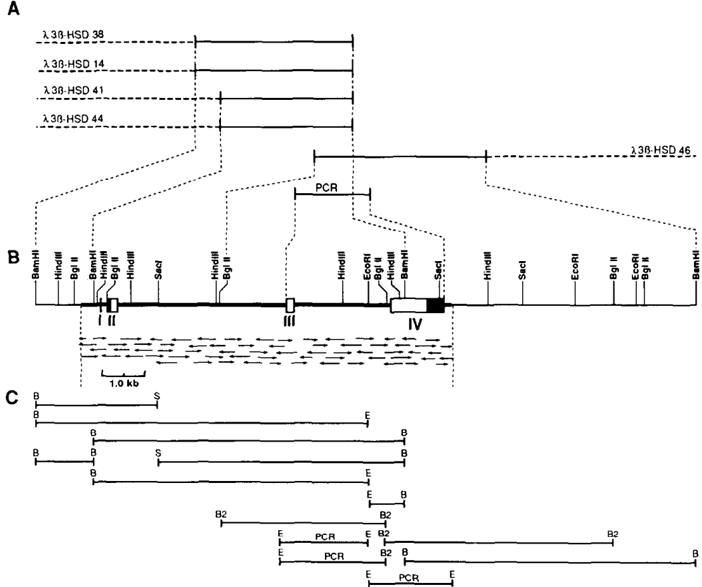
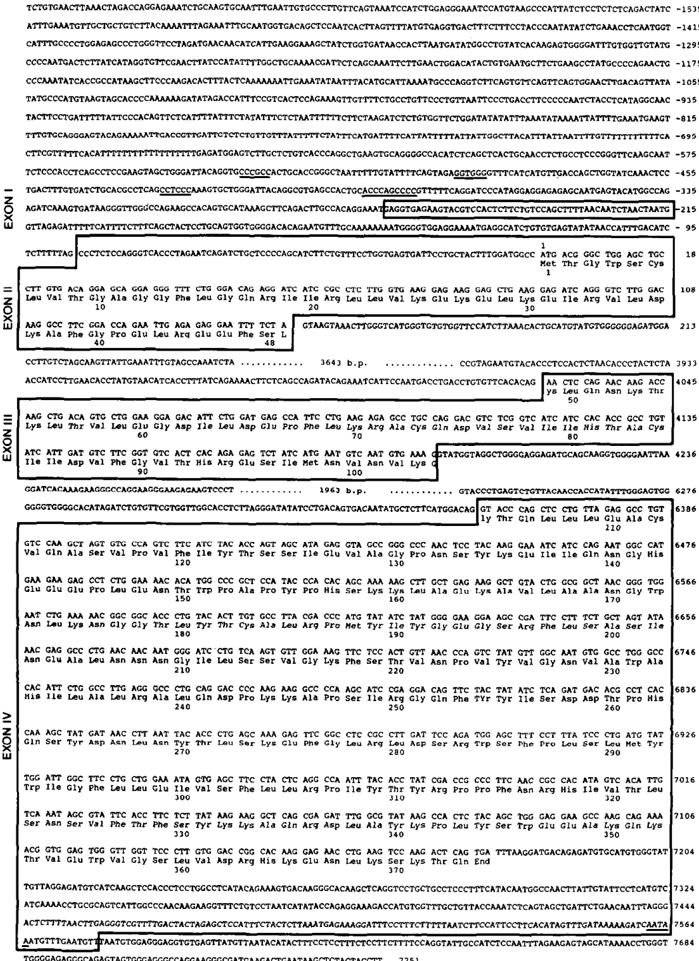
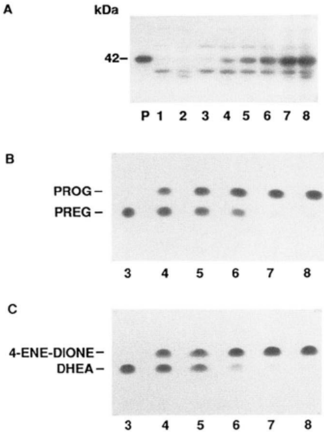
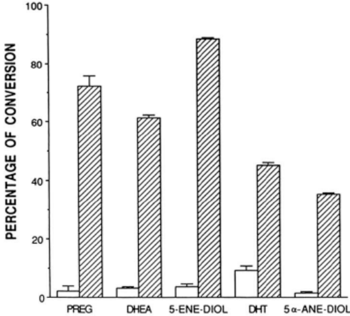
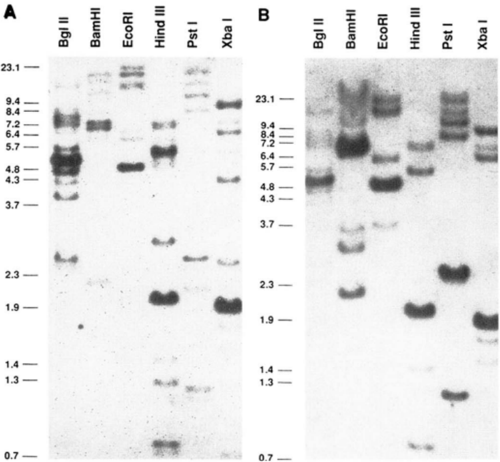
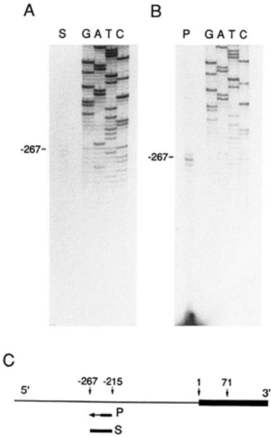
Three beta-hydroxysteroid dehydrogenase/delta 5-delta 4-isomerase (3 beta-HSD) catalyze the oxidative conversion of delta 5-3 beta-hydroxysteroids to the delta 4-3-keto configuration and is therefore essential for the biosynthesis of all classes of hormonal steroids, namely progesterone, glucocorticoids, mineralocorticoids, androgens, and estrogens. Using human 3 beta-HSD cDNA as probe, a human 3 beta-HSD gene was isolated from a lambda-EMBL3 library of leucocyte genomic DNA. A fragment of 3 beta-HSD genomic DNA was also obtained by amplification of genomic DNA using the polymerase chain reaction. The 3 beta-HSD gene contains a 5'-untranslated exon of 53 base pairs (bp) and three successive translated exons of 232, 165, and 1218 bp, respectively, separated by introns of 129, 3883, and 2162 bp. The transcription start site is situated 267 nucleotides upstream from the ATG initiating codon. DNA sequence analysis of the 5'-flanking region reveals the existence of a putative TATA box (ATAAA) situated 28 nucleotides upstream from the transcription start site while a putative CAAT binding sequence is located 57 nucleotides upstream from the TATA box. Expression of a cDNA insert containing the coding region of 3 beta-HSD in nonsteroidogenic cells shows that the gene encodes a single 42-kDa protein containing both 3 beta-hydroxysteroid dehydrogenase and delta 5-delta 4-isomerase activities. Moreover, all natural steroid substrates tested are transformed with comparable efficiency by the enzyme. In addition to its importance for studies of the regulation of expression of 3 beta-HSD in gonadal as well as peripheral tissues, knowledge of the structure of the human 3 beta-HSD gene should permit investigation of the molecular defects responsible for 3 beta-HSD deficiency, the second most common cause of adrenal hyperplasia in children.
Overview
The claims and statistics of this paper haven’t been checked yet.
Free: it reads the open-access text and checks the first 5 claims that cite a source we can check. Create a free account to check every claim.
Integrity signals
Registry
Cites
Statistics
Figures
Verification
Claims the paper makes
The claims and statistics of this paper haven’t been checked yet.
Free: it reads the open-access text and checks the first 5 claims that cite a source we can check. Create a free account to check every claim.
Self-check
Percentages, sums and reported differences re-computed from the paper’s own numbers.
The self-check needs the paper’s full text.
Citations
Cites
Cleavage of Structural Proteins during the Assembly of the Head of Bacteriophage T4
LAEMMLI, U. K. (1970) · Nature · doi:10.1038/227680a0 · Cited by 249,961
Molecular Cloning: A Laboratory Manual
Sambrook, J., Fritsch, E., & Maniatis, T. (1989) · UCLA - Biblioteca de Ciencias de la Salud · Cited by 133,589
DNA sequencing with chain-terminating inhibitors
Sanger, F., Nicklen, S., & Coulson, A. R. (1977) · Proceedings of the National Academy of Sciences · doi:10.1073/pnas.74.12.5463 · Cited by 68,572
Detection of specific sequences among DNA fragments separated by gel electrophoresis
Southern, E. M. (1975) · Journal of Molecular Biology · doi:10.1016/s0022-2836(75)80083-0 · Cited by 32,249
Molecular Cloning. A Laboratory Manual
Wood, E. (1983) · Biochemical Education · doi:10.1016/0307-4412(83)90068-7 · Cited by 29,533
A technique for radiolabeling DNA restriction endonuclease fragments to high specific activity
Feinberg, A. P., & Vogelstein, B. (1983) · Analytical Biochemistry · doi:10.1016/0003-2697(83)90418-9 · Cited by 24,887
Isolation of biologically active ribonucleic acid from sources enriched in ribonuclease
Chirgwin, J. M., Przybyla, A. E., MacDonald, R. J., & Rutter, W. J. (1979) · Biochemistry · doi:10.1021/bi00591a005 · Cited by 21,725
Aviv, H., & Leder, P. (1972) · Proceedings of the National Academy of Sciences · doi:10.1073/pnas.69.6.1408 · Cited by 6,751
Organization and Expression of Eucaryotic Split Genes Coding for Proteins
Breathnach, R., & Chambon, P. (1981) · Annual Review of Biochemistry · doi:10.1146/annurev.bi.50.070181.002025 · Cited by 4,548
Current protocols in molecular biology
(1988) · Trends in Biochemical Sciences · doi:10.1016/0968-0004(88)90131-4 · Cited by 4,160
Research works printed but not linked: 8
- 6. Cheatum, S. G., and Warren, J. C. (1955) Biochim. Biophys. Acta 122,1-13
- 12. Luu-The, V., Cot& J., and Labrie, F. (1988) Clin. Znuest. Med.
- 20. Kingston, R. E. (1987) in Current Protocols in Molecular Biology (Ausubel, F. M., Brent, R., Kingston, R. E., Moore, D. D., Seidman, T. G., Smith, T. A., and Struhl, K., eds) pp. 9.1.1- 9.1.4, Wiley and Sons, New York 21.
- 22. Greene, J. M. (1987) in Current Protocols in Molecular Biology 23. (Ausubel, F. M., Brent, R., Kingston, R. E., Moore, D. D:, Seidman, T. G., Smith. T. A.. and Struhl. K.. eds) KID. 4.6.1- 4.6.5, Wiley and Sons, New York I.- Luu-The, V., Lachance, Y., Simard, J., Labrie, C., Zhao, H. F., Couet, J., Leblanc, G., and Labrie, F. (1990) Mol. Endocrinol. 4, 268-275 24.
- 24. Aldridge, J., Kunkel, L., Burns, G., Tantavahi, U., Lalande, M., Brewster, T., Moreau, E.. Wilson. M., Bromlev. W.. Roderich. T., and Latt, S. A. (1984) Am. J. Bum. Genet. 36, b46-564 '
- 29. H.. and Leder. P. (1972) Proc. Natl. Acad. Sci. U. S. A. 69. 1468-i412
- 45. Labrie, F., DuPont, A., and Belanger, A. (1985) Important Ad- uances in Oncology (Labrie, F., DuPont, A., Belanger, A., eds) pp. 193-217, J. B. Lippincott Co., Philadelphia
- 50. Zhao, H. F., Labrie, C., Simard, J., De Launoit, Y., Trudel, C., Martel, C., Rheume, E., Du Pont, E., Luu-The, V., Pelletier, G., and Labie, F. (1991) J. Biol. Chem. 266, in press
Cited by
Items 101–200 of 227
Dupont, �., Labrie, F., Luu-The, V., & Pelletier, G. (1993) · Anatomy and Embryology · doi:10.1007/bf00214437 · Cited by 40
Self-citationLabrie, F., Simard, J., Luu-The, V., Bèlanger, A., Pelletier, G., Morel, Y., Mébarki, F., Sánchez, R., Durocher, F., Turgeon, C., et al. (1996) · Springer eBooks · doi:10.1007/978-3-662-03230-5_10 · Cited by 39
Self-citationZhu, Q., Pan, P., Chen, X., Wang, Y., Zhang, S., Mo, J., Li, X., & Ge, R. (2019) · Toxicology · doi:10.1016/j.tox.2019.152253 · Cited by 39
Drp1 Phosphorylation Is Indispensable for Steroidogenesis in Leydig Cells
Park, J.-E., Kim, Y. J., Lee, S. G., Kim, J. Y., Chung, J.-Y., Jeong, S.-Y., Koh, H., Yun, J., Park, H. T., Yoo, Y. H., et al. (2019) · Endocrinology · doi:10.1210/en.2019-00029 · Cited by 38
Tang, P., Tsai‐Morris, C., & Dufau, M. L. (1998) · Endocrinology · doi:10.1210/endo.139.11.6316 · Cited by 38
History of Adrenal Research: From Ancient Anatomy to Contemporary Molecular Biology
Miller, W. L., & White, P. C. (2022) · Endocrine Reviews · doi:10.1210/endrev/bnac019 · Cited by 35
Genetic disorders of steroid hormone synthesis and metabolism
New, M. I., & White, P. C. (1995) · Baillière s Clinical Endocrinology and Metabolism · doi:10.1016/s0950-351x(95)80587-7 · Cited by 35
Involvement of yeast YOL151W/GRE2 in ergosterol metabolism
Warringer, J., & Blomberg, A. (2006) · Yeast · doi:10.1002/yea.1363 · Cited by 34
“Gre2p = 342 amino acids), of Gre2p to a family of mammalian 3-β-hydroxysteroid dehydrogenases functioning in the interconversion of steroid precursors in steroid biosynthesis (Lachance et al., 1990).”
BackgroundMcBride, M., McVie, A. J., Burridge, S. M., Brintnell, B., Craig, N., Wallace, A. M., Wilson, R. H., Varley, J. M., & Sutcliffe, R. (1999) · Genomics · doi:10.1006/geno.1999.5459 · Cited by 34
The Adrenal Cortex and Its Disorders
Miller, W. L., Achermann, J. C., & Flück, C. E. (2008) · Elsevier eBooks · doi:10.1016/b978-141604090-3.50017-x · Cited by 33
Riepe, F. G., Mahler, P., Sippell, W. G., & Partsch, C. (2002) · The Journal of Clinical Endocrinology & Metabolism · doi:10.1210/jc.2002-020452 · Cited by 33
Hypermutability at a poly(A/T) tract in the human germline
Bacon, A. L., Dunlop, M. G., & Farrington, S. M. (2001) · Nucleic Acids Research · doi:10.1093/nar/29.21.4405 · Cited by 33
Milewich, L., Shaw, C. E., Mason, J. I., Carr, B. R., Blomquist, C. H., & Thomas, J. L. (1993) · The Journal of Steroid Biochemistry and Molecular Biology · doi:10.1016/0960-0760(93)90169-w · Cited by 32
Xing, Y., Saner-Amigh, K., Nakamura, Y., Hinshelwood, M. M., Carr, B. R., Mason, J. I., & Rainey, W. E. (2009) · Molecular and Cellular Endocrinology · doi:10.1016/j.mce.2008.11.006 · Cited by 26
Progesterone: Synthesis, Metabolism, Mechanism of Action, and Effects in the Nervous System
Schumacher, M., Zhu, X., & Guennoun, R. (2016) · Elsevier eBooks · doi:10.1016/b978-0-12-803592-4.00054-7 · Cited by 31
Nakabayashi, O., Nomura, O., Nishimori, K., & Mizuno, S. (1995) · Gene · doi:10.1016/0378-1119(95)00278-e · Cited by 31
Clinical and molecular review of atypical congenital adrenal hyperplasia
Sahakitrungruang, T. (2015) · Annals of Pediatric Endocrinology & Metabolism · doi:10.6065/apem.2015.20.1.1 · Cited by 30
Rosmond, R., Chagnon, M., Bouchard, C., & Björntorp, P. A. (2002) · Biochemical and Biophysical Research Communications · doi:10.1016/s0006-291x(02)00234-6 · Cited by 30
Matsubara, H., Kazeto, Y., Ijiri, S., Hirai, T., Adachi, S., & Yamauchi, K. (2003) · Fisheries Science · doi:10.1046/j.1444-2906.2003.00716.x · Cited by 29
Human 3β-hydroxysteroid dehydrogenase types 1 and 2: Gene sequence variation and functional genomics
Wang, L., Salavaggione, E., Pelleymounter, L. L., Eckloff, B. W., Wieben, E. D., & Weinshilboum, R. M. (2007) · The Journal of Steroid Biochemistry and Molecular Biology · doi:10.1016/j.jsbmb.2007.03.037 · Cited by 30
“In humans, HSD3B1 is expressed in the placenta and peripheral tissues, while HSD3B2 is expressed predominantly in the adrenal gland, ovary and testis [8–11].”
BackgroundDUPONT, E., RHEAUME, E., SIMARD, J., LUU-THE, V., LABRIE, F., & PELLETIER, G. (1991) · Endocrinology · doi:10.1210/endo-129-5-2687 · Cited by 25
Self-citationJeandron, D. D., & Sahakitrungruang, T. (2012) · Hormone Research in Paediatrics · doi:10.1159/000336004 · Cited by 27
Intracrinology-revisited and prostate cancer
Penning, T. M., & Detlefsen, A. J. (2019) · The Journal of Steroid Biochemistry and Molecular Biology · doi:10.1016/j.jsbmb.2019.105499 · Cited by 27
Payne, A. H., Clarke, T. R., & Bain, P. A. (1995) · The Journal of Steroid Biochemistry and Molecular Biology · doi:10.1016/0960-0760(95)00028-x · Cited by 25
Simard, J., Sanchez, R., Durocher, F., Rhéaume, E., Turgeon, C., Labrie, Y., Luu-The, V., Mebarki, F., Morel, Y., de Launoit, Y., et al. (1995) · The Journal of Steroid Biochemistry and Molecular Biology · doi:10.1016/0960-0760(95)00198-0 · Cited by 24
Self-citationCellular and Animal Studies: Insights into Pathophysiology and Therapy of PCOS
Indran, I. R., Lee, B. H., & Yong, E. (2016) · Best Practice & Research Clinical Obstetrics & Gynaecology · doi:10.1016/j.bpobgyn.2016.03.006 · Cited by 25
Tremblay, A., & Lehoux, J. (1993) · FEBS Letters · doi:10.1016/0014-5793(93)81278-8 · Cited by 25
Riley, S. C., Boshier, D. P., Luu-The, V., Labrie, F., & Challis, J. R. G. (1992) · Reproduction · doi:10.1530/jrf.0.0960127 · Cited by 24
Self-citationHydrohysteroid Dehydrogenases – Biological Role and Clinical Importance – Review
Atanassova, N. N., & Koev, Y. (2012) · InTech eBooks · doi:10.5772/54149 · Cited by 23
Kumar, S., Rajput, P. K., Bahire, S. V., Jyotsana, B., Kumar, V., & Kumar, D. (2020) · Systems Biology in Reproductive Medicine · doi:10.1080/19396368.2019.1695977 · Cited by 23
“in the biosynthesis of all classes of hormonal steroids, namely progesterone, glucocorticoids, mineralocorticoids, androgens, and estrogens (Lachance et al. 1992).”
BackgroundIsolation and Characterization of Several Members of the Murine Hsd3b Gene Family
Clarke, T. R., Bain, P. A., Burmeister, M., & Payne, A. H. (1996) · DNA and Cell Biology · doi:10.1089/dna.1996.15.387 · Cited by 23
Apigenin inhibits growth of the Plasmodium berghei and disrupts some metabolic pathways in mice
Amiri, M., Nourian, A., Khoshkam, M., & Ramazani, A. (2018) · Phytotherapy Research · doi:10.1002/ptr.6113 · Cited by 22
“3β‐HSD is an enzyme that catalyzes the biosynthesis of progesterone from pregnenolone, 17α‐hydroxyprogesterone from 17α‐hydroxypregnenolone, and androstenedione from dehydroepiandrosterone (DHEA) in the adrenal gland (Lachance et al., 1992).”
BackgroundQuan, Q., Zheng, Q., Ling, Y., Fang, F., Chu, M., Zhang, X., Liu, Y., & Li, W. (2019) · Journal of Biological Research - Thessaloniki · doi:10.1186/s40709-019-0095-9 · Cited by 21
Stalvey, J. R. D. (2002) · Steroids · doi:10.1016/s0039-128x(02)00023-5 · Cited by 21
Albrecht, B. A., MacLeod, J. N., & Daels, P. F. (2001) · Theriogenology · doi:10.1016/s0093-691x(01)00425-3 · Cited by 21
Schumacher, M., & Robert, F. (2002) · Elsevier eBooks · doi:10.1016/b978-012532104-4/50057-3 · Cited by 21
Matis, M., Žakelj‐Mavrič, M., & Peter‐Katalinić, J. (2004) · PROTEOMICS · doi:10.1002/pmic.200400904 · Cited by 20
Defects of Adrenal Steroidogenesis
Yau, M., Khattab, A., Pina, C., Yuen, T., Meyer‐Bahlburg, H. F. L., & New, M. I. (2015) · Elsevier eBooks · doi:10.1016/b978-0-323-18907-1.00104-9 · Cited by 20
López-Solache, I., Luu-The, V., Sŕalini, G.-E., & Labrie, F. (1996) · Biochimica et Biophysica Acta (BBA) - Gene Structure and Expression · doi:10.1016/0167-4781(95)00198-0 · Cited by 20
Self-citationRosa, T. L. S. A., Marques, M. A. M., DeBoard, Z., Hutchins, K., Silva, C. A. M., Montague, C. R., Yuan, T., Amaral, J. J., Atella, G. C., Rosa, P. S., et al. (2021) · Frontiers in Cellular and Infection Microbiology · doi:10.3389/fcimb.2021.709972 · Cited by 19
Neuropeptidergic control of neurosteroids biosynthesis
Ubuka, T., & Tsutsui, K. (2022) · Frontiers in Neuroendocrinology · doi:10.1016/j.yfrne.2021.100976 · Cited by 19
Breed-associated variations in the sequence of the pig 3β-hydroxysteroid dehydrogenase gene1
Cue, R.-A., Nicolau-Solano, S. I., McGivan, J. D., Wood, J. D., & Doran, O. (2007) · Journal of Animal Science · doi:10.2527/jas.2006-366 · Cited by 19
Doldi, N., Grossi, D., Destefani, A., Gessi, A., & Ferrari, A. G. (2000) · Gynecological Endocrinology · doi:10.3109/09513590009167657 · Cited by 19
Allopregnanolone: Metabolism, Mechanisms of Action, and Its Role in Cancer
Zamora-Sánchez, C. J., & Camacho‐Arroyo, I. (2022) · International Journal of Molecular Sciences · doi:10.3390/ijms24010560 · Cited by 18
Trudel, C., Couët, J., Martel, C., Labrie, C., & Labrie, F. (1991) · Endocrinology · doi:10.1210/endo-129-4-2077 · Cited by 18
Self-citationcDNA cloning and physical mapping of porcine 3β‐hydroxysteroid dehydrogenase/Δ5‐Δ4 isomerase
von Teichman, A., Joerg, H., Werner, P., Brenig, B., & Stranzinger, G. (2001) · Animal Genetics · doi:10.1046/j.1365-2052.2001.00775.x · Cited by 17
Arukwe, A., Ibor, O. R., & Adeogun, A. O. (2017) · General and Comparative Endocrinology · doi:10.1016/j.ygcen.2017.09.007 · Cited by 17
Huang, X., & Luu-The, V. (2001) · Biochimica et Biophysica Acta (BBA) - Gene Structure and Expression · doi:10.1016/s0167-4781(01)00247-0 · Cited by 17
Self-citationThyroid Cancer Susceptibility and THRA1 and BAT-40 Repeats Polymorphisms
Baida, A., Farrington, S. M., Galofré, P., Marcos, R., & Velázquez, A. (2005) · Cancer Epidemiology Biomarkers & Prevention · doi:10.1158/1055-9965.epi-04-0424 · Cited by 16
Mineralocorticoid hypertension
Gupta, V. (2011) · Indian Journal of Endocrinology and Metabolism · doi:10.4103/2230-8210.86972 · Cited by 16
“The type 2 enzyme (3[beta]HSD2) is the principal isoform in the adrenals and gonads.[44,45]”
Heinrich, U., Bettendorf, M., & Vecsei, P. (1993) · The Journal of Steroid Biochemistry and Molecular Biology · doi:10.1016/0960-0760(93)90126-h · Cited by 16
HSD3B1 is an oxysterol 3β-hydroxysteroid dehydrogenase in human placenta
Dickson, A. L., Yutuc, E., Thornton, C. A., Dunford, J. E., Oppermann, U. C. T., Wang, Y., & Griffiths, W. J. (2023) · Open Biology · doi:10.1098/rsob.220313 · Cited by 14
“Instead, this activity is the preserve of HSD3B1 and 3B2 (19-21, 47).”
BackgroundMethodBizzarri, C., Massimi, A., Federici, L., Cualbu, A., Loche, S., Bellincampi, L., Bernardini, S., Cappa, M., & Porzio, O. (2016) · Hormone Research in Paediatrics · doi:10.1159/000444712 · Cited by 13
Defects of Adrenal Steroidogenesis
Wajnrajch, M. P., & New, M. I. (2010) · Elsevier eBooks · doi:10.1016/b978-1-4160-5583-9.00103-9 · Cited by 13
Duval, C., Zaniolo, K., Leclerc, S., Salesse, C., & Guérin, S. L. (2015) · Experimental Eye Research · doi:10.1016/j.exer.2015.03.001 · Cited by 12
Self-citationDifferential Gene Expression in Post-Finasteride Syndrome Patients
Howell, S., Song, W., Pastuszak, A. W., & Khera, M. (2021) · The Journal of Sexual Medicine · doi:10.1016/j.jsxm.2021.05.009 · Cited by 12
“64 Together, this provides a potential mechanism for persistent cognitive and psychiatric symptoms in PFS, as inhibition of neuro-ste-roid action is continued independently of active 5AR inhibition by medication.”
3β-Hydroxysteroid Dehydrogenase Deficiency
Morel, Y., Roucher‐Boulez, F., Plotton, I., Simard, J., & Coll, M. (2013) · Elsevier eBooks · doi:10.1016/b978-0-12-416006-4.00008-9 · Cited by 12
Self-citationRh�aume, E., LEBLANC, J., Lachance, Y., Labrie, F., & Simard, J. (1991) · Human Genetics · doi:10.1007/bf00201743 · Cited by 12
Self-citationHanamura, T., Ito, T., Kanai, T., Maeno, K., Shimojo, Y., Uehara, T., Suzuki, T., Hayashi, S., & Ito, K. (2016) · Cancer Medicine · doi:10.1002/cam4.708 · Cited by 12
“5% identity with type 1, is almost exclusively expressed in the adrenal glands, ovary, and testis [29, 33, 34].”
Couët, J., Martel, C., Labrie, Y., Luo, S., Simard, J., & Labrie, F. (1994) · Journal of Investigative Dermatology · doi:10.1111/1523-1747.ep12389663 · Cited by 10
Self-citationSánchez, R., de Launoit, Y., Durocher, F., Bélanger, A., Labrie, F., & Simard, J. (1994) · Molecular and Cellular Endocrinology · doi:10.1016/0303-7207(94)90066-3 · Cited by 10
Self-citationFoti, D., & Reichardt, J. K. V. (2004) · Journal of Molecular Endocrinology · doi:10.1677/jme.0.0330099 · Cited by 9
“Two isoforms are known in humans, type I and type II 3 -HSD, encoded by the HSD3B1 and HSD3B2 gene respectively (Luu-The et al. 1989, Lachance et al. 1990, 1991, Rheaume et al. 1991).”
Genetic Basis of Gonadal and Genital Development
Arboleda, V. A., Quigley, C. A., & Vilain, E. J. N. (2015) · Elsevier eBooks · doi:10.1016/b978-0-323-18907-1.00118-9 · Cited by 9
Schumacher, M., & Guennoun, R. (2009) · Elsevier eBooks · doi:10.1016/b978-008088783-8.00046-2 · Cited by 9
Male Reproductive Endocrinology
Tsametis, C. P., Kanakis, G., & Goulis, D. G. (2023) · Cambridge University Press eBooks · doi:10.1017/9781009197533.006 · Cited by 8
Degryse, E., Cauet, G., Spagnoli, R., & Achstetter, T. (1999) · The Journal of Steroid Biochemistry and Molecular Biology · doi:10.1016/s0960-0760(99)00137-5 · Cited by 8
Orexin A promotes granulosa cell secretion of progesterone in sheep.
Li, M., Zu, N., Zhang, C. S., Xie, M., Liu, Y. Z., & Xu, X. J. (2019) · PubMed Central · Cited by 7
Visualizing the Interrenal Steroidogenic Tissue and Its Vascular Microenvironment in Zebrafish
Chou, C.-W., Lin, J., Hou, H.-Y., & Liu, Y. (2016) · Journal of Visualized Experiments · doi:10.3791/54820 · Cited by 7
Almaramhy, H. H., Samad, F. A., Alharbi, G., Zaytuni, D., Imam, S. N., Masoodi, T., & Shamsi, M. B. (2023) · Frontiers in Genetics · doi:10.3389/fgene.2023.1106933 · Cited by 6
“It is expressed predominantly in the adrenal gland, the ovary, and the testis (Lachance et al., 1992).”
BackgroundZhu, Y., & Imperato‐McGinley, J. (2016) · Elsevier eBooks · doi:10.1016/b978-0-12-803592-4.00067-5 · Cited by 6
Ziaja, J., Cholewa, K., Mazurek, U. M., & Cierpka, L. (2008) · PubMed · Cited by 6
Faucher, F., Lacoste, L., & LUU‐THE, V. (2002) · Annals of the New York Academy of Sciences · doi:10.1111/j.1749-6632.2002.tb04114.x · Cited by 6
Self-citationIgaz, P., Pap, E., Patócs, A., Falus, A., Tulassay, Z., & Rácz, K. (2002) · The Journal of Steroid Biochemistry and Molecular Biology · doi:10.1016/s0960-0760(02)00229-7 · Cited by 6
Luu-The, V., Takahashi, M., & Labrie, F. (1991) · The Journal of Steroid Biochemistry and Molecular Biology · doi:10.1016/0960-0760(91)90275-a · Cited by 6
Self-citationÁlvarez, C., Genti‐Raimondi, S., Patrito, L. C., & Flury, A. (1994) · Biochimica et Biophysica Acta (BBA) - Protein Structure and Molecular Enzymology · doi:10.1016/0167-4838(94)90057-4 · Cited by 6
Chedrese, P. J., Braileanu, G., & Salmon, R. (1995) · Endocrine · doi:10.1007/bf02994443 · Cited by 5
3ß-Hydroxysteroiddehydrogenasen aus Digitalis lanata und Erysimum crepidifolium
Frankenstein, J. (2008) · OPUS FAU (Kooperativer Bibliotheksverbund Berlin-Brandenburg (KOBV), on behalf of the Universitätsbibliothek Erlangen-Nürnberg) · Cited by 5
Double-duty isomerases: a case study of isomerization-coupled enzymatic catalysis
Solano, Y. J., & Kiser, P. D. (2024) · Trends in Biochemical Sciences · doi:10.1016/j.tibs.2024.04.007 · Cited by 4
Güngör, İ. H., Türk, G., Cihangiroğlu, A. Ç., Arkalı, G., Tektemur, A., Özmen, G. K., Badıllı, N., Acısu, T. C., Bulan, M. S., Kaya, Ş. Ö., et al. (2025) · Reproduction Fertility and Development · doi:10.1071/rd25064 · Cited by 4
Menegatti, E., Tessaris, D., Barinotti, A., Matarazzo, P., & Einaudi, S. (2022) · Journal of Clinical Medicine · doi:10.3390/jcm11195767 · Cited by 4
Genetic Basis of Gonadal and Genital Development
Quigley, C. A., & Vilain, E. J. N. (2010) · Elsevier eBooks · doi:10.1016/b978-1-4160-5583-9.00118-0 · Cited by 4
The Adrenal Cortex and its Disorders
Miller, W. L. (2005) · Wiley eBooks · doi:10.1002/9780470987117.ch15 · Cited by 5
Molecular Biology of Testicular Steroid Secretion
Hall, P. F. (1993) · Elsevier eBooks · doi:10.1016/b978-0-08-091764-1.50014-3 · Cited by 4
Rosa, T. L. S. A., Marques, M. A. M., DeBoard, Z., Hutchins, K., Silva, C. A. M., Montague, C. R., Yuan, T., Amaral, J. J., Atella, G. C., Rosa, P. S., et al. (2021) · Frontiers in Cellular and Infection Microbiology · doi:10.3389/fcimb.2021.765326 · Cited by 4
3β-Hydroxysteroid dehydrogenase deficiency
Roucher‐Boulez, F., Morel, Y., Ladjouze, A., Plotton, I., Simard, J., & Coll, M. (2023) · Elsevier eBooks · doi:10.1016/b978-0-12-821424-4.00005-8 · Cited by 3
Self-citationNew members of the 3β-hydroxysteroid dehydrogenase gene family
McBride, M., Russell, A. J., Vass, K., Forster, V. J., Burridge, S. M., Morrison, N., BOYD, E., Ponder, B. A. J., & Sutcliffe, R. (1995) · Molecular and Cellular Probes · doi:10.1016/s0890-8508(95)80036-0 · Cited by 3
Detergent solubilization of 3β-hydroxysteroid dehydrogenase from dog pancreas
Mendoza‐Hernández, G., Libreros-Minotta, C. A., & Rendón, J. L. (1996) · Comparative Biochemistry and Physiology Part B Biochemistry and Molecular Biology · doi:10.1016/0305-0491(96)00115-0 · Cited by 3
Li, X.-M., Juorio, A. V., Chedrese, P. J., & Murphy, B. D. (1993) · General Pharmacology The Vascular System · doi:10.1016/0306-3623(93)90236-q · Cited by 3
Steroidogenesis during prenatal testicular development in Spix’s cavy Galea spixii
dos Santos, A. C., Conley, A. J., de Oliveira, M. F., & Neto, A. C. D. A. (2021) · Reproduction Fertility and Development · doi:10.1071/rd20293 · Cited by 3
Labrie, F., Simard, J., Luu-The, V., Pelletier, G., Labrie, C., Dupont, É., Martel, C., Couët, J., Trudel, C., Rhéaume, É., et al. (1993) · Springer eBooks · doi:10.1007/978-1-4613-9260-6_8 · Cited by 2
Self-citationRussell, A. J., Gaffney, D., Edwards, C. R. W., & Sutcliffe, R. (1991) · Nucleic Acids Research · doi:10.1093/nar/19.23.6667 · Cited by 2
Characterization, Regulation, and Tissue-Specific Expression of Steroidogenic Enzymes
Payne, A. H., Youngblood, G. L., Burgos-Trinidad, M., & Bain, P. A. (1994) · Springer eBooks · doi:10.1007/978-1-4612-2638-3_6 · Cited by 2
Kuwahara, N. (2022) · The Atrium (University of Guelph) · Cited by 2
Labrie, F., Simard, J., Luu-The, V., & Pelletier, G. (1994) · Springer eBooks · doi:10.1007/978-1-4612-2638-3_7 · Cited by 2
Self-citationMenassa, R. (2009) · theses.fr (ABES) · doi:10.70675/b3e39fd0z238az4865z8447z7bdf24b846fb · Cited by 1
“La 3β-HSD type II est présente au niveau du cortex surrénalien et des gonades (Lachance et al., 1990), (Rheaume et al., 1991) et la 3β-HSD type I est présente dans le placenta, les seins et les tissus extra-glandul ires (Lachance et al., 1990), (Lorence et al., 1990).”
Backgroundde Launoit, Y., Simard, J., Zhao, H., Couture, P., & Labrie, F. (1993) · Springer eBooks · doi:10.1007/978-1-4613-9260-6_14 · Cited by 1
Self-citationProducción de esteroides mediante ingeniería de citocromos
Felpeto‐Santero, C. (2016) · LA Referencia (Red Federada de Repositorios Institucionales de Publicaciones Científicas) · Cited by 1
Alzanati, N. G. (2017) · Nottingham ePrints (University of Nottingham) · Cited by 1
Rôle de la voie de signalisation Hippo dans les organes stéroïdiens
Levasseur, A. (2018) · doi:10.71781/3824 · Cited by 1
Johannes, I. D. (2018) · SUNScholar (Stellenbosch University) · Cited by 1
Metadata
- Authors
- Lachance, Y., Luu-The, V, Labrie, C., Simard, J., Dumont, M., de Launoit, Y., Guérin, S., Leblanc, G., & Labrie, F.
- Venue
- Journal of Biological Chemistry
- Publisher
- Elsevier BV
- Published
- 1990-11
- Volume
- 265
- Issue
- 33
- Pages
- 20469-20475
- ISSN
- 0021-9258 (ISSN-L)
- OpenAlex
- W1546597339
- Semantic Scholar
- 2677452f733370d5b436f516523f1fe601277042
- Cited by
- 201
- References
- 47
- Citations by year
- 2026: 1 · 2025: 1 · 2024: 1 · 2023: 5 · 2022: 5 · 2021: 5 · 2020: 3 · 2019: 6 · 2018: 3 · 2017: 2 · 2016: 8 · 2015: 6 · 2014: 6 · 2013: 2 · 2012: 3
- FWCI
- 12.58
- Type
- journal article
- Language
- en
- Open access
- hybrid
- doi.org
- Licence
- cc-by
- www.elsevier.com/tdm/userlicense/1.0/ (tdm)
- www.elsevier.com/legal/tdmrep-license (tdm)
- creativecommons.org/licenses/by/4.0/ (vor, 10954 d)
- Locations
- Journal of Biological Chemistry (publishedVersion, cc-by)
- PubMed (publishedVersion)
- Topics
- Health Sciences › Medicine › Endocrinology, Diabetes and Metabolism › Adrenal Hormones and Disorders
- Physical Sciences › Chemistry › Organic Chemistry › Steroid Chemistry and Biochemistry
- Life Sciences › Biochemistry, Genetics and Molecular Biology › Endocrinology › Estrogen and related hormone effects
- Keywords
- gene structure, introns, transcription start sites, TATA box, CCAAT box, steroidogenesis, adrenal hyperplasia, cDNA cloning
- MeSH terms
- Amino Acid Sequence, Animals, Base Sequence, Humans, Mammals, Molecular Sequence Data, Multienzyme Complexes, Progesterone Reductase, Steroid Isomerases
About these checks
Registry, retraction, Cites and statistics results are computed, not judged, with one exception: a printed reference that no index lists is read once by a model before it counts as a citation error. Claims are extracted by a model and kept only when their quote appears verbatim in the text; each cited source is then checked, with a model’s help, for whether it says what the claim relies on. Those verdicts can be wrong — read the claim’s quote and the cited source before relying on one.
Statistics and arithmetic are recomputed, not judged.
Confidence bands are shown only for fields calibrated on our annotated test set. None is calibrated yet, so no band is shown.
What counts as a claim ›How we measure confidence ›How we check this ›
Are you an author, or do you see a problem with this page? Request a review
Data sources
Bibliographic data: Semantic Scholar, OpenAlex, Crossref.
Contains information from the Semantic Scholar Academic Graph Datasets, made available under the ODC Attribution License (ODC-BY 1.0).
Semantic Scholar’s data is described in: Kinney, R., et al. (2023). The Semantic Scholar Open Data Platform. arXiv:2301.10140.
