

Ganglioside-mediated modulation of cell growth. Specific effects of GM3 on tyrosine phosphorylation of the epidermal growth factor receptor
Open accessThe DOI matches its Crossref record; 62 of the 62 references it cites were found in a registry or an index.
Abstract
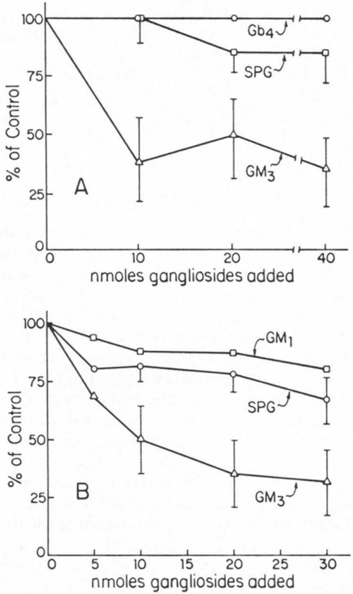
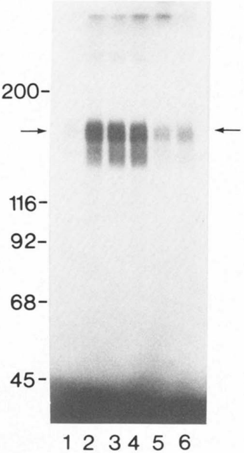
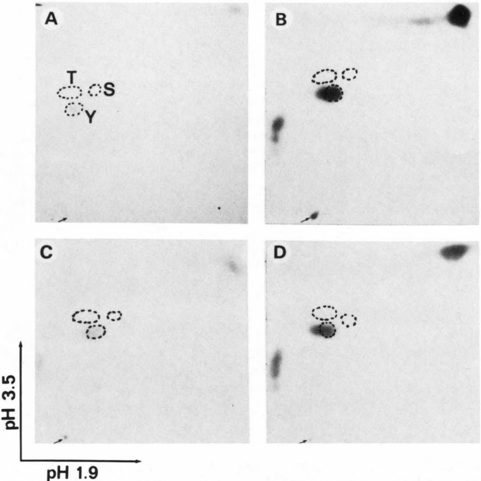
Epidermal growth factor- (EGF) dependent tyrosine phosphorylation of the EGF receptor was inhibited by the exogenous addition of GM3 to a membrane preparation and to purified EGF receptor adsorbed to antireceptor-antibody-Sepharose (Bremer, E. G., Schlessinger, J., and Hakomori, S. (1986) J. Biol. Chem. 261, 2434-2440). A specific functional correlation between GM3 and EGF receptor function has been further assessed in this study, employing two variant clones of A431 cells showing completely different growth responses to EGF. The A1S clone showed EGF cell growth stimulation and contained GM3 whereas the A5I clone, whose growth was completely inhibited by EGF addition, lacked detectable GM3. Both the endogenous and EGF-dependent receptor tyrosine-kinase activities were low in the A1S clone and were only minimally inhibited by the exogenous addition of GM3. In contrast the EGF receptor kinase activity in A5I cells was much higher and was more strongly inhibited by GM3 than it was in A1S cells. The EGF receptor fraction prepared from A1S cells, eluted from an anti-EGF receptor antibody-Sepharose column, contained GM3, in contrast to the fraction prepared from A5I cells, which lacked detectable GM3. The receptor kinase activity in vitro was greatly influenced by detergent and ATP concentration. GM3 affected the receptor kinase in a biphasic manner, i.e. GM3 was inhibitory at a low concentration of detergent under a physiological concentration of ATP and stimulatory at a high concentration of detergent. In contrast lyso-GM3 displayed a monophasic inhibitory effect under a wide range of detergent concentrations. Lyso-CDH (lactosylsphingosine) had no detectable effect on the receptor kinase activity. The presence of a small quantity of lyso-GM3 in A431 cells was detected after DEAE-Sepharose chromatography followed by high performance liquid chromatography in a n-propanolyl alcohol-ammonia system. It is possible that de-N-fatty acylation of gangliosides could be an effective means to modulate EGF receptor function in membranes.
Overview
The claims and statistics of this paper haven’t been checked yet.
Free: it reads the open-access text and checks the first 5 claims that cite a source we can check. Create a free account to check every claim.
Integrity signals
Registry
Cites
Statistics
Figures
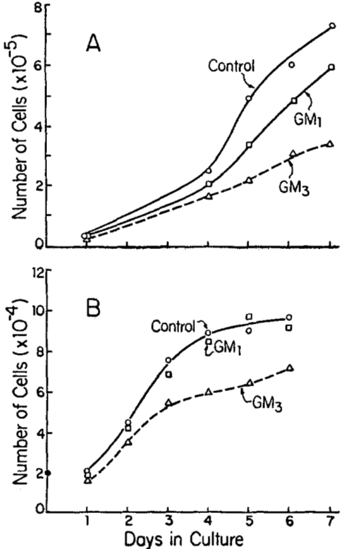
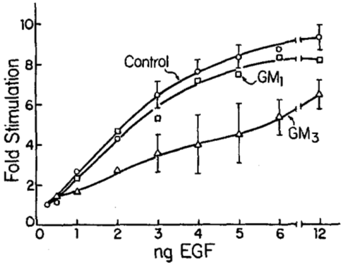
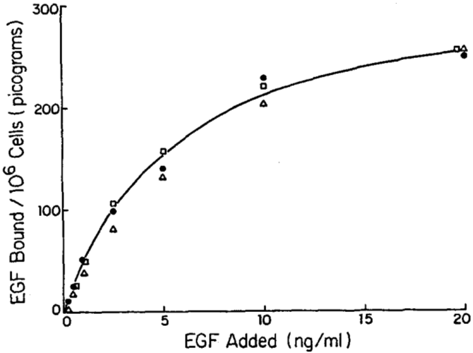
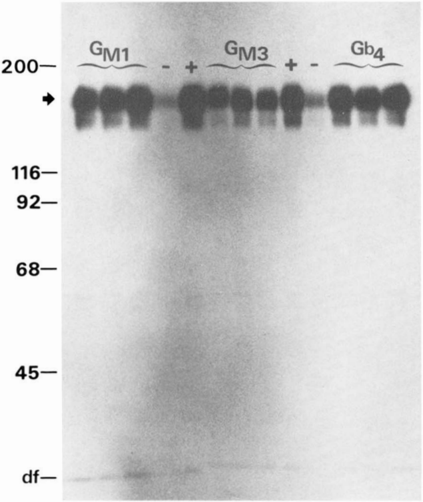
Verification
Claims the paper makes
The claims and statistics of this paper haven’t been checked yet.
Free: it reads the open-access text and checks the first 5 claims that cite a source we can check. Create a free account to check every claim.
Claims other papers make about this one
Each is checked against this paper’s own text: does it say what the citing paper says it does?
The source backs part of the claim, not all of it — or backs it for a different population, condition or comparison.
In the citing paper
“For example, subtly different forms of the sialylated ganglioside GM3 can have differential effects on tyrosine kinase signaling of the EGF receptor (517 -522)”
From Biological roles of glycans (2017) · cites this paper as [517]
Experimental — accuracy not yet measured
Self-check
Percentages, sums and reported differences re-computed from the paper’s own numbers.
The self-check needs the paper’s full text.
Citations
Cites
Cleavage of Structural Proteins during the Assembly of the Head of Bacteriophage T4
LAEMMLI, U. K. (1970) · Nature · doi:10.1038/227680a0 · Cited by 249,961
Protein Purification by Affinity Chromatography
Cuatrecasas, P. (1970) · Journal of Biological Chemistry · doi:10.1016/s0021-9258(18)63022-4 · Cited by 2,796
Quantitive estimation of sialic acids
Svennerholm, L. (1957) · Biochimica et Biophysica Acta · doi:10.1016/0006-3002(57)90254-8 · Cited by 2,765
Udenfriend, S., Stein, S., Böhlen, P., Dairman, W., Leimgruber, W., & Weigele, M. (1972) · Science · doi:10.1126/science.178.4063.871 · Cited by 2,649
A simple, specific spray for the detection of phospholipids on thin-layer chromatograms
Dittmer, J. C., & Lester, R. L. (1964) · Journal of Lipid Research · doi:10.1016/s0022-2275(20)40272-x · Cited by 2,149
CHROMATOGRAPHlC SEPARATION OF HUMAN BRAIN GANGLIOSIDES*
Svennerholm, L. (1963) · Journal of Neurochemistry · doi:10.1111/j.1471-4159.1963.tb08933.x · Cited by 1,643
Hannun, Y. A., Loomis, C. R., Merrill, A. H., & Bell, R. M. (1986) · Journal of Biological Chemistry · doi:10.1016/s0021-9258(18)67133-9 · Cited by 1,156
[42] Detection and quantification of phosphotyrosine in proteins
Cooper, J. A., Sefton, B. M., & Hunter, T. (1983) · Methods in Enzymology · doi:10.1016/0076-6879(83)99075-4 · Cited by 1,142
Cohen, S., Carpenter, G., & King, L. (1980) · Journal of Biological Chemistry · doi:10.1016/s0021-9258(19)85573-4 · Cited by 858
Bretscher, M. S. (1973) · Science · doi:10.1126/science.181.4100.622 · Cited by 846
Research works printed but not linked: 2
- Klenk, E., and Heuer, K. (1960) Z. Verdauungs Stoffwechselkran- kheiten 20,180-183
- Buss, J. E., Kudlow, J. E., Lazar, C. S., and Gill, G. N. (1982) Proc. Natl. Acad. Sci. U. S. A. 79,2574-2578
Cited by
Items 201–300 of 705
Changes in glycolipid expression in human testicular tumor
Οhyama, C., Fukushi, Y., Satoh, M., Saito, S., Orikasa, S., Nudelman, E. D., Straud, M., & Hakomori, S. (1990) · International Journal of Cancer · doi:10.1002/ijc.2910450610 · Cited by 58
Self-citationA membrane receptor for gangliosides is associated with central nervous system myelin.
Tiemeyer, M., Swank-Hill, P., & Schnaar, R. L. (1990) · Journal of Biological Chemistry · doi:10.1016/s0021-9258(19)38498-4 · Cited by 58
Rösner, H., Greis, C., & Henke‐Fahle, S. (1988) · Developmental Brain Research · doi:10.1016/0165-3806(88)90234-9 · Cited by 58
Barbour, S., Edidin, M., Felding‐Habermann, B., Taylor‐Norton, J., Radin, N. S., & Fenderson, B. A. (1992) · Journal of Cellular Physiology · doi:10.1002/jcp.1041500322 · Cited by 58
Gangliosides and neuronal differentiation
Rösner, H., Al-Aqtum, M., & Rahmann, H. (1992) · Neurochemistry International · doi:10.1016/0197-0186(92)90048-v · Cited by 58
Hanai, N., Nores, G. A., Torres-Méndez, C.-R., & Hakomori, S. (1987) · Biochemical and Biophysical Research Communications · doi:10.1016/s0006-291x(87)80096-7 · Cited by 58
Self-citationDabelsteen, S., Pallesen, E. M. H., Marinova, I. N., Nielsen, M. I., Adamopoulou, M., Rømer, T. B., Rudjord-Levann, A. M., Aasted, M. K. M., Ye, Z., Thein, D., et al. (2020) · Developmental Cell · doi:10.1016/j.devcel.2020.06.039 · Cited by 64
Ganglioside modulation of the PDGF receptor
Yates, A. J., Saqr, H. E., & Brocklyn, J. R. V. (1995) · Journal of Neuro-Oncology · doi:10.1007/bf01052661 · Cited by 56
Vantini, G., Fusco, M., Bigon, E., & Leon, A. (1988) · Brain Research · doi:10.1016/0006-8993(88)91262-0 · Cited by 56
N-glycans of growth factor receptors: their role in receptor function and disease implications
Takahashi, M., Hasegawa, Y., Gao, C., Kuroki, Y., & Taniguchi, N. (2016) · Clinical Science · doi:10.1042/cs20160273 · Cited by 58
Hayashi, N., Chiba, H., Kuronuma, K., Go, S., Hasegawa, Y., Takahashi, M., Gasa, S., Watanabe, A., Hasegawa, T., Kuroki, Y., et al. (2012) · Cancer Science · doi:10.1111/cas.12027 · Cited by 61
Enhancement of Epidermal Growth Factor Signaling and Activation of Src Kinase by Gangliosides
Li, R., Liu, Y., & Ladisch, S. (2001) · Journal of Biological Chemistry · doi:10.1074/jbc.m101481200 · Cited by 57
Ishida, H., Ohta, Y., Tsukada, Y., Kiso, M., & Hasegawa, A. (1993) · Carbohydrate Research · doi:10.1016/0008-6215(93)84025-2 · Cited by 55
Gangliosides influence angiogenesis in an experimental mouse brain tumor.
Manfredi, M. G., Lim, S., Claffey, K. P., & Seyfried, T. N. (1999) · PubMed · Cited by 55
Epidermal Growth Factor and Related Growth Factors
Yates, R. A., Nanney, L. B., Gates, R. E., & King, L. E. (1991) · International Journal of Dermatology · doi:10.1111/j.1365-4362.1991.tb02609.x · Cited by 58
Nakatsuji, Y., & Miller, R. H. (2001) · Experimental Neurology · doi:10.1006/exnr.2000.7602 · Cited by 60
Neuronotrophic Factors Released by C6 Glioma Cells
Westermann, R., Hardung, M., Meyer, D., Ehrhard, P. B., Otten, U., & Unsicker, K. (1988) · Journal of Neurochemistry · doi:10.1111/j.1471-4159.1988.tb02474.x · Cited by 57
Anastasia, L., Papini, N., Colazzo, F., Palazzolo, G., Tringali, C., Dileo, L., Piccoli, M., Conforti, E., Sitzia, C., Monti, E., et al. (2008) · Journal of Biological Chemistry · doi:10.1074/jbc.m805755200 · Cited by 51
Müller, R., Altmann, F., Zhou, D., & Hennet, T. (2002) · Journal of Biological Chemistry · doi:10.1074/jbc.c200381200 · Cited by 57
Regulation of Ca2+/Calmodulin‐Dependent Protein Kinase II by Brain Gangliosides
Fukunaga, K., Miyamoto, E., & Soderling, T. R. (1990) · Journal of Neurochemistry · doi:10.1111/j.1471-4159.1990.tb13288.x · Cited by 57
Reverse transformation of multidrug-resistant cells
Biedler, J. L., & Spengler, B. A. (1994) · Cancer and Metastasis Reviews · doi:10.1007/bf00689636 · Cited by 54
Oliver, C., Sahara, N., Kitani, S., ROBBINS, A. R., Mertz, L. M., & Siraganian, R. P. (1992) · The Journal of Cell Biology · doi:10.1083/jcb.116.3.635 · Cited by 52
Chung, T., Choi, H.-J., Lee, Y.-C., & Kim, C.-H. (2004) · Glycobiology · doi:10.1093/glycob/cwh156 · Cited by 53
Iwamoto, T., Fukumoto, S., Kanaoka, K., Sakai, E., Shibata, M., Fukumoto, E., Inokuchi, J., Takamiya, K., Furukawa, K., Furukawa, K., et al. (2001) · Journal of Biological Chemistry · doi:10.1074/jbc.m104464200 · Cited by 56
Morré, D. J., Crane, F. L., Eriksson, L. C., Löw, H., & Morré, D. M. (1991) · Biochimica et Biophysica Acta (BBA) - Bioenergetics · doi:10.1016/s0005-2728(05)80094-5 · Cited by 52
Skaper, S. D., Negro, A., Facci, L., & Toso, R. D. (1993) · Journal of Neuroscience Research · doi:10.1002/jnr.490340413 · Cited by 57
Kimber, S. J. (1990) · International review of cytology · doi:10.1016/s0074-7696(08)61599-5 · Cited by 52
Prinetti, A., Aureli, M., Illuzzi, G., Prioni, S., Nocco, V., Scandroglio, F., Gagliano, N., Tredici, G., Rodriguez‐Menendez, V., Chigorno, V., et al. (2009) · Glycobiology · doi:10.1093/glycob/cwp143 · Cited by 51
Song, W. X., Vacca, M. F., Welti, R., & Rintoul, D. A. (1991) · Journal of Biological Chemistry · doi:10.1016/s0021-9258(18)99206-9 · Cited by 51
Kameyama, A., Ishida, H., Kiso, M., & Hasegawa, A. (1994) · Journal of Carbohydrate Chemistry · doi:10.1080/07328309408011671 · Cited by 51
Park, S., Yoon, S.-J., Freire‐de‐Lima, L., Kim, J.-H., & Hakomori, S. (2009) · Carbohydrate Research · doi:10.1016/j.carres.2009.04.032 · Cited by 50
Self-citationCumin, C., Huang, Y., Everest‐Dass, A., & Jacob, F. (2021) · Biomolecules · doi:10.3390/biom11010062 · Cited by 53
Bazin, H. G., Du, Y., Polat, T., & Linhardt, R. J. (1999) · The Journal of Organic Chemistry · doi:10.1021/jo990564p · Cited by 51
Ganglioside GM3 can induce megakaryocytoid differentiation of human leukemia cell line K562 cells.
Nakamura, M., Kirito, K., Yamanoi, J., Wainai, T., Nojiri, H., & Saito, M. (1991) · PubMed · Cited by 50
Kästner, A., Herrero, M. T., Hirsch, É. C., López-Guillén, J. L., Luquín, M. R., Javoy-Agid, F., Obeso, J. A., & Agid, Y. (1994) · Annals of Neurology · doi:10.1002/ana.410360213 · Cited by 49
Ganglioside GM3 Inhibits the Proliferation of Cultured Keratinocytes
Paller, A. S., Arnsmeier, S. L., Alvarez‐Franco, M., & Bremer, E. G. (1993) · Journal of Investigative Dermatology · doi:10.1111/1523-1747.ep12476755 · Cited by 49
Self-citationZeng, G., Ariga, T., Gu, X., & Yu, R. K. (1995) · Proceedings of the National Academy of Sciences · doi:10.1073/pnas.92.19.8670 · Cited by 49
Glucosphingolipid dependence of hormone-stimulated inositol trisphosphate formation.
Shayman, J. A., Mahdiyoun, S., Deshmukh, G., Barcelon, F. S., Inokuchi, J., & Radin, N. S. (1990) · Journal of Biological Chemistry · doi:10.1016/s0021-9258(19)38320-6 · Cited by 48
Sakamoto, H., Nakamura, S., Tsuda, T., & Hashimoto, S. (2000) · Tetrahedron Letters · doi:10.1016/s0040-4039(00)01343-5 · Cited by 47
Masson, E., Wiernsperger, N. F., Lagarde, M., & Bawab, S. E. (2005) · Biochemical Journal · doi:10.1042/bj20041506 · Cited by 50
A Novel Mechanism of CD4 Down-modulation Induced by Monosialoganglioside GM3
Garofalo, T., Sorice, M., Misasi, R., Cinque, B., Giammatteo, M., Pontieri, G. M., Cifone, M. G., & Pavan, A. (1998) · Journal of Biological Chemistry · doi:10.1074/jbc.273.52.35153 · Cited by 47
Effect of therapeutic macromolecules in spheroids.
Fracasso, G. (2000) · Critical Reviews in Oncology/Hematology · doi:10.1016/s1040-8428(00)00084-6 · Cited by 46
Yamaguchi, K., Hata, K., Wada, T., Moriya, S., & Miyagi, T. (2006) · Biochemical and Biophysical Research Communications · doi:10.1016/j.bbrc.2006.05.136 · Cited by 52
Ganglioside Modulates Ligand Binding to the Epidermal Growth Factor Receptor
Wang, X., Rahman, Z., Sun, P., Meuillet, E. J., George, D., Bremer, E. G., Al‐Qamari, A., & Paller, A. S. (2001) · Journal of Investigative Dermatology · doi:10.1046/j.1523-1747.2001.00222.x · Cited by 48
Self-citationA cell-type specific ganglioside of glomerular podocytes in rat kidney: An O-acetylated GD3
Reivinen, J., Holthöfer, H., & Miettinen, A. (1992) · Kidney International · doi:10.1038/ki.1992.327 · Cited by 45
Franklin, R. J. M., Gilson, J. M., Franceschini, I. A., & Barnett, S. C. (1996) · Glia · doi:10.1002/(sici)1098-1136(199607)17:3<217::aid-glia4>3.0.co;2-y · Cited by 305
Lipid Modulators of Cell Function
Merrill, A. H. (2009) · Nutrition Reviews · doi:10.1111/j.1753-4887.1989.tb02826.x · Cited by 45
Modulation of Growth Factor Signaling by Gangliosides: Positive Or Negative?
Kaucic, K., Liu, Y., & Ladisch, S. (2006) · Methods in enzymology on CD-ROM/Methods in enzymology · doi:10.1016/s0076-6879(06)17013-5 · Cited by 47
Role of GM3-enriched microdomains in signal transduction regulation in T lymphocytes
Sorice, M., Longo, A., Garofalo, T., Mattei, V., Misasi, R., & Pavan, A. (2003) · Glycoconjugate Journal · doi:10.1023/b:glyc.0000018018.29488.c6 · Cited by 43
Pestana, E. S., Greiser, U., Sánchez, B., Fernández, L., Lage, A., Pérez, R., & Böhmer, F. D. (1997) · British Journal of Cancer · doi:10.1038/bjc.1997.36 · Cited by 48
Xia, X., Gu, X., Sartorelli, A. C., Yu, R. K., & Santorelli, A. C. (1989) · Journal of Lipid Research · doi:10.1016/s0022-2275(20)38379-6 · Cited by 44
GM3 as a Novel Growth Regulator for Human Gliomas
Noll, E., Lin, J., Nakatsuji, Y., Miller, R. H., & Black, P. M. (2001) · Experimental Neurology · doi:10.1006/exnr.2000.7603 · Cited by 46
Isoda, H., & Nakahara, T. (1997) · Cytotechnology · doi:10.1023/a:1007982909932 · Cited by 42
Ganglioside GM3 Is Antiangiogenic in Malignant Brain Cancer
Seyfried, T. N., & Mukherjee, P. (2010) · Journal of Oncology · doi:10.1155/2010/961243 · Cited by 46
Zeng, G., Li, D. D., Gao, L., Birklé, S., Bieberich, E., Tokuda, A., & Yu, R. K. (1999) · Biochemistry · doi:10.1021/bi9906726 · Cited by 43
Cell surface carbohydrates and lectins in early development
Poirier, F., & Kimber, S. (1997) · Molecular Human Reproduction · doi:10.1093/molehr/3.10.907 · Cited by 40
Alterations of cell-surface carbohydrates during differentiation and development
Muramatsu, T. (1988) · Biochimie · doi:10.1016/0300-9084(88)90294-5 · Cited by 41
Kubushiro, K., Kojima, K., Mikami, M., Nozawa, S., IIZUKA, R., Iwamori, M., & Nagai, Y. (1989) · Archives of Biochemistry and Biophysics · doi:10.1016/0003-9861(89)90573-0 · Cited by 41
Swaim, W. D., Minoguchi, K., Oliver, C., Hamawy, M. M., Kihara, H., Stephan, V., Berenstein, E. H., & Siraganian, R. P. (1994) · Journal of Biological Chemistry · doi:10.1016/s0021-9258(17)32192-0 · Cited by 41
The Role of GM1 Ganglioside in Regulating Excitatory Opioid Effectsa
Wu, G., Lu, Z.-H., WEI, T. J., Howells, R., Christoffers, K. H., & Ledeen, R. W. (1998) · Annals of the New York Academy of Sciences · doi:10.1111/j.1749-6632.1998.tb09666.x · Cited by 39
Ganglioside GM3 inhibits proliferation and invasion of glioma
Fujimoto, Y., Izumoto, S., Suzuki, T., Kinoshita, M., Kagawa, N., Wada, K., Hashimoto, N., Maruno, M., Nakatsuji, Y., & Yoshimine, T. (2005) · Journal of Neuro-Oncology · doi:10.1007/s11060-004-9602-3 · Cited by 39
Nores, G. A., Hanai, N., Levery, S. B., Eaton, H. L., Salyan, M. E. K., & Hakomori, S. (1988) · Carbohydrate Research · doi:10.1016/0008-6215(88)84135-1 · Cited by 39
Self-citationModulation of a Ca2+ signaling pathway by GM1 ganglioside in PC12 cells.
Hilbush, B. S., & Levine, J. M. (1992) · Journal of Biological Chemistry · doi:10.1016/s0021-9258(18)35833-2 · Cited by 39
Antitumor Effects of Exogenous Ganglioside GM3 on Bladder Cancer in an Orthotopic Cancer Model
Wang, H., Isaji, T., Satoh, M., Li, D., Arai, Y., & Gu, J. (2012) · Urology · doi:10.1016/j.urology.2012.08.015 · Cited by 38
Inhibitors of Glioma Growth that Reveal the Tumour to the Immune System
Nieto‐Sampedro, M., Valle‐Argos, B., Gómez‐Nicola, D., Fernández‐Mayoralas, A., & Nieto‐Díaz, M. (2011) · Clinical Medicine Insights Oncology · doi:10.4137/cmo.s7685 · Cited by 53
Yim, S., Farrer, R. G., Hammer, J. A., Yavin, E., & Quarles, R. H. (1994) · Journal of Neuroscience Research · doi:10.1002/jnr.490380305 · Cited by 37
Kapitonov, D., Bieberich, E., & Yu, R. K. (1999) · Glycoconjugate Journal · doi:10.1023/a:1007091926413 · Cited by 38
A mouse/human chimeric anti-(ganglioside GD3) antibody with enhanced antitumor activities
Shitara, K., Kuwana, Y., Nakamura, K., Tokutake, Y., Ohta, S., Miyaji, H., Hasegawa, M., & Hanai, N. (1993) · Cancer Immunology Immunotherapy · doi:10.1007/bf01742253 · Cited by 38
Growth-factor-dependent migration of human lung-cancer cells
Bredin, C. G., Liu, Z., Hauzenberger, D., & Klominek, J. (1999) · International Journal of Cancer · doi:10.1002/(sici)1097-0215(19990730)82:3<338::aid-ijc6>3.0.co;2-y · Cited by 30
Selective breeding for initial sensitivity to ethanol
Deitrich, R. A. (1993) · Behavior Genetics · doi:10.1007/bf01067420 · Cited by 38
Cisplatin-Associated hemolytic uremic syndrome
Canpolat, C., Pearson, P., & Jaffe, N. (1994) · Cancer · doi:10.1002/1097-0142(19941201)74:11<3059::aid-cncr2820741125>3.0.co;2-z · Cited by 60
Induction of Glycosphingolipid GM3 Expression by Valproic Acid Suppresses Cancer Cell Growth
Kawashima, N., Nishimiya, Y., Takahata, S., & Nakayama, K.-I. (2016) · Journal of Biological Chemistry · doi:10.1074/jbc.m116.751503 · Cited by 37
Suzuki, K. G. N., Ando, H., Komura, N., Fujiwara, T. K., Kiso, M., & Kusumi, A. (2017) · Biochimica et Biophysica Acta (BBA) - General Subjects · doi:10.1016/j.bbagen.2017.07.012 · Cited by 39
Chiricozzi, E., Loberto, N., Schiumarini, D., Samarani, M., Mancini, G., Tamanini, A., Lippi, G., Dechecchi, M. C., Bassi, R., Giussani, P., et al. (2018) · Journal of Leukocyte Biology · doi:10.1002/jlb.3mr0717-269r · Cited by 40
Goodman, L. A., Livingston, P. O., & Walkley, S. U. (1991) · Proceedings of the National Academy of Sciences · doi:10.1073/pnas.88.24.11330 · Cited by 37
Gangliosides: differentiation markers for murine T helper lymphocyte subpopulations TH1 and TH2
Ebel, F., Schmitt, E., Peter‐Katalinić, J., Kniep, B., & Mühlradt, P. F. (1992) · Biochemistry · doi:10.1021/bi00163a031 · Cited by 37
Glycosylation in cancer: its application as a biomarker and recent advances of analytical techniques
Haga, Y., & Ueda, K. (2022) · Glycoconjugate Journal · doi:10.1007/s10719-022-10043-1 · Cited by 39
Kovács, T., Zákány, F., & Nagy, P. (2022) · Cancers · doi:10.3390/cancers14040944 · Cited by 37
Bharti, A. C., & Singh, S. M. (2003) · Nitric Oxide · doi:10.1016/s1089-8603(02)00145-3 · Cited by 37
Alteration in Keratinocyte Ganglioside Content in Basal Cell Carcinomas
Paller, A. S., Arnsmeier, S. L., Robinson, J. K., & Bremer, E. G. (1992) · Journal of Investigative Dermatology · doi:10.1111/1523-1747.ep12555896 · Cited by 36
Self-citationMaja, M., & Tyteca, D. (2022) · Frontiers in Physiology · doi:10.3389/fphys.2022.999883 · Cited by 43
Taylor, E. S., Fachin, L. P., Lins, R. D., & Lower, S. K. (2017) · Proteins Structure Function and Bioinformatics · doi:10.1002/prot.25220 · Cited by 39
Role of glycosyltransferases in carcinogenesis; growth factor signaling and EMT/MET programs
Takahashi, M., Hasegawa, Y., Maeda, K., Kitano, M., & Taniguchi, N. (2022) · Glycoconjugate Journal · doi:10.1007/s10719-022-10041-3 · Cited by 35
Angiogenic and Angiostatic Microenvironment in Tumors: Role of Gangliosides
Alessandri, G., Cornaglia‐Ferraris, P., & Gullino, P. M. (1997) · Acta Oncologica · doi:10.3109/02841869709001284 · Cited by 35
Blanco, R., Domínguez, E., Morales, O., Blanco, D., Bedoya, D. M., Rengifo, C. E., Viada, C., Cedeño, M., Rengifo, E., & Carr, A. (2015) · Pathology Research International · doi:10.1155/2015/132326 · Cited by 34
Purification and characterization of membrane‐bound endoglycoceramidase from Corynebacterium sp.
Ashida, H., Yamamoto, K., Kumagai, H., & Tochikura, T. (1992) · European Journal of Biochemistry · doi:10.1111/j.1432-1033.1992.tb16836.x · Cited by 34
Jasin, M., Page, K. A., & Littman, D. R. (1991) · Journal of Virology · doi:10.1128/jvi.65.1.440-444.1991 · Cited by 34
Lipid Rafts in Mast Cell Biology
Souza, A. M. M. S. E., Mazucato, V. M., Jamur, M. C., & Oliver, C. (2011) · Journal of Lipids · doi:10.1155/2011/752906 · Cited by 37
Uemura, S. (2002) · Glycobiology · doi:10.1093/glycob/cwg022 · Cited by 33
Ontogeny of Vertebrate Brain Gangliosides
Rösner, H., & Rahmann, H. (1987) · Springer eBooks · doi:10.1007/978-3-642-71932-5_34 · Cited by 33
Woerly, S., Fort, S., Pignot‐Paintrand, I., Cottet‐Rousselle, C., Carcenac, C., & Savasta, M. (2008) · Biomacromolecules · doi:10.1021/bm800234r · Cited by 32
Molecular and cellular pathology of intrinsic brain tumours
Merzak, A., & Pilkington, G. J. (1997) · Cancer and Metastasis Reviews · doi:10.1023/a:1005760726850 · Cited by 35
Gangliosides of T lymphocytes: Evidence for a role in T‐cell activation
Yuasa, H., Scheinberg, D. A., & Houghton, A. N. (1990) · Tissue Antigens · doi:10.1111/j.1399-0039.1990.tb01799.x · Cited by 35
Gangliosides GD1a and GM3 Induce Interleukin-10 Production by Human T Cells
Kanda, N. (1999) · Biochemical and Biophysical Research Communications · doi:10.1006/bbrc.1999.0281 · Cited by 32
Hilbush, B. S., & Levine, J. M. (1991) · Proceedings of the National Academy of Sciences · doi:10.1073/pnas.88.13.5616 · Cited by 32
Hyuga, S., Kawasaki, N., Hyuga, M., Ohta, M., Shibayama, R., Kawanishi, T., Yamagata, S., Yamagata, T., & Hayakawa, T. (2001) · International Journal of Cancer · doi:10.1002/ijc.1481 · Cited by 31
Dai, R., Zhang, S., Duan, W., Wei, R., Chen, H., Cai, W., Yang, L., & Wang, Q. (2017) · Neurochemical Research · doi:10.1007/s11064-017-2266-0 · Cited by 33
Masson, E., Troncy, L., Ruggiero-Lopez, D., Wiernsperger, N. F., Lagarde, M., & Bawab, S. E. (2005) · Diabetes · doi:10.2337/diabetes.54.1.220 · Cited by 35
Furukawa, K., & Lloyd, K. O. (1990) · Springer eBooks · doi:10.1007/978-3-642-74496-9_2 · Cited by 31
Ganglioside-modulated Protein Phosphorylation in muscle
Chan, K.-F. J. (1989) · Journal of Biological Chemistry · doi:10.1016/s0021-9258(18)51513-1 · Cited by 31
Metadata
- Authors
- Bremer, E. G., Schlessinger, J., & Hakomori, S.
- Affiliations
- Rush University Medical Center (US)
- Venue
- Journal of Biological Chemistry
- Publisher
- Elsevier BV
- Published
- 1986-02
- Volume
- 261
- Issue
- 5
- Pages
- 2434-2440
- ISSN
- 0021-9258 (ISSN-L)
- OpenAlex
- W2098862614
- Cited by
- 706
- References
- 62
- Citations by year
- 2026: 4 · 2025: 8 · 2024: 3 · 2023: 8 · 2022: 12 · 2021: 9 · 2020: 9 · 2019: 11 · 2018: 10 · 2017: 6 · 2016: 11 · 2015: 12 · 2014: 10 · 2013: 10 · 2012: 13
- FWCI
- 12.11
- Type
- journal article
- Language
- en
- Open access
- hybrid
- doi.org
- Licence
- cc-by
- www.elsevier.com/tdm/userlicense/1.0/ (tdm)
- www.elsevier.com/legal/tdmrep-license (tdm)
- creativecommons.org/licenses/by/4.0/ (vor, 12686 d)
- Locations
- Journal of Biological Chemistry (publishedVersion, cc-by)
- PubMed (publishedVersion)
- Funders
- National Institutes of Health
- National Cancer Institute (CA20026)
- Topics
- Life Sciences › Biochemistry, Genetics and Molecular Biology › Molecular Biology › Sphingolipid Metabolism and Signaling
- Health Sciences › Medicine › Oncology › HER2/EGFR in Cancer Research
- Life Sciences › Biochemistry, Genetics and Molecular Biology › Molecular Biology › Protein Kinase Regulation and GTPase Signaling
- Keywords
- GM3 ganglioside, epidermal growth factor receptor, tyrosine phosphorylation, receptor tyrosine kinase activity, cell growth regulation, A431 cells, ATP levels
- MeSH terms
- Amino Acids, Animals, Carcinoma, Squamous Cell, Cattle, Cell Division, Cell Line, Depression, Chemical, Dogs, Epidermal Growth Factor, Female, Fibroblasts, G(M1) Ganglioside, G(M3) Ganglioside, Gangliosides, Humans, Immunosorbent Techniques, Mouth Neoplasms, Ovarian Neoplasms, Phosphorylation, Receptors, Cell Surface, Tyrosine, Phosphotyrosine, Mice, ErbB Receptors
About these checks
Registry, retraction, Cites and statistics results are computed, not judged, with one exception: a printed reference that no index lists is read once by a model before it counts as a citation error. Claims are extracted by a model and kept only when their quote appears verbatim in the text; each cited source is then checked, with a model’s help, for whether it says what the claim relies on. Those verdicts can be wrong — read the claim’s quote and the cited source before relying on one.
Statistics and arithmetic are recomputed, not judged.
Confidence bands are shown only for fields calibrated on our annotated test set. None is calibrated yet, so no band is shown.
What counts as a claim ›How we measure confidence ›How we check this ›
Are you an author, or do you see a problem with this page? Request a review
Data sources
Bibliographic data: Semantic Scholar, OpenAlex, Crossref.
Contains information from the Semantic Scholar Academic Graph Datasets, made available under the ODC Attribution License (ODC-BY 1.0).
Semantic Scholar’s data is described in: Kinney, R., et al. (2023). The Semantic Scholar Open Data Platform. arXiv:2301.10140.
