

Ganglioside-mediated modulation of cell growth. Specific effects of GM3 on tyrosine phosphorylation of the epidermal growth factor receptor
Open accessThe DOI matches its Crossref record; 62 of the 62 references it cites were found in a registry or an index.
Abstract
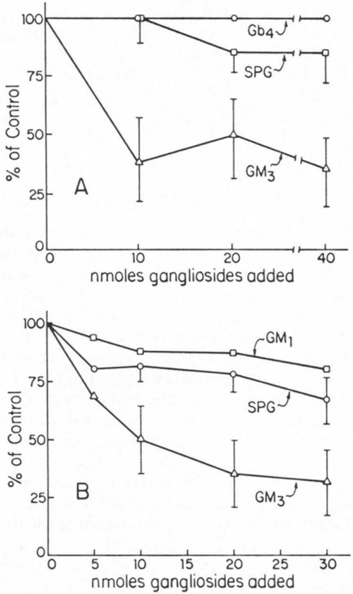
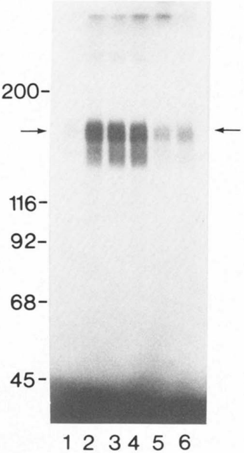
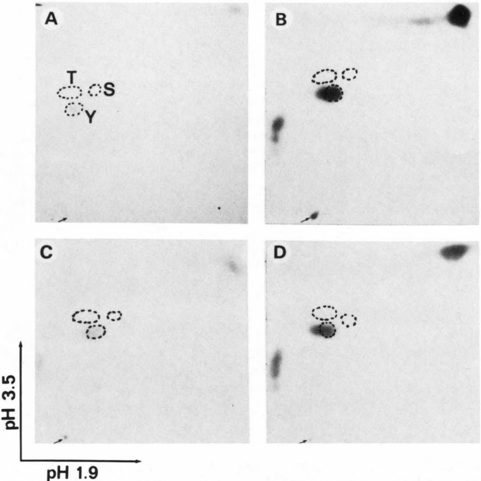
Epidermal growth factor- (EGF) dependent tyrosine phosphorylation of the EGF receptor was inhibited by the exogenous addition of GM3 to a membrane preparation and to purified EGF receptor adsorbed to antireceptor-antibody-Sepharose (Bremer, E. G., Schlessinger, J., and Hakomori, S. (1986) J. Biol. Chem. 261, 2434-2440). A specific functional correlation between GM3 and EGF receptor function has been further assessed in this study, employing two variant clones of A431 cells showing completely different growth responses to EGF. The A1S clone showed EGF cell growth stimulation and contained GM3 whereas the A5I clone, whose growth was completely inhibited by EGF addition, lacked detectable GM3. Both the endogenous and EGF-dependent receptor tyrosine-kinase activities were low in the A1S clone and were only minimally inhibited by the exogenous addition of GM3. In contrast the EGF receptor kinase activity in A5I cells was much higher and was more strongly inhibited by GM3 than it was in A1S cells. The EGF receptor fraction prepared from A1S cells, eluted from an anti-EGF receptor antibody-Sepharose column, contained GM3, in contrast to the fraction prepared from A5I cells, which lacked detectable GM3. The receptor kinase activity in vitro was greatly influenced by detergent and ATP concentration. GM3 affected the receptor kinase in a biphasic manner, i.e. GM3 was inhibitory at a low concentration of detergent under a physiological concentration of ATP and stimulatory at a high concentration of detergent. In contrast lyso-GM3 displayed a monophasic inhibitory effect under a wide range of detergent concentrations. Lyso-CDH (lactosylsphingosine) had no detectable effect on the receptor kinase activity. The presence of a small quantity of lyso-GM3 in A431 cells was detected after DEAE-Sepharose chromatography followed by high performance liquid chromatography in a n-propanolyl alcohol-ammonia system. It is possible that de-N-fatty acylation of gangliosides could be an effective means to modulate EGF receptor function in membranes.
Overview
The claims and statistics of this paper haven’t been checked yet.
Free: it reads the open-access text and checks the first 5 claims that cite a source we can check. Create a free account to check every claim.
Integrity signals
Registry
Cites
Statistics
Figures
Verification
Claims the paper makes
The claims and statistics of this paper haven’t been checked yet.
Free: it reads the open-access text and checks the first 5 claims that cite a source we can check. Create a free account to check every claim.
Claims other papers make about this one
Each is checked against this paper’s own text: does it say what the citing paper says it does?
The source backs part of the claim, not all of it — or backs it for a different population, condition or comparison.
In the citing paper
“For example, subtly different forms of the sialylated ganglioside GM3 can have differential effects on tyrosine kinase signaling of the EGF receptor (517 -522)”
From Biological roles of glycans (2017) · cites this paper as [517]
Experimental — accuracy not yet measured
Self-check
Percentages, sums and reported differences re-computed from the paper’s own numbers.
The self-check needs the paper’s full text.
Citations
Cites
Cleavage of Structural Proteins during the Assembly of the Head of Bacteriophage T4
LAEMMLI, U. K. (1970) · Nature · doi:10.1038/227680a0 · Cited by 249,961
Protein Purification by Affinity Chromatography
Cuatrecasas, P. (1970) · Journal of Biological Chemistry · doi:10.1016/s0021-9258(18)63022-4 · Cited by 2,796
Quantitive estimation of sialic acids
Svennerholm, L. (1957) · Biochimica et Biophysica Acta · doi:10.1016/0006-3002(57)90254-8 · Cited by 2,765
Udenfriend, S., Stein, S., Böhlen, P., Dairman, W., Leimgruber, W., & Weigele, M. (1972) · Science · doi:10.1126/science.178.4063.871 · Cited by 2,649
A simple, specific spray for the detection of phospholipids on thin-layer chromatograms
Dittmer, J. C., & Lester, R. L. (1964) · Journal of Lipid Research · doi:10.1016/s0022-2275(20)40272-x · Cited by 2,149
CHROMATOGRAPHlC SEPARATION OF HUMAN BRAIN GANGLIOSIDES*
Svennerholm, L. (1963) · Journal of Neurochemistry · doi:10.1111/j.1471-4159.1963.tb08933.x · Cited by 1,643
Hannun, Y. A., Loomis, C. R., Merrill, A. H., & Bell, R. M. (1986) · Journal of Biological Chemistry · doi:10.1016/s0021-9258(18)67133-9 · Cited by 1,156
[42] Detection and quantification of phosphotyrosine in proteins
Cooper, J. A., Sefton, B. M., & Hunter, T. (1983) · Methods in Enzymology · doi:10.1016/0076-6879(83)99075-4 · Cited by 1,142
Cohen, S., Carpenter, G., & King, L. (1980) · Journal of Biological Chemistry · doi:10.1016/s0021-9258(19)85573-4 · Cited by 858
Bretscher, M. S. (1973) · Science · doi:10.1126/science.181.4100.622 · Cited by 846
Research works printed but not linked: 2
- Klenk, E., and Heuer, K. (1960) Z. Verdauungs Stoffwechselkran- kheiten 20,180-183
- Buss, J. E., Kudlow, J. E., Lazar, C. S., and Gill, G. N. (1982) Proc. Natl. Acad. Sci. U. S. A. 79,2574-2578
Cited by
Varki, A. (2017) · Glycobiology · doi:10.1093/glycob/cww086 · Cited by 2,635
Functions of Sphingolipids and Sphingolipid Breakdown Products in Cellular Regulation
Hannun, Y. A., & Bell, R. M. (1989) · Science · doi:10.1126/science.2643164 · Cited by 1,251
Glycosylation defining cancer malignancy: New wine in an old bottle
Hakomori, S. (2002) · Proceedings of the National Academy of Sciences · doi:10.1073/pnas.172380699 · Cited by 960
Self-citationPaulson, J. C., & Colley, K. J. (1989) · Journal of Biological Chemistry · doi:10.1016/s0021-9258(19)84610-0 · Cited by 909
Hakomori, S. (1990) · Journal of Biological Chemistry · doi:10.1016/s0021-9258(17)30565-3 · Cited by 879
Self-citationSphingolipid and Glycosphingolipid Metabolic Pathways in the Era of Sphingolipidomics
Merrill, A. H. (2011) · Chemical Reviews · doi:10.1021/cr2002917 · Cited by 785
Schnaar, R. L., Gerardy-Schahn, R., & Hildebrandt, H. (2014) · Physiological Reviews · doi:10.1152/physrev.00033.2013 · Cited by 745
Lipid map of the mammalian cell
van Meer, G., & de Kroon, A. I. P. M. (2011) · Journal of Cell Science · doi:10.1242/jcs.071233 · Cited by 694
Hakomori, S.-I. (2002) · Proceedings of the National Academy of Sciences · doi:10.1073/pnas.012540899 · Cited by 492
Self-citationRegina Todeschini, A., & Hakomori, S.-I. (2008) · Biochimica et Biophysica Acta (BBA) - General Subjects · doi:10.1016/j.bbagen.2007.10.008 · Cited by 426
Self-citationFunctional Role of Glycosphingolipids in Cell Recognition and Signaling
Hakomori, S.-I., & Igarashi, Y. (1995) · The Journal of Biochemistry · doi:10.1093/oxfordjournals.jbchem.a124992 · Cited by 395
Self-citationGanglioside GM3 Participates in the Pathological Conditions of Insulin Resistance
Tagami, S., Inokuchi, J.-I., Kabayama, K., Yoshimura, H., Kitamura, F., Uemura, S., Ogawa, C., Ishii, A., Saito, M., Ohtsuka, Y., et al. (2002) · Journal of Biological Chemistry · doi:10.1074/jbc.m103705200 · Cited by 355
Mandon, E. C., Ehses, I., Rother, J., van Echten, G., & Sandhoff, K. (1992) · Journal of Biological Chemistry · doi:10.1016/s0021-9258(19)49887-6 · Cited by 346
Regulation of human EGF receptor by lipids
Coskun, Ü., Grzybek, M., Drechsel, D., & Simons, K. (2011) · Proceedings of the National Academy of Sciences · doi:10.1073/pnas.1105666108 · Cited by 316
Gangliosides in cell recognition and membrane protein regulation
Lopez, P. H., & Schnaar, R. L. (2009) · Current Opinion in Structural Biology · doi:10.1016/j.sbi.2009.06.001 · Cited by 311
Glycosphingolipids: synthesis and functions
D'Angelo, G., Capasso, S., Sticco, L., & Russo, D. (2013) · FEBS Journal · doi:10.1111/febs.12559 · Cited by 298
Iwabuchi, K., Yamamura, S., Prinetti, A., Handa, K., & Hakomori, S.-I. (1998) · Journal of Biological Chemistry · doi:10.1074/jbc.273.15.9130 · Cited by 300
Self-citationHakomori, S.-I., Handa, K., Iwabuchi, K., Yamamura, S., & Prinetti, A. (1998) · Glycobiology · doi:10.1093/oxfordjournals.glycob.a018822 · Cited by 297
Self-citationStructure, organization, and function of glycosphingolipids in membrane
Hakomori, S. (2003) · Current Opinion in Hematology · doi:10.1097/00062752-200301000-00004 · Cited by 283
Self-citationSphingolipid breakdown products: anti-proliferative and tumor-suppressor lipids
Hannun, Y. A., & Linardic, C. M. (1993) · Biochimica et Biophysica Acta (BBA) - Reviews on Biomembranes · doi:10.1016/0304-4157(93)90001-5 · Cited by 281
Merrill, A. H., & Stevens, V. L. (1989) · Biochimica et Biophysica Acta (BBA) - Molecular Cell Research · doi:10.1016/0167-4889(89)90152-3 · Cited by 280
Structure and function of glycosphingolipids and sphingolipids: Recollections and future trends
Hakomori, S.-I. (2008) · Biochimica et Biophysica Acta (BBA) - General Subjects · doi:10.1016/j.bbagen.2007.08.015 · Cited by 274
Self-citationCarbohydrates as antigenic determinants of glycoproteins
Feizi, T., & Childs, R. A. (1987) · Biochemical Journal · doi:10.1042/bj2450001 · Cited by 264
Simple Sugars to Complex Disease—Mucin-Type O-Glycans in Cancer
(2015) · Advances in Cancer Research · doi:10.1016/bs.acr.2014.11.002 · Cited by 260
Mueller, V., Ringemann, C., Honigmann, A., Schwarzmann, G., Medda, R., Leutenegger, M., Polyakova, S., Belov, V. N., Hell, S. W., & Eggeling, C. (2011) · Biophysical Journal · doi:10.1016/j.bpj.2011.09.006 · Cited by 253
Regulation of protein kinase C activity by gangliosides.
Kreutter, D., Kim, J. Y., Goldenring, J. R., Rasmussen, H., Ukomadu, C., DeLorenzo, R. J., & Yu, R. K. (1987) · Journal of Biological Chemistry · doi:10.1016/s0021-9258(19)75683-x · Cited by 246
Sphingolipids in Atherosclerosis and Vascular Biology
Chatterjee, S. (1998) · Arteriosclerosis, Thrombosis, and Vascular Biology · doi:10.1161/01.atv.18.10.1523 · Cited by 242
Cheresh, D. A., Pytela, R., Pierschbacher, M. D., Klier, F. G., Ruoslahti, E., & Reisfeld, R. A. (1987) · The Journal of cell biology · doi:10.1083/jcb.105.3.1163 · Cited by 243
Cell regulation by sphingosine and more complex sphingolipids
Merrill, A. H. (1991) · Journal of Bioenergetics and Biomembranes · doi:10.1007/bf00768840 · Cited by 241
Zhao, H., Przybylska, M., Wu, I.-H., Zhang, J., Siegel, C., Komarnitsky, S., Yew, N. S., & Cheng, S. H. (2007) · Diabetes · doi:10.2337/db06-0719 · Cited by 238
Cell adhesion/recognition and signal transduction through glycosphingolipid microdomain
Hakomori, S.-I. (2000) · Glycoconjugate Journal · doi:10.1023/a:1026524820177 · Cited by 229
Self-citationMembrane Domains and the “Lipid Raft” Concept
Sonnino, S., & Prinetti, A. (2012) · Current Medicinal Chemistry · doi:10.2174/09298673130103 · Cited by 214
Ringerike, T., Blystad, F. D., Levy, F. O., Madshus, I. H., & Stang, E. (2002) · Journal of Cell Science · doi:10.1242/jcs.115.6.1331 · Cited by 215
Yoon, S.-J., Nakayama, K.-I., Hikita, T., Handa, K., & Hakomori, S.-I. (2006) · Proceedings of the National Academy of Sciences · doi:10.1073/pnas.0609281103 · Cited by 210
Self-citationGangliosides as modulators of cell function
Zeller, C. B., & Marchase, R. B. (1992) · American Journal of Physiology-Cell Physiology · doi:10.1152/ajpcell.1992.262.6.c1341 · Cited by 208
Nagata, Y., Yamashiro, S., Yodoi, J., Lloyd, K. O., Shiku, H., & Furukawa, K. (1992) · Journal of Biological Chemistry · doi:10.1016/s0021-9258(19)49809-8 · Cited by 201
Bhunia, A. K., Han, H., Snowden, A., & Chatterjee, S. (1997) · Journal of Biological Chemistry · doi:10.1074/jbc.272.25.15642 · Cited by 200
Lipid domains in model and biological membranes
Welti, R., & Glaser, M. (1994) · Chemistry and Physics of Lipids · doi:10.1016/0009-3084(94)90178-3 · Cited by 199
Fenderson, B. A., Andrews, P. W., Nudelman, E., Clausen, H., & Hakomori, S.-I. (1987) · Developmental Biology · doi:10.1016/0012-1606(87)90328-9 · Cited by 188
Self-citationHanai, N., Dohi, T., Nores, G. A., & Hakomori, S. (1988) · Journal of Biological Chemistry · doi:10.1016/s0021-9258(18)68785-x · Cited by 184
Self-citationBoccuto, L., Aoki, K., Flanagan-Steet, H., Chen, C.-F., Fan, X., Bartel, F., Petukh, M., Pittman, A., Saul, R., Chaubey, A., et al. (2014) · Human Molecular Genetics · doi:10.1093/hmg/ddt434 · Cited by 182
Traveling for the glycosphingolipid path
Hakomori, S.-I. (2000) · Glycoconjugate Journal · doi:10.1023/a:1011086929064 · Cited by 178
Self-citationMetabolism and intracellular transport of glycosphingolipids
Schwarzmann, G., & Sandhoff, K. (1990) · Biochemistry · doi:10.1021/bi00501a001 · Cited by 174
Interaction of the Extracellular Domain of the Epidermal Growth Factor Receptor with Gangliosides
Miljan, E. A., Meuillet, E. J., Mania-Farnell, B., George, D., Yamamoto, H., Simon, H.-G., & Bremer, E. G. (2002) · Journal of Biological Chemistry · doi:10.1074/jbc.m111669200 · Cited by 168
Self-citationHanai, N., Nores, G. A., MacLeod, C., Torres-Mendez, C. R., & Hakomori, S. (1988) · Journal of Biological Chemistry · doi:10.1016/s0021-9258(18)38057-8 · Cited by 166
Self-citationHakomori, S. (2004) · Glycoconjugate Journal · doi:10.1023/b:glyc.0000044844.95878.cf · Cited by 164
Self-citationKatagiri, Y. U., Mori, T., Nakajima, H., Katagiri, C., Taguchi, T., Takeda, T., Kiyokawa, N., & Fujimoto, J. (1999) · Journal of Biological Chemistry · doi:10.1074/jbc.274.49.35278 · Cited by 163
Integrin modulating factor-1: A lipid that alters the function of leukocyte integrins
Hermanowski-Vosatka, A., Van Strijp, J. A. G., Swiggard, W. J., & Wright, S. D. (1992) · Cell · doi:10.1016/0092-8674(92)90475-r · Cited by 161
Cell Cycle Arrest Induced by an Inhibitor of Glucosylceramide Synthase
Rani, S. C. S., Abe, A., Chang, Y., Rosenzweig, N., Saltiel, A. R., Radin, N. S., & Shayman, J. A. (1995) · Journal of Biological Chemistry · doi:10.1074/jbc.270.6.2859 · Cited by 159
Generation of one set of monoclonal antibodies specific for a-pathway ganglio-series gangliosides
Kotani, M., Ozawa, H., Kawashima, I., Ando, S., & Tai, T. (1992) · Biochimica et Biophysica Acta (BBA) - General Subjects · doi:10.1016/0304-4165(92)90168-t · Cited by 159
Nojiri, H., Stroud, M., & Hakomori, S. (1991) · Journal of Biological Chemistry · doi:10.1016/s0021-9258(20)64355-1 · Cited by 155
Self-citationThe role(s) of Gangliosides in neural differentiation and repair: A perspective
Schengrund, C. (1990) · Brain Research Bulletin · doi:10.1016/0361-9230(90)90297-d · Cited by 154
Lubricating cell signaling pathways with gangliosides
Allende, M. L., & Proia, R. L. (2002) · Current Opinion in Structural Biology · doi:10.1016/s0959-440x(02)00376-7 · Cited by 163
Expression cloning of a GM3-specific alpha-2,8-sialyltransferase (GD3 synthase).
Sasaki, K., Kurata, K., Kojima, N., Kurosawa, N., Ohta, S., Hanai, N., Tsuji, S., & Nishi, T. (1994) · Journal of Biological Chemistry · doi:10.1016/s0021-9258(17)40773-3 · Cited by 153
Mechanisms of cancer-associated glycosylation changes
Dall'Olio, F. (2012) · Frontiers in Bioscience · doi:10.2741/3951 · Cited by 152
Glycosphingolipid behaviour in complex membranes
Prinetti, A., Loberto, N., Chigorno, V., & Sonnino, S. (2008) · Biochimica et Biophysica Acta (BBA) - Biomembranes · doi:10.1016/j.bbamem.2008.09.001 · Cited by 172
Regulation of Growth Factor Receptors by Gangliosides
Miljan, E. A., & Bremer, E. G. (2002) · Science's STKE · doi:10.1126/stke.2002.160.re15 · Cited by 150
Self-citationFaucher, M., Gironès, N., Hannun, Y. A., Bell, R. M., & Davis, R. J. (1988) · Journal of Biological Chemistry · doi:10.1016/s0021-9258(18)60718-5 · Cited by 151
Ono, M., Handa, K., Sonnino, S., Withers, D. A., Nagai, H., & Hakomori, S. (2001) · Biochemistry · doi:10.1021/bi0101998 · Cited by 146
Self-citationNADH oxidase of plasma membranes
Morr�, D. J., & Brightman, A. O. (1991) · Journal of Bioenergetics and Biomembranes · doi:10.1007/bf00771015 · Cited by 146
Functional roles of glycosphingolipids in signal transduction via lipid rafts
Kasahara, K., & Sanai, Y. (2000) · Glycoconjugate Journal · doi:10.1023/a:1026576804247 · Cited by 154
A growth factor- and hormone-stimulated NADH oxidase from rat liver plasma membrane
Brightman, A. O., Wang, J., Miu, R. K.-M., SUN, I. L., Barr, R., Crane, F. L., & Morré, D. J. (1992) · Biochimica et Biophysica Acta (BBA) - Biomembranes · doi:10.1016/0005-2736(92)90168-l · Cited by 138
Total synthesis of sialyl Lewis X
Kameyama, A., Ishida, H., Kiso, M., & Hasegawa, A. (1991) · Carbohydrate Research · doi:10.1016/0008-6215(91)80171-i · Cited by 138
Guan, F., Handa, K., & Hakomori, S. (2009) · Proceedings of the National Academy of Sciences · doi:10.1073/pnas.0902368106 · Cited by 137
Self-citationZhou, Q., Hakomori, S., Kitamura, K., & Igarashi, Y. (1994) · Journal of Biological Chemistry · doi:10.1016/s0021-9258(17)42121-1 · Cited by 131
Self-citationA facile, regio- and stereo-selective synthesis of ganglioside GM3
Murase, T., Ishida, H., Kiso, M., & Hasegawa, A. (1989) · Carbohydrate Research · doi:10.1016/0008-6215(89)84060-1 · Cited by 131
Gangliosides as bimodal regulators of cell growth.
Spiegel, S., & Fishman, P. H. (1987) · Proceedings of the National Academy of Sciences · doi:10.1073/pnas.84.1.141 · Cited by 138
Mitsuda, T., Furukawa, K., Fukumoto, S., Miyazaki, H., Urano, T., & Furukawa, K. (2002) · Journal of Biological Chemistry · doi:10.1074/jbc.m107756200 · Cited by 132
Sorice, M., Parolini, I., Sansolini, T., Garofalo, T., Dolo, V., Sargiacomo, M., Tai, T., Peschle, C., Torrisi, M. R., & Pavan, A. (1997) · Journal of Lipid Research · doi:10.1016/s0022-2275(20)37221-7 · Cited by 132
Biosynthesis and functions of gangliosides: recent advances
Lloyd, K. O., & Furukawa, K. (1998) · Glycoconjugate Journal · doi:10.1023/a:1006924128550 · Cited by 124
How Do Gangliosides Regulate RTKs Signaling?
Julien, S., Bobowski, M., Steenackers, A., Bourhis, X. L., & Delannoy, P. (2013) · Cells · doi:10.3390/cells2040751 · Cited by 136
Kawashima, N., Yoon, S.-J., Itoh, K., & Nakayama, K.-I. (2009) · Journal of Biological Chemistry · doi:10.1074/jbc.m808171200 · Cited by 122
Stereoselective synthesis of sialyl-lactotetraosylceramide and sialylneolactotetraosylceramide
Kameyama, A., Ishida, H., Kiso, M., & Hasegawa, A. (1990) · Carbohydrate Research · doi:10.1016/0008-6215(90)84197-3 · Cited by 123
Biosynthesis, Metabolism, and Biological Effects of Gangliosides
Ledeen, R. W. (1989) · Springer eBooks · doi:10.1007/978-1-4757-5955-6_2 · Cited by 122
Hakomori, S. (2009) · FEBS Letters · doi:10.1016/j.febslet.2009.10.065 · Cited by 123
Self-citationSkaper, S. D., Leon, A., & Toffano, G. (1989) · Molecular Neurobiology · doi:10.1007/bf02935630 · Cited by 123
Schnaar, R. L. (2018) · Advances in carbohydrate chemistry and biochemistry · doi:10.1016/bs.accb.2018.09.002 · Cited by 135
Fukumoto, S., Mutoh, T., Hasegawa, T., Miyazaki, H., Okada, M., Goto, G., Furukawa, K., Urano, T., & Furukawa, K. (2000) · Journal of Biological Chemistry · doi:10.1074/jbc.275.8.5832 · Cited by 118
Fibronectin Domains and Receptors
Yamada, K. M. (1989) · Elsevier eBooks · doi:10.1016/b978-0-12-508470-3.50008-0 · Cited by 127
Ito, M., & Yamagata, T. (1989) · Journal of Biological Chemistry · doi:10.1016/s0021-9258(18)60561-7 · Cited by 117
Igarashi, Y., Kitamura, K., Toyokuni, T., Dean, B., Fenderson, B. A., Ogawass, T., & Hakomori, S. (1990) · Journal of Biological Chemistry · doi:10.1016/s0021-9258(19)39370-6 · Cited by 115
Self-citationIsoda, H., Shinmoto, H., Kitamoto, D., Matsumura, M., & Nakahara, T. (1997) · Lipids · doi:10.1007/s11745-997-0033-0 · Cited by 113
Chan, K.-F. J. (1988) · Journal of Biological Chemistry · doi:10.1016/s0021-9258(19)57429-4 · Cited by 112
Sialosignaling: Sialyltransferases as engines of self-fueling loops in cancer progression
Dall’Olio, F., Malagolini, N., Trinchera, M., & Chiricolo, M. (2014) · Biochimica et Biophysica Acta (BBA) - General Subjects · doi:10.1016/j.bbagen.2014.06.006 · Cited by 123
Wang, J., & Yu, R. K. (2013) · Proceedings of the National Academy of Sciences · doi:10.1073/pnas.1307224110 · Cited by 111
Ceramide structure predicts tumor gangliosideimmunosuppressive activity.
Ladisch, S., Li, R., & Olson, E. (1994) · Proceedings of the National Academy of Sciences · doi:10.1073/pnas.91.5.1974 · Cited by 122
Molecular Recognition of Gangliosides and Their Potential for Cancer Immunotherapies
Krengel, U., & Bousquet, P. A. (2014) · Frontiers in Immunology · doi:10.3389/fimmu.2014.00325 · Cited by 124
Sphingolipids: Key Regulators of Apoptosis and Pivotal Players in Cancer Drug Resistance
Giussani, P., Tringali, C., Riboni, L., Viani, P., & Venerando, B. (2014) · International Journal of Molecular Sciences · doi:10.3390/ijms15034356 · Cited by 132
Murase, T., Kameyama, A., Kartha, K. P. R., Ishida, H., Kiso, M., & Hasegawa, A. (1989) · Journal of Carbohydrate Chemistry · doi:10.1080/07328308908048009 · Cited by 110
Functional roles of gangliosides in bio-signalling
Nagai, Y. (1995) · Behavioural Brain Research · doi:10.1016/0166-4328(94)00130-8 · Cited by 119
Miyazaki, H., Fukumoto, S., Okada, M., Hasegawa, T., Furukawa, K., & Furukawa, K. (1997) · Journal of Biological Chemistry · doi:10.1074/jbc.272.40.24794 · Cited by 107
Toledo, M. S., Suzuki, É., Handa, K., & Hakomori, S. (2005) · Journal of Biological Chemistry · doi:10.1074/jbc.m413713200 · Cited by 116
Self-citationBlood group-related antigens as markers of malignant potential and heterogeneity in human carcinomas
Conn, J. S., & Weinstein, R. S. (1986) · Human Pathology · doi:10.1016/s0046-8177(86)80413-0 · Cited by 104
Ceramide signaling in mammalian epidermis
Uchida, Y. (2014) · Biochimica et Biophysica Acta (BBA) - Molecular and Cell Biology of Lipids · doi:10.1016/j.bbalip.2013.09.003 · Cited by 103
Yamamura, S., Handa, K., & Hakomori, S. (1997) · Biochemical and Biophysical Research Communications · doi:10.1006/bbrc.1997.6933 · Cited by 108
Self-citationShayman, J. A., Deshmukh, G. D., Mahdiyoun, S., Thomas, T., Wu, D., Barcelon, F. S., & Radin, N. S. (1991) · Journal of Biological Chemistry · doi:10.1016/s0021-9258(18)54449-5 · Cited by 102
Ito, M., Kurita, T., & Kita, K. (1995) · Journal of Biological Chemistry · doi:10.1074/jbc.270.41.24370 · Cited by 101
Inokuchi, J., Jimbo, M., Momosaki, K., Shimeno, H., NAGAMATSU, A., & Radin, N. S. (1990) · PubMed · Cited by 100
Hakomori, S., & Handa, K. (2015) · Glycoconjugate Journal · doi:10.1007/s10719-014-9572-4 · Cited by 99
Self-citationWang, X.-Q., Yan, Q., Sun, P., Liu, J.-W., Go, L., McDaniel, S. M., & Paller, A. S. (2007) · Cancer Research · doi:10.1158/0008-5472.can-07-1300 · Cited by 99
Metadata
- Authors
- Bremer, E. G., Schlessinger, J., & Hakomori, S.
- Affiliations
- Rush University Medical Center (US)
- Venue
- Journal of Biological Chemistry
- Publisher
- Elsevier BV
- Published
- 1986-02
- Volume
- 261
- Issue
- 5
- Pages
- 2434-2440
- ISSN
- 0021-9258 (ISSN-L)
- OpenAlex
- W2098862614
- Cited by
- 706
- References
- 62
- Citations by year
- 2026: 4 · 2025: 8 · 2024: 3 · 2023: 8 · 2022: 12 · 2021: 9 · 2020: 9 · 2019: 11 · 2018: 10 · 2017: 6 · 2016: 11 · 2015: 12 · 2014: 10 · 2013: 10 · 2012: 13
- FWCI
- 12.11
- Type
- journal article
- Language
- en
- Open access
- hybrid
- doi.org
- Licence
- cc-by
- www.elsevier.com/tdm/userlicense/1.0/ (tdm)
- www.elsevier.com/legal/tdmrep-license (tdm)
- creativecommons.org/licenses/by/4.0/ (vor, 12686 d)
- Locations
- Journal of Biological Chemistry (publishedVersion, cc-by)
- PubMed (publishedVersion)
- Funders
- National Institutes of Health
- National Cancer Institute (CA20026)
- Topics
- Life Sciences › Biochemistry, Genetics and Molecular Biology › Molecular Biology › Sphingolipid Metabolism and Signaling
- Health Sciences › Medicine › Oncology › HER2/EGFR in Cancer Research
- Life Sciences › Biochemistry, Genetics and Molecular Biology › Molecular Biology › Protein Kinase Regulation and GTPase Signaling
- Keywords
- GM3 ganglioside, epidermal growth factor receptor, tyrosine phosphorylation, receptor tyrosine kinase activity, cell growth regulation, A431 cells, ATP levels
- MeSH terms
- Amino Acids, Animals, Carcinoma, Squamous Cell, Cattle, Cell Division, Cell Line, Depression, Chemical, Dogs, Epidermal Growth Factor, Female, Fibroblasts, G(M1) Ganglioside, G(M3) Ganglioside, Gangliosides, Humans, Immunosorbent Techniques, Mouth Neoplasms, Ovarian Neoplasms, Phosphorylation, Receptors, Cell Surface, Tyrosine, Phosphotyrosine, Mice, ErbB Receptors
About these checks
Registry, retraction, Cites and statistics results are computed, not judged, with one exception: a printed reference that no index lists is read once by a model before it counts as a citation error. Claims are extracted by a model and kept only when their quote appears verbatim in the text; each cited source is then checked, with a model’s help, for whether it says what the claim relies on. Those verdicts can be wrong — read the claim’s quote and the cited source before relying on one.
Statistics and arithmetic are recomputed, not judged.
Confidence bands are shown only for fields calibrated on our annotated test set. None is calibrated yet, so no band is shown.
What counts as a claim ›How we measure confidence ›How we check this ›
Are you an author, or do you see a problem with this page? Request a review
Data sources
Bibliographic data: Semantic Scholar, OpenAlex, Crossref.
Contains information from the Semantic Scholar Academic Graph Datasets, made available under the ODC Attribution License (ODC-BY 1.0).
Semantic Scholar’s data is described in: Kinney, R., et al. (2023). The Semantic Scholar Open Data Platform. arXiv:2301.10140.
