

Frontal and parietal participation in problem solving in the Tower of London: fMRI and computational modeling of planning and high-level perception
Open accessThe DOI matches its Crossref record; 50 of the 52 references it cites were found in a registry or an index.
Abstract
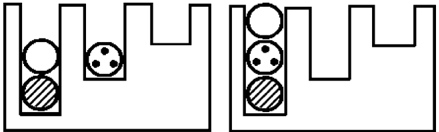
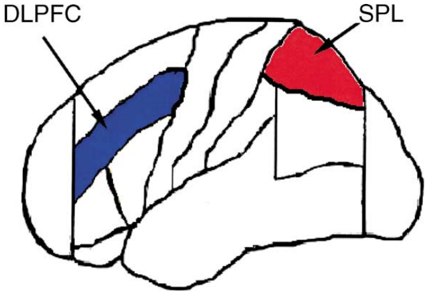
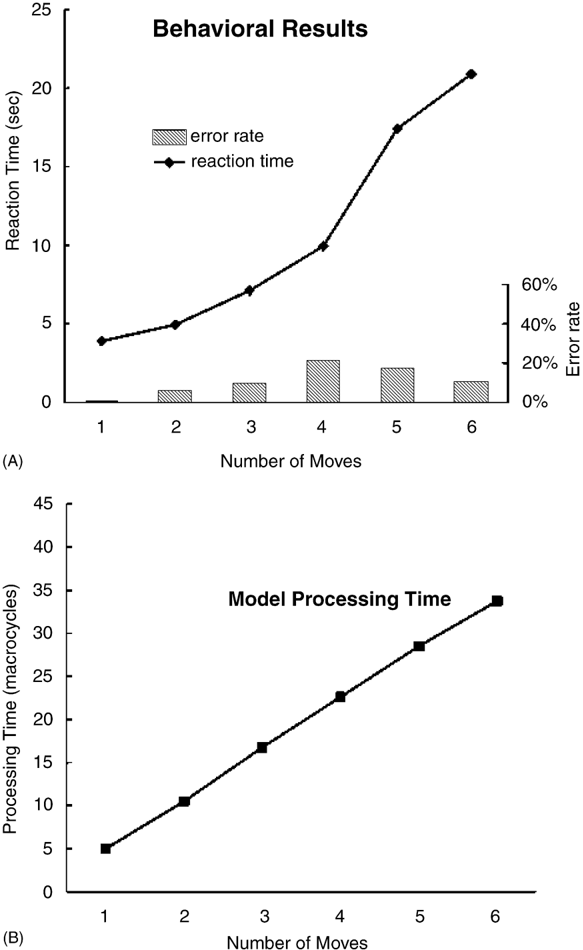
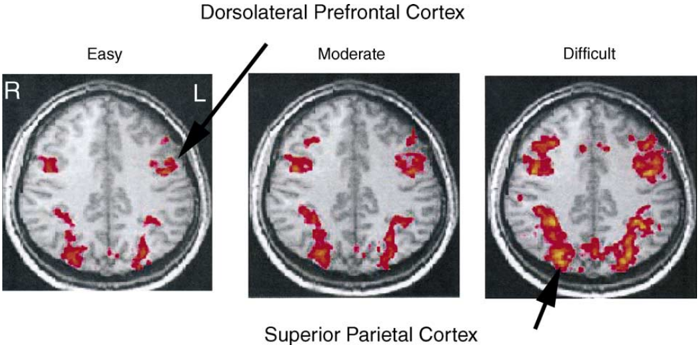
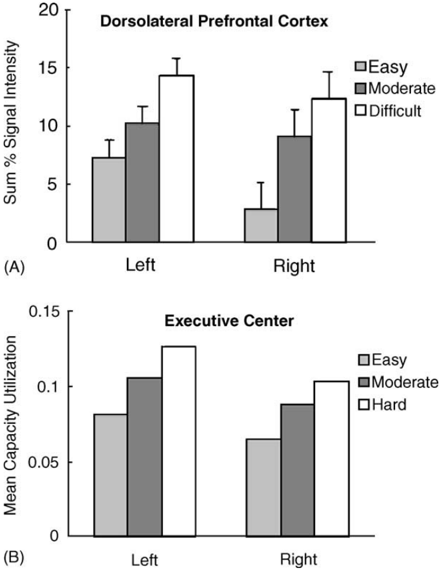
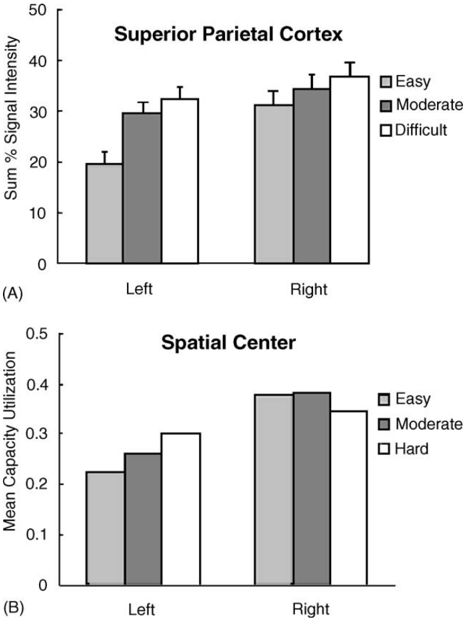
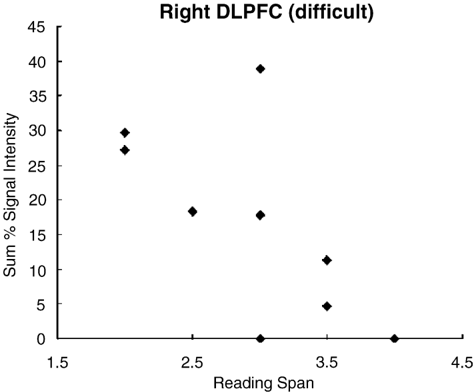
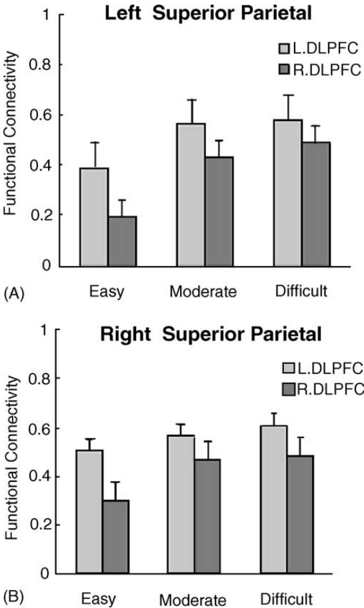
This study triangulates executive planning and visuo-spatial reasoning in the context of the Tower of London (TOL) task by using a variety of methodological approaches. These approaches include functional magnetic resonance imaging (fMRI), functional connectivity analysis, individual difference analysis, and computational modeling. A graded fMRI paradigm compared the brain activation during the solution of problems with varying path lengths: easy (1 and 2 moves), moderate (3 and 4 moves) and difficult (5 and 6 moves). There were three central findings regarding the prefrontal cortex: (1) while both the left and right prefrontal cortices were equally involved during the solution of moderate and difficult problems, the activation on the right was differentially attenuated during the solution of the easy problems; (2) the activation observed in the right prefrontal cortex was highly correlated with individual differences in working memory (measured independently by the reading span task); and (3) different patterns of functional connectivity were observed in the left and right prefrontal cortices. Results obtained from the superior parietal region also revealed left/right differences; only the left superior parietal region revealed an effect of difficulty. These fMRI results converged upon two hypotheses: (1) the right prefrontal area may be more involved in the generation of a plan, whereas the left prefrontal area may be more involved in plan execution; and (2) the right superior parietal region is more involved in attention processes while the left homologue is more of a visuo-spatial workspace. A 4CAPS computational model of the cognitive processes and brain activation in the TOL task integrated these hypothesized mechanisms, and provided a reasonably good fit to the observed behavioral and brain activation data. The multiple research approaches presented here converge on a deepening understanding of the combination of perceptual and conceptual processes in this type of visual problem solving.
Overview
The claims and statistics of this paper haven’t been checked yet.
Free: it reads the open-access text and checks the first 5 claims that cite a source we can check. Create a free account to check every claim.
Integrity signals
Registry
Cites
Statistics
Figures

Verification
Claims the paper makes
The claims and statistics of this paper haven’t been checked yet.
Free: it reads the open-access text and checks the first 5 claims that cite a source we can check. Create a free account to check every claim.
Claims other papers make about this one
Each is checked against this paper’s own text: does it say what the citing paper says it does?
The source backs part of the claim, not all of it — or backs it for a different population, condition or comparison.
In the citing paper
“Neuroimaging studies have shown that EF tasks similar to those used in our study activate a variety of areas within the prefrontal cortex [28,31,98] and in addition to this, activate areas with important connections to the prefrontal cortex, such as the caudate nucleus, the putamen, thalamic areas [30], cingulate and parietal cortex [29,99].”
From Neurocognitive functions in pathological gambling: a comparison with alcohol dependence, Tourette syndrome and normal controls (2006) · cites this paper as [99]
Experimental — accuracy not yet measured
Self-check
Percentages, sums and reported differences re-computed from the paper’s own numbers.
The self-check needs the paper’s full text.
Citations
Cites
Individual differences in working memory and reading
Daneman, M., & Carpenter, P. A. (1980) · Journal of Verbal Learning and Verbal Behavior · doi:10.1016/s0022-5371(80)90312-6 · Cited by 6,336 · cited 1×
“The Daneman and Carpenter (1980)reading span test was administered to 10 of 12 participants.”
MethodSelf-citation(1991) · Choice Reviews Online · doi:10.5860/choice.28-5376 · Cited by 4,207
A capacity theory of comprehension: individual differences in working memory
Just, M. A., & Carpenter, P. A. (1992) · Psychological Review · doi:10.1037/0033-295x.99.1.122 · Cited by 4,153 · cited 1×
“…of the prominent ones, including Soar (Newell, 1990), ACT-R (Anderson, 1993), EPIC (Meyer & Kieras, 1997) and 3CAPS (Goel, Pullara, & Grafman, 2001; Just & Carpenter, 1992), account for the error patterns and processing times in problem solving, reasoning, decision making, memory and learning,…”
Self-citationSpecific impairments of planning
Shallice, T. (1982) · Philosophical Transactions of the Royal Society of London. B, Biological Sciences · doi:10.1098/rstb.1982.0082 · Cited by 3,741 · cited 2×
“…and right prefrontal cortices were equally involved during the solution of moderate and difficult problems, the activation on the right was differentially attenuated during the solution of the easy problems; (2) the activation observed in the right prefrontal cortex was highly correlated with…”
ResultMacDonald, A. W., Cohen, J. D., Stenger, V. A., & Carter, C. S. (2000) · Science · doi:10.1126/science.288.5472.1835 · Cited by 3,666
Mesulam, M. (1998) · Brain · doi:10.1093/brain/121.6.1013 · Cited by 3,072
Large-scale neurocognitive networks and distributed processing for attention, language, and memory
Mesulam, M. (1990) · Annals of Neurology · doi:10.1002/ana.410280502 · Cited by 2,684
Functional and effective connectivity in neuroimaging: a synthesis
Friston, K. J. (1994) · Human Brain Mapping · doi:10.1002/hbm.460020107 · Cited by 2,452 · cited 1×
“The synchronization is taken as evidence of functional connectivity[or effective connectivity(Buchel, Coull, & Friston, 1999; Friston, 1994; Horwitz, Rumsey, & Donohue, 1998)].”
Time course EPI of human brain function during task activation
Bandettini, P. A., Wong, E. C., Hinks, R. S., Tikofsky, R. S., & Hyde, J. S. (1992) · Magnetic Resonance in Medicine · doi:10.1002/mrm.1910250220 · Cited by 1,935
(1993) · Medical Entomology and Zoology · Cited by 1,882
Research works printed but not linked: 4
- D'Esposito, M., Deter, J. A., Aguirre, G. K., Stallcup, M., Alsop, D. C., Tippet, L. J., & Farah, M. J. (1997). A functional MRI study of mental imagery generation. Neuropsychologia, 35, 715-730.
- Just, M. A., Carpenter, P. A., & Varma, S. (1999). Computational modeling of high-level cognition and brain function. Human Brain Mapping, 8, 128-136. · doi:10.1002/(sici)1097-0193(1999)8:2/3<128::aid-hbm10>3.0.co;2-g
- Rosenbloom, P. S., Laird, J. E., & Newell, A. (1993a). The Soarpapers: Research in integrated intelligence: Vol. 1. Cambridge, MA: MIT Press.
- Rosenbloom, P. S., Laird, J. E., & Newell, A. (1993b). The Soarpapers: Research in integrated intelligence: Vol. 2. Cambridge, MA: MIT Press.
Cited by
Items 301–400 of 401
Upsides and Downsides of Gesturing in Problem Solving
Cushen, P. J., & Wiley, J. (2008) · Proceedings of the Annual Meeting of the Cognitive Science Society · Cited by 3
A mathematical model of planning in the prefrontal cortex
Oku, M., & Aihara, K. (2008) · Artificial Life and Robotics · doi:10.1007/s10015-007-0472-6 · Cited by 4
Computational Model of Motor Planning for Virtual Creatures: a Biologically Inspired Model
López, S., Cervantes, J.-A., Robles, F., & Ramos, F. (2015) · IEEE Latin America Transactions · doi:10.1109/tla.2015.7040622 · Cited by 3
Interventions to Improve Cognitive Functioning After Traumatic Brain Injury (TBI)
Chen, A., Novakovic-Agopian, T., & Loya, F. (2019) · Springer eBooks · doi:10.1007/978-3-030-22436-3_17 · Cited by 7
Exploring the Nature of 'Trading Intuition'
Bossaerts, P. L., Bruguier, A., & Quartz, S. R. (2011) · Infoscience (Ecole Polytechnique Fédérale de Lausanne) · Cited by 3
Yazgan, Y., & Sahin, H. B. (2018) · Universal Journal of Educational Research · doi:10.13189/ujer.2018.060919 · Cited by 3
“With the advent of technology, most recent studies have focused on examining brain activity during problem solving by using devices such as EEG1 or fMRI2 [19, 20].”
BackgroundMethodMemory Dysfunction in Dementia
Budson, A. E. (2011) · Wiley eBooks · doi:10.1002/9781444344110.ch11 · Cited by 4
Effective Use of LENS Unit as an Adjunct to Cognitive Neuro-Developmental Training
Cripe, C. (2006) · Journal of Neurotherapy · doi:10.1300/j184v10n02_07 · Cited by 3
Debarnot, U., Schlatter, S., Julien, M., & Guillot, A. (2019) · Scientific Reports · doi:10.1038/s41598-019-52668-7 · Cited by 2
Rule Acquisition in the Proceeding of Heuristic Sudoku Solving
Zhou, H., Xiong, Y., Long, Z., Fan, S., Wang, X., Qin, Y., & Zhong, N. (2012) · Lecture notes in computer science · doi:10.1007/978-3-642-35139-6_8 · Cited by 2
Optical mapping of effective brain networks during the tangram task
Hu, Z., Lam, K.-F., & Yuan, Z. (2020) · Clinical and Translational Neurophotonics · doi:10.1117/12.2542229 · Cited by 2
The difference of brain activation during visual and kinesthetic imagery on the golf putting
김진구, 권명화, 권은진, & 이건영 (2010) · Korean Journal of Sport Science · doi:10.24985/kjss.2010.21.3.1346 · Cited by 2
Need-Solution Pair Recognition Driven by Object Oriented Solution-FindingPreprint
Stock, R., Heald, S. L. M., Holthaus, C., Gillert, N. L., & von Hippel, E. (2017) · SSRN Electronic Journal · doi:10.2139/ssrn.2902117 · Cited by 2
Modeling the Brain as Shannon Information Source Using fMRI SignalsPreprint
Değirmendereli, G. G., & Vural, F. T. Y. (2023) · doi:10.36227/techrxiv.22188811 · Cited by 2
Tsatali, M. S., Eleftheriadou, D., Palla, N., Tsolaki, M., & Μoraitou, D. (2025) · Brain Sciences · doi:10.3390/brainsci15030278 · Cited by 2
“According to Newman (2021) [28], “the median tower trial, trial 5, is a transitional item, as it loads almost equally onto both early and late trials and is most strongly related to measures of working memory”.”
InfluentialRetractedQueirolo, L., Boscolo, A., Tommaso, C., Otello, M., Facco, E., Zanette, G., Stellini, E., & Navalesi, P. (2026) · Scientific Reports · doi:10.1038/s41598-026-40770-6 · Cited by 1
The Cognitive and Neural Basis for Apathy in Frontotemporal Degeneration
Massimo, L. M. (2014) · Scholarly Commons (University of Pennsylvania) · Cited by 1
The study of data analysis methods based on FMRI brain-computer interface
Li, H., Qiao, X., Chen, J., & Xiang, J. (2010) · International Conference on Bio-Inspired Computing: Theories and Applications (BIC-TA) · doi:10.1109/bicta.2010.5645129 · Cited by 1
Executive function in mild cognitive impairment, frontotemporal dementia, and Lewy body dementia
Johns, E. K., & Phillips, N. A. (2008) · Brain and Cognition · doi:10.1016/j.bandc.2008.02.045 · Cited by 1
Aspects cliniques et neuropsychologiques de la maladie de Huntington.
de Diego, Balaguer, D. D., & Bachoud (2006) · Cited by 7
Mitani, K., & Hoshino, Y. (2021) · Journal of Japan Society for Fuzzy Theory and Intelligent Informatics · doi:10.3156/jsoft.33.4_845 · Cited by 3
Ouerchefani, R., Ouerchefani, N., Rejeb, M. R. B., & Gall, D. L. (2022) · Applied Neuropsychology Adult · doi:10.1080/23279095.2022.2036152 · Cited by 2
“…premotor cortex, the cingulate gyrus, the insular cortices, the inferior parietal cortex, the cerebellum and basal ganglia (Baker et al., 1996; Fincham et al., 2002; Lazeron et al., 2000; Morris et al., 1993; Newman et al., 2003; Owen, 1997; Robbins, 1998; Rowe et al., 2001; Schall et al., 2003).”
Funahashi, S. (2022) · Brain science · doi:10.1007/978-981-19-7268-3_4 · Cited by 2
Transition in Long-Term Learning Curves and fMRI Analysis on Tower of Hanoi Task
Sano, Y., Hayasaka, R., Mitani, K., & Hoshino, Y. (2018) · Joint International Conference on Soft Computing and Intelligent Systems and International Symposium on Advanced Intelligent Systems (SCIS&ISIS) · doi:10.1109/scis-isis.2018.00187 · Cited by 1
fNIRS STUDY OF EFFECTS OF FOOT BATH ON HUMAN BRAIN AND COGNITIVE FUNCTION
LI, G., Yuan, Y., Ren, H., & Chen, W. (2021) · Journal of Mechanics in Medicine and Biology · doi:10.1142/s0219519421400224 · Cited by 1
Siegler, R. S., Eisenberg, N., DeLoache, J. S., & Saffran, J. R. (2016) · Springer eBooks · doi:10.1007/978-3-662-47028-2_16 · Cited by 1
Ruiz, B. R. (2006) · Dipòsit Digital de la Universitat de Barcelona (Universitat de Barcelona) · Cited by 2
Behavioural and Functional Imaging Studies of Rhythm Processing
Grahn, J. A. (2004) · Cited by 2
Motor learning in stroke - role of extrinsic feedback
Subramanian, S. K. (2013) · doi:10.82308/53078 · Cited by 1
Un approccio dimensionale al disturbo di personalità borderline
Dell’Osso, B. M., Camuri, G., Berlin, H. A., Serati, M., & Altamura, A. C. (2009) · Cited by 1
Representation Internal-Manipulation (RIM): A Neuro-Inspired Computational Theory of Consciousness.Preprint
Baldassarre, G., & Granato, G. (2019) · arXiv (Cornell University) · Cited by 2
Modeling the Brain as Shannon Information Source Using fMRI SignalsPreprint
Değirmendereli, G. G., & Vural, F. T. Y. (2023) · doi:10.36227/techrxiv.22188811.v1 · Cited by 1
Tsatali, M. S., Konstantinou, A., Surdu, F., & Μoraitou, D. (2024) · Preprints.org · doi:10.20944/preprints202409.0097.v1
Pereira, J. B. (2012) · Dipòsit Digital de la Universitat de Barcelona (Universitat de Barcelona)
Lamberts, K. F. (2009) · University of Groningen research database (University of Groningen / Centre for Information Technology) · Cited by 1
Neuropsychological Correlates of Borderline Personality Disorder
Miller, C. S. (2007) · ScholarWorks at University of Montana · Cited by 1
Haas, S. (2018) · KiltHub Repository · doi:10.1184/r1/6684677
Kisley, M. A., Davalos, D. B., Engleman, L. L., Guinther, P. M., & Davis, H. P. (2006) · Brain Research · doi:10.1016/j.brainres.2006.01.093
“Although the automatic nature of the neural process underlying the scalp-recorded MMN is especially supported by the demonstration that it can be elicited during sleep [14,79,94,96,102], it has been shown previously that MMN amplitude can be modulated by selective attention to the stimulus [33,129,133].”
BackgroundEncoding of Financial Signals in the Human Brain
Bruguier, A. (2007) · CaltechTHESIS (California Institute of Technology) · doi:10.7907/76fw-pd72
Tujague, M. P., Späth, G. M., Lahitte, H. B., & Investigaciones Científicas, Y. (2013)
Data and Information Granule Rules Retrieval: Differences of Activation in Parietal Cortex
Zhao, W. D., Li, H., Gu, G., Wang, X., Zhou, G., Cui, J., & Gu, W. (2014) · Lecture notes in computer science · doi:10.1007/978-3-319-09891-3_23
“In initial studies, one hypothesis is that the precuneus participates as part of the mind’s ‘eye’ to reinstate visual content during retrieval [20].”
BackgroundSakano, N. (2010) · The Annual Report of Educational Psychology in Japan · doi:10.5926/arepj.49.162
Mansoor, B., Hashemi, T., Alilou, M. M., & Zarei, M. A. (2014) · Cited by 1
FMRI U VIZUÁLNÍ PRACOVNÍ PAMĚTI
Ibrahim, I., & Ikem, Z.-M. (2007)
Sheppard, K. W. (2016) · Carolina Digital Repository (University of North Carolina at Chapel Hill) · doi:10.17615/2g2n-9s51
!"!#$%&'()*+,+$%&-&./0'+,&!*&1%&21%*+0'%'+3*&!*&2%'+!*,!"& con esclerosis mœltiple.
Mestas, L., Salvador, J., León, F. G., & Su, F. D. E. (2012)
Dobson-Patterson, R. (2011) · Griffith Research Online · doi:10.25904/1912/3335
Decision making under risk in multiple sclerosis
Radomski, A. D. (2013) · ERA: Education and Research Archive (University of Alberta) · doi:10.7939/r3bg2hh5w
Rough Sets: Visually Discerning Neurological Functionality During Thought Processes
Lewis, R. A., Mello, C. A., Zhuang, Y., Yeh, M. K. ‐., Yu, Y., & Gopstein, D. (2018) · Lecture notes in computer science · doi:10.1007/978-3-030-01851-1_4 · Cited by 1
Comparison of the activities in Turkish life sciences course books: activity suggestions by teachers
GÜLLÜHAN, N. Ü. (2018) · Acta Didactica Napocensia · doi:10.24193/adn.11.2.5
Brain Connectivity: Exploring from a High-Level Topological Perspective
Sheng, W., Li, L., Han, S., Fan, Y., Wang, C., Tang, Q., Chen, Y., Cui, Q., & Chen, H. (2021) · Lecture notes in computer science · doi:10.1007/978-3-030-87358-5_2
Cohen, R. A. (2013) · Springer eBooks · doi:10.1007/978-0-387-72639-7_26
Current Awareness in NMR in Biomedicine
(2003) · NMR in Biomedicine · doi:10.1002/nbm.806
Damasceno, B. P. (2020) · Springer eBooks · doi:10.1007/978-3-030-57267-9_4
Exekutivfunktionen — Bildgebung
Romanczuk‐Seiferth, N., & Thienel, R. (2007) · Springer eBooks · doi:10.1007/978-3-540-71147-6_24 · Cited by 2
Siegler, R. S., Saffran, J. R., Gershoff, E. T., & Eisenberg, N. (2021) · Springer eBooks · doi:10.1007/978-3-662-62772-3_16
Fatima, S. (2020) · Springer eBooks · doi:10.1007/978-3-319-16999-6_625-1
The effects of a non-routıne problem solvıng ınstructıon on the 7th graders’ braın hemıspherıcıty
Ministry of National Education, B., SÖĞÜT, G. Y., & Yazgan, Y. (2019) · Acta Didactica Napocensia · doi:10.24193/adn.12.2.5
Fatima, S. (2021) · Springer eBooks · doi:10.1007/978-3-319-19650-3_625
Dong, J., Yue, Q., Li, A., Gu, L., Su, X., Chen, Q., & Mei, L. (2022) · Frontiers in Psychology · doi:10.3389/fpsyg.2022.1067561 · Cited by 2
“Negative correlations between neural activations and behavioral performance have also been reported in a number of studies (Boivin et al., 1992; Reichle et al., 2000; Newman et al., 2003; Prat et al., 2007).”
BackgroundEnriched volition: Generation of Goal-Directed Action explored using a Problem-Solving ParadigmPreprint
Seghezzi, S., Bode, S., Fleming, S. M., & Haggard, P. (2023) · PsyArXiv (OSF Preprints) · doi:10.31234/osf.io/knrf2
Zhang, Y., & Li, J. (2024) · Journal of Biophotonics · doi:10.1002/jbio.202300453
Goel, V. (2024) · Elsevier eBooks · doi:10.1016/b978-0-12-820480-1.00094-2
Attar, G. A., Azarnoosh, M., & Lashkari, S. (2025) · SSRN Electronic Journal · doi:10.2139/ssrn.5255761
Dols, A., Biemans, T., Coomans, C., van Eijndhoven, P., Dalhuisen, I., van der Werf, Y. D., Vriend, C., Gomes, E. S. A., Sack, A. T., Schuhmann, T., et al. (2025) · JMIR Research Protocols · doi:10.2196/70121
“We also aim to assess changes in emotional and cognitive task performance (Hariri [26,27] and Tower of London [28]) and task-related brain activation induced by 10 Hz rTMS and PAiT (and their relation to treatment outcome), as measured by task-based functional MRI; assess the changes in Pavlovian…”
Kotseruba, I., & Tsotsos, J. K. (2025) · Oxford University Press eBooks · doi:10.1093/oso/9780192844835.002.0005
Kotseruba, I., & Tsotsos, J. K. (2025) · Oxford University Press eBooks · doi:10.1093/oso/9780192844835.002.0007
Kotseruba, I., & Tsotsos, J. K. (2025) · Oxford University Press eBooks · doi:10.1093/oso/9780192844835.003.0007
Kotseruba, I., & Tsotsos, J. K. (2025) · Oxford University Press eBooks · doi:10.1093/oso/9780192844835.003.0001
Taxonomies of Cognitive Architectures
Kotseruba, I., & Tsotsos, J. K. (2025) · Oxford University Press eBooks · doi:10.1093/oso/9780192844835.003.0004
Practical Applications of Cognitive Architectures
Kotseruba, I., & Tsotsos, J. K. (2025) · Oxford University Press eBooks · doi:10.1093/oso/9780192844835.003.0010
Cognitive Architectures, AI, and Cognitive Science
Kotseruba, I., & Tsotsos, J. K. (2025) · Oxford University Press eBooks · doi:10.1093/oso/9780192844835.003.0003
Kotseruba, I., & Tsotsos, J. K. (2025) · Oxford University Press eBooks · doi:10.1093/oso/9780192844835.002.0004
Kotseruba, I., & Tsotsos, J. K. (2025) · Oxford University Press eBooks · doi:10.1093/oso/9780192844835.003.0008
Challenges of the Past and Opportunities Ahead
Kotseruba, I., & Tsotsos, J. K. (2025) · Oxford University Press eBooks · doi:10.1093/oso/9780192844835.003.0013
Kotseruba, I., & Tsotsos, J. K. (2025) · Oxford University Press eBooks · doi:10.1093/oso/9780192844835.003.0006
Cognitive Architectures in the Deep Learning Era
Kotseruba, I., & Tsotsos, J. K. (2025) · Oxford University Press eBooks · doi:10.1093/oso/9780192844835.003.0012
Kotseruba, I., & Tsotsos, J. K. (2025) · Oxford University Press eBooks · doi:10.1093/oso/9780192844835.003.0009
What Are Cognitive Architectures?
Kotseruba, I., & Tsotsos, J. K. (2025) · Oxford University Press eBooks · doi:10.1093/oso/9780192844835.003.0002
Evaluating Cognitive Architectures
Kotseruba, I., & Tsotsos, J. K. (2025) · Oxford University Press eBooks · doi:10.1093/oso/9780192844835.003.0011
Rau, H. (2013) · J. Willard Marriott Library · doi:10.26053/0h-w1a0-y800
Queirolo, L., Annalisa, B., Tommaso, C., Otello, M., Facco, E., Zanette, G., Stellini, E., & Navalesi, P. (2026) · Research Square · doi:10.21203/rs.3.rs-8555017/v1
Türkçe Konuşma Eğitiminde Duygusal Prozodi: Nörodilbilimsel Bir Bakış
Sonkaya, Z. Z. (2026) · Akademisyen Kitabevi eBooks · doi:10.37609/akya.3961
Ouerchefani, R., Kammoun, B., Rejeb, M. R. B., & Gall, D. L. (2026) · Social Neuroscience · doi:10.1080/17470919.2026.2614481
Song, Y., Zhang, J., Газиев, Ш. Ш., Zarifbayev, J., Matkarimov, R., Zhong, P., Cheng, Y., & Xiang, M. (2026) · BMC Psychology · doi:10.1186/s40359-026-04323-w
“Task performance has been closely linked to activation in the dorsolateral (dlPFC), ventrolateral (vlPFC), and medial prefrontal regions— areas involved in goal setting, planning, and monitoring of complex sequential behaviors [5, 27, 54].”
Değirmendereli, G. G., Ahmadkhan, A., & Vural, F. T. Y. (2026) · bioRxiv (Cold Spring Harbor Laboratory) · doi:10.64898/2026.04.21.719919
“(Newman et al., 2003) proposed that left and right prefrontal cortices are equally involved during the solution of moderate and difficult TOL problems.”
Developmental Individual Variability of Brain Functional Networks During Childhood and Adolescence
Chen, X. Y., Lei, T., Men, W., Wang, Y., Gao, J., Qin, S., Tao, S., Dong, Q., & Liao, X. (2026) · Journal of Pacific Rim Psychology · doi:10.1177/18344909261447009
Chuang, C., & Hsu, T.-Y. (2026) · IEEE Transactions on Learning Technologies · doi:10.1109/tlt.2026.3703810
“The parietal cortex is essential for problem-solving and is particularly sensitive to task difficulty levels [28], [29].”
Shahsavari, F., Nasiri, F., & Zemestani, M. (2026) · Physiology & Behavior · doi:10.1016/j.physbeh.2026.115461
Age-related changes in prefrontal cortex function: links between sleep EEG and cognition
Webb, C. E. (2011) · Loughborough University Institutional Repository (Loughborough University) · Cited by 1
The Role of Posterior Parietal Cortex in Problem Representation
Xiang, J., Qin, Y., Chen, J., Zhou, H., Li, K., & Zhong, N. (2010) · Lecture notes in computer science · doi:10.1007/978-3-642-15314-3_40 · Cited by 2
“Newman [11] used fMRI, computer simulation and functional connections to study the solving process of TOL.”
Metadata
- Authors
- Newman, S. D., Carpenter, P. A., Varma, S., & Just, M. A.
- Affiliations
- Carnegie Mellon University (US)
- Corresponding author
- Newman, Sharlene D
- Venue
- Neuropsychologia
- Publisher
- Elsevier BV
- Published
- 2003-01
- Volume
- 41
- Issue
- 12
- Pages
- 1668-1682
- ISSN
- 0028-3932 (ISSN-L)
- OpenAlex
- W2156102858
- Semantic Scholar
- a10fae85620ec8203f44588f9bbcef7d57d82cd9
- Cited by
- 400
- References
- 52
- Citations by year
- 2026: 9 · 2025: 22 · 2024: 15 · 2023: 13 · 2022: 10 · 2021: 15 · 2020: 10 · 2019: 29 · 2018: 19 · 2017: 10 · 2016: 11 · 2015: 23 · 2014: 18 · 2013: 20 · 2012: 19
- FWCI
- 8.33
- Type
- journal article
- Language
- en
- Open access
- green
- figshare.com
- Licence
- cc-by
- www.elsevier.com/tdm/userlicense/1.0/ (tdm)
- Locations
- Neuropsychologia (publishedVersion)
- PubMed (publishedVersion)
- Figshare (submittedVersion, cc-by)
- KiltHub Repository (submittedVersion)
- KiltHub Repository
- Funders
- Carnegie Institution of Washington
- National Institutes of Health
- Office of Naval Research (N00014)
- National Institute of Mental Health (MH 00661, MH 00662)
- Topics
- Life Sciences › Neuroscience › Cognitive Neuroscience › Neural and Behavioral Psychology Studies
- Social Sciences › Psychology › Experimental and Cognitive Psychology › Cognitive Abilities and Testing
- Social Sciences › Psychology › Experimental and Cognitive Psychology › Cognitive Functions and Memory
- Keywords
- Tower of London task, executive planning, prefrontal cortex, right prefrontal cortex, left prefrontal cortex, superior parietal cortex, functional connectivity, problem difficulty, plan generation, plan execution, attention, computational cognitive modeling, visual problem solving
- MeSH terms
- Adolescent, Adult, Cognition, Female, Frontal Lobe, Goals, Humans, Magnetic Resonance Imaging, Male, Memory, Models, Psychological, Parietal Lobe, Problem Solving
About these checks
Registry, retraction, Cites and statistics results are computed, not judged, with one exception: a printed reference that no index lists is read once by a model before it counts as a citation error. Claims are extracted by a model and kept only when their quote appears verbatim in the text; each cited source is then checked, with a model’s help, for whether it says what the claim relies on. Those verdicts can be wrong — read the claim’s quote and the cited source before relying on one.
Statistics and arithmetic are recomputed, not judged.
Confidence bands are shown only for fields calibrated on our annotated test set. None is calibrated yet, so no band is shown.
What counts as a claim ›How we measure confidence ›How we check this ›
Are you an author, or do you see a problem with this page? Request a review
Data sources
Bibliographic data: Semantic Scholar, OpenAlex, Crossref.
Contains information from the Semantic Scholar Academic Graph Datasets, made available under the ODC Attribution License (ODC-BY 1.0).
Semantic Scholar’s data is described in: Kinney, R., et al. (2023). The Semantic Scholar Open Data Platform. arXiv:2301.10140.
