

Technological transitions as evolutionary reconfiguration processes: a multi-level perspective and a case-study
Open accessThe DOI matches its Crossref record; 86 of the 94 references it cites were found in a registry or an index; 1 of the 45 sources its claims cite were checked for support.
Overview
CoChat Summary
TL;DR
Geels proposes a multi-level perspective on technological transitions, combining evolutionary economics and technology studies around niches, sociotechnical regimes, and landscape. He illustrates it with a qualitative longitudinal case study of the transition from sailing ships to steamships, 1780–1900, identifying niche-cumulation, technological add-on/hybridisation, and riding along with market growth.
Key findings
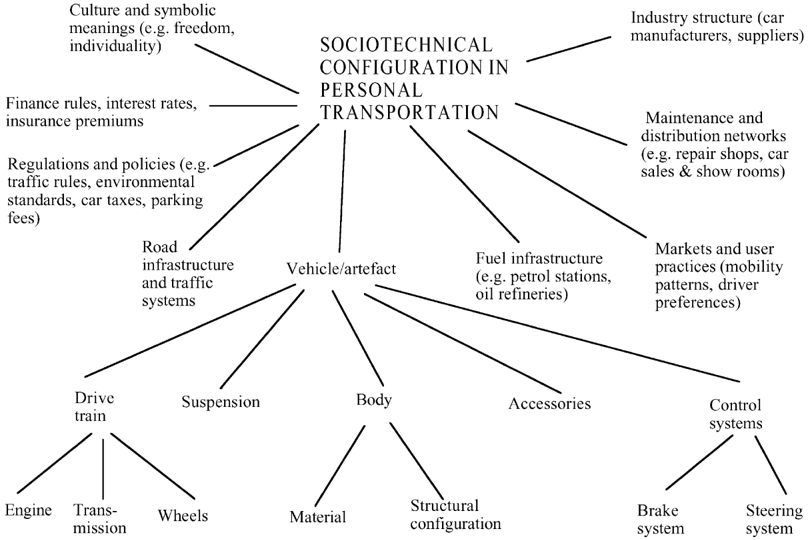
- Technological transitions are major, long-term changes in how societal functions are fulfilled; they involve not only technology but also user practices, regulation, industrial networks, infrastructure, and symbolic meaning or culture.
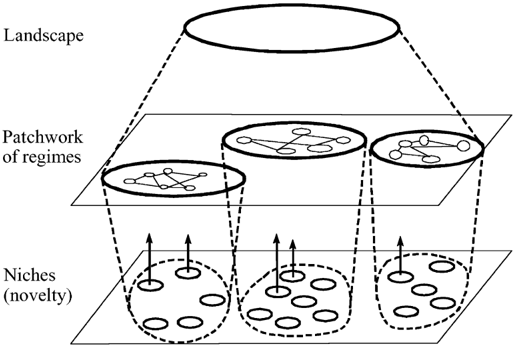
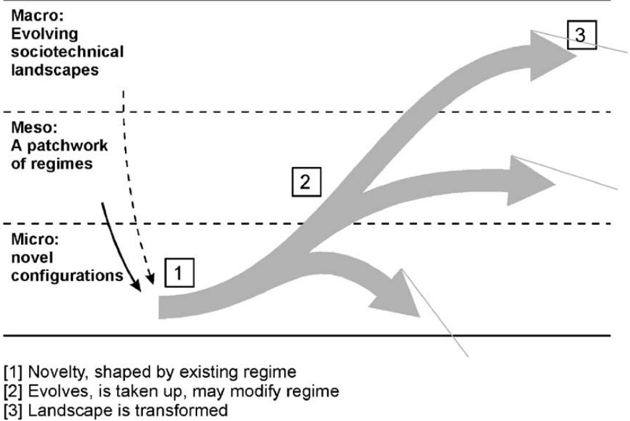
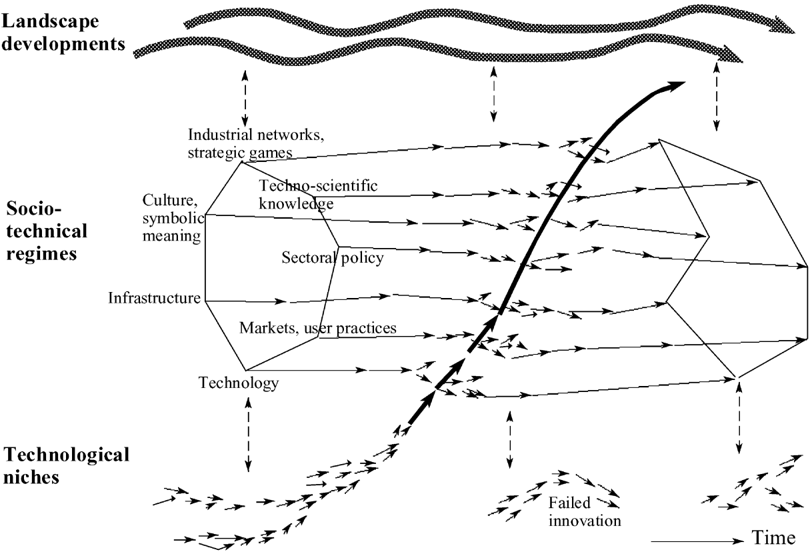
- The multi-level perspective treats niches as loci of radical variety, sociotechnical regimes as selection/retention mechanisms, and the landscape as slower external structure; breakthroughs occur when developments at multiple levels align and create a “window of opportunity.”
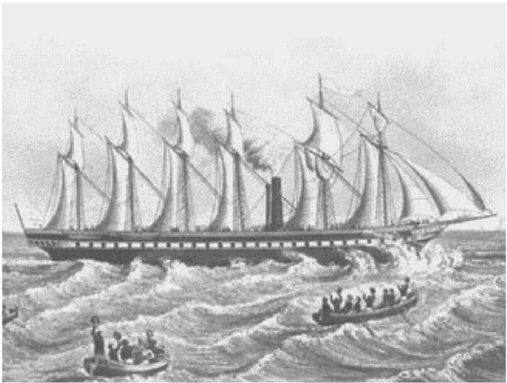
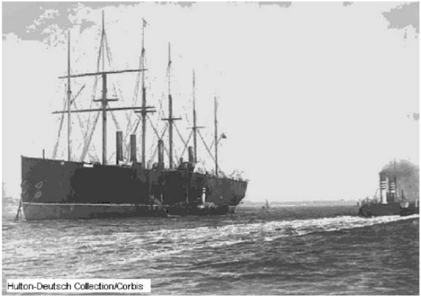
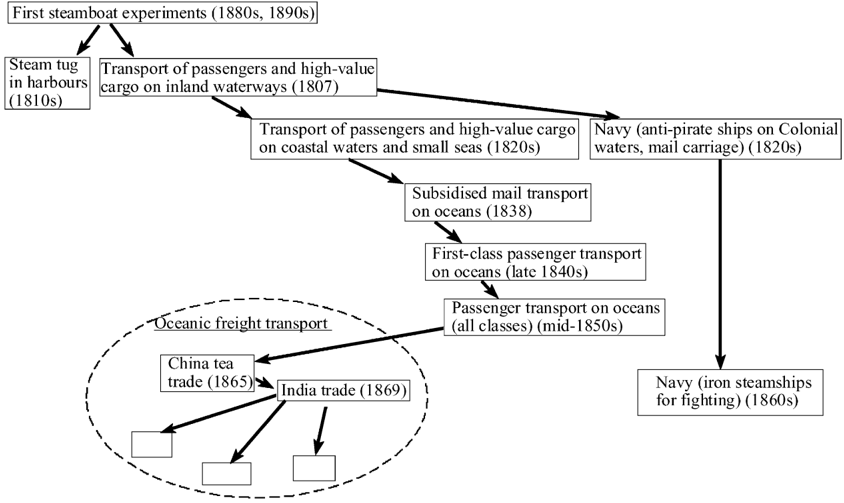
- In the steamship case, breakthrough followed niche-cumulation through inland waterways, coastal routes, mail subsidies, passenger transport, and freight; mechanisms included steam engines as auxiliary add-ons to sailing ships, hybrid sail/steam and iron/wood forms, and riding along with market growth.
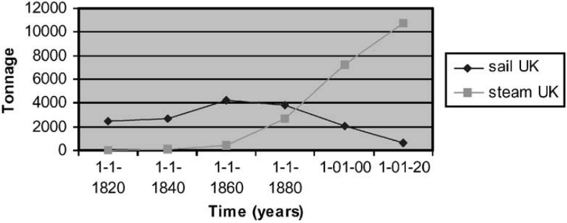
- Reported numbers include: European emigrants travelling by steamer rose from 45% in 1863 to 81% in 1866; compound engines enabled fuel-consumption reductions of 60%; the distance margin where steam was competitive reached 3000–3500 miles by the late 1860s; during the steamship mania (1869–1874), steamers rose from 17% to 31% of British registered tonnage.
Methods
- The paper uses “appreciative theory,” synthesising insights from evolutionary economics and technology studies into a multi-level perspective.
- It presents a qualitative longitudinal case study of the transition from sailing ships to steamships, 1780–1900, focused on Great Britain.
- The case is written in a mosaic style, shifting across markets, ship designs, insurance rules, actor groups, institutions, mail subsidies, persistent/emerging problems, and management practices to illustrate the conceptual framework.
Limitations
- The paper states that the multi-level perspective is fairly complex, requires many data, often qualitative, and that sociotechnical regimes are a broad unit of analysis with difficult-to-draw precise boundaries; boundary work deserves more attention.
- The paper states that the single case study has a drawback because 19th-century craft-based innovation differs from 20th-century science-based innovation, and the perspective would be more robust with more case studies varied over time periods and sectors.
- Evident in the text: the empirical analysis is focused on Great Britain and shipping, and the mechanisms are illustrated through selected historical examples rather than formal comparative or quantitative testing.
Model-written summary. Check it against the paper before relying on it.
Integrity signals
Registry
Cites
Statistics
Figures

Verification
Claims the paper makes
1 Valid · 5 Not valid · 42 Not checked · 63 Own results and interpretations
The cited sources support only part of this claim — read each source’s verdict below.
In the paper
“Aspecific mechanism in the breakthrough of radical innovations is technological add-on and hybridisation . It means that new technologies in their early phase physically link up with established technologies, often to solve particular bottlenecks. Thus, old and new technologies do not immediately compete head on, but form some sort of symbiosis (see also Pistorius and Utterback, 1997).”
What the sources say
- Partly supportedcites Pistorius and Utterback, 1997 matched to “Multi-mode interaction among technologies” (1997) sourceExperimental — accuracy not yet measured
Split into 2 atoms — 0 confirmed, 2 partially supported, 0 disputed, 0 misattributed, 0 unverifiable. Expand the claim to see per-atom verdicts.
plainstates a cause- Asserted: passes — The authors put it forward as true.
- Checkable: passes — It can be checked against evidence.
- Load-bearing: passes — The paper’s conclusions depend on it.
- Based: passes — The paper gives a reason why it holds.
- Partly supported
A result the paper states — it cites no source for it, so there is none to check. The quote shows it is in the paper.
In the paper
“These subsidies created a protective environment for the use and development of oceanic steamships.”
plainstates a cause- Asserted: passes — The authors put it forward as true.
- Checkable: passes — It can be checked against evidence.
- Load-bearing: unclear — It is unclear whether the paper’s conclusions depend on it.
- Based: passes — The paper gives a reason why it holds.
- Rests on an assumption not shown here.
In the paper
“Between 1838 and 1862 a global network of British intercontinental steam companies was created on the basis of imperial mail subsidies (Broeze, 1982).”
What the sources say
- Not matchedcites Broeze, 1982
An author–year citation the paper’s reference list doesn’t settle. We don’t search these by name.
plainstates a cause- Asserted: passes — The authors put it forward as true.
- Checkable: passes — It can be checked against evidence.
- Load-bearing: unclear — It is unclear whether the paper’s conclusions depend on it.
- Based: passes — The paper gives a reason why it holds.
- Rests on an assumption not shown here.
- Not matched
A result the paper states — it cites no source for it, so there is none to check. The quote shows it is in the paper.
In the paper
“Another innovation in the late 18th century shipping regime was the emergence of new social groups: professional shipowners, shipbrokers and insurance companies.”
plain- Asserted: passes — The authors put it forward as true.
- Checkable: passes — It can be checked against evidence.
- Load-bearing: unclear — It is unclear whether the paper’s conclusions depend on it.
- Based: passes — The paper gives a reason why it holds.
- Rests on an assumption not shown here.
A result the paper states — it cites no source for it, so there is none to check. The quote shows it is in the paper.
In the paper
“The emergence of professional shipowners was stimulated by the French Wars (1789-1815) which pushed up freight prices as demand for ships increased.”
plainstates a cause- Asserted: passes — The authors put it forward as true.
- Checkable: passes — It can be checked against evidence.
- Load-bearing: unclear — It is unclear whether the paper’s conclusions depend on it.
- Based: passes — The paper gives a reason why it holds.
- Rests on an assumption not shown here.
24 more claims
Create a free account to see all 111 claims and every source verdict.
- Probably not a substantial claim. 28
- It may state two separate claims as one. 69
- The quote only partly states this claim. 2
Claims other papers make about this one
Each is checked against this paper’s own text: does it say what the citing paper says it does?
In the citing paper
“The model of Geels (2002) describes new technologies as arising and maturing within existing technology systems [18].”
From Lessons Learned From a Living Lab on the Broad Adoption of eHealth in Primary Health Care (2018) · cites this paper as [18]
In the citing paper
“The multi-level perspective (Rip and Kemp, 1998;Geels, 2002;Geels, 2004;Geels and Schot, 2007) is a framework for understanding sustainability transitions that provides an overall view of the multi-dimensional complexity of changes in socio-technical systems.”
From Ontologies, socio-technical transitions (to sustainability), and the multi-level perspective (2010) · cites this paper as Geels, 2002
Citations
Cites
An Evolutionary Theory of Economic Change.
Loasby, B. J., Nelson, R. R., & Winter, S. G. (1983) · The Economic Journal · doi:10.2307/2232409 · Cited by 21,366
(1934) · SSRN Electronic Journal · Cited by 7,609
Technological Discontinuities and Organizational Environments
Tushman, M. L., & Anderson, P. (1986) · Administrative Science Quarterly · doi:10.2307/2392832 · Cited by 6,112
von Hippel, E. (2007) · Das Summa Summarum des Management · doi:10.1007/978-3-8349-9320-5_10 · Cited by 5,098
Technical Change and Economic Theory.
Swann, P., & Dosi, G. (1989) · The Economic Journal · doi:10.2307/2234048 · Cited by 4,041
Shaping Technology, Building Society: Studies in Sociotechnical Change.
Lynch, M., Bijker, W. E., & Law, J. (1993) · Contemporary Sociology · doi:10.2307/2074370 · Cited by 3,540
Technological Discontinuities and Dominant Designs: A Cyclical Model of Technological Change
Anderson, P., & Tushman, M. L. (1990) · Administrative Science Quarterly · doi:10.2307/2393511 · Cited by 3,255
Bijker, W. E., Hughes, T. P., & Pinch, T. (1987) · Cited by 2,957
Kemp, R., Schot, J., & Hoogma, R. (1998) · Technology Analysis & Strategic Management · doi:10.1080/09537329808524310 · Cited by 2,860
Innovation: Mapping the winds of creative destruction
Abernathy, W. J., & Clark, K. B. (1985) · Research Policy · doi:10.1016/0048-7333(85)90021-6 · Cited by 2,791
Research works printed but not linked: 9
- Broeze, F.J.A., 1982. The international diffusion of ocean steam navigation: the myth of the retardation of Netherlands steam navigation to the East Indies. Economisch-en Sociaal-Historisch Jaarboek 45, 77-95.
- Callon, M. (Ed.), 1998. The Laws of the Market. Blackwell, Oxford.
- Garrat, G.R.M., Goodman, D.C., Russel, C.A., 1973. Science and Engineering, Units 14 and 15. Open University Press, Bletchley.
- Jackson, G., 1998. Ports, ships and government in the nineteenth and twentieth centuries. In: Van Royen, P.C., Fischer, L.R., Williams, D.M. (Eds.), Proceedings of the Second International Congress of Maritime History on Frutta di Mare: Evolution and revolution in the maritime world in the 19th and 20th centuries. Amsterdam/Rotterdam, The Netherlands, 5-8 June, 1996. Batavian Lion International, Amsterdam, pp. 161-176.
- Lundvall, B.A., 1988. Innovation as an interactive process: from user-producer interaction to the national system of innovation. In: Dosi, G., Freeman, C., Nelson, R., Silverberg, G., Soete, L. (Eds.), Technical Change and Economic Theory. Pinter, London, pp. 349-369.
- Maddocks, M., 1982. De Grote Oversteek. Time-Life, London. Mayntz, R., Hughes, T.P. (Eds.), 1988. The Development of Large
- Mokyr, J., 1990. The Lever of Riches. Oxford University Press, New York.
- Rip, A., Kemp, R., 1996. Towards a Theory of Socio-Technical Change. Mimeo University of Twente, Report prepared for Batelle Pacific Northwest Laboratories, Washington, DC. (An edited version has been published as book chapter Rip and Kemp 1998).
- Sloan, E.W., 1998. Private enterprise as public utility: the management of capital in two centuries of shipping business. In: Van Royen, P.C., Fischer, L.R., Williams, D.M. (Eds.), Proceedings of the Second International Congress of Maritime History on Frutta di Mare: Evolution and Revolution in the Maritime World in the 19th and 20th Centuries. Amsterdam/Rotterdam, The Netherlands, 5-8 June, 1996. Batavian Lion International, Amsterdam, pp. 89-100.
Cited by
Items 6,701–6,800 of 7,210
Ferri, F., Grifoni, P., Biancone, N., Napoli, E. M., Schubbe, S., Michalak, M., Gerdes, D., Onofre, R., Martins, S., Nunes, E. F., et al. (2026) · Sustainability · doi:10.3390/su18105200
Governance of novel “green” desalination processes in the Kingdom of Bahrain
Shrimpton, E. A., Balta‐Ozkan, N., & Albuflasa, H. (2026) · Frontiers in Sustainable Cities · doi:10.3389/frsc.2026.1803963
How governance and technology shape renewable energy development in hydrocarbon-dependent economies?
Hassanein, E. A., Houssam, N., Esily, R. R., Ibrahiem, D. M., Shehab, M. A., Abouelenein, M. F., Roushdy, N., & Samah, R. (2026) · Energy Strategy Reviews · doi:10.1016/j.esr.2026.102281
Gerçek, A. A. (2026) · Energy Research & Social Science · doi:10.1016/j.erss.2026.104754
Ferrari, C. A., Lodin, J. B., Cuadra, M., et al. (2026) · Planning Practice and Research · doi:10.1080/02697459.2026.2652962
“We draw from MLP to pay attention to niches where change can be produced, and is being produced, regionally.”
Alhempi, R. R., & Akkapin, S. (2025) · International Journal of Economics Management and Accounting (IJEMA) · doi:10.47353/ijema.v3i7.310
Resilient Organizations in Turbulent Economies: A Conceptual Model of Adaptive Strategy
Riinawati, R. (2025) · International Journal of Economics Management and Accounting (IJEMA) · doi:10.47353/ijema.v3i7.281
Social innovation for a sustainable bioeconomy - a bibliometric analysis
Mueller, M., Türkeli, S., Wintjes, R., Kemp, R., & Boldt, C. (2026) · Technological Forecasting and Social Change · doi:10.1016/j.techfore.2026.124741
Kim, S.-A. S., Kim, W., Yang, Y., et al. (2026) · SSRN Electronic Journal · doi:10.2139/ssrn.6827113
Tsoata, F. T., & Foukou, N. S. M. (2026) · VertigO · doi:10.4000/16a3f
Lomako, V., Shylo, O. V., Lutsenko, D., et al. (2026) · Problems of Cryobiology and Cryomedicine · doi:10.15407/cryo36.01.066
Advancing sustainability transitions via corporate venturing: a theoretical perspective
Šmite, D. (2026) · European Journal of Innovation Management · doi:10.1108/ejim-01-2026-0056
Kvellheim, A. K., & Damman, S. (2026) · IOP Conference Series Earth and Environmental Science · doi:10.1088/1755-1315/1615/1/012046
“…the Sustainability transition implies a systemic and often fundamental change of production and consumption patterns, including recon(cid:976)iguration of technologies, scienti(cid:976)ic knowledge, policies, markets, value chains, consumer practices, regulations, norms and cultural meaning (11).”
Damonte, G., Godfrid, J., & López, A. R. (2026) · Human Ecology · doi:10.1007/s10745-026-00697-y
“Key studies in this field emphasize that technologies are embedded in social contexts and that their design, use, and effects are shaped by — and in turn shape — social relations (Bijker et al. 1987 ; Jasanoff 2004a , b; Geels 2002; Winner 1986 ; Edwards 2010 ).”
Embracing the Circular Economy in Developing Nations: A Pathway to Sustainable Growth and Resilience
Goyal, S., Sergi, B. S., Kaushish, S., & Chaudhary, P. (2026) · Cambridge University Press eBooks · doi:10.1017/9781009705721 · Cited by 1
Ihle, K., & Bachinger, M. (2026) · Entrepreneurial Management und Standortentwicklung · doi:10.1007/978-3-658-50510-3_16
Kopáčková, H., Litera, P., & Jech, J. (2026) · Cities · doi:10.1016/j.cities.2026.107253 · Cited by 1
The Transition Towards Design for Disassembly in the Construction Sector
Kvellheim, A. K., Evertsen, P. H., & Thyholt, M. (2026) · IOP Conference Series Earth and Environmental Science · doi:10.1088/1755-1315/1615/1/012047
“One of the most prevalent theoretical frameworks in sustainability transition studies is the multi-level perspective (MLP), which emphasizes a non-linear transition process at the three analytical levels: niche, regime and landscape (7).”
InfluentialThe transformative potential of Living Labs for biodiversity recovery
Westerink, J., de Koning, S., Witvliet, B., et al. (2026) · Agriculture and Human Values · doi:10.1007/s10460-026-10906-5
“…Living Labs focused on technological innovations, which is in line with the focus of sustainability transitions research (which used to focus on socio-technological systems before expanding its scope to socio-(technical)-ecological systems) (Geels 2002; Nelson et al. 2007; Patterson et al. 2017).”
Liu, J., Zhu, S., & He, C. N. (2026) · Energy Economics · doi:10.1016/j.eneco.2026.109415 · Cited by 2
Glocalising circular waste governance in tourism: legitimacy pathways from coastal destinations
Le, N., & Duong, H. (2026) · Journal of Sustainable Tourism · doi:10.1080/09669582.2026.2675361
Green hydrogen ambitions in Algeria and Morocco: Contrasting conditions, relational paths
Boukhatem, I., Blohm, M., & Furnaro, A. (2026) · Renewable and Sustainable Energy Transition · doi:10.1016/j.rset.2026.100150
Leveraging AI and Innovationology to Enhance Human Well-Being Through Ecosystem Stewardship
Moleka, P. (2026) · Palgrave Studies in Sustainable Futures. · doi:10.1007/978-3-031-24952-5_37-1 · Cited by 1
Navigating Energy Transition Strategies for Companies through a Modular Configurator
Horn, J. W., Yang, S., Geerdinck, T., & Thiede, S. (2026) · Procedia CIRP · doi:10.1016/j.procir.2026.05.067
COSTA, T. A. D. M., PONTES, S. V. C. D., Bolis, I., et al. (2026) · Procedia CIRP · doi:10.1016/j.procir.2026.05.143
Watanabe, R., Skitmore, M., Fong, P. S. W., Liu, T., Guan, H., Gilbert, B. P., & Leggate, W. (2026) · Business Strategy and the Environment · doi:10.1002/bse.71053 · Cited by 1
Katrakilidis, C., & Dimitriadis, D. (2026) · Fuels · doi:10.3390/fuels7020034
“In this context, recent contributions emphasize that energy transitions are governed by complex interactions between technological change, policy design, and institutional capacity, reinforcing the need to analyze convergence within a broader systems perspective [33].”
Birahim, S. A. (2026) · Information Polity · doi:10.1177/15701255261456435
Lee, Y.-J. (2026) · Journal of Cleaner Production · doi:10.1016/j.jclepro.2026.148611
Transformation Barriers to Anaerobic Sewage Sludge Management in ChinaPreprint
Zimmermann, M., Hilgenfeldt, V., Xiao, J., Liu, Z., Keller, S., Pillen, J., & Steinmetz, H. (2026) · SSRN Electronic Journal · doi:10.2139/ssrn.6865401
Globalization, Renewable Energy, and Sustainable Economic Development in Nigeria
Udofia, L., Effiong, U. O., & Okon, C. (2026) · African Journal of Commercial Studies · doi:10.59413/ajocs/v7.i3.51
“The Multi-Level Perspective, developed by Frank Geels (2002), views energy transitions as socio-technical processes involving interactions between niche innovations, regimes, and landscapes.”
InfluentialOdugbesan, J. A. (2026) · SSRN Electronic Journal · doi:10.2139/ssrn.6867210
Austin, A., Weidner, K., & Betz, V. (2026) · Sustainability · doi:10.3390/su18115542
Ronen, D., Fatorachian, H., Boyacı, B., et al. (2026) · Sustainable Technology and Entrepreneurship · doi:10.1016/j.stae.2026.100146
L'imaginaire dans les sciences de gestion
Tarnaud, L. (2026) · doi:10.3917/ems.couzi.2026.01.0042
Pareek, A., Nagar, K., & Sharma, B. (2026) · AIP conference proceedings · doi:10.1063/5.0327287
Destabilization and Discontinuation of and by Innovation
Stegmaier, P., & Kuhlmann, S. (2026) · Springer eBooks · doi:10.1007/978-3-031-25143-6_62-2
Yeboah, K. E., Jamatutu, S. A., Gawusu, S., Manpaya, M. W., & Feng, B. (2026) · Journal of Economic Analysis · doi:10.58567/jea05040001
Advancing Sustainability Through Circular Economy, Green Logistics, and Digital Transformation
ÖZMUTLU, S. Y., & Kırmızıoğlu, S. (2026) · IGI Global eBooks · doi:10.4018/979-8-3373-8546-4.ch016
Pandian, P., Ravikumar, N., MOHAN, Y. C., Sathyanarayana, K., & Bharathi, S. A. (2026) · IGI Global eBooks · doi:10.4018/979-8-3373-7493-2.ch011
Backhaus, J., & Forbat, J. (2026) · Sustainability Science Practice and Policy · doi:10.1080/15487733.2026.2678874
Asante, A., Koranteng, C., Simons, B., Gyimah, K. A., & Offei-Nketiah, J. K. (2026) · Facilities · doi:10.1108/f-08-2025-0149 · Cited by 1
Scenario-Gated Sustainability Readiness for China’s Low-Altitude Economy and Urban Air Mobility
Yang, Z., Huang, G., 谭李玉, et al. (2026) · Sustainability · doi:10.3390/su18115756
Comparing Smart Transport Technologies for Urban Sustainability: A Systematic Review
Habtegiorgis, K. A., Kifile, D., Fayissa, B., Ahmed, S., Irecho, D. N., & Al-Ahmadi, H. M. (2026) · Transportation research procedia · doi:10.1016/j.trpro.2026.04.016
Coordinating innovation grand challenges: A multilayered systems frameworkPreprint
Ho, M., Khargonekar, P. P., & O’Sullivan, E. (2026) · SSRN Electronic Journal · doi:10.2139/ssrn.6883124 · Cited by 1
Exploring the Relationship Between Blockchain and Sustainability
Estévez-Mendoza, C., Soria, J., & Lara, F. J. (2026) · Journal of Economic Surveys · doi:10.1111/joes.70127
Action perspective on technological change: A triply-nested framework and case study
Hong, Z., & Xiao, J. (2026) · Research Policy · doi:10.1016/j.respol.2026.105545
Green competition at sea: Dynamic modeling of alternative fuel adoption and fleet competitiveness
Ruslan, S. M. M., Zahari, T. N., Osman, M. T., Mokhtar, K., Mansor, W. N. W., Saidi, N., Turan, O., & McLellan, B. C. (2026) · Ocean & Coastal Management · doi:10.1016/j.ocecoaman.2026.108260
Styre, E., Smeds, E., & Höjer, M. (2026) · Environmental Innovation and Societal Transitions · doi:10.1016/j.eist.2026.101160
Peter, D., Peter, M., Peter, P., & Yacob, P. (2026) · Research in Transportation Business & Management · doi:10.1016/j.rtbm.2026.101741
The Energy Transition, a Place-Based Approach, and Spatial Justice
Kanteler, D. (2026) · Studia Europejskie / Centrum Europejskie Uniwersytetu Warszawskiego · doi:10.33067/se.1.2026.12 · Cited by 1
“Energy transitions can be analysed as socio-technical transformations that unfold through interactions between niche innovations, incumbent regimes, and wider, so-called “landscape” pressures such as EU climate policy, geopolitical shocks, and macroeconomic restructuring (Geels, 2002; Geels, 2011 .”
Breen, M., Efthymiou, M., & Carton, J. G. (2026) · Sustainability · doi:10.3390/su18125801 · Cited by 2
The French plastics industry’s path-dependent transition towards the circular economy
Brette, O., Lazaric, N., Barbaut, L., & Massardier, V. (2026) · Industry and Innovation · doi:10.1080/13662716.2026.2683382
Djamen, P., OUATTARA, M., Sankara, R., Traore, M., Dramé, K. N., & Camara, A. D. (2026) · SSRN Electronic Journal · doi:10.2139/ssrn.6900299
Kim, M. (2026) · SSRN Electronic Journal · doi:10.2139/ssrn.6899818
Yuniati, D., Nurrochmat, D. R., Pribadi, D. O., et al. (2026) · SSRN Electronic Journal · doi:10.2139/ssrn.6899072
Mumtaz, S., & Ali, S. (2026) · Springer eBooks · doi:10.1007/978-981-95-8481-9_11
Askri, A., Abbar, I., & Sauvée, L. (2026) · SSRN Electronic Journal · doi:10.2139/ssrn.6907618
Sustainable Energy and the Role of CPEC: Green Promise or Carbon Lock In?
Qazi, B. H., Amin, M., & Naseer, R. (2026) · Springer eBooks · doi:10.1007/978-981-95-8481-9_9
Public perceptions and adoption pathways of Earthship homes in Australia
Lee, C. L., Vechpanich, P., Lin, J., & Wilkinson, S. J. (2026) · Smart and Sustainable Built Environment · doi:10.1108/sasbe-11-2025-0742
The roles of actors in nature-positive transformations
Yarnold, J., Carwardine, J., Oliver, S. M., Malakar, Y., Langston, J. D., Lyons, I., O’Grady, A. P., Dunlop, M., Dunstan, P. K., & Nicol, S. (2026) · AMBIO · doi:10.1007/s13280-026-02420-z
Tuong, T. V., Alary, V., & Duteurtre, G. (2026) · Review of Agricultural Food and Environmental Studies · doi:10.1007/s41130-026-00257-4 · Cited by 1
Peñaranda, J. O., Calles, A. B., Mendoza, M. A. T., Jaca, C. A., Calles, A. B., & Dagaylo-an, M. B. (2026) · Journal of Sustainability · doi:10.55845/jos-2026-21149
Alsaoudi, T., & Acquaye, A. A. (2026) · Business Strategy and the Environment · doi:10.1002/bse.71133
Newsholme, A., Deutz, P., Baumgartner, R. J., & Affolderbach, J. (2026) · European Urban and Regional Studies · doi:10.1177/09697764261459295
Co-creating sustainable solutions for enhancing WEFE nexus governance through stakeholder engagement
González, V. M., Martínez-Domingo, A., Martín, E. G., Martín, A. R., & Pulido-Velázquez, M. (2026) · Environmental Development · doi:10.1016/j.envdev.2026.101515 · Cited by 1
Das, D. K., & Hassan, M. M. (2026) · Sustainability · doi:10.3390/su18126033 · Cited by 1
Das technische Fundament der Gesellschaft und seine Erosion. Vernachlässigte Felder der Soziologie
Knie, A. (2026) · Soziologische Revue · doi:10.1515/srsr-2026-3007
Torre, A., Niang, A. I., & Bourdin, S. (2026) · Networks and Spatial Economics · doi:10.1007/s11067-026-09760-z
Gutierrez-Bucheli, L., Solin, I., Soltani, S., et al. (2026) · Construction Innovation · doi:10.1108/ci-12-2025-0541
Louis-Maerten, E., Hansell, L., Blattner, C. E., Elger, B. S., & Geneviève, L. D. (2026) · Laboratory Animals · doi:10.1177/00236772261447418
Gao, J. (2026) · SSRN Electronic Journal · doi:10.2139/ssrn.6955443
Kadioglu, I., & Özkan, G. (2026) · Osmaniye Korkut Ata Üniversitesi Fen Bilimleri Enstitüsü Dergisi · doi:10.47495/okufbed.1761663
Ozike, K. C., Ebunu, I. E., Ifemeje, S. M., et al. (2026) · SIAR-Global Journal of Economics Finance & Accounting · doi:10.66694/siar.gjefa20262004
Ige, O. O., Mora‐Camino, F., & Olanrewaju, O. A. (2026) · SSRN Electronic Journal · doi:10.2139/ssrn.6955761
Roos, G. (2026) · Advances in computational intelligence and robotics book series · doi:10.4018/979-8-3373-7036-1.ch004
Obstacles and driving forces of the French pig organic production and value chain
Montagné, L., Faure, J., Bonnefont, C. M. D., et al. (2026) · Agroecology and Sustainable Food Systems · doi:10.1080/21683565.2026.2690665
Chakravarty, D., Das, N., & Dey, O. (2026) · Journal of Urban Affairs · doi:10.1080/07352166.2026.2682238 · Cited by 1
Die Transformation der Mobilität als gesellschaftliche Aufgabe – Theorien, Grundlagen, Zielbilder
Levin-Keitel, M., & Ruhrort, L. (2024) · Carl Hanser Verlag GmbH & Co. KG eBooks · doi:10.1007/978-3-446-48153-4_2
The effect of renewable energy consumption on price stability in developing countries
Adnan, M., & Kouadio, M. (2026) · Discover Sustainability · doi:10.1007/s43621-026-03698-5
“This theory examines the structural shift from fossil fuels, such as coal, oil, and natural gas, to cleaner energy sources, emphasising both environmental sustainability and economic outcomes [21, 52].”
Abualkishik, A. Z., Zaki, N., Elhoseny, M., Atassi, R., & Halim, Z. (2026) · Discover Artificial Intelligence · doi:10.1007/s44163-026-01549-w · Cited by 1
“This study draws on three complementary perspectives to examine variation in national AI readiness: the Multi-Level Perspective (MLP) [28], National Innovation Systems (NIS) theory [29], and path dependence theory [30].”
Uneven Greening: Dynamics of Urban–Rural Income Gap During the Green Transition
Xiao-ping, H., Chen, J. Y., & Yu, Y. (2026) · Journal of Regional Science · doi:10.1111/jors.70074
From approval to operation: Governance misalignment in renewable energy implementation
Eitan, A. (2026) · Energy Strategy Reviews · doi:10.1016/j.esr.2026.102310
Arslan, A., & Akturan, A. (2026) · International Journal of Energy Sector Management · doi:10.1108/ijesm-01-2026-0031
Sustainability Beyond Metrics: Pathways to Decarbonisation Using Systems Thinking
Sharif, A. M. (2025) · SCI Sustainability · doi:10.1002/sst2.70015
Gedikli, F. T., Ruhi-Sipahioğlu, I., & Pedergnana, M. J. (2026) · Architectural Engineering and Design Management · doi:10.1080/17452007.2026.2689194
Chen, C., Liu, X., Zhou, X., Cheng, F., Liu, P., Zhou, Y., Zhao, H., & Su, Z. (2026) · Scientific Reports · doi:10.1038/s41598-026-58779-2
Palsule, N., Brown, M. A., & An, B. (2026) · Progress in Nuclear Energy · doi:10.2139/ssrn.6986849
Artificial General Intelligence and Public Diplomacy: A Scenario Analysis of Possible FuturesPreprint
Athar, M. M. (2026) · SSRN Electronic Journal · doi:10.2139/ssrn.6985150
Mahajan, P. T. (2026) · AI and Ethics · doi:10.1007/s43681-026-01202-3 · Cited by 1
“Such theory-building efforts are particularly valuable when socio-technical transformations become conceptually visible before sufficient longitudinal evidence exists to support robust empirical generalisation [ 33, 45, 46].”
de Villiers, R., & Dennett, P. (2026) · IntechOpen eBooks · doi:10.5772/intechopen.1015730
Behavioral energy reduction and system stability: psychological drivers of demand-side security
Molnár, E. L., Molnár, F., & Pálfi, J. (2026) · IEEE International Conference and Workshop Óbuda on Electrical and Power Engineering (CANDO-EPE) · doi:10.1109/cando-epe71091.2026.11569412
“Unlike conventional thermal plants, renewable production is weather-dependent and only partially controllable [3].”
InfluentialMolnár, E. L., Molnár, F., & Pálfi, J. (2026) · IEEE International Conference and Workshop Óbuda on Electrical and Power Engineering (CANDO-EPE) · doi:10.1109/cando-epe71091.2026.11569453
“Although these transformations serve the long-term goals of sustainability and climate compatibility, in the short and medium term they may increase systemic complexity, resulting in operational processes that are often less transparent and more difficult for the general public to comprehend [3].”
Sadekla, S., Menapace, L., & Ola, O. (2026) · SSRN Electronic Journal · doi:10.2139/ssrn.6993239
Beltrán, F. F., & Mayordomo-Vendrell, E. (2026) · Sustainability · doi:10.3390/su18136421
French, M. A., Donaldson, L., & Bragge, P. (2026) · SSRN Electronic Journal · doi:10.2139/ssrn.6993526
Hydrogen deployment as a system synchronization challenge in the net-zero transitionPreprint
Shotonwa, I. O., Idowu, R. A., Oyesomi, A. O., Adeyanju, A. S., Oladele, E. B., Ayodele, A. A., Yerima, G., Eneh, A. F., Adejare, A. A., & Hamzat, A. Z. (2026) · SSRN Electronic Journal · doi:10.2139/ssrn.6992582
Yu, P., Xiong, W., & Chunga, J. P. (2026) · Systems · doi:10.3390/systems14060719
Metadata
- Authors
- Geels, F. W.
- Affiliations
- University of Twente (NL)
- Corresponding author
- Geels, Frank W.
- ORCID
- Geels, Frank W.
- Venue
- Research Policy
- Publisher
- Elsevier BV
- Published
- 2002-12
- Volume
- 31
- Issue
- 8-9
- Pages
- 1257-1274
- ISSN
- 0048-7333 (ISSN-L)
- OpenAlex
- W2099330597
- Cited by
- 7,275
- References
- 94
- Citations by year
- 2026: 983 · 2025: 624 · 2024: 502 · 2023: 504 · 2022: 503 · 2021: 598 · 2020: 526 · 2019: 417 · 2018: 493 · 2017: 357 · 2016: 301 · 2015: 293 · 2014: 241 · 2013: 201 · 2012: 204
- FWCI
- 16.68
- Type
- journal article
- Language
- en
- Open access
- bronze
- doi.org
- Licence
- www.elsevier.com/tdm/userlicense/1.0/ (tdm)
- Locations
- Research Policy (publishedVersion)
- Research Explorer (The University of Manchester) (submittedVersion, other-oa)
- University of Twente Research Information (submittedVersion)
- TU/e Research Portal (submittedVersion)
- RePEc: Research Papers in Economics (submittedVersion)
- Figshare (submittedVersion, cc-by)
- University of Twente Research Information (submittedVersion, other-oa)
- Funders
- Nederlandse Organisatie voor Wetenschappelijk Onderzoek
- Topics
- Physical Sciences › Environmental Science › Global and Planetary Change › Sustainability and Climate Change Governance
- Social Sciences › Decision Sciences › Management Science and Operations Research › Innovation Diffusion and Forecasting
- Social Sciences › Economics, Econometrics and Finance › Economics and Econometrics › Economic Theory and Institutions
- Keywords
- technological transition, multi-level perspective, evolutionary economics, technology studies, hybridization, market growth, industrial networks, user practices, regulation, infrastructure
About these checks
Registry, retraction, Cites and statistics results are computed, not judged, with one exception: a printed reference that no index lists is read once by a model before it counts as a citation error. Claims are extracted by a model and kept only when their quote appears verbatim in the text; each cited source is then checked, with a model’s help, for whether it says what the claim relies on. Those verdicts can be wrong — read the claim’s quote and the cited source before relying on one.
The claim verdicts this report counts are experimental: their accuracy is not yet measured.
A language model drew the claims from the paper on 2026-10-10, under version 3 of the claim definition (model deepseek-v4.1-flash, prompt extract-v3).
A second model labelled each claim on 2026-10-10 (model jev-1.13-20260917, definition revision gold-guideline-v0.2).
Cited sources are checked with a language model’s help (gpt-6-sol).
Statistics and arithmetic are recomputed, not judged.
Confidence bands are shown only for fields calibrated on our annotated test set. None is calibrated yet, so no band is shown.
What counts as a claim ›How we measure confidence ›How we check this ›
Are you an author, or do you see a problem with this page? Request a review
Data sources
Bibliographic data: Semantic Scholar, OpenAlex, Crossref.
Contains information from the Semantic Scholar Academic Graph Datasets, made available under the ODC Attribution License (ODC-BY 1.0).
Semantic Scholar’s data is described in: Kinney, R., et al. (2023). The Semantic Scholar Open Data Platform. arXiv:2301.10140.
