

Hydroxycarbamide versus chronic transfusion for maintenance of transcranial doppler flow velocities in children with sickle cell anaemia-TCD With Transfusions Changing to Hydroxyurea (TWiTCH): a multicentre, open-label, phase 3, non-inferiority trial
Open accessThe DOI matches its Crossref record; 32 of the 32 references it cites were found in a registry or an index.
Abstract
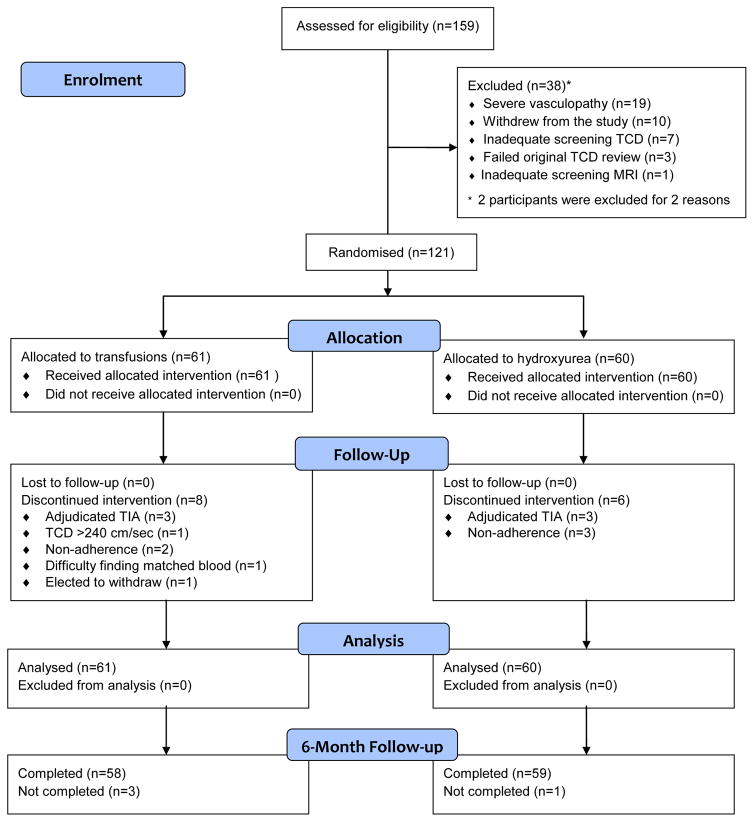
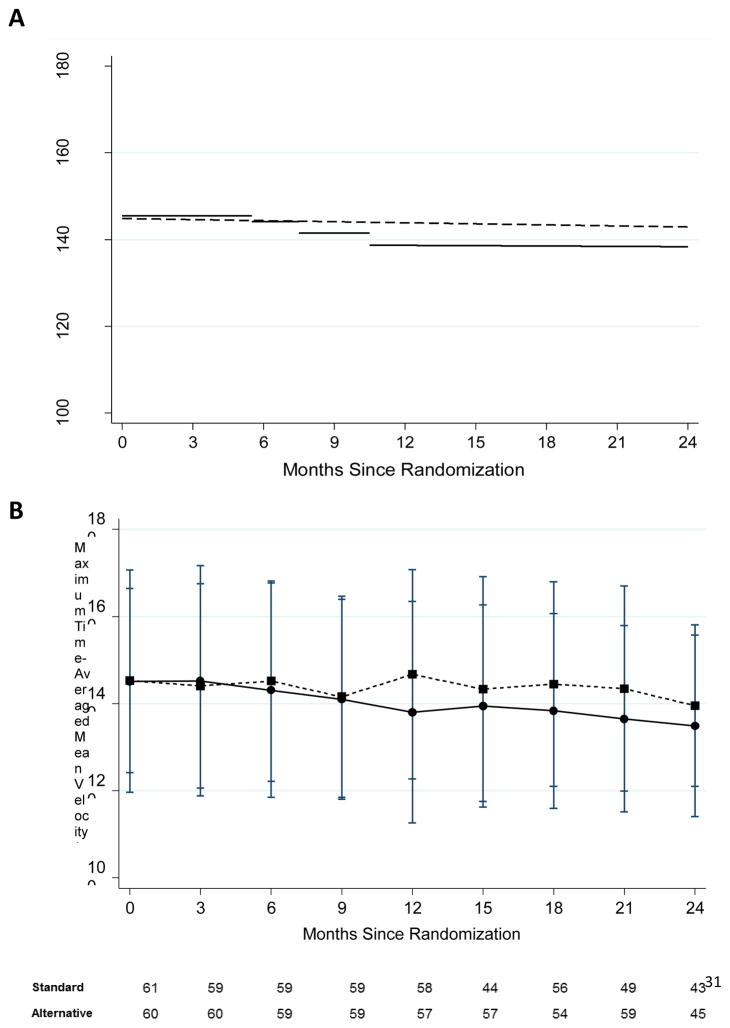
Background For children with sickle cell anaemia and high transcranial doppler (TCD) flow velocities, regular blood transfusions can effectively prevent primary stroke, but must be continued indefinitely. The efficacy of hydroxycarbamide (hydroxyurea) in this setting is unknown; we performed the TWiTCH trial to compare hydroxyurea with standard transfusions.Methods TWiTCH was a multicentre, phase 3, randomised, open-label, non-inferiority trial done at 26 paediatric hospitals and health centres in the USA and Canada. We enrolled children with sickle cell anaemia who were aged 4-16 years and had abnormal TCD flow velocities (≥ 200 cm/s) but no severe vasculopathy. After screening, eligible participants were randomly assigned 1:1 to continue standard transfusions (standard group) or hydroxycarbamide (alternative group). Randomisation was done at a central site, stratified by site with a block size of four, and an adaptive randomisation scheme was used to balance the covariates of baseline age and TCD velocity. The study was open-label, but TCD examinations were read centrally by observers masked to treatment assignment and previous TCD results. Participants assigned to standard treatment continued to receive monthly transfusions to maintain 30% sickle haemoglobin or lower, while those assigned to the alternative treatment started oral hydroxycarbamide at 20 mg/kg per day, which was escalated to each participant's maximum tolerated dose. The treatment period lasted 24 months from randomisation. The primary study endpoint was the 24 month TCD velocity calculated from a general linear mixed model, with the non-inferiority margin set at 15 cm/s. The primary analysis was done in the intention-to-treat population and safety was assessed in all patients who received at least one dose of assigned treatment. This study is registered with ClinicalTrials.gov, number NCT01425307.Findings Between Sept 20, 2011, and April 17, 2013, 159 patients consented and enrolled in TWiTCH. 121 participants passed screening and were then randomly assigned to treatment (61 to transfusions and 60 to hydroxycarbamide). At the first scheduled interim analysis, non-inferiority was shown and the sponsor terminated the study. Final model-based TCD velocities were 143 cm/s (95% CI 140-146) in children who received standard transfusions and 138 cm/s (135-142) in those who received hydroxycarbamide, with a difference of 4·54 (0·10-8·98). Non-inferiority (p=8·82 × 10(-16)) and post-hoc superiority (p=0·023) were met. Of 29 new neurological events adjudicated centrally by masked reviewers, no strokes were identified, but three transient ischaemic attacks occurred in each group. Magnetic resonance brain imaging and angiography (MRI and MRA) at exit showed no new cerebral infarcts in either treatment group, but worsened vasculopathy in one participant who received standard transfusions. 23 severe adverse events in nine (15%) patients were reported for hydroxycarbamide and ten serious adverse events in six (10%) patients were reported for standard transfusions. The most common serious adverse event in both groups was vaso-occlusive pain (11 events in five [8%] patients with hydroxycarbamide and three events in one [2%] patient for transfusions).Interpretation For high-risk children with sickle cell anaemia and abnormal TCD velocities who have received at least 1 year of transfusions, and have no MRA-defined severe vasculopathy, hydroxycarbamide treatment can substitute for chronic transfusions to maintain TCD velocities and help to prevent primary stroke.Funding National Heart, Lung, and Blood Institute, National Institutes of Health.
Overview
The claims and statistics of this paper haven’t been checked yet.
Free: it reads the open-access text and checks the first 5 claims that cite a source we can check. Create a free account to check every claim.
Integrity signals
Registry
Cites
Statistics
Figures
Verification
Claims the paper makes
The claims and statistics of this paper haven’t been checked yet.
Free: it reads the open-access text and checks the first 5 claims that cite a source we can check. Create a free account to check every claim.
Claims other papers make about this one
Each is checked against this paper’s own text: does it say what the citing paper says it does?
The source backs part of the claim, not all of it — or backs it for a different population, condition or comparison.
In the citing paper
“therapy with hydroxyurea, which induces HbF and reduces white blood cell count, reticulocyte count, and hemolysis, is effective in the primary prevention of stroke (152).”
From Pathophysiology of Sickle Cell Disease (2019) · cites this paper as [152]
Experimental — accuracy not yet measuredThe source backs part of the claim, not all of it — or backs it for a different population, condition or comparison.
In the citing paper
“Hydroxyurea was noninferior to transfusion for reducing transcranial Doppler flow velocities in selected children at high risk for stroke.”
From Fetal hemoglobin in sickle cell anemia (2020) · cites this paper as [90]
Experimental — accuracy not yet measured
Self-check
Percentages, sums and reported differences re-computed from the paper’s own numbers.
The self-check needs the paper’s full text.
Citations
Cites
Effect of hydroxyurea on the frequency of painful crises in sickle cell anemia
Charache, S., Terrin, M. L., Moore, R. D., Dover, G. J., Barton, F. B., Eckert, S. V., McMahon, R. P., & Bonds, D. R. (1995) · New England Journal of Medicine · doi:10.1056/nejm199505183322001 · Cited by 2,340 · cited 1×
“[8, 9] Through fetal haemoglobin (HbF) induction and other mechanisms of action, hydroxyurea inhibits intracellular sickle haemoglobin (HbS) polymerisation and lowers the risk of vaso-occlusive complications.”
Adams, R. J., McKie, V. C., Hsu, L., Files, B., Vichinsky, E., Pegelow, C., Abboud, M., Gallagher, D., Kutlar, A., Nichols, F. T., et al. (1998) · New England Journal of Medicine · doi:10.1056/nejm199807023390102 · Cited by 1,866
Self-citationCerebrovascular accidents in sickle cell disease: rates and risk factors.
(1998) · PubMed · doi:10.1182/blood.v91.1.288 · Cited by 1,694 · cited 2×
“[1] After first stroke, there is a high rate of recurrence or progression even with chronic transfusion therapy; a recent publication with median transfusion duration of 5.”
Self-citationManagement of Sickle Cell Disease: Summary of the 2014 Evidence-Based Report by Expert Panel Members
Yawn, B. P., Buchanan, G. R., Afenyi-Annan, A. N., Ballas, S. K., Hassell, K. L., James, A. H., Jordan, L., Lanzkron, S. M., Lottenberg, R., Savage, W. J., et al. (2014) · JAMA · doi:10.1001/jama.2014.10517 · Cited by 1,599
Self-citationDams, R. O. J. A., Ie, V. I. C. M. C. K., Su, L. E. H., Iles, B. E. F., Ichinsky, E. L. V., Egelow, C. H. P., Bboud, M. I. A., Allagher, D. I. G., Utlar, K., Ichols, F. E. T. N., et al. (2015) · Cited by 1,338
Wang, W. C., Ware, R. E., Miller, S. T., Iyer, R. V., Casella, J. F., Minniti, C. P., Rana, S., Thornburg, C. D., Rogers, Z. R., Kalpatthi, R. V., et al. (2011) · The Lancet · doi:10.1016/s0140-6736(11)60355-3 · Cited by 803 · cited 1×
“[8, 9] Through fetal haemoglobin (HbF) induction and other mechanisms of action, hydroxyurea inhibits intracellular sickle haemoglobin (HbS) polymerisation and lowers the risk of vaso-occlusive complications.”
Self-citationThe Use of Transcranial Ultrasonography to Predict Stroke in Sickle Cell Disease
Adams, R., McKie, V., Nichols, F., Carl, E., Zhang, D.-L., McKie, K., Figueroa, R., Litaker, M., Thompson, W., & Hess, D. (1992) · New England Journal of Medicine · doi:10.1056/nejm199202273260905 · Cited by 658 · cited 2×
“[3, 5] Patients from 26 paediatric programmes (Appendix) between 4–16 years of age with SCA and abnormal TCD velocities were eligible after ≥12 months of chronic transfusions.”
Self-citationDiscontinuing Prophylactic Transfusions Used to Prevent Stroke in Sickle Cell Disease
(2005) · New England Journal of Medicine · doi:10.1056/nejmoa050460 · Cited by 635
Controlled Trial of Transfusions for Silent Cerebral Infarcts in Sickle Cell Anemia
DeBaun, M. R., Gordon, M., McKinstry, R. C., Noetzel, M. J., White, D. A., Sarnaik, S. A., Meier, E. R., Howard, T. H., Majumdar, S., Inusa, B. P. D., et al. (2014) · New England Journal of Medicine · doi:10.1056/nejmoa1401731 · Cited by 545
Self-citationHow I use hydroxyurea to treat young patients with sickle cell anemia
Ware, R. E. (2010) · Blood · doi:10.1182/blood-2009-04-146852 · Cited by 396 · cited 2×
“[10] Hydroxyurea has the potential for lowering TCD velocities and thus reducing stroke risk, [11, 12] but definitive data are lacking regarding its efficacy in cerebrovascular disease.”
Self-citation
Cited by
Items 101–200 of 554
Brazauskas, R., Scigliuolo, G. M., Wang, H.-L., Cappelli, B., Ruggeri, A., Fitzhugh, C. D., Hankins, J. S., Kanter, J., Meerpohl, J. J., Panepinto, J. A., et al. (2020) · Blood · doi:10.1182/blood.2020005687 · Cited by 50
McGann, P. T., Williams, T., Olupot‐Olupot, P., TOMLINSON, G. A., Lane, A., da Fonseca, J. L. R., Kitenge, R., Mochamah, G., Wabwire, H., Stuber, S. E., et al. (2018) · American Journal of Hematology · doi:10.1002/ajh.25034 · Cited by 50
Self-citationBlood transfusion for preventing primary and secondary stroke in people with sickle cell disease
Estcourt, L. J., Kohli, R., Hopewell, S., Trivella, M., & Wang, W. C. (2020) · Cochrane Database of Systematic Reviews · doi:10.1002/14651858.cd003146.pub4 · Cited by 51
How I manage red cell transfusions in patients with sickle cell disease
Rees, D. C., Robinson, S. E., & Howard, J. (2018) · British Journal of Haematology · doi:10.1111/bjh.15115 · Cited by 47
Management of Sickle Cell Disease Complications Beyond Acute Chest Syndrome
Ogu, U. O., Badamosi, N. U., Camacho, P. E., Freire, A. X., & Adams-Graves, P. E. (2021) · Journal of Blood Medicine · doi:10.2147/jbm.s291394 · Cited by 47
Sickle cell disease in children: an update of the evidence in low- and middle-income settings
Odame, I. (2022) · Archives of Disease in Childhood · doi:10.1136/archdischild-2021-323633 · Cited by 46
Self-citationLagunju, I. A., Brown, B. J., Oyinlade, A. O., Asinobi, A. O., Ibeh, J. N., Esione, A., & Sodeinde, O. (2018) · Pediatric Blood & Cancer · doi:10.1002/pbc.27252 · Cited by 46
Strategies to increase access to basic sickle cell disease care in low- and middle-income countries
Dua, M., Bello‐Manga, H., Carroll, Y. M., Galadanci, A. A., Ibrahim, U. A., King, A. A., Olanrewaju, A., & Estepp, J. H. (2022) · Expert Review of Hematology · doi:10.1080/17474086.2022.2063116 · Cited by 45
Hoppe, C. C., & Neumayr, L. (2019) · Hematology/Oncology Clinics of North America · doi:10.1016/j.hoc.2019.01.014 · Cited by 44
Ischemic stroke and cerebral venous sinus thrombosis in pregnancy
Roeder, H. J., Lopez, J. R., & Miller, E. C. (2020) · Handbook of clinical neurology · doi:10.1016/b978-0-444-64240-0.00001-5 · Cited by 44
Hydroxycarbamide treatment and brain MRI/MRA findings in children with sickle cell anaemia
Nottage, K. A., Ware, R. E., Aygün, B., Smeltzer, M. P., Kang, G., Moen, J., Wang, W. C., Hankins, J. S., & Helton, K. J. (2016) · British Journal of Haematology · doi:10.1111/bjh.14235 · Cited by 44
Self-citationBlood transfusion for preventing primary and secondary stroke in people with sickle cell disease
Estcourt, L. J., Fortin, P. M., Hopewell, S., Trivella, M., & Wang, W. C. (2017) · Cochrane Database of Systematic Reviews · doi:10.1002/14651858.cd003146.pub3 · Cited by 37
Colombatti, R., Palazzi, G., Masera, N., Notarangelo, L. D., Bonetti, E., Samperi, P., Barone, A., Perrotta, S., Facchini, E., Miano, M., et al. (2017) · Pediatric Blood & Cancer · doi:10.1002/pbc.26774 · Cited by 43
Carden, M. A., Fasano, R. M., & Meier, E. R. (2019) · Blood Reviews · doi:10.1016/j.blre.2019.100637 · Cited by 47
“Prior to the publication of the TWiTCH trial in 2016, it was also the only effective primary stroke prevention for children with abnormal TCD.[99] In a cross sectional analysis of 29 chronically transfused children with SCA, reticulocytosis was not suppressed after one year of chronic transfusions.”
Schaefer, B. A., Flanagan, J. M., Alvarez, O. A., Nelson, S. C., Aygün, B., Nottage, K. A., George, A., Roberts, C. W., Piccone, C. M., Howard, T. A., et al. (2016) · PLoS ONE · doi:10.1371/journal.pone.0164364 · Cited by 42
Self-citationClinical Features of β-Thalassemia and Sickle Cell Disease
McGann, P. T., Nero, A. C., & Ware, R. E. (2017) · Advances in experimental medicine and biology · doi:10.1007/978-1-4939-7299-9_1 · Cited by 42
Self-citationDedeken, L., Lê, P.-Q., Rozen, L., Kenz, H. E., Huybrechts, S., Devalck, C., Diallo, S., Heijmans, C., & Ferster, A. (2018) · Transfusion · doi:10.1111/trf.14575 · Cited by 42
“01 Interval between procedure (days) 28 (21-29) 34 (28-36) 42 (28-42) <0.”
Guilliams, K. P., Fields, M. E., & Dowling, M. M. (2019) · Stroke · doi:10.1161/strokeaha.118.020482 · Cited by 42
Barriers to the use of hydroxyurea in the management of sickle cell disease in Nigeria
Adeyemo, T. A., Diaku-Akinwumi, I., Ojewunmi, O. O., Bolarinwa, A. B., & Adekile, A. D. (2019) · Hemoglobin · doi:10.1080/03630269.2019.1649278 · Cited by 41
“It has also been found to be an effective and simple alternative to indefinite chronic blood transfusions in children with abnormal transcranial Doppler velocity for primary stroke prevention [16,17].”
BackgroundPartanen, M., Kang, G., Wang, W. C., Krull, K. R., King, A. A., Schreiber, J. E., Porter, J. S., Hodges, J., Hankins, J. S., & Jacola, L. M. (2020) · British Journal of Haematology · doi:10.1111/bjh.16519 · Cited by 42
“Hydroxycarbamide can also help prevent primary stroke (Ware et al., 2016) and possibly improve renal and splenic function (Hankins et al., 2008; Nottage et al., 2014; Zahr et al., 2019).”
BackgroundVascular complications of sickle cell disease
Usmani, A., & Machado, R. F. (2018) · Clinical Hemorheology and Microcirculation · doi:10.3233/ch-189008 · Cited by 40
“Initial studies showed encouraging results in a small Belgian cohort [64] and more recently the TWiTCH (TCD With Transfusions Changing to Hydroxyurea) trial confirmed its non-inferiority when compared to chronic blood transfusions [65].”
Opoka, R. O., Hume, H. A., Latham, T., Lane, A., Williams, O., Tymon, J., Nakafeero, M., Kasirye, P., Ndugwa, C. M., John, C. C., et al. (2019) · Haematologica · doi:10.3324/haematol.2019.231407 · Cited by 40
“All TCD examinations were performed by one certified examiner and the results were read offsite by experts as described.(9) The maximum time-averaged mean velocity (TAMV) was recorded in the middle cerebral or internal carotid arteries, and classified as normal (<170 cm/sec), conditional (170-199 cm/sec) or abnormal (…”
MethodSelf-citationEstcourt, L. J., Fortin, P. M., Hopewell, S., & Trivella, M. (2016) · Cochrane Database of Systematic Reviews · doi:10.1002/14651858.cd012082 · Cited by 39
Bernaudin, F., Arnaud, C., Kamdem, A., Hau, I., Lelong, F., Epaud, R., Pondarré, C., & Pissard, S. (2018) · Blood Advances · doi:10.1182/bloodadvances.2017014555 · Cited by 41
Aygün, B., Lane, A., Smart, L. R., Santos, B., Tshilolo, L. M., Williams, T., Olupot‐Olupot, P., Stuber, S. E., TOMLINSON, G. A., Latham, T., et al. (2024) · The Lancet Haematology · doi:10.1016/s2352-3026(24)00078-4 · Cited by 42
Self-citationCOVID-19 and sickle cell disease
Menapace, L. A., & Thein, S. L. (2020) · Haematologica · doi:10.3324/haematol.2020.255398 · Cited by 39
A systematic review of the literature for severity predictors in children with sickle cell anemia
Meier, E. R., Fasano, R. M., & Levett, P. (2017) · Blood Cells Molecules and Diseases · doi:10.1016/j.bcmd.2017.01.014 · Cited by 38
Clinical management of sickle cell liver disease in children and young adults
Kyrana, E., Rees, D. C., Lacaille, F., Fitzpatrick, E., Davenport, M., Heaton, N. D., Height, S. E., Samyn, M., Mavilio, F., Brousse, V. A. M., et al. (2020) · Archives of Disease in Childhood · doi:10.1136/archdischild-2020-319778 · Cited by 37
Sickle cell vaso-occlusion: The dialectic between red cells and white cells
Conran, N., & Embury, S. H. (2021) · Experimental Biology and Medicine · doi:10.1177/15353702211005392 · Cited by 37
New insights into sickle cell disease: mechanisms and investigational therapies
Kato, G. J. (2016) · Current Opinion in Hematology · doi:10.1097/moh.0000000000000241 · Cited by 37
Interventions for preventing silent cerebral infarcts in people with sickle cell disease
Estcourt, L. J., Fortin, P. M., Hopewell, S., Trivella, M., Doree, C. J., & Abboud, M. R. (2017) · Cochrane Database of Systematic Reviews · doi:10.1002/14651858.cd012389.pub2 · Cited by 36
Emerging pharmacotherapeutic approaches for the management of sickle cell disease
Torres, L. S., & Conran, N. (2018) · Expert Opinion on Pharmacotherapy · doi:10.1080/14656566.2018.1548610 · Cited by 36
“In childrenwith SCD at risk of developing stroke, hydroxyurea may prevent the conversion of conditional TCD velocities to abnormal TCD velocities (SCATE trial, 'NCT01531387) [57]; furthermore, the TWiTCH study ('NCT01425307) recently showed that, for children with SCD presenting abnormal TCD velocities and at high ris…”
BackgroundGene therapy for sickle cell disease: where we are now?
Kanter, J., & Falcon, C. (2021) · Hematology · doi:10.1182/hematology.2021000250 · Cited by 35
Khargekar, N. C., Banerjee, A., Athalye, S., Mahajan, N., Kargutkar, N., Tapase, P., & Madkaikar, M. R. (2024) · Systematic Reviews · doi:10.1186/s13643-024-02461-z · Cited by 34
Kelly, S., Quirolo, K. C., Marsh, A., Neumayr, L., Garcia, A., & Custer, B. (2016) · Transfusion · doi:10.1111/trf.13800 · Cited by 34
Health Supervision for Children and Adolescents With Sickle Cell Disease: Clinical Report
Yates, A. M., Aygün, B., Nuss, R., Rogers, Z. R., Hematology/Oncology, S. O., Wetmore, C., Dickens, D., Majumdar, S., Stoffman, J. M., Warwick, A. B., et al. (2024) · PEDIATRICS · doi:10.1542/peds.2024-066842 · Cited by 34
Self-citationDexter, D., & McGann, P. T. (2023) · Pharmacotherapy The Journal of Human Pharmacology and Drug Therapy · doi:10.1002/phar.2792 · Cited by 34
Meremikwu, M. M., & Okomo, U. (2003) · Europe PMC (PubMed Central) · Cited by 33
Sickle Cell Disease and Stroke: Diagnosis and Management
Lawrence, C. E., & Webb, J. L. (2016) · Current Neurology and Neuroscience Reports · doi:10.1007/s11910-016-0622-0 · Cited by 33
Casella, J. F., Adams, R. J., Brambilla, D. J., Strouse, J. J., Maier, P., Dlugash, R., Avadhani, R., Vermillion, K. K., Tonascia, J., Voeks, J. H., et al. (2018) · Clinical Trials · doi:10.1177/1740774518807160 · Cited by 32
Self-citationBrousse, V. A. M., Arnaud, C., Lesprit, E., Quinet, B., Odièvre, M., Etienne‐Julan, M., Guillaumat, C., Elana, G., Belloy, M., Garnier, N., et al. (2019) · Journal of Clinical Medicine · doi:10.3390/jcm8101594 · Cited by 32
“, before the publication of HU trials in infants [21] and the extension of indication as in the US to all children above nine months regardless of clinical severity [22] or as an alternative to transfusion in selected children with abnormal TCD [4,23].”
Backgroundde Souza, D. C., Hebert, N., Esrick, E. B., Ciuculescu, M. F., Archer, N. M., Armant, M. A., Audureau, É., Brendel, C., Caprio, G. D., Galactéros, F., et al. (2023) · Nature Communications · doi:10.1038/s41467-023-40923-5 · Cited by 32
Yang, W., Xu, R., Porras, J. L., Takemoto, C. M., Khalid, S. I., Garzón-Muvdi, T., Caplan, J. M., Colby, G. P., Coon, A. L., Tamargo, R. J., et al. (2017) · Journal of Neurosurgery Pediatrics · doi:10.3171/2017.1.peds16576 · Cited by 33
Sickle cell disease: a comprehensive program of care from birth
de Montalembert, M., Tshilolo, L. M., & Allali, S. (2019) · Hematology · doi:10.1182/hematology.2019000053 · Cited by 33
Han, J., Saraf, S. L., & Gordeuk, V. R. (2020) · Pharmacotherapy The Journal of Human Pharmacology and Drug Therapy · doi:10.1002/phar.2409 · Cited by 32
George, P. E., Bazo‐Alvarez, J. C., & Sheehan, V. (2018) · Journal of Pediatric Hematology/Oncology · doi:10.1097/mph.0000000000001177 · Cited by 31
Current Advances in the Diagnosis and Treatment of Sickle Cell Anaemia
Buhari, H. A., Ahmad, A. S., & Obeagu, E. I. (2023) · NEWPORT INTERNATIONAL JOURNAL OF BIOLOGICAL AND APPLIED SCIENCES · doi:10.59298/nijbas/2023/1.1.11111 · Cited by 33
Regulation of iron homeostasis through the erythroferrone‐hepcidin axis in sickle cell disease
Mangaonkar, A. A., Thawer, F., Son, J. J., Ajebo, G. H., Xu, H., Barrett, N. J., Wells, L., Bowman, L., Clair, B., Patel, N., et al. (2020) · British Journal of Haematology · doi:10.1111/bjh.16498 · Cited by 31
“…and hydroxyurea in preventing primary and secondary stroke in children with SCD (Adams et al., 1998; Adams & Brambilla, 2005; DeBaun et al., 2014; Ware et al., 2016), there is no evidence to suggest benefit from episodic transfusions in preventing other acute SCD complications such as…”
BackgroundSelf-citationKarafin, M. S., Hendrickson, J. E., Kim, H. C., Kuliya‐Gwarzo, A., Pagano, M. B., Perumbeti, A., Shi, P. A., Tanhehco, Y. C., Webb, J. L., Wong, E. C. C., et al. (2020) · Transfusion · doi:10.1111/trf.15863 · Cited by 30
Belisário, A. R., Sales, R. R., Toledo, N. E., Muniz, M. B. D. S. R., Velloso-Rodrigues, C., Silva, C. M., & Viana, M. B. (2016) · Annals of Hematology · doi:10.1007/s00277-016-2789-5 · Cited by 29
DeBaun, M. R. (2020) · Blood · doi:10.1182/blood.2020005992 · Cited by 29
Rankine‐Mullings, A., Reid, M. E., Soares, D., Taylor‐Bryan, C., Wisdom‐Phipps, M., Aldred, K., Latham, T., Schultz, W. H., Knight‐Madden, J., Badaloo, A. V., et al. (2021) · British Journal of Haematology · doi:10.1111/bjh.17698 · Cited by 29
Self-citationStroke in sickle cell disease and the promise of recent disease modifying agents
Runge, A. S., Brazel, D., & Pakbaz, Z. (2022) · Journal of the Neurological Sciences · doi:10.1016/j.jns.2022.120412 · Cited by 30
Managing the Cerebrovascular Complications of Sickle Cell Disease: Current Perspectives
Light, J., Boucher, M., Baskin‐Miller, J., & Winstead, M. (2023) · Journal of Blood Medicine · doi:10.2147/jbm.s383472 · Cited by 30
Evaluation and Acute Management of Ischemic Stroke in Infants and Children
Amlie‐Lefond, C. (2018) · CONTINUUM Lifelong Learning in Neurology · doi:10.1212/con.0000000000000559 · Cited by 29
Neuroimaging in Sickle Cell Disease: A Review
Mallon, D. H., Doig, D., Dixon, L. V. M., Gontsarova, A., Jan, W., & Tona, F. (2020) · Journal of Neuroimaging · doi:10.1111/jon.12766 · Cited by 30
MRI detection of brain abnormality in sickle cell disease
Stotesbury, H., Kawadler, J. M., Saunders, D. E., & Kirkham, F. J. (2021) · Expert Review of Hematology · doi:10.1080/17474086.2021.1893687 · Cited by 29
“had received at least 12 months of blood transfusion [21].”
BackgroundStroke and stroke prevention in sickle cell anemia in developed and selected developing countries
Bhattacharya, P., Sarmah, D., Dave, K. R., Goswami, A., Watanabe, M., Wang, X., Kalia, K., Plesnila, N., Yavagal, D. R., & Alvarez, O. A. (2021) · Journal of the Neurological Sciences · doi:10.1016/j.jns.2021.117510 · Cited by 28
Self-citationMobile health use predicts self-efficacy and self-management in adolescents with sickle cell disease
Hood, A., Nwankwo, C. N., Walton, A. E., McTate, E., Joffe, N. E., Quinn, C. T., Britto, M. T., Peugh, J., Mara, C. A., & Crosby, L. E. (2021) · Translational Behavioral Medicine · doi:10.1093/tbm/ibab041 · Cited by 29
“In recent years, medical outcomes for children with SCD in high-income countries have gradually improved, mostly as a result of developments in treatments such as hydroxyurea (HU) [4].”
BackgroundMazzucco, S., Diomedi, M., Qureshi, A., Sainati, L., & Padayachee, S. T. (2017) · International Journal of Stroke · doi:10.1177/1747493017706189 · Cited by 28
Belisário, A. R., Silva, C. M., Velloso‐Rodrigues, C., & Viana, M. B. (2017) · Hematology Transfusion and Cell Therapy · doi:10.1016/j.bjhh.2017.08.008 · Cited by 29
Transfusion support in patients with sickle cell disease
Sharma, D., Ogbenna, A. A., Kassim, A. A., & Andrews, J. C. (2020) · Seminars in Hematology · doi:10.1053/j.seminhematol.2020.07.007 · Cited by 27
Adegoke, S. A., Macedo-Campos, R. D. S., Braga, J. A. P., Figueiredo, M. S., & Silva, G. S. (2017) · Journal of Stroke and Cerebrovascular Diseases · doi:10.1016/j.jstrokecerebrovasdis.2017.09.020 · Cited by 27
Creary, S. E., Chisolm, D. J., Stanek, J. R., Hankins, J. S., & O’Brien, S. H. (2019) · JMIR mhealth and uhealth · doi:10.2196/13452 · Cited by 27
“To limit underestimating the benefit of effective adherence interventions, future studies should also measure their impact on preventing other patient-reported and costly outcomes, such as VOC episodes, that do not result in hospitalization [34] and stroke [35] that may be ameliorated or prevented with hydroxyurea.”
Real‐world experience using hydroxyurea in children with sickle cell disease in Lilongwe, Malawi
Mvalo, T., Topazian, H. M., Kamthunzi, P., Chen, J. S., Kambalame, I., Mafunga, P., Mumba, N., Chiume, M., Paseli, K., Tegha, G., et al. (2019) · Pediatric Blood & Cancer · doi:10.1002/pbc.27954 · Cited by 27
Sickle cell disease: Progress made & challenges ahead
Odame, I., & Jain, D. (2020) · The Indian Journal of Medical Research · doi:10.4103/ijmr.ijmr_2064_20 · Cited by 27
Self-citationSickle cell disease: a malady beyond a hemoglobin defect in cerebrovascular disease
Ansari, J., Moufarrej, Y. E., Pawliński, R., & Gavins, F. N. E. (2017) · Expert Review of Hematology · doi:10.1080/17474086.2018.1407240 · Cited by 27
“This study provided evidence to suggest that HU efficacy helps prevent stroke in the pediatric population [37].”
BackgroundEffects of hydroxyurea on brain function in children with sickle cell anemia
Wang, W. C., Zou, P., Hwang, S. N., Kang, G., Ding, J., Heitzer, A. M., Schreiber, J. E., Helton, K. J., & Hankins, J. S. (2021) · Pediatric Blood & Cancer · doi:10.1002/pbc.29254 · Cited by 26
Self-citationNeurologic complications in children under five years with sickle cell disease
Galadanci, A. A., DeBaun, M. R., & Galadanci, N. A. (2019) · Neuroscience Letters · doi:10.1016/j.neulet.2019.04.030 · Cited by 26
Darshana, T., Rees, D. C., & Premawardhena, A. (2021) · Orphanet Journal of Rare Diseases · doi:10.1186/s13023-021-01781-w · Cited by 25
Transcranial doppler re‐screening of subjects who participated in STOP and STOP II
Adams, R. J., Lackland, D. T., Brown, L., Brown, D., Voeks, J. H., Fullerton, H. J., Kanter, J., & Kwiatkowski, J. L. (2016) · American Journal of Hematology · doi:10.1002/ajh.24551 · Cited by 25
“No change in TCD was reported after two years on HU and no strokes occurred in the subjects removed from transfusion [21].”
BackgroundSelf-citationRankine‐Mullings, A., Morrison‐Levy, N., Soares, D., Aldred, K., King, L., Ali, S. B., Knight‐Madden, J., Wisdom‐Phipps, M., Adams, R. J., Ware, R. E., et al. (2018) · British Journal of Haematology · doi:10.1111/bjh.15162 · Cited by 26
Self-citationFields, M. E., Mirro, A. E., Binkley, M. M., Guilliams, K. P., Lewis, J. B., Fellah, S., Chen, Y., Hulbert, M. L., An, H., Ford, A. L., et al. (2022) · American Journal of Hematology · doi:10.1002/ajh.26485 · Cited by 24
Optimizing the care model for an uncomplicated acute pain episode in sickle cell disease
Telfer, P. T., & Kaya, B. (2017) · Hematology · doi:10.1182/asheducation-2017.1.525 · Cited by 24
Management of Sickle Cell Disease in Children
Noronha, S. A., Sadreameli, S. C., & Strouse, J. J. (2016) · Southern Medical Journal · doi:10.14423/smj.0000000000000523 · Cited by 23
“It is possible that HU could replace chronic transfusions in some patients receiving them for an elevated cerebral blood flow velocity.(80)”
BackgroundHasson, C., Veling, L., Rico, J. F., & Mhaskar, R. S. (2019) · Medicine · doi:10.1097/md.0000000000018225 · Cited by 23
“children.([9]) In this RCT, all children received before and afterMRI of the brain with central review as surveillance for silent strokes.”
InfluentialAbdullahi, S. U., Wudil, B. J., Bello‐Manga, H., Musa, A. B., Gambo, S., Galadanci, N. A., Aminu, H., Tijjani, A., Sanusi, S. M., Tabari, M. A., et al. (2020) · Pediatric Hematology and Oncology · doi:10.1080/08880018.2020.1810183 · Cited by 23
Transfusion and Cellular Therapy in Pediatric Sickle Cell Disease
Zheng, Y., & Chou, S. T. (2020) · Clinics in Laboratory Medicine · doi:10.1016/j.cll.2020.10.007 · Cited by 23
Interventions for preventing silent cerebral infarcts in people with sickle cell disease
Estcourt, L. J., Kimber, C., Hopewell, S., Trivella, M., Doree, C. J., & Abboud, M. R. (2020) · Cochrane Database of Systematic Reviews · doi:10.1002/14651858.cd012389.pub3 · Cited by 23
Bernaudin, F. (2019) · Journal of Clinical Medicine · doi:10.3390/jcm8101523 · Cited by 23
“The results of the STOP-2 and the high number of SCA-patients with a risk of abnormal-TCD [28] led to evaluating the effects of hydroxyurea and SCT in order to avoid long-term CT that has high risk of alloimmunization and iron overload [77,78].”
MethodResultSilva, M., & Faustino, P. (2023) · Antioxidants · doi:10.3390/antiox12111977 · Cited by 22
“Furthermore, HU decreases mortality and morbidity associated with VOC events [165], cerebrovascular accidents [152,166], and proteinuria [167], thus increasing overall survival in patients with SCD [168].”
Application of genomics for transfusion therapy in sickle cell anemia
Chou, S. T., & Westhoff, C. M. (2017) · Blood Cells Molecules and Diseases · doi:10.1016/j.bcmd.2017.08.006 · Cited by 22
“The number of individuals receiving chronic transfusions is anticipated to decline following the Transfusions Changing to Hydroxyurea (TWiTCH) trial that demonstrated that hydroxyurea was not inferior to chronic red cell transfusion in lowering transcranial doppler (TCD) velocities in children with an abnormal TCD and…”
BackgroundZhou, J., Han, J., Nutescu, E. A., Gordeuk, V. R., Saraf, S. L., & Calip, G. S. (2018) · British Journal of Haematology · doi:10.1111/bjh.15396 · Cited by 22
Calvet, D., Tuilier, T., Mélé, N., Turc, G., Habibi, A., Abdallah, N. A., Majhadi, L., Hemery, F., Edjlali, M., Galacteros, F., et al. (2017) · Blood Advances · doi:10.1182/bloodadvances.2017005504 · Cited by 21
Precision Medicine and Sickle Cell Disease
Hoss, S. E., Nemer, W. E., & Rees, D. C. (2022) · HemaSphere · doi:10.1097/hs9.0000000000000762 · Cited by 21
The challenge of clinical end points in sickle cell disease
Ataga, K. I. (2023) · Blood · doi:10.1182/blood.2023021220 · Cited by 21
Rates of strokes in Californians with sickle cell disease in the post-STOP era
Oluwole, O. B., Brunson, A. M., Adesina, O., Willen, S. M., Keegan, T. H. M., Fertrin, K. Y., & Wun, T. (2024) · Blood · doi:10.1182/blood.2023023031 · Cited by 21
Variation and impact of polygenic hematologic traits in monogenic sickle cell disease
Pincez, T., Lo, K. S., D'Orengiani, A.-L. P. H. D., Garrett, M. E., Brugnara, C., Ashley‐Koch, A. E., Telen, M. J., Galactéros, F., Joly, P., Bartolucci, P., et al. (2022) · Haematologica · doi:10.3324/haematol.2022.281180 · Cited by 20
A review on disease modifying pharmacologic therapies for sickle cell disease
Mahadevia, H. J., Ponvilawan, B., Madan, U., Sharma, P., Qasim, H., & Shrestha, A. (2025) · Annals of Hematology · doi:10.1007/s00277-025-06216-1 · Cited by 20
Lagunju, I. A., Labaeka, A. A., Ibeh, J. N., Orimadegun, A. E., Brown, B. J., & Sodeinde, O. (2021) · Pediatric Blood & Cancer · doi:10.1002/pbc.28906 · Cited by 20
Cellular therapy for sickle cell disease
Abraham, A., Jacobsohn, D. A., & Bollard, C. M. (2016) · Cytotherapy · doi:10.1016/j.jcyt.2016.06.011 · Cited by 21
“Hydroxyurea being an oral medication is convenient and additionally improves survival in adults, reduces symptoms (acute chest syndrome and pain crises) and is equivalent to transfusions in preventing progression from abnormal TCD to stroke in certain patients [10, 11].”
BackgroundAcute Liver Failure During Deferasirox Chelation: A Toxicity Worth Considering
Menaker, N. F., Halligan, K. E., Shur, N. E., Paige, J., Hickling, M., Nepo, A. G., & Weintraub, L. (2017) · Journal of Pediatric Hematology/Oncology · doi:10.1097/mph.0000000000000786 · Cited by 20
Pecker, L. H., Kappa, S. S., Greenfest, A., Darbari, D. S., & Nickel, R. S. (2018) · The Journal of Pediatrics · doi:10.1016/j.jpeds.2018.05.019 · Cited by 20
Gray, J. P., Suhali-Amacher, N., & Ray, S. D. (2017) · Side effects of drugs annual · doi:10.1016/bs.seda.2017.07.001 · Cited by 20
Colombatti, R., Jastaniah, W. A., Makani, J., & Andemariam, B. (2026) · The Lancet · doi:10.1016/s0140-6736(25)02278-0 · Cited by 19
Sickle cell disease in the new era: advances in drug treatment
Lee, M. T., & Ogu, U. O. (2022) · Transfusion and Apheresis Science · doi:10.1016/j.transci.2022.103555 · Cited by 19
Self-citationTang, A. Y., Zhou, M., Maillis, A. N., Lai, K., Lane, P. A., & Snyder, A. (2022) · Pediatric Blood & Cancer · doi:10.1002/pbc.30152 · Cited by 19
Advances in new drug therapies for the management of sickle cell disease
Ataga, K. I., & Desai, P. C. (2018) · Expert Opinion on Orphan Drugs · doi:10.1080/21678707.2018.1471983 · Cited by 19
“the risk of stroke and chronic kidney disease in sickle cell anemia [46,47].”
BackgroundResultAdvances in neuroimaging to improve care in sickle cell disease
Jordan, L. C., DeBaun, M. R., & Donahue, M. J. (2021) · The Lancet Neurology · doi:10.1016/s1474-4422(20)30490-7 · Cited by 18
Jordan, L. C., Williams, D. O. R., Rodeghier, M., Greene, B. C., Ponisio, M. R., Casella, J. F., McKinstry, R. C., Noetzel, M. J., Kirkham, F. J., Meier, E. R., et al. (2018) · American Journal of Hematology · doi:10.1002/ajh.25085 · Cited by 18
Self-citation
Metadata
- Authors
- Ware, R. E., Davis, B. R., Schultz, W. H., Brown, R. C., Aygun, B., Sarnaik, S., Odame, I., Fuh, B., George, A., Owen, W., Luchtman-Jones, L., Rogers, Z. R., Hilliard, L., Gauger, C., Piccone, C., Lee, M. T., Kwiatkowski, J. L., Jackson, S., Miller, S. T., Roberts, C., Heeney, M. M., Kalfa, T. A., Nelson, S., Imran, H., Nottage, K., Alvarez, O., Rhodes, M., Thompson, A. A., Rothman, J. A., Helton, K. J., Roberts, D., Coleman, J., Bonner, M. J., Kutlar, A., Patel, N., Wood, J., Piller, L., Wei, P., Luden, J., Mortier, N. A., Stuber, S. E., Luban, N. L. C., Cohen, A. R., Pressel, S., & Adams, R. J.
- Affiliations
- Cincinnati Children's Hospital Medical Center (US)
- Wayne State University (US)
- Hospital for Sick Children (CA)
- East Carolina University (US)
- Baylor College of Medicine (US)
- Children's Hospital of The King's Daughters (US)
- The University of Texas Southwestern Medical Center (US)
- University of Alabama at Birmingham (US)
- Nemours Children's Clinic (US)
- Case Western Reserve University (US)
- Columbia University (US)
- Children's Hospital of Philadelphia (US)
- Medical University of South Carolina (US)
- State University of New York (US)
- University of South Carolina (US)
- Boston Children's Hospital (US)
- Children's Minnesota (US)
- University of South Alabama (US)
- St. Jude Children's Research Hospital (US)
- University of Miami (US)
- University of Mississippi (US)
- Lurie Children's Hospital (US)
- Duke Medical Center (US)
- Augusta University (US)
- Children's Hospital Los Angeles (US)
- Children's National (US)
- Corresponding author
- Ware, Russell E
- ORCID
- Ware, Russell E
- Davis, Barry R
- Odame, Isaac
- Fuh, Beng
- George, Alex
- Owen, William
- Rogers, Zora R
- Piccone, Connie
- Kwiatkowski, Janet L
- Heeney, Matthew M
- Kalfa, Theodosia A
- Nelson, Stephen
- Imran, Hamayun
- Alvarez, Ofelia
- Thompson, Alexis A
- Rothman, Jennifer A
- Roberts, Donna
- Kutlar, Abdullah
- Patel, Niren
- Wood, John
- Wei, Peng
- Luden, Judy
- Stuber, Susan E
- Cohen, Alan R
- Adams, Robert J
- Venue
- The Lancet
- Publisher
- Elsevier BV
- Published
- 2016-02
- Volume
- 387
- Issue
- 10019
- Pages
- 661-670
- ISSN
- 0099-5355 (ISSN-L)
- 0140-6736
- PMC
- PMC5724392
- OpenAlex
- W2189616037
- Cited by
- 515
- References
- 32
- Citations by year
- 2026: 34 · 2025: 31 · 2024: 54 · 2023: 32 · 2022: 48 · 2021: 50 · 2020: 58 · 2019: 54 · 2018: 42 · 2017: 63 · 2016: 41
- FWCI
- 27.80
- Type
- journal article
- Language
- en
- Open access
- green
- www.ncbi.nlm.nih.gov
- Licence
- cc-by-nc-nd
- www.elsevier.com/tdm/userlicense/1.0/ (tdm)
- www.elsevier.com/legal/tdmrep-license (tdm)
- Locations
- The Lancet (publishedVersion)
- PubMed (publishedVersion)
- PubMed Central (acceptedVersion, cc-by-nc-nd)
- DukeSpace (Duke University) (submittedVersion, cc-by-nc-nd)
- Funders
- National Heart, Lung, and Blood Institute through grants (R01 HL-095647, R01 HL-095511)
- Topics
- Health Sciences › Medicine › Genetics (clinical) › Hemoglobinopathies and Related Disorders
- Health Sciences › Medicine › Pediatrics, Perinatology and Child Health › Neonatal Health and Biochemistry
- Health Sciences › Medicine › Hematology › Blood transfusion and management
- Keywords
- sickle cell disease, hydroxyurea, chronic transfusion, stroke prevention, children, non-inferiority, hemoglobin S, vasculopathy, adverse events
- MeSH terms
- Adolescent, Anemia, Sickle Cell, Antisickling Agents, Blood Flow Velocity, Blood Transfusion, Cerebrovascular Circulation, Child, Child, Preschool, Combined Modality Therapy, Female, Humans, Hydroxyurea, Male, Treatment Outcome, Ultrasonography, Doppler, Transcranial, Stroke, Drug Substitution
About these checks
Registry, retraction, Cites and statistics results are computed, not judged, with one exception: a printed reference that no index lists is read once by a model before it counts as a citation error. Claims are extracted by a model and kept only when their quote appears verbatim in the text; each cited source is then checked, with a model’s help, for whether it says what the claim relies on. Those verdicts can be wrong — read the claim’s quote and the cited source before relying on one.
Statistics and arithmetic are recomputed, not judged.
Confidence bands are shown only for fields calibrated on our annotated test set. None is calibrated yet, so no band is shown.
What counts as a claim ›How we measure confidence ›How we check this ›
Are you an author, or do you see a problem with this page? Request a review
Data sources
Bibliographic data: Semantic Scholar, OpenAlex, Crossref.
Contains information from the Semantic Scholar Academic Graph Datasets, made available under the ODC Attribution License (ODC-BY 1.0).
Semantic Scholar’s data is described in: Kinney, R., et al. (2023). The Semantic Scholar Open Data Platform. arXiv:2301.10140.
