

Hydroxycarbamide versus chronic transfusion for maintenance of transcranial doppler flow velocities in children with sickle cell anaemia-TCD With Transfusions Changing to Hydroxyurea (TWiTCH): a multicentre, open-label, phase 3, non-inferiority trial
Open accessThe DOI matches its Crossref record; 32 of the 32 references it cites were found in a registry or an index.
Abstract
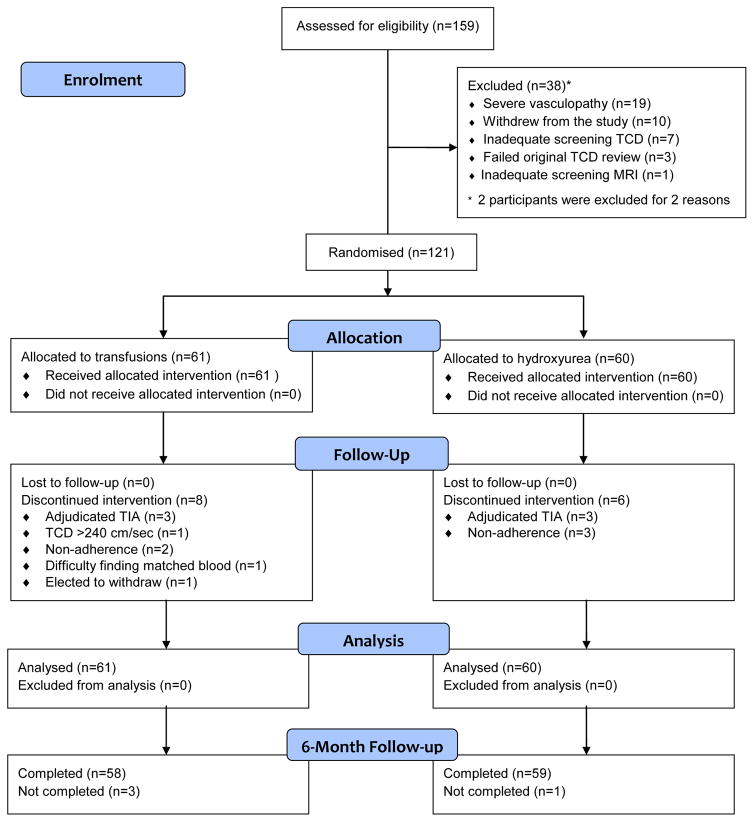
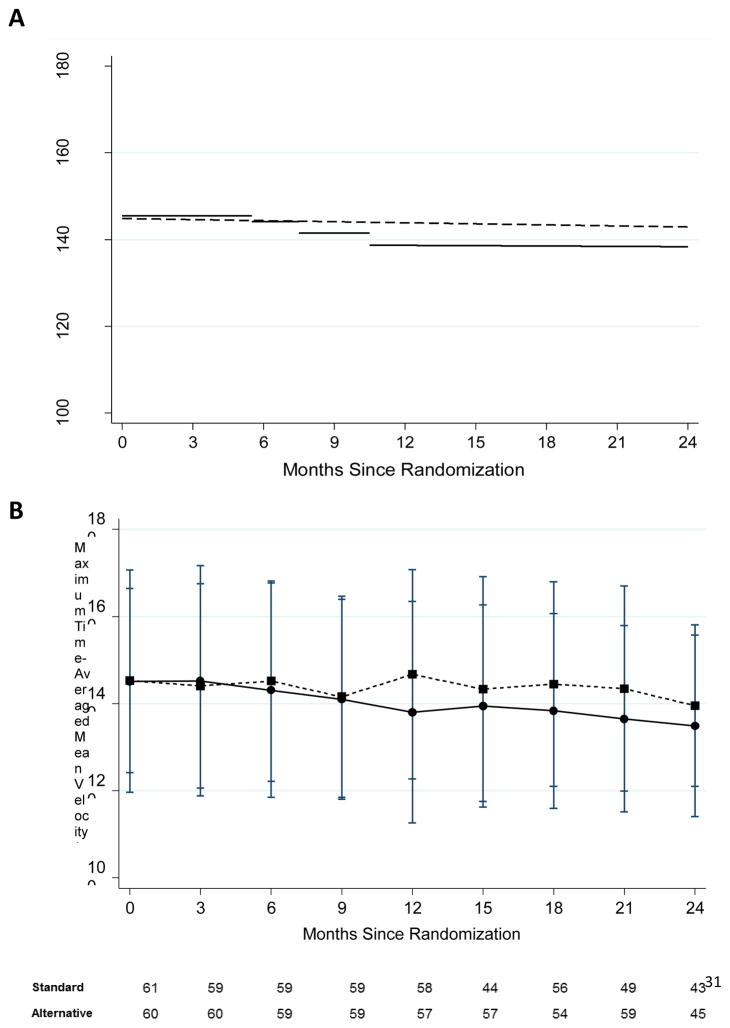
Background For children with sickle cell anaemia and high transcranial doppler (TCD) flow velocities, regular blood transfusions can effectively prevent primary stroke, but must be continued indefinitely. The efficacy of hydroxycarbamide (hydroxyurea) in this setting is unknown; we performed the TWiTCH trial to compare hydroxyurea with standard transfusions.Methods TWiTCH was a multicentre, phase 3, randomised, open-label, non-inferiority trial done at 26 paediatric hospitals and health centres in the USA and Canada. We enrolled children with sickle cell anaemia who were aged 4-16 years and had abnormal TCD flow velocities (≥ 200 cm/s) but no severe vasculopathy. After screening, eligible participants were randomly assigned 1:1 to continue standard transfusions (standard group) or hydroxycarbamide (alternative group). Randomisation was done at a central site, stratified by site with a block size of four, and an adaptive randomisation scheme was used to balance the covariates of baseline age and TCD velocity. The study was open-label, but TCD examinations were read centrally by observers masked to treatment assignment and previous TCD results. Participants assigned to standard treatment continued to receive monthly transfusions to maintain 30% sickle haemoglobin or lower, while those assigned to the alternative treatment started oral hydroxycarbamide at 20 mg/kg per day, which was escalated to each participant's maximum tolerated dose. The treatment period lasted 24 months from randomisation. The primary study endpoint was the 24 month TCD velocity calculated from a general linear mixed model, with the non-inferiority margin set at 15 cm/s. The primary analysis was done in the intention-to-treat population and safety was assessed in all patients who received at least one dose of assigned treatment. This study is registered with ClinicalTrials.gov, number NCT01425307.Findings Between Sept 20, 2011, and April 17, 2013, 159 patients consented and enrolled in TWiTCH. 121 participants passed screening and were then randomly assigned to treatment (61 to transfusions and 60 to hydroxycarbamide). At the first scheduled interim analysis, non-inferiority was shown and the sponsor terminated the study. Final model-based TCD velocities were 143 cm/s (95% CI 140-146) in children who received standard transfusions and 138 cm/s (135-142) in those who received hydroxycarbamide, with a difference of 4·54 (0·10-8·98). Non-inferiority (p=8·82 × 10(-16)) and post-hoc superiority (p=0·023) were met. Of 29 new neurological events adjudicated centrally by masked reviewers, no strokes were identified, but three transient ischaemic attacks occurred in each group. Magnetic resonance brain imaging and angiography (MRI and MRA) at exit showed no new cerebral infarcts in either treatment group, but worsened vasculopathy in one participant who received standard transfusions. 23 severe adverse events in nine (15%) patients were reported for hydroxycarbamide and ten serious adverse events in six (10%) patients were reported for standard transfusions. The most common serious adverse event in both groups was vaso-occlusive pain (11 events in five [8%] patients with hydroxycarbamide and three events in one [2%] patient for transfusions).Interpretation For high-risk children with sickle cell anaemia and abnormal TCD velocities who have received at least 1 year of transfusions, and have no MRA-defined severe vasculopathy, hydroxycarbamide treatment can substitute for chronic transfusions to maintain TCD velocities and help to prevent primary stroke.Funding National Heart, Lung, and Blood Institute, National Institutes of Health.
Overview
The claims and statistics of this paper haven’t been checked yet.
Free: it reads the open-access text and checks the first 5 claims that cite a source we can check. Create a free account to check every claim.
Integrity signals
Registry
Cites
Statistics
Figures
Verification
Claims the paper makes
The claims and statistics of this paper haven’t been checked yet.
Free: it reads the open-access text and checks the first 5 claims that cite a source we can check. Create a free account to check every claim.
Claims other papers make about this one
Each is checked against this paper’s own text: does it say what the citing paper says it does?
The source backs part of the claim, not all of it — or backs it for a different population, condition or comparison.
In the citing paper
“therapy with hydroxyurea, which induces HbF and reduces white blood cell count, reticulocyte count, and hemolysis, is effective in the primary prevention of stroke (152).”
From Pathophysiology of Sickle Cell Disease (2019) · cites this paper as [152]
Experimental — accuracy not yet measuredThe source backs part of the claim, not all of it — or backs it for a different population, condition or comparison.
In the citing paper
“Hydroxyurea was noninferior to transfusion for reducing transcranial Doppler flow velocities in selected children at high risk for stroke.”
From Fetal hemoglobin in sickle cell anemia (2020) · cites this paper as [90]
Experimental — accuracy not yet measured
Self-check
Percentages, sums and reported differences re-computed from the paper’s own numbers.
The self-check needs the paper’s full text.
Citations
Cites
Effect of hydroxyurea on the frequency of painful crises in sickle cell anemia
Charache, S., Terrin, M. L., Moore, R. D., Dover, G. J., Barton, F. B., Eckert, S. V., McMahon, R. P., & Bonds, D. R. (1995) · New England Journal of Medicine · doi:10.1056/nejm199505183322001 · Cited by 2,340 · cited 1×
“[8, 9] Through fetal haemoglobin (HbF) induction and other mechanisms of action, hydroxyurea inhibits intracellular sickle haemoglobin (HbS) polymerisation and lowers the risk of vaso-occlusive complications.”
Adams, R. J., McKie, V. C., Hsu, L., Files, B., Vichinsky, E., Pegelow, C., Abboud, M., Gallagher, D., Kutlar, A., Nichols, F. T., et al. (1998) · New England Journal of Medicine · doi:10.1056/nejm199807023390102 · Cited by 1,866
Self-citationCerebrovascular accidents in sickle cell disease: rates and risk factors.
(1998) · PubMed · doi:10.1182/blood.v91.1.288 · Cited by 1,694 · cited 2×
“[1] After first stroke, there is a high rate of recurrence or progression even with chronic transfusion therapy; a recent publication with median transfusion duration of 5.”
Self-citationManagement of Sickle Cell Disease: Summary of the 2014 Evidence-Based Report by Expert Panel Members
Yawn, B. P., Buchanan, G. R., Afenyi-Annan, A. N., Ballas, S. K., Hassell, K. L., James, A. H., Jordan, L., Lanzkron, S. M., Lottenberg, R., Savage, W. J., et al. (2014) · JAMA · doi:10.1001/jama.2014.10517 · Cited by 1,599
Self-citationDams, R. O. J. A., Ie, V. I. C. M. C. K., Su, L. E. H., Iles, B. E. F., Ichinsky, E. L. V., Egelow, C. H. P., Bboud, M. I. A., Allagher, D. I. G., Utlar, K., Ichols, F. E. T. N., et al. (2015) · Cited by 1,338
Wang, W. C., Ware, R. E., Miller, S. T., Iyer, R. V., Casella, J. F., Minniti, C. P., Rana, S., Thornburg, C. D., Rogers, Z. R., Kalpatthi, R. V., et al. (2011) · The Lancet · doi:10.1016/s0140-6736(11)60355-3 · Cited by 803 · cited 1×
“[8, 9] Through fetal haemoglobin (HbF) induction and other mechanisms of action, hydroxyurea inhibits intracellular sickle haemoglobin (HbS) polymerisation and lowers the risk of vaso-occlusive complications.”
Self-citationThe Use of Transcranial Ultrasonography to Predict Stroke in Sickle Cell Disease
Adams, R., McKie, V., Nichols, F., Carl, E., Zhang, D.-L., McKie, K., Figueroa, R., Litaker, M., Thompson, W., & Hess, D. (1992) · New England Journal of Medicine · doi:10.1056/nejm199202273260905 · Cited by 658 · cited 2×
“[3, 5] Patients from 26 paediatric programmes (Appendix) between 4–16 years of age with SCA and abnormal TCD velocities were eligible after ≥12 months of chronic transfusions.”
Self-citationDiscontinuing Prophylactic Transfusions Used to Prevent Stroke in Sickle Cell Disease
(2005) · New England Journal of Medicine · doi:10.1056/nejmoa050460 · Cited by 635
Controlled Trial of Transfusions for Silent Cerebral Infarcts in Sickle Cell Anemia
DeBaun, M. R., Gordon, M., McKinstry, R. C., Noetzel, M. J., White, D. A., Sarnaik, S. A., Meier, E. R., Howard, T. H., Majumdar, S., Inusa, B. P. D., et al. (2014) · New England Journal of Medicine · doi:10.1056/nejmoa1401731 · Cited by 545
Self-citationHow I use hydroxyurea to treat young patients with sickle cell anemia
Ware, R. E. (2010) · Blood · doi:10.1182/blood-2009-04-146852 · Cited by 396 · cited 2×
“[10] Hydroxyurea has the potential for lowering TCD velocities and thus reducing stroke risk, [11, 12] but definitive data are lacking regarding its efficacy in cerebrovascular disease.”
Self-citation
Cited by
Items 501–554 of 554
Yukeb, S., Salzedo, E., Rebaudengo, N., Rutigliano, E., Pignatta, P., Ferrero, G. B., & Voi, V. (2026) · Clinical neuroimaging. · doi:10.1002/neo2.70064
Knight, L. M. J., Tanabe, P. J., Blewer, A. L., Goodrich, J., King, A. A., Reuter‐Rice, K., & Crego, N. (2025) · Journal of sickle cell disease. · doi:10.1093/jscdis/yoaf038
Dain, A. S., Li, Y., Master, S., Bailey, C. L., Vossough, A., Ichord, R., Raffini, L. J., Getz, K., & Kwiatkowski, J. L. (2025) · Pediatric Hematology and Oncology · doi:10.1080/08880018.2025.2579978
Self-citationMukhopadhyay, A., Smeltzer, M. P., Dudley, J., Badawy, S. M., Mathias, J. G., Plaxco, A. P., Ray, M. A., Wiese, A. D., Stevens, W. I., Gurney, J. G., et al. (2025) · Frontiers in Pharmacology · doi:10.3389/fphar.2025.1693126
Bello‐Manga, H., Haliru, L., Ahmed, K., Ige, S., Musa, H., Muhammad-Idris, Z. K., Monday, B., Sani, A. M., Bonnet, K. R., Schlundt, D. G., et al. (2024) · Figshare · doi:10.6084/m9.figshare.25001659
Khargekar, N. C., Banerjee, A., Athalye, S., Mahajan, N., Kargutkar, N., Tapase, P., & Madkaikar, M. R. (2024) · Figshare · doi:10.6084/m9.figshare.26678726
Kazadi, C. M. (2023) · Papyrus : Institutional Repository (Université de Montréal) · doi:10.71781/27329
SACRED: Stroke Avoidance for Children in Republica Dominicana
Jeste, N. D. (2017) · OhioLink ETD Center (Ohio Library and Information Network)
Ngwa-Ndifor, N. (2026) · e-space (Manchester Metropolitan University) · doi:10.83056/mmu.32557134
da SILVA, A. C. (2023) · LA Referencia (Red Federada de Repositorios Institucionales de Publicaciones Científicas)
Moduladores genéticos da doença cerebrovascular em população pediátrica com anemia falciforme
dos Anjos, A. C. M. (2023) · LA Referencia (Red Federada de Repositorios Institucionales de Publicaciones Científicas)
do Nascimento, M. O. O. (2024) · LA Referencia (Red Federada de Repositorios Institucionales de Publicaciones Científicas)
Hypertension pulmonaire en maladie falciforme : optimisation de la prise en charge
Mercier‐Ross, J. (2026) · doi:10.71781/34243
Zimring, J. C., & Spitalnik, S. L. (2026) · Blood Red Cells & Iron · doi:10.1016/j.brci.2026.100050
Albalawi, A., Hanafy, E., Altoonisi, M. M., Mustafa, M., Soliman, W., Kamal, M., Karkar, A. M., & Elhady, M. (2026) · Cureus · doi:10.7759/cureus.104293
“Prior ICU exposure may represent a marker of severe disease phenotype, while prior stroke reflects advanced vasculopathy and systemic endothelial dysfunction, both of which may predispose to pulmonary decompensation during ACS episodes [14,15].”
Telefon, A. H. (2020) · Çukurova University Institutional Repository
Hydroxyurea: Why and how to use it to treat young patients with sickle cell anemia
Pondarré, C., & Soulié, A. (2023) · Cairn.info · doi:10.1684/hma.2023.1826
Exploring the latest emerging drugs for the treatment of sickle cell disease
Cannas, G. (2025) · Expert Opinion on Emerging Drugs · doi:10.1080/14728214.2026.2650178
Alshehri, A. B., Alamri, H. S., Hassanien, S. S., Babiker, A. A., Alimamali, M., Shakir, M., & Hanafy, E. (2026) · Cureus · doi:10.7759/cureus.105906
“Large clinical trials have shown that chronic transfusion therapy reduces stroke risk in children with abnormal TCD findings, while hydroxyurea can maintain TCD velocities in selected patients after an initial period of transfusion therapy when severe vasculopathy is absent [13].”
Alluqmani, R., Al-Kasim, F., Azmet, F. R., Almal, L. B., Almudaibigh, A. H., Alnwfal, B., & Alghamdi, F. A. (2026) · Journal of Applied Hematology · doi:10.4103/joah.joah_128_25
Drépanocytose et polymorphismes génétiques : épidémiologie, prédiction de gravité et stress-oxydant
Gueye, F. (2019) · theses.fr (ABES) · doi:10.70675/ba1cd2c2z7fe6z4d0dzb10fz91439ce84eb9
Essais cliniques de non-infériorité : intérêt des méthodes bayesiennes et application à la pédiatrie
Aupiais, C. (2019) · theses.fr (ABES) · doi:10.70675/63c2ef1dz887ez40cezb277zefd6ea6ce974
Temiye, E., Akinsete, A. M., Joacquim, A. O., Fakile, U. O., Ashefor, O., Ogamba, C. F., Ogbenna, A. A., Adeyemo, N., Okodugha, O., Edokpolo, E., et al. (2026) · British Journal of Haematology · doi:10.1111/bjh.70399
Graifman, G., Jain, A. K., Dongas, S., Armoyan, C., Sacknovitz, A., Gozum, N., Huhulea, E. N., Rosenberg, A. M., Maldonado‐McGrath, D., Bienenstock, R., et al. (2026) · Neurological Research · doi:10.1080/01616412.2026.2643362
Sickle Cell Disease: Outpatient Management Issues
Oluwole, O. B., & Novelli, E. M. (2026) · Springer eBooks · doi:10.1007/978-3-032-13858-3_13
Can transcranial Doppler improve risk stratification in pediatric moyamoya?
Vassar, R. L. (2026) · Pediatric Research · doi:10.1038/s41390-026-05064-7
Hepatic FerriScan in Evaluating Iron Overload in Pediatric Sickle Cell Disease
El-Bostany, E. A., Elghoroury, E. A., Abdelhamid, N., Hamed, H. M., Thabet, E. H., Dein, H. M. S. E., Al-Aziz, A. M. A., Aziz, S. H. A. E., Habib, S., & Eltahlawy, E. M. (2026) · Indian Journal of Hematology and Blood Transfusion · doi:10.1007/s12288-026-02420-9
Red Blood Cell Exchange in Sickle Cell Disease Care: A Comprehensive Review
Mashayekhi, M., Akhtari, M., Jain, A., Salimiaghdam, N., & Abdipour, A. (2026) · Therapeutic Apheresis and Dialysis · doi:10.1002/1744-9987.70155
Drépanocytose : protéger le cerveau de l’enfant, un enjeu majeur
Bernaudin, F., & Verlhac, S. (2026) · Hématologie · doi:10.1684/hma.2026.1914
Alloimmunization in sickle cell disease: Addressing an ongoing clinical challenge
Murray, A., & Stowell, S. R. (2026) · Seminars in Hematology · doi:10.1053/j.seminhematol.2026.06.002
Anil, A. S., Simon, A., & Venkateswaramurthy, N. (2026) · International Journal of Allied Medical Sciences and Clinical Research · doi:10.61096/ijamscr.v14.iss2.2026.1001-1008
Pediatric Neurosonology in Practice: Bridging Anatomy, Physiology, and Clinical Decision‐Making
Zoica, B. S., Mir, M., Vavilala, M. S., Wright, J., Tay, E. T., Sehic, A., Appavu, B. L., Johnston, B., Bhagarva, V., Mannava, S., et al. (2026) · Clinical neuroimaging. · doi:10.1002/neo2.70078
Global burden disparities and unmet needs of stroke in sickle cell disease
Yakubu, A. O., Adeyemi, E. A., Adebajo, G. O., Ojoh, U. H., Ezeh, V. O., Bakare, T. Y., & Oladele, A. B. (2026) · Discover Public Health · doi:10.1186/s12982-026-02404-0
“Children (5–12 years) pivotal clinical trials and their key findings that have informed current strategies for primary and secondary stroke prevention in sickle cell disease [7, 50, 51, 54–57].”
Teresa, S. L. (2026) · Research Publications (Maastricht University) · doi:10.26481/dis.20260316tl
Predict less, prevent more: A familiar mantra for sickle cell anaemia?
Quinn, C. T. (2026) · British Journal of Haematology · doi:10.1111/bjh.70725
Perspective Chapter: Fetal Hemoglobin Modulators
Walke, V. A. (2026) · IntechOpen eBooks · doi:10.5772/intechopen.1017037
The current state of cerebral complications of sickle cell disease
Cicka, D., Tiratrakoonseree, T., & Fields, M. E. (2026) · Seminars in Hematology · doi:10.1053/j.seminhematol.2026.08.001
Comprehensive Management of Sickle Cell Disorders
Nayak, A. R., & Jena, R. K. (2026) · Springer eBooks · doi:10.1007/978-981-92-1167-8_8
Alhijaj, B. A., Jaber, R. Z., Radhi, A. M., & Jumaah, D. (2026) · Medical Research Archives · doi:10.18103/mra.v14i7.7645
Hooey, P., Corriveau‐Bourque, C., Singh, G., & Bruce, A. A. K. (2026) · Paediatrics & Child Health · doi:10.1093/pch/pxag073
Al‐Agha, M., AlBadr, F. B., Aleem, A., AlGahtani, F. H., Al-shehri, A., Bashiri, F. A., & Alsultan, A. S. (2026) · British Journal of Haematology · doi:10.1111/bjh.70830
Haizel‐Cobbina, J., Anne, H.-T., Pahari, S., Lagunju, I., Jordan, L. C., Aldana, P. R., & Dewan, M. C. (2026) · Child s Nervous System · doi:10.1007/s00381-026-07475-7
Katumba, A. M., Doree, C. J., & Estcourt, L. J. (2026) · Cochrane Database of Systematic Reviews · doi:10.1002/14651858.cd012082.pub3
Elmobark, M. E., Sayed-Ahmed, M. Z., Al‐Rasheed, M., Marzok, M., Moni, S. S., Elalfy, M. M., Abdelwahab, S. İ., & Rizk, M. A. (2026) · Transfusion Medicine · doi:10.1111/tme.70122
Transcranial Doppler Alternative Stroke-Risk Threshold in Sickle Cell Disease: A Basra Cohort Study
Alhijaj, B. A., Othafa, H. M., Jaafer, R. A., & Abdul-Ra’aoof, H. H. (2026) · International Journal of Integrative and Modern Medicine
Exchange blood transfusion in sickle cell disease: A Mini- Review
Labaeka, A. A. (2020) · Nigerian Stethoscope
Kapoma, C., Sichamba, P., Hatwiko, H., Mutalange, M., Mulemena, J. A., Chanda, W., Michelo, M., Hamooya, B. M., Machiko, A., Phiri, C., et al. (2026) · Discover Pediatrics · doi:10.1007/s44571-026-00011-7
Glasnović, J. V. (2026) · Journal of Global Health Neurology and Psychiatry · doi:10.7189/001c.172979
Siransy, L. K., Dasse, R. S., Adou, H., Kouacou, P., Kouamenan, S., Sekongo, Y., Yeboah, R., Memel, C., Assi-Sahoin, A., Moussa, S. Y., et al. (2023) · doi:10.3389/fimmu.2023.954054.s002
Maduakor, C., Alakbarzade, V., Sammaraiee, Y., Vakrinou, A., Corobana, A., Sikorska, J., Rhodes, E., & Pereira, A. C. (2021) · doi:10.3389/fneur.2021.744118.s001
Metadata
- Authors
- Ware, R. E., Davis, B. R., Schultz, W. H., Brown, R. C., Aygun, B., Sarnaik, S., Odame, I., Fuh, B., George, A., Owen, W., Luchtman-Jones, L., Rogers, Z. R., Hilliard, L., Gauger, C., Piccone, C., Lee, M. T., Kwiatkowski, J. L., Jackson, S., Miller, S. T., Roberts, C., Heeney, M. M., Kalfa, T. A., Nelson, S., Imran, H., Nottage, K., Alvarez, O., Rhodes, M., Thompson, A. A., Rothman, J. A., Helton, K. J., Roberts, D., Coleman, J., Bonner, M. J., Kutlar, A., Patel, N., Wood, J., Piller, L., Wei, P., Luden, J., Mortier, N. A., Stuber, S. E., Luban, N. L. C., Cohen, A. R., Pressel, S., & Adams, R. J.
- Affiliations
- Cincinnati Children's Hospital Medical Center (US)
- Wayne State University (US)
- Hospital for Sick Children (CA)
- East Carolina University (US)
- Baylor College of Medicine (US)
- Children's Hospital of The King's Daughters (US)
- The University of Texas Southwestern Medical Center (US)
- University of Alabama at Birmingham (US)
- Nemours Children's Clinic (US)
- Case Western Reserve University (US)
- Columbia University (US)
- Children's Hospital of Philadelphia (US)
- Medical University of South Carolina (US)
- State University of New York (US)
- University of South Carolina (US)
- Boston Children's Hospital (US)
- Children's Minnesota (US)
- University of South Alabama (US)
- St. Jude Children's Research Hospital (US)
- University of Miami (US)
- University of Mississippi (US)
- Lurie Children's Hospital (US)
- Duke Medical Center (US)
- Augusta University (US)
- Children's Hospital Los Angeles (US)
- Children's National (US)
- Corresponding author
- Ware, Russell E
- ORCID
- Ware, Russell E
- Davis, Barry R
- Odame, Isaac
- Fuh, Beng
- George, Alex
- Owen, William
- Rogers, Zora R
- Piccone, Connie
- Kwiatkowski, Janet L
- Heeney, Matthew M
- Kalfa, Theodosia A
- Nelson, Stephen
- Imran, Hamayun
- Alvarez, Ofelia
- Thompson, Alexis A
- Rothman, Jennifer A
- Roberts, Donna
- Kutlar, Abdullah
- Patel, Niren
- Wood, John
- Wei, Peng
- Luden, Judy
- Stuber, Susan E
- Cohen, Alan R
- Adams, Robert J
- Venue
- The Lancet
- Publisher
- Elsevier BV
- Published
- 2016-02
- Volume
- 387
- Issue
- 10019
- Pages
- 661-670
- ISSN
- 0099-5355 (ISSN-L)
- 0140-6736
- PMC
- PMC5724392
- OpenAlex
- W2189616037
- Cited by
- 515
- References
- 32
- Citations by year
- 2026: 34 · 2025: 31 · 2024: 54 · 2023: 32 · 2022: 48 · 2021: 50 · 2020: 58 · 2019: 54 · 2018: 42 · 2017: 63 · 2016: 41
- FWCI
- 27.80
- Type
- journal article
- Language
- en
- Open access
- green
- www.ncbi.nlm.nih.gov
- Licence
- cc-by-nc-nd
- www.elsevier.com/tdm/userlicense/1.0/ (tdm)
- www.elsevier.com/legal/tdmrep-license (tdm)
- Locations
- The Lancet (publishedVersion)
- PubMed (publishedVersion)
- PubMed Central (acceptedVersion, cc-by-nc-nd)
- DukeSpace (Duke University) (submittedVersion, cc-by-nc-nd)
- Funders
- National Heart, Lung, and Blood Institute through grants (R01 HL-095647, R01 HL-095511)
- Topics
- Health Sciences › Medicine › Genetics (clinical) › Hemoglobinopathies and Related Disorders
- Health Sciences › Medicine › Pediatrics, Perinatology and Child Health › Neonatal Health and Biochemistry
- Health Sciences › Medicine › Hematology › Blood transfusion and management
- Keywords
- sickle cell disease, hydroxyurea, chronic transfusion, stroke prevention, children, non-inferiority, hemoglobin S, vasculopathy, adverse events
- MeSH terms
- Adolescent, Anemia, Sickle Cell, Antisickling Agents, Blood Flow Velocity, Blood Transfusion, Cerebrovascular Circulation, Child, Child, Preschool, Combined Modality Therapy, Female, Humans, Hydroxyurea, Male, Treatment Outcome, Ultrasonography, Doppler, Transcranial, Stroke, Drug Substitution
About these checks
Registry, retraction, Cites and statistics results are computed, not judged, with one exception: a printed reference that no index lists is read once by a model before it counts as a citation error. Claims are extracted by a model and kept only when their quote appears verbatim in the text; each cited source is then checked, with a model’s help, for whether it says what the claim relies on. Those verdicts can be wrong — read the claim’s quote and the cited source before relying on one.
Statistics and arithmetic are recomputed, not judged.
Confidence bands are shown only for fields calibrated on our annotated test set. None is calibrated yet, so no band is shown.
What counts as a claim ›How we measure confidence ›How we check this ›
Are you an author, or do you see a problem with this page? Request a review
Data sources
Bibliographic data: Semantic Scholar, OpenAlex, Crossref.
Contains information from the Semantic Scholar Academic Graph Datasets, made available under the ODC Attribution License (ODC-BY 1.0).
Semantic Scholar’s data is described in: Kinney, R., et al. (2023). The Semantic Scholar Open Data Platform. arXiv:2301.10140.
