

Hydroxycarbamide versus chronic transfusion for maintenance of transcranial doppler flow velocities in children with sickle cell anaemia-TCD With Transfusions Changing to Hydroxyurea (TWiTCH): a multicentre, open-label, phase 3, non-inferiority trial
Open accessThe DOI matches its Crossref record; 32 of the 32 references it cites were found in a registry or an index.
Abstract
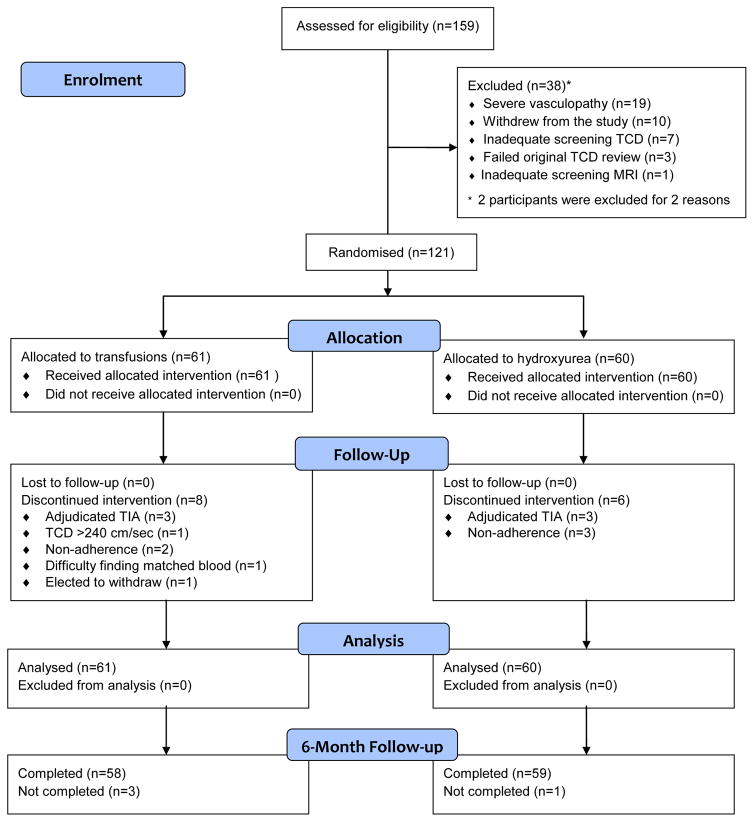
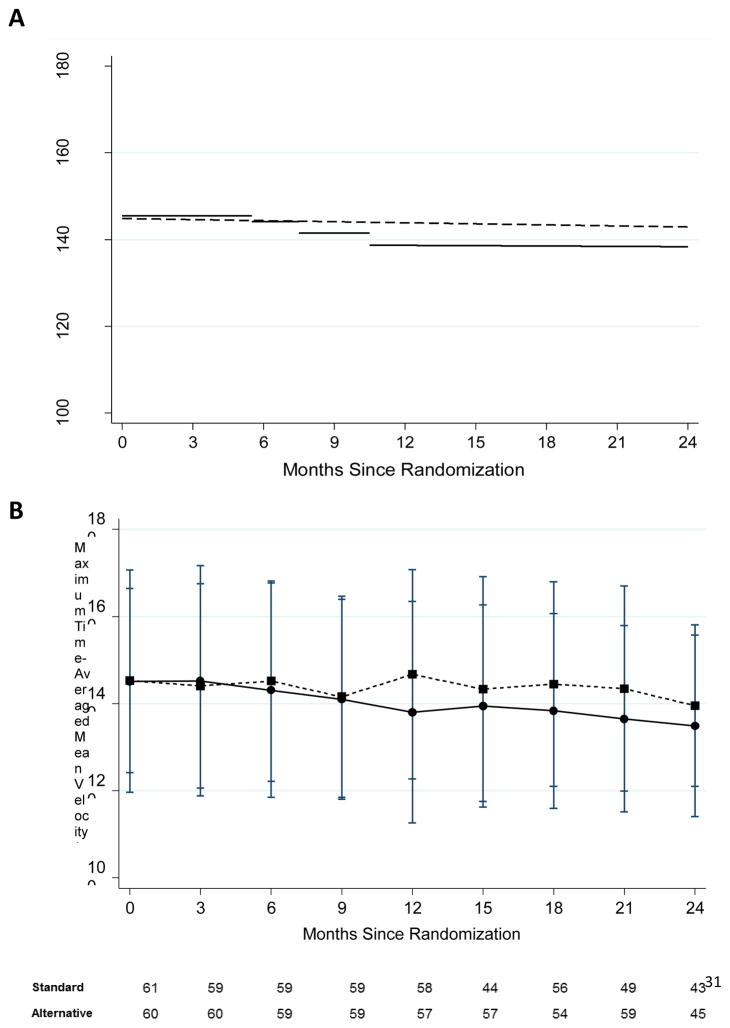
Background For children with sickle cell anaemia and high transcranial doppler (TCD) flow velocities, regular blood transfusions can effectively prevent primary stroke, but must be continued indefinitely. The efficacy of hydroxycarbamide (hydroxyurea) in this setting is unknown; we performed the TWiTCH trial to compare hydroxyurea with standard transfusions.Methods TWiTCH was a multicentre, phase 3, randomised, open-label, non-inferiority trial done at 26 paediatric hospitals and health centres in the USA and Canada. We enrolled children with sickle cell anaemia who were aged 4-16 years and had abnormal TCD flow velocities (≥ 200 cm/s) but no severe vasculopathy. After screening, eligible participants were randomly assigned 1:1 to continue standard transfusions (standard group) or hydroxycarbamide (alternative group). Randomisation was done at a central site, stratified by site with a block size of four, and an adaptive randomisation scheme was used to balance the covariates of baseline age and TCD velocity. The study was open-label, but TCD examinations were read centrally by observers masked to treatment assignment and previous TCD results. Participants assigned to standard treatment continued to receive monthly transfusions to maintain 30% sickle haemoglobin or lower, while those assigned to the alternative treatment started oral hydroxycarbamide at 20 mg/kg per day, which was escalated to each participant's maximum tolerated dose. The treatment period lasted 24 months from randomisation. The primary study endpoint was the 24 month TCD velocity calculated from a general linear mixed model, with the non-inferiority margin set at 15 cm/s. The primary analysis was done in the intention-to-treat population and safety was assessed in all patients who received at least one dose of assigned treatment. This study is registered with ClinicalTrials.gov, number NCT01425307.Findings Between Sept 20, 2011, and April 17, 2013, 159 patients consented and enrolled in TWiTCH. 121 participants passed screening and were then randomly assigned to treatment (61 to transfusions and 60 to hydroxycarbamide). At the first scheduled interim analysis, non-inferiority was shown and the sponsor terminated the study. Final model-based TCD velocities were 143 cm/s (95% CI 140-146) in children who received standard transfusions and 138 cm/s (135-142) in those who received hydroxycarbamide, with a difference of 4·54 (0·10-8·98). Non-inferiority (p=8·82 × 10(-16)) and post-hoc superiority (p=0·023) were met. Of 29 new neurological events adjudicated centrally by masked reviewers, no strokes were identified, but three transient ischaemic attacks occurred in each group. Magnetic resonance brain imaging and angiography (MRI and MRA) at exit showed no new cerebral infarcts in either treatment group, but worsened vasculopathy in one participant who received standard transfusions. 23 severe adverse events in nine (15%) patients were reported for hydroxycarbamide and ten serious adverse events in six (10%) patients were reported for standard transfusions. The most common serious adverse event in both groups was vaso-occlusive pain (11 events in five [8%] patients with hydroxycarbamide and three events in one [2%] patient for transfusions).Interpretation For high-risk children with sickle cell anaemia and abnormal TCD velocities who have received at least 1 year of transfusions, and have no MRA-defined severe vasculopathy, hydroxycarbamide treatment can substitute for chronic transfusions to maintain TCD velocities and help to prevent primary stroke.Funding National Heart, Lung, and Blood Institute, National Institutes of Health.
Overview
The claims and statistics of this paper haven’t been checked yet.
Free: it reads the open-access text and checks the first 5 claims that cite a source we can check. Create a free account to check every claim.
Integrity signals
Registry
Cites
Statistics
Figures
Verification
Claims the paper makes
The claims and statistics of this paper haven’t been checked yet.
Free: it reads the open-access text and checks the first 5 claims that cite a source we can check. Create a free account to check every claim.
Claims other papers make about this one
Each is checked against this paper’s own text: does it say what the citing paper says it does?
The source backs part of the claim, not all of it — or backs it for a different population, condition or comparison.
In the citing paper
“therapy with hydroxyurea, which induces HbF and reduces white blood cell count, reticulocyte count, and hemolysis, is effective in the primary prevention of stroke (152).”
From Pathophysiology of Sickle Cell Disease (2019) · cites this paper as [152]
Experimental — accuracy not yet measuredThe source backs part of the claim, not all of it — or backs it for a different population, condition or comparison.
In the citing paper
“Hydroxyurea was noninferior to transfusion for reducing transcranial Doppler flow velocities in selected children at high risk for stroke.”
From Fetal hemoglobin in sickle cell anemia (2020) · cites this paper as [90]
Experimental — accuracy not yet measured
Self-check
Percentages, sums and reported differences re-computed from the paper’s own numbers.
The self-check needs the paper’s full text.
Citations
Cites
Effect of hydroxyurea on the frequency of painful crises in sickle cell anemia
Charache, S., Terrin, M. L., Moore, R. D., Dover, G. J., Barton, F. B., Eckert, S. V., McMahon, R. P., & Bonds, D. R. (1995) · New England Journal of Medicine · doi:10.1056/nejm199505183322001 · Cited by 2,340 · cited 1×
“[8, 9] Through fetal haemoglobin (HbF) induction and other mechanisms of action, hydroxyurea inhibits intracellular sickle haemoglobin (HbS) polymerisation and lowers the risk of vaso-occlusive complications.”
Adams, R. J., McKie, V. C., Hsu, L., Files, B., Vichinsky, E., Pegelow, C., Abboud, M., Gallagher, D., Kutlar, A., Nichols, F. T., et al. (1998) · New England Journal of Medicine · doi:10.1056/nejm199807023390102 · Cited by 1,866
Self-citationCerebrovascular accidents in sickle cell disease: rates and risk factors.
(1998) · PubMed · doi:10.1182/blood.v91.1.288 · Cited by 1,694 · cited 2×
“[1] After first stroke, there is a high rate of recurrence or progression even with chronic transfusion therapy; a recent publication with median transfusion duration of 5.”
Self-citationManagement of Sickle Cell Disease: Summary of the 2014 Evidence-Based Report by Expert Panel Members
Yawn, B. P., Buchanan, G. R., Afenyi-Annan, A. N., Ballas, S. K., Hassell, K. L., James, A. H., Jordan, L., Lanzkron, S. M., Lottenberg, R., Savage, W. J., et al. (2014) · JAMA · doi:10.1001/jama.2014.10517 · Cited by 1,599
Self-citationDams, R. O. J. A., Ie, V. I. C. M. C. K., Su, L. E. H., Iles, B. E. F., Ichinsky, E. L. V., Egelow, C. H. P., Bboud, M. I. A., Allagher, D. I. G., Utlar, K., Ichols, F. E. T. N., et al. (2015) · Cited by 1,338
Wang, W. C., Ware, R. E., Miller, S. T., Iyer, R. V., Casella, J. F., Minniti, C. P., Rana, S., Thornburg, C. D., Rogers, Z. R., Kalpatthi, R. V., et al. (2011) · The Lancet · doi:10.1016/s0140-6736(11)60355-3 · Cited by 803 · cited 1×
“[8, 9] Through fetal haemoglobin (HbF) induction and other mechanisms of action, hydroxyurea inhibits intracellular sickle haemoglobin (HbS) polymerisation and lowers the risk of vaso-occlusive complications.”
Self-citationThe Use of Transcranial Ultrasonography to Predict Stroke in Sickle Cell Disease
Adams, R., McKie, V., Nichols, F., Carl, E., Zhang, D.-L., McKie, K., Figueroa, R., Litaker, M., Thompson, W., & Hess, D. (1992) · New England Journal of Medicine · doi:10.1056/nejm199202273260905 · Cited by 658 · cited 2×
“[3, 5] Patients from 26 paediatric programmes (Appendix) between 4–16 years of age with SCA and abnormal TCD velocities were eligible after ≥12 months of chronic transfusions.”
Self-citationDiscontinuing Prophylactic Transfusions Used to Prevent Stroke in Sickle Cell Disease
(2005) · New England Journal of Medicine · doi:10.1056/nejmoa050460 · Cited by 635
Controlled Trial of Transfusions for Silent Cerebral Infarcts in Sickle Cell Anemia
DeBaun, M. R., Gordon, M., McKinstry, R. C., Noetzel, M. J., White, D. A., Sarnaik, S. A., Meier, E. R., Howard, T. H., Majumdar, S., Inusa, B. P. D., et al. (2014) · New England Journal of Medicine · doi:10.1056/nejmoa1401731 · Cited by 545
Self-citationHow I use hydroxyurea to treat young patients with sickle cell anemia
Ware, R. E. (2010) · Blood · doi:10.1182/blood-2009-04-146852 · Cited by 396 · cited 2×
“[10] Hydroxyurea has the potential for lowering TCD velocities and thus reducing stroke risk, [11, 12] but definitive data are lacking regarding its efficacy in cerebrovascular disease.”
Self-citation
Cited by
Items 301–400 of 554
Basuni, Z. T., Monagel, D. A., Taha, A., Ahmed, N., & Ahmed, A. A. E. (2024) · Frontiers in Pediatrics · doi:10.3389/fped.2023.1290314 · Cited by 7
Telfer, P. T., Dwan, K. M., Simmons, A., Evanson, J., Gadong, N., Newell, K., Tangayi, S., Leigh, A., Tsouana, E., Hemmaway, C. J., et al. (2016) · Journal of Pediatric Hematology/Oncology · doi:10.1097/mph.0000000000000633 · Cited by 7
Hemoglobinopathies (Sickle Cell Disease and Thalassemia)
Cappelli, B., Gluckman, É., Ghanem, K. M., & Abboud, M. R. (2018) · Springer eBooks · doi:10.1007/978-3-030-02278-5_79 · Cited by 7
Brain‐derived neurotrophic factor levels in pediatric sickle cell disease
Lance, E. I., Barron‐Casella, E. A., Everett, A. D., & Casella, J. F. (2019) · Pediatric Blood & Cancer · doi:10.1002/pbc.28076 · Cited by 7
Red blood cell exchange in children with sickle cell disease
Elenga, N., Vantilcke, V., Martin, É., Cuadro-Alvarez, E., Parisot, M., Maire, F., Selles, P., & Basset, T. (2021) · International Journal of Hematology · doi:10.1007/s12185-021-03221-8 · Cited by 7
Karkoska, K. A., & McGann, P. T. (2021) · Pediatric Blood & Cancer · doi:10.1002/pbc.29363 · Cited by 7
Gorur, V., Kranc, K. R., Ganuza, M., & Telfer, P. T. (2023) · Blood Reviews · doi:10.1016/j.blre.2023.101137 · Cited by 7
The use of MRI to monitor iron overload in SCD
Wood, J. C. (2017) · Blood Cells Molecules and Diseases · doi:10.1016/j.bcmd.2017.09.002 · Cited by 8
Self-citationGray, J. P., Kim, J. R., & Ray, S. D. (2019) · Side effects of drugs annual · doi:10.1016/bs.seda.2019.07.010 · Cited by 7
Ischemic Stroke in Children and Young Adults with Sickle Cell Disease (SCD) in the Post-STOP Era
Kwiatkowski, J. L., Kanter, J., Fullerton, H. J., Voeks, J. H., Debenham, E., Brown, D. G., Brown, L., & Adams, R. J. (2015) · Blood · doi:10.1182/blood.v126.23.68.68 · Cited by 7
“15 Thus, it is possible that as hydroxyurea use becomes more widespread for primary stroke prevention in the future, acceptance of and adherence with long-term treatment might be improved.”
Self-citationMódolo, G. P., Luvizutto, G. J., Filho, P. T. H., Braga, G. P., Bazan, S. G. Z., Ferreira, N. C., de Souza, J. T., Winckler, F. C., de Freitas, C. C. M., Hokama, N. K., et al. (2022) · BMC Pediatrics · doi:10.1186/s12887-022-03429-5 · Cited by 6
“These treatments relate to a reduction in both cerebral flow velocities [30–32] and complications from sickling syndromes [6, 33].”
BackgroundSiegert, T. F., Opoka, R. O., Nakafeero, M., Carman, A. S., Mellencamp, K. A., Latham, T., Hume, H. A., Lane, A., Ware, R. E., Ssenkusu, J. M., et al. (2024) · Blood Vessels Thrombosis & Hemostasis · doi:10.1016/j.bvth.2024.100001 · Cited by 6
Self-citationFogliazza, F., Berzieri, M., Carbone, G., Ciriaco, D., & Esposito, S. (2025) · Journal of Clinical Medicine · doi:10.3390/jcm14238599 · Cited by 7
“The results established HU as a non-inferior alternative to transfusion therapy for maintaining normal TCD velocities and preventing stroke recurrence [33].”
Rethinking Sickle Cell Disease as a Systemic Vasculopathy
DuPont, M., Galadanci, N. A., Patel, R. V., Lebensburger, J. D., & Kanter, J. (2026) · Cells · doi:10.3390/cells15040326 · Cited by 6
“Subsequently, a randomized trial of hydroxyurea demonstrated that patients who had been started on CRCT for an abnormal TCD but who did not have abnormal vasculature on magnetic resonance angiography (MRA) could be transitioned to hydroxyurea for continued primary stroke prevention [80].”
Emerging drugs for the treatment of sickle cell disease: a review of phase II/III trials
Mercier‐Ross, J., Forté, S., & Soulières, D. (2022) · Expert Opinion on Emerging Drugs · doi:10.1080/14728214.2022.2105835 · Cited by 6
“Until today, hydroxyurea is still the unique drug providing an advantage on survival, quality of life, and various SCD-related comorbidities such as ACS, nephropathy, and cerebrovascular disease [21,22,23].”
BackgroundLance, E. I., Faulcon, L. M., Fu, Z., Yang, J., Whyte‐Stewart, D. A., Strouse, J. J., Barron‐Casella, E. A., Jones, K., Eyk, J. E. V., Casella, J. F., et al. (2021) · PROTEOMICS - CLINICAL APPLICATIONS · doi:10.1002/prca.202100003 · Cited by 6
Dela-Pena, J. C., King, M. A., Brown, J., & Nachar, V. R. (2022) · Journal of Oncology Pharmacy Practice · doi:10.1177/10781552211072468 · Cited by 6
Mkwambe, M. C., Deng, Y., & Dongchi, Z. (2024) · International Journal of Clinical Medicine · doi:10.4236/ijcm.2024.151001 · Cited by 6
Sickle Cell Disease in Brazil: Current Management
Araújo, A. D. S., Pinto, A. C. S., Lobo, C. L. D. C., Figueiredo, M. S., Gualandro, S. F. M., Saad, S. T. O., & Cançado, R. D. (2024) · Hemoglobin · doi:10.1080/03630269.2024.2344790 · Cited by 6
“Transcranial Doppler (TCD) screening of intracranial blood flow identifies children at risk for stroke, and velocities ≥200 cm/sec in the distal internal carotid or middle cerebral arteries are associated with a 40% primary stroke rate over 3 years [71].”
InfluentialFranco, J. M., Borges, C. C. L., Ansaloni, M. A., Mauro, R. D. D. L., Souza, Y. C. D. C., & Braga, J. A. P. (2019) · Hematology Transfusion and Cell Therapy · doi:10.1016/j.htct.2018.05.015 · Cited by 6
Prevention of stroke and cognitive decline in pediatric population in resource-limited settings
Itanyi, U. D., & Nnodu, O. E. (2024) · Frontiers in Stroke · doi:10.3389/fstro.2024.1390220 · Cited by 5
Osivelotor for the treatment of sickle cell disease
Cannas, G. (2025) · Expert Opinion on Pharmacotherapy · doi:10.1080/14656566.2025.2489123 · Cited by 5
“HU has multiple mechanisms of action including increased level of fetal Hb, reduction of HbS polymerization, lowering of circulating leukocytes, inflammation and cell adhesion, and reduction of the frequency of painful crises and the need for RBC transfusions [9].”
Advanced neuromonitoring techniques for medical and neurological ICU patients
Eshraghi, R., Yazdani, M. S., Bahrami, A., Amani‐Beni, R., Darouei, B., Mokhtari, M., & Hashemian, S. M. R. (2025) · Brain Research Bulletin · doi:10.1016/j.brainresbull.2025.111513 · Cited by 5
“These monitors are invasive and can be implanted either on a specific area of the brain's surface (Saber) or directly inside the brain tissue (Bowman perfusion monitor) (189). o The sensor measures the amount of tissue surrounding it in a quantitative manner.”
Advances and Gaps in Global Newborn Screening for Sickle Cell Disease
Shook, L. M., & Ware, R. E. (2026) · International Journal of Neonatal Screening · doi:10.3390/ijns12010004 · Cited by 5
“In the US, the TWiTCH (Transcranial Doppler with Transfusion Changing to Hy-droxyurea) study found that hydroxyurea was a safe and highly effective alternative to the usual treatment of chronic blood transfusions for children with elevated transcranial Doppler (TCD) velocities [67].”
Self-citationNeuroimaging findings in paediatric patients with sickle cell disease
Abreu, V. S., Xavier, S. R. M., Santos, M., da Silva, R. L., Kjöllerström, P., & Conceição, C. R. (2023) · Clinical Radiology · doi:10.1016/j.crad.2023.02.013 · Cited by 5
Choi, J., Markantonis, J., Simone, N. D., Nero, A. C., Kim, J., & Sarode, R. (2023) · Journal of Clinical Apheresis · doi:10.1002/jca.22078 · Cited by 5
Bello‐Manga, H., Haliru, L., Ahmed, K., Ige, S., Musa, H., Muhammad-Idris, Z. K., Monday, B., Sani, A. M., Bonnet, K. R., Schlundt, D. G., et al. (2024) · Implementation Science Communications · doi:10.1186/s43058-023-00534-z · Cited by 5
“In high-resource settings, such evidence-based practices decreased stroke incidence rates by 92% among children with SCA [3–5].”
BackgroundPhysiopathologie de la drépanocytose et perspectives thérapeutiques
Allali, S., Pinhas, Y., Maciel, T. T., & Hermine, O. (2024) · Bulletin de l Académie Nationale de Médecine · doi:10.1016/j.banm.2024.03.003 · Cited by 6
Wambaka, B., Mpungu, A., Mboizi, V., Kalibbala, D., Nambatya, G., Murungi, S., Kabatabaazi, M., Nakafeero, M., Kasirye, P., Munube, D., et al. (2025) · Pediatric Blood & Cancer · doi:10.1002/pbc.31722 · Cited by 5
Optimization of hydroxyurea in sickle cell disease in Brazil
Lobo, C. L. D. C., Silva‐Pinto, A. C., & Cançado, R. D. (2025) · Hematology Transfusion and Cell Therapy · doi:10.1016/j.htct.2025.103826 · Cited by 6
Transcranial Doppler Screening in 50 Patients With Sickle Cell Hemoglobinopathies in Iran
Zamani, S., Borhani‐Haghighi, A., Haghpanah, S., Karimi, M., & Bordbar, M. (2017) · Journal of Pediatric Hematology/Oncology · doi:10.1097/mph.0000000000000890 · Cited by 5
Blood Cell Disorders and the Nervous System
Merkler, A. E. (2020) · CONTINUUM Lifelong Learning in Neurology · doi:10.1212/con.0000000000000858 · Cited by 5
Moeen, S. M., Thabet, A. F., Hasan, H. A., & Saleh, M. A. (2017) · Indian Journal of Hematology and Blood Transfusion · doi:10.1007/s12288-017-0814-z · Cited by 5
“[23] stated that, HU lower TCD velocities, which lower the risk of stroke.”
BackgroundTherapeutic advances in sickle cell disease in the last decade
Shet, A. S., & Thein, S. L. (2017) · The Indian Journal of Medical Research · doi:10.4103/ijmr.ijmr_1153_17 · Cited by 5
Park, H., Bhatti, S. A., & Chakravorty, S. (2019) · Pediatric Blood & Cancer · doi:10.1002/pbc.27615 · Cited by 5
Trompeter, S., Bolton‐Maggs, P. H. B., Ryan, K. E., Shah, F., Estcourt, L. J., Cho, G., Rees, D. C., Lowe, D., & Davis, B. (2019) · Transfusion Medicine · doi:10.1111/tme.12655 · Cited by 5
“The median (IQR, range) age of males was 24 years (12-38, 1-84), and 37% (238/635) were under 18 years; the median (IQR,range) age of females was 26 years (14-40, 1-82) and 30% (198/654) were under 18 years.”
BackgroundSelf-citationCognitive deficit in sickle cell disease: Is hydroxyurea part of the story?
Hyacinth, H. I., & Idris, I. M. (2020) · British Journal of Haematology · doi:10.1111/bjh.16542 · Cited by 5
“Additionally, there is accumulating evidence of a potential neuroprotective effect from the use of hydroxyurea (HU) and this is demonstrated by the TWiTCH [Transcranial Doppler (TCD) With Transfusion Changing to Hydroxyurea] (Ware et al., 2015) and SPIN (Stroke Prevention in Nigeria) trials (Galadanci et al., 2017).”
BackgroundPhillips, S. M., Schlenz, A. M., Mueller, M., Melvin, C. L., Adams, R. J., Kanter, J., & (on behalf of the DISPLACE investigators) (2020) · Pediatric Blood & Cancer · doi:10.1002/pbc.28569 · Cited by 5
Self-citationAdams, T. L., Latham, G. J., Eisses, M. J., Bender, M. A., & Haberkern, C. M. (2019) · Elsevier eBooks · doi:10.1016/b978-0-323-42974-0.00010-0 · Cited by 5
Ten‐year longitudinal analysis of hydroxyurea implementation in a pediatric sickle cell program
Phan, V., Park, J. A., Dulman, R. Y., Lewis, A., Briere, N., Notarangelo, B., & Yang, E. (2022) · European Journal Of Haematology · doi:10.1111/ejh.13827 · Cited by 5
“Prior to uniform HU implementation, transfusions were more frequent in the patients on HU (0.75 transfusions/person-year), as symptomatic patients were selectively treated with HU.”
MethodInfluentialBernaudin, F., Verlhac, S., Ducros-Miralles, E., Arnaud, C., Genty, I., Petras, M., Paillard, C., Luna, G. D., Meunier, B., Thuret, I., et al. (2026) · American Journal of Hematology · doi:10.1002/ajh.70336 · Cited by 4
Zantek, N. D., Alquist, C. R., Hofmann, J. C., Klingel, R., Levenbrown, Y., Onwuemene, O. A., Patidar, G. K., Patriquin, C. J., Raval, J. S., Sanchez, A. P., et al. (2026) · Journal of Clinical Apheresis · doi:10.1002/jca.70141 · Cited by 5
(2022) · Health Sciences Investigations Journal · doi:10.46829/hsijournal.2022.12.3.2.352-359 · Cited by 4
Power‐Hays, A., Namazzi, R., Kato, C., McElhinney, K. E., Conroy, A. L., Hume, H. A., John, C. C., O’Hara, S. M., Stuber, S. E., Lane, A., et al. (2024) · Acta Haematologica · doi:10.1159/000539541 · Cited by 4
“In clinical trials, hydroxyurea has been shown to be safe and effective at reducing mortality and morbidity, including strokes, pain, and acute chest syndrome, in children and adults with SCA around the world [17 – 20].”
Self-citationJohn, T. D., Walters, M. C., Rangarajan, H. G., Rahim, M. Q., McKinney, C. M., Bollard, C. M., Abusin, G. A., Eapen, M., Kassim, A. A., & DeBaun, M. R. (2024) · Blood Advances · doi:10.1182/bloodadvances.2024014078 · Cited by 4
Ambrose, E. E., Sabuni, P. A., Jason, D. P., Ware, R. E., Makubi, A. N., & Smart, L. R. (2025) · Blood Global Hematology · doi:10.1016/j.bglo.2025.100001 · Cited by 4
Self-citationShah, N. C., & Krishnamurti, L. (2021) · Hematology · doi:10.1182/hematology.2021000322 · Cited by 4
Zanfardino, S., Mazziotto, V., & Bodas, P. (2022) · Pediatric Blood & Cancer · doi:10.1002/pbc.29580 · Cited by 4
Comprehensive guide to managing a chronic automated red cell exchange program in sickle cell disease
Cunard, R. A., Gopal, S., Kopko, P. M., Dang, M., Hazle, K. M., & Sanchez, A. P. (2022) · Journal of Clinical Apheresis · doi:10.1002/jca.22014 · Cited by 4
“If aRCE was initiated for primary stroke prophylaxis based on elevated transcranial doppler (TCD), then we discuss transition to hydroxyurea as an alternative, based on results from the TWiTCH study.(31) However, in our experience this is not often feasible in adults, since we are unable to verify original indication…”
MethodCurrent and emerging drug treatment strategies to tackle sickle cell anemia
Persaud, Y., Leonard, A. K., & Rai, P. (2024) · Expert Opinion on Emerging Drugs · doi:10.1080/14728214.2024.2379260 · Cited by 4
Ilonze, C., Broadnax, A., Haines, H. L., Lebensburger, J. D., & Goldman, F. D. (2025) · Pediatric Blood & Cancer · doi:10.1002/pbc.31698 · Cited by 4
New option for primary stroke prevention in sickle cell anaemia
DeBaun, M. R., & Kirkham, F. J. (2015) · The Lancet · doi:10.1016/s0140-6736(15)01130-7 · Cited by 4
Khandros, E., & Kwiatkowski, J. L. (2021) · Elsevier eBooks · doi:10.1016/b978-0-12-821671-2.00013-1 · Cited by 4
Self-citationTreatment of sickle cell disease: Beyond hydroxyurea
Mishra, P. P. (2022) · Journal of Hematology and Allied Sciences · doi:10.25259/jhas_6_2022 · Cited by 4
Anti-Anemic Potential of a Herbal Recipe Against Phenylhydrazine-Induced Anemia in Rats
Kplé, T. K. M., Akakpo-Akue, J., Kouassi, K., Sitapha, O., Konan, G., Diane, K., Kouadio, L. A., Yapo-Crezoit, C. C. A., Kra, A. K. M., & Djaman, A. J. (2023) · Journal of Diseases and Medicinal Plants · doi:10.11648/j.jdmp.20230902.12 · Cited by 4
Stroke recurrence in adult sickle cell patients: it is time for action!
Neumayr, L., & Vichinsky, E. P. (2016) · Transfusion · doi:10.1111/trf.13614 · Cited by 4
Genetic Basis of Stroke Occurrence, Prevention and Outcome
Meschia, J. F., Woo, D., & Werring, D. J. (2015) · Elsevier eBooks · doi:10.1016/b978-0-323-29544-4.00018-9 · Cited by 4
Sickle cell disease: an update on management
Brewin, J. N., & Howard, J. (2017) · Paediatrics and Child Health · doi:10.1016/j.paed.2017.07.005 · Cited by 4
Strumph, K. L., Morrone, K. A., Dhillon, P., Hsu, K. A., Gomes, W. A., Silver, E. J., Lax, D. N., Peng, Q., Lee, S. K., Manwani, D. G., et al. (2022) · Pediatric Blood & Cancer · doi:10.1002/pbc.30109 · Cited by 4
Stroke in Children: Key Advances in the Field and the Next 20 Years
Kirton, A., & Jordan, L. C. (2023) · Stroke · doi:10.1161/strokeaha.123.044250 · Cited by 4
Cerebral Arteriopathies, Venous Thrombosis, and Migraine
Camargo, E. C., & Singhal, A. B. (2017) · Seminars in Neurology · doi:10.1055/s-0037-1603914 · Cited by 4
Bernaudin, F. (2020) · Hematology/Oncology and Stem Cell Therapy · doi:10.1016/j.hemonc.2019.12.002 · Cited by 4
Treating sickle cell anaemia: the TWiTCH trial
Gwam, M., & Nwosu, C. (2016) · The Lancet · doi:10.1016/s0140-6736(16)31493-3 · Cited by 4
Robert, A., Hanel, R. A., Adelson, P. D., Lang, S., Grabb, P. A., Greene, S., Johnston, J. M., Leonard, J. A., Magge, S. N., Marupudi, N. I., et al. (2024) · Journal of Neurosurgery Pediatrics · doi:10.3171/2024.5.peds2426 · Cited by 3
Heitzer, A. M., Zou, P., Hodges, J., Brown, C., Davis, M., Dixon, S., Ogg, R. J., Estepp, J. H., Hankins, J. S., Sitaram, R., et al. (2024) · eJHaem · doi:10.1002/jha2.1001 · Cited by 3
“Hydroxyurea may also reduce stroke risk [5].”
Sarfo, F. S., Paintsil, V., Nyanor, I., Asafo‐Adjei, E., Ahmed, E. A., Nguah, S. B., Amuzu, E. X., Abubakar, S. Y., Osei‐Tutu, L., Oppong–Mensah, Y. G., et al. (2024) · Journal of the Neurological Sciences · doi:10.1016/j.jns.2024.123263 · Cited by 3
Prevalence of Duffy Null and Its Impact on Hydroxyurea Dosing in Children With Sickle Cell Disease
Menell, J. S., Jackson, S., Kahn, A. R., Woolbright, W. C., Schwartz, L. Y., & Norko, J. (2025) · Pediatric Blood & Cancer · doi:10.1002/pbc.31693 · Cited by 3
Self-citationSickle Cell Disease Related Vasculopathies and Early Evaluation in a Pediatric Population
Panosyan, D. E., Panosyan, W. S., Corral, I. P., Hanudel, M. R., Pak, Y., & Gotesman, M. (2024) · In Vivo · doi:10.21873/invivo.13556 · Cited by 3
Knight, L. M. J., Tanabe, P. J., Blewer, A. L., Goodrich, J., King, A. A., Reuter‐Rice, K., & Crego, N. (2024) · Pediatric Blood & Cancer · doi:10.1002/pbc.31017 · Cited by 3
How We Approach Contraception for Adolescents and Young Adults With Sickle Cell Disease
Leroy‐Melamed, M., McGann, P. T., & Doren, L. V. (2025) · Pediatric Blood & Cancer · doi:10.1002/pbc.31683 · Cited by 3
Nri-Ezedi, C. A., Ugwu, N. I., Ulasi, A. E., & Ulasi, T. O. (2025) · BMC Pediatrics · doi:10.1186/s12887-025-05834-y · Cited by 3
Kamyszek, R. W., Raval, J. S., Srinivasan, A. J., Ansari, A. K., Evans, B. A., Rollins‐Raval, M. A., Poisson, J. L., Shah, N., & Welsby, I. J. (2019) · Transfusion · doi:10.1111/trf.15386 · Cited by 3
Barton, A., Defoe, K., Jupp, J., Dersch‐Mills, D., Ghosh, S., & Leaker, M. T. (2021) · JACCP JOURNAL OF THE AMERICAN COLLEGE OF CLINICAL PHARMACY · doi:10.1002/jac5.1516 · Cited by 3
Kamel, S. M., Nassim, M. S., Mohamed, M. A., & Abdelrahman, S. F. (2022) · The Egyptian Journal of Radiology and Nuclear Medicine · doi:10.1186/s43055-022-00936-4 · Cited by 3
“TCD velocities can be reduced with hydroxyurea (HU), and a trial showed that young children at risk for stroke whose TCDs normalized on CRT could be gradually weaned off transfusion therapy and maintained on HU with stable TCD velocities [10].”
The controversial role of red cell transfusions for sickle cell pain
Karafin, M. S., & Field, J. J. (2019) · Current Opinion in Hematology · doi:10.1097/moh.0000000000000537 · Cited by 3
Runge, A. S., Brazel, D., & Pakbaz, Z. (2021) · Journal of Community Hospital Internal Medicine Perspectives · doi:10.1080/20009666.2021.1954285 · Cited by 3
de Ligt, L. A., Fijnvandraat, K., Biemond, B. J., & Heijboer, H. (2024) · Haematologica · doi:10.3324/haematol.2023.284506 · Cited by 3
Stroke and Sickle Cell Disease
Ostendorf, A., Roach, E. S., & Adams, R. J. (2017) · Primer on Cerebrovascular Diseases · doi:10.1016/b978-0-12-803058-5.00118-1 · Cited by 3
Self-citationPatterns and Predictors of Hydroxyurea Use Among Californians Living With Sickle Cell Disease
Rushing, M. R., Horiuchi, S. S., Kayle, M., Reeves, S. L., Glaros, A. K., & Paulukonis, S. T. (2025) · Journal of Pediatric Hematology/Oncology · doi:10.1097/mph.0000000000003027 · Cited by 2
“8,10,12 Despite mounting evidence of the effectiveness of hydroxyurea in preventing SCD-related complications, adherence remains very low.”
Primary and secondary stroke prophylaxis in children with sickle cell anemia: a meta-analysis
Rangarajan, H. G., Mejias-Figueroa, J. A., Gehred, A. P., Rodeghier, M., & DeBaun, M. R. (2025) · Blood Advances · doi:10.1182/bloodadvances.2023012544 · Cited by 2
Optimizing the right time to start sickle cell therapies
Martin, O. Y., & Jacob, S. A. (2025) · Hematology · doi:10.1182/hematology.2025000752 · Cited by 2
Neurologic Complications of Hematologic Disorders
Patrick, L. M., & Terrelonge, M. (2026) · CONTINUUM Lifelong Learning in Neurology · doi:10.1212/cont.0000000000001660 · Cited by 2
Stroke in Children and Younger Adults
Field, T. S., & Selvanathan, T. (2026) · CONTINUUM Lifelong Learning in Neurology · doi:10.1212/cont.0000000000001711 · Cited by 2
Long-Term Complications of Sickle Cell Disease
Sánchez, L. M., Lapite, A., Chang, A., & Fasipe, T. (2026) · Pediatrics in Review · doi:10.1542/pir.2024-006446 · Cited by 2
Hematological causes of acute ischemic stroke in younger individuals
O’Toole, G., Swan, D., Connors, J. M., & Thachil, J. V. (2024) · Journal of Thrombosis and Haemostasis · doi:10.1016/j.jtha.2024.09.025 · Cited by 2
Unrelated Donor Hematopoietic Stem Cell Transplantation for Sickle Cell Disease
Ngwube, A. I., & Shenoy, S. S. (2017) · Springer eBooks · doi:10.1007/978-3-319-62328-3_13 · Cited by 2
Anemia at the Extremes of Life: Congenital Hemolytic Anemia
Reinish, A. L., & Noronha, S. A. (2018) · Springer eBooks · doi:10.1007/978-3-319-96487-4_6 · Cited by 2
Personalizing transfusion in sickle cell disease: where is the canary in the mine?
Fields, M. E. (2019) · Transfusion · doi:10.1111/trf.15453 · Cited by 2
“None of these trials stipulated pre- or posttransfusion HbA thresholds.(4,6,14,15) There are no studies, to date, specifically investigating the impact of different percent HbA or HbS goals in chronic transfusion therapy for stroke prevention or for any complication of SCD.”
BackgroundGenetic Basis of Stroke Occurrence, Prevention, and Outcome
Meschia, J. F., & Fornage, M. (2021) · Elsevier eBooks · doi:10.1016/b978-0-323-69424-7.00019-3 · Cited by 2
Balseca, V. A. R., Casadiego, S., Torres, A. H., Soraya, P. P., Negrete-Spath, C. I., & Castro-Dager, Á. (2022) · Revista Colombiana de Hematología y Oncología · doi:10.51643/22562915.129 · Cited by 2
“a hidroxiurea tras haber recibido terapia transfusional crónica.(34) En los resultados de este estudio se pudo apreciar que la diferencia de los valores de PVM-ACM pre y post no fue significativa, pero existe una tendencia (p0.”
BackgroundAn innovative intervention for the prevention of vaso-occlusive episodes in sickle cell disease
Jeon, W. J., Joung, B., Moon, J. H., Hino, C., Park, D., Pham, B., Castillo, D. R., Chong, E. G., Kaur, S., Grismore, C., et al. (2023) · Hematology · doi:10.1080/16078454.2023.2215575 · Cited by 2
“In the pediatric setting, several landmark randomized control trials have demonstrated the e ffi cacy of chronic blood transfusions and hydroxyurea for secondary stroke prevention [11 – 15].”
BackgroundHematologic Disorders and the Nervous System
Mauermann, M. L., & Southerland, A. M. (2023) · CONTINUUM Lifelong Learning in Neurology · doi:10.1212/con.0000000000001238 · Cited by 2
Edwards, J. G., Yan, A. P., Yim, R., Oni, M., Heeney, M. M., Johnson, D., Wong, C. I., Ilowite, M. F., & Archer, N. M. (2024) · Pediatric Blood & Cancer · doi:10.1002/pbc.31088 · Cited by 2
Self-citationHydroxyurea for abnormal TCDs: safe to switch?
McGann, P. T. (2016) · Blood · doi:10.1182/blood-2016-02-699074 · Cited by 2
Majersik, J. J. (2017) · Seminars in Neurology · doi:10.1055/s-0037-1603952 · Cited by 2
Current Non-HSCT Treatments for SCD
Anderson, C. L., & Darbari, D. S. (2017) · Springer eBooks · doi:10.1007/978-3-319-62328-3_3 · Cited by 2
Sickle Cell Disease and Pregnancy
Sosa, I. R., & Udden, M. M. (2018) · Wiley eBooks · doi:10.1002/9781119129400.ch47 · Cited by 2
Overholser, L., Diers, T., & Hassell, K. L. (2016) · Springer eBooks · doi:10.1007/978-3-319-43827-6_16 · Cited by 2
Dalle, J. (2020) · Hematology/Oncology and Stem Cell Therapy · doi:10.1016/j.hemonc.2019.12.013 · Cited by 2
Neurologic and Cognitive Outcomes in Sickle Cell Disease from Infancy through Adolescence
Mayer, S. L., Fields, M. E., & Hulbert, M. L. (2021) · NeoReviews · doi:10.1542/neo.22-8-e531 · Cited by 2
Metadata
- Authors
- Ware, R. E., Davis, B. R., Schultz, W. H., Brown, R. C., Aygun, B., Sarnaik, S., Odame, I., Fuh, B., George, A., Owen, W., Luchtman-Jones, L., Rogers, Z. R., Hilliard, L., Gauger, C., Piccone, C., Lee, M. T., Kwiatkowski, J. L., Jackson, S., Miller, S. T., Roberts, C., Heeney, M. M., Kalfa, T. A., Nelson, S., Imran, H., Nottage, K., Alvarez, O., Rhodes, M., Thompson, A. A., Rothman, J. A., Helton, K. J., Roberts, D., Coleman, J., Bonner, M. J., Kutlar, A., Patel, N., Wood, J., Piller, L., Wei, P., Luden, J., Mortier, N. A., Stuber, S. E., Luban, N. L. C., Cohen, A. R., Pressel, S., & Adams, R. J.
- Affiliations
- Cincinnati Children's Hospital Medical Center (US)
- Wayne State University (US)
- Hospital for Sick Children (CA)
- East Carolina University (US)
- Baylor College of Medicine (US)
- Children's Hospital of The King's Daughters (US)
- The University of Texas Southwestern Medical Center (US)
- University of Alabama at Birmingham (US)
- Nemours Children's Clinic (US)
- Case Western Reserve University (US)
- Columbia University (US)
- Children's Hospital of Philadelphia (US)
- Medical University of South Carolina (US)
- State University of New York (US)
- University of South Carolina (US)
- Boston Children's Hospital (US)
- Children's Minnesota (US)
- University of South Alabama (US)
- St. Jude Children's Research Hospital (US)
- University of Miami (US)
- University of Mississippi (US)
- Lurie Children's Hospital (US)
- Duke Medical Center (US)
- Augusta University (US)
- Children's Hospital Los Angeles (US)
- Children's National (US)
- Corresponding author
- Ware, Russell E
- ORCID
- Ware, Russell E
- Davis, Barry R
- Odame, Isaac
- Fuh, Beng
- George, Alex
- Owen, William
- Rogers, Zora R
- Piccone, Connie
- Kwiatkowski, Janet L
- Heeney, Matthew M
- Kalfa, Theodosia A
- Nelson, Stephen
- Imran, Hamayun
- Alvarez, Ofelia
- Thompson, Alexis A
- Rothman, Jennifer A
- Roberts, Donna
- Kutlar, Abdullah
- Patel, Niren
- Wood, John
- Wei, Peng
- Luden, Judy
- Stuber, Susan E
- Cohen, Alan R
- Adams, Robert J
- Venue
- The Lancet
- Publisher
- Elsevier BV
- Published
- 2016-02
- Volume
- 387
- Issue
- 10019
- Pages
- 661-670
- ISSN
- 0099-5355 (ISSN-L)
- 0140-6736
- PMC
- PMC5724392
- OpenAlex
- W2189616037
- Cited by
- 515
- References
- 32
- Citations by year
- 2026: 34 · 2025: 31 · 2024: 54 · 2023: 32 · 2022: 48 · 2021: 50 · 2020: 58 · 2019: 54 · 2018: 42 · 2017: 63 · 2016: 41
- FWCI
- 27.80
- Type
- journal article
- Language
- en
- Open access
- green
- www.ncbi.nlm.nih.gov
- Licence
- cc-by-nc-nd
- www.elsevier.com/tdm/userlicense/1.0/ (tdm)
- www.elsevier.com/legal/tdmrep-license (tdm)
- Locations
- The Lancet (publishedVersion)
- PubMed (publishedVersion)
- PubMed Central (acceptedVersion, cc-by-nc-nd)
- DukeSpace (Duke University) (submittedVersion, cc-by-nc-nd)
- Funders
- National Heart, Lung, and Blood Institute through grants (R01 HL-095647, R01 HL-095511)
- Topics
- Health Sciences › Medicine › Genetics (clinical) › Hemoglobinopathies and Related Disorders
- Health Sciences › Medicine › Pediatrics, Perinatology and Child Health › Neonatal Health and Biochemistry
- Health Sciences › Medicine › Hematology › Blood transfusion and management
- Keywords
- sickle cell disease, hydroxyurea, chronic transfusion, stroke prevention, children, non-inferiority, hemoglobin S, vasculopathy, adverse events
- MeSH terms
- Adolescent, Anemia, Sickle Cell, Antisickling Agents, Blood Flow Velocity, Blood Transfusion, Cerebrovascular Circulation, Child, Child, Preschool, Combined Modality Therapy, Female, Humans, Hydroxyurea, Male, Treatment Outcome, Ultrasonography, Doppler, Transcranial, Stroke, Drug Substitution
About these checks
Registry, retraction, Cites and statistics results are computed, not judged, with one exception: a printed reference that no index lists is read once by a model before it counts as a citation error. Claims are extracted by a model and kept only when their quote appears verbatim in the text; each cited source is then checked, with a model’s help, for whether it says what the claim relies on. Those verdicts can be wrong — read the claim’s quote and the cited source before relying on one.
Statistics and arithmetic are recomputed, not judged.
Confidence bands are shown only for fields calibrated on our annotated test set. None is calibrated yet, so no band is shown.
What counts as a claim ›How we measure confidence ›How we check this ›
Are you an author, or do you see a problem with this page? Request a review
Data sources
Bibliographic data: Semantic Scholar, OpenAlex, Crossref.
Contains information from the Semantic Scholar Academic Graph Datasets, made available under the ODC Attribution License (ODC-BY 1.0).
Semantic Scholar’s data is described in: Kinney, R., et al. (2023). The Semantic Scholar Open Data Platform. arXiv:2301.10140.
