

Hydroxycarbamide versus chronic transfusion for maintenance of transcranial doppler flow velocities in children with sickle cell anaemia-TCD With Transfusions Changing to Hydroxyurea (TWiTCH): a multicentre, open-label, phase 3, non-inferiority trial
Open accessThe DOI matches its Crossref record; 32 of the 32 references it cites were found in a registry or an index.
Abstract
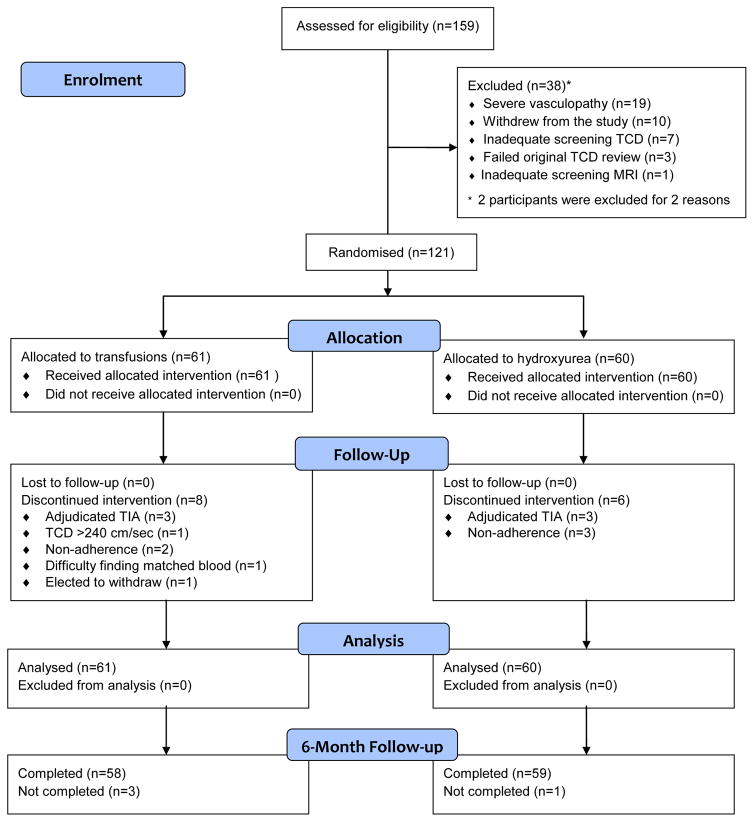
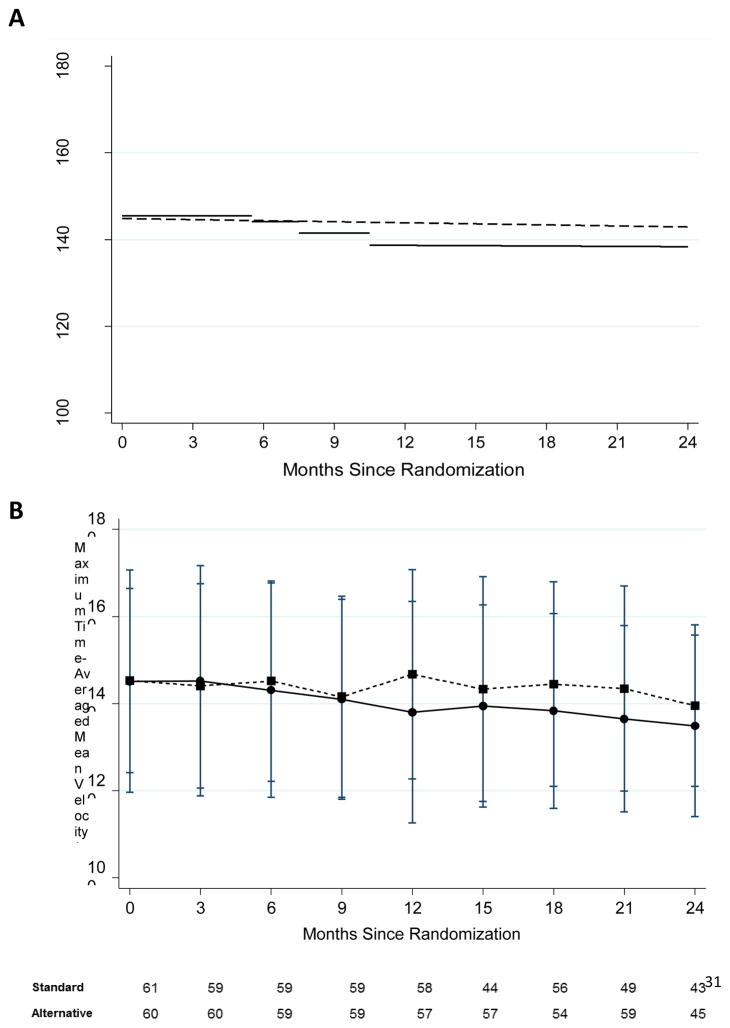
Background For children with sickle cell anaemia and high transcranial doppler (TCD) flow velocities, regular blood transfusions can effectively prevent primary stroke, but must be continued indefinitely. The efficacy of hydroxycarbamide (hydroxyurea) in this setting is unknown; we performed the TWiTCH trial to compare hydroxyurea with standard transfusions.Methods TWiTCH was a multicentre, phase 3, randomised, open-label, non-inferiority trial done at 26 paediatric hospitals and health centres in the USA and Canada. We enrolled children with sickle cell anaemia who were aged 4-16 years and had abnormal TCD flow velocities (≥ 200 cm/s) but no severe vasculopathy. After screening, eligible participants were randomly assigned 1:1 to continue standard transfusions (standard group) or hydroxycarbamide (alternative group). Randomisation was done at a central site, stratified by site with a block size of four, and an adaptive randomisation scheme was used to balance the covariates of baseline age and TCD velocity. The study was open-label, but TCD examinations were read centrally by observers masked to treatment assignment and previous TCD results. Participants assigned to standard treatment continued to receive monthly transfusions to maintain 30% sickle haemoglobin or lower, while those assigned to the alternative treatment started oral hydroxycarbamide at 20 mg/kg per day, which was escalated to each participant's maximum tolerated dose. The treatment period lasted 24 months from randomisation. The primary study endpoint was the 24 month TCD velocity calculated from a general linear mixed model, with the non-inferiority margin set at 15 cm/s. The primary analysis was done in the intention-to-treat population and safety was assessed in all patients who received at least one dose of assigned treatment. This study is registered with ClinicalTrials.gov, number NCT01425307.Findings Between Sept 20, 2011, and April 17, 2013, 159 patients consented and enrolled in TWiTCH. 121 participants passed screening and were then randomly assigned to treatment (61 to transfusions and 60 to hydroxycarbamide). At the first scheduled interim analysis, non-inferiority was shown and the sponsor terminated the study. Final model-based TCD velocities were 143 cm/s (95% CI 140-146) in children who received standard transfusions and 138 cm/s (135-142) in those who received hydroxycarbamide, with a difference of 4·54 (0·10-8·98). Non-inferiority (p=8·82 × 10(-16)) and post-hoc superiority (p=0·023) were met. Of 29 new neurological events adjudicated centrally by masked reviewers, no strokes were identified, but three transient ischaemic attacks occurred in each group. Magnetic resonance brain imaging and angiography (MRI and MRA) at exit showed no new cerebral infarcts in either treatment group, but worsened vasculopathy in one participant who received standard transfusions. 23 severe adverse events in nine (15%) patients were reported for hydroxycarbamide and ten serious adverse events in six (10%) patients were reported for standard transfusions. The most common serious adverse event in both groups was vaso-occlusive pain (11 events in five [8%] patients with hydroxycarbamide and three events in one [2%] patient for transfusions).Interpretation For high-risk children with sickle cell anaemia and abnormal TCD velocities who have received at least 1 year of transfusions, and have no MRA-defined severe vasculopathy, hydroxycarbamide treatment can substitute for chronic transfusions to maintain TCD velocities and help to prevent primary stroke.Funding National Heart, Lung, and Blood Institute, National Institutes of Health.
Overview
The claims and statistics of this paper haven’t been checked yet.
Free: it reads the open-access text and checks the first 5 claims that cite a source we can check. Create a free account to check every claim.
Integrity signals
Registry
Cites
Statistics
Figures
Verification
Claims the paper makes
The claims and statistics of this paper haven’t been checked yet.
Free: it reads the open-access text and checks the first 5 claims that cite a source we can check. Create a free account to check every claim.
Claims other papers make about this one
Each is checked against this paper’s own text: does it say what the citing paper says it does?
The source backs part of the claim, not all of it — or backs it for a different population, condition or comparison.
In the citing paper
“therapy with hydroxyurea, which induces HbF and reduces white blood cell count, reticulocyte count, and hemolysis, is effective in the primary prevention of stroke (152).”
From Pathophysiology of Sickle Cell Disease (2019) · cites this paper as [152]
Experimental — accuracy not yet measuredThe source backs part of the claim, not all of it — or backs it for a different population, condition or comparison.
In the citing paper
“Hydroxyurea was noninferior to transfusion for reducing transcranial Doppler flow velocities in selected children at high risk for stroke.”
From Fetal hemoglobin in sickle cell anemia (2020) · cites this paper as [90]
Experimental — accuracy not yet measured
Self-check
Percentages, sums and reported differences re-computed from the paper’s own numbers.
The self-check needs the paper’s full text.
Citations
Cites
Effect of hydroxyurea on the frequency of painful crises in sickle cell anemia
Charache, S., Terrin, M. L., Moore, R. D., Dover, G. J., Barton, F. B., Eckert, S. V., McMahon, R. P., & Bonds, D. R. (1995) · New England Journal of Medicine · doi:10.1056/nejm199505183322001 · Cited by 2,340 · cited 1×
“[8, 9] Through fetal haemoglobin (HbF) induction and other mechanisms of action, hydroxyurea inhibits intracellular sickle haemoglobin (HbS) polymerisation and lowers the risk of vaso-occlusive complications.”
Adams, R. J., McKie, V. C., Hsu, L., Files, B., Vichinsky, E., Pegelow, C., Abboud, M., Gallagher, D., Kutlar, A., Nichols, F. T., et al. (1998) · New England Journal of Medicine · doi:10.1056/nejm199807023390102 · Cited by 1,866
Self-citationCerebrovascular accidents in sickle cell disease: rates and risk factors.
(1998) · PubMed · doi:10.1182/blood.v91.1.288 · Cited by 1,694 · cited 2×
“[1] After first stroke, there is a high rate of recurrence or progression even with chronic transfusion therapy; a recent publication with median transfusion duration of 5.”
Self-citationManagement of Sickle Cell Disease: Summary of the 2014 Evidence-Based Report by Expert Panel Members
Yawn, B. P., Buchanan, G. R., Afenyi-Annan, A. N., Ballas, S. K., Hassell, K. L., James, A. H., Jordan, L., Lanzkron, S. M., Lottenberg, R., Savage, W. J., et al. (2014) · JAMA · doi:10.1001/jama.2014.10517 · Cited by 1,599
Self-citationDams, R. O. J. A., Ie, V. I. C. M. C. K., Su, L. E. H., Iles, B. E. F., Ichinsky, E. L. V., Egelow, C. H. P., Bboud, M. I. A., Allagher, D. I. G., Utlar, K., Ichols, F. E. T. N., et al. (2015) · Cited by 1,338
Wang, W. C., Ware, R. E., Miller, S. T., Iyer, R. V., Casella, J. F., Minniti, C. P., Rana, S., Thornburg, C. D., Rogers, Z. R., Kalpatthi, R. V., et al. (2011) · The Lancet · doi:10.1016/s0140-6736(11)60355-3 · Cited by 803 · cited 1×
“[8, 9] Through fetal haemoglobin (HbF) induction and other mechanisms of action, hydroxyurea inhibits intracellular sickle haemoglobin (HbS) polymerisation and lowers the risk of vaso-occlusive complications.”
Self-citationThe Use of Transcranial Ultrasonography to Predict Stroke in Sickle Cell Disease
Adams, R., McKie, V., Nichols, F., Carl, E., Zhang, D.-L., McKie, K., Figueroa, R., Litaker, M., Thompson, W., & Hess, D. (1992) · New England Journal of Medicine · doi:10.1056/nejm199202273260905 · Cited by 658 · cited 2×
“[3, 5] Patients from 26 paediatric programmes (Appendix) between 4–16 years of age with SCA and abnormal TCD velocities were eligible after ≥12 months of chronic transfusions.”
Self-citationDiscontinuing Prophylactic Transfusions Used to Prevent Stroke in Sickle Cell Disease
(2005) · New England Journal of Medicine · doi:10.1056/nejmoa050460 · Cited by 635
Controlled Trial of Transfusions for Silent Cerebral Infarcts in Sickle Cell Anemia
DeBaun, M. R., Gordon, M., McKinstry, R. C., Noetzel, M. J., White, D. A., Sarnaik, S. A., Meier, E. R., Howard, T. H., Majumdar, S., Inusa, B. P. D., et al. (2014) · New England Journal of Medicine · doi:10.1056/nejmoa1401731 · Cited by 545
Self-citationHow I use hydroxyurea to treat young patients with sickle cell anemia
Ware, R. E. (2010) · Blood · doi:10.1182/blood-2009-04-146852 · Cited by 396 · cited 2×
“[10] Hydroxyurea has the potential for lowering TCD velocities and thus reducing stroke risk, [11, 12] but definitive data are lacking regarding its efficacy in cerebrovascular disease.”
Self-citation
Cited by
Kleindorfer, D. O., Towfighi, A., Chaturvedi, S., Cockroft, K. M., Gutierrez, J., Lombardi-Hill, D., Kamel, H., Kernan, W. N., Kittner, S. J., Leira, E. C., et al. (2021) · Stroke · doi:10.1161/str.0000000000000375 · Cited by 3,237
Rees, D. C., Williams, T. N., & Gladwin, M. T. (2010) · The Lancet · doi:10.1016/s0140-6736(10)61029-x · Cited by 2,504
Padmanabhan, A., Connelly‐Smith, L., Aqui, N., Balogun, R. A., Klingel, R., Meyer, E., Pham, H. P., Schneiderman, J., Witt, V., Wu, Y., et al. (2019) · Journal of Clinical Apheresis · doi:10.1002/jca.21705 · Cited by 2,230
Kato, G. J., Piel, F. B., Reid, C. D., Gaston, M. H., Ohene-Frempong, K., Krishnamurti, L., Smith, W. R., Panepinto, J. A., Weatherall, D. J., Costa, F. F., et al. (2018) · Nature Reviews Disease Primers · doi:10.1038/nrdp.2018.10 · Cited by 1,501
Piel, F. B., Steinberg, M. H., & Rees, D. C. (2017) · New England Journal of Medicine · doi:10.1056/nejmra1510865 · Cited by 1,488
Ware, R. E., de Montalembert, M., Tshilolo, L., & Abboud, M. R. (2017) · The Lancet · doi:10.1016/s0140-6736(17)30193-9 · Cited by 977
Self-citationPathophysiology of Sickle Cell Disease
Sundd, P., Gladwin, M. T., & Novelli, E. M. (2019) · Annual Review of Pathology Mechanisms of Disease · doi:10.1146/annurev-pathmechdis-012418-012838 · Cited by 813
Ferriero, D. M., Fullerton, H. J., Bernard, T. J., Billinghurst, L., Daniels, S. R., DeBaun, M. R., deVeber, G., Ichord, R. N., Jordan, L. C., Massicotte, P., et al. (2019) · Stroke · doi:10.1161/str.0000000000000183 · Cited by 797
“of monthly blood transfusion therapy, to be switched over to hydroxyurea therapy.(285) During the first interim analysis, non-”
BackgroundConnelly‐Smith, L., Alquist, C. R., Aqui, N. A., Hofmann, J. C., Klingel, R., Onwuemene, O. A., Patriquin, C. J., Pham, H. P., Sanchez, A. P., Schneiderman, J., et al. (2023) · Journal of Clinical Apheresis · doi:10.1002/jca.22043 · Cited by 684
Piel, F. B., Steinberg, M., & Rees, D. C. (2016) · Spiral (Imperial College London) · doi:10.1056/nejmc1706325#sa6 · Cited by 659
Gluckman, E., Cappelli, B., Bernaudin, F., Labopin, M., Volt, F., Carreras, J., Pinto Simões, B., Ferster, A., Dupont, S., de la Fuente, J., et al. (2017) · Blood · doi:10.1182/blood-2016-10-745711 · Cited by 495
Kavanagh, P. L., Fasipe, T. A., & Wun, T. (2022) · JAMA · doi:10.1001/jama.2022.10233 · Cited by 478
DeBaun, M. R., Jordan, L. C., King, A. A., Schatz, J., Vichinsky, E., Fox, C. K., McKinstry, R. C., Telfer, P., Kraut, M. A., Daraz, L., et al. (2020) · Blood Advances · doi:10.1182/bloodadvances.2019001142 · Cited by 434
“If a child who had abnormal TCD screening measurement meeting criteria for transitioning to maximum tolerated dose of hydroxyurea, after 1 year of regular blood transfusion therapy, a discussion with the family should include whether hydroxyurea is preferable to regular blood transfusion therapy.(44) Prior to consider…”
InfluentialHydroxyurea for children with sickle cell anemia in Sub-Saharan Africa
Tshilolo, L., Tomlinson, G., Williams, T. N., Santos, B., Olupot-Olupot, P., Lane, A., Aygun, B., Stuber, S. E., Latham, T. S., McGann, P. T., et al. (2019) · New England Journal of Medicine · doi:10.1056/nejmoa1813598 · Cited by 376
Self-citationBushnell, C., Kernan, W. N., Sharrief, A. Z., Chaturvedi, S., Cole, J. W., Cornwell, W. K., Cosby-Gaither, C., Doyle, S., Goldstein, L. B., Lennon, O., et al. (2024) · Stroke · doi:10.1161/str.0000000000000475 · Cited by 360
Inflammation in sickle cell disease
Conran, N., & Belcher, J. D. (2018) · Clinical Hemorheology and Microcirculation · doi:10.3233/ch-189012 · Cited by 294
Central nervous system complications and management in sickle cell disease
DeBaun, M. R., & Kirkham, F. J. (2016) · Blood · doi:10.1182/blood-2015-09-618579 · Cited by 263
Mechanisms of haemolysis-induced kidney injury
Van Avondt, K., Nur, E., & Zeerleder, S. (2019) · Nature Reviews Nephrology · doi:10.1038/s41581-019-0181-0 · Cited by 204
Sickle Cell Anemia and Its Phenotypes
Williams, T., & Thein, S. L. (2018) · Annual Review of Genomics and Human Genetics · doi:10.1146/annurev-genom-083117-021320 · Cited by 205
“Because it is currently the standard of care, all children were first established on transfusion therapy; however, TWiTCH showed that, in children who have been transfused for at least one year, switching to hydroxyurea was as effective as continuing transfusions in terms of TCD velocities (211).”
MethodAdvances in the diagnosis and treatment of sickle cell disease
Brandow, A. M., & Liem, R. I. (2022) · Journal of Hematology & Oncology · doi:10.1186/s13045-022-01237-z · Cited by 199
“Subsequently, hydroxyurea was FDA approved for children in 2017 to reduce the frequency pain events and need for blood transfusions in children ≥ 2 years of age [63].”
BackgroundSickle cell disease: when and how to transfuse
Howard, J. (2016) · Hematology · doi:10.1182/asheducation-2016.1.625 · Cited by 195
“One randomized comparison of hydroxyurea and transfusion showed similar rates of ACS in both groups,(35) and the other showed a decrease in rates of ACS with transfusion (3% vs 7%).(7) A retrospective study of children on chronic transfusion therapy because of recurrent or severe ACS showed a decrease in ACS incidence…”
ResultRecent Advances in the Treatment of Sickle Cell Disease
Salinas Cisneros, G., & Thein, S. L. (2020) · Frontiers in Physiology · doi:10.3389/fphys.2020.00435 · Cited by 193
Chaturvedi, S., & DeBaun, M. R. (2016) · American Journal of Hematology · doi:10.1002/ajh.24235 · Cited by 186
“The trial was stopped early after a planned interim analysis demonstrated that hydroxyurea therapy was non-inferior to blood transfusions for primary stroke prevention [72].”
BackgroundPiel, F. B., Rees, D. C., DeBaun, M. R., Nnodu, O., Ranque, B., Thompson, A. A., Ware, R. E., Abboud, M. R., Abraham, A., Ambrose, E. E., et al. (2023) · The Lancet Haematology · doi:10.1016/s2352-3026(23)00096-0 · Cited by 177
Self-citationOpoka, R. O., Ndugwa, C. M., Latham, T. S., Lane, A., Hume, H. A., Kasirye, P., Hodges, J. S., Ware, R. E., & John, C. C. (2017) · Blood · doi:10.1182/blood-2017-06-788935 · Cited by 148
Self-citationHydroxyurea (hydroxycarbamide) for sickle cell disease
Nevitt, S. J., Jones, A. P., & Howard, J. (2017) · Cochrane Database of Systematic Reviews · doi:10.1002/14651858.cd002202.pub2 · Cited by 165
Insight into the complex pathophysiology of sickle cell anaemia and possible treatment
Piccin, A., Murphy, C., Eakins, E., Rondinelli, M. B., Daves, M., Vecchiato, C., Wolf, D. G. F., Mahon, C. M., & Smith, O. P. (2019) · European Journal Of Haematology · doi:10.1111/ejh.13212 · Cited by 157
Pediatric arterial ischemic stroke: Epidemiology, risk factors, and management
Felling, R. J., Sun, L. R., Maxwell, E. C., Goldenberg, N. A., & Bernard, T. J. (2017) · Blood Cells Molecules and Diseases · doi:10.1016/j.bcmd.2017.03.003 · Cited by 157
“More recently, results from the Twitch trial have shown that hydroxyurea offers comparable efficacy and may be more easily accessible to patients (141).”
BackgroundAdvances in the Treatment of Sickle Cell Disease
Kapoor, S., Little, J. A., & Pecker, L. H. (2018) · Mayo Clinic Proceedings · doi:10.1016/j.mayocp.2018.08.001 · Cited by 157
Bernaudin, F., Dalle, J.-H., Bories, D., de Latour, R. P., Robin, M., Bertrand, Y., Pondarre, C., Vannier, J.-P., Neven, B., Kuentz, M., et al. (2020) · Haematologica · doi:10.3324/haematol.2018.213207 · Cited by 142
“Transfusion number: median (range) 15 (2-119) 16.”
Hydroxyurea dose escalation for sickle cell anemia in Sub-Saharan Africa
John, C. C., Opoka, R. O., Latham, T. S., Hume, H. A., Nabaggala, C., Kasirye, P., Ndugwa, C. M., Lane, A., & Ware, R. E. (2020) · New England Journal of Medicine · doi:10.1056/nejmoa2000146 · Cited by 153
Self-citationAmerican Society of Hematology 2021 guidelines for sickle cell disease: stem cell transplantation
Kanter, J., Liem, R. I., Bernaudin, F., Bolaños‐Meade, J., Fitzhugh, C. D., Hankins, J. S., Murad, M. H., Panepinto, J. A., Rondelli, D., Shenoy, S. S., et al. (2021) · Blood Advances · doi:10.1182/bloodadvances.2021004394c · Cited by 152
“Children without significant CNS vasculopathy can be safely transitioned from CRCT to HU.(35) However, CRCT remains the only option for disease stabilization in children with a previous”
BackgroundGuidelines on red cell transfusion in sickle cell disease Part II : indications for transfusion
Davis, B. A., Allard, S., Qureshi, A., Porter, J. B., Pancham, S., Win, N., Cho, G., Ryan, K. E., & the British Society for Haematology (2016) · British Journal of Haematology · doi:10.1111/bjh.14383 · Cited by 146
Self-citationRed cell transfusion and alloimmunization in sickle cell disease
Linder, G., & Chou, S. T. (2021) · Haematologica · doi:10.3324/haematol.2020.270546 · Cited by 145
Singh, A., Irfan, H., Fatima, E., Nazir, Z., Verma, A., & Akilimali, A. (2024) · Annals of Medicine and Surgery · doi:10.1097/ms9.0000000000002146 · Cited by 147
“Life expectancy is signi fi cantly diminished, with affected individuals often not surviving beyond an average age of 43 years [7] .”
BackgroundOverview of Acute Ischemic Stroke Evaluation and Management
Hasan, T. F., Hasan, H., & Kelley, R. E. (2021) · Biomedicines · doi:10.3390/biomedicines9101486 · Cited by 144
How we manage iron overload in sickle cell patients
Coates, T. D., & Wood, J. C. (2017) · British Journal of Haematology · doi:10.1111/bjh.14575 · Cited by 138
Self-citationTebbi, C. K. (2022) · Hemato · doi:10.3390/hemato3020024 · Cited by 140
“Hydroxycarbamide is reported to reduce episodes of pain and acute chest syndrome, hospitalization, and transfusions in adults and children with SCD [198,199].”
BackgroundFetal hemoglobin in sickle cell anemia
Steinberg, M. H. (2020) · Blood · doi:10.1182/blood.2020007645 · Cited by 136
Quinn, C. T. (2016) · Experimental Biology and Medicine · doi:10.1177/1535370216640385 · Cited by 138
“The recently published TWiTCH trial demonstrated that hydroxyurea was non-inferior to chronic transfusions for the maintenance of TCD velocities in children who have received at least 1 year of transfusions and have no severe vasculopathy detected by magnetic resonance angiography.(44) So, the transition from chronic…”
MethodSickle cell disease: Reducing the global disease burden
Mburu, J., & Odame, I. (2019) · International Journal of Laboratory Hematology · doi:10.1111/ijlh.13023 · Cited by 136
Self-citationSickle cell disease: Clinical presentation and management of a global health challenge
Houwing, M. E., de Pagter, P. J., van Beers, E. J., Biemond, B. J., Rettenbacher, E., Rijneveld, A. W., Schols, E. M., Philipsen, J. N. J., Tamminga, R. Y. J., van Draat, K. F., et al. (2019) · Blood Reviews · doi:10.1016/j.blre.2019.05.004 · Cited by 122
Hankins, J. S., Estepp, J. H., Hodges, J., Villavicencio, M., Robison, L. L., Weiss, M. J., Kang, G., Schreiber, J. E., Porter, J. S., Kaste, S. C., et al. (2018) · Pediatric Blood & Cancer · doi:10.1002/pbc.27228 · Cited by 118
Self-citationAdesina, O., Brunson, A. M., Keegan, T. H. M., & Wun, T. (2017) · Blood Advances · doi:10.1182/bloodadvances.2017005256 · Cited by 117
Fasano, R. M., Meyer, E., Branscomb, J., White, M. S., Gibson, R. W., & Eckman, J. R. (2018) · Transfusion Medicine Reviews · doi:10.1016/j.tmrv.2018.07.003 · Cited by 118
Transcranial Doppler ultrasonography in neurological surgery and neurocritical care
Bonow, R. H., Young, C. C., Bass, D. I., Moore, A. E., & Levitt, M. R. (2019) · Neurosurgical FOCUS · doi:10.3171/2019.9.focus19611 · Cited by 117
Azar, S., & Wong, T. E. (2016) · Medical Clinics of North America · doi:10.1016/j.mcna.2016.09.009 · Cited by 115
Pecker, L. H., & Lanzkron, S. (2021) · Annals of Internal Medicine · doi:10.7326/aitc202101190 · Cited by 112
Abdullahi, S. U., Wudil, B. J., Bello‐Manga, H., Gambo, S., Inuwa, H., Tijjani, A. G., Idris, N., Galadanci, A., Hikima, M. S., Galadanci, N. A., et al. (2021) · The Lancet Haematology · doi:10.1016/s2352-3026(21)00368-9 · Cited by 110
Thromboinflammatory mechanisms in sickle cell disease - challenging the hemostatic balance
Conran, N., & Paula, E. V. D. (2020) · Haematologica · doi:10.3324/haematol.2019.239343 · Cited by 109
Sporns, P. B., Fullerton, H. J., Lee, S., Kim, H., Lo, W. D., Mackay, M. T., & Wildgruber, M. (2022) · Nature Reviews Disease Primers · doi:10.1038/s41572-022-00337-x · Cited by 106
Guilliams, K. P., Fields, M. E., Ragan, D. K., Eldeniz, C., Binkley, M. M., Chen, Y., Comiskey, L., Doctor, A., Hulbert, M. L., Shimony, J. S., et al. (2017) · Blood · doi:10.1182/blood-2017-06-789842 · Cited by 106
McGann, P. T., Niss, O., Dong, M., Marahatta, A., Howard, T. A., Mizuno, T., Lane, A., Kalfa, T. A., Malik, P., Quinn, C. T., et al. (2019) · American Journal of Hematology · doi:10.1002/ajh.25510 · Cited by 105
“0 × 10(9)/L,(21,37) children treated with hydroxyurea reach MTD at ~25 mg/kg/d and can routinely achieve 25% HbF levels.(15,18,23,27,38) But relatively few patients treated at MTD will consistently maintain HbF ≥30%, a level that approximates deletional HbS/HPFH, is a benign form of SCA, in which MCGANN ET AL.”
BackgroundMethodSelf-citationQureshi, A., Kaya, B., Pancham, S., Keenan, R., Anderson, J., Akanni, M., Howard, J., & the British Society for Haematology (2018) · British Journal of Haematology · doi:10.1111/bjh.15235 · Cited by 104
Epidemiology of Stroke in Sickle Cell Disease
Kirkham, F. J., & Lagunju, I. A. (2021) · Journal of Clinical Medicine · doi:10.3390/jcm10184232 · Cited by 104
Egesa, W. I., Nakalema, G., Waibi, W. M., Turyasiima, M., Amuje, E., Kiconco, G., Odoch, S., Kumbakulu, P. K., Abdirashid, S., & Asiimwe, D. (2022) · International Journal of Pediatrics · doi:10.1155/2022/3885979 · Cited by 101
“The TWiTCH study [152] provided insight that hydroxyurea therapy after at least one year of regular blood transfusion can prevent primary stroke in children with abnormal TCD velocities and without severe vasculopathy as defined by magnetic resonance angiography.”
MethodBernaudin, F., Verlhac, S., Arnaud, C., Kamdem, A., Hau, I., Leveillé, E., Vasile, M., Kasbi, F., Madhi, F., Fourmaux, C., et al. (2016) · Blood · doi:10.1182/blood-2015-10-675231 · Cited by 101
“Bilirubin, mmol/L 158 29 (21-39) 54 35 (25-50) NS 6 28.”
Fetal haemoglobin induction in sickle cell disease
Paikari, A., & Sheehan, V. (2017) · British Journal of Haematology · doi:10.1111/bjh.15021 · Cited by 101
Hydroxyurea (hydroxycarbamide) for sickle cell disease
Rankine‐Mullings, A., & Nevitt, S. J. (2022) · Cochrane Database of Systematic Reviews · doi:10.1002/14651858.cd002202.pub3 · Cited by 98
Neurologic Complications of Sickle Cell Disease
Farooq, S., & Testai, F. D. (2019) · Current Neurology and Neuroscience Reports · doi:10.1007/s11910-019-0932-0 · Cited by 95
Hematopoietic stem cell transplantation for sickle cell disease: The changing landscape
Kassim, A. A., & Sharma, D. (2017) · Hematology/Oncology and Stem Cell Therapy · doi:10.1016/j.hemonc.2017.05.008 · Cited by 92
Hydroxyurea reduces cerebral metabolic stress in patients with sickle cell anemia
Fields, M. E., Guilliams, K. P., Ragan, D. K., Binkley, M. M., Mirro, A. E., Fellah, S., Hulbert, M. L., Blinder, M. A., Eldeniz, C., Vo, K. D., et al. (2019) · Blood · doi:10.1182/blood-2018-09-876318 · Cited by 91
CE: Understanding the Complications of Sickle Cell Disease
Tanabe, P. J., Spratling, R. G., Smith, D., Grissom, P. H., & Hulihan, M. (2019) · AJN American Journal of Nursing · doi:10.1097/01.naj.0000559779.40570.2c · Cited by 91
Pediatric Stroke: Overview and Recent Updates
Hollist, M., Au, K., Morgan, L., Shetty, P. A., Rane, R., Hollist, A., Amaniampong, A., & Kirmani, B. F. (2021) · Aging and Disease · doi:10.14336/ad.2021.0219 · Cited by 91
“Once MTD was attained, transfusion was discontinued and phlebotomy was initiated with monthly removal of 10 mL/kg of blood for management of iron overload [60,61].”
MethodEnd points for sickle cell disease clinical trials: patient-reported outcomes, pain, and the brain
Farrell, A. T., Panepinto, J. A., Carroll, C. P., Darbari, D. S., Desai, A. A., King, A. A., Adams, R. J., Barber, T. D., Brandow, A. M., DeBaun, M. R., et al. (2019) · Blood Advances · doi:10.1182/bloodadvances.2019000882 · Cited by 92
“TCD velocities have also been used as end points in clinical trials, most notably in a comparison of blood transfusion and hydroxyurea.(200) Other established biomarkers of overt stroke include low hemoglobin, high systolic blood pressure, and low overnight oxygen saturation.”
MethodSelf-citationEstepp, J. H., Smeltzer, M. P., Kang, G., Li, C., Wang, W. C., Abrams, C., Aygun, B., Ware, R. E., Nottage, K., & Hankins, J. S. (2017) · American Journal of Hematology · doi:10.1002/ajh.24906 · Cited by 88
Self-citationIntroduction to Radio Propagation for Fixed and Mobile Communications
Doble, J. E. (1996) · International Linear Collider · Cited by 83
Bernaudin, F., Verlhac, S., de Latour, R. P., Dalle, J., Brousse, V. A. M., Petras, E., Thuret, I., Paillard, C., Neven, B., Galambrun, C., et al. (2019) · JAMA · doi:10.1001/jama.2018.20059 · Cited by 81
de Montalembert, M., Voskaridou, E., Oevermann, L., Cannas, G., Habibi, A., Loko, G., Joseph, L., Colombatti, R., Bartolucci, P., Brousse, V. A. M., et al. (2021) · American Journal of Hematology · doi:10.1002/ajh.26286 · Cited by 80
Galadanci, N. A., Abdullahi, S. U., Vance, L. D., Tabari, A. M., Ali, S., Belonwu, R., Salihu, A., Galadanci, A. A., Jibir, B. W., Bello‐Manga, H., et al. (2017) · American Journal of Hematology · doi:10.1002/ajh.24770 · Cited by 80
Blood transfusion for preventing primary and secondary stroke in people with sickle cell disease
Wang, W. C., & Dwan, K. (2013) · Cochrane Database of Systematic Reviews · doi:10.1002/14651858.cd003146.pub2 · Cited by 65
NEW THERAPEUTIC OPTIONS FOR THE TREATMENT OF SICKLE CELL DISEASE: Guest Editor: Raffaella Origa
Mattè, A., Mazzi, F., Federti, E., Olivieri, O., & Franceschi, L. D. (2019) · Mediterranean Journal of Hematology and Infectious Diseases · doi:10.4084/mjhid.2019.002 · Cited by 77
“abnormalities at the transcranial doppler scan (TCD), used to screen for cerebrovascular disease in pediatric patients.(38-40) This requires a close follow-up by TCD scan every 3 months, with the possibility to switch-back to chronic transfusion regimen if abnormal transcranial velocities are again documented.”
Knowledge insufficient: the management of haemoglobin SC disease
Pecker, L. H., Schaefer, B. A., & Luchtman‐Jones, L. (2016) · British Journal of Haematology · doi:10.1111/bjh.14444 · Cited by 77
Self-citationIndications for transfusion in the management of sickle cell disease
Han, H., Hensch, L., & Tubman, V. N. (2021) · Hematology · doi:10.1182/hematology.2021000307 · Cited by 76
An analysis of inpatient pediatric sickle cell disease: Incidence, costs, and outcomes
Bou‐Maroun, L. M., Meta, F., Hanba, C. J., Campbell, A., & Yanik, G. A. (2017) · Pediatric Blood & Cancer · doi:10.1002/pbc.26758 · Cited by 72
Shah, N., Bhor, M., Xie, L., Halloway, R., Arcona, S., Paulose, J., & Yüce, H. (2019) · Health and Quality of Life Outcomes · doi:10.1186/s12955-019-1225-7 · Cited by 74
“Studies have shown that HU can be used as a substitute for chronic transfusions for the prevention of primary stroke among high-risk SCD pediatric patients with abnormal transcranial doppler (TCD) flow velocity [23, 24].”
BackgroundBallas, S. K. (2018) · Clinical Hemorheology and Microcirculation · doi:10.3233/ch-189002 · Cited by 70
“The TCD with Transfusions Changing to Hydroxyurea (TWiTCH) trial showed that the transition of pediatric patients from transfusion to HU was safe if they met the criteria of the study [147].”
Neurologic complications of sickle cell disease in Africa: A systematic review and meta-analysis
Noubiap, J. J., Mengnjo, M. K., Nicastro, N., & Tatuene, J. K. (2017) · Neurology · doi:10.1212/wnl.0000000000004537 · Cited by 68
Treatment Options for Sickle Cell Disease
Meier, E. R. (2018) · Pediatric Clinics of North America · doi:10.1016/j.pcl.2018.01.005 · Cited by 68
Heitzer, A. M., Longoria, J. N., Okhomina, V. I., Wang, W. C., Raches, D., Potter, B., Jacola, L. M., Porter, J. S., Schreiber, J. E., King, A. A., et al. (2021) · British Journal of Haematology · doi:10.1111/bjh.17687 · Cited by 67
Effective use of hydroxyurea for sickle cell anemia in low-resource countries
Power‐Hays, A., & Ware, R. E. (2020) · Current Opinion in Hematology · doi:10.1097/moh.0000000000000582 · Cited by 70
Self-citationPediatric sickle cell disease: past successes and future challenges
Meier, E. R., & Rampersad, A. G. (2016) · Pediatric Research · doi:10.1038/pr.2016.204 · Cited by 65
“HU and phlebotomy was recently found to be an acceptable alternative to standard treatment (transfusion/ chelation therapy) for primary stroke prevention in children with abnormal TCD velocities without evidence of severe vasculopathy on brain MRI/MRA (70).”
ResultInfluentialStandard management of sickle cell disease complications ☆
Abboud, M. R. (2020) · Hematology/Oncology and Stem Cell Therapy · doi:10.1016/j.hemonc.2019.12.007 · Cited by 67
Arnold, S. D., Brazauskas, R., He, N., Li, Y., Aplenc, R., Jin, Z., Hall, M., Atsuta, Y., Dalal, J. D., Hahn, T., et al. (2017) · Haematologica · doi:10.3324/haematol.2017.169581 · Cited by 64
“Time from diagnosis to transplant (months) 112 (7-242) 109 (10-227)”
BackgroundRigano, P., Franceschi, L. D., Sainati, L., Piga, A. G., Piel, F. B., Cappellini, M. D., Fidone, C., Masera, N., Palazzi, G., Gianesin, B., et al. (2017) · Blood Cells Molecules and Diseases · doi:10.1016/j.bcmd.2017.08.017 · Cited by 64
Galadanci, N. A., Abdullahi, S. U., Abubakar, S. A., Jibir, B. W., Aminu, H., Tijjani, A., Abba, M. A., Tabari, M. A., Galadanci, A. A., Borodo, A. M., et al. (2020) · American Journal of Hematology · doi:10.1002/ajh.25900 · Cited by 62
“More recently, the TWITCH Trial demonstrated that children with abnormal TCD measurements and no evidence of magnetic resonance angiography-defined cerebral vasculopathy, after 1 year of initial regular blood transfusion therapy, could be transitioned to hydroxyurea therapy at the maximum tolerated dose.(2) However, i…”
BackgroundStrouse, J. J. (2016) · Handbook of clinical neurology · doi:10.1016/b978-0-12-802973-2.00018-5 · Cited by 63
McClish, D. K., Smith, W. R., Levenson, J. L., Aisiku, I. P., Roberts, J. D., Roseff, S. D., & Bovbjerg, V. E. (2017) · BioMed Research International · doi:10.1155/2017/4070547 · Cited by 55
Fortin, P. M., Hopewell, S., & Estcourt, L. J. (2018) · Cochrane Database of Systematic Reviews · doi:10.1002/14651858.cd012082.pub2 · Cited by 63
Ischemic stroke in children and young adults with sickle cell disease in the post‐STOP era
Kwiatkowski, J. L., Voeks, J. H., Kanter, J., Fullerton, H. J., Debenham, E., Brown, L., Adams, R. J., & for the Post‐STOP Study Group (2019) · American Journal of Hematology · doi:10.1002/ajh.25635 · Cited by 59
“The Post-STOP study took place prior to the publication of the TWiTCH study, which showed that hydroxyurea therapy for children with abnormal TCD without significant vasculpathy was noninferior to transfusions at maintaining TCD velocities, a surrogate marker for control of stroke risk.(15) Thus, it is possible that a…”
MethodSelf-citationRusso, G. M., Franceschi, L. D., Colombatti, R., Rigano, P., Perrotta, S., Voi, V., Palazzi, G., Fidone, C., Quota, A., Graziadei, G., et al. (2019) · Orphanet Journal of Rare Diseases · doi:10.1186/s13023-019-1099-0 · Cited by 61
How I treat the older adult with sickle cell disease
Thein, S. L., & Howard, J. (2018) · Blood · doi:10.1182/blood-2018-03-818161 · Cited by 57
Advances in the Diagnosis and Treatment of Pediatric Arterial Ischemic Stroke
Sun, L. R., & Lynch, J. K. (2023) · Neurotherapeutics · doi:10.1007/s13311-023-01373-5 · Cited by 56
“Subsequently, the 2015 TCD With Transfusions Changing to Hydroxyurea (TWiTCH) trial was a randomized, open label, non-inferiority trial that enrolled children 2–16 years old with abnormal TCD results but without severe cerebral arteriopathy who had received transfusion therapy for at least a year [214].”
BackgroundMethodTHE EVOLVING PHARMACOTHERAPEUTIC LANDSCAPE FOR THE TREATMENT OF SICKLE CELL DISEASE
Ballas, S. K. (2020) · Mediterranean Journal of Hematology and Infectious Diseases · doi:10.4084/mjhid.2020.010 · Cited by 55
Sickle cell disease: progress towards combination drug therapy
Pace, B. S., Starlard‐Davenport, A., & Kutlar, A. (2021) · British Journal of Haematology · doi:10.1111/bjh.17312 · Cited by 57
“A recent paediatric clinical trial demonstrated that hydroxycarbamide and phlebotomy were non-inferior to chronic blood transfusions in children with SCA at higher risk for stroke determined by abnormal transcranial Doppler screen.(42) Over time, the HbF response to hydroxycarbamide may decline in some individuals, th…”
BackgroundSelf-citationRed Blood Cells: Exchange, Transfuse, or Deplete
Stüssi, G., Buser, A. S., & Holbro, A. (2019) · Transfusion Medicine and Hemotherapy · doi:10.1159/000504144 · Cited by 54
Virus-Induced T Cell-Mediated Heterologous Immunity and Vaccine Development
Balz, K., Trassl, L., Härtel, V., Nelson, P. P., & Skevaki, C. L. (2020) · Frontiers in Immunology · doi:10.3389/fimmu.2020.00513 · Cited by 54
The Current Role of Hydroxyurea in the Treatment of Sickle Cell Anemia
Rubio, M. L., & Marina, M. A. (2024) · Journal of Clinical Medicine · doi:10.3390/jcm13216404 · Cited by 52
“Additionally, obstetric complications are more prevalent in pregnant patients with SCD, including preeclampsia (RR, 2.06), eclampsia (OR, 3.02), cesarean delivery (OR, 1.54), placental abruption (OR, 1.6), and preterm labor (OR, 1.4) [25–27].”
InfluentialMeasuring success: utility of biomarkers in sickle cell disease clinical trials and care
Kalpatthi, R. V., & Novelli, E. M. (2018) · Hematology · doi:10.1182/asheducation-2018.1.482 · Cited by 51
“More recently, the TCD With Transfusions Changing to Hydroxyurea (TWiTCH) trial offered an alternative to transfusion for children at risk by showing that hydroxyurea with phlebotomy is noninferior to chronic blood transfusion in preventing primary stroke in those with abnormal TCD, a history of blood transfusions (at…”
Drug Therapies for the Management of Sickle Cell Disease
Rai, P., & Ataga, K. I. (2020) · F1000Research · doi:10.12688/f1000research.22433.1 · Cited by 52
Metadata
- Authors
- Ware, R. E., Davis, B. R., Schultz, W. H., Brown, R. C., Aygun, B., Sarnaik, S., Odame, I., Fuh, B., George, A., Owen, W., Luchtman-Jones, L., Rogers, Z. R., Hilliard, L., Gauger, C., Piccone, C., Lee, M. T., Kwiatkowski, J. L., Jackson, S., Miller, S. T., Roberts, C., Heeney, M. M., Kalfa, T. A., Nelson, S., Imran, H., Nottage, K., Alvarez, O., Rhodes, M., Thompson, A. A., Rothman, J. A., Helton, K. J., Roberts, D., Coleman, J., Bonner, M. J., Kutlar, A., Patel, N., Wood, J., Piller, L., Wei, P., Luden, J., Mortier, N. A., Stuber, S. E., Luban, N. L. C., Cohen, A. R., Pressel, S., & Adams, R. J.
- Affiliations
- Cincinnati Children's Hospital Medical Center (US)
- Wayne State University (US)
- Hospital for Sick Children (CA)
- East Carolina University (US)
- Baylor College of Medicine (US)
- Children's Hospital of The King's Daughters (US)
- The University of Texas Southwestern Medical Center (US)
- University of Alabama at Birmingham (US)
- Nemours Children's Clinic (US)
- Case Western Reserve University (US)
- Columbia University (US)
- Children's Hospital of Philadelphia (US)
- Medical University of South Carolina (US)
- State University of New York (US)
- University of South Carolina (US)
- Boston Children's Hospital (US)
- Children's Minnesota (US)
- University of South Alabama (US)
- St. Jude Children's Research Hospital (US)
- University of Miami (US)
- University of Mississippi (US)
- Lurie Children's Hospital (US)
- Duke Medical Center (US)
- Augusta University (US)
- Children's Hospital Los Angeles (US)
- Children's National (US)
- Corresponding author
- Ware, Russell E
- ORCID
- Ware, Russell E
- Davis, Barry R
- Odame, Isaac
- Fuh, Beng
- George, Alex
- Owen, William
- Rogers, Zora R
- Piccone, Connie
- Kwiatkowski, Janet L
- Heeney, Matthew M
- Kalfa, Theodosia A
- Nelson, Stephen
- Imran, Hamayun
- Alvarez, Ofelia
- Thompson, Alexis A
- Rothman, Jennifer A
- Roberts, Donna
- Kutlar, Abdullah
- Patel, Niren
- Wood, John
- Wei, Peng
- Luden, Judy
- Stuber, Susan E
- Cohen, Alan R
- Adams, Robert J
- Venue
- The Lancet
- Publisher
- Elsevier BV
- Published
- 2016-02
- Volume
- 387
- Issue
- 10019
- Pages
- 661-670
- ISSN
- 0099-5355 (ISSN-L)
- 0140-6736
- PMC
- PMC5724392
- OpenAlex
- W2189616037
- Cited by
- 515
- References
- 32
- Citations by year
- 2026: 34 · 2025: 31 · 2024: 54 · 2023: 32 · 2022: 48 · 2021: 50 · 2020: 58 · 2019: 54 · 2018: 42 · 2017: 63 · 2016: 41
- FWCI
- 27.80
- Type
- journal article
- Language
- en
- Open access
- green
- www.ncbi.nlm.nih.gov
- Licence
- cc-by-nc-nd
- www.elsevier.com/tdm/userlicense/1.0/ (tdm)
- www.elsevier.com/legal/tdmrep-license (tdm)
- Locations
- The Lancet (publishedVersion)
- PubMed (publishedVersion)
- PubMed Central (acceptedVersion, cc-by-nc-nd)
- DukeSpace (Duke University) (submittedVersion, cc-by-nc-nd)
- Funders
- National Heart, Lung, and Blood Institute through grants (R01 HL-095647, R01 HL-095511)
- Topics
- Health Sciences › Medicine › Genetics (clinical) › Hemoglobinopathies and Related Disorders
- Health Sciences › Medicine › Pediatrics, Perinatology and Child Health › Neonatal Health and Biochemistry
- Health Sciences › Medicine › Hematology › Blood transfusion and management
- Keywords
- sickle cell disease, hydroxyurea, chronic transfusion, stroke prevention, children, non-inferiority, hemoglobin S, vasculopathy, adverse events
- MeSH terms
- Adolescent, Anemia, Sickle Cell, Antisickling Agents, Blood Flow Velocity, Blood Transfusion, Cerebrovascular Circulation, Child, Child, Preschool, Combined Modality Therapy, Female, Humans, Hydroxyurea, Male, Treatment Outcome, Ultrasonography, Doppler, Transcranial, Stroke, Drug Substitution
About these checks
Registry, retraction, Cites and statistics results are computed, not judged, with one exception: a printed reference that no index lists is read once by a model before it counts as a citation error. Claims are extracted by a model and kept only when their quote appears verbatim in the text; each cited source is then checked, with a model’s help, for whether it says what the claim relies on. Those verdicts can be wrong — read the claim’s quote and the cited source before relying on one.
Statistics and arithmetic are recomputed, not judged.
Confidence bands are shown only for fields calibrated on our annotated test set. None is calibrated yet, so no band is shown.
What counts as a claim ›How we measure confidence ›How we check this ›
Are you an author, or do you see a problem with this page? Request a review
Data sources
Bibliographic data: Semantic Scholar, OpenAlex, Crossref.
Contains information from the Semantic Scholar Academic Graph Datasets, made available under the ODC Attribution License (ODC-BY 1.0).
Semantic Scholar’s data is described in: Kinney, R., et al. (2023). The Semantic Scholar Open Data Platform. arXiv:2301.10140.
