

Hydroxycarbamide versus chronic transfusion for maintenance of transcranial doppler flow velocities in children with sickle cell anaemia-TCD With Transfusions Changing to Hydroxyurea (TWiTCH): a multicentre, open-label, phase 3, non-inferiority trial
Open accessThe DOI matches its Crossref record; 32 of the 32 references it cites were found in a registry or an index.
Abstract
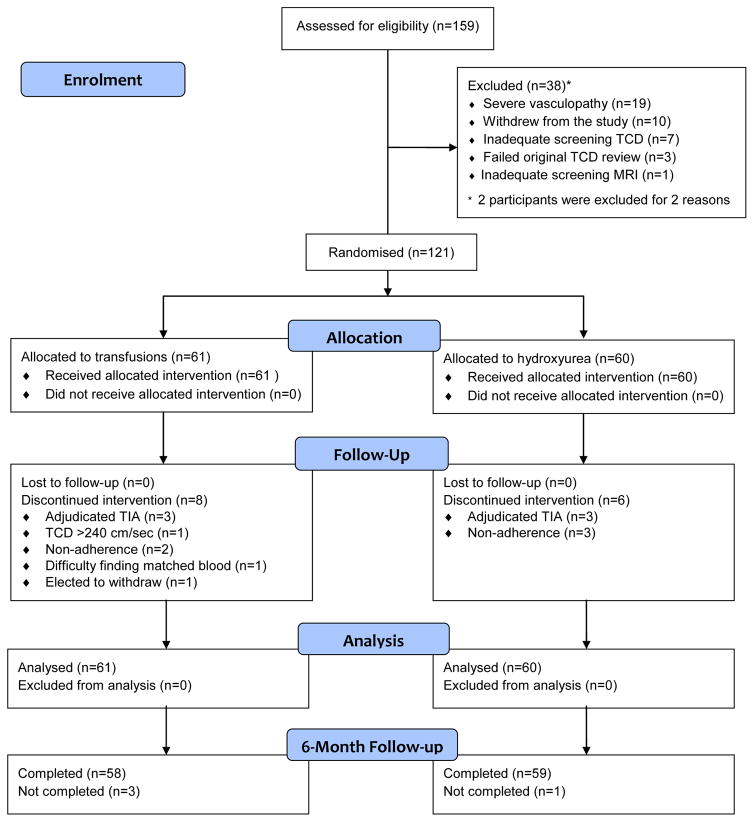
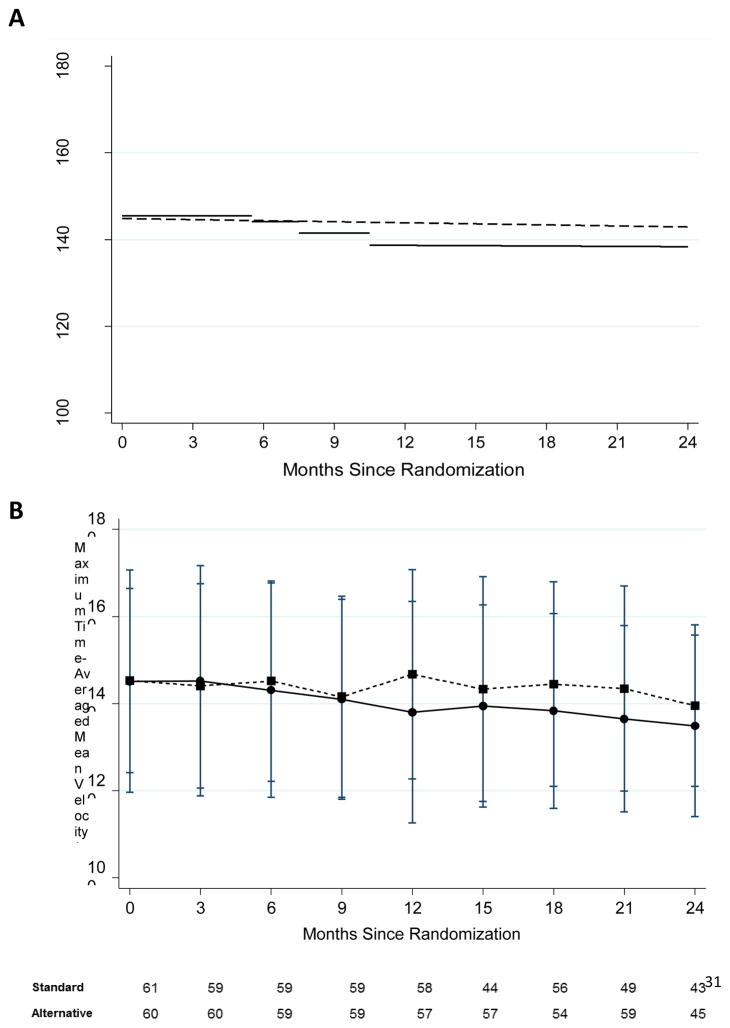
Background For children with sickle cell anaemia and high transcranial doppler (TCD) flow velocities, regular blood transfusions can effectively prevent primary stroke, but must be continued indefinitely. The efficacy of hydroxycarbamide (hydroxyurea) in this setting is unknown; we performed the TWiTCH trial to compare hydroxyurea with standard transfusions.Methods TWiTCH was a multicentre, phase 3, randomised, open-label, non-inferiority trial done at 26 paediatric hospitals and health centres in the USA and Canada. We enrolled children with sickle cell anaemia who were aged 4-16 years and had abnormal TCD flow velocities (≥ 200 cm/s) but no severe vasculopathy. After screening, eligible participants were randomly assigned 1:1 to continue standard transfusions (standard group) or hydroxycarbamide (alternative group). Randomisation was done at a central site, stratified by site with a block size of four, and an adaptive randomisation scheme was used to balance the covariates of baseline age and TCD velocity. The study was open-label, but TCD examinations were read centrally by observers masked to treatment assignment and previous TCD results. Participants assigned to standard treatment continued to receive monthly transfusions to maintain 30% sickle haemoglobin or lower, while those assigned to the alternative treatment started oral hydroxycarbamide at 20 mg/kg per day, which was escalated to each participant's maximum tolerated dose. The treatment period lasted 24 months from randomisation. The primary study endpoint was the 24 month TCD velocity calculated from a general linear mixed model, with the non-inferiority margin set at 15 cm/s. The primary analysis was done in the intention-to-treat population and safety was assessed in all patients who received at least one dose of assigned treatment. This study is registered with ClinicalTrials.gov, number NCT01425307.Findings Between Sept 20, 2011, and April 17, 2013, 159 patients consented and enrolled in TWiTCH. 121 participants passed screening and were then randomly assigned to treatment (61 to transfusions and 60 to hydroxycarbamide). At the first scheduled interim analysis, non-inferiority was shown and the sponsor terminated the study. Final model-based TCD velocities were 143 cm/s (95% CI 140-146) in children who received standard transfusions and 138 cm/s (135-142) in those who received hydroxycarbamide, with a difference of 4·54 (0·10-8·98). Non-inferiority (p=8·82 × 10(-16)) and post-hoc superiority (p=0·023) were met. Of 29 new neurological events adjudicated centrally by masked reviewers, no strokes were identified, but three transient ischaemic attacks occurred in each group. Magnetic resonance brain imaging and angiography (MRI and MRA) at exit showed no new cerebral infarcts in either treatment group, but worsened vasculopathy in one participant who received standard transfusions. 23 severe adverse events in nine (15%) patients were reported for hydroxycarbamide and ten serious adverse events in six (10%) patients were reported for standard transfusions. The most common serious adverse event in both groups was vaso-occlusive pain (11 events in five [8%] patients with hydroxycarbamide and three events in one [2%] patient for transfusions).Interpretation For high-risk children with sickle cell anaemia and abnormal TCD velocities who have received at least 1 year of transfusions, and have no MRA-defined severe vasculopathy, hydroxycarbamide treatment can substitute for chronic transfusions to maintain TCD velocities and help to prevent primary stroke.Funding National Heart, Lung, and Blood Institute, National Institutes of Health.
Overview
The claims and statistics of this paper haven’t been checked yet.
Free: it reads the open-access text and checks the first 5 claims that cite a source we can check. Create a free account to check every claim.
Integrity signals
Registry
Cites
Statistics
Figures
Verification
Claims the paper makes
The claims and statistics of this paper haven’t been checked yet.
Free: it reads the open-access text and checks the first 5 claims that cite a source we can check. Create a free account to check every claim.
Claims other papers make about this one
Each is checked against this paper’s own text: does it say what the citing paper says it does?
The source backs part of the claim, not all of it — or backs it for a different population, condition or comparison.
In the citing paper
“therapy with hydroxyurea, which induces HbF and reduces white blood cell count, reticulocyte count, and hemolysis, is effective in the primary prevention of stroke (152).”
From Pathophysiology of Sickle Cell Disease (2019) · cites this paper as [152]
Experimental — accuracy not yet measuredThe source backs part of the claim, not all of it — or backs it for a different population, condition or comparison.
In the citing paper
“Hydroxyurea was noninferior to transfusion for reducing transcranial Doppler flow velocities in selected children at high risk for stroke.”
From Fetal hemoglobin in sickle cell anemia (2020) · cites this paper as [90]
Experimental — accuracy not yet measured
Self-check
Percentages, sums and reported differences re-computed from the paper’s own numbers.
The self-check needs the paper’s full text.
Citations
Cites
Effect of hydroxyurea on the frequency of painful crises in sickle cell anemia
Charache, S., Terrin, M. L., Moore, R. D., Dover, G. J., Barton, F. B., Eckert, S. V., McMahon, R. P., & Bonds, D. R. (1995) · New England Journal of Medicine · doi:10.1056/nejm199505183322001 · Cited by 2,340 · cited 1×
“[8, 9] Through fetal haemoglobin (HbF) induction and other mechanisms of action, hydroxyurea inhibits intracellular sickle haemoglobin (HbS) polymerisation and lowers the risk of vaso-occlusive complications.”
Adams, R. J., McKie, V. C., Hsu, L., Files, B., Vichinsky, E., Pegelow, C., Abboud, M., Gallagher, D., Kutlar, A., Nichols, F. T., et al. (1998) · New England Journal of Medicine · doi:10.1056/nejm199807023390102 · Cited by 1,866
Self-citationCerebrovascular accidents in sickle cell disease: rates and risk factors.
(1998) · PubMed · doi:10.1182/blood.v91.1.288 · Cited by 1,694 · cited 2×
“[1] After first stroke, there is a high rate of recurrence or progression even with chronic transfusion therapy; a recent publication with median transfusion duration of 5.”
Self-citationManagement of Sickle Cell Disease: Summary of the 2014 Evidence-Based Report by Expert Panel Members
Yawn, B. P., Buchanan, G. R., Afenyi-Annan, A. N., Ballas, S. K., Hassell, K. L., James, A. H., Jordan, L., Lanzkron, S. M., Lottenberg, R., Savage, W. J., et al. (2014) · JAMA · doi:10.1001/jama.2014.10517 · Cited by 1,599
Self-citationDams, R. O. J. A., Ie, V. I. C. M. C. K., Su, L. E. H., Iles, B. E. F., Ichinsky, E. L. V., Egelow, C. H. P., Bboud, M. I. A., Allagher, D. I. G., Utlar, K., Ichols, F. E. T. N., et al. (2015) · Cited by 1,338
Wang, W. C., Ware, R. E., Miller, S. T., Iyer, R. V., Casella, J. F., Minniti, C. P., Rana, S., Thornburg, C. D., Rogers, Z. R., Kalpatthi, R. V., et al. (2011) · The Lancet · doi:10.1016/s0140-6736(11)60355-3 · Cited by 803 · cited 1×
“[8, 9] Through fetal haemoglobin (HbF) induction and other mechanisms of action, hydroxyurea inhibits intracellular sickle haemoglobin (HbS) polymerisation and lowers the risk of vaso-occlusive complications.”
Self-citationThe Use of Transcranial Ultrasonography to Predict Stroke in Sickle Cell Disease
Adams, R., McKie, V., Nichols, F., Carl, E., Zhang, D.-L., McKie, K., Figueroa, R., Litaker, M., Thompson, W., & Hess, D. (1992) · New England Journal of Medicine · doi:10.1056/nejm199202273260905 · Cited by 658 · cited 2×
“[3, 5] Patients from 26 paediatric programmes (Appendix) between 4–16 years of age with SCA and abnormal TCD velocities were eligible after ≥12 months of chronic transfusions.”
Self-citationDiscontinuing Prophylactic Transfusions Used to Prevent Stroke in Sickle Cell Disease
(2005) · New England Journal of Medicine · doi:10.1056/nejmoa050460 · Cited by 635
Controlled Trial of Transfusions for Silent Cerebral Infarcts in Sickle Cell Anemia
DeBaun, M. R., Gordon, M., McKinstry, R. C., Noetzel, M. J., White, D. A., Sarnaik, S. A., Meier, E. R., Howard, T. H., Majumdar, S., Inusa, B. P. D., et al. (2014) · New England Journal of Medicine · doi:10.1056/nejmoa1401731 · Cited by 545
Self-citationHow I use hydroxyurea to treat young patients with sickle cell anemia
Ware, R. E. (2010) · Blood · doi:10.1182/blood-2009-04-146852 · Cited by 396 · cited 2×
“[10] Hydroxyurea has the potential for lowering TCD velocities and thus reducing stroke risk, [11, 12] but definitive data are lacking regarding its efficacy in cerebrovascular disease.”
Self-citation
Cited by
Items 201–300 of 554
Weisman, J. K., Diamond, C. E., Kappa, S. S., & Nickel, R. S. (2019) · The Journal of Pediatrics · doi:10.1016/j.jpeds.2019.10.049 · Cited by 18
Stroke and presence of patent foramen ovale in sickle cell disease
Aggeli, C., Polytarchou, K., Dimitroglou, Y., Patsourakos, D., Delicou, S., Vassilopoulou, S., Tsiamis, E. G., & Tsioufis, K. (2021) · Journal of Thrombosis and Thrombolysis · doi:10.1007/s11239-021-02398-3 · Cited by 18
Bello‐Manga, H., Haliru, L., Tabari, A. M., Farouk, B. U., Suleiman, A., Bahago, G. Y., Sani, A. M., Baumann, A. A., DeBaun, M. R., & King, A. A. (2022) · BMC Research Notes · doi:10.1186/s13104-021-05885-1 · Cited by 18
Ghafuri, D. L., Abdullahi, S. U., Dambatta, A. H., Galadanci, J. A., Tabari, M. A., Bello‐Manga, H., Idris, N., Inuwa, H., Tijjani, A., Suleiman, A., et al. (2021) · Journal of Pediatric Hematology/Oncology · doi:10.1097/mph.0000000000002179 · Cited by 18
Aguilar‐Salinas, P., Hayward, K., Santos, R., Agarwal, V., Sauvageau, E. A., Hanel, R. A., & Aldana, P. R. (2018) · World Neurosurgery · doi:10.1016/j.wneu.2018.11.157 · Cited by 19
An update review of new therapies in sickle cell disease: the prospects for drug combinations
Lugthart, S., Ginete, C., Kuona, P., Brito, M., & Inusa, B. P. D. (2024) · Expert Opinion on Pharmacotherapy · doi:10.1080/14656566.2024.2317336 · Cited by 17
“Hydroxyurea was considered a good substitute in children that have no severe vasculopathy, to maintain TCD velocities and prevent primary stroke [14].”
BackgroundTransfusion Therapy in Children With Sickle Cell Disease
Inati, A. C., Mansour, A. G., Sabbouh, T. M., Amhez, G., Hachem, A. A., & Abbas, H. A. (2016) · Journal of Pediatric Hematology/Oncology · doi:10.1097/mph.0000000000000645 · Cited by 17
Schlenz, A. M., Phillips, S. M., Mueller, M., Melvin, C. L., Adams, R. J., Kanter, J., & On Behalf of the DISPLACE Investigators (2020) · Pediatric Blood & Cancer · doi:10.1002/pbc.28172 · Cited by 17
Self-citationVerlhac, S., Gabor, F., Paillard, C., Chateil, J., Jubert, C., Petras, M., Grévent, D., Brousse, V. A. M., Petit, P., Thuret, I., et al. (2020) · British Journal of Haematology · doi:10.1111/bjh.17178 · Cited by 17
Chambers, T. M., Kahan, S., Camanda, J., Scheurer, M. E., & Airewele, G. E. (2018) · Pediatric Blood & Cancer · doi:10.1002/pbc.27365 · Cited by 17
Primary and Secondary Stroke Prevention in Children With Sickle Cell Disease
Mack, A. K., & Thompson, A. A. (2016) · Journal of Pediatric Health Care · doi:10.1016/j.pedhc.2016.06.005 · Cited by 17
Self-citationHakami, F., Alhazmi, E. A., Busayli, W. M., Althurwi, S., Darraj, A. M., Alamir, M. A., Hakami, A., Othman, R. A., Moafa, A. I., Mahasi, H. A., et al. (2023) · Cureus · doi:10.7759/cureus.50577 · Cited by 16
“Numerous RCTs, including the stroke prevention trial in sickle cell anemia (STOP) and the transcranial Doppler (TCD) with transfusions changing to hydroxyurea (TWiTCH) trial, have assessed primary and secondary ischemic stroke prevention strategies [65,66].”
InfluentialIncidence and Risk Factors for New and Recurrent Infarcts in Adults With Sickle Cell Disease
Jordan, L. C., King, A. A., Kanter, J., Lebensburger, J. D., Ford, A. L., Varughese, T. E., Garrett, L. M., Mullis, L., Saint‐Jean, L., Davis, S. M., et al. (2024) · Journal of the American Heart Association · doi:10.1161/jaha.123.033278 · Cited by 16
Odame, I., & Bazuaye, G. N. (2024) · Hematology · doi:10.1182/hematology.2024000550 · Cited by 16
Self-citationLoggetto, S. R., Veríssimo, M. P. D. A., Darrigo, L. G., Simões, R. S., Bernardo, W. M., & Braga, J. A. P. (2021) · Hematology Transfusion and Cell Therapy · doi:10.1016/j.htct.2021.09.013 · Cited by 16
Creary, S. E., Beeman, C. M., Stanek, J. R., King, K., McGann, P. T., O’Brien, S. H., Liem, R. I., Holl, J. L., & Badawy, S. M. (2022) · Pediatric Blood & Cancer · doi:10.1002/pbc.29607 · Cited by 16
Evolution of Extracranial Internal Carotid Artery Disease in Children With Sickle Cell Anemia
Verlhac, S., Ithier, G., Bernaudin, F., Oloukoi, C., Cussenot, I., Balandra, S., Kheniche, A., Ntorkou, A. A., Ouaziz, H., Tanase, A., et al. (2022) · Stroke · doi:10.1161/strokeaha.121.037980 · Cited by 16
Chevret, S., Verlhac, S., Ducros-Miralles, E., Dalle, J., de Latour, R. P., de Montalembert, M., Benkerrou, M., Pondarré, C., Thuret, I., Guitton, C., et al. (2017) · Contemporary Clinical Trials · doi:10.1016/j.cct.2017.08.008 · Cited by 16
Neurovascular Manifestations of Sickle Cell Disease
Zedde, M., Quaresima, M., Capodanno, I., Grisendi, I., Assenza, F., Napoli, M., Moratti, C., Pavone, C., Bonacini, L., Cecco, G. D., et al. (2024) · Hemato · doi:10.3390/hemato5030023 · Cited by 17
“Two measurements are required for values between 200 cm/s and 220 cm/s, due to the physiological variations of flow velocities, which can be up to 12% within the same child measured only three hours apart [228].”
Nickel, R. S., Margulies, S., Frazer, B., Luban, N. L. C., & Webb, J. L. (2020) · Blood · doi:10.1182/blood.2020006582 · Cited by 15
Self-citationAldana, P. R., Hanel, R. A., Piatt, J. H., Han, S. H., Bansal, M. M., Schultz, C. L., Gauger, C. A., Pederson, J. M., Wellons, J. C., Hulbert, M. L., et al. (2023) · Pediatric Blood & Cancer · doi:10.1002/pbc.30336 · Cited by 15
Self-citationRankine‐Mullings, A., Little, C. R., Reid, M. E., Soares, D., Taylor‐Bryan, C., Knight‐Madden, J., Stuber, S. E., Badaloo, A. V., Aldred, K., Wisdom‐Phipps, M., et al. (2016) · JMIR Research Protocols · doi:10.2196/resprot.5872 · Cited by 15
“…the use of hydroxyurea as a substitute for chronic transfusion after at least one year of transfusion in children with SCA who have abnormal TCD without severe vasculopathy as defined by magnetic resonance angiography (MRA) in order to maintain TCD velocities and help prevent primary stroke [16].”
Self-citationVasculopathie cérébrale de l’enfant drépanocytaire : points clés et nouveautés
Corvest, V., Blais, S., Dahmani, B., de Tersant, M., Etienney, A.-C., Maroni, A., Ormières, C., Roussel, A. M., & Pondarré, C. (2017) · Archives de Pédiatrie · doi:10.1016/j.arcped.2017.11.015 · Cited by 15
“Plus récemment, l’étude « Twitch » publiée en 2016 a évalué le traitement par HC en relais du PT après en moyenne 4 ans de PT [34].”
BackgroundAl‐Riyami, A. Z., & Daar, S. (2018) · Sultan Qaboos University medical journal · doi:10.18295/squmj.2018.18.01.002 · Cited by 15
Kapustin, D., Leung, J., Odame, I., Williams, S. A., Shroff, M. M., & Kassner, A. (2019) · British Journal of Haematology · doi:10.1111/bjh.16063 · Cited by 15
“…has been demonstrated by the TCD With research paper First published online 18 June 2019 doi: 10.1111/bjh.16063 ª 2019 British Society for Haematology and John Wiley & Sons Ltd British Journal of Haematology, 2019, 238, 238–245 Transfusions Changing to Hydroxyurea (TWiTCH) trial (Ware et al, 2016).”
BackgroundSelf-citationExamination of Reticulocytosis among Chronically Transfused Children with Sickle Cell Anemia
Kaushal, M., Byrnes, C., Khademian, Z. P., Duncan, N., Luban, N. L. C., Miller, J. L., Fasano, R. M., & Meier, E. R. (2016) · PLoS ONE · doi:10.1371/journal.pone.0153244 · Cited by 15
“Hydroxyurea combined with phlebotomy was recently reported as an acceptable alternative for patients with abnormal TCD and minimal vasculopathy versus the current treatment approach of transfusion combined with chelation therapy [43].”
BackgroundSelf-citationSickle cell disease: Status with particular reference to India
Rees, D. C., & Brousse, V. A. M. (2016) · The Indian Journal of Medical Research · doi:10.4103/0971-5916.191916 · Cited by 15
Idro, R., Boehme, A. K., Kawooya, M. G., Lubowa, S. K., Munube, D., Bangirana, P., Opoka, R. O., Mupere, E., Lignelli, A., Kasirye, P., et al. (2022) · Journal of Stroke and Cerebrovascular Diseases · doi:10.1016/j.jstrokecerebrovasdis.2022.106343 · Cited by 14
Sickle cell cerebrovascular reactivity to a CO2 stimulus: Too little, too slow
Forté, S., Sobczyk, O., Poublanc, J., Duffin, J., Hare, G. M. T., Fisher, J. A., Mikulis, D. J., & Kuo, K. H. M. (2022) · Frontiers in Physiology · doi:10.3389/fphys.2022.886807 · Cited by 14
“…major barriers in the treatment of individuals with SCD. Transfusion appears to be ineffective at preventing recurrent stroke in certain patients (Hulbert et al., 2011) while some studies indicate that patients with certain characteristics may not require long-term transfusion (Ware et al., 2016).”
BackgroundSiransy, L. K., Dassé, R., Adou, H., Kouacou, P., Kouamenan, S., Sékongo, Y. M., Yeboah, R., Memel, C., Assi-Sahoin, A., Salimata, M., et al. (2023) · Frontiers in Immunology · doi:10.3389/fimmu.2023.954054 · Cited by 14
Reggiani, G., Coppadoro, B., Munaretto, V., Pieroni, A., Viaro, F., Manara, R., Beaubrun, A. C., Biffi, A., Baracchini, C., Sainati, L., et al. (2023) · European Journal Of Haematology · doi:10.1111/ejh.14022 · Cited by 14
“In case of stable normalization of TCD velocities after 1 year of transfusions, switching to hydroxyurea (HU) treatment can be considered in the absence of stenosis with magnetic resonance angiography (MRA).(10) In addition to the introduction of these clinical practice guidelines, there is also an improved understand…”
Prasugrel hydrochloride for the treatment of sickle cell disease
Conran, N., & Rees, D. C. (2017) · Expert Opinion on Investigational Drugs · doi:10.1080/13543784.2017.1335710 · Cited by 14
“Importantly, the recently completed TWiTCH study showed that hydroxyurea is also effective in primary stroke prevention [46].”
BackgroundHow I manage sickle cell patients with high transcranial doppler results
Brewin, J. N., Kaya, B., & Chakravorty, S. (2017) · British Journal of Haematology · doi:10.1111/bjh.14850 · Cited by 14
Azmet, F. R., Al-Kasim, F., Alashram, W., & Siddique, K. (2020) · Saudi Medical Journal · doi:10.15537/smj.2020.1.24698 · Cited by 14
Galadanci, N. A., Abdullahi, S. U., Vance, L. D., Tabari, A. M., Ali, S., Belonwu, R., Salihu, A., Galadanci, A. A., Jibir, B. W., Bello‐Manga, H., et al. (2018) · American Journal of Hematology · doi:10.1002/ajh.25012 · Cited by 14
Maduakor, C., Alakbarzade, V., Sammaraiee, Y., Vakrinou, A., Corobana, A., Sikorska, J., Rhodes, E., & Pereira, A. C. (2021) · Frontiers in Neurology · doi:10.3389/fneur.2021.744118 · Cited by 14
The Evolving Landscape of Drug Therapies for Sickle Cell Disease
Rai, P., Desai, P. C., & Ataga, K. I. (2022) · Hematology/Oncology Clinics of North America · doi:10.1016/j.hoc.2022.06.008 · Cited by 14
Brain O2 reserve in sickle cell disease
Wood, J. C. (2019) · Blood · doi:10.1182/blood-2019-04-901124 · Cited by 14
Self-citationCerebrovascular disease in sickle cell disease
Alakbarzade, V., Maduakor, C., Khan, U., Khandanpour, N., Rhodes, E., & Pereira, A. C. (2022) · Practical Neurology · doi:10.1136/pn-2022-003440 · Cited by 14
Brousse, V. A. M., Pondarré, C., Kossorotoff, M., Arnaud, C., Kamdem, A., de Montalembert, M., Boutonnat-Faucher, B., Allali, S., Bourdeau, H., Charlot, K., et al. (2021) · Haematologica · doi:10.3324/haematol.2020.278226 · Cited by 13
“An early disease-modifying treatment like HU, which improves all afore-mentioned factors associated with SCI may therefore decrease SCI risk as well, in addition to its known beneficial effect on TCD velocities and stroke risk.(27,32,33) Decreasing hemolytic anemia, improving RBC rheological characteristics and limiti…”
BackgroundAn integrated therapeutic approach to sickle cell disease management beyond infancy
Ribeil, J., Pollock, G., Frangoul, H., & Steinberg, M. H. (2023) · American Journal of Hematology · doi:10.1002/ajh.26956 · Cited by 14
Estepp, J. H., Cong, Z., Agodoa, I., Kang, G., Ding, J., McCarville, M. B., Hankins, J. S., & Wang, W. C. (2021) · British Journal of Haematology · doi:10.1111/bjh.17620 · Cited by 13
DeBaun, M. R., Galadanci, N. A., Kassim, A. A., Jordan, L. C., Phillips, S. E., & Aliyu, M. H. (2016) · PubMed · Cited by 13
The significance of inadequate transcranial Doppler studies in children with sickle cell disease
Greenwood, S., Deane, C. R., Rees, O. L., Freedman, B., Kumar, S., Ramadan, N. B., Wilkinson, S., Marais, G., Lord, J., Chakravorty, S., et al. (2017) · PLoS ONE · doi:10.1371/journal.pone.0181681 · Cited by 13
AIUM Practice Parameter for the Performance of Transcranial Doppler Ultrasound
(2023) · Journal of Ultrasound in Medicine · doi:10.1002/jum.16234 · Cited by 12
Stroke prevention in Hispanic children with sickle cell anemia: the SACRED trial
Nieves, R. M., Latham, T., Marte, N. M., Berges, M. E., Sánchez, L. M., Urcuyo, G. S., Florencio, C., Gonzalez, C., Villar, P. D., Chen, S., et al. (2025) · Blood Advances · doi:10.1182/bloodadvances.2024014327 · Cited by 12
Self-citationSathi, B. K., Yoshida, Y., Weaver, M. R., Nolan, L. S., Gruner, B. A., Balasa, V., Altes, T. A., & Leiva‐Salinas, C. (2021) · Acta Haematologica · doi:10.1159/000519360 · Cited by 12
Low Stroke Risk in Children With Sickle Cell Disease in French Guiana: A Retrospective Cohort Study
Gargot, J., Parriault, M.-C., Adenis, A., Clouzeau, J., Van, K.-A. D., Ntab, B., Defo, A., Nacher, M., & Elenga, N. (2022) · Frontiers in Medicine · doi:10.3389/fmed.2022.851918 · Cited by 12
Smart, L. R., Ambrose, E. E., Balyorugulu, G. G., Songoro, P., Shabani, I., Komba, P., Charles, M., Howard, T. A., McElhinney, K. E., O’Hara, S. M., et al. (2022) · Acta Haematologica · doi:10.1159/000526322 · Cited by 12
Self-citationThe evolving treatment landscape for children with sickle cell disease
Jacob, S. A., Talati, R., & Kanter, J. (2023) · The Lancet Child & Adolescent Health · doi:10.1016/s2352-4642(23)00201-8 · Cited by 13
Faye, B. F., Sow, D., Seck, M., Dieng, N., Touré, S. A., Gadji, M., Senghor, A. B., Guèye, Y. B., Sy, D., Sall, A., et al. (2017) · Advances in Hematology · doi:10.1155/2017/3518402 · Cited by 12
“In the study “stroke with transfusions changing to hydroxyurea (SWiTCH)” chronic transfusion proved to be the best preventive option of stroke among sickle cell patients who had a cerebral vasculopathy [4, 5].”
BackgroundBelisário, A. R., Carneiro‐Proietti, A. B. F., Sabino, É. C., Araujo, A. S., Loureiro, P. R. A. D. C., Máximo, C., Flor‐Park, M. V., Rodrigues, D. D. O. W., Ozahata, M. C., McClure, C., et al. (2020) · Hemoglobin · doi:10.1080/03630269.2020.1731530 · Cited by 12
“Perhaps the absence of stroke in our Hb S/bþ-thal cohort can be explained, at least in part, by the high use of HU in the Hb S/bþ-thal-severe group, as HU decreases the TCD velocities [50] and the risk of stroke [51].”
Advances in Sickle Cell Disease Management
Engel, E. R., Howard, A., Ankus, E. J., & Rico, J. F. (2020) · Advances in Pediatrics · doi:10.1016/j.yapd.2020.03.001 · Cited by 12
Transfusion support: Considerations in pediatric populations
McCormick, M. C., & Delaney, M. (2020) · Seminars in Hematology · doi:10.1053/j.seminhematol.2020.07.003 · Cited by 12
Cancer incidence in a cohort of asbestos-exposed workers undergoing health surveillance
Barbiero, F., Zanin, T., Pisa, F. E., Casetta, A., Rosolen, V., Giangreco, M., Negro, C., Bovenzi, M., & Barbone, F. (2018) · International Archives of Occupational and Environmental Health · doi:10.1007/s00420-018-1326-3 · Cited by 12
Sabarense, A. P., Silva, C. M., Muniz, M. B. D. S. R., & Viana, M. B. (2021) · Hematology Transfusion and Cell Therapy · doi:10.1016/j.htct.2021.05.001 · Cited by 12
“study demonstrated the non-inferiority of HU in the primary prevention of stroke after at least one year of regular transfusion regimen in patients not presenting with vasculopathy signs or brain tissue lesions on imaging examination.(20)”
Evaluating the long-term benefits of hydroxyurea in pediatric sickle cell anemia
George, P. E., Kalmus, G., Lane, P. A., Lam, W. A., Lipscomb, J., & Howard, D. H. (2025) · Blood Advances · doi:10.1182/bloodadvances.2024015564 · Cited by 11
Trompeter, S., Estcourt, L. J., Mora, A., Wong, E., Collett, D., Bolton‐Maggs, P. H. B., Poles, D., Deary, A. J., & Watt, A. (2020) · Transfusion Medicine · doi:10.1111/tme.12732 · Cited by 11
Repurposing of Hydroxyurea Against COVID-19: A Promising Immunomodulatory Role
Moftah, M. B., & Eswayah, A. (2022) · Assay and Drug Development Technologies · doi:10.1089/adt.2021.090 · Cited by 11
Using disease-modifying therapies in sickle cell disease
Rai, P., & Ataga, K. I. (2023) · Hematology · doi:10.1182/hematology.2023000485 · Cited by 11
Are the risks of treatment to cure a child with severe sickle cell disease too high?
de Montalembert, M., Brousse, V. A. M., Chakravorty, S., Pagliuca, A., Porter, J. B., Telfer, P. T., Vora, A. J., & Rees, D. C. (2017) · BMJ · doi:10.1136/bmj.j5250 · Cited by 11
Optimizing Hydroxyurea Treatment for Sickle Cell Disease Patients: The Pharmacokinetic Approach
Nazon, C., Sabo, A.-N., Becker, G., Lessinger, J., Kemmel, V., & Paillard, C. (2019) · Journal of Clinical Medicine · doi:10.3390/jcm8101701 · Cited by 12
Jordan, L. C., Kassim, A. A., Wilkerson, K. L., Lee, C. A., Waddle, S. L., & Donahue, M. J. (2020) · Hematology/Oncology and Stem Cell Therapy · doi:10.1016/j.hemonc.2019.12.009 · Cited by 11
Management of sickle cell disease: challenges and risks of transfusion
Serjeant, G. R. (2016) · International Journal of Clinical Transfusion Medicine · doi:10.2147/ijctm.s96918 · Cited by 11
Alvarez, O. A., Nottage, K. A., Simpson, L. M., Wood, J. C., Davis, B. R., Fuh, B., Sarnaik, S. A., Aygün, B., Helton, K. J., & Ware, R. E. (2017) · American Journal of Hematology · doi:10.1002/ajh.24871 · Cited by 11
“V) and were receiving chronic transfusions for primary stroke prevention.(1) Because the impact of chronic transfusions on sickle cell”
BackgroundSelf-citationThe Genetic Landscape of Cerebral Steno-Occlusive Arteriopathy and Stroke in Sickle Cell Anemia
Amlie‐Lefond, C., Flanagan, J. M., Kanter, J., & Dobyns, W. B. (2018) · Journal of Stroke and Cerebrovascular Diseases · doi:10.1016/j.jstrokecerebrovasdis.2018.06.004 · Cited by 12
Elalfy, M. S., Ebeid, F. S. E., Kamal, T. M., Eissa, D. S., Ismail, E. A. R., & Mohamed, S. H. (2018) · Journal of Stroke and Cerebrovascular Diseases · doi:10.1016/j.jstrokecerebrovasdis.2018.10.019 · Cited by 11
The effects of hydroxycarbamide on the plasma proteome of children with sickle cell anaemia
Brewin, J. N., Tewari, S., Menzel, S., Kirkham, F. J., Inusa, B. P. D., Renney, G., Ward, M. A., & Rees, D. C. (2019) · British Journal of Haematology · doi:10.1111/bjh.15996 · Cited by 11
“…et al, 1995; Wang et al, 2011), reduces the need for blood transfusion (Charache et al, 1995), reduces the risk of infection and malaria in some settings (Tshilolo et al, 2018), and is effective as part of the management of abnormal transcranial Doppler (TCD) velocities (Ware et al, 2016).”
BackgroundTherapeutics for sickle cell disease intravascular hemolysis
Xue, J., & Li, X. (2024) · Frontiers in Physiology · doi:10.3389/fphys.2024.1474569 · Cited by 10
Increased prevalence of clonal hematopoiesis in children with sickle cell disease
Ulloa, J., Wuichet, K., Rashkin, S. R., Pershad, Y., Shore, C., Vlasschaert, C., Rodeghier, M., Yao, Y., Gordeuk, V. R., Shah, B. N., et al. (2025) · Blood · doi:10.1182/blood.2025030898 · Cited by 10
Inusa, B. P. D., Atoyebi, W., Hassan, A. A., Idhate, T., Dogara, L. G., Ijei, I., Qin, Y., Anie, K. A., Lawson, J. O., & Hsu, L. L.-Y. (2018) · F1000Research · doi:10.12688/f1000research.14589.1 · Cited by 10
Managing patients with sickle cell disease in primary care
Hehre, R. J. (2020) · JAAPA · doi:10.1097/01.jaa.0000697232.25913.b1 · Cited by 10
Preventing delayed hemolytic transfusion reactions in sickle cell disease
Castro, O. L., Oneal, P. A., Medina, A., Onojobi, G. O., & Gordeuk, V. R. (2016) · Transfusion · doi:10.1111/trf.13784 · Cited by 10
Jeste, N. D., Sánchez, L. M., Urcuyo, G. S., Berges, M. E., Luden, J., Stuber, S. E., Latham, T., Mena, R., Nieves, R. M., & Ware, R. E. (2017) · JMIR Research Protocols · doi:10.2196/resprot.7491 · Cited by 10
“…Institutes of Health (NIH) investigated the efficacy of hydroxyurea versus transfusions for stroke prevention in SCA; 90% secondary stroke prevention was observed (NCT00122980) [25] while 100% primary stroke prevention was achieved in children with abnormal TCD velocities (NCT01425307) [26].”
Self-citationPatel, D. A., Akinsete, A. M., Connelly, J. A., & Kassim, A. A. (2019) · Expert Review of Hematology · doi:10.1080/17474086.2019.1642103 · Cited by 10
Treating sickle cell anaemia: the TWiTCH trial
Bernaudin, F., Verlhac, S., & Chevret, S. (2016) · The Lancet · doi:10.1016/s0140-6736(16)31492-1 · Cited by 10
Howell, C., Billen, A., Callaghan, T. A., Douglas, K., Griffin, J., Potok, D., Rintala, T., Trompeter, S., Wynn, R. F., Wolf, J., et al. (2025) · Transfusion Medicine · doi:10.1111/tme.13144 · Cited by 9
Adding hydroxyurea to chronic transfusion therapy for sickle cell anemia reduces transfusion burden
Nickel, R. S., Margulies, S., Panchapakesan, K., Chorvinsky, E. A., Niño, G., Gierdalski, M., Bost, J. E., Luban, N. L. C., & Webb, J. L. (2024) · Transfusion · doi:10.1111/trf.18073 · Cited by 9
“22,23 32 Although the TWiTCH trial demonstrated that hydroxyurea is an alternative to chronic transfusion for primary stroke prevention, this study excluded patients who had prior transient ischemic attacks, severe vasculo-pathy, or overt strokes.”
InfluentialSelf-citationHydroxyurea for Malignant Pertussis in Critically Ill Children
Blanc, M., Marais, C., Debs, A., Cousin, V. L., & Tissières, P. (2025) · Critical Care Explorations · doi:10.1097/cce.0000000000001218 · Cited by 9
“In children with sickle cell disease and abnormal Doppler cerebral artery blood flow, hydroxy-urea has been shown to improve cerebral perfusion and reduce stroke risk (19).”
Neurovascular disease and syndromes: Diagnosis and therapy in children
Nesbit, G. M. (2020) · Handbook of clinical neurology · doi:10.1016/b978-0-444-64034-5.00015-8 · Cited by 9
Champlin, G., Hwang, S. N., Heitzer, A. M., Ding, J., Jacola, L. M., Estepp, J. H., Wang, W. C., Ataga, K. I., Owens, C. L., Newman, J., et al. (2021) · Experimental Biology and Medicine · doi:10.1177/15353702211035778 · Cited by 9
Bello‐Manga, H., Haliru, L., Ahmed, K. A., Tabari, A. M., Farouk, B. U., Bahago, G. Y., Kazaure, A., Sani, A., Gwarzo, S. A., Baumann, A. A., et al. (2022) · JMIR Research Protocols · doi:10.2196/37927 · Cited by 9
“…countries, evidence-based practices for primary stroke prevention in children with SCA involve screening for abnormal transcranial Doppler (TCD) ultrasound velocity coupled with regular blood transfusion therapy for at least one year followed by hydroxyurea (HU) therapy indefinitely [4,5].”
Rankine‐Mullings, A., Keenan, R., Chakravorty, S., Inusa, B. P. D., Telfer, P. T., Velangi, M., Ware, R. E., Moss, J. J., Lloyd, A. L., Edwards, S., et al. (2023) · Blood Advances · doi:10.1182/bloodadvances.2023010099 · Cited by 9
Self-citationExperiences and outcomes of fertility testing in male adolescents with sickle cell disease
Creary, S. E., Liles, S. M., Colton, Z. A., Stanek, C. J., Hudnall, M. C., Quinn, G. P., & Nahata, L. (2024) · Pediatric Blood & Cancer · doi:10.1002/pbc.30848 · Cited by 9
“…that a shared decision-making approach to hydroxyurea is indicated, based on evidence of numerous and indisputable health benefits of hydroxyurea, 19–22 emerging research on potential fertility impacts, 3,12–14 and no known rigorous…”
BackgroundDeBaun, M. R., & King, A. A. (2016) · Hematology · doi:10.1182/asheducation-2016.1.632 · Cited by 9
“The 5 completed trials are: (1) Stroke Prevention in Sickle Cell Anemia Trial (STOP, #NCT00000592)(1); (2) Stroke Prevention in Sickle Cell Anemia Trial II (STOP II, #NCT00006182)(2); (3) Stroke With Transfusions Changing to Hydroxyurea Trial (SWiTCH, #NCT00122980)(3); (4) Silent Cerebral Infarct Multi-Center Clinical…”
Fridlyand, D. M., Wilder, C., Clay, E. L. J., Gilbert, B. C., & Pace, B. S. (2017) · Pediatric Reports · doi:10.4081/pr.2017.6984 · Cited by 9
Aspirin in childhood acute ischemic stroke: The evidence for treatment and efficacy testing
Boucher, A. A., Taylor, J. M., & Luchtman‐Jones, L. (2019) · Pediatric Blood & Cancer · doi:10.1002/pbc.27665 · Cited by 9
Self-citationHay, D., & Atoyebi, W. (2016) · British Journal of Hospital Medicine · doi:10.12968/hmed.2016.77.4.c55 · Cited by 9
Hafiz, T. A., Aldharman, S. S., AlSubaie, R. N., Alzahrani, L. D., Albalawi, I. A. J., Alali, Y. A., Yousuf, M. M., Alharbi, H. M., Alamri, N. S., & Jamil, S. F. (2022) · Cureus · doi:10.7759/cureus.31778 · Cited by 8
“HU treatment can replace chronic transfusions to sustain TCD velocities and assist in the prevention of primary stroke in high-risk children with SCA, abnormal TCD velocities, and at least one year of transfusions who do not have MRA-defined severe vasculopathy [46].”
InfluentialCardiac pathophysiology in sickle cell disease
Gbotosho, O. T., Taylor, M. D., & Malik, P. (2021) · Journal of Thrombosis and Thrombolysis · doi:10.1007/s11239-021-02414-6 · Cited by 8
“Hydroxyurea induces the induction of fetal hemoglobin, prevents HbS polymerization and vaso occlusive crises, lowers transcranial Doppler velocities, and the risk of stroke in SCD patients [148, 151, 152].”
BackgroundAssociation of laboratory markers and cerebral blood flow among sickle cell anemia children
Adanho, C. S. A., Yahouédéhou, S. C. M. A., Santana, S. S., Vieira, C., Santiago, R. P., de Santana, J. M., Pitanga, T. N., Aleluia, M. M., Maffili, V. V., Leite, I. P. R., et al. (2022) · Frontiers in Pediatrics · doi:10.3389/fped.2022.914466 · Cited by 8
Sayin, E. S., Sobczyk, O., Poublanc, J., Mikulis, D. J., Fisher, J. A., Kuo, K. H. M., & Duffin, J. (2022) · Physiological Reports · doi:10.14814/phy2.15472 · Cited by 8
Peine, B., Callaghan, M. U., Callaghan, J. H., & Glaros, A. K. (2022) · Journal of Clinical Medicine · doi:10.3390/jcm11123491 · Cited by 8
“Given the results of previous research trials demonstrating the efficacy of CT and HU therapy in secondary stroke prophylaxis for children with SCD [18], a randomized controlled trial addressing our research question would have ethical challenges.”
BackgroundResultHydroxyurea: coming to conclusions on safety
Rees, D. C. (2021) · Blood · doi:10.1182/blood.2020008803 · Cited by 8
Mixed donor chimerism following stem cell transplantation for sickle cell disease
Shah, N. C., Rangarajan, H. G., Ngwube, A. I., & Shenoy, S. S. (2023) · Current Opinion in Hematology · doi:10.1097/moh.0000000000000786 · Cited by 7
“t © 2023 Wolters Kluwe modifying therapy authorized by the United States Food and Drug Administration (FDA) for nearly 20 years [4].”
Mboizi, V., Nabaggala, C., Munube, D., Ssenkusu, J. M., Kasirye, P., Lubowa, S. K., Kawooya, M. G., Boehme, A. K., Minja, F. J., Mupere, E., et al. (2024) · Contemporary Clinical Trials Communications · doi:10.1016/j.conctc.2024.101404 · Cited by 7
“In high-income countries, chronic blood transfusions is the initial treatment for primary stroke prevention in children with abnormal TCD, with later transition, if meeting established criteria, to hydroxyurea therapy [13].”
Jacobs, J. W., Amorim, L., Pirenne, F., Tagny, C. T., Adimora, I., Pecker, L. H., Tobian, A. A. R., Callum, J. L., Makani, J., Gladwin, M. T., et al. (2025) · British Journal of Haematology · doi:10.1111/bjh.20055 · Cited by 7
“36,37 Thus, this may be cost-effective, reducing the transfusion burden.”
Self-citationAlloimmunisation and nephropathy in sickle cell disease patients in Jeddah, Saudi Arabia
Adam, S. S., & Badawi, M. A. (2017) · ISBT Science Series · doi:10.1111/voxs.12362 · Cited by 7
Effect of Sickle Cell Anemia Therapies on the Natural History of Growth and Puberty Patterns
Nagalapuram, V., Kulkarni, V., Leach, J. M., Aban, I., Sirigaddi, K., Lebensburger, J. D., & Iyer, P. (2019) · Journal of Pediatric Hematology/Oncology · doi:10.1097/mph.0000000000001477 · Cited by 7
Hepatic Manifestations of Systemic Disorders
Gordon, S. C., & González, H. C. (2017) · Wiley eBooks · doi:10.1002/9781119251316.ch8 · Cited by 7
Metadata
- Authors
- Ware, R. E., Davis, B. R., Schultz, W. H., Brown, R. C., Aygun, B., Sarnaik, S., Odame, I., Fuh, B., George, A., Owen, W., Luchtman-Jones, L., Rogers, Z. R., Hilliard, L., Gauger, C., Piccone, C., Lee, M. T., Kwiatkowski, J. L., Jackson, S., Miller, S. T., Roberts, C., Heeney, M. M., Kalfa, T. A., Nelson, S., Imran, H., Nottage, K., Alvarez, O., Rhodes, M., Thompson, A. A., Rothman, J. A., Helton, K. J., Roberts, D., Coleman, J., Bonner, M. J., Kutlar, A., Patel, N., Wood, J., Piller, L., Wei, P., Luden, J., Mortier, N. A., Stuber, S. E., Luban, N. L. C., Cohen, A. R., Pressel, S., & Adams, R. J.
- Affiliations
- Cincinnati Children's Hospital Medical Center (US)
- Wayne State University (US)
- Hospital for Sick Children (CA)
- East Carolina University (US)
- Baylor College of Medicine (US)
- Children's Hospital of The King's Daughters (US)
- The University of Texas Southwestern Medical Center (US)
- University of Alabama at Birmingham (US)
- Nemours Children's Clinic (US)
- Case Western Reserve University (US)
- Columbia University (US)
- Children's Hospital of Philadelphia (US)
- Medical University of South Carolina (US)
- State University of New York (US)
- University of South Carolina (US)
- Boston Children's Hospital (US)
- Children's Minnesota (US)
- University of South Alabama (US)
- St. Jude Children's Research Hospital (US)
- University of Miami (US)
- University of Mississippi (US)
- Lurie Children's Hospital (US)
- Duke Medical Center (US)
- Augusta University (US)
- Children's Hospital Los Angeles (US)
- Children's National (US)
- Corresponding author
- Ware, Russell E
- ORCID
- Ware, Russell E
- Davis, Barry R
- Odame, Isaac
- Fuh, Beng
- George, Alex
- Owen, William
- Rogers, Zora R
- Piccone, Connie
- Kwiatkowski, Janet L
- Heeney, Matthew M
- Kalfa, Theodosia A
- Nelson, Stephen
- Imran, Hamayun
- Alvarez, Ofelia
- Thompson, Alexis A
- Rothman, Jennifer A
- Roberts, Donna
- Kutlar, Abdullah
- Patel, Niren
- Wood, John
- Wei, Peng
- Luden, Judy
- Stuber, Susan E
- Cohen, Alan R
- Adams, Robert J
- Venue
- The Lancet
- Publisher
- Elsevier BV
- Published
- 2016-02
- Volume
- 387
- Issue
- 10019
- Pages
- 661-670
- ISSN
- 0099-5355 (ISSN-L)
- 0140-6736
- PMC
- PMC5724392
- OpenAlex
- W2189616037
- Cited by
- 515
- References
- 32
- Citations by year
- 2026: 34 · 2025: 31 · 2024: 54 · 2023: 32 · 2022: 48 · 2021: 50 · 2020: 58 · 2019: 54 · 2018: 42 · 2017: 63 · 2016: 41
- FWCI
- 27.80
- Type
- journal article
- Language
- en
- Open access
- green
- www.ncbi.nlm.nih.gov
- Licence
- cc-by-nc-nd
- www.elsevier.com/tdm/userlicense/1.0/ (tdm)
- www.elsevier.com/legal/tdmrep-license (tdm)
- Locations
- The Lancet (publishedVersion)
- PubMed (publishedVersion)
- PubMed Central (acceptedVersion, cc-by-nc-nd)
- DukeSpace (Duke University) (submittedVersion, cc-by-nc-nd)
- Funders
- National Heart, Lung, and Blood Institute through grants (R01 HL-095647, R01 HL-095511)
- Topics
- Health Sciences › Medicine › Genetics (clinical) › Hemoglobinopathies and Related Disorders
- Health Sciences › Medicine › Pediatrics, Perinatology and Child Health › Neonatal Health and Biochemistry
- Health Sciences › Medicine › Hematology › Blood transfusion and management
- Keywords
- sickle cell disease, hydroxyurea, chronic transfusion, stroke prevention, children, non-inferiority, hemoglobin S, vasculopathy, adverse events
- MeSH terms
- Adolescent, Anemia, Sickle Cell, Antisickling Agents, Blood Flow Velocity, Blood Transfusion, Cerebrovascular Circulation, Child, Child, Preschool, Combined Modality Therapy, Female, Humans, Hydroxyurea, Male, Treatment Outcome, Ultrasonography, Doppler, Transcranial, Stroke, Drug Substitution
About these checks
Registry, retraction, Cites and statistics results are computed, not judged, with one exception: a printed reference that no index lists is read once by a model before it counts as a citation error. Claims are extracted by a model and kept only when their quote appears verbatim in the text; each cited source is then checked, with a model’s help, for whether it says what the claim relies on. Those verdicts can be wrong — read the claim’s quote and the cited source before relying on one.
Statistics and arithmetic are recomputed, not judged.
Confidence bands are shown only for fields calibrated on our annotated test set. None is calibrated yet, so no band is shown.
What counts as a claim ›How we measure confidence ›How we check this ›
Are you an author, or do you see a problem with this page? Request a review
Data sources
Bibliographic data: Semantic Scholar, OpenAlex, Crossref.
Contains information from the Semantic Scholar Academic Graph Datasets, made available under the ODC Attribution License (ODC-BY 1.0).
Semantic Scholar’s data is described in: Kinney, R., et al. (2023). The Semantic Scholar Open Data Platform. arXiv:2301.10140.
