

Hydroxycarbamide versus chronic transfusion for maintenance of transcranial doppler flow velocities in children with sickle cell anaemia-TCD With Transfusions Changing to Hydroxyurea (TWiTCH): a multicentre, open-label, phase 3, non-inferiority trial
Open accessThe DOI matches its Crossref record; 32 of the 32 references it cites were found in a registry or an index.
Abstract
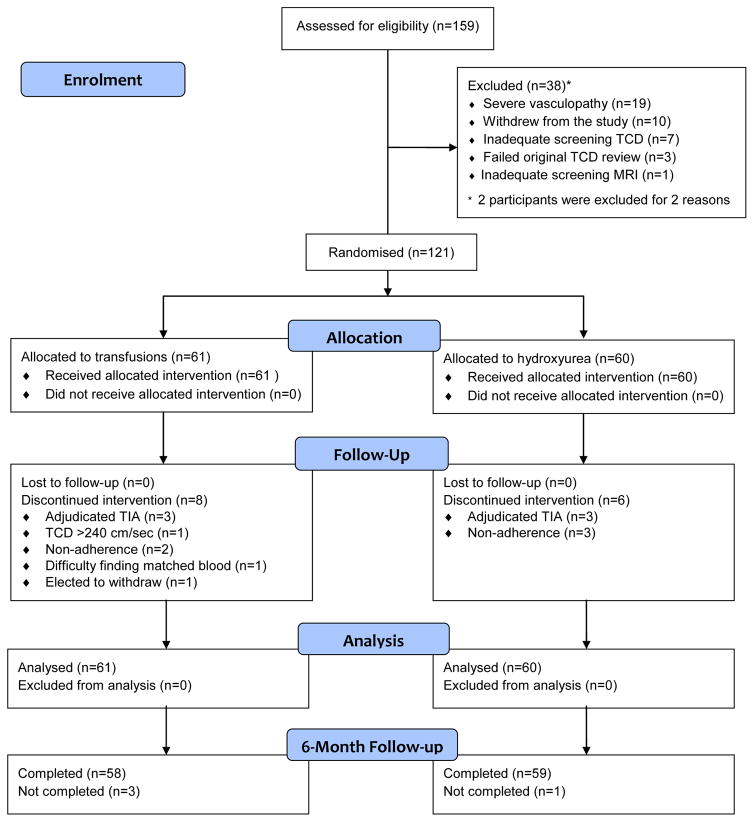
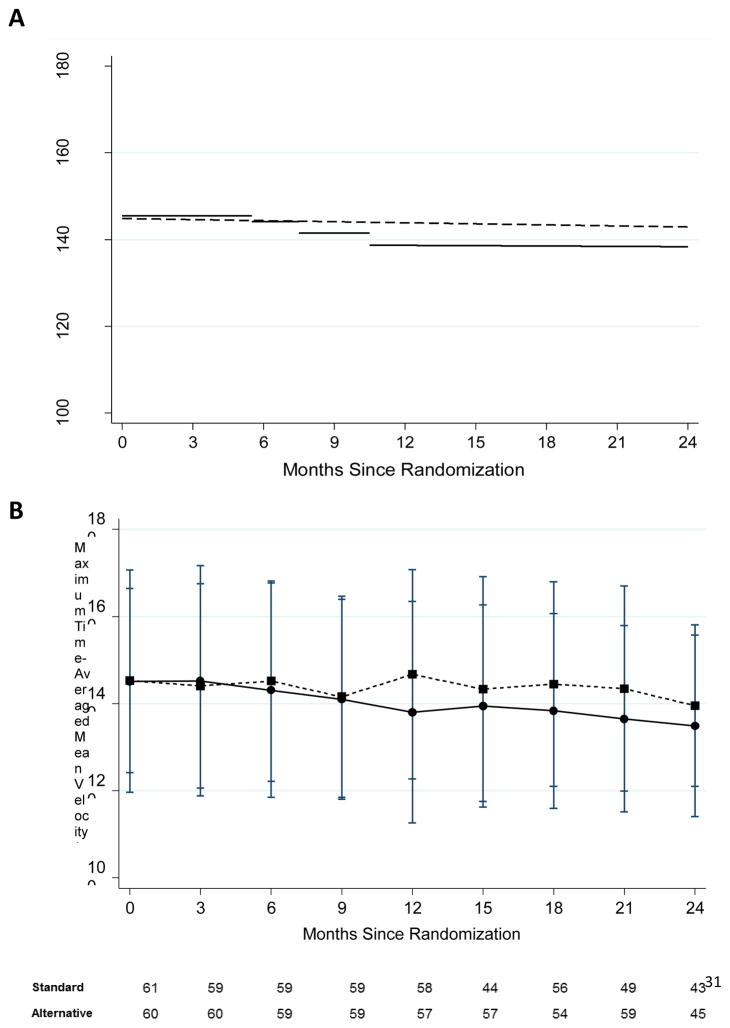
Background For children with sickle cell anaemia and high transcranial doppler (TCD) flow velocities, regular blood transfusions can effectively prevent primary stroke, but must be continued indefinitely. The efficacy of hydroxycarbamide (hydroxyurea) in this setting is unknown; we performed the TWiTCH trial to compare hydroxyurea with standard transfusions.Methods TWiTCH was a multicentre, phase 3, randomised, open-label, non-inferiority trial done at 26 paediatric hospitals and health centres in the USA and Canada. We enrolled children with sickle cell anaemia who were aged 4-16 years and had abnormal TCD flow velocities (≥ 200 cm/s) but no severe vasculopathy. After screening, eligible participants were randomly assigned 1:1 to continue standard transfusions (standard group) or hydroxycarbamide (alternative group). Randomisation was done at a central site, stratified by site with a block size of four, and an adaptive randomisation scheme was used to balance the covariates of baseline age and TCD velocity. The study was open-label, but TCD examinations were read centrally by observers masked to treatment assignment and previous TCD results. Participants assigned to standard treatment continued to receive monthly transfusions to maintain 30% sickle haemoglobin or lower, while those assigned to the alternative treatment started oral hydroxycarbamide at 20 mg/kg per day, which was escalated to each participant's maximum tolerated dose. The treatment period lasted 24 months from randomisation. The primary study endpoint was the 24 month TCD velocity calculated from a general linear mixed model, with the non-inferiority margin set at 15 cm/s. The primary analysis was done in the intention-to-treat population and safety was assessed in all patients who received at least one dose of assigned treatment. This study is registered with ClinicalTrials.gov, number NCT01425307.Findings Between Sept 20, 2011, and April 17, 2013, 159 patients consented and enrolled in TWiTCH. 121 participants passed screening and were then randomly assigned to treatment (61 to transfusions and 60 to hydroxycarbamide). At the first scheduled interim analysis, non-inferiority was shown and the sponsor terminated the study. Final model-based TCD velocities were 143 cm/s (95% CI 140-146) in children who received standard transfusions and 138 cm/s (135-142) in those who received hydroxycarbamide, with a difference of 4·54 (0·10-8·98). Non-inferiority (p=8·82 × 10(-16)) and post-hoc superiority (p=0·023) were met. Of 29 new neurological events adjudicated centrally by masked reviewers, no strokes were identified, but three transient ischaemic attacks occurred in each group. Magnetic resonance brain imaging and angiography (MRI and MRA) at exit showed no new cerebral infarcts in either treatment group, but worsened vasculopathy in one participant who received standard transfusions. 23 severe adverse events in nine (15%) patients were reported for hydroxycarbamide and ten serious adverse events in six (10%) patients were reported for standard transfusions. The most common serious adverse event in both groups was vaso-occlusive pain (11 events in five [8%] patients with hydroxycarbamide and three events in one [2%] patient for transfusions).Interpretation For high-risk children with sickle cell anaemia and abnormal TCD velocities who have received at least 1 year of transfusions, and have no MRA-defined severe vasculopathy, hydroxycarbamide treatment can substitute for chronic transfusions to maintain TCD velocities and help to prevent primary stroke.Funding National Heart, Lung, and Blood Institute, National Institutes of Health.
Overview
The claims and statistics of this paper haven’t been checked yet.
Free: it reads the open-access text and checks the first 5 claims that cite a source we can check. Create a free account to check every claim.
Integrity signals
Registry
Cites
Statistics
Figures
Verification
Claims the paper makes
The claims and statistics of this paper haven’t been checked yet.
Free: it reads the open-access text and checks the first 5 claims that cite a source we can check. Create a free account to check every claim.
Claims other papers make about this one
Each is checked against this paper’s own text: does it say what the citing paper says it does?
The source backs part of the claim, not all of it — or backs it for a different population, condition or comparison.
In the citing paper
“therapy with hydroxyurea, which induces HbF and reduces white blood cell count, reticulocyte count, and hemolysis, is effective in the primary prevention of stroke (152).”
From Pathophysiology of Sickle Cell Disease (2019) · cites this paper as [152]
Experimental — accuracy not yet measuredThe source backs part of the claim, not all of it — or backs it for a different population, condition or comparison.
In the citing paper
“Hydroxyurea was noninferior to transfusion for reducing transcranial Doppler flow velocities in selected children at high risk for stroke.”
From Fetal hemoglobin in sickle cell anemia (2020) · cites this paper as [90]
Experimental — accuracy not yet measured
Self-check
Percentages, sums and reported differences re-computed from the paper’s own numbers.
The self-check needs the paper’s full text.
Citations
Cites
Effect of hydroxyurea on the frequency of painful crises in sickle cell anemia
Charache, S., Terrin, M. L., Moore, R. D., Dover, G. J., Barton, F. B., Eckert, S. V., McMahon, R. P., & Bonds, D. R. (1995) · New England Journal of Medicine · doi:10.1056/nejm199505183322001 · Cited by 2,340 · cited 1×
“[8, 9] Through fetal haemoglobin (HbF) induction and other mechanisms of action, hydroxyurea inhibits intracellular sickle haemoglobin (HbS) polymerisation and lowers the risk of vaso-occlusive complications.”
Adams, R. J., McKie, V. C., Hsu, L., Files, B., Vichinsky, E., Pegelow, C., Abboud, M., Gallagher, D., Kutlar, A., Nichols, F. T., et al. (1998) · New England Journal of Medicine · doi:10.1056/nejm199807023390102 · Cited by 1,866
Self-citationCerebrovascular accidents in sickle cell disease: rates and risk factors.
(1998) · PubMed · doi:10.1182/blood.v91.1.288 · Cited by 1,694 · cited 2×
“[1] After first stroke, there is a high rate of recurrence or progression even with chronic transfusion therapy; a recent publication with median transfusion duration of 5.”
Self-citationManagement of Sickle Cell Disease: Summary of the 2014 Evidence-Based Report by Expert Panel Members
Yawn, B. P., Buchanan, G. R., Afenyi-Annan, A. N., Ballas, S. K., Hassell, K. L., James, A. H., Jordan, L., Lanzkron, S. M., Lottenberg, R., Savage, W. J., et al. (2014) · JAMA · doi:10.1001/jama.2014.10517 · Cited by 1,599
Self-citationDams, R. O. J. A., Ie, V. I. C. M. C. K., Su, L. E. H., Iles, B. E. F., Ichinsky, E. L. V., Egelow, C. H. P., Bboud, M. I. A., Allagher, D. I. G., Utlar, K., Ichols, F. E. T. N., et al. (2015) · Cited by 1,338
Wang, W. C., Ware, R. E., Miller, S. T., Iyer, R. V., Casella, J. F., Minniti, C. P., Rana, S., Thornburg, C. D., Rogers, Z. R., Kalpatthi, R. V., et al. (2011) · The Lancet · doi:10.1016/s0140-6736(11)60355-3 · Cited by 803 · cited 1×
“[8, 9] Through fetal haemoglobin (HbF) induction and other mechanisms of action, hydroxyurea inhibits intracellular sickle haemoglobin (HbS) polymerisation and lowers the risk of vaso-occlusive complications.”
Self-citationThe Use of Transcranial Ultrasonography to Predict Stroke in Sickle Cell Disease
Adams, R., McKie, V., Nichols, F., Carl, E., Zhang, D.-L., McKie, K., Figueroa, R., Litaker, M., Thompson, W., & Hess, D. (1992) · New England Journal of Medicine · doi:10.1056/nejm199202273260905 · Cited by 658 · cited 2×
“[3, 5] Patients from 26 paediatric programmes (Appendix) between 4–16 years of age with SCA and abnormal TCD velocities were eligible after ≥12 months of chronic transfusions.”
Self-citationDiscontinuing Prophylactic Transfusions Used to Prevent Stroke in Sickle Cell Disease
(2005) · New England Journal of Medicine · doi:10.1056/nejmoa050460 · Cited by 635
Controlled Trial of Transfusions for Silent Cerebral Infarcts in Sickle Cell Anemia
DeBaun, M. R., Gordon, M., McKinstry, R. C., Noetzel, M. J., White, D. A., Sarnaik, S. A., Meier, E. R., Howard, T. H., Majumdar, S., Inusa, B. P. D., et al. (2014) · New England Journal of Medicine · doi:10.1056/nejmoa1401731 · Cited by 545
Self-citationHow I use hydroxyurea to treat young patients with sickle cell anemia
Ware, R. E. (2010) · Blood · doi:10.1182/blood-2009-04-146852 · Cited by 396 · cited 2×
“[10] Hydroxyurea has the potential for lowering TCD velocities and thus reducing stroke risk, [11, 12] but definitive data are lacking regarding its efficacy in cerebrovascular disease.”
Self-citation
Cited by
Items 401–500 of 554
Transcranial Doppler Sonography
Barlinn, K., & Alexandrov, A. V. (2021) · Springer eBooks · doi:10.1007/978-3-030-49616-6_15-1 · Cited by 2
Association between Sickle Cell Anemia and Malaria: A Systematic Review of Previous Literature
Mirghani, H. O., Alatawi, N. M. M., Alenzi, M. T. M., Alatawi, N. S. E., Alsabeelah, N. M. F., Almutairi, M. F. M., Alshammari, A. M. S., Alomrani, M. N. H., Alrubayyi, W. S., Alfarshoti, A. M. A., et al. (2023) · Saudi Medical Horizons Journal · doi:10.54293/smhj.v3i3.82 · Cited by 2
Cerebral vasculopathy in patients with sickle cell disease and stroke: now you see it, now you don’t
Abboud, M. R. (2024) · Haematologica · doi:10.3324/haematol.2024.285383 · Cited by 2
A Global Perspective on Milestones of Care for Children with Sickle Cell Disease
Sainati, L., Montanaro, M., & Colombatti, R. (2016) · InTech eBooks · doi:10.5772/64656 · Cited by 1
“Recently, a randomized study demonstrated that after one year of chronic transfusion, hydroxycarbamide (HU) can be safely offered to children with normal neuroimaging under strict surveillance [71].”
BackgroundMenon, N., & Frei‐Jones, M. J. (2020) · Springer eBooks · doi:10.1007/978-3-030-49980-8_5 · Cited by 1
Stem cells in the treatment of sickle cell disease
Gallicchio, V. S., & McGill, E. (2020) · Journal of Stem Cell Research & Therapeutics · doi:10.15406/jsrt.2020.06.00138 · Cited by 1
“In an analysis of 1000 patients undergoing allogeneic HSCT, survival was typically lower in patients 16 or older (81”
SICKLE CELL DISEASE IN JHABUA AND KHARGONE DISTRICT: UNVEILING PREVALENCE AND SEVERITY
KUMARI, R., Kushwah, A., KHARAT, A., VIGNAN, N., Ojha, S., Mishra, A., & SINHA, P. (2024) · International Journal of Pharmacy and Pharmaceutical Sciences · doi:10.22159/ijpps.2024v16i4.50497 · Cited by 1
“In comparison to a study by Ware et al. (2017), which reported a non-response rate of approximately 10%, our study findings are in line with previous research done [16].”
ResultCreary, S. E., Chung, M. G., Villella, A. D., & Lo, W. D. (2024) · Current Neurology and Neuroscience Reports · doi:10.1007/s11910-024-01372-9 · Cited by 1
“It showed that if patients do not have silent cerebral infarcts (SCI) or severe vasculopathy such as moyamoya syndrome by MRI and MRA, bridging to hydroxyurea [16] after one year of chronic transfusions is an option [29].”
BackgroundGhafuri, D. L., Bello‐Manga, H., Kirkham, F. J., Ciobanu, M., Trevathan, E., Rodeghier, M., DeBaun, M. R., & Jordan, L. C. (2025) · Frontiers in Stroke · doi:10.3389/fstro.2024.1444718 · Cited by 1
Bhasin, N., & Vichinsky, E. P. (2025) · Wiley eBooks · doi:10.1002/9781119706687.ch15 · Cited by 1
Stroke burden and functional impacts in adults with sickle cell disease
St‐Onge, J., Hristova, T., Charles, C., Bereznyakova, O., Jacquin, G., Pouliot, O., Caron-L'Ecuyer, J., Stevanovik, M., Desforges, S.-M., Kazadi, C. M., et al. (2026) · British Journal of Haematology · doi:10.1111/bjh.70362 · Cited by 1
“8,9 10–13 As a result, they are experiencing competing risk factors of stroke.”
Patil, U., Pattnaik, S. S., Nayak, S., Das, P., Mohanty, A. P., & Patro, S. (2026) · Cureus · doi:10.7759/cureus.103552 · Cited by 1
Kharya, G., Nirmal, G., Chadha, V., Ramalingam, S., Gupta, N., Baby, E. P., Bakane, A., Mukherjee, S., Verma, S., Jain, A., et al. (2026) · Haematologica · doi:10.3324/haematol.2026.300729 · Cited by 1
Pyruvate Kinase Activation in the Management of Thalassemia and Sickle Cell Disease
Musallam, K. M., & Andemariam, B. (2026) · Hemoglobin · doi:10.1080/03630269.2026.2682386 · Cited by 1
Mensah, K. B., Osei-Owusu, V., Mensah, A. B. B., Boachie‐Ansah, P., Safo, A. A. A.-N., & Padayachee, N. (2026) · Patient Preference and Adherence · doi:10.2147/ppa.s567619 · Cited by 1
Sommet, J., Boizeau, P., Haouari, Z., Koehl, B., Elmaleh, M., Lesprit, E., Missud, F., Ithier, G., Holvoet, L., Brousse, V. A. M., et al. (2026) · British Journal of Haematology · doi:10.1111/bjh.70726 · Cited by 1
Nadim, M. K., Choi, A., Parisi, N., & Akgün, Y. (2026) · Journal of Clinical Apheresis · doi:10.1002/jca.70169 · Cited by 1
Rai, P., Capellera-Garcia, S., & Manwani, D. (2026) · Annals of Translational Medicine · doi:10.21037/atm-2026-0069 · Cited by 1
The cause of the stroke: a diagnostic uncertainty
Dattani, A., & Jackson, A. (2017) · BMJ Case Reports · doi:10.1136/bcr-2016-218358 · Cited by 1
Carpenter, J. L., & Hulbert, M. L. (2017) · Springer eBooks · doi:10.1007/978-3-319-62328-3_6 · Cited by 1
Risk-Based Therapies for Sickle Cell Disease
Meier, E. R. (2017) · Springer eBooks · doi:10.1007/978-3-319-62328-3_4 · Cited by 1
Incomplete implementation of guideline‐based stroke prevention therapy in sickle cell disease
Schlenz, A. M., Hayes, J., Mueller, M., Phillips, S. M., Adams, R. J., & Kanter, J. (2018) · American Journal of Hematology · doi:10.1002/ajh.25163 · Cited by 1
“Subsequently, the TCD With Transfusions Changing to Hydroxyurea (TWiTCH) study demonstrated that children with SCD with abnormal TCD treated with CRCT could be safely transitioned to Hydroxyurea if there were no significant cerebrovascular abnormalities on neuroimaging.(4) However, individuals with prior stroke or cer…”
MethodSelf-citationAdvances in Transfusion Medicine RCPath, November 2018
Bullock, T., Hazell, M., & McCullagh, J. (2019) · Transfusion Medicine · doi:10.1111/tme.12590 · Cited by 1
DeBaun, M. R. (2016) · The Hematologist · doi:10.1182/hem.v13.2.4943 · Cited by 1
Neurological Complications and MRI
Kawadler, J. M., & Kirkham, F. J. (2016) · InTech eBooks · doi:10.5772/64143 · Cited by 1
Stroke in Children: Recognizing Opportunities for Improving Care
Jordan, L. C. (2019) · Stroke · doi:10.1161/strokeaha.118.023549 · Cited by 1
Arterial Ischemic Stroke in Childhood
Centeno, M. A., Buompadre, M. C., Requejo, F., Rugilo, C., Cervio, C., & Sciuccati, G. B. (2019) · Current Treatment Options in Pediatrics · doi:10.1007/s40746-019-00174-3 · Cited by 1
Transfusion in Sickle cell disease: best practice and understanding of its utility
Shi, P. A., & Yazdanbakhsh, K. (2020) · ISBT Science Series · doi:10.1111/voxs.12549 · Cited by 1
Warkentin, T. E., Cook, R. J., & Greinacher, A. (2020) · American Journal of Hematology · doi:10.1002/ajh.25901 · Cited by 1
Stroke Treatment in the Setting of Systemic Disease
Arthur, K. C., Fracica, E. A., & Johansen, M. C. (2020) · Current Treatment Options in Neurology · doi:10.1007/s11940-020-00650-4 · Cited by 1
Fé, L. R. M. M., & da Costa, G. A. (2022) · Jornal de Ciências da Saúde do Hospital Universitário da Universidade Federal do Piauí · doi:10.26694/jcs_hu-ufpi.v2i3.11892 · Cited by 1
“Apesar destes resultados, no estudo realizado por Hankins et al.(21) em 2015 pôde-se observar a eficácia do uso de HU na redução da conversão de velocidades condicionais em velocidades anormais no DTC em crianças com DF. Um estudo realizado por Ware et al.(13), em 2016, demonstrou que a HU pode ser considerada uma ter…”
BackgroundInfluentialSickle Cell Disease (SCD): Usefulness of Transcranial Doppler (TCD/TCCS) Monitoring
Gómez-Castro, J. F. (2021) · Springer eBooks · doi:10.1007/978-3-030-81419-9_42 · Cited by 1
Cerebral Vasculopathy in Children With Sickle Cell Disease in an Amazonian Population
Tobelem, F. L. A., de Andrade, G. A. L. R., Paschoal, J. K. S. F., Cardoso, M. D. S. D. O., Trindade, S. M. S., Paschoal, E. H. A., Paschoal-Jr, F. M., & Bor‐Seng‐Shu, E. (2022) · Journal of Child Neurology · doi:10.1177/08830738221100088 · Cited by 1
“However, children with vasculopathy were excluded from the study and, therefore, the use of hydroxyurea for primary stroke prevention in cases of vasculopathy associated with sickle cell disease remains controversial.(21) In the absence of vasculopathy, hydroxyurea can be considered a substitute therapy, even in patie…”
BackgroundInfluentialDetection and Management of Cerebral Vasculopathy
Bernaudin, F., & Verlhac, S. (2022) · IntechOpen eBooks · doi:10.5772/intechopen.105099 · Cited by 1
Reggiani, G., Boaro, M. P., & Colombatti, R. (2023) · La Presse Médicale · doi:10.1016/j.lpm.2023.104201 · Cited by 1
Breaking the Cycle: Innovative Approaches to Managing Sickle Cell Anemia
Eskandar, K. (2023) · Journal of Clinical Research and Case Studies · doi:10.61440/jcrcs.2023.v1.18 · Cited by 1
Comparative transcriptomic analysis of circulating endothelial cells in sickle cell stroke
de Castro, J. N. P., Costa, S. M. D. S., Camargo, A. C. L., Ito, M. T., de Souza, B. B., Bertozzo, V. D. H. E., Rodrigues, T. A. R., Lanaro, C., de Albuquerque, D. M., Saez, R. C., et al. (2024) · Annals of Hematology · doi:10.1007/s00277-024-05655-6 · Cited by 1
Al-Ali, O. O., Pfliegler, G., Magyari, F., Borics, F., Pinczés, L. I., Illés, Á., & Brúgós, B. C. (2024) · Thalassemia Reports · doi:10.3390/thalassrep14010003 · Cited by 1
“Hydroxycarbamide treatment was shown to be as effective as transfusion for primary stroke prevention in children with abnormal TCD (TWiTCH trial) [9].”
Neurological complications of red blood cell disorders
Klein, J. P., & Archer, N. M. (2024) · Oxford University Press eBooks · doi:10.1093/med/9780198884903.003.0011 · Cited by 1
Sickle cell care and implementation science
Bello‐Manga, H., & King, A. A. (2025) · Blood Advances · doi:10.1182/bloodadvances.2025015851 · Cited by 1
Itanyi, U. D., Galadanci, N., & Nnodu, O. E. (2023) · Nigerian Journal of Haematology · Cited by 1
Aloimunização eritrocitária e HLA em doença falciforme
Santos, F. L. S. (2021) · Digital Library of Theses and Dissertations (Universidade de São Paulo) · doi:10.11606/t.17.2021.tde-11062021-081805 · Cited by 1
Are we ready for new strategies to prevent stroke in children with sickle cell disease?
Russo, G. M., & Colombatti, R. (2024) · Haematologica · doi:10.3324/haematol.2024.285328 · Cited by 1
“We know the positive effect of HU on lowering TCD velocities, thus being an alternative to transfusion (10) in the prevention of cerebral vasculopathy: withholding transfusion does not mean leaving the children without other treatment.”
BackgroundMoum, S. J., Barry, M., Scoville, J., Bishop, C. K., Lam, S. K., & Shaibani, A. (2025) · Neurographics · doi:10.3174/ng.2400078 · Cited by 1
Management Options for Children with Sickle Cell Disease
Green, D. (2016) · Journal watch · doi:10.1056/nejm-jw.na39859
Quillen, K. (2016) · Transfusion · doi:10.1111/trf.13662
“The recent TWiTCH trial found that hydroxyurea was noninferior to continuing transfusions in children with sickle cell disease and elevated TCD velocities, after at least 12 months of transfusion.(13) The results of this trial are likely to reduce the burden of chronic transfusion for primary stroke prevention in sick…”
BackgroundImplementation of Evidence-Based Care in the Sickle Cell and Hemophilia Patient Population
Kalinyak, K. A., Dandoy, C. E., & Nuss, R. (2017) · Springer eBooks · doi:10.1007/978-3-319-53790-0_16
Soleros — natural absorbers of mineral salts
Константинова, Е. А., Велиева, Н. Т., & Нурмухамбетова, С. А. (2017) · Молодой ученый
Dans la drépanocytose, la greffe est-elle une alternative à l’impasse transfusionnelle ?
Bernaudin, F., & Kuentz, M. (2017) · Transfusion Clinique et Biologique · doi:10.1016/j.tracli.2017.06.007
Hidroxiureia (Hidroxicarbamida) na Doença de Células Falciformes
Baptista, R. B., Maia, R., Batalha, S., Fernandes, R. M., & Kjöllerström, P. (2017) · Portuguese Journal of Pediatrics · doi:10.25754/pjp.2017.13168
Black, L. V., Ramesar, J., & Boston, C. H. (2018) · Journal of Pediatric Hematology/Oncology · doi:10.1097/mph.0000000000001172
Nicanor, J. S. (2018) · Digital Library of Theses and Dissertations (Universidade de São Paulo) · doi:10.11606/d.17.2018.tde-17042018-160546
Newborn screening for haematological disorders
Streetly, A., Rees, D. C., & Coppinger, C. (2017) · Paediatrics and Child Health · doi:10.1016/j.paed.2017.07.012
Adanho, C. S. A. (2018) · LA Referencia (Red Federada de Repositorios Institucionales de Publicaciones Científicas)
Étude de la modulation du récepteur TREM-1 dans la drépanocytose
Mintz, T. (2019) · theses.fr (ABES) · doi:10.70675/8088f8c9ze8faz40b4zb5b3ze5f845bdb5a3
Hydroxycarbamide and white matter integrity in paediatric sickle cell disease
Lance, E. I., & Jordan, L. C. (2019) · British Journal of Haematology · doi:10.1111/bjh.16237
Hydroxycarbamide and white matter integrity in pediatric sickle cell disease
Lance, E. I., & Jordan, L. C. (2019) · British Journal of Haematology · doi:10.1111/bjh.16252
“…velocities in children with SCD and a history of abnormal TCD velocities who have received one year of regular blood transfusion therapy, but do not support use for secondary stroke prevention in children with SCD and a history of stroke (Ware, Helms & SWiTCH Investigators, 2012; Ware et al, 2016).”
BackgroundLeite, I. P. R. (2019) · Arca - Repositório Institucional da Fiocruz
Prado, B. D. P. A. (2020) · Digital Library of Theses and Dissertations (Universidade de São Paulo) · doi:10.11606/t.17.2020.tde-12112019-100212
A 5‐Year‐Old with Right‐Sided Weakness
Meinke, S., & Spruit, J. L. (2020) · Wiley eBooks · doi:10.1002/9781119568193.ch66
Sickle Cell Disease in the Adolescent Female
Itzep, N. P., & Sheehan, V. (2020) · Springer eBooks · doi:10.1007/978-3-030-48446-0_20
Ibrahim, N., Mahmood, S., O’Driscoll, S., & Chakravorty, S. (2020) · The Physician · doi:10.38192/1.6.2.24
Team DFTB (2020) · Don't Forget The Bubbles · doi:10.31440/dftb.27598
Gimigliano, F. (2021) · Developmental Medicine & Child Neurology · doi:10.1111/dmcn.14826
de Montalembert, M., & Allali, S. (2020) · Elsevier eBooks · doi:10.1016/b978-2-294-76049-5.00027-8
Hyacinth, H. I., & Adams, R. J. (2017) · Springer eBooks · doi:10.1007/978-3-319-56210-0_9
Self-citation微博在公共突发事件中的负面影响与对策研究——以“7·23”温州动车追尾事件为例
刘成璐, & 尹章池 (2011) · 现代商贸工业
Kumar, R., Governale, L. S., & Lo, W. D. (2020) · Springer eBooks · doi:10.1007/978-3-319-43153-6_21
Hemostatic Aspects of Sickle Cell Disease
Ataga, K. I., & Lottenberg, R. (2019) · Elsevier eBooks · doi:10.1016/b978-0-323-46202-0.00041-8
Transcranial Doppler Sonography
Barlinn, K., & Alexandrov, A. V. (2022) · Springer eBooks · doi:10.1007/978-3-030-60626-8_15
Clinical and therapeutic aspects of sickle cell disease in three clinical cases
Aggoune, S. (2021) · Ukrainian journal of Perinatology and Pediatrics · doi:10.15574/pp.2021.88.66
Kirkham, F. J. (2020) · Elsevier eBooks · doi:10.1016/b978-0-12-813866-3.00035-7
de Montalembert, M., Peyrard, T., & Allali, S. (2020) · Elsevier eBooks · doi:10.1016/b978-2-294-76049-5.00024-2
Transfusion Practice in Patients with Hereditary and Acquired Coagulation Disorders
Hinduja, A., Della‐Moretta, S., & Desai, P. C. (2022) · Springer eBooks · doi:10.1007/978-981-19-0954-2_44
Gutierrez, M. (2021) · Deep Blue (University of Michigan) · doi:10.7302/2898
Taylor, J. (2022) · Springer eBooks · doi:10.1007/978-3-030-96542-6_58
Friedman, M. T., West, K. A., Bizargity, P., Annen, K., Gur, H. D., & Hilbert, T. (2023) · Springer eBooks · doi:10.1007/978-3-031-14638-1_74
Pandey, A., Raja, R., Estepp, J. H., & Ramkrishna, D. (2023) · CPT Pharmacometrics & Systems Pharmacology · doi:10.1002/psp4.12945 · Cited by 1
Regular Transfusions, Iron, and Teenage Pregnancy
Mijović, A. (2023) · Springer eBooks · doi:10.1007/978-3-031-31462-9_11
Laboratory Associations With Transcranial Doppler Categories in Sickle Cell Disease
Jain, D., & Kirkham, F. J. (2023) · Indian Pediatrics · doi:10.1007/s13312-023-2957-3
“…Adams based on prediction of stroke over several years in children with SCD (Normal velocity <170 cm/sec, Conditional ≥170<200 cm/sec, Abnormal ≥200 cm/sec)(7) have proved practical, as treatment with blood transfusion (8) and/or hydroxyurea (9;10) reduces CBFV and prevents the majority of strokes.”
Oliveira, J. M., Arcanjo, G. D. S., Domingos, I. F., Batista, J. V. G. F., Pereira‐Martins, D. A., Batista, T. H. C., Hatzlhofer, B. L. D., Falcão, D. A., Diniz, M. V., Silva, A. P., et al. (2023) · Journal of Stroke and Cerebrovascular Diseases · doi:10.1016/j.jstrokecerebrovasdis.2023.107474
Sickle cell disease: causes, treatments and the patient experience
Spurway, A., George, S., Thompson, C., Weeks, S., & Teo, X. Y. (2024) · Pharmaceutical journal/The pharmaceutical journal · doi:10.1211/pj.2023.1.205570
Arcanjo, A. K. A., Bringel, E. A., Costa, J. J. N., Pinheiro, A. M. R., Portela, A. M. L. R., de Assis, J. O., & Pinto, V. D. P. T. (2024) · Research Society and Development · doi:10.33448/rsd-v13i1.44727
Nri-Ezedi, C. A., Ulasi, T. O., Efobi, C. C., Aneke, J., Ugwu, N. I., & Nwosu, C. (2024) · Journal of the National Medical Association · doi:10.1016/j.jnma.2024.01.016
Sunmonu, N. A., Adams, R. J., Karkoska, K. A., & Hyacinth, H. I. (2024) · Springer eBooks · doi:10.1007/978-3-031-41777-1_4
Self-citationHematopoietic Stem Cell Transplantation: An Approach in the Treatment of Sickle Cell Disease
Correa, R. M. S. (2024) · Haematology International Journal · doi:10.23880/hij-16000250
Cardiopulmonary Complications of Sickle Cell Disease in Children
Santiago, M. T., Feld, L. M., Dhar, A., Christian-Weekes, L. N., Appiah‐Kubi, A., Mitchell, E., Aygün, B., & Fiorino, E. K. (2024) · IntechOpen eBooks · doi:10.5772/intechopen.1005507
Sickle Cell Disease and Pregnancy
Udden, M. M., & Sosa, I. R. (2024) · Wiley eBooks · doi:10.1002/9781119820260.ch47
Jones, J., Abou-Baker, N., Overholser, L., Hassell, K. L., & Diers, T. (2024) · Springer eBooks · doi:10.1007/978-3-031-54281-7_36
Kirkham, F. J. (2024) · Elsevier eBooks · doi:10.1016/b978-0-443-19176-3.00043-1
Lemanek, K. L., Iskander, J. M., Stanek, J. R., & Creary, S. E. (2024) · Journal of Pediatric Neuropsychology · doi:10.1007/s40817-024-00168-6
Coagulation Disorders and Cerebrovascular Disease in Children
Bernard, T. J., Poisson, S. N., Branchford, B. R., Ng, C. J., & Nowak‐Göttl, U. (2024) · Elsevier eBooks · doi:10.1016/b978-0-443-10944-7.00132-3
Arterial Ischemic Stroke in Infants and Children
Mackay, M. T., Sun, L. R., & Harrar, D. B. (2024) · Elsevier eBooks · doi:10.1016/b978-0-443-10944-7.00128-1
Clinical consultation: The pharmacist’s role in hydroxyurea management for sickle cell disease
Roessner, C., Uminski, K., Goodyear, D. M., & Rydz, N. (2025) · American Journal of Health-System Pharmacy · doi:10.1093/ajhp/zxaf114
Bates, I., & Olayemi, E. (2025) · Cambridge University Press eBooks · doi:10.1017/9781009052733.076
Moura, P. G., Akil, F., & Dalmazzo, L. F. F. (2025) · Annals of Case Reports · doi:10.29011/2574-7754.102380
Hydroxyurea for Children with Sickle Cell Disease
Coyne, F. W., & Strouse, J. J. (2025) · Pediatric Clinics of North America · doi:10.1016/j.pcl.2025.08.007
Metadata
- Authors
- Ware, R. E., Davis, B. R., Schultz, W. H., Brown, R. C., Aygun, B., Sarnaik, S., Odame, I., Fuh, B., George, A., Owen, W., Luchtman-Jones, L., Rogers, Z. R., Hilliard, L., Gauger, C., Piccone, C., Lee, M. T., Kwiatkowski, J. L., Jackson, S., Miller, S. T., Roberts, C., Heeney, M. M., Kalfa, T. A., Nelson, S., Imran, H., Nottage, K., Alvarez, O., Rhodes, M., Thompson, A. A., Rothman, J. A., Helton, K. J., Roberts, D., Coleman, J., Bonner, M. J., Kutlar, A., Patel, N., Wood, J., Piller, L., Wei, P., Luden, J., Mortier, N. A., Stuber, S. E., Luban, N. L. C., Cohen, A. R., Pressel, S., & Adams, R. J.
- Affiliations
- Cincinnati Children's Hospital Medical Center (US)
- Wayne State University (US)
- Hospital for Sick Children (CA)
- East Carolina University (US)
- Baylor College of Medicine (US)
- Children's Hospital of The King's Daughters (US)
- The University of Texas Southwestern Medical Center (US)
- University of Alabama at Birmingham (US)
- Nemours Children's Clinic (US)
- Case Western Reserve University (US)
- Columbia University (US)
- Children's Hospital of Philadelphia (US)
- Medical University of South Carolina (US)
- State University of New York (US)
- University of South Carolina (US)
- Boston Children's Hospital (US)
- Children's Minnesota (US)
- University of South Alabama (US)
- St. Jude Children's Research Hospital (US)
- University of Miami (US)
- University of Mississippi (US)
- Lurie Children's Hospital (US)
- Duke Medical Center (US)
- Augusta University (US)
- Children's Hospital Los Angeles (US)
- Children's National (US)
- Corresponding author
- Ware, Russell E
- ORCID
- Ware, Russell E
- Davis, Barry R
- Odame, Isaac
- Fuh, Beng
- George, Alex
- Owen, William
- Rogers, Zora R
- Piccone, Connie
- Kwiatkowski, Janet L
- Heeney, Matthew M
- Kalfa, Theodosia A
- Nelson, Stephen
- Imran, Hamayun
- Alvarez, Ofelia
- Thompson, Alexis A
- Rothman, Jennifer A
- Roberts, Donna
- Kutlar, Abdullah
- Patel, Niren
- Wood, John
- Wei, Peng
- Luden, Judy
- Stuber, Susan E
- Cohen, Alan R
- Adams, Robert J
- Venue
- The Lancet
- Publisher
- Elsevier BV
- Published
- 2016-02
- Volume
- 387
- Issue
- 10019
- Pages
- 661-670
- ISSN
- 0099-5355 (ISSN-L)
- 0140-6736
- PMC
- PMC5724392
- OpenAlex
- W2189616037
- Cited by
- 515
- References
- 32
- Citations by year
- 2026: 34 · 2025: 31 · 2024: 54 · 2023: 32 · 2022: 48 · 2021: 50 · 2020: 58 · 2019: 54 · 2018: 42 · 2017: 63 · 2016: 41
- FWCI
- 27.80
- Type
- journal article
- Language
- en
- Open access
- green
- www.ncbi.nlm.nih.gov
- Licence
- cc-by-nc-nd
- www.elsevier.com/tdm/userlicense/1.0/ (tdm)
- www.elsevier.com/legal/tdmrep-license (tdm)
- Locations
- The Lancet (publishedVersion)
- PubMed (publishedVersion)
- PubMed Central (acceptedVersion, cc-by-nc-nd)
- DukeSpace (Duke University) (submittedVersion, cc-by-nc-nd)
- Funders
- National Heart, Lung, and Blood Institute through grants (R01 HL-095647, R01 HL-095511)
- Topics
- Health Sciences › Medicine › Genetics (clinical) › Hemoglobinopathies and Related Disorders
- Health Sciences › Medicine › Pediatrics, Perinatology and Child Health › Neonatal Health and Biochemistry
- Health Sciences › Medicine › Hematology › Blood transfusion and management
- Keywords
- sickle cell disease, hydroxyurea, chronic transfusion, stroke prevention, children, non-inferiority, hemoglobin S, vasculopathy, adverse events
- MeSH terms
- Adolescent, Anemia, Sickle Cell, Antisickling Agents, Blood Flow Velocity, Blood Transfusion, Cerebrovascular Circulation, Child, Child, Preschool, Combined Modality Therapy, Female, Humans, Hydroxyurea, Male, Treatment Outcome, Ultrasonography, Doppler, Transcranial, Stroke, Drug Substitution
About these checks
Registry, retraction, Cites and statistics results are computed, not judged, with one exception: a printed reference that no index lists is read once by a model before it counts as a citation error. Claims are extracted by a model and kept only when their quote appears verbatim in the text; each cited source is then checked, with a model’s help, for whether it says what the claim relies on. Those verdicts can be wrong — read the claim’s quote and the cited source before relying on one.
Statistics and arithmetic are recomputed, not judged.
Confidence bands are shown only for fields calibrated on our annotated test set. None is calibrated yet, so no band is shown.
What counts as a claim ›How we measure confidence ›How we check this ›
Are you an author, or do you see a problem with this page? Request a review
Data sources
Bibliographic data: Semantic Scholar, OpenAlex, Crossref.
Contains information from the Semantic Scholar Academic Graph Datasets, made available under the ODC Attribution License (ODC-BY 1.0).
Semantic Scholar’s data is described in: Kinney, R., et al. (2023). The Semantic Scholar Open Data Platform. arXiv:2301.10140.
