

Body-mass index and all-cause mortality: individual-participant-data meta-analysis of 239 prospective studies in four continents
Open accessThe DOI matches its Crossref record; 50 of the 50 references it cites were found in a registry or an index.
Abstract
BACKGROUND: Overweight and obesity are increasing worldwide. To help assess their relevance to mortality in different populations we conducted individual-participant data meta-analyses of prospective studies of body-mass index (BMI), limiting confounding and reverse causality by restricting analyses to never-smokers and excluding pre-existing disease and the first 5 years of follow-up. METHODS: Of 10 625 411 participants in Asia, Australia and New Zealand, Europe, and North America from 239 prospective studies (median follow-up 13·7 years, IQR 11·4-14·7), 3 951 455 people in 189 studies were never-smokers without chronic diseases at recruitment who survived 5 years, of whom 385 879 died. The primary analyses are of these deaths, and study, age, and sex adjusted hazard ratios (HRs), relative to BMI 22·5-<25·0 kg/m(2). FINDINGS: All-cause mortality was minimal at 20·0-25·0 kg/m(2) (HR 1·00, 95% CI 0·98-1·02 for BMI 20·0-<22·5 kg/m(2); 1·00, 0·99-1·01 for BMI 22·5-<25·0 kg/m(2)), and increased significantly both just below this range (1·13, 1·09-1·17 for BMI 18·5-<20·0 kg/m(2); 1·51, 1·43-1·59 for BMI 15·0-<18·5) and throughout the overweight range (1·07, 1·07-1·08 for BMI 25·0-<27·5 kg/m(2); 1·20, 1·18-1·22 for BMI 27·5-<30·0 kg/m(2)). The HR for obesity grade 1 (BMI 30·0-<35·0 kg/m(2)) was 1·45, 95% CI 1·41-1·48; the HR for obesity grade 2 (35·0-<40·0 kg/m(2)) was 1·94, 1·87-2·01; and the HR for obesity grade 3 (40·0-<60·0 kg/m(2)) was 2·76, 2·60-2·92. For BMI over 25·0 kg/m(2), mortality increased approximately log-linearly with BMI; the HR per 5 kg/m(2) units higher BMI was 1·39 (1·34-1·43) in Europe, 1·29 (1·26-1·32) in North America, 1·39 (1·34-1·44) in east Asia, and 1·31 (1·27-1·35) in Australia and New Zealand. This HR per 5 kg/m(2) units higher BMI (for BMI over 25 kg/m(2)) was greater in younger than older people (1·52, 95% CI 1·47-1·56, for BMI measured at 35-49 years vs 1·21, 1·17-1·25, for BMI measured at 70-89 years; pheterogeneity<0·0001), greater in men than women (1·51, 1·46-1·56, vs 1·30, 1·26-1·33; pheterogeneity<0·0001), but similar in studies with self-reported and measured BMI. INTERPRETATION: The associations of both overweight and obesity with higher all-cause mortality were broadly consistent in four continents. This finding supports strategies to combat the entire spectrum of excess adiposity in many populations. FUNDING: UK Medical Research Council, British Heart Foundation, National Institute for Health Research, US National Institutes of Health.
Overview
The claims and statistics of this paper haven’t been checked yet.
Free: it reads the open-access text and checks the first 5 claims that cite a source we can check. Create a free account to check every claim.
Integrity signals
Registry
Cites
Statistics
Figures
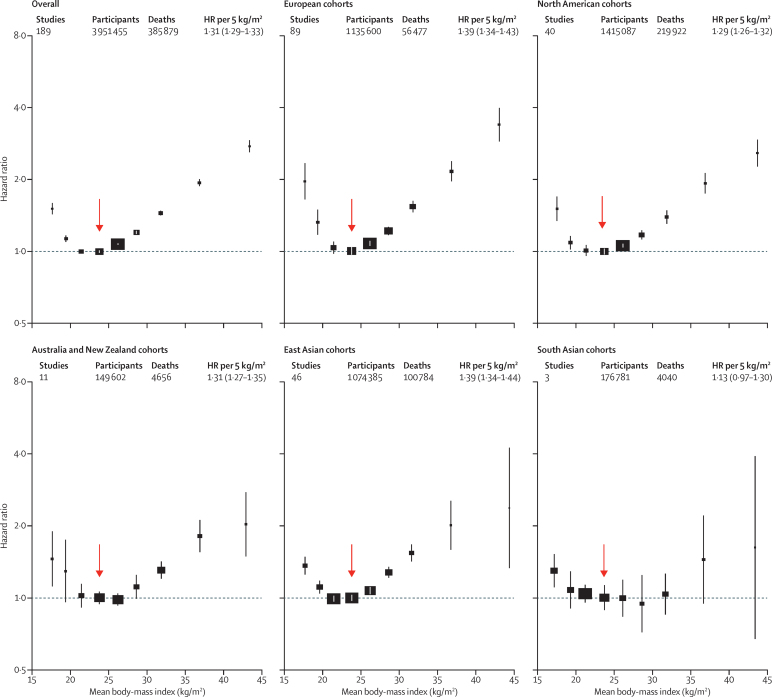
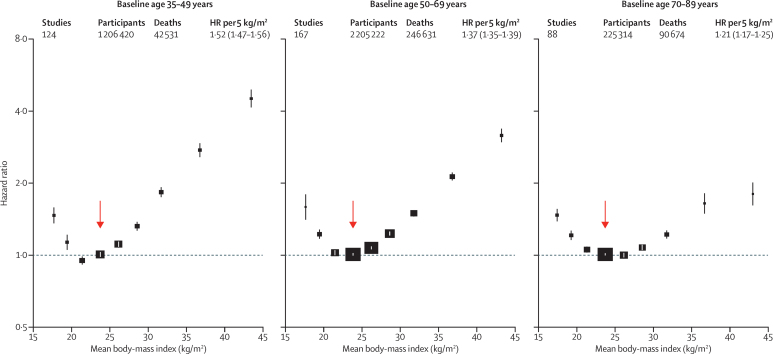
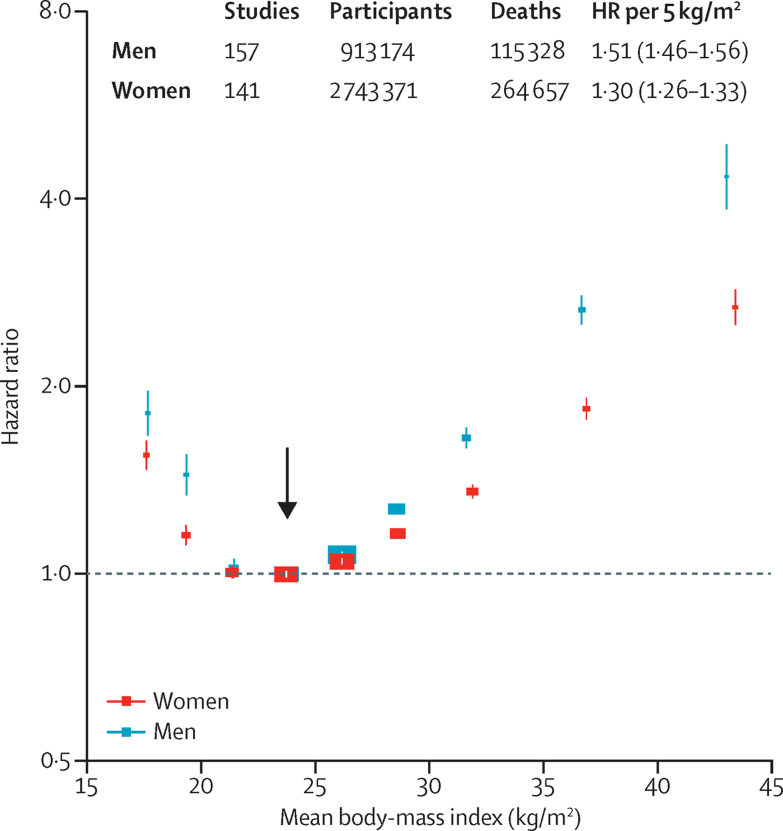
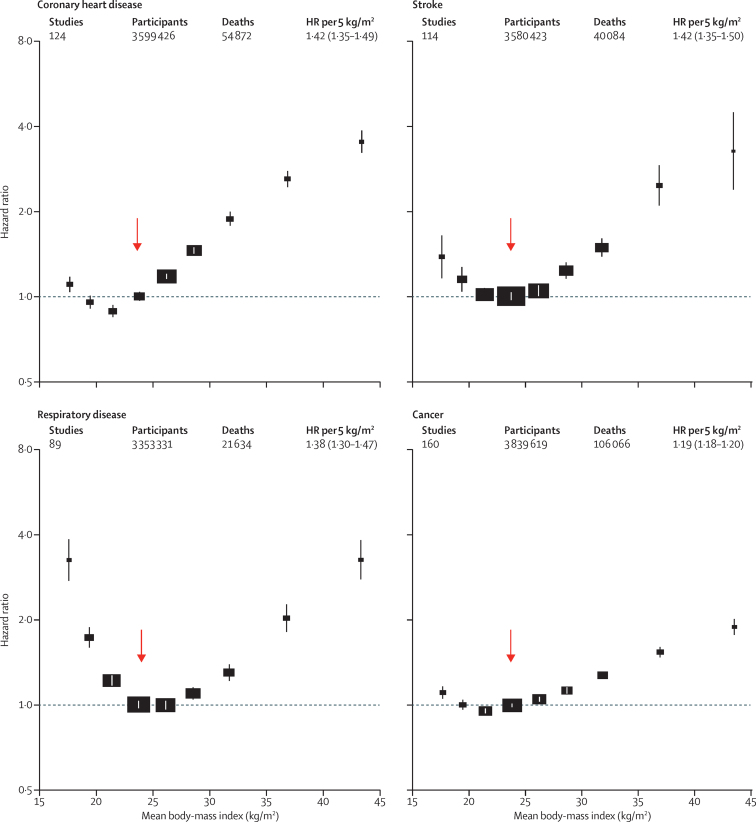
Verification
Claims the paper makes
The claims and statistics of this paper haven’t been checked yet.
Free: it reads the open-access text and checks the first 5 claims that cite a source we can check. Create a free account to check every claim.
Claims other papers make about this one
Each is checked against this paper’s own text: does it say what the citing paper says it does?
The cited source doesn’t support the claim as written.
In the citing paper
“as meta-analyses indicate that the mortality risk of healthy older people is lowest in the overweight range (279-281).”
From ESPEN practical guideline: Clinical nutrition and hydration in geriatrics (2022) · cites this paper as [279]
Checked by a reasoning model — may be wrong.
Experimental — accuracy not yet measuredThe source backs part of the claim, not all of it — or backs it for a different population, condition or comparison.
In the citing paper
“Being obese was more dangerous for men than women—the excess risk of premature death is about three times as big for men with obesity than for women with obesity.”
From Global health 2050: the path to halving premature death by mid-century (2024) · cites this paper as [243]
Experimental — accuracy not yet measuredThe cited source says what the claim attributes to it.
In the citing paper
“all of which render obesity to be consistently associated with increased mortality [7, 8].”
From Mediterranean Diet and Obesity-related Disorders: What is the Evidence? (2022) · cites this paper as [8]
In the citing paper
“In this group, every 5 kg/m2 increase in BMI above 25 kg/m2 was associated with 31% higher all-cause mortality and 42% higher cardiovascular mortality.”
From Global health 2050: the path to halving premature death by mid-century (2024) · cites this paper as [243]
In the citing paper
“Furthermore, several prospective studies reported a J-shaped association between BMI and both all-cause and cardiovascular mortality (73, 74).”
From Health Consequences of Sarcopenic Obesity: A Narrative Review (2020) · cites this paper as [73]
Self-check
Percentages, sums and reported differences re-computed from the paper’s own numbers.
The self-check needs the paper’s full text.
Citations
Cites
Quantifying heterogeneity in a meta‐analysis
Higgins, J. P. T., & Thompson, S. G. (2002) · Statistics in Medicine · doi:10.1002/sim.1186 · Cited by 36,763
Self-citation(2004) · The Lancet · doi:10.1016/s0140-6736(03)15268-3 · Cited by 12,717
Ng, M., Fleming, T., Robinson, M., Thomson, B., Graetz, N., Margono, C., Mullany, E. C., Biryukov, S., Abbafati, C., Abera, S. F., et al. (2014) · The Lancet · doi:10.1016/s0140-6736(14)60460-8 · Cited by 11,952
Self-citation(1998) · PsycEXTRA Dataset · doi:10.1037/e565682010-001 · Cited by 9,472
The metabolic phenotype in obesity: Fat mass, body fat distribution, and adipose tissue function
Goossens, G. H. (2017) · Obesity Facts · doi:10.1159/000471488 · Cited by 8,481
Prospective Studies Collaboration (2009) · The Lancet · doi:10.1016/s0140-6736(09)60318-4 · Cited by 4,807
2013 AHA/ACC/TOS Guideline for the Management of Overweight and Obesity in Adults
Jensen, M. D., Ryan, D. H., Apovian, C. M., Ard, J. D., Comuzzie, A. G., Donato, K. A., Hu, F. B., Hubbard, V. S., Jakicic, J. M., Kushner, R. F., et al. (2014) · Journal of the American College of Cardiology · doi:10.1016/j.jacc.2013.11.004 · Cited by 4,058
Self-citationFlegal, K. M., Kit, B. K., Orpana, H., & Graubard, B. I. (2013) · JAMA · doi:10.1001/jama.2012.113905 · Cited by 3,998
Mechanisms linking obesity with cardiovascular disease
Van Gaal, L. F., Mertens, I. L., & De Block, C. E. (2006) · Nature · doi:10.1038/nature05487 · Cited by 2,814
Cited by
Items 401–500 of 1,007
Meal Timing and Anthropometric and Metabolic Outcomes: A Systematic Review and Meta-Analysis
Liu, H. Y., Eso, A. A., Cook, N., O’Neill, H. M., & Albarqouni, L. (2024) · JAMA Network Open · doi:10.1001/jamanetworkopen.2024.42163 · Cited by 52
Weight Gain and Health Affliction Among Former National Football League Players
Churchill, T. W., Krishnan, S., Weisskopf, M. G., Yates, B. A., Speizer, F. E., Kim, J. H., Nadler, L. M., Pascual‐Leone, Á., ZAFONTE, R. D., & Baggish, A. L. (2018) · The American Journal of Medicine · doi:10.1016/j.amjmed.2018.07.042 · Cited by 45
Obesity: seize the day, fight the fat
Pοlyzos, S. A., & Mantzoros, C. S. (2019) · Metabolism · doi:10.1016/j.metabol.2018.12.011 · Cited by 50
General and Abdominal Adiposity and Mortality in Mexico City: A Prospective Study of 150 000 Adults
Gnatiuc, L., Alegre-Díaz, J., Wade, R., Ramirez-Reyes, R., Tapia-Conyer, R., Garcilazo-Ávila, A., Chiquete, E., Gonzáles-Carballo, C., Solano-Sanchez, M., Clarke, R., et al. (2019) · Annals of Internal Medicine · doi:10.7326/m18-3502 · Cited by 43
“A metaanalysis of prospective studies, mostly in high-income countries, of 4 million never-smokers without chronic disease who survived more than 5 years after BMI was measured found that each 5-kg/m(2) increase in BMI above 25 kg/m(2) was associated with 31% higher all-cause mortality and 42% higher cardiovascular mo…”
InfluentialSelf-citationAvolio, E., Gualtieri, P., Romano, L., Pecorella, C., Ferraro, S., Palma, G., Di Renzo, L., & De Lorenzo, A. (2020) · Current Medicinal Chemistry · doi:10.2174/0929867326666190326113607 · Cited by 43
Barroso, M., Goday, A., Ramos, R., Marín-Ibáñez, A., Guembe, M. J., Rigo, F., Tormo-Díaz, M. J., Moreno‐Iribas, C., Cabré, J. J., Segura, A., et al. (2017) · Preventive Medicine · doi:10.1016/j.ypmed.2017.11.013 · Cited by 52
Self-citationYang, Z., Pu, F., Cao, X., Li, X., Sun, S., Zhang, J., Chen, C., Han, L., Yang, Y., Wang, W., et al. (2022) · Ecotoxicology and Environmental Safety · doi:10.1016/j.ecoenv.2022.113542 · Cited by 44
Tu, H., McQuade, J. L., Davies, M. A., Huang, M., Xie, K., Ye, Y., Chow, W., Rodriguez, A., & Wu, X. (2022) · The Innovation · doi:10.1016/j.xinn.2022.100344 · Cited by 55
“INTRODUCTION It is well established that excess body weight increases risk of overall mortality and risk of developingmany differentmalignancies in the general population.(1,2) In contrast, paradoxical associations were found in populations with a chronic disease (including cardiovascular disease, pulmonary disease, a…”
Is human obesity an inflammatory disease of the hypothalamus?
Sonnefeld, L., Rohmann, N., Geisler, C., & Laudes, M. (2023) · European Journal of Endocrinology · doi:10.1093/ejendo/lvad030 · Cited by 53
Yoshida, S., Shiraishi, R., Nakayama, Y., & Taira, Y. (2023) · Nutrients · doi:10.3390/nu15132991 · Cited by 57
Carbone, F., Després, J., Ioannidis, J. P. A., Neeland, I. J., Garruti, G., Busetto, L., Liberale, L., Ministrini, S., Vilahur, G., Schindler, T. H., et al. (2025) · European Journal of Clinical Investigation · doi:10.1111/eci.70059 · Cited by 57
Jayedi, A., & Shab‐Bidar, S. (2018) · Obesity Research & Clinical Practice · doi:10.1016/j.orcp.2018.01.002 · Cited by 46
VISCERAL ADIPOSITY AS A GLOBAL FACTOR OF CARDIOVASCULAR RISK
Chumakova, G. A., Kuznetsova, Т. Y., Druzhilov, М. A., & Veselovskaya, N. G. (2018) · Russian Journal of Cardiology · doi:10.15829/1560-4071-2018-5-7-14 · Cited by 54
Evaluation of the online Beverage Frequency Questionnaire (BFQ)
Vanderlee, L., Reid, J. L., White, C. M., Hobin, E. P., Acton, R. B., Jones, A. C., O’Neill, M., Kirkpatrick, S. I., & Hammond, D. G. (2018) · Nutrition Journal · doi:10.1186/s12937-018-0380-8 · Cited by 44
Precision Medicine in Weight Loss and Healthy Living
Severin, R. S., Sabbahi, A., Mahmoud, A. M., Arena, R. A., & Phillips, S. A. (2019) · Progress in Cardiovascular Diseases · doi:10.1016/j.pcad.2018.12.012 · Cited by 50
Enrollment Challenges: Recruiting Men to Weight Loss Interventions
Rounds, T. J., & Harvey, J. R. (2019) · American Journal of Men s Health · doi:10.1177/1557988319832120 · Cited by 49
4-Methylumbelliferone improves the thermogenic capacity of brown adipose tissue
Grandoch, M., Flögel, U., Virtue, S., Maier, J. K., Jeleník, T., Kohlmorgen, C., Feldmann, K., Ostendorf, Y., Castañeda, T. R., Zhou, Z., et al. (2019) · Nature Metabolism · doi:10.1038/s42255-019-0055-6 · Cited by 48
Comparative Relevance of Physical Fitness and Adiposity on Life Expectancy
Zaccardi, F., Davies, M. J., Khunti, K., & Yates, T. E. (2019) · Mayo Clinic Proceedings · doi:10.1016/j.mayocp.2018.10.029 · Cited by 45
Castillo, D. F. E., & Gómez-de-Regil, L. (2019) · BMC Geriatrics · doi:10.1186/s12877-019-1363-0 · Cited by 57
Targeting fibrinogen‐like protein 1 is a novel therapeutic strategy to combat obesity
Wu, H., Chen, S., Fan, K., Kuo, C., Lin, S., Wang, S., Chang, C., & Li, H. (2019) · The FASEB Journal · doi:10.1096/fj.201901925r · Cited by 45
Poblete, J. M. S., Ballinger, M. N., Bao, S., Alghothani, M., Nevado, J. B., Eubank, T. D., Christman, J. W., & Magalang, U. J. (2020) · American Journal of Physiology-Endocrinology and Metabolism · doi:10.1152/ajpendo.00174.2019 · Cited by 47
Weng, L., Fan, J., Yu, C., Guo, Y., Bian, Z., Wei, Y., Yang, L., Chen, Y., Du, H., Chang, L., et al. (2020) · Critical Care · doi:10.1186/s13054-020-03229-2 · Cited by 44
Self-citationMichaëlsson, K., Baron, J. A., Byberg, L., Höijer, J., Larsson, S. C., Svennblad, B., Melhus, H., Wolk, A., & Lemming, E. W. (2020) · PLoS Medicine · doi:10.1371/journal.pmed.1003331 · Cited by 47
Girard, R., Tremblay, S., Noll, C., St‐Jean, S., Jones, C. M., Gélinas, Y., Maloum-Rami, F., Perreault, N., Laplante, M., Carpentier, A. C., et al. (2022) · Nature Communications · doi:10.1038/s41467-021-27934-w · Cited by 48
Pelvic floor dysfunction and obesity
Chilaka, C., Toozs-Hobson, P., & Chilaka, V. (2023) · Best Practice & Research Clinical Obstetrics & Gynaecology · doi:10.1016/j.bpobgyn.2023.102389 · Cited by 42
Evidence for the contribution of the gut microbiome to obesity and its reversal
de Wit, D. F., Hanssen, N. M. J., Wortelboer, K., Herrema, H., Rampanelli, E., & Nieuwdorp, M. (2023) · Science Translational Medicine · doi:10.1126/scitranslmed.adg2773 · Cited by 51
Adiposity and Blood Pressure in 110 000 Mexican Adults
Gnatiuc, L., Alegre-Díaz, J., Halsey, J., Herrington, W. G., López‐Cervantes, M., Lewington, S., Collins, R., TAPIA-CONYER, R. C., Peto, R., Emberson, J., et al. (2017) · Hypertension · doi:10.1161/hypertensionaha.116.08791 · Cited by 49
Self-citationChen, Q., Hartman, C. A., Kuja‐Halkola, R., Faraone, S. V., Almqvist, C., & Larsson, H. (2018) · Psychological Medicine · doi:10.1017/s0033291718002532 · Cited by 48
Chen, H., Deng, Y., & Li, S. (2019) · International Heart Journal · doi:10.1536/ihj.18-155 · Cited by 42
‘Obesageing’: Linking obesity & ageing
Ghosh, S., Sinha, J. K., & Raghunath, M. (2019) · The Indian Journal of Medical Research · doi:10.4103/ijmr.ijmr_2120_18 · Cited by 78
Michalopoulou, M., Ferrey, A. E., Harmer, G., Goddard, L., Kebbe, M., Theodoulou, A., Jebb, S. A., & Aveyard, P. N. (2022) · Annals of Internal Medicine · doi:10.7326/m21-3128 · Cited by 51
“Globally, almost 2 billion adults and more than 340 million children and adolescents are living with overweight or obesity (1), and the prevalence continues to increase (2).”
BackgroundHu, Y., Xu, J., Sheng, Y., Liu, J., Li, H., Guo, M., Xu, W., Luo, Y., Huang, K., & He, X. (2022) · Nutrients · doi:10.3390/nu14091868 · Cited by 54
“Therefore, obesity can induce a series of metabolic diseases [7], including type 2 diabetes, hepatobiliary disease, cardiovascular diseases, osteoarthritis [8], and increase the risk of mortality [9,10].”
BackgroundCui, J., Yang, Z., Wang, J., Yin, S., Xiao, Y., Bai, Y., & Wang, J. (2023) · Frontiers in Endocrinology · doi:10.3389/fendo.2023.1082504 · Cited by 44
“According to 239 large, multinational, prospective studies performed in four continents, the relationship between overweight and obesity measured by BMI, and higher all-cause mortality was indisputable (29).”
BackgroundTotal and Regional Fat/Muscle Mass Ratio and Risks of Incident Cardiovascular Disease and Mortality
Zhou, R., Chen, H., Yang, L., Li, F., Zhong, Q., Huang, Y., & Wu, X. (2023) · Journal of the American Heart Association · doi:10.1161/jaha.123.030101 · Cited by 49
“7,10,11 One possible explanation is that elevated BMI, accompanied by a chronic disease or not, can be a sign of robustness or adequate muscle reserves (increased appetite and reduced risk of un-dernutrition) in older people, which is associated enhanced survival and reduced cardiovascular events.”
BackgroundSelf-citationMetzendorf, M., Wieland, L. S., & Richter, B. (2024) · Cochrane Database of Systematic Reviews · doi:10.1002/14651858.cd013591.pub2 · Cited by 77
CheekAge: a next-generation buccal epigenetic aging clock associated with lifestyle and health
Shokhirev, M. N., Torosin, N. S., Kramer, D. J., Johnson, A. A., & Cuellar, T. L. (2024) · GeroScience · doi:10.1007/s11357-024-01094-3 · Cited by 44
“The stronger association between increased BMI and decreased chronological age in males could be again due to survivorship bias, where males with increased BMI are at greater risk of mortality and, therefore, less likely to be in the older cohort [33].”
BackgroundOrtega-Molina, A., Lebrero‐Fernández, C., Sanz, A., Calvo‐Rubio, M., Deleyto-Seldas, N., de Prado-Rivas, L., Plata-Gómez, A. B., Fernández-Florido, E., González‐García, P., Vivas, Y., et al. (2024) · Nature Aging · doi:10.1038/s43587-024-00635-x · Cited by 50
“Many aging-related diseases have a positive correlation with BMI 67 , which also associates with mild chronic inflammation; conversely, dietary restriction (DR) is an extremely efficacious intervention to extend healthy aging and longevity in mammals.”
Prevalence and Trends in Lifetime Obesity in the U.S., 1988–2014
Stokes, A., Ni, Y., & Preston, S. H. (2017) · American Journal of Preventive Medicine · doi:10.1016/j.amepre.2017.06.008 · Cited by 69
Han, C., Liu, Y. S., Sun, X., Luo, X., Zhang, L., Wang, B., Ren, Y., Zhou, J., Zhao, Y., Zhang, D., et al. (2017) · British Journal Of Nutrition · doi:10.1017/s0007114517002859 · Cited by 41
Genetics of Obesity in Diverse Populations
Young, K. L., Graff, M., Fernández‐Rhodes, L., & North, K. E. (2018) · Current Diabetes Reports · doi:10.1007/s11892-018-1107-0 · Cited by 53
Aune, D., Mahamat‐Saleh, Y., Norat, T., & Ríboli, E. (2019) · BJOG An International Journal of Obstetrics & Gynaecology · doi:10.1111/1471-0528.15897 · Cited by 54
Lane, J. C. E., Butler, K. L., Poveda-Marina, J. L., Martínez-Laguna, D., Reyes, C., de Bont, J., Javaid, M. K., Logue, J., Compston, J. E., Cooper, C. C., et al. (2020) · Journal of Bone and Mineral Research · doi:10.1002/jbmr.3984 · Cited by 44
Williams, L. M., Pines, A., Goldstein-Piekarski, A. N., Rosas, L. G., Kullar, M., Sacchet, M. D., Gevaert, O., Bailenson, J., Lavori, P. W., Dagum, P., et al. (2018) · Behaviour Research and Therapy · doi:10.1016/j.brat.2017.09.012 · Cited by 40
“Depression and obesity are two of the top contributors to the global burden of disease and disability (GBD 2015 Disease and Injury Incidence and Prevalence Collaborators, 2016; GBD 2015 Risk Factors Collaborators, 2016; The Global BMI Mortality Collaboration, 2016).”
BackgroundSpigoni, V., Cinquegrani, G., Iannozzi, N. T., Frigeri, G., Maggiolo, G., Maggi, M., Parello, V., & Dei, A. (2022) · Frontiers in Endocrinology · doi:10.3389/fendo.2022.972890 · Cited by 45
Wang, Y., Luo, D., Liu, J., Song, Y., Jiang, B., & Jiang, H. (2023) · PLoS ONE · doi:10.1371/journal.pone.0286745 · Cited by 55
The Current Global State of Key Lifestyle Characteristics: Health and Economic Implications
Arena, R. A., McNeil, A., Sagner, M., & Hills, A. P. (2017) · Progress in Cardiovascular Diseases · doi:10.1016/j.pcad.2017.02.002 · Cited by 50
“premature deaths could be prevented if individuals had a normal body weight and that obesity was now only behind tobacco use in causing premature deaths in Europe.(54) In 2010, it is estimated that overweight and obesity was the cause of 3.”
BackgroundInfluentialle Roux, C., Aroda, V., Hemmingsson, J., Cancino, A. P., Christensen, R., & Pi-Sunyer, X. (2017) · Obesity Facts · doi:10.1159/000478099 · Cited by 40
Vecino-Ortiz, A. I., & Arroyo‐Ariza, D. (2018) · Social Science & Medicine · doi:10.1016/j.socscimed.2018.05.043 · Cited by 45
Song, P., Li, X., Bu, Y., Ding, S., Zhai, D., Wang, E., & Yu, Z. (2019) · Scientific Reports · doi:10.1038/s41598-019-41986-5 · Cited by 44
Kintu, A., Sando, D. M., Okello, S., Mutungi, G. N., Guwatudde, D., Menzies, N. A., Danaei, G., & Verguet, S. (2020) · Journal of the International AIDS Society · doi:10.1002/jia2.25508 · Cited by 46
“Excessive weight gain is concerning because a high body mass index (BMI) is a major risk factor for several NCDs and has been linked to increased risk for all-cause mortality [25].”
BackgroundKang, I. S., & Kong, K. A. (2021) · PLoS ONE · doi:10.1371/journal.pone.0253640 · Cited by 48
“Despite the differences in BMI cutoff points for obesity in these populations, a meta-analysis of four continents in 239 prospective studies showed that BMI and all-cause mortality were broadly consistent across the four continents [3].”
BackgroundImpact of modifiable healthy lifestyle adoption on lifetime gain from middle to older age
Sakaniwa, R., Noguchi, M., Imano, H., Shirai, K., Tamakoshi, A., Iso, H., & The JACC Study Group (2022) · Age and Ageing · doi:10.1093/ageing/afac080 · Cited by 51
“The lifetime gains (95% CIs) were ∼2 and 5 years for ethanol intake <46.0 g/day in men and women, respectively; 4 years for never having smoked (both men and women) and 1.3–1.7 years for BMI 21–25 kg/m2 and a sleep duration of 5.5–7.4 h/day in both men women.”
InfluentialLopez, A. D., & Adair, T. (2019) · Medical Journal of Australia · doi:10.5694/mja2.50144 · Cited by 39
Body mass index as a predictor of mortality in bronchiectasis: A nationwide population-based study
Lee, J. M., Lee, S. A., Han, C. H., Lee, S. M., Kim, C. J., Lee, S. C., & Park, S. C. (2021) · Respiratory Medicine · doi:10.1016/j.rmed.2021.106370 · Cited by 43
Sato, F., Nakamura, Y., Kayaba, K., & Ishikawa, S. (2022) · Nutrition Metabolism and Cardiovascular Diseases · doi:10.1016/j.numecd.2022.05.002 · Cited by 42
Lan, Y., Lu, Y., Li, J., Hu, S., Chen, S., Wang, Y., Yuan, X., Liu, H., Wang, X., Wu, S., et al. (2022) · Hepatology Communications · doi:10.1002/hep4.2081 · Cited by 39
Obesity in the Asia-Pacific Region: Current Perspectives
Lui, D. T. W., Ako, J., Dalal, J. J., Fong, A. Y. Y., Fujino, M., Horton, A., Krittayaphong, R., Almahmeed, W. A., Matthias, A. T., Nelson, A. J., et al. (2024) · Journal of Asian Pacific Society of Cardiology · doi:10.15420/japsc.2023.68 · Cited by 51
“22 While BMI is a practical and convenient measure of obesity in clinical settings, there are several shortcomings.”
Apnea-hypopnea index in sleep studies and the risk of over-simplification
Borsini, E. E., Nogueira, F., & Nigro, C. A. (2018) · Sleep Science · doi:10.5935/1984-0063.20180010 · Cited by 50
Tate, J., Knuiman, M. W., Davis, W. A., Davis, T. M. E., & Bruce, D. G. (2019) · Diabetologia · doi:10.1007/s00125-019-05057-8 · Cited by 45
Olesen, S. S., Poulsen, J. L., Novovic, S., Nøjgaard, C., Kalaitzakis, E., Jensen, N. M., Engjom, T., Tjora, E., Waage, A., Hauge, T., et al. (2020) · United European Gastroenterology Journal · doi:10.1177/2050640620901973 · Cited by 42
Brzeziński, M., Jankowska, A., Słomińska-Frączek, M., Metelska, P., Wiśniewski, P., Socha, P., & Szlagatys‐Sidorkiewicz, A. (2020) · Nutrients · doi:10.3390/nu12041093 · Cited by 62
Agustina, R., Meilianawati, Fenny, Atmarita, A., Suparmi, S., Susiloretni, K. A., Lestari, W., Pritasari, K., & Shankar, A. H. (2021) · Food and Nutrition Bulletin · doi:10.1177/0379572121992750 · Cited by 58
LRG1 is an adipokine that promotes insulin sensitivity and suppresses inflammation
Choi, C. H. J., Barr, W., Zaman, S., Model, C., Park, A., Koenen, M., Lin, Z., Szwed, S. K., Marchildon, F., Crane, A., et al. (2022) · eLife · doi:10.7554/elife.81559 · Cited by 42
Oguntade, A. S., Islam, N., Malouf, R. S., Taylor, H., Jin, D., Lewington, S., & Lacey, B. (2023) · Journal of the American Heart Association · doi:10.1161/jaha.122.029062 · Cited by 44
Self-citationMouchti, S., Orliacq, J., Reeves, G., & Chen, Z. (2023) · BMC Medical Imaging · doi:10.1186/s12880-023-01063-w · Cited by 38
“As a simple conventional anthropometric measurement, body mass index (BMI), defined as weight (kg) divided by height square (meter), has been widely used to measure body fat and to predict risks of morbidity [18] and mortality [1, 19].”
MethodSelf-citationZhu, C., Cui, R., Gao, M., Rampersad, S., You, H., Sheng, C., Yang, P., Sheng, H., Cheng, X., Bu, L., et al. (2017) · International Journal of Endocrinology · doi:10.1155/2017/5438157 · Cited by 38
“This is similar to the relationship between BMI and all-cause mortality [29].”
Effect of Body Mass Index on Clinical Events After Acute Coronary Syndromes
Lamelas, P. M., Schwalm, J.-D., Ibrahim, Q. I., Mehta, S. R., Devereaux, P. J., Jolly, S. S., & Yusuf, S. (2017) · The American Journal of Cardiology · doi:10.1016/j.amjcard.2017.07.043 · Cited by 38
Person-Based Brain Morphometric Similarity is Heritable and Correlates With Biological Features
Doucet, G. E., Moser, D. A., Rodrigue, A., Bassett, D. S., Glahn, D. C., & Frangou, S. (2018) · Cerebral Cortex · doi:10.1093/cercor/bhy287 · Cited by 44
Food Insecurity, Food Deserts, and Waist-to-Height Ratio: Variation by Sex and Race/Ethnicity
Testa, A. M., & Jackson, D. B. (2018) · Journal of Community Health · doi:10.1007/s10900-018-00601-w · Cited by 49
Adherence with lipid screening guidelines in standard- and high-risk children and adolescents
Berger, J. H., Chen, F., Faerber, J., O'Byrne, M. L., & Brothers, J. A. (2020) · American Heart Journal · doi:10.1016/j.ahj.2020.10.058 · Cited by 43
Physical Activity and Mortality Across Levels of Adiposity
Sánchez-Lastra, M. A., Ding, D., Dalene, K. E., Ekelund, U., & Tarp, J. (2020) · Mayo Clinic Proceedings · doi:10.1016/j.mayocp.2020.06.049 · Cited by 38
Overweight and obesity at age 19 after pre-natal famine exposure
Lumey, L. H., Ekamper, P., Bijwaard, G. E., Conti, G., & van Poppel, F. W. A. (2021) · International Journal of Obesity · doi:10.1038/s41366-021-00824-3 · Cited by 40
“World-wide, a consistent association is seen between being overweight BMI or higher and increased all-cause mortality 26 .”
Hropot, T., Herman, R., Janez, A., Lezaic, L., & Jensterle, M. (2023) · International Journal of Molecular Sciences · doi:10.3390/ijms24108592 · Cited by 39
Springmann, M., Dinivitzer, E., Freund, F., Jensen, J. D., & Bouyssou, C. G. (2025) · Nature Food · doi:10.1038/s43016-024-01097-5 · Cited by 66
“21 Baseline data on the weight distribution in each country were adopted from a pooled analysis of population-based measurements undertaken by the NCD Risk Factor Collaboration.”
van Dalen, B. M., Chin, J. F., Motiram, P. A., Hendrix, A., Emans, M. E., Brugts, J. J., Westenbrink, B. D., & de Boer, R. A. (2025) · Cardiovascular Diabetology · doi:10.1186/s12933-025-02612-z · Cited by 48
“Also, the relationship between obesity and mortality risk remains controversial: a large body of evidence supports a “J-shaped” or a “U-shaped” association of body BMI with all-cause mortality [14, 15].”
A cellular and molecular basis of leptin resistance
Tan, B., Hedbacker, K., Kelly, L., Zhang, Z., Moura‐Assis, A., Luo, J., Rabinowitz, J. D., & Friedman, J. M. (2025) · Cell Metabolism · doi:10.1016/j.cmet.2025.01.001 · Cited by 48
Riele, R. J. L. M. T., Dronkers, E. A. C., Wieringa, M. H., de Herdt, M. J., Sewnaik, A., Hardillo, J. A., & de Jong, R. J. B. (2018) · Oral Oncology · doi:10.1016/j.oraloncology.2018.01.001 · Cited by 37
Cignarelli, A., Castellana, M., Castellana, G., Perrini, S., Brescia, F., Natalicchio, A., Garruti, G., Laviola, L., Resta, O., & Giorgino, F. (2019) · Frontiers in Endocrinology · doi:10.3389/fendo.2019.00551 · Cited by 37
Frenzel, A., Binder, H., Walter, N., Wirkner, K., Loeffler, M., & Loeffler‐Wirth, H. (2020) · npj Aging and Mechanisms of Disease · doi:10.1038/s41514-020-0043-9 · Cited by 45
The Mechanism of Traditional Chinese Medicine for the Treatment of Obesity
Li, C., Zhang, H., & Li, X. (2020) · Diabetes Metabolic Syndrome and Obesity · doi:10.2147/dmso.s274534 · Cited by 42
The Adipose Tissue at the Crosstalk Between EDCs and Cancer Development
Bokobza, E., Hinault, C., Tiroille, V., Clavel, S., Bost, F., & Chevalier, N. (2021) · Frontiers in Endocrinology · doi:10.3389/fendo.2021.691658 · Cited by 45
Dicken, S. J., Mitchell, J. J., Vay, J. N. L., Beard, E., Kale, D., Herbeć, A., & Shahab, L. (2021) · Nutrients · doi:10.3390/nu13092911 · Cited by 47
Obesity in pregnant women: a 20-year analysis of the German experience
Strauss, A. S., Rochow, N., Kunze, M., Hesse, V., Dudenhausen, J. W., & Voigt, M. (2021) · European Journal of Clinical Nutrition · doi:10.1038/s41430-021-00981-8 · Cited by 49
Dong, B., Peng, Y., Wang, Z., Adegbija, O., Hu, J., Ma, J., & Ma, Y.-H. (2018) · PLOS ONE · doi:10.1371/journal.pone.0193368 · Cited by 36
Rezende, L. F. M., Ferrari, G., Lee, D. H., Aune, D., Liao, B., Huang, W., Nie, J., Wang, Y., & Giovannucci, E. L. (2022) · European Journal of Epidemiology · doi:10.1007/s10654-021-00829-2 · Cited by 40
Putra, I. C. S., Kamarullah, W., Prameswari, H. S., Pramudyo, M., Iqbal, M., Achmad, C., Akbar, M. R., & Tiksnadi, B. B. (2022) · Diabetes & Metabolic Syndrome Clinical Research & Reviews · doi:10.1016/j.dsx.2022.102635 · Cited by 39
Cao, H., Rao, X., Jia, J., Yan, T., & Li, D. (2022) · Acta Diabetologica · doi:10.1007/s00592-022-01989-7 · Cited by 44
Orsi, E., Solini, A., Penno, G., Bonora, E., Fondelli, C., Trevisan, R., Vedovato, M., Cavalot, F. L., Lamacchia, O., Haxhi, J., et al. (2022) · Cardiovascular Diabetology · doi:10.1186/s12933-022-01706-2 · Cited by 41
“Background In the general population, higher body mass index (BMI) is associated with increased all-cause mortality [1], with the nadir of the curve generally found in the upper normal-weight range [2], though the relationship is J-shaped [3], as also underweight carries an increased risk of death.”
BackgroundJu, S. H., Cho, G., & Sohn, J. (2018) · Pharmacological Research · doi:10.1016/j.phrs.2018.01.004 · Cited by 40
Anti‐obesity effect of plant diterpenes and their derivatives: A review
Islam, M. T., Ali, E. S., & Mubarak, M. S. (2020) · Phytotherapy Research · doi:10.1002/ptr.6602 · Cited by 36
“BMI (ratio of the mass [weight] and height) is a convenient rule of thumb used to broadly categorize a person as underweight, normal weight, overweight, or obese based on tissue mass (muscle, fat, and bone) and height of a person (Di Angelantonio et al., 2016).”
BackgroundDi Renzo, L., Cinelli, G., Dri, M., Gualtieri, P., Attinà, A., Leggeri, C., Cenname, G., Esposito, E., Pujia, A., Chiricolo, G., et al. (2020) · Nutrients · doi:10.3390/nu12113456 · Cited by 36
“As adiposopathy consisting not so much in weight gain rather in excess fat mass [5], the Body Mass Index (BMI) cannot define obesity [6,7], and it is not sufficient to evaluate the risk of developing a chronic disease.”
BackgroundSocioeconomic inequalities in children’s weight, height and BMI trajectories in Norway
Mekonnen, T., Papadopoulou, E., Arah, O. A., Brantsæter, A. L., Lien, N., & Gebremariam, M. K. (2021) · Scientific Reports · doi:10.1038/s41598-021-84615-w · Cited by 45
Czapla, M., Juárez‐Vela, R., Łokieć, K., & Karniej, P. (2021) · Nutrients · doi:10.3390/nu13051669 · Cited by 43
“The aforementioned analysis showed that both overweight and obesity (regardless of their degree) were related to increased all-cause mortality [39].”
BackgroundBody mass index and molecular subtypes of colorectal cancer
Murphy, N., Newton, C. C., Song, M., Papadimitriou, N., Hoffmeister, M., Phipps, A. I., Harrison, T. A., Newcomb, P. A., Aglago, E. K., Berndt, S. I., et al. (2022) · JNCI Journal of the National Cancer Institute · doi:10.1093/jnci/djac215 · Cited by 42
“…calculated from self-reports or direct measures of body weight (kg) divided by height-squared (m 2 ), with individuals with BMI less than 18.5kg/m 2 excluded from the analysis because of the observed nonlinear associations at the lower end of the BMI continuum in these data and elsewhere (20,21).”
Self-citationGao, Y., Tsintzas, K., Macdonald, I. A., Cordon, S. M., & Taylor, M. A. (2021) · European Journal of Clinical Nutrition · doi:10.1038/s41430-021-00909-2 · Cited by 46
“Obesity increases the risk of cardiovascular diseases [1], T2DM [2], dyslipidaemia [3], dementia [4], cancers [5] and premature mortality [6].”
BackgroundThe paradox of obesity with normal weight; a cross-sectional study
Lahav, Y., Kfir, A., & Gepner, Y. (2023) · Frontiers in Nutrition · doi:10.3389/fnut.2023.1173488 · Cited by 52
Metabolic syndrome and psoriatic arthritis: the role of weight loss as a disease-modifying therapy
Williams, J., Hum, R. M., Rogers, K., Maglio, C., Alam, U., & Zhao, S. S. (2024) · Therapeutic Advances in Musculoskeletal Disease · doi:10.1177/1759720x241271886 · Cited by 39
Assessing the evidence for health benefits of low-level weight loss: a systematic review
Dhar, D., Packer, J., Michalopoulou, S., Cruz, J., Stansfield, C., Viner, R., Mytton, O. T., & Russell, S. (2024) · International Journal of Obesity · doi:10.1038/s41366-024-01664-7 · Cited by 51
Bundled measures for China’s food system transformation reveal social and environmental co-benefits
Wang, X., Cai, H., Xuan, J., Du, R., Lin, B., Bodirsky, B. L., Stevanović, M., Collignon, Q., Yuan, C., Yu, L., et al. (2025) · Nature Food · doi:10.1038/s43016-024-01100-z · Cited by 40
DeCleene, N. K., Kahn, E., Yuan, C.-W., Gakidou, E. E., Mokdad, A. H., Murray, C. J. L., Johnson, C. O., & Roth, G. A. (2026) · JAMA · doi:10.1001/jama.2025.26817 · Cited by 44
Metadata
- Authors
- Di Angelantonio, E., Bhupathiraju, S. N., Wormser, D., Gao, P., Kaptoge, S., de Gonzalez, A. B., Cairns, B. J., Huxley, R., Jackson, C. L., Joshy, G., Lewington, S., Manson, J. E., Murphy, N., Patel, A. V., Samet, J. M., Woodward, M., Zheng, W., Zhou, M., Bansal, N., Barricarte, A., Carter, B., Cerhan, J. R., Collins, R., Smith, G. D., Fang, X., Franco, O. H., Green, J., Halsey, J., Hildebrand, J. S., Jung, K. J., Korda, R. J., McLerran, D. F., Moore, S. C., O'Keeffe, L. M., Paige, E., Ramond, A., Reeves, G. K., Rolland, B., Sacerdote, C., Sattar, N., Sofianopoulou, E., Stevens, J., Thun, M., Ueshima, H., Yang, L., Yun, Y. D., Willeit, P., Banks, E., Beral, V., Chen, Z., Gapstur, S. M., Gunter, M. J., Hartge, P., Jee, S. H., Lam, T.-H., Peto, R., Potter, J. D., Willett, W. C., Thompson, S. G., Danesh, J., & Hu, F. B.
- Affiliations
- University of Cambridge (GB)
- National Institutes of Health (US)
- ORCID
- Bhupathiraju, Shilpa N
- Gao, Pei
- Kaptoge, Stephen
- Cairns, Benjamin J
- Huxley, Rachel
- Jackson, Chandra L
- Joshy, Grace
- Lewington, Sarah
- Manson, JoAnn E
- Murphy, Neil
- Patel, Alpa V
- Samet, Jonathan M
- Woodward, Mark
- Zheng, Wei
- Bansal, Narinder
- Barricarte, Aurelio
- Carter, Brian
- Cerhan, James R
- Collins, Rory
- Smith, George Davey
- Fang, Xianghua
- Franco, Oscar H
- Green, Jane
- Hildebrand, Janet S
- Jung, Keum Ji
- Korda, Rosemary J
- Moore, Steven C
- Paige, Ellie
- Ramond, Anna
- Reeves, Gillian K
- Rolland, Betsy
- Sacerdote, Carlotta
- Sattar, Naveed
- Sofianopoulou, Eleni
- Ueshima, Hirotsugu
- Yang, Ling
- Willeit, Peter
- Banks, Emily
- Beral, Valerie
- Chen, Zhengming
- Gapstur, Susan M
- Gunter, Marc J
- Jee, Sun Ha
- Peto, Richard
- Potter, John D
- Willett, Walter C
- Thompson, Simon G
- Danesh, John
- Hu, Frank B
- Venue
- The Lancet
- Publisher
- Elsevier BV
- Published
- 2016-08
- Volume
- 388
- Issue
- 10046
- Pages
- 776-786
- ISSN
- 0099-5355 (ISSN-L)
- 0140-6736
- PMC
- PMC4995441
- OpenAlex
- W2338864525
- Cited by
- 2,821
- References
- 47
- Citations by year
- 2026: 186 · 2025: 291 · 2024: 340 · 2023: 355 · 2022: 357 · 2021: 324 · 2020: 316 · 2019: 212 · 2018: 246 · 2017: 161 · 2016: 29
- FWCI
- 32.27
- Type
- journal article
- Language
- en
- Open access
- hybrid
- doi.org
- Licence
- cc-by
- www.elsevier.com/tdm/userlicense/1.0/ (tdm)
- creativecommons.org/licenses/by/4.0/ (vor)
- Locations
- The Lancet (publishedVersion, cc-by)
- PubMed Central (publishedVersion, cc-by)
- PubMed (publishedVersion)
- EUR Research Repository (Erasmus University Rotterdam) (publishedVersion)
- Bristol Research (University of Bristol) (publishedVersion, cc-by-nc-nd)
- ENLIGHTEN (Jurnal Bimbingan dan Konseling Islam) (acceptedVersion)
- Explore Bristol Research (submittedVersion, cc-by-nc-nd)
- Apollo (University of Cambridge) (submittedVersion, cc-by)
- EUR Research Repository (Erasmus University Rotterdam) (submittedVersion)
- Figshare (submittedVersion, cc-by)
- The HKU Scholars Hub (University of Hong Kong) (submittedVersion, cc-by-nc-nd)
- YUHSpace (Yonsei University Medical Library) (submittedVersion, cc-by-nc-nd)
- Spiral (Imperial College London) (submittedVersion, other-oa)
- Funders
- Amgen
- AstraZeneca
- GlaxoSmithKline
- Harvard T.H. Chan School of Public Health
- NHS Blood and Transplant
- Wellcome Trust (UM1 CA176726, P01 CA87969, UM1 CA167552)
- Cancer Research UK (P01 CA87969, 16491, UM1 CA176726)
- National Institute for Health and Care Research (P01 CA87969, UM1 CA176726, NF-SI-0512-10165, UM1 CA167552)
- British Heart Foundation (G0800270, SP/09/002, RG/13/13/30194, RG/08/014/24067)
- Bupa Foundation
- University of Cambridge
- European Commission (P01 CA87969, UM1 CA176726, UM1 CA167552)
- National Heart Foundation of Australia
- Evelyn Trust
- Recruitment Program for Young Professionals
- National Institutes of Health (UM1-CA-176726, UM1-CA167552, DK046200, CA176726, CA-167552, DK58845, CA 87969)
- Medical Research Council (MR/K02700X/1, UM1 CA167552, MR/M014509/1, MR/L003120/1, G0800270, P01 CA87969, UM1 CA176726)
- National Health and Medical Research Council
- NIHR Cambridge Biomedical Research Centre
- National Cancer Institute (P01CA087969, UM1CA176726, U54CA155626, UM1CA167552, UM1CA182910, [P01 CA87969, U01CA167552)
- Fogarty International Center
- National Institute of Diabetes and Digestive and Kidney Diseases (R01DK058845, P30DK046200, DK58845)
- Topics
- Health Sciences › Medicine › Public Health, Environmental and Occupational Health › Obesity, Physical Activity, Diet
- Health Sciences › Medicine › Oncology › Cancer Risks and Factors
- Health Sciences › Medicine › Endocrinology, Diabetes and Metabolism › Diabetes, Cardiovascular Risks, and Lipoproteins
- Keywords
- body mass index, all-cause mortality, obesity, overweight, underweight, obesity grade, never smokers, reverse causality, confounding, hazard ratio
- MeSH terms
- Adult, Aged, Asia, Australia, Cause of Death, Europe, Female, Humans, Male, Middle Aged, Mortality, New Zealand, North America, Prospective Studies, Body Mass Index, Linear Models, Overweight
About these checks
Registry, retraction, Cites and statistics results are computed, not judged, with one exception: a printed reference that no index lists is read once by a model before it counts as a citation error. Claims are extracted by a model and kept only when their quote appears verbatim in the text; each cited source is then checked, with a model’s help, for whether it says what the claim relies on. Those verdicts can be wrong — read the claim’s quote and the cited source before relying on one.
Statistics and arithmetic are recomputed, not judged.
Confidence bands are shown only for fields calibrated on our annotated test set. None is calibrated yet, so no band is shown.
What counts as a claim ›How we measure confidence ›How we check this ›
Are you an author, or do you see a problem with this page? Request a review
Data sources
Bibliographic data: Semantic Scholar, OpenAlex, Crossref.
Contains information from the Semantic Scholar Academic Graph Datasets, made available under the ODC Attribution License (ODC-BY 1.0).
Semantic Scholar’s data is described in: Kinney, R., et al. (2023). The Semantic Scholar Open Data Platform. arXiv:2301.10140.
