

Effects of aspirin on risks of vascular events and cancer according to bodyweight and dose: analysis of individual patient data from randomised trials
Open accessThe DOI matches its Crossref record; 49 of the 49 references it cites were found in a registry or an index.
Abstract
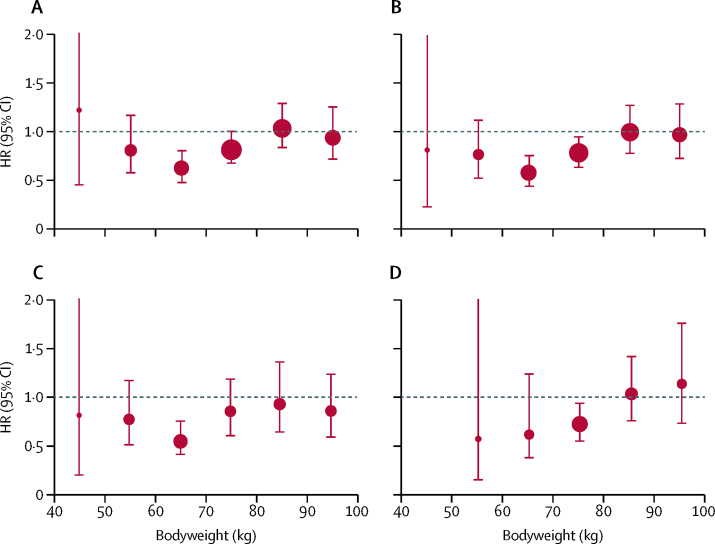
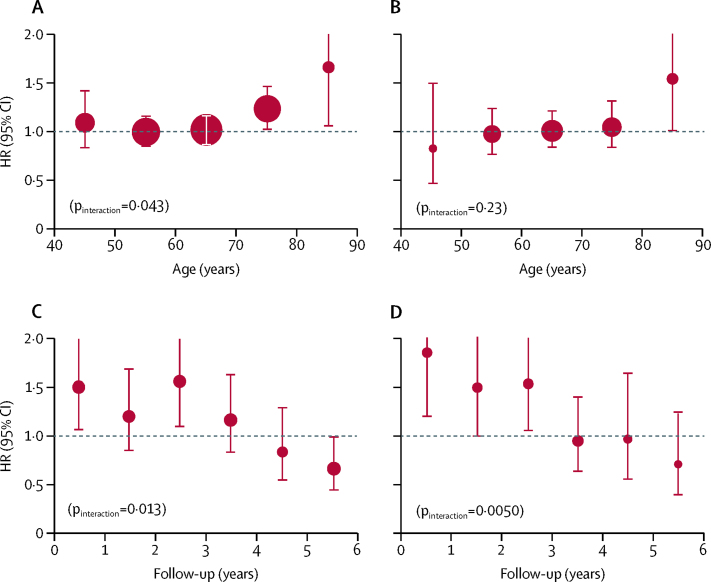
Background A one-dose-fits-all approach to use of aspirin has yielded only modest benefits in long-term prevention of cardiovascular events, possibly due to underdosing in patients of large body size and excess dosing in patients of small body size, which might also affect other outcomes. Methods Using individual patient data, we analysed the modifying effects of bodyweight (10 kg bands) and height (10 cm bands) on the effects of low doses (≤100 mg) and higher doses (300–325 mg or ≥500 mg) of aspirin in randomised trials of aspirin in primary prevention of cardiovascular events. We stratified the findings by age, sex, and vascular risk factors, and validated them in trials of aspirin in secondary prevention of stroke. Additionally, we assessed whether any weight or height dependence was evident for the effect of aspirin on 20-year risk of colorectal cancer or any in-trial cancer. Results Among ten eligible trials of aspirin in primary prevention (including 117 279 participants), bodyweight varied four-fold and trial median weight ranged from 60·0 kg to 81·2 kg (p<0·0001). The ability of 75–100 mg aspirin to reduce cardiovascular events decreased with increasing weight (p interaction =0·0072), with benefit seen in people weighing 50–69 kg (hazard ratio [HR] 0·75 [95% CI 0·65–0·85]) but not in those weighing 70 kg or more (0·95 [0·86–1·04]; 1·09 [0·93–1·29] for vascular death). Furthermore, the case fatality of a first cardiovascular event was increased by low-dose aspirin in people weighing 70 kg or more (odds ratio 1·33 [95% CI 1·08–1·64], p=0·0082). Higher doses of aspirin (≥325 mg) had the opposite interaction with bodyweight (difference p interaction =0·0013), reducing cardiovascular events only at higher weight (p interaction =0·017). Findings were similar in men and women, in people with diabetes, in trials of aspirin in secondary prevention, and in relation to height (p interaction =0·0025 for cardiovascular events). Aspirin-mediated reductions in long-term risk of colorectal cancer were also weight dependent (p interaction =0·038). Stratification by body size also revealed harms due to excess dosing: risk of sudden death was increased by aspirin in people at low weight for dose (p interaction =0·0018) and risk of all-cause death was increased in people weighing less than 50 kg who were receiving 75–100 mg aspirin (HR 1·52 [95% CI 1·04–2·21], p=0·031). In participants aged 70 years or older, the 3-year risk of cancer was also increased by aspirin (1·20 [1·03–1·47], p=0·02), particularly in those weighing less than 70 kg (1·31 [1·07–1·61], p=0·009) and consequently in women (1·44 [1·11–1·87], p=0·0069). Interpretation Low doses of aspirin (75–100 mg) were only effective in preventing vascular events in patients weighing less than 70 kg, and had no benefit in the 80% of men and nearly 50% of all women weighing 70 kg or more. By contrast, higher doses of aspirin were only effective in patients weighing 70 kg or more. Given that aspirin's effects on other outcomes, including cancer, also showed interactions with body size, a one-dose-fits-all approach to aspirin is unlikely to be optimal, and a more tailored strategy is required. Funding Wellcome Trust and National Institute for Health Research Oxford Biomedical Research Centre.
Overview
The claims and statistics of this paper haven’t been checked yet.
Free: it reads the open-access text and checks the first 5 claims that cite a source we can check. Create a free account to check every claim.
Integrity signals
Registry
Cites
Statistics
Figures
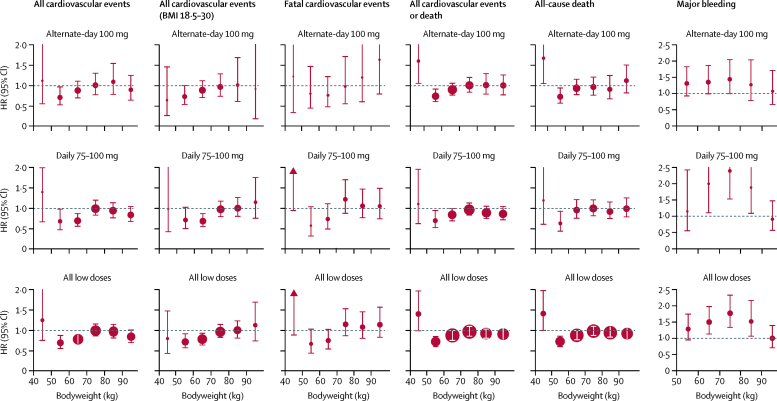
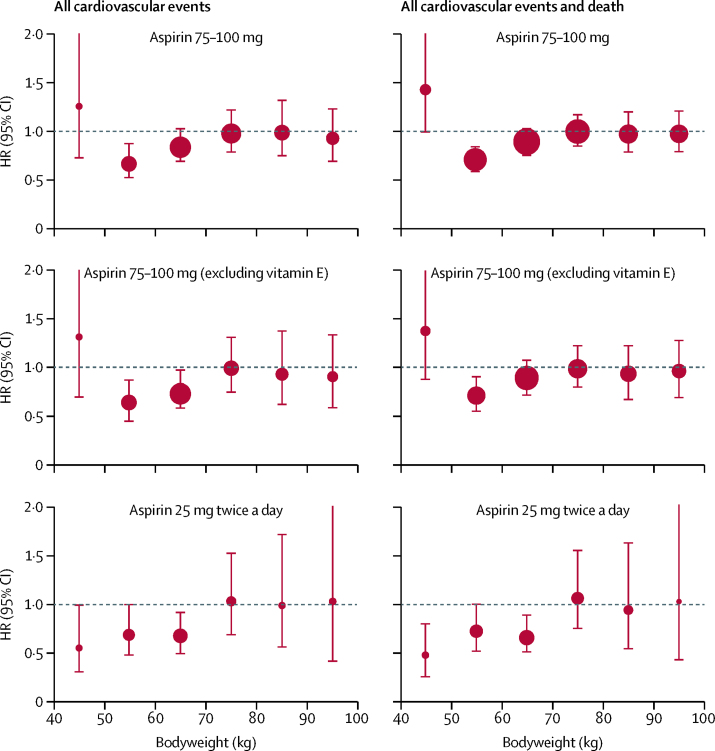
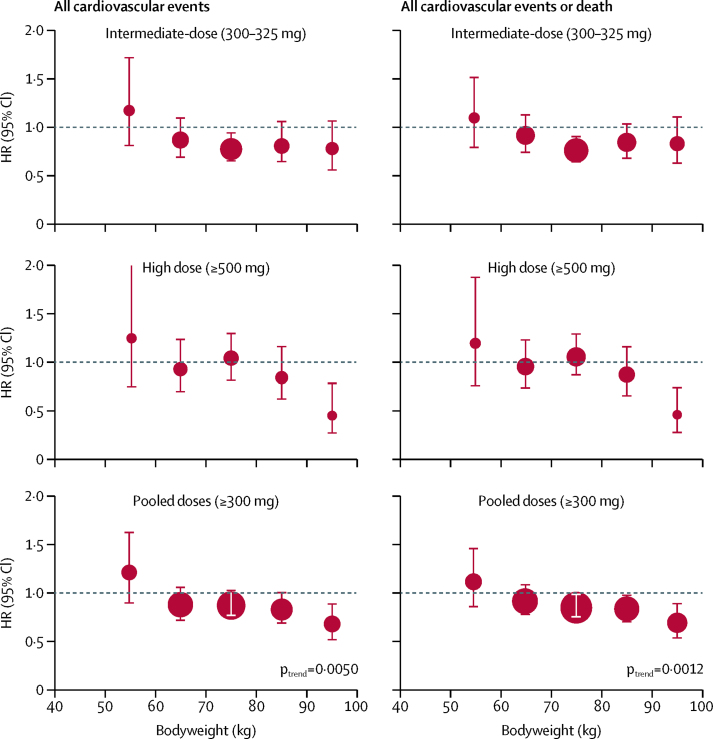
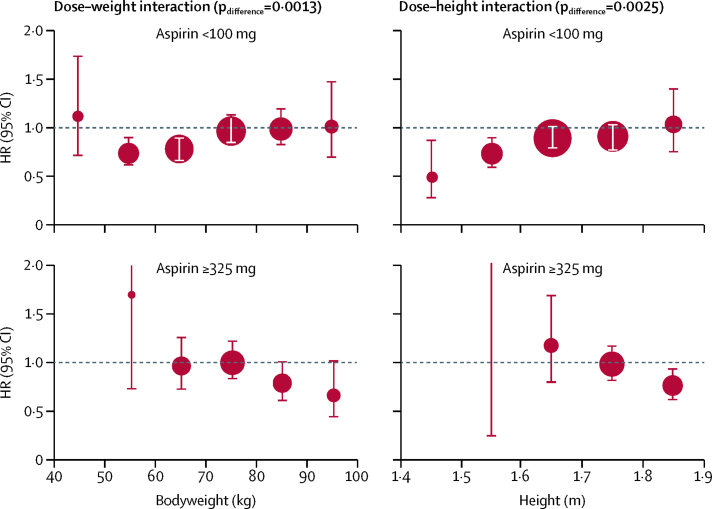
Verification
Claims the paper makes
The claims and statistics of this paper haven’t been checked yet.
Free: it reads the open-access text and checks the first 5 claims that cite a source we can check. Create a free account to check every claim.
Claims other papers make about this one
Each is checked against this paper’s own text: does it say what the citing paper says it does?
The cited source says what the claim attributes to it.
In the citing paper
“A recent analysis suggesting a greater benefit of low-dose aspirin use on the incidence of vascular events among persons with a body weight of less than 70 kg was not confirmed in exploratory subgroup analyses (and, indeed, a trend in the opposite direction was observed).”
From Effects of aspirin for primary prevention in persons with diabetes mellitus (2018) · cites this paper as [19]
The cited source says what the claim attributes to it.
In the citing paper
“Another meta-analysis raised the hypothesis that low-dose aspirin efficacy is reduced in those weighing >70 kg (196); however, the ASCEND trial found benefit of low-dose aspirin in those in this weight range, which would not validate this suggested hypothesis (179).”
From 10. Cardiovascular Disease and Risk Management: Standards of Care in Diabetes—2025 (2025) · cites this paper as [196]
In the citing paper
“Another meta-analysis raised the hypothesis that low-dose aspirin ef fi cacy is reduced in those weighing > 70 kg (161); however, the ASCEND trial found bene fi t of low-dose aspirin in those in this weight range, which would thus not validate this suggested hypothesis (144).”
From 10. Cardiovascular Disease and Risk Management: Standards of Care in Diabetes—2023 (2023) · cites this paper as [161]
Self-check
Percentages, sums and reported differences re-computed from the paper’s own numbers.
The self-check needs the paper’s full text.
Citations
Cites
Zhang, Q., Wang, C., Zheng, M., Li, Y., Li, J., Zhang, L., Shang, X., & Yan, C. (2015) · Cerebrovascular Diseases · doi:10.1159/000369778 · Cited by 11,533
Collaboration, A. T. (2002) · BMJ · doi:10.1136/bmj.324.7329.71 · Cited by 6,943
Hansson, L., Zanchetti, A., Carruthers, S. G., Dahlöf, B., Elmfeldt, D., Julius, S., Ménard, J., Rahn, K. H., Wedel, H., & Westerling, S. (1998) · The Lancet · doi:10.1016/s0140-6736(98)04311-6 · Cited by 5,728
Final Report on the Aspirin Component of the Ongoing Physicians' Health Study
Steering Committee of the Physicians' Health Study Research Group* (1989) · New England Journal of Medicine · doi:10.1056/nejm198907203210301 · Cited by 2,264
A Randomized Trial of Low-Dose Aspirin in the Primary Prevention of Cardiovascular Disease in Women
Ridker, P. M., Cook, N. R., Lee, I.-M., Gordon, D., Gaziano, J. M., Manson, J. E., Hennekens, C. H., & Buring, J. E. (2005) · New England Journal of Medicine · doi:10.1056/nejmoa050613 · Cited by 1,945
Self-citationEAFT (European Atrial Fibrillation Trial) Study Group (1993) · The Lancet · doi:10.1016/0140-6736(93)92358-z · Cited by 1,741
Rothwell, P. M., Fowkes, F. G. R., Belch, J. F., Ogawa, H., Warlow, C. P., & Meade, T. W. (2011) · The Lancet · doi:10.1016/s0140-6736(10)62110-1 · Cited by 1,497
Self-citationRothwell, P. M., Wilson, M., Elwin, C.-E., Norrving, B., Algra, A., Warlow, C. P., & Meade, T. W. (2010) · The Lancet · doi:10.1016/s0140-6736(10)61543-7 · Cited by 1,351
Self-citationThe United Kingdom transient ischaemic attack (UK-TIA) aspirin trial: final results.
Farrell, B., Godwin, J., Richards, S., & Warlow, C. (1991) · Journal of Neurology, Neurosurgery & Psychiatry · doi:10.1136/jnnp.54.12.1044 · Cited by 1,203
Research works printed but not linked: 1
- Schrör K Acetylsalicylic acid 2nd edn. 2016 Wiley-VCH Weinheim
Cited by
Items 101–200 of 350
Mechanisms of the antiangiogenic effects of aspirin in cancer
Xie, S., Wang, Y., Huang, Y., & Yang, B. (2021) · European Journal of Pharmacology · doi:10.1016/j.ejphar.2021.173989 · Cited by 21
Transcriptome-wide In Vitro Effects of Aspirin on Patient-derived Normal Colon Organoids
Devall, M. A. M., Drew, D. A., Dampier, C. H., Plummer, S. J., Eaton, S., Bryant, J., Díez‐Obrero, V., Mo, J., Kedrin, D., Zerjav, D. C., et al. (2021) · Cancer Prevention Research · doi:10.1158/1940-6207.capr-21-0041 · Cited by 24
“A range of doses may also unveil possible relationships with additional factors, such as height, weight, or BMI, which have been determined to influence bioavailability (49, 50).”
BackgroundDannenberg, L., Petzold, T., Achilles, A., Naguib, D., Zako, S., Helten, C., M’Pembele, R., Mourikis, P., Podsvyadek, Y., Grandoch, M., et al. (2018) · European Journal of Clinical Pharmacology · doi:10.1007/s00228-018-2560-z · Cited by 21
Embracing the polypill as a cardiovascular therapeutic: is this the best strategy?
Franczyk, B., Gluba-Brzózka, A., Jurkiewicz, Ł., Penson, P. E., Banach, M., & Rysz, J. (2018) · Expert Opinion on Pharmacotherapy · doi:10.1080/14656566.2018.1532501 · Cited by 24
“patients weighing < 70 mg, and that tailoring aspirin dose by body weight may be necessary [13].”
BackgroundMo, J., Chen, Z., Xu, J., Wang, A., Dai, L., Cheng, A., Meng, X., Li, H., Wang, Y., on behalf of the CHANCE Investigators, et al. (2019) · Stroke · doi:10.1161/strokeaha.119.026845 · Cited by 24
“efficacy in patients with overweight/obesity may be partially attribute to the insufficient systemic bioavailability.(10,21,31)”
BackgroundResistance of aspirin during and after pregnancy: A longitudinal cohort study
de Weg, J. M. B., Abheiden, C. N. H., Fuijkschot, W. W., Harmsze, A. M., de Boer, M. A., Thijs, A., & de Vries, J. I. P. (2019) · Pregnancy Hypertension · doi:10.1016/j.preghy.2019.11.008 · Cited by 22
The 125th Anniversary of Aspirin—The Story Continues
Werz, O., Stettler, H., Theurer, C., & Seibel, J. (2024) · Pharmaceuticals · doi:10.3390/ph17040437 · Cited by 19
The Puzzle of Aspirin and Iron Deficiency: The Vital Missing Link of the Iron-Chelating Metabolites
Kontoghiorghes, G. J. (2024) · International Journal of Molecular Sciences · doi:10.3390/ijms25105150 · Cited by 22
“For example, the widely used low doses of 75 mg and 100 mg aspirin are arbitrary in most cases, since they are intended for people of 70 kg, and those of higher weights or obese individuals may not achieve the desired therapeutic aspirin threshold [219,220].”
BackgroundAspirin or P2Y12 inhibitor monotherapy in atherosclerotic cardiovascular disease?
Galli, M., ten Berg, J. M., Valgimigli, M., Capodanno, D., Gragnano, F., Kimura, T., Bhatt, D. L., Gibson, C. M., Mehran, R., & Angiolillo, D. J. (2025) · European Heart Journal · doi:10.1093/eurheartj/ehaf718 · Cited by 26
Aspirin for prevention of colorectal cancer in the elderly: friend or foe?
Perisetti, A., Goyal, H., Tharian, B., Inamdar, S., & Mehta, J. L. (2020) · Annals of Gastroenterology · doi:10.20524/aog.2020.0556 · Cited by 21
“The aspirin doses in the studies ranged from 81-325 mg [68].”
BackgroundTomasson, M. H., Ali, M., Oliveira, V. D., Xiao, Q., Jethava, Y. S., Zhan, F., Fitzsimmons, A. M., & Bates, M. L. (2018) · International Journal of Molecular Sciences · doi:10.3390/ijms19113621 · Cited by 22
“There may be important impacts of aspirin dose and body size that contribute to aspirin’s risk-benefit profile [123] and the optimal therapeutic strategy in MM is not clear.”
BackgroundThe dilemma of aspirin resistance in obese patients
Ardeshna, D. R., Khare, S., Jagadish, P. S., Bhattad, V. B., Cave, B. E., & Khouzam, R. N. (2019) · Annals of Translational Medicine · doi:10.21037/atm.2019.07.52 · Cited by 23
“reports that among individuals weighing at least 70 kg, dual antiplatelet therapy (DAPT) is more effective at reducing stroke in patients with a history of ASCVD events, compared to an isolated regimen of lowdose aspirin alone (37).”
BackgroundInfluentialthe APPEC Study Group, Lin, L., Zhu, Y., Li, X., & Yang, H. (2018) · Trials · doi:10.1186/s13063-018-2970-3 · Cited by 20
Using aspirin to prevent and treat cancer
Lichtenberger, L. M. (2023) · Inflammopharmacology · doi:10.1007/s10787-023-01346-2 · Cited by 20
“However, a number of published observational studies failed to see an aspirin effect (Cook et al. 2005; Rothwell et al. 2018; McNeil 2021; McNeil et al. 2021).”
Valensi, P. E., Henry, P., Boccara, F., Cosson, E., Prévost, G., Emmerich, J., Ernande, L., Marcadet, D. M., Mousseaux, É., Rouzet, F., et al. (2020) · Archives of cardiovascular diseases · doi:10.1016/j.acvd.2020.07.003 · Cited by 21
“Interestingly, body weight could affect aspirin pharmacodynamics–in high-weight patients, aspirin appears less effective with less bleeding [203].”
BackgroundSterpetti, A. V., & Sapienza, P. (2019) · European Journal of Surgical Oncology · doi:10.1016/j.ejso.2019.05.012 · Cited by 18
“Inflammation may be a driver for ageing per se and for ageing consequences [73,74].”
BackgroundRecent strategies in diagnosis, screening, prevention, and treatment of breast cancer in young women
Sharma, D. K., & Saripilli, R. (2025) · Discover Oncology · doi:10.1007/s12672-025-03180-0 · Cited by 28
“Innumerable studies have shown that 1 Gy of mean heart dose with proton therapy for overall IMNs [107].”
Bianco-Rondeau, M. D., Robert‐Halabi, M., Bloom, S., RABASA-LHORET, R. P. R., Tardif, J., Lordkipanidzé, M., & Marquis‐Gravel, G. (2022) · Thrombosis and Haemostasis · doi:10.1055/s-0042-1743469 · Cited by 19
Pullins, M. J., Boggess, K., & Porter, T. F. (2023) · Obstetrics and Gynecology · doi:10.1097/aog.0000000000005429 · Cited by 21
“…patients showed that aspirin doses less than 100 mg had no benefit in prevention of vascular events in nearly 50% of women weighing more than 70 kg. 41 From a pharmacokinetic perspective, in a small cohort of pregnant patients, Shanmugalingam et al 42 compared 100 mg and 150 mg of aspirin and…”
BackgroundEl-Gohary, A. R. M., Galal, A. M., & Atta, N. F. (2024) · Microchemical Journal · doi:10.1016/j.microc.2024.110221 · Cited by 17
Aspirin antiplatelet effects are associated with body weight
Mourikis, P., Zako, S., Dannenberg, L., Helten, C., Naguib, D., Hohlfeld, T., Petzold, T., Levkau, B., Zeus, T., Kelm, M., et al. (2019) · Vascular Pharmacology · doi:10.1016/j.vph.2019.106635 · Cited by 19
Pablo, R. Q., Muñoz, P., López‐Hoyos, M., Calvo-Río, V., Riancho‐Zarrabeitia, L., & Martínez-Taboada, V. M. (2021) · Clinical Reviews in Allergy & Immunology · doi:10.1007/s12016-021-08862-5 · Cited by 20
Mujaj, B., Zhang, Z., Yang, W., Thijs, L., Wei, F., Verhamme, P. B., Delles, C., Butler, J., Sever, P., Latini, R., et al. (2021) · ESC Heart Failure · doi:10.1002/ehf2.13688 · Cited by 20
“And fi nally, in the fourth model, we additionally adjusted for history of hypertension, diabetes mellitus, and history of CVD.”
BackgroundMethodInfluentialMcCall, M., Peace, A. J., Tedesco, A. F., Foley, D., Conroy, R. M., & Cox, D. M. (2019) · Platelets · doi:10.1080/09537104.2019.1667495 · Cited by 18
“In light of this study and a recent meta-analysis that suggested that low-dose aspirin was most effective in patients less than 70 kg [23] as well as the ESC guidelines to use higher doses during pregnancy [24] it raises the question of the need to use low-dose enteric-coated aspirin at all.”
BackgroundAntiplatelet and Anticoagulant Therapy in the 2025 ACC/AHA Guideline for Acute Coronary Syndromes
Bikdeli, B., Ujueta, F., Rashedi, S., Talasaz, A. H., Kadakia, K. T., Lópes, R. D., White, H. D., Steg, P. G., Piazza, G., Al-Lamee, R. K., et al. (2025) · Journal of the American College of Cardiology · doi:10.1016/j.jacc.2025.04.002 · Cited by 27
Werneth, C. M., Slaba, T. C., Huff, J. L., Patel, Z. S., & Simonsen, L. C. (2022) · Health Physics · doi:10.1097/hp.0000000000001572 · Cited by 13
Zhao, B., Wu, Q., Wang, L., Liao, C., Dong, Y., Xu, J., Wei, Y., & Zhang, W. (2021) · Frontiers in Pharmacology · doi:10.3389/fphar.2020.592116 · Cited by 17
“Besides recommendations from contemporary guidelines, we hypothesized that aspirin might be prescribed depending on body size (BMI), that is, individuals with varied BMI should take different dose of aspirin, for we observing significant differences between <25 and S25 BMI, ≤100 and >100 aspirin intake groups on few i…”
BackgroundA potential role for aspirin in the prevention and treatment of cholangiocarcinoma
Shen, X., & Shen, X. (2020) · International Journal of Cancer · doi:10.1002/ijc.33323 · Cited by 14
Oh, Y. J., Kim, A. J., Ro, H., Chang, J. H., Lee, H. H., Chung, W., Hyun, Y. Y., Lee, J., Kim, Y. H., Han, S. H., et al. (2021) · Scientific Reports · doi:10.1038/s41598-021-86192-4 · Cited by 16
Aspirin to Prevent Sudden Cardiac Death in Athletes with High Coronary Artery Calcium Scores
Siegel, A. J., & Noakes, T. D. (2018) · The American Journal of Medicine · doi:10.1016/j.amjmed.2018.09.015 · Cited by 17
Diversity is richness: why data reporting according to sex, age, and ethnicity matters
Lüscher, T. F., Miller, V. M., Merz, C. N. B., & Crea, F. (2020) · European Heart Journal · doi:10.1093/eurheartj/ehaa277 · Cited by 18
Samuelsen, P., Eggen, A. E., Steigen, T. K., Wilsgaard, T., Kristensen, A., Skogsholm, A., Holme, E., van den Heuvel, C., Nordrehaug, J. E., Bendz, B., et al. (2021) · PLoS ONE · doi:10.1371/journal.pone.0247358 · Cited by 17
“report increased risk of major bleeding only among ASA users with lower body weight (90-kilogram threshold) [30].”
BackgroundSaito, Y., & Kobayashi, Y. (2018) · Journal of Cardiology · doi:10.1016/j.jjcc.2018.09.001 · Cited by 15
Advances in Antiplatelet and Anticoagulant Therapies for NSTE-ACS
Badjatiya, A., & Rao, S. V. (2019) · Current Cardiology Reports · doi:10.1007/s11886-019-1090-3 · Cited by 17
Eraso, I., Sangiovanni, S., Morales, E. I., & Fernández‐Trujillo, L. (2021) · PLoS ONE · doi:10.1371/journal.pone.0247871 · Cited by 13
“Although all studies excluded a clear relationship between long-term AD and episodes of major bleeding at the extracranial and intracranial levels, it should be kept in mind that there is strong evidence confirming that the chronic use of ASA (in the context of primary or secondary prevention of cardiovascular disease…”
BackgroundRen, L., Zhang, Z., Zhao, W., Zhao, B., Chen, X., Wang, Y., Chen, Z., Ye, J., Yang, Y., & Cao, P. (2022) · Frontiers in Physiology · doi:10.3389/fphys.2022.917323 · Cited by 13
“However, the therapeutic effect of these drugs is uncertain, and their long-term use is associated with the potential risks of systemic adverse reactions and side effects (Rothwell et al., 2018; Katona and Weiss, 2020; Maniewska and Jezewska, 2021).”
BackgroundAspirin for primary prevention of cardiovascular disease
Capodanno, D., & Angiolillo, D. J. (2018) · The Lancet · doi:10.1016/s0140-6736(18)31990-1 · Cited by 14
Shpigelman, J., Proshkina, A., Daly, M. J., & Cox, D. M. (2023) · Current Cardiology Reports · doi:10.1007/s11886-023-01892-9 · Cited by 16
Obesity and bowel cancer: from molecular mechanisms to interventions
Mathers, J. C. (2018) · Nutrition Research · doi:10.1016/j.nutres.2018.08.004 · Cited by 12
Aspirin for primary prevention: Is this the end of the road?
Singal, A. K., & Karthikeyan, G. (2019) · Indian Heart Journal · doi:10.1016/j.ihj.2019.04.001 · Cited by 14
Garland, L. L., Guillen-Rodriguez, J., Hsu, C., Yozwiak, M. L., Zhang, H. H., Alberts, D. S., Davis, L. E., Szabo, E. M., Merenstein, C., Lel, J., et al. (2019) · Cancer Prevention Research · doi:10.1158/1940-6207.capr-19-0036 · Cited by 13
“modulation of the gene-expression signatures, as a recent analysis of ASA primary prevention trials of cardiovascular events and secondary prevention of colorectal cancer showed an interaction between LD ASA effects and body size, with LD ASA effect seen only in participants <70 kg (34).”
MethodHurwitz, L. M., Michels, K. A., Cook, M. B., Pfeiffer, R. M., & Trabert, B. L. (2020) · Cancer Causes & Control · doi:10.1007/s10552-020-01357-2 · Cited by 13
Kontoghiorghes, G. J. (2024) · Antioxidants · doi:10.3390/antiox14010029 · Cited by 13
“…70 kg, the dose is higher in standard mg/kg posology, and for obese or people with greater than 70 kg of body weight, the above dose of aspirin is low and may not achieve the desired therapeutic aspirin threshold or the corresponding ACM concentration required for anticancer activity [18,352,353].”
Cerón‐Carrasco, J. P., & Jacquemin, D. (2021) · ChemMedChem · doi:10.1002/cmdc.202100046 · Cited by 13
Halbur, C. R., Gulbrandsen, T. R., West, C. R., Brown, T. S., & Noiseux, N. O. (2021) · The Journal of Arthroplasty · doi:10.1016/j.arth.2021.06.008 · Cited by 11
Rodriguez, G. C., Bodnar, L. M., Brooks, M. M., Wahed, A. S., Kennedy, E. H., Schisterman, E. F., & Naimi, A. I. (2021) · American Journal of Epidemiology · doi:10.1093/aje/kwab220 · Cited by 16
Cerebrovascular Manifestations of SARS-CoV-2: A Comprehensive Review
Stefanou, Ε., Karvelas, N., Bennett, S., & Kole, C. (2023) · Current Treatment Options in Neurology · doi:10.1007/s11940-023-00747-6 · Cited by 13
Satani, N., Giridhar, K., Cai, C. C., Wewior, N., Norris, D. D., Olson, S. D., Aronowski, J. A., & Savitz, S. I. (2019) · Brain Research · doi:10.1016/j.brainres.2019.06.017 · Cited by 12
Aspirin for primary prevention of atherosclerotic cardiovascular events
Schenone, A. L., & Lincoff, A. M. (2020) · Cleveland Clinic Journal of Medicine · doi:10.3949/ccjm.87a.19045 · Cited by 12
Salicylic Acid and Risk of Colorectal Cancer: A Two-Sample Mendelian Randomization Study
Nounu, A., Richmond, R. C., Stewart, I. D., Surendran, P., Wareham, N. J., Butterworth, A. S., Weinstein, S. J., Albanes, D., Baron, J. A., Hopper, J. L., et al. (2021) · Nutrients · doi:10.3390/nu13114164 · Cited by 12
“2mg/day, respectively(6)) are much lower than through aspirin ingestion (aspirin doses ranging between 75mg-≥325mg given daily/alternate days)(14).”
BackgroundEmergency Department (ED) Triage for Transient Ischemic Attack (TIA)
Cereda, C. W., & Olivot, J. (2018) · Current Atherosclerosis Reports · doi:10.1007/s11883-018-0755-5 · Cited by 17
Practice Current: How do you manage patients with a “hot carotid”?
Ganesh, A., Wong, J. H., & Menon, B. K. (2018) · Neurology Clinical Practice · doi:10.1212/cpj.0000000000000562 · Cited by 12
Antiplatelet Drug Use and Breast Cancer Risk in a Prospective Cohort of Postmenopausal Women
Cairat, M., Rahmoun, M. A., Gunter, M. J., Severi, G., Dossus, L., & Fournier, A. (2021) · Cancer Epidemiology Biomarkers & Prevention · doi:10.1158/1055-9965.epi-20-1292 · Cited by 11
Characterization of aspirin esterase activity in health and disease: In vitro and ex vivo studies
Porro, B., Minno, A. D., Rocca, B., Fiorelli, S., Eligini, S., Turnu, L., Barbieri, S., Parolari, A., Tremoli, E., & Cavalca, V. (2019) · Biochemical Pharmacology · doi:10.1016/j.bcp.2019.02.014 · Cited by 10
Aspirin for Primary Prevention of Cardiovascular Disease in Diabetes: a Review of the Evidence
Al‐Sofiani, M. E., Derenbecker, R., Quartuccio, M., & Kalyani, R. R. (2019) · Current Diabetes Reports · doi:10.1007/s11892-019-1206-6 · Cited by 13
Residual platelet reactivity in low-dose aspirin-treated patients with class 1 obesity
Lee, S., Eichelberger, B., Kopp, C. W., Panzer, S., & Gremmel, T. (2020) · Vascular Pharmacology · doi:10.1016/j.vph.2020.106819 · Cited by 10
Weight-adjusted aspirin for cardiovascular prevention
Theken, K. N., & Großer, T. (2018) · The Lancet · doi:10.1016/s0140-6736(18)31307-2 · Cited by 10
Manolis, A. S., Manolis, T. A., Mikhailidis, D. P., & Manolis, A. S. (2018) · Expert Opinion on Drug Safety · doi:10.1080/14740338.2018.1513489 · Cited by 10
“Recent data indicate that a weight-adjusted dosing of aspirin might be a better way to optimize the protective benefits and mitigate the bleeding risk of aspirin in both cancer and CVD populations [151].”
BackgroundConte, C., Maggiore, U., Cappelli, G., Ietto, G., Lai, Q., Salis, P., Marchetti, P., Piemonti, L., Secchi, A., Capocasale, E., et al. (2020) · Nutrition Metabolism and Cardiovascular Diseases · doi:10.1016/j.numecd.2020.05.004 · Cited by 10
“When lowdose aspirin is used, proton pump inhibitors should be considered to reduce the risk of gastrointestinal bleeding [86,87].”
Rottenstreich, A. (2024) · Journal of Clinical Medicine · doi:10.3390/jcm13154427 · Cited by 13
Tanakaya, K., Yamaguchi, T., Hirata, K., Yamada, M., Kumamoto, K., Akiyama, Y., Ishimaru, K., Okamoto, K., Kawasaki, Y., Komine, K., et al. (2025) · International Journal of Clinical Oncology · doi:10.1007/s10147-025-02892-1 · Cited by 14
Imaging analysis of ischemic strokes due to blunt cerebrovascular injury
Abraham, P. J., Black, J. A., Griffin, R. L., Abraham, M. N., Liptrap, E. J., Thaci, B., Holcomb, J. B., Kerby, J. D., Harrigan, M. R., & Jansen, J. O. (2022) · The Journal of Trauma: Injury, Infection, and Critical Care · doi:10.1097/ta.0000000000003522 · Cited by 9
“and antiplatelet agents are first-line agents in this setting;(21) and lastly, aspirin has been found to be effective in the primary prevention of stroke in the general population.(22) Although our current institutional policy is to administer aspirin to all patients with BCVI whenever feasible, it is therefore notewo…”
BackgroundAspirin Use and Risk of Subdural Hematoma: Updated Meta-Analysis of Randomized Trials
Hart, R. G., Pearce, L. A., Gorelick, P. B., Connolly, B. J., & Catanese, L. (2021) · Journal of Stroke and Cerebrovascular Diseases · doi:10.1016/j.jstrokecerebrovasdis.2021.105911 · Cited by 14
Bleeding and Ischemic Outcomes With Ticagrelor Monotherapy According to Body Mass Index
Kunadian, V., Baber, U., Pivato, C. A., Cao, D., Dangas, G., Sartori, S., Zhang, Z., Angiolillo, D. J., Briguori, C., Cohen, D. J., et al. (2022) · JACC: Cardiovascular Interventions · doi:10.1016/j.jcin.2022.07.039 · Cited by 9
Increased bodyweight and inadequate response to aspirin in individuals with coronary artery disease
Furtado, R. H. M., Giugliano, R. P., Dalçóquio, T. F., Arantes, F. B. B., Barbosa, C., Genestreti, P., Franci, A., Menezes, F. R., Nakashima, C. A. K., Filho, M. A. S., et al. (2019) · Journal of Thrombosis and Thrombolysis · doi:10.1007/s11239-019-01830-z · Cited by 10
No Modulation of the Effect of Aspirin by Body Weight in Healthy Older Men and Women
Woods, R. L., Polekhina, G., Wolfe, R. S., Nelson, M. R., Ernst, M. E., Reid, C. M., Shah, R. C., Lockery, J. E., Orchard, S. G., Murray, A. M., et al. (2020) · Circulation · doi:10.1161/circulationaha.119.044142 · Cited by 9
“Anthropometric measures at baseline were included in these models either as (1) dichotomized variables with cutoffs for body weight (70 kg; for direct comparison with meta-analysis findings1), BMI (25 kg/m2) to identify overweight and above,4 waist circumference separated at 88 cm for women and 102 cm for men accordin…”
MethodDannenberg, L., Metzen, D., Zako, S., Pöhl, M., Mourikis, P., Helten, C., Trojovsky, K., Naguib, D., Konsek, D., Knoop, B., et al. (2019) · Pharmacology · doi:10.1159/000503582 · Cited by 8
Semedo, L., Lifford, K., Edwards, A., Seddon, K., Brain, K. E., Smits, S., & Dolwani, S. (2021) · BMC Medical Informatics and Decision Making · doi:10.1186/s12911-021-01523-9 · Cited by 7
“Available evidence suggests that an effective dose of aspirin would depend on factors such as body weight [31].”
BackgroundBoston, D., Larson, A. E., Sheppler, C. R., O’Connor, P. J., Sperl‐Hillen, J. M., Hauschildt, J., & Gold, R. B. (2023) · The Journal of the American Board of Family Medicine · doi:10.3122/jabfm.2022.220391r2 · Cited by 9
Cardiovascular Health and Healthy Aging
Reynolds, I. J., Page, R. L., II, & Boxer, R. S. (2019) · Springer eBooks · doi:10.1007/978-3-030-06200-2_5 · Cited by 12
Brooksbank, J. A., Greene, S. J., DeWald, T. A., & Mentz, R. J. (2020) · Trends in Cardiovascular Medicine · doi:10.1016/j.tcm.2019.12.011 · Cited by 8
Porcher, R., Tran, V.-T., Blacher, J., & Ravaud, P. (2019) · Hypertension · doi:10.1161/hypertensionaha.119.13749 · Cited by 8
“To properly determine stratified treatment strategies in practice, it would be better to use as many data as possible to develop and validate prediction models for benefit and harms by meta-analyzing individual patient data.(22) The properties of resulting stratified strategies could then be tested in a large impact r…”
MethodWerneth, C. M., Slaba, T. C., Blattnig, S. R., Huff, J. L., & Norman, R. B. (2020) · Life Sciences in Space Research · doi:10.1016/j.lssr.2020.03.001 · Cited by 8
Fras, Z., Sahebkar, A., & Banach, M. (2020) · American Journal of Cardiovascular Drugs · doi:10.1007/s40256-020-00424-y · Cited by 11
High On-Treatment Platelet Reactivity: Aspirin versus Clopidogrel
M’Pembele, R., Ahlbrecht, S., Helten, C., Mourikis, P., Naguib, D., Zako, S., Trojovsky, K., Huhn, R., Petzold, T., Hohlfeld, T., et al. (2022) · Pharmacology · doi:10.1159/000527816 · Cited by 8
Vinogradov, R., Kavanagh, O. N., Palmer, J. M., Murphy, P. V., Curtis, E., Kamali, F., & Robson, S. C. (2024) · American Journal of Obstetrics and Gynecology · doi:10.1016/j.ajog.2024.10.023 · Cited by 9
Thảo, L. T. P., Nguyen, T., Singh, J., Byars, S., Bick, A. G., Ford, L. G., Gibbs, P., McNeil, J. J., Murray, A. M., Orchard, S. G., et al. (2025) · JAMA Oncology · doi:10.1001/jamaoncol.2025.3593 · Cited by 9
Aspirin for Primary Prevention of Cardiovascular Diseases: “WALTZ” with the Evidence
Dimitriadis, K. S., Lazarou, E., Tsioufis, P., Σουλαϊδόπουλος, Σ., & Tsioufis, K. P. (2022) · Current Cardiology Reports · doi:10.1007/s11886-022-01740-2 · Cited by 16
Antiplatelet drugs and breast cancer risk in a large nationwide Danish case‐control study
Cairat, M., Pottegård, A., Olesen, M. S., Dossus, L., Fournier, A., & Hicks, B. M. (2022) · International Journal of Cancer · doi:10.1002/ijc.34343 · Cited by 7
“Among participants aged ≥70 years and weighing <70 kg, aspirin exposure was associated with an increased risk of any cancer in the first 3 years of follow-up, with a subsequent reduced risk after 5 years of follow-up.(5) A recent study among women from the French E3N cohort (median age at follow-up start: 63 years old…”
BackgroundMethodInfluentialZhang, X., Gao, Y., Liu, Z., Li, W., Kang, Y., Li, X., Xu, Z., Peng, C. Y., & Qi, Y. (2022) · International Journal of Molecular Sciences · doi:10.3390/ijms24010320 · Cited by 10
“Clinical trials showed that low-dose aspirin was able to prevent normal-weight patients from cardiovascular events or death, but for patients with obesity (≥70 kg), only a high-dose of aspirin was effective [35].”
BackgroundRole of PFO Closure in Ischemic Stroke Prevention
Osteraas, N. D., Vargas, A., Cherian, L. J., & Song, S. Y. (2019) · Current Treatment Options in Cardiovascular Medicine · doi:10.1007/s11936-019-0775-7 · Cited by 8
Sterpetti, A. V., Costi, U., Grande, R., D’Ermo, G., & Sapienza, P. (2020) · Annals of Surgical Oncology · doi:10.1245/s10434-020-08300-4 · Cited by 7
Schade, D. S., Burchiel, S. W., & Eaton, R. P. (2020) · Endocrine Practice · doi:10.4158/ep-2020-0023 · Cited by 7
An overview of analgesics: NSAIDs, paracetamol, and topical analgesics
van Rensburg, R., & Reuter, H. (2019) · South African Family Practice · doi:10.4102/safp.v61i1.5045 · Cited by 7
Benign Breast Disease, NSAIDs, and Postmenopausal Breast Cancer Risk in the CPS-II Cohort
Sherman, M. E., Vierkant, R. A., Masters, M., Radisky, D. C., Winham, S. J., Degnim, A. C., Vachon, C. M., Patel, A. V., & Teras, L. R. (2023) · Cancer Prevention Research · doi:10.1158/1940-6207.capr-22-0403 · Cited by 6
Zhou, J., Shi, H., Zhao, Y., Jin, Y., Liu, Y., Wang, S., He, S., Lü, F., Li, R., Xiong, S.-Q., et al. (2025) · Journal of Ethnopharmacology · doi:10.1016/j.jep.2025.119341 · Cited by 6
Equipoise in Management of Patients With Acute Symptomatic Carotid Stenosis (Hot Carotid)
Ganesh, A., Bartolini, L., Singh, R., Sultan, A. S. A., Campbell, D. J. T., Wong, J. H., & Menon, B. K. (2020) · Neurology Clinical Practice · doi:10.1212/cpj.0000000000000812 · Cited by 6
Aspirin to prevent pre-eclampsia
Tong, S., Walker, S. P., Cluver, C. A., & Hastie, R. M. (2021) · Drug and Therapeutics Bulletin · doi:10.1136/dtb.2020.000009 · Cited by 7
Antiplatelet Therapy in Atherothrombotic Diseases: Similarities and Differences Across Guidelines
Jourdi, G., Marquis‐Gravel, G., Martin, A., Lordkipanidzé, M., Godiér, A., & Gaussem, P. (2022) · Frontiers in Pharmacology · doi:10.3389/fphar.2022.878416 · Cited by 7
“A recently publishedmeta-analysis has shown that while low doses of aspirin (75–100 mg) were effective for the primary prevention of cardiovascular events in patients weighing less than 70 kg, only higher doses (300–325 mg or ≥500 mg) were so in patients weighing 70 kg or more (Rothwell et al., 2018) therefore questio…”
BackgroundCicci, J. D., Iyer, P. S., Clarke, M. M., & Mazzella, A. J. (2019) · Cardiology in Review · doi:10.1097/crd.0000000000000297 · Cited by 5
“Special attention for increased risk of bleeding should be given to populations of older age, Asian descent, low body weight, prior bleeding, significant comorbidities, and those taking other medications that increase bleeding risk.(32,34,35) In addition to individual patient risks, bleeding events also have costly ec…”
BackgroundChen, Z., on behalf of the CHANCE investigators, Mo, J., Xu, J., Wang, A., Qin, H., Zheng, H., Liu, L., Meng, X., Li, H., et al. (2020) · Aging · doi:10.18632/aging.103394 · Cited by 7
“Besides, approximately 8–20 % of stroke patients have a previous diagnosis of diabetes [38] and a higher proportion (16–24 %) may have unrecognized diabetes [39], which has also been identified as an important predictor for insufficient antiplatelet response to clopidogrel [14].”
BackgroundEffect of bodyweight on VerifyNow Aspirin platelet function test: a retrospective review
Sandler, M., Hoang, C., Mak, H. Y., & Levitt, M. R. (2020) · Journal of NeuroInterventional Surgery · doi:10.1136/neurintsurg-2020-016842 · Cited by 6
Wang, X., Zhu, Q., Wu, Y., Li, H., Deng, X., Cheng, J., Zhang, Z., Ma, Y., & Shi, T. (2022) · Journal of Clinical Pharmacy and Therapeutics · doi:10.1111/jcpt.13722 · Cited by 8
Aspirin in primary prevention: the triumph of clinical judgement over complex equations
Santilli, F., & Simeone, P. (2019) · Internal and Emergency Medicine · doi:10.1007/s11739-019-02191-4 · Cited by 6
Aspirin for the Primary Prevention of Cardiovascular Disease: Weighing Up the Evidence
Murphy, S., McCarthy, C. P., & McEvoy, J. W. (2019) · The American Journal of Medicine · doi:10.1016/j.amjmed.2019.02.025 · Cited by 7
Thrombocytosis and Essential Thrombocythemia
Allen, J. E., & Stokol, T. (2022) · Schalm's Veterinary Hematology · doi:10.1002/9781119500537.ch82 · Cited by 6
Jiang, W., Yan, Y., Huang, T., Lin, Z., Yang, X., Luo, Z., & Ye, L. (2024) · VASA · doi:10.1024/0301-1526/a001129 · Cited by 6
Akhtar, M., Nabi, R., Saadia, S., Ashraf, D. A., Hassan, S. M., Akhtar, M., Zia, M. A., & Ahmed, R. (2025) · Cardiovascular Drugs and Therapy · doi:10.1007/s10557-025-07759-1 · Cited by 5
“Interestingly, this was noted to be as effective as 283 mg of aspirin, suggesting that the dose–response for net efficacy had plateaued [11].”
The Pre- and Postoperative Prevalence and Risk Factors of ASA Nonresponse in Vascular Surgery
Kazimi, A. U., Weber, C. F., Keese, M. A., & Miesbach, W. (2021) · Clinical and Applied Thrombosis/Hemostasis · doi:10.1177/10760296211044723 · Cited by 5
“A 2018 metaanalysis from randomized trials evaluated the potential impact of body weight on ASA efficacy and safety which might be a potential confounder to ASA nonresponse.(26) As our study was merely observational without any long-term follow-up, we cannot conclude any direct clinical outcomes for our findings.”
MethodRole of Aspirin in Gastric Cancer Prevention
Umar, A., & Loomans-Kropp, H. A. (2022) · Cancer Prevention Research · doi:10.1158/1940-6207.capr-22-0014 · Cited by 7
Metadata
- Authors
- Rothwell, P. M., Cook, N. R., Gaziano, J. M., Price, J. F., Belch, J. F. F., Roncaglioni, M. C., Morimoto, T., & Mehta, Z.
- Affiliations
- University of Oxford (GB)
- Brigham and Women's Hospital (US)
- Harvard University (US)
- University of Edinburgh (GB)
- Mario Negri Institute for Pharmacological Research (IT)
- Hyogo Medical University (JP)
- Corresponding author
- Rothwell, Peter M
- Venue
- The Lancet
- Publisher
- Elsevier BV
- Published
- 2018-08
- Volume
- 392
- Issue
- 10145
- Pages
- 387-399
- ISSN
- 0099-5355 (ISSN-L)
- 0140-6736
- PMC
- PMC6083400
- OpenAlex
- W2884727639
- Semantic Scholar
- d4f7edcdedb2392c6f3b8fa34ca8008d79665e3b
- Cited by
- 353
- References
- 49
- Citations by year
- 2026: 12 · 2025: 22 · 2024: 29 · 2023: 32 · 2022: 46 · 2021: 51 · 2020: 57 · 2019: 68 · 2018: 36
- FWCI
- 40.10
- Type
- journal article
- Language
- en
- Open access
- hybrid
- doi.org
- Licence
- cc-by
- www.elsevier.com/tdm/userlicense/1.0/ (tdm)
- creativecommons.org/licenses/by/4.0/ (vor)
- Locations
- The Lancet (publishedVersion, cc-by)
- Europe PMC (PubMed Central) (publishedVersion, cc-by)
- PubMed Central (publishedVersion, cc-by)
- PubMed (publishedVersion)
- Discovery Research Portal (University of Dundee) (publishedVersion, cc-by)
- Edinburgh Research Explorer (University of Edinburgh) (submittedVersion, cc-by)
- Funders
- Wellcome Trust
- National Institute for Health and Care Research
- Japan Society for the Promotion of Science (18H03032)
- Topics
- Health Sciences › Medicine › Cardiology and Cardiovascular Medicine › Antiplatelet Therapy and Cardiovascular Diseases
- Health Sciences › Medicine › Pharmacology (medical) › Inflammatory mediators and NSAID effects
- Health Sciences › Medicine › Cardiology and Cardiovascular Medicine › Lipoproteins and Cardiovascular Health
- Keywords
- aspirin, body weight, aspirin dose, cardiovascular events, cancer risk, colorectal cancer, vascular death, case fatality, primary prevention, secondary stroke prevention, dose-response interaction, individual patient data, height, individualized dosing, vascular risk factors, diabetes mellitus, sex differences, cardiovascular mortality, cancer mortality, myocardial infarction
- MeSH terms
- Age Factors, Aged, Aspirin, Body Height, Body Weight, Cardiovascular Diseases, Death, Sudden, Female, Humans, Male, Platelet Aggregation Inhibitors, Risk Factors, Sex Factors, Colorectal Neoplasms, Proportional Hazards Models, Randomized Controlled Trials as Topic, Stroke, Kaplan-Meier Estimate
About these checks
Registry, retraction, Cites and statistics results are computed, not judged, with one exception: a printed reference that no index lists is read once by a model before it counts as a citation error. Claims are extracted by a model and kept only when their quote appears verbatim in the text; each cited source is then checked, with a model’s help, for whether it says what the claim relies on. Those verdicts can be wrong — read the claim’s quote and the cited source before relying on one.
Statistics and arithmetic are recomputed, not judged.
Confidence bands are shown only for fields calibrated on our annotated test set. None is calibrated yet, so no band is shown.
What counts as a claim ›How we measure confidence ›How we check this ›
Are you an author, or do you see a problem with this page? Request a review
Data sources
Bibliographic data: Semantic Scholar, OpenAlex, Crossref.
Contains information from the Semantic Scholar Academic Graph Datasets, made available under the ODC Attribution License (ODC-BY 1.0).
Semantic Scholar’s data is described in: Kinney, R., et al. (2023). The Semantic Scholar Open Data Platform. arXiv:2301.10140.
