

Effects of aspirin on risks of vascular events and cancer according to bodyweight and dose: analysis of individual patient data from randomised trials
Open accessThe DOI matches its Crossref record; 49 of the 49 references it cites were found in a registry or an index.
Abstract
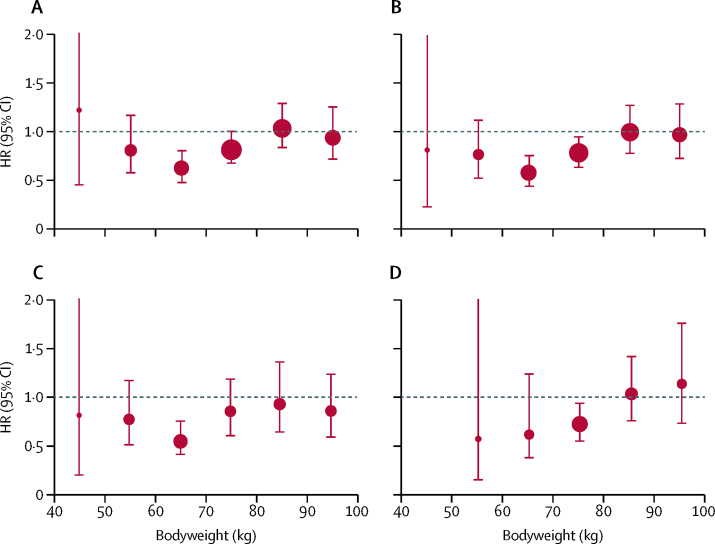
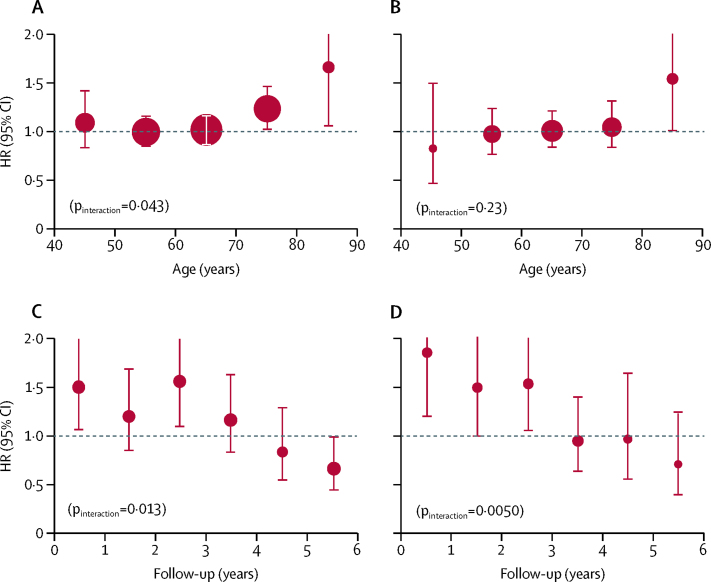
Background A one-dose-fits-all approach to use of aspirin has yielded only modest benefits in long-term prevention of cardiovascular events, possibly due to underdosing in patients of large body size and excess dosing in patients of small body size, which might also affect other outcomes. Methods Using individual patient data, we analysed the modifying effects of bodyweight (10 kg bands) and height (10 cm bands) on the effects of low doses (≤100 mg) and higher doses (300–325 mg or ≥500 mg) of aspirin in randomised trials of aspirin in primary prevention of cardiovascular events. We stratified the findings by age, sex, and vascular risk factors, and validated them in trials of aspirin in secondary prevention of stroke. Additionally, we assessed whether any weight or height dependence was evident for the effect of aspirin on 20-year risk of colorectal cancer or any in-trial cancer. Results Among ten eligible trials of aspirin in primary prevention (including 117 279 participants), bodyweight varied four-fold and trial median weight ranged from 60·0 kg to 81·2 kg (p<0·0001). The ability of 75–100 mg aspirin to reduce cardiovascular events decreased with increasing weight (p interaction =0·0072), with benefit seen in people weighing 50–69 kg (hazard ratio [HR] 0·75 [95% CI 0·65–0·85]) but not in those weighing 70 kg or more (0·95 [0·86–1·04]; 1·09 [0·93–1·29] for vascular death). Furthermore, the case fatality of a first cardiovascular event was increased by low-dose aspirin in people weighing 70 kg or more (odds ratio 1·33 [95% CI 1·08–1·64], p=0·0082). Higher doses of aspirin (≥325 mg) had the opposite interaction with bodyweight (difference p interaction =0·0013), reducing cardiovascular events only at higher weight (p interaction =0·017). Findings were similar in men and women, in people with diabetes, in trials of aspirin in secondary prevention, and in relation to height (p interaction =0·0025 for cardiovascular events). Aspirin-mediated reductions in long-term risk of colorectal cancer were also weight dependent (p interaction =0·038). Stratification by body size also revealed harms due to excess dosing: risk of sudden death was increased by aspirin in people at low weight for dose (p interaction =0·0018) and risk of all-cause death was increased in people weighing less than 50 kg who were receiving 75–100 mg aspirin (HR 1·52 [95% CI 1·04–2·21], p=0·031). In participants aged 70 years or older, the 3-year risk of cancer was also increased by aspirin (1·20 [1·03–1·47], p=0·02), particularly in those weighing less than 70 kg (1·31 [1·07–1·61], p=0·009) and consequently in women (1·44 [1·11–1·87], p=0·0069). Interpretation Low doses of aspirin (75–100 mg) were only effective in preventing vascular events in patients weighing less than 70 kg, and had no benefit in the 80% of men and nearly 50% of all women weighing 70 kg or more. By contrast, higher doses of aspirin were only effective in patients weighing 70 kg or more. Given that aspirin's effects on other outcomes, including cancer, also showed interactions with body size, a one-dose-fits-all approach to aspirin is unlikely to be optimal, and a more tailored strategy is required. Funding Wellcome Trust and National Institute for Health Research Oxford Biomedical Research Centre.
Overview
The claims and statistics of this paper haven’t been checked yet.
Free: it reads the open-access text and checks the first 5 claims that cite a source we can check. Create a free account to check every claim.
Integrity signals
Registry
Cites
Statistics
Figures
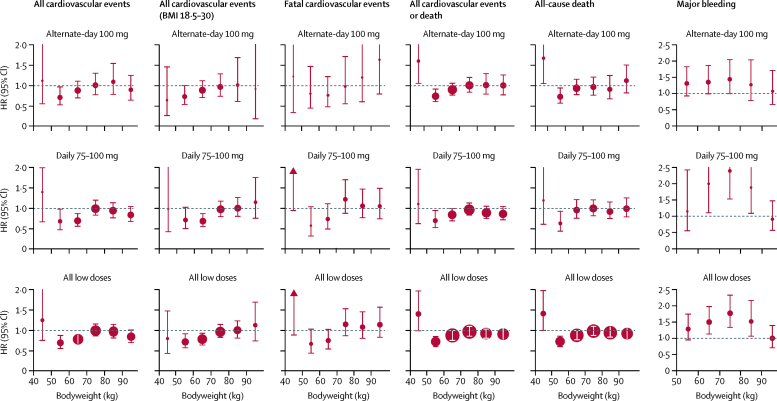
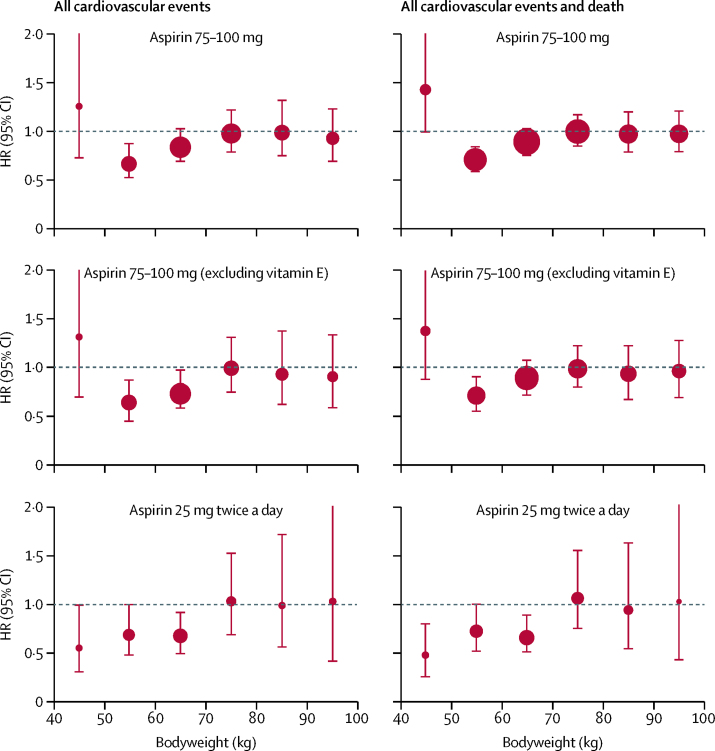
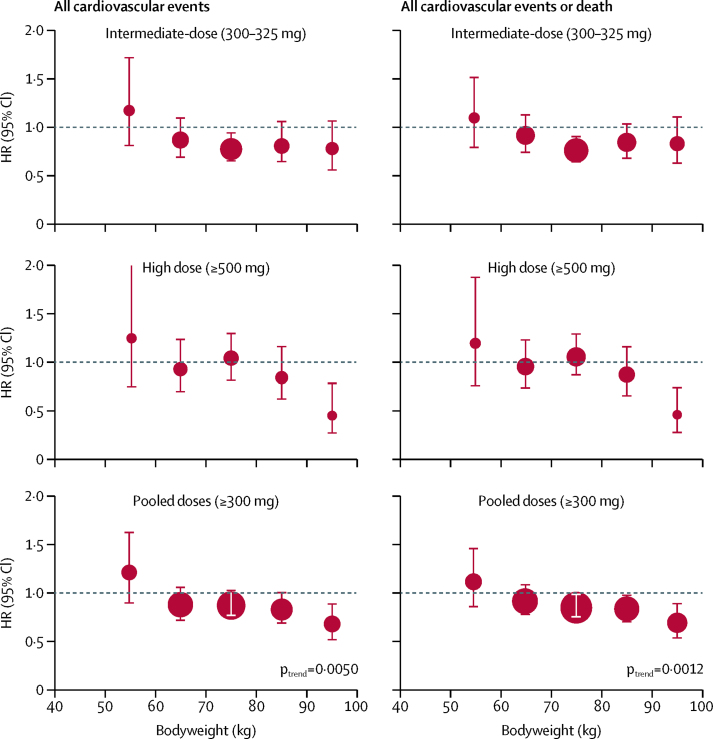
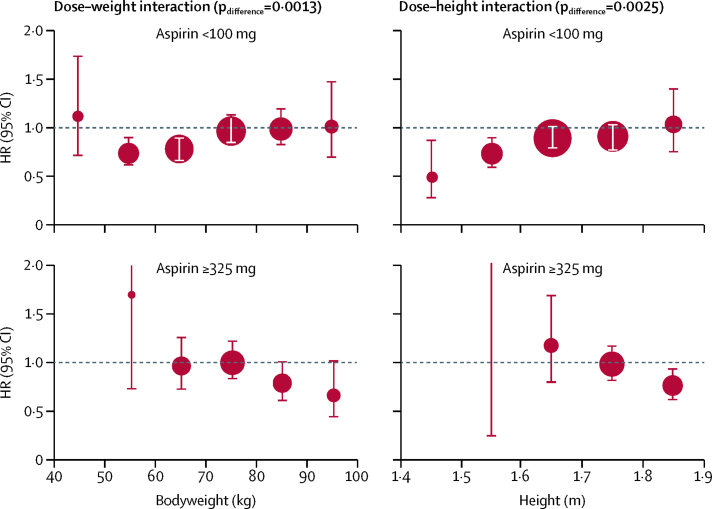
Verification
Claims the paper makes
The claims and statistics of this paper haven’t been checked yet.
Free: it reads the open-access text and checks the first 5 claims that cite a source we can check. Create a free account to check every claim.
Claims other papers make about this one
Each is checked against this paper’s own text: does it say what the citing paper says it does?
The cited source says what the claim attributes to it.
In the citing paper
“A recent analysis suggesting a greater benefit of low-dose aspirin use on the incidence of vascular events among persons with a body weight of less than 70 kg was not confirmed in exploratory subgroup analyses (and, indeed, a trend in the opposite direction was observed).”
From Effects of aspirin for primary prevention in persons with diabetes mellitus (2018) · cites this paper as [19]
The cited source says what the claim attributes to it.
In the citing paper
“Another meta-analysis raised the hypothesis that low-dose aspirin efficacy is reduced in those weighing >70 kg (196); however, the ASCEND trial found benefit of low-dose aspirin in those in this weight range, which would not validate this suggested hypothesis (179).”
From 10. Cardiovascular Disease and Risk Management: Standards of Care in Diabetes—2025 (2025) · cites this paper as [196]
In the citing paper
“Another meta-analysis raised the hypothesis that low-dose aspirin ef fi cacy is reduced in those weighing > 70 kg (161); however, the ASCEND trial found bene fi t of low-dose aspirin in those in this weight range, which would thus not validate this suggested hypothesis (144).”
From 10. Cardiovascular Disease and Risk Management: Standards of Care in Diabetes—2023 (2023) · cites this paper as [161]
Self-check
Percentages, sums and reported differences re-computed from the paper’s own numbers.
The self-check needs the paper’s full text.
Citations
Cites
Zhang, Q., Wang, C., Zheng, M., Li, Y., Li, J., Zhang, L., Shang, X., & Yan, C. (2015) · Cerebrovascular Diseases · doi:10.1159/000369778 · Cited by 11,533
Collaboration, A. T. (2002) · BMJ · doi:10.1136/bmj.324.7329.71 · Cited by 6,943
Hansson, L., Zanchetti, A., Carruthers, S. G., Dahlöf, B., Elmfeldt, D., Julius, S., Ménard, J., Rahn, K. H., Wedel, H., & Westerling, S. (1998) · The Lancet · doi:10.1016/s0140-6736(98)04311-6 · Cited by 5,728
Final Report on the Aspirin Component of the Ongoing Physicians' Health Study
Steering Committee of the Physicians' Health Study Research Group* (1989) · New England Journal of Medicine · doi:10.1056/nejm198907203210301 · Cited by 2,264
A Randomized Trial of Low-Dose Aspirin in the Primary Prevention of Cardiovascular Disease in Women
Ridker, P. M., Cook, N. R., Lee, I.-M., Gordon, D., Gaziano, J. M., Manson, J. E., Hennekens, C. H., & Buring, J. E. (2005) · New England Journal of Medicine · doi:10.1056/nejmoa050613 · Cited by 1,945
Self-citationEAFT (European Atrial Fibrillation Trial) Study Group (1993) · The Lancet · doi:10.1016/0140-6736(93)92358-z · Cited by 1,741
Rothwell, P. M., Fowkes, F. G. R., Belch, J. F., Ogawa, H., Warlow, C. P., & Meade, T. W. (2011) · The Lancet · doi:10.1016/s0140-6736(10)62110-1 · Cited by 1,497
Self-citationRothwell, P. M., Wilson, M., Elwin, C.-E., Norrving, B., Algra, A., Warlow, C. P., & Meade, T. W. (2010) · The Lancet · doi:10.1016/s0140-6736(10)61543-7 · Cited by 1,351
Self-citationThe United Kingdom transient ischaemic attack (UK-TIA) aspirin trial: final results.
Farrell, B., Godwin, J., Richards, S., & Warlow, C. (1991) · Journal of Neurology, Neurosurgery & Psychiatry · doi:10.1136/jnnp.54.12.1044 · Cited by 1,203
Research works printed but not linked: 1
- Schrör K Acetylsalicylic acid 2nd edn. 2016 Wiley-VCH Weinheim
Cited by
Cosentino, F., Grant, P. J., Aboyans, V., Bailey, C. J., Ceriello, A., Delgado, V., Federici, M., Filippatos, G., Grobbee, D. E., Hansen, T. B., et al. (2020) · European Heart Journal · doi:10.1093/eurheartj/ehz486 · Cited by 4,763
Arnett, D. K., Blumenthal, R. S., Albert, M. A., Buroker, A. B., Goldberger, Z. D., Hahn, E. J., Himmelfarb, C. D., Khera, A., Lloyd-Jones, D., McEvoy, J. W., et al. (2019) · Circulation · doi:10.1161/cir.0000000000000678 · Cited by 4,536
(2019) · doi:10.1161/cir.0000000000000677 · Cited by 4,501
Kleindorfer, D. O., Towfighi, A., Chaturvedi, S., Cockroft, K. M., Gutierrez, J., Lombardi-Hill, D., Kamel, H., Kernan, W. N., Kittner, S. J., Leira, E. C., et al. (2021) · Stroke · doi:10.1161/str.0000000000000375 · Cited by 3,237
2019 ACC/AHA Guideline on the Primary Prevention of Cardiovascular Disease
Arnett, D. K., Blumenthal, R. S., Albert, M. A., Buroker, A. B., Goldberger, Z. D., Hahn, E. J., Himmelfarb, C. D., Khera, A., Lloyd-Jones, D., McEvoy, J. W., et al. (2019) · Journal of the American College of Cardiology · doi:10.1016/j.jacc.2019.03.010 · Cited by 1,896
Vitamin D Supplements and Prevention of Cancer and Cardiovascular Disease
Manson, J. E., Cook, N. R., Lee, I.-M., Christen, W., Bassuk, S. S., Mora, S., Gibson, H., Gordon, D., Copeland, T., D’Agostino, D., et al. (2019) · New England Journal of Medicine · doi:10.1056/nejmoa1809944 · Cited by 1,615
Self-citationEffects of aspirin for primary prevention in persons with diabetes mellitus
The ASCEND Study Collaborative Group (2018) · New England Journal of Medicine · doi:10.1056/nejmoa1804988 · Cited by 1,200
10. Cardiovascular Disease and Risk Management: Standards of Medical Care in Diabetes—2022
American Diabetes Association Professional Practice Committee (2022) · Diabetes Care · doi:10.2337/dc22-s010 · Cited by 869
Targeting Early Atherosclerosis: A Focus on Oxidative Stress and Inflammation
Marchio, P., Guerra-Ojeda, S., Vila, J. M., Aldasoro, M., Victor, V. M., & Mauricio, M. D. (2019) · Oxidative Medicine and Cellular Longevity · doi:10.1155/2019/8563845 · Cited by 621
The immunological and metabolic landscape in primary and metastatic liver cancer
Li, X., Ramadori, P., Pfister, D., Seehawer, M., Zender, L., & Heikenwalder, M. (2021) · Nature Reviews Cancer · doi:10.1038/s41568-021-00383-9 · Cited by 616
10. Cardiovascular Disease and Risk Management: Standards of Medical Care in Diabetes—2021
American Diabetes Association (2021) · Diabetes Care · doi:10.2337/dc21-s010 · Cited by 495
“Another recent meta-analysis raised the hypothesis that low-dose aspirinefficacy is reduced in thoseweighing more than 70 kg (147); however, the ASCEND trial found benefit of low-dose aspirin in those in this weight range, which would thus not validate this suggested hypothesis (131).”
Background10. Cardiovascular Disease and Risk Management: Standards of Medical Care in Diabetes—2020
American Diabetes Association (2020) · Diabetes Care · doi:10.2337/dc20-s010 · Cited by 487
“Another recent meta-analysis raised the hypothesis that low-dose aspirin efficacy is reduced in those weighing more than 70 kg (141); however, the ASCEND trial found benefit of low-dose aspirin in those in this weight range, which would thus not validate this suggested hypothesis (125).”
Background10. Cardiovascular Disease and Risk Management: Standards of Care in Diabetes—2025
American Diabetes Association Professional Practice Committee, ElSayed, N. A., McCoy, R. G., Aleppo, G., Balapattabi, K., Beverly, E. A., Briggs Early, K., Bruemmer, D., Das, S. R., Echouffo-Tcheugui, J. B., et al. (2025) · Diabetes Care · doi:10.2337/dc25-s010 · Cited by 486
10. Cardiovascular Disease and Risk Management: Standards of Medical Care in Diabetes—2019
American Diabetes Association (2019) · Diabetes Care · doi:10.2337/dc19-s010 · Cited by 471
“Another recent metaanalysis raised the hypothesis that lowdose aspirin efficacy is reduced in those weighingmore than70kg (137); however, the ASCEND trial found benefit of low dose aspirin in those in this weight range, which would thus not validate this suggested hypothesis (121).”
Background10. Cardiovascular Disease and Risk Management: Standards of Care in Diabetes—2023
ElSayed, N. A., Aleppo, G., Aroda, V. R., Bannuru, R. R., Brown, F. M., Bruemmer, D., Collins, B. S., Das, S. R., Hilliard, M. E., Isaacs, D., et al. (2023) · Diabetes Care · doi:10.2337/dc23-s010 · Cited by 465
Arachidonic Acid Metabolites in Cardiovascular and Metabolic Diseases
Sonnweber, T., Pizzini, A., Nairz, M., Weiss, G., & Tancevski, I. (2018) · International Journal of Molecular Sciences · doi:10.3390/ijms19113285 · Cited by 440
“Despite being a well-established therapy in cardiovascular disease, some aspects of aspirin treatment warrant further investigation, as reflected by a recent analysis demonstrating an interaction of body weight with the effectiveness of aspirin to prevent cardiovascular events [243].”
Background10. Cardiovascular Disease and Risk Management: Standards of Care in Diabetes—2024
American Diabetes Association Professional Practice Committee, ElSayed, N. A., Aleppo, G., Bannuru, R. R., Bruemmer, D., Collins, B. S., Das, S. R., Ekhlaspour, L., Hilliard, M. E., Johnson, E. L., et al. (2024) · Diabetes Care · doi:10.2337/dc24-s010 · Cited by 438
Burn, J., Sheth, H., Elliott, F., Reed, L., Macrae, F., Mecklin, J.-P., Möslein, G., McRonald, F. E., Bertario, L., Evans, D. G., et al. (2020) · The Lancet · doi:10.1016/s0140-6736(20)30366-4 · Cited by 431
The first 3500 years of aspirin history from its roots – A concise summary
Montinari, M. R., Minelli, S., & De Caterina, R. (2019) · Vascular Pharmacology · doi:10.1016/j.vph.2018.10.008 · Cited by 315
Seppälä, T. T., Latchford, A., Negoi, I., Sampaio Soares, A., Jimenez-Rodriguez, R., Sánchez-Guillén, L., Evans, D. G., Ryan, N., Crosbie, E. J., Dominguez-Valentin, M., et al. (2021) · British Journal of Surgery · doi:10.1002/bjs.11902 · Cited by 275
Chandler, P. D., Chen, W. Y., Ajala, O. N., Hazra, A., Cook, N., Bubes, V., Lee, I.-M., Giovannucci, E. L., Willett, W., Buring, J. E., et al. (2020) · JAMA Network Open · doi:10.1001/jamanetworkopen.2020.25850 · Cited by 251
Self-citationValgimigli, M., Gragnano, F., Branca, M., Franzone, A., Baber, U., Jang, Y., Kimura, T., Hahn, J.-Y., Zhao, Q., Windecker, S., et al. (2021) · BMJ · doi:10.1136/bmj.n1332 · Cited by 242
“Given that the risks and benefits of aspirin may be affected by weight, 27 its role was separately appraised in men and women.”
BackgroundCancer prevention and screening: the next step in the era of precision medicine
Loomans-Kropp, H. A., & Umar, A. (2019) · npj Precision Oncology · doi:10.1038/s41698-018-0075-9 · Cited by 205
The rise and fall of aspirin in the primary prevention of cardiovascular disease
Raber, I., McCarthy, C. P., Vaduganathan, M., Bhatt, D. L., Wood, D. A., Cleland, J. G. F., Blumenthal, R. S., & McEvoy, J. W. (2019) · The Lancet · doi:10.1016/s0140-6736(19)30541-0 · Cited by 177
Reverse Cardio‐Oncology: Cancer Development in Patients With Cardiovascular Disease
Aboumsallem, J. P., Moslehi, J., & de Boer, R. A. (2020) · Journal of the American Heart Association · doi:10.1161/jaha.119.013754 · Cited by 173
“(≥325 mg), similar benefits were observed in individuals weighing up to 80 kg.(32) Aspirin did not affect the total number of cancer deaths.”
BackgroundZhao, R., Coker, O. O., Wu, J., Zhou, Y., Zhao, L., Nakatsu, G., Bian, X., Wei, H., Chan, A. W. H., Sung, J. J. Y., et al. (2020) · Gastroenterology · doi:10.1053/j.gastro.2020.05.004 · Cited by 158
Tomita, N., Ishida, H., Tanakaya, K., Yamaguchi, T., Kumamoto, K., Tanaka, T., Hinoi, T., Miyakura, Y., Hasegawa, H., Takayama, T., et al. (2021) · International Journal of Clinical Oncology · doi:10.1007/s10147-021-01881-4 · Cited by 179
Effect of Aspirin on Cancer Incidence and Mortality in Older Adults
McNeil, J. J., Gibbs, Orchard, S. G., Lockery, J. E., Bernstein, W. B., Cao, Y., Ford, L., Haydon, A., Kirpach, B., Macrae, F., et al. (2021) · JNCI: Journal of the National Cancer Institute · doi:10.1093/jnci/djaa114 · Cited by 152
“(7) reported an increase in risk of cancer diagnosis with low-dose aspirin among individuals aged 70 years and older, when follow-up was limited Table 2.”
BackgroundAspirin-triggered proresolving mediators stimulate resolution in cancer
Gilligan, M. M., Gartung, A., Sulciner, M. L., Norris, P. C., Sukhatme, V. P., Bielenberg, D. R., Huang, S., Kieran, M. W., Serhan, C. N., & Panigrahy, D. (2019) · Proceedings of the National Academy of Sciences · doi:10.1073/pnas.1804000116 · Cited by 152
“The dose of aspirin used in this study (30 mg/kg/d) may be slightly higher than the equivalent dose of standard low-dose aspirin used in cardioprevention and may need to be adjusted to body size (41, 42).”
MethodA risk-stratified approach to colorectal cancer prevention and diagnosis
Hull, M. A., Rees, C. J., Sharp, L., & Koo, S. (2020) · Nature Reviews Gastroenterology & Hepatology · doi:10.1038/s41575-020-00368-3 · Cited by 164
Aspirin and its pleiotropic application
Hybiak, J., Broniarek, I., Kiryczyński, G., Los, L. D., Rosik, J., Machaj, F., Slawinski, H., Jankowska, K., & Urasińska, E. (2019) · European Journal of Pharmacology · doi:10.1016/j.ejphar.2019.172762 · Cited by 150
Zhou, X., Wu, Y., Ye, L., Wang, Y., Zhang, K., Wang, L., Huang, Y., Wang, L., Xian, S., Zhang, Y., et al. (2019) · Acta Pharmaceutica Sinica B · doi:10.1016/j.apsb.2019.02.008 · Cited by 110
Chinese Guideline on the Primary Prevention of Cardiovascular Diseases
Chinese Society of Cardiology of Chinese Medical Association, C. D. P. A. R. C. O. C. A. O. R. M. (2021) · Cardiology Discovery · doi:10.1097/cd9.0000000000000025 · Cited by 133
Aspirin Use and Risk of Colorectal Cancer Among Older Adults
Guo, C., Ma, W., Drew, D. A., Cao, Y., Nguyen, L. H., Joshi, A. D., Ng, K., Ogino, S., Meyerhardt, J. A., Song, M., et al. (2021) · JAMA Oncology · doi:10.1001/jamaoncol.2020.7338 · Cited by 118
Prasad, K., Siemieniuk, R. A. C., Hao, Q., Guyatt, G. H., O'Donnell, M. J., Lytvyn, L., Heen, A. F., Agoritsas, T., Vandvik, P. O., Gorthi, S. P., et al. (2018) · BMJ · doi:10.1136/bmj.k5130 · Cited by 115
Measurement of Thromboxane Biosynthesis in Health and Disease
Patrono, C., & Rocca, B. (2019) · Frontiers in Pharmacology · doi:10.3389/fphar.2019.01244 · Cited by 115
New drug discovery and development from natural products: Advances and strategies
Wang, Y., Wang, F., Liu, W., Geng, Y., Shi, Y., Yu, T., Zhang, B., Luo, Y., & Sun, X. (2024) · Pharmacology & Therapeutics · doi:10.1016/j.pharmthera.2024.108752 · Cited by 114
Low-Dose Aspirin for PI3K-Altered Localized Colorectal Cancer
Martling, A., Myrberg, I. H., Nilbert, M. C., Grönberg, H., Granath, F. N., Eklund, M., Öresland, T., Iversen, L. H., Haapamäki, C., Janson, M., et al. (2025) · New England Journal of Medicine · doi:10.1056/nejmoa2504650 · Cited by 125
Aspirin in the Prevention of Colorectal Neoplasia
Drew, D. A., & Chan, A. T. (2020) · Annual Review of Medicine · doi:10.1146/annurev-med-060319-120913 · Cited by 97
“Second, daily use of low-dose aspirin (81–100 mg) appears sufficient for cancer prevention, but emerging evidence indicates that height, weight, or body mass index may impact aspirin bioavailability such that higher doses may be required in some individuals (19, 20).”
BackgroundMarquis-Gravel, G., Roe, M. T., Robertson, H. R., Harrington, R. A., Pencina, M. J., Berdan, L. G., Hammill, B. G., Faulkner, M., Muñoz, D., Fonarow, G. C., et al. (2020) · JAMA Cardiology · doi:10.1001/jamacardio.2020.0116 · Cited by 84
Rank, M. A., Chu, D. K., Bognanni, A., Oykhman, P., Bernstein, J. A., Ellis, A. K., Golden, D. B. K., Greenhawt, M., Horner, C. C., Ledford, D. K., et al. (2022) · Journal of Allergy and Clinical Immunology · doi:10.1016/j.jaci.2022.10.026 · Cited by 99
“The guideline panel notes that doses of aspirin used for ATAD are higher than the 81 mg used for cardiovascular disease and could increase the risk of harm further.(31,32) The optimal dose of aspirin for ATAD is not clear and most clinical trials used 650 to 1300 mg per day.”
MethodThe Role of Thromboxane in the Course and Treatment of Ischemic Stroke: Review
Szczuko, M., Kozioł, I., Kotlęga, D., Brodowski, J., & Drozd, A. (2021) · International Journal of Molecular Sciences · doi:10.3390/ijms222111644 · Cited by 91
“However, a major limitation of both the CHARISMA and HOPE studies was the lack of a control group for non-aspirin-treated subjects [44].”
BackgroundNon-Steroidal Anti-Inflammatory Drugs in Colorectal Cancer Chemoprevention
Maniewska, J., & Jeżewska, D. (2021) · Cancers · doi:10.3390/cancers13040594 · Cited by 92
“They found that 75–100 mg aspirin once a day was an ineffective in reduction of cardiovascular events, sudden cardiac death and cancer in people weighing 70 kg or more, particularly in those who smoked or were treated with enteric-coated formulations [85].”
BackgroundHuang, W., Saver, J. L., Wu, Y., Lin, C., Lee, M., & Ovbiagele, B. I. (2019) · JAMA Neurology · doi:10.1001/jamaneurol.2019.1120 · Cited by 88
Ishikawa, H., Mutoh, M., Sato, Y., Doyama, H., Tajika, M., Tanaka, S., Horimatsu, T., Takeuchi, Y., Kashida, H., Tashiro, J., et al. (2021) · The Lancet. Gastroenterology & hepatology · doi:10.1016/s2468-1253(21)00018-2 · Cited by 77
Interleukin-6: Molecule in the Intersection of Cancer, Ageing and COVID-19
Brábek, J., Jakubek, M., Vellieux, F. M. D., Novotný, J., Kolář, M., Lacina, L., Szabó, P., Strnadová, K., Rösel, D., Dvořánková, B., et al. (2020) · International Journal of Molecular Sciences · doi:10.3390/ijms21217937 · Cited by 80
“It was revealed in recent years that the ASA effects on several condition outcomes, including cancer, also showed interactions particularly with body mass [57].”
BackgroundMortensen, B., Murphy, C. L., O’Grady, J., Lucey, M., Elsafi, G., Barry, L., Westphal, V., Wellejus, A., Lukjančenko, O., Eklund, A. C., et al. (2019) · Gastroenterology · doi:10.1053/j.gastro.2019.05.008 · Cited by 75
“In addition, a recent report suggested that the current cardioprotective dosage of ASA may be insufficient and recommended doses based on a mg/kg basis.(23) Because of our AUC approach based on a polynomic curve fitted to data points obtained from 6 different visits, data imputation is not feasible for participants wh…”
BackgroundChu, D. K., Lee, D. J., Lee, K. M., Schünemann, H. J., Szczeklik, W., & Lee, J. M. (2019) · International Forum of Allergy & Rhinology · doi:10.1002/alr.22428 · Cited by 65
Huang, B., & Zhang, Y. (2022) · Drug Discovery Today · doi:10.1016/j.drudis.2022.02.007 · Cited by 64
Capodanno, D., & Angiolillo, D. J. (2020) · Circulation · doi:10.1161/circulationaha.120.045465 · Cited by 65
Long-term aspirin use and cancer risk: a 20-year cohort study
Skriver, C., Maltesen, T., Dehlendorff, C., Skovlund, C. W., Schmidt, M., Sørensen, H. T., & Friis, S. (2023) · JNCI Journal of the National Cancer Institute · doi:10.1093/jnci/djad231 · Cited by 67
Petrucci, G., Zaccardi, F., Giaretta, A., Cavalca, V., Capristo, E., Cardillo, C., Pitocco, D., Porro, B., Schinzari, F., TOFFOLO, G. M., et al. (2019) · Journal of Thrombosis and Haemostasis · doi:10.1111/jth.14445 · Cited by 57
Lu, C.-H., & Hsiao, J. (2021) · Tzu Chi Medical Journal · doi:10.4103/tcmj.tcmj_216_20 · Cited by 53
“However, its application in cancer treatment and cardiovascular prevention is still ongoing [1-3].”
BackgroundPharmacotherapy of obesity: An update
Cignarella, A., Busetto, L., & Vettor, R. (2021) · Pharmacological Research · doi:10.1016/j.phrs.2021.105649 · Cited by 65
Drug Repurposing - Hypothesis, Molecular Aspects and Therapeutic Applications
Badria, F. A.-E. (2020) · IntechOpen eBooks · doi:10.5772/intechopen.83082 · Cited by 66
Aspirin for the Primary Prevention of Cardiovascular Disease: Time for a Platelet-Guided Approach
Cofer, L. B., Barrett, T. J., & Berger, J. S. (2022) · Arteriosclerosis Thrombosis and Vascular Biology · doi:10.1161/atvbaha.122.318020 · Cited by 62
Bhatia, K., Ladd, L., Carr, K., Napoli, M. D., Saver, J. L., McCullough, L. D., Farahabadi, M. H., Alsbrook, D. L., Hinduja, A., Ortiz-Garcia, J., et al. (2023) · Current Neurology and Neuroscience Reports · doi:10.1007/s11910-023-01266-2 · Cited by 65
Valensi, P. E., Henry, P., Boccara, F., Cosson, E., Prévost, G., Emmerich, J., Ernande, L., Marcadet, D. M., Mousseaux, É., Rouzet, F., et al. (2020) · Diabetes & Metabolism · doi:10.1016/j.diabet.2020.08.002 · Cited by 62
Revisiting the Role of Aspirin for the Primary Prevention of Cardiovascular Disease
Marquis‐Gravel, G., Roe, M. T., Harrington, R. A., Muñoz, D., Hernandez, A. F., & Jones, W. S. (2019) · Circulation · doi:10.1161/circulationaha.119.040205 · Cited by 51
Personalized brain stimulation for effective neurointervention across participants
van Bueren, N. E. R., Reed, T. L., Nguyen, V., Sheffield, J. G., van der Ven, S. H. G., Osborne, M. A., Kroesbergen, E. H., & Kadosh, R. C. (2021) · PLoS Computational Biology · doi:10.1371/journal.pcbi.1008886 · Cited by 54
“Personalized medicine aims to address this challenge by adjusting treatments to the individual or to a subset of patients [9,10].”
BackgroundAn Aspirin a Day: New Pharmacological Developments and Cancer Chemoprevention
Menter, D. G., & Bresalier, R. S. (2022) · The Annual Review of Pharmacology and Toxicology · doi:10.1146/annurev-pharmtox-052020-023107 · Cited by 43
Elwood, P. C., Pickering, J. E., Morgan, G., Galante, J., Weightman, A. L., Morris, D., Longley, M., Mason, M., Adams, R., Dolwani, S., et al. (2018) · PLOS ONE · doi:10.1371/journal.pone.0203957 · Cited by 43
“A recent paper by Rothwell et al [69] based on the long-term follow-up of five primary trials of aspirin and vascular disease, investigated possible interactions between age/body weight/ dose of aspirin and the 20-year incidence of colon cancer.”
BackgroundMicroRNA as Potential Biomarkers of Platelet Function on Antiplatelet Therapy: A Review
Czajka, P., Fitas, A., Jakubik, D., Eyileten, C., Gąsecka, A., Wicik, Z., Siller-Matula, J. M., Filipiak, K. J., & Postula, M. A. (2021) · Frontiers in Physiology · doi:10.3389/fphys.2021.652579 · Cited by 47
“A worsened efficacy of ASA prevention was also observed in overweight and obese patients, probably due to the insufficient TxA2 synthesis inhibition on standard doses (Patrono and Rocca, 2017; Rothwell et al., 2018).”
BackgroundMethodReverse GWAS: Using genetics to identify and model phenotypic subtypes
Dahl, A. W., Cai, N., Ko, A., Laakso, M., Pajukanta, P., Flint, J., & Zaitlen, N. (2019) · PLoS Genetics · doi:10.1371/journal.pgen.1008009 · Cited by 43
Autoimmunity affecting the biliary tract fuels the immunosurveillance of cholangiocarcinoma
Paillet, J., Plantureux, C., Lévesque, S., Le Naour, J., Stoll, G., Sauvat, A., Caudana, P., Tosello Boari, J., Bloy, N., Lachkar, S., et al. (2021) · Journal of Experimental Medicine · doi:10.1084/jem.20200853 · Cited by 41
Drew, D. A., Schuck, M. M., Magicheva-Gupta, M. V., Stewart, K. O., Gilpin, K. K., Miller, P., Parziale, M., Pond, E. N., Takacsi-Nagy, O., Zerjav, D. C., et al. (2020) · Cancer Prevention Research · doi:10.1158/1940-6207.capr-20-0216 · Cited by 44
“BMI- and obesity-related comorbidities are of particular interest considering the potential impact on aspirin bioavailability (41, 42).”
BackgroundGawryś, J., Gajecki, D., Szahidewicz-Krupska, E., & Doroszko, A. (2020) · Oxidative Medicine and Cellular Longevity · doi:10.1155/2020/1015908 · Cited by 44
Aspirin in the Prevention of Cardiovascular Disease and Cancer
Ricciotti, E., & FitzGerald, G. A. (2021) · Annual Review of Medicine · doi:10.1146/annurev-med-051019-102940 · Cited by 46
Leijte, G. P., Kiers, D., van der Heijden, W., Jansen, A., Gerretsen, J., Boerrigter, V., Netea, M. G., Kox, M., & Pickkers, P. (2019) · Critical Care Medicine · doi:10.1097/ccm.0000000000003630 · Cited by 46
“Fourth, it has been reported that the efficacy of low-dose ASA varies between patients according to their lean body mass (50).”
Aspirin Use and Incidence of Colorectal Cancer According to Lifestyle Risk
Sikavi, D. R., Wang, K., Ma, W., Drew, D. A., Ogino, S., Giovannucci, E. L., Cao, Y., Song, M., Nguyen, L. H., & Chan, A. T. (2024) · JAMA Oncology · doi:10.1001/jamaoncol.2024.2503 · Cited by 43
Gold, R. B., Larson, A. E., Sperl‐Hillen, J. M., Boston, D., Sheppler, C. R., Heintzman, J., McMullen, C. K., Middendorf, M., Appana, D., Thirumalai, V., et al. (2022) · JAMA Network Open · doi:10.1001/jamanetworkopen.2021.46519 · Cited by 45
Jiang, T., Sun, H., Xue, S., Xu, T., Xia, W., Wang, Y., Guo, L., & Lin, H. (2024) · Cancer Cell International · doi:10.1186/s12935-024-03419-w · Cited by 46
“Cancer-associated inflammation holds complex connections between tumors and inflammatory responses, potentially resulting in adverse prognoses and treatment response failures in cancer patients [26].”
BackgroundThe year in cardiology 2018: prevention
Reiner, Ž., Laufs, U., Cosentino, F., & Landmesser, U. (2019) · European Heart Journal · doi:10.1093/eurheartj/ehy894 · Cited by 50
A narrative review of the cardiovascular risks associated with concomitant aspirin and NSAID use
Gurbel, P. A., Tantry, U. S., & Weisman, S. M. (2018) · Journal of Thrombosis and Thrombolysis · doi:10.1007/s11239-018-1764-5 · Cited by 37
Hurwitz, L. M., Townsend, M. K., Jordan, S. J., Patel, A. V., Teras, L. R., Lacey, J. V., Doherty, J. A., Harris, H. R., Goodman, M. T., Shvetsov, Y. B., et al. (2022) · Journal of Clinical Oncology · doi:10.1200/jco.21.01900 · Cited by 41
Gigante, B., Tamargo, J. L., Agewall, S., Atar, D., ten Berg, J. M., Campo, G. C., Cerbai, E., Christersson, C., Dobrev, D., Ferdinandy, P., et al. (2024) · European Heart Journal - Cardiovascular Pharmacotherapy · doi:10.1093/ehjcvp/pvae064 · Cited by 42
Kim, B. S., Auerbach, D. S., Sadhra, H., Godwin, M., Bhandari, R., Ling, F. S. K., Mohan, A. M., Yule, D. I., Wagner, L. E., Rich, D. Q., et al. (2020) · Arteriosclerosis Thrombosis and Vascular Biology · doi:10.1161/atvbaha.120.315033 · Cited by 33
An overview of analgesics: NSAIDs, paracetamol, and topical analgesics Part 1
van Rensburg, R., & Reuter, H. (2019) · South African Family Practice · doi:10.1080/20786190.2019.1610228 · Cited by 48
Timing of Aspirin Use in Colorectal Cancer Chemoprevention: A Prospective Cohort Study
Zhang, Y., Chan, A. T., Meyerhardt, J. A., & Giovannucci, E. L. (2021) · JNCI Journal of the National Cancer Institute · doi:10.1093/jnci/djab009 · Cited by 36
“First, the hints that aspirinmediated reductions in CRC risk may differ by subsites (proximal or distal colon) (37), molecular subtypes (48-50), genetic variants (51), inflammatory status (52,53), immune response in the tumor microenvironment (54), high- or average-risk groups (31-33), bodyweight or body mass index (5…”
BackgroundAspirin chemoprevention in colorectal cancer: network meta-analysis of low, moderate, and high doses
Shah, D., Re, A. M. D., & Toh, J. W. T. (2023) · British journal of surgery · doi:10.1093/bjs/znad231 · Cited by 30
Angiolillo, D. J., & Capodanno, D. (2021) · The American Journal of Cardiology · doi:10.1016/j.amjcard.2020.12.022 · Cited by 29
Choi, W., Kim, H. J., Jo, A. J., Choi, S. H., Han, S., Ko, M. J., & Lim, Y. (2021) · Liver International · doi:10.1111/liv.15011 · Cited by 32
Cyclooxygenase Inhibitors and Cancer: The Missing Pieces
Patrono, C. (2023) · Journal of Pharmacology and Experimental Therapeutics · doi:10.1124/jpet.122.001631 · Cited by 30
Laidlaw, T. M., Chu, D. K., Stevens, W. W., & White, A. A. (2022) · The Journal of Allergy and Clinical Immunology In Practice · doi:10.1016/j.jaip.2021.12.030 · Cited by 28
Preeclampsia and Venous Thromboembolism: Pathophysiology and Potential Therapy
Barjat, T. R., Edebiri, O., & Áinle, F. N. (2022) · Frontiers in Cardiovascular Medicine · doi:10.3389/fcvm.2022.856923 · Cited by 34
Small-vessel disease in the brain
Singh, A., Bonnell, G., Prey, J. D., Buchwald, N., Eskander, K., Kincaid, K. J., & Wilson, C. (2023) · American Heart Journal Plus Cardiology Research and Practice · doi:10.1016/j.ahjo.2023.100277 · Cited by 44
“Based on pooled analysis of primary prevention studies, weight based aspirin dosing was more effective in the prevention of vascular events, but this has not been studied in secondary stroke prevention [69].”
MethodAspirin in essential thrombocythemia. For whom? What formulation? What regimen?
Cattaneo, M. (2023) · Haematologica · doi:10.3324/haematol.2022.281388 · Cited by 28
Cardiovascular Disease Prevention and Therapy in Women With Type 2 Diabetes
Cocchi, C., Coppi, F., Farinetti, A., & Mattioli, A. V. (2021) · Future Cardiology · doi:10.2217/fca-2021-0011 · Cited by 27
Aspirin for the primary prevention of cardiovascular disease: latest evidence
Capodanno, D., Ingala, S., Calderone, D., & Angiolillo, D. J. (2019) · Expert Review of Cardiovascular Therapy · doi:10.1080/14779072.2019.1651199 · Cited by 26
“[53] suggested that the modest benefits of aspirin in long-term prevention of CVD events are due to under-dosing in patients of large body size and excess dosing in patients of small body size.”
BackgroundDiabetes and Vascular Disease: Is It All About Glycemia?
Vecchié, A., Montecucco, F., Carbone, F., Dallegri, F., & Bonaventura, A. (2019) · Current Pharmaceutical Design · doi:10.2174/1381612825666190830181944 · Cited by 24
Gurunathan, U., Barras, M. A., McDougall, C. J., Nandurkar, H. H., & Eley, V. A. (2022) · Thrombosis and Haemostasis · doi:10.1055/s-0042-1757200 · Cited by 25
Jeon, D., Cha, H. R., Chung, S. W., Choi, J., Lee, D., Shim, J. H., Kim, K. M., Lim, Y., Lee, H. C., Lee, S. W., et al. (2023) · EClinicalMedicine · doi:10.1016/j.eclinm.2023.102300 · Cited by 28
Aspirin in Primary Prevention: What Changed? A Critical Appraisal of Current Evidence
Dasa, O., Pepine, C. J., & Pearson, T. A. (2020) · The American Journal of Cardiology · doi:10.1016/j.amjcard.2020.11.014 · Cited by 24
Serrano, D., Patrignani, P., Stigliano, V., Turchetti, D., Sciallero, S., Roviello, F., D’Arpino, A., Grattagliano, I., Testa, S., Oliani, C., et al. (2022) · Genes · doi:10.3390/genes13030460 · Cited by 29
“The selection of patients and the dose for aspirin treatment will be performed using machine learning algorithms based on demographic, clinical, genetic, and biochemical information, such as BMI, diabetes, previous cardiovascular diseases, smoking status, genetic variants, inflammatory status, microenvironment (includ…”
Non-steroidal anti-inflammatory drugs and biomarkers: A new paradigm in colorectal cancer
Rashid, G., Khan, N. A., Elsori, D. H., Rehman, A., Tanzeelah, Ahmad, H., Maryam, H., Rais, A., Usmani, M. S., Babker, A. M. A., et al. (2023) · Frontiers in Medicine · doi:10.3389/fmed.2023.1130710 · Cited by 31
Clerici, B., & Cattaneo, M. (2023) · Journal of Cardiovascular Development and Disease · doi:10.3390/jcdd10040137 · Cited by 24
“) in the primary prevention of vascular events, which collected data on body weight, height, and individual subject data on baseline characteristics [33].”
BackgroundUnderstanding and Preventing Placenta-Mediated Pregnancy Complications
Skeith, L., Blondon, M., & Áinle, F. N. (2020) · Hämostaseologie · doi:10.1055/a-1184-8388 · Cited by 28
“39 Because the development of preeclampsia is thought to occur early in pregnancy, weeks prior to its clinical symptoms, an early initiation of low-dose aspirin ( 16 weeks) is logically preferred.”
BackgroundWang, M., Yu, H., Li, Z., Gong, D.-X., & Liu, X. (2022) · American Journal of Cardiovascular Drugs · doi:10.1007/s40256-022-00537-6 · Cited by 23
“Higher aspirin doses do not achieve greater antiplatelet inhibition than lower doses, but simply increase the risk of adverse effects [60].”
BackgroundZoungas, S., Zhou, Z., Owen, A. J., Curtis, A. J., Espinoza, S. E., Ernst, M. E., Woods, R. L., Orchard, S. G., McNeil, J. J., Murray, A. M., et al. (2023) · The Lancet Diabetes & Endocrinology · doi:10.1016/s2213-8587(23)00327-3 · Cited by 23
Wein, T. H., Lindsay, M. P., Gladstone, D. J., Poppe, A. Y., Bell, A., Casaubon, L. K., Foley, N. C., Coutts, S. B., Cox, J. L., Douketis, J. D., et al. (2020) · Canadian Medical Association Journal · doi:10.1503/cmaj.191599 · Cited by 20
Metadata
- Authors
- Rothwell, P. M., Cook, N. R., Gaziano, J. M., Price, J. F., Belch, J. F. F., Roncaglioni, M. C., Morimoto, T., & Mehta, Z.
- Affiliations
- University of Oxford (GB)
- Brigham and Women's Hospital (US)
- Harvard University (US)
- University of Edinburgh (GB)
- Mario Negri Institute for Pharmacological Research (IT)
- Hyogo Medical University (JP)
- Corresponding author
- Rothwell, Peter M
- Venue
- The Lancet
- Publisher
- Elsevier BV
- Published
- 2018-08
- Volume
- 392
- Issue
- 10145
- Pages
- 387-399
- ISSN
- 0099-5355 (ISSN-L)
- 0140-6736
- PMC
- PMC6083400
- OpenAlex
- W2884727639
- Semantic Scholar
- d4f7edcdedb2392c6f3b8fa34ca8008d79665e3b
- Cited by
- 353
- References
- 49
- Citations by year
- 2026: 12 · 2025: 22 · 2024: 29 · 2023: 32 · 2022: 46 · 2021: 51 · 2020: 57 · 2019: 68 · 2018: 36
- FWCI
- 40.10
- Type
- journal article
- Language
- en
- Open access
- hybrid
- doi.org
- Licence
- cc-by
- www.elsevier.com/tdm/userlicense/1.0/ (tdm)
- creativecommons.org/licenses/by/4.0/ (vor)
- Locations
- The Lancet (publishedVersion, cc-by)
- Europe PMC (PubMed Central) (publishedVersion, cc-by)
- PubMed Central (publishedVersion, cc-by)
- PubMed (publishedVersion)
- Discovery Research Portal (University of Dundee) (publishedVersion, cc-by)
- Edinburgh Research Explorer (University of Edinburgh) (submittedVersion, cc-by)
- Funders
- Wellcome Trust
- National Institute for Health and Care Research
- Japan Society for the Promotion of Science (18H03032)
- Topics
- Health Sciences › Medicine › Cardiology and Cardiovascular Medicine › Antiplatelet Therapy and Cardiovascular Diseases
- Health Sciences › Medicine › Pharmacology (medical) › Inflammatory mediators and NSAID effects
- Health Sciences › Medicine › Cardiology and Cardiovascular Medicine › Lipoproteins and Cardiovascular Health
- Keywords
- aspirin, body weight, aspirin dose, cardiovascular events, cancer risk, colorectal cancer, vascular death, case fatality, primary prevention, secondary stroke prevention, dose-response interaction, individual patient data, height, individualized dosing, vascular risk factors, diabetes mellitus, sex differences, cardiovascular mortality, cancer mortality, myocardial infarction
- MeSH terms
- Age Factors, Aged, Aspirin, Body Height, Body Weight, Cardiovascular Diseases, Death, Sudden, Female, Humans, Male, Platelet Aggregation Inhibitors, Risk Factors, Sex Factors, Colorectal Neoplasms, Proportional Hazards Models, Randomized Controlled Trials as Topic, Stroke, Kaplan-Meier Estimate
About these checks
Registry, retraction, Cites and statistics results are computed, not judged, with one exception: a printed reference that no index lists is read once by a model before it counts as a citation error. Claims are extracted by a model and kept only when their quote appears verbatim in the text; each cited source is then checked, with a model’s help, for whether it says what the claim relies on. Those verdicts can be wrong — read the claim’s quote and the cited source before relying on one.
Statistics and arithmetic are recomputed, not judged.
Confidence bands are shown only for fields calibrated on our annotated test set. None is calibrated yet, so no band is shown.
What counts as a claim ›How we measure confidence ›How we check this ›
Are you an author, or do you see a problem with this page? Request a review
Data sources
Bibliographic data: Semantic Scholar, OpenAlex, Crossref.
Contains information from the Semantic Scholar Academic Graph Datasets, made available under the ODC Attribution License (ODC-BY 1.0).
Semantic Scholar’s data is described in: Kinney, R., et al. (2023). The Semantic Scholar Open Data Platform. arXiv:2301.10140.
