

Effects of aspirin on risks of vascular events and cancer according to bodyweight and dose: analysis of individual patient data from randomised trials
Open accessThe DOI matches its Crossref record; 49 of the 49 references it cites were found in a registry or an index.
Abstract
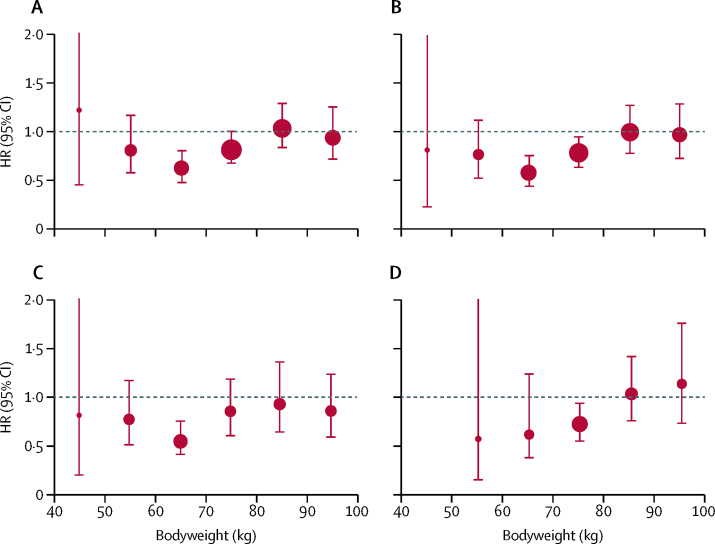
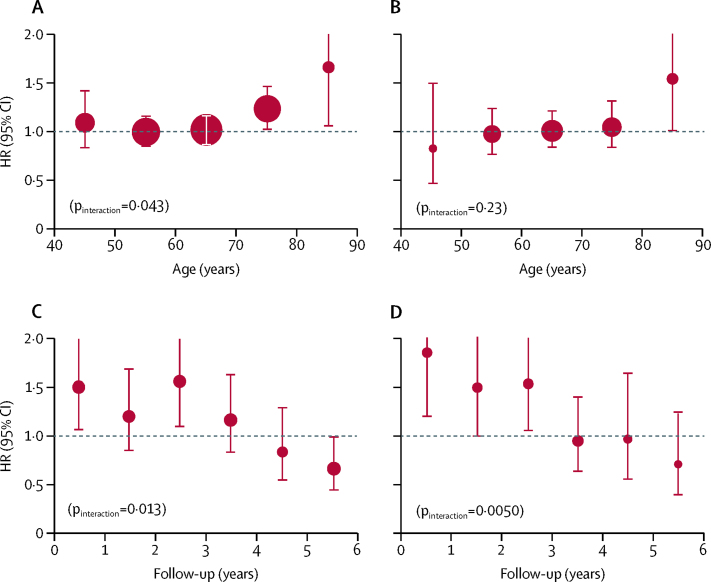
Background A one-dose-fits-all approach to use of aspirin has yielded only modest benefits in long-term prevention of cardiovascular events, possibly due to underdosing in patients of large body size and excess dosing in patients of small body size, which might also affect other outcomes. Methods Using individual patient data, we analysed the modifying effects of bodyweight (10 kg bands) and height (10 cm bands) on the effects of low doses (≤100 mg) and higher doses (300–325 mg or ≥500 mg) of aspirin in randomised trials of aspirin in primary prevention of cardiovascular events. We stratified the findings by age, sex, and vascular risk factors, and validated them in trials of aspirin in secondary prevention of stroke. Additionally, we assessed whether any weight or height dependence was evident for the effect of aspirin on 20-year risk of colorectal cancer or any in-trial cancer. Results Among ten eligible trials of aspirin in primary prevention (including 117 279 participants), bodyweight varied four-fold and trial median weight ranged from 60·0 kg to 81·2 kg (p<0·0001). The ability of 75–100 mg aspirin to reduce cardiovascular events decreased with increasing weight (p interaction =0·0072), with benefit seen in people weighing 50–69 kg (hazard ratio [HR] 0·75 [95% CI 0·65–0·85]) but not in those weighing 70 kg or more (0·95 [0·86–1·04]; 1·09 [0·93–1·29] for vascular death). Furthermore, the case fatality of a first cardiovascular event was increased by low-dose aspirin in people weighing 70 kg or more (odds ratio 1·33 [95% CI 1·08–1·64], p=0·0082). Higher doses of aspirin (≥325 mg) had the opposite interaction with bodyweight (difference p interaction =0·0013), reducing cardiovascular events only at higher weight (p interaction =0·017). Findings were similar in men and women, in people with diabetes, in trials of aspirin in secondary prevention, and in relation to height (p interaction =0·0025 for cardiovascular events). Aspirin-mediated reductions in long-term risk of colorectal cancer were also weight dependent (p interaction =0·038). Stratification by body size also revealed harms due to excess dosing: risk of sudden death was increased by aspirin in people at low weight for dose (p interaction =0·0018) and risk of all-cause death was increased in people weighing less than 50 kg who were receiving 75–100 mg aspirin (HR 1·52 [95% CI 1·04–2·21], p=0·031). In participants aged 70 years or older, the 3-year risk of cancer was also increased by aspirin (1·20 [1·03–1·47], p=0·02), particularly in those weighing less than 70 kg (1·31 [1·07–1·61], p=0·009) and consequently in women (1·44 [1·11–1·87], p=0·0069). Interpretation Low doses of aspirin (75–100 mg) were only effective in preventing vascular events in patients weighing less than 70 kg, and had no benefit in the 80% of men and nearly 50% of all women weighing 70 kg or more. By contrast, higher doses of aspirin were only effective in patients weighing 70 kg or more. Given that aspirin's effects on other outcomes, including cancer, also showed interactions with body size, a one-dose-fits-all approach to aspirin is unlikely to be optimal, and a more tailored strategy is required. Funding Wellcome Trust and National Institute for Health Research Oxford Biomedical Research Centre.
Overview
The claims and statistics of this paper haven’t been checked yet.
Free: it reads the open-access text and checks the first 5 claims that cite a source we can check. Create a free account to check every claim.
Integrity signals
Registry
Cites
Statistics
Figures
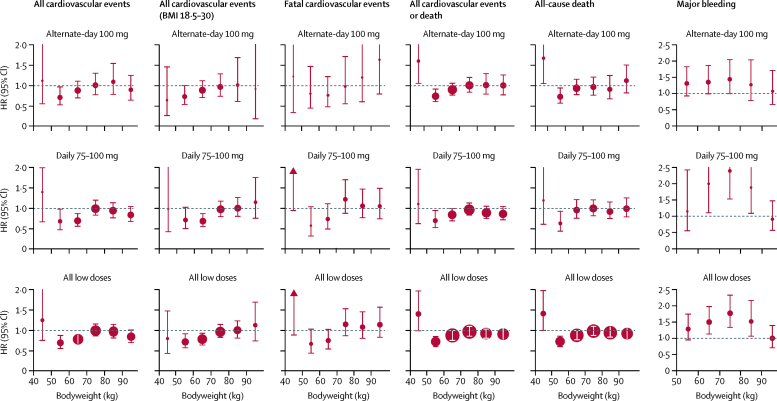
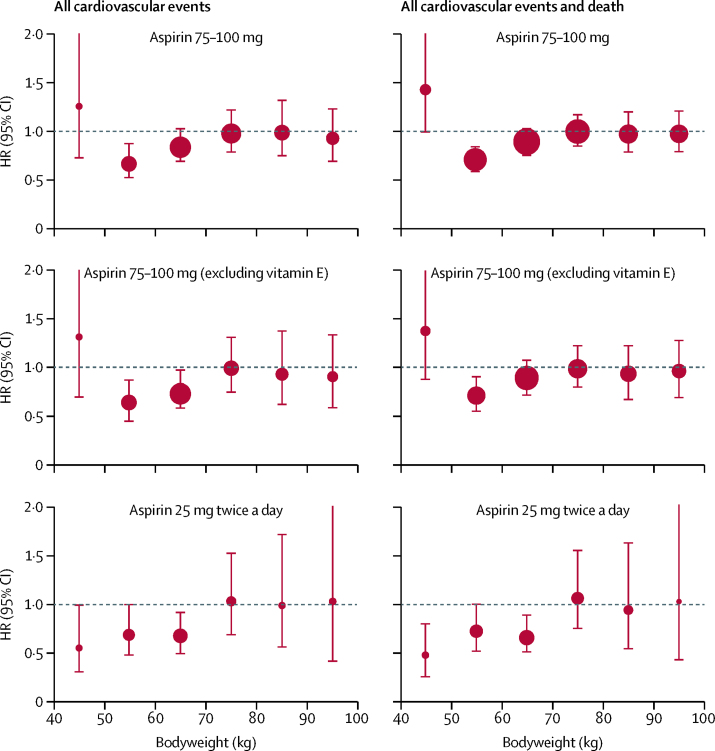
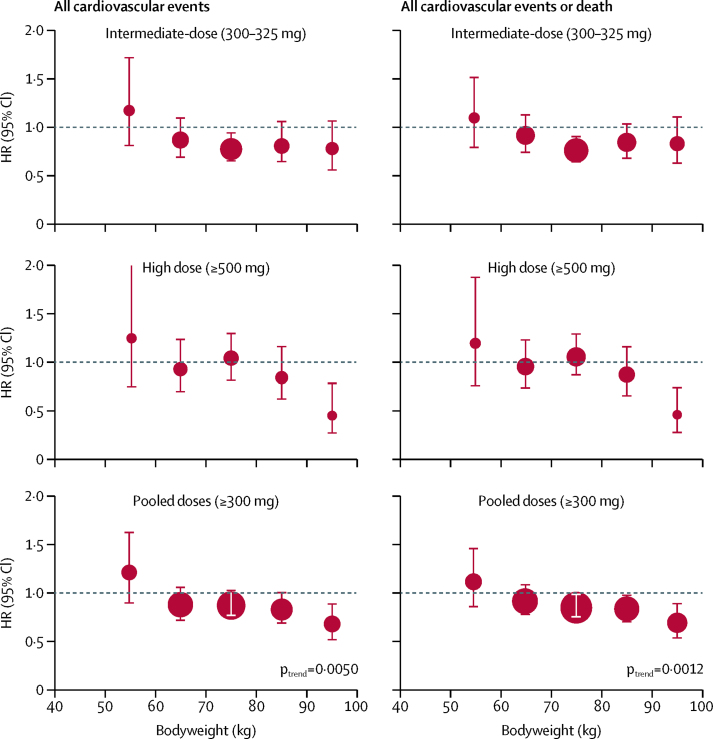
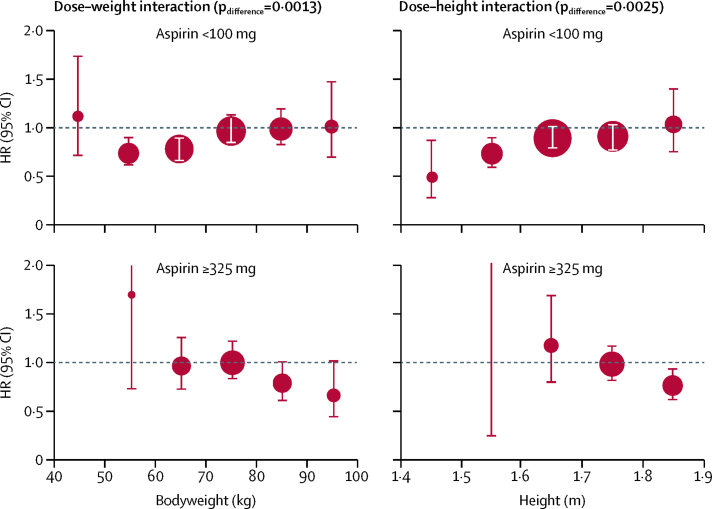
Verification
Claims the paper makes
The claims and statistics of this paper haven’t been checked yet.
Free: it reads the open-access text and checks the first 5 claims that cite a source we can check. Create a free account to check every claim.
Claims other papers make about this one
Each is checked against this paper’s own text: does it say what the citing paper says it does?
The cited source says what the claim attributes to it.
In the citing paper
“A recent analysis suggesting a greater benefit of low-dose aspirin use on the incidence of vascular events among persons with a body weight of less than 70 kg was not confirmed in exploratory subgroup analyses (and, indeed, a trend in the opposite direction was observed).”
From Effects of aspirin for primary prevention in persons with diabetes mellitus (2018) · cites this paper as [19]
The cited source says what the claim attributes to it.
In the citing paper
“Another meta-analysis raised the hypothesis that low-dose aspirin efficacy is reduced in those weighing >70 kg (196); however, the ASCEND trial found benefit of low-dose aspirin in those in this weight range, which would not validate this suggested hypothesis (179).”
From 10. Cardiovascular Disease and Risk Management: Standards of Care in Diabetes—2025 (2025) · cites this paper as [196]
In the citing paper
“Another meta-analysis raised the hypothesis that low-dose aspirin ef fi cacy is reduced in those weighing > 70 kg (161); however, the ASCEND trial found bene fi t of low-dose aspirin in those in this weight range, which would thus not validate this suggested hypothesis (144).”
From 10. Cardiovascular Disease and Risk Management: Standards of Care in Diabetes—2023 (2023) · cites this paper as [161]
Self-check
Percentages, sums and reported differences re-computed from the paper’s own numbers.
The self-check needs the paper’s full text.
Citations
Cites
Zhang, Q., Wang, C., Zheng, M., Li, Y., Li, J., Zhang, L., Shang, X., & Yan, C. (2015) · Cerebrovascular Diseases · doi:10.1159/000369778 · Cited by 11,533
Collaboration, A. T. (2002) · BMJ · doi:10.1136/bmj.324.7329.71 · Cited by 6,943
Hansson, L., Zanchetti, A., Carruthers, S. G., Dahlöf, B., Elmfeldt, D., Julius, S., Ménard, J., Rahn, K. H., Wedel, H., & Westerling, S. (1998) · The Lancet · doi:10.1016/s0140-6736(98)04311-6 · Cited by 5,728
Final Report on the Aspirin Component of the Ongoing Physicians' Health Study
Steering Committee of the Physicians' Health Study Research Group* (1989) · New England Journal of Medicine · doi:10.1056/nejm198907203210301 · Cited by 2,264
A Randomized Trial of Low-Dose Aspirin in the Primary Prevention of Cardiovascular Disease in Women
Ridker, P. M., Cook, N. R., Lee, I.-M., Gordon, D., Gaziano, J. M., Manson, J. E., Hennekens, C. H., & Buring, J. E. (2005) · New England Journal of Medicine · doi:10.1056/nejmoa050613 · Cited by 1,945
Self-citationEAFT (European Atrial Fibrillation Trial) Study Group (1993) · The Lancet · doi:10.1016/0140-6736(93)92358-z · Cited by 1,741
Rothwell, P. M., Fowkes, F. G. R., Belch, J. F., Ogawa, H., Warlow, C. P., & Meade, T. W. (2011) · The Lancet · doi:10.1016/s0140-6736(10)62110-1 · Cited by 1,497
Self-citationRothwell, P. M., Wilson, M., Elwin, C.-E., Norrving, B., Algra, A., Warlow, C. P., & Meade, T. W. (2010) · The Lancet · doi:10.1016/s0140-6736(10)61543-7 · Cited by 1,351
Self-citationThe United Kingdom transient ischaemic attack (UK-TIA) aspirin trial: final results.
Farrell, B., Godwin, J., Richards, S., & Warlow, C. (1991) · Journal of Neurology, Neurosurgery & Psychiatry · doi:10.1136/jnnp.54.12.1044 · Cited by 1,203
Research works printed but not linked: 1
- Schrör K Acetylsalicylic acid 2nd edn. 2016 Wiley-VCH Weinheim
Cited by
Items 201–300 of 350
Li, X., Li, L., Na, S. H., Santilli, F., Shi, Z., & Blaha, M. J. (2022) · American Journal of Preventive Cardiology · doi:10.1016/j.ajpc.2022.100363 · Cited by 8
Physician Approaches to Antithrombotic Therapies for Recently Symptomatic Carotid Stenosis
Ganesh, A., Béland, B., Jewett, G., Campbell, D. J. T., Varma, M., Singh, R., Sultan, A. S. A., Wong, J. H., & Menon, B. K. (2023) · Canadian Journal of Neurological Sciences / Journal Canadien des Sciences Neurologiques · doi:10.1017/cjn.2023.28 · Cited by 5
“22 We also had limited representation from low/middle-income countries, which may limit the transferability of our results to such countries.”
BackgroundBiomedical data analytics for better patient outcomes
Ghofrani, A., & Taherdoost, H. (2024) · Drug Discovery Today · doi:10.1016/j.drudis.2024.104280 · Cited by 7
Aspirin for Preventing a First Heart Attack or Stroke
Roach, K., Ritchie, M., & Zehtabchi, S. (2019) · Academic Emergency Medicine · doi:10.1111/acem.13808 · Cited by 5
Soriano, L. C., Vora, P., Soriano‐Gabarró, M., & Rodríguez, L. A. G. (2019) · International Journal of Cardiology · doi:10.1016/j.ijcard.2019.08.001 · Cited by 6
Arrieta, F., Pedro‐Botet, J., Iglesias, P., Obaya, J. C., Montánez, L., Maldonado, G. F., Becerra, A., Navarro, J., Perez, J. C., Petrecca, R., et al. (2021) · Clínica e Investigación en Arteriosclerosis · doi:10.1016/j.arteri.2021.05.002 · Cited by 22
“…durante al menos dos a˜nos tras un infarto agudo de miocadio (IAM) (1/+++ Los iSGLT2/arGLP-1 por sus efectos beneficiosos sobre el RCV y sobre la mortalidad CV deben de emplearse conjunta-mente con metformina, seleccionando según cada paciente qué fármaco sería el más indicado (1/++++)”
BackgroundA Clinical Update on Antiplatelet Therapy in Secondary Prevention of Ischemic Stroke
Marsden, K. R., Mak, H. Y., Crooks, C. P., Pankaj, P., Nguyen, T. M., & Tirschwell, D. (2021) · Current Cardiology Reports · doi:10.1007/s11886-021-01581-5 · Cited by 5
Causal Relationship Between Aspirin Consumption and Heart Failure: A Mendelian Randomization Study
Cai, W., Fang, Z., Tian, Z., Li, D., & Tang, K. (2023) · ESC Heart Failure · doi:10.1002/ehf2.14617 · Cited by 5
“4 However, there has been ongoing controversy regarding the use of aspirin for primary prevention of cardiovascular events, 5,6 and aspirin is not recommended in the 2021 ESC prevention guidelines.”
BackgroundMethodSkriver, C., Dehlendorff, C., Borre, M., Brasso, K., Larsen, S. B., Tjønneland, A. M., Pottegård, A., Hallas, J., Sørensen, H. T., & Friis, S. (2019) · Cancer Causes & Control · doi:10.1007/s10552-019-01252-5 · Cited by 5
Aspirin dosing after acute coronary syndrome with suspected aspirin resistance: the ANDAMAN trial
Dillinger, J., Pezel, T., Batias-Moreau, L., Angoulvant, D., Goralski, M., Ferrari, É., Cayla, G., Silvain, J., Gilard, M., Lemesle, G., et al. (2025) · European Heart Journal · doi:10.1093/eurheartj/ehaf680 · Cited by 7
Garland, L. L., Guillen-Rodriguez, J., Hsu, C., Davis, L. E., Szabo, E. M., Husted, C. R., Liu, H., LeClerc, A. L., Alekseyev, Y. O., Liu, G., et al. (2022) · Cancers · doi:10.3390/cancers14122893 · Cited by 4
“Additionally, the use of fixed low-dose ASA may have influenced the modulation of the gene expression signatures, as a recent analysis of ASA primary prevention trials of cardiovascular events and secondary prevention of colorectal cancer showed an interaction between LD ASA effects and body size, with the LD ASA effe…”
MethodFrejková, M., Běhalová, K., Rubanová, D., Sanctis, J. B. D., Kubala, L., Chytil, P., Šimonová, A., Křížek, T., Randárová, E., Gunár, K., et al. (2024) · International Journal of Pharmaceutics · doi:10.1016/j.ijpharm.2024.124742 · Cited by 5
Dillinger, J., Pezel, T., Batias-Moreau, L., Angoulvant, D., Goralski, M., Ferrari, É., Cayla, G., Silvain, J., Gilard, M., Lemesle, G., et al. (2025) · American Heart Journal · doi:10.1016/j.ahj.2025.04.016 · Cited by 5
Plazak, M. E., Mouradjian, M. T., Watson, K., Reed, B. N., Noel, Z. R., Devabhakthuni, S., & Gale, S. E. (2019) · Expert Review of Cardiovascular Therapy · doi:10.1080/14779072.2019.1642108 · Cited by 4
“75–100 mg/day) aspirin were only present in patients weighing less than 70 kg [30].”
BackgroundDose banding – Weighing up benefits, risks and therapeutic failure
Duffull, S. B. (2022) · British Journal of Clinical Pharmacology · doi:10.1111/bcp.15307 · Cited by 4
Evidence for reciprocal network interactions between injured hearts and cancer
Guler, M. N., Tscheiller, N. M., Molina, M. S., Gimeno, J. R., & Nebigil, C. G. (2022) · Frontiers in Cardiovascular Medicine · doi:10.3389/fcvm.2022.929259 · Cited by 8
Davis, J. S., Chavez, J. C., Kok, M., Miguel, Y. S., Lee, H. Y., Henderson, H. J., Overman, M. J., Morris, V. K., Kee, B. K., Fogelman, D. R., et al. (2022) · JAMA Network Open · doi:10.1001/jamanetworkopen.2022.36357 · Cited by 4
Pharmacogenetics and Pharmacogenomics Impact on Aspirin Response
Siddiqui, M. A., Jain, C., Usmani, A., Hafeez, A., Khalid, M., & Mujahid, M. (2024) · Pharmaceutical science. · doi:10.5772/intechopen.113026 · Cited by 9
Obesity and the Importance of Cardiovascular Disease Surveillance After Colorectal Cancer
Passarelli, M. N. (2019) · JAMA Oncology · doi:10.1001/jamaoncol.2019.0676 · Cited by 5
ACETYLSALICYLIC ACID RESISTANCE: RISK FACTORS, MECHANISMS, DIAGNOSTIC TESTS
Lukianets, K. Y., & Pchelin, I. Y. (2020) · Juvenis scientia · doi:10.32415/jscientia_2020_6_2_16-34 · Cited by 5
Bonanni, B., Serrano, D., Maisonneuve, P., Veronesi, G., Johansson, H. A., Aristarco, V., Varricchio, C., Cazzaniga, M., Lazzeroni, M., Rampinelli, C., et al. (2020) · JNCI Cancer Spectrum · doi:10.1093/jncics/pkaa096 · Cited by 4
“aspirin may lose activity in higher body mass index subjects (9).”
BackgroundUsing gene-environment interactions to explore pathways for colorectal cancer risk
Bouras, E., Yu, R., Kim, A. E., Markozannes, G., Murphy, N., Albanes, D., Anderson, L. N., Barry, E. L., Berndt, S. I., Bishop, D. T., et al. (2025) · EBioMedicine · doi:10.1016/j.ebiom.2025.105964 · Cited by 4
“67,68 70 Bitter taste receptor coding genes, such as Taste 2 Receptor Member 14 ( TAS2R14 ), and Taste 2 Receptor Member 46 ( TAS2R46 ) were highlighted in interaction with both BMI and calcium.”
Intersectoral action to transform health equity for women and girls globally
Sarri, G., Gabarró, M. S., Cheng, R.-F. J., & Jhutti-Johal, J. (2025) · Communications Medicine · doi:10.1038/s43856-025-01290-y · Cited by 5
“For example, aspirin for coronary heart disease prevention was commonly prescribed to women based on dosages from clinical trials predominantly conducted in men 37 .”
Burn, J., Borthwick, G. M., Elliott, F., Macrae, F., Ong, K. R., Kraus, A. C., Arber, N., Mecklin, J., Alonso, Á., Woodward, E. R., et al. (2026) · The Lancet. Gastroenterology & hepatology · doi:10.1016/s2468-1253(26)00114-7 · Cited by 8
Hauschildt, J., Lyon-Scott, K., Sheppler, C. R., Larson, A. E., McMullen, C. K., Boston, D., O’Connor, P. J., Sperl‐Hillen, J. M., & Gold, R. B. (2023) · JAMIA Open · doi:10.1093/jamiaopen/ooad012 · Cited by 4
Identifying modifiable risk factors to prevent aggressive colorectal cancer
Wang, P., Song, M., Eliassen, A. H., Wang, M., Chan, A. T., Meyerhardt, J. A., Tabung, F. K., Zhang, X., Ugai, T., Ogino, S., et al. (2024) · International Journal of Cancer · doi:10.1002/ijc.34993 · Cited by 3
“41 Our findings on anthropometric and lifestyle risk factors are generally compatible with prior evidence.”
Hawkey, C. J., Avery, A. J., Coupland, C. A. C., Crooks, C. J., Dumbleton, J., Hobbs, R. F., Kendrick, D., Moore, M. V., Morris, C. D., Rubin, G. P., et al. (2025) · Health Technology Assessment · doi:10.3310/llkf7871 · Cited by 4
Clinical use of low-dose aspirin for elders and sensitive subjects
Zhang, Y., Fang, X., & Chen, G. (2019) · World Journal of Clinical Cases · doi:10.12998/wjcc.v7.i20.3168 · Cited by 3
Dong, X., He, J., Lin, L., Zhu, Y., Chen, C., Su, L., Zhao, Y. C., Zhang, R., Wei, Y., Chen, F., et al. (2021) · Translational Lung Cancer Research · doi:10.21037/tlcr-20-414 · Cited by 3
“On the other hand, evidences shown that the effect of aspirin use on chemoprevention can be modified by bodyweight and age (16,17).”
Platelet inhibition by low-dose aspirin is not influenced by body mass or weight
Heffron, S. P., Windheim, J., Barrett, T. J., Voora, D., & Berger, J. S. (2022) · Platelets · doi:10.1080/09537104.2022.2087868 · Cited by 3
“of platelet aggregation: 96% [95, 97], 62% [40, 81] and 19% [3, 30] (p < .”
BackgroundInfluentialWang, X., Li, L., Cui, J., Cheng, M., & Liu, M. (2023) · Clinical Interventions in Aging · doi:10.2147/cia.s405559 · Cited by 3
“9,10 Previous trials 11,12 have suggested that the risk of aspirin-induced bleeding is related to the body weight, and participants with a lower body weight seem to be at a high risk of bleeding.”
Influence of compliance to antithrombotic agents on perioperative morbidity and mortality
Duranteau, O., Hamriti, A., Ickx, B., & Tuna, T. (2023) · Journal of Anesthesia Analgesia and Critical Care · doi:10.1186/s44158-023-00123-5 · Cited by 3
“This practice remains widespread among general practitioners, despite recent studies advo-cating limited benefits of aspirin for primary prevention [24, 25].”
BackgroundResistance to Antiplatelet Agents: Mechanisms, Roles of Comorbidity and Other Clinical Factors
Lukianets, K. Y., Pchelin, I. Y., Шишкин, А. Н., Воловникова, В. А., & Сергеевна, Д. А. (2021) · Кардиология в Беларуси · doi:10.34883/pi.2021.13.5.014 · Cited by 3
Antithrombotic effect of different acetylsalicylic acid drug formulations: is there a difference?
Сидоров, А. В. (2021) · Russian Journal of Cardiology · doi:10.15829/1560-4071-2021-4734 · Cited by 5
Sperl‐Hillen, J. M., ANDERSON, J. P., Margolis, K. L., Rossom, R. C., Kopski, K. M., Averbeck, B. M., Rosner, J. A., Ekstrom, H. L., Dehmer, S. P., & O’Connor, P. J. (2022) · JMIR Formative Research · doi:10.2196/32666 · Cited by 4
“The presence of DM, CV disease, or SMI and not meeting evidence-based goals for one or more of the following major CV risk factors were considered: statin use [16], BP [17], glycemic control [18], weight (BMI>25 kg/m(2)) [19], tobacco cessation [20], and aspirin use, if indicated [21,22].”
BackgroundNSAIDs and Colorectal Cancer Phenotypes: What Now?
Barry, E. L., Fedirko, V., & Baron, J. A. (2018) · JNCI Journal of the National Cancer Institute · doi:10.1093/jnci/djy174 · Cited by 3
Tsujimoto, T., & Kajio, H. (2019) · Diabetes Obesity and Metabolism · doi:10.1111/dom.13737 · Cited by 3
“A recent study revealed that low doses (75–100 mg) of aspirin were effective in preventing cardiovascular events only in patients weighing less than 70 kg, whereas high doses (≥325 mg) of aspirin were effective only in patients weighing 70 kg or more.(15) Those findings were consistent in diabetic patients.”
BackgroundCai, Z., Chang, C., Zhou, M., Zhang, B., Liu, C., & Cao, D. (2022) · Cochrane Database of Systematic Reviews · doi:10.1002/14651858.cd015266 · Cited by 3
Lim, S. T., Murphy, S. M., Smith, D. R., Collins, R., Coughlan, T., Murphy, S. M., McCarthy, A. J., Egan, B. M., Lim, S., Cox, D. M., et al. (2025) · Journal of the Neurological Sciences · doi:10.1016/j.jns.2025.123540 · Cited by 2
“…vs. soluble aspirin [51 – 54], the concurrent use of proton pump inhibitors as reported in some studies in patients with IHD [55,56], body weight [57], medication dosage [58], intestinal absorption, bioavailability, interactions with other medications [59 – 62], vascular risk factor profiles,…”
RA and risk of colorectal cancer: a nationwide cohort study
Jeon, K. H., Jung, J.-H., Cho, M. H., Lee, D., Han, K., Cho, I. Y., & Shin, D. W. (2025) · Rheumatology · doi:10.1093/rheumatology/keaf451 · Cited by 2
Papel de la Aspirina® como tratamiento antiagregante en prevención primaria. Puesta al día
Jiménez-García, N., Lima, J. D. L. T., & Alegría, J. G. (2019) · Medicina Clínica · doi:10.1016/j.medcli.2019.05.024 · Cited by 3
Hurwitz, L. M., Townsend, M. K., Jordan, S. J., Patel, A. V., Teras, L. R., Lacey, J. V., Doherty, J. A., Harris, H. R., Goodman, M. T., Shvetsov, Y. B., et al. (2022) · Obstetrical & Gynecological Survey · doi:10.1097/ogx.0000000000001096 · Cited by 2
Wang, X., Chen, X., Liu, W., Liang, W., & Liu, M. (2022) · International Journal of General Medicine · doi:10.2147/ijgm.s391259 · Cited by 2
“In addition, aspirin-mediated reductions in the long-term risk of CRC are also weight dependent, and it has been reported that aspirin 75–100 mg/d reduces the risk of CRC in participants weighing less than 70 kg but not in people weighing 70 kg or more.(40) Therefore, a one-dose-for-all approach to aspirin use in elde…”
BackgroundVijay, K., Ambedkar, R., Sowmya, P. R., Ramaiah, S., Rao, A. R., Gundamaraju, R., Hanumanthappa, M., Malarvili, M. B., Manikam, R., & Lakshminarayana, R. (2023) · 3 Biotech · doi:10.1007/s13205-023-03632-w · Cited by 2
“In contrast to these aspects, several reports have demonstrated secondary complications of prolonged usage of the moderately high dose of NSAID, particularly aspirin (Chan et al. 2005; Rothwell et al. 2018).”
BackgroundResultChen, K., Cai, J., Tong, J., Liu, L., Liu, Z., Chen, J., Yang, X., Yang, C., Geng, J., Ma, C., et al. (2024) · Frontiers in Endocrinology · doi:10.3389/fendo.2024.1365467 · Cited by 2
The Potential Therapeutic Value of Aspirin in Anaplastic Thyroid Cancer
Baldini, E., Cardarelli, S., Lori, E., Bonati, E., Gagliardi, F., Pironi, D., Fallahi, P., Antonelli, A., D’Andrea, V., Ulisse, S., et al. (2024) · Cancers · doi:10.3390/cancers16244203 · Cited by 2
Zheng, L., Lin, J., Tian, W., Weng, T., Wang, X., Sun, L., Tlili, C., Chen, X., Lai, J., Zhao, B., et al. (2025) · Analytica Chimica Acta · doi:10.1016/j.aca.2025.343955 · Cited by 2
Capodanno, D. (2018) · EuroIntervention · doi:10.4244/eijv14i11a207 · Cited by 2
The role of aspirin as antiaggregant therapy in primary prevention. An update
Jiménez-García, N., Lima, J. D. L. T., & Alegría, J. G. (2019) · Medicina Clínica (English Edition) · doi:10.1016/j.medcle.2019.05.005 · Cited by 4
Yoshida, N., Ishikawa, H., Otani, T., Goto, C., Matsuda, T., Takeuchi, Y., Sano, Y., Itoh, Y., Suzuki, S., Mutoh, M., et al. (2022) · Cancer Prevention Research · doi:10.1158/1940-6207.capr-22-0144 · Cited by 2
Anchidin, O., Roşian, Ş. H., Nemes, A., Aldica, M., Blendea, D. C., Molnar, A., Moldovan, H., & Pop, D. (2022) · Medicina · doi:10.3390/medicina59010084 · Cited by 3
“A meta-analysis published in 2018 of 10 randomized primary prevention trials showed that low doses of aspirin (75–100 mg) were only clinically effective in patients weighing less than 70 kg, and showed no benefit in the case of 80% of men and about 50% of women weighing over 70 kg [32].”
MethodGnecchi‐Ruscone, T., & Pecorella, D. R. (2019) · JAMA Surgery · doi:10.1001/jamasurg.2019.0112 · Cited by 2
A Sex-Specific Switch in Platelet Receptor Signaling Following Myocardial InfarctionPreprint
Kim, B. S., Auerbach, D. A., Sadhra, H., Ling, F. S. K., Toth, S., Mohan, A. M., Tura, S., Goldenberg, I., Rich, D. Q., & Cameron, S. J. (2019) · bioRxiv (Cold Spring Harbor Laboratory) · doi:10.1101/580415 · Cited by 4
“suggested low dose aspirin may lack a protective effect in the majority of men due to possible under-dosing (19).”
BackgroundEffects of Aspirin in the Healthy Elderly
McNeil, J. J., Woods, R. L., & Murray, A. M. (2019) · New England Journal of Medicine · doi:10.1056/nejmc1901774 · Cited by 3
Aspirin Dosing in Cardiovascular Disease
Javor, E., Skelin, M., & Lucijanić, M. (2021) · New England Journal of Medicine · doi:10.1056/nejmc2110476 · Cited by 2
Time to adjust aspirin dose to body weight
Lim, G. B. (2018) · Nature Reviews Cardiology · doi:10.1038/s41569-018-0072-2 · Cited by 1
Primärprävention der koronaren Herzkrankheit: Evidenzbasierte medikamentöse Therapie
Mühleck, F., & Laufs, U. (2019) · Herz · doi:10.1007/s00059-019-04873-3 · Cited by 1
Ryan, D., Girotra, T., & Feng, W. (2023) · CNS & Neurological Disorders - Drug Targets · doi:10.2174/1871527322666230309100626 · Cited by 1
McGowan, N. G., Zhong, J. H., Trasande, L., Hellmann, J. L., & Heffron, S. P. (2024) · International Journal of Clinical Trials · doi:10.18203/2349-3259.ijct20240043 · Cited by 1
Aspirin Use Is Protective Against Gastric Cancer in a High-Incidence Region of Central America
Rifkin, S. B., Montalvan-Sanchez, E. E., Norwood, D. A., Estévez-Ordoñez, D., Montalvan-Sanchez, D. M., Rodriguez-Murillo, A. A., Domínguez, R. L., & Morgan, D. R. (2025) · Digestive Diseases and Sciences · doi:10.1007/s10620-025-09042-7 · Cited by 1
“Rothwell et al. evaluated the association between aspirin use and colorectal cancer according to BMI [45].”
Han, M., Kang, J., Kim, B., Hwang, D., Yang, H., Park, K. W., Won, K., Han, J., Koo, B., Shin, E., et al. (2025) · American Heart Journal · doi:10.1016/j.ahj.2025.07.005 · Cited by 3
Sheng, W., Zhang, Q., Xu, P., Dai, Q., & Kang, X. (2026) · European Journal of Cancer Prevention · doi:10.1097/cej.0000000000001017 · Cited by 1
Antithrombotic dose: Some observations from published clinical trials
Dimmitt, S. B., Floyd, C. N., & Ferner, R. E. (2019) · British Journal of Clinical Pharmacology · doi:10.1111/bcp.13968 · Cited by 1
Abdelfadeel, K., & Alazouny, Z. M. (2019) · Journal of Medical Histology/Journal of Medical Histology · doi:10.21608/jmh.2019.15148.1059 · Cited by 1
“Therefore, effective strategies to protect the gastrointestinal mucosa are required[1].”
BackgroundUpdates on Clinical Trials in Diagnosis and Therapy of Colorectal Cancer
Ullah, F., Mani, H., Wazir, M., Hussain, S., Ali, S., & Ahmad, S. (2022) · Springer eBooks · doi:10.1007/978-3-030-72702-4_1 · Cited by 1
Kobalava, Z. D., Tolkacheva, V. V., Kaftanov, A. N., & Gavrilov, D. V. (2023) · Russian Journal of Cardiology · doi:10.15829/1560-4071-2023-5709 · Cited by 1
Mahowald, M. K., Choi, C., & Angiolillo, D. J. (2024) · Interventional Cardiology Clinics · doi:10.1016/j.iccl.2024.07.005 · Cited by 1
Cardiometabolic diseases—Recent advance in antithrombotic and thrombolytic therapies
Nikolovski, S. S., Jeske, W. P., & Fareed, J. (2024) · Elsevier eBooks · doi:10.1016/b978-0-323-95469-3.00006-1 · Cited by 1
Catalá-López, F., Tejedor-Romero, L., Driver, J. A., Hutton, B., Sánchez‐Ortí, J. V., Ridao-López, M., Alonso‐Arroyo, A., Correa‐Ghisays, P., Forés-Martos, J., Balanzá‐Martínez, V., et al. (2024) · Systematic Reviews · doi:10.1186/s13643-024-02677-z · Cited by 2
Adjuvant aspirin therapy and colorectal cancer survival
Lee, S., & Song, M. (2025) · The Lancet. Gastroenterology & hepatology · doi:10.1016/s2468-1253(24)00393-5 · Cited by 2
Wirkungen in der Primärprävention abhängig vom Körpergewicht
Diener, H. (2018) · InFo Neurologie + Psychiatrie · doi:10.1007/s15005-018-2739-y · Cited by 1
Kawaguchi-Ihara, N., Zhao, Y., NAKAMURA, S., Suzuki, K., Zhang, Y., Tohda, S., & MUROHASHI, I. (2018) · Anticancer Research · doi:10.21873/anticanres.13083 · Cited by 1
Küpper, C., Heinrich, J., Müller, K. J., Feil, K., & Kellert, L. (2019) · MMW - Fortschritte der Medizin · doi:10.1007/s15006-019-0008-8 · Cited by 1
Sterpetti, A. V. (2020) · The American Journal of Gastroenterology · doi:10.14309/ajg.0000000000000929 · Cited by 1
Wein, T. H., Lindsay, M. P., Gladstone, D. J., Poppe, A. Y., Bell, A., Casaubon, L. K., Foley, N. C., Coutts, S. B., Cox, J. L., Douketis, J. D., et al. (2020) · Canadian Medical Association Journal · doi:10.1503/cmaj.191599-f · Cited by 4
Stroke Treatment in the Setting of Systemic Disease
Arthur, K. C., Fracica, E. A., & Johansen, M. C. (2020) · Current Treatment Options in Neurology · doi:10.1007/s11940-020-00650-4 · Cited by 1
Dash, D. K., Jain, V., Sahu, A. K., Panik, R., & Tripathi, V. (2020) · IntechOpen eBooks · doi:10.5772/intechopen.93286 · Cited by 2
Are US cardiologists ADAPTABLE to considering low-dose aspirin for secondary prevention?
Liuzzo, G., & Patrono, C. (2021) · European Heart Journal · doi:10.1093/eurheartj/ehab357 · Cited by 1
“Previously, low doses of aspirin (75–100 mg daily) were reported as being effective in preventing vascular events only in patients weighing <70 kg, with no apparent benefit in the 80% of men and nearly 50% of all women weighing 70 kg or more.(8) The fact that the vast majority of the enrolled patients previously takin…”
BackgroundMaiello, M. R., Cecere, A., Zito, A., Ciccone, M. M., & Palmiero, P. (2021) · International Journal of Preventive Medicine · doi:10.4103/ijpvm.ijpvm_365_19 · Cited by 2
“[13] Another point is that one‐dose‐fits‐all aspirin approach gave only modest benefits in long‐term prevention of CV events because of underdosing in patients of large body size and excess dosing in patients of small body size, which might also affect other outcomes.[14] Although women were included in only 2 trials…”
BackgroundArrieta, F., Pedro‐Botet, J., Iglesias, P., Obaya, J. C., Montánez, L., Maldonado, G. F., Becerra, A., Navarro, J., Perez, J. C., Petrecca, R., et al. (2022) · Clínica e Investigación en Arteriosclerosis (English Edition) · doi:10.1016/j.artere.2022.01.005 · Cited by 3
Sancar, K. M., Çelik, O., Çil, C., Karaarslan, O., Doğan, T., Yetim, M., Asoğlu, R., Çelik, Y., Kalkan, S., Demirci, E., et al. (2022) · The Anatolian Journal of Cardiology · doi:10.5152/anatoljcardiol.2021.541 · Cited by 1
Lorente, V. P.-F., van Rensburg, R., Moolla, M. S., McCaul, M., Parker, A., Taljaard, J., Reuter, H., & Decloedt, E. H. (2022) · South African Medical Journal · doi:10.7196/samj.2022.v112i7.16434 · Cited by 1
“aspirin at low doses of between 75 and 100 mg is ineffective as an antithrombotic in non‐COVID‐19 patients weighing >70 kg,[30] while aspirin doses >325 mg reduced cardio‐ vascular events at higher body weights.[30,31] It is therefore possible that the median aspirin dose of 150 mg administered to patients in the pres…”
BackgroundHegde, N. N., Mathew, N., Thachathodiyl, R., & Menon, J. C. (2022) · Frontiers in Cardiovascular Medicine · doi:10.3389/fcvm.2022.1004473 · Cited by 1
HALT in TAVR: What About Aspirin?
Polzin, A., Veulemans, V., Dannenberg, L., Kelm, M., & Zeus, T. (2019) · JACC: Cardiovascular Interventions · doi:10.1016/j.jcin.2019.01.241 · Cited by 1
Weight-Based Aspirin Dosing in Primary Cardiovascular Prevention?
Soloway, B. (2018) · Journal watch · doi:10.1056/nejm-jw.na47166
Cardiology update: 2 nd half 2018
Krishnan, S. (2018) · Journal of the Practice of Cardiovascular Sciences · doi:10.4103/jpcs.jpcs_50_18
A One-Dose-Fits-All Approach to Aspirin Therapy is Suboptimal
MECHCATIE, E., & Rosenberg, K. E. (2018) · AJN American Journal of Nursing · doi:10.1097/01.naj.0000546384.89173.2f
Common analgesics and ovarian cancer prognosis – Authors' reply
Merritt, M. A., & Tworoger, S. S. (2018) · The Lancet Oncology · doi:10.1016/s1470-2045(18)30692-2
Common analgesics and ovarian cancer prognosis
Fan, G., Xu, G., & Zhang, X. (2018) · The Lancet Oncology · doi:10.1016/s1470-2045(18)30626-0
Common analgesics and ovarian cancer prognosis
Jie, J., & Niu, W. (2018) · The Lancet Oncology · doi:10.1016/s1470-2045(18)30572-2
Primary vascular prevention: The end of the road for aspirin?
Ajjan, R. (2018) · Diabetes and Vascular Disease Research · doi:10.1177/1479164118807988
ASPIRINA NA PREVENÇÃO PRIMÁRIA DE EVENTOS CARDIOVASCULARES EM PACIENTES DIABÉTICOS: UMA REVISÃO
Cicchetto, C. A., Arruda, C. R. C., Meira, G. E., Ramos, H. A., & Macedo, T. (2018) · doi:10.5151/comusc2018-06
Hirsch, C. H. (2019) · Annals of Internal Medicine · doi:10.7326/acpjc-2019-170-2-003
Carson, E., & Hemenway, A. N. (2019) · Annals of Pharmacotherapy · doi:10.1177/1060028018825140 · Cited by 1
Cardiovascular primary prevention – directed approach for individual features
Mano, T. B., Rosa, S. A., Rio, P., Timóteo, A. T., & Ferreira, R. C. (2019) · Portuguese Journal of Nephrology & Hypertension · doi:10.32932/pjnh.2019.07.022
Body Composition and Aspirin Dose for Colorectal Adenoma Prevention in a Randomized Clinical Trial
Passarelli, M. N., Barry, E. L., Rees, J. R., Mott, L. A., Ahnen, D. J., & Baron, J. A. (2019) · Cancer Epidemiology Biomarkers & Prevention · doi:10.1158/1055-9965.epi-19-0205
“Ourfindings didnot show the dose–response pattern byweight identified by Rothwell and colleagues (3).”
BackgroundInfluentialFactors Influencing Aspirin Hyporesponsiveness in Elderly Chinese Patients
Ou, W. M., Fu, Z., Chen, X. H., Feng, X., Li, H. X., Lu, Y., Liu, M., Huang, B., Liu, M., & Liu, M. L. (2019) · Medical Science Monitor · doi:10.12659/msm.917654
“A recent study found that low-dose aspirin (75–100 mg) was effective in preventing cardiovascular events in participants weighting 50–69 kg, but was less effective in participants weighing 70 kg or more [20], suggesting that the administration of aspirin should be individualized depending on bodyweight.”
BackgroundNeues beim Schlaganfall unter besonderer Berücksichtigung älterer Patienten
Diener, H., Gerloff, C. P., Grond, M., Häusler, K. G., Heuschmann, P., Huttner, H. B., Röther, J., Schwab, S., Sprügel, M. I., Thomalla, G., et al. (2019) · Neurologie up2date · doi:10.1055/a-0829-8928
Aspirin for primary prevention of cardiovaascular events: what are the evidances?
Yenny, Y. (2019) · Universa Medicina · doi:10.18051/univmed.2019.v38.145-146
“This is due to the fact that even though the anti-thrombotic effect of aspirin is apparently not dose- related, since inhibition of platelet COX-1 by aspirin is saturated at low doses, the gastrointestinal toxicity is doserelated.((7)) The controversy on the results of the largescale studies is also reflected in the v…”
ResultNeues beim Schlaganfall unter besonderer Berücksichtigung älterer Patienten
Diener, H., Gerloff, C. P., Grond, M., Häusler, K. G., Heuschmann, P., Huttner, H. B., Röther, J., Schwab, S., Sprügel, M. I., Thomalla, G., et al. (2019) · Geriatrie up2date · doi:10.1055/a-0966-1716
Metadata
- Authors
- Rothwell, P. M., Cook, N. R., Gaziano, J. M., Price, J. F., Belch, J. F. F., Roncaglioni, M. C., Morimoto, T., & Mehta, Z.
- Affiliations
- University of Oxford (GB)
- Brigham and Women's Hospital (US)
- Harvard University (US)
- University of Edinburgh (GB)
- Mario Negri Institute for Pharmacological Research (IT)
- Hyogo Medical University (JP)
- Corresponding author
- Rothwell, Peter M
- Venue
- The Lancet
- Publisher
- Elsevier BV
- Published
- 2018-08
- Volume
- 392
- Issue
- 10145
- Pages
- 387-399
- ISSN
- 0099-5355 (ISSN-L)
- 0140-6736
- PMC
- PMC6083400
- OpenAlex
- W2884727639
- Semantic Scholar
- d4f7edcdedb2392c6f3b8fa34ca8008d79665e3b
- Cited by
- 353
- References
- 49
- Citations by year
- 2026: 12 · 2025: 22 · 2024: 29 · 2023: 32 · 2022: 46 · 2021: 51 · 2020: 57 · 2019: 68 · 2018: 36
- FWCI
- 40.10
- Type
- journal article
- Language
- en
- Open access
- hybrid
- doi.org
- Licence
- cc-by
- www.elsevier.com/tdm/userlicense/1.0/ (tdm)
- creativecommons.org/licenses/by/4.0/ (vor)
- Locations
- The Lancet (publishedVersion, cc-by)
- Europe PMC (PubMed Central) (publishedVersion, cc-by)
- PubMed Central (publishedVersion, cc-by)
- PubMed (publishedVersion)
- Discovery Research Portal (University of Dundee) (publishedVersion, cc-by)
- Edinburgh Research Explorer (University of Edinburgh) (submittedVersion, cc-by)
- Funders
- Wellcome Trust
- National Institute for Health and Care Research
- Japan Society for the Promotion of Science (18H03032)
- Topics
- Health Sciences › Medicine › Cardiology and Cardiovascular Medicine › Antiplatelet Therapy and Cardiovascular Diseases
- Health Sciences › Medicine › Pharmacology (medical) › Inflammatory mediators and NSAID effects
- Health Sciences › Medicine › Cardiology and Cardiovascular Medicine › Lipoproteins and Cardiovascular Health
- Keywords
- aspirin, body weight, aspirin dose, cardiovascular events, cancer risk, colorectal cancer, vascular death, case fatality, primary prevention, secondary stroke prevention, dose-response interaction, individual patient data, height, individualized dosing, vascular risk factors, diabetes mellitus, sex differences, cardiovascular mortality, cancer mortality, myocardial infarction
- MeSH terms
- Age Factors, Aged, Aspirin, Body Height, Body Weight, Cardiovascular Diseases, Death, Sudden, Female, Humans, Male, Platelet Aggregation Inhibitors, Risk Factors, Sex Factors, Colorectal Neoplasms, Proportional Hazards Models, Randomized Controlled Trials as Topic, Stroke, Kaplan-Meier Estimate
About these checks
Registry, retraction, Cites and statistics results are computed, not judged, with one exception: a printed reference that no index lists is read once by a model before it counts as a citation error. Claims are extracted by a model and kept only when their quote appears verbatim in the text; each cited source is then checked, with a model’s help, for whether it says what the claim relies on. Those verdicts can be wrong — read the claim’s quote and the cited source before relying on one.
Statistics and arithmetic are recomputed, not judged.
Confidence bands are shown only for fields calibrated on our annotated test set. None is calibrated yet, so no band is shown.
What counts as a claim ›How we measure confidence ›How we check this ›
Are you an author, or do you see a problem with this page? Request a review
Data sources
Bibliographic data: Semantic Scholar, OpenAlex, Crossref.
Contains information from the Semantic Scholar Academic Graph Datasets, made available under the ODC Attribution License (ODC-BY 1.0).
Semantic Scholar’s data is described in: Kinney, R., et al. (2023). The Semantic Scholar Open Data Platform. arXiv:2301.10140.
