

Fenfluramine hydrochloride for the treatment of seizures in Dravet syndrome: a randomised, double-blind, placebo-controlled trial
Open accessThe DOI matches its Crossref record; 39 of the 39 references it cites were found in a registry or an index.
Abstract
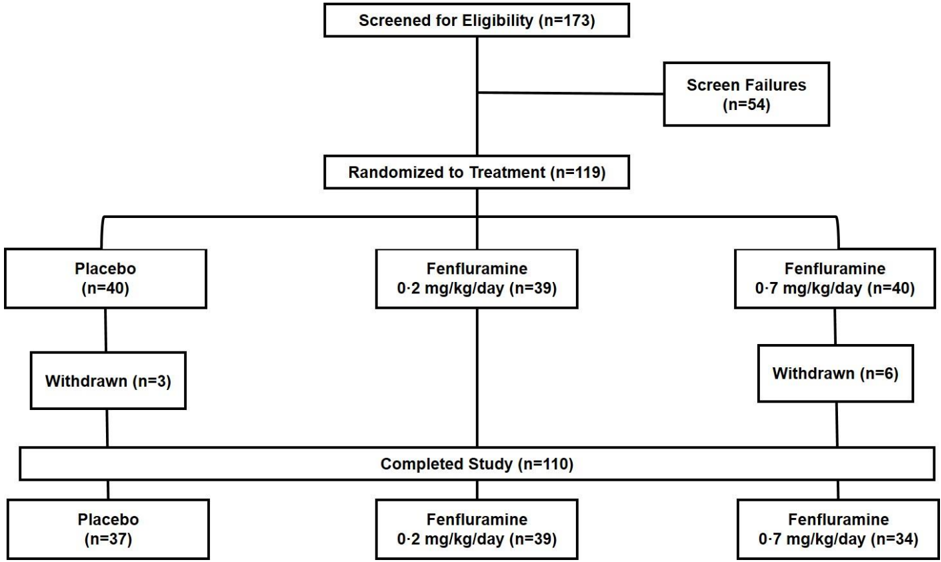
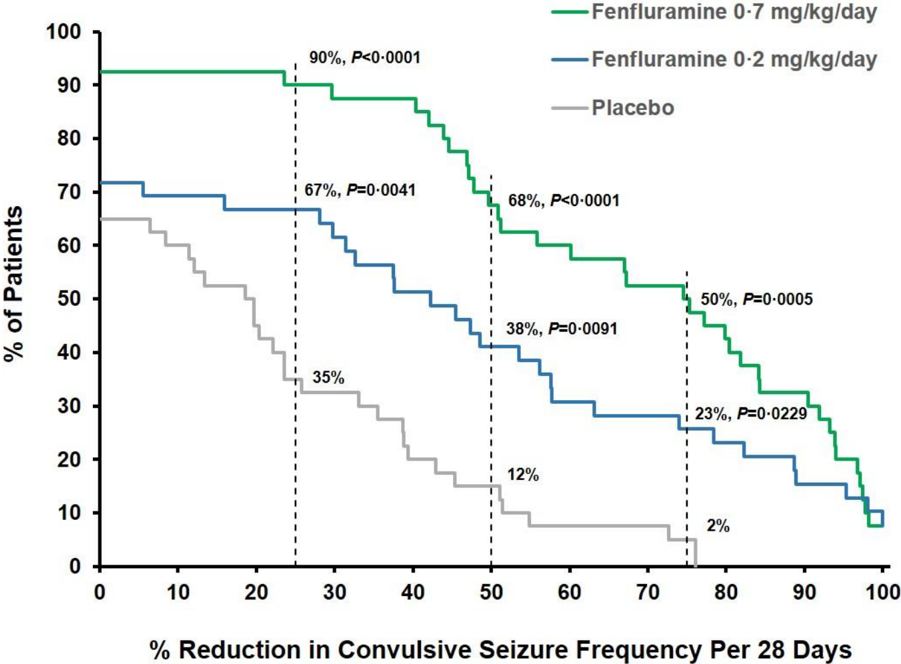
Background Dravet syndrome is a rare, treatment-resistant developmental epileptic encephalopathy characterised by multiple types of frequent, disabling seizures. Fenfluramine has been reported to have antiseizure activity in observational studies of photosensitive epilepsy and Dravet syndrome. The aim of the present study was to assess the efficacy and safety of fenfluramine in patients with Dravet syndrome.Methods In this randomised, double-blind, placebo-controlled clinical trial, we enrolled children and young adults with Dravet syndrome. After a 6-week observation period to establish baseline monthly convulsive seizure frequency (MCSF; convulsive seizures were defined as hemiclonic, tonic, clonic, tonic-atonic, generalised tonic-clonic, and focal with clearly observable motor signs), patients were randomly assigned through an interactive web response system in a 1:1:1 ratio to placebo, fenfluramine 0·2 mg/kg per day, or fenfluramine 0·7 mg/kg per day, added to existing antiepileptic agents for 14 weeks. The primary outcome was the change in mean monthly frequency of convulsive seizures during the treatment period compared with baseline in the 0·7 mg/kg per day group versus placebo; 0·2 mg/kg per day versus placebo was assessed as a key secondary outcome. Analysis was by modified intention to treat. Safety analyses included all participants who received at least one dose of study medication. This trial is registered with ClinicalTrials.gov with two identical protocols NCT02682927 and NCT02826863.Findings Between Jan 15, 2016, and Aug 14, 2017, we assessed 173 patients, of whom 119 patients (mean age 9·0 years, 64 [54%] male) were randomly assigned to receive either fenfluramine 0·2 mg/kg per day (39), fenfluramine 0·7 mg/kg per day (40) or placebo (40). During treatment, the median reduction in seizure frequency was 74·9% in the fenfluramine 0·7 mg/kg group (from median 20·7 seizures per 28 days to 4·7 seizures per 28 days), 42·3% in the fenfluramine 0·2 mg/kg group (from median 17·5 seizures per 28 days to 12·6 per 28 days), and 19·2% in the placebo group (from median 27·3 per 28 days to 22·0 per 28 days). The study met its primary efficacy endpoint, with fenfluramine 0·7 mg/kg per day showing a 62·3% greater reduction in mean MCSF compared with placebo (95% CI 47·7-72·8, p<0·0001); fenfluramine 0·2 mg/kg per day showed a 32·4% reduction in mean MCSF compared with placebo (95% CI 6·2-52·3, p=0·0209). The most common adverse events (occurring in at least 10% of patients and more frequently in the fenfluramine groups) were decreased appetite, diarrhoea, fatigue, lethargy, somnolence, and decreased weight. Echocardiographic examinations revealed valve function within the normal physiological range in all patients during the trial and no signs of pulmonary arterial hypertension.Interpretation In Dravet syndrome, fenfluramine provided significantly greater reduction in convulsive seizure frequency compared with placebo and was generally well tolerated, with no observed valvular heart disease or pulmonary arterial hypertension. Fenfluramine could be an important new treatment option for patients with Dravet syndrome.Funding Zogenix.
Overview
The claims and statistics of this paper haven’t been checked yet.
Free: it reads the open-access text and checks the first 5 claims that cite a source we can check. Create a free account to check every claim.
Integrity signals
Registry
Cites
Statistics
Figures
Verification
Claims the paper makes
The claims and statistics of this paper haven’t been checked yet.
Free: it reads the open-access text and checks the first 5 claims that cite a source we can check. Create a free account to check every claim.
Claims other papers make about this one
Each is checked against this paper’s own text: does it say what the citing paper says it does?
The cited source says what the claim attributes to it.
In the citing paper
“In the first of two RCTs, fenfluramine in two different doses was added to antiseizure regimens without stiripentol 197 .”
From Developmental and epileptic encephalopathies (2024) · cites this paper as [197]
The cited source says what the claim attributes to it.
In the citing paper
“The higher dose of fenfluramine was associated with a significantly greater likelihood of achieving a >50% (68% versus 12% placebo) and a >75% reduction (50% versus 2% placebo) in convulsive seizure frequency.”
From Developmental and epileptic encephalopathies (2024) · cites this paper as [197]
The cited source says what the claim attributes to it.
In the citing paper
“This randomised controlled trial showed that fenfluramine is highly efficacious in Dravet syndrome, highlighting that trials targeting a repurposed drug in specific epilepsy syndrome can offer major improvements to clinical care.”
From Developmental and epileptic encephalopathies (2024) · cites this paper as [197]
Self-check
Percentages, sums and reported differences re-computed from the paper’s own numbers.
The self-check needs the paper’s full text.
Citations
Cites
Varni, J. W., Seid, M., & Kurtin, P. S. (2001) · Medical Care · doi:10.1097/00005650-200108000-00006 · Cited by 5,131
Recommendations for Noninvasive Evaluation of Native Valvular Regurgitation
Zoghbi, W. A., Adams, D., Bonow, R. O., Enriquez-Sarano, M., Foster, E., Grayburn, P. A., Hahn, R. T., Han, Y., Hung, J., Lang, R. M., et al. (2017) · Journal of the American Society of Echocardiography · doi:10.1016/j.echo.2017.01.007 · Cited by 3,556
Trial of Cannabidiol for Drug-Resistant Seizures in the Dravet Syndrome
Devinsky, O., Cross, J. H., Laux, L., Marsh, E., Miller, I., Nabbout, R., Scheffer, I. E., Thiele, E. A., & Wright, S. (2017) · New England Journal of Medicine · doi:10.1056/nejmoa1611618 · Cited by 1,711
Self-citationValvular heart disease associated with fenfluramine-phentermine
Connolly, H. M., Crary, J. L., McGoon, M. D., Hensrud, D. D., Edwards, B. S., Edwards, W. D., & Schaff, H. V. (1997) · New England Journal of Medicine · doi:10.1056/nejm199708283370901 · Cited by 1,632
Lancellotti, P., Moura, L., Pierard, L. A., Agricola, E., Popescu, B. A., Tribouilloy, C., Hagendorff, A., Monin, J. L., Badano, L., Zamorano, J. L., et al. (2010) · European Journal of Echocardiography · doi:10.1093/ejechocard/jeq031 · Cited by 1,545
Appetite-suppressant drugs and the risk of primary pulmonary hypertension
Abenhaim, L., Moride, Y., Brenot, F., Rich, S., Benichou, J., Kurz, X., Higenbottam, T., Oakley, C., Wouters, E., Aubier, M., et al. (1996) · New England Journal of Medicine · doi:10.1056/nejm199608293350901 · Cited by 1,162
The core Dravet syndrome phenotype
Dravet, C. (2011) · Epilepsia · doi:10.1111/j.1528-1167.2011.02994.x · Cited by 627 · cited 1×
“Introduction 90 Dravet syndrome is a rare, treatment-resistant, developmental epileptic encephalopathy 91 characterised by multiple types of frequent, disabling seizures and severe neurodevelopmental 92 and psychomotor delay.(1,2) Current therapies remain inadequate for most patients; approximately 93 45% of patients…”
BackgroundGioia, G. A., Isquith, P. K., Retzlaff, P. D., & Espy, K. A. (2002) · Child Neuropsychology · doi:10.1076/chin.8.4.249.13513 · Cited by 608
Harden, C., Tomson, T., Gloss, D., Buchhalter, J., Cross, J. H., Donner, E., French, J. A., Gil-Nagel, A., Hesdorffer, D. C., Smithson, W. H., et al. (2017) · Neurology · doi:10.1212/wnl.0000000000003685 · Cited by 578
Self-citationChiron, C., Marchand, M., Tran, A., Rey, E., d'Athis, P., Vincent, J., Dulac, O., & Pons, G. (2000) · The Lancet · doi:10.1016/s0140-6736(00)03157-3 · Cited by 568
Cited by
Items 201–300 of 403
Wijnen, B. F. M., Witlox, W. J. A., Wolff, R. F., Fayter, D., Ramaekers, B. L. T., Otten, T., Ryder, S., Posadzki, P., Worthy, G., Stirk, L., et al. (2022) · PharmacoEconomics · doi:10.1007/s40273-022-01209-8 · Cited by 9
“The CS included a systematic review, which identified two randomised trials (Study 1 [12, 13] and Study 1504 [14, 15]), an open-label extension study (Study 1503 [16]) and ‘real world evidence’ from a prospective and retrospective study [17–19].”
BackgroundMethodTyagi, R., Saraf, T. S., & Canal, C. E. (2023) · ACS Pharmacology & Translational Science · doi:10.1021/acsptsci.3c00137 · Cited by 8
Fenfluramine: New treatment for seizures in Dravet Syndrome.
Pierce, J. G., & Mithal, D. S. (2020) · Pediatric Neurology Briefs · doi:10.15844/pedneurbriefs-34-8 · Cited by 8
Management of Developmental and Epileptic Encephalopathies
Vasquez, A., & Fine, A. L. (2025) · Seminars in Neurology · doi:10.1055/a-2534-3267 · Cited by 7
Cenobamate efficacy in specific populations
Klein, P. (2025) · Epilepsia · doi:10.1111/epi.18303 · Cited by 7
“…cannabidiol, and fenfluramine is common in DS; valproate, clobazam, lamo-trigine, topiramate, cannabidiol, and fenfluramine are used in LGS. 69 70–72 Several molecules with novel mechanisms of action are currently in clinical development, including those that target cholesterol, serotonin,…”
Monogenic Epilepsies in Adult Epilepsy Clinics and Gene-Driven Approaches to Treatment
Clayton, L. M. S., Vakrinou, A., Balestrini, S., & Sisodiya, S. M. (2025) · Current Neurology and Neuroscience Reports · doi:10.1007/s11910-025-01413-x · Cited by 8
“There is RCT-level evidence for the use of Stiripentol [142,143], fenfluramine [117,118], and cannabidiol [120–122] in Dravet syndrome, which should be considered as first or second-line therapies[140,141].”
From Symptomatic Therapies to Disease-Modifying Approaches for Neuronal Sodium Channel Disorders
Dinoi, G., Canfora, I., D’Agnano, D., Boccanegra, B., Conte, E., Luca, A. D., Liantonio, A., Sciruicchio, V., & Imbrici, P. (2025) · International Journal of Molecular Sciences · doi:10.3390/ijms27010032 · Cited by 7
“In clinical studies, fenfluramine significantly reduced MCSF by 54% to 72.9% compared to placebo [55,56].”
InfluentialPsychiatric and behavioural side effects of antiseizure medications in epilepsy
Lyndon, S., Dworetzky, B. A., & Baslet, G. C. (2025) · Journal of Neurology · doi:10.1007/s00415-025-13591-2 · Cited by 7
“An analysis of executive-function outcomes (BRIEF scale) in the phase III RCT [64] found no worsening of behaviour, emotion or cognition on fenfluramine compared to placebo.”
Soticlestat as an adjunctive therapy in children and young adults with Dravet syndrome
Sullivan, J., Valente, K. D. R., Villanueva, V., Strzelczyk, A., Nabbout, R., Nakagawa, E., Zhang, Y., Żołnowska, M., Khan, Y., Dong, C., et al. (2026) · Epilepsia · doi:10.1002/epi.70164 · Cited by 8
Self-citationPatient with Dravet syndrome: A case report
Yadav, R., Shah, S., Bhandari, B., Marasini, K., Mandal, P., Murarka, H., Pandey, A. K., & Paudel, B. S. (2022) · Clinical Case Reports · doi:10.1002/ccr3.5840 · Cited by 7
Case report: Dravet syndrome, feeding difficulties and gastrostomy
Clayton, L. M. S., Williams, E., Balestrini, S., & Sisodiya, S. M. (2022) · Frontiers in Neurology · doi:10.3389/fneur.2022.993906 · Cited by 8
Successful treatment of pediatric patient with Dravet syndrome with cenobamate: Case report
Lobanov, O. V., & Bertrand, M. E. (2025) · SAGE Open Medical Case Reports · doi:10.1177/2050313x251324079 · Cited by 7
“For example, FFA at 0.7 mg/kg/day led to a 62.3% median reduction in seizure frequency when compared to placebo 15 ; percent change from baseline in seizure frequency was higher on STP when added to CLB or VPA (−69”
InfluentialBrain expression profiles of two SCN1A antisense RNAs in children and adolescents with epilepsy
Schneider, M. F., Vogt, M. A., Scheuermann, J. C., Müller, V., Fischer-Hentrich, A. H. L., Kremer, T., Lugert, S., Metzger, F., Kudernatsch, M., Kluger, G. J., et al. (2024) · Translational Neuroscience · doi:10.1515/tnsci-2022-0330 · Cited by 7
McTague, A., Scheffer, I. E., Kullmann, D. M., & Sisodiya, S. M. (2024) · Handbook of clinical neurology · doi:10.1016/b978-0-323-90820-7.00016-1 · Cited by 8
Treatment of Focal-Onset Seizures in Children: Should This Be More Etiology-Driven?
Aeby, A., Ceulemans, B., & Lagae, L. G. (2022) · Frontiers in Neurology · doi:10.3389/fneur.2022.842276 · Cited by 8
Self-citationHelbig, I., & Goldberg, E. M. (2021) · PLoS Genetics · doi:10.1371/journal.pgen.1009214 · Cited by 7
“Developing novel therapeutic strategies for Dravet syndrome represents an active field of research, and novel anti-seizure medications including cannabidiol and fenfluramine were specifically introduced through systematic studies in Dravet syndrome [4,5].”
BackgroundBrunklaus, A. (2020) · European Journal of Paediatric Neurology · doi:10.1016/j.ejpn.2020.01.008 · Cited by 7
Nonseizure Outcomes in Dravet Syndrome: Potential Impact of Pharmacotherapy
Swindler, A., Harper, A. J., Hendry, K., Strzelczyk, A., Reilly, C. J., & Brunklaus, A. (2025) · CNS Drugs · doi:10.1007/s40263-025-01212-5 · Cited by 6
“…FFA to placebo found that, after 14 weeks of treatment, caregivers of 119 patients with DS (mean age 9.3 years; range 2–18 years) in the higher dose (0.7 mg/kg/day) group reported significant improvements in the BRIEF Behavioral Regulatory Index and Global Executive Composite raw scores [50].”
InfluentialGene therapy for Dravet syndrome: promises and impact on disease trigger and secondary modifications
Berardino, C. D., Massimino, L., Ungaro, F., & Colasante, G. (2024) · Rare Disease and Orphan Drugs Journal · doi:10.20517/rdodj.2024.07 · Cited by 6
Italian report on RARE epilepsies (i‐RARE): A consensus on multidisciplinarity
Riva, A., Coppola, A., Bisulli, F., Verrottı, A., Bagnasco, I., Elia, M., Darra, F., Lattanzi, S., Meletti, S., Neve, A. L., et al. (2024) · Epilepsia Open · doi:10.1002/epi4.13020 · Cited by 6
Clinical and genetic landscape of epilepsies with absence seizures and single‐gene etiology
Balestrini, S., Galli, I. C., Ricci, M. L., Parrini, E., Mei, D., Mastrangelo, M., Pisani, F., Filippi, C., Giordano, L., Cesaroni, E., et al. (2025) · Epilepsia · doi:10.1111/epi.18655 · Cited by 7
Self-citationJaxybayeva, A., Nauryzbayeva, A., Khamzina, A., Takhanova, M., Abilhadirova, A., Rybalko, A., & Jamanbekova, K. (2021) · Frontiers in Neurology · doi:10.3389/fneur.2021.639317 · Cited by 6
The Impact of Non-Seizure Symptoms in Dravet Syndrome and Lennox–Gastaut Syndrome
Roberts, E. (2024) · EMJ Neurology · doi:10.33590/emjneurol/11000017 · Cited by 6
Lennox-Gastaut-Syndrom: Wie behandeln?
Bast, T. (2021) · Clinical Epileptology · doi:10.1007/s10309-021-00396-2 · Cited by 6
Peacock, D. J. S. J., Yoneda, J. R. K., Siever, J. E., Vis‐Dunbar, M., & Boelman, C. G. (2022) · Journal of Child Neurology · doi:10.1177/08830738221089742 · Cited by 6
“Two modern randomized controlled trials of fenfluramine in Dravet syndrome have been reported, though neither reports the incidence of treatment-emergent adverse events occurring in less than 10% of children.(55,56) Brivaracetam was approved for use in pediatric populations based on a randomized controlled trial inclu…”
BackgroundSchoenen, S., Verbeeck, J., Koletzko, L., Brambilla, I., Kuchenbuch, M., Dirani, M., Zimmermann, G., Dette, H., Hilgers, R.-D., Molenberghs, G., et al. (2024) · Orphanet Journal of Rare Diseases · doi:10.1186/s13023-024-03103-2 · Cited by 10
Strzelczyk, A., Becker, H., Tako, L. M., Hock, S., Hattingen, E., Rosenow, F., & Mann, C. (2024) · Neurological Research and Practice · doi:10.1186/s42466-023-00306-z · Cited by 6
Novel therapeutic options for Dravet and Lennox-Gastaut syndrome
Verrottı, A., & Striano, P. (2020) · Expert Review of Neurotherapeutics · doi:10.1080/14737175.2020.1862651 · Cited by 6
“Two multicenter double-blind, placebo-controlled, parallel-group randomized clinical trials conducted in children and adults with Dravet syndrome receiving stable, stiripentol-inclusive antiepileptic drug regimens multiple centershave been published in 2020 [9,10].”
BackgroundInnovations in epilepsy treatment: pharmacological strategies and machine learning applications
Chmielewska, N., & Szyndler, J. (2025) · Neurologia i Neurochirurgia Polska · doi:10.5603/pjnns.103446 · Cited by 5
Parra‐Díaz, P., Gil‐Nagel, A., Román, I. S., Pascual-Zapatero, I., Carbó, A. V., Aledo‐Serrano, Á., & Beltrán‐Corbellini, Á. (2025) · Epilepsy Research · doi:10.1016/j.eplepsyres.2025.107687 · Cited by 5
Epilepsy: Molecular Pathogenesis and Emerging Therapies
Huang, W., Zong, J., Zhang, Y., Li, M., Pan, S., & Xiao, Z. (2026) · MedComm · doi:10.1002/mco2.70735 · Cited by 6
Xu, Y., Chen, D., & Liu, L. (2024) · Frontiers in Neurology · doi:10.3389/fneur.2024.1371704 · Cited by 6
Pérez‐Pérez, D., Monío‐Baca, C., von Rüden, E., Buchecker, V., Wagner, A., Schönhoff, K., Zvejniece, L., Klimpel, D., & Potschka, H. (2024) · Epilepsia · doi:10.1111/epi.18037 · Cited by 6
Developmental and epileptic encephalopathies
Gill, R. E., Ludwig, N. N., & Stafstrom, C. E. (2024) · Elsevier eBooks · doi:10.1016/b978-0-12-824060-1.00009-2 · Cited by 5
A rapid and sensitive paper-based immunoassay for fenfluramine detection in slimming foods
Pan, K., Yao, X., Li, Z., Huang, X., Wen, J., Lei, Y., Chen, J., & Lei, H. (2025) · Microchemical Journal · doi:10.1016/j.microc.2025.113118 · Cited by 5
Thevissen, K., Ny, A., Copmans, D., Tits, J., Kamata, K., Gielis, E., Longin, K., Sourbron, J., Thergarajan, P., Tan, T., et al. (2025) · Epilepsia · doi:10.1111/epi.18536 · Cited by 5
Self-citationMahesan, A., Kamila, G., & Gulati, S. (2024) · Annals of Indian Academy of Neurology · doi:10.4103/aian.aian_49_24 · Cited by 7
“[24] A dose of 0.7 mg/kg/day of fenfluramine had a better response than 0.2 mg/kg/day (OR: 3.32, 95% CI: 1.32–8.37), and cannabidiol had lower seizure reduction rate than fenfluramine (OR: 0.20, 95% CI: 0.07–0.54).”
BackgroundInfluentialMensah, J. A., Johnson, K. J., Freeman, T. S., Reilly, C. A., Rower, J. E., Metcalf, C. S., & Wilcox, K. S. (2024) · Epilepsia · doi:10.1111/epi.18104 · Cited by 5
“10-12 Despite the advances in the search for effective therapies for DS, including recommended combinatorial strategies, it is difficult to find an equilibrium between seizure control, adverse drug effects, and the burden of polypharmacy in patients with DS. 13,14 The choice of the drug combination…”
BackgroundChémaly, N., Kuchenbuch, M., Losito, E., Kamińska, A., Coste‐Zeitoun, D., Barcia, G., Desguerre, I., Hully, M., & Nabbout, R. (2025) · European Journal of Neurology · doi:10.1111/ene.70304 · Cited by 5
Time to genetic testing in Dravet syndrome: Trends, barriers, and opportunities for improvement
Carson, R. A., Pacheco, J. E. M., Abath, C. B., & Achkar, C. M. E. (2025) · Epilepsia · doi:10.1111/epi.18666 · Cited by 4
Recent Advances in the Management of Seizures in Children
Besag, F., Vasey, M. J., & Chin, R. (2025) · Pediatric Drugs · doi:10.1007/s40272-025-00710-9 · Cited by 7
“In DS, FFA was associated with a median decrease in monthly convulsive seizure frequency of 74.9% at a dose of 0.7 mg/kg and 42.3% at a dose of 0.2 mg/kg compared with 19.2% for placebo in the pivotal RCT [47].”
InfluentialFrom mechanism to phenotype: What fits in a basket trial
Valente, K. D. R. (2026) · Epilepsia · doi:10.1002/epi.70086 · Cited by 4
“2 Conventional epilepsy trials have historically been anchored in three dominant paradigms: syndrome-specific (e.g., Dravet syndrome 3 ), etiology-specific (e.g., tuberous sclerosis complex and mTOR inhibitors 4 ), and seizure- type-specific designs (e.g., focal onset seizures 5 ).”
Rosenfeld, W. E. (2025) · Epilepsia · doi:10.1111/epi.18305 · Cited by 4
Treatment-Refractory Dravet Syndrome: Considerations for Novel Medications
López, J. C., Pare, J. R., Blackmer, A. B., & Orth, L. E. (2022) · Journal of Pediatric Health Care · doi:10.1016/j.pedhc.2022.05.003 · Cited by 5
Drug-Resistant Epilepsy; An Overview on Management and Treatment
Kamel, F. O. (2023) · International Journal Of Pharmaceutical Research And Allied Sciences · doi:10.51847/d3wwhhbzsw · Cited by 5
Syu, Y.-M., Lee, I., Lu, J., Hung, P., Hong, S., Yang, M., & Liang, J. (2024) · Pediatrics & Neonatology · doi:10.1016/j.pedneo.2024.03.013 · Cited by 4
Capturing seizures in clinical trials of antiseizure medications for KCNQ2‐DEE
Millichap, J. G., Harden, C. L., Dlugos, D., French, J. A., Butterfield, N. N., Grayson, C., Aycardi, E., & Pimstone, S. N. (2021) · Epilepsia Open · doi:10.1002/epi4.12466 · Cited by 5
Perry, L., Hogg, S. L., Bowdin, S. C., Ambegaonkar, G., & Parker, A. P. J. (2021) · Archives of Disease in Childhood Education & Practice · doi:10.1136/archdischild-2020-320606 · Cited by 4
The effectiveness of intravenous benzodiazepine for status epilepticus in Dravet syndrome
Kikuchi, K., Hamano, S., Matsuura, R., Nonoyama, H., Daida, A., Hirata, Y., Koichihara, R., Hirano, D., Ishii, A., & Hirose, S. (2022) · Brain and Development · doi:10.1016/j.braindev.2022.01.004 · Cited by 4
Creating rare epilepsy cohorts using keyword search in electronic health records
Barbour, K. K., Tian, N., Yozawitz, E. G., Wolf, S. M., McGoldrick, P. E., Sands, T. T., Nelson, A. L. A., Basma, N., & Grinspan, Z. M. (2023) · Epilepsia · doi:10.1111/epi.17725 · Cited by 4
Epileptic encephalopathies of infancy: welcome advances
Berkovic, S. F. (2019) · The Lancet · doi:10.1016/s0140-6736(19)31239-5 · Cited by 4
Efficacy of Low-Dose Fenfluramine on Adult Patients With Lennox-Gastaut Syndrome
Takeda, M., Kitazawa, Y., Sonoda, M., Morihara, K., Miyaji, Y., Higashiyama, Y., Kimura, K., Ueda, N., Doi, H., & Tanaka, F. (2025) · Cureus · doi:10.7759/cureus.87250 · Cited by 5
“These results prompted extensive randomized controlled trials that validated the drug’s effectiveness and safety at much lower doses than those previously used for weight management [19].”
Academia, industry and the slow adoption of new treatments
Klein, P., Pong, A. W., Koepp, M. J., Löscher, W., Sander, J. W. A. S., & Faught, E. (2025) · Brain · doi:10.1093/brain/awaf295 · Cited by 3
Dravet syndrome therapeutics: where are we, what works, and what’s next?
Bagchi, V. A., Ziobro, J. M., & Isom, L. L. (2025) · Expert Opinion on Pharmacotherapy · doi:10.1080/14656566.2025.2576608 · Cited by 3
“Phase 3 RCTs firmly establish efficacy in highly refractory DS patients aged 2 – 18 years with frequent seizures despite multiple ASMs [70,71].”
Clinical practice guidelines for the administration of third-generation anti-seizure medications
Wu, X., Chen, Y., Feng, L., Han, X., Han, Y., Huang, H., Li, Q., Liu, X., Ren, L., Sun, Y., et al. (2025) · Seizure · doi:10.1016/j.seizure.2025.11.002 · Cited by 4
Scheffer, I. E., Perucca, P., & Karoly, P. J. (2025) · Annals of Neurology · doi:10.1002/ana.78111 · Cited by 3
Boeri, S., Cognolato, E., Simonetta, D., Ratta, G., Pelizza, M. F., Stevanato, G., Battaglia, D., Quintiliani, M., Quartana, M., Pitino, R., et al. (2026) · Epilepsy & Behavior · doi:10.1016/j.yebeh.2026.110920 · Cited by 3
Dell’Isola, G. B., Muda, A., Giordano, L., Guerrini, R., Boncristiano, A., Pietrafusa, N., Polselli, M., Bisulli, F., Ragona, F., Riva, A., et al. (2026) · Epilepsia Open · doi:10.1002/epi4.70187 · Cited by 3
“10,11 As a result, FFA has been established among the preferred second-line therapies in the treatment algorithm for DS. 12 Beyond its well-established efficacy in DS, FFA has also been investigated in other epileptic syndromes, including LGS, West syndrome, and CDKL5-related epilepsy, though the…”
Self-citationPerilli, L., Ferretti, A., Riva, A., Grosso, S., Verrotti, A., & Striano, P. (2026) · Expert Review of Clinical Pharmacology · doi:10.1080/17512433.2026.2652967 · Cited by 4
“More recently, drug development has shifted from single-mechanism targeting toward syndrome-specific approaches, exemplified by cannabidiol (CBD) in Dravet Syndrome (DS), Lennox-Gastaut syndrome (LGS), and Tuberous Sclerosis Complex syndrome (TSC), and fenfluramine (FEN) in DS and LGS [32–36].”
Villanueva, V., Alguacil, E. G., Smeyers, P., Hernández, S., Insuga, V. M. S., Cabrera, A. F., García, L. O., de Santos, T., Parejo, B., Iacampo, L., et al. (2026) · Epilepsia · doi:10.1002/epi.70342 · Cited by 3
“The 79% reduction in convulsive seizure frequency (76% in DS; 82% in LGS) is slightly higher than reported in DS (54%–65% reduction) 11–13 and LGS (46%–58% reduction) clinical trials.”
Moro, P., Borioni, M. S., Mazzeo, A., Cocchi, E., Bonaventura, C. D., & Irelli, E. C. (2026) · Epilepsia · doi:10.1002/epi.70348 · Cited by 4
Holtkamp, M., May, T. W., Berkenfeld, R., Bien, C. G., Coban, I., Knake, S., Michaelis, R., Rémi, J., Seeck, M., Surges, R., et al. (2024) · Clinical Epileptology · doi:10.1007/s10309-024-00693-6 · Cited by 3
Arenas-Cabrera, C., Cabezudo‐García, P., Medina, R. C., Galeano-Bilbao, B., Agredano, P. M., Ruiz-Giménez, J., Rodríguez-Uranga, J., & Quiroga-Subirana, P. (2024) · Revista de Neurología · doi:10.33588/rn.7906.2024086 · Cited by 3
“– Estudio NCT02682927/NCT02826863 (Lagae et al, 2019) [16].”
Cross, J. H. (2020) · The Lancet Neurology · doi:10.1016/s1474-4422(20)30438-5 · Cited by 4
Self-citationProceedings of the 2020 Epilepsy Foundation Pipeline Conference: Emerging Drugs and Devices
Boada, C. M., Grossman, S. N., Grzeskowiak, C. L., Dumanis, S. B., & French, J. A. (2021) · Epilepsy & Behavior · doi:10.1016/j.yebeh.2021.108364 · Cited by 3
“Two positive Phase 3 trials support this approval, which both found that the addition of fenfluramine to a patient’s existing ASM regimen led to significant increases in median percent seizure reduction from baseline [45].”
ResultNaderi, A., Akıncıoğlu, A., Çağan, A., Çelikkaleli, H., Akıncıoğlu, H., & Göksu, S. (2024) · Bioorganic Chemistry · doi:10.1016/j.bioorg.2024.107146 · Cited by 3
The Genetic Facets of Dravet Syndrome: Recent Insights
Mouhi, H. E., Abbassi, M., Jalte, M., Natiq, A., Bouguenouch, L., & Chaouki, S. (2024) · Annals of Child Neurology · doi:10.26815/acn.2023.00367 · Cited by 4
Malmberg, C., Värendh, M., Berling, P., Charokopou, M., & Eklund, E. (2024) · Applied Health Economics and Health Policy · doi:10.1007/s40258-024-00886-0 · Cited by 4
New Pharmacological Therapies in the Treatment of Epilepsy in the Pediatric Population
Daniłowska, K., Picheta, N., Żyła, D., Piekarz, J., Zych, K., & Gil-Kulik, P. (2024) · Journal of Clinical Medicine · doi:10.3390/jcm13123567 · Cited by 4
“Interestingly, in the group with a higher dose of FFA, the median of the longest seizure-free period was 25 days, while in the group with a lower dose of FFA, it was 15 days [32].”
BackgroundMethodWildermann, T., Becker, F., Jesse, S., Baier, H., & Wagner, J. (2024) · Epilepsy & Behavior Reports · doi:10.1016/j.ebr.2024.100697 · Cited by 4
“FFA demonstrated its efficacy with a reduced number of seizures in comparison to placebo (up to 50 – 60 % greater reduction than placebo) [10,11,12,13].”
BackgroundAre antiseizure medications disease modifiers?
Tyvaert, L. (2025) · Revue Neurologique · doi:10.1016/j.neurol.2025.03.009 · Cited by 3
Electroclinical Syndromes: Infantile Onset
Nickels, K. C., & Wirrell, E. C. (2025) · Elsevier eBooks · doi:10.1016/b978-0-443-10944-7.00092-5 · Cited by 3
von Stülpnagel, C., & Kluger, G. J. (2021) · Monatsschrift Kinderheilkunde · doi:10.1007/s00112-021-01253-2 · Cited by 3
“Erste vielversprechende Therapieerfolge mit Cannabidiol oder Fenfluramin wurden in Studien zum Dravet-Syndrom berichtet [28, 29].”
BackgroundNovel and emerging therapeutics for genetic epilepsies
Pejčić, A. V., Јаnkovic, S., Đešević, M., Gojak, R., Lukić, S., Marković, N., & Milosavljević, M. N. (2021) · Expert Review of Neurotherapeutics · doi:10.1080/14737175.2021.1992275 · Cited by 3
“Genetic testing was done for all patients in Study 1 where permitted, but a positive SCN1A mutation was not a mandatory inclusion criterion [54].”
BackgroundMethodResultInfluentialSeizure Disorders and Epilepsy
Sontheimer, H. W. (2021) · Elsevier eBooks · doi:10.1016/b978-0-12-821228-8.00003-2 · Cited by 4
Pringsheim, M., Kluger, G. J., Strzelczyk, A., Schubert‐Bast, S., Mayer, T., Glauche, B., Muhle, H., Alber, M., Spors, H., Polster, T., et al. (2025) · Epilepsia Open · doi:10.1002/epi4.70079 · Cited by 2
“9,10,25–28 Among those, the efficacy and safety of FFA in real-world clinical practice have recently been evaluated within a compassionate use program (CUP) in Germany in a large cohort of DS patients.”
InfluentialSelf-citationDepolarization block induction via slow NaV1.1 inactivation in Dravet syndrome
Lemaire, L., Desroches, M., Rodrigues, S., & Campillo, F. (2025) · Scientific Reports · doi:10.1038/s41598-025-17468-2 · Cited by 2
“About 50-60% of DS mutations are truncating mutations [25, 28, 32], expected to give rise to a nonfunctional protein product [18].”
Repurposing statins and phenothiazines to treat chemoresistant neuroblastoma
Radke, K., Aaltonen, K. E., Muciño-Olmos, E. A., Esfandyari, J., Adamska, A., Siaw, J. T., Adamič, D., Lago, C., Mañas, A., Seger, A., et al. (2025) · EMBO Molecular Medicine · doi:10.1038/s44321-025-00349-6 · Cited by 2
Massaroni, V., Ascione, F., Porto, C., Gambardella, M. L., Quintiliani, M., Perulli, M., Picilli, M., Contaldo, I., Veredice, C., Chieffo, D. P. R., et al. (2026) · Epilepsy & Behavior · doi:10.1016/j.yebeh.2026.111059 · Cited by 2
Singh, G., & Aran, K. R. (2026) · Ageing Research Reviews · doi:10.1016/j.arr.2026.103230 · Cited by 2
Uppalapati, K., Yimenicioglu, B., Abdulkareem, S., Uppalapati, B., Kamath, V., Eftekhari, A., & Ayyappan, P. (2025) · International IEEE/EMBS Conference on Neural Engineering · doi:10.1109/ner61569.2025.11588973 · Cited by 2
Dramatische Besserung eines Dravet-Syndroms unter Fenfluramin
Steinhoff, B. J., & Klotz, K. A. (2021) · Clinical Epileptology · doi:10.1007/s10309-021-00400-9 · Cited by 2
Neue Entwicklungen in der antikonvulsiven Therapie bei Menschen mit Intelligenzminderung
Kerling, F. (2022) · Clinical Epileptology · doi:10.1007/s10309-022-00509-5 · Cited by 2
“Zu FFA wurde eine Arbeit mit Klasse-1Evidenz bei Dravet-Syndrom (DS) publiziert, die zu einer Zulassung als Add-onTherapie bei DS führte, sowie eine daraus folgende offene Extensionsstudie [23, 29].”
BackgroundMédicaments antiépileptiques : quoi de neuf récemment ?
Guery, D., & Rheims, S. (2022) · Pratique Neurologique - FMC · doi:10.1016/j.praneu.2022.07.006 · Cited by 2
Síndrome de Dravet, un reto diagnóstico: Reporte de Caso
Peralta, I. C. K., Bravo, A. C. O., Guerrero, E. P. G., & Solano, F. D. C. (2023) · Tesla Revista Científica · doi:10.55204/trc.v3i2.e178 · Cited by 2
Atividade terapêutica do canabidiol no tratamento da síndrome de Dravet
Silva, K. F., & de Vasconcelos, T. C. L. (2023) · Research Society and Development · doi:10.33448/rsd-v12i5.41792 · Cited by 2
Highlights From the Annual Meeting of the American Epilepsy Society 2022
Valencia, I., Alexander, A., Andrade, D. M., Arevalo-Astrada, M., Rubiños, C., Auer, N., Bainbridge, J. L., Baxendale, S., Bartoloméi, F., Becker, D. A., et al. (2023) · Epiliepsy currents/Epilepsy currents · doi:10.1177/15357597231187227 · Cited by 3
“74,75 Ganaxolone was approved for treating seizures associated with a rare genetic disorder, CDKL5 deficiency disorder.”
BackgroundSelf-citationEffect of Hepatic Impairment on the Pharmacokinetics of Fenfluramine and Norfenfluramine
Mittur, A. V., Madanick, R. D., Langlois, M., & Boyd, B. (2024) · The Journal of Clinical Pharmacology · doi:10.1002/jcph.2431 · Cited by 2
“…substantial reductions in the incidence of seizures and significantly longer intervals between convulsive seizures in children with Dravet syndrome 8–10 and significant and clinically meaningful improvement in seizure burden in children and adults with Lennox–Gastaut syndrome when added to stable…”
BackgroundDravet syndrome seizure frequency and clustering: Placebo-treated patients in clinical trials
Nabbout, R., Hyland, K., Loftus, R., Nortvedt, C., & Devinsky, O. (2024) · Epilepsy & Behavior · doi:10.1016/j.yebeh.2024.109774 · Cited by 2
Self-citationPlacebo response in patients with Dravet syndrome: Post-hoc analysis of two clinical trials
Devinsky, O., Hyland, K., Loftus, R., Nortvedt, C., & Nabbout, R. (2024) · Epilepsy & Behavior · doi:10.1016/j.yebeh.2024.109805 · Cited by 2
“Complementary analyses of recent trials of other ASMs in DS, such as fenfluramine [19,20], or additional research specifically designed to assess placebo response may further support these findings.”
ResultSelf-citationHorák, O. (2024) · Neurologie pro praxi · doi:10.36290/neu.2024.049 · Cited by 2
Update on neonatal and infantile onset epilepsies
Carapancea, E., Sands, T. T., & Cilio, M. R. (2025) · Current Opinion in Pediatrics · doi:10.1097/mop.0000000000001448 · Cited by 3
Diez, I. P., García‐Moreno, F., Carral-Sainz, N., Stramaglia, S., Nieto-Reyes, A., D’Amato, M., Cortes, J. M., & Bonifazi, P. (2025) · Nature Communications · doi:10.1038/s41467-025-67785-3 · Cited by 3
Anticonvulsant Agents: Cannabidiol and Fenfluramine
Strzelczyk, A., Frey, K., Rosenow, F., & Schubert‐Bast, S. (2021) · Springer eBooks · doi:10.1007/978-3-319-56015-1_467-1 · Cited by 3
Larson, A. M., Thibert, R. L., & Thiele, E. A. (2022) · Springer eBooks · doi:10.1007/978-3-319-08290-5_7 · Cited by 2
Fenfluramine for the Treatment of Dravet Syndrome and Lennox Gastaut Syndrome: A Review
Nordli, D. R., & Galán, F. (2022) · Current Treatment Options in Neurology · doi:10.1007/s11940-022-00741-4 · Cited by 2
“Curr Treat Options Neurol (2022) 24:631-640 Study NCT02682927 compared the dose response of fenfluramine vs placebo [16].”
BackgroundInfluentialLow-dose fenfluramine as an effective treatment option for ‘atypical’ Dravet syndrome
Iguchi, A., Yamaguchi, T., Yabe, T., Miyashita, M., Mizutani, S., Otani, H., Miyata, R., & Imai, K. (2024) · Epilepsy & Behavior Reports · doi:10.1016/j.ebr.2024.100714 · Cited by 2
“Individuals with DS often have seizures that are resistant to anticonvulsant medications [2].”
BackgroundPernici, C. D., Spink, A., Dahle, E. J., Johnson, K. J., Metcalf, C. S., West, P. J., & Wilcox, K. S. (2021) · bioRxiv (Cold Spring Harbor Laboratory) · doi:10.1101/2021.06.16.448684 · Cited by 2
Rare epilepsy treatment: What is on the gene‐code lottery list?
Amin, S. (2023) · Developmental Medicine & Child Neurology · doi:10.1111/dmcn.15766 · Cited by 2
Characterizing SCN1A -Related Disorders Using Real-World Data Across 681 Patient-YearsPreprint
Prentice, A. J., McSalley, I., Magielski, J. H., Mercurio, J., Tefft, S., Winters, A., Kaufman, M. C., Ruggiero, S. M., McGarry, L. M., Hood, V. L., et al. (2026) · medRxiv · doi:10.64898/2026.02.24.26346493 · Cited by 2
Metadata
- Authors
- Lagae, L., Sullivan, J., Knupp, K., Laux, L., Polster, T., Nikanorova, M., Devinsky, O., Cross, J. H., Guerrini, R., Talwar, D., Miller, I., Farfel, G., Galer, B. S., Gammaitoni, A., Mistry, A., Morrison, G., Lock, M., Agarwal, A., Lai, W. W., & Ceulemans, B.
- Affiliations
- KU Leuven (BE)
- University of California, San Francisco (US)
- Children's Hospital Colorado (US)
- Northwestern University (US)
- Krankenhaus Mara (DE)
- The Danish Epilepsy Association (DK)
- NYU Langone Health (US)
- University College London (GB)
- University of Florence (IT)
- University of Arizona (US)
- Miami Children's Hospital (US)
- Zogenix (United States) (US)
- Children's Hospital of Orange County (US)
- University of Antwerp (BE)
- Corresponding author
- Gammaitoni, Arnold
- ORCID
- Venue
- The Lancet
- Publisher
- Elsevier BV
- Published
- 2019-12
- Volume
- 394
- Issue
- 10216
- Pages
- 2243-2254
- ISSN
- 0099-5355 (ISSN-L)
- 0140-6736
- OpenAlex
- W2996672198
- Semantic Scholar
- 47aa76564a7b7c5977a44410bf29f370926b79ea
- Cited by
- 384
- References
- 39
- Citations by year
- 2026: 41 · 2025: 56 · 2024: 59 · 2023: 49 · 2022: 72 · 2021: 70 · 2020: 32 · 2019: 3
- FWCI
- 35.25
- Type
- journal article
- Language
- en
- Open access
- Licence
- cc-by-nc-nd
- www.elsevier.com/tdm/userlicense/1.0/ (tdm)
- www.elsevier.com/legal/tdmrep-license (tdm)
- Locations
- The Lancet (publishedVersion)
- PubMed (publishedVersion)
- University of Southern Denmark Research Portal (University of Southern Denmark) (submittedVersion, cc-by-nc-nd)
- UCL Discovery (University College London) (submittedVersion)
- Florence Research (University of Florence) (submittedVersion)
- CINECA IRIS Institutial Research Information System (University of Genoa) (submittedVersion)
- Lirias (submittedVersion)
- Funders
- Zogenix
- National Institute for Health and Care Research (NF-SI-0515-10073)
- Topics
- Health Sciences › Medicine › Clinical Neurology › Epilepsy research and treatment
- Health Sciences › Medicine › Pediatrics, Perinatology and Child Health › Pharmacological Effects and Toxicity Studies
- Health Sciences › Medicine › Physiology (medical) › Diet and metabolism studies
- Keywords
- Dravet syndrome, fenfluramine, developmental and epileptic encephalopathy, photosensitive epilepsy, drug safety, children and young adults, dose comparison, adjunctive antiepileptic therapy, adverse events, drug interactions, drug-resistant epilepsy, 5-HT2A receptor antagonist
- MeSH terms
- Administration, Oral, Adolescent, Anticonvulsants, Child, Child, Preschool, Double-Blind Method, Epilepsies, Myoclonic, Female, Fenfluramine, Humans, Male, Placebos, Seizures, Treatment Outcome, Selective Serotonin Reuptake Inhibitors, Observational Studies as Topic
About these checks
Registry, retraction, Cites and statistics results are computed, not judged, with one exception: a printed reference that no index lists is read once by a model before it counts as a citation error. Claims are extracted by a model and kept only when their quote appears verbatim in the text; each cited source is then checked, with a model’s help, for whether it says what the claim relies on. Those verdicts can be wrong — read the claim’s quote and the cited source before relying on one.
Statistics and arithmetic are recomputed, not judged.
Confidence bands are shown only for fields calibrated on our annotated test set. None is calibrated yet, so no band is shown.
What counts as a claim ›How we measure confidence ›How we check this ›
Are you an author, or do you see a problem with this page? Request a review
Data sources
Bibliographic data: Semantic Scholar, OpenAlex, Crossref.
Contains information from the Semantic Scholar Academic Graph Datasets, made available under the ODC Attribution License (ODC-BY 1.0).
Semantic Scholar’s data is described in: Kinney, R., et al. (2023). The Semantic Scholar Open Data Platform. arXiv:2301.10140.
