

Fenfluramine hydrochloride for the treatment of seizures in Dravet syndrome: a randomised, double-blind, placebo-controlled trial
Open accessThe DOI matches its Crossref record; 39 of the 39 references it cites were found in a registry or an index.
Abstract
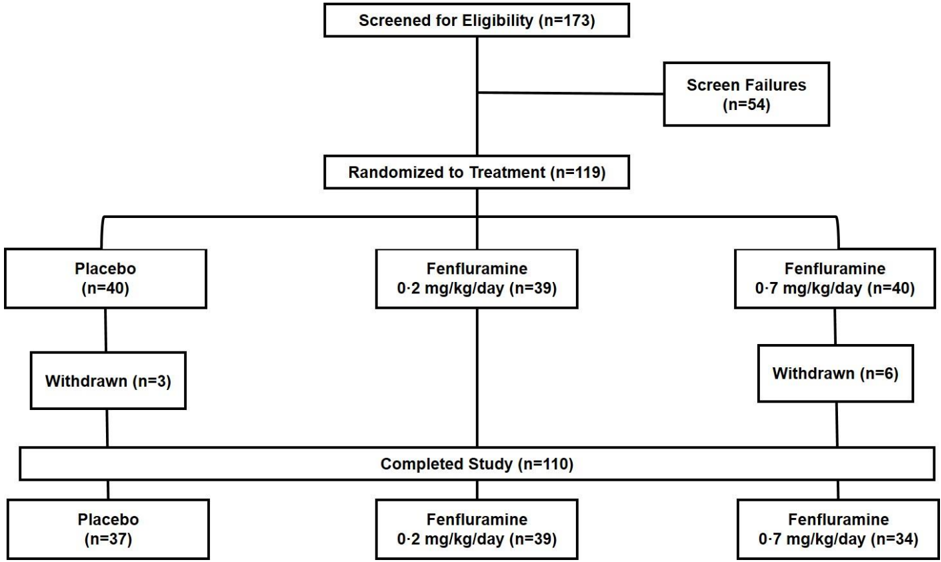
Background Dravet syndrome is a rare, treatment-resistant developmental epileptic encephalopathy characterised by multiple types of frequent, disabling seizures. Fenfluramine has been reported to have antiseizure activity in observational studies of photosensitive epilepsy and Dravet syndrome. The aim of the present study was to assess the efficacy and safety of fenfluramine in patients with Dravet syndrome.Methods In this randomised, double-blind, placebo-controlled clinical trial, we enrolled children and young adults with Dravet syndrome. After a 6-week observation period to establish baseline monthly convulsive seizure frequency (MCSF; convulsive seizures were defined as hemiclonic, tonic, clonic, tonic-atonic, generalised tonic-clonic, and focal with clearly observable motor signs), patients were randomly assigned through an interactive web response system in a 1:1:1 ratio to placebo, fenfluramine 0·2 mg/kg per day, or fenfluramine 0·7 mg/kg per day, added to existing antiepileptic agents for 14 weeks. The primary outcome was the change in mean monthly frequency of convulsive seizures during the treatment period compared with baseline in the 0·7 mg/kg per day group versus placebo; 0·2 mg/kg per day versus placebo was assessed as a key secondary outcome. Analysis was by modified intention to treat. Safety analyses included all participants who received at least one dose of study medication. This trial is registered with ClinicalTrials.gov with two identical protocols NCT02682927 and NCT02826863.Findings Between Jan 15, 2016, and Aug 14, 2017, we assessed 173 patients, of whom 119 patients (mean age 9·0 years, 64 [54%] male) were randomly assigned to receive either fenfluramine 0·2 mg/kg per day (39), fenfluramine 0·7 mg/kg per day (40) or placebo (40). During treatment, the median reduction in seizure frequency was 74·9% in the fenfluramine 0·7 mg/kg group (from median 20·7 seizures per 28 days to 4·7 seizures per 28 days), 42·3% in the fenfluramine 0·2 mg/kg group (from median 17·5 seizures per 28 days to 12·6 per 28 days), and 19·2% in the placebo group (from median 27·3 per 28 days to 22·0 per 28 days). The study met its primary efficacy endpoint, with fenfluramine 0·7 mg/kg per day showing a 62·3% greater reduction in mean MCSF compared with placebo (95% CI 47·7-72·8, p<0·0001); fenfluramine 0·2 mg/kg per day showed a 32·4% reduction in mean MCSF compared with placebo (95% CI 6·2-52·3, p=0·0209). The most common adverse events (occurring in at least 10% of patients and more frequently in the fenfluramine groups) were decreased appetite, diarrhoea, fatigue, lethargy, somnolence, and decreased weight. Echocardiographic examinations revealed valve function within the normal physiological range in all patients during the trial and no signs of pulmonary arterial hypertension.Interpretation In Dravet syndrome, fenfluramine provided significantly greater reduction in convulsive seizure frequency compared with placebo and was generally well tolerated, with no observed valvular heart disease or pulmonary arterial hypertension. Fenfluramine could be an important new treatment option for patients with Dravet syndrome.Funding Zogenix.
Overview
The claims and statistics of this paper haven’t been checked yet.
Free: it reads the open-access text and checks the first 5 claims that cite a source we can check. Create a free account to check every claim.
Integrity signals
Registry
Cites
Statistics
Figures
Verification
Claims the paper makes
The claims and statistics of this paper haven’t been checked yet.
Free: it reads the open-access text and checks the first 5 claims that cite a source we can check. Create a free account to check every claim.
Claims other papers make about this one
Each is checked against this paper’s own text: does it say what the citing paper says it does?
The cited source says what the claim attributes to it.
In the citing paper
“In the first of two RCTs, fenfluramine in two different doses was added to antiseizure regimens without stiripentol 197 .”
From Developmental and epileptic encephalopathies (2024) · cites this paper as [197]
The cited source says what the claim attributes to it.
In the citing paper
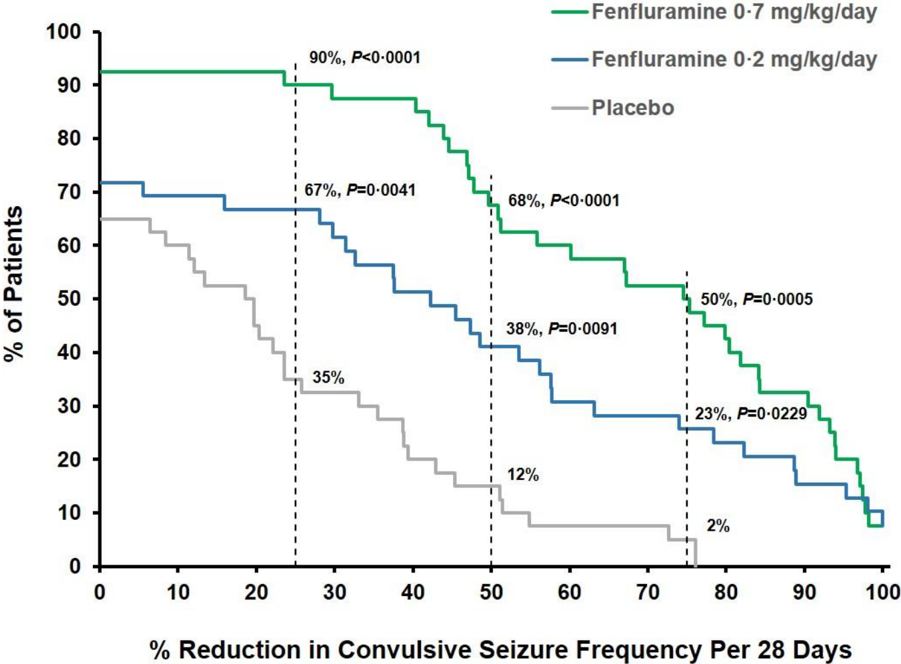
“The higher dose of fenfluramine was associated with a significantly greater likelihood of achieving a >50% (68% versus 12% placebo) and a >75% reduction (50% versus 2% placebo) in convulsive seizure frequency.”
From Developmental and epileptic encephalopathies (2024) · cites this paper as [197]
The cited source says what the claim attributes to it.
In the citing paper
“This randomised controlled trial showed that fenfluramine is highly efficacious in Dravet syndrome, highlighting that trials targeting a repurposed drug in specific epilepsy syndrome can offer major improvements to clinical care.”
From Developmental and epileptic encephalopathies (2024) · cites this paper as [197]
Self-check
Percentages, sums and reported differences re-computed from the paper’s own numbers.
The self-check needs the paper’s full text.
Citations
Cites
Varni, J. W., Seid, M., & Kurtin, P. S. (2001) · Medical Care · doi:10.1097/00005650-200108000-00006 · Cited by 5,131
Recommendations for Noninvasive Evaluation of Native Valvular Regurgitation
Zoghbi, W. A., Adams, D., Bonow, R. O., Enriquez-Sarano, M., Foster, E., Grayburn, P. A., Hahn, R. T., Han, Y., Hung, J., Lang, R. M., et al. (2017) · Journal of the American Society of Echocardiography · doi:10.1016/j.echo.2017.01.007 · Cited by 3,556
Trial of Cannabidiol for Drug-Resistant Seizures in the Dravet Syndrome
Devinsky, O., Cross, J. H., Laux, L., Marsh, E., Miller, I., Nabbout, R., Scheffer, I. E., Thiele, E. A., & Wright, S. (2017) · New England Journal of Medicine · doi:10.1056/nejmoa1611618 · Cited by 1,711
Self-citationValvular heart disease associated with fenfluramine-phentermine
Connolly, H. M., Crary, J. L., McGoon, M. D., Hensrud, D. D., Edwards, B. S., Edwards, W. D., & Schaff, H. V. (1997) · New England Journal of Medicine · doi:10.1056/nejm199708283370901 · Cited by 1,632
Lancellotti, P., Moura, L., Pierard, L. A., Agricola, E., Popescu, B. A., Tribouilloy, C., Hagendorff, A., Monin, J. L., Badano, L., Zamorano, J. L., et al. (2010) · European Journal of Echocardiography · doi:10.1093/ejechocard/jeq031 · Cited by 1,545
Appetite-suppressant drugs and the risk of primary pulmonary hypertension
Abenhaim, L., Moride, Y., Brenot, F., Rich, S., Benichou, J., Kurz, X., Higenbottam, T., Oakley, C., Wouters, E., Aubier, M., et al. (1996) · New England Journal of Medicine · doi:10.1056/nejm199608293350901 · Cited by 1,162
The core Dravet syndrome phenotype
Dravet, C. (2011) · Epilepsia · doi:10.1111/j.1528-1167.2011.02994.x · Cited by 627 · cited 1×
“Introduction 90 Dravet syndrome is a rare, treatment-resistant, developmental epileptic encephalopathy 91 characterised by multiple types of frequent, disabling seizures and severe neurodevelopmental 92 and psychomotor delay.(1,2) Current therapies remain inadequate for most patients; approximately 93 45% of patients…”
BackgroundGioia, G. A., Isquith, P. K., Retzlaff, P. D., & Espy, K. A. (2002) · Child Neuropsychology · doi:10.1076/chin.8.4.249.13513 · Cited by 608
Harden, C., Tomson, T., Gloss, D., Buchhalter, J., Cross, J. H., Donner, E., French, J. A., Gil-Nagel, A., Hesdorffer, D. C., Smithson, W. H., et al. (2017) · Neurology · doi:10.1212/wnl.0000000000003685 · Cited by 578
Self-citationChiron, C., Marchand, M., Tran, A., Rey, E., d'Athis, P., Vincent, J., Dulac, O., & Pons, G. (2000) · The Lancet · doi:10.1016/s0140-6736(00)03157-3 · Cited by 568
Cited by
Items 301–400 of 403
Madan, R., Guido, F. S., & Brescia, N. (2024) · Annals of the Child Neurology Society · doi:10.1002/cns3.20087 · Cited by 1
Dlugos, D., Lozano, M., DiVentura, B. D., Farfel, G. M., Shellhaas, R. A., Sullivan, J. E., Thio, L. L., Kessler, S. K., Sadleir, L. G., & French, J. A. (2025) · Epilepsia · doi:10.1111/epi.18440 · Cited by 1
Self-citationLopez, A. U., Varughese, R. T., Marti, C., Ermekbaeva, A., Poduri, A., Kothare, S. V., & Shah, Y. D. (2025) · Seizure · doi:10.1016/j.seizure.2025.09.013 · Cited by 2
Dravet Syndrome: Past, Present, and Future
Liu, Y.-H., Kuo, C., Chou, I., Hsu, T., Lin, K., & Society for Neurological Rare Disorders-Taiwan (2025) · Acta Neurologica Taiwanica · doi:10.4103/ant.ant-d-25-00005 · Cited by 1
Epilepsien (Anfallssuppressiva)
Brandt, C., & Seifert, R. (2026) · Springer eBooks · doi:10.1007/978-3-662-72738-6_24 · Cited by 1
Mbizvo, G. K., Mayer, J., George, S. M., Bonnett, L. J., Martin, G. P., Sperrin, M., Schofield, P. G., Pickrell, W. O., Alam, U., Mirza, N., et al. (2026) · Journal of Neurology Neurosurgery & Psychiatry · doi:10.1136/jnnp-2025-337861 · Cited by 1
“⇒ If replicated, these findings could support prioritising metformin as a candidate for repurposing trials in epilepsy, particularly in individuals with comorbid obesity, where weight management is already a clinical consideration.”
Gil‐Nagel, A., Knupp, K. G., Gunning, B. W., Battaglia, D., Thiele, E. A., Scheffer, I. E., Schoonjans, A., Nabbout, R., Villeneuve, N., Klotz, K. A., et al. (2026) · Epilepsia · doi:10.1002/epi.70371 · Cited by 1
“4,7,8 13 Efficacy of fenfluramine was established in three randomized controlled trials (RCTs) 14–16 with a subsequent open-label extension (OLE) study 17 in DS and one RCT with an associated OLE study in LGS. 18,19 In the DS OLE study in 324 patients, the median percent change in monthly…”
Self-citationBojinova, V., & Aleksandrova, I. (2025) · Българска неврология · doi:10.67667/neu.v26i1.196 · Cited by 1
Efficacy and safety of fenfluramine in the treatment of Dravet syndrome - literature review
Stefaniak, M., Pietrzak, Z., Dzikowski, P., Nowicka, E., Obel, M., & Piecewicz‐Szczęsna, H. (2022) · Journal of Education Health and Sport · doi:10.12775/jehs.2022.12.01.008 · Cited by 1
Gombolay, G. Y. (2022) · Springer eBooks · doi:10.1007/978-3-319-08290-5_4 · Cited by 1
Was können die neuen anfallssupprimierenden Medikamente?
Leonhardt, G. (2022) · DNP – Die Neurologie & Psychiatrie · doi:10.1007/s15202-022-4935-3 · Cited by 1
Growth-related effects of antiseizure medications are of concern in children with epilepsy
Kim, E. S., & Lee, A. (2023) · Drugs & Therapy Perspectives · doi:10.1007/s40267-023-00981-7 · Cited by 1
“7 mg/kg/d, or placebo for 14 wks (n = 119) [16] Meaningful weight loss (defined as a ≥ 7% ↓ from baseline) occurred in 20% of higher dose fenfluramine recipients, 13% of lower dose fenfluramine recipients and 3% of placebo recipients”
BackgroundBesag, F., Vasey, M. J., & Chin, R. (2024) · Expert Review of Neurotherapeutics · doi:10.1080/14737175.2024.2313548 · Cited by 1
“Dose was increased up to 0.8 mg/kg/day (base equivalent 0.69 mg/kg [34]) or a maximum of 30 mg/day (base equivalent 25.9 mg [34]) at 4-week intervals in non-responders, defined as those with 50% reduction in convulsive seizure frequency.”
BackgroundMethodResultInfluentialA dramatic EEG response to fenfluramine in a patient with developmental and epileptic encephalopathy
Nordli, D. R., Burkhalter, S., Fives, K. R., & Galán, F. (2024) · Annals of the Child Neurology Society · doi:10.1002/cns3.20060 · Cited by 1
Revolutionising Neurological Therapeutics: Investigating Drug Repurposing Strategies
Attri, M., Raghav, A., & Sinha, J. (2024) · CNS & Neurological Disorders - Drug Targets · doi:10.2174/0118715273329531240911075309 · Cited by 1
Increased seizure frequency graphs in medication trials: FDA labels vs. peer-review
Henry, C., Creasey, M., Cannon, L., Terman, S. W., & Goldenholz, D. M. (2025) · Seizure · doi:10.1016/j.seizure.2025.05.021 · Cited by 1
Medical Management in Focal versus Generalized Epilepsy
Sannagowdara, K., & Khan, N. (2021) · Journal of Pediatric Epilepsy · doi:10.1055/s-0040-1722297 · Cited by 1
You Can Teach an Old Drug New Tricks
Perry, M. S. (2020) · Epiliepsy currents/Epilepsy currents · doi:10.1177/1535759720923035 · Cited by 1
Treating Dravet Syndrome: A Patent Landscape
Miziak, B., & Czuczwar, S. J. (2021) · Pharmaceutical Patent Analyst · doi:10.4155/ppa-2021-0020 · Cited by 1
Linley, W. G., Schwenkglenks, M. M., Hawkins, N., & Toward, T. J. (2022) · medRxiv · doi:10.1101/2022.07.01.22277155 · Cited by 1
“7mg/kg/day up to a maximum of 26mg/day in patients not receiving concomitant stiripentol [n=119] (Study 1) (19) and 0.”
BackgroundInfluentialRapid developments in paediatric neurology: Keeping up with the patient's voice
Parker, A. P. J. (2022) · Developmental Medicine & Child Neurology · doi:10.1111/dmcn.15461 · Cited by 1
A Brain Circuit for Status EpilepticusPreprint
Nolan, N. M., Damavandi, P. T., Turner, J. I., Iatrou, A., Macfadyen, R., Drew, W., Garimella, A. H., Al‐Fatly, B., Neudorfer, C., Warren, A. E. L., et al. (2026) · bioRxiv (Cold Spring Harbor Laboratory) · doi:10.64898/2026.07.17.738338 · Cited by 1
Fenfluramine hydrochloride for the treatment of Dravet syndrome
Dozières‐Puyravel, B., & Auvin, S. (2020) · Expert Opinion on Orphan Drugs · doi:10.1080/21678707.2020.1758930
Preclinical validation of endocannabinoid system drug targets for the treatment of Dravet syndrome
Bahceci, D. (2020) · The Sydney eScholarship Repository (The University of Sydney) · Cited by 1
Auvin, S. (2021) · European Journal of Paediatric Neurology · doi:10.1016/j.ejpn.2021.03.002
Syndromspezifische Therapien, Impfung gegen Corona und Epileptologie in der DDR
Strzelczyk, A., & Schmitt, F. C. (2021) · Clinical Epileptology · doi:10.1007/s10309-021-00411-6
WHAT IS NEW IN DRAVET SYNDROME?
Sur, L. M., Gaga, R., Samaşcă, G., Aldea, C. O., Sur, G., & Lupan, I. (2021) · Romanian Journal of Neurology · doi:10.37897/rjn.2021.2.2
Fenfluramine as add‐on therapy for Dravet syndrome
Chaplin, S. (2021) · Prescriber · doi:10.1002/psb.1949
Fenfluramine als nieuwe behandeloptie bij het syndroom van Dravet
Lagae, L. G. (2020) · Epilepsie periodiek voor professionals · doi:10.54160/epilepsie.11207
Self-citationModelos de combustión de carbón y formación de NOx: (I) fundamentos fluidodinámicos globales
Montenegro, H. S., Chouciño, M. A., & González, J. F. (1996) · Ingeniería química
Commentary on “Antiseizure activity by opioid receptor antagonism, new evidence”
de Witte, P. A. M. (2022) · Epilepsia Open · doi:10.1002/epi4.12613
Evaluación positiva de medicamentos: octubre 2020
Hernández, R. A., Luque, A. G., Acuña-Vega, A., & Lobato, P. G. (2021) · Sanidad militar: revista de sanidad de las Fuerzas Armadas de España · doi:10.4321/s1887-87512021000100005
Waele, L. D., & Jansen, K. (2021) · Elsevier eBooks · doi:10.1016/b978-0-12-821635-4.00014-x
Shifting Gears in Clinical Trials- Time to Event Analysis: Music to Some Ears
Joshi, C. (2022) · Epiliepsy currents/Epilepsy currents · doi:10.1177/15357597221107785
“7 mg/kg/day of FFA and a concomitant reduction from 20 7 seizures per 28 days to 4 7 seizures per 28 days.(1) FFA with Stiripentol-study 2 reported a 54.”
BackgroundFrom Drugs to Gene Editing for Developmental Epileptic Encephalopathies
Weuring, W. J. (2022) · Utrecht University Repository (Utrecht University) · doi:10.33540/1360
Anti-convulsant Agents: Cannabidiol and Fenfluramine
Strzelczyk, A., Frey, K., Rosenow, F., & Schubert‐Bast, S. (2022) · Springer eBooks · doi:10.1007/978-3-030-62059-2_467
Anti-Seizure Medications in Children with Epilepsy Effects on Cognitive Functions: Systematic Review
Kart, P. Ö., & Cansu, A. (2023) · Turkiye Klinikleri Journal of Pediatrics · doi:10.5336/pediatr.2022-92208
Seifert, R., & Brandt, C. (2022) · Springer eBooks · doi:10.1007/978-3-662-66303-5_24
Epilepsie-onderzoek: from bed to bench and back to bed?
Sourbron, J., & Lagae, L. G. (2022) · Epilepsie periodiek voor professionals · doi:10.54160/epilepsie.13481
Self-citationNeue Antiepileptika für Kinder mit Epilepsie
Kurlemann, G., & Polster, T. (2023) · Pädiatrie up2date · doi:10.1055/a-1339-9047
Self-citationDie neuen anfallsunterdrückenden Medikamente für das Kindes- und Jugendalter
Kurlemann, G., Lehbrink, R., & Bosse, H. (2024) · Monatsschrift Kinderheilkunde · doi:10.1007/s00112-024-01924-w
Five Cases of Fenfluramine Therapy for Dravet Syndrome
Matsuura, R., Hamano, S., Kikuchi, K., Takeda, R., Takeuchi, H., Hirata, Y., Koichihara, R., Oba, D., Ohashi, H., Hirose, S., et al. (2024) · てんかん研究 · doi:10.3805/jjes.41.507
Brandt, C., & Seifert, R. (2023) · Springer eBooks · doi:10.1007/978-3-662-68371-2_24
Pong, A. W., & Klein, P. (2024) · OBM Genetics · doi:10.21926/obm.genet.2402234
Caraballo, R. H., Veneruzzo, G., Loos, M. A., Reyes, G., Juanes, M., Martín, E., Melgarejo, S., Touzón, M. S., & Alonso, C. N. (2024) · Journal of Pediatric Epilepsy · doi:10.1055/s-0044-1786365
James, K. C., & Pina-Garza, J. E. (2024) · Elsevier eBooks · doi:10.1016/b978-0-323-93201-1.00001-9
Epilepsien (Anfallssuppressiva)
Brandt, C., & Seifert, R. (2025) · Springer eBooks · doi:10.1007/978-3-662-70594-0_24
Behavioral, Cognitive, and Social Implications of Childhood Epilepsy
Desai, J. D., & Kahan, M. D. (2025) · Elsevier eBooks · doi:10.1016/b978-0-443-10944-7.00102-5
Afrooghe, A., Ahmadi, E., Shayan, M., Ohadi, M. A. D., Behnoush, A. H., & Dehpour, A. R. (2025) · Journal of Pharmacy and Pharmacology · doi:10.1093/jpp/rgaf039
Fenfluramine: An Uncommon Cause of False Positive Urine Drug Testing: A Case Report
Ghawji, M., Hainlen, M., & Joshi, C. (2025) · Annals of the Child Neurology Society · doi:10.1002/cns3.70012
“The maximum recommended dose is 0.7 mg/kg/day (up to 26 mg) or 0.4 mg/kg/day (up to 17 mg) when co ‐ administered with stiripentol [9].”
Influential(2022) · Elsevier eBooks · doi:10.1016/b978-3-437-21884-2.00033-7
Diagnostik und Therapie neurologischer Erkrankungen bei Kindern und Jugendlichen
Trollmann, R. (2022) · Elsevier eBooks · doi:10.1016/b978-3-437-21884-2.00018-0
McGuigan, A. (2025) · Drugs & Therapy Perspectives · doi:10.1007/s40267-025-01184-y
“…to controlled access programs and pts require regular ECG monitoring [13, 14, 16] AEs included decreased appetite, diarrhoea, fatigue, lethargy, somnolence, pyrexia and decreased weight [24, 27] globally with cenobamate using the “start-low, go-slow” regimen that was consequently approved [12].”
Rabinovitch, B. S., Hu, W., Tang, C., Silverman, N., Lewis, E. C., & Carlen, P. L. (2025) · Next research. · doi:10.1016/j.nexres.2025.100704
Side Effects of Anti-seizure Medication
Zhang, L., Chung, W., Xu, X., Xu, Z., Liu, S., Li, L., Xiao, F., Wang, Z., Hong, Z., Wang, Y., et al. (2025) · Springer eBooks · doi:10.1007/978-981-96-8520-2_8
Villano, G., D’Onofrio, G., Riva, A., Santangelo, A., Rose, K., & Striano, P. (2025) · Expert Opinion on Pharmacotherapy · doi:10.1080/14656566.2025.2563279
“Fenfluramine showed a similar pattern, lowering seizures by about 60–75% in DS yet only ~26% in LGS [75,76].”
Advances in the Treatment of Refractory Epilepsy
梁, 福. (2025) · Advances in Clinical Medicine · doi:10.12677/acm.2025.15113097
New Drug: Fenfluramine for seizures associated with Dravet syndrome and Lennox–Gastaut syndrome
/ (2025) · Australian Prescriber · doi:10.18773/austprescr.2025.054
Epilepsy, dietary therapies, and SUDEP
Teran, F. A. (2024) · Iowa Research Online (The University of Iowa) · doi:10.25820/etd.007218
Pernerstorfer, J. (2023) · Open access LMU (Ludwid Maxmilian's Universitat Munchen) · doi:10.5282/ubm/epub.107258
Identificatie van gangafwijkingen bij patiënten met het Dravetsyndroom
Wyers, L. (2021) · Lirias
Effectiveness and safety of stiripentol in epilepsy: A systematic review and meta-analysis
Sabet, H., Ramadan, S., Ewis, D. K., Zanaty, M. A., El-Moslemani, M., Elshahat, A., Nasr, A., & Abbas, A. (2025) · Brain Network Disorders · doi:10.1016/j.bnd.2025.08.002
Kuna, W., Niski, J., Pietrucha, J. M., Rutkowska, A., Lichoń, J. M., Gołdyn, M. J., Kuna, P. J., Turczynowski, K. I., Chojniak, A. K., & Turczynowski, K. O. (2026) · Quality in Sport · doi:10.12775/qs.2026.49.67601
Nörolojik Hastalıklarda Güncel Tedaviler
Demir, T. G., Çelik, O., Işık, K., Tur, E. K., Koçak, Y., Çevik, D. E., Çolakoğlu, D., Ertekin, A., Taşkın, Y., Şencan, R., et al. (2026) · Akademisyen Kitabevi eBooks · doi:10.37609/akya.3932
Gurung, D., Bhardwaj, V., & Fotedar, S. (2026) · MRIMS Journal of Health Sciences · doi:10.4103/mjhs.mjhs_95_25
Kadandelu, M., Periya, S., Rekha, P. D., & Raghu, S. V. (2026) · Reviews in the Neurosciences · doi:10.1515/revneuro-2025-0144
Gil‐Nagel, A., de Isla, L. P., Pascual, E. S., Domingo, E. J. B., & Peñas, J. J. G. (2026) · Neurology and Therapy · doi:10.1007/s40120-026-00930-2
“Across these trials, no cases of valvular heart disease or PAH were observed [4–10].”
Ferretti, A., Riva, A., Perilli, L., Parisi, P., & Striano, P. (2026) · Expert Opinion on Drug Safety · doi:10.1080/14740338.2026.2666178
Iguchi, A., Yamaguchi, T., Tsuyusaki, Y., Otani, H., Mizutani, S., Miyashita, M., Yabe, M., & Imai, K. (2026) · Epilepsy & Behavior · doi:10.1016/j.yebeh.2026.111070
Rasheed, M. S., Bilal, M., Akhtar, M. Z., Sabir, A., Naz, M., Rehman, S. U., Ramzan, T., Abbas, M. N., & Usama, U. (2026) · The Egyptian Journal of Neurology Psychiatry and Neurosurgery · doi:10.1186/s41983-026-01171-8
“In the past, fenfluramine, which is for the management of seizures related to DS which was on the basis of two earlier mutually blinded, was accepted in the United States, European Union, and United Kingdom [21, 117, 118].”
Influentialde Oliveira, H. M., Fonseca, P. E. O., de Paula, G. O., Blaskoski, A. P., & da Costa, P. R. F. (2026) · Seizure · doi:10.1016/j.seizure.2026.05.015
Baumgartner, C., Baumgartner, T. R., Philipsen, A., Surges, R., & Schulte, E. C. (2026) · Der Nervenarzt · doi:10.1007/s00115-026-01982-3
Janszky, J., Janszky, J., & Réka, H. (2026) · Epilepsy & Behavior Reports · doi:10.1016/j.ebr.2026.100876
“The response rate was consistently higher than placebo for conventional thresholds ( ≥ 50% and ≥ 75% reduction in monthly seizures), and the beneficial effects extended to clinically meaningful secondary outcomes, including overall improvement reported by caregivers and physicians [15,16].”
InfluentialKerr, W. T., Ems, D., Jaganathan, S., Sederman, R., Chen, C., Wu, S., Tselenti, E., Lothe, A., & Perry, M. S. (2026) · Seizure · doi:10.1016/j.seizure.2026.06.008
Takahashi, T., Abe, Y., & Hayakawa, I. (2026) · Brain and Development Case Reports · doi:10.1016/j.bdcasr.2026.100151
Zhang, Y., Qian, W., Li, M., Zou, Y.-Y., Lu, Z., Huang, Z., Naumann, R. K., & Wang, H. (2026) · International Journal of Molecular Sciences · doi:10.3390/ijms27135752
“Abnormalities in Scn1a +/ − Rats Fenfluramine (FFA) is a clinically approved antiseizure medication that effectively reduces seizure frequency in patients with Dravet syndrome [13–15].”
InfluentialFenfluramine in refractory SCN1A -related ‘genetic epilepsy with febrile seizures plus’
Takahashi, T., Abe, Y., & Hayakawa, I. (2026) · BMJ Case Reports · doi:10.1136/bcr-2026-273440
Актуална терминология, диагностициране и възможности за съвременно лечение
Bojinova, V., & Milanov, I. G. (2023) · Българска неврология · doi:10.67667/neu.v24i3.146
Chang, W., Kwak, A. S., Han, S. H., Song, D., Yoo, H., & Lee, J. H. (2026) · Pharmaceutics · doi:10.3390/pharmaceutics18080969
“Experimental and clinical evidence suggests that sero-tonergic signaling can influence excitatory–inhibitory balance, oscillatory synchronization, and large-scale circuit stability, thereby attenuating hypersynchronous network activity associated with seizure generation and propagation [77,81].”
Delattre, C., D’Onofrio, G., Leiber, A. E., & Nabbout, R. (2026) · Epilepsy & Behavior · doi:10.1016/j.yebeh.2026.111183
Lelli, S., Ascione, F., Bergonzini, L., Lenzi, J., Cesaroni, E., Gambardella, M. L., Quintiliani, M., Battaglia, D., Cordelli, D. M., & Marini, C. (2026) · Seizure · doi:10.1016/j.seizure.2026.08.011
Martins, W. A. (2026) · Current Issues in Molecular Biology · doi:10.3390/cimb48080830
“…is now in the global, sham-controlled phase III EMPEROR study (developed with Biogen), enrolling approximately 150 children with non-gain-of-function SCN1A variants; enrolment completion was expected in 2026 with a data readout anticipated in mid-2027 and a rolling NDA submission to follow [20,43].”
Advancing Disease Modification in Dravet Syndrome
Fine, A. L. (2026) · Epiliepsy currents/Epilepsy currents · doi:10.1177/15357597261456005
Nabbout, R., Sullivan, J. E., Auvin, S., Cross, J. H., Devinsky, O., Gil‐Nagel, A., Guerrini, R., Knupp, K. G., Perry, M. S., Sánchez-Carpintero, R., et al. (2026) · Epilepsia Open · doi:10.1002/epi4.70340
“Patient data from three RCTs (NCT02682927 and NCT02826863 [Study 1 and 3], 17,18 and NCT02926898 [Study 2] 19 ) were pooled by dose group and stratified by baseline characteristics of age (<4 years; ≥ 4 years), number of ASMs attempted prior to enrollment (1–3; 4–6; ≥ 7), and SCN1A pathogenic…”
Self-citationAledo‐Serrano, Á., Carbó, A. V., Alguacil, E. G., García-Peñas, J. J., Jamardo, A. S., Laín, G. A., Ibáñez‐Micó, S., Martínez, H. A., Espartosa, R. B., Rekarte-García, S., et al. (2026) · Epilepsia · doi:10.1002/epi.70460
Mula, M. (2026) · CNS Drugs · doi:10.1007/s40263-026-01331-7 · Cited by 1
“Randomised controlled trials of fenfluramine suggest improvements in executive function domains [67].”
Surdi, P., Trivisano, M., Mercier, M., Pietrafusa, N., Dominicis, A. D., Calabrese, C., Cappelletti, S., & Specchio, N. (2026) · Epilepsia Open · doi:10.1002/epi4.70347
“17,18 FFA exerts its antiseizure effects mainly through serotonergic mechanisms and sigma-1 receptor modulation, 19–21 analyses ( p = 0.006) were attenuated after adjustment.”
InfluentialChilson, L., Zaaimi, B., & Samarasekera, S. R. (2026) · Epilepsy & Behavior Reports · doi:10.1016/j.ebr.2026.100895
“This followed the results from three placebo-controlled RCTs where FFA was efficacious in significantly reducing monthly convulsive seizures by between 54 and 65% [7].”
EPILEPSIA PEDIÁTRICA FARMACORRESISTENTE: DO RECONHECIMENTO PRECOCE À INDICAÇÃO CIRÚRGICA
Chon, N. V. C., MACIEL, A. M., ODA, M. T., REICHER, R. R., D’ORTO, I., & D’ORTO, R. (2026) · Editora Pasteur eBooks · doi:10.59290/0000291216
Żmuda, O., Halot, A., Walo, P., Skórka, N., Tatara, M., Skórka, K., Wydra, K., Jakubiec, J., Szubartowski, M., & Szymczyk, A. (2026) · International Journal of Innovative Technologies in Social Science · doi:10.31435/ijitss.3(51).2026.6603
“The approved ASM portfolio for Dravet syndrome stiripentol, cannabidiol, and fenfluramine has demonstrated seizure-frequency reductions in randomized, placebo-controlled trials [4,9,14].”
Šmahovská, L., Kočvarová, J., Strýček, O., Štillová, K., Brázdil, M., & Doležalová, I. (2026) · Neurologie pro praxi · doi:10.36290/neu.2026.055
SCN1A-Related Epilepsies: Clinical Spectrum and Mechanisms
Moon, J.-U., & Eom, T. (2026) · Current Issues in Molecular Biology · doi:10.3390/cimb48101023
“Echocardiographic monitoring is required because of historical concerns about valvular heart disease and pulmonary arterial hypertension, and concomitant serotonergic medications should be reviewed because of a potential risk of serotonin syndrome [24,37].”
The most common genes associated with epilepsy in children
Mináriková, S., & Kolníková, M. (2026) · Česko-slovenská pediatrie · doi:10.55095/cspediatrie2026/017
Rigoldi, L. C. F., do Valle, D. A., de Souza, M. C., Kormann, M. A., Fidalski, S. A., Santos, M. L. S. F., & Cordeiro, M. L. (2026) · Journal of Clinical Medicine · doi:10.3390/jcm15208034
“These barriers may delay or prevent the use of the therapies with the strongest evidence for DS [17,32,33] and may partly explain the high rates of CBD and VNS use observed in this cohort.”
Valente, K. D. R., & Caraballo, R. H. (2026) · Arquivos de Neuro-Psiquiatria · doi:10.1055/s-0046-1829156
Metadata
- Authors
- Lagae, L., Sullivan, J., Knupp, K., Laux, L., Polster, T., Nikanorova, M., Devinsky, O., Cross, J. H., Guerrini, R., Talwar, D., Miller, I., Farfel, G., Galer, B. S., Gammaitoni, A., Mistry, A., Morrison, G., Lock, M., Agarwal, A., Lai, W. W., & Ceulemans, B.
- Affiliations
- KU Leuven (BE)
- University of California, San Francisco (US)
- Children's Hospital Colorado (US)
- Northwestern University (US)
- Krankenhaus Mara (DE)
- The Danish Epilepsy Association (DK)
- NYU Langone Health (US)
- University College London (GB)
- University of Florence (IT)
- University of Arizona (US)
- Miami Children's Hospital (US)
- Zogenix (United States) (US)
- Children's Hospital of Orange County (US)
- University of Antwerp (BE)
- Corresponding author
- Gammaitoni, Arnold
- ORCID
- Venue
- The Lancet
- Publisher
- Elsevier BV
- Published
- 2019-12
- Volume
- 394
- Issue
- 10216
- Pages
- 2243-2254
- ISSN
- 0099-5355 (ISSN-L)
- 0140-6736
- OpenAlex
- W2996672198
- Cited by
- 384
- References
- 39
- Citations by year
- 2026: 41 · 2025: 56 · 2024: 59 · 2023: 49 · 2022: 72 · 2021: 70 · 2020: 32 · 2019: 3
- FWCI
- 35.25
- Type
- journal article
- Language
- en
- Open access
- Licence
- cc-by-nc-nd
- www.elsevier.com/tdm/userlicense/1.0/ (tdm)
- www.elsevier.com/legal/tdmrep-license (tdm)
- Locations
- The Lancet (publishedVersion)
- PubMed (publishedVersion)
- University of Southern Denmark Research Portal (University of Southern Denmark) (submittedVersion, cc-by-nc-nd)
- UCL Discovery (University College London) (submittedVersion)
- Florence Research (University of Florence) (submittedVersion)
- CINECA IRIS Institutial Research Information System (University of Genoa) (submittedVersion)
- Lirias (submittedVersion)
- Funders
- Zogenix
- National Institute for Health and Care Research (NF-SI-0515-10073)
- Topics
- Health Sciences › Medicine › Clinical Neurology › Epilepsy research and treatment
- Health Sciences › Medicine › Pediatrics, Perinatology and Child Health › Pharmacological Effects and Toxicity Studies
- Health Sciences › Medicine › Physiology (medical) › Diet and metabolism studies
- Keywords
- Dravet syndrome, fenfluramine, developmental and epileptic encephalopathy, photosensitive epilepsy, drug safety, children and young adults, dose comparison, adjunctive antiepileptic therapy, adverse events, drug interactions, drug-resistant epilepsy, 5-HT2A receptor antagonist
- MeSH terms
- Administration, Oral, Adolescent, Anticonvulsants, Child, Child, Preschool, Double-Blind Method, Epilepsies, Myoclonic, Female, Fenfluramine, Humans, Male, Placebos, Seizures, Treatment Outcome, Selective Serotonin Reuptake Inhibitors, Observational Studies as Topic
About these checks
Registry, retraction, Cites and statistics results are computed, not judged, with one exception: a printed reference that no index lists is read once by a model before it counts as a citation error. Claims are extracted by a model and kept only when their quote appears verbatim in the text; each cited source is then checked, with a model’s help, for whether it says what the claim relies on. Those verdicts can be wrong — read the claim’s quote and the cited source before relying on one.
Statistics and arithmetic are recomputed, not judged.
Confidence bands are shown only for fields calibrated on our annotated test set. None is calibrated yet, so no band is shown.
What counts as a claim ›How we measure confidence ›How we check this ›
Are you an author, or do you see a problem with this page? Request a review
Data sources
Bibliographic data: Semantic Scholar, OpenAlex, Crossref.
Contains information from the Semantic Scholar Academic Graph Datasets, made available under the ODC Attribution License (ODC-BY 1.0).
Semantic Scholar’s data is described in: Kinney, R., et al. (2023). The Semantic Scholar Open Data Platform. arXiv:2301.10140.
