

Relationship between clinic and ambulatory blood pressure and mortality: an observational cohort study in 59 124 patients
Open accessThe DOI matches its Crossref record; 48 of the 48 references it cites were found in a registry or an index; 6 of the 23 sources its claims cite were checked for support.
Abstract
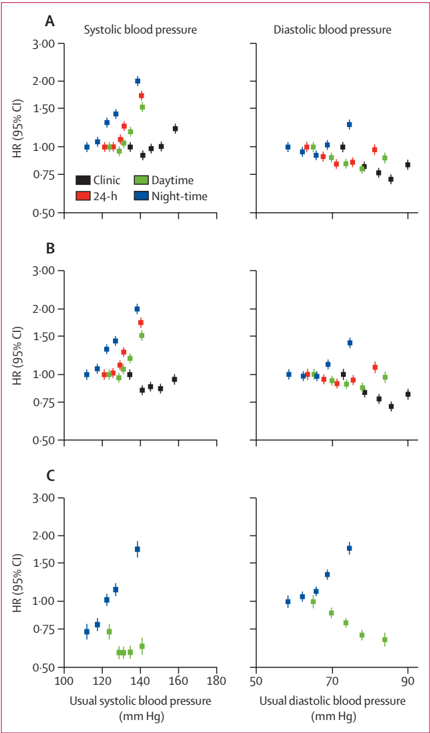
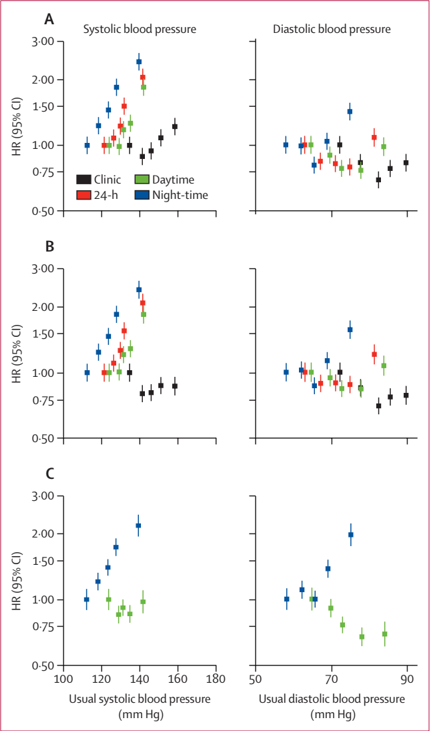
BACKGROUND: Ambulatory blood pressure provides a more comprehensive assessment than clinic blood pressure, and has been reported to better predict health outcomes than clinic or home pressure. We aimed to examine associations of clinic and 24-h ambulatory blood pressure with all-cause and cardiovascular mortality in a large cohort of primary care patients referred for assessment of hypertension. METHODS: We did an observational cohort study using clinic and ambulatory blood pressure data obtained from March 1, 2004, to Dec 31, 2014, from the Spanish Ambulatory Blood Pressure Registry. This registry included patients from 223 primary care centres from the Spanish National Health System in all 17 regions of Spain. Mortality data (date and cause) were ascertained by a computerised search of the vital registry of the Spanish National Institute of Statistics. Complete data were available for age, sex, all blood pressure measures, and BMI. For each study participant, follow-up was from the date of their recruitment to the date of death or Dec 31, 2019, whichever occurred first. Cox models were used to estimate associations between usual clinic or ambulatory blood pressure and mortality, adjusted for confounders and additionally for alternative measures of blood pressure. For each measure of blood pressure, we created five groups (ie, fifths) defined by quintiles of that measure among those who subsequently died. FINDINGS: During a median follow-up of 9·7 years, 7174 (12·1%) of 59 124 patients died, including 2361 (4·0%) from cardiovascular causes. J-shaped associations were observed for several blood pressure measures. Among the top four baseline-defined fifths, 24-h systolic blood pressure was more strongly associated with all-cause death (hazard ratio [HR] 1·41 per 1 - SD increment [95% CI 1·36-1·47]) than clinic systolic blood pressure (1·18 [1·13-1·23]). After adjustment for clinic blood pressure, 24-h blood pressure remained strongly associated with all-cause deaths (HR 1·43 [95% CI 1·37-1·49]), but the association between clinic blood pressure and all-cause death was attenuated when adjusted for 24-h blood pressure (1·04 [1·00-1·09]). Compared with the informativeness of clinic systolic blood pressure (100%), night-time systolic blood pressure was most informative about risk of all-cause death (591%) and cardiovascular death (604%). Relative to blood pressure within the normal range, elevated all-cause mortality risks were observed for masked hypertension (HR 1·24 [95% CI 1·12-1·37]) and sustained hypertension (1·24 [1·15-1·32]), but not white-coat hypertension, and elevated cardiovascular mortality risks were observed for masked hypertension (1·37 [1·15-1·63]) and sustained hypertension (1·38 [1·22-1·55]), but not white-coat hypertension. INTERPRETATION: Ambulatory blood pressure, particularly night-time blood pressure, was more informative about the risk of all-cause death and cardiovascular death than clinic blood pressure. FUNDING: Spanish Society of Hypertension, Lacer Laboratories, UK Medical Research Council, Health Data Research UK, National Institute for Health and Care Research Biomedical Research Centres (Oxford and University College London Hospitals), and British Heart Foundation Centre for Research Excellence.
Overview
CoChat Summary
## TL;DR
In this observational cohort of 59,124 primary-care patients, ambulatory blood pressure—especially nighttime systolic blood pressure—predicted all-cause and cardiovascular mortality better than clinic blood pressure. Masked and sustained hypertension were linked to higher mortality risk, while white-coat hypertension was not clearly associated with increased risk.
## Key findings
- Over a median follow-up of 9.7 years, 7,174 of 59,124 patients died (12.1%), including 2,361 cardiovascular deaths (4.0%).
- Among top four fifths of usual blood pressure values, 24-h systolic blood pressure was more strongly associated with all-cause death than clinic systolic blood pressure: HR 1.41 (95% CI 1.36–1.47) vs 1.18 (1.13–1.23) per 1-SD increment.
- After mutual adjustment, 24-h blood pressure remained strongly associated with death (HR 1.43 [1.37–1.49]), whereas clinic blood pressure was attenuated (HR 1.04 [1.00–1.09]).
- Night-time systolic blood pressure was the most informative measure: 591% of clinic systolic blood pressure’s informativeness for all-cause death and 604% for cardiovascular death.
- Compared with blood pressure in the normal range, masked hypertension and sustained hypertension were associated with higher mortality: all-cause death HR 1.24 (1.12–1.37) and 1.24 (1.15–1.32), and cardiovascular death HR 1.37 (1.15–1.63) and 1.38 (1.22–1.55), respectively.
- White-coat hypertension was not associated with increased mortality in the main analysis (all-cause death HR 0.90 [0.84–0.97]; cardiovascular death HR 0.89 [0.77–1.01]).
## Methods
- Observational cohort study using the Spanish Ambulatory Blood Pressure Registry, including patients aged 18+ from 223 primary care centres in all 17 regions of Spain; data were collected from March 1, 2004, to Dec 31, 2014.
- Sample: 59,124 patients with complete demographic/clinical data and linked mortality data from the Spanish National Institute of Statistics; 35,128 (59.4%) were treated for hypertension at baseline.
- Main analysis: Cox regression for all-cause and cardiovascular mortality, comparing clinic, 24-h, daytime, and nighttime blood pressure; models adjusted for age, sex, smoking, BMI, diabetes, dyslipidaemia, prior cardiovascular disease, and number of antihypertensive drugs, with additional mutual adjustment between clinic and ambulatory measures and analysis of hypertension phenotypes.
## Limitations
- The paper states that clinic blood pressure was based on only two readings, which could overestimate the mean clinic blood pressure.
- The paper states medication data were only available at baseline, not during follow-up.
- The paper states there may have been selection bias because ambulatory monitoring was ordered for guideline-based clinical indications.
- The paper states it was an observational study, so no direct inference can be made about benefit from basing treatment on ambulatory blood pressure.
- The paper states it did not assess nonfatal events, only deaths.
- The paper states the cohort was predominantly White, so results might not apply to other races.
- Evident from the text: some prior cardiovascular disease may have been missed because an unchecked box on the case report form could mean either no disease or missing response.
Model-written summary. Check it against the paper before relying on it.
Integrity signals
Registry
Cites
Statistics
Figures
Verification
Claims the paper makes
4 Valid · 0 Not valid · 6 Not checked · 83 Own results and interpretations
The sources with a verdict support this claim; the rest weren’t checked yet, have no full text we could read, or their verdicts aren’t rated yet.
In the paper
“Moreover, studies including a larger number of participants were mainly obtained by pooling databases from previous small studies.4,8”
§ Relationship between clinic and ambulatory blood pressure and mortality: an observational cohort study in 59 124 patients > Introduction
What the sources say
- Supportedcites [4] 4. Yang WY, Melgarejo JD, Thijs L, et al. Association of office and ambulatory blood pressure with mortality and cardiovascular outcomes. JAMA 2019; 322: 409-20. source
Our copy shows the cited paper IS such a study: the Study Participants section states that 'All population studies included in the International Database on Ambulatory Blood Pressure in Relation to Cardiovascular Outcome (IDACO)' were assembled into a database constructed and updated at the Studies Coordinating Centre in Leuven, and that of 13 111 people in that database 11 135 were statistically analyzed (Study Participants; Baseline Characteristics of Participants). The constituent cohorts are individually small — eTable 1 lists 13 cohorts with 159 to 2 148 participants analyzed (Study Participants / Other Measurements) — and the Statistical Analysis section describes pooling participants across cohorts and assessing 'the weight of cohorts in the overall pooled results,' with a sensitivity analysis labelled 'Small cohorts.' So the paraphrase that large-participant studies were obtained mainly by pooling databases of previous smaller studies is exemplified by this source, which is the only thing the attached citation is offered for. (LLM, conf=0.82)
- Not checked — no full text of the sourcecites [8] 8. Hansen TW, Jeppesen J, Rasmussen S, Ibsen H, TorpPedersen C. Ambulatory blood pressure and mortality. Hypertension 2005; 45: 499-504. source
plain- Asserted: passes — The authors put it forward as true.
- Checkable: passes — It can be checked against evidence.
- Load-bearing: passes — The paper’s conclusions depend on it.
- Based: passes — The paper gives a reason why it holds.
- Supported
The cited sources support only part of this claim — read each source’s verdict below.
In the paper
“The increased risk of death at lower values of diastolic blood pressure is likely to reflect, at least in part, reverse causation due to the effects of arterial ageing, stiffening, and subclinical disease, all of which are associated with a widened pulse pressure and lower diastolic pressure.39”
§ Relationship between clinic and ambulatory blood pressure and mortality: an observational cohort study in 59 124 patients > Discussion
What the sources say
- Partly supportedcites [39] 39. Webb AJS. Progression of arterial stiffness is associated with midlife diastolic blood pressure and transition to latelife hypertensive phenotypes. J Am Heart Assoc 2020; 9: e014547. sourceExperimental — accuracy not yet measured
Split into 2 atoms — 0 confirmed, 2 partially supported, 0 disputed, 0 misattributed, 0 unverifiable. Expand the claim to see per-atom verdicts.
hedgedstates a possible cause- Asserted: passes — The authors put it forward as true.
- Checkable: passes — It can be checked against evidence.
- Load-bearing: unclear — It is unclear whether the paper’s conclusions depend on it.
- Based: passes — The paper gives a reason why it holds.
- Partly supported
A result the paper reports from its own data — it cites no other source for it, so there is none to check. The quote shows it is in the paper.
In the paper
“after adjustment for nighttime systolic blood pressure, daytime systolic blood pressure was only weakly associated with allcause death (HR 1•07 [95% CI 1•01-1•14])”
§ Relationship between clinic and ambulatory blood pressure and mortality: an observational cohort study in 59 124 patients > Results
plainstates an association- Asserted: passes — The authors put it forward as true.
- Checkable: passes — It can be checked against evidence.
- Load-bearing: passes — The paper’s conclusions depend on it.
- Based: passes — The paper gives a reason why it holds.
A result the paper reports from its own data — it cites no other source for it, so there is none to check. The quote shows it is in the paper.
In the paper
“In the confounderadjusted model, allcause death was greater in patients with masked hypertension (normal clinic but elevated 24h blood pressure; HR 1•24 [95% CI 1•12-1•37])”
§ Relationship between clinic and ambulatory blood pressure and mortality: an observational cohort study in 59 124 patients > Results
plainstates an association- Asserted: passes — The authors put it forward as true.
- Checkable: passes — It can be checked against evidence.
- Load-bearing: passes — The paper’s conclusions depend on it.
- Based: passes — The paper gives a reason why it holds.
A result the paper reports from its own data — it cites no other source for it, so there is none to check. The quote shows it is in the paper.
In the paper
“Substantial variability was observed in clinic and ambulatory blood pressure monitoring measurements taken at two different visits (regression dilution ratios for measurements an average of 18 months apart were 0•46 for clinic systolic blood pressure and 0•48 for 24h systolic blood pressure; appendix pp 14-15).”
§ Relationship between clinic and ambulatory blood pressure and mortality: an observational cohort study in 59 124 patients > Results
plain- Asserted: passes — The authors put it forward as true.
- Checkable: passes — It can be checked against evidence.
- Load-bearing: passes — The paper’s conclusions depend on it.
- Based: passes — The paper gives a reason why it holds.
56 more claims
Create a free account to see all 93 claims and to verify the 4 references still open.
- Probably not a substantial claim. 18
- It may state two separate claims as one. 19
- The quote only partly states this claim. 2
Claims other papers make about this one
Each is checked against this paper’s own text: does it say what the citing paper says it does?
In the citing paper
“a large observational study of about 60 000 primary care patients found that 24-hour ambulatory systolic BP was strongly associated with cardiovascular death (hazard ratio [HR] 1.51, 95% confidence interval [CI] 1.41–1.62) and all-cause death (HR 1.43, 95% CI 1.37–1.49), even after adjusting for office BP. 32”
From Hypertension Canada guideline for the diagnosis and treatment of hypertension in adults in primary care (2025) · cites this paper as [32]
In the citing paper
“Out-of-office BP measurements (particularly ABPM) correlate more closely with cardiovascular events and death than office BP measurements do.”
From Hypertension Canada guideline for the diagnosis and treatment of hypertension in adults in primary care (2025) · cites this paper as [32]
Citations
Cites
2018 ESC/ESH Guidelines for the management of arterial hypertension
Williams, B., Mancia, G., Spiering, W., Agabiti Rosei, E., Azizi, M., Burnier, M., Clement, D. L., Coca, A., de Simone, G., Dominiczak, A., et al. (2018) · European Heart Journal · doi:10.1093/eurheartj/ehy339 · Cited by 10,286
Self-citationWhelton, P. K., Carey, R. M., Aronow, W. S., Casey, D. E., Collins, K. J., Dennison Himmelfarb, C., DePalma, S. M., Gidding, S., Jamerson, K. A., Jones, D. W., et al. (2018) · Hypertension · doi:10.1161/hyp.0000000000000066 · Cited by 4,347
O'Brien, E., Asmar, R., Beilin, L., Imai, Y., Mallion, J.-M., Mancia, G., Mengden, T., Myers, M., Padfield, P., Palatini, P., et al. (2003) · Journal of Hypertension · doi:10.1097/00004872-200305000-00001 · Cited by 1,655
Staessen, J. A. (1999) · JAMA · doi:10.1001/jama.282.6.539 · Cited by 1,592
European Society of hypertension position paper on ambulatory blood pressure monitoring
O’Brien, E., Parati, G., Stergiou, G., Asmar, R., Beilin, L., Bilo, G., Clement, D., de la Sierra, A., de Leeuw, P., Dolan, E., et al. (2013) · Journal of Hypertension · doi:10.1097/hjh.0b013e328363e964 · Cited by 1,419
Self-citationDolan, E., Stanton, A., Thijs, L., Hinedi, K., Atkins, N., McClory, S., Hond, E. D., McCormack, P., Staessen, J. A., & O’Brien, E. (2005) · Hypertension · doi:10.1161/01.hyp.0000170138.56903.7a · Cited by 1,227
Prognostic Value of Ambulatory Blood-Pressure Recordings in Patients with Treated Hypertension
Clement, D. L., De Buyzere, M. L., De Bacquer, D. A., de Leeuw, P. W., Duprez, D. A., Fagard, R. H., Gheeraert, P. J., Missault, L. H., Braun, J. J., Six, R. O., et al. (2003) · New England Journal of Medicine · doi:10.1056/nejmoa022273 · Cited by 1,085
European Society of Hypertension practice guidelines for ambulatory blood pressure monitoring
Parati, G., Stergiou, G., O’Brien, E., Asmar, R., Beilin, L., Bilo, G., Clement, D., de la Sierra, A., de Leeuw, P., Dolan, E., et al. (2014) · Journal of Hypertension · doi:10.1097/hjh.0000000000000221 · Cited by 1,021
Self-citationSega, R., Facchetti, R., Bombelli, M., Cesana, G., Corrao, G., Grassi, G., & Mancia, G. (2005) · Circulation · doi:10.1161/01.cir.0000160923.04524.5b · Cited by 1,009
Cited by
Items 101–200 of 283
Li, M., Zhao, S., Yu, S., Maimaitiaili, R., Xu, Y., Yan, L., Zhao, Y., & Zhang, Y. (2024) · JACC Advances · doi:10.1016/j.jacadv.2024.101350 · Cited by 6
Zhao, X., Song, B., Yao, T., Fan, H., Liu, T., Gao, G., Wang, K., Lu, W., & Liu, C. (2024) · Frontiers in Endocrinology · doi:10.3389/fendo.2024.1427785 · Cited by 5
Juhl, C. B., Bladbjerg, E., Gram, B., Knudsen, T., Lauridsen, M. M., Nygaard, N.-P. B., Drøjdahl, N., Skadhauge, L. R., & Münster, A. B. (2024) · Diabetes Metabolic Syndrome and Obesity · doi:10.2147/dmso.s456028 · Cited by 9
Association of body composition with ambulatory blood pressure among Chinese youths
Mao, B., Zhang, J., Li, S., Fan, Z., Deng, Y., Quan, H., & Yang, Y. (2024) · BMC Pediatrics · doi:10.1186/s12887-024-05029-x · Cited by 5
Prognostic value of blood pressure in the acute period of hemispheric ischemic stroke
Gusev, E. I., Drapkina, O. M., Martynov, M. Y., Glukhareva, A. P., & Yutskova, E. V. (2024) · CARDIOVASCULAR THERAPY AND PREVENTION · doi:10.15829/1728-8800-2024-3886 · Cited by 5
Armario, P., Avellaneda-Gómez, C., & Gómez-Choco, M. J. (2023) · Archivos de Bronconeumología · doi:10.1016/j.arbres.2023.11.014 · Cited by 5
Cuspidi, C., Facchetti, R., Gherbesi, E., Quarti‐Trevano, F., Vanoli, J., Mancia, G., & Grassi, G. M. (2025) · Journal of Hypertension · doi:10.1097/hjh.0000000000003970 · Cited by 6
Mostaza, J. M., Pintó, X., Armario, P., Masana, L., Real, J. T., Valdivielso, P., Arrobas-Velilla, T., Baeza‐Trinidad, R., Calmarza, P., Cebollada, J., et al. (2024) · Clínica e Investigación en Arteriosclerosis · doi:10.1016/j.arteri.2024.02.001 · Cited by 26
Martin, A., Lang, S., Schifferdecker, F., Allo, G., Chon, S., Neumann‐Haefelin, C., Demir, M., Steffen, H., & Kasper, P. (2025) · Journal of Hypertension · doi:10.1097/hjh.0000000000003977 · Cited by 7
Arterial hypertension—clinical trials update 2024
Tokcan, M., Lauder, L., Götzinger, F., Böhm, M., & Mahfoud, F. (2024) · Hypertension Research · doi:10.1038/s41440-024-01900-7 · Cited by 7
Malliora, A., Lazaridis, A. A., Natsi, A., Papadopoulos, V. P., Antoniadou, C., Gavriilidis, E., Tsilingiris, D., Kotsis, V., Skendros, P., & Gkaliagkousi, E. (2025) · Hypertension Research · doi:10.1038/s41440-025-02306-9 · Cited by 6
Kario, K. (2024) · Hypertension Research · doi:10.1038/s41440-024-01859-5 · Cited by 5
Jeong, S., Linder, B. A., Barnett, A. M., Tharpe, M. A., Hutchison, Z. J., Culver, M. N., Sanchez, S. O., Nichols, O. I., Grosicki, G. J., Bunsawat, K., et al. (2024) · American Journal of Physiology-Heart and Circulatory Physiology · doi:10.1152/ajpheart.00726.2023 · Cited by 7
Zhao, X., Yao, T., Song, B., Fan, H., Liu, T., Gao, G., Wang, K., Lu, W., & Liu, C. (2024) · Frontiers in Endocrinology · doi:10.3389/fendo.2024.1355180 · Cited by 4
An Updated Meta-analysis of White Coat Hypertension and Mortality
Hossain, A., Townsend, R. R., & Cohen, J. B. (2025) · Journal of Human Hypertension · doi:10.1038/s41371-025-01041-5 · Cited by 4
Prognostic value of nighttime blood pressure in patients with chronic kidney disease
Li, J., Qin, W. D., Li, S., Song, J., Wang, C., Zhang, J., & Peng, H. (2025) · Hypertension Research · doi:10.1038/s41440-024-02080-0 · Cited by 5
de la Sierra, A., Ruilope, L. M., Staplin, N., Stergiou, G. S., Vinyoles, E., & Williams, B. (2025) · Journal of Hypertension · doi:10.1097/hjh.0000000000004076 · Cited by 5
Self-citationZhu, C., Lei, Y., Kumar, V., Yue, X., Cui, Q., & Cheng, X. W. (2025) · Journal of Clinical Hypertension · doi:10.1111/jch.70077 · Cited by 5
Targa, A., Torres, G., Benitez, I. D., Henríquez‐Beltrán, M., Vaca, R., Arnó, L. P., Mínguez, O., Aguilà, M., Martínez, D., Pinilla, L., et al. (2025) · European Respiratory Journal · doi:10.1183/13993003.01954-2024 · Cited by 7
Soleimani, H., Sattartabar, B., Parastooei, B., Eshraghi, R., Nazari, R., Najdaghi, S., Hobaby, S., Etemadi, A., Mahalleh, M., Taheri, M., et al. (2025) · Clinical Cardiology · doi:10.1002/clc.70104 · Cited by 7
Zhu, A., Østbye, T., Naheed, A., de Silva, H. A., Jehan, I., Gandhi, M., Chakma, N., Kasturiratne, A., Samad, Z. Z., & Jafar, T. H. (2024) · Journal of Clinical Hypertension · doi:10.1111/jch.14787 · Cited by 4
Renal Denervation Lowers Nighttime Blood Pressure in True Resistant Hypertension
Kario, K., Kandzari, D. E., Mahfoud, F., Weber, M. A., Schmieder, R. E., Tsioufis, K. P., Liu, M., Böhm, M., & Townsend, R. R. (2024) · Hypertension · doi:10.1161/hypertensionaha.124.23848 · Cited by 5
Palomo‐Piñón, S., Enciso‐Muñoz, J. M., Meaney, E., Díaz-Domínguez, E., Cardona‐Müller, D., Pérez, F. P., Cantoral-Farfán, E., Anda‐Garay, J. C., Mijangos-Chavez, J., Antonio‐Villa, N. E., et al. (2024) · BMC Nephrology · doi:10.1186/s12882-023-03450-5 · Cited by 11
Oliveira, M. D. S., Melo, P. H., Correia, M. D. A., Gerage, A. M., Ritti‐Dias, R. M., & Farah, B. Q. (2024) · Journal of Cardiopulmonary Rehabilitation and Prevention · doi:10.1097/hcr.0000000000000880 · Cited by 6
Zhang, H., Huo, X., Ren, L., Lu, J., Li, J., Zheng, X., Liu, J., Ma, W., Yuan, J., Diao, X., et al. (2024) · American Heart Journal · doi:10.1016/j.ahj.2024.03.018 · Cited by 5
Prevalence and Cardio‐Renal Comorbidities of Masked Hypertension: A Meta‐Analysis
Zhu, H., Li, J., Li, L., Liang, X., Huang, C., Cai, X., Huang, Y., & Huo, Y. (2024) · Journal of Evidence-Based Medicine · doi:10.1111/jebm.12672 · Cited by 8
Bin, K. J., Pretto, L. R. D., Sanchez, F. B., Castro, F. P. M. D. S. E., Ramos, V. D., & Battistella, L. R. (2023) · JMIR Formative Research · doi:10.2196/47388 · Cited by 7
Effect of Baduanjin on Blood Pressure Among Individuals With High-Normal Blood Pressure
Pu, B., Zhang, L., Sun, Y. Z., Yu, Y., Yan, L., Li, Y., Liu, J., Zheng, X., Zhang, H., Peng, Y., et al. (2026) · Journal of the American College of Cardiology · doi:10.1016/j.jacc.2026.01.014 · Cited by 6
Zhou, T., Jingyi, W., Zhang, X., Wu, L., Guo, S., An, Q., Feng, Z., & Guo, K. (2024) · Applied Materials Today · doi:10.1016/j.apmt.2024.102570 · Cited by 6
Kario, K., Kandzari, D. E., Mahfoud, F., Weber, M. A., Schmieder, R. E., Tsioufis, K. P., Liu, M., Böhm, M., & Townsend, R. R. (2025) · Hypertension Research · doi:10.1038/s41440-025-02186-z · Cited by 5
Landolfo, M., Allevi, M., Spannella, F., Giulietti, F., Gezzi, A., & Sarzani, R. (2023) · High Blood Pressure & Cardiovascular Prevention · doi:10.1007/s40292-023-00605-1 · Cited by 5
Ambulatory blood pressure monitoring and mortality
Martínez‐García, M. Á., Pengo, M. F., & Parati, G. (2024) · The Lancet · doi:10.1016/s0140-6736(23)02619-3 · Cited by 3
Association of hypotension with mortality among US adults: prospective cohort studyPreprint
Han, Y., Tang, J., Wu, N., Zhao, L., Cai, D., Ren, H., Hu, P., & Chen, Z. (2024) · medRxiv · doi:10.1101/2024.11.08.24316952 · Cited by 3
Bai, Z., Geng, F., Zhang, H., Chen, X., Du, L., Wang, P., Wu, P., Cheng, G., Fang, Z., & Wu, Y. (2025) · Biomedical Signal Processing and Control · doi:10.1016/j.bspc.2025.107718 · Cited by 6
Nolde, J. M., Atkins, E., Marschner, S. L., Hillis, G. S., Chalmers, J. P., Billiot, L., Nelson, M. R., Reid, C. M., Hay, P. D., Burke, M., et al. (2024) · Journal of Hypertension · doi:10.1097/hjh.0000000000003683 · Cited by 3
Asian expert consensus on high-quality hypertension management
Liu, J., Kario, K., Ding, X., Li, Z., Gao, T., Li, Y., Zhang, Y., Chen, W., Chia, Y. C., Fan, Y., et al. (2026) · Hypertension Research · doi:10.1038/s41440-026-02644-2 · Cited by 3
Schneider, V. M., Ziegelmann, P. K., Pereira, D. M., & Ferrari, R. (2026) · British Journal of Sports Medicine · doi:10.1136/bjsports-2025-111474 · Cited by 8
Baross, A., Baxter, B. A., Wright, B., & Kay, A. D. (2024) · Frontiers in Physiology · doi:10.3389/fphys.2024.1405230 · Cited by 3
Kario, K., Kai, H., Rakugi, H., Hoshide, S., Node, K., Katsurada, K., Shinohara, K., Maekawa, Y., Sakata, Y., Matsue, Y., et al. (2026) · Hypertension Research · doi:10.1038/s41440-026-02629-1 · Cited by 7
Optimize hypertension management to tackle the CVD burden in MASLD
Kasper, P., Demir, M., & Steffen, H. (2025) · Journal of Hepatology · doi:10.1016/j.jhep.2025.07.007 · Cited by 4
Hilmisson, H., THOMAS, R. J., & Magnúsdóttir, S. (2024) · Frontiers in Sleep · doi:10.3389/frsle.2024.1230958 · Cited by 4
Omboni, S., Alfie, J., Arystan, A., Avolio, A. P., Barin, E. S., Bokusheva, J., Bulanova, N., Butlin, M., Cuffaro, P. E., Derevyanchenko, M. V., et al. (2024) · Journal of Hypertension · doi:10.1097/hjh.0000000000003763 · Cited by 3
Insomnia and Cardiovascular Disease: Untangling a Complex Relationship
Pengo, M. F., Javaheri, S., Maiolino, G., Redline, S. S., & Lombardi, C. (2026) · Journal of Sleep Research · doi:10.1111/jsr.70299 · Cited by 6
Novel Pulse Waveform Index by Ambulatory Blood Pressure Monitoring and Cardiac Function
Narita, K., Yuan, Z., Yasui, N., Hoshide, S., & Kario, K. (2023) · JACC Advances · doi:10.1016/j.jacadv.2023.100737 · Cited by 4
Oliveras, A., González, S. V., Vega, M. V., Camps, C., Illana, F. J., Armario, P., Crespo, M., & de la Sierra, A. (2024) · Hypertension Research · doi:10.1038/s41440-024-01748-x · Cited by 7
Jiang, Y., Qu, H., Guo, H., Guo, M., Liang, J., Niu, Y., Chen, L., Wang, X., Li, Y., Jiang, H., et al. (2025) · Phytomedicine · doi:10.1016/j.phymed.2025.157315 · Cited by 3
Yan, V. K. C., Ju, C., MacDonald, T. M., Mackenzie, I. S., Flynn, R. W. V., Williams, B., Chen, Y., Chan, E. W., George, J., & Wei, L. (2025) · BMJ Medicine · doi:10.1136/bmjmed-2024-000857 · Cited by 4
Self-citationKhoshnevis, S., Smolensky, M. H., & Hermida, R. C. (2024) · Chronobiology International · doi:10.1080/07420528.2024.2414878 · Cited by 6
Zhou, X., Zhu, R., Liu, L., Liu, X., Lu, J., Chen, B., Wu, C. Y., Zhang, X., Yang, Y., Cui, J., et al. (2025) · Chinese Medical Journal · doi:10.1097/cm9.0000000000003914 · Cited by 9
Xu, D., Qi, P., Liu, P., Yang, H., Ye, G., Shan, D., Lei, S., Yang, G., Ding, J., Liang, H., et al. (2024) · Frontiers in Neurology · doi:10.3389/fneur.2024.1405668 · Cited by 4
Why the lack of enthusiasm for renal denervation?
Messerli, F. H., Schoenenberger-Berzins, R., & Messerli, A. W. (2024) · Journal of Hypertension · doi:10.1097/hjh.0000000000003731 · Cited by 3
Gao, H., Li, Z., Zhan, W., Shen, F., Lü, Y., & Chen, W. (2025) · Blood Pressure · doi:10.1080/08037051.2025.2605798 · Cited by 3
What impacts do the new ESH 2023 guidelines have on the management of hypertension in Japan?
Kario, K., Hoshide, S., Mogi, M., Nishiyama, A., Ohya, Y., & Node, K. (2023) · Hypertension Research · doi:10.1038/s41440-023-01376-x · Cited by 3
Stress coping strategies — novel markers in the diagnosis of masked hypertension in young people
Шевченко, А. О., Yufereva, Y. M., Gerasimova, Y. A., Тимофеев, Р. Г., & Faradzhov, R. A. (2024) · CARDIOVASCULAR THERAPY AND PREVENTION · doi:10.15829/1728-8800-2024-3866 · Cited by 5
Gladzki, L., Brunström, M., & Otten, J. (2026) · Blood Pressure · doi:10.1080/08037051.2026.2676362 · Cited by 2
Potential of digital technology for hypertension management: current status and future prospects
Fujiwara, T., & Kario, K. (2026) · Expert Review of Medical Devices · doi:10.1080/17434440.2026.2626018 · Cited by 2
Zhao, X., Liu, T., Yang, Q., Yang, G., Li, X., Tang, X., Li, J., Liang, Z., Li, A., Zeng, L., et al. (2025) · BMC Medicine · doi:10.1186/s12916-025-03892-8 · Cited by 5
Antza, C., Palaska, S., Anyfanti, P., Triantis, D., Fyntrilakis, S., ZiyaSener, Y., & Kotsis, V. (2025) · Current Hypertension Reports · doi:10.1007/s11906-025-01326-7 · Cited by 2
Liuzzo, G., & Volpe, M. (2023) · European Heart Journal · doi:10.1093/eurheartj/ehad400 · Cited by 3
Ambulatory blood pressure monitoring. Current status and future perspectives
de la Sierra, A. (2024) · Medicina Clínica (English Edition) · doi:10.1016/j.medcle.2023.12.024 · Cited by 8
Ilić, A., Stojšić‐Milosavljević, A., Miljković, T., Bjelobrk, M., Stojšić, S., Tadić, S., Stefanović, M., Vulin, A., Preveden, A., Komazec, N., et al. (2024) · International Journal of Molecular Sciences · doi:10.3390/ijms252011324 · Cited by 5
Piani, F., & Pengo, M. F. (2024) · SLEEP · doi:10.1093/sleep/zsae303 · Cited by 2
Adherence to antihypertensive medication in renal denervation trials: new studies, old problems?
Lauder, L., & Mahfoud, F. (2023) · Hypertension Research · doi:10.1038/s41440-023-01389-6 · Cited by 2
Costa, R. M., Kanegusuku, H., Cucato, G. G., Wolosker, N., Ritti‐Dias, R. M., & Correia, M. D. A. (2023) · Journal of Cardiopulmonary Rehabilitation and Prevention · doi:10.1097/hcr.0000000000000829 · Cited by 2
Edwards, J. J., Galbraith, A., Bruce‐Low, S., Sharma, R., & O’Driscoll, J. M. (2026) · European Journal of Applied Physiology · doi:10.1007/s00421-026-06246-1 · Cited by 3
Liu, Q., Yu, L., Zhang, Z., Zhuang, Z., Tian, W., Wang, A., & Xu, H. (2025) · BMC Complementary Medicine and Therapies · doi:10.1186/s12906-025-05038-y · Cited by 2
Kobalava, Z. D., & Троицкая, Е. А. (2024) · Russian Journal of Cardiology · doi:10.15829/1560-4071-2024-6159 · Cited by 3
Estándares SEA 2026 para el control global del riesgo vascular
Mostaza, J. M., Pintó, X., Armario, P., Guijarro, C., Masana, L., Real, J. T., Arrobas-Velilla, T., Baeza‐Trinidad, R., Calmarza, P., Cebollada, J., et al. (2026) · Clínica e Investigación en Arteriosclerosis · doi:10.1016/j.arteri.2025.500889 · Cited by 2
Nocturnal Stage 1 Hypertension Defined by 2025 Guidelines in Adults With Chronic Kidney Disease
Zhang, T., Zhou, Z., Li, Q., Cai, X. T., Lin, L., Peng, H., Li, M., Wang, C., & Jiang, X. (2026) · JAMA Network Open · doi:10.1001/jamanetworkopen.2025.54035 · Cited by 2
Gao, X., Wu, Q., Ma, Y., Ren, Y., Chen, J., Lin, X., Ye, L., Song, W., Zhu, J., & Yin, J. (2025) · Journal of Clinical Hypertension · doi:10.1111/jch.14970 · Cited by 1
Kim, K. H., Chung, J. H., Jang, S., Kim, B.-K., Munakata, M., & Rhee, M. (2024) · Medicina · doi:10.3390/medicina60091522 · Cited by 2
Narita, K., Hoshide, S., & Kario, K. (2024) · American Journal of Hypertension · doi:10.1093/ajh/hpae083 · Cited by 1
Haghayegh, S., Hermida, R. C., Smolensky, M. H., Gallardo, M. J., Duran-Aniotz, C. A., Slachevsky, A., Behrens, M. I., Aguillon, D. F., Santamaría‐García, H. A., García, A. M., et al. (2025) · Clocks & Sleep · doi:10.3390/clockssleep7010011 · Cited by 3
A pilot study exploring novel contexts for out-of-office blood pressure measurement
Allinson, F., Mejia, N., Ariniello, L. M., Quer, G., & Muse, E. D. (2024) · Frontiers in Cardiovascular Medicine · doi:10.3389/fcvm.2024.1351746 · Cited by 1
Franklin, M., Fotheringham, J., Taylor, R. S., Powell, P. A., Retat, L., Chen, J., Sánchez, J. J. G., Gamble, A., & Carter, P. (2026) · PharmacoEconomics · doi:10.1007/s40273-026-01625-0 · Cited by 1
Kario, K., Ito, S., Itoh, H., Rakugi, H., Okuda, Y., & Yamakawa, S. (2025) · American Journal of Hypertension · doi:10.1093/ajh/hpaf048 · Cited by 1
Nocturnal hypertension and cardiovascular events: risk analysis using propensity score matching
Perea, J., Martin, D., Holguín, M. R., Arluna, D., Gomez, O., Simone, S., Liprandi, A. S., & Liprandi, M. I. S. (2025) · Current Problems in Cardiology · doi:10.1016/j.cpcardiol.2025.103185 · Cited by 1
Outcome data for renal denervation: craving the unattainable?
Lauder, L., & Mahfoud, F. (2024) · Hypertension Research · doi:10.1038/s41440-024-01667-x · Cited by 1
Awakening to the Pertinence of Sleep for Hypertension
Tobushi, T., & Floras, J. S. (2024) · Hypertension · doi:10.1161/hypertensionaha.124.21727 · Cited by 2
2025 Thai Hypertension Society Guidance for Ambulatory Blood Pressure Monitoring in Adults
Wanthong, S., Chattranukulchai, P., Chotruangnapa, C., Kotruchin, P., Roubsanthisuk, W., Vathesatogkit, P., & Sukonthasarn, A. (2025) · Journal of Clinical Hypertension · doi:10.1111/jch.70136 · Cited by 3
Blood pressure variability. Impact on antihypertensive treatment
Sierra, À. (2025) · Hipertensión y Riesgo Vascular · doi:10.1016/j.hipert.2025.03.002 · Cited by 3
Chang, J. C. H., Son, M. B. F., Alonzi, G., Weiss, P. F., & Daga, A. (2023) · Clinical Rheumatology · doi:10.1007/s10067-023-06819-x · Cited by 1
Hundemer, G. L., Akbari, A., Buh, A. W., Biyani, N., Mahbub, S., Salman, M., Brown, P. A., Knoll, G. A., Sood, M. M., Hiremath, S. S., et al. (2025) · CJC Open · doi:10.1016/j.cjco.2025.01.007 · Cited by 3
Boob, T., Vyas, P., Kanabar, K., Patel, K., Modi, R., Khare, M., & Patel, I. (2026) · International Journal of Heart Failure · doi:10.36628/ijhf.2025.0090 · Cited by 1
Zhou, Y., He, Y., Zhu, P., Yan, R., Tang, R., Wang, L., & He, W. (2025) · Scientific Reports · doi:10.1038/s41598-025-07586-2 · Cited by 2
Ambulatory blood pressure monitoring and mortality
Liu, W., Ge, W., Fan, X., Du, Y., & Li, L. (2024) · The Lancet · doi:10.1016/s0140-6736(23)02621-1 · Cited by 1
Antihypertensive drugs in the morning or the evening? A complicated question with no clear answer
Reboldi, G., Angeli, F., & Verdecchia, P. (2024) · Journal of Hypertension · doi:10.1097/hjh.0000000000003816 · Cited by 1
Kario, K., Shiosakai, K., & Taguchi, T. (2024) · Journal of Clinical Hypertension · doi:10.1111/jch.14857 · Cited by 3
Antza, C., Kakaletsis, N., Palaska, S., Anyfanti, P., Triantis, D., & Kotsis, V. (2025) · Current Hypertension Reports · doi:10.1007/s11906-025-01348-1 · Cited by 1
How to screen and diagnose hypertension
Stergiou, G. S., Bilo, G., Camafort, M., de la Sierra, A., Κόλλιας, Α., Palatini, P., & Parati, G. (2025) · European Journal of Preventive Cardiology · doi:10.1093/eurjpc/zwaf674 · Cited by 4
Trials on Timing of Cardiovascular Medication Administration
Pareek, M., Johansen, N. D., Christensen, S. H., Kristensen, A. M. D., Afzal, M. U., Frary, J. M. C., Vaduganathan, M., Olsen, M. H., Sivapalan, P., Stæhr, J. U. J., et al. (2025) · JACC Advances · doi:10.1016/j.jacadv.2025.102147 · Cited by 3
Gavish, B. (2023) · Hypertension Research · doi:10.1038/s41440-023-01465-x · Cited by 2
Xu, D., Yin, J., Shen, W., Zheng, X., & Xu, J. (2026) · BMC Public Health · doi:10.1186/s12889-026-27852-w · Cited by 1
Community Practices and Perceptions Regarding Blood Pressure Measurement Techniques
Zeng, M., Clapham, E., Picone, D. S., Gnanenthiran, S. R., Griffiths, R., Chapman, N., & Schutte, A. E. (2025) · American Journal of Hypertension · doi:10.1093/ajh/hpaf195 · Cited by 1
Impact of Office and Ambulatory Blood Pressure on Mortality in Patients with Coronary Heart Disease
de la Sierra, A., Vinyoles, E., Gorostidi, M., Segura, J., & Ruilope, L. M. (2025) · Cardiology and Therapy · doi:10.1007/s40119-025-00437-1 · Cited by 1
Self-citationNocturnal Hypertension and Prognosis in Patients of Very Advanced Age
Fujiwara, T., Hoshide, S., & Kario, K. (2026) · Hypertension · doi:10.1161/hypertensionaha.125.25199 · Cited by 3
Campbell, R., & McEvoy, J. W. (2025) · European Heart Journal · doi:10.1093/eurheartj/ehaf292 · Cited by 2
Chai, L., Zhang, K., Zhang, Y., et al. (2025) · Frontiers in Public Health · doi:10.3389/fpubh.2025.1508274 · Cited by 1
Metadata
- Authors
- Staplin, N., de la Sierra, A., Ruilope, L. M., Emberson, J. R., Vinyoles, E., Gorostidi, M., Ruiz-Hurtado, G., Segura, J., Baigent, C., & Williams, B.
- Affiliations
- University of Oxford (GB)
- Research Institute Hospital 12 de Octubre (ES)
- Hospital Universitario Central de Asturias (ES)
- National Institute for Health and Care Research (GB)
- Corresponding author
- Williams, Bryan
- ORCID
- Venue
- The Lancet
- Publisher
- Elsevier BV
- Published
- 2023-06
- Volume
- 401
- Issue
- 10393
- Pages
- 2041-2050
- ISSN
- 0099-5355 (ISSN-L)
- 0140-6736
- OpenAlex
- W4372211782
- Cited by
- 290
- References
- 41
- Citations by year
- 2026: 65 · 2025: 87 · 2024: 108 · 2023: 30
- FWCI
- 56.98
- Type
- journal article
- Language
- en
- Open access
- hybrid
- doi.org
- Licence
- cc-by
- www.elsevier.com/tdm/userlicense/1.0/ (tdm)
- www.elsevier.com/legal/tdmrep-license (tdm)
- creativecommons.org/licenses/by/4.0/ (vor)
- Locations
- The Lancet (publishedVersion, cc-by)
- PubMed (publishedVersion)
- UCL Discovery (University College London) (submittedVersion, cc-by)
- Hispana (submittedVersion, cc-by)
- Biblos-e Archivo (Universidad Autónoma de Madrid) (submittedVersion, public-domain)
- Funders
- National Institute for Health and Care Research
- British Heart Foundation
- University College London
- University of Oxford
- Medical Research Council (MC_UU_00017/2)
- Health Data Research UK
- Topics
- Health Sciences › Medicine › Cardiology and Cardiovascular Medicine › Blood Pressure and Hypertension Studies
- Health Sciences › Medicine › Cardiology and Cardiovascular Medicine › Cardiovascular Health and Disease Prevention
- Health Sciences › Nursing › Nutrition and Dietetics › Sodium Intake and Health
- Keywords
- ambulatory blood pressure, office blood pressure, hypertension, all-cause mortality, cardiovascular mortality, 24-hour ambulatory blood pressure, systolic blood pressure, J-shaped association, primary care patients, blood pressure measurement, cardiovascular risk stratification, home blood pressure monitoring, ambulatory blood pressure monitoring
- MeSH terms
- Blood Pressure, Humans, Hypertension, Cohort Studies, Blood Pressure Monitoring, Ambulatory, Masked Hypertension
About these checks
Registry, retraction, Cites and statistics results are computed, not judged, with one exception: a printed reference that no index lists is read once by a model before it counts as a citation error. Claims are extracted by a model and kept only when their quote appears verbatim in the text; each cited source is then checked, with a model’s help, for whether it says what the claim relies on. Those verdicts can be wrong — read the claim’s quote and the cited source before relying on one.
The claim verdicts this report counts are experimental: their accuracy is not yet measured.
A language model drew the claims from the paper on 2026-10-10, under version 3 of the claim definition (model deepseek-v4.1-flash, prompt extract-v3).
A second model labelled each claim on 2026-10-10 (model jev-1.13-20260917, definition revision gold-guideline-v0.2).
Cited sources are checked with a language model’s help (qwen3.8-omni-flash and gpt-6-sol).
Statistics and arithmetic are recomputed, not judged.
Confidence bands are shown only for fields calibrated on our annotated test set. None is calibrated yet, so no band is shown.
What counts as a claim ›How we measure confidence ›How we check this ›
Are you an author, or do you see a problem with this page? Request a review
Data sources
Bibliographic data: Semantic Scholar, OpenAlex, Crossref.
Contains information from the Semantic Scholar Academic Graph Datasets, made available under the ODC Attribution License (ODC-BY 1.0).
Semantic Scholar’s data is described in: Kinney, R., et al. (2023). The Semantic Scholar Open Data Platform. arXiv:2301.10140.
