

Cognitive behavioural treatment for women who have menopausal symptoms after breast cancer treatment (MENOS 1): a randomised controlled trial
Open accessThe DOI matches its Crossref record; 35 of the 35 references it cites were found in a registry or an index.
Abstract
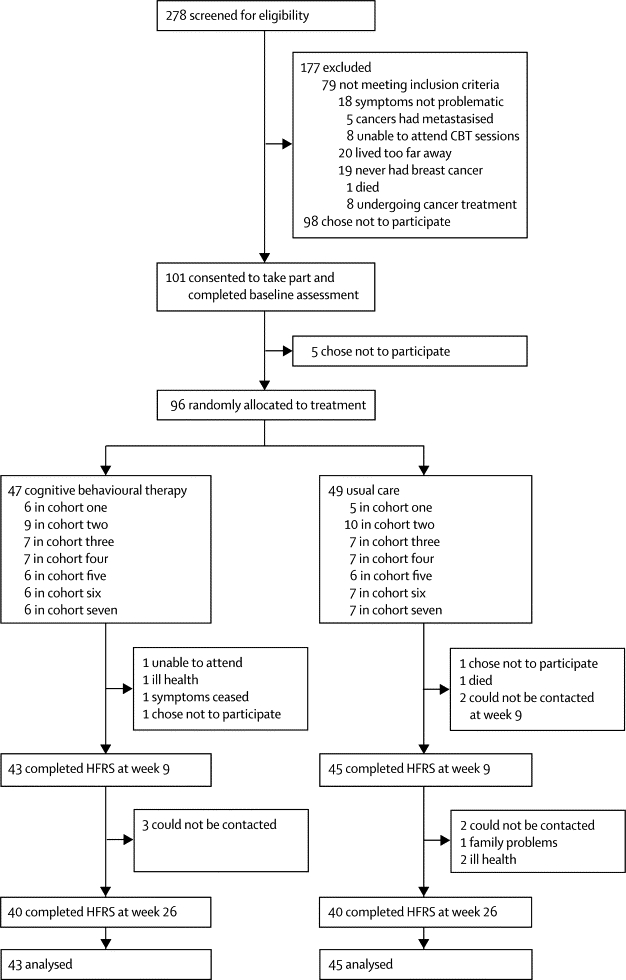
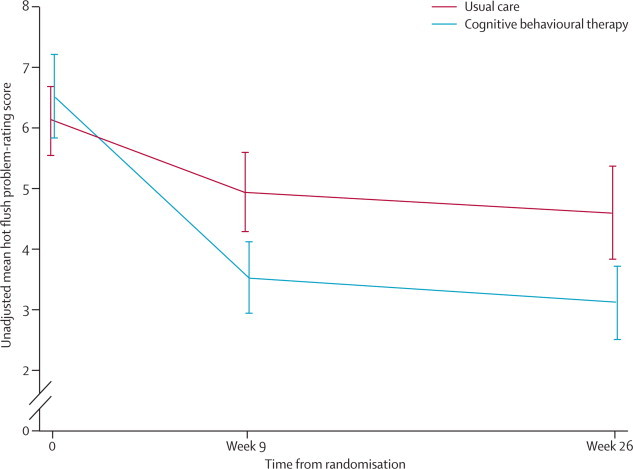
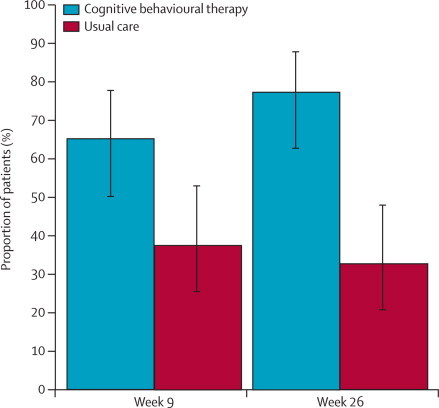
BACKGROUND: Hot flushes and night sweats (HFNS) affect 65-85% of women after breast cancer treatment; they are distressing, causing sleep problems and decreased quality of life. Hormone replacement therapy is often either undesirable or contraindicated. Safe, effective non-hormonal treatments are needed. We investigated whether cognitive behavioural therapy (CBT) can help breast cancer survivors to effectively manage HFNS. METHODS: In this randomised controlled trial, we recruited women from breast clinics in London, UK, who had problematic HFNS (minimum ten problematic episodes a week) after breast-cancer treatment. Participants were randomly allocated to receive either usual care or usual care plus group CBT (1:1). Randomisation was done in blocks of 12-20 participants, stratifying by age (younger than 50 years, 50 years or older), and was done with a computer-generated sequence. The trial statistician and researchers collecting outcome measures were masked to group allocation. Group CBT comprised one 90 min session a week for 6 weeks, and included psycho-education, paced breathing, and cognitive and behavioural strategies to manage HFNS. Assessments were done at baseline, 9 weeks, and 26 weeks after randomisation. The primary outcome was the adjusted mean difference in HFNS problem rating (1-10) between CBT and usual care groups at 9 weeks after randomisation. Analysis of the primary endpoint was done by modified intention to treat. The trial is registered, ISRCTN13771934, and was closed March 15, 2011. FINDINGS: Between May 5, 2009, and Aug 27, 2010, 96 women were randomly allocated to group CBT (n=47) or usual care (n=49). Group CBT significantly reduced HFNS problem rating at 9 weeks after randomisation compared with usual care (mean difference -1·67, 95% CI -2·43 to -0·91; p<0·0001) and improvements were maintained at 26 weeks (mean difference -1·76, -2·54 to -0·99; p<0·0001). We recorded no CBT-related adverse events. INTERPRETATION: Group CBT seems to be a safe and effective treatment for women who have problematic HFNS after breast cancer treatment with additional benefits to mood, sleep, and quality of life. The treatment could be incorporated into breast cancer survivorship programmes and delivered by trained breast cancer nurses. FUNDING: Cancer Research UK.
Overview
The claims and statistics of this paper haven’t been checked yet.
Free: it reads the open-access text and checks the first 5 claims that cite a source we can check. Create a free account to check every claim.
Integrity signals
Registry
Cites
Statistics
Figures
Verification
Claims the paper makes
The claims and statistics of this paper haven’t been checked yet.
Free: it reads the open-access text and checks the first 5 claims that cite a source we can check. Create a free account to check every claim.
Claims other papers make about this one
Each is checked against this paper’s own text: does it say what the citing paper says it does?
The source backs part of the claim, not all of it — or backs it for a different population, condition or comparison.
In the citing paper
“For menopausal symptoms in general, mind-body interventions, physical training and cognitive behavioural therapy should be recommended as effective non-pharmacological treatment options.113, 114, 115, 116, 117”
From 5th ESO-ESMO international consensus guidelines for advanced breast cancer (ABC 5) (2020) · cites this paper as [114]
Experimental — accuracy not yet measuredThe cited source says what the claim attributes to it.
In the citing paper
“Three studies (Ayers et al., 2012; Kalmbach et al., 2019; Mann et al., 2012) found evidence for the effectiveness of CBT on the outcomes of the 36 Item Short Form Health Survey (SF-36, Ware & Sherbourne, 1992).”
From The effectiveness of psychosocial interventions on non-physiological symptoms of menopause: A systematic review and meta-analysis (2024) · cites this paper as Mann et al., 2012
Self-check
Percentages, sums and reported differences re-computed from the paper’s own numbers.
The self-check needs the paper’s full text.
Citations
Cites
SF-36 health survey: Manual and interpretation guide
Ware, J. (2003) · Medical Entomology and Zoology · Cited by 11,424
The ATAC (Arimidex, T. A. O. I. C. T. G. (2003) · Cancer · doi:10.1002/cncr.11745 · Cited by 861
Loprinzi, C. L., Kugler, J. W., Sloan, J. A., Mailliard, J. A., LaVasseur, B. I., Barton, D. L., Novotny, P. J., Dakhil, S. R., Rodger, K., Rummans, T. A., et al. (2000) · The Lancet · doi:10.1016/s0140-6736(00)03403-6 · Cited by 737
Pradhan, A. D., Manson, J. E., Rossouw, J. E., Siscovick, D. S., Mouton, C. P., Rifai, N., Wallace, R. B., Jackson, R. D., Pettinger, M. B., & Ridker, P. M. (2002) · JAMA · doi:10.1001/jama.288.8.980 · Cited by 680
Wampold, B. E., & Brown, G. S. (. (2005) · Journal of Consulting and Clinical Psychology · doi:10.1037/0022-006x.73.5.914 · Cited by 476
Adherence to tamoxifen over the five-year course
Lash, T. L., Fox, M. P., Westrup, J. L., Fink, A. K., & Silliman, R. A. (2006) · Breast Cancer Research and Treatment · doi:10.1007/s10549-006-9193-0 · Cited by 320
Cella, D., & Fallowfield, L. J. (2008) · Breast Cancer Research and Treatment · doi:10.1007/s10549-007-9548-1 · Cited by 286
Gupta, P., Sturdee, D. W., Palin, S. L., Majumder, K., Fear, R., Marshall, T., & Paterson, I. (2006) · Climacteric · doi:10.1080/13697130500487224 · Cited by 217
Ayers, B., Smith, M., Hellier, J., Mann, E., & Hunter, M. S. (2012) · Menopause · doi:10.1097/gme.0b013e31823fe835 · Cited by 207
Self-citation
Cited by
Items 101–200 of 335
A comparison of three outcome measures of the impact of vasomotor symptoms on women’s lives
Hunter, M. S., Nuttall, J., & Fenlon, D. (2019) · Climacteric · doi:10.1080/13697137.2019.1580258 · Cited by 24
“Consequently, these variables have been considered as appropriate outcomes in clinical trials of treatments of VMS.(8-18) These patient reported outcomes are particularly relevant to evaluation of behavioural treatments which tend to target coping strategies, cognitive appraisal and functioning(9,12-18) For example, f…”
Self-citationManagement of hot flushes in UK breast cancer patients: clinician and patient perspectives
Fenlon, D., Morgan, A. A., Khambaita, P., Mistry, P., Dunn, J., Ah-See, M.-L. W., Pennery, E., Hunter, M. S., & Party, O. B. O. T. N. C. B. C. S. W. (2017) · Journal of Psychosomatic Obstetrics & Gynecology · doi:10.1080/0167482x.2017.1350163 · Cited by 26
“was rarely offered, although there is good evidence that this is helpful for this group of women [21,22] and our patient respondents found it helpful.”
BackgroundSelf-citationMarsden, J., Marsh, M., Rigg, A. S., & on behalf of The British Menopause Society (2019) · Post Reproductive Health · doi:10.1177/2053369118824920 · Cited by 23
Hutton, B., Hersi, M., Cheng, W., Pratt, M., Barbeau, P., Mazzarello, S., Ahmadzai, N., Skidmore, B., Morgan, S. C., Bordeleau, L. J., et al. (2020) · Clinical journal of oncology nursing · doi:10.1188/20.onf.e86-e106 · Cited by 23
Consenso Mexicano sobre diagnóstico y tratamiento del cáncer mamario
Poitevin‐Chacón, A., Maffuz‐Aziz, A., Erazo-Valle-Solís, A. A., Flores-Balcázar, C. H., Salas-González, E., Cárdenas-Sánchez, J., Bargalló-Rocha, J. E., Torrecillas-Torres, L., Cervantes-Sánchez, M. G., Bautista‐Piña, V., et al. (2026) · Gaceta Mexicana de Oncología · doi:10.24875/j.gamo.m18000133 · Cited by 22
Atema, V., van Leeuwen, M., Oldenburg, H. S. A., Retèl, V. P., van Beurden, M., Hunter, M. S., & Aaronson, N. K. (2016) · BMC Cancer · doi:10.1186/s12885-016-2946-1 · Cited by 22
“gram, is based on the work of Hunter and colleagues [40, 42, 49, 71] and has been tailored for use by breast cancer survivors [43, 44].”
BackgroundMethodSelf-citationBuffart, L. M., Schreurs, M. A. C., Abrahams, H. J. G., Kalter, J., Aaronson, N. K., Jacobsen, P. B., Newton, R. U., Courneya, K. S., Armes, J., Arving, C., et al. (2020) · Clinical Psychology Review · doi:10.1016/j.cpr.2020.101882 · Cited by 24
“depression and anxiety (Armes, Chalder, Addington-Hall, Richardson, & Hotopf, 2007; Arving et al., 2007; Braamse et al., 2016; Duijts, Oldenburg, van Beurden, & Aaronson, 2012; Ferguson et al., 2012; Gellaitry, Peters, Bloomfield, & Horne, 2010; Gielissen, Verhagen, Witjes, & Bleijenberg, 2006; Goedendorp et al., 2010…”
MethodSelf-citationStefanopoulou, E., Shah, D., Shah, R., Gupta, P., Sturdee, D. W., Hunter, M. S., & Writing Research Group of the Council of Affiliated Menopause Societies for the International Menopause Society Study (IMS-CAT) (2013) · Climacteric · doi:10.3109/13697137.2013.852169 · Cited by 22
Self-citationVerbeek, J. G. E., Atema, V., Mewes, J. C., van Leeuwen, M., Oldenburg, H. S. A., van Beurden, M., Hunter, M. S., van Harten, W. H., Aaronson, N. K., & Retèl, V. P. (2019) · Breast Cancer Research and Treatment · doi:10.1007/s10549-019-05410-w · Cited by 22
Self-citationNardin, S., Ruffilli, B., Landolfo, T. L., Isingrini, G., Taglialatela, I., Delbarba, A., D’Avanzo, F., Rossi, V., Celentano, E., Conte, B., et al. (2025) · Cancers · doi:10.3390/cancers17172726 · Cited by 21
“In the MENOS 1 trial, CBT significantly reduced VMS-related bother compared to usual care, with improvements sustained for 26 weeks [42].”
Self-regulation model applied to menopause: a mixed-methods study
Pimenta, F., Ramos, M. M., Silva, C. C., Costa, P. A., Marôco, J. P., & Leal, I. M. P. (2019) · Climacteric · doi:10.1080/13697137.2019.1640196 · Cited by 21
Efficacy of Cognitive Behavioral Treatment for Insomnia: A Randomized Controlled Trial
Ham, O. K., Lee, B. G., Choi, E., & Choi, S. J. (2020) · Western Journal of Nursing Research · doi:10.1177/0193945920914081 · Cited by 19
“Cognitive behavioral therapy for insomnia (CBT-I) is effective in decreasing the menopausal symptoms and sleep disturbances among women, as well as improving their quality of life (Mann et al., 2012; Yamadera et al., 2013).”
BackgroundResultInfluentialDiem, S. J., LaCroix, A. Z., Reed, S. D., Larson, J. C., Newton, K. M., Ensrud, K. E., Woods, N. F., & Guthrie, K. A. (2020) · Menopause The Journal of The North American Menopause Society · doi:10.1097/gme.0000000000001597 · Cited by 21
Woods, N. F., Coslov, N., & Richardson, M. K. (2022) · Menopause The Journal of The North American Menopause Society · doi:10.1097/gme.0000000000002090 · Cited by 21
Abrahams, H. J. G., Knoop, H., Schreurs, M. A. C., Aaronson, N. K., Jacobsen, P. B., Newton, R. U., Courneya, K. S., Aitken, J. F., Arving, C., Brandberg, Y., et al. (2020) · Psycho-Oncology · doi:10.1002/pon.5522 · Cited by 21
Self-citationGhahari, S., Fallah, R., Bolhari, J., Mehdi, M. S., Razaghi, Z., & Esmaeil, A. M. (2013) · Cited by 20
Hunter, M. S. (2001) · Cambridge University Press eBooks · doi:10.1017/cbo9780511543579.200 · Cited by 20
Self-citationAtema, V., van Leeuwen, M., Kieffer, J. M., Oldenburg, H. S. A., van Beurden, M., Hunter, M. S., & Aaronson, N. K. (2019) · Maturitas · doi:10.1016/j.maturitas.2019.09.007 · Cited by 19
“Four randomized controlled trials (RCTs) have provided evidence of the efficacy of this program, delivered in groups or in selfhelp or guided self-help format, in reducing the perceived impact of HF/NS in healthy women (MENOS2 trial, MENOS@work trial) [8,9] and in BC survivors (MENOS1 trial and EVA trial) [10,11].”
BackgroundSelf-citationSavard, M., & Savard, J. (2017) · Current Sleep Medicine Reports · doi:10.1007/s40675-017-0067-2 · Cited by 19
Park, J., Jung, Y. S., Kim, J. Y., & Bae, S. H. (2021) · Nursing Open · doi:10.1002/nop2.1113 · Cited by 18
Zhuang, S., An, S., & Zhao, Y. (2013) · Journal of Clinical Nursing · doi:10.1111/jocn.12287 · Cited by 18
Jacobs, J. M., Walsh, E. A., Rapoport, C. S., Antoni, M. H., Park, E. R., Post, K. E., Comander, A. H., Peppercorn, J. M., Safren, S. A., Temel, J. S., et al. (2020) · Journal of Clinical Psychology in Medical Settings · doi:10.1007/s10880-020-09750-4 · Cited by 18
Long-Term Follow-Up Care After Treatment for Primary Breast Cancer: Strategies and Considerations
Franzoi, M. A., Janni, W. J., Erdmann-Sager, J., Kline‐Quiroz, C. M., Schäffler, H., Pfister, K., Fazzalari, A., & Vaz-Luís, I. (2025) · American Society of Clinical Oncology Educational Book · doi:10.1200/edbk-25-473472 · Cited by 18
Minari, J. B., Okelola, C. A., & Ugochukwu, N. C. (2017) · Journal of Traditional and Complementary Medicine · doi:10.1016/j.jtcme.2017.04.003 · Cited by 17
Using menopausal hormone therapy after a cancer diagnosis in Ireland
Donohoe, F., O’Meara, Y., Roberts, A., Comerford, L., Kelly, C. M., Walshe, J. M., Lundy, D., Hickey, M., & Brennan, D. J. (2022) · Irish Journal of Medical Science (1971 -) · doi:10.1007/s11845-022-02947-6 · Cited by 16
Jing, F., Zhu, Z., Qiu, J., Tang, L., Xu, L., Xing, W., & Hu, Y. (2023) · Seminars in Oncology Nursing · doi:10.1016/j.soncn.2023.151443 · Cited by 16
Clinical guidelines for managing menopausal symptoms in women with (a history of) breast cancer
Servayge, J., Verduyn, A. C., Page, A., Lagaert, L., & Tjalma, W. A. A. (2023) · Facts Views and Vision in ObGyn · doi:10.52054/fvvo.15.4.102 · Cited by 18
“…are mixed results regarding the effects of stress management, mindfulness, relaxation, and breathing techniques (Hartman et al., 2018; Lahart et al., 2018; Goldstein et al., 2017; Haller et al., 2017; Koch et al., 2017; Mann et al., 2012; Stefanopoulou and Grunfeld, 2017; van Driel et al., 2019).”
BackgroundEffects of non-pharmacological supportive care for hot flushes in breast cancer: a meta-analysis
Tao, W.-W., Tao, X.-M., & Song, C. (2017) · Supportive Care in Cancer · doi:10.1007/s00520-017-3691-y · Cited by 17
Kaplan, M., Ginex, P., Michaud, L. B., Fernández‐Ortega, P., Grimmer, D., Leibelt, J., Mahon, S. M., Rapoport, B. L., Robinson, V., Maloney, C., et al. (2020) · Oncology nursing forum · doi:10.1188/20.onf.374-399 · Cited by 16
dos Santos, J. C., Bever, S. R., Pereira-da-Silva, G., & Pyter, L. M. (2019) · Scientific Reports · doi:10.1038/s41598-018-37334-8 · Cited by 16
Hot Flash Management: Update of the Evidence for Patients With Cancer
Kaplan, M., & Mahon, S. M. (2014) · Clinical journal of oncology nursing · doi:10.1188/14.cjon.s3.59-67 · Cited by 16
“In a study by Mann et al. (2012), 96 symptomatic women seen in a breast cancer clinic were enrolled in a randomized trial in which individualized “usual care” by breast care nurses was compared to usual care plus group cognitive-behavioral therapy (CBT) intervention.”
BackgroundConklin, D. Y., Goto, T., Ganocy, S. J., Loue, S., LaGrotta, C., Delozier, S., Brownrigg, B., Conroy, C. M., D’Arcangelo, N., Janes, J. L., et al. (2019) · Journal of Psychosomatic Research · doi:10.1016/j.jpsychores.2019.109882 · Cited by 16
Objective and subjective vasomotor symptom outcomes in the CBT-Meno randomized controlled trial
Green, S. M., Donegan, E., McCabe, R. E., Fedorkow, D. M., Streiner, D. L., & Frey, B. N. (2020) · Climacteric · doi:10.1080/13697137.2020.1737929 · Cited by 16
Acute Cancer Cognitive Therapy
Levin, T. T., & Applebaum, A. J. (2014) · Cognitive and Behavioral Practice · doi:10.1016/j.cbpra.2014.03.003 · Cited by 14
“…(Carter, Mikan, & Simpson, 2009), hot flashes and night sweats among men undergoing prostate cancer treatment (Yousaf, Stefanopoulou, Grunfeld, & Hunter, 2012), and breast cancer survivors (Mann et al., 2012), as well as sexual dysfunction among gynecologic cancer survivors (Brotto et al., 2012).”
BackgroundChang, Y., Hu, W., & Chang, Y. (2020) · Cancer Nursing · doi:10.1097/ncc.0000000000000827 · Cited by 15
“Compared with the control group, the CBT groups exhibited a significant decrease in HF and NS levels and improvements with respect to urinary symptoms, physical functioning, endocrine symptoms, sexual activity, memory, sleep, and some aspects of quality of life.(12,13) Overall, 3 of the considered studies involved a s…”
BackgroundInfluentialChandwani, K. D., Heckler, C. E., Mohile, S. G., Mustian, K. M., Janelsins, M. C., Peppone, L. J., Bushunow, P. W., Flynn, P. J., & Morrow, G. R. (2014) · EXPLORE · doi:10.1016/j.explore.2014.04.003 · Cited by 14
Grunfeld, E. A., Hunter, M. S., & Yousaf, O. (2016) · Psychology Health & Medicine · doi:10.1080/13548506.2016.1195504 · Cited by 14
“Research exploring the alleviation of hot flushes among men is sparse, however cognitive behavioural interventions for women with hot flushes following breast cancer treatments have been found to be effective (Duijts et al., 2012; Mann et al., 2012).”
BackgroundSelf-citationLiu, J., Nie, G., Yang, L., Wen, Z., Lu, L., Xie, L., Cao, D., Lai, Y., & Yang, H. (2020) · Evidence-based Complementary and Alternative Medicine · doi:10.1155/2020/4243175 · Cited by 14
“Hence, nonhormonal medicinal treatments (e.g., antidepressants) [9, 10], physical/behavioral treatments (e.g., yoga/exercise, cognitive behavioral therapy) [11, 12], acupuncture [13, 14], and natural health products (e.g., black cohosh, soy) [15, 16] have been used for hot flashes.”
von Blanckenburg, P., Schuricht, F., Heisig, S. R., Mora, M. C. S., Rehahn-Sommer, S., Albert, U., Rief, W., & Nestoriuc, Y. (2015) · Verhaltenstherapie · doi:10.1159/000377711 · Cited by 14
“Bisherige kognitiv-behaviorale Ansätze zur Verringerung und Bewältigung von Nebenwirkungen im Rahmen einer Brustkrebsbehandlung zielen auf Nebenwirkungen ab, die bereits aufgetreten sind [Duijts et al., 2012; Mann et al., 2012].”
BackgroundHunter, M. S., Hardy, C., Norton, S., & Griffiths, A. (2016) · Maturitas · doi:10.1016/j.maturitas.2016.07.020 · Cited by 14
Self-citationStefanopoulou, E., & Hunter, M. S. (2013) · Menopause · doi:10.1097/gme.0b013e3182894f6d · Cited by 14
“Second, to explore pattern recognition as an ambulatory outcome measure, we analyzed MENOS1 and MENOS2 trial data.(22,24) Outcome data are separately presented for each trial because the two samples performed differently on physiologically measured response to treatment (see BResults[).”
MethodSelf-citationMenopause and suicide: A systematic review
Hendriks, O., McIntyre, J. C., Rose, A. K., Sambrook, L., Reisel, D., Crockett, C., Newson, L. R., & Saini, P. (2025) · Women s Health · doi:10.1177/17455057251360517 · Cited by 13
Almeida, O. P., Marsh, K., Flicker, L. A., Hickey, M., Ford, A. H., & Sim, M. (2014) · Trials · doi:10.1186/1745-6215-15-312 · Cited by 13
“Importantly, typical symptoms associated with the MT (for example, hot flushes and night sweats) are amenable to change by means of biological or behavioural interventions [12,13].”
BackgroundUse of Complementary Therapies for Side Effect Management in Breast Cancer: Evidence and Rationale
Roe, K., Visovatti, M. A., Brooks, T. M., Baydoun, M., Clark, P., & Barton, D. L. (2016) · Breast Cancer Management · doi:10.2217/bmt-2016-0013 · Cited by 13
Pregnancy after cancer: FIGO Best practice advice
Maxwell, C. V., Adam, S., Bergman, L., Nanda, S., Guinto, V. T., Popovits‐Hadari, N., Al‐Bakri, M., Nwokoro, I., McAuliffe, F. M., Peters, I., et al. (2025) · International Journal of Gynecology & Obstetrics · doi:10.1002/ijgo.70139 · Cited by 12
Marsden, J. (2022) · Post Reproductive Health · doi:10.1177/20533691221122358 · Cited by 12
“However, musculoskeletal symptoms were not specifically assessed and the proportion of women taking aromatase inhibitors is unknown.(66)”
BackgroundEnhancing memory self-efficacy during menopause through a group memory strategies program
Unkenstein, A. E., Bei, B., & Bryant, C. (2016) · Menopause The Journal of The North American Menopause Society · doi:10.1097/gme.0000000000000803 · Cited by 13
Rojas, K. E., Spring, L. M., O’Riordan, L., & Weiss, A. C. (2023) · Annals of Surgical Oncology · doi:10.1245/s10434-023-13907-4 · Cited by 12
The experience of providing support about menopausal symptoms to women with breast cancer
Cruickshank, S., & Hume, A. (2013) · European Journal of Oncology Nursing · doi:10.1016/j.ejon.2013.08.001 · Cited by 17
“There is some promising evidence building to support non-pharmacological approaches including homeopathic treatments, cognitive behavioural therapy and relaxation (NICE, 2009;Fenlon et al., 2009; Hickey et al., 2008; Hunter et al., 2009; Mann et al. 2012) The exploratory study by Hunter et al.”
BackgroundMethodYousaf, O., Stefanopoulou, E., Grunfeld, E. A., & Hunter, M. S. (2012) · BMC Cancer · doi:10.1186/1471-2407-12-230 · Cited by 12
Self-citationBabakhanloo, A., Jalilvand, M., & Shoghi, B. (2017) · International Journal of Medical Toxicology and Forensic Medicine · doi:10.22037/ijmtfm.v7i1(winter).13178 · Cited by 12
Insomnia in Cancer Survivors: A Precision Behavioral Sleep Medicine Approach
Clara, M. I., Canavarro, M. C., Miller-Mendes, M., & Gomes, A. A. (2023) · European Psychologist · doi:10.1027/1016-9040/a000506 · Cited by 11
Pezzolato, M., Marzorati, C., Lanzoni, L., Monzani, D., Masiero, M. A., Pietrobon, R. S., & Pravettoni, G. (2023) · Psycho-Oncology · doi:10.1002/pon.6203 · Cited by 11
Vasomotor symptoms in prostate cancer survivors undergoing androgen deprivation therapy
Hunter, M. S., & Stefanopoulou, E. (2015) · Climacteric · doi:10.3109/13697137.2015.1125460 · Cited by 11
Self-citationFenlon, D., Nuttall, J., May, C. R., Raftery, J. P., Fields, J., Kirkpatrick, E. V., Abab, J., Ellis, M., Rose, T., Khambhaita, P., et al. (2018) · BMC Women s Health · doi:10.1186/s12905-018-0550-z · Cited by 11
“8, [26] in mean HFNS problem rating for the comparison of CBT to TAU, 90% power would require 64 participants in total (32 per randomised arm), assuming 2-sided significance level of 0.”
BackgroundMethodSelf-citationGuidelines for the Diagnosis and Treatment of Advanced Breast Cancer in China (2024 Edition)
Breast Cancer Expert Committee of the National Quality Control Center for Cancer, Breast Cancer Expert Committee of the China Anti-Cancer Association, & Cancer Drug Clinical Research Committee of the China Anti-Cancer Association (2025) · Cancer Innovation · doi:10.1002/cai2.70032 · Cited by 11
Rukure, H., & Husted, M. (2025) · BMC Women s Health · doi:10.1186/s12905-025-04142-y · Cited by 10
Does a multidisciplinary menopausal symptoms after cancer clinic reduce symptoms?
Hollingworth, J., Walsh, L., Tran, S., Ramage, L., Patel-Brown, S., Ambekar, M., Weeks, J. C., Williams, L., & Cohen, P. A. (2021) · Supportive Care in Cancer · doi:10.1007/s00520-021-06637-4 · Cited by 10
Conklin, D. Y., Carpenter, J. S., Whitney, M. S., Delozier, S., Ogede, D., Bazella, C., McVoy, M. K., & Sajatovic, M. (2021) · Women s Health Reports · doi:10.1089/whr.2021.0025 · Cited by 10
“Learning that other women experienced similar menopause symptoms, mood symptoms, and physical and cognitive changes helped to normalize women’s experiences, confirming previous studies.(6,24) However, the request for ongoing support, more research studies, and more frequent CBGT intervention sessions was unique to the…”
BackgroundMethodResultCognitive Behavioral Therapy in Cancer Patients
Soylu, C. (2014) · Psikiyatride Guncel Yaklasimlar - Current Approaches in Psychiatry · doi:10.5455/cap.20131231033203 · Cited by 10
Helping Patients to Help Themselves after Breast Cancer Treatment
Fenlon, D., Khambhaita, P., & Hunter, M. S. (2015) · Clinical Oncology · doi:10.1016/j.clon.2015.05.002 · Cited by 10
“CBT normally requires face-to-face input by a trained professional, but can successfully be delivered in groups [47,48], thus making it relatively cost-effective, and there is someevidence that self-help versions have somebenefit [54].”
BackgroundSelf-citationNICE guidelines on the menopause
Hickey, M., & Banks, E. (2016) · BMJ · doi:10.1136/bmj.i191 · Cited by 10
Hunter, M. S., Griffiths, A., Mann, E., Moss-Morris, R. E., Smith, M. J., & Slade, P. (2015) · BMJ · doi:10.1136/bmj.h6434 · Cited by 10
Self-citationScheffrahn, K., Hall, C., Muñiz, V., & Elkins, G. R. (2025) · JMIR Formative Research · doi:10.2196/63948 · Cited by 9
“…turning to nonpharmacological, nonhormonal intervention options, a commonly used intervention is cognitive behavioral therapy, which does decrease the level of distress women feel from hot flashes; however, cognitive behavioral therapy does not reduce the number of hot flashes experienced [18,19].”
Hormone replacement therapy in gynecologic cancer: oncologic safety and alternative therapies
Aznar, A. L., Elyashiv, O., Dababou, S., Palasz, N. A., Cantürk, M. M., Macias, R. M., Pavone, M., Jayraj, A. S., Hsu, H., & Ramirez, P. T. (2025) · International Journal of Gynecological Cancer · doi:10.1016/j.ijgc.2025.102809 · Cited by 9
Ovarian Suppression: Early Menopause, Late Effects
Goldberg, C., Greenberg, M. R., Noveihed, A., Agrawal, L. S., Omene, C. O., Toppmeyer, D., & George, M. A. (2024) · Current Oncology Reports · doi:10.1007/s11912-023-01491-5 · Cited by 9
“• Cognitive behavioral therapy was studied in the MENOS trial, which found that CBT did not decrease the number of hot flashes but they were perceived as less bothersome [31].”
Carmona, N. E., Starick, E., Millett, G. E., Green, S. M., & Carney, C. E. (2024) · Post Reproductive Health · doi:10.1177/20533691241246365 · Cited by 9
“CBT was evaluated in various formats, including groups delivered by psychologists 35,37,39,40 and nurses, 42 and guided and unguided self-help via the internet 41 or a booklet.”
InfluentialHaghighi, F. R., Bokaie, M., Sefidkar, R., & Enjezab, B. (2024) · Supportive Care in Cancer · doi:10.1007/s00520-024-08957-7 · Cited by 9
“We determined that each group would need 39 subjects based on Mann et al.’s study [44] by considering the significance level ( α ) of 0.05, a power (1 − β ) of 0.8, the mean response in the intervention group ( X 1 ) and control group ( X 2 ) as 3.53 and 4.95 and the standard deviation (SD) as 1.98…”
InfluentialGetu, M. A., Chen, C., Wang, P., Yohannes, E., Seife, E., & Panpan, C. (2021) · Integrative Cancer Therapies · doi:10.1177/15347354211032268 · Cited by 9
Donegan, E., Frey, B. N., McCabe, R. E., Streiner, D. L., Fedorkow, D. M., Furtado, M., & Green, S. M. (2022) · Menopause The Journal of The North American Menopause Society · doi:10.1097/gme.0000000000002003 · Cited by 11
Stefanopoulou, E., & Hunter, M. S. (2014) · American Journal of Human Biology · doi:10.1002/ajhb.22530 · Cited by 9
“…(accepting the symptoms rather than overreacting, improving mood, directing attention away from bodily experience, moderating overly negative beliefs, and appraisals of HF/NS) can result in significant reductions in frequency and problem ratings of HF/NS (Ayers et al., 2012; Mann et al., 2012).”
BackgroundSelf-citationUsing machine learning to predict individual patient toxicities from cancer treatments
Cole, K. M., Clemons, M. J., McGee, S. F., Alzahrani, M. J., Larocque, G., MacDonald, F., Liu, M., Pond, G. R., Mosquera, L., Vandermeer, L., et al. (2022) · Supportive Care in Cancer · doi:10.1007/s00520-022-07156-6 · Cited by 9
Rassy, E., Bardet, A., Bougacha, O., Gantzer, L., Lekens, B., Delaloge, S., André, F., Michiels, S., & Pistilli, B. (2022) · JAMA Network Open · doi:10.1001/jamanetworkopen.2022.44849 · Cited by 8
Liu, Y., Jing, L., Liu, Y., Wang, H., Yuan, T., & Yang, J. (2023) · Behavioral Sciences · doi:10.3390/bs13060449 · Cited by 8
“They have also begun to pay attention to postoperative psychotherapy interventions such as cognitive behavioral therapy [16] and musical therapy [17].”
BackgroundCognitive behavioral interventions for the treatment of menopausal symptoms
Hunter, M. S. (2012) · Expert Review of Obstetrics & Gynecology · doi:10.1586/eog.12.29 · Cited by 8
Self-citationPlacebo effect in hot flush research
Mahon, S. M., & Kaplan, M. (2012) · The Lancet Oncology · doi:10.1016/s1470-2045(12)70197-3 · Cited by 8
Li, Y., Chen, Y. Y., Wang, S. X., Dai, Z. Y., Cui, J. S., Xing, Y. F., Wu, Q., & Fang, Q. (2024) · World Journal of Oncology · doi:10.14740/wjon1817 · Cited by 7
Is It Me Or Is It Hot In Here? A Plea For More Research Into Hot Flushes
Morgan, A. A., & Fenlon, D. (2013) · Clinical Oncology · doi:10.1016/j.clon.2013.07.008 · Cited by 8
Bellot, E., Rouse, N., & Hunter, M. S. (2018) · Post Reproductive Health · doi:10.1177/2053369117752087 · Cited by 7
Self-citationWomen with mood disorders and couples conflict: menopause symptom improvement, after group therapy
Conklin, D. Y., & Karakurt, G. (2023) · Climacteric · doi:10.1080/13697137.2023.2223922 · Cited by 7
Management of Potential Long-Term Toxicities in Breast Cancer Patients
O'Sullivan, C. C., & Ruddy, K. J. (2016) · Current Breast Cancer Reports · doi:10.1007/s12609-016-0229-0 · Cited by 7
Antwi, G. O., Lohrmann, D. K., Jayawardene, W. P., Chow, A., Obeng, C. S., & Sayegh, M. A. (2020) · Journal of Cancer Education · doi:10.1007/s13187-020-01837-8 · Cited by 7
Baker, F. C., Joffe, H., & Lee, K. A. (2016) · Elsevier eBooks · doi:10.1016/b978-0-323-24288-2.00159-8 · Cited by 7
Clinical hypnosis and cognitive behavioral therapy for hot flashes: a scoping review.
Muñiz, V., Padilla, V. J., Alldredge, C. T., & Elkins, G. (2025) · Women's Health Reports · doi:10.1089/whr.2024.0144 · Cited by 6
“In a secondary analysis study for potential mediators and moderators of CBT ’ s effect on hot fl ash problem ratings reported in the MENOS1 trial, the intervention was effective in reducing hot fl ash problem ratings regardless of age, BMI, history of breast cancer diagnosis, and type of treatment.”
InfluentialWang, D., Yang, Y., Yang, L., & Yang, H. (2023) · Frontiers in Endocrinology · doi:10.3389/fendo.2023.1287101 · Cited by 6
Ortmann, O., Tempfer, C., Seifert‐Klauss, V., & Hadji, P. (2024) · Springer eBooks · doi:10.1007/978-3-662-65517-7_8 · Cited by 6
Walsh, L. E., Dunderdale, L., Horick, N., Temel, J. S., Greer, J. A., & Jacobs, J. M. (2024) · Psycho-Oncology · doi:10.1002/pon.70049 · Cited by 6
“…cultivate present awareness and acceptance in light of cancer uncertainty; cognitive‐behavioral tools for managing specific AET symptoms such as pain [20], fatigue [21], hot flashes [22], and sleep disturbance; [23] and relaxation training for recognition and management of the stress response [24].”
Meeta, M., Anuradha, M., Ashraf, A., Aggarwal, K., Digumarti, L., & Singh, T. (2026) · Journal of Mid-life Health · doi:10.4103/jmh.jmh_302_25 · Cited by 6
Lei, Y., Ho, S. C., Kwok, C., Cheng, A. C. K., Cheung, K. L., Lee, R., Mo, F. K. F., & Yeo, W. (2021) · Menopause The Journal of The North American Menopause Society · doi:10.1097/gme.0000000000001784 · Cited by 6
Mexican consensus on breast cancer diagnosis and treatment
Cárdenas-Sánchez, J. (2026) · Gaceta Mexicana de Oncología · doi:10.24875/j.gamo.m21000215 · Cited by 6
Sadeghijoola, N., Afshari, P., Jofreh, M. G., Haghighizadeh, M. H., & Abedi, P. (2022) · Postępy Psychiatrii i Neurologii · doi:10.5114/ppn.2022.122499 · Cited by 6
“This approach can be used as an intervention method that can reduce menopausal complications and help patients identify distorted thinking patterns and ineffective behaviors through regular discussions and structured behavioral assignments (Mann et al., 2012) [17].”
BackgroundInfluentialDiggens, J., Bullen, D., Maccora, J., Wiley, J. F., Ellen, S., Goldin, J., Jefford, M., Hickey, M., & Ftanou, M. (2023) · Journal of Cancer Survivorship · doi:10.1007/s11764-023-01457-3 · Cited by 6
Pourshahrokhi, N., Hunter, M. S., Farokhzadian, J., & Ahmadian, L. (2025) · International Journal of Medical Informatics · doi:10.1016/j.ijmedinf.2025.106163 · Cited by 5
Self-citationPogoda, K., Arecco, L., & Lambertini, M. (2026) · The Breast · doi:10.1016/j.breast.2026.104812 · Cited by 5
“Cognitive-behavioral therapy adapted for VMS has demonstrated clinically meaningful reductions in symptom distress and improvements in QoL and may be considered as an adjunctive intervention [40].”
Hot flushes in women with breast cancer: state of the art and future perspectives
Barba, M., Pizzuti, L., Sergi, D., Maugeri-Saccà, M., Vincenzoni, C., Conti, F., Tomao, F., Vizza, E., di Lauro, L., Filippo, F. D., et al. (2014) · Expert Review of Anticancer Therapy · doi:10.1586/14737140.2013.856271 · Cited by 5
Psychological aspects of the menopause
Hunter, M. S. (2015) · Cambridge University Press eBooks · doi:10.1017/cbo9781316091821.013 · Cited by 5
Self-citationManagement of Induced Menopause in Gynaecological Cancers and Their Challenges
Purohit, P., Sassarini, J., & Lumsden, M. A. (2019) · Current Obstetrics and Gynecology Reports · doi:10.1007/s13669-019-0262-x · Cited by 5
Addressing the Needs of Breast Cancer Survivors
Sarfraz, H. R., Zahra, F. T., Joshi, U., & O’Connor, T. L. (2025) · Current Oncology Reports · doi:10.1007/s11912-025-01687-x · Cited by 4
“[ 30].”
Breast cancer survivors’ opinion on personalizing endocrine therapy and developing informative tools
Rassy, E., Benvenuti, C., Akla, S., Meglio, A. D., Martin, É., Havas, J., Rieutord, A., Combarel, D., Fasse, L., Scotté, F., et al. (2024) · npj Breast Cancer · doi:10.1038/s41523-024-00655-1 · Cited by 4
“Non-adherence is commonly multifactorial and primarily affects patients at the extremes of age 6,10 , those with low socioeconomic status 11 – 13 , patients with limited knowledge about the bene fi t of adjuvant ET 7,14 , and intolerable adverse events, mainly menopausal symptoms 15 – 17 .”
BackgroundClinical Hypnosis: A Contemporary, Evidence-Based Perspective
Elkins, G. R., Alldredge, C. T., Hood, A., & Ekanayake, V. (2025) · Journal of Health Service Psychology · doi:10.1007/s42843-024-00122-2 · Cited by 4
“…as CBT has only demonstrated efficacy in treating adjacent psychological issues, while clinical hypnosis has been shown to directly reduce hot flash frequency and severity, even when physiological measures are used (Mann et al., 2012; Ayers et al., 2012; Duijts et al., 2012; Elkins et al., 2013).”
Metadata
- Authors
- Mann, E., Smith, M. J., Hellier, J., Balabanovic, J. A., Hamed, H., Grunfeld, E. A., & Hunter, M. S.
- Affiliations
- King's College London (GB)
- Guy's and St Thomas' NHS Foundation Trust (GB)
- University of Birmingham (GB)
- Corresponding author
- Hunter, Myra S
- ORCID
- Venue
- The Lancet Oncology
- Publisher
- Elsevier BV
- Published
- 2012-03
- Volume
- 13
- Issue
- 3
- Pages
- 309-318
- ISSN
- 1470-2045 (ISSN-L)
- PMC
- PMC3314999
- OpenAlex
- W2122368260
- Semantic Scholar
- a302805f51bc3382e9ea9526fdce6b1d0381431d
- Cited by
- 307
- References
- 35
- Citations by year
- 2026: 19 · 2025: 27 · 2024: 15 · 2023: 14 · 2022: 13 · 2021: 45 · 2020: 30 · 2019: 16 · 2018: 19 · 2017: 16 · 2016: 21 · 2015: 15 · 2014: 19 · 2013: 21 · 2012: 16
- FWCI
- 11.23
- Type
- journal article
- Language
- en
- Open access
- hybrid
- doi.org
- Licence
- cc-by
- www.elsevier.com/tdm/userlicense/1.0/ (tdm)
- www.elsevier.com/legal/tdmrep-license (tdm)
- creativecommons.org/licenses/by/4.0/ (vor, 649 d)
- Locations
- The Lancet Oncology (publishedVersion, cc-by)
- PubMed Central (publishedVersion, cc-by)
- PubMed (publishedVersion)
- BIROn (Birkbeck, University of London) (acceptedVersion)
- Research Portal (King's College London) (submittedVersion, other-oa)
- University of Birmingham Research Portal (University of Birmingham) (submittedVersion)
- Funders
- Cancer Research UK (grant C8303/A6130)
- Topics
- Health Sciences › Medicine › Oncology › Cancer survivorship and care
- Health Sciences › Medicine › Endocrinology, Diabetes and Metabolism › Menopause: Health Impacts and Treatments
- Health Sciences › Medicine › Psychiatry and Mental health › Sexual function and dysfunction studies
- Keywords
- cognitive behavioral therapy, hot flashes, night sweats, menopausal symptoms, breast cancer survivors, non-hormonal therapy, group therapy, mood, quality of life, sleep disorders, psychoeducation, paced breathing, long-term follow-up
- MeSH terms
- Affect, Antineoplastic Agents, Breast Neoplasms, Female, Humans, London, Mastectomy, Menopause, Middle Aged, Quality of Life, Surveys and Questionnaires, Sleep, Sweating, Time Factors, Cognitive Behavioral Therapy, Linear Models, Treatment Outcome, Chemotherapy, Adjuvant, Radiotherapy, Adjuvant, Hot Flashes
About these checks
Registry, retraction, Cites and statistics results are computed, not judged, with one exception: a printed reference that no index lists is read once by a model before it counts as a citation error. Claims are extracted by a model and kept only when their quote appears verbatim in the text; each cited source is then checked, with a model’s help, for whether it says what the claim relies on. Those verdicts can be wrong — read the claim’s quote and the cited source before relying on one.
Statistics and arithmetic are recomputed, not judged.
Confidence bands are shown only for fields calibrated on our annotated test set. None is calibrated yet, so no band is shown.
What counts as a claim ›How we measure confidence ›How we check this ›
Are you an author, or do you see a problem with this page? Request a review
Data sources
Bibliographic data: Semantic Scholar, OpenAlex, Crossref.
Contains information from the Semantic Scholar Academic Graph Datasets, made available under the ODC Attribution License (ODC-BY 1.0).
Semantic Scholar’s data is described in: Kinney, R., et al. (2023). The Semantic Scholar Open Data Platform. arXiv:2301.10140.
