

Tumour genomic and microenvironmental heterogeneity for integrated prediction of 5-year biochemical recurrence of prostate cancer: a retrospective cohort study
Open accessThe DOI matches its Crossref record; 36 of the 36 references it cites were found in a registry or an index.
Abstract
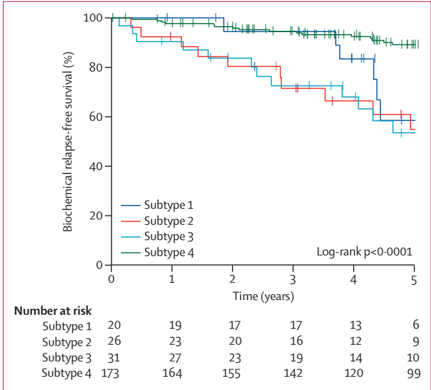
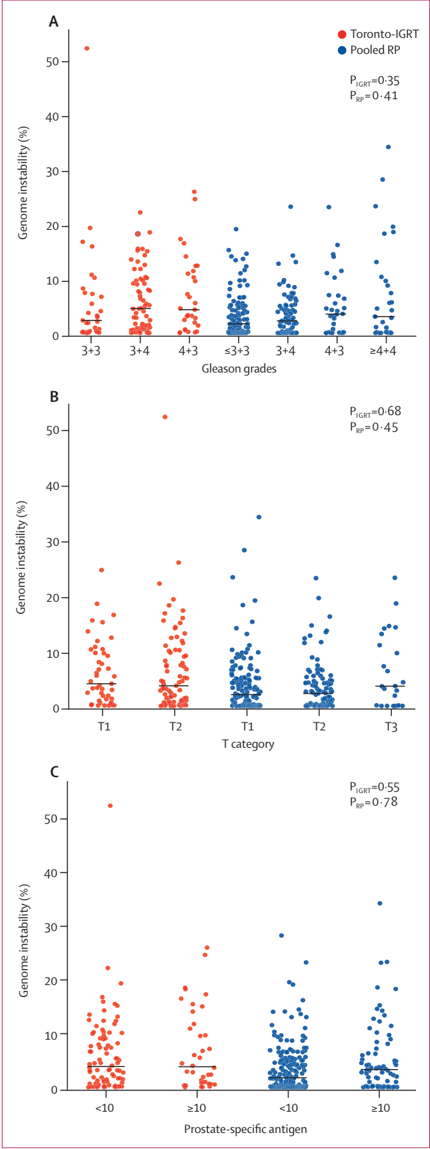
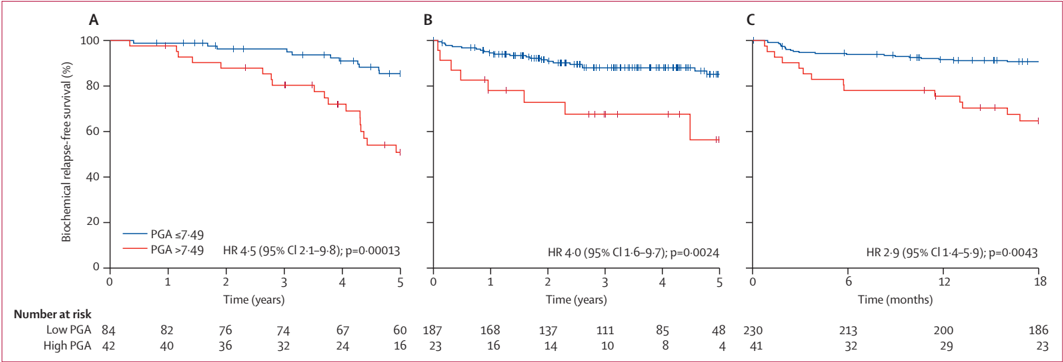
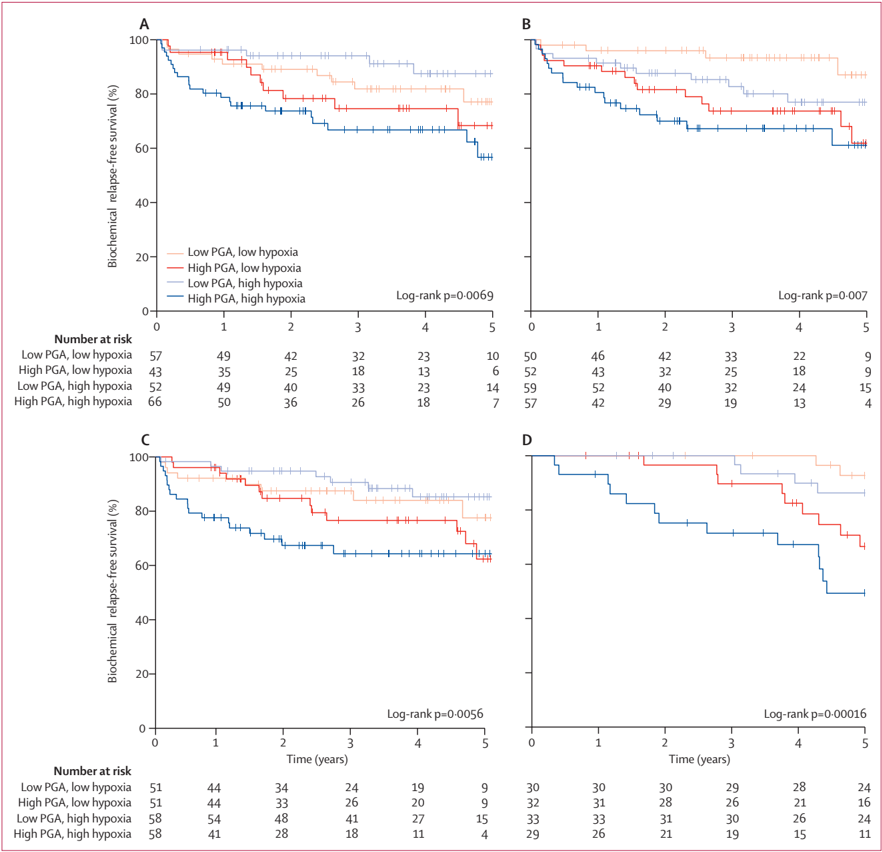
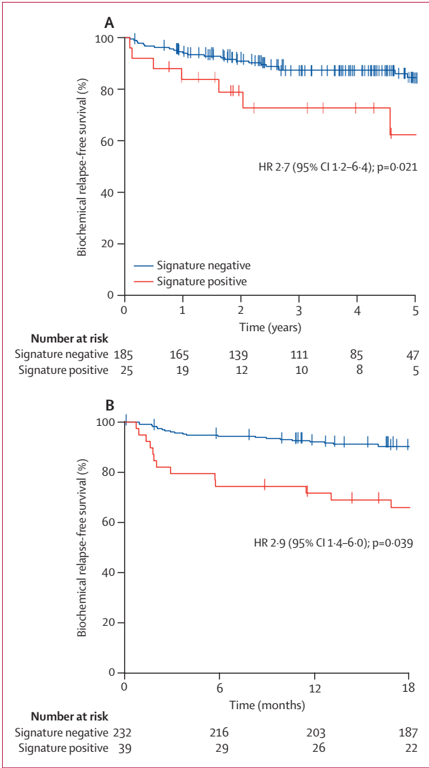
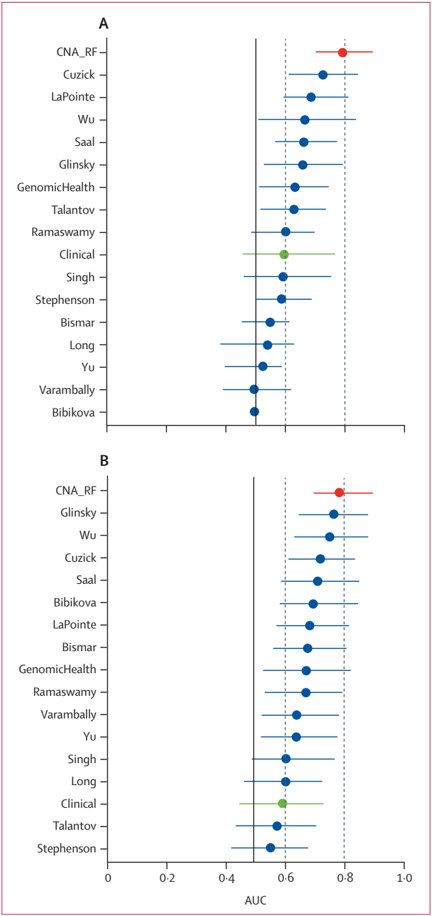
BACKGROUND: Clinical prognostic groupings for localised prostate cancers are imprecise, with 30-50% of patients recurring after image-guided radiotherapy or radical prostatectomy. We aimed to test combined genomic and microenvironmental indices in prostate cancer to improve risk stratification and complement clinical prognostic factors. METHODS: We used DNA-based indices alone or in combination with intra-prostatic hypoxia measurements to develop four prognostic indices in 126 low-risk to intermediate-risk patients (Toronto cohort) who will receive image-guided radiotherapy. We validated these indices in two independent cohorts of 154 (Memorial Sloan Kettering Cancer Center cohort [MSKCC] cohort) and 117 (Cambridge cohort) radical prostatectomy specimens from low-risk to high-risk patients. We applied unsupervised and supervised machine learning techniques to the copy-number profiles of 126 pre-image-guided radiotherapy diagnostic biopsies to develop prognostic signatures. Our primary endpoint was the development of a set of prognostic measures capable of stratifying patients for risk of biochemical relapse 5 years after primary treatment. FINDINGS: Biochemical relapse was associated with indices of tumour hypoxia, genomic instability, and genomic subtypes based on multivariate analyses. We identified four genomic subtypes for prostate cancer, which had different 5-year biochemical relapse-free survival. Genomic instability is prognostic for relapse in both image-guided radiotherapy (multivariate analysis hazard ratio [HR] 4·5 [95% CI 2·1-9·8]; p=0·00013; area under the receiver operator curve [AUC] 0·70 [95% CI 0·65-0·76]) and radical prostatectomy (4·0 [1·6-9·7]; p=0·0024; AUC 0·57 [0·52-0·61]) patients with prostate cancer, and its effect is magnified by intratumoral hypoxia (3·8 [1·2-12]; p=0·019; AUC 0·67 [0·61-0·73]). A novel 100-loci DNA signature accurately classified treatment outcome in the MSKCC low-risk to intermediate-risk cohort (multivariate analysis HR 6·1 [95% CI 2·0-19]; p=0·0015; AUC 0·74 [95% CI 0·65-0·83]). In the independent MSKCC and Cambridge cohorts, this signature identified low-risk to high-risk patients who were most likely to fail treatment within 18 months (combined cohorts multivariate analysis HR 2·9 [95% CI 1·4-6·0]; p=0·0039; AUC 0·68 [95% CI 0·63-0·73]), and was better at predicting biochemical relapse than 23 previously published RNA signatures. INTERPRETATION: This is the first study of cancer outcome to integrate DNA-based and microenvironment-based failure indices to predict patient outcome. Patients exhibiting these aggressive features after biopsy should be entered into treatment intensification trials. FUNDING: Movember Foundation, Prostate Cancer Canada, Ontario Institute for Cancer Research, Canadian Institute for Health Research, NIHR Cambridge Biomedical Research Centre, The University of Cambridge, Cancer Research UK, Cambridge Cancer Charity, Prostate Cancer UK, Hutchison Whampoa Limited, Terry Fox Research Institute, Princess Margaret Cancer Centre Foundation, PMH-Radiation Medicine Program Academic Enrichment Fund, Motorcycle Ride for Dad (Durham), Canadian Cancer Society.
Overview
The claims and statistics of this paper haven’t been checked yet.
Free: it reads the open-access text and checks the first 5 claims that cite a source we can check. Create a free account to check every claim.
Integrity signals
Registry
Cites
Statistics
Figures
Verification
Claims the paper makes
The claims and statistics of this paper haven’t been checked yet.
Free: it reads the open-access text and checks the first 5 claims that cite a source we can check. Create a free account to check every claim.
Claims other papers make about this one
Each is checked against this paper’s own text: does it say what the citing paper says it does?
The source backs part of the claim, not all of it — or backs it for a different population, condition or comparison.
In the citing paper
“Specifically, the tumor microenvironment has also been shown to induce tumor heterogeneity and promote the growth of a tumor itself [8,9].”
From Microfluidic modelling of the tumor microenvironment for anti-cancer drug development (2019) · cites this paper as [9]
Experimental — accuracy not yet measured
Self-check
Percentages, sums and reported differences re-computed from the paper’s own numbers.
The self-check needs the paper’s full text.
Citations
Cites
Breiman, L. (2001) · Machine Learning · doi:10.1023/a:1010933404324 · Cited by 133,538
Estimates of worldwide burden of cancer in 2008: GLOBOCAN 2008
Ferlay, J., Shin, H., Bray, F., Forman, D., Mathers, C., & Parkin, D. M. (2010) · International Journal of Cancer · doi:10.1002/ijc.25516 · Cited by 21,293
Integrative Genomic Profiling of Human Prostate Cancer
Taylor, B. S., Schultz, N., Hieronymus, H., Gopalan, A., Xiao, Y., Carver, B. S., Arora, V. K., Kaushik, P., Cerami, E., Reva, B., et al. (2010) · Cancer Cell · doi:10.1016/j.ccr.2010.05.026 · Cited by 3,701
Roach, M., Hanks, G., Thames, H., Schellhammer, P., Shipley, W. U., Sokol, G. H., & Sandler, H. (2006) · International Journal of Radiation Oncology*Biology*Physics · doi:10.1016/j.ijrobp.2006.04.029 · Cited by 2,749
Freedland, S. J., Humphreys, E. B., Mangold, L. A., Eisenberger, M., Dorey, F. J., Walsh, P. C., & Partin, A. W. (2005) · JAMA · doi:10.1001/jama.294.4.433 · Cited by 1,358
Punctuated Evolution of Prostate Cancer Genomes
Baca, S. C., Prandi, D., Lawrence, M. S., Mosquera, J. M., Romanel, A., Drier, Y., Park, K., Kitabayashi, N., MacDonald, T. Y., Ghandi, M., et al. (2013) · Cell · doi:10.1016/j.cell.2013.03.021 · Cited by 1,320
Hypoxia, DNA repair and genetic instability
Bristow, R. G., & Hill, R. P. (2008) · Nature Reviews Cancer · doi:10.1038/nrc2344 · Cited by 1,140
Self-citationMolecular genetics of prostate cancer: new prospects for old challenges
Shen, M. M., & Abate-Shen, C. (2010) · Genes & Development · doi:10.1101/gad.1965810 · Cited by 946
Yue, S., Li, J., Lee, S.-Y., Lee, H. J., Shao, T., Song, B., Cheng, L., Masterson, T. A., Liu, X., Ratliff, T. L., et al. (2014) · Cell Metabolism · doi:10.1016/j.cmet.2014.01.019 · Cited by 929
Heidenreich, A., Bellmunt, J., Bolla, M., Joniau, S., Matveev, V. B., Mottet, N., Wiegel, T., & Zattoni, F. (2013) · Cited by 876
Cited by
Items 101–200 of 345
Lalonde, E., Alkallas, R., Chua, M. L. K., Fraser, M. E., Haider, S. A., Meng, A. X., Zheng, J., Yao, C. Q., Picard, V., Orain, M., et al. (2016) · European Urology · doi:10.1016/j.eururo.2016.10.013 · Cited by 44
Self-citationImpact of DNA damage repair alterations on prostate cancer progression and metastasis
Lukashchuk, N., Barnicle, A., Adelman, C. A., Armenia, J., Kang, J., Barrett, J. C., & Harrington, E. A. (2023) · Frontiers in Oncology · doi:10.3389/fonc.2023.1162644 · Cited by 46
The path to routine use of genomic biomarkers in the cancer clinic
Boutros, P. C. (2015) · Genome Research · doi:10.1101/gr.191114.115 · Cited by 40
“Nevertheless, there is already evidence that global mutation burden can be prognostic in multiple tumor types (Lalonde et al. 2014; Vollan et al. 2015) and that trinucleotide signatures and mutation burden may be predictive of response to targeted therapies (Rizvi et al. 2015), making reproducible…”
Self-citationParry, M., Srivastava, S., Ali, A., Cannistraci, A., Antonello, J., Barros-Silva, J. D., Ubertini, V., Ramani, V., Lau, M., Shanks, J. H., et al. (2018) · European Urology Oncology · doi:10.1016/j.euo.2018.08.005 · Cited by 42
“5 for predicting relapse following radiotherapy or radical prostatectomy [37].”
Mining Human Prostate Cancer Datasets: The “camcAPP” Shiny App
Dunning, M., Vowler, S. L., Lalonde, E., Ross‐Adams, H., Boutros, P. C., Mills, I. G., Lynch, A. G., & Lamb, A. D. G. (2017) · EBioMedicine · doi:10.1016/j.ebiom.2017.02.022 · Cited by 39
Self-citationGenomic Alteration Burden in Advanced Prostate Cancer and Therapeutic Implications
Ryan, M. J., & Bose, R. (2019) · Frontiers in Oncology · doi:10.3389/fonc.2019.01287 · Cited by 41
“The median TCB of locoregional disease is ∼7% of the genome altered (12, 13, 45).”
BackgroundMolecular Analysis of Low Grade Prostate Cancer Using a Genomic Classifier of Metastatic Potential
Klein, E. A., Santiago‐Jiménez, M., Yousefi, K., Robbins, B. A., Schaeffer, E. M., Trock, B. J., Tosoian, J. J., Haddad, Z., Ra, S., Karnes, R. J., et al. (2016) · The Journal of Urology · doi:10.1016/j.juro.2016.08.091 · Cited by 36
“For instance, using copy number profiles Lalonde et al noted significant overlap in scores of genomic instability across Gleason grades and Gleason 6 tumors with high instability scores had higher rates of biochemical failure.(7)Using genome-widemutational analysis Cooper et al found extensive branching evolution and…”
BackgroundMethodSelf-citationThe changing paradigm of tumour response to irradiation
Hill, R. P. (2016) · British Journal of Radiology · doi:10.1259/bjr.20160474 · Cited by 38
Kesch, C. V., Radtke, J.-P., Wintsche, A., Wiesenfarth, M., Luttje, M. P., Gasch, C., Dieffenbacher, S., Pecqueux, C., Teber, D., Hatiboglu, G., et al. (2018) · Scientific Reports · doi:10.1038/s41598-018-35058-3 · Cited by 35
Knowing what’s growing: Why ductal and intraductal prostate cancer matter
Lawrence, M. G., Porter, L. H., Clouston, D. R., Murphy, D. G., Frydenberg, M., Taylor, R. A., & Risbridger, G. P. (2020) · Science Translational Medicine · doi:10.1126/scitranslmed.aaz0152 · Cited by 35
Urinary glycoproteins associated with aggressive prostate cancer
Dong, M., Lih, T. M., Chen, S., Cho, K.-C., Eguez, R. V., Höti, N., Zhou, Y., Yang, W., Mangold, L. A., Chan, D. W., et al. (2020) · Theranostics · doi:10.7150/thno.47066 · Cited by 39
“Nonetheless, due to the heterogeneous nature of PCa [6], there is still no ideal marker for the detection of aggressive PCa.”
BackgroundReoxygenation during radiotherapy in intermediate-risk prostate cancer
Supiot, S., Rousseau, C., Dore, M., Rest, C. C. L., Kandel-Aznar, C., Potiron, V. A., Guerif, S. G., Paris, F., Ferrer, L., Campion, L., et al. (2019) · Radiotherapy and Oncology · doi:10.1016/j.radonc.2018.12.022 · Cited by 33
Bad neighbours: hypoxia and genomic instability in prostate cancer
Ashton, J., & Bristow, R. G. (2020) · British Journal of Radiology · doi:10.1259/bjr.20200087 · Cited by 35
Self-citationTumor evolution metrics predict recurrence beyond 10 years in locally advanced prostate cancer
Fernández-Mateos, J., Cresswell, G. D., Trahearn, N., Webb, K., Sakr, C., Lampis, A., Stuttle, C., Corbishley, C. M., Stavrinides, V., Zapata, L., et al. (2024) · Nature Cancer · doi:10.1038/s43018-024-00787-0 · Cited by 35
“In prostate cancer, seminal studies have evaluated genomic measurements 14–16 , sometimes in combination with microenvironmental 17 and proteomic measurements 10 , as prognostic biomarkers.”
InfluentialSelf-citationGasińska, A., Jaszczyński, J., Rychlik, U., Łuczyńska, E., Pogodziński, M., & Mikolaj, P. (2019) · Pathology & Oncology Research · doi:10.1007/s12253-019-00659-4 · Cited by 32
Accumulation of copy number alterations and clinical progression across advanced prostate cancer
Grist, E., Friedrich, S., Brawley, C., Mendes, L. S. T., Parry, M., Ali, A., Haran, Á. M., Hoyle, A. P., Gilson, C., Lall, S. K., et al. (2022) · Genome Medicine · doi:10.1186/s13073-022-01080-4 · Cited by 31
“Conclusions Our study builds on prior copy number assessments in less advanced disease that showed copy number burden could have prognostic utility [5, 10]; our analysis of advanced prostate cancer with long-term follow-up has identified that accumulation of a relatively limited number of nonfocal copy number alterati…”
BackgroundResultThe Identification of Potential Biomarkers and Biological Pathways in Prostate Cancer
Song, Z., Huang, Y., Zhao, Y., Ruan, H., Yang, H., Cao, Q., Liu, D., Zhang, X., & Chen, K. (2019) · Journal of Cancer · doi:10.7150/jca.29571 · Cited by 30
“Although the changes or features of some primary prostate cancers have the diagnosis and prognosis clinical significance[28, 29], the prognosis of PCa is still poor.”
BackgroundYB-1: The key to personalised prostate cancer management?
Bates, M., Boland, A. J., McDermott, N., & Marignol, L. H. (2020) · Cancer Letters · doi:10.1016/j.canlet.2020.07.006 · Cited by 35
p38 MAPK Inhibition Mitigates Hypoxia-Induced AR Signaling in Castration-Resistant Prostate Cancer
Cheung, S., Jain, P., So, J., Shahidi, S., Chung, S., & Koritzinsky, M. (2021) · Cancers · doi:10.3390/cancers13040831 · Cited by 31
“Low oxygenation (hypoxia) is a common feature of prostate cancer tumors that is associated with poor prognosis [4,5].”
BackgroundFraser, M. E., Livingstone, J. M., Wrana, J. L., Finelli, A., He, H. H., van der Kwast, T., Zlotta, A. R., Bristow, R. G., & Boutros, P. C. (2021) · Nature Communications · doi:10.1038/s41467-021-26489-0 · Cited by 31
Self-citationCampbell, J. M., Raymond, E., O’Callaghan, M. E., Vincent, A. D., Beckmann, K., Roder, D. M., Evans, S., McNeil, J. J., Millar, J. L., Zalcberg, J. R., et al. (2017) · Clinical Genitourinary Cancer · doi:10.1016/j.clgc.2017.06.001 · Cited by 30
Derivation and Application of Molecular Signatures to Prostate Cancer: Opportunities and Challenges
Doultsinos, D., & Mills, I. G. (2021) · Cancers · doi:10.3390/cancers13030495 · Cited by 30
“squamous cell carcinoma (HNSCC) patients [92], (2) a metag ne enriched in hypoxia-regulated pathways through in ivo”
BackgroundMethodPorter, L. H., Bakshi, A., Pook, D. W., Clark, A. K., Clouston, D. R., Kourambas, J., MURAL Investigators, Goode, D. L., Risbridger, G. P., Taylor, R. A., et al. (2021) · The Journal of Pathology · doi:10.1002/path.5652 · Cited by 27
“High PGA is a marker of poor prognosis [34]; so this is further evidence that patient 167 had a high-risk tumour.”
BackgroundLeibowitz‐Amit, R., Pintilie, M., Khoja, L., Azad, A., Berger, R., Laird, A., Aftab, D. T., Chi, K. N., & Joshua, A. M. (2016) · Journal of Translational Medicine · doi:10.1186/s12967-015-0747-y · Cited by 29
Self-citationPra, A. D., Locke, J. A., Borst, G. R., Supiot, S., & Bristow, R. G. (2016) · Frontiers in Oncology · doi:10.3389/fonc.2016.00024 · Cited by 26
Self-citationWilkins, A. C., Gusterson, B. A., Szíjgyártó, Z., Haviland, J., Griffin, C. L., Stuttle, C., Daley, F. M., Corbishley, C. M., Dearnaley, D. P., Hall, E., et al. (2018) · International Journal of Radiation Oncology*Biology*Physics · doi:10.1016/j.ijrobp.2018.01.072 · Cited by 25
“Patients experiencing BCR within 2 years of radiation therapy commencement were excluded because they are more likely to have developed distant metastases than local recurrence due to radiation therapy failure (2).”
BackgroundSupiot, S., Rousseau, C., Dore, M., Rest, C. C. L., Kandel-Aznar, C., Potiron, V. A., Guerif, S. G., Paris, F., Ferrer, L., Campion, L., et al. (2018) · Oncotarget · doi:10.18632/oncotarget.24234 · Cited by 28
“Hypoxia may help discriminate between standardrisk and aggressive prostate cancer based on histological analysis of markers in the prostatectomy specimen [3] or hypoxic signature combined with genomic instability [4].”
BackgroundCurrent challenges and opportunities in treating hypoxic prostate tumors
McKenna, D. J., Errington, R. J., & Pors, K. (2018) · Journal of Cancer Metastasis and Treatment · doi:10.20517/2394-4722.2017.54 · Cited by 26
The telomere length landscape of prostate cancer
Livingstone, J. M., Shiah, Y.-J., Yamaguchi, T. N., Heisler, L. E., Huang, V., Lesurf, R., Gebo, T., Carlin, B., Eng, S. E., Drysdale, E., et al. (2021) · Nature Communications · doi:10.1038/s41467-021-27223-6 · Cited by 35
Self-citationHu, D., Cao, Q., Tong, M., Ji, C., Li, Z., Huang, W., Jin, Y., Tong, G., Wang, Y., Li, P., et al. (2022) · BMC Medical Genomics · doi:10.1186/s12920-022-01172-5 · Cited by 27
“It is a determining risk factor for distant metastasis, prostate cancer specificity, and overall mortality [2].”
BackgroundCTHRC1 and PD‑1/PD‑L1 expression predicts tumor recurrence in prostate cancer
Zhou, Q., Xiong, W., Zhou, X. W., Gao, R., Lin, Q., Liu, H., Li, J., & Tian, X. (2019) · Molecular Medicine Reports · doi:10.3892/mmr.2019.10690 · Cited by 23
“Furthermore, the tumor microenvironment exhibits a high degree of heterogeneity in different individuals (4).”
BackgroundChen, W., Feng, L.-J., Liu, Q., Ke, Q., Cai, P., Zhang, P., Cai, L.-Q., Huang, N., & Lin, W. (2020) · Journal of Neuroinflammation · doi:10.1186/s12974-020-01884-4 · Cited by 25
DNA alterations in the tumor genome and their associations with clinical outcome in prostate cancer
Liu, W. (2016) · Asian Journal of Andrology · doi:10.4103/1008-682x.177120 · Cited by 22
Targeting DNA repair for precision radiotherapy: Balancing the therapeutic ratio
Mahamud, O., So, J., Chua, M. L. K., & Bristow, R. G. (2017) · Current Problems in Cancer · doi:10.1016/j.currproblcancer.2017.04.002 · Cited by 24
Self-citationThe landscape of N6-methyladenosine in localized primary prostate cancer
Xu, X., Zhu, H. H., Hugh-White, R., Livingstone, J. M., Eng, S. E., Zeltser, N., Wang, Y., Pajdzik, K., Chen, S., Houlahan, K. E., et al. (2025) · Nature Genetics · doi:10.1038/s41588-025-02128-y · Cited by 31
“The PGA 40 as a proxy of the total CNAs for each sample.”
Self-citationLuo, C., Gui, C., Huang, G., Chen, J.-L., Li, J., Li, P.-J., Xu, Q., Wang, Y., Zhu, J., Liang, H., et al. (2022) · Oxidative Medicine and Cellular Longevity · doi:10.1155/2022/5925817 · Cited by 22
“The majority of these patients with localized cancers undergo standard treatments, including radiation therapy or radical prostatectomy (RP) [3].”
BackgroundMiyahira, A. K., Lang, J. M., Den, R. B., Garraway, I. P., Lotan, T. L., Ross, A. E., Stoyanova, T. I., Cho, S. Y., Simons, J. W., Pienta, K. J., et al. (2015) · The Prostate · doi:10.1002/pros.23107 · Cited by 22
“Further, hypoxia combined with genomic instability can serve as a biomarker for both aggressive disease and the hypoxia driver phenotype which is associated with locally aggressive disease, metastases, and RT resistance [46].”
BackgroundCurrent and Evolving Methods to Visualize Biological Data in Cancer Research
Chia, P. L., Gedye, C. A., Boutros, P. C., Wheatley‐Price, P., & John, T. (2016) · JNCI Journal of the National Cancer Institute · doi:10.1093/jnci/djw031 · Cited by 25
“This allows representation of four-dimensional data within a heatmap (41,42).”
BackgroundSelf-citationCheng, Y., Li, W., Gui, R., Wang, C., Song, J., Wang, Z., Wang, X., Shen, Y., Wang, Z., & Hao, L. (2021) · Frontiers in Cell and Developmental Biology · doi:10.3389/fcell.2021.671247 · Cited by 23
“Increasing type-IV collagen-mediated signaling drastically increases metastases in multiple tumor types, especially those with markedly higher IGF1R expression levels (Lalonde et al., 2014).”
BackgroundRyniawec, J. M., Coope, M. R., Loertscher, E., Bageerathan, V., Pessôa, D. D. O., Warfel, N. A., Cress, A. E., Padi, M., & Rogers, G. C. (2022) · Diagnostics · doi:10.3390/diagnostics12030676 · Cited by 23
“Hypoxia is a common feature of the tumor microenvironment and is particularly problematic in prostate cancer because it causes resistance to radiotherapy, promotes metastasis, and predicts a poor prognosis in patients [44,75,76].”
BackgroundEke, I., Makinde, A. Y., Aryankalayil, M. J., Ahmed, M. M., & Coleman, C. N. (2016) · Cancer Letters · doi:10.1016/j.canlet.2016.01.041 · Cited by 20
Liang, C., Niu, L., Xiao, Z., Zheng, C., Shen, Y., Shi, Y., & Han, X. (2019) · Life Sciences · doi:10.1016/j.lfs.2019.117218 · Cited by 21
The role of TET-mediated DNA hydroxymethylation in prostate cancer
Smeets, E., Lynch, A. G., Preković, S., den Broeck, T. V., Moris, L., Helsen, C., Joniau, S., Claessens, F., & Massie, C. E. (2017) · Molecular and Cellular Endocrinology · doi:10.1016/j.mce.2017.08.021 · Cited by 21
De‐Colle, C., Yaromina, A., Hennenlotter, J., Thames, H. D., Mueller, A.-C., Neumann, T., Stenzl, A., Scharpf, M. O., Fend, F., Ricardi, U., et al. (2017) · Radiotherapy and Oncology · doi:10.1016/j.radonc.2017.08.020 · Cited by 19
A transcriptomic model for homologous recombination deficiency in prostate cancer
Weiner, A. B., Liu, Y., McFarlane, M., Bawa, P., Li, E. V., Zhao, X., Li, Z., Hammoud, T., Hazime, M., Karnes, R. J., et al. (2021) · Prostate Cancer and Prostatic Diseases · doi:10.1038/s41391-021-00416-2 · Cited by 19
Self-citationSalberg, U. B., Skingen, V. E., Fjeldbo, C. S., Hompland, T., Ragnum, H. B., Vlatkovic, L., Hole, K. H., Seierstad, T., & Lyng, H. (2022) · British Journal of Cancer · doi:10.1038/s41416-022-01782-x · Cited by 19
Hypoxia on the Expression of Hepatoma Upregulated Protein in Prostate Cancer Cells
Espinoza, I. C., Sakiyama, M. J., Ma, T., Fair, L., Zhou, X., Hassan, M., Zabaleta, J., & Gómez, C. R. (2016) · Frontiers in Oncology · doi:10.3389/fonc.2016.00144 · Cited by 20
“Likewise, addition of hypoxia as a variable improved prognostic accuracy of aggressive PCa, when added to currently used clinicopathological variables (5).”
Wu, X., Lv, D., Lei, M., Cai, C., Zhao, Z., Eftekhar, M., Gu, D., & Liu, Y. (2020) · Oncology Letters · doi:10.3892/ol.2020.11830 · Cited by 20
“…with radical prostatectomy (RP) or radiation therapy for localized PCa, biochemical recurrence (BCR) is defined as two consecutive prostate‑specific antigen (PSA) values ≥0.2 ng/ml after RP, or a PSA level ≥2.0 ng/ml above the nadir after external beam radiation therapy or brachytherapy (3).”
InfluentialJoint models for dynamic prediction in localised prostate cancer: a literature review
Parr, H., Hall, E., & Porta, N. (2022) · BMC Medical Research Methodology · doi:10.1186/s12874-022-01709-3 · Cited by 21
“This increases the prognostic power of the prediction model to help inform and update predictions of the event of interest, compared to solely using baseline risk factors that are imprecise [88].”
BackgroundShao, N., Tang, H., Qu, Y., Wan, F., & Ye, D. (2019) · Journal of Cancer · doi:10.7150/jca.31132 · Cited by 18
“Patients with indolent cancer can be followed without immediate treatment.[3] To avoid unnecessary overtreatment of indolent disease, precise prediction that can stratify patients into high or low-risk groups has a significant clinical value.”
BackgroundBrastianos, H. C., Murgić, J., Salcedo, A., Chua, M. L. K., Meng, A. X., Fraser, M. E., Brundage, M., Fleshner, N. E., van der Kwast, T., Bristow, R. G., et al. (2020) · European Urology Oncology · doi:10.1016/j.euo.2020.06.005 · Cited by 18
Self-citationAdvancing Risk Assessment of Intermediate Risk Prostate Cancer Patients
Drachenberg, D., Awe, J. A., Pozzo, A. R., Saranchuk, J. W., & Mai, S. (2019) · Cancers · doi:10.3390/cancers11060855 · Cited by 18
“Close to 20% of intermediate-risk patients develop biochemical failure that occurs within 18 months of primary local therapy [1].”
BackgroundMethodResultInfluentialNew developments in prostate cancer biomarkers
Martin, N. E. (2016) · Current Opinion in Oncology · doi:10.1097/cco.0000000000000279 · Cited by 17
Wan, F., Ye, D.-W., Shao, N., & Zhu, Y. (2019) · Asian Journal of Andrology · doi:10.4103/aja.aja_118_18 · Cited by 17
Testosterone in Androgen Receptor Signaling and DNA Repair: Enemy or Frenemy?
Chua, M. L. K., & Bristow, R. G. (2016) · Clinical Cancer Research · doi:10.1158/1078-0432.ccr-16-0381 · Cited by 18
“Our group recently reported thatNBN copy number gain and high percent genome aberration are highly predictive for biochemical relapse following radiotherapy, and such patients may be suitable for intensification with added androgen modulation (11, 12).”
BackgroundSelf-citationGenito-urinary genomics and emerging biomarkers for immunomodulatory cancer treatment
Gevaert, T., Montironi, R., López-Beltrán, A., van Leenders, G., Allory, Y., Ridder, D. J. M. K. D., Claessens, F., Kockx, M. M., Akand, M., Joniau, S., et al. (2017) · Seminars in Cancer Biology · doi:10.1016/j.semcancer.2017.10.004 · Cited by 17
A Comprehensive Analysis of Steroid Hormones and Progression of Localized High-Risk Prostate Cancer
Lévesque, É., Caron, P., Lacombe, L., Turcotte, V., Simonyan, D., Fradet, Y., Aprikian, A. G., Saad, F., Carmel, M., Chevalier, S., et al. (2019) · Cancer Epidemiology Biomarkers & Prevention · doi:10.1158/1055-9965.epi-18-1002 · Cited by 19
Improved Uveal Melanoma Copy Number Subtypes Including an Ultra–High-Risk Group
Lalonde, E., Ewens, K. G., Richards‐Yutz, J., Ebrahimzedeh, J., Terai, M., Gonsalves, C. F., Sato, T., Shields, C. L., & Ganguly, A. A. (2022) · Ophthalmology Science · doi:10.1016/j.xops.2022.100121 · Cited by 17
“35,45,46 Given that mUM in the liver preferentially spreads to the liver, these CNAs may provide growth advantages in the liver microenvironment.”
Self-citationRobles‐Fernandez, I., Martínez-González, L. J., Pascual-Geler, M., Cózar, J. M., Sanz, I. P., Serrano, M. J., Lorente, J. A., & Álvarez-Cubero, M. J. (2017) · PLoS ONE · doi:10.1371/journal.pone.0185447 · Cited by 16
Pedrani, M., Barizzi, J., Salfi, G., Nepote, A., Testi, I., Merler, S., Castelo-Branco, L., Mestre, R. P., Turco, F., Tortola, L., et al. (2025) · International Journal of Molecular Sciences · doi:10.3390/ijms26010318 · Cited by 20
“In the localized setting, early compound loss of AVPC-TSGs, even mono-allelic, is associated with aggressive disease marked by altered proliferative signaling well before overt castration resistance, with increased risk of recurrence and disease progression [143,144].”
Zhong, J., Frood, R. T., McWilliam, A., Davey, A., Shortall, J., Swinton, M., Hulson, O., West, C., Buckley, D. L., Brown, S., et al. (2023) · La radiologia medica · doi:10.1007/s11547-023-01644-3 · Cited by 18
Germline Mutations in the Kallikrein 6 Region and Predisposition for Aggressive Prostate Cancer
Briollais, L., Özçelik, H., Xu, J., Kwiatkowski, M., Lalonde, E., Sendorek, D. H. S., Fleshner, N. E., Recker, F., Kuk, C., Olkhov‐Mitsel, E., et al. (2016) · JNCI Journal of the National Cancer Institute · doi:10.1093/jnci/djw258 · Cited by 15
“These noncoding SNPs in KLK6 were additive with existing molecular tools like a validated molecular diagnostic from primary tumors, PGA (31).”
MethodInfluentialSelf-citationVittrant, B., Leclercq, M., Martin‐Magniette, M., Collins, C. C., Bergeron, A., Fradet, Y., & Droit, A. (2020) · Frontiers in Genetics · doi:10.3389/fgene.2020.550894 · Cited by 16
Self-citationLi, Y., Gong, L., Qin, N., Wei, X., Miao, L., Yuan, H., Wang, C., & Ma, H. (2021) · Oral Oncology · doi:10.1016/j.oraloncology.2021.105437 · Cited by 15
Wilkins, A. C., Dearnaley, D. P., & Somaiah, N. (2015) · BioMed Research International · doi:10.1155/2015/238757 · Cited by 17
MAGI2 is an independent predictor of biochemical recurrence in prostate cancer
David, S. N., Egloff, S. A. A., Goyal, R., Clark, P. E., Phillips, S. E., Gellert, L. L., Hameed, O. M., & Giannico, G. A. (2018) · The Prostate · doi:10.1002/pros.23506 · Cited by 15
The yin and yang of chromosomal instability in prostate cancer
Carceles‐Cordon, M., Orme, J. J., Domenech, J. M. D., & Rodríguez-Bravo, V. (2024) · Nature Reviews Urology · doi:10.1038/s41585-023-00845-9 · Cited by 15
“One study demonstrated that this concept could be used successfully with a machine-learning approach using a prognostic DNA signature based on genomic instability 105 .”
Copy number alterations are associated with metastatic-lethal progression in prostate cancer
Wang, X., Grasso, C. S., Jordahl, K. M., Kolb, S., Nyame, Y. A., Wright, J. L., Ostrander, E. A., Troyer, D. A., Lance, R., Feng, Z., et al. (2020) · Prostate Cancer and Prostatic Diseases · doi:10.1038/s41391-020-0212-8 · Cited by 14
Machine Learning for In Silico Modeling of Tumor Growth
Jeanquartier, F., Jean-Quartier, C., Kotlyar, M., Tokár, T., Hauschild, A.-C., Jurišica, I., & Holzinger, A. (2016) · Lecture notes in computer science · doi:10.1007/978-3-319-50478-0_21 · Cited by 16
Gevaert, T., Eycke, Y. V., den Broeck, T. V., Poppel, H. V., Salmon, I. J., Rorive, S., Muilwijk, T., Claessens, F., Ridder, D. J. M. K. D., Joniau, S., et al. (2020) · PLoS ONE · doi:10.1371/journal.pone.0244663 · Cited by 14
Exploiting tumor hypoxia for cancer treatment
Niemans (2018) · Research Publications (Maastricht University) · doi:10.26481/dis.20180626rn · Cited by 14
Configuration synthesis for programmable analog devices with Arco
Achour, S., Sarpeshkar, R., & Rinard, M. (2016) · ACM SIGPLAN Conference on Programming Language Design and Implementation (PLDI) · doi:10.1145/2908080.2908116 · Cited by 16
Kucharczyk, M. J., So, J., Gravis, G., Sweeney, C. J., Saad, F., & Niazi, T. M. (2020) · Radiotherapy and Oncology · doi:10.1016/j.radonc.2020.08.011 · Cited by 14
The role of Next-Generation Sequencing in tumoral radiosensitivity prediction
Bibault, J., & Tinhofer, I. (2017) · Clinical and Translational Radiation Oncology · doi:10.1016/j.ctro.2017.03.002 · Cited by 16
“We will also give two examples of the use of genomics to predict treatment response in head and neck [10] and prostate cancer [11].”
Murray, N. P. (2018) · Biological Research · doi:10.1186/s40659-018-0180-9 · Cited by 16
The Origins and Consequences of Localized and Global Somatic HypermutationPreprint
Yousif, F., Prokopec, S. D., Sun, R. X., Fan, F., Lalansingh, C. M., Park, D. H., Szyca, L., PCAWG Network, & Boutros, P. C. (2018) · bioRxiv (Cold Spring Harbor Laboratory) · doi:10.1101/287839 · Cited by 14
“Some tumour types appeared to show stronger interactions between their SNV and SCNA landscapes: 14 genes were associated with PGA in only RCC, including VHL and BRCA1 ( Supplementary Table 8 ).”
MethodInfluentialSelf-citationWilkins, A. C., Gusterson, B. A., Tovey, H., Griffin, C. L., Stuttle, C., Daley, F. M., Corbishley, C. M., Dearnaley, D. P., Hall, E., & Somaiah, N. (2023) · EBioMedicine · doi:10.1016/j.ebiom.2023.104436 · Cited by 12
An anoikis-related gene signature for prediction of the prognosis in prostate cancer
Zhao, X., Wang, Z., Tang, Z., Hu, J., Zhou, Y., Ge, J., Dong, J., & Xu, S. (2023) · Frontiers in Oncology · doi:10.3389/fonc.2023.1169425 · Cited by 12
Hypoxia stabilizes SETDB1 to maintain genome stability
Park, S., Cho, J. H., Kim, J.-H., Park, S., (18229615), S. P., Kim, S., Kim, S., Kim, K., Park, B. C., Park, B. C., et al. (2023) · Nucleic Acids Research · doi:10.1093/nar/gkad796 · Cited by 12
The Germline and Somatic Origins of Prostate Cancer Heterogeneity
Yamaguchi, T. N., Houlahan, K. E., Zhu, H., Kurganovs, N. J., Livingstone, J. M., Fox, N. S., Yuan, J., Penington, J. S., Jung, C.-H., Schwarz, T., et al. (2025) · Cancer Discovery · doi:10.1158/2159-8290.cd-23-0882 · Cited by 15
“There was also an association between ISUP GGs and IMSs (Pearson’s Χ 2 test; P = 1.78 × 10 − 5 ; Supplementary Fig.”
InfluentialSelf-citationLuan, J., Zhang, Q., Zhao, K., Zhou, X., Yao, L., Zhang, T., Zeng, T., Xia, J., & Song, N. (2021) · Journal of Cancer · doi:10.7150/jca.51059 · Cited by 13
“2 μg/L and confirmed by two consecutive elevated values, is a decisive risk factor for distant metastasis, prostate cancer-specific and overall mortality [35, 36].”
BackgroundSex Differences in Cancer Genomes: Much Learned, More Unknown
Zhu, C., & Boutros, P. C. (2021) · Endocrinology · doi:10.1210/endocr/bqab170 · Cited by 18
Self-citationGenomic biomarkers to guide precision radiotherapy in prostate cancer
Sutera, P. A., Deek, M. P., der Eecken, K. V., Wyatt, A. W., Kishan, A. U., Molitoris, J. K., Ferris, M. J., Siddiqui, M. M., Rana, Z. H., Mishra, M. V., et al. (2022) · The Prostate · doi:10.1002/pros.24373 · Cited by 13
“A multigene DNA‐based 100‐locus copy number alteration genomic signature stratified patients with localized PCa into low‐ and high‐risk of recurrence.(70) It is comprised of 276 genes and was developed using a ∼27,000 probe array comparative genomic hybridization platform.”
MethodSelf-citationCrumbaker, M., Chan, E. K. F., Gong, T., Corcoran, N. M., Jaratlerdsiri, W., Lyons, R. J., Haynes, A., Kulidjian, A., Kalsbeek, A. M. F., Petersen, D. C., et al. (2020) · Cancers · doi:10.3390/cancers12051178 · Cited by 13
“A low PGA is associated with a lower risk of BCR following definitive local therapy [51].”
BackgroundBiomarkers of Outcome in Patients With Localized Prostate Cancer Treated With Radiotherapy
Hall, W. A., Lawton, C. A., Jani, A. B., Pollack, A. S., & Feng, F. Y.-C. (2016) · Seminars in Radiation Oncology · doi:10.1016/j.semradonc.2016.09.001 · Cited by 12
Liu, B., Li, X., Li, J., Jin, H., Jia, H., & Ge, X. (2020) · Disease Markers · doi:10.1155/2020/8860788 · Cited by 11
Zhuo, X., Dai, H., & Yu, S. (2022) · Medicine · doi:10.1097/md.0000000000031290 · Cited by 12
Wang, Z., Yu, H., Bao, W., Qu, M., Wang, Y., Zhang, L., Liu, X., Liu, C., He, M., Li, J., et al. (2024) · Proceedings of the National Academy of Sciences · doi:10.1073/pnas.2402741121 · Cited by 14
“This scale is commensurate with prognostic biomarkers that have been validated ( 38 ).”
Bramhecha, Y. M., Rouzbeh, S., Guérard, K., Scarlata, E., Brimo, F., Chevalier, S., Hamel, L., Aprikian, A. G., & Lapointe, J. (2018) · Modern Pathology · doi:10.1038/s41379-018-0107-6 · Cited by 11
Li, Y., Zhao, Z., Ai, L., Wang, Y., Liu, K., Chen, B., Chen, T., Zhuang, S., Xu, H., Zou, M., et al. (2021) · iScience · doi:10.1016/j.isci.2021.103135 · Cited by 12
A review focusing on the role of pyroptosis in prostate cancer
Liu, Z., Kuang, S., & Chen, Q. (2023) · Medicine · doi:10.1097/md.0000000000036605 · Cited by 11
“[99,100] Early detection of biochemical recurrence is important for the management and treatment of patients with PCa.”
BackgroundProstate Cancer Genomic Subtypes
Fraser, M. E., & Rouette, A. (2019) · Advances in experimental medicine and biology · doi:10.1007/978-3-030-32656-2_5 · Cited by 12
Self-citationChen, E., Cario, C. L., Leong, L., López, K., Márquez, C. P., Li, P. S., Oropeza, E., Tenggara, I., Cowan, J. E., Simko, J., et al. (2021) · JCO Precision Oncology · doi:10.1200/po.20.00428 · Cited by 11
“biochemical recurrence following surgery or radiotherapy.(15-18) Prostate tumors also harbor a large proportion of somatic single nucleotide variants that are not protein-altering and exhibit extensive intrafocal heterogeneity.”
BackgroundMiyahira, A. K., Roychowdhury, S., Goswami, S., Ippolito, J. E., Priceman, S. J., Pritchard, C. C., Sfanos, K. S., Subudhi, S. K., Simons, J. W., Pienta, K. J., et al. (2016) · The Prostate · doi:10.1002/pros.23260 · Cited by 11
“Molecular signatures related to DNA damage response are being developed to predict which patients have biochemical relapse at 18 months after surgery or radiotherapy [82].”
BackgroundO'Malley, D. E., Raspin, K., Melton, P. E., Burdon, K. P., Dickinson, J. L., & FitzGerald, L. M. (2023) · British Journal of Cancer · doi:10.1038/s41416-023-02485-7 · Cited by 11
“…unsupervised machine learning to identify copy number pro fi les from low and intermediate-risk patients, and they were able to identify a novel 100-loci DNA signature that could accurately predict treatment outcome, which was validated in two independent cohorts of low to high-risk patients [90].”
Syntaphilin Is a Novel Biphasic Biomarker of Aggressive Prostate Cancer and a Metastasis Predictor
Hwang, M. J., Bryant, K. G., Seo, J. H., Liu, Q., Humphrey, P. A., Melnick, M. A., Altieri, D. C., & Robert, M. E. (2019) · American Journal Of Pathology · doi:10.1016/j.ajpath.2019.02.009 · Cited by 10
“Consistent with this model, hypoxia, as quantified by direct electrode measurement and immunohistochemical studies,(38,39) has long been recognized as a key driver of prostate cancer, influencing protein expression,(40) intraductal carcinoma/cribriform architecture,(41) higher Gleason scores and grades,(42) a more agg…”
MethodChen, G. M., Chen, C.-H., Perazzelli, J., Grupp, S. A., Barrett, D. M., & Tan, K. (2022) · Cancer Immunology Research · doi:10.1158/2326-6066.cir-22-0095 · Cited by 12
“The percentage of genome with aberrant copy number has been used as a global marker of genomic instability (24), with potential relevance to CD19 relapse through the possibility that cancers with unstable genomes may be more likely to acquire relapse-enabling mutations.”
MethodYao, K., Zhang, R., Li, L., Liu, M., Feng, S., Yan, H.-X., Zhang, Z., & Xie, D. (2023) · Frontiers in Immunology · doi:10.3389/fimmu.2023.1181370 · Cited by 12
Chen, X., Wo, F., Chen, J., Tan, J., Wang, T., Liang, X., & Wu, J. (2017) · Scientific Reports · doi:10.1038/s41598-017-17812-1 · Cited by 11
Thüring, M., Knuchel, R., Picchetta, L., Keller, D. M., Schmidli, T. S., & Provenzano, M. (2020) · Frontiers in Immunology · doi:10.3389/fimmu.2020.01244 · Cited by 9
Metadata
- Authors
- Lalonde, E., Ishkanian, A. S., Sykes, J., Fraser, M., Ross-Adams, H., Erho, N., Dunning, M. J., Halim, S., Lamb, A. D., Moon, N. C., Zafarana, G., Warren, A. Y., Meng, X., Thoms, J., Grzadkowski, M. R., Berlin, A., Have, C. L., Ramnarine, V. R., Yao, C. Q., Malloff, C. A., Lam, L. L., Xie, H., Harding, N. J., Mak, D. Y. F., Chu, K. C., Chong, L. C., Sendorek, D. H., P'ng, C., Collins, C. C., Squire, J. A., Jurisica, I., Cooper, C., Eeles, R., Pintilie, M., Dal Pra, A., Davicioni, E., Lam, W. L., Milosevic, M., Neal, D. E., van der Kwast, T., Boutros, P. C., & Bristow, R. G.
- Affiliations
- Ontario Institute for Cancer Research (CA)
- University of Miami (US)
- University Health Network (CA)
- University of Cambridge (GB)
- Addenbrooke's Hospital (GB)
- BC Cancer Agency (CA)
- University of British Columbia (CA)
- Universidade de São Paulo (BR)
- University of East Anglia (GB)
- National Health Service (GB)
- University of Toronto (CA)
- Corresponding author
- Bristow, Robert G
- ORCID
- Lalonde, Emilie
- Ishkanian, Adrian S
- Sykes, Jenna
- Fraser, Michael
- Erho, Nicholas
- Dunning, Mark J
- Halim, Silvia
- Lamb, Alastair D
- Moon, Nathalie C
- Zafarana, Gaetano
- Warren, Anne Y
- Grzadkowski, Michal R
- Ramnarine, Varune R
- Harding, Nicholas J
- Chong, Lauren C
- Sendorek, Dorota H
- Collins, Colin C
- Squire, Jeremy A
- Eeles, Rosalind
- Pintilie, Melania
- Davicioni, Elai
- Lam, Wan L
- Milosevic, Michael
- Neal, David E
- Boutros, Paul C
- Bristow, Robert G
- Venue
- The Lancet Oncology
- Publisher
- Elsevier BV
- Published
- 2014-12
- Volume
- 15
- Issue
- 13
- Pages
- 1521-1532
- ISSN
- 1470-2045 (ISSN-L)
- OpenAlex
- W2158872144
- Semantic Scholar
- 378b92545e4328ee0569fb7c09dcf221a8d05054
- Cited by
- 342
- References
- 36
- Citations by year
- 2026: 9 · 2025: 17 · 2024: 26 · 2023: 24 · 2022: 30 · 2021: 40 · 2020: 29 · 2019: 31 · 2018: 38 · 2017: 35 · 2016: 39 · 2015: 22 · 2014: 2
- FWCI
- 26.05
- Type
- journal article
- Language
- en
- Open access
- hybrid
- doi.org
- Licence
- cc-by
- www.elsevier.com/tdm/userlicense/1.0/ (tdm)
- www.elsevier.com/legal/tdmrep-license (tdm)
- creativecommons.org/licenses/by/3.0/ (vor)
- Locations
- The Lancet Oncology (publishedVersion, cc-by)
- PubMed (publishedVersion)
- Research Explorer (The University of Manchester) (publishedVersion)
- UEA Digital Repository (University of East Anglia) (acceptedVersion)
- Bern Open Repository and Information System (University of Bern) (submittedVersion)
- Funders
- Prostate Cancer Canada and is funded by the Movember Foundation (grant number RS2014-01)
- Topics
- Life Sciences › Biochemistry, Genetics and Molecular Biology › Cancer Research › Prostate Cancer Treatment and Research
- Health Sciences › Medicine › Urology › Prostate Cancer Diagnosis and Treatment
- Life Sciences › Biochemistry, Genetics and Molecular Biology › Cancer Research › Breast Cancer Treatment Studies
- Keywords
- prostate cancer, biochemical recurrence, tumor microenvironment, intratumoral hypoxia, genomic instability, copy number profiles, genomic subtypes, risk stratification, image-guided radiotherapy, radical prostatectomy, prognostic score, localized prostate cancer, machine learning prediction
- MeSH terms
- DNA, Neoplasm, Follow-Up Studies, Humans, Male, Neoplasm Recurrence, Local, Prognosis, Prostatic Neoplasms, Retrospective Studies, Time Factors, Biomarkers, Tumor, Oligonucleotide Array Sequence Analysis, Gene Expression Profiling, Genomics, Tumor Microenvironment
About these checks
Registry, retraction, Cites and statistics results are computed, not judged, with one exception: a printed reference that no index lists is read once by a model before it counts as a citation error. Claims are extracted by a model and kept only when their quote appears verbatim in the text; each cited source is then checked, with a model’s help, for whether it says what the claim relies on. Those verdicts can be wrong — read the claim’s quote and the cited source before relying on one.
Statistics and arithmetic are recomputed, not judged.
Confidence bands are shown only for fields calibrated on our annotated test set. None is calibrated yet, so no band is shown.
What counts as a claim ›How we measure confidence ›How we check this ›
Are you an author, or do you see a problem with this page? Request a review
Data sources
Bibliographic data: Semantic Scholar, OpenAlex, Crossref.
Contains information from the Semantic Scholar Academic Graph Datasets, made available under the ODC Attribution License (ODC-BY 1.0).
Semantic Scholar’s data is described in: Kinney, R., et al. (2023). The Semantic Scholar Open Data Platform. arXiv:2301.10140.
