

Tumour genomic and microenvironmental heterogeneity for integrated prediction of 5-year biochemical recurrence of prostate cancer: a retrospective cohort study
Open accessThe DOI matches its Crossref record; 36 of the 36 references it cites were found in a registry or an index.
Abstract
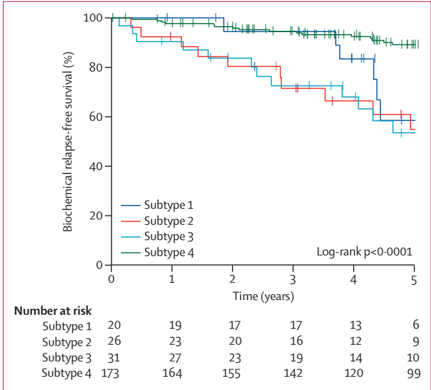
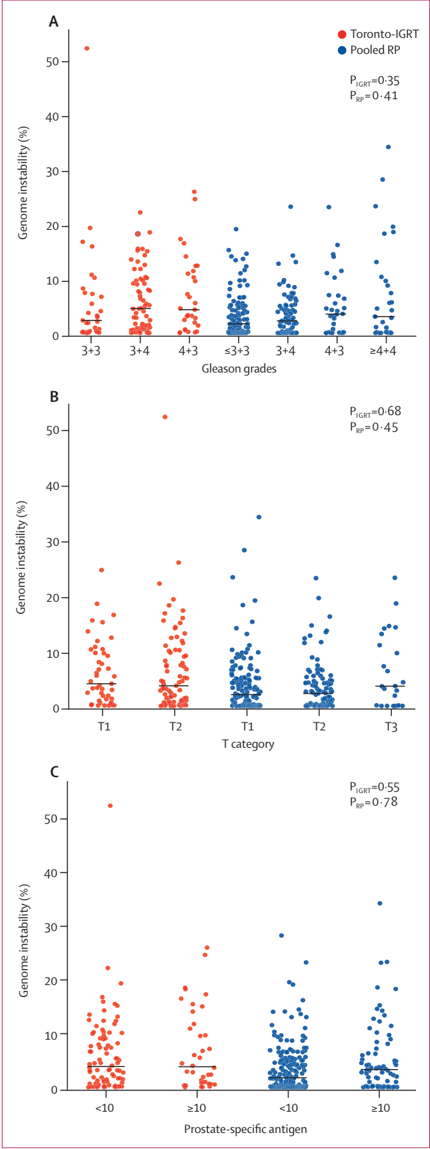
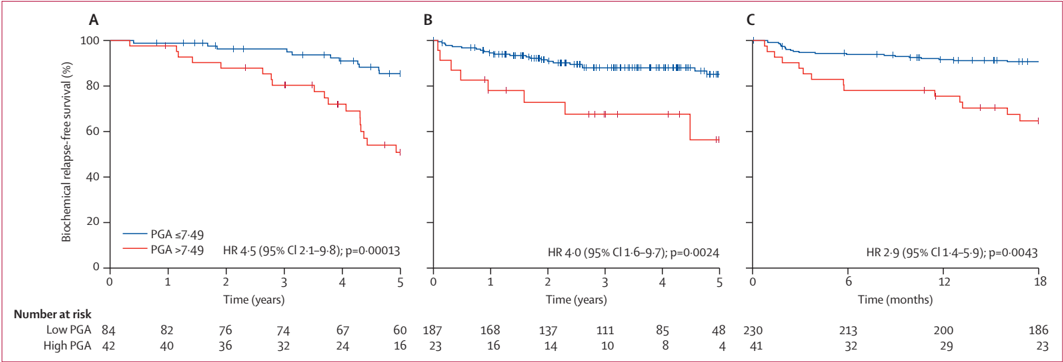
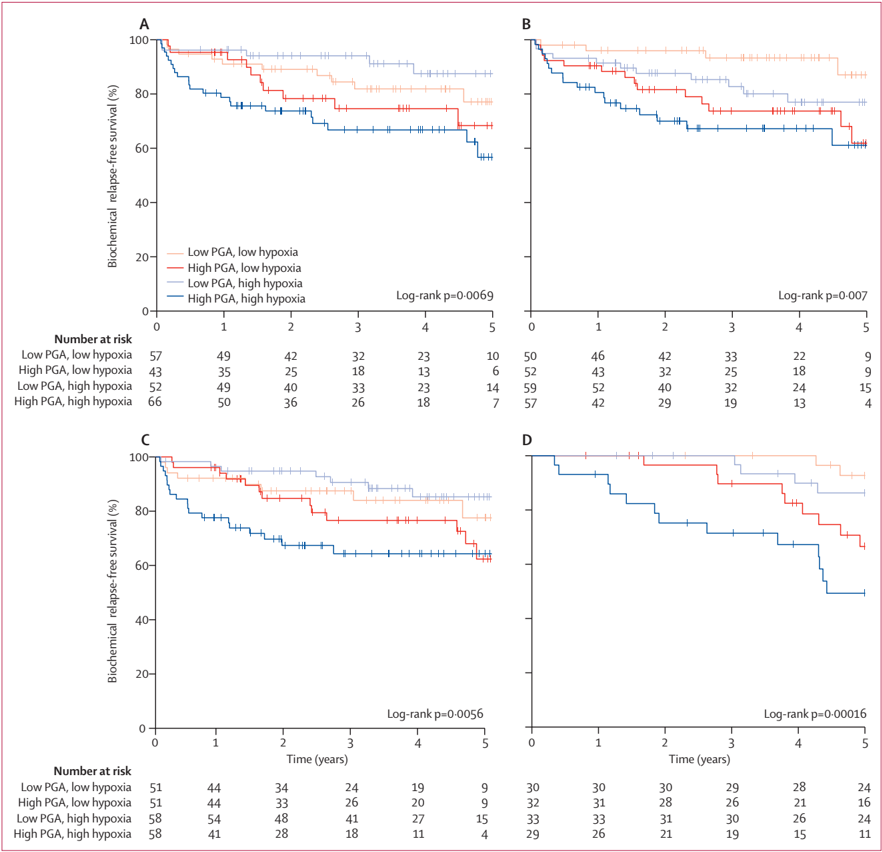
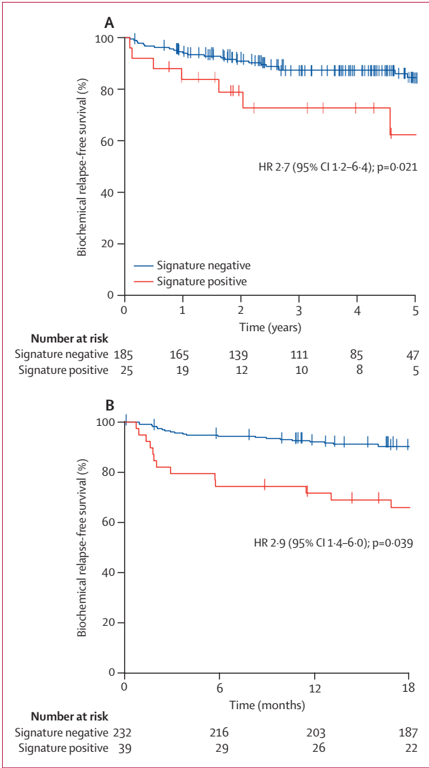
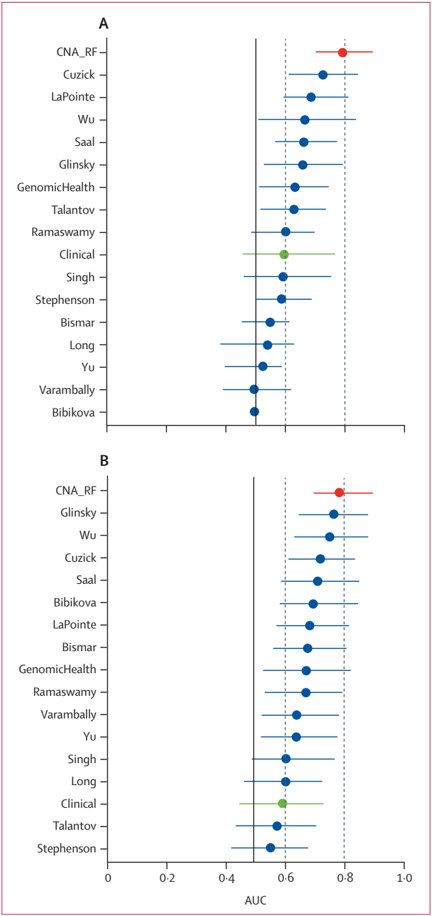
BACKGROUND: Clinical prognostic groupings for localised prostate cancers are imprecise, with 30-50% of patients recurring after image-guided radiotherapy or radical prostatectomy. We aimed to test combined genomic and microenvironmental indices in prostate cancer to improve risk stratification and complement clinical prognostic factors. METHODS: We used DNA-based indices alone or in combination with intra-prostatic hypoxia measurements to develop four prognostic indices in 126 low-risk to intermediate-risk patients (Toronto cohort) who will receive image-guided radiotherapy. We validated these indices in two independent cohorts of 154 (Memorial Sloan Kettering Cancer Center cohort [MSKCC] cohort) and 117 (Cambridge cohort) radical prostatectomy specimens from low-risk to high-risk patients. We applied unsupervised and supervised machine learning techniques to the copy-number profiles of 126 pre-image-guided radiotherapy diagnostic biopsies to develop prognostic signatures. Our primary endpoint was the development of a set of prognostic measures capable of stratifying patients for risk of biochemical relapse 5 years after primary treatment. FINDINGS: Biochemical relapse was associated with indices of tumour hypoxia, genomic instability, and genomic subtypes based on multivariate analyses. We identified four genomic subtypes for prostate cancer, which had different 5-year biochemical relapse-free survival. Genomic instability is prognostic for relapse in both image-guided radiotherapy (multivariate analysis hazard ratio [HR] 4·5 [95% CI 2·1-9·8]; p=0·00013; area under the receiver operator curve [AUC] 0·70 [95% CI 0·65-0·76]) and radical prostatectomy (4·0 [1·6-9·7]; p=0·0024; AUC 0·57 [0·52-0·61]) patients with prostate cancer, and its effect is magnified by intratumoral hypoxia (3·8 [1·2-12]; p=0·019; AUC 0·67 [0·61-0·73]). A novel 100-loci DNA signature accurately classified treatment outcome in the MSKCC low-risk to intermediate-risk cohort (multivariate analysis HR 6·1 [95% CI 2·0-19]; p=0·0015; AUC 0·74 [95% CI 0·65-0·83]). In the independent MSKCC and Cambridge cohorts, this signature identified low-risk to high-risk patients who were most likely to fail treatment within 18 months (combined cohorts multivariate analysis HR 2·9 [95% CI 1·4-6·0]; p=0·0039; AUC 0·68 [95% CI 0·63-0·73]), and was better at predicting biochemical relapse than 23 previously published RNA signatures. INTERPRETATION: This is the first study of cancer outcome to integrate DNA-based and microenvironment-based failure indices to predict patient outcome. Patients exhibiting these aggressive features after biopsy should be entered into treatment intensification trials. FUNDING: Movember Foundation, Prostate Cancer Canada, Ontario Institute for Cancer Research, Canadian Institute for Health Research, NIHR Cambridge Biomedical Research Centre, The University of Cambridge, Cancer Research UK, Cambridge Cancer Charity, Prostate Cancer UK, Hutchison Whampoa Limited, Terry Fox Research Institute, Princess Margaret Cancer Centre Foundation, PMH-Radiation Medicine Program Academic Enrichment Fund, Motorcycle Ride for Dad (Durham), Canadian Cancer Society.
Overview
The claims and statistics of this paper haven’t been checked yet.
Free: it reads the open-access text and checks the first 5 claims that cite a source we can check. Create a free account to check every claim.
Integrity signals
Registry
Cites
Statistics
Figures
Verification
Claims the paper makes
The claims and statistics of this paper haven’t been checked yet.
Free: it reads the open-access text and checks the first 5 claims that cite a source we can check. Create a free account to check every claim.
Claims other papers make about this one
Each is checked against this paper’s own text: does it say what the citing paper says it does?
The source backs part of the claim, not all of it — or backs it for a different population, condition or comparison.
In the citing paper
“Specifically, the tumor microenvironment has also been shown to induce tumor heterogeneity and promote the growth of a tumor itself [8,9].”
From Microfluidic modelling of the tumor microenvironment for anti-cancer drug development (2019) · cites this paper as [9]
Experimental — accuracy not yet measured
Self-check
Percentages, sums and reported differences re-computed from the paper’s own numbers.
The self-check needs the paper’s full text.
Citations
Cites
Breiman, L. (2001) · Machine Learning · doi:10.1023/a:1010933404324 · Cited by 133,538
Estimates of worldwide burden of cancer in 2008: GLOBOCAN 2008
Ferlay, J., Shin, H., Bray, F., Forman, D., Mathers, C., & Parkin, D. M. (2010) · International Journal of Cancer · doi:10.1002/ijc.25516 · Cited by 21,293
Integrative Genomic Profiling of Human Prostate Cancer
Taylor, B. S., Schultz, N., Hieronymus, H., Gopalan, A., Xiao, Y., Carver, B. S., Arora, V. K., Kaushik, P., Cerami, E., Reva, B., et al. (2010) · Cancer Cell · doi:10.1016/j.ccr.2010.05.026 · Cited by 3,701
Roach, M., Hanks, G., Thames, H., Schellhammer, P., Shipley, W. U., Sokol, G. H., & Sandler, H. (2006) · International Journal of Radiation Oncology*Biology*Physics · doi:10.1016/j.ijrobp.2006.04.029 · Cited by 2,749
Freedland, S. J., Humphreys, E. B., Mangold, L. A., Eisenberger, M., Dorey, F. J., Walsh, P. C., & Partin, A. W. (2005) · JAMA · doi:10.1001/jama.294.4.433 · Cited by 1,358
Punctuated Evolution of Prostate Cancer Genomes
Baca, S. C., Prandi, D., Lawrence, M. S., Mosquera, J. M., Romanel, A., Drier, Y., Park, K., Kitabayashi, N., MacDonald, T. Y., Ghandi, M., et al. (2013) · Cell · doi:10.1016/j.cell.2013.03.021 · Cited by 1,320
Hypoxia, DNA repair and genetic instability
Bristow, R. G., & Hill, R. P. (2008) · Nature Reviews Cancer · doi:10.1038/nrc2344 · Cited by 1,140
Self-citationMolecular genetics of prostate cancer: new prospects for old challenges
Shen, M. M., & Abate-Shen, C. (2010) · Genes & Development · doi:10.1101/gad.1965810 · Cited by 946
Yue, S., Li, J., Lee, S.-Y., Lee, H. J., Shao, T., Song, B., Cheng, L., Masterson, T. A., Liu, X., Ratliff, T. L., et al. (2014) · Cell Metabolism · doi:10.1016/j.cmet.2014.01.019 · Cited by 929
Heidenreich, A., Bellmunt, J., Bolla, M., Joniau, S., Matveev, V. B., Mottet, N., Wiegel, T., & Zattoni, F. (2013) · Cited by 876
Cited by
Items 301–345 of 345
Fraser, M. E. (2019) · European Urology · doi:10.1016/j.eururo.2019.04.005 · Cited by 1
Self-citationThe Telomere Length Landscape of Prostate CancerPreprint
Livingstone, J. M., Shiah, Y.-J., Yamaguchi, T. N., Heisler, L. E., Huang, V., Lesurf, R., Gebo, T., Carlin, B., Eng, S. E., Drysdale, E., et al. (2021) · bioRxiv (Cold Spring Harbor Laboratory) · doi:10.1101/2021.05.22.445239 · Cited by 1
Self-citationGermline determinants of the prostate tumor genomePreprint
Houlahan, K. E., Yuan, J., Schwarz, T., Livingstone, J. M., Fox, N. S., Jaratlerdsiri, W., van Riet, J., Taraszka, K., Kurganovs, N. J., Zhu, H. H., et al. (2022) · bioRxiv (Cold Spring Harbor Laboratory) · doi:10.1101/2022.11.16.516773 · Cited by 1
Self-citationIntegrated test predicts outcome
Thoma, C. (2014) · Nature Reviews Urology · doi:10.1038/nrurol.2014.331
24-gene predictor of response to postoperative irradiation
Bolla, M. (2016) · The Lancet Oncology · doi:10.1016/s1470-2045(16)30466-1
Klaff, R. (2016) · Linköping University medical dissertations · doi:10.3384/diss.diva-132385
“Although certain primary prostate cancer alterations or signatures have prognostic clinical significance, the impact of addressing primary prostate cancer genomic events in clinical practice has yet to be explored [38, 48-50].”
BackgroundRadiotherapy in the Management of Prostate Cancer
Chua, M. L. K., Murgić, J., Butler, E. B., & Teh, B. S. (2017) · Medical radiology · doi:10.1007/174_2017_11
Satkunasivam, R., & Klotz, L. H. (2017) · Current clinical urology · doi:10.1007/978-3-319-49911-6_4
Proteomic Identification and Systematic Verification of Biomarkers for Aggressive Prostate Cancer
Kim, Y. (2015) · TSpace (University of Toronto)
Tissue-Based Markers for Risk Prediction
Reichard, C. A., & Klein, E. A. (2017) · Current clinical urology · doi:10.1007/978-3-319-62710-6_12
A Bayesian Nonparametric Approach to Discover Clinico-Genetic Associations across Cancer TypesPreprint
Pradier, M. F., Hyland, S. L., Stark, S. G., Lehmann, K.-V., Vogt, J. E., Pérez‐Cruz, F., & Rätsch, G. (2019) · bioRxiv (Cold Spring Harbor Laboratory) · doi:10.1101/623215
“The large phenotypic heterogeneity, which reduces statistical power in the discovery method, causes some associations to remain hidden [38, 29, 40].”
BackgroundStudy on Treatment Planning for the Prostate in Proton Therapy with Oxygen Enhancement Ratio Effect
Yoo, S., Geng, H., Lam, W. W., Kong, C. W., Yang, B., Chiu, T. L., Wu, P. M., Cheung, K. Y., Yu, S. K., Shin, D., et al. (2020) · Journal of the Korean Physical Society · doi:10.3938/jkps.77.613
Self-citationHoey, C. (2018) · TSpace (University of Toronto)
Albawardi, A. S., Livingstone, J. M., Almarzooqi, S. S., Houlahan, K. E., Awwad, A. A. A., Abdelsalam, R. A., Boutros, P. C., & Bismar, T. A. (2021) · Preprints.org · doi:10.20944/preprints202102.0605.v1
Self-citationRadio-hormonothérapie des cancers de la prostate : quelle efficacité ? Quels mécanismes ?
Ah-Thiane, L., Guimas, V., Rio, E., Vaugier, L., Masson, I., Libois, V., & Supiot, S. (2021) · Progrès en Urologie - FMC · doi:10.1016/j.fpurol.2021.09.002
A Novel Defined Pyroptosis-Related Gene Signature For Predicting the Prognosis of Prostate CancerPreprint
Hu, D., Cao, Q., Tong, M., Li, Z., Huang, W., Jin, Y., Tong, G., Wang, Y., Li, P., & Zhang, H. (2021) · Research Square · doi:10.21203/rs.3.rs-947985/v1
zhou, J., Ding, J., & Qi, J. (2022) · SSRN Electronic Journal · doi:10.2139/ssrn.4001780
Bolla, M., Verry, C., & Iriart, C. (2017) · Springer eBooks · doi:10.1007/978-3-319-42769-0_15 · Cited by 1
Parplys, A. C., & Borgmann, K. (2019) · Springer eBooks · doi:10.1007/978-3-319-52619-5_72-1
El‐Deiry, W. S., & Zhao, S. (2020) · Faculty Opinions – Post-Publication Peer Review of the Biomedical Literature · doi:10.3410/f.737316896.793571305
Langé, M., Magné, N., Zhou, K., Bellanger, M. M., Latorzeff, I., Pommier, P., Martin, E., Paumier, A., Béra, G., & Supiot, S. (2022) · Cancer/Radiothérapie · doi:10.1016/j.canrad.2021.11.025
Recherche clinique en oncologie radiothérapie : comment passer du laboratoire au patient ?
Potiron, V. A., Delpon, G., Ollivier, L., Vaugier, L., Dore, M., Guimas, V., Rio, E., Thillays, F., Llagostera, C., Moignier, A., et al. (2022) · Cancer/Radiothérapie · doi:10.1016/j.canrad.2022.07.009
PARP inhibitors in metastatic prostate cancer: When, who, and how?
Pandey, P., & Sahoo, R. K. (2022) · International Journal of Molecular and Immuno Oncology · doi:10.25259/ijmio_19_2022
Yoo, D., Min, B. J., Rah, C. J., Lee, E., Park, J., Shin, D., & Kim, E. H. (2023) · Journal of the Korean Physical Society · doi:10.1007/s40042-022-00676-8
Chen, G. M., Chen, C.-H., Perazzelli, J., Grupp, S. A., Barrett, D. M., & Tan, K. (2025) · doi:10.1158/2326-6066.c.6551154
Artificial intelligence in urology
Gupta, R., Pedraza, A. M., Pandav, K. B., & Tewari, A. K. (2023) · Elsevier eBooks · doi:10.1016/b978-0-443-15688-5.00051-6
Hao, L., Chen, X., Zhou, Q., Wu, T., Wen, Z., Ji, Z., Zheng, X., Zheng, Q., & Sun, D. (2024) · Research Square · doi:10.21203/rs.3.rs-3912322/v1
Li, H., Peng, C., Zhu, C., Nie, S., Qian, X., Shi, Z., Shi, M., Yan, L., Ding, X., Zhang, S., et al. (2021) · Figshare · doi:10.6084/m9.figshare.13647050
Li, H., Peng, C., Zhu, C., Nie, S., Qian, X., Shi, Z., Shi, M., Yan, L., Ding, X., Zhang, S., et al. (2021) · Figshare · doi:10.6084/m9.figshare.13647047
Li, H., Peng, C., Zhu, C., Nie, S., Qian, X., Shi, Z., Shi, M., Yan, L., Ding, X., Zhang, S., et al. (2021) · Figshare · doi:10.6084/m9.figshare.13647044
Editorial Comment: Sentinel Lymph Node Mapping in Prostate Cancer: Magnetic Route
Dagnino, F., & Cole, A. P. (2024) · JU Open Plus · doi:10.1097/ju9.0000000000000193
Exploring the prognostic significance of lactate-mitochondria-related genes in prostate cancer
Wang, Y., Chen, R., Jiang, F., Jiang, X., Zhou, Y., Zhou, Y., Hong, X., Lin, C., Wang, W., & Qiu, S. (2025) · Frontiers in Genetics · doi:10.3389/fgene.2024.1515045 · Cited by 3
Perennec, T., Feghali, K. A. A., de Jong, D., Oderinde, O. M., Gibbard, G., Dore, M., Delpon, G., Alexandra, M., Seroux, Y., Ferrer, L., et al. (2025) · Advances in Radiation Oncology · doi:10.1016/j.adro.2025.101940
Hypoxia and cribriform growth in prostate cancer – establishing a link via MRI
Salamanca, M. F., van Houdt, P. J., Hompland, T., Deręgowska-Cylke, M., van Leeuwen, P. J., van der Poel, H. G., Bekers, E. M., Guimaraes, M. A. S., Lyng, H., van der Heide, U. A., et al. (2025) · BMC Medical Imaging · doi:10.1186/s12880-025-02084-3
“The biology of hypoxic tumors have been extensively studied revealing increased genetic instability, enhanced angiogenesis, and resistance to both radiotherapy and chemotherapy, making them particularly difficult to treat [7–9].”
Li, H., Peng, C., Zhu, C., Nie, S., Qian, X., Shi, Z., Shi, M., Liang, Y., Ding, X., Zhang, S., et al. (2021) · Figshare · doi:10.6084/m9.figshare.13647041
Li, H., Peng, C., Zhu, C., Nie, S., Qian, X., Shi, Z., Shi, M., Liang, Y., Ding, X., Zhang, S., et al. (2021) · Figshare · doi:10.6084/m9.figshare.13647038
Li, H., Peng, C., Zhu, C., Nie, S., Qian, X., Shi, Z., Shi, M., Liang, Y., Ding, X., Zhang, S., et al. (2021) · Figshare · doi:10.6084/m9.figshare.13647035
Ci, X., Chen, S., Zhu, R., Zarif, M., Jain, R., Guo, W., Ramotar, M., Gong, L., Xu, W., Singh, O., et al. (2024) · Figshare · doi:10.6084/m9.figshare.26736078
Self-citationIn silico modelling and simulation of tumour growth and response to radiotherapy
Sosa-Marrero, C. (2021) · theses.fr (ABES) · doi:10.70675/ce3557b2zb028z4f8fz8f7cz789241ff8792
Oligometastatic prostate cancer — bridging the gap between localized and metastatic disease
Giesen, A., den Hartog, J., Goubergen, J. V., Rans, K., Baldewijns, M. M. L. L., Gevaert, T., Goffin, K., Everaerts, W., Claessens, F., Meerleer, G. D., et al. (2026) · Nature Reviews Urology · doi:10.1038/s41585-026-01144-9
“Results from this study showed that genomic instability and tumour hypoxia were independent predictors of 5-year biochemical recurrence, and that integrating genomic instability with hypoxia-related signatures improved prognostic accuracy compared with clinical variables alone 76 .”
Lin#, Y., & Zhou, J. (2026) · Discover Oncology · doi:10.1007/s12672-026-05623-8
RCBTB2 in cancer: context-dependent functions and translational boundaries
Cai, C., Du, J., Tu, L., Li, W., & Mo, R. (2026) · Frontiers in Oncology · doi:10.3389/fonc.2026.1947868
Zhang, Y., Zhu, Y., Wang, X., Wen, S., & Zheng, P. (2026) · Journal of King Saud University - Computer and Information Sciences · doi:10.1007/s44443-026-01082-x
Akinyemi, O. S., Olaiya, V. O., Pushkarev, A. M., Urmantsev, M. F., Tuguzbaeva, G. M., Akitoye, A. B., Uruere, U. J., Eze, A., Eze, M. C., Iji, O. M., et al. (2026) · Research Square · doi:10.21203/rs.3.rs-10866588/v1
Metadata
- Authors
- Lalonde, E., Ishkanian, A. S., Sykes, J., Fraser, M., Ross-Adams, H., Erho, N., Dunning, M. J., Halim, S., Lamb, A. D., Moon, N. C., Zafarana, G., Warren, A. Y., Meng, X., Thoms, J., Grzadkowski, M. R., Berlin, A., Have, C. L., Ramnarine, V. R., Yao, C. Q., Malloff, C. A., Lam, L. L., Xie, H., Harding, N. J., Mak, D. Y. F., Chu, K. C., Chong, L. C., Sendorek, D. H., P'ng, C., Collins, C. C., Squire, J. A., Jurisica, I., Cooper, C., Eeles, R., Pintilie, M., Dal Pra, A., Davicioni, E., Lam, W. L., Milosevic, M., Neal, D. E., van der Kwast, T., Boutros, P. C., & Bristow, R. G.
- Affiliations
- Ontario Institute for Cancer Research (CA)
- University of Miami (US)
- University Health Network (CA)
- University of Cambridge (GB)
- Addenbrooke's Hospital (GB)
- BC Cancer Agency (CA)
- University of British Columbia (CA)
- Universidade de São Paulo (BR)
- University of East Anglia (GB)
- National Health Service (GB)
- University of Toronto (CA)
- Corresponding author
- Bristow, Robert G
- ORCID
- Lalonde, Emilie
- Ishkanian, Adrian S
- Sykes, Jenna
- Fraser, Michael
- Erho, Nicholas
- Dunning, Mark J
- Halim, Silvia
- Lamb, Alastair D
- Moon, Nathalie C
- Zafarana, Gaetano
- Warren, Anne Y
- Grzadkowski, Michal R
- Ramnarine, Varune R
- Harding, Nicholas J
- Chong, Lauren C
- Sendorek, Dorota H
- Collins, Colin C
- Squire, Jeremy A
- Eeles, Rosalind
- Pintilie, Melania
- Davicioni, Elai
- Lam, Wan L
- Milosevic, Michael
- Neal, David E
- Boutros, Paul C
- Bristow, Robert G
- Venue
- The Lancet Oncology
- Publisher
- Elsevier BV
- Published
- 2014-12
- Volume
- 15
- Issue
- 13
- Pages
- 1521-1532
- ISSN
- 1470-2045 (ISSN-L)
- OpenAlex
- W2158872144
- Semantic Scholar
- 378b92545e4328ee0569fb7c09dcf221a8d05054
- Cited by
- 342
- References
- 36
- Citations by year
- 2026: 9 · 2025: 17 · 2024: 26 · 2023: 24 · 2022: 30 · 2021: 40 · 2020: 29 · 2019: 31 · 2018: 38 · 2017: 35 · 2016: 39 · 2015: 22 · 2014: 2
- FWCI
- 26.05
- Type
- journal article
- Language
- en
- Open access
- hybrid
- doi.org
- Licence
- cc-by
- www.elsevier.com/tdm/userlicense/1.0/ (tdm)
- www.elsevier.com/legal/tdmrep-license (tdm)
- creativecommons.org/licenses/by/3.0/ (vor)
- Locations
- The Lancet Oncology (publishedVersion, cc-by)
- PubMed (publishedVersion)
- Research Explorer (The University of Manchester) (publishedVersion)
- UEA Digital Repository (University of East Anglia) (acceptedVersion)
- Bern Open Repository and Information System (University of Bern) (submittedVersion)
- Funders
- Prostate Cancer Canada and is funded by the Movember Foundation (grant number RS2014-01)
- Topics
- Life Sciences › Biochemistry, Genetics and Molecular Biology › Cancer Research › Prostate Cancer Treatment and Research
- Health Sciences › Medicine › Urology › Prostate Cancer Diagnosis and Treatment
- Life Sciences › Biochemistry, Genetics and Molecular Biology › Cancer Research › Breast Cancer Treatment Studies
- Keywords
- prostate cancer, biochemical recurrence, tumor microenvironment, intratumoral hypoxia, genomic instability, copy number profiles, genomic subtypes, risk stratification, image-guided radiotherapy, radical prostatectomy, prognostic score, localized prostate cancer, machine learning prediction
- MeSH terms
- DNA, Neoplasm, Follow-Up Studies, Humans, Male, Neoplasm Recurrence, Local, Prognosis, Prostatic Neoplasms, Retrospective Studies, Time Factors, Biomarkers, Tumor, Oligonucleotide Array Sequence Analysis, Gene Expression Profiling, Genomics, Tumor Microenvironment
About these checks
Registry, retraction, Cites and statistics results are computed, not judged, with one exception: a printed reference that no index lists is read once by a model before it counts as a citation error. Claims are extracted by a model and kept only when their quote appears verbatim in the text; each cited source is then checked, with a model’s help, for whether it says what the claim relies on. Those verdicts can be wrong — read the claim’s quote and the cited source before relying on one.
Statistics and arithmetic are recomputed, not judged.
Confidence bands are shown only for fields calibrated on our annotated test set. None is calibrated yet, so no band is shown.
What counts as a claim ›How we measure confidence ›How we check this ›
Are you an author, or do you see a problem with this page? Request a review
Data sources
Bibliographic data: Semantic Scholar, OpenAlex, Crossref.
Contains information from the Semantic Scholar Academic Graph Datasets, made available under the ODC Attribution License (ODC-BY 1.0).
Semantic Scholar’s data is described in: Kinney, R., et al. (2023). The Semantic Scholar Open Data Platform. arXiv:2301.10140.
