

Tumour genomic and microenvironmental heterogeneity for integrated prediction of 5-year biochemical recurrence of prostate cancer: a retrospective cohort study
Open accessThe DOI matches its Crossref record; 36 of the 36 references it cites were found in a registry or an index.
Abstract
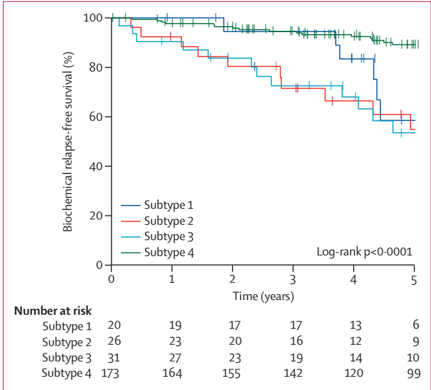
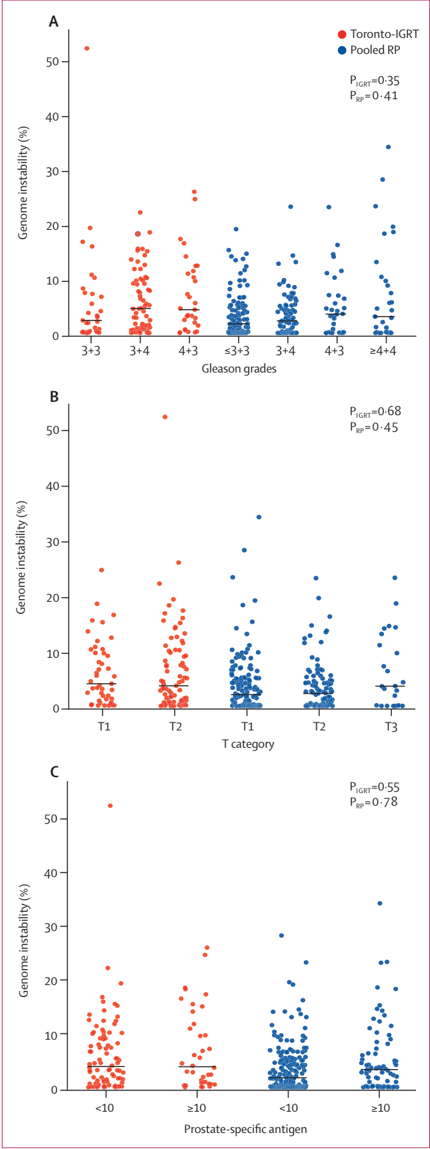
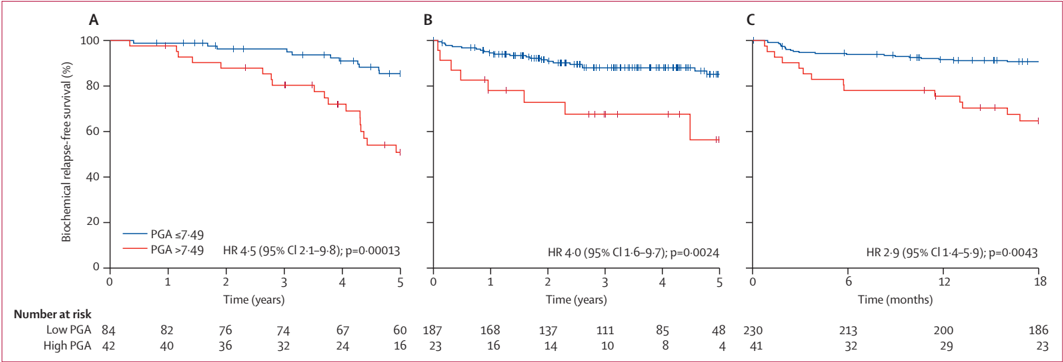
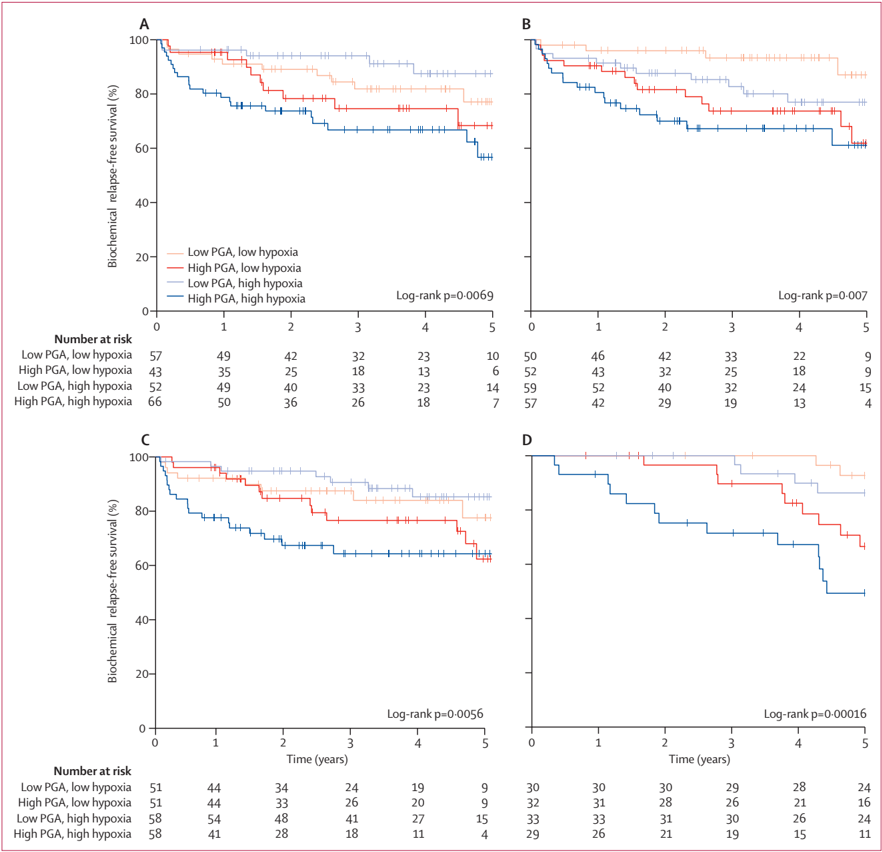
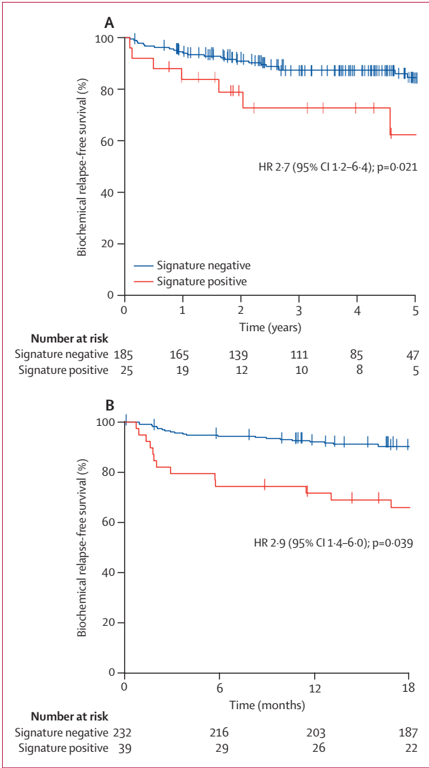
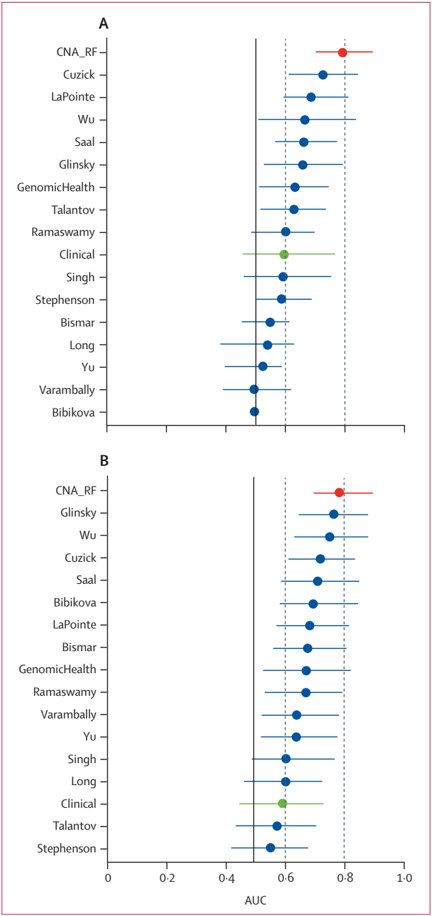
BACKGROUND: Clinical prognostic groupings for localised prostate cancers are imprecise, with 30-50% of patients recurring after image-guided radiotherapy or radical prostatectomy. We aimed to test combined genomic and microenvironmental indices in prostate cancer to improve risk stratification and complement clinical prognostic factors. METHODS: We used DNA-based indices alone or in combination with intra-prostatic hypoxia measurements to develop four prognostic indices in 126 low-risk to intermediate-risk patients (Toronto cohort) who will receive image-guided radiotherapy. We validated these indices in two independent cohorts of 154 (Memorial Sloan Kettering Cancer Center cohort [MSKCC] cohort) and 117 (Cambridge cohort) radical prostatectomy specimens from low-risk to high-risk patients. We applied unsupervised and supervised machine learning techniques to the copy-number profiles of 126 pre-image-guided radiotherapy diagnostic biopsies to develop prognostic signatures. Our primary endpoint was the development of a set of prognostic measures capable of stratifying patients for risk of biochemical relapse 5 years after primary treatment. FINDINGS: Biochemical relapse was associated with indices of tumour hypoxia, genomic instability, and genomic subtypes based on multivariate analyses. We identified four genomic subtypes for prostate cancer, which had different 5-year biochemical relapse-free survival. Genomic instability is prognostic for relapse in both image-guided radiotherapy (multivariate analysis hazard ratio [HR] 4·5 [95% CI 2·1-9·8]; p=0·00013; area under the receiver operator curve [AUC] 0·70 [95% CI 0·65-0·76]) and radical prostatectomy (4·0 [1·6-9·7]; p=0·0024; AUC 0·57 [0·52-0·61]) patients with prostate cancer, and its effect is magnified by intratumoral hypoxia (3·8 [1·2-12]; p=0·019; AUC 0·67 [0·61-0·73]). A novel 100-loci DNA signature accurately classified treatment outcome in the MSKCC low-risk to intermediate-risk cohort (multivariate analysis HR 6·1 [95% CI 2·0-19]; p=0·0015; AUC 0·74 [95% CI 0·65-0·83]). In the independent MSKCC and Cambridge cohorts, this signature identified low-risk to high-risk patients who were most likely to fail treatment within 18 months (combined cohorts multivariate analysis HR 2·9 [95% CI 1·4-6·0]; p=0·0039; AUC 0·68 [95% CI 0·63-0·73]), and was better at predicting biochemical relapse than 23 previously published RNA signatures. INTERPRETATION: This is the first study of cancer outcome to integrate DNA-based and microenvironment-based failure indices to predict patient outcome. Patients exhibiting these aggressive features after biopsy should be entered into treatment intensification trials. FUNDING: Movember Foundation, Prostate Cancer Canada, Ontario Institute for Cancer Research, Canadian Institute for Health Research, NIHR Cambridge Biomedical Research Centre, The University of Cambridge, Cancer Research UK, Cambridge Cancer Charity, Prostate Cancer UK, Hutchison Whampoa Limited, Terry Fox Research Institute, Princess Margaret Cancer Centre Foundation, PMH-Radiation Medicine Program Academic Enrichment Fund, Motorcycle Ride for Dad (Durham), Canadian Cancer Society.
Overview
The claims and statistics of this paper haven’t been checked yet.
Free: it reads the open-access text and checks the first 5 claims that cite a source we can check. Create a free account to check every claim.
Integrity signals
Registry
Cites
Statistics
Figures
Verification
Claims the paper makes
The claims and statistics of this paper haven’t been checked yet.
Free: it reads the open-access text and checks the first 5 claims that cite a source we can check. Create a free account to check every claim.
Claims other papers make about this one
Each is checked against this paper’s own text: does it say what the citing paper says it does?
The source backs part of the claim, not all of it — or backs it for a different population, condition or comparison.
In the citing paper
“Specifically, the tumor microenvironment has also been shown to induce tumor heterogeneity and promote the growth of a tumor itself [8,9].”
From Microfluidic modelling of the tumor microenvironment for anti-cancer drug development (2019) · cites this paper as [9]
Experimental — accuracy not yet measured
Self-check
Percentages, sums and reported differences re-computed from the paper’s own numbers.
The self-check needs the paper’s full text.
Citations
Cites
Breiman, L. (2001) · Machine Learning · doi:10.1023/a:1010933404324 · Cited by 133,538
Estimates of worldwide burden of cancer in 2008: GLOBOCAN 2008
Ferlay, J., Shin, H., Bray, F., Forman, D., Mathers, C., & Parkin, D. M. (2010) · International Journal of Cancer · doi:10.1002/ijc.25516 · Cited by 21,293
Integrative Genomic Profiling of Human Prostate Cancer
Taylor, B. S., Schultz, N., Hieronymus, H., Gopalan, A., Xiao, Y., Carver, B. S., Arora, V. K., Kaushik, P., Cerami, E., Reva, B., et al. (2010) · Cancer Cell · doi:10.1016/j.ccr.2010.05.026 · Cited by 3,701
Roach, M., Hanks, G., Thames, H., Schellhammer, P., Shipley, W. U., Sokol, G. H., & Sandler, H. (2006) · International Journal of Radiation Oncology*Biology*Physics · doi:10.1016/j.ijrobp.2006.04.029 · Cited by 2,749
Freedland, S. J., Humphreys, E. B., Mangold, L. A., Eisenberger, M., Dorey, F. J., Walsh, P. C., & Partin, A. W. (2005) · JAMA · doi:10.1001/jama.294.4.433 · Cited by 1,358
Punctuated Evolution of Prostate Cancer Genomes
Baca, S. C., Prandi, D., Lawrence, M. S., Mosquera, J. M., Romanel, A., Drier, Y., Park, K., Kitabayashi, N., MacDonald, T. Y., Ghandi, M., et al. (2013) · Cell · doi:10.1016/j.cell.2013.03.021 · Cited by 1,320
Hypoxia, DNA repair and genetic instability
Bristow, R. G., & Hill, R. P. (2008) · Nature Reviews Cancer · doi:10.1038/nrc2344 · Cited by 1,140
Self-citationMolecular genetics of prostate cancer: new prospects for old challenges
Shen, M. M., & Abate-Shen, C. (2010) · Genes & Development · doi:10.1101/gad.1965810 · Cited by 946
Yue, S., Li, J., Lee, S.-Y., Lee, H. J., Shao, T., Song, B., Cheng, L., Masterson, T. A., Liu, X., Ratliff, T. L., et al. (2014) · Cell Metabolism · doi:10.1016/j.cmet.2014.01.019 · Cited by 929
Heidenreich, A., Bellmunt, J., Bolla, M., Joniau, S., Matveev, V. B., Mottet, N., Wiegel, T., & Zattoni, F. (2013) · Cited by 876
Cited by
Items 201–300 of 345
Parity associates with chromosomal damage in uterine leiomyomas
Kuisma, H., Bramante, S., Rajamäki, K., Sipilä, L. J., Kaasinen, E., Tolvanen, J., Palin, K., Mäkinen, N., Sjöberg, J., Sarvilinna, N. S., et al. (2021) · Nature Communications · doi:10.1038/s41467-021-25806-x · Cited by 10
Methylation Subtypes of Primary Prostate Cancer Predict Poor Prognosis
Wang, X., Jordahl, K. M., Zhu, C., Livingstone, J. M., Rhie, S. K., Wright, J. L., Grady, W. M., Boutros, P. C., Stanford, J. L., & Dai, J. Y. (2022) · Cancer Epidemiology Biomarkers & Prevention · doi:10.1158/1055-9965.epi-22-0007 · Cited by 9
Self-citationLi, W., Lu, Z., Pan, D., Zhang, Z., He, H., Wu, J., & Peng, N. (2022) · Journal of Oncology · doi:10.1155/2022/5504173 · Cited by 9
“Prostate cancer is one of the most common cancers in men [1, 2].”
Backgrounddos Santos, N. J., Camargo, A. C. L., Carvalho, H. F., Justulin, L. A., & Felisbino, S. L. (2022) · International Journal of Molecular Sciences · doi:10.3390/ijms23169224 · Cited by 9
“CAFs deposit and degrade ECM components and thus remodel it during cancer progression, promoting immune cell infiltration and cancer cell proliferation, migration, and invasion [33,34].”
BackgroundGuerrero‐López, P., Alamán‐Díez, P., Hernández-Hatibi, S., Balsas, P., & Garcia-Aznar, J. M. (2026) · Advanced Drug Delivery Reviews · doi:10.1016/j.addr.2026.115836 · Cited by 9
Patenaude, R. A., Yasmin‐Karim, S., Peng, Y., Wucherpfennig, K. W., Ngwa, W., Kheir, J. N., & Polizzotti, B. D. (2023) · International Journal of Radiation Oncology*Biology*Physics · doi:10.1016/j.ijrobp.2022.12.051 · Cited by 7
Targeting PLOD2 suppresses invasion and metastatic potential in radiorecurrent prostate cancer
Frame, G., Leong, H. S., Haas, R., Huang, X., Wright, J., Emmenegger, U., Downes, M. R., Boutros, P. C., Kislinger, T., & Liu, S. K. (2024) · BJC Reports · doi:10.1038/s44276-024-00085-3 · Cited by 10
“ICGC PRAD-CA CNA data is made available in a previous publication [29].”
Self-citationWang, X., Lv, Z., Xia, H., Guo, X. C., Wang, J., Wang, J., & Liu, M. (2022) · Cancer Medicine · doi:10.1002/cam4.4856 · Cited by 10
A polygenic two-hit hypothesis for prostate cancer
Houlahan, K. E., Livingstone, J. M., Fox, N. S., Kurganovs, N. J., Zhu, H. H., Penington, J. S., Jung, C., Yamaguchi, T. N., Heisler, L. E., Jovelin, R., et al. (2023) · JNCI Journal of the National Cancer Institute · doi:10.1093/jnci/djad001 · Cited by 8
Self-citationComparing continuous and discrete analyses of breast cancer survival information
Bhandari, V., & Boutros, P. C. (2016) · Genomics · doi:10.1016/j.ygeno.2016.06.002 · Cited by 8
Self-citationChromoplexy: A Pathway to Genomic Complexity and Cancer Development
Pellestor, F., Ganne, B., Gaillard, J. B., & Gâtinois, V. (2025) · International Journal of Molecular Sciences · doi:10.3390/ijms26083826 · Cited by 8
“The interplay between genomic instability, the occurrence of chromoplexy, and the tumor microenvironment in modulating the outcome of treatment also deserves further exploration if we are to understand the root causes of genomic chaos in cancer [86,87].”
Burns, D., Anokian, E., Saunders, E. J., Bristow, R. G., Fraser, M. E., Reimand, J., Schlomm, T., Sauter, G., Brors, B., Korbel, J. O., et al. (2022) · European Urology · doi:10.1016/j.eururo.2022.05.007 · Cited by 8
Self-citationAn Immune Gene Expression Risk Score for Distant Metastases after Radiotherapy for Cervical Cancer
Lukovic, J., Pintilie, M., Han, K. C.-Z., Fyles, A., Bruce, J. P., Quevedo, R., Pugh, T. J., Fjeldbo, C. S., Lyng, H., & Milosevic, M. (2024) · Clinical Cancer Research · doi:10.1158/1078-0432.ccr-23-2085 · Cited by 8
Self-citationSutera, P. A., Song, Y., Shetty, A. C., English, K., der Eecken, K. V., Güler, O. C., Wang, J. H., Cao, Y., Bazyar, S., Verbeke, S., et al. (2024) · European Urology Oncology · doi:10.1016/j.euo.2024.05.011 · Cited by 8
Ebrahimizadeh, W., Guérard, K., Rouzbeh, S., Bramhecha, Y. M., Scarlata, E., Brimo, F., Patel, P. G., Jamaspishvili, T., Aprikian, A. G., Berman, D. M., et al. (2020) · Journal of Molecular Diagnostics · doi:10.1016/j.jmoldx.2020.07.003 · Cited by 7
Clonality of localized and metastatic prostate cancer
Boutros, P. C., Fraser, M. E., van der Kwast, T., & Bristow, R. G. (2016) · Current Opinion in Urology · doi:10.1097/mou.0000000000000279 · Cited by 8
Self-citationWarner, W. A., Lee, T. Y., Fang, F., Llanos, A. A. M., Bajracharya, S., Sundaram, V., Badal, K., Sookdeo, V. D., Roach, V., Lamont-Greene, M., et al. (2018) · Cancer Causes & Control · doi:10.1007/s10552-018-1038-8 · Cited by 10
“Some studies have identified genomic alterations of prognostic clinical significance [35, 36].”
BackgroundLuca, B. A., Moulton, V., Ellis, C., Connell, S. P., Brewer, D. S., & Cooper, C. S. (2020) · Genes · doi:10.3390/genes11070802 · Cited by 10
Self-citationKannan, P., Paczkowski, M., Miar, A., Owen, J., Kretzschmar, W. W., Lucotti, S., Kaeppler, J., Chen, J., Markelc, B., Kunz‐Schughart, L. A., et al. (2019) · bioRxiv (Cold Spring Harbor Laboratory) · doi:10.1101/564724 · Cited by 6
Zhong, J., Davey, A., Frood, R. T., McWilliam, A., Shortall, J., Reardon, M., Reaves, K., Swinton, M., Hulson, O., West, C., et al. (2025) · La radiologia medica · doi:10.1007/s11547-025-02037-4 · Cited by 7
“High-throughput expression profiling technologies that can measure RNA expression have allowed the development of hypoxia-associated gene signatures, which were prognostic and associated with RT resistance and metastatic disease in prostate cancer cohorts [9–12].”
Algorithms on the rise: a machine learning–driven survey of prostate cancer literature
Gu, S., Chen, J., Fan, C., Huang, X., Li, L., & Zhang, H. (2025) · Frontiers in Oncology · doi:10.3389/fonc.2025.1675459 · Cited by 7
Kneppers, J., Bergman, A. M., & Zwart, W. T. (2022) · Advances in experimental medicine and biology · doi:10.1007/978-3-031-11836-4_15 · Cited by 7
Ci, X., Chen, S., Zhu, R., Zarif, M., Jain, R., Guo, W., Ramotar, M., Gong, L., Xu, W., Singh, O., et al. (2024) · BMC Cancer · doi:10.1186/s12885-024-12505-1 · Cited by 7
“However, significant clinical heterogeneity remains within these clinicopathologic-defined risk groups, reflected in variable rates of disease recurrence following curative-intent treatment [5].”
BackgroundInfluentialSelf-citationDr. Answer AI for Prostate Cancer: Predicting Biochemical Recurrence Following Radical Prostatectomy
Park, J., Rho, M. J., Moon, H. W., Kim, J.-W., Lee, C., Kim, D., Kim, C., Jeon, S. S., Kang, M., & Lee, J. Y. (2021) · Technology in Cancer Research & Treatment · doi:10.1177/15330338211024660 · Cited by 6
Forker, L. J., Bibby, B. A. S., Yang, L., Lane, B. S., Irlam, J. J., Mistry, H. B., Khan, M. T., Valentine, H. R., Wylie, J. P., Shenjere, P., et al. (2023) · British Journal of Cancer · doi:10.1038/s41416-023-02265-3 · Cited by 6
“Combining measures of genome instability and hypoxia has also been shown to improve prognostication in prostate cancer [34].”
BackgroundFrame, F. M., Noble, A. R., O’Toole, P. J., Marrison, J., Godden, T., O’Brien, A., & Maitland, N. J. (2019) · Advances in experimental medicine and biology · doi:10.1007/978-3-030-22254-3_9 · Cited by 6
HIF1 and ID1 Interplay Confers Adaptive Survival to HIF1α-Inhibition
Geng, H., Ko, H., Pittsenbarger, J., Harvey, C. T., Xue, C., Liu, Q., Wiens, S., Kachhap, S. K., Beer, T. M., & Qian, D. Z. (2021) · Frontiers in Cell and Developmental Biology · doi:10.3389/fcell.2021.724059 · Cited by 7
“Due to the universal occurrence of hypoxia and the intratumor heterogeneity (Movsas et al., 1999; Bristow et al., 2014; Lalonde et al., 2014; Patel et al., 2014), the ID1/HIF1α-interaction may present challenge to HIF-targeted therapies.”
BackgroundLiu, J., Zhang, W., Wang, J., Lv, Z., Xia, H., Zhang, Y., Zhang, Y., & Wang, J. (2022) · Journal of Cancer Research and Clinical Oncology · doi:10.1007/s00432-022-04040-y · Cited by 5
“1 3 to be sensitive to hypoxia microenvironment and hypoxia was a predictive factor for early biological recurrences and metastasis progression of prostate cancers (Lalonde et al. 2014; Milosevic et al. 2012).”
BackgroundRen, L., Yang, X., Wang, W., Lin, H., Huang, G., Liu, Z., Pan, J., & Mao, X. (2023) · Frontiers in Genetics · doi:10.3389/fgene.2023.1096783 · Cited by 5
“Once patients have a BCR, poor prognosis and underlying clinical metastases are inevitable without timely detection and treatment, significantly reducing the overall survival and the quality of life (Lalonde et al., 2014; Xu et al., 2020).”
BackgroundWu, W., Wang, S.-H., Wei, L., Geng, L.-J., Zhang, X., Yu, L., Chen, J., Luo, J.-X., & Zhao, H. (2017) · Medicine · doi:10.1097/md.0000000000005838 · Cited by 7
Race Does Not Affect Survival in Patients With Prostate Cancer Treated With Radiation Therapy
Kodiyan, J., Ashamalla, M., Guirguis, A., & Ashamalla, H. L. (2020) · Anticancer Research · doi:10.21873/anticanres.14313 · Cited by 5
Mutator-Derived lncRNA Landscape: A Novel Insight Into the Genomic Instability of Prostate Cancer
Tang, L., Li, W., Xu, H., Zheng, X. S., Qiu, S., He, W., Wei, Q., Ai, J., Yang, L., & Liu, J. (2022) · Frontiers in Oncology · doi:10.3389/fonc.2022.876531 · Cited by 5
Zhang, J., Jiang, S., Gu, D., Zhang, W., Shen, X., Qu, M., Yang, C., Wang, Y., & Gao, X. (2023) · Frontiers in Oncology · doi:10.3389/fonc.2023.1162653 · Cited by 7
Clinical and molecular rationale to retain the cancer descriptor for Gleason score 6 disease
Reichard, C. A., & Klein, E. A. (2016) · Nature Reviews Urology · doi:10.1038/nrurol.2016.240 · Cited by 5
Ancestry Influences on the Molecular Presentation of TumoursPreprint
Li, C. H., Haider, S., & Boutros, P. C. (2020) · bioRxiv (Cold Spring Harbor Laboratory) · doi:10.1101/2020.08.02.233528 · Cited by 8
Self-citationTumor cell total mRNA expression shapes the molecular and clinical phenotype of cancerPreprint
Cao, S., Wang, J. R., Ji, S., Peng, Y., Montierth, M. D., Guo, S., Shen, J. P., Zhao, X. L., Chen, J., Lee, J. J., et al. (2020) · bioRxiv (Cold Spring Harbor Laboratory) · doi:10.1101/2020.09.30.306795 · Cited by 5
Self-citationReardon, M., Bibby, B. A. S., Thiruthaneeswaran, N., Pereira, R. R., Mistry, H. B., Moré, E., Tsang, Y. M., Vickers, A. J., Reeves, K. J., Henry, A. M., et al. (2024) · International Journal of Radiation Oncology*Biology*Physics · doi:10.1016/j.ijrobp.2024.10.002 · Cited by 5
Self-citationElhamamsy, A. R., Metge, B. J., Swain, C. A., Elbahoty, M. H., Hinshaw, D. C., Kammerud, S. C., Chen, D., Samant, R. S., & Shevde, L. A. (2025) · Nature Communications · doi:10.1038/s41467-025-63315-3 · Cited by 8
“The overall RNA Hypoxia Score for a patient was then calculated as the sum of scores across all genes within a signature 58 .”
Hyaluronan Metabolism in Urologic Cancers
Donelan, W., Brisbane, W. G., O’Malley, P., Crispen, P. L., & Kusmartsev, S. A. (2023) · Advanced Biology · doi:10.1002/adbi.202300168 · Cited by 6
Iqbal, M. S., Duan, X., Ali, H., Peng, K., Liu, Z., Sardar, N., Alsubki, R. A., Attia, K. A., Abushady, A. M., Gu, D., et al. (2024) · Functional & Integrative Genomics · doi:10.1007/s10142-024-01296-0 · Cited by 4
“It also exhibits a strong affinity for the extracellular matrix (Kim et al. 2001; Lalonde et al. 2014).”
Colibactin Exerts Androgen-dependent and -independent Effects on Prostate Cancer
Agrawal, R., Al-Hiyari, S. M., Hugh-White, R., Hromas, R., Patel, Y., Williamson, E. A., Mootor, M. F. E., Gonzalez, A., Fu, J., Haas, R., et al. (2024) · European Urology Oncology · doi:10.1016/j.euo.2024.10.015 · Cited by 5
“An increase in CNA burden is associated with shorter time to BCR and death [55,56].”
Self-citationCopy Number Profiles of Prostate Cancer in Men of Middle Eastern Ancestry
Albawardi, A. S., Livingstone, J. M., Almarzooqi, S. S., Palanisamy, N., Houlahan, K. E., Awwad, A. A. A., Abdelsalam, R. A., Boutros, P. C., & Bismar, T. A. (2021) · Cancers · doi:10.3390/cancers13102363 · Cited by 4
“Copy number aberrations (CNAs) are the main mutational drivers of prostate cancer, occurring early in evolution [10], being highly prognostic [11], driving subtype [12], and shaping the tumor transcriptome and proteome [13].”
BackgroundMethodInfluentialSelf-citationLi, H., Gu, J., Tian, Y., Li, S., Zhang, H., Dai, Z., Wang, Z., Zhang, N., & Peng, R. (2022) · Frontiers in Immunology · doi:10.3389/fimmu.2022.982628 · Cited by 9
“However, approximately 20-30% of patients will develop a castration-resistant or biochemical recurrence (BCR), and such patients are more likely to suffer metastases and cancer-specific mortality (5).”
BackgroundParr, H., Porta, N., Tree, A. C., Dearnaley, D. P., & Hall, E. (2023) · International Journal of Radiation Oncology*Biology*Physics · doi:10.1016/j.ijrobp.2023.02.022 · Cited by 5
A DNA copy number alteration classifier as a prognostic tool for prostate cancer patients
Ebrahimizadeh, W., Guérard, K., Rouzbeh, S., Scarlata, E., Brimo, F., Patel, P. G., Jamaspishvili, T., Hamel, L., Aprikian, A. G., Lee, A. Y., et al. (2023) · British Journal of Cancer · doi:10.1038/s41416-023-02236-8 · Cited by 4
“To validate our findings, we used CNA profiles of GG 1–3 (GS ≤ 7) and local disease (≤pT3) from three RP datasets: MSKCC [17], Cambridge [18], CPC-GENE [19] and one radiation therapy pre-treatment biopsy dataset: Toronto [8].”
MethodInfluentialOmoboyede, V., Ibrahim, O., Umar, H. I., Oke, G. A., Onile, O. S., & Chukwuemeka, P. O. (2023) · Journal of Genetic Engineering and Biotechnology · doi:10.1186/s43141-023-00498-6 · Cited by 9
“However, genomic instability and tumour hypoxia within the tumour microenvironment is commonly linked with relapse and development of advanced PC [2, 3].”
BackgroundState of the Art and Future Direction for the Analysis of Cell-Free Circulating DNA
Heliebi, A. E., & Heitzer, E. (2019) · Elsevier eBooks · doi:10.1016/b978-0-12-814470-1.00005-8 · Cited by 5
Cailleteau, A., Sargos, P., Fred Saad, C., Latorzeff, I., & Supiot, S. (2021) · Frontiers in Oncology · doi:10.3389/fonc.2021.780507 · Cited by 4
Aoun, F. Y., Rassy, E., Assi, T., & Kattan, J. G. (2016) · Future Oncology · doi:10.2217/fon-2016-0292 · Cited by 4
Orient Expression: Solving the Mystery of Asian Prostate Cancer?
Lamb, A. D. G., Bryant, R. J., Camilleri, P., & Hamdy, F. C. (2017) · European Urology · doi:10.1016/j.eururo.2017.10.030 · Cited by 4
Self-citationPrendeville, S., Kaur, H., Ansari, S., Qa'qa’, S. A., Stockley, T. L., Lajkosz, K., van der Kwast, T., Cheung, C. C., & Selvarajah, S. (2024) · Modern Pathology · doi:10.1016/j.modpat.2024.100489 · Cited by 3
Time Dilation and Contraction for Programmable Analog Devices with Jaunt
Achour, S., & Rinard, M. (2018) · International Conference on Architectural Support for Programming Languages and Operating Systems (ASPLOS) · doi:10.1145/3173162.3173179 · Cited by 3
Investigation of tumour environments through advancements in microtechnology and nanotechnology
Liu, Z., Fan, Y. L., Cui, M., Wang, X., & Zhao, P. (2024) · Biomedicine & Pharmacotherapy · doi:10.1016/j.biopha.2024.117230 · Cited by 4
Lee, C. L., Lee, M., Lee, J. Y., Hong, S., Yang, S. W., Min, J.-H., Lee, D.-E., Baek, J., Kim, C., Lim, J. S., et al. (2022) · Cancers · doi:10.3390/cancers14163959 · Cited by 5
“Adaptation to hypoxic stress in prostate cancer is associated with poor cli i l progn sis, resistance to chem therapy and radiotherapy, and increased potency for distant metastasis [9,31,32].”
BackgroundMRI-guided Pelvic Radiation Therapy: A Primer for Radiologists
Zhong, J., Kobus, M., Maitre, P., Datta, A., Eccles, C. L., Dubec, M. J., McHugh, D. J., Buckley, D. L., Scarsbrook, A. F., Hoskin, P., et al. (2023) · Radiographics · doi:10.1148/rg.230052 · Cited by 4
The Proteogenomics of Prostate Cancer Radioresistance
Haas, R., Frame, G., Khan, S., Neilsen, B. K., Hong, B. H., Yeo, C. P. X., Yamaguchi, T. N., Ong, E. H. W., Zhao, W., Carlin, B., et al. (2024) · Cancer Research Communications · doi:10.1158/2767-9764.crc-24-0292 · Cited by 4
“Linear regression was used to associate POLQ RNA abundances in 140 patients with CNA [identified previously (59)] or SNV events (called as described above) in clinically relevant genes (i.e., significant genes following the tests listed above: differences in CNA frequencies between RP and RT…”
Self-citationSkingen, V. E., Salberg, U. B., Hompland, T., Fjeldbo, C. S., Helgeland, H., Frikstad, K.-A. M., Ragnum, H. B., Vlatkovic, L., Hole, K. H., Seierstad, T., et al. (2024) · The Journal of Pathology · doi:10.1002/path.6344 · Cited by 3
“The strong prognostic signi fi cance might re fl ect a combined effect of several risk factors, as suggested for the combination of hypoxia and genomic instability [61].”
Carignan, D., Lessard, T., Villeneuve, L., Desjardins, S., Magnan, S., Després, P., Martin, A., Foster, W., Guillemette, C., Lévesque, É., et al. (2020) · The Prostate · doi:10.1002/pros.23975 · Cited by 4
Randomised Controlled Trials Remain the Key to Progress in Localised Prostate Cancer
Tree, A. C., & Dearnaley, D. P. (2017) · European Urology · doi:10.1016/j.eururo.2017.07.012 · Cited by 3
Lautert-Dutra, W., dos Reis, R. B., & Squire, J. A. (2023) · British Journal of Cancer · doi:10.1038/s41416-023-02289-9 · Cited by 3
“In addition, the authors rigorously validated the predictive agreement of their six-gene classifiers using three previously published radical prostatectomy datasets [7–9] and one radiation dataset [10] blinded to clinical endpoints (see Fig.”
MethodSelf-citationA novel lineage-tracing tool reveals that hypoxic tumor cells drive tumor relapse after radiotherapy
Menegakis, A., Vennin, C., Ient, J., Groot, A. J., Krenning, L., Klompmaker, R., Friskes, A., Ilić, M., Yaromina, A., Harkes, R., et al. (2024) · Radiotherapy and Oncology · doi:10.1016/j.radonc.2024.110592 · Cited by 2
Wei, Y., Mei, Z., Xie, C., Yuan, F., & Xu, D. (2025) · International Journal of Surgery · doi:10.1097/js9.0000000000003828 · Cited by 4
Clinical relevance of prostate cancer genetic characterization: literature review
Tolkach, Y. V., Рева, С. А., Носов, А. К., Imkamp, F., & Poppel, H. V. (2015) · Cancer Urology · doi:10.17650/1726-9776-2015-11-2-99-106 · Cited by 2
Zhang, X., Hong, B., Sun, Z., Zhao, J., Li, M., Wei, D., Wang, Y., & Zhang, N. (2023) · Heliyon · doi:10.1016/j.heliyon.2023.e22648 · Cited by 2
Chaudary, N., Wiljer, E., Foltz, W. D., Thapa, P., Hill, R. P., & Milosevic, M. (2024) · The Prostate · doi:10.1002/pros.24701 · Cited by 3
Self-citationSentinel Lymph Node Mapping in Prostate Cancer: Magnetic Route
Molenaar, L., Roelink, H., Stomps, S. P., ten Haken, B., de Kaa, C. H., Braak, S. J., Veltman, J., Alić, L., & Broeders, I. A. M. J. (2024) · JU Open Plus · doi:10.1097/ju9.0000000000000183 · Cited by 2
SLC15A2 Serves as a Novel Prognostic Biomarker and Target for Prostate Cancer
YIN, W., He, P., Zou, Z., Lin, J., Liang, Z., Wu, Z., Ye, J., Lü, J., & Zhong, W. (2024) · Anticancer Research · doi:10.21873/anticanres.17402 · Cited by 4
The Landscape of Prostate Tumor Methylation
Arbet, J., Yamaguchi, T. N., Shiah, Y.-J., Hugh-White, R., Wiggins, A., Oh, J., Zeltser, N., Gebo, T., Foucal, A., Lesurf, R., et al. (2026) · Cancer Discovery · doi:10.1158/2159-8290.cd-25-0761 · Cited by 3
Self-citationUchil, A., Lacombe, L., Hovington, H., Brisson, H., Simonyan, D., Caron, P., Ouellet, V., Latour, M., Aprikian, A. G., Bergeron, A., et al. (2025) · European Urology Oncology · doi:10.1016/j.euo.2025.07.014 · Cited by 2
Chromoplexy and hypoxic microenvironment drives prostate cancer
Ballas, L., Hu, B. R., & Quinn, D. I. (2014) · The Lancet Oncology · doi:10.1016/s1470-2045(14)71114-3 · Cited by 2
The Clinical Genomics of Prostate Cancer
Fraser, M. E., van der Kwast, T., Boutros, P. C., & Bristow, R. G. (2017) · Springer eBooks · doi:10.1007/978-3-319-42769-0_6 · Cited by 2
Self-citationSosa-Marrero, C., Fontaine, P., Mylona, E., Gnep, K., Hernandez, A. I., Paris, F., de Crevoisier, R., & Acosta, O. (2021) · IEEE International Symposium on Biomedical Imaging (ISBI) · doi:10.1109/isbi48211.2021.9433997 · Cited by 3
“Secondly, it has been widely reported in the literature that oxygenation has a crucial impact on biochemical recurrence [20, 21], which was confirmed by our previous sensitivity analysis [13].”
ResultYuan, H., Palmer, G. M., & Dewhirst, M. W. (2021) · Elsevier eBooks · doi:10.1016/b978-0-12-816386-3.00074-0 · Cited by 4
Time Dilation and Contraction for Programmable Analog Devices with Jaunt
Achour, S., & Rinard, M. (2018) · ACM SIGPLAN Notices · doi:10.1145/3296957.3173179 · Cited by 2
Molecular Imaging and Radiobiology
Shaikh, S. (2022) · Springer eBooks · doi:10.1007/978-981-16-9535-3_22 · Cited by 2
Kristiansson, A., Ceberg, C. P., Bjartell, A. S., Ceder, J. A., & Timmermand, O. V. (2024) · Biochemical and Biophysical Research Communications · doi:10.1016/j.bbrc.2024.150324 · Cited by 2
Author response: SPOP mutation leads to genomic instability in prostate cancer
Boysen, G., Barbieri, C. E., Prandi, D., Blattner, M., Chae, S., Dahija, A., Nataraj, S., Huang, D., Marotz, C. A., Xu, L., et al. (2015) · eLife · doi:10.7554/elife.09207.026 · Cited by 2
Oseni, S. O., Adebayo, O. O., Adebayo, A., Kwakye, A., Pavlović, M. D., Asghar, W., Hartmann, J. X., Fields, G. B., & Kumi-Diaka, J. K. (2021) · bioRxiv (Cold Spring Harbor Laboratory) · doi:10.1101/2021.06.16.447920 · Cited by 2
Abou-Ghali, N. E., & Giannakakou, P. (2024) · International review of cytology · doi:10.1016/bs.ircmb.2024.06.005 · Cited by 1
Cheng, W., Chen, W., & Jia, R. (2024) · Journal of Inflammation Research · doi:10.2147/jir.s487740 · Cited by 1
Frame, G., Huang, X., Haas, R., Khan, K. A., Leong, H. S., Kislinger, T., Boutros, P. C., Downes, M. R., & Liu, S. K. (2024) · Scientific Reports · doi:10.1038/s41598-024-82546-w · Cited by 1
Self-citationStoyanova, T. I., Priceman, S. J., Ross, A. E., Tran, P. T., McKay, R. R., Pienta, K. J., Soule, H. R., & Miyahira, A. K. (2025) · The Prostate · doi:10.1002/pros.70102 · Cited by 1
“Drawing on a decade of research from his group and collaborators, he traced a progression of findings linking hypoxia to genomic instability, beginning with studies demonstrating that low ‐ oxygen conditions synergize with CIN to promote aggressive phenotypes [72].”
Ağdaş, G., & Demir, M. (2025) · Cancer Management and Research · doi:10.2147/cmar.s570916 · Cited by 1
“10,23”
Hypoxia-Driven Mechanisms of Drug Resistance in Prostate Cancer
Ressel, M. R., Flores, C. E., & Warfel, N. A. (2026) · Cancers · doi:10.3390/cancers18060899 · Cited by 2
“Instead, a multi-variate analysis consisting of markers of hypoxia and genomic instability provided a strong association with BCR [37].”
Yanushko, D., Pichot, A., Vincent, A., Keime, C., LAVERNY, G., & METZGER, D. (2026) · Cell Death and Disease · doi:10.1038/s41419-026-08590-8 · Cited by 2
“Importantly, we provide evidence that pharmacological inhibition of HIF1 signaling represents a more potent therapeutic strategy against metastatic and hormone-refractory prostate cancer than those targeting myeloid chemotaxis.”
Clinically relevant genetic characterization of prostate tumors: How close are we to the goal?
Tolkach, Y., Imkamp, F., Godin, K., & Poppel, H. V. (2015) · Korean journal of urology · doi:10.4111/kju.2015.56.2.90 · Cited by 1
“Overall, rough CNV burden estimation also seems to be a promising tool for identification of aggressive tumors [50,51]; nevertheless, the technique is still far from clinical application.”
BackgroundMILLS, J. S., Durrani, N., Waldron, M., Cherry, C. L., Harewood, L., Frydenberg, M., & Pedersen, J. (2015) · The Open Prostate Cancer Journal · doi:10.2174/1876822901508010001 · Cited by 1
Microenvironnement du cancer de la prostate : structure, fonctions et applications thérapeutiques
Lorion, R., Bladou, F., Spatz, A., van Kempen, L. C. L. T., & Irani, J. (2016) · The French Journal of Urology · doi:10.1016/j.purol.2016.06.006 · Cited by 2
Making Mistakes Empowers Cancer Cells
Balanis, N. G., & Graeber, T. G. (2018) · Trends in cancer · doi:10.1016/j.trecan.2018.05.001 · Cited by 1
“Furthermore, in prostate cancer aneuploidy predicts outcome better than transcriptome signatures alone [3].”
BackgroundResearch Progress on Copper and Cuproptosis in Urological Tumors
张, 东. (2025) · Advances in Clinical Medicine · doi:10.12677/acm.2025.1551341 · Cited by 1
The prognostic value of PTEN expression in localized prostate cancer
Bellouti, A., Sirtaine, N., Roumeguère, T., Peltier, A., & Diamand, R. (2025) · World Journal of Urology · doi:10.1007/s00345-025-05853-5 · Cited by 1
Wilkins, A. C., Stuttle, C., Hassan, S., Blanchard, C., Cruickshank, C., Griffin, C. L., Probert, J., Corbishley, C. M., Parker, C. C., Dearnaley, D. P., et al. (2018) · Clinical and Translational Radiation Oncology · doi:10.1016/j.ctro.2018.02.002 · Cited by 1
“Most men recruited to CHHiP had intermediate risk localised prostate cancer, a risk category where biochemical recurrence varies considerably from 10% to 40% [2], and our understanding of how to stratify patients is limited.”
BackgroundMetabolomic-Based Stratification in Prostate Cancer
Cacciatore, S., Zadra, G., & Loda, M. F. (2017) · Molecular pathology library · doi:10.1007/978-3-319-64096-9_15 · Cited by 1
Predicting Treatment Outcomes: The Case for Hypoxia Gene Signatures
Marignol, L. H. (2018) · EBioMedicine · doi:10.1016/j.ebiom.2018.05.016 · Cited by 1
Intermediate Risk Prostate Cancer: Disease Heterogeneity Linked to Measurable Biological Features
Rebello, R. J., & Bristow, R. G. (2020) · Clinical Oncology · doi:10.1016/j.clon.2019.11.002 · Cited by 2
“Increased hypoxia (<20 mmHg oxygen) Hypoxia probe (Eppendorf), hypoxia score 81% [29,35] 78% (5 year) [35] N”
BackgroundMethodSelf-citationInnovation en radiothérapie en 2021
Masson, I., Dutreix, M., & Supiot, S. (2020) · Bulletin du Cancer · doi:10.1016/j.bulcan.2020.10.005 · Cited by 1
Utility of Next-Generation Sequencing for Deciphering Intratumor Heterogeneity in Prostate Cancer
Joung, J., Park, J.-Y., Yang, S.-Y., & Jeong, J. (2021) · Journal of Urologic Oncology · doi:10.22465/kjuo.2021.19.2.101 · Cited by 1
Biomarkers and subtypes of cancer
Starmans, M. H. W., & Boutros, P. C. (2015) · Aging · doi:10.18632/aging.100741 · Cited by 1
Self-citationA Partner in Crime: Tumor-associated Stroma and Metastatic Prostate Cancer
Fraser, M. E., Boutros, P. C., & Bristow, R. G. (2017) · European Urology · doi:10.1016/j.eururo.2017.11.029 · Cited by 1
“Lalonde and colleagues [9] similarly identified percentage genome alteration combined with the presence of hypoxia, as prognostic for disease recurrence, and further identified a 100-locus CNA-based signature of biochemical and metastatic recurrence.”
BackgroundSelf-citationPredictive gene-expression score for follicular lymphona
Gao, Q., Wang, X., Zhou, J., & Fan, J. (2018) · The Lancet Oncology · doi:10.1016/s1470-2045(18)30267-5 · Cited by 1
Metadata
- Authors
- Lalonde, E., Ishkanian, A. S., Sykes, J., Fraser, M., Ross-Adams, H., Erho, N., Dunning, M. J., Halim, S., Lamb, A. D., Moon, N. C., Zafarana, G., Warren, A. Y., Meng, X., Thoms, J., Grzadkowski, M. R., Berlin, A., Have, C. L., Ramnarine, V. R., Yao, C. Q., Malloff, C. A., Lam, L. L., Xie, H., Harding, N. J., Mak, D. Y. F., Chu, K. C., Chong, L. C., Sendorek, D. H., P'ng, C., Collins, C. C., Squire, J. A., Jurisica, I., Cooper, C., Eeles, R., Pintilie, M., Dal Pra, A., Davicioni, E., Lam, W. L., Milosevic, M., Neal, D. E., van der Kwast, T., Boutros, P. C., & Bristow, R. G.
- Affiliations
- Ontario Institute for Cancer Research (CA)
- University of Miami (US)
- University Health Network (CA)
- University of Cambridge (GB)
- Addenbrooke's Hospital (GB)
- BC Cancer Agency (CA)
- University of British Columbia (CA)
- Universidade de São Paulo (BR)
- University of East Anglia (GB)
- National Health Service (GB)
- University of Toronto (CA)
- Corresponding author
- Bristow, Robert G
- ORCID
- Lalonde, Emilie
- Ishkanian, Adrian S
- Sykes, Jenna
- Fraser, Michael
- Erho, Nicholas
- Dunning, Mark J
- Halim, Silvia
- Lamb, Alastair D
- Moon, Nathalie C
- Zafarana, Gaetano
- Warren, Anne Y
- Grzadkowski, Michal R
- Ramnarine, Varune R
- Harding, Nicholas J
- Chong, Lauren C
- Sendorek, Dorota H
- Collins, Colin C
- Squire, Jeremy A
- Eeles, Rosalind
- Pintilie, Melania
- Davicioni, Elai
- Lam, Wan L
- Milosevic, Michael
- Neal, David E
- Boutros, Paul C
- Bristow, Robert G
- Venue
- The Lancet Oncology
- Publisher
- Elsevier BV
- Published
- 2014-12
- Volume
- 15
- Issue
- 13
- Pages
- 1521-1532
- ISSN
- 1470-2045 (ISSN-L)
- OpenAlex
- W2158872144
- Semantic Scholar
- 378b92545e4328ee0569fb7c09dcf221a8d05054
- Cited by
- 342
- References
- 36
- Citations by year
- 2026: 9 · 2025: 17 · 2024: 26 · 2023: 24 · 2022: 30 · 2021: 40 · 2020: 29 · 2019: 31 · 2018: 38 · 2017: 35 · 2016: 39 · 2015: 22 · 2014: 2
- FWCI
- 26.05
- Type
- journal article
- Language
- en
- Open access
- hybrid
- doi.org
- Licence
- cc-by
- www.elsevier.com/tdm/userlicense/1.0/ (tdm)
- www.elsevier.com/legal/tdmrep-license (tdm)
- creativecommons.org/licenses/by/3.0/ (vor)
- Locations
- The Lancet Oncology (publishedVersion, cc-by)
- PubMed (publishedVersion)
- Research Explorer (The University of Manchester) (publishedVersion)
- UEA Digital Repository (University of East Anglia) (acceptedVersion)
- Bern Open Repository and Information System (University of Bern) (submittedVersion)
- Funders
- Prostate Cancer Canada and is funded by the Movember Foundation (grant number RS2014-01)
- Topics
- Life Sciences › Biochemistry, Genetics and Molecular Biology › Cancer Research › Prostate Cancer Treatment and Research
- Health Sciences › Medicine › Urology › Prostate Cancer Diagnosis and Treatment
- Life Sciences › Biochemistry, Genetics and Molecular Biology › Cancer Research › Breast Cancer Treatment Studies
- Keywords
- prostate cancer, biochemical recurrence, tumor microenvironment, intratumoral hypoxia, genomic instability, copy number profiles, genomic subtypes, risk stratification, image-guided radiotherapy, radical prostatectomy, prognostic score, localized prostate cancer, machine learning prediction
- MeSH terms
- DNA, Neoplasm, Follow-Up Studies, Humans, Male, Neoplasm Recurrence, Local, Prognosis, Prostatic Neoplasms, Retrospective Studies, Time Factors, Biomarkers, Tumor, Oligonucleotide Array Sequence Analysis, Gene Expression Profiling, Genomics, Tumor Microenvironment
About these checks
Registry, retraction, Cites and statistics results are computed, not judged, with one exception: a printed reference that no index lists is read once by a model before it counts as a citation error. Claims are extracted by a model and kept only when their quote appears verbatim in the text; each cited source is then checked, with a model’s help, for whether it says what the claim relies on. Those verdicts can be wrong — read the claim’s quote and the cited source before relying on one.
Statistics and arithmetic are recomputed, not judged.
Confidence bands are shown only for fields calibrated on our annotated test set. None is calibrated yet, so no band is shown.
What counts as a claim ›How we measure confidence ›How we check this ›
Are you an author, or do you see a problem with this page? Request a review
Data sources
Bibliographic data: Semantic Scholar, OpenAlex, Crossref.
Contains information from the Semantic Scholar Academic Graph Datasets, made available under the ODC Attribution License (ODC-BY 1.0).
Semantic Scholar’s data is described in: Kinney, R., et al. (2023). The Semantic Scholar Open Data Platform. arXiv:2301.10140.
