

Tumour genomic and microenvironmental heterogeneity for integrated prediction of 5-year biochemical recurrence of prostate cancer: a retrospective cohort study
Open accessThe DOI matches its Crossref record; 36 of the 36 references it cites were found in a registry or an index.
Abstract
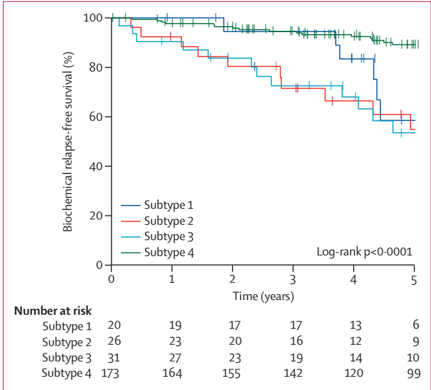
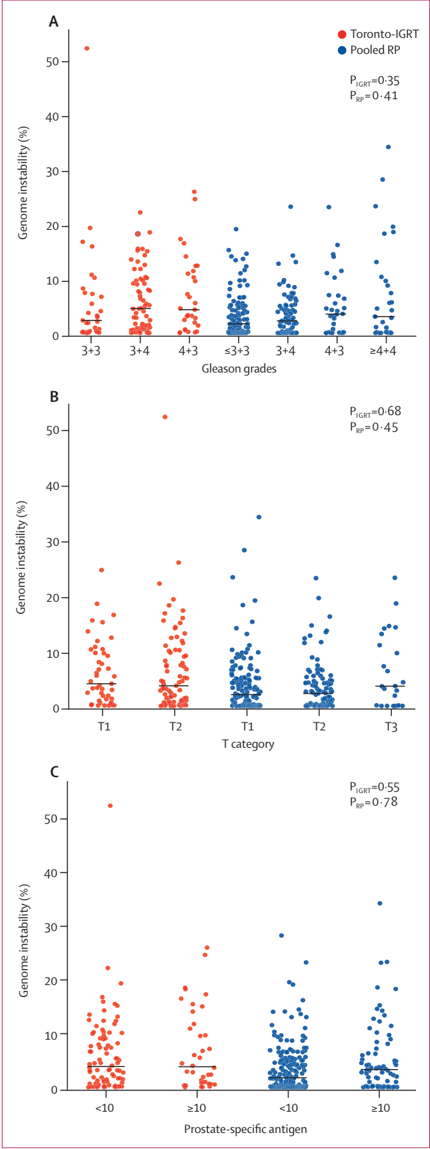
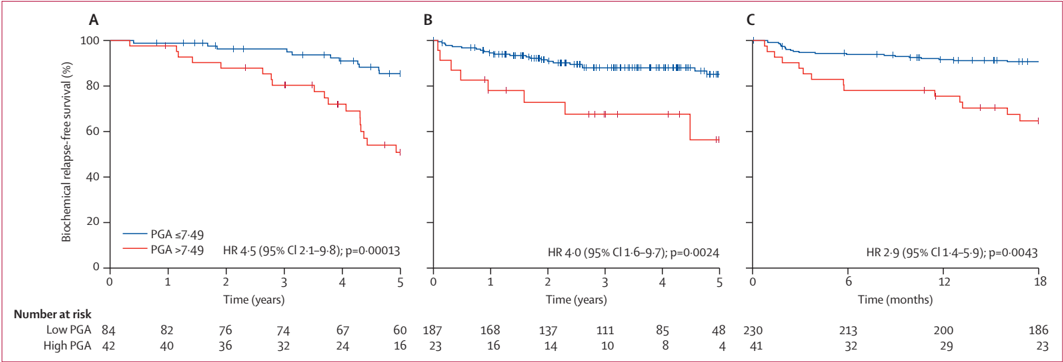
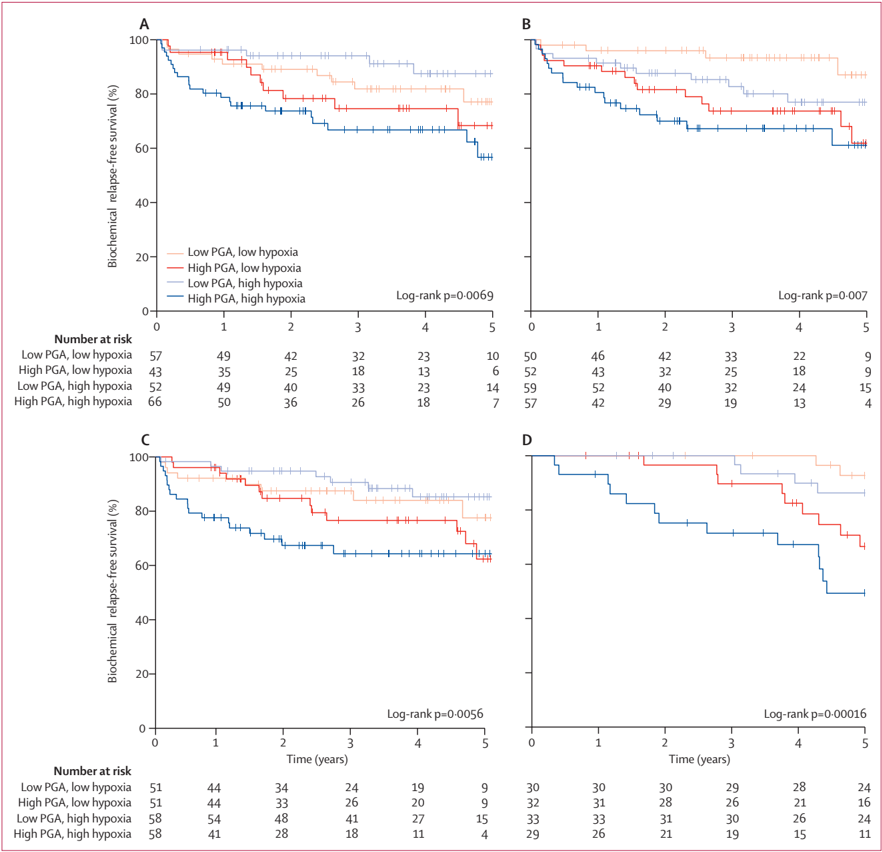
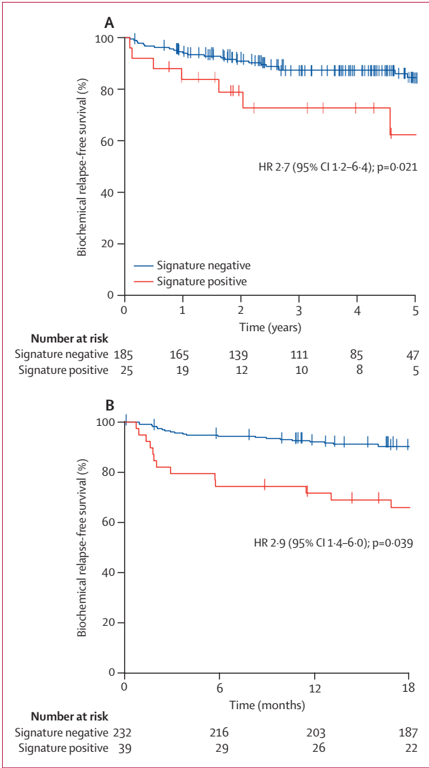
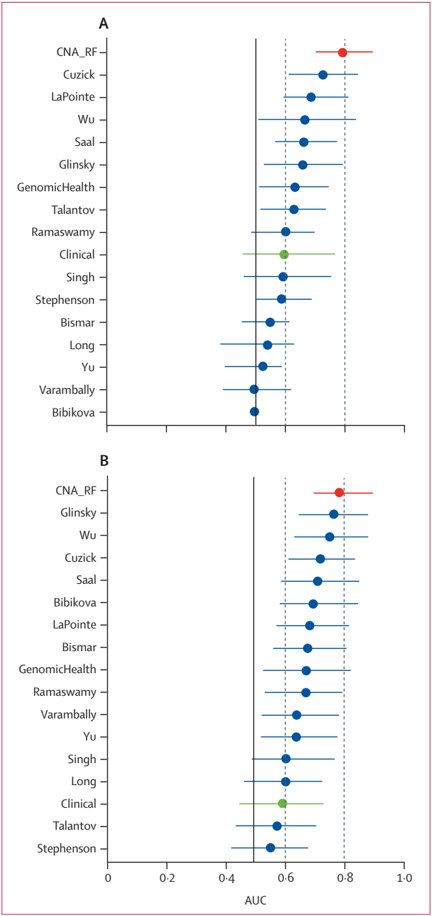
BACKGROUND: Clinical prognostic groupings for localised prostate cancers are imprecise, with 30-50% of patients recurring after image-guided radiotherapy or radical prostatectomy. We aimed to test combined genomic and microenvironmental indices in prostate cancer to improve risk stratification and complement clinical prognostic factors. METHODS: We used DNA-based indices alone or in combination with intra-prostatic hypoxia measurements to develop four prognostic indices in 126 low-risk to intermediate-risk patients (Toronto cohort) who will receive image-guided radiotherapy. We validated these indices in two independent cohorts of 154 (Memorial Sloan Kettering Cancer Center cohort [MSKCC] cohort) and 117 (Cambridge cohort) radical prostatectomy specimens from low-risk to high-risk patients. We applied unsupervised and supervised machine learning techniques to the copy-number profiles of 126 pre-image-guided radiotherapy diagnostic biopsies to develop prognostic signatures. Our primary endpoint was the development of a set of prognostic measures capable of stratifying patients for risk of biochemical relapse 5 years after primary treatment. FINDINGS: Biochemical relapse was associated with indices of tumour hypoxia, genomic instability, and genomic subtypes based on multivariate analyses. We identified four genomic subtypes for prostate cancer, which had different 5-year biochemical relapse-free survival. Genomic instability is prognostic for relapse in both image-guided radiotherapy (multivariate analysis hazard ratio [HR] 4·5 [95% CI 2·1-9·8]; p=0·00013; area under the receiver operator curve [AUC] 0·70 [95% CI 0·65-0·76]) and radical prostatectomy (4·0 [1·6-9·7]; p=0·0024; AUC 0·57 [0·52-0·61]) patients with prostate cancer, and its effect is magnified by intratumoral hypoxia (3·8 [1·2-12]; p=0·019; AUC 0·67 [0·61-0·73]). A novel 100-loci DNA signature accurately classified treatment outcome in the MSKCC low-risk to intermediate-risk cohort (multivariate analysis HR 6·1 [95% CI 2·0-19]; p=0·0015; AUC 0·74 [95% CI 0·65-0·83]). In the independent MSKCC and Cambridge cohorts, this signature identified low-risk to high-risk patients who were most likely to fail treatment within 18 months (combined cohorts multivariate analysis HR 2·9 [95% CI 1·4-6·0]; p=0·0039; AUC 0·68 [95% CI 0·63-0·73]), and was better at predicting biochemical relapse than 23 previously published RNA signatures. INTERPRETATION: This is the first study of cancer outcome to integrate DNA-based and microenvironment-based failure indices to predict patient outcome. Patients exhibiting these aggressive features after biopsy should be entered into treatment intensification trials. FUNDING: Movember Foundation, Prostate Cancer Canada, Ontario Institute for Cancer Research, Canadian Institute for Health Research, NIHR Cambridge Biomedical Research Centre, The University of Cambridge, Cancer Research UK, Cambridge Cancer Charity, Prostate Cancer UK, Hutchison Whampoa Limited, Terry Fox Research Institute, Princess Margaret Cancer Centre Foundation, PMH-Radiation Medicine Program Academic Enrichment Fund, Motorcycle Ride for Dad (Durham), Canadian Cancer Society.
Overview
The claims and statistics of this paper haven’t been checked yet.
Free: it reads the open-access text and checks the first 5 claims that cite a source we can check. Create a free account to check every claim.
Integrity signals
Registry
Cites
Statistics
Figures
Verification
Claims the paper makes
The claims and statistics of this paper haven’t been checked yet.
Free: it reads the open-access text and checks the first 5 claims that cite a source we can check. Create a free account to check every claim.
Claims other papers make about this one
Each is checked against this paper’s own text: does it say what the citing paper says it does?
The source backs part of the claim, not all of it — or backs it for a different population, condition or comparison.
In the citing paper
“Specifically, the tumor microenvironment has also been shown to induce tumor heterogeneity and promote the growth of a tumor itself [8,9].”
From Microfluidic modelling of the tumor microenvironment for anti-cancer drug development (2019) · cites this paper as [9]
Experimental — accuracy not yet measured
Self-check
Percentages, sums and reported differences re-computed from the paper’s own numbers.
The self-check needs the paper’s full text.
Citations
Cites
Breiman, L. (2001) · Machine Learning · doi:10.1023/a:1010933404324 · Cited by 133,538
Estimates of worldwide burden of cancer in 2008: GLOBOCAN 2008
Ferlay, J., Shin, H., Bray, F., Forman, D., Mathers, C., & Parkin, D. M. (2010) · International Journal of Cancer · doi:10.1002/ijc.25516 · Cited by 21,293
Integrative Genomic Profiling of Human Prostate Cancer
Taylor, B. S., Schultz, N., Hieronymus, H., Gopalan, A., Xiao, Y., Carver, B. S., Arora, V. K., Kaushik, P., Cerami, E., Reva, B., et al. (2010) · Cancer Cell · doi:10.1016/j.ccr.2010.05.026 · Cited by 3,701
Roach, M., Hanks, G., Thames, H., Schellhammer, P., Shipley, W. U., Sokol, G. H., & Sandler, H. (2006) · International Journal of Radiation Oncology*Biology*Physics · doi:10.1016/j.ijrobp.2006.04.029 · Cited by 2,749
Freedland, S. J., Humphreys, E. B., Mangold, L. A., Eisenberger, M., Dorey, F. J., Walsh, P. C., & Partin, A. W. (2005) · JAMA · doi:10.1001/jama.294.4.433 · Cited by 1,358
Punctuated Evolution of Prostate Cancer Genomes
Baca, S. C., Prandi, D., Lawrence, M. S., Mosquera, J. M., Romanel, A., Drier, Y., Park, K., Kitabayashi, N., MacDonald, T. Y., Ghandi, M., et al. (2013) · Cell · doi:10.1016/j.cell.2013.03.021 · Cited by 1,320
Hypoxia, DNA repair and genetic instability
Bristow, R. G., & Hill, R. P. (2008) · Nature Reviews Cancer · doi:10.1038/nrc2344 · Cited by 1,140
Self-citationMolecular genetics of prostate cancer: new prospects for old challenges
Shen, M. M., & Abate-Shen, C. (2010) · Genes & Development · doi:10.1101/gad.1965810 · Cited by 946
Yue, S., Li, J., Lee, S.-Y., Lee, H. J., Shao, T., Song, B., Cheng, L., Masterson, T. A., Liu, X., Ratliff, T. L., et al. (2014) · Cell Metabolism · doi:10.1016/j.cmet.2014.01.019 · Cited by 929
Heidenreich, A., Bellmunt, J., Bolla, M., Joniau, S., Matveev, V. B., Mottet, N., Wiegel, T., & Zattoni, F. (2013) · Cited by 876
Cited by
Integrative Clinical Genomics of Advanced Prostate Cancer
Robinson, D., Van Allen, E. M., Wu, Y.-M., Schultz, N., Lonigro, R. J., Mosquera, J.-M., Montgomery, B., Taplin, M.-E., Pritchard, C. C., Attard, G., et al. (2015) · Cell · doi:10.1016/j.cell.2015.05.001 · Cited by 3,645
“Although certain primary prostate cancer alterations or signatures have prognostic clinical significance (Hieronymus et al., 2014; Lalonde et al., 2014), the therapeutic impact of primary prostate cancer genomic events has not yet been realized.”
The Molecular Taxonomy of Primary Prostate Cancer
Abeshouse, A., Ahn, J., Akbani, R., Ally, A., Amin, S., Andry, C. D., Annala, M., Aprikian, A., Armenia, J., Arora, A., et al. (2015) · Cell · doi:10.1016/j.cell.2015.10.025 · Cited by 3,110
“…also have varying degrees of DNA copy-number alteration; indolent and low-Gleason tumors have few alterations, whereas more aggressive primary and metastatic tumors have extensive burdens of copy-number alteration genome-wide (Taylor et al., 2010, Hieronymus et al., 2014, Lalonde et al., 2014).”
BackgroundSelf-citationClonal heterogeneity and tumor evolution: past, present, and the future
McGranahan, N., & Swanton, C. (2017) · Cell · doi:10.1016/j.cell.2017.01.018 · Cited by 2,840
“…(Bolli et al., 2014); lung adenocarcinomas (de Bruin et al., 2014; Zhang et al., 2014); prostate (Gundem et al., 2015; Ju et al., 2014); bladder (Lamy et al., 2016); colorectal adenocarcinomas (Uchi et al., 2016); liver hepatocellular carcinoma (Xue et al., 2016); esophageal squamous cell…”
Rebello, R. J., Oing, C., Knudsen, K. E., Loeb, S., Johnson, D. C., Reiter, R. E., Gillessen, S., Van der Kwast, T., & Bristow, R. G. (2021) · Nature Reviews Disease Primers · doi:10.1038/s41572-020-00243-0 · Cited by 1,090
Self-citationMolecular landmarks of tumor hypoxia across cancer types
Bhandari, V., Hoey, C., Liu, L. Y., Lalonde, E., Ray, J., Livingstone, J., Lesurf, R., Shiah, Y.-J., Vujcic, T., Huang, X., et al. (2019) · Nature Genetics · doi:10.1038/s41588-018-0318-2 · Cited by 678
Self-citationSandhu, S., Moore, C. M., Chiong, E., Beltran, H., Bristow, R. G., & Williams, S. G. (2021) · The Lancet · doi:10.1016/s0140-6736(21)00950-8 · Cited by 583
Self-citationGenomic hallmarks of localized, non-indolent prostate cancer
Fraser, M., Sabelnykova, V. Y., Yamaguchi, T. N., Heisler, L. E., Livingstone, J., Huang, V., Shiah, Y.-J., Yousif, F., Lin, X., Masella, A. P., et al. (2017) · Nature · doi:10.1038/nature20788 · Cited by 600
Self-citationSpatial genomic heterogeneity within localized, multifocal prostate cancer
Boutros, P. C., Fraser, M., Harding, N. J., de Borja, R., Trudel, D., Lalonde, E., Meng, A., Hennings-Yeomans, P. H., McPherson, A., Sabelnykova, V. Y., et al. (2015) · Nature Genetics · doi:10.1038/ng.3315 · Cited by 477
“We comprehensively analyzed SNVs, CNAs and genomic rearrangements (clinical annotation shown in Supplementary Table 9 ) and compared them to the interpatient heterogeneity described above.”
InfluentialSelf-citationWyatt, A. W., Azad, A. A., Volik, S. V., Annala, M., Beja, K., McConeghy, B., Haegert, A., Warner, E. W., Mo, F., Brahmbhatt, S., et al. (2016) · JAMA Oncology · doi:10.1001/jamaoncol.2016.0494 · Cited by 373
Self-citationClinical development of new drug–radiotherapy combinations
on behalf of the NCRI CTRad Academia-Pharma Joint Working Group, Sharma, R. A., Plummer, R., Stock, J. K., Greenhalgh, T. A., Ataman, O., Kelly, S., Clay, R., Adams, R. A., Baird, R. D., et al. (2016) · Nature Reviews Clinical Oncology · doi:10.1038/nrclinonc.2016.79 · Cited by 320
Ross-Adams, H., Lamb, A. D., Dunning, M. J., Halim, S., Lindberg, J., Massie, C. M., Egevad, L. A., Russell, R., Ramos-Montoya, A., Vowler, S. L., et al. (2015) · EBioMedicine · doi:10.1016/j.ebiom.2015.07.017 · Cited by 310
Self-citationHamid, A. A., Gray, K. P., Shaw, G., MacConaill, L. E., Evan, C., Bernard, B., Loda, M., Corcoran, N. M., Van Allen, E. M., Choudhury, A. D., et al. (2019) · European Urology · doi:10.1016/j.eururo.2018.11.045 · Cited by 274
“TMB and PGA, markers of global genomic instability, were significantly prognostic for relapse consistent with previous reports [23,24].”
ResultTargeting Hypoxia to Improve Non–Small Cell Lung Cancer Outcome
Salem, A., Asselin, M.-C., Reymen, B., Jackson, A., Lambin, P., West, C. M. L., O’Connor, J. P. B., & Faivre-Finn, C. (2018) · JNCI: Journal of the National Cancer Institute · doi:10.1093/jnci/djx160 · Cited by 266
The Evolutionary Landscape of Localized Prostate Cancers Drives Clinical Aggression
Espiritu, S. M. G., Liu, L. Y., Rubanova, Y., Bhandari, V., Holgersen, E. M., Szyca, L. M., Fox, N. S., Chua, M. L. K., Yamaguchi, T. N., Heisler, L. E., et al. (2018) · Cell · doi:10.1016/j.cell.2018.03.029 · Cited by 250
Self-citationThe Proteogenomic Landscape of Curable Prostate Cancer
Sinha, A., Huang, V., Livingstone, J., Wang, J., Fox, N. S., Kurganovs, N., Ignatchenko, V., Fritsch, K., Donmez, N., Heisler, L. E., et al. (2019) · Cancer Cell · doi:10.1016/j.ccell.2019.02.005 · Cited by 248
“Percent genome altered (PGA), a biomarker of aggressive disease (Lalonde et al., 2014), was found to be associated with 421 proteins, where the most significant associations included a protein involved in Wnt signaling, FZD7 (Spearman’s r = 0.”
BackgroundMethodResultInfluentialSelf-citationONECUT2 is a driver of neuroendocrine prostate cancer
Guo, H., Ci, X., Ahmed, M., Hua, J. T., Soares, F., Lin, D., Puca, L., Vosoughi, A., Xue, H., Li, E., et al. (2019) · Nature Communications · doi:10.1038/s41467-018-08133-6 · Cited by 243
Self-citationGermline BRCA2 mutations drive prostate cancers with distinct evolutionary trajectories
Taylor, R. A., Fraser, M., Livingstone, J., Espiritu, S. M. G., Thorne, H., Huang, V., Lo, W., Shiah, Y.-J., Yamaguchi, T. N., Sliwinski, A., et al. (2017) · Nature Communications · doi:10.1038/ncomms13671 · Cited by 234
Self-citationHypoxia-activated prodrugs: paths forward in the era of personalised medicine
Hunter, F. W., Wouters, B. G., & Wilson, W. R. (2016) · British Journal of Cancer · doi:10.1038/bjc.2016.79 · Cited by 228
“A follow-up study in this same patient cohort identified two distinct genetic subtypes and although hypoxia was present in both at similar levels, it was associated with poor prognosis only in the subtype with high genomic instability (Lalonde et al, 2014).”
BackgroundMicrofluidic modelling of the tumor microenvironment for anti-cancer drug development
Shang, M., Soon, R. H., Lim, C. T., Khoo, B. L., & Han, J. (2019) · Lab on a Chip · doi:10.1039/c8lc00970h · Cited by 227
Sequencing of prostate cancers identifies new cancer genes, routes of progression and drug targets
CAMCAP Study Group, Wedge, D. C., The TCGA Consortium, Gundem, G., Mitchell, T., Woodcock, D. J., Martincorena, I., Ghori, M., Zamora, J., Butler, A., et al. (2018) · Nature Genetics · doi:10.1038/s41588-018-0086-z · Cited by 224
“6), and were significant predictors of biochemical recurrence independent of cofactors Gleason, PSA at prostatectomy, and pathological T-stage (P = 0.00061 (CDH1) & 0.0015 (ANTXR2), HR = 7.3 & 6.5, Cox regression model, Supplementary Table 4).”
InfluentialSelf-citationZhao, S. G., Chang, S. L., Spratt, D. E., Erho, N., Yu, M., Ashab, H. A.-D., Alshalalfa, M., Speers, C., Tomlins, S. A., Davicioni, E., et al. (2016) · The Lancet Oncology · doi:10.1016/s1470-2045(16)30491-0 · Cited by 213
Self-citationFrancini, E., Gray, K. P., Xie, W., Shaw, G. K., Valença, L., Bernard, B., Albiges, L., Harshman, L. C., Kantoff, P. W., Taplin, M., et al. (2018) · The Prostate · doi:10.1002/pros.23645 · Cited by 204
Ren, S., Wei, G.-H., Liu, D., Wang, L., Hou, Y., Zhu, S., Peng, L., Zhang, Q., Cheng, Y., Su, H., et al. (2018) · European Urology · doi:10.1016/j.eururo.2017.08.027 · Cited by 199
“Overall, we found very few large regions with significant gain in copy numbers, except for the known amplifications at chromosome 8q (8q13, 8q21, 8q22, 8q22, 8q23 and 8q24) [6,24,33], a region harboring oncogenes such as MYC (8q24.”
Self-citationComplexities of Prostate Cancer
Wasim, S., Lee, S.-Y., & Kim, J. (2022) · International Journal of Molecular Sciences · doi:10.3390/ijms232214257 · Cited by 191
SPOP mutation leads to genomic instability in prostate cancer
Boysen, G., Barbieri, C. E., Prandi, D., Blattner, M., Chae, S.-S., Dahija, A., Nataraj, S., Huang, D., Marotz, C., Xu, L., et al. (2015) · eLife · doi:10.7554/elife.09207 · Cited by 193
“Importantly, increased rearrangements likely result in higher total SCNA burden, which is associated with more aggressive clinical behavior (Hieronymus et al., 2014; Lalonde et al., 2014).”
BackgroundChen, J., Remulla, D., Nguyen, J. H., Dua, A., Liu, Y., Dasgupta, P., & Hung, A. J. (2019) · BJU International · doi:10.1111/bju.14852 · Cited by 186
“Tissue morphometric data [23], imaging radiomic features [24,25], and tissue genomic pro fi ling [26,27] were also used to predict patient outcomes.”
MethodChua, M. L. K., Lo, W., Pintilie, M., Murgic, J., Lalonde, E., Bhandari, V., Mahamud, O., Gopalan, A., Kweldam, C. F., van Leenders, G. J. L. H., et al. (2017) · European Urology · doi:10.1016/j.eururo.2017.04.034 · Cited by 177
“UHN Pathology BioBank and the Genito-Urinary BioBank of CHUdeQ-UL or as fresh-frozen single ultrasound-guided needle biopsy, and processed as previously described [5,14,15].”
BackgroundMethodResultInfluentialSelf-citationTumor heterogeneity: preclinical models, emerging technologies, and future applications
Proietto, M., Crippa, M., Damiani, C., Pasquale, V., Sacco, E., Vanoni, M., & Gilardi, M. (2023) · Frontiers in Oncology · doi:10.3389/fonc.2023.1164535 · Cited by 172
Sex Differences in Cancer Driver Genes and Biomarkers
Li, C. H., Haider, S., Shiah, Y.-J., Thai, K., & Boutros, P. C. (2018) · Cancer Research · doi:10.1158/0008-5472.can-18-0362 · Cited by 161
Self-citationon behalf of the Transatlantic Prostate Group, Cuzick, J., Stone, S., Fisher, G., Yang, Z. H., North, B. V., Berney, D. M., Beltran, L., Greenberg, D., Møller, H., et al. (2015) · British Journal of Cancer · doi:10.1038/bjc.2015.223 · Cited by 155
Radiation effects on the tumor microenvironment: Implications for nanomedicine delivery
Stapleton, S., Jaffray, D. A., & Milosevic, M. (2016) · Advanced Drug Delivery Reviews · doi:10.1016/j.addr.2016.05.021 · Cited by 168
Self-citationCellular and Molecular Mechanisms Underlying Prostate Cancer Development: Therapeutic Implications
Testa, U., Castelli, G., & Pelosi, E. (2019) · Medicines · doi:10.3390/medicines6030082 · Cited by 196
The Heterogeneity of Prostate Cancer: A Practical Approach
Tolkach, Y., & Kristiansen, G. (2018) · Pathobiology · doi:10.1159/000477852 · Cited by 159
Yang, L., Roberts, D. L., Takhar, M. M., Erho, N., Bibby, B. A. S., Thiruthaneeswaran, N., Bhandari, V., Cheng, W., Haider, S., McCorry, A. M. B., et al. (2018) · EBioMedicine · doi:10.1016/j.ebiom.2018.04.019 · Cited by 164
“Classifier Recent studies suggested global copy number alteration (CNA) burden as a prognosticmarker of PCa patients [22,49].”
BackgroundMethodInfluentialSelf-citationDivergent mutational processes distinguish hypoxic and normoxic tumours
Bhandari, V., Li, C. H., Bristow, R. G., Boutros, P. C., PCAWG Consortium, Aaltonen, L. A., Abascal, F., Abeshouse, A., Aburatani, H., Adams, D. J., et al. (2020) · Nature Communications · doi:10.1038/s41467-019-14052-x · Cited by 142
Self-citationRubin, M. A., Bristow, R. G., Thienger, P., Dive, C., & Imielinski, M. B. (2020) · Molecular Cell · doi:10.1016/j.molcel.2020.10.033 · Cited by 147
Self-citationChen, W. S., Aggarwal, R. R., Zhang, L., Zhao, S. G., THOMAS, G. V., Beer, T. M., Quigley, D. A., Foye, A., Playdle, D., Huang, J., et al. (2019) · European Urology · doi:10.1016/j.eururo.2019.03.020 · Cited by 139
Böttcher, R., Kweldam, C. F., Livingstone, J. M., Lalonde, E., Yamaguchi, T. N., Huang, V., Yousif, F., Fraser, M. E., Bristow, R. G., van der Kwast, T., et al. (2018) · BMC Cancer · doi:10.1186/s12885-017-3976-z · Cited by 148
“Similarly, a gene-by-sample matrix was obtained for all revised CPC-GENE samples based on Affymetrix OncoScan arrays as described in [17].”
BackgroundMethodInfluentialSelf-citationAneuploidy drives lethal progression in prostate cancer
Stopsack, K. H., Whittaker, C. A., Gerke, T. A., Loda, M. F., Kantoff, P. W., Mucci, L. A., & Amon, A. (2019) · Proceedings of the National Academy of Sciences · doi:10.1073/pnas.1902645116 · Cited by 136
“The two methods may also help overcome limitations of previous studies of CNAs in prostate cancer, which could only enroll patients from whom fresh-frozen biopsy samples could be obtained for DNA copy-number analysis (9, 14, 27, 28).”
MethodTargeted proteomics identifies liquid-biopsy signatures for extracapsular prostate cancer
Kim, Y., Jeon, J., Mejia, S., Yao, C. Q., Ignatchenko, V., Nyalwidhe, J. O., Gramolini, A. O., Lance, R. S., Troyer, D. A., Drake, R. R., et al. (2016) · Nature Communications · doi:10.1038/ncomms11906 · Cited by 125
Self-citationClinical variability and molecular heterogeneity in prostate cancer
Barbieri, C. E., & Shoag, J. E. (2016) · Asian Journal of Andrology · doi:10.4103/1008-682x.178852 · Cited by 142
Mitochondrial mutations drive prostate cancer aggression
Hopkins, J. F., Sabelnykova, V. Y., Weischenfeldt, J., Simon, R., Aguiar, J. A., Alkallas, R., Heisler, L. E., Zhang, J., Watson, J. D., Chua, M. L. K., et al. (2017) · Nature Communications · doi:10.1038/s41467-017-00377-y · Cited by 120
Self-citationMolecular Subtypes of Prostate Cancer
Arora, K., & Barbieri, C. E. (2018) · Current Oncology Reports · doi:10.1007/s11912-018-0707-9 · Cited by 134
Hameed, B. M. Z., Dhavileswarapu, A. V. L. S., Raza, S. Z., Karimi, H., Khanuja, H. S., Shetty, D. K., Ibrahim, S., Shah, M., Naik, N., Paul, R., et al. (2021) · Journal of Clinical Medicine · doi:10.3390/jcm10091864 · Cited by 120
“Tissue morphometric data [36], imaging radiomic features [37,38], and tissue genomic profiling [39,40] are also among the methods that are used for outcome forecasting of a patient.”
BackgroundMethodLotan, T. L., Kaur, H. B., Salles, D. C., Murali, S., Schaeffer, E. M., Lanchbury, J. S., Isaacs, W. B., Brown, R., Richardson, A. L., Cussenot, O., et al. (2021) · Modern Pathology · doi:10.1038/s41379-020-00731-4 · Cited by 106
Chen, H., Aggarwal, R. R., Bok, R., Ohliger, M. A., Zhu, Z., Lee, P., Gordon, J. W., Criekinge, M. V., Carvajal, L. E., Slater, J. B., et al. (2019) · Prostate Cancer and Prostatic Diseases · doi:10.1038/s41391-019-0180-z · Cited by 124
Metformin: A Novel Biological Modifier of Tumor Response to Radiation Therapy
Koritzinsky, M. (2015) · International Journal of Radiation Oncology*Biology*Physics · doi:10.1016/j.ijrobp.2015.06.003 · Cited by 109
“As such, hypoxia modification in head and neck or prostate cancer is mainly warranted in the human papillomavirusepositive population, or in tumors with elevated levels of DNA copy number alterations, respectively (108, 109).”
BackgroundLSD1-Mediated Epigenetic Reprogramming Drives CENPE Expression and Prostate Cancer Progression
Liang, Y., Ahmed, M., Guo, H., Soares, F., Hua, J. T., Gao, S., Lu, C., Poon, C., Han, W., Langstein, J., et al. (2017) · Cancer Research · doi:10.1158/0008-5472.can-17-0496 · Cited by 102
“Tumor suppressor retinoblastoma-associated protein 1 (RB1) is often lost in PCa (38-40), and has recently been reported to repress transcription in presence of androgen in PCa (41).”
BackgroundSelf-citationThe Immune Microenvironment, Genome-wide Copy Number Aberrations, and Survival in Mesothelioma
Thapa, B., Salcedo, A., Lin, X., Walkiewicz, M., Murone, C., Ameratunga, M., Asadi, K., Deb, S., Barnett, S. A., Knight, S., et al. (2017) · Journal of Thoracic Oncology · doi:10.1016/j.jtho.2017.02.013 · Cited by 106
Self-citationHompland, T., Hole, K. H., Ragnum, H. B., Aarnes, E., Vlatkovic, L., Lie, A. K., Patzke, S., Brennhovd, B., Seierstad, T., & Lyng, H. (2018) · Cancer Research · doi:10.1158/0008-5472.can-17-3806 · Cited by 99
Hypoxia-driven intratumor heterogeneity and immune evasion
Terry, S., Engelsen, A. S. T., Buart, S., El‐Sayed, W., Venkatesh, G. H., & Chouaïb, S. (2020) · Cancer Letters · doi:10.1016/j.canlet.2020.07.004 · Cited by 107
Age influences on the molecular presentation of tumours
Li, C. H., Haider, S., & Boutros, P. C. (2022) · Nature Communications · doi:10.1038/s41467-021-27889-y · Cited by 114
Self-citationThe genomic and evolutionary landscapes of anaplastic thyroid carcinoma
Zeng, P. Y., Prokopec, S. D., Lai, S. Y., Pinto, N. C., Chan‐Seng‐Yue, M., Clifton-Bligh, R. J., Williams, M. D., Howlett, C. J., Plantinga, P., Cecchini, M. J., et al. (2024) · Cell Reports · doi:10.1016/j.celrep.2024.113826 · Cited by 101
Self-citationRevisiting Seed and Soil: Examining the Primary Tumor and Cancer Cell Foraging in Metastasis
de Groot, A. E., Roy, S. G., Brown, J. S., Pienta, K. J., & Amend, S. R. (2017) · Molecular Cancer Research · doi:10.1158/1541-7786.mcr-16-0436 · Cited by 103
“In the case of cancer cells, while the complete repertoire of resources has not been defined, resources likely include oxygen (47), carbon and nitrogen sources (sugars, amino acids, and lipids; ref.”
Kirsch, D. G., Diehn, M., Kesarwala, A. H., Maity, A. M., Morgan, M. A., Schwarz, J. K., Bristow, R. G., Demaria, S., Eke, I., Griffin, R. J., et al. (2017) · JNCI Journal of the National Cancer Institute · doi:10.1093/jnci/djx231 · Cited by 105
“Identification of predictive biomarkers for radiation therapy has been hampered by the fact that, except for prostate cancer studies (146), large multi-omics profiling efforts such as The Cancer Genome Atlas and the International Cancer Genome Consortium have by and large not included specimens from patients treated w…”
BackgroundSelf-citationAndrogen receptor profiling predicts prostate cancer outcome
Stelloo, S., Nevedomskaya, E., van der Poel, H. G., de Jong, J., van Leenders, G. J. L. H., Jenster, G. W., Wessels, L. F. A., Bergman, A. M., & Zwart, W. T. (2015) · EMBO Molecular Medicine · doi:10.15252/emmm.201505424 · Cited by 100
“Besides clinical risk stratifications, a number of different genomic classifications have been developed that enable the identification of high-risk patients (Irshad et al , 2013; Lalonde et al , 2014; Ramos-Montoya et al , 2014).”
Ultra high-risk PFA ependymoma is characterized by loss of chromosome 6q
Baroni, L., Sundaresan, L., Heled, A., Coltin, H., Pajtler, K. W., Lin, T., Merchant, T. E., McLendon, R. E., Faria, C. C., Buntine, M. K., et al. (2021) · Neuro-Oncology · doi:10.1093/neuonc/noab034 · Cited by 94
Genetic and Non-Genetic Mechanisms Underlying Cancer Evolution
Shlyakhtina, Y., Moran, K. L., & Portal, M. M. (2021) · Cancers · doi:10.3390/cancers13061380 · Cited by 104
Intratumor heterogeneity in prostate cancer
Yadav, S. S., Stockert, J. A., Hackert, V., Yadav, K. K., & Tewari, A. K. (2018) · Urologic Oncology Seminars and Original Investigations · doi:10.1016/j.urolonc.2018.05.008 · Cited by 103
Salem, A., Little, R. A., Latif, A., Featherstone, A. K., Babur, M., Peset, I., Cheung, S., Watson, Y., Tessyman, V., Mistry, H. B., et al. (2019) · Clinical Cancer Research · doi:10.1158/1078-0432.ccr-18-3932 · Cited by 93
“This suggests that a multimodal imaging, genomic, and tissue pathology biomarker panel, performed before and during treatment, may be required to fully understand, predict, and monitor hypoxia modification in the clinic (43).”
BackgroundSelf-citationMolecular Hallmarks of Multiparametric Magnetic Resonance Imaging Visibility in Prostate Cancer
Houlahan, K. E., Salmasi, A., Sadun, T. Y., Pooli, A. H., Felker, E. R., Livingstone, J. M., Huang, V., Raman, S. S., Ahuja, P., Sisk, A. E. J., et al. (2019) · European Urology · doi:10.1016/j.eururo.2018.12.036 · Cited by 88
Self-citationProfiles of Radioresistance Mechanisms in Prostate Cancer
Chaiswing, L., Weiss, H. L., Jayswal, R. D., Clair, D. K. S., & Kyprianou, N. (2018) · Critical Reviews™ in Oncogenesis · doi:10.1615/critrevoncog.2018025946 · Cited by 94
Hypoxia and Predicting Radiation Response
Hill, R. P., Bristow, R. G., Fyles, A., Koritzinsky, M., Milosevic, M., & Wouters, B. G. (2015) · Seminars in Radiation Oncology · doi:10.1016/j.semradonc.2015.05.004 · Cited by 101
Self-citationJaratlerdsiri, W., Chan, E. K. F., Gong, T., Petersen, D. C., Kalsbeek, A. M. F., Venter, P. A., Stricker, P. D., Bornman, R. M. S., & Hayes, V. M. (2018) · Cancer Research · doi:10.1158/0008-5472.can-18-0254 · Cited by 97
Ghiam, A. F., Taeb, S., Huang, X., Huang, V., Ray, J., Scarcello, S., Hoey, C., Jahangiri, S., Fokas, E., Loblaw, A., et al. (2016) · Oncotarget · doi:10.18632/oncotarget.13576 · Cited by 85
“com/oncotarget data from a cohort of 209 patients with intermediaterisk PCa treated with RT or radical prostatectomy [26].”
MethodSelf-citationTranslational and clinical implications of the genetic landscape of prostate cancer
Spratt, D. E., Zumsteg, Z. S., Feng, F. Y.-C., & Tomlins, S. A. (2016) · Nature Reviews Clinical Oncology · doi:10.1038/nrclinonc.2016.76 · Cited by 86
Estimation of tumor cell total mRNA expression in 15 cancer types predicts disease progression
Cao, S., Wang, J. R., Ji, S., Peng, Y., Dai, Y., Guo, S., Montierth, M. D., Shen, J. P., Zhao, X. H., Chen, J., et al. (2022) · Nature Biotechnology · doi:10.1038/s41587-022-01342-x · Cited by 91
Self-citationAfrican-specific molecular taxonomy of prostate cancer
Jaratlerdsiri, W., Jiang, J., Gong, T., Patrick, S. M., Willet, C. E., Chew, T., Lyons, R. J., Haynes, A., Pasqualim, G., Louw, M., et al. (2022) · Nature · doi:10.1038/s41586-022-05154-6 · Cited by 78
Stromal Gene Expression is Predictive for Metastatic Primary Prostate Cancer
Mo, F., Lin, D., Takhar, M. M., Ramnarine, V. R., Dong, X., Bell, R. H., Volik, S. V., Wang, K., Xue, H., Wang, Y., et al. (2017) · European Urology · doi:10.1016/j.eururo.2017.02.038 · Cited by 76
“Both intertumor heterogeneity between patients and intratumor heterogeneity (ITH) within patients present major challenges for both patient stratification and discovery of biomarkers [5,9,16].”
Self-citationRisbridger, G. P., Toivanen, R., & Taylor, R. A. (2018) · Cold Spring Harbor Perspectives in Medicine · doi:10.1101/cshperspect.a030536 · Cited by 78
“For example, new pathways to target were identified, new mechanisms of resistance were uncovered, and the overall complexity of the disease, attributable to tumor heterogeneity, was realized (Lalonde et al. 2014; Beltran et al. 2016).”
BackgroundThe influence of BRCA2 mutation on localized prostate cancer
Taylor, R. A., Fraser, M. E., Rebello, R. J., Boutros, P. C., Murphy, D. G., Bristow, R. G., & Risbridger, G. P. (2019) · Nature Reviews Urology · doi:10.1038/s41585-019-0164-8 · Cited by 75
Self-citationProteomic discovery of non-invasive biomarkers of localized prostate cancer using mass spectrometry
Khoo, A., Liu, L., Nyalwidhe, J. O., Semmes, O. J., Vesprini, D., Downes, M. R., Boutros, P. C., Liu, S. K., & Kislinger, T. (2021) · Nature Reviews Urology · doi:10.1038/s41585-021-00500-1 · Cited by 73
Self-citationLee, G., Veltri, R. W., Zhu, G., Ali, S., Epstein, J. I., & Madabhushi, A. (2017) · European Urology Focus · doi:10.1016/j.euf.2016.05.009 · Cited by 68
“009 Stephenson [17,24] nomograms, Cancer of the Prostate Risk Assessment (CAPRA) risk scores [25], and genomic predictors [26] are among the many solutions for predicting recurrence following RP, but none of these measures explicitly extracts information from the adjacent benign regions.”
Castelo‐Branco, P., Leao, R. R. N., Lipman, T., Campbell, B. B., Lee, D., Price, A. J., Zhang, C., Heidari, A., Stephens, D., Boerno, S. T., et al. (2016) · Oncotarget · doi:10.18632/oncotarget.10639 · Cited by 77
Self-citationMicroRNA in radiotherapy: miRage or miRador?
Korpela, E., Vesprini, D., & Liu, S. K. (2015) · British Journal of Cancer · doi:10.1038/bjc.2015.6 · Cited by 72
Li, H., Peng, C., Zhu, C., Nie, S., Qian, X., Shi, Z., Shi, M., Yan, L., Ding, X., Zhang, S., et al. (2021) · Clinical Epigenetics · doi:10.1186/s13148-021-01016-6 · Cited by 77
“Then, we calculated the hypoxia score of TCGA samples using the 30 genes as previously described [20].”
Improved Method to Stratify Elderly Patients With Cancer at Risk for Competing Events
Carmona, R., Zakeri, K., Green, G., Hwang, L., Gulaya, S., Xu, B., Verma, R., Williamson, C. W., Triplett, D. P., Rose, B. S., et al. (2016) · Journal of Clinical Oncology · doi:10.1200/jco.2015.65.0739 · Cited by 69
Ahmed, M. S. U., Salam, A. B., Yates, C. C., Willian, K. R., Jaynes, J. M., Turner, T., & Abdalla, M. O. A. (2017) · International Journal of Nanomedicine · doi:10.2147/ijn.s139011 · Cited by 65
Knudsen, B. S., Kim, H. L., Erho, N., Shin, H., Alshalalfa, M., Lam, L. L. C., Tenggara, I., Chadwich, K., van der Kwast, T., Fleshner, N. E., et al. (2016) · Journal of Molecular Diagnostics · doi:10.1016/j.jmoldx.2015.12.006 · Cited by 61
Self-citationHomeostasis Back and Forth: An Ecoevolutionary Perspective of Cancer
Basanta, D., & Anderson, A. R. A. (2017) · Cold Spring Harbor Perspectives in Medicine · doi:10.1101/cshperspect.a028332 · Cited by 60
Paczkowski, M., Kretzschmar, W. W., Markelc, B., Liu, S. K., Kunz‐Schughart, L. A., Harris, A. L., Partridge, M., Byrne, H. M., & Kannan, P. (2021) · Communications Biology · doi:10.1038/s42003-020-01529-5 · Cited by 58
Kamoun, A., Cancel‐Tassin, G., Fromont, G., Elarouci, N., Armenoult, L., Ayadi, M., Irani, J., Leroy, X., Villers, A. A., Fournier, G., et al. (2018) · Annals of Oncology · doi:10.1093/annonc/mdy224 · Cited by 57
“Also, the lack of consensus among published molecular classifications and prognostic molecular signatures makes it difficult to use the molecular characteristics within clinical routine [6].”
BackgroundJeon, J., Olkhov‐Mitsel, E., Xie, H., Yao, C. Q., Zhao, F., Jahangiri, S., Cuizon, C., Scarcello, S., Jeyapala, R., Watson, J. D., et al. (2019) · JNCI Journal of the National Cancer Institute · doi:10.1093/jnci/djz112 · Cited by 57
Self-citationSynergistic action of image-guided radiotherapy and androgen deprivation therapy
Locke, J. A., Pra, A. D., Supiot, S., Warde, P. R., & Bristow, R. G. (2015) · Nature Reviews Urology · doi:10.1038/nrurol.2015.50 · Cited by 54
Self-citationMurphy, K., Murphy, T. B., Boyce, S., Flynn, L. M., Gilgunn, S., O’Rourke, C. J., Rooney, C., Stöckmann, H., Walsh, A. L., Finn, S. P., et al. (2018) · Molecular Oncology · doi:10.1002/1878-0261.12348 · Cited by 54
“Recent studies have combined genomic instability and the micro-environment factor hypoxia, with clinical parameters to improve prognostication in patients with localised disease to predict biochemical recurrence (Lalonde et al., 2014).”
BackgroundGenomics of adult and pediatric solid tumors.
Rahal, Z., Abdulhai, F., Kadara, H. N., & Saab, R. H. (2018) · Europe PMC (PubMed Central) · Cited by 59
Lee, A. Y., Ewing, A. D., Ellrott, K., Hu, Y., Houlahan, K. E., Bare, J. C., Espiritu, S. M. G., Huang, V., Dang, K., Chong, Z., et al. (2018) · Genome biology · doi:10.1186/s13059-018-1539-5 · Cited by 67
Self-citationTumour hypoxia in driving genomic instability and tumour evolution
Suvac, A., Ashton, J., & Bristow, R. G. (2025) · Nature reviews. Cancer · doi:10.1038/s41568-024-00781-9 · Cited by 142
“metastasis-free survival when compared to tumours that have only one or neither of these two features 37,57,80 .”
InfluentialSelf-citationSunkel, B. D., Wu, D., Chen, Z., Wang, C., Liu, X., Ye, Z., Horning, A. M., Liu, J., Mahalingam, D., Lopez-Nicora, H. D., et al. (2016) · Nucleic Acids Research · doi:10.1093/nar/gkv1528 · Cited by 58
“Additionally, while genome-wide copy number alteration (CNA) alone or in combination with additional tumor characteristics provide valuable prognostic information for effective risk stratification to aid in early clinical decision making (8,9), they do not immediately identify the therapeutic compounds from which a hi…”
BackgroundHypoxia gene expression signatures as predictive biomarkers for personalising radiotherapy
Yang, L., & West, C. (2018) · British Journal of Radiology · doi:10.1259/bjr.20180036 · Cited by 50
Personalized radiotherapy: concepts, biomarkers and trial design
Ree, A. H., & Redalen, K. R. (2015) · British Journal of Radiology · doi:10.1259/bjr.20150009 · Cited by 51
Egevad, L., Delahunt, B., Kristiansen, G., Samaratunga, H., & Varma, M. (2017) · Pathology · doi:10.1016/j.pathol.2017.09.008 · Cited by 49
“Investigations involving contemporary genomic classifiers that focus on the clinical impact of chromoplexy and tumour hypoxia are currently in progress.(126) The prognostic value of the TMPRSS2-ERG translocation is still unclear.”
BackgroundResistance of Hypoxic Cells to Ionizing Radiation Is Mediated in Part via Hypoxia-Induced Quiescence
Menegakis, A., Klompmaker, R., Vennin, C., Arbusà, A., Damen, M. P. F., van den Broek, B., Zips, D., van Rheenen, J., Krenning, L., & Medema, R. H. (2021) · Cells · doi:10.3390/cells10030610 · Cited by 45
Erickson, A. M., Hayes, A., Rajakumar, T., Verrill, C. L., Bryant, R. J., Hamdy, F. C., Wedge, D. C., Woodcock, D. J., Mills, I. G., & Lamb, A. D. G. (2021) · European Urology Oncology · doi:10.1016/j.euo.2021.02.008 · Cited by 49
Self-citationBiomarkers for Prostate Cancer: Present Challenges and Future Opportunities
Sharma, P., Zargar‐Shoshtari, K., & Pow‐Sang, J. M. (2015) · Future Science OA · doi:10.4155/fso.15.72 · Cited by 54
Camacho, N., Loo, P. V., Edwards, S. E., Kay, J. D., Matthews, L. H., Haase, K., Clark, J., Dennis, N. M., Thomas, S. A., Kremeyer, B., et al. (2017) · PLoS Genetics · doi:10.1371/journal.pgen.1007001 · Cited by 44
“5 month; Fig 1A and 1B) than patients with fewer SCNAs, consistent with other publications [13,18,19] linking higher numbers of SCNAs to poorer outcome.”
BackgroundResultSelf-citationHow Advances in Imaging Will Affect Precision Radiation Oncology
Jaffray, D. A., Das, S. K., Jacobs, P. M., Jeraj, R., & Lambin, P. (2018) · International Journal of Radiation Oncology*Biology*Physics · doi:10.1016/j.ijrobp.2018.01.047 · Cited by 46
“The effect of very low oxygen levels on cell radiosensitivity has been established in basic science and is a well-documented negative predictive factor in the outcomes of a variety of cancers, including cancer of the cervix, head and neck, and prostate (9-12).”
BackgroundA novel gene signature to predict immune infiltration and outcome in patients with prostate cancer
Shao, N., Tang, H., Mi, Y., Zhu, Y., Wan, F., & Ye, D. (2020) · OncoImmunology · doi:10.1080/2162402x.2020.1762473 · Cited by 50
“Most patients with localized cancer receive standard therapy such as radical prostatectomy (RP) or radiotherapy.(2) However, approximately 20–30% of patients will develop biochemical recurrence (BCR).”
BackgroundTP53 alterations of hormone-naïve prostate cancer in the Chinese population
Liu, Z., Guo, H., Zhu, Y., Xia, Y., Cui, J., Shi, K., Fan, Y., Shi, B., & Chen, S. (2020) · Prostate Cancer and Prostatic Diseases · doi:10.1038/s41391-020-00302-3 · Cited by 51
Predictors of early androgen deprivation treatment failure in prostate cancer with bone metastases
Varenhorst, E., Klaff, R., Berglund, A., Hedlund, P. O., Sandblom, G., & the Scandinavian Prostate Cancer Group (SPCG) Trial No. 5 (2016) · Cancer Medicine · doi:10.1002/cam4.594 · Cited by 41
“Although certain gene alterations or signatures have prognostic significance in primary prostate cancer, the clinical impact of primary prostate cancer genomic events has yet to be seen [17, 27–29].”
Background
Metadata
- Authors
- Lalonde, E., Ishkanian, A. S., Sykes, J., Fraser, M., Ross-Adams, H., Erho, N., Dunning, M. J., Halim, S., Lamb, A. D., Moon, N. C., Zafarana, G., Warren, A. Y., Meng, X., Thoms, J., Grzadkowski, M. R., Berlin, A., Have, C. L., Ramnarine, V. R., Yao, C. Q., Malloff, C. A., Lam, L. L., Xie, H., Harding, N. J., Mak, D. Y. F., Chu, K. C., Chong, L. C., Sendorek, D. H., P'ng, C., Collins, C. C., Squire, J. A., Jurisica, I., Cooper, C., Eeles, R., Pintilie, M., Dal Pra, A., Davicioni, E., Lam, W. L., Milosevic, M., Neal, D. E., van der Kwast, T., Boutros, P. C., & Bristow, R. G.
- Affiliations
- Ontario Institute for Cancer Research (CA)
- University of Miami (US)
- University Health Network (CA)
- University of Cambridge (GB)
- Addenbrooke's Hospital (GB)
- BC Cancer Agency (CA)
- University of British Columbia (CA)
- Universidade de São Paulo (BR)
- University of East Anglia (GB)
- National Health Service (GB)
- University of Toronto (CA)
- Corresponding author
- Bristow, Robert G
- ORCID
- Lalonde, Emilie
- Ishkanian, Adrian S
- Sykes, Jenna
- Fraser, Michael
- Erho, Nicholas
- Dunning, Mark J
- Halim, Silvia
- Lamb, Alastair D
- Moon, Nathalie C
- Zafarana, Gaetano
- Warren, Anne Y
- Grzadkowski, Michal R
- Ramnarine, Varune R
- Harding, Nicholas J
- Chong, Lauren C
- Sendorek, Dorota H
- Collins, Colin C
- Squire, Jeremy A
- Eeles, Rosalind
- Pintilie, Melania
- Davicioni, Elai
- Lam, Wan L
- Milosevic, Michael
- Neal, David E
- Boutros, Paul C
- Bristow, Robert G
- Venue
- The Lancet Oncology
- Publisher
- Elsevier BV
- Published
- 2014-12
- Volume
- 15
- Issue
- 13
- Pages
- 1521-1532
- ISSN
- 1470-2045 (ISSN-L)
- OpenAlex
- W2158872144
- Semantic Scholar
- 378b92545e4328ee0569fb7c09dcf221a8d05054
- Cited by
- 342
- References
- 36
- Citations by year
- 2026: 9 · 2025: 17 · 2024: 26 · 2023: 24 · 2022: 30 · 2021: 40 · 2020: 29 · 2019: 31 · 2018: 38 · 2017: 35 · 2016: 39 · 2015: 22 · 2014: 2
- FWCI
- 26.05
- Type
- journal article
- Language
- en
- Open access
- hybrid
- doi.org
- Licence
- cc-by
- www.elsevier.com/tdm/userlicense/1.0/ (tdm)
- www.elsevier.com/legal/tdmrep-license (tdm)
- creativecommons.org/licenses/by/3.0/ (vor)
- Locations
- The Lancet Oncology (publishedVersion, cc-by)
- PubMed (publishedVersion)
- Research Explorer (The University of Manchester) (publishedVersion)
- UEA Digital Repository (University of East Anglia) (acceptedVersion)
- Bern Open Repository and Information System (University of Bern) (submittedVersion)
- Funders
- Prostate Cancer Canada and is funded by the Movember Foundation (grant number RS2014-01)
- Topics
- Life Sciences › Biochemistry, Genetics and Molecular Biology › Cancer Research › Prostate Cancer Treatment and Research
- Health Sciences › Medicine › Urology › Prostate Cancer Diagnosis and Treatment
- Life Sciences › Biochemistry, Genetics and Molecular Biology › Cancer Research › Breast Cancer Treatment Studies
- Keywords
- prostate cancer, biochemical recurrence, tumor microenvironment, intratumoral hypoxia, genomic instability, copy number profiles, genomic subtypes, risk stratification, image-guided radiotherapy, radical prostatectomy, prognostic score, localized prostate cancer, machine learning prediction
- MeSH terms
- DNA, Neoplasm, Follow-Up Studies, Humans, Male, Neoplasm Recurrence, Local, Prognosis, Prostatic Neoplasms, Retrospective Studies, Time Factors, Biomarkers, Tumor, Oligonucleotide Array Sequence Analysis, Gene Expression Profiling, Genomics, Tumor Microenvironment
About these checks
Registry, retraction, Cites and statistics results are computed, not judged, with one exception: a printed reference that no index lists is read once by a model before it counts as a citation error. Claims are extracted by a model and kept only when their quote appears verbatim in the text; each cited source is then checked, with a model’s help, for whether it says what the claim relies on. Those verdicts can be wrong — read the claim’s quote and the cited source before relying on one.
Statistics and arithmetic are recomputed, not judged.
Confidence bands are shown only for fields calibrated on our annotated test set. None is calibrated yet, so no band is shown.
What counts as a claim ›How we measure confidence ›How we check this ›
Are you an author, or do you see a problem with this page? Request a review
Data sources
Bibliographic data: Semantic Scholar, OpenAlex, Crossref.
Contains information from the Semantic Scholar Academic Graph Datasets, made available under the ODC Attribution License (ODC-BY 1.0).
Semantic Scholar’s data is described in: Kinney, R., et al. (2023). The Semantic Scholar Open Data Platform. arXiv:2301.10140.
