

Temozolomide chemotherapy versus radiotherapy in high-risk low-grade glioma (EORTC 22033-26033): a randomised, open-label, phase 3 intergroup study
Open accessThe DOI matches its Crossref record; 46 of the 47 references it cites were found in a registry or an index.
Abstract
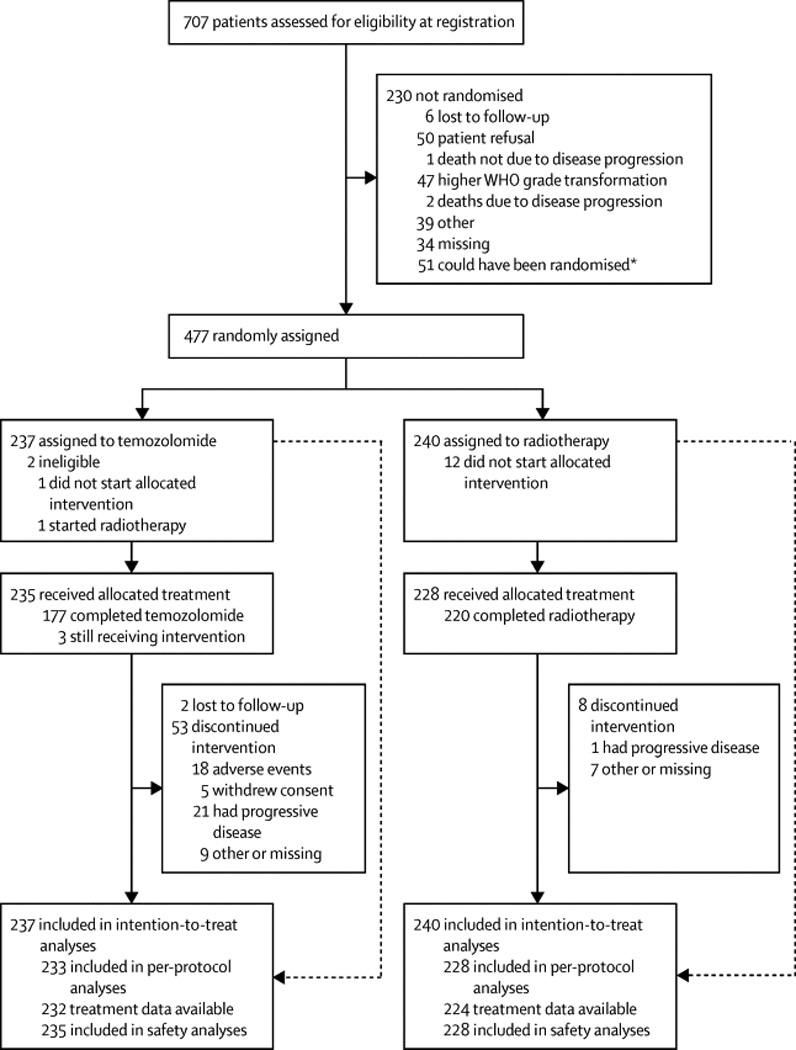
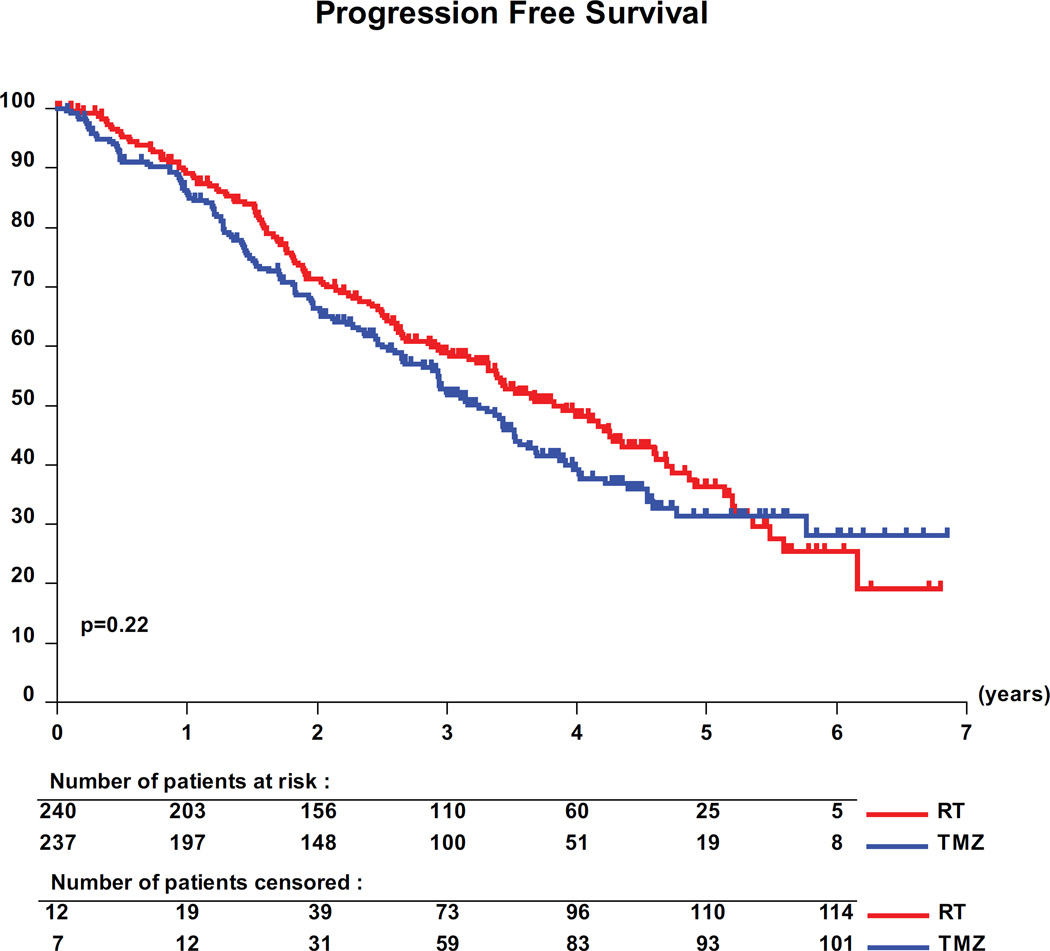
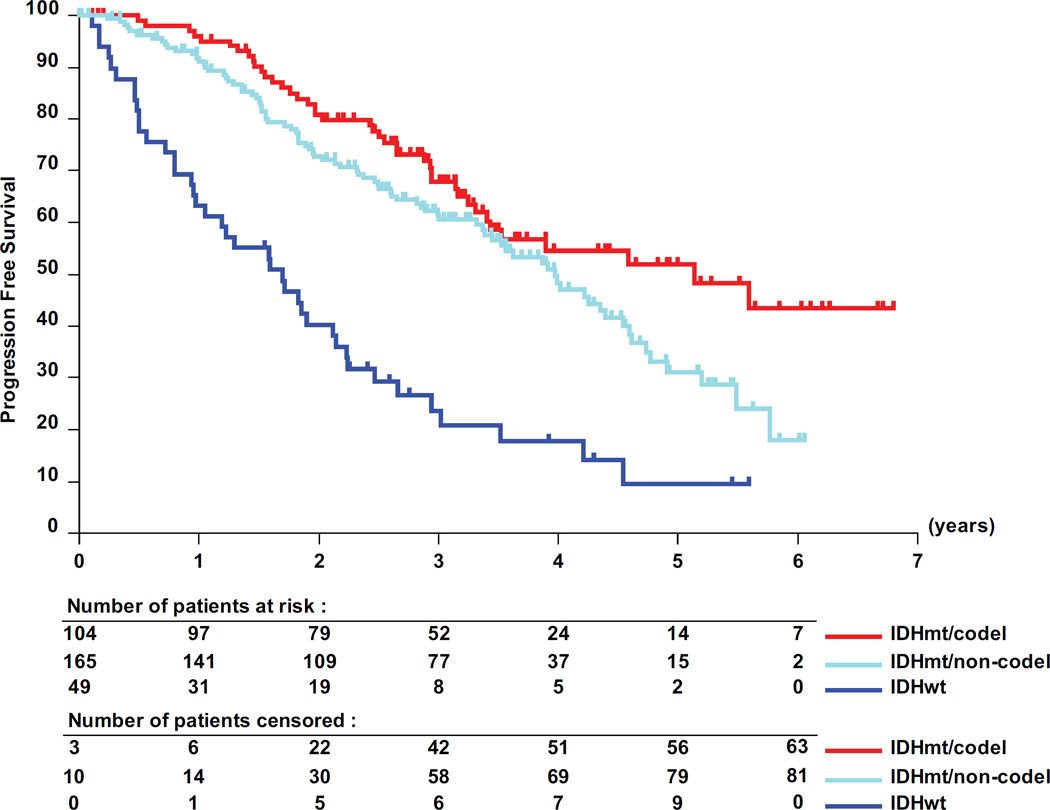
Background Outcome of low-grade glioma (WHO grade II) is highly variable, reflecting molecular heterogeneity of the disease. We compared two different, single-modality treatment strategies of standard radiotherapy versus primary temozolomide chemotherapy in patients with low-grade glioma, and assessed progression-free survival outcomes and identified predictive molecular factors. Methods For this randomised, open-label, phase 3 intergroup study (EORTC 22033-26033), undertaken in 78 clinical centres in 19 countries, we included patients aged 18 years or older who had a low-grade (WHO grade II) glioma (astrocytoma, oligoastrocytoma, or oligodendroglioma) with at least one high-risk feature (aged >40 years, progressive disease, tumour size >5 cm, tumour crossing the midline, or neurological symptoms), and without known HIV infection, chronic hepatitis B or C virus infection, or any condition that could interfere with oral drug administration. Eligible patients were randomly assigned (1:1) to receive either conformal radiotherapy (up to 50·4 Gy; 28 doses of 1·8 Gy once daily, 5 days per week for up to 6·5 weeks) or dose-dense oral temozolomide (75 mg/m 2 once daily for 21 days, repeated every 28 days [one cycle], for a maximum of 12 cycles). Random treatment allocation was done online by a minimisation technique with prospective stratification by institution, 1p deletion (absent vs present vs undetermined), contrast enhancement (yes vs no), age (<40 vs ≥40 years), and WHO performance status (0 vs ≥1). Patients, treating physicians, and researchers were aware of the assigned intervention. A planned analysis was done after 216 progression events occurred. Our primary clinical endpoint was progression-free survival, analysed by intention-to-treat; secondary outcomes were overall survival, adverse events, neurocognitive function (will be reported separately), health-related quality of life and neurological function (reported separately), and correlative analyses of progression-free survival by molecular markers (1p/19q co-deletion, MGMT promoter methylation status, and IDH1/IDH2 mutations). This trial is closed to accrual but continuing for follow-up, and is registered at the European Trials Registry, EudraCT 2004-002714-11, and at ClinicalTrials.gov, NCT00182819. Findings Between Sept 23, 2005, and March 26, 2010, 707 patients were registered for the study. Between Dec 6, 2005, and Dec 21, 2012, we randomly assigned 477 patients to receive either radiotherapy (n=240) or temozolomide chemotherapy (n=237). At a median follow-up of 48 months (IQR 31-56), median progression-free survival was 39 months (95% CI 35-44) in the temozolomide group and 46 months (40-56) in the radiotherapy group (unadjusted hazard ratio [HR] 1·16, 95% CI 0·9-1·5, p=0·22). Median overall survival has not been reached. Exploratory analyses in 318 molecularly-defined patients confirmed the significantly different prognosis for progression-free survival in the three recently defined molecular low-grade glioma subgroups (IDHmt, with or without 1p/19q co-deletion [IDHmt/codel], or IDH wild type [IDHwt]; p=0·013). Patients with IDHmt/non-codel tumours treated with radiotherapy had a longer progression-free survival than those treated with temozolomide (HR 1·86 [95% CI 1·21-2·87], log-rank p=0·0043), whereas there were no significant treatment-dependent differences in progression-free survival for patients with IDHmt/codel and IDHwt tumours. Grade 3-4 haematological adverse events occurred in 32 (14%) of 236 patients treated with temozolomide and in one (<1%) of 228 patients treated with radiotherapy, and grade 3-4 infections occurred in eight (3%) of 236 patients treated with temozolomide and in two (1%) of 228 patients treated with radiotherapy. Moderate to severe fatigue was recorded in eight (3%) patients in the radiotherapy group (grade 2) and 16 (7%) in the temozolomide group. 119 (25%) of all 477 patients had died at database lock. Four patients died due to treatment-related causes: two in the temozolomide group and two in the radiotherapy group. Interpretation Overall, there was no significant difference in progression-free survival in patients with low-grade glioma when treated with either radiotherapy alone or temozolomide chemotherapy alone. Further data maturation is needed for overall survival analyses and evaluation of the full predictive effects of different molecular subtypes for future individualised treatment choices. Funding Merck Sharpe & Dohme-Merck & Co, Canadian Cancer Society, Swiss Cancer League, UK National Institutes of Health, Australian National Health and Medical Research Council, US National Cancer Institute, European Organisation for Research and Treatment of Cancer Cancer Research Fund.
Overview
The claims and statistics of this paper haven’t been checked yet.
Free: it reads the open-access text and checks the first 5 claims that cite a source we can check. Create a free account to check every claim.
Integrity signals
Registry
Cites
Statistics
Figures
Verification
Claims the paper makes
The claims and statistics of this paper haven’t been checked yet.
Free: it reads the open-access text and checks the first 5 claims that cite a source we can check. Create a free account to check every claim.
Claims other papers make about this one
Each is checked against this paper’s own text: does it say what the citing paper says it does?
The source backs part of the claim, not all of it — or backs it for a different population, condition or comparison.
In the citing paper
“On the contrary, he is stratified to a low-risk classification under the EORTC 22844/5 and RTOG 0424 criteria (oligodendroglioma lineage, and absence of pre-operative neurological deficit, unknown preoperative tumor diameter) [10,24,28,32,33,34,35].”
From BPC 157 Therapy of Myotendinous Junction Injury in Rats (2025) · cites this paper as [24]
Experimental — accuracy not yet measuredThe cited source says what the claim attributes to it.
In the citing paper
“Based on RTOG 9802 and EORTC 22033–26033 criteria, our patient is categorized as high-risk on the basis of his age at diagnosis.”
From BPC 157 Therapy of Myotendinous Junction Injury in Rats (2025) · cites this paper as [24]
Self-check
Percentages, sums and reported differences re-computed from the paper’s own numbers.
The self-check needs the paper’s full text.
Citations
Cites
The 2007 WHO Classification of Tumours of the Central Nervous System
Louis, D. N., Ohgaki, H., Wiestler, O. D., Cavenee, W. K., Burger, P. C., Jouvet, A., Scheithauer, B. W., & Kleihues, P. (2007) · Acta Neuropathologica · doi:10.1007/s00401-007-0243-4 · Cited by 15,397
IDH1 and IDH2 Mutations in Gliomas
Yan, H., Parsons, D. W., Jin, G., McLendon, R., Rasheed, B. A., Yuan, W., Kos, I., Batinic-Haberle, I., Jones, S., Riggins, G. J., et al. (2009) · New England Journal of Medicine · doi:10.1056/nejmoa0808710 · Cited by 5,847
Ceccarelli, M., Barthel, F. P., Malta, T. M., Sabedot, T. S., Salama, S. R., Murray, B. A., Morozova, O., Newton, Y., Radenbaugh, A., Pagnotta, S. M., et al. (2016) · Cell · doi:10.1016/j.cell.2015.12.028 · Cited by 2,189
IDH1 mutation is sufficient to establish the glioma hypermethylator phenotype
Turcan, S., Rohle, D., Goenka, A., Walsh, L. A., Fang, F., Yilmaz, E., Campos, C., Fabius, A. W. M., Lu, C., Ward, P. S., et al. (2012) · Nature · doi:10.1038/nature10866 · Cited by 1,974
Pathology and genetics of tumours of the nervous system.
Kleihues, P., & Cavennee, W. (2000) · International Agency for Research on Cancer eBooks · Cited by 1,432
van den Bent, M. J., Brandes, A. A., Taphoorn, M. J. B., Kros, J. M., Kouwenhoven, M. C. M., Delattre, J.-Y., Bernsen, H. J. J. A., Frenay, M., Tijssen, C. C., Grisold, W., et al. (2013) · Journal of Clinical Oncology · doi:10.1200/jco.2012.43.2229 · Cited by 1,226
Self-citationCairncross, G., Wang, M., Shaw, E., Jenkins, R., Brachman, D., Buckner, J., Fink, K., Souhami, L., Laperriere, N., Curran, W., et al. (2013) · Journal of Clinical Oncology · doi:10.1200/jco.2012.43.2674 · Cited by 1,156
Radiation plus Procarbazine, CCNU, and Vincristine in Low-Grade Glioma
Buckner, J. C., Shaw, E. G., Pugh, S. L., Chakravarti, A., Gilbert, M. R., Barger, G. R., Coons, S., Ricci, P., Bullard, D., Brown, P. D., et al. (2016) · New England Journal of Medicine · doi:10.1056/nejmoa1500925 · Cited by 1,064
van den Bent, M., Afra, D., de Witte, O., Hassel, M. B., Schraub, S., Hoang-Xuan, K., Malmström, P.-O., Collette, L., Piérart, M., Mirimanoff, R., et al. (2005) · The Lancet · doi:10.1016/s0140-6736(05)67070-5 · Cited by 1,035
Self-citationPrognostic Factors for Survival in Adult Patients With Cerebral Low-Grade Glioma
Pignatti, F., van den Bent, M., Curran, D., Debruyne, C., Sylvester, R., Therasse, P., Áfra, D., Cornu, P., Bolla, M., Vecht, C., et al. (2002) · Journal of Clinical Oncology · doi:10.1200/jco.2002.08.121 · Cited by 955 · cited 1×
“To be eligible for step 2, patients had to require active treatment other than surgery, defined by at least one of the following criteria: (1) age ≥ 40 years, (2) radiologic tumor progression, (3) new or worsening symptoms and (4) refractory seizures.”
Background
Cited by
Items 101–200 of 516
Postoperative follow-up for selected diffuse low-grade gliomas with WHO grade III/IV foci
Darlix, A., Rigau, V., Fraisse, J., Gozé, C., Fabbro, M., & Duffau, H. (2020) · Neurology · doi:10.1212/wnl.0000000000008877 · Cited by 44
“5 years in both arms, close to the time interval to the next oncologic treatment reported in our series.(26) More importantly, PFS should probably not be considered as the major measure (together with OS) to evaluate the treatment strategies in patients with lower-grade glioma.”
BackgroundThe ability to return to work: a patient-centered outcome parameter following glioma surgery
Senft, C., Behrens, M., Lortz, I., Wenger, K. J., Filipski, K., Seifert, V., & Forster, M.-T. (2020) · Journal of Neuro-Oncology · doi:10.1007/s11060-020-03609-2 · Cited by 44
Lin, A. J., Campian, J. L., Hui, C., Rudra, S. F., Rao, Y. J., Thotala, D. K., Hallahan, D. E., & Huang, J. (2017) · Journal of Neuro-Oncology · doi:10.1007/s11060-017-2668-5 · Cited by 41
Gao, Y., Weenink, B., van den Bent, M. J., Erdem‐Eraslan, L., Kros, J. M., Smitt, P. A. E. S., Hoang‐Xuan, K., Brandes, A. A., Vos, M. J., Dhermain, F. G., et al. (2018) · European Journal of Cancer · doi:10.1016/j.ejca.2018.02.023 · Cited by 42
Self-citationHafazalla, K., Sahgal, A., Jaja, B. N. R., Perry, J., & Das, S. (2018) · Oncotarget · doi:10.18632/oncotarget.25890 · Cited by 43
“Monotherapy with PCV or TMZ chemotherapy or RT has been investigated by RTOG 0424 (PCV or TMZ versus RT for anaplastic glioma [15]) and EORTC 22033-26033 and NOA-8 (TMZ versus RT in LGG with at least one high-risk feature [13, 41]).”
BackgroundMethodMethodological Development of Combination Drug and Radiotherapy in Basic and Clinical Research
Chargari, C., Lévy, A., Paolettí, X., Soria, J., Massard, C., Weichselbaum, R. R., & Deutsch, É. (2020) · Clinical Cancer Research · doi:10.1158/1078-0432.ccr-19-4155 · Cited by 40
“Out of hundreds of clinical trials, two compounds were approved for concurrent radiotherapy during this interval: the alkylating agent temozolomide (12) and the anti-EGFR antibody cetuximab (17), the latter being not widely accepted (see below).”
BackgroundCurrent therapeutic approaches to diffuse grade II and III gliomas
Pïcca, A., Berzero, G., & Sanson, M. (2018) · Therapeutic Advances in Neurological Disorders · doi:10.1177/1756285617752039 · Cited by 43
Drug–Drug Interactions of Cannabidiol with Standard-of-Care Chemotherapeutics
Buchtová, T., Lukáč, D., Škrott, Z., Chromá, K., Bártek, J., & Mistrík, M. (2023) · International Journal of Molecular Sciences · doi:10.3390/ijms24032885 · Cited by 38
From Laboratory Studies to Clinical Trials: Temozolomide Use in IDH-Mutant Gliomas
Sun, X., & Turcan, Ş. (2021) · Cells · doi:10.3390/cells10051225 · Cited by 38
“Similarly, TMZ alone showed no significant difference in progression-free survival in patients with LGGs compared with the efficacy of RT (EORTC 22033-26033 [42]).”
ResultJaspers, J. P. M., Romero, A. M., Hoogeman, M. S., van den Bent, M. J., Wiggenraad, R. G. J., TAPHOORN, M. J. B., Eekers, D. B. P., Lagerwaard, F. J., Calduch, A. L., Baumert, B. G., et al. (2019) · Frontiers in Oncology · doi:10.3389/fonc.2019.00991 · Cited by 37
Self-citationIDH-Mutant Low-grade Glioma: Advances in Molecular Diagnosis, Management, and Future Directions
Dono, A., Ballester, L. Y., Primdahl, D., Esquenazi, Y., & Bhatia, A. (2021) · Current Oncology Reports · doi:10.1007/s11912-020-01006-6 · Cited by 38
Proton therapy for selected low grade glioma patients in the Netherlands
van der Weide, H. L., Kramer, M. C. A., Scandurra, D., Eekers, D. B. P., Klaver, Y. L. B., Wiggenraad, R. G. J., Romero, A. M., Coremans, I. E. M., Boersma, L. J., van Vulpen, M., et al. (2020) · Radiotherapy and Oncology · doi:10.1016/j.radonc.2020.11.004 · Cited by 36
Wu, J., Shen, S., Liu, T., Ren, X., Zhu, C., Liang, Q., Cui, X., Chen, L., Cheng, P., Cheng, W., et al. (2022) · Oncogene · doi:10.1038/s41388-022-02295-w · Cited by 38
“Therefore, it would be worthwhile to conduct preclinical trials to further clarify the inhibitory effect of α-NETA on GBM and its potential for combination with temozolomide [83].”
BackgroundTargeted Glioma Therapy—Clinical Trials and Future Directions
Shikalov, A. B., Koman, I. E., & Kogan, N. M. (2024) · Pharmaceutics · doi:10.3390/pharmaceutics16010100 · Cited by 40
“Recently, the main vector of treatment has shifted from radiotherapy to targeted or individualized chemotherapy applications [23–25].”
BackgroundBaumert, B. G., Jaspers, J. P. M., Keil, V. C., Galldiks, N., Iżycka‐Świeszewska, E., Timmermann, B., Grosu, A., Minniti, G. C., Ricardi, U., Dhermain, F. G., et al. (2024) · Radiotherapy and Oncology · doi:10.1016/j.radonc.2024.110594 · Cited by 39
Self-citationThe Treatment of Gliomas in Adulthood
Goldbrunner, R., Ruge, M. I., Köcher, M., Lucas, C. W., Galldiks, N., & Grau, S. (2018) · Deutsches Ärzteblatt international · doi:10.3238/arztebl.2018.0356 · Cited by 42
Dirven, L., Reijneveld, J. C., TAPHOORN, M. J. B., Coens, C., El-Badawy, S. A., Tzuk-Shina, T., Bravo-Marques, J., Back, M., Stalpers, L. J. A., Stupp, R., et al. (2019) · International Journal of Radiation Oncology*Biology*Physics · doi:10.1016/j.ijrobp.2019.01.003 · Cited by 35
Self-citationSchiff, D. (2015) · CONTINUUM Lifelong Learning in Neurology · doi:10.1212/01.con.0000464174.88687.79 · Cited by 41
“59, similarly supporting the favorable prognosis of codeleted tumors.(35) The recently discovered IDH mutation present in most lowgrade gliomas has a similar favorable prognostic effect, 11 years versus 7 years in a French study.”
BackgroundResultTranslating the theranostic concept to neuro-oncology: disrupting barriers
Albert, N. L., Rhun, É. L., Minniti, G. C., Mair, M. J., Galldiks, N., Tolboom, N., Jakola, A. S., Niyazi, M., Smits, M., Verger, A., et al. (2024) · The Lancet Oncology · doi:10.1016/s1470-2045(24)00145-1 · Cited by 35
Wang, D., Ge, L., Guo, Z., Li, Y., Zhu, B., Wang, W., Wei, C., Li, Q., & Wang, Z. (2022) · Pharmaceuticals · doi:10.3390/ph15080956 · Cited by 34
Immunotherapy and radiation in glioblastoma
Sahebjam, S., Sharabi, A. B., Lim, M. K., Kesarwani, P., & Chinnaiyan, P. (2017) · Journal of Neuro-Oncology · doi:10.1007/s11060-017-2413-0 · Cited by 36
“However, two recent large clinical trials that compared radiation alone to temozolomide in elderly patients with glioblastoma [63] and low grade glioma [64] both demonstrated far lower levels of radiationinduced immunosuppression, so the influence of standard, fractionated radiation on immunosuppression in glioblastom…”
ResultProton therapy for low-grade gliomas in adults: A systematic review
Thurin, E., Nyström, P. W., Smits, A., Werlenius, K., Bäck, A., Liljegren, A., Daxberg, E.-L., & Jakola, A. S. (2018) · Clinical Neurology and Neurosurgery · doi:10.1016/j.clineuro.2018.08.003 · Cited by 35
Tateishi, K., Wakimoto, H., & Cahill, D. P. (2017) · Neurosurgery · doi:10.1093/neuros/nyx247 · Cited by 34
Chemotherapy and diffuse low-grade gliomas: a survey within the European Low-Grade Glioma Network
Darlix, A., Mandonnet, E., Freyschlag, C. F., Pinggera, D., Forster, M.-T., Voss, M., Steinbach, J., Loughrey, C., Goodden, J., Banna, G., et al. (2019) · Neuro-Oncology Practice · doi:10.1093/nop/npy051 · Cited by 33
Castet, F., Alanya, E., Vidal, N., Izquierdo, C., Mesía, C., Ducray, F., Gil‐Gil, M., & Bruna, J. (2019) · Journal of Neuro-Oncology · doi:10.1007/s11060-019-03183-2 · Cited by 41
SAMD9 Is Relating With M2 Macrophage and Remarkable Malignancy Characters in Low-Grade Glioma
Ma, W., Zhang, K., Bao, Z., Jiang, T., & Zhang, Y. (2021) · Frontiers in Immunology · doi:10.3389/fimmu.2021.659659 · Cited by 35
Ouyang, J., Jiang, Y., Deng, C., Zhong, Z., & Lan, Q. (2021) · International Journal of Nanomedicine · doi:10.2147/ijn.s314895 · Cited by 39
Epigenetic Reprogramming for Targeting IDH-Mutant Malignant Gliomas
Park, J., & Turcan, Ş. (2019) · Cancers · doi:10.3390/cancers11101616 · Cited by 36
“Most remarkably, more than 90% of IDH-mutant gliomas exhibit hypermethylation of the MGMT promoter [4,49], indicating that these profound epigenetic alterations are strongly associated with IDH mutations [50].”
BackgroundWu, P. B., Filley, A. C., Miller, M. L., & Bruce, J. N. (2023) · Advances in experimental medicine and biology · doi:10.1007/978-3-031-23705-8_2 · Cited by 33
Paradoxes of evidence-based medicine in lower-grade glioma: To treat the tumor or the patient?
Duffau, H. (2018) · Neurology · doi:10.1212/wnl.0000000000006288 · Cited by 35
“The preliminary results show no significant PFS difference in patients with LGG treated with irradiation alone vs temozolomide alone.(24) It is of interest that despite the major limitation of PFS mentioned above, this surrogate endpoint was used nonetheless, thus preventing a clear conclusion from being reached.”
BackgroundComputational design of improved standardized chemotherapy protocols for grade II oligodendrogliomas
Pérez‐García, V. M., Ayala-Hernández, L. E., Belmonte-Beitia, J., Schucht, P., Murek, M. K., Raabe, A., & Sepúlveda-Sánchez, J. M. (2019) · PLoS Computational Biology · doi:10.1371/journal.pcbi.1006778 · Cited by 34
Cheng, P., Ma, Y., Gao, Z., & Duan, L. (2018) · Medical Science Monitor · doi:10.12659/msm.912104 · Cited by 32
“GBM is characterized by cellular invasiveness, proliferation, and high resistance to adjuvant therapy [2].”
BackgroundEANS-EANO guidelines on the extent of resection in gliomas
Goldbrunner, R., Foroglou, N., Signorelli, F., Schucht, P., Jakola, A. S., Minniti, G. C., Rola, R., Renovanz, M., Preusser, M., Furtner, J., et al. (2025) · Neuro-Oncology · doi:10.1093/neuonc/noaf217 · Cited by 39
On high‐risk, low‐grade glioma: What distinguishes high from low?
Geurts, M., & van den Bent, M. J. (2018) · Cancer · doi:10.1002/cncr.31834 · Cited by 32
“When facing the same challenge, the European Organization for Research and Treatment of Cancer Brain Tumor Group developed different criteria to identify patients who qualified for postoperative treatment.(9) With the arrival of a molecular classification, the clinical concept of high risk needs rethinking, because th…”
MethodNg, S., & Duffau, H. (2023) · Cancers · doi:10.3390/cancers15143698 · Cited by 34
“Given temozolomide’s efficacy as an adjunct treatment in monotherapy (there was no difference of treatment efficacy between radiotherapy alone and temozolomide alone in “high risk” LGGs [47]), temozolomide was finally adopted by a vast majority of oncological centers, because of its better tolerance profile in compari…”
ResultMGMT Promoter Methylation Predicts Overall Survival after Chemotherapy for 1p/19q-Codeleted Gliomas
Kinslow, C. J., Rae, A. I., Taparra, K., Kumar, P., Siegelin, M. D., Grinband, J., Gill, B. J. A., McKhann, G. M., Sisti, M. B., Bruce, J. N., et al. (2023) · Clinical Cancer Research · doi:10.1158/1078-0432.ccr-23-1295 · Cited by 32
Jhaveri, J., Liu, Y., Chowdhary, M., Buchwald, Z. S., Gillespie, T. W., Olson, J. J., Voloschin, A. D., Eaton, B. R., Shu, H. G., CROCKER, I. R., et al. (2017) · Cancer · doi:10.1002/cncr.31158 · Cited by 34
Chemotherapy Treatment and Trials in Low-Grade Gliomas
Donovan, L. E., & Lassman, A. B. (2018) · Neurosurgery Clinics of North America · doi:10.1016/j.nec.2018.08.007 · Cited by 32
A survival analysis of surgically treated incidental low-grade glioma patients
Zeng, L., Mei, Q., Li, H., Ke, C., Yu, J., & Chen, J. (2021) · Scientific Reports · doi:10.1038/s41598-021-88023-y · Cited by 30
Kros, J. M., Rushing, E. J., Uwimana, A. L., Hernández‐Laín, A., Michotte, A., Al-Hussaini, M. A., Bielle, F., Mawrin, C., Marucci, G., Tesileanu, C. M. S., et al. (2022) · Neuro-Oncology · doi:10.1093/neuonc/noac282 · Cited by 31
Self-citationPaľa, A., Coburger, J., Scherer, M., Ahmeti, H., Roder, C., Gessler, F. A., Jungk, C., Scheuerle, A., Senft, C., Tatagiba, M. S., et al. (2019) · Journal of neurosurgery · doi:10.3171/2019.4.jns183395 · Cited by 33
Fathallah‐Shaykh, H. M., DeAtkine, A. B., Coffee, E., Khayat, E., Bag, A. K., Han, X., Warren, P. P., Bredel, M., Fiveash, J. B., Markert, J. M., et al. (2019) · PLoS Medicine · doi:10.1371/journal.pmed.1002810 · Cited by 29
Recent advances in functional nanomaterials for photoacoustic imaging of glioma
Gao, D., Hu, D., Liu, X., Sheng, Z., & Zheng, H. (2019) · Nanoscale Horizons · doi:10.1039/c9nh00328b · Cited by 28
Epidemiology of Diffuse Low Grade Gliomas
Bauchet, L. (2017) · Springer eBooks · doi:10.1007/978-3-319-55466-2_2 · Cited by 30
Eichkorn, T., Bauer, J., Bahn, E., Lischalk, J. W., Meixner, E., Sandrini, E., Regnery, S., Held, T., Hörner‐Rieber, J., Alber, M. L., et al. (2022) · Radiotherapy and Oncology · doi:10.1016/j.radonc.2022.05.005 · Cited by 29
Current and promising treatment strategies in glioma
Śledzińska, P., Bebyn, M. G., Furtak, J., Koper, A., & Koper, K. (2022) · Reviews in the Neurosciences · doi:10.1515/revneuro-2022-0060 · Cited by 30
Current management of low-grade gliomas
Hottinger, A. F., Hegi, M. E., & Baumert, B. G. (2016) · Current Opinion in Neurology · doi:10.1097/wco.0000000000000390 · Cited by 31
“6 therapy, while patients with IDHmt/1p/19q codel tumors fared best regarding progression-free survival[14].”
BackgroundMethodInfluentialSelf-citationPIWI-interacting RNAs and PIWI proteins in glioma: molecular pathogenesis and role as biomarkers
Tamtaji, O. R., Behnam, M., Pourattar, M. A., Hamblin, M. R., Mahjoubin‐Tehran, M., Mirzaei, H., & Asemi, Z. (2020) · Cell Communication and Signaling · doi:10.1186/s12964-020-00657-z · Cited by 30
“LGGs are divided into grades I and II; including various types of astrocytoma, oligodendroglioma, gangliogliomas, desmoplastic infantile ganglioglioma, dysembroplastic neuroepithelial tumors and mixed glioma [3].”
BackgroundInfluentialLong-term impact of temozolomide on 1p/19q-codeleted low-grade glioma growth kinetics
Izquierdo, C., Alentorn, A., Idbaïh, A., Simó, M., Kaloshi, G., Ricard, D., Barritault, M., Meyronet, D., Bruna, J., Honnorat, J., et al. (2017) · Journal of Neuro-Oncology · doi:10.1007/s11060-017-2677-4 · Cited by 29
Rudà, R., Bruno, F., Ius, T., Silvani, A., Minniti, G. C., Pace, A., Lombardi, G., Bertero, L., Pizzolitto, S., Pollo, B., et al. (2021) · Neuro-Oncology · doi:10.1093/neuonc/noab239 · Cited by 28
Optimal Combinations of Chemotherapy and Radiotherapy in Low-Grade Gliomas: A Mathematical Approach
Ayala-Hernández, L. E., Gallegos, A., Schucht, P., Murek, M. K., Pérez-Romasanta, L. A., Belmonte-Beitia, J., & Pérez‐García, V. M. (2021) · Journal of Personalized Medicine · doi:10.3390/jpm11101036 · Cited by 29
Surveillance imaging frequency in adult patients with lower-grade (WHO Grade 2 and 3) gliomas
Jo, J., van den Bent, M. J., Nabors, B., Wen, P. Y., & Schiff, D. (2022) · Neuro-Oncology · doi:10.1093/neuonc/noac031 · Cited by 27
Schiff, D. (2017) · CONTINUUM Lifelong Learning in Neurology · doi:10.1212/con.0000000000000537 · Cited by 37
Du, Z., Wang, Y., Liang, J., Gao, S., Cai, X., Yu, Y., Qi, Z., Li, J., Xie, Y., & Wang, Z. (2022) · Computational and Structural Biotechnology Journal · doi:10.1016/j.csbj.2022.09.003 · Cited by 29
“Radiotherapy and chemotherapy, how-https ever, fail to markedly prolong patient survival [7,8].”
BackgroundIwadate, Y., Matsutani, T., Hara, A., Hirono, S., Ikegami, S., Kobayashi, M., Ito, D., Kawauchi, D., Horiguchi, K., Tamiya, A., et al. (2018) · Journal of Neuro-Oncology · doi:10.1007/s11060-018-03027-5 · Cited by 27
Prognostic model and nomogram construction based on autophagy signatures in lower grade glioma
Wang, C., Qiu, J., Chen, S., Li, Y., Hu, H., Cai, Y., & Hou, L.-J. (2020) · Journal of Cellular Physiology · doi:10.1002/jcp.29837 · Cited by 27
“Increasing evidence shows that the classification of primary LGG depends molecular diagnosis rather than tumor grade (Baumert et al., 2016; Cancer Genome Atlas Research et al., 2015; Eckel‐Passow et al., 2015; Reuss et al., 2015). These new notions should be considered in the overall management of the treatment of pat…”
BackgroundInfluentialCancer of the Central Nervous System
Dorsey, J. F., Salinas, R. D., Dang, M. T., Alonso‐Basanta, M., Judy, K. D., Maity, A. M., Lustig, R. A., Lee, J. Y. K., Phillips∥, P. C., & Pruitt, A. A. (2020) · Elsevier eBooks · doi:10.1016/b978-0-323-47674-4.00063-3 · Cited by 34
Ahmed, K. B., Hall, L., Goldgof, D. B., & Gatenby, R. A. (2022) · Diagnostics · doi:10.3390/diagnostics12020345 · Cited by 26
“In addition to IDH mutations [38] and 1p/19q codeletion [39], the methylation status of the O6-methyl guanine DNA methyltransferase (MGMT) gene promoter has been shown to be a strong predictor of the survival of glioblastoma patients [40].”
BackgroundCytochrome C as a potential clinical marker for diagnosis and treatment of glioma
Rana, R., Huirem, R. S., Kant, R., Chauhan, K., Sharma, S., Yashavarddhan, M. H., Chhabra, S. S., Acharya, R., Kalra, S. K., Gupta, A., et al. (2022) · Frontiers in Oncology · doi:10.3389/fonc.2022.960787 · Cited by 25
Mandonnet, E., Wager, M., Almairac, F., Baron, M.-H., Blonski, M., Freyschlag, C. F., Barone, F., Fontaine, D., Pallud, J., Hegi, M. E., et al. (2017) · Neuro-Oncology Practice · doi:10.1093/nop/npw031 · Cited by 29
Self-citationSantos-Pinheiro, F., Park, M., Liu, D., Kwong, L. N., Cruz, S., Levine, N. B., O'Brien, B. J., & Chen, M. (2018) · Neuro-Oncology Practice · doi:10.1093/nop/npy022 · Cited by 30
Zhao, K., Sun, G., Wang, Q., Xue, Z., Liu, G., Xia, Y., Yao, A., Zhao, Y., You, N. Y., Yang, C., et al. (2020) · Academic Radiology · doi:10.1016/j.acra.2020.03.008 · Cited by 26
Rudà, R., on behalf of the SINch Neuro-Oncology Section, A. A. S. N.-O. S., Angileri, F. F., Ius, T., Silvani, A., Sarubbo, S., Solari, A., Castellano, A., Falini, A., Pollo, B., et al. (2020) · Journal of Neurosurgical Sciences · doi:10.23736/s0390-5616.20.04982-6 · Cited by 25
Advances in brain tumour classification and therapy
Preusser, M., & Marosi, C. (2017) · Nature Reviews Neurology · doi:10.1038/nrneurol.2017.3 · Cited by 24
Self-citationDNA Repair Mechanisms and Therapeutic Targets in Glioma
Elmore, K. B., & Schaff, L. R. (2021) · Current Oncology Reports · doi:10.1007/s11912-021-01077-z · Cited by 25
Chen, Z., Wu, H., Yang, H., Fan, Y., Zhao, S., & Zhang, M. (2021) · Cancer Medicine · doi:10.1002/cam4.4248 · Cited by 29
Vergara, G. A., Eugenio, G. C., Malheiros, S. M. F., Victor, E. D. S., & Weinlich, R. (2020) · Journal of Neuro-Oncology · doi:10.1007/s11060-020-03473-0 · Cited by 26
Nuclear FABP7 regulates cell proliferation of wild‐type IDH1 glioma through caveolae formation
Kagawa, Y., Umaru, B. A., Kanamori, M., Zama, R., Shil, S. K., Miyazaki, H., Kobayashi, S., Wannakul, T., Yang, S., Tominaga, T., et al. (2021) · Molecular Oncology · doi:10.1002/1878-0261.13130 · Cited by 24
Conventional and emerging treatments of astrocytomas and oligodendrogliomas
Keßler, T., Ito, J., Wick, W., & Wick, A. (2022) · Journal of Neuro-Oncology · doi:10.1007/s11060-022-04216-z · Cited by 26
Self-citationComprehensive evaluation of treatment and outcomes of low-grade diffuse gliomas
García, C. R., Slone, S. A., Pittman, T. A., Clair, W. H. S., Lightner, D. D., & Villano, J. L. (2018) · PLoS ONE · doi:10.1371/journal.pone.0203639 · Cited by 24
Wang, J., Yan, L., Ai, P., He, Y., Guan, H., Wei, Z., He, L., Mu, X., Liu, Y., & Peng, X. (2020) · Neurosurgical Review · doi:10.1007/s10143-020-01326-y · Cited by 23
“PCV regimen, temozolomide has become widely used and has been confirmed to have similar improved PFS to radiation [6].”
BackgroundResultKoutsarnakis, C., Neromyliotis, E., Komaitis, S., Mazarakis, N. K., O’Hara, D. J., Stranjalis, G., & Chumas, P. (2021) · Radiotherapy and Oncology · doi:10.1016/j.radonc.2021.04.023 · Cited by 24
Zhou, X., Chen, Q., Zeng, X., Li, M., & Liao, J. (2021) · Oncology Letters · doi:10.3892/ol.2021.12901 · Cited by 22
Therapy for Diffuse Astrocytic and Oligodendroglial Tumors in Adults: ASCO-SNO Guideline
Mohile, N. A., Messersmith, H. J., Gatson, N. T., Hottinger, A. F., Lassman, A. B., Morton, J., Ney, D. E., Nghiemphu, P. L., Olar, A., Olson, J. J., et al. (2021) · Neuro-Oncology · doi:10.1093/neuonc/noab279 · Cited by 22
Blonski, M., Obara, T., Brzenczek, C., Pouget, C., Dillier, C., Meyer, M., Lavigne, L., Forthoffer, N., Broussois, A., Gauchotte, G., et al. (2022) · Frontiers in Oncology · doi:10.3389/fonc.2022.827897 · Cited by 25
The Role of Clinical and Molecular Factors in Low-Grade Gliomas: What is Their Impact on Survival?
Franceschi, E., Mura, A., de Biase, D., Tallini, G., Pession, A., Foschini, M. P., Danieli, D., Pizzolitto, S., Zunarelli, E., Lanza, G., et al. (2018) · Future Oncology · doi:10.2217/fon-2017-0634 · Cited by 23
Self-citationTherapeutic Interventions in Adult Low-Grade Gliomas
Chammas, M. Z., Saadeh, F. S., Maaliki, M., & Assi, H. I. (2019) · Journal of Clinical Neurology · doi:10.3988/jcn.2019.15.1.1 · Cited by 23
Harary, M., Kavouridis, V. K., Torre, M., Zaidi, H. A., Chukwueke, U. N., Reardon, D. A., Smith, T. R., & Iorgulescu, J. B. (2019) · Neuro-Oncology · doi:10.1093/neuonc/noz168 · Cited by 26
Isocitrate Dehydrogenase Mutant Grade II and III Glial Neoplasms
Mellinghoff, I. K., Chang, S. M., Jaeckle, K. A., & van den Bent, M. J. (2021) · Hematology/Oncology Clinics of North America · doi:10.1016/j.hoc.2021.08.008 · Cited by 21
Hu, X., Zhao, M., Bai, M., Xue, Z., Wang, F., Zhu, Z., Yu, J., & Yue, J. (2024) · Cancer Letters · doi:10.1016/j.canlet.2024.216676 · Cited by 22
Gommlich, A., Raschke, F., Wahl, H., & Troost, E. G. C. (2017) · Clinical and Translational Radiation Oncology · doi:10.1016/j.ctro.2017.11.008 · Cited by 22
Tabei, Y., Kobayashi, K., Saito, K., Shimizu, S., Suzuki, K., Sasaki, N., Shiokawa, Y., & Nagane, M. (2020) · Japanese Journal of Clinical Oncology · doi:10.1093/jjco/hyaa162 · Cited by 23
Wu, Y., Cao, L., Mei, W., Wu, H., Luo, S., Zhan, H., & Wang, Z. (2018) · Chemical Biology & Drug Design · doi:10.1111/cbdd.13183 · Cited by 20
Oncolytic myxoma virus synergizes with standard of care for treatment of glioblastoma multiforme
Burton, C., Das, A., McDonald, D., Vandergrift, W. A., Patel, S. J., Cachia, D., & Bartee, E. (2018) · Oncolytic Virotherapy · doi:10.2147/ov.s179335 · Cited by 23
“efficient due to the invasion of malignant cells into the normal neural networks which prevents complete surgical resection.(7) After surgery, patients typically undergo treatment with the chemotherapeutic drugs Temozolomide or Bevacizumab(3,8) in combination with radiation treatment.”
BackgroundControversies in the Therapy of Low-Grade Gliomas
Carabenciov, I. D., & Buckner, J. C. (2019) · Current Treatment Options in Oncology · doi:10.1007/s11864-019-0625-6 · Cited by 21
Analysis of safety and efficacy of proton radiotherapy for IDH-mutated glioma WHO grade 2 and 3
Eichkorn, T., Lischalk, J. W., Hörner‐Rieber, J., Deng, M. Y., Meixner, E., Krämer, A., Hoegen, P., Sandrini, E., Regnery, S., Held, T., et al. (2023) · Journal of Neuro-Oncology · doi:10.1007/s11060-022-04217-y · Cited by 21
“The EORTC 22033–26033 trial demonstrated that primary photon radiotherapy versus primary temozolomide was associated with an improved PFS for WHO grade 2 gliomas with a 5 year PFS of 40% versus 29% [15].”
The impact of adjuvant therapy for patients with high-risk diffuse WHO grade II glioma
Youland, R. S., Kreofsky, C. R., Schomas, D. A., Brown, P. D., Buckner, J. C., & Laack, N. N. (2017) · Journal of Neuro-Oncology · doi:10.1007/s11060-017-2599-1 · Cited by 19
Wu, J., Neale, N., Huang, Y., Bai, H. X., Li, X., Zhang, Z., Karakousis, G. C., Huang, R. Y., Zhang, P. J., Tang, L., et al. (2018) · World Neurosurgery · doi:10.1016/j.wneu.2018.01.163 · Cited by 19
Influence of pregnancy on glioma patients
Forster, M.-T., Baumgarten, P., Gessler, F. A., Maurer, G. D., Senft, C., Hattingen, E., Seifert, V., Harter, P. N., & Franz, K. (2019) · Acta Neurochirurgica · doi:10.1007/s00701-019-03823-6 · Cited by 19
Sonoda, Y. (2020) · International Journal of Clinical Oncology · doi:10.1007/s10147-020-01628-7 · Cited by 22
Liu, P., Liu, G., Wang, G., Zhou, W., Sun, Y., Chen, W., Zeng, Q., Hong, J., Xie, Q., Ou, L., et al. (2020) · BioMed Research International · doi:10.1155/2020/4258989 · Cited by 19
Pandith, A. A., Qasim, I., Baba, S. M., Koul, A. M., Zahoor, W., Afroze, D., Lateef, A., Manzoor, U., Bhat, I. A., Sanadhya, D., et al. (2020) · Future Science OA · doi:10.2144/fsoa-2020-0057 · Cited by 21
Feng, S., Liu, H., Dong, X., Du, P., Guo, H., & Pang, Q. (2021) · Bioengineered · doi:10.1080/21655979.2021.1985818 · Cited by 25
Tumor Microenvironment in Gliomas: A Treatment Hurdle or an Opportunity to Grab?
Nunno, V. D., Aprile, M., Gatto, L., Tosoni, A., Ranieri, L., Bartolini, S., & Franceschi, E. (2023) · Cancers · doi:10.3390/cancers15041042 · Cited by 20
Colman, H. (2020) · CONTINUUM Lifelong Learning in Neurology · doi:10.1212/con.0000000000000935 · Cited by 25
Xu, M., Cheng, Y., Meng, R., Yang, P., Chen, J., Qiao, Z., Wu, J., Qian, K., Li, Y., Wang, P., et al. (2023) · Advanced Healthcare Materials · doi:10.1002/adhm.202301861 · Cited by 19
Solecki, G. M., Osswald, M., Weber, D., Glock, M., Ratliff, M., Müller, H., Krieter, O., Kienast, Y., Wick, W., & Winkler, F. (2019) · Cancers · doi:10.3390/cancers11030314 · Cited by 18
“However, TMZ is well known to effectively cross the blood-brain barrier (BBB) [45], which is the likely reason why it had similar clinical effects when compared to standard radiotherapy in a recent phase III study of low-grade glioma, where relevant BBB breakdown is normally not present [46].”
ResultSelf-citationWang, Q., He, Z., & Chen, Y. (2019) · Cancer Control · doi:10.1177/1073274819855118 · Cited by 18
Current clinical management of elderly patients with glioma
Pellerino, A., Bruno, F., Internò, V., Rudà, R., & Soffietti, R. (2020) · Expert Review of Anticancer Therapy · doi:10.1080/14737140.2020.1828867 · Cited by 18
Identification of tumor antigens and immune subtypes of glioma for mRNA vaccine development
Chen, Z., Wang, X., Yan, Z., & Zhang, M. (2022) · Cancer Medicine · doi:10.1002/cam4.4633 · Cited by 19
Metadata
- Authors
- Baumert, B. G., Hegi, M. E., van den Bent, M. J., von Deimling, A., Gorlia, T., Hoang-Xuan, K., Brandes, A. A., Kantor, G., Taphoorn, M. J. B., Hassel, M. B., Hartmann, C., Ryan, G., Capper, D., Kros, J. M., Kurscheid, S., Wick, W., Enting, R., Reni, M., Thiessen, B., Dhermain, F., Bromberg, J. E., Feuvret, L., Reijneveld, J. C., Chinot, O., Gijtenbeek, J. M. M., Rossiter, J. P., Dif, N., Balana, C., Bravo-Marques, J., Clement, P. M., Marosi, C., Tzuk-Shina, T., Nordal, R. A., Rees, J., Lacombe, D., Mason, W. P., & Stupp, R.
- Affiliations
- University of Bonn (DE)
- Centre Hospitalier Universitaire Vaudois (CH)
- Erasmus MC Cancer Institute (NL)
- German Cancer Research Center (DE)
- European Organisation for Research and Treatment of Cancer (NL)
- Istituto delle Scienze Neurologiche di Bologna (IT)
- Institut Bergonié (FR)
- Leiden University (NL)
- Centre Eugène Marquis (FR)
- Peter MacCallum Cancer Centre (AU)
- Australian National University (AU)
- University of Groningen (NL)
- BC Cancer Agency (CA)
- Institut Gustave Roussy (FR)
- Sorbonne Université (FR)
- Amsterdam UMC Location University of Amsterdam (NL)
- Aix-Marseille Université (FR)
- Radboud University Medical Center (NL)
- Queen's University (CA)
- Instituto Português de Oncologia Francisco Gentil (PT)
- Medical University of Vienna (AT)
- Rambam Health Care Campus (IL)
- University of Calgary (CA)
- National Hospital for Neurology and Neurosurgery (GB)
- University of Toronto (CA)
- Corresponding author
- Baumert, Brigitta G
- ORCID
- Baumert, Brigitta G
- Hegi, Monika E
- van den Bent, Martin J
- von Deimling, Andreas
- Gorlia, Thierry
- Brandes, Alba A
- Taphoorn, Martin J B
- Hartmann, Christian
- Capper, David
- Kros, Johan M
- Kurscheid, Sebastian
- Wick, Wolfgang
- Enting, Roelien
- Reni, Michele
- Thiessen, Brian
- Bromberg, Jacoline E
- Feuvret, Loic
- Reijneveld, Jaap C
- Chinot, Olivier
- Gijtenbeek, Johanna M M
- Marosi, Christine
- Rees, Jeremy
- Lacombe, Denis
- Mason, Warren P
- Stupp, Roger
- Venue
- The Lancet Oncology
- Publisher
- Elsevier BV
- Published
- 2016-11
- Volume
- 17
- Issue
- 11
- Pages
- 1521-1532
- ISSN
- 1470-2045 (ISSN-L)
- PMC
- PMC5124485
- OpenAlex
- W2505666614
- Semantic Scholar
- 6b82d01f9288779271a85f1f49a0c58b12ba6e50
- Cited by
- 495
- References
- 47
- Citations by year
- 2026: 21 · 2025: 33 · 2024: 45 · 2023: 39 · 2022: 54 · 2021: 59 · 2020: 65 · 2019: 74 · 2018: 55 · 2017: 42 · 2016: 5
- FWCI
- 42.57
- Type
- journal article
- Language
- en
- Open access
- green
- www.ncbi.nlm.nih.gov
- Licence
- cc-by-nc-nd
- www.elsevier.com/tdm/userlicense/1.0/ (tdm)
- www.elsevier.com/legal/tdmrep-license (tdm)
- Locations
- The Lancet Oncology (publishedVersion)
- PubMed (publishedVersion)
- Amsterdam UMC (VU Amsterdam) - Institutional Repository (publishedVersion)
- EUR Research Repository (Erasmus University Rotterdam) (publishedVersion)
- PubMed Central (acceptedVersion, cc-by-nc-nd)
- IRIS (submittedVersion)
- Minerva Access (University of Melbourne) (submittedVersion, cc-by-nc-nd)
- Data Archiving and Networked Services (DANS) (submittedVersion)
- EUR Research Repository (Erasmus University Rotterdam) (submittedVersion)
- RePub (Erasmus University Rotterdam) (submittedVersion, other-oa)
- Research Publications (Maastricht University) (submittedVersion)
- Lirias (KU Leuven) (submittedVersion)
- Leiden Repository (Leiden University) (submittedVersion)
- University of Groningen research database (University of Groningen / Centre for Information Technology) (submittedVersion)
- Radboud Repository (Radboud University) (submittedVersion)
- SERVAL (Université de Lausanne) (submittedVersion, other-oa)
- Funders
- Krebsliga Schweiz (KFS-2949\u201302\u20132012)
- Cancer Research UK (CRUK/07/032)
- National Cancer Institute (5U10 CA011488-35)
- Canadian Cancer Society Research Institute (021039, 015469)
- National Institute for Health and Care Research
- Medical Research Council (509094)
- Topics
- Health Sciences › Medicine › Oncology › Glioma Diagnosis and Treatment
- Health Sciences › Medicine › Hematology › Acute Myeloid Leukemia Research
- Health Sciences › Medicine › Oncology › Ovarian cancer diagnosis and treatment
- Keywords
- low-grade glioma, temozolomide chemotherapy, radiotherapy, progression-free survival, 1p/19q codeletion, MGMT promoter methylation, IDH1 mutation, IDH2 mutation, predictive biomarkers, treatment selection, WHO grade II glioma, overall survival, prognostic factors
- MeSH terms
- Temozolomide, Adult, Brain Neoplasms, Dacarbazine, Glioma, Humans, Isocitrate Dehydrogenase, Male, Middle Aged, Antineoplastic Agents, Alkylating, Radiotherapy, Conformal
About these checks
Registry, retraction, Cites and statistics results are computed, not judged, with one exception: a printed reference that no index lists is read once by a model before it counts as a citation error. Claims are extracted by a model and kept only when their quote appears verbatim in the text; each cited source is then checked, with a model’s help, for whether it says what the claim relies on. Those verdicts can be wrong — read the claim’s quote and the cited source before relying on one.
Statistics and arithmetic are recomputed, not judged.
Confidence bands are shown only for fields calibrated on our annotated test set. None is calibrated yet, so no band is shown.
What counts as a claim ›How we measure confidence ›How we check this ›
Are you an author, or do you see a problem with this page? Request a review
Data sources
Bibliographic data: Semantic Scholar, OpenAlex, Crossref.
Contains information from the Semantic Scholar Academic Graph Datasets, made available under the ODC Attribution License (ODC-BY 1.0).
Semantic Scholar’s data is described in: Kinney, R., et al. (2023). The Semantic Scholar Open Data Platform. arXiv:2301.10140.
