

Temozolomide chemotherapy versus radiotherapy in high-risk low-grade glioma (EORTC 22033-26033): a randomised, open-label, phase 3 intergroup study
Open accessThe DOI matches its Crossref record; 46 of the 47 references it cites were found in a registry or an index.
Abstract
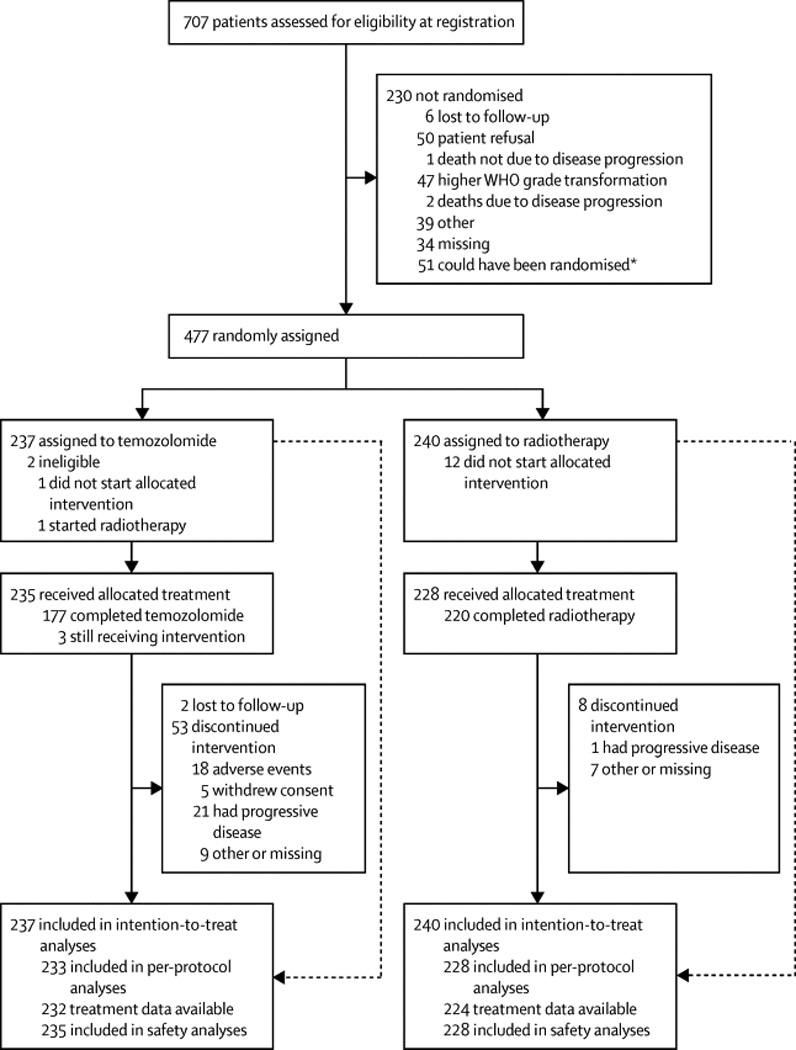
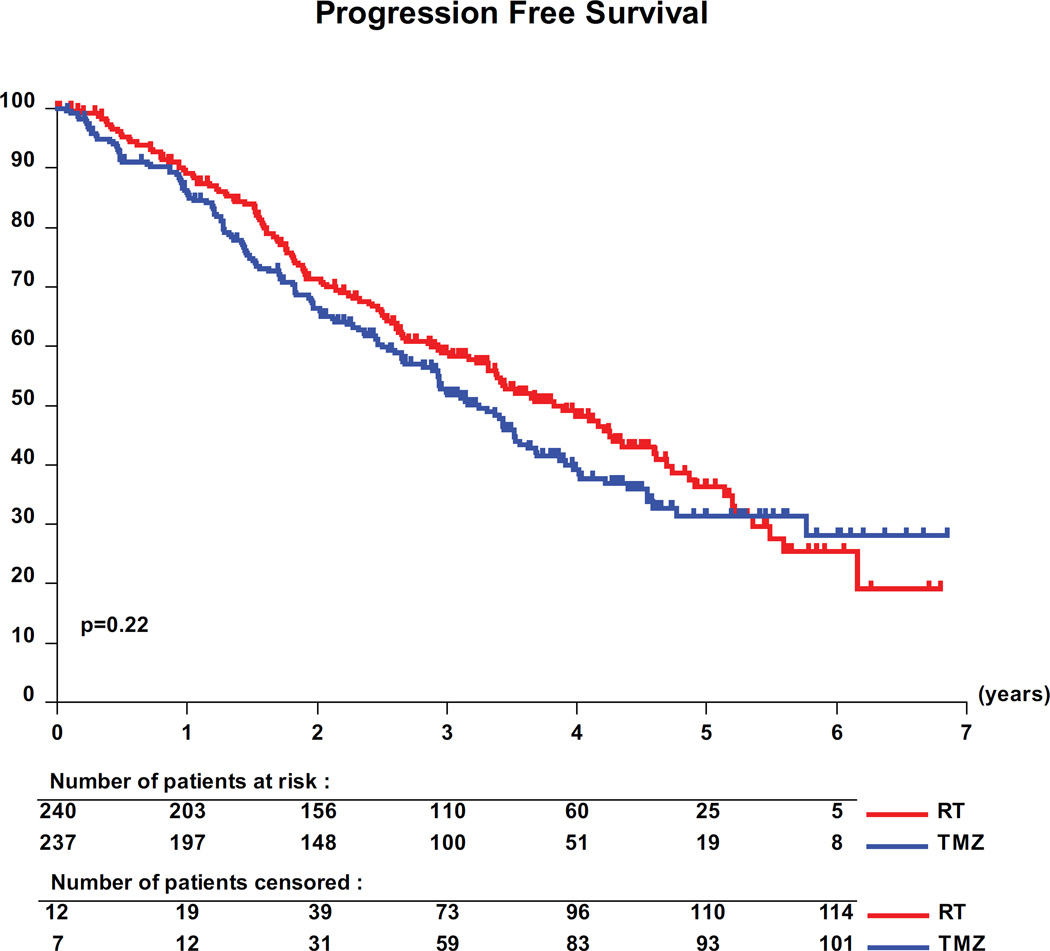
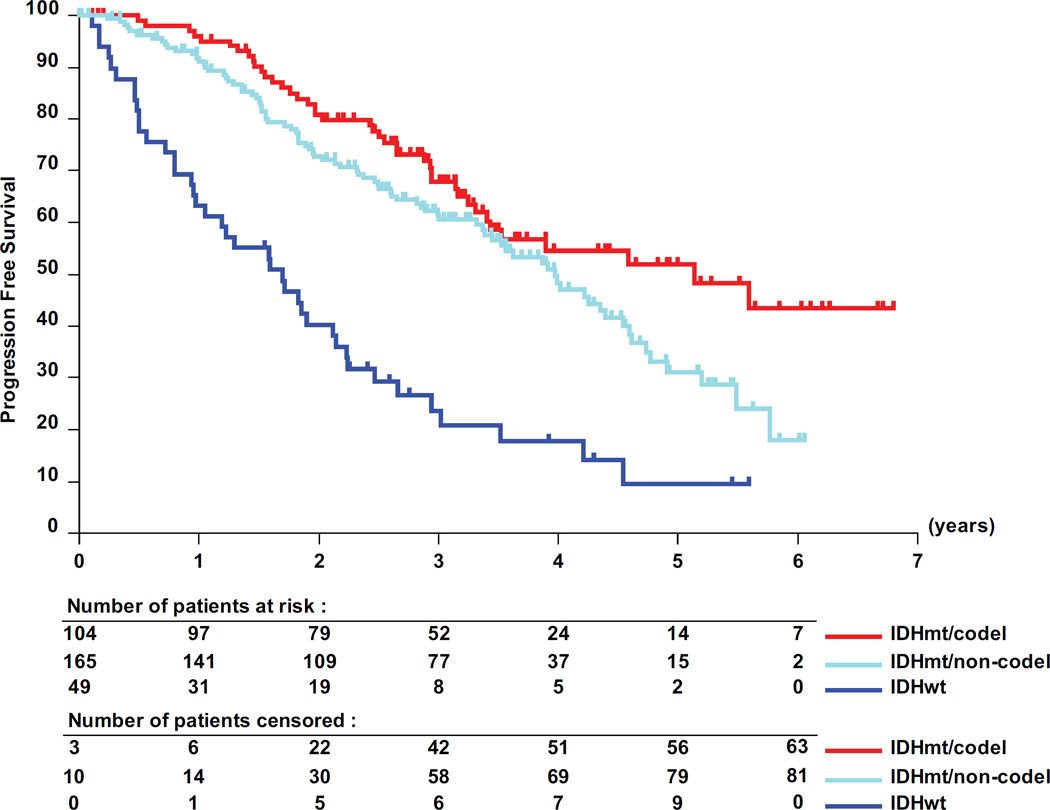
Background Outcome of low-grade glioma (WHO grade II) is highly variable, reflecting molecular heterogeneity of the disease. We compared two different, single-modality treatment strategies of standard radiotherapy versus primary temozolomide chemotherapy in patients with low-grade glioma, and assessed progression-free survival outcomes and identified predictive molecular factors. Methods For this randomised, open-label, phase 3 intergroup study (EORTC 22033-26033), undertaken in 78 clinical centres in 19 countries, we included patients aged 18 years or older who had a low-grade (WHO grade II) glioma (astrocytoma, oligoastrocytoma, or oligodendroglioma) with at least one high-risk feature (aged >40 years, progressive disease, tumour size >5 cm, tumour crossing the midline, or neurological symptoms), and without known HIV infection, chronic hepatitis B or C virus infection, or any condition that could interfere with oral drug administration. Eligible patients were randomly assigned (1:1) to receive either conformal radiotherapy (up to 50·4 Gy; 28 doses of 1·8 Gy once daily, 5 days per week for up to 6·5 weeks) or dose-dense oral temozolomide (75 mg/m 2 once daily for 21 days, repeated every 28 days [one cycle], for a maximum of 12 cycles). Random treatment allocation was done online by a minimisation technique with prospective stratification by institution, 1p deletion (absent vs present vs undetermined), contrast enhancement (yes vs no), age (<40 vs ≥40 years), and WHO performance status (0 vs ≥1). Patients, treating physicians, and researchers were aware of the assigned intervention. A planned analysis was done after 216 progression events occurred. Our primary clinical endpoint was progression-free survival, analysed by intention-to-treat; secondary outcomes were overall survival, adverse events, neurocognitive function (will be reported separately), health-related quality of life and neurological function (reported separately), and correlative analyses of progression-free survival by molecular markers (1p/19q co-deletion, MGMT promoter methylation status, and IDH1/IDH2 mutations). This trial is closed to accrual but continuing for follow-up, and is registered at the European Trials Registry, EudraCT 2004-002714-11, and at ClinicalTrials.gov, NCT00182819. Findings Between Sept 23, 2005, and March 26, 2010, 707 patients were registered for the study. Between Dec 6, 2005, and Dec 21, 2012, we randomly assigned 477 patients to receive either radiotherapy (n=240) or temozolomide chemotherapy (n=237). At a median follow-up of 48 months (IQR 31-56), median progression-free survival was 39 months (95% CI 35-44) in the temozolomide group and 46 months (40-56) in the radiotherapy group (unadjusted hazard ratio [HR] 1·16, 95% CI 0·9-1·5, p=0·22). Median overall survival has not been reached. Exploratory analyses in 318 molecularly-defined patients confirmed the significantly different prognosis for progression-free survival in the three recently defined molecular low-grade glioma subgroups (IDHmt, with or without 1p/19q co-deletion [IDHmt/codel], or IDH wild type [IDHwt]; p=0·013). Patients with IDHmt/non-codel tumours treated with radiotherapy had a longer progression-free survival than those treated with temozolomide (HR 1·86 [95% CI 1·21-2·87], log-rank p=0·0043), whereas there were no significant treatment-dependent differences in progression-free survival for patients with IDHmt/codel and IDHwt tumours. Grade 3-4 haematological adverse events occurred in 32 (14%) of 236 patients treated with temozolomide and in one (<1%) of 228 patients treated with radiotherapy, and grade 3-4 infections occurred in eight (3%) of 236 patients treated with temozolomide and in two (1%) of 228 patients treated with radiotherapy. Moderate to severe fatigue was recorded in eight (3%) patients in the radiotherapy group (grade 2) and 16 (7%) in the temozolomide group. 119 (25%) of all 477 patients had died at database lock. Four patients died due to treatment-related causes: two in the temozolomide group and two in the radiotherapy group. Interpretation Overall, there was no significant difference in progression-free survival in patients with low-grade glioma when treated with either radiotherapy alone or temozolomide chemotherapy alone. Further data maturation is needed for overall survival analyses and evaluation of the full predictive effects of different molecular subtypes for future individualised treatment choices. Funding Merck Sharpe & Dohme-Merck & Co, Canadian Cancer Society, Swiss Cancer League, UK National Institutes of Health, Australian National Health and Medical Research Council, US National Cancer Institute, European Organisation for Research and Treatment of Cancer Cancer Research Fund.
Overview
The claims and statistics of this paper haven’t been checked yet.
Free: it reads the open-access text and checks the first 5 claims that cite a source we can check. Create a free account to check every claim.
Integrity signals
Registry
Cites
Statistics
Figures
Verification
Claims the paper makes
The claims and statistics of this paper haven’t been checked yet.
Free: it reads the open-access text and checks the first 5 claims that cite a source we can check. Create a free account to check every claim.
Claims other papers make about this one
Each is checked against this paper’s own text: does it say what the citing paper says it does?
The source backs part of the claim, not all of it — or backs it for a different population, condition or comparison.
In the citing paper
“On the contrary, he is stratified to a low-risk classification under the EORTC 22844/5 and RTOG 0424 criteria (oligodendroglioma lineage, and absence of pre-operative neurological deficit, unknown preoperative tumor diameter) [10,24,28,32,33,34,35].”
From BPC 157 Therapy of Myotendinous Junction Injury in Rats (2025) · cites this paper as [24]
Experimental — accuracy not yet measuredThe cited source says what the claim attributes to it.
In the citing paper
“Based on RTOG 9802 and EORTC 22033–26033 criteria, our patient is categorized as high-risk on the basis of his age at diagnosis.”
From BPC 157 Therapy of Myotendinous Junction Injury in Rats (2025) · cites this paper as [24]
Self-check
Percentages, sums and reported differences re-computed from the paper’s own numbers.
The self-check needs the paper’s full text.
Citations
Cites
The 2007 WHO Classification of Tumours of the Central Nervous System
Louis, D. N., Ohgaki, H., Wiestler, O. D., Cavenee, W. K., Burger, P. C., Jouvet, A., Scheithauer, B. W., & Kleihues, P. (2007) · Acta Neuropathologica · doi:10.1007/s00401-007-0243-4 · Cited by 15,397
IDH1 and IDH2 Mutations in Gliomas
Yan, H., Parsons, D. W., Jin, G., McLendon, R., Rasheed, B. A., Yuan, W., Kos, I., Batinic-Haberle, I., Jones, S., Riggins, G. J., et al. (2009) · New England Journal of Medicine · doi:10.1056/nejmoa0808710 · Cited by 5,847
Ceccarelli, M., Barthel, F. P., Malta, T. M., Sabedot, T. S., Salama, S. R., Murray, B. A., Morozova, O., Newton, Y., Radenbaugh, A., Pagnotta, S. M., et al. (2016) · Cell · doi:10.1016/j.cell.2015.12.028 · Cited by 2,189
IDH1 mutation is sufficient to establish the glioma hypermethylator phenotype
Turcan, S., Rohle, D., Goenka, A., Walsh, L. A., Fang, F., Yilmaz, E., Campos, C., Fabius, A. W. M., Lu, C., Ward, P. S., et al. (2012) · Nature · doi:10.1038/nature10866 · Cited by 1,974
Pathology and genetics of tumours of the nervous system.
Kleihues, P., & Cavennee, W. (2000) · International Agency for Research on Cancer eBooks · Cited by 1,432
van den Bent, M. J., Brandes, A. A., Taphoorn, M. J. B., Kros, J. M., Kouwenhoven, M. C. M., Delattre, J.-Y., Bernsen, H. J. J. A., Frenay, M., Tijssen, C. C., Grisold, W., et al. (2013) · Journal of Clinical Oncology · doi:10.1200/jco.2012.43.2229 · Cited by 1,226
Self-citationCairncross, G., Wang, M., Shaw, E., Jenkins, R., Brachman, D., Buckner, J., Fink, K., Souhami, L., Laperriere, N., Curran, W., et al. (2013) · Journal of Clinical Oncology · doi:10.1200/jco.2012.43.2674 · Cited by 1,156
Radiation plus Procarbazine, CCNU, and Vincristine in Low-Grade Glioma
Buckner, J. C., Shaw, E. G., Pugh, S. L., Chakravarti, A., Gilbert, M. R., Barger, G. R., Coons, S., Ricci, P., Bullard, D., Brown, P. D., et al. (2016) · New England Journal of Medicine · doi:10.1056/nejmoa1500925 · Cited by 1,064
van den Bent, M., Afra, D., de Witte, O., Hassel, M. B., Schraub, S., Hoang-Xuan, K., Malmström, P.-O., Collette, L., Piérart, M., Mirimanoff, R., et al. (2005) · The Lancet · doi:10.1016/s0140-6736(05)67070-5 · Cited by 1,035
Self-citationPrognostic Factors for Survival in Adult Patients With Cerebral Low-Grade Glioma
Pignatti, F., van den Bent, M., Curran, D., Debruyne, C., Sylvester, R., Therasse, P., Áfra, D., Cornu, P., Bolla, M., Vecht, C., et al. (2002) · Journal of Clinical Oncology · doi:10.1200/jco.2002.08.121 · Cited by 955 · cited 1×
“To be eligible for step 2, patients had to require active treatment other than surgery, defined by at least one of the following criteria: (1) age ≥ 40 years, (2) radiologic tumor progression, (3) new or worsening symptoms and (4) refractory seizures.”
BackgroundMutational landscape and clonal architecture in grade II and III gliomas
Suzuki, H., Aoki, K., Chiba, K., Sato, Y., Shiozawa, Y., Shiraishi, Y., Shimamura, T., Niida, A., Motomura, K., Ohka, F., et al. (2015) · Nature Genetics · doi:10.1038/ng.3273 · Cited by 831 · cited 1×
“To be eligible for step 2, patients had to require active treatment other than surgery, defined by at least one of the following criteria: (1) age ≥ 40 years, (2) radiologic tumor progression, (3) new or worsening symptoms and (4) refractory seizures.”
BackgroundWick, W., Hartmann, C., Engel, C., Stoffels, M., Felsberg, J., Stockhammer, F., Sabel, M. C., Koeppen, S., Ketter, R., Meyermann, R., et al. (2009) · Journal of Clinical Oncology · doi:10.1200/jco.2009.23.6497 · Cited by 809
Self-citationJenkins, R. B., Blair, H., Ballman, K. V., Giannini, C., Arusell, R. M., Law, M., Flynn, H., Passe, S., Felten, S., Brown, P. D., et al. (2006) · Cancer Research · doi:10.1158/0008-5472.can-06-1796 · Cited by 763 · cited 1×
“To be eligible for step 2, patients had to require active treatment other than surgery, defined by at least one of the following criteria: (1) age ≥ 40 years, (2) radiologic tumor progression, (3) new or worsening symptoms and (4) refractory seizures.”
BackgroundDouw, L., Klein, M., Fagel, S. S., van den Heuvel, J., Taphoorn, M. J., Aaronson, N. K., Postma, T. J., Vandertop, W. P., Mooij, J. J., Boerman, R. H., et al. (2009) · The Lancet Neurology · doi:10.1016/s1474-4422(09)70204-2 · Cited by 757
Self-citationShaw, E., Arusell, R., Scheithauer, B., O’Fallon, J., O’Neill, B., Dinapoli, R., Nelson, D., Earle, J., Jones, C., Cascino, T., et al. (2002) · Journal of Clinical Oncology · doi:10.1200/jco.2002.09.126 · Cited by 730
Karim, A. B. M. F., Maat, B., Hatlevoll, R., Menten, J., Rutten, E. H. J. M., Thomas, D. G. T., Mascarenhas, F., Horiot, J. C., Parvinen, L. M., van Reijn, M., et al. (1996) · International Journal of Radiation Oncology*Biology*Physics · doi:10.1016/s0360-3016(96)00352-5 · Cited by 694
Guidelines on management of low‐grade gliomas: report of an EFNS–EANO* Task Force
Soffietti, R., Baumert, B. G., Bello, L., Von Deimling, A., Duffau, H., Frénay, M., Grisold, W., Grant, R., Graus, F., Hoang‐Xuan, K., et al. (2010) · European Journal of Neurology · doi:10.1111/j.1468-1331.2010.03151.x · Cited by 505 · cited 1×
“To be eligible for step 2, patients had to require active treatment other than surgery, defined by at least one of the following criteria: (1) age ≥ 40 years, (2) radiologic tumor progression, (3) new or worsening symptoms and (4) refractory seizures.”
BackgroundSelf-citationReuss, D. E., Sahm, F., Schrimpf, D., Wiestler, B., Capper, D., Koelsche, C., Schweizer, L., Korshunov, A., Jones, D. T. W., Hovestadt, V., et al. (2015) · Acta Neuropathologica · doi:10.1007/s00401-014-1370-3 · Cited by 449
Self-citationCairncross, J. G., Wang, M., Jenkins, R. B., Shaw, E. G., Giannini, C., Brachman, D. G., Buckner, J. C., Fink, K. L., Souhami, L., Laperriere, N. J., et al. (2014) · Journal of Clinical Oncology · doi:10.1200/jco.2013.49.3726 · Cited by 402
Tolcher, A. W., Gerson, S. L., Denis, L., Geyer, C., Hammond, L. A., Patnaik, A., Goetz, A. D., Schwartz, G., Edwards, T., Reyderman, L., et al. (2003) · British Journal of Cancer · doi:10.1038/sj.bjc.6600827 · Cited by 368
Hoang-Xuan, K., Capelle, L., Kujas, M., Taillibert, S., Duffau, H., Lejeune, J., Polivka, M., Crinière, E., Marie, Y., Mokhtari, K., et al. (2004) · Journal of Clinical Oncology · doi:10.1200/jco.2004.10.169 · Cited by 356
Self-citationReuss, D. E., Mamatjan, Y., Schrimpf, D., Capper, D., Hovestadt, V., Kratz, A., Sahm, F., Koelsche, C., Korshunov, A., Olar, A., et al. (2015) · Acta Neuropathologica · doi:10.1007/s00401-015-1438-8 · Cited by 348
Self-citationBady, P., Sciuscio, D., Diserens, A.-C., Bloch, J., van den Bent, M. J., Marosi, C., Dietrich, P.-Y., Weller, M., Mariani, L., Heppner, F. L., et al. (2012) · Acta Neuropathologica · doi:10.1007/s00401-012-1016-2 · Cited by 344
Self-citationWeller, M., Weber, R. G., Willscher, E., Riehmer, V., Hentschel, B., Kreuz, M., Felsberg, J., Beyer, U., Löffler-Wirth, H., Kaulich, K., et al. (2015) · Acta Neuropathologica · doi:10.1007/s00401-015-1409-0 · Cited by 312
Self-citationAdult IDH wild type astrocytomas biologically and clinically resolve into other tumor entities
Reuss, D. E., Kratz, A., Sahm, F., Capper, D., Schrimpf, D., Koelsche, C., Hovestadt, V., Bewerunge-Hudler, M., Jones, D. T. W., Schittenhelm, J., et al. (2015) · Acta Neuropathologica · doi:10.1007/s00401-015-1454-8 · Cited by 280
Self-citationWick, A., Felsberg, J., Steinbach, J. P., Herrlinger, U., Platten, M., Blaschke, B., Meyermann, R., Reifenberger, G., Weller, M., & Wick, W. (2007) · Journal of Clinical Oncology · doi:10.1200/jco.2007.10.7722 · Cited by 264
Self-citationPhase II study of primary temozolomide chemotherapy in patients with WHO grade II gliomas
Brada, M., Viviers, L., Abson, C., Hines, F., Britton, J., Ashley, S., Sardell, S., Traish, D., Gonsalves, A., Wilkins, P., et al. (2003) · Annals of Oncology · doi:10.1093/annonc/mdg371 · Cited by 261
Phase II Trial of Temozolomide in Patients With Progressive Low-Grade Glioma
Quinn, J. A., Reardon, D. A., Friedman, A. H., Rich, J. N., Sampson, J. H., Provenzale, J. M., McLendon, R. E., Gururangan, S., Bigner, D. D., Herndon, J. E., et al. (2003) · Journal of Clinical Oncology · doi:10.1200/jco.2003.01.009 · Cited by 258
Current and future developments in the use of temozolomide for the treatment of brain tumours
Stupp, R., Gander, M., Leyvraz, S., & Newlands, E. (2001) · The Lancet Oncology · doi:10.1016/s1470-2045(01)00489-2 · Cited by 254
Self-citationPrognostic or predictive value of MGMT promoter methylation in gliomas depends on IDH1 mutation
Wick, W., Meisner, C., Hentschel, B., Platten, M., Schilling, A., Wiestler, B., Sabel, M. C., Koeppen, S., Ketter, R., Weiler, M., et al. (2013) · Neurology · doi:10.1212/wnl.0b013e3182a95680 · Cited by 234
Self-citationBrandes, A. A., Tosoni, A., Cavallo, G., Bertorelle, R., Gioia, V, Franceschi, E., Biscuola, M., Blatt, V, Crinò, L., & Ermani, M. (2006) · British Journal of Cancer · doi:10.1038/sj.bjc.6603376 · Cited by 228
Self-citationWick, W., Roth, P., Hartmann, C., Hau, P., Nakamura, M., Stockhammer, F., Sabel, M. C., Wick, A., Koeppen, S., Ketter, R., et al. (2016) · Neuro-Oncology · doi:10.1093/neuonc/now133 · Cited by 227
Self-citationDynamic history of low‐grade gliomas before and after temozolomide treatment
Ricard, D., Kaloshi, G., Amiel‐Benouaich, A., Lejeune, J., Marie, Y., Mandonnet, E., Kujas, M., Mokhtari, K., Taillibert, S., Laigle‐Donadey, F., et al. (2007) · Annals of Neurology · doi:10.1002/ana.21125 · Cited by 207
Self-citationWiestler, B., Capper, D., Sill, M., Jones, D. T. W., Hovestadt, V., Sturm, D., Koelsche, C., Bertoni, A., Schweizer, L., Korshunov, A., et al. (2014) · Acta Neuropathologica · doi:10.1007/s00401-014-1315-x · Cited by 194
Self-citationPathology and Genetics of Tumours of the Nervous System
McComb, R. D. (2000) · Journal of Neuropathology & Experimental Neurology · doi:10.1093/jnen/59.8.749-a · Cited by 190
Bady, P., Delorenzi, M., & Hegi, M. E. (2016) · Journal of Molecular Diagnostics · doi:10.1016/j.jmoldx.2015.11.009 · Cited by 157
Self-citationReijneveld, J. C., TAPHOORN, M. J. B., Coens, C., Bromberg, J. E. C., Mason, W. P., Hoang‐Xuan, K., Ryan, G. B., Hassel, M. B., Enting, R. H., Brandes, A. A., et al. (2016) · The Lancet Oncology · doi:10.1016/s1470-2045(16)30305-9 · Cited by 149
Self-citationvan den Bent, M. J., Erdem-Eraslan, L., Idbaih, A., de Rooi, J., Eilers, P. H. C., Spliet, W. G. M., den Dunnen, W. F. A., Tijssen, C., Wesseling, P., Sillevis Smitt, P. A. E., et al. (2013) · Clinical Cancer Research · doi:10.1158/1078-0432.ccr-13-1157 · Cited by 121
Self-citationCognitive functions in low-grade gliomas: disease and treatment effects
Correa, D. D., DeAngelis, L. M., Shi, W., Thaler, H. T., Lin, M., & Abrey, L. E. (2006) · Journal of Neuro-Oncology · doi:10.1007/s11060-006-9212-3 · Cited by 117
Weber, D. C., Poortmans, P. M., Hurkmans, C., Aird, E. G. A., Gulybán, Á., & Fairchild, A. M. (2011) · Radiotherapy and Oncology · doi:10.1016/j.radonc.2011.05.073 · Cited by 96
Health-Related Quality of Life in Stable, Long-Term Survivors of Low-Grade Glioma
Boele, F. W., Douw, L., Reijneveld, J. C., Robben, R., TAPHOORN, M. J. B., Aaronson, N. K., Heimans, J. J., & Klein, M. (2015) · Journal of Clinical Oncology · doi:10.1200/jco.2014.56.9079 · Cited by 89
Self-citationPallud, J., Llitjos, J.-F., Dhermain, F., Varlet, P., Dezamis, E., Devaux, B., Souillard-Scemama, R., Sanai, N., Koziak, M., Page, P., et al. (2012) · Neuro-Oncology · doi:10.1093/neuonc/nos069 · Cited by 69
Self-citationMolecular Genetic Analysis of Oligodendroglial Tumors
Hartmann, C. J., Mueller, W. C., Laß, U., Kamel‐Reid, S., & von Deimling, A. (2005) · Journal of Neuropathology & Experimental Neurology · doi:10.1093/jnen/64.1.10 · Cited by 57
Self-citationSeiz, M., Tuettenberg, J., Meyer, J., Essig, M., Schmieder, K., Mawrin, C., von Deimling, A., & Hartmann, C. J. (2010) · Acta Neuropathologica · doi:10.1007/s00401-010-0701-2 · Cited by 56
Self-citationFairchild, A. M., Weber, D. C., Bar-Deroma, R., Gulybán, Á., Fenton, P. A., Stupp, R., & Baumert, B. G. (2012) · Radiotherapy and Oncology · doi:10.1016/j.radonc.2012.04.002 · Cited by 47
Self-citationMusat, E., Roelofs, E., Bar-Deroma, R., Fenton, P., Gulybán, Á., Collette, L., Stupp, R., Weber, D. C., Davis, J. B., Aird, E. G. A., et al. (2010) · Radiotherapy and Oncology · doi:10.1016/j.radonc.2010.03.005 · Cited by 29
Self-citation
Cited by
EANO guidelines on the diagnosis and treatment of diffuse gliomas of adulthood
Weller, M., van den Bent, M., Preusser, M., Le Rhun, E., Tonn, J. C., Minniti, G., Bendszus, M., Balana, C., Chinot, O., Dirven, L., et al. (2021) · Nature Reviews Clinical Oncology · doi:10.1038/s41571-020-00447-z · Cited by 2,048
Self-citationPrimary brain tumours in adults
Lapointe, S., Perry, A., & Butowski, N. A. (2018) · The Lancet · doi:10.1016/s0140-6736(18)30990-5 · Cited by 1,366
Weller, M., van den Bent, M., Tonn, J. C., Stupp, R., Preusser, M., Cohen-Jonathan-Moyal, E., Henriksson, R., Rhun, E. L., Balana, C., Chinot, O., et al. (2017) · The Lancet Oncology · doi:10.1016/s1470-2045(17)30194-8 · Cited by 1,088
Self-citationGlioma targeted therapy: insight into future of molecular approaches
Yang, K., Wu, Z., Zhang, H., Zhang, N., Wu, W., Wang, Z., Dai, Z., Zhang, X., Zhang, L., Peng, Y., et al. (2022) · Molecular Cancer · doi:10.1186/s12943-022-01513-z · Cited by 704
Genetic and molecular epidemiology of adult diffuse glioma
Molinaro, A. M., Taylor, J. W., Wiencke, J. K., & Wrensch, M. R. (2019) · Nature Reviews Neurology · doi:10.1038/s41582-019-0220-2 · Cited by 709
Metadata
- Authors
- Baumert, B. G., Hegi, M. E., van den Bent, M. J., von Deimling, A., Gorlia, T., Hoang-Xuan, K., Brandes, A. A., Kantor, G., Taphoorn, M. J. B., Hassel, M. B., Hartmann, C., Ryan, G., Capper, D., Kros, J. M., Kurscheid, S., Wick, W., Enting, R., Reni, M., Thiessen, B., Dhermain, F., Bromberg, J. E., Feuvret, L., Reijneveld, J. C., Chinot, O., Gijtenbeek, J. M. M., Rossiter, J. P., Dif, N., Balana, C., Bravo-Marques, J., Clement, P. M., Marosi, C., Tzuk-Shina, T., Nordal, R. A., Rees, J., Lacombe, D., Mason, W. P., & Stupp, R.
- Affiliations
- University of Bonn (DE)
- Centre Hospitalier Universitaire Vaudois (CH)
- Erasmus MC Cancer Institute (NL)
- German Cancer Research Center (DE)
- European Organisation for Research and Treatment of Cancer (NL)
- Istituto delle Scienze Neurologiche di Bologna (IT)
- Institut Bergonié (FR)
- Leiden University (NL)
- Centre Eugène Marquis (FR)
- Peter MacCallum Cancer Centre (AU)
- Australian National University (AU)
- University of Groningen (NL)
- BC Cancer Agency (CA)
- Institut Gustave Roussy (FR)
- Sorbonne Université (FR)
- Amsterdam UMC Location University of Amsterdam (NL)
- Aix-Marseille Université (FR)
- Radboud University Medical Center (NL)
- Queen's University (CA)
- Instituto Português de Oncologia Francisco Gentil (PT)
- Medical University of Vienna (AT)
- Rambam Health Care Campus (IL)
- University of Calgary (CA)
- National Hospital for Neurology and Neurosurgery (GB)
- University of Toronto (CA)
- Corresponding author
- Baumert, Brigitta G
- ORCID
- Baumert, Brigitta G
- Hegi, Monika E
- van den Bent, Martin J
- von Deimling, Andreas
- Gorlia, Thierry
- Brandes, Alba A
- Taphoorn, Martin J B
- Hartmann, Christian
- Capper, David
- Kros, Johan M
- Kurscheid, Sebastian
- Wick, Wolfgang
- Enting, Roelien
- Reni, Michele
- Thiessen, Brian
- Bromberg, Jacoline E
- Feuvret, Loic
- Reijneveld, Jaap C
- Chinot, Olivier
- Gijtenbeek, Johanna M M
- Marosi, Christine
- Rees, Jeremy
- Lacombe, Denis
- Mason, Warren P
- Stupp, Roger
- Venue
- The Lancet Oncology
- Publisher
- Elsevier BV
- Published
- 2016-11
- Volume
- 17
- Issue
- 11
- Pages
- 1521-1532
- ISSN
- 1470-2045 (ISSN-L)
- PMC
- PMC5124485
- OpenAlex
- W2505666614
- Cited by
- 495
- References
- 47
- Citations by year
- 2026: 21 · 2025: 33 · 2024: 45 · 2023: 39 · 2022: 54 · 2021: 59 · 2020: 65 · 2019: 74 · 2018: 55 · 2017: 42 · 2016: 5
- FWCI
- 42.57
- Type
- journal article
- Language
- en
- Open access
- green
- www.ncbi.nlm.nih.gov
- Licence
- cc-by-nc-nd
- www.elsevier.com/tdm/userlicense/1.0/ (tdm)
- www.elsevier.com/legal/tdmrep-license (tdm)
- Locations
- The Lancet Oncology (publishedVersion)
- PubMed (publishedVersion)
- Amsterdam UMC (VU Amsterdam) - Institutional Repository (publishedVersion)
- EUR Research Repository (Erasmus University Rotterdam) (publishedVersion)
- PubMed Central (acceptedVersion, cc-by-nc-nd)
- IRIS (submittedVersion)
- Minerva Access (University of Melbourne) (submittedVersion, cc-by-nc-nd)
- Data Archiving and Networked Services (DANS) (submittedVersion)
- EUR Research Repository (Erasmus University Rotterdam) (submittedVersion)
- RePub (Erasmus University Rotterdam) (submittedVersion, other-oa)
- Research Publications (Maastricht University) (submittedVersion)
- Lirias (KU Leuven) (submittedVersion)
- Leiden Repository (Leiden University) (submittedVersion)
- University of Groningen research database (University of Groningen / Centre for Information Technology) (submittedVersion)
- Radboud Repository (Radboud University) (submittedVersion)
- SERVAL (Université de Lausanne) (submittedVersion, other-oa)
- Funders
- Krebsliga Schweiz (KFS-2949\u201302\u20132012)
- Cancer Research UK (CRUK/07/032)
- National Cancer Institute (5U10 CA011488-35)
- Canadian Cancer Society Research Institute (021039, 015469)
- National Institute for Health and Care Research
- Medical Research Council (509094)
- Topics
- Health Sciences › Medicine › Oncology › Glioma Diagnosis and Treatment
- Health Sciences › Medicine › Hematology › Acute Myeloid Leukemia Research
- Health Sciences › Medicine › Oncology › Ovarian cancer diagnosis and treatment
- Keywords
- low-grade glioma, temozolomide chemotherapy, radiotherapy, progression-free survival, 1p/19q codeletion, MGMT promoter methylation, IDH1 mutation, IDH2 mutation, predictive biomarkers, treatment selection, WHO grade II glioma, overall survival, prognostic factors
- MeSH terms
- Temozolomide, Adult, Brain Neoplasms, Dacarbazine, Glioma, Humans, Isocitrate Dehydrogenase, Male, Middle Aged, Antineoplastic Agents, Alkylating, Radiotherapy, Conformal
About these checks
Registry, retraction, Cites and statistics results are computed, not judged, with one exception: a printed reference that no index lists is read once by a model before it counts as a citation error. Claims are extracted by a model and kept only when their quote appears verbatim in the text; each cited source is then checked, with a model’s help, for whether it says what the claim relies on. Those verdicts can be wrong — read the claim’s quote and the cited source before relying on one.
Statistics and arithmetic are recomputed, not judged.
Confidence bands are shown only for fields calibrated on our annotated test set. None is calibrated yet, so no band is shown.
What counts as a claim ›How we measure confidence ›How we check this ›
Are you an author, or do you see a problem with this page? Request a review
Data sources
Bibliographic data: Semantic Scholar, OpenAlex, Crossref.
Contains information from the Semantic Scholar Academic Graph Datasets, made available under the ODC Attribution License (ODC-BY 1.0).
Semantic Scholar’s data is described in: Kinney, R., et al. (2023). The Semantic Scholar Open Data Platform. arXiv:2301.10140.
