

24-month intervention with a specific multinutrient in people with prodromal Alzheimer's disease (LipiDiDiet): a randomised, double-blind, controlled trial
Open accessThe DOI matches its Crossref record; 39 of the 39 references it cites were found in a registry or an index.
Abstract
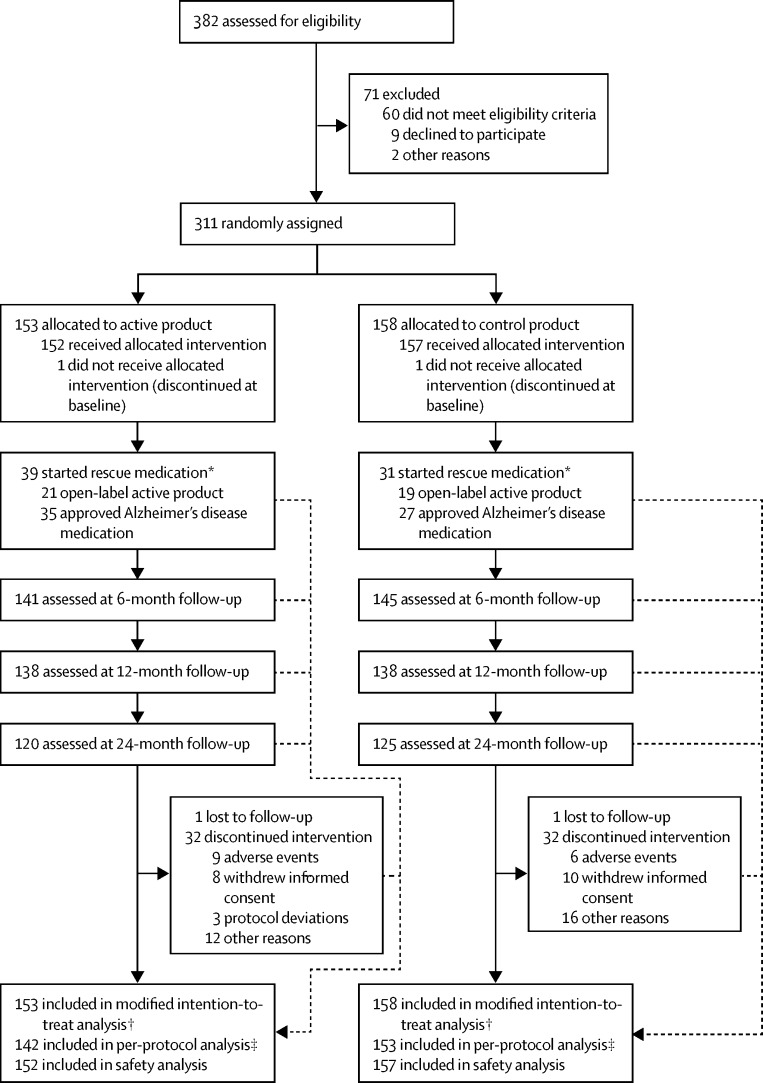
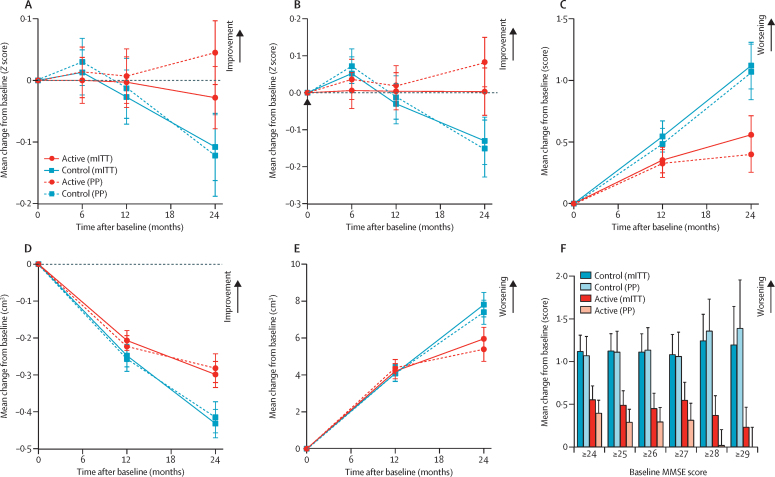
BACKGROUND: Nutrition is an important modifiable risk factor in Alzheimer's disease. Previous trials of the multinutrient Fortasyn Connect showed benefits in mild Alzheimer's disease dementia. LipiDiDiet investigated the effects of Fortasyn Connect on cognition and related measures in prodromal Alzheimer's disease. Here, we report the 24-month results of the trial. METHODS: LipiDiDiet was a 24-month randomised, controlled, double-blind, parallel-group, multicentre trial (11 sites in Finland, Germany, the Netherlands, and Sweden), with optional 12-month double-blind extensions. The trial enrolled individuals with prodromal Alzheimer's disease, defined according to the International Working Group (IWG)-1 criteria. Participants were randomly assigned (1:1) to active product (125 mL once-a-day drink containing Fortasyn Connect) or control product. Randomisation was computer-generated centrally in blocks of four, stratified by site. All study personnel and participants were masked to treatment assignment. The primary endpoint was change in a neuropsychological test battery (NTB) score. Analysis was by modified intention to treat. Safety analyses included all participants who consumed at least one study product dose. This trial is registered with the Dutch Trial Register, number NTR1705. FINDINGS: Between April 20, 2009, and July 3, 2013, 311 of 382 participants screened were randomly assigned to the active group (n=153) or control group (n=158). Mean change in NTB primary endpoint was -0·028 (SD 0·453) in the active group and -0·108 (0·528) in the control group; estimated mean treatment difference was 0·098 (95% CI -0·041 to 0·237; p=0·166). The decline in the control group was less than the prestudy estimate of -0·4 during 24 months. 66 (21%) participants dropped out of the study. Serious adverse events occurred in 34 (22%) participants in the active group and 30 (19%) in control group (p=0·487), none of which were regarded as related to the study intervention. INTERPRETATION: The intervention had no significant effect on the NTB primary endpoint over 2 years in prodromal Alzheimer's disease. However, cognitive decline in this population was much lower than expected, rendering the primary endpoint inadequately powered. Group differences on secondary endpoints of disease progression measuring cognition and function and hippocampal atrophy were observed. Further study of nutritional approaches with larger sample sizes, longer duration, or a primary endpoint more sensitive in this pre-dementia population, is needed. FUNDING: European Commission 7th Framework Programme.
Overview
The claims and statistics of this paper haven’t been checked yet.
Free: it reads the open-access text and checks the first 5 claims that cite a source we can check. Create a free account to check every claim.
Integrity signals
Registry
Cites
Statistics
Figures
Verification
Claims the paper makes
The claims and statistics of this paper haven’t been checked yet.
Free: it reads the open-access text and checks the first 5 claims that cite a source we can check. Create a free account to check every claim.
Claims other papers make about this one
Each is checked against this paper’s own text: does it say what the citing paper says it does?
The source backs part of the claim, not all of it — or backs it for a different population, condition or comparison.
In the citing paper
“A 24-month RCT of 311 people of a multi-nutrient drink containing docosahexaenoic acid, vitamins B12, B6, folic acid, and other nutrients; found no significant effect on preventing cognitive deterioration in prodromal Alzheimer's disease.152”
From Dementia prevention, intervention, and care: 2020 report of the Lancet Commission (2020) · cites this paper as [152]
Experimental — accuracy not yet measuredThe cited source says what the claim attributes to it.
In the citing paper
“The authors comment that the control group's cognitive decline was much lower than expected, leading to an inadequately powered trial.”
From Dementia prevention, intervention, and care: 2020 report of the Lancet Commission (2020) · cites this paper as [152]
Self-check
Percentages, sums and reported differences re-computed from the paper’s own numbers.
The self-check needs the paper’s full text.
Citations
Cites
McKhann, G. M., Knopman, D. S., Chertkow, H., Hyman, B. T., Jack, C. R., Kawas, C. H., Klunk, W. E., Koroshetz, W. J., Manly, J. J., Mayeux, R., et al. (2011) · Alzheimer's & Dementia · doi:10.1016/j.jalz.2011.03.005 · Cited by 18,657
Self-citationAlbert, M. S., DeKosky, S. T., Dickson, D., Dubois, B., Feldman, H. H., Fox, N. C., Gamst, A., Holtzman, D. M., Jagust, W. J., Petersen, R. C., et al. (2011) · Alzheimer's & Dementia · doi:10.1016/j.jalz.2011.03.008 · Cited by 10,152
Research criteria for the diagnosis of Alzheimer's disease: revising the NINCDS–ADRDA criteria
Dubois, B., Feldman, H. H., Jacova, C., DeKosky, S. T., Barberger-Gateau, P., Cummings, J., Delacourte, A., Galasko, D., Gauthier, S., Jicha, G., et al. (2007) · The Lancet Neurology · doi:10.1016/s1474-4422(07)70178-3 · Cited by 4,411
Self-citationNgandu, T., Lehtisalo, J., Solomon, A., Levälahti, E., Ahtiluoto, S., Antikainen, R., Bäckman, L., Hänninen, T., Jula, A., Laatikainen, T., et al. (2015) · The Lancet · doi:10.1016/s0140-6736(15)60461-5 · Cited by 3,689
Self-citationAdvancing research diagnostic criteria for Alzheimer's disease: the IWG-2 criteria
Dubois, B., Feldman, H. H., Jacova, C., Hampel, H., Molinuevo, J. L., Blennow, K., DeKosky, S. T., Gauthier, S., Selkoe, D., Bateman, R., et al. (2014) · The Lancet Neurology · doi:10.1016/s1474-4422(14)70090-0 · Cited by 3,321
Self-citationScheltens, P., Blennow, K., Breteler, M. M. B., de Strooper, B., Frisoni, G. B., Salloway, S., & Van der Flier, W. M. (2016) · The Lancet · doi:10.1016/s0140-6736(15)01124-1 · Cited by 3,125
Self-citationAlbert, M. S., DeKosky, S. T., Dickson, D., Dubois, B., Feldman, H. H., Fox, N. C., Gamst, A., Holtzman, D. M., Jagust, W. J., Petersen, R. C., et al. (2013) · Focus · doi:10.1176/appi.focus.11.1.96 · Cited by 2,621
Andrieu, S., Guyonnet, S., Coley, N., Cantet, C., Bonnefoy, M., Bordes, S., Bories, L., Cufi, M.-N., Dantoine, T., Dartigues, J.-F., et al. (2017) · The Lancet Neurology · doi:10.1016/s1474-4422(17)30040-6 · Cited by 838
Smith, A. D., Smith, S. M., de Jager, C. A., Whitbread, P., Johnston, C., Agacinski, G., Oulhaj, A., Bradley, K. M., Jacoby, R., & Refsum, H. (2010) · PLoS ONE · doi:10.1371/journal.pone.0012244 · Cited by 813
Mediterranean Diet and Mild Cognitive Impairment
Scarmeas, N., Stern, Y., Mayeux, R., Manly, J. J., Schupf, N., & Luchsinger, J. A. (2009) · Archives of Neurology · doi:10.1001/archneurol.2008.536 · Cited by 757
Cited by
Items 101–200 of 242
Dietary factors and brain health
Lefèvre‐Arbogast, S., Thomas, A., & Samieri, C. (2021) · Current Opinion in Lipidology · doi:10.1097/mol.0000000000000803 · Cited by 20
“There were multiple sources of bias in this post-hoc analysis on a selected sample of highly compliant participants, which may not offset the negative findings on the primary endpoint at 24 months [16].”
BackgroundHuang, Y., Deng, Y., Zhang, P., Lin, J., Guo, D., Yang, L., Liu, D., Xu, B., Huang, C., & Zhang, H. (2022) · Frontiers in Neuroscience · doi:10.3389/fnins.2022.910977 · Cited by 19
“In LipiDiDiet study of 311 patients with prodromal Alzheimer’s disease, the multinutrient combination (contains DHA and EPA) also showed no significant effect on the neuropsychological test battery score primary endpoint during the 24-month intervention (Soininen et al., 2017), whereas intervention benefits increased…”
BackgroundXu, Y., Zheng, F., Zhong, Q., & Zhu, Y. (2023) · Journal of Alzheimer s Disease · doi:10.3233/jad-230002 · Cited by 23
Wang, X., Zhou, H., Yan, C.-Q., Shi, G., Zhou, P., Huo, J., Yang, J., Zhang, Y.-N., Wang, L., Cao, Y. H., et al. (2024) · American Journal of Geriatric Psychiatry · doi:10.1016/j.jagp.2024.03.001 · Cited by 22
Nutritional Interventions for Early Dementia
Cesari, M., Azzolino, D., Arosio, B., & Canevelli, M. (2021) · The journal of nutrition health & aging · doi:10.1007/s12603-021-1616-4 · Cited by 19
Kocatürk, R. R., Temizyürek, A., Özcan, Ö. Ö., Erguzel, T. T., Karahan, M., Konuk, M., & Tarhan, N. (2022) · International Journal of Neuroscience · doi:10.1080/00207454.2022.2079506 · Cited by 17
“Conversely, in Fontasyn Connect supplementation a decrease was seen [61] and insignificant effects were observed [60].”
BackgroundMethodBereczki, E., Mangialasche, F., Barbera, M., Padilla, P. M., Hara, Y., Fillit, H. M., Solomon, A., & Kivipelto, M. (2025) · The Journal of Prevention of Alzheimer s Disease · doi:10.1016/j.tjpad.2025.100367 · Cited by 23
“No significant effect was reported on the primary outcome (5-item NTB), but the cognitive decline in the study population was less than expected, reducing statistical power [42].”
Self-citationBarbosa, B. J. A. P., Resende, E. D. P. F., Castilhos, R. M., Borelli, W. V., Frota, N. A. F., Balthazar, M. L. F., Filho, A. C. S. A., Smid, J., Barbosa, M. T., Coutinho, A. M., et al. (2024) · Dementia & Neuropsychologia · doi:10.1590/1980-5764-dn-2024-c002 · Cited by 20
“Cognitive differences of this magnitude over 18 months have already been observed with donepezil 39 and multi-nutrient supplements 40,41 .”
BackgroundLi, F., He, R., Yue, Z., Yi, H., Lu, L., Zhang, L., Shi, J., Zheng, C. Y., Jiao, J., Peng, J., et al. (2024) · American Journal of Clinical Nutrition · doi:10.1016/j.ajcnut.2024.11.019 · Cited by 19
Wong, M. W. K., Braidy, N., Crawford, J., Pickford, R., Song, F., Mather, K. A., Attia, J. R., Brodaty, H., Sachdev, P. S., & Poljak, A. (2019) · Journal of Alzheimer s Disease · doi:10.3233/jad-190524 · Cited by 20
Fairbairn, P., Dyall, S. C., & Tsofliou, F. (2022) · British Journal Of Nutrition · doi:10.1017/s0007114522001283 · Cited by 19
“Four studies used a composite score of multiple cognitive testing methods to quantify overall global cognition (34, 35, 37, 39) .”
BackgroundMethodInfluentialNatural remedies for Alzheimer’s disease: A systematic review of randomized controlled trials
Ahmad, S., Ahmed, S. B., Khan, A., Wasim, M., Tabassum, S., Haider, S., Ahmed, F. Z. B., Batool, Z., Khaliq, S., Rafiq, H., et al. (2022) · Metabolic Brain Disease · doi:10.1007/s11011-022-01063-9 · Cited by 22
Hope, K. W. (2020) · British Journal of Nursing · doi:10.12968/bjon.2020.29.8.460 · Cited by 19
“LipiDiDiet, which was the first randomised, controlled, double-blind trial in prodromal Alzheimer’s disease, showed that Fortasyn Connect had no significant effect on the primary endpoint of cognitive performance using a neuropsychological test battery over 2 years (Soininen et al, 2017).”
ten Kate, M., Barkhof, F., & Schwarz, A. J. (2023) · The Journal of Prevention of Alzheimer s Disease · doi:10.14283/jpad.2023.92 · Cited by 15
Self-citationKarağaç, M. S., & Ceylan, H. (2023) · Neurotoxicity Research · doi:10.1007/s12640-023-00667-y · Cited by 17
“Evidence also shows that a proper diet could help reduce dementia risks (Soininen et al. 2017).”
BackgroundPrevalence of dementia among the elderly population in Japan
Fukawa, T. (2018) · Health and Primary Care · doi:10.15761/hpc.1000147 · Cited by 18
Preventive approach for overcoming dementia
Lee, H., Kim, D.-W., Lee, W., Kim, H. Y., & Kim, Y. S. (2019) · Archives of Pharmacal Research · doi:10.1007/s12272-019-01168-3 · Cited by 16
Fairbairn, P., Tsofliou, F., Johnson, A. J., & Dyall, S. C. (2020) · British Journal Of Nutrition · doi:10.1017/s0007114520000719 · Cited by 22
Hendrix, S. B., Soininen, H. S., van Hees, A. M. J., Ellison, N., Visser, P. J., Solomon, A., Attali, A., Blennow, K., Kivipelto, M., & Hartmann, T. (2019) · The Journal of Prevention of Alzheimer s Disease · doi:10.14283/jpad.2019.33 · Cited by 14
“The contribution of the separate subdomains (ADAS-cog, MMSE, and CDR-SB) to the total score was explored by calculating the separate domains based on the same items and coefficients.”
BackgroundMethodResultSelf-citationvan Oudenhoven, F. M., Willemsen‐Swinkels, S. H. N., Hartmann, T., & Rizopoulos, D. (2022) · Statistics in Medicine · doi:10.1002/sim.9425 · Cited by 14
Self-citationToljan, K., & Homolak, J. (2021) · Handbook of clinical neurology · doi:10.1016/b978-0-12-819975-6.00018-2 · Cited by 16
New Approaches to Profile the Microbiome for Treatment of Neurodegenerative Disease
Elmaleh, D. R., Downey, M. A., Kundakovic, L., Wilkinson, J. E., Neeman, Z., & Segal, E. (2021) · Journal of Alzheimer s Disease · doi:10.3233/jad-210198 · Cited by 14
Licher, S., Wolters, F. J., Pavlović, J., Kavousi, M., Leening, M. J. G., Ikram, M. K., & Ikram, M. A. (2023) · Neuroepidemiology · doi:10.1159/000528120 · Cited by 13
Efficacy of probiotics in patients with cognitive impairment: A systematic review and meta-analysis
Ma, M., Li, B., Qu, Z., Liu, S., & Li, S. (2025) · PLoS ONE · doi:10.1371/journal.pone.0321567 · Cited by 23
Badia‐Soteras, A., de Vries, J., Dykstra, W., Broersen, L. M., Verkuyl, J. M., Smit, A. B., & Verheijen, M. H. G. (2022) · Cells · doi:10.3390/cells11091428 · Cited by 13
“Interestingly, a novel multi-nutrient intervention that recently was shown to improve neuronal survival and postsynaptic maturation in a neuron-astrocyte co-culture [30] has now been shown to slow decline in clinical and other measures related to cognition, function, brain atrophy, and disease progression in prodromal…”
BackgroundOmega-3 polyunsaturated fatty acids in neurodegenerative disorders: Mixed designs = mixed results
Dyall, S. C., & Plourde, M. (2025) · Progress in Lipid Research · doi:10.1016/j.plipres.2025.101356 · Cited by 13
Frölich, L., Arnim, C. A. F. V., Bohlken, J., Pantel, J., Peters, O., & Förstl, H. (2022) · Zeitschrift für Gerontologie und Geriatrie · doi:10.1007/s00391-022-02098-4 · Cited by 15
Self-citationTargeting prodromal Alzheimer's disease: too late for prevention?
Yassine, H. N. (2017) · The Lancet Neurology · doi:10.1016/s1474-4422(17)30372-1 · Cited by 12
Epidemiology and Risk Factors of Alzheimer’s Disease: A Focus on Diet
Samieri, C. (2018) · Neuromethods · doi:10.1007/978-1-4939-7674-4_2 · Cited by 20
van Oudenhoven, F. M., Willemsen‐Swinkels, S. H. N., Soininen, H. S., Kivipelto, M., Hartmann, T., Rizopoulos, D., Hartmann, T., Soininen, H. S., Kivipelto, M., Solomon, A., et al. (2021) · Alzheimer s Research & Therapy · doi:10.1186/s13195-021-00801-y · Cited by 11
“For more information, regarding the LipiDiDiet trial and the main paper reporting the 36-month intervention period results, we refer to the original clinical trial publications [3, 4].”
BackgroundMethodInfluentialSelf-citationNg, T. K. S., Feng, L., Fam, J., Rawtaer, I., Kumar, A. P., Rane, G., Cheah, I. K.-M., Mahendran, R., Lee, Y. K., Tan, E., et al. (2021) · International Journal of Environmental Research and Public Health · doi:10.3390/ijerph181910205 · Cited by 12
van Oudenhoven, F. M., Willemsen‐Swinkels, S. H. N., Hartmann, T., Soininen, H. S., van Hees, A. M. J., & Rizopoulos, D. (2019) · BMC Medical Research Methodology · doi:10.1186/s12874-019-0791-z · Cited by 11
Self-citationMcGrattan, A., McEvoy, C. T., Vijayakumar, A., Moore, S. E., Neville, C. E., McGuinness, B., McKinley, M. C., & Woodside, J. V. (2021) · Pilot and Feasibility Studies · doi:10.1186/s40814-020-00738-3 · Cited by 12
Giudici, K. V. (2021) · The Journal of Prevention of Alzheimer s Disease · doi:10.14283/jpad.2021.6 · Cited by 10
“Previous publications reporting findings after 24 months of followup have shown that supplementation with the multinutrient drink (containing EPA, DHA, phospholipids, choline, uridine monophosphate, vitamins B6, B9, B12, C, E and selenium) had no significant effect on cognitive function measured by a composite neurops…”
Peng, L., Lee, P., Chou, K., Lee, W., Lin, C., Chang, C., Liang, C., Chung, C., Hsiao, F., & Chen, L. (2025) · Journal of Cachexia Sarcopenia and Muscle · doi:10.1002/jcsm.13830 · Cited by 14
Nutrients in Alzheimer’s Disease: The Interaction of Diet, Drugs and Disease
Liyanage, S. I., Vilekar, P., & Weaver, D. F. (2019) · Canadian Journal of Neurological Sciences / Journal Canadien des Sciences Neurologiques · doi:10.1017/cjn.2018.353 · Cited by 13
Palomo, M. S. M., Caravaca, B. A., Bretón, M. A. B., Muñiz‐Castrillo, S., Vicente, A. D. L. M., Arce, E. C., & Prez, M. T. A. (2019) · Journal of Alzheimer s Disease Reports · doi:10.3233/adr-190109 · Cited by 13
Zajac, I. T., Kakoschke, N., Evas, S., Kuhn‐Sherlock, B., Wood, K. A., King, R. S., Arnoldy, L., Dekker, J., Gunn, C. A., Fuad, M., et al. (2025) · American Journal of Clinical Nutrition · doi:10.1016/j.ajcnut.2025.09.005 · Cited by 16
“However, in older adults with mild cognitive impairment (MCI)/Alzheimer disease, phospholipid/lipid/vitamin/mineral preparation Souvenaid [34 – 36] improves cognition, whereas MFGM (Lacprodan PL-20) results [37] are unreported.”
Perus, L., Busto, G. U., Mangin, J., Bars, E. L., & Gabelle, A. (2022) · Frontiers in Aging Neuroscience · doi:10.3389/fnagi.2022.1014559 · Cited by 13
Evaluation of Clinical Meaningfulness of Fortasyn Connect in Terms of “Time Saved”
Dickson, S. P., Solomon, A., Kivipelto, M., Hartmann, T., van Hees, A. M. J., Brownlee, A., Haaland, B. A., Mallinckrodt, C. H., & Hendrix, S. B. (2024) · The Journal of Prevention of Alzheimer s Disease · doi:10.14283/jpad.2024.55 · Cited by 11
Self-citationViñuela, F., & Barro, A. (2021) · Journal of Alzheimer s Disease · doi:10.3233/jad-201357 · Cited by 12
The association between gut microbiota and cognitive decline: A systematic review of the literature
Libriani, S., Facchinetti, G., Marti, F., Diaz, M. Y. T., & Sandri, E. (2026) · Nutrition Research · doi:10.1016/j.nutres.2026.01.003 · Cited by 9
Toward Prevention and Reduction of Alzheimer’s Disease
González-Madrid, A., Calfío, C., González, A., Lüttges, V., & Maccioni, R. B. (2023) · Journal of Alzheimer s Disease · doi:10.3233/jad-230454 · Cited by 8
Mar, J., Gorostiza, A., Ibarrondo, O., Larrañaga, I., Arrospide, A., Martínez‐Lage, P., & Soto‐Gordoa, M. (2020) · Alzheimer s Research & Therapy · doi:10.1186/s13195-020-00737-9 · Cited by 8
Rosenberg, A., Solomon, A., Soininen, H. S., Visser, P. J., Blennow, K., Hartmann, T., Kivipelto, M., Soininen, H. S., Hallikainen, I. T., Hallikainen, M., et al. (2021) · Alzheimer s Research & Therapy · doi:10.1186/s13195-021-00799-3 · Cited by 9
Self-citationYassine, H. N., Carrasco, A. S., & Badie, D. S. (2024) · Journal of Alzheimer s Disease · doi:10.3233/jad-231467 · Cited by 10
“Another approach is a multi-nutrient approach, such as the LipiDiDiet, where higher doses of n-3 PUFAs are combined with ridine-5’-monophosphate, choline, phospho-lipids, selenium, and vitamins B, C, and E [52].”
Probiotic and Dietary Supplements Intervention in Age-Related Neurodegenerative Disorders
Salles, C. B. D. D., Prajapati, S. K., Yadav, D., Rennar, J., Marcano-Rodriguez, A., Yadav, H., & Jain, S. (2026) · Microorganisms · doi:10.3390/microorganisms14020290 · Cited by 9
“…have improved constipation and quality of life in PD [82], postbiotics such as short-chain fatty acids and indole derivatives that offer more stable pharmacological effects [25,26], and multi-nutrient formulations such as Souvenaid and LipiDiDiet, which have shown benefits in prodromal AD [55,100].”
García‐Alberca, J. M., Gris, E., de la Guía, P., Mendoza, S., & de la Rica, M. L. (2023) · Journal of Alzheimer s Disease · doi:10.3233/jad-221003 · Cited by 9
Hendrix, S. B., Soininen, H., Solomon, A., Visser, P. J., van Hees, A. M. J., Counotte, D. S., Nicodemus-Johnson, J., Dickson, S. P., Blennow, K., Kivipelto, M., et al. (2023) · The Journal of Prevention of Alzheimer s Disease · doi:10.14283/jpad.2023.29 · Cited by 10
“After the 24-month intervention period reported in the primary analysis (24), participants could continue in their initially assigned group for a maximum total of 72 months.”
BackgroundMethodResultInfluentialSelf-citationPolicy Actions Required to Improve Nutrition for Brain Health
Higgs, S., Aarts, K., Adan, R. A. H., Buitelaar, J. K., Cirulli, F., Cryan, J. F., Dickson, S. L., Kőrösi, A., van der Beek, E. M., & Dye, L. (2024) · Nutrition Reviews · doi:10.1093/nutrit/nuae160 · Cited by 9
A Systematic Review of Dietary Supplements in Alzheimer’s Disease
Chimakurthy, A., Lingam, S., Pasya, S. K. R., & Copeland, B. J. (2023) · Cureus · doi:10.7759/cureus.33982 · Cited by 8
“[47] n=311 (prodromal AD patients) Age not defined but participants have a diagnosis of AD.”
BackgroundExploring effects of Souvenaid on cerebral glucose metabolism in Alzheimer's disease
Scheltens, N. M. E., Briels, C. T., Yaqub, M. M., Barkhof, F., Boellaard, R., van der Flier, W. M., Schwarte, L. A., Teunissen, C. E., Attali, A., Broersen, L. M., et al. (2019) · Alzheimer s & Dementia Translational Research & Clinical Interventions · doi:10.1016/j.trci.2019.08.002 · Cited by 7
“[26] investigated the effect of Souvenaid in prodromal AD subjects, a population close to the current population with MCI or mild dementia due to AD.”
BackgroundSelf-citationThe rise of probiotics as adjuvant therapeutics in Alzheimer’s disease
Noreña, C. P. Z., & Brandelli, A. (2025) · Discover Food · doi:10.1007/s44187-025-00523-2 · Cited by 6
“This mixture has a synergetic performance to delay AD progression [218, 219].”
van Loenen, M. R., Remie, L. B., van Trijp, M. P. H., Jansen, M. G., Marques, J. P., Claassen, J. A. H. R., van de Rest, O., Vermeiren, Y., Smidt, N., Sikkes, S. A. M., et al. (2025) · JMIR Research Protocols · doi:10.2196/69814 · Cited by 10
“Compared to previous 24-month multidomain lifestyle interventions in cognitive aging [3,18,19,164] and the FINGER-NL trial [108], the HELI study intervention of 6 months is significantly shorter.”
Liu, Y., Chen, S., Li, S., Pei, Z., Fan, S., & Guo, Y. (2025) · Journal of Alzheimer s Disease Reports · doi:10.1177/25424823251362444 · Cited by 10
Self-citationZheng, Y., Tanaka, M., Yamao, M., Gokan, T., Nishikawa, T., & Katayama, S. (2024) · Food Bioscience · doi:10.1016/j.fbio.2024.105384 · Cited by 6
A 5‐year community program in Singapore to prevent cognitive decline
Ng, T. K. S., Feng, L., Chua, R. Y., Goh, L. G., Kua, E. H., & Mahendran, R. (2022) · Asia-Pacific Psychiatry · doi:10.1111/appy.12518 · Cited by 9
“In contrast, the MAPT, preDIVA, LipiDiDiet, and ACTIVE trials (Andrieu et al., 2017; Rebok et al., 2014; Soininen et al., 2017; van Charante et al., 2016), despite similarly incorporating NPIs and conducted over relatively long follow-up periods, did not result in cognitive improvements, and had relatively small effec…”
BackgroundMethodResultInfluentialMiao, Y., Cui, L., Li, J., Chen, Y., Xie, X., & Guo, Q. (2022) · Journal of Alzheimer s Disease · doi:10.3233/jad-220374 · Cited by 8
The Role of Vitamin E in Aging and Alzheimer’s Disease
Eckert, G. P. (2019) · Springer eBooks · doi:10.1007/978-3-030-05315-4_24 · Cited by 7
Medikamentöse Prävention von kognitiver Verschlechterung und Demenz
Jessen, F. (2020) · Bundesgesundheitsblatt - Gesundheitsforschung - Gesundheitsschutz · doi:10.1007/s00103-020-03120-z · Cited by 6
Alzheimer’s Disease Pharmacology
Plascencia‐Villa, G., & Perry, G. L. (2021) · Elsevier eBooks · doi:10.1016/b978-0-12-820472-6.00018-9 · Cited by 8
Dunn, T., Howlett, S. E., Stanojevic, S., Shehzad, A., Stanley, J., & Rockwood, K. J. (2021) · Journal of Medical Internet Research · doi:10.2196/29219 · Cited by 6
Eat for better cognition in older adults at risk for Alzheimer's disease
Wang, Y., Niu, X., & Peng, D. (2023) · Nutrition · doi:10.1016/j.nut.2022.111969 · Cited by 7
Nutritional Care for Institutionalized Persons with Dementia: An Integrative Review
Moreno‐Fergusson, M. E., Cáez‐Ramírez, G., Díaz, L. I. S., & Herrera, B. S. (2023) · International Journal of Environmental Research and Public Health · doi:10.3390/ijerph20186763 · Cited by 10
What are we trying to prevent in Alzheimer disease?
Jessen, F. (2019) · Phlebolymphology · doi:10.31887/dcns.2019.21.1/fjessen · Cited by 7
Pharmacological Approaches and Herbal Interventions for Alzheimer's Disease
Kumar, S., Singh, S., Rajput, D., Sharma, B., Chaturvedi, K., Singh, N., Saha, S., Singh, K., & Mukherjee, S. (2024) · The Natural Products Journal · doi:10.2174/0122103155275266231123090138 · Cited by 16
Personalized Paths: Unlocking Alzheimer’s via the Gut-Brain Axis
Ceccon, M., Kantsjö, J. B., & Ronchi, F. (2024) · Visceral Medicine · doi:10.1159/000535869 · Cited by 5
“…which have established biological and neuroprotective properties, have been speci fi cally combined to increase ef fi cacy compared to individual nutrients and are the subject of the LipiDiDiet research consortium, which is investigating the preclinical and clinical effects of nutrition in AD [34].”
Chen, Y., Peng, Y., Niu, Q., Jiang, Y., Ni, H., Chen, L., & Lin, Y. (2025) · European Journal of Pharmacology · doi:10.1016/j.ejphar.2025.177326 · Cited by 9
Conti, V., Zarrella, A., Donnarumma, D., Pagano, A., Mazza, I., Stefano, A. D., Gallo, F., Landri, V. D., Pascale, D. D., Manzo, V., et al. (2025) · Applied Sciences · doi:10.3390/app15073513 · Cited by 6
Managing Menopause and Post-reproductive Health: Beyond Hormones and Medicines
Marshall, S., & REES, M. C. P. (2019) · Springer eBooks · doi:10.1007/978-3-030-13936-0_29 · Cited by 5
Pavlik, V., Chan, W., & Darby, E. J. (2019) · Journal of Alzheimer s Disease · doi:10.3233/jad-190661 · Cited by 6
Yassine, H. N., Pour, S. G., Juarez, M., Arrelanas, I. C., Ali, N., Dikeman, D., Sanchez, A., Park, J., Kerman, B. E., Duro, M. V. V., et al. (2026) · EBioMedicine · doi:10.1016/j.ebiom.2026.106316 · Cited by 6
“22 This null finding at 24 months occurred despite testing in a more impaired population (prodromal AD) who might be expected to show greater treatment responsiveness than our cognitively unimpaired cohort.”
Herrmann, M., Simstich, S., Fauler, G., Hofer, E., Fritz-Petrin, E., Herrmann, W., & Schmidt, R. (2021) · Aging · doi:10.18632/aging.203573 · Cited by 4
Multi-nutrient interventions and cognitive ageing: are we barking up the right tree?
Young, H. A., Geurts, L., Scarmeas, N., Benton, D., Brennan, L., Farrimond, J. A., Kiliaan, A. J., Pooler, A. M., Trovò, L., Sijben, J., et al. (2022) · Nutrition Research Reviews · doi:10.1017/s095442242200018x · Cited by 7
“…list learning immediate recall, CERAD ten-word delayed recall, CERAD ten-word recognition, category fluency, and letter digit substitution test) was not significant, dividing scientific opinion regarding the effectiveness of this multi-nutrient formula in those with mild cognitive impairment (64) .”
BackgroundAguilar-Barberà, M., Soler-Girabau, P., Tabuenca-Martín, A. I., & del Val, L. P. (2023) · Journal of Alzheimer s Disease · doi:10.3233/jad-221122 · Cited by 4
In-Out-Test: A New Paradigm for Sorting the Wheat from the Chaff in Prodromal Alzheimer’s Disease
Torrealba, E., Garcia-Morales, P., Cejudo, J. C., Díaz, M. L., Rodríguez‐Esparragón, F., Fabre, O., Mesa-Herrera, F., Marín, R., Sánchez-García, F., Rodríguez, A., et al. (2018) · Journal of Alzheimer s Disease · doi:10.3233/jad-171007 · Cited by 4
“There is some evidence to suggest a nutritional intervention may be beneficial in this early stage of disease [3].”
BackgroundAPOE Genotype Influences Postprandial Blood Pressure After High fat Feeding in Older Adults
Stewart, K. C., Subramanian, D., Neal, U. J., & Hanson, A. J. (2019) · The Journal of nutrition, health and aging · doi:10.1007/s12603-019-1167-0 · Cited by 3
Na, S., Muir, K. R., Lophatananon, A., Huang, Y., & Lee, J. (2025) · Journal of Neurology · doi:10.1007/s00415-025-13524-z · Cited by 4
“It is known that factors, such as sleep and nutrition, strongly influence AD [19, 21].”
Farooq, R., Jawad, U., Khan, I., Zia‐ur‐Rehman, M., Irfan, M. S., & Ullah, S. (2022) · Pakistan Journal of Medical and Health Sciences · doi:10.53350/pjmhs22162952 · Cited by 3
Давыдов, О. С. (2024) · Russian Journal of Pain · doi:10.17116/pain20242204186 · Cited by 3
Aging, cognitive decline, apolipoprotein E and docosahexaenoic acid metabolism
Plourde, M. (2018) · OCL · doi:10.1051/ocl/2018032 · Cited by 7
“The active ingredient was composed of omega-3 fatty acids, uridine, choline, phosphates and B vitamins but this supplementation had no effect on cognitive scores compared to the placebo (Soininen et al., 2017).”
BackgroundArrieta, E., Baz, P. G., & García‐Ribas, G. (2024) · Frontiers in Neurology · doi:10.3389/fneur.2024.1434210 · Cited by 3
Solfrizzi, V., & Imbimbo, B. P. (2025) · Journal of Alzheimer s Disease · doi:10.1177/13872877251406221 · Cited by 2
Vitamin deficiencies and Alzheimer’s disease: evidence and implications for supplementation
Miteva, M. T., Laurenti, D., Mattioli, R., Risola, D. D., Mariano, A., & Mosca, L. N. (2026) · Frontiers in Nutrition · doi:10.3389/fnut.2026.1676497 · Cited by 4
Dutta, S., Dutta, T. K., Nanda, P. K., Dhar, P., Das, A. K., & Bhunia, A. K. (2026) · Probiotics and Antimicrobial Proteins · doi:10.1007/s12602-026-11136-1 · Cited by 3
Organic Foods in Diets of Patients with Alzheimer’s Disease
Dziuba, S. T., Cierniak–Emerych, A., Klímová, B., Poulová, P., Napora, P., & Szromba, S. (2020) · Sustainability · doi:10.3390/su12041388 · Cited by 3
Omega-3 Fatty Acids and Ageing Brain
Boga, N. S., & Basak, S. (2023) · Springer eBooks · doi:10.1007/978-981-99-0534-8_6 · Cited by 5
Nutrition and neurodegenerative diseases: Alzheimer's disease and others
Bianchi, V. E. (2024) · Elsevier eBooks · doi:10.1016/b978-0-323-91747-6.00013-5 · Cited by 3
Alastalo, A., Tolppanen, A., Nietola, M., Haapea, M., Miettunen, J., Hartikainen, S. A., & Jääskeläinen, E. (2022) · Acta Psychiatrica Scandinavica · doi:10.1111/acps.13423 · Cited by 2
Shi, H., & Xu, J. (2021) · Scientia Sinica Vitae · doi:10.1360/ssv-2021-0196 · Cited by 6
health, I. J. 2. A. F. A. S. O. A. 5. A. O. A. B. H. S. T. U. I. 2. S. R. O. M. R. D. F. N. E. I. 1. (. A. 5. A. O. T. A. V. O. D. S. O. I. F. (. A. 5. A. O. T. A. V. O. D. S. F. T. B. H. T. T. R. I. T. M. O. I. M. (. A. T. M. O. I. M. S. (. M. T. O. I. 1. (. S. T. T. A. S. T. D. D. A. T. W. T. A. S. F. B., older, (. R. T. T. P. T. S. I. A. N. R. S. O. A. 5. A., so we estimate that approximately 983, 0. A. (. O. T. 5. W. S. T. T. A. S. F. B. H. A. T. A. S. W. T. G. C. L. S. E. O. E. R. L. O. A. C. A. W., $39.95, W. S. A. 3. D. S. I. F. S. F., & 39%)., W. T. I. A. $. M. A. M. B. S. O. T. O. S. A. O. S. T. F. B. H. M. C. I. O. 3. A. F. O. A. F. I. 1. (. T. A. F. O. S. A. N. S. I. 1. (. T. O.-3. Y. A. A. 5.-6. A. S. M. L. T. T. O.-3. C. T. A. A. 6. (. V. (2019) · doi:10.26419/pia.00094.001 · Cited by 4
Ben‐Porat, T., Alberga, A. S., Audet, M., Belleville, S., Cohen, T. R., Garneau, P. Y., Lavoie, K., Marion, P., Mellah, S., Pescarus, R., et al. (2023) · Surgery for Obesity and Related Diseases · doi:10.1016/j.soard.2023.02.022 · Cited by 1
Yeast Efficiently Utilizes Ribosomal RNA-Derived Oligonucleotides as Bioavailable Nutrient Sources
Du, X., Chen, Q., Zhuang, J., Zhao, M., Duan, Y., Wang, S., An, R., & Liang, X. (2026) · Foods · doi:10.3390/foods15020318 · Cited by 1
“In the food industry, nucleotides are widely applied as flavor enhancers [10], ingredients in infant formula [11,12], and components of foods for special medical purposes (FSMPs) [13].”
Perspectives in dementia risk reduction – food for thought
Rasmussen, J. (2026) · Neurodegenerative Disease Management · doi:10.1080/17582024.2026.2669599 · Cited by 1
Diet, inflammation, and neurocognitive aging
Gu, Y. (2021) · Elsevier eBooks · doi:10.1016/b978-0-12-817990-1.00047-0 · Cited by 1
Ren, X., Liu, Y., Wu, W., Lim, L., Zhang, W., & Wangn, Y. (2022) · Elsevier eBooks · doi:10.1016/b978-0-12-821683-5.00007-8 · Cited by 3
Self-citationProfessor Klaus Fassbender: The Father of Mobile Stroke Units
Podlasek, A., Walter, S., Líčeník, R., & Grunwald, I. Q. (2024) · Cureus · doi:10.7759/cureus.69050 · Cited by 1
Prevention of Neurodegenerative Disorders by Nutraceuticals
Pistollato, F., & Sachana, M. (2016) · Elsevier eBooks · doi:10.1016/b978-0-12-802147-7.00002-4
In search of Alzheimer’s disease treatment methods: trends of clinical trials
Pakulaite-Kazliene, G., Regelskytė, V., Audronytė, E., Kuzmickienė, J., & Kaubrys, G. (2018) · Neurologijos seminarai · doi:10.29014/ns.2018.03 · Cited by 1
Three Decades of Dementia Research: Insights from One Small Community of Indomitable Rotterdammers
Wolters, F. J., Adams, H. H. H., Bos, D., Licher, S., & Ikram, M. A. (2018) · Journal of Alzheimer s Disease · doi:10.3233/jad-179938 · Cited by 2
Metadata
- Authors
- Soininen, H., Solomon, A., Visser, P. J., Hendrix, S. B., Blennow, K., Kivipelto, M., Hartmann, T., Hallikainen, I., Hallikainen, M., Helisalmi, S., Lappalainen, T., Liu, Y., Paajanen, T., Wahlund, L.-O., Freund-Levi, Y., Andreasen, N., Hagman, G., Lindblom, S., Fassbender, K., Riemenschneider, M., Grimm, M. O., Klees-Rollmann, A., Luley, M., Lyros, E., Schomburg, R., Kennel, J., Ramelli, D., Frölich, L., Hausner, L., Laske, C., Leyhe, T., Mychajliw, C., Koehler, N., Schiekofer, S., Klünemann, H., Schröder, J., Lütjohann, D., Scheltens, P., van Rossum, I., Scheltens, N., Bertens, D., ten Kate, M., Barkhof, F., Henselmans, J. M., Roks, G., van Hees, A. M., & Ellison, N.
- Affiliations
- University of Eastern Finland (FI)
- Karolinska University Hospital (SE)
- Maastricht University (NL)
- Sahlgrenska University Hospital (SE)
- Saarland University (DE)
- Corresponding author
- Soininen, Hilkka
- ORCID
- Soininen, Hilkka
- Solomon, Alina
- Visser, Pieter Jelle
- Hendrix, Suzanne B
- Blennow, Kaj
- Kivipelto, Miia
- Hartmann, Tobias
- Helisalmi, Seppo
- Liu, Yawu
- Paajanen, Teemu
- Wahlund, Lars-Olof
- Hagman, Göran
- Fassbender, Klaus
- Grimm, Marcus OW
- Lyros, Epameinondas
- Schomburg, Robert
- Hausner, Lucrezia
- Laske, Christoph
- Mychajliw, Christian
- Schiekofer, Stephan
- Schröder, Johannes
- Lütjohann, Dieter
- Scheltens, Philip
- Scheltens, Nienke
- Bertens, Daniela
- Barkhof, Frederik
- Roks, Gerwin
- Venue
- The Lancet Neurology
- Publisher
- Elsevier BV
- Published
- 2017-12
- Volume
- 16
- Issue
- 12
- Pages
- 965-975
- ISSN
- 1474-4422 (ISSN-L)
- PMC
- PMC5697936
- OpenAlex
- W2766767762
- Semantic Scholar
- 85fbab310f069882d8c3f7c8b40b0a555427bfea
- Cited by
- 241
- References
- 39
- Citations by year
- 2026: 13 · 2025: 20 · 2024: 27 · 2023: 25 · 2022: 30 · 2021: 30 · 2020: 36 · 2019: 32 · 2018: 25 · 2017: 2
- FWCI
- 21.32
- Type
- journal article
- Language
- en
- Open access
- hybrid
- doi.org
- Licence
- cc-by
- www.elsevier.com/tdm/userlicense/1.0/ (tdm)
- creativecommons.org/licenses/by/4.0/ (vor)
- Locations
- The Lancet Neurology (publishedVersion, cc-by)
- Europe PMC (PubMed Central) (publishedVersion, cc-by)
- PubMed Central (publishedVersion, cc-by)
- PubMed (publishedVersion)
- UEF eRepo (University of Eastern Finland) (submittedVersion, cc-by)
- Research Publications (Maastricht University) (submittedVersion, cc-by)
- UCL Discovery (University College London) (submittedVersion)
- Pure Amsterdam UMC (submittedVersion)
- Amsterdam UMC (VU Amsterdam) - Institutional Repository (submittedVersion)
- Research Publications (Maastricht University) (submittedVersion, other-oa)
- Data Archiving and Networked Services (DANS) (submittedVersion)
- Funders
- EU Joint Programme – Neurodegenerative Disease Research
- European Commission (211696)
- Royal Swedish Academy of Sciences
- Academy of Finland
- Kommunfullmäktige, Stockholms Stad
- Karolinska Institutet
- Kuopion Yliopistollinen Sairaala
- Center for Innovative Medicine
- Topics
- Health Sciences › Medicine › Psychiatry and Mental health › Dementia and Cognitive Impairment Research
- Life Sciences › Neuroscience › Cellular and Molecular Neuroscience › Alzheimer's disease research and treatments
- Health Sciences › Nursing › Nutrition and Dietetics › Fatty Acid Research and Health
- Keywords
- prodromal Alzheimer's disease, cognitive decline, neuropsychological test battery, long-term intervention, dietary intervention, adverse events, dementia prevention, cognitive preservation, vitamin B12
- MeSH terms
- Aged, Aged, 80 and over, Alzheimer Disease, Docosahexaenoic Acids, Double-Blind Method, Female, Humans, Male, Middle Aged, Phospholipids, Eicosapentaenoic Acid, Outcome Assessment, Health Care, Prodromal Symptoms
About these checks
Registry, retraction, Cites and statistics results are computed, not judged, with one exception: a printed reference that no index lists is read once by a model before it counts as a citation error. Claims are extracted by a model and kept only when their quote appears verbatim in the text; each cited source is then checked, with a model’s help, for whether it says what the claim relies on. Those verdicts can be wrong — read the claim’s quote and the cited source before relying on one.
Statistics and arithmetic are recomputed, not judged.
Confidence bands are shown only for fields calibrated on our annotated test set. None is calibrated yet, so no band is shown.
What counts as a claim ›How we measure confidence ›How we check this ›
Are you an author, or do you see a problem with this page? Request a review
Data sources
Bibliographic data: Semantic Scholar, OpenAlex, Crossref.
Contains information from the Semantic Scholar Academic Graph Datasets, made available under the ODC Attribution License (ODC-BY 1.0).
Semantic Scholar’s data is described in: Kinney, R., et al. (2023). The Semantic Scholar Open Data Platform. arXiv:2301.10140.
