

24-month intervention with a specific multinutrient in people with prodromal Alzheimer's disease (LipiDiDiet): a randomised, double-blind, controlled trial
Open accessThe DOI matches its Crossref record; 39 of the 39 references it cites were found in a registry or an index.
Abstract
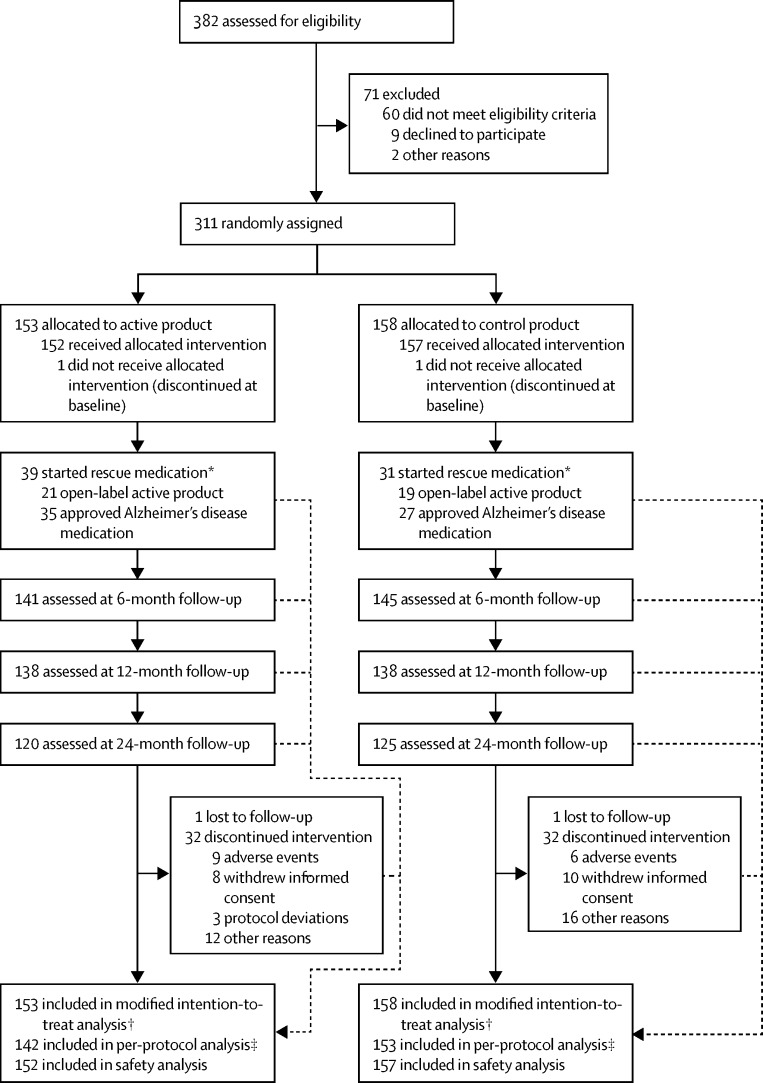
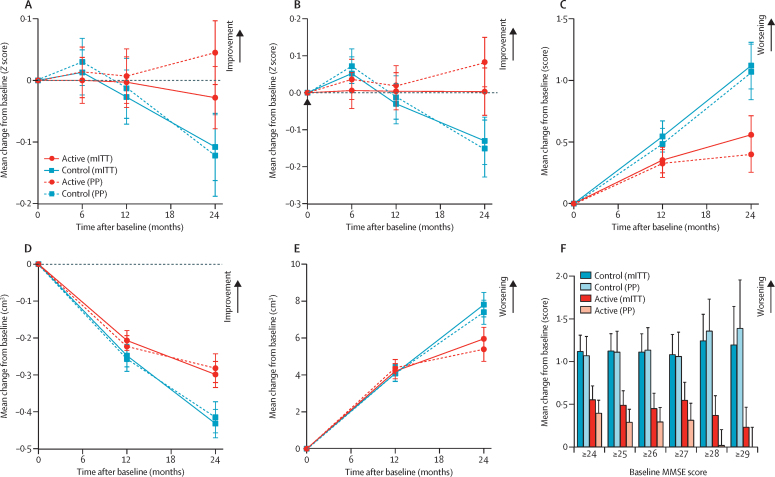
BACKGROUND: Nutrition is an important modifiable risk factor in Alzheimer's disease. Previous trials of the multinutrient Fortasyn Connect showed benefits in mild Alzheimer's disease dementia. LipiDiDiet investigated the effects of Fortasyn Connect on cognition and related measures in prodromal Alzheimer's disease. Here, we report the 24-month results of the trial. METHODS: LipiDiDiet was a 24-month randomised, controlled, double-blind, parallel-group, multicentre trial (11 sites in Finland, Germany, the Netherlands, and Sweden), with optional 12-month double-blind extensions. The trial enrolled individuals with prodromal Alzheimer's disease, defined according to the International Working Group (IWG)-1 criteria. Participants were randomly assigned (1:1) to active product (125 mL once-a-day drink containing Fortasyn Connect) or control product. Randomisation was computer-generated centrally in blocks of four, stratified by site. All study personnel and participants were masked to treatment assignment. The primary endpoint was change in a neuropsychological test battery (NTB) score. Analysis was by modified intention to treat. Safety analyses included all participants who consumed at least one study product dose. This trial is registered with the Dutch Trial Register, number NTR1705. FINDINGS: Between April 20, 2009, and July 3, 2013, 311 of 382 participants screened were randomly assigned to the active group (n=153) or control group (n=158). Mean change in NTB primary endpoint was -0·028 (SD 0·453) in the active group and -0·108 (0·528) in the control group; estimated mean treatment difference was 0·098 (95% CI -0·041 to 0·237; p=0·166). The decline in the control group was less than the prestudy estimate of -0·4 during 24 months. 66 (21%) participants dropped out of the study. Serious adverse events occurred in 34 (22%) participants in the active group and 30 (19%) in control group (p=0·487), none of which were regarded as related to the study intervention. INTERPRETATION: The intervention had no significant effect on the NTB primary endpoint over 2 years in prodromal Alzheimer's disease. However, cognitive decline in this population was much lower than expected, rendering the primary endpoint inadequately powered. Group differences on secondary endpoints of disease progression measuring cognition and function and hippocampal atrophy were observed. Further study of nutritional approaches with larger sample sizes, longer duration, or a primary endpoint more sensitive in this pre-dementia population, is needed. FUNDING: European Commission 7th Framework Programme.
Overview
The claims and statistics of this paper haven’t been checked yet.
Free: it reads the open-access text and checks the first 5 claims that cite a source we can check. Create a free account to check every claim.
Integrity signals
Registry
Cites
Statistics
Figures
Verification
Claims the paper makes
The claims and statistics of this paper haven’t been checked yet.
Free: it reads the open-access text and checks the first 5 claims that cite a source we can check. Create a free account to check every claim.
Claims other papers make about this one
Each is checked against this paper’s own text: does it say what the citing paper says it does?
The source backs part of the claim, not all of it — or backs it for a different population, condition or comparison.
In the citing paper
“A 24-month RCT of 311 people of a multi-nutrient drink containing docosahexaenoic acid, vitamins B12, B6, folic acid, and other nutrients; found no significant effect on preventing cognitive deterioration in prodromal Alzheimer's disease.152”
From Dementia prevention, intervention, and care: 2020 report of the Lancet Commission (2020) · cites this paper as [152]
Experimental — accuracy not yet measuredThe cited source says what the claim attributes to it.
In the citing paper
“The authors comment that the control group's cognitive decline was much lower than expected, leading to an inadequately powered trial.”
From Dementia prevention, intervention, and care: 2020 report of the Lancet Commission (2020) · cites this paper as [152]
Self-check
Percentages, sums and reported differences re-computed from the paper’s own numbers.
The self-check needs the paper’s full text.
Citations
Cites
McKhann, G. M., Knopman, D. S., Chertkow, H., Hyman, B. T., Jack, C. R., Kawas, C. H., Klunk, W. E., Koroshetz, W. J., Manly, J. J., Mayeux, R., et al. (2011) · Alzheimer's & Dementia · doi:10.1016/j.jalz.2011.03.005 · Cited by 18,657
Self-citationAlbert, M. S., DeKosky, S. T., Dickson, D., Dubois, B., Feldman, H. H., Fox, N. C., Gamst, A., Holtzman, D. M., Jagust, W. J., Petersen, R. C., et al. (2011) · Alzheimer's & Dementia · doi:10.1016/j.jalz.2011.03.008 · Cited by 10,152
Research criteria for the diagnosis of Alzheimer's disease: revising the NINCDS–ADRDA criteria
Dubois, B., Feldman, H. H., Jacova, C., DeKosky, S. T., Barberger-Gateau, P., Cummings, J., Delacourte, A., Galasko, D., Gauthier, S., Jicha, G., et al. (2007) · The Lancet Neurology · doi:10.1016/s1474-4422(07)70178-3 · Cited by 4,411
Self-citationNgandu, T., Lehtisalo, J., Solomon, A., Levälahti, E., Ahtiluoto, S., Antikainen, R., Bäckman, L., Hänninen, T., Jula, A., Laatikainen, T., et al. (2015) · The Lancet · doi:10.1016/s0140-6736(15)60461-5 · Cited by 3,689
Self-citationAdvancing research diagnostic criteria for Alzheimer's disease: the IWG-2 criteria
Dubois, B., Feldman, H. H., Jacova, C., Hampel, H., Molinuevo, J. L., Blennow, K., DeKosky, S. T., Gauthier, S., Selkoe, D., Bateman, R., et al. (2014) · The Lancet Neurology · doi:10.1016/s1474-4422(14)70090-0 · Cited by 3,321
Self-citationScheltens, P., Blennow, K., Breteler, M. M. B., de Strooper, B., Frisoni, G. B., Salloway, S., & Van der Flier, W. M. (2016) · The Lancet · doi:10.1016/s0140-6736(15)01124-1 · Cited by 3,125
Self-citationAlbert, M. S., DeKosky, S. T., Dickson, D., Dubois, B., Feldman, H. H., Fox, N. C., Gamst, A., Holtzman, D. M., Jagust, W. J., Petersen, R. C., et al. (2013) · Focus · doi:10.1176/appi.focus.11.1.96 · Cited by 2,621
Andrieu, S., Guyonnet, S., Coley, N., Cantet, C., Bonnefoy, M., Bordes, S., Bories, L., Cufi, M.-N., Dantoine, T., Dartigues, J.-F., et al. (2017) · The Lancet Neurology · doi:10.1016/s1474-4422(17)30040-6 · Cited by 838
Smith, A. D., Smith, S. M., de Jager, C. A., Whitbread, P., Johnston, C., Agacinski, G., Oulhaj, A., Bradley, K. M., Jacoby, R., & Refsum, H. (2010) · PLoS ONE · doi:10.1371/journal.pone.0012244 · Cited by 813
Mediterranean Diet and Mild Cognitive Impairment
Scarmeas, N., Stern, Y., Mayeux, R., Manly, J. J., Schupf, N., & Luchsinger, J. A. (2009) · Archives of Neurology · doi:10.1001/archneurol.2008.536 · Cited by 757
Cited by
Dementia prevention, intervention, and care: 2020 report of the Lancet Commission
Livingston, G., Huntley, J., Sommerlad, A., Ames, D., Ballard, C., Banerjee, S., Brayne, C., Burns, A., Cohen-Mansfield, J., Cooper, C., et al. (2020) · The Lancet · doi:10.1016/s0140-6736(20)30367-6 · Cited by 10,430
RetractedScheltens, P., De Strooper, B., Kivipelto, M., Holstege, H., Chételat, G., Teunissen, C. E., Cummings, J., & van der Flier, W. M. (2021) · The Lancet · doi:10.1016/s0140-6736(20)32205-4 · Cited by 5,465
Self-citationLifestyle interventions to prevent cognitive impairment, dementia and Alzheimer disease
Kivipelto, M., Mangialasche, F., & Ngandu, T. (2018) · Nature Reviews Neurology · doi:10.1038/s41582-018-0070-3 · Cited by 1,173
Self-citationWorld‐Wide FINGERS Network: A global approach to risk reduction and prevention of dementia
Kivipelto, M., Mangialasche, F., Snyder, H. M., Allegri, R., Andrieu, S., Arai, H., Baker, L., Belleville, S., Brodaty, H., Brucki, S. M., et al. (2020) · Alzheimer's & Dementia · doi:10.1002/alz.12123 · Cited by 553
Self-citationDominguez, L. J., Veronese, N., Vernuccio, L., Catanese, G., Inzerillo, F., Salemi, G., & Barbagallo, M. (2021) · Nutrients · doi:10.3390/nu13114080 · Cited by 433
“Group differences on secondary endpoints of disease progression measuring cognition and function and hippocampal atrophy were observed [347].”
BackgroundInvolvement of Lipids in Alzheimer’s Disease Pathology and Potential Therapies
Chew, H., Solomon, V. A., & Fonteh, A. N. (2020) · Frontiers in Physiology · doi:10.3389/fphys.2020.00598 · Cited by 353
“Fortasyn Connect supplementation; 125 mL once-a-day drink containing Fortasyn Connect for 24 months (LipiDiDiet Trial) In individuals with prodromal AD, Fortasyn Connect supplementation had no significant effect on neuropsychological test battery results (Soininen et al., 2017).”
MethodCognitive symptoms of Alzheimer’s disease: clinical management and prevention
Joe, E., & Ringman, J. M. (2019) · BMJ · doi:10.1136/bmj.l6217 · Cited by 321
Rosenberg, A., Mangialasche, F., Ngandu, T., Solomon, A., & Kivipelto, M. (2020) · The Journal of Prevention of Alzheimer's Disease · doi:10.14283/jpad.2019.41 · Cited by 316
Self-citationPerluigi, M., Di Domenico, F., & Butterfield, D. A. (2024) · Physiological Reviews · doi:10.1152/physrev.00030.2022 · Cited by 282
Effect of nutrition on neurodegenerative diseases. A systematic review
Bianchi, V. E., Herrera, P. F., & Laura, R. (2021) · Nutritional Neuroscience · doi:10.1080/1028415x.2019.1681088 · Cited by 249
“with protein (30 gr/day) [85], active drink [98], probiotic milk (200ml/day) [84], nutraceutical formulation (folate, tocopherol, Vit.”
BackgroundModifiable Risk Factors for Alzheimer’s Disease
Edwards III, G. A., Gamez, N., Escobedo Jr., G., Calderon, O., & Moreno-Gonzalez, I. (2019) · Frontiers in Aging Neuroscience · doi:10.3389/fnagi.2019.00146 · Cited by 253
“Management of diet, exercise, and vascular risk in at-risk elderly population can, in fact, prevent cognitive functioning deterioration (Kivipelto et al., 2013; Ngandu et al., 2015; Soininen et al., 2017).”
BackgroundPistollato, F., Iglesias, R. C., Ruiz, R., Aparicio, S., Crespo, J., Lopez, L. D., Manna, P. P., Giampieri, F., & Battino, M. (2018) · Pharmacological Research · doi:10.1016/j.phrs.2018.03.012 · Cited by 247
Management of mild cognitive impairment (MCI): The need for national and international guidelines
Kasper, S., Bancher, C., Eckert, A., Förstl, H., Frölich, L., Hort, J., Korczyn, A. D., Kressig, R. W., Levin, O., & Palomo, M. S. M. (2020) · The World Journal of Biological Psychiatry · doi:10.1080/15622975.2019.1696473 · Cited by 233
“An EU-funded twoyear RCT (LipiDiDiet) investigated the effects of Souvenaid on cognitive decline (and related measures) in prodromal AD (Soininen et al. 2017).”
BackgroundMethodResultInfluentialSelf-citationAndrade, S., Ramalho, M. J., Loureiro, J. A., & Pereira, M. D. C. (2019) · International Journal of Molecular Sciences · doi:10.3390/ijms20092313 · Cited by 240
“In 2009, a group started clinical trials for a beverage with supplementation of a mixture of natural compounds to be consumed by AD patients [341].”
BackgroundPrevention of dementia in an ageing world: Evidence and biological rationale
Grande, G., Qiu, C., & Fratiglioni, L. (2020) · Ageing Research Reviews · doi:10.1016/j.arr.2020.101045 · Cited by 229
Duara, R., & Barker, W. (2022) · Neurotherapeutics · doi:10.1007/s13311-022-01185-z · Cited by 187
“, MMSE scores of: 24–26, 27–30) [161] or for the use of severity of cognitive impairment as a covariate in statistiycal analyses of the outcomes [162].”
BackgroundFatty acid metabolism in the progression and resolution of CNS disorders
Bogie, J. F. J., Haidar, M., Kooij, G., & Hendriks, J. J. A. (2020) · Advanced Drug Delivery Reviews · doi:10.1016/j.addr.2020.01.004 · Cited by 167
Poor cognitive ageing: Vulnerabilities, mechanisms and the impact of nutritional interventions
Miquel, S., Champ, C., Day, J., Aarts, E., Bahr, B. A., Bakker, M., Bánáti, D., Calabrese, V., Cederholm, T., Cryan, J., et al. (2018) · Ageing Research Reviews · doi:10.1016/j.arr.2017.12.004 · Cited by 162
Self-citationIs Alzheimer’s Disease Risk Modifiable?
Serrano-Pozo, A., & Growdon, J. H. (2019) · Journal of Alzheimer's Disease · doi:10.3233/jad181028 · Cited by 154
36‐month LipiDiDiet multinutrient clinical trial in prodromal Alzheimer's disease
Soininen, H., Solomon, A., Visser, P. J., Hendrix, S. B., Blennow, K., Kivipelto, M., Hartmann, T., & the LipiDiDiet clinical study group (2021) · Alzheimer's & Dementia · doi:10.1002/alz.12172 · Cited by 134
Self-citationArellanes, I. C., Choe, N., Solomon, V., He, X., Kavin, B., Martinez, A. E., Kono, N., Buennagel, D. P., Hazra, N., Kim, G., et al. (2020) · eBioMedicine · doi:10.1016/j.ebiom.2020.102883 · Cited by 134
Nutrition and the ageing brain: Moving towards clinical applications
Flanagan, E. C., Lamport, D. J., Brennan, L., Burnet, P. W. J., Calabrese, V., Cunnane, S. C., de Wilde, M. C., Dye, L., Farrimond, J. A., Lombardo, N. B. E., et al. (2020) · Ageing Research Reviews · doi:10.1016/j.arr.2020.101079 · Cited by 139
“The LipiDiDiet (Soininen et al., 2017) is one of the very few existing interventions involving a multi-nutrient approach.”
InfluentialSelf-citationAssociation of midlife diet with subsequent risk for dementia
Akbaraly, T. N., Singh-Manoux, A., Dugravot, A., Brunner, E. J., Kivimäki, M., & Sabia, S. (2019) · JAMA · doi:10.1001/jama.2019.1432 · Cited by 121
Omega-3 fatty acids and cognitive function
Welty, F. K. (2022) · Current Opinion in Lipidology · doi:10.1097/mol.0000000000000862 · Cited by 136
for the FINGER study group, Stephen, R., Liu, Y., Ngandu, T., Antikainen, R., Hulkkonen, J., Koikkalainen, J., Kemppainen, N., Lötjönen, J., Levälahti, E., et al. (2019) · Alzheimer's Research & Therapy · doi:10.1186/s13195-019-0506-z · Cited by 116
Self-citationYassine, H. N., Samieri, C., Livingston, G., Glass, K., Wagner, M., Tangney, C., Plassman, B. L., Ikram, M. A., Voigt, R. M., Gu, Y., et al. (2022) · The Lancet Healthy Longevity · doi:10.1016/s2666-7568(22)00120-9 · Cited by 116
“43”
Precision pharmacology for Alzheimer’s disease
Hampel, H., Vergallo, A., Aguilar, L. F., Benda, N., Broich, K., Cuello, A. C., Cummings, J., Dubois, B., Federoff, H. J., Fiandaca, M., et al. (2018) · Pharmacological Research · doi:10.1016/j.phrs.2018.02.014 · Cited by 108
Mechanistic Link between Vitamin B12 and Alzheimer’s Disease
Lauer, A. A., Grimm, H. S., Apel, B., Golobrodska, N., Kruse, L., Ratanski, E., Schulten, N., Schwarze, L., Slawik, T., Sperlich, S., et al. (2022) · Biomolecules · doi:10.3390/biom12010129 · Cited by 139
Self-citationHealth Benefits, Food Applications, and Sustainability of Microalgae-Derived N-3 PUFA
Liu, Y., Ren, X., Fan, C., Wu, W., Zhang, W., & Wang, Y. (2022) · Foods · doi:10.3390/foods11131883 · Cited by 103
Self-citationYlilauri, M. P., Voutilainen, S., Lönnroos, E., Virtanen, H. E., Tuomainen, T., Salonen, J. T., & Virtanen, J. K. (2019) · American Journal of Clinical Nutrition · doi:10.1093/ajcn/nqz148 · Cited by 113
Perneczky, R., Kempermann, G., Korczyn, A. D., Matthews, F. E., Ikram, M. A., Scarmeas, N., Chételat, G., Stern, Y., & Ewers, M. (2019) · BMC Medicine · doi:10.1186/s12916-019-1283-z · Cited by 120
Licher, S., Yilmaz, P., Leening, M. J. G., Wolters, F. J., Vernooij, M. W., Stephan, B. C. M., Ikram, M. K., & Ikram, M. A. (2018) · European Journal of Epidemiology · doi:10.1007/s10654-018-0403-y · Cited by 102
Licher, S., Leening, M. J. G., Yilmaz, P., Wolters, F. J., Heeringa, J., Bindels, P. J. E., Initiative, A. D. N., Vernooij, M. W., Stephan, B. C. M., Steyerberg, E. W., et al. (2019) · American Journal of Psychiatry · doi:10.1176/appi.ajp.2018.18050566 · Cited by 103
Lehtisalo, J., Levälahti, E., Lindström, J., Hänninen, T., Paajanen, T., Peltonen, M., Antikainen, R., Laatikainen, T., Strandberg, T., Soininen, H., et al. (2019) · Alzheimer's & Dementia · doi:10.1016/j.jalz.2018.10.001 · Cited by 95
Self-citationBenefit of Oleuropein Aglycone for Alzheimer’s Disease by Promoting Autophagy
Cordero, J. G., García-Escudero, R., Avila, J., Gargini, R., & García-Escudero, V. (2018) · Oxidative Medicine and Cellular Longevity · doi:10.1155/2018/5010741 · Cited by 89
“A recent study has demonstrated that the multinutrient combination Fortasyn Connect was able to slow hippocampal atrophy and functional decline by supplying rate-limiting compounds for brain phospholipid synthesis [37].”
BackgroundZhu, G., Zhao, J., Zhang, H., Chen, W., & Wang, G. (2021) · Foods · doi:10.3390/foods10071672 · Cited by 88
“Fifth, none of the included studies ruled out the interference of other lifestyle interventions that can improve cognitive status and possibly even prevent cognitive impairment, dementia and AD [41], such as mental activities and exercise and specific multinutrient interventions [4].”
BackgroundWood, A. H. R., Chappell, H. F., & Zulyniak, M. A. (2021) · European Journal of Nutrition · doi:10.1007/s00394-021-02655-4 · Cited by 106
“A subgroup analysis of patients with very mild AD also achieved significantly improved immediate verbal recall after 12 weeks [73].”
BackgroundMethodMechanistic Link between Vitamin B12 and Alzheimer’s Disease
Lauer, A. A., Grimm, H. S., Apel, B., Golobrodska, N., Kruse, L., Ratanski, E., Schulten, N., Schwarze, L., Slawik, T., Sperlich, S., et al. (2022) · Publications of the UdS (Saarland University) · doi:10.22028/d291-35299 · Cited by 90
Self-citationEffect of dietary interventions in mild cognitive impairment: a systematic review
McGrattan, A. M., McEvoy, C. T., McGuinness, B., McKinley, M. C., & Woodside, J. V. (2018) · British Journal of Nutrition · doi:10.1017/s0007114518002945 · Cited by 81
“…flavanols per day Trail making test, part B HF (mean change –29·2 (SD 8·0) s***), IF (mean change –22·8 (SD 5·1) s***) LF (mean change 3·8 (SD 16·3) s) * Soininen et al. (2017)(33) Souvenaid, a 125ml once-a-day drink v. control NTB executive function Z score Intervention mean change at 24…”
BackgroundPsychological co-morbidities in COPD: Targeting systemic inflammation, a benefit for both?
Pelgrim, C. E., Peterson, J. D., Gosker, H. R., Schols, A. M. W. J., van Helvoort, A., Garssen, J., Folkerts, G., & Kraneveld, A. D. (2018) · European Journal of Pharmacology · doi:10.1016/j.ejphar.2018.10.001 · Cited by 90
Low-dose ladostigil for mild cognitive impairment: A phase 2 placebo-controlled clinical trial
Schneider, L. S., Geffen, Y., Rabinowitz, J., Thomas, R. G., Schmidt, R., Ropele, S., Weinstock, M., & on behalf of the Ladostigil Study Group (2019) · Neurology · doi:10.1212/wnl.0000000000008239 · Cited by 75
“The decline in the placebo group was consistent with that observed in the Alzheimer’s Disease Neuroimaging Initiative,39 wherein the annualized decreases in volumes fall between the patients with late amnestic MCI and the unimpaired participants, and with the placebo groups in randomized trials of galantamine,40 donep…”
ResultTomaszewski, N., He, X., Solomon, V., Lee, M., Mack, W. J., Quinn, J. F., Braskie, M. N., & Yassine, H. N. (2020) · Journal of Alzheimer's Disease · doi:10.3233/jad-191017 · Cited by 76
Can nutrition support healthy cognitive ageing and reduce dementia risk?
Jennings, A., Cunnane, S. C., & Minihane, A. M. (2020) · BMJ · doi:10.1136/bmj.m2269 · Cited by 80
“19 Response to DHA interventions is heterogeneous and may partly depend on DHA and cognitive status at baseline.”
BackgroundDietary interventions in mild cognitive impairment and dementia
Vlachos, G. S., & Scarmeas, N. (2019) · Phlebolymphology · doi:10.31887/dcns.2019.21.1/nscarmeas · Cited by 77
Jernerén, F., Cederholm, T., Refsum, H., Smith, A. D., Turner, C., Palmblad, J., Eriksdotter, M., Hjorth, E., Faxen-Irving, G., Wahlund, L.-O., et al. (2019) · Journal of Alzheimer's Disease · doi:10.3233/jad-181148 · Cited by 66
Self-citationDietary Regulation of Gut-Brain Axis in Alzheimer’s Disease: Importance of Microbiota Metabolites
Frausto, D. M., Forsyth, C. B., Keshavarzian, A., & Voigt, R. M. (2021) · Frontiers in Neuroscience · doi:10.3389/fnins.2021.736814 · Cited by 61
“et al. (2012). Normative data for the Montreal Cognitive Assessment (MoCA) in a population-based sample.”
MethodHosseini, M., Poljak, A., Braidy, N., Crawford, J. D., & Sachdev, P. S. (2020) · Ageing Research Reviews · doi:10.1016/j.arr.2020.101043 · Cited by 71
Alzheimer's disease: Only prevention makes sense
Viña, J., & Sanz‐Ros, J. (2018) · European Journal of Clinical Investigation · doi:10.1111/eci.13005 · Cited by 57
Cheng, Y., Chiu, M., Chen, Y., Cheng, T., Lai, Y., & Chen, T. (2020) · Alzheimer s Research & Therapy · doi:10.1186/s13195-020-00658-7 · Cited by 64
Stephen, R., Barbera, M., Peters, R., Ee, N., Zheng, L., Lehtisalo, J., Kulmala, J., Håkansson, K., Chowdhary, N., Dua, T., et al. (2021) · Frontiers in Neurology · doi:10.3389/fneur.2021.763573 · Cited by 62
Self-citationNon-drug Therapies for Alzheimer’s Disease: A Review
Li, X., Ji, M., Zhang, H., Liu, Z., Chai, Y., Cheng, Q., Yang, Y., Cordato, D. J., & Gao, J. (2022) · Neurology and Therapy · doi:10.1007/s40120-022-00416-x · Cited by 62
“) for patients with prodromal AD resulted in beneficial effects on cognition and function and hippocampal atrophy measures (secondary outcome), but not on neuropsychological test battery (primary outcome) [95].”
BackgroundZhang, X., Yuan, T., Chen, X., Liu, X., Hu, J., & Liu, Z. (2023) · Progress in Lipid Research · doi:10.1016/j.plipres.2023.101256 · Cited by 54
Melo van Lent, D., Egert, S., Wolfsgruber, S., Kleineidam, L., Weinhold, L., Wagner-Thelen, H., Maier, W., Jessen, F., Ramirez, A., Schmid, M., et al. (2021) · Nutrients · doi:10.3390/nu13020461 · Cited by 43
Andriambelo, B., Stiffel, M., Roke, K., & Plourde, M. (2023) · Ageing Research Reviews · doi:10.1016/j.arr.2022.101835 · Cited by 56
Thau‐Zuchman, O., Gomes, R. N., Dyall, S. C., Davies, M., Priestley, J. V., Groenendijk, M., de Wilde, M. C., Tremoleda, J. L., & Michael-Titus, A. T. (2018) · Journal of Neurotrauma · doi:10.1089/neu.2017.5579 · Cited by 45
Dementia prevention and reserve against neurodegenerative disease
Perneczky, R. (2019) · Phlebolymphology · doi:10.31887/dcns.2019.21.1/rperneczky2 · Cited by 45
Redox lipidomics to better understand brain aging and function
Pamplona, R., Borrás, C., Jové, M., Pradas, I., Ferrer, I., & Viña, J. (2019) · Free Radical Biology and Medicine · doi:10.1016/j.freeradbiomed.2019.03.016 · Cited by 42
Baumel, B. S., Doraiswamy, P. M., Sabbagh, M. N., & Wurtman, R. J. (2020) · Neurology and Therapy · doi:10.1007/s40120-020-00227-y · Cited by 46
Khorshidi, F., Poljak, A., Liu, Y., Lo, J. W., Crawford, J. D., & Sachdev, P. S. (2021) · Ageing Research Reviews · doi:10.1016/j.arr.2020.101199 · Cited by 38
Self-citationMarine n-3 polyunsaturated fatty acids: Efficacy on inflammatory-based disorders
Parolini, C. (2020) · Life Sciences · doi:10.1016/j.lfs.2020.118591 · Cited by 36
Perspective: Estrogen and the Risk of Cognitive Decline: A Missing Choline(rgic) Link?
Bortz, J., Klatt, K. C., & Wallace, T. C. (2021) · Advances in Nutrition · doi:10.1093/advances/nmab145 · Cited by 40
Baliyan, S., Calvo, M. V., Piquera, D., Montero, O., Visioli, F., Venero, C., & Fontecha, J. (2022) · Food Research International · doi:10.1016/j.foodres.2022.112163 · Cited by 39
Deckers, K., Zwan, M. D., Soons, L. M., Waterink, L., Beers, S., van Houdt, S., Stiensma, B., Kwant, J. Z., Wimmers, S. C. P. M., Heutz, R. A. M., et al. (2024) · Alzheimer s Research & Therapy · doi:10.1186/s13195-024-01495-8 · Cited by 51
“In the LipiDiDiet trial [13], an effect size of 0.17 (Cohen’s d) was reported for the 2-year change from baseline on the NTB total score following an intervention with Souve-naid.”
BackgroundMethodInfluentialSolfrizzi, V., Agosti, P., Lozupone, M., Custodero, C., Schilardi, A., Valiani, V., Santamato, A., Sardone, R., Dibello, V., Lena, L. D., et al. (2018) · Neuroscience & Biobehavioral Reviews · doi:10.1016/j.neubiorev.2018.10.022 · Cited by 45
Dementia treatment versus prevention
Perneczky, R. (2019) · Phlebolymphology · doi:10.31887/dcns.2019.21.1/rperneczky · Cited by 46
Souvenaid in the management of mild cognitive impairment: an expert consensus opinion
Cummings, J. L., Passmore, P., McGuinness, B., Mok, V., Chen, C., Engelborghs, S., Woodward, M., Manzano, S., García‐Ribas, G., Cappa, S. F., et al. (2019) · Alzheimer s Research & Therapy · doi:10.1186/s13195-019-0528-6 · Cited by 37
A Suboptimal Diet Is Associated with Poorer Cognition: The NUDAD Project
Fieldhouse, J. L. P., Doorduijn, A. S., de Leeuw, F. A., Verhaar, B. J. H., Koene, T., Wesselman, L. M. P., de van der Schueren, M. A. E., Visser, M., van de Rest, O., Scheltens, P., et al. (2020) · Nutrients · doi:10.3390/nu12030703 · Cited by 36
Self-citationDiscontinued disease-modifying therapies for Alzheimer’s disease: status and future perspectives
Imbimbo, B. P., Lozupone, M., Watling, M., & Panza, F. (2020) · Expert Opinion on Investigational Drugs · doi:10.1080/13543784.2020.1795127 · Cited by 31
Caramelli, B., Yu, P. C., Cardozo, F. A. M., Magalhães, I. R., Spera, R. R., Amado, D. K., Escalante-Rojas, M. C., Gualandro, D. M., Calderaro, D., Tavares, C. A. M., et al. (2022) · BMC Medicine · doi:10.1186/s12916-022-02563-2 · Cited by 34
“Notably, despite analyzing only Alzheimer’s disease patients, prior randomized trials were able to demonstrate an intervention effect in cognition after 24 months [19, 35].”
BackgroundPérez‐Gálvez, A., Jarén‐Galán, M., Garrido‐Fernández, J., Calvo, M. V., Visioli, F., & Fontecha, J. (2018) · Pharmacological Research · doi:10.1016/j.phrs.2018.07.013 · Cited by 31
Levak, N., Lehtisalo, J., Thunborg, C., Westman, E., Andersen, P., Andrieu, S., Broersen, L. M., Coley, N., Hartmann, T., Irving, G. F., et al. (2024) · Alzheimer s Research & Therapy · doi:10.1186/s13195-024-01522-8 · Cited by 31
“However, the LipiDiDiet trial has shown promising results using the medical food product Fortasyn Connect (Souvenaid ™ ) in the targeted prodromal AD population [25, 26].”
ResultSelf-citationZhao, L., Initiative, A. D. N., Luo, Y., Lew, D., Liu, W., Au, L. W. C., Mok, V., & Shi, L. (2019) · Aging · doi:10.18632/aging.102184 · Cited by 33
Nutrition for dementia prevention: a state of the art update for clinicians
Townsend, R. F., McGrattan, A., Gregory, S., Ritchie, C. W., Stevenson, E., & Shannon, O. M. (2024) · Age and Ageing · doi:10.1093/ageing/afae030 · Cited by 35
N-of-1 Clinical Trials in Nutritional Interventions Directed at Improving Cognitive Function
Soldevila‐Domenech, N., Boronat, A., Langohr, K., & de la Torre, R. (2019) · Frontiers in Nutrition · doi:10.3389/fnut.2019.00110 · Cited by 30
Fish, n-3 fatty acids, cognition and dementia risk: not just a fishy tale
Saleh, R. N. M., & Minihane, A. M. (2021) · Proceedings of The Nutrition Society · doi:10.1017/s0029665121003700 · Cited by 34
“However, randomised controlled trials (RCTs) with EPA and DHA supplementation have produced mixed findings.”
BackgroundInfluentialLewis, E., Steenson, S., Haslam, R. P., McDonald, E., Sharman, M., Τράκα, Μ., Stanton, A. V., Napier, J. A., Sweeting, A., Saleh, R. N. M., et al. (2025) · Nutrition Research Reviews · doi:10.1017/s0954422425100127 · Cited by 43
Calvo, M. V., Loria‐Kohen, V., Mardomingo, C. D., García‐Herranz, S., Baliyan, S., Tomé‐Carneiro, J., Colmenarejo, G., Visioli, F., Venero, C., & Fontecha, J. (2023) · Journal of Functional Foods · doi:10.1016/j.jff.2023.105849 · Cited by 32
Frisoni, G. B., Ribaldi, F., Allali, G., Bieth, T., Guevara, A. B., Cappa, S. F., Cipolotti, L., Frederiksen, K. S., Georges, J., Jessen, F., et al. (2025) · The Journal of Prevention of Alzheimer s Disease · doi:10.1016/j.tjpad.2025.100098 · Cited by 28
Self-citationSindi, S., Thunborg, C., Rosenberg, A., Andersen, P., Andrieu, S., Broersen, L. M., Coley, N., Couderc, C., Duval, C. Z., Irving, G. F., et al. (2022) · The Journal of Prevention of Alzheimer s Disease · doi:10.14283/jpad.2022.4 · Cited by 30
“Also, these criteria were used in the LipiDiDiet trial (13, 14).”
BackgroundMethodInfluentialSelf-citationZhang, Z., Cao, X.-C., Peng, J., Huang, S. L., Chen, C., Jia, S.-Z., Ni, J., & Song, G.-L. (2022) · Antioxidants · doi:10.3390/antiox11050829 · Cited by 26
Vitamin B12 Attenuates Changes in Phospholipid Levels Related to Oxidative Stress in SH-SY5Y Cells
Theiss, E. L., Griebsch, L. V., Lauer, A. A., Janitschke, D., Erhardt, V. K. J., Haas, E. C., Kuppler, K. N., Radermacher, J., Walzer, O., Portius, D., et al. (2022) · Cells · doi:10.3390/cells11162574 · Cited by 27
Self-citationRasmussen, J. (2019) · Clinical Interventions in Aging · doi:10.2147/cia.s211739 · Cited by 24
Vauzour, D., Scholey, A. B., White, D., Cohen, N. J., Cassidy, A., Gillings, R., Irvine, M. A., Kay, C. D., Kim, M. G., King, R., et al. (2023) · American Journal of Clinical Nutrition · doi:10.1016/j.ajcnut.2023.06.008 · Cited by 31
Abdullah, L. I., Crawford, F., Tsolaki, M., Börjesson‐Hanson, A., Rikkert, M. G. M. O., Pasquier, F., Wallin, A., Kennelly, S., Ait‐Ghezala, G., Paris, D., et al. (2020) · Frontiers in Neurology · doi:10.3389/fneur.2020.00149 · Cited by 27
“These findings are also consistent with the results of several other experimental AD treatments where only very early stage AD subjects demonstrated benefit, such as Solanezumab (7, 10, 30), aducanumab (8), and LipiDiDiet trials (9).”
ResultSelf-citationConcentrates of buttermilk and krill oil improve cognition in aged rats
García-Serrano, A. M., Tomé‐Carneiro, J., Crespo, M. C., Calvo, M. V., Pereda-Pérez, I., Baliyan, S., Burgos‐Ramos, E., Montero, O., Dávalos, A., Venero, C., et al. (2020) · Prostaglandins Leukotrienes and Essential Fatty Acids · doi:10.1016/j.plefa.2020.102077 · Cited by 24
Moreira, S. C., Jansen, A. K., & Silva, F. M. (2020) · Dementia & Neuropsychologia · doi:10.1590/1980-57642020dn14-030008 · Cited by 29
Moon, S. Y., Kim, S., Choi, S. H., Hong, C. H., Park, Y. K., Na, H. R., Song, H., Park, H. K., Choi, M., Lee, S. M., et al. (2022) · Neurotherapeutics · doi:10.1007/s13311-022-01276-x · Cited by 23
“While randomized controlled trials assessing 6- to 24-month single-domain lifestyle interventions including physical activity [16, 17], a multimodal social engagement program [18], or nutrition-related interventions [19, 20] have reported promising effects on various gray matter measures including Alzheimer’s disease…”
BackgroundLee, E. H., Kim, G. H., Park, H. K., Kang, H. J., Park, Y. K., Lee, H. A., Hong, C. H., Moon, S. Y., Kang, W., Oh, H., et al. (2023) · Frontiers in Aging Neuroscience · doi:10.3389/fnagi.2023.1266955 · Cited by 30
de Leeuw, F. A., van der Flier, W. M., Tijms, B. M., Scheltens, P., Mendes, V. M., Manadas, B. J., Bierau, J., van Wijk, N., van den Heuvel, E. G. H. M., Mohajeri, M. H., et al. (2020) · Journal of the American Medical Directors Association · doi:10.1016/j.jamda.2019.12.009 · Cited by 23
Self-citationNieraad, H., Pannwitz, N., de Bruin, N. M. W. J., Geißlinger, G., & Till, U. (2021) · Biomolecules · doi:10.3390/biom11101546 · Cited by 23
“The effect correlates directly with the baseline MMSE value [77]→ importance of early start of prevention!”
BackgroundSalai, K. H. T., Wu, L., Chong, J. R., Chai, Y. L., Gyanwali, B., Robert, C., Hilal, S., Venketasubramanian, N., Dawe, G. S., Chen, C., et al. (2023) · Biomolecules · doi:10.3390/biom13030525 · Cited by 22
“Within the spectrum of cognitive impairment and dementia, predementia (which may include MCI or cognitive impairment, no dementia (CIND)) represents a clinically important stage when diseasemodifying interventions may still be possible [18,19].”
BackgroundKou, J., Kang, H., Hu, L., Wang, D., Wang, S., Wang, Q., & Yang, Z. (2023) · Geriatric Nursing · doi:10.1016/j.gerinurse.2023.09.009 · Cited by 23
Zheng, Y., Yasuda, M., Yamao, M., Gokan, T., Sejima, Y., Nishikawa, T., & Katayama, S. (2023) · Food & Function · doi:10.1039/d3fo03987k · Cited by 24
Zeng, B., Tang, C., Wang, J., Yang, Q., Ren, Q., & Liu, X. (2024) · Journal of Alzheimer s Disease · doi:10.3233/jad-240161 · Cited by 26
“2) [24, 25, 35, 36, 38, 40, 41, 45, 46, 49, 50].”
Imbimbo, B. P., Ippati, S., & Watling, M. (2020) · Expert Opinion on Drug Discovery · doi:10.1080/17460441.2020.1793755 · Cited by 22
Martinez, E. C., Saji, S. Z., Ore, J. V. S., Borges-Sosa, O. A., Srinivas, S., Mareddy, N. S. R., Manzoor, T., Vanna, M. D., Shanableh, Y. A., Taneja, R., et al. (2024) · Neuropsychopharmacology Reports · doi:10.1002/npr2.12455 · Cited by 207
“28 Overall, these studies present a nuanced picture of Alzheimer's interventions, with some showing benefits in spe - cific cognitive aspects while others indicate no significant change.”
BackgroundResultInfluentialJeon, J., Lee, S. Y., Lee, S. H., Han, C., Park, G. D., Kim, S. J., Chang, J. G., & Kim, W. J. (2024) · BMC Geriatrics · doi:10.1186/s12877-024-05366-7 · Cited by 20
“Another RCT investigating multi-nutrition, including choline, in prodromal AD also revealed significant improvements in the memory domain [16].”
BackgroundSouvenaid for Alzheimer's disease
Burckhardt, M., Watzke, S., Wienke, A., Langer, G., & Fink, A. M. (2020) · Cochrane Database of Systematic Reviews · doi:10.1002/14651858.cd011679.pub2 · Cited by 29
Nutritional status and structural brain changes in Alzheimer's disease: The NUDAD project
Verhaar, B. J. H., de Leeuw, F. A., Doorduijn, A. S., Fieldhouse, J. L. P., van de Rest, O., Teunissen, C. E., van Berckel, B. N. M., Barkhof, F., Visser, M., de van der Schueren, M. A. E., et al. (2020) · Alzheimer s & Dementia Diagnosis Assessment & Disease Monitoring · doi:10.1002/dad2.12063 · Cited by 19
Self-citationLiu, W., Initiative, A. D. N., Au, L. W. C., Abrigo, J., Luo, Y., Wong, A., Lam, B. Y. K., Fan, X., Kwan, P. W.-L., Ma, H. W., et al. (2021) · Aging · doi:10.18632/aging.203082 · Cited by 23
“We used the cutoff of ≥ 1 to de ne prodromal AD (26).”
Method
Metadata
- Authors
- Soininen, H., Solomon, A., Visser, P. J., Hendrix, S. B., Blennow, K., Kivipelto, M., Hartmann, T., Hallikainen, I., Hallikainen, M., Helisalmi, S., Lappalainen, T., Liu, Y., Paajanen, T., Wahlund, L.-O., Freund-Levi, Y., Andreasen, N., Hagman, G., Lindblom, S., Fassbender, K., Riemenschneider, M., Grimm, M. O., Klees-Rollmann, A., Luley, M., Lyros, E., Schomburg, R., Kennel, J., Ramelli, D., Frölich, L., Hausner, L., Laske, C., Leyhe, T., Mychajliw, C., Koehler, N., Schiekofer, S., Klünemann, H., Schröder, J., Lütjohann, D., Scheltens, P., van Rossum, I., Scheltens, N., Bertens, D., ten Kate, M., Barkhof, F., Henselmans, J. M., Roks, G., van Hees, A. M., & Ellison, N.
- Affiliations
- University of Eastern Finland (FI)
- Karolinska University Hospital (SE)
- Maastricht University (NL)
- Sahlgrenska University Hospital (SE)
- Saarland University (DE)
- Corresponding author
- Soininen, Hilkka
- ORCID
- Soininen, Hilkka
- Solomon, Alina
- Visser, Pieter Jelle
- Hendrix, Suzanne B
- Blennow, Kaj
- Kivipelto, Miia
- Hartmann, Tobias
- Helisalmi, Seppo
- Liu, Yawu
- Paajanen, Teemu
- Wahlund, Lars-Olof
- Hagman, Göran
- Fassbender, Klaus
- Grimm, Marcus OW
- Lyros, Epameinondas
- Schomburg, Robert
- Hausner, Lucrezia
- Laske, Christoph
- Mychajliw, Christian
- Schiekofer, Stephan
- Schröder, Johannes
- Lütjohann, Dieter
- Scheltens, Philip
- Scheltens, Nienke
- Bertens, Daniela
- Barkhof, Frederik
- Roks, Gerwin
- Venue
- The Lancet Neurology
- Publisher
- Elsevier BV
- Published
- 2017-12
- Volume
- 16
- Issue
- 12
- Pages
- 965-975
- ISSN
- 1474-4422 (ISSN-L)
- PMC
- PMC5697936
- OpenAlex
- W2766767762
- Semantic Scholar
- 85fbab310f069882d8c3f7c8b40b0a555427bfea
- Cited by
- 241
- References
- 39
- Citations by year
- 2026: 13 · 2025: 20 · 2024: 27 · 2023: 25 · 2022: 30 · 2021: 30 · 2020: 36 · 2019: 32 · 2018: 25 · 2017: 2
- FWCI
- 21.32
- Type
- journal article
- Language
- en
- Open access
- hybrid
- doi.org
- Licence
- cc-by
- www.elsevier.com/tdm/userlicense/1.0/ (tdm)
- creativecommons.org/licenses/by/4.0/ (vor)
- Locations
- The Lancet Neurology (publishedVersion, cc-by)
- Europe PMC (PubMed Central) (publishedVersion, cc-by)
- PubMed Central (publishedVersion, cc-by)
- PubMed (publishedVersion)
- UEF eRepo (University of Eastern Finland) (submittedVersion, cc-by)
- Research Publications (Maastricht University) (submittedVersion, cc-by)
- UCL Discovery (University College London) (submittedVersion)
- Pure Amsterdam UMC (submittedVersion)
- Amsterdam UMC (VU Amsterdam) - Institutional Repository (submittedVersion)
- Research Publications (Maastricht University) (submittedVersion, other-oa)
- Data Archiving and Networked Services (DANS) (submittedVersion)
- Funders
- EU Joint Programme – Neurodegenerative Disease Research
- European Commission (211696)
- Royal Swedish Academy of Sciences
- Academy of Finland
- Kommunfullmäktige, Stockholms Stad
- Karolinska Institutet
- Kuopion Yliopistollinen Sairaala
- Center for Innovative Medicine
- Topics
- Health Sciences › Medicine › Psychiatry and Mental health › Dementia and Cognitive Impairment Research
- Life Sciences › Neuroscience › Cellular and Molecular Neuroscience › Alzheimer's disease research and treatments
- Health Sciences › Nursing › Nutrition and Dietetics › Fatty Acid Research and Health
- Keywords
- prodromal Alzheimer's disease, cognitive decline, neuropsychological test battery, long-term intervention, dietary intervention, adverse events, dementia prevention, cognitive preservation, vitamin B12
- MeSH terms
- Aged, Aged, 80 and over, Alzheimer Disease, Docosahexaenoic Acids, Double-Blind Method, Female, Humans, Male, Middle Aged, Phospholipids, Eicosapentaenoic Acid, Outcome Assessment, Health Care, Prodromal Symptoms
About these checks
Registry, retraction, Cites and statistics results are computed, not judged, with one exception: a printed reference that no index lists is read once by a model before it counts as a citation error. Claims are extracted by a model and kept only when their quote appears verbatim in the text; each cited source is then checked, with a model’s help, for whether it says what the claim relies on. Those verdicts can be wrong — read the claim’s quote and the cited source before relying on one.
Statistics and arithmetic are recomputed, not judged.
Confidence bands are shown only for fields calibrated on our annotated test set. None is calibrated yet, so no band is shown.
What counts as a claim ›How we measure confidence ›How we check this ›
Are you an author, or do you see a problem with this page? Request a review
Data sources
Bibliographic data: Semantic Scholar, OpenAlex, Crossref.
Contains information from the Semantic Scholar Academic Graph Datasets, made available under the ODC Attribution License (ODC-BY 1.0).
Semantic Scholar’s data is described in: Kinney, R., et al. (2023). The Semantic Scholar Open Data Platform. arXiv:2301.10140.
