

Long-term effects of lifestyle intervention or metformin on diabetes development and microvascular complications over 15-year follow-up: the Diabetes Prevention Program Outcomes Study
Open accessThe DOI matches its Crossref record; 35 of the 35 references it cites were found in a registry or an index; none of the 4 sources its claims cite is checked for support yet.
Abstract
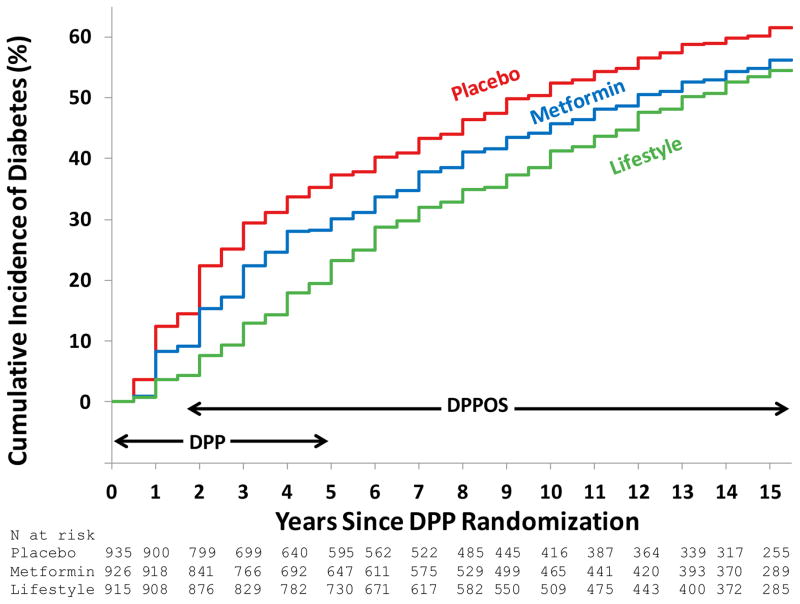
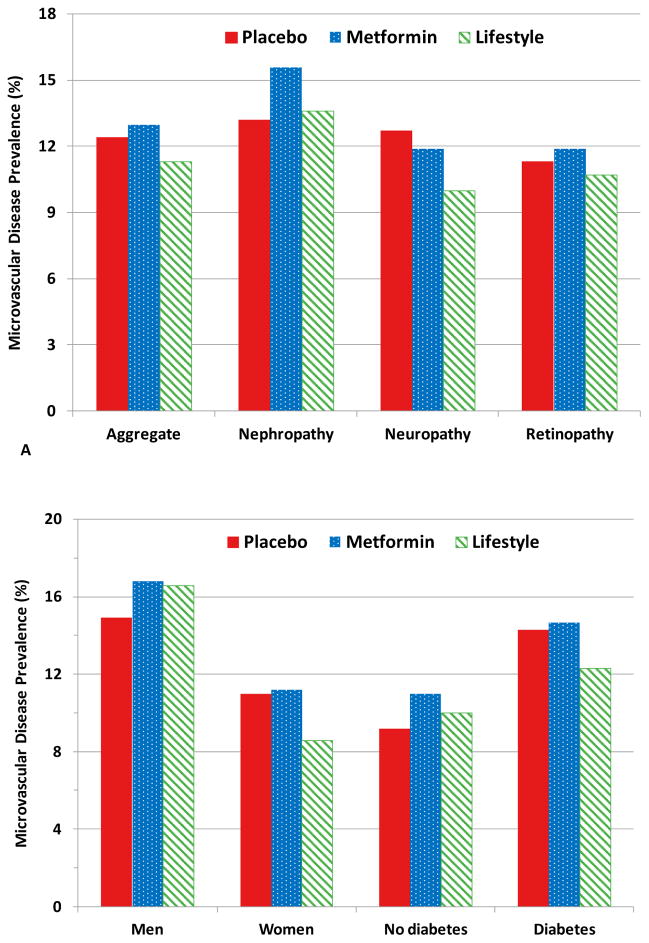
Background Effective prevention is needed to combat the worldwide epidemic of type 2 diabetes. We investigated the long-term extent of beneficial effects of lifestyle intervention and metformin on diabetes prevention, originally shown during the 3-year Diabetes Prevention Program (DPP), and assessed whether these interventions reduced diabetes-associated microvascular complications. Methods The DPP (1996-2001) was a randomised trial comparing an intensive lifestyle intervention or masked metformin with placebo in a cohort selected to be at very high risk of developing diabetes. All participants were offered lifestyle training at the end of the DPP. 2776 (88%) of the surviving DPP cohort were followed up in the DPP Outcomes Study (DPPOS, Sept 1, 2002, to Jan 2, 2014) and analysed by intention to treat on the basis of their original DPP assignment. During DPPOS, the original lifestyle intervention group was offered lifestyle reinforcement semi-annually and the metformin group received unmasked metformin. The primary outcomes were the development of diabetes and the prevalence of microvascular disease. For the assessment of microvascular disease, we used an aggregate microvascular outcome, composed of nephropathy, retinopathy, and neuropathy. Findings During a mean follow-up of 15 years, diabetes incidence was reduced by 27% in the lifestyle intervention group (hazard ratio 0·73, 95% CI 0·65-0·83; p<0·0001) and by 18% in the metformin group (0·82, 0·72-0·93; p=0·001), compared with the placebo group, with declining between-group differences over time. At year 15, the cumulative incidences of diabetes were 55% in the lifestyle group, 56% in the metformin group, and 62% in the placebo group. The prevalences at the end of the study of the aggregate microvascular outcome were not significantly different between the treatment groups in the total cohort (placebo 12·4%, 95% CI 11·1-13·8; metformin 13·0%, 11·7-14·5; lifestyle intervention 11·3%, 10·1-12·7). However, in women (n=1887) the lifestyle intervention was associated with a lower prevalence (8·7%, 95% CI 7·4-10·2) than in the placebo (11·0%, 9·6-12·6) and metformin (11·2%, 9·7-12·9) groups, with reductions in the lifestyle intervention group of 21% (p=0·03) compared with placebo and 22% (p=0·02) compared with metformin. Compared with participants who developed diabetes, those who did not develop diabetes had a 28% lower prevalence of microvascular complications (relative risk 0·72, 95% CI 0·63-0·83; p<0·0001). Interpretation Lifestyle intervention or metformin significantly reduced diabetes development over 15 years. There were no overall differences in the aggregate microvascular outcome between treatment groups; however, those who did not develop diabetes had a lower prevalence of microvascular complications than those who did develop diabetes. This result supports the importance of diabetes prevention. Funding National Institute of Diabetes and Digestive and Kidney Diseases.
Overview
CoChat Summary
TL;DR
In the DPP Outcomes Study, lifestyle intervention and metformin each reduced diabetes incidence over a mean 15 years compared with placebo, but neither reduced aggregate microvascular complications in the total cohort. Lifestyle intervention was associated with lower microvascular disease in women and in participants who remained free of diabetes.
Key findings
- Over an average 15 years, diabetes incidence was lower by 27% with lifestyle intervention (HR 0.73 [95% CI 0.65–0.83]) and 18% with metformin (HR 0.82 [0.72–0.93]) versus placebo. Cumulative diabetes incidence by year 15 was 560 (62%) in placebo, 499 (56%) in metformin, and 480 (55%) in lifestyle.
- Aggregate microvascular outcome prevalence at DPPOS-end did not differ significantly among the three treatment groups overall. In women, lifestyle intervention reduced microvascular disease by 21% versus placebo (RR 0.79) and 22% versus metformin (RR 0.78); metformin did not reduce microvascular disease in either sex.
- Participants who did not develop diabetes had a 28% lower prevalence of the aggregate microvascular outcome than those who developed diabetes (RR 0.72) across all treatment groups combined.
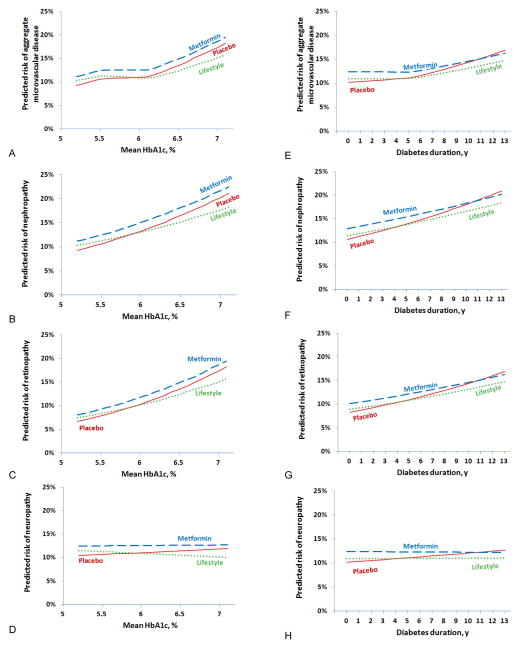
- In a post-hoc analysis among participants whose latest HbA1c was ≥6.5% (about 25% of the cohort), lifestyle showed significant reductions versus placebo in aggregate microvascular outcome (RR 0.59), retinopathy (RR 0.51), and neuropathy (RR 0.39); no significant metformin–placebo differences were seen.
Methods
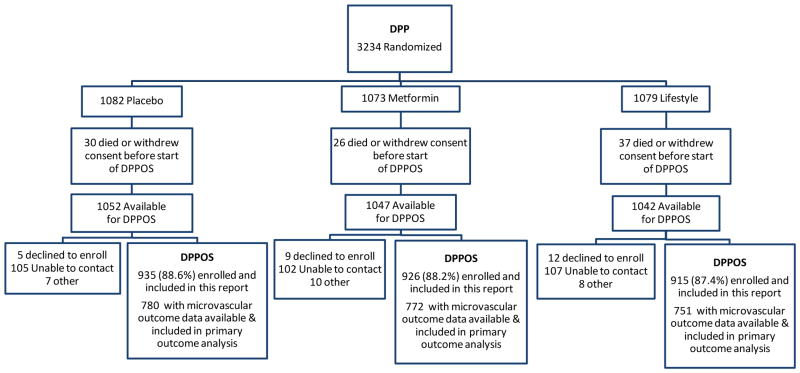
- DPP was a randomized controlled trial at 27 US centers comparing placebo, metformin 850 mg twice daily, and intensive lifestyle intervention (16-session curriculum targeting 7% weight loss and 150 minutes/week moderate activity). DPPOS followed 2776 (88%) of 3149 surviving DPP participants from all three arms, regardless of diabetes status, for a total mean follow-up of 15 years.
- Diabetes was diagnosed by 75 g OGTT annually and FPG every 6 months, with confirmation. The aggregate microvascular outcome included nephropathy, retinopathy, and neuropathy, measured during the final DPPOS year; analyses were intention-to-treat.
- Time to diabetes was compared with modified product-limit life-table distributions and log-rank tests. Aggregate microvascular outcomes were analyzed with GEE global tests; pairwise comparisons used Bonferroni-adjusted α=0.025. Analyses used SAS version 9.3.
Limitations
- Stated: therapeutic cross-over occurred because all three groups were offered group lifestyle intervention during the one-year bridge after DPP; lifestyle intervention after the first 24 weeks and during DPPOS was less intensive, likely contributing to weight regain; metformin use by lifestyle and placebo participants may have diminished relative metformin effects.
- Stated: the aggregate microvascular outcome combined three outcomes, one of which—neuropathy measured by monofilament—was more subjective and less sensitive for early neuropathy. Generalizability of a clinical trial with selected populations and protocol-driven interventions in academic centers may also be questioned.
- Stated/evident: the lack of an overall treatment effect on microvascular outcomes despite reduced diabetes development may be owing to limited power, the sex disparity in effects, or small separation in HbA1c among groups. Missing data were assumed missing at random, with 87% completion of microvascular components.
Model-written summary. Check it against the paper before relying on it.
Integrity signals
Registry
Cites
Statistics
Figures
Verification
Claims the paper makes
0 Valid · 0 Not valid · 4 Not checked · 57 Own results and interpretations
A result the paper reports from its own data — it cites no other source for it, so there is none to check. The quote shows it is in the paper.
In the paper
“There were no differences in the treatment effects on aggregate microvascular complications in other pre-specified subgroups defined by age and race or ethnicity”
plain- Asserted: passes — The authors put it forward as true.
- Checkable: passes — It can be checked against evidence.
- Load-bearing: unclear — It is unclear whether the paper’s conclusions depend on it.
- Based: passes — The paper gives a reason why it holds.
- Rests on 2 assumptions not shown here.
A result the paper reports from its own data — it cites no other source for it, so there is none to check. The quote shows it is in the paper.
In the paper
“Higher levels of baseline fasting glucose and HbA1c were associated with higher prevalence of microvascular complications”
plainstates an association- Asserted: passes — The authors put it forward as true.
- Checkable: passes — It can be checked against evidence.
- Load-bearing: unclear — It is unclear whether the paper’s conclusions depend on it.
- Based: passes — The paper gives a reason why it holds.
- Rests on 2 assumptions not shown here.
A result the paper reports from its own data — it cites no other source for it, so there is none to check. The quote shows it is in the paper.
In the paper
“lifestyle showed significant reductions compared with placebo in the aggregate microvascular outcome (relative risk 0.59), retinopathy (relative risk 0.51), and neuropathy (relative risk 0.39)”
plainstates a cause- Asserted: passes — The authors put it forward as true.
- Checkable: passes — It can be checked against evidence.
- Load-bearing: unclear — It is unclear whether the paper’s conclusions depend on it.
- Based: passes — The paper gives a reason why it holds.
- Rests on 2 assumptions not shown here.
A result the paper reports from its own data — it cites no other source for it, so there is none to check. The quote shows it is in the paper.
In the paper
“but was similar across racial/ethnic groups”
plain- Asserted: passes — The authors put it forward as true.
- Checkable: passes — It can be checked against evidence.
- Load-bearing: unclear — It is unclear whether the paper’s conclusions depend on it.
- Based: passes — The paper gives a reason why it holds.
- Rests on 2 assumptions not shown here.
A result the paper reports from its own data — it cites no other source for it, so there is none to check. The quote shows it is in the paper.
In the paper
“The average prevalence of the microvascular outcomes at DPPOS-end did not differ significantly among the three treatment groups”
plain- Asserted: passes — The authors put it forward as true.
- Checkable: passes — It can be checked against evidence.
- Load-bearing: passes — The paper’s conclusions depend on it.
- Based: passes — The paper gives a reason why it holds.
- Rests on 2 assumptions not shown here.
32 more claims
Create a free account to see all 61 claims and every source verdict.
- It may state two separate claims as one. 21
- The quote only partly states this claim. 1
- Probably not a substantial claim. 7
Claims other papers make about this one
Each is checked against this paper’s own text: does it say what the citing paper says it does?
The cited source doesn’t support the claim as written.
In the citing paper
“Despite an initial effect on lipoprotein subfractions, C-reactive protein and t-PA, with long-term follow-up there was no effect of metformin on cardiovascular risk factors.”
From The Vasculature in Prediabetes (2018) · cites this paper as [196]
Checked by a reasoning model — may be wrong.
Experimental — accuracy not yet measuredThe source backs part of the claim, not all of it — or backs it for a different population, condition or comparison.
In the citing paper
“Two recent meta-analyses revealed that metformin is effective in reducing the incidence of type 2 diabetes [3,36].”
From Economic evaluation of wearable fitness trackers versus metformin for preventing type 2 diabetes in the UK population (2025) · cites this paper as [36]
Experimental — accuracy not yet measuredThe source backs part of the claim, not all of it — or backs it for a different population, condition or comparison.
In the citing paper
“We derived our base case parameters (see Table 1) from the latter, as it used placebo as the comparator and had a longer time horizon (15 years), while the former used the lifestyle intervention (diet and exercise promotion) as the comparator.”
From Economic evaluation of wearable fitness trackers versus metformin for preventing type 2 diabetes in the UK population (2025) · cites this paper as [36]
Experimental — accuracy not yet measuredThe source backs part of the claim, not all of it — or backs it for a different population, condition or comparison.
In the citing paper
“Intensive Behavioral Counseling (IBC) interventions like the National Diabetes Prevention Program (NDPP), have demonstrated effectiveness in reducing excess body weight and lowering or delaying morbidity onset.”
From Clinical and Economic Impact of a Digital, Remotely-Delivered Intensive Behavioral Counseling Program on Medicare Beneficiaries at Risk for Diabetes and Cardiovascular Disease (2016) · cites this paper as [1]
Experimental — accuracy not yet measuredThe source backs part of the claim, not all of it — or backs it for a different population, condition or comparison.
In the citing paper
“Intensive Behavioral Counseling (IBC) has been widely accepted as an effective approach for compliant individuals to reduce body weight, improve clinical measures, and lower risk of obesity-related comorbidities [1–6].”
From Clinical and Economic Impact of a Digital, Remotely-Delivered Intensive Behavioral Counseling Program on Medicare Beneficiaries at Risk for Diabetes and Cardiovascular Disease (2016) · cites this paper as [1]
Experimental — accuracy not yet measured
14 more claims about this paper
Create a free account to see every claim other papers make about this one.
Citations
Cites
A New Equation to Estimate Glomerular Filtration Rate
Levey, A. S., Stevens, L. A., Schmid, C. H., Zhang, Y. (., Castro, A. F., Feldman, H. I., Kusek, J. W., Eggers, P., Van Lente, F., Greene, T., et al. (2009) · Annals of Internal Medicine · doi:10.7326/0003-4819-150-9-200905050-00006 · Cited by 25,603
Reduction in the incidence of type 2 diabetes with lifestyle intervention or metformin
(2002) · New England Journal of Medicine · doi:10.1056/nejmoa012512 · Cited by 19,011
Tuomilehto, J., Lindström, J., Eriksson, J. G., Valle, T. T., Hämäläinen, H., Ilanne-Parikka, P., Keinänen-Kiukaanniemi, S., Laakso, M., Louheranta, A., Rastas, M., et al. (2001) · New England Journal of Medicine · doi:10.1056/nejm200105033441801 · Cited by 10,873
Stratton, I. M. (2000) · BMJ · doi:10.1136/bmj.321.7258.405 · Cited by 9,059
Longitudinal Data Analysis for Discrete and Continuous Outcomes
Zeger, S. L., & Liang, K.-Y. (1986) · Biometrics · doi:10.2307/2531248 · Cited by 7,764
(2001) · Statistics for Psychologists · doi:10.4324/9781410605542-11 · Cited by 6,877
Pan, X.-R., Li, G.-W., Hu, Y.-H., Wang, J.-X., Yang, W.-Y., An, Z.-X., Hu, Z.-X., Juan-Lin, Xiao, J.-Z., Cao, H.-B., et al. (1997) · Diabetes Care · doi:10.2337/diacare.20.4.537 · Cited by 4,320
Economic Costs of Diabetes in the U.S. in 2002
American Diabetes Association (2003) · Diabetes Care · doi:10.2337/diacare.26.3.917 · Cited by 4,147
Diabetes Prevention Program Research Group (2009) · The Lancet · doi:10.1016/s0140-6736(09)61457-4 · Cited by 3,020
Economic Costs of Diabetes in the U.S. in 2012
American Diabetes Association (2013) · Diabetes Care · doi:10.2337/dc12-2625 · Cited by 2,163
Cited by
Items 901–1,000 of 1,022
Bailey-Davis, L. D., Wood, G. C., McCabe, C. F., Cook, A., Rolston, D. D. K., Seiler, C. J., & Still, C. D. (2022) · medRxiv · doi:10.1101/2022.06.07.22274277
The Role of Berry Bioactive Compounds in Diabetes Mellitus
Davis, D. W., Helm, M. M., Izuora, K. E., & Basu, A. (2022) · Royal Society of Chemistry eBooks · doi:10.1039/9781839165450-00275
Social Support in a Diabetes Online Community: A Mixed Methods Content Analysis (Preprint)Preprint
Semedo, C. D. M., Bath, P. A., & Zhang, Z. (2022) · doi:10.2196/preprints.41320
Flagship initiatives to prevent and treat diabetes as a burden of western societies
Goulden, P., & Carvalho, E. (2022) · Elsevier eBooks · doi:10.1016/b978-0-12-823761-8.00018-5 · Cited by 1
Stellardo, A. (2022) · Evidencia actualizacion en la práctica ambulatoria · doi:10.51987/evidencia.v26i1.7039
Combined lifestyle interventions
Tronieri, J. S., Nadolsky, K. Z., & Agarwal, M. (2023) · Elsevier eBooks · doi:10.1016/b978-0-12-822186-0.00021-3
Zhang, M., Zucatti, K. P., Teixeira, P. P., Spiazzi, B. F., Correia, P. E., Wayerbacher, L. F., Socal, M. P., Boyko, E. J., Colpani, V., & Gerchman, F. (2023) · The Journal of Clinical Endocrinology & Metabolism · doi:10.1210/clinem/dgad266 · Cited by 2
Actualización en el diagnóstico y tratamiento de la intolerancia a la glucosa
Díaz-Rodríguez, J. J. (2023) · Alad · doi:10.24875/alad.22000025 · Cited by 1
Fermín‐Martínez, C. A., Paz‐Cabrera, C. D., Basile‐Alvarez, M. R., et al. (2023) · medRxiv · doi:10.1101/2023.05.16.23290081
Lifestyle and Diabetes Prevention (DPP)-2002
Kalinowski, A. (2023) · Springer eBooks · doi:10.1007/978-3-031-25620-2_18
Domalpally, A., Pan, Q., & Chew, E. Y. (2023) · JAMA Ophthalmology · doi:10.1001/jamaophthalmol.2023.1892
Lemp, J. M., Bommer, C., Xie, M., Jani, A. R., Davies, J. I., Bärnighausen, T., Vollmer, S., & Geldsetzer, P. (2023) · medRxiv · doi:10.1101/2023.06.08.23291126
Priya, K., Dhasaradharaman, K., & Robert, F. (2023) · International Journal of Health Sciences and Research · doi:10.52403/ijhsr.20230638
Sang, H., Lee, H., Lee, M., Park, J., Cho, W., Kim, S. Y., Woo, H. G., Rahmati, M., Koyanagi, A., Smith, L., et al. (2023) · doi:10.2196/preprints.50420
Diabetes Prevention on a Research and Clinical Practice Continuum
Delahanty, L. M. (2023) · The Science of Diabetes Self-Management and Care · doi:10.1177/26350106231169690
Liang, Y., Hu, X., Jia, M.-J., Liu, D., Chu, S., & Li, H.-L. (2023) · Research Square · doi:10.21203/rs.3.rs-3188194/v1
Chai, X., Wang, Y., Wang, J., Gong, Q., Zhang, J., & Shao, R. (2023) · Chinese Science Bulletin (Chinese Version) · doi:10.1360/tb-2023-0489 · Cited by 1
Bertoluci, M. C., Júnior, W. S. D. S., Valente, F., Araujo, L. R., Lyra, R., de Castro, J. J., Raposo, J. F., Miranda, P. A. C., Boguszewski, C. L., Hohl, A., et al. (2023) · Revista Portuguesa de Endocrinologia Diabetes e Metabolismo · doi:10.26497/na230038 · Cited by 2
Fang, M., McCoy, R. G., O’Connor, P. J., & Selvin, E. (2023) · American Public Health Association eBooks · doi:10.2105/9780875533377ch12
Obesity and Metabolic Syndrome in the United States
Osei, A. D., Ohene-Kyei, E. T., & Echouffo-Tcheugui, J. B. (2023) · Springer eBooks · doi:10.1007/978-3-319-12125-3_55-1
Empfehlungen zur Ernährungsprävention des Typ-2-Diabetes mellitus
Skurk, T., Grünerbel, A., Hummel, S., Kabisch, S., Keuthage, W., Müssig, K., Nussbaumer, H., Rubin, D., Simon, M., Tombek, A., et al. (2023) · Diabetologie und Stoffwechsel · doi:10.1055/a-2109-9410
Mochel, J. P., Ward, J. L., Blondel, T., Kundu, D., Merodio, M. M., Zemirline, C., Guillot, E., Giebelhaus, R. T., de la Mata, A. P., Iennarella‐Servantez, C. A., et al. (2023) · Research Square · doi:10.22541/au.170022092.29999283/v1 · Cited by 2
England’s diabetes prevention programme has delivered causal benefits, study reports
Iacobucci, G. (2023) · BMJ · doi:10.1136/bmj.p2691
Bauer, A. G., Shah, B., Johnson, N., Aduloju-Ajijola, N., Bowe-Thompson, C., Christensen, K., & Berkley‐Patton, J. (2023) · Health Education & Behavior · doi:10.1177/10901981231211538
From the Perspective of an Internal Medicine of Diabetes and Metabolism
Watanabe, K. (2023) · Health Evaluation and Promotion · doi:10.7143/jhep.50.595
Role of newer anti-diabetes drugs in prediabetes: A systematic review
Singh, A. K., & Singh, R. (2024) · Elsevier eBooks · doi:10.1016/b978-0-323-85732-1.00037-2
Liu, Y., Li, P., Li, J., Xu, L., He, Y., Qiao, J., Guan, Z., Zhang, Y., & Wang, Y. (2024) · Research Square · doi:10.21203/rs.3.rs-3873313/v1
Pemanfaatan pelayanan kesehatan pada pasien diabetes mellitus tipe 2
Sinurat, B., Hidayah, Q. A., Tarigan, G., Dameria, D., Samosir, F. J., Sibagariang, E. E., & Silalahi, M. I. (2023) · Jurnal Prima Medika Sains · doi:10.34012/jpms.v5i1.3920 · Cited by 9
David M. Nathan: An Epic Investigator, An Epoch in Diabetes Care
Wexler, D. J. (2024) · Diabetes Care · doi:10.2337/dci23-0095
Empfehlungen zur Ernährungsprävention des Typ‑2‑Diabetes mellitus
Skurk, T., Grünerbel, A., Hummel, S., der DDG, D. A. D. &. S., Kabisch, S., Keuthage, W., Müssig, K., Nussbaumer, H., Rubin, D., Simon, M., et al. (2024) · Die Diabetologie · doi:10.1007/s11428-024-01173-1 · Cited by 1
Public Health, Public Health Education, and their Future Prospects
(2024) · Frontiers research topics · doi:10.3389/978-2-8325-4776-2
Rezvani, A., Adimi, S., Ghaemmaghami, Z., & Azimi, A. (2024) · Springer eBooks · doi:10.1007/978-3-031-53659-5_10
The effects of interactions between smoking and abdominal obesity on prediabetes mellitusPreprint
Xiong, H., Ma, F., Liu, D.-Q., et al. (2024) · Research Square · doi:10.21203/rs.3.rs-4349376/v1
COVID-19 and diabetes: health risks
Sokolova, E., Palamarenko, M. A., Osipov, A. A., Chaulin, A. M., Eliseeva, E., & Koryakin, E. S. (2024) · Clinical Medicine (Russian Journal) · doi:10.30629/0023-2149-2024-102-3-252-256
Integrating Nutrition Therapy into Community-Based Diabetes Prevention Programs
Albright, A. L., Devlin, H. M., & Zhang, X. (2017) · American Diabetes Association eBooks · doi:10.2337/9781580406482.ch28
Misra, R., & Shawley-Brzoska, S. (2024) · Journal of Clinical and Translational Science · doi:10.1017/cts.2024.623 · Cited by 1
(2021) · American Diabetes Association eBooks · doi:10.2337/9781580407625.ch06
Approach to Prevent Progression from Prediabetes to Type 2 Diabetes
(2021) · American Diabetes Association eBooks · doi:10.2337/9781580407625.ch07
Yoga in prevention of type 2 diabetes mellitus
Deshmukh, V. C., Das, A. K., & Basu‐Ray, I. (2024) · Elsevier eBooks · doi:10.1016/b978-0-323-99645-7.00003-2
Xiao, Z., Yin, X., Lai, X., Zhou, X., Zhang, Y., Yang, D., Wu, R., Wang, H., Zhou, J., Yang, X., et al. (2024) · SSRN Electronic Journal · doi:10.2139/ssrn.5038364
Outcome: Binge-Eating Disorder
Rösch, S. A., & Hilbert, A. (2024) · Springer eBooks · doi:10.1007/978-3-031-46096-8_90
Mansor, W. A. N. C. W., Shahar, S., Tohit, N. M., Rajikan, R., & Ismail, M. (2025) · medRxiv · doi:10.1101/2025.01.20.25320837
Sievenpiper, J. L., & Chiavaroli, L. (2025) · American Journal of Clinical Nutrition · doi:10.1016/j.ajcnut.2024.12.020
Metformin in prediabetes: Opportunity or over-treatment?
Singh, A. K., Singh, A., & Gangopadhyay, K. K. (2025) · International Journal of Diabetes in Developing Countries · doi:10.1007/s13410-025-01447-4 · Cited by 1
Şimşek, C., & Thompson, C. C. (2024) · Springer eBooks · doi:10.1007/978-3-031-70004-0_3
Adejumo, O. A., & Fornili, K. S. (2025) · Journal of Doctoral Nursing Practice · doi:10.1891/jdnp-2024-0038
Advances in Exercise and Nutrition as Therapy in Diabetes
Zaharieva, D. P., Shakeri, D., Turner, L. V., & Riddell, M. C. (2025) · Diabetes Technology & Therapeutics · doi:10.1089/dia.2025.8809.dpz
Dietary and Nutrition Education: Type 2 Diabetes Mellitus
Yusof, B. N. M., Talib, R. A., & Hamdy, O. (2025) · Springer eBooks · doi:10.1007/978-3-031-32047-7_49-1 · Cited by 1
Prevention and Management of Prediabetes
Lee, J. M. (2025) · Journal of Korean Diabetes · doi:10.4093/jkd.2025.26.1.18
Navigating the CKM Conundrum: An Integrated Approach to Cardiovascular, Kidney, and Metabolic Health
Cross, L. V., Eichler, C., Jones, E. J., & Mcdaniel, L. (2025) · ADCES in Practice · doi:10.1177/2633559x251333384
Sticking Points About Weight Loss: Healthy or Harmful?
Tanofsky‐Kraff, M., Schvey, N. A., Pashby, R. O., & Burke, N. L. (2025) · Oxford University Press eBooks · doi:10.1093/oso/9780197752531.003.0005
Chun Kwan, O., Fan, B., Ho, J. P. Y., Lau, E. S. H., Ko, G. T., Lui, J. N. M., Chow, E., Kong, A. P. S., Ronald, C. W., Luk, A. O. Y., et al. (2025) · BMJ Open Diabetes Research & Care · doi:10.1136/bmjdrc-2024-004749 · Cited by 1
Katsuragawa, S., Mai, T., McDougall, A. R. A., Romero, L., Vogel, J. P., & Makama, M. (2025) · American Journal of Obstetrics & Gynecology MFM · doi:10.1016/j.ajogmf.2025.101731 · Cited by 2
Treatment of Metabolic Diseases by Modulating Autophagy: Current Strategies and Future Directions
Yu, N., Tang, L., Mo, L., Peng, W., Shen, H., Mo, X., Lai, Q., & Tan, Y. (2025) · Journal of Biosciences and Medicines · doi:10.4236/jbm.2025.138006
Xu, Y., & García-Lorenzo, B. (2025) · BMC Digital Health · doi:10.1186/s44247-025-00194-0
Malakar, S., Singh, S. K., & Usman, K. (2025) · Cureus · doi:10.7759/cureus.92153 · Cited by 4
Impact of capitation payment on vascular complications among treated diabetic patients in China
Wang, E., Lin, Y., You, Y., Xi, X., & Zhu, M. (2025) · Scientific Reports · doi:10.1038/s41598-025-17273-x · Cited by 1
Avari, P., Ranjani, H., Nitika, S., Jagannathan, N., Mohan, V., Yadav, A. K., Loomba, M., Tyagi, A., Oliver, N. S., Jha, V., et al. (2025) · BMC Public Health · doi:10.1186/s12889-025-24337-0
Olchanski, N., Weidner, S. B., Lin, C.-H., & Kent, D. M. (2025) · medRxiv · doi:10.1101/2025.10.02.25337195
Reducing the risk of developing diabetes
Honka, H., & Pimiä, E. (2025) · Elsevier eBooks · doi:10.1016/b978-0-443-13825-6.00291-0
Mansor, W. A. N. C. W., Shahar, S., Tohit, N. M., Rajikan, R., & Ismail, M. (2025) · BMJ Open · doi:10.1136/bmjopen-2025-099562
“12 However, the weight gaining-effects of antidiabetic medications are primarily from improved glycaemic control reducing glycosuria rather than direct drug effects.”
Lukina, Y. V., Витальевна, Ц. В., Кутишенко, Н. П., Martsevich, S. Y., & Drapkina, O. M. (2025) · Rational Pharmacotherapy in Cardiology · doi:10.20996/1819-6446-2025-3208
Chen, J., Guo, W., Yin, H., & Li, H. (2025) · Research Square · doi:10.21203/rs.3.rs-7527719/v1
Raad, D. C. J., Koome, A. M., Noordam, R., Pijl, H., & van Bodegom, D. (2025) · BMJ Nutrition Prevention & Health · doi:10.1136/bmjnph-2025-001362
Nutritional Approach in Diabetes: “OLD BUT GOLD”
Folini, L. (2025) · Springer eBooks · doi:10.1007/978-3-032-01700-0_18
Metformin in the Management of Type 2 Diabetes Mellitus: Past, Present, and Future
Kandalkar, N. B., Jayashree.R, P., Rohile, P. V., R., D., & Waidya, K. P. (2025) · International Journal of Advanced Research in Science Communication and Technology · doi:10.48175/ijarsct-29726
Smart, M. H., Asada, Y., Limpoco, D., Lin, J., Layden, B. T., Eisenberg, Y., Pickard, A. S., Sharp, L. K., Biggers, A., & Kong, A. (2025) · BMC Family Practice · doi:10.1186/s12875-025-03040-4
“…such as lack of insurance and SDOH; provider-related barriers such as lack of awareness of available DPS to refer patients to; and health system barriers such as lack of clinical-staff support[11, evidence-based[39, 40]; however, DPP referral rates among PCPs are generally low (0 to 4%)[41–43].”
Hassan, S., Sobers, N., Paul-Charles, J., Herbert, J., Dharamraj, K., Galusha, D. H., Cruz, E., García-Rivera, E. J., Fredericks, L., Arniella, G., et al. (2025) · BMC Public Health · doi:10.1186/s12889-025-25291-7 · Cited by 1
Approaches for sustaining diabetes prevention program practices post-graduation: A scoping review
Dudzik, J. M., Johnston, E. A., Liu, Y., LaPolla, F. W. Z., & Beasley, J. M. (2025) · Preventive Medicine Reports · doi:10.1016/j.pmedr.2025.103329
“Study designs included long-term follow-ups of RCTs ( n = 5) (Diabetes Prevention Program Research Group, 2015; Lindstr ¨ om et al., 2006; Diabetes Prevention Program Outcomes Study Research Group et al., 2013; Goldberg et al., 2022; Jaacks et al., 2014), randomized intervention trials ( n = 2)…”
InfluentialMasoud, K., & Ramchandani, N. (2025) · medtigo Journal of Medicine · doi:10.63096/medtigo3062347
Ballena-Caicedo, J., Valladolid-Sandoval, L. A. M., Zuzunaga-Montoya, F. E., & Vera-Ponce, V. J. (2025) · Endocrine and Metabolic Science · doi:10.1016/j.endmts.2025.100285 · Cited by 3
Wen, Y.-L., Pan, K., Liao, C., Yang, H., To, S.-Y., Kao, S., & Kao, L.-T. (2025) · Archives of Physical Medicine and Rehabilitation · doi:10.1016/j.apmr.2025.12.001
Sinha, A., Ning, H., Ahmad, F. S., Bancks, M. P., Carnethon, M. R., O’Brien, M. J., Allen, N. B., Wilkins, J. T., Lloyd-Jones, D. M., & Khan, S. S. (2021) · Figshare · doi:10.6084/m9.figshare.14267092
Chen, H.-W., Liu, K., Cao, B., Zhong, Q., Zhou, R., Li, L.-H., Wang, S.-A., Wei, Y.-F., Liu, H.-M., & Wu, X. (2024) · Figshare · doi:10.6084/m9.figshare.26733220
Allaire, B. T., Tjaden, A. H., Venditti, E. M., Apolzan, J. W., Dabelea, D., Delahanty, L. M., Edelstein, S. L., Hoskin, M. A., Temple, K. A., Wylie-Rosett, J., et al. (2020) · Figshare · doi:10.6084/m9.figshare.13467993
Louie, J. Z., Shiffman, D., Meigs, J. B., Taylor, S. W., Melander, O., Abbasi, F., & McPhaul, M. J. (2025) · Diabetes & Metabolic Syndrome Clinical Research & Reviews · doi:10.1016/j.dsx.2025.103372 · Cited by 1
Milenković, T., Velija-Ašimi, Z., Smokovski, I., Bozhinovska, N., & Bureković, A. (2026) · Cureus · doi:10.7759/cureus.100726
Haddon, L., Ensor, J., Khunti, K., & Gray, L. J. (2026) · Diagnostic and Prognostic Research · doi:10.1186/s41512-026-00219-w
Prediabetes is a window of opportunity for preventive interventions. Part 2
Adasheva, T. V., Евгеньевна, Г. Е., Игоревна, Ф. Е., & Георгиевна, Л. Е. (2026) · Meditsinskiy sovet = Medical Council · doi:10.21518/ms2025-559
Catalli, L., Ha, N. B., Miller, S. A., Agudelo, E. Z., Madan, S. K., Bastani, A., Tan, R., Brandman, D., & Lai, J. C. (2026) · Gastro Hep Advances · doi:10.1016/j.gastha.2026.100903 · Cited by 1
Wei, J., Xu, Y., Niu, T., Su, L., Shen, Y., Xing, X., Jiang, Y., Liu, X., Zhu, Q., Xie, J., et al. (2026) · Translational Vision Science & Technology · doi:10.1167/tvst.15.2.21
Balducci, S., Haxhi, J., Vitale, M., Mattia, L., Calvi, F., Marini, M., Ciocca, E., Auccello, F., Gentile, A., Bollanti, L., et al. (2026) · Acta Diabetologica · doi:10.1007/s00592-026-02665-w
Ueda, T., Kakinuma, A., Kinugawa, M., Yajima, S., Miyamori, Y., Kakoi, T., Yamamoto, S., Zhang, T., Takeshima, T., Chida, A., et al. (2026) · Journal of Medical Economics · doi:10.1080/13696998.2026.2631936
Higgs, P., Hawkes, R. E., Miles, L. M., Dack, C., & French, D. (2026) · Health Psychology and Behavioral Medicine · doi:10.1080/21642850.2026.2645889
“…in a diabetes prevention programme found reduced behaviour changes in participants multiple years after programme completion, though participants still displayed significantly more changes than control participants (Lindström et al., 2013; Diabetes Prevention Program Research Group, 2015).”
Li, Z. Y., Li, H., Gong, H., Yang, H., Gao, L., Li, X., Zhao, A., Wang, W., Yan, Y., & Liu, S. (2026) · Metabolism and Target Organ Damage · doi:10.20517/mtod.2026.03
Barriers and assets in diabetes prevention: A community-based assessment in a Latino population
Cruz, M., Raine, L. M., Ortiz, L., & Alemi, Q. (2026) · Social Work in Health Care · doi:10.1080/00981389.2026.2648201
Smart, B. P., Forte, A., Jacobs, J., Simon, J., Gordenstein, R., & Ramos, E. (2026) · Journal of Diabetes Research · doi:10.1155/jdr/7663175
Diabetes prevention integrated model
Mayurnikova, L. A., Дмитриевич, М. В., & Krapiva, T. V. (2026) · Food Industry · doi:10.29141/2500-1922-2026-11-1-11
Ruggiero, L., & Orsega-Smith, E. M. (2026) · Delaware Journal of Public Health · doi:10.32481/djph.2026.03.13
Interventions to Prevent Diabetes in Latin America: A Systematic Review of the Literature
Zuniga, J., Kimutai, W., Chepkemoi, M. K., Moreno, E. R., Hagner, Z., Cuevas, H. E., Cook, R., García, A. A., Gonzalez, M. E., Ainslie, R. C., et al. (2026) · Diabetes Obesity and Cardiometabolic CARE · doi:10.2337/doc25-0023 · Cited by 1
Tsironikos, G. I., Zakynthinos, G. Ε., Kyprianidou, D., Rammou, V., Antonogiannis, T., Bargiota, Α., Zakynthinos, E. G., & Tsolaki, V. (2026) · World Journal of Cardiology · doi:10.4330/wjc.v18.i4.115712 · Cited by 1
Alawadi, F., Abdelgadir, E., Hassoun, A. A. K., Abusnana, S., Afandi, B. O., Aldahmani, K. M., Alkaabi, J., Bashier, A. M., Bayado, F., Belaila, B. A. B., et al. (2026) · Dubai Diabetes and Endocrinology Journal · doi:10.18502/ddej.v32i1.21067
牟忠卿, Zhou, Y., & Dong, Z. (2026) · Canadian Journal of Diabetes · doi:10.1016/j.jcjd.2026.05.001
Gonzalez, C. J., Hernandez, N. G., Perez‐Mejia, C. N., Flaxman, H. R., Stephenson-Hunter, C., Gil, E., Formagini, T. D. B., Shapiro, M. F., Gonzalez, J. S., & Chambers, E. C. (2026) · BMJ Open · doi:10.1136/bmjopen-2025-114268 · Cited by 1
Derse, T. K., Kidie, D. M., Asgai, A. S., & Kelkay, J. M. (2026) · Diabetes Research and Clinical Practice · doi:10.1016/j.diabres.2026.113317 · Cited by 2
Jiang, N., Liu, J., Mui, A., Yang, X., Teng, C., Xiao, A., Wang, A., ONG, I. H., Beasley, J. M., Yi, S. S., et al. (2026) · JMIR Formative Research · doi:10.2196/preprints.103172
Galavazi, M., Shahed, Q., Hesser, H., Cao, Y., Jansson, S. P. O., van Nieuwenhoven, M. A., & JENDLE, J. H. (2026) · Diabetes Obesity and Metabolism · doi:10.1111/dom.70865
Zhang, S.-H., Zhang, J.-P., Song, L.-L., Wu, L.-L., Li, Z.-Q., He, Y.-F., Deng, R.-F., Ma, W.-L., Zhang, C., Zhang, B., et al. (2026) · World Journal of Diabetes · doi:10.4239/wjd.119604
Jiang, Y., Gu, L., MA, Y., Qu, Y., Wan, H., Lv, K., Zhu, Q., Zhou, H., Sun, J., Lu, F., et al. (2026) · Diabetes Obesity and Metabolism · doi:10.1111/dom.70973 · Cited by 1
Metadata
- Venue
- The Lancet Diabetes & Endocrinology
- Publisher
- Elsevier BV
- Published
- 2015-11
- Volume
- 3
- Issue
- 11
- Pages
- 866-875
- ISSN
- 2213-8587 (ISSN-L)
- PMC
- PMC4623946
- OpenAlex
- W1891939305
- Semantic Scholar
- c381343ab0ee26144aebc385219bf8a50f985787
- Cited by
- 1,029
- References
- 34
- Citations by year
- 2026: 71 · 2025: 110 · 2024: 95 · 2023: 124 · 2022: 99 · 2021: 124 · 2020: 104 · 2019: 93 · 2018: 96 · 2017: 69 · 2016: 39 · 2015: 2
- FWCI
- 59.60
- Type
- journal article
- Language
- en
- Open access
- green
- www.ncbi.nlm.nih.gov
- Licence
- cc-by-nc-nd
- www.elsevier.com/tdm/userlicense/1.0/ (tdm)
- Locations
- The Lancet Diabetes & Endocrinology (publishedVersion)
- PubMed (publishedVersion)
- Europe PMC (PubMed Central) (acceptedVersion, cc-by-nc-nd)
- PubMed Central (acceptedVersion, cc-by-nc-nd)
- Funders
- U.S. Department of Veterans Affairs
- National Institutes of Health
- National Institute of Diabetes and Digestive and Kidney Diseases (U01DK048339, U01DK048375, U01DK048397, U01DK048406, U01DK048413, DK048489, R01DK078907, U01DK048485, U01DK048400, U01DK048434, U01DK048380, U01DK048412, U01DK048411, U01DK048377, U01DK048437, U01DK048514, U01DK048489, U01DK048468, U01DK048407, U01DK048381, U01DK048443, U01DK048349, U01DK048387, U01DK048404, P30DK017047)
- National Center for Research Resources (UL1RR025758)
- National Center for Advancing Translational Sciences
- Topics
- Health Sciences › Medicine › Endocrinology, Diabetes and Metabolism › Diabetes, Cardiovascular Risks, and Lipoproteins
- Health Sciences › Medicine › Endocrinology, Diabetes and Metabolism › Diabetes Treatment and Management
- Health Sciences › Medicine › Endocrinology, Diabetes and Metabolism › Diabetes Management and Research
- Keywords
- type 2 diabetes prevention, lifestyle intervention, metformin, diabetes incidence, microvascular complications, diabetic nephropathy, diabetic retinopathy, diabetic neuropathy, long-term follow-up, women, Diabetes Prevention Program Outcomes Study, unmet medical needs, cost-effectiveness
- MeSH terms
- Diabetes Mellitus, Type 2, Female, Follow-Up Studies, Humans, Hypoglycemic Agents, Life Style, Male, Metformin, Middle Aged, Risk Factors, Vascular Diseases, Treatment Outcome, Microvessels
About these checks
Registry, retraction, Cites and statistics results are computed, not judged, with one exception: a printed reference that no index lists is read once by a model before it counts as a citation error. Claims are extracted by a model and kept only when their quote appears verbatim in the text; each cited source is then checked, with a model’s help, for whether it says what the claim relies on. Those verdicts can be wrong — read the claim’s quote and the cited source before relying on one.
A language model drew the claims from the paper on 2026-09-30, under version 3 of the claim definition (model deepseek-v4.1-flash, prompt extract-v3).
A second model labelled each claim on 2026-09-30 (model jev-1.13-20260917, definition revision gold-guideline-v0.2).
Statistics and arithmetic are recomputed, not judged.
Confidence bands are shown only for fields calibrated on our annotated test set. None is calibrated yet, so no band is shown.
What counts as a claim ›How we measure confidence ›How we check this ›
Are you an author, or do you see a problem with this page? Request a review
Data sources
Bibliographic data: Semantic Scholar, OpenAlex, Crossref.
Contains information from the Semantic Scholar Academic Graph Datasets, made available under the ODC Attribution License (ODC-BY 1.0).
Semantic Scholar’s data is described in: Kinney, R., et al. (2023). The Semantic Scholar Open Data Platform. arXiv:2301.10140.
