

Long-term effects of lifestyle intervention or metformin on diabetes development and microvascular complications over 15-year follow-up: the Diabetes Prevention Program Outcomes Study
Open accessThe DOI matches its Crossref record; 35 of the 35 references it cites were found in a registry or an index; none of the 4 sources its claims cite is checked for support yet.
Abstract
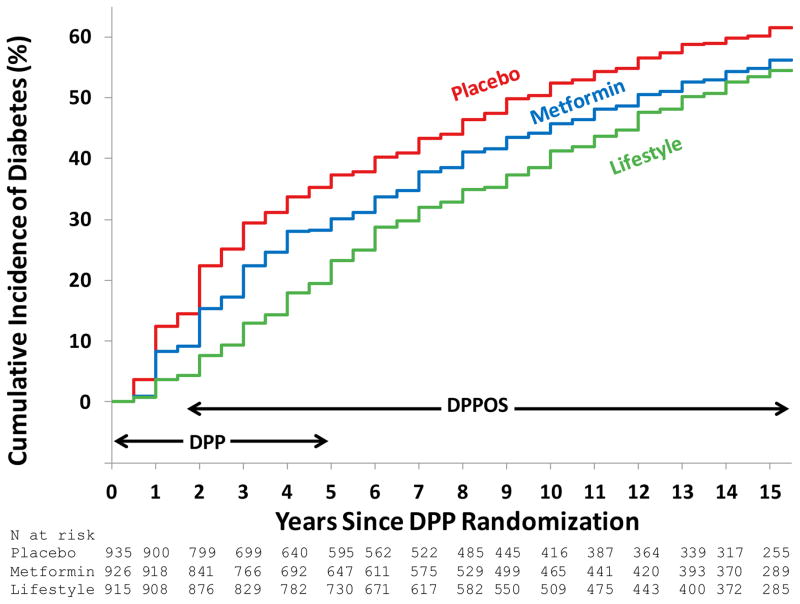
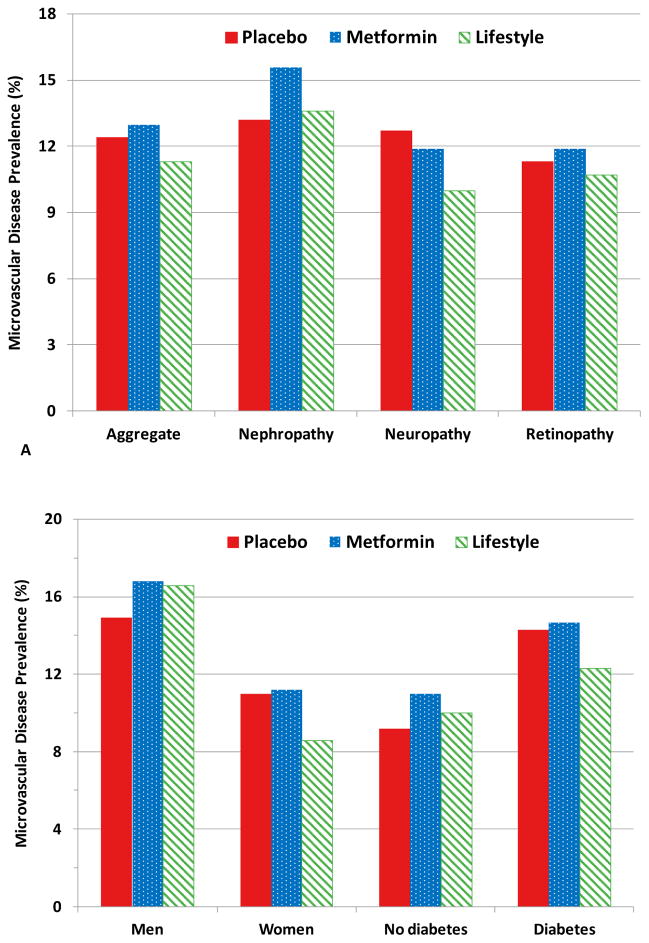
Background Effective prevention is needed to combat the worldwide epidemic of type 2 diabetes. We investigated the long-term extent of beneficial effects of lifestyle intervention and metformin on diabetes prevention, originally shown during the 3-year Diabetes Prevention Program (DPP), and assessed whether these interventions reduced diabetes-associated microvascular complications. Methods The DPP (1996-2001) was a randomised trial comparing an intensive lifestyle intervention or masked metformin with placebo in a cohort selected to be at very high risk of developing diabetes. All participants were offered lifestyle training at the end of the DPP. 2776 (88%) of the surviving DPP cohort were followed up in the DPP Outcomes Study (DPPOS, Sept 1, 2002, to Jan 2, 2014) and analysed by intention to treat on the basis of their original DPP assignment. During DPPOS, the original lifestyle intervention group was offered lifestyle reinforcement semi-annually and the metformin group received unmasked metformin. The primary outcomes were the development of diabetes and the prevalence of microvascular disease. For the assessment of microvascular disease, we used an aggregate microvascular outcome, composed of nephropathy, retinopathy, and neuropathy. Findings During a mean follow-up of 15 years, diabetes incidence was reduced by 27% in the lifestyle intervention group (hazard ratio 0·73, 95% CI 0·65-0·83; p<0·0001) and by 18% in the metformin group (0·82, 0·72-0·93; p=0·001), compared with the placebo group, with declining between-group differences over time. At year 15, the cumulative incidences of diabetes were 55% in the lifestyle group, 56% in the metformin group, and 62% in the placebo group. The prevalences at the end of the study of the aggregate microvascular outcome were not significantly different between the treatment groups in the total cohort (placebo 12·4%, 95% CI 11·1-13·8; metformin 13·0%, 11·7-14·5; lifestyle intervention 11·3%, 10·1-12·7). However, in women (n=1887) the lifestyle intervention was associated with a lower prevalence (8·7%, 95% CI 7·4-10·2) than in the placebo (11·0%, 9·6-12·6) and metformin (11·2%, 9·7-12·9) groups, with reductions in the lifestyle intervention group of 21% (p=0·03) compared with placebo and 22% (p=0·02) compared with metformin. Compared with participants who developed diabetes, those who did not develop diabetes had a 28% lower prevalence of microvascular complications (relative risk 0·72, 95% CI 0·63-0·83; p<0·0001). Interpretation Lifestyle intervention or metformin significantly reduced diabetes development over 15 years. There were no overall differences in the aggregate microvascular outcome between treatment groups; however, those who did not develop diabetes had a lower prevalence of microvascular complications than those who did develop diabetes. This result supports the importance of diabetes prevention. Funding National Institute of Diabetes and Digestive and Kidney Diseases.
Overview
CoChat Summary
TL;DR
In the DPP Outcomes Study, lifestyle intervention and metformin each reduced diabetes incidence over a mean 15 years compared with placebo, but neither reduced aggregate microvascular complications in the total cohort. Lifestyle intervention was associated with lower microvascular disease in women and in participants who remained free of diabetes.
Key findings
- Over an average 15 years, diabetes incidence was lower by 27% with lifestyle intervention (HR 0.73 [95% CI 0.65–0.83]) and 18% with metformin (HR 0.82 [0.72–0.93]) versus placebo. Cumulative diabetes incidence by year 15 was 560 (62%) in placebo, 499 (56%) in metformin, and 480 (55%) in lifestyle.
- Aggregate microvascular outcome prevalence at DPPOS-end did not differ significantly among the three treatment groups overall. In women, lifestyle intervention reduced microvascular disease by 21% versus placebo (RR 0.79) and 22% versus metformin (RR 0.78); metformin did not reduce microvascular disease in either sex.
- Participants who did not develop diabetes had a 28% lower prevalence of the aggregate microvascular outcome than those who developed diabetes (RR 0.72) across all treatment groups combined.
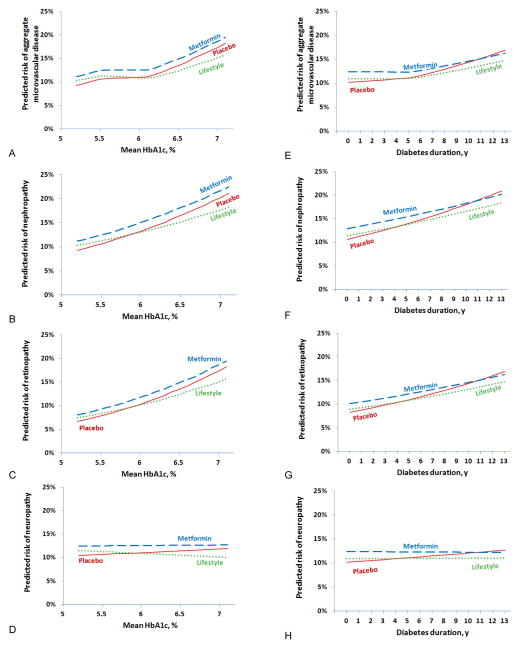
- In a post-hoc analysis among participants whose latest HbA1c was ≥6.5% (about 25% of the cohort), lifestyle showed significant reductions versus placebo in aggregate microvascular outcome (RR 0.59), retinopathy (RR 0.51), and neuropathy (RR 0.39); no significant metformin–placebo differences were seen.
Methods
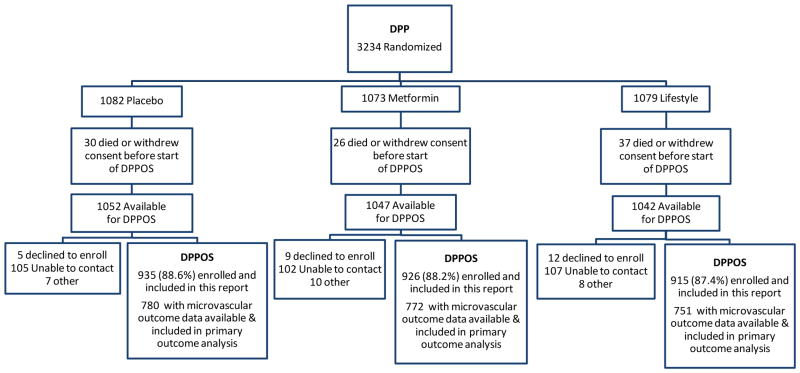
- DPP was a randomized controlled trial at 27 US centers comparing placebo, metformin 850 mg twice daily, and intensive lifestyle intervention (16-session curriculum targeting 7% weight loss and 150 minutes/week moderate activity). DPPOS followed 2776 (88%) of 3149 surviving DPP participants from all three arms, regardless of diabetes status, for a total mean follow-up of 15 years.
- Diabetes was diagnosed by 75 g OGTT annually and FPG every 6 months, with confirmation. The aggregate microvascular outcome included nephropathy, retinopathy, and neuropathy, measured during the final DPPOS year; analyses were intention-to-treat.
- Time to diabetes was compared with modified product-limit life-table distributions and log-rank tests. Aggregate microvascular outcomes were analyzed with GEE global tests; pairwise comparisons used Bonferroni-adjusted α=0.025. Analyses used SAS version 9.3.
Limitations
- Stated: therapeutic cross-over occurred because all three groups were offered group lifestyle intervention during the one-year bridge after DPP; lifestyle intervention after the first 24 weeks and during DPPOS was less intensive, likely contributing to weight regain; metformin use by lifestyle and placebo participants may have diminished relative metformin effects.
- Stated: the aggregate microvascular outcome combined three outcomes, one of which—neuropathy measured by monofilament—was more subjective and less sensitive for early neuropathy. Generalizability of a clinical trial with selected populations and protocol-driven interventions in academic centers may also be questioned.
- Stated/evident: the lack of an overall treatment effect on microvascular outcomes despite reduced diabetes development may be owing to limited power, the sex disparity in effects, or small separation in HbA1c among groups. Missing data were assumed missing at random, with 87% completion of microvascular components.
Model-written summary. Check it against the paper before relying on it.
Integrity signals
Registry
Cites
Statistics
Figures
Verification
Claims the paper makes
0 Valid · 0 Not valid · 4 Not checked · 57 Own results and interpretations
A result the paper reports from its own data — it cites no other source for it, so there is none to check. The quote shows it is in the paper.
In the paper
“There were no differences in the treatment effects on aggregate microvascular complications in other pre-specified subgroups defined by age and race or ethnicity”
plain- Asserted: passes — The authors put it forward as true.
- Checkable: passes — It can be checked against evidence.
- Load-bearing: unclear — It is unclear whether the paper’s conclusions depend on it.
- Based: passes — The paper gives a reason why it holds.
- Rests on 2 assumptions not shown here.
A result the paper reports from its own data — it cites no other source for it, so there is none to check. The quote shows it is in the paper.
In the paper
“Higher levels of baseline fasting glucose and HbA1c were associated with higher prevalence of microvascular complications”
plainstates an association- Asserted: passes — The authors put it forward as true.
- Checkable: passes — It can be checked against evidence.
- Load-bearing: unclear — It is unclear whether the paper’s conclusions depend on it.
- Based: passes — The paper gives a reason why it holds.
- Rests on 2 assumptions not shown here.
A result the paper reports from its own data — it cites no other source for it, so there is none to check. The quote shows it is in the paper.
In the paper
“lifestyle showed significant reductions compared with placebo in the aggregate microvascular outcome (relative risk 0.59), retinopathy (relative risk 0.51), and neuropathy (relative risk 0.39)”
plainstates a cause- Asserted: passes — The authors put it forward as true.
- Checkable: passes — It can be checked against evidence.
- Load-bearing: unclear — It is unclear whether the paper’s conclusions depend on it.
- Based: passes — The paper gives a reason why it holds.
- Rests on 2 assumptions not shown here.
A result the paper reports from its own data — it cites no other source for it, so there is none to check. The quote shows it is in the paper.
In the paper
“but was similar across racial/ethnic groups”
plain- Asserted: passes — The authors put it forward as true.
- Checkable: passes — It can be checked against evidence.
- Load-bearing: unclear — It is unclear whether the paper’s conclusions depend on it.
- Based: passes — The paper gives a reason why it holds.
- Rests on 2 assumptions not shown here.
A result the paper reports from its own data — it cites no other source for it, so there is none to check. The quote shows it is in the paper.
In the paper
“The average prevalence of the microvascular outcomes at DPPOS-end did not differ significantly among the three treatment groups”
plain- Asserted: passes — The authors put it forward as true.
- Checkable: passes — It can be checked against evidence.
- Load-bearing: passes — The paper’s conclusions depend on it.
- Based: passes — The paper gives a reason why it holds.
- Rests on 2 assumptions not shown here.
32 more claims
Create a free account to see all 61 claims and every source verdict.
- It may state two separate claims as one. 21
- The quote only partly states this claim. 1
- Probably not a substantial claim. 7
Claims other papers make about this one
Each is checked against this paper’s own text: does it say what the citing paper says it does?
The cited source doesn’t support the claim as written.
In the citing paper
“Despite an initial effect on lipoprotein subfractions, C-reactive protein and t-PA, with long-term follow-up there was no effect of metformin on cardiovascular risk factors.”
From The Vasculature in Prediabetes (2018) · cites this paper as [196]
Checked by a reasoning model — may be wrong.
Experimental — accuracy not yet measuredThe source backs part of the claim, not all of it — or backs it for a different population, condition or comparison.
In the citing paper
“Two recent meta-analyses revealed that metformin is effective in reducing the incidence of type 2 diabetes [3,36].”
From Economic evaluation of wearable fitness trackers versus metformin for preventing type 2 diabetes in the UK population (2025) · cites this paper as [36]
Experimental — accuracy not yet measuredThe source backs part of the claim, not all of it — or backs it for a different population, condition or comparison.
In the citing paper
“We derived our base case parameters (see Table 1) from the latter, as it used placebo as the comparator and had a longer time horizon (15 years), while the former used the lifestyle intervention (diet and exercise promotion) as the comparator.”
From Economic evaluation of wearable fitness trackers versus metformin for preventing type 2 diabetes in the UK population (2025) · cites this paper as [36]
Experimental — accuracy not yet measuredThe source backs part of the claim, not all of it — or backs it for a different population, condition or comparison.
In the citing paper
“Intensive Behavioral Counseling (IBC) interventions like the National Diabetes Prevention Program (NDPP), have demonstrated effectiveness in reducing excess body weight and lowering or delaying morbidity onset.”
From Clinical and Economic Impact of a Digital, Remotely-Delivered Intensive Behavioral Counseling Program on Medicare Beneficiaries at Risk for Diabetes and Cardiovascular Disease (2016) · cites this paper as [1]
Experimental — accuracy not yet measuredThe source backs part of the claim, not all of it — or backs it for a different population, condition or comparison.
In the citing paper
“Intensive Behavioral Counseling (IBC) has been widely accepted as an effective approach for compliant individuals to reduce body weight, improve clinical measures, and lower risk of obesity-related comorbidities [1–6].”
From Clinical and Economic Impact of a Digital, Remotely-Delivered Intensive Behavioral Counseling Program on Medicare Beneficiaries at Risk for Diabetes and Cardiovascular Disease (2016) · cites this paper as [1]
Experimental — accuracy not yet measured
14 more claims about this paper
Create a free account to see every claim other papers make about this one.
Citations
Cites
A New Equation to Estimate Glomerular Filtration Rate
Levey, A. S., Stevens, L. A., Schmid, C. H., Zhang, Y. (., Castro, A. F., Feldman, H. I., Kusek, J. W., Eggers, P., Van Lente, F., Greene, T., et al. (2009) · Annals of Internal Medicine · doi:10.7326/0003-4819-150-9-200905050-00006 · Cited by 25,603
Reduction in the incidence of type 2 diabetes with lifestyle intervention or metformin
(2002) · New England Journal of Medicine · doi:10.1056/nejmoa012512 · Cited by 19,011
Tuomilehto, J., Lindström, J., Eriksson, J. G., Valle, T. T., Hämäläinen, H., Ilanne-Parikka, P., Keinänen-Kiukaanniemi, S., Laakso, M., Louheranta, A., Rastas, M., et al. (2001) · New England Journal of Medicine · doi:10.1056/nejm200105033441801 · Cited by 10,873
Stratton, I. M. (2000) · BMJ · doi:10.1136/bmj.321.7258.405 · Cited by 9,059
Longitudinal Data Analysis for Discrete and Continuous Outcomes
Zeger, S. L., & Liang, K.-Y. (1986) · Biometrics · doi:10.2307/2531248 · Cited by 7,764
(2001) · Statistics for Psychologists · doi:10.4324/9781410605542-11 · Cited by 6,877
Pan, X.-R., Li, G.-W., Hu, Y.-H., Wang, J.-X., Yang, W.-Y., An, Z.-X., Hu, Z.-X., Juan-Lin, Xiao, J.-Z., Cao, H.-B., et al. (1997) · Diabetes Care · doi:10.2337/diacare.20.4.537 · Cited by 4,320
Economic Costs of Diabetes in the U.S. in 2002
American Diabetes Association (2003) · Diabetes Care · doi:10.2337/diacare.26.3.917 · Cited by 4,147
Diabetes Prevention Program Research Group (2009) · The Lancet · doi:10.1016/s0140-6736(09)61457-4 · Cited by 3,020
Economic Costs of Diabetes in the U.S. in 2012
American Diabetes Association (2013) · Diabetes Care · doi:10.2337/dc12-2625 · Cited by 2,163
Cited by
Items 801–900 of 1,022
Iselin, A., Staehli, D., Jaun, F., Potluková, E., Leuppi, J. D., Boesing, M., & Lüthi-Corridori, G. (2026) · Journal of Diabetes Research · doi:10.1155/jdr/6735488 · Cited by 1
Nutrition Therapy for the Prevention and Treatment of Prediabetes and Diabetes
Franz, M. J. (2016) · Springer eBooks · doi:10.1007/978-3-319-43027-0_8 · Cited by 1
Nichtmedikamentöse Therapie bei Prädiabetes und Typ-2-Diabetes
Martin, S. (2017) · Der Diabetologe · doi:10.1007/s11428-017-0239-1 · Cited by 1
Karuranga, S., & Ohlrogge, A. W. (2018) · Diabetes Research and Clinical Practice · doi:10.1016/j.diabres.2018.03.049 · Cited by 1
Remmert, J. E., Tsai, A. G., Roberts, S. R., & Butryn, M. L. (2019) · Primary Health Care Research & Development · doi:10.1017/s1463423619000124 · Cited by 1
Kim, J. D., & Lee, W. (2020) · Cardiovascular Prevention and Pharmacotherapy · doi:10.36011/cpp.2020.2.e10 · Cited by 1
Gottwald‐Hostalek, U., & Mustafina, S. V. (2020) · Diabetes & its Complications · doi:10.33425/2639-9326.1070 · Cited by 1
Technology and Human Connection to Prevent Diabetes in Rural United States
Dachel, T. A., & Mota, D. (2021) · The Journal for Nurse Practitioners · doi:10.1016/j.nurpra.2021.06.001 · Cited by 1
Khan, M. U., Baloch, A. A., Arsalan, M., & Adnan, S. M. (2021) · The Professional Medical Journal · doi:10.29309/tpmj/2021.28.11.4654 · Cited by 1
The Patients at High Risk of Type 2 Diabetes Development
Иванникова, Е. В., & Smirnova, O. M. (2020) · Effective Pharmacotherapy · doi:10.33978/2307-3586-2020-16-26-50-55 · Cited by 1
Hakim, O. A. (2022) · Obesity Medicine · doi:10.1016/j.obmed.2022.100423 · Cited by 1
Birse, C. E., McPhaul, M. J., Arellano, A. R., Fragala, M. S., & LAGIER, R. J. (2022) · Journal of Occupational and Environmental Medicine · doi:10.1097/jom.0000000000002598 · Cited by 1
Gu, M., Lin, Y., Gai, X., Wei, X., Lu, C., Wang, Y., Ding, X., Peng, Y., & Ma, Y. (2022) · Diabetes Metabolic Syndrome and Obesity · doi:10.2147/dmso.s374912 · Cited by 2
Newer Diabetes Management Options and Physical Fitness to Promote Cardiovascular Benefits
Nylén, E. (2022) · Reviews in Cardiovascular Medicine · doi:10.31083/j.rcm2308282 · Cited by 2
Telerehabilitáció hatásossága metabolikus szindrómás személyek rizikótényezőire
Köteles, É. M., Kiszely, I., Szabó, L. A., et al. (2022) · Cardiologia Hungarica · doi:10.26430/chungarica.2022.52.4.292 · Cited by 1
Lin, H., Wang, J., Tseng, P.-Y., Fu, L., Lee, Y., Wu, M., Yang, W., & Chiu, H. (2023) · Diabetes Research and Clinical Practice · doi:10.1016/j.diabres.2023.110567 · Cited by 2
Liu, Q., Hu, F., Zeng, J., Ma, L., Yan, S., Li, C., Tian, H., & Gong, Y. (2023) · Heliyon · doi:10.1016/j.heliyon.2023.e14100 · Cited by 2
Efek Gabungan Obesitas dan Aktivitas Fisik terhadap Kejadian Prediabetes
Kusuma, I. S., Syarif, S., & Choirunisa, S. (2023) · Jurnal Ilmu Kesehatan Masyarakat · doi:10.33221/jikm.v12i03.2159 · Cited by 5
Lifestyle and Nutrition Therapy
Ramchandani, S., Fox, C. M., Cann, S. B., Cronin, B., Canturk, A., Norman, C., & Sweeney, A. T. (2023) · Contemporary cardiology · doi:10.1007/978-3-031-13177-6_28 · Cited by 1
The Metabolic Syndrome and Vascular Disease
Via, M. A., & Mechanick, J. I. (2023) · Contemporary cardiology · doi:10.1007/978-3-031-13177-6_12 · Cited by 1
Prädiabetes als therapeutische Herausforderung in der Inneren Medizin
Kantartzis, K., Fritsche, A., & Birkenfeld, A. L. (2023) · Die Innere Medizin · doi:10.1007/s00108-023-01546-6 · Cited by 5
Diabetes Education and the Covid 19 Pandemic
(2022) · Open Access Journal of Endocrinology · doi:10.23880/oaje-16000172 · Cited by 1
Predictors of Prediabetes and Undiagnosed Diabetes Mellitus Based on HbA1c Levels in Indonesia
Kusuma, I. S., & Syarif, S. (2023) · Jurnal Ilmu Kesehatan Masyarakat · doi:10.26553/jikm.2023.14.2.185-197 · Cited by 1
Jairoun, A. A., Al‐Hemyari, S. S., Shahwan, M. J., Hassan, N. A. G. M., Zyoud, S. H., Jaber, A. A. S., & Al‐Qirim, T. M. (2023) · Clinical Medicine Insights Endocrinology and Diabetes · doi:10.1177/11795514231203913 · Cited by 1
Kummel, M., Luther-Tontasse, E., Koskenniemi, J., Vahlberg, T. J., Viitanen, M., Johansson, J. K., Korhonen, P. E., Viikari, L., & Salminen, M. J. (2024) · Primary care diabetes · doi:10.1016/j.pcd.2024.01.012 · Cited by 1
Plant-derived Antidiabetic Agent: A Green Prevention Strategy
Kumar, A., Mishra, R., Ved, A., Shukla, K. S., Kashyap, M. K., Tiwari, V. P., & Nigam, A. K. (2024) · Current Drug Therapy · doi:10.2174/0115748855316757241031143556 · Cited by 1
Mimouni, F. B., Khoury, J. C., Ehrlich, S. R., Sheffer-Mimouni, G., Rosenn, B., & Miodovnik, M. (2024) · American Journal of Perinatology · doi:10.1055/a-2489-4588 · Cited by 2
Okur, Ü., & Özaydın, T. (2024) · Turkish Journal of Diabetes and Obesity · doi:10.25048/tudod.1525165 · Cited by 1
Madrigal, L., Manders, O. C., Kadir, M., Piper, S. A., Weber, M. B., & Blais, L. M. (2025) · Healthcare · doi:10.3390/healthcare13020126 · Cited by 2
Calderón‐Larrañaga, S. (2025) · Comunidad · doi:10.55783/comunidad.270101 · Cited by 1
Choi, J. H., Lee, J.-H., & Chon, S. (2025) · Journal of Korean Diabetes · doi:10.4093/jkd.2025.26.1.39 · Cited by 1
Wiggins, M., Round, J. A., & Kirwin, E. M. (2025) · International Journal of Technology Assessment in Health Care · doi:10.1017/s0266462325100172 · Cited by 1
Tjaden, A. H., Goldbaum, A. A., Edelstein, S. L., Heckman‐Stoddard, B. M., Reedy, J., Herman, W. H., Hoskin, M. A., Knowler, W. C., Schlögl, M., Temple, K. A., et al. (2025) · American Journal of Clinical Nutrition · doi:10.1016/j.ajcnut.2025.07.011 · Cited by 1
Vercalsteren, E., Karampatsi, D., Buizza, C., Paul, G., Lundberg, J. O., Nyström, T., Darsalia, V., & Patrone, C. (2025) · Nutrients · doi:10.3390/nu17152434 · Cited by 1
Berković, M. C., Cigrovski, V., & Ružić, L. (2025) · World Journal of Methodology · doi:10.5662/wjm.v15.i4.105462 · Cited by 5
Hilbert, A. (2016) · BMJ Open · doi:10.1136/bmjopen-2015-010845 · Cited by 3
Diabetes: Easier to prevent, but difficult to tame
Bhansali, A. K., & Bhansali, S. (2018) · International Journal of Noncommunicable Diseases · doi:10.4103/jncd.jncd_28_18 · Cited by 1
Uncontrolled diabetes mellitus and advanced cirrhosis
Zong, Y. (2021) · Digestive and Liver Disease · doi:10.1016/j.dld.2021.03.017 · Cited by 1
Adverse Effects of Medications on Micronutrient Status: From Evidence to Guidelines
Daniels, M. S., Park, B. I., & McKay, D. L. (2021) · Annual Review of Nutrition · doi:10.1146/annurev-nutr-120420-023854 · Cited by 2
Wareham, N. J. (2022) · doi:10.1093/med/9780198870197.003.0262 · Cited by 1
Precision Medicine Approaches for Management of Type 2 Diabetes
Chen, D., Fulcher, J., SCOTT, E. S., & Jenkins, A. J. (2022) · Springer eBooks · doi:10.1007/978-3-030-98927-9_1 · Cited by 4
Outcome: Binge-Eating Disorder
Rösch, S. A., & Hilbert, A. (2023) · Springer eBooks · doi:10.1007/978-3-030-97416-9_90-1 · Cited by 2
Obesity and Metabolic Syndrome in the United States
Osei, A. D., Ohene-Kyei, E. T., & Echouffo-Tcheugui, J. B. (2023) · Springer eBooks · doi:10.1007/978-3-031-40116-9_55 · Cited by 2
Obesity management in primary care – Authors' reply
Aveyard, P. N., Nickless, A., & Jebb, S. A. (2017) · The Lancet · doi:10.1016/s0140-6736(17)31016-4 · Cited by 1
Ethnic Variation in Prediabetes Incidence and Outcomes among Immigrants and Long-Term Residents
Fazli, G. S. (2018) · TSpace (University of Toronto) · Cited by 1
Shawley-Brzoska, S. (2018) · The Research Repository @ WVU (West Virginia University) · doi:10.33915/etd.7252 · Cited by 2
Thompson, M., Horberg, M. A., Agwu, A. L., Colasanti, J. A., Jain, M. K., Short, W. R., Singh, T., & Aberg, J. A. (2021) · Clinical Infectious Diseases · doi:10.1093/cid/ciab801 · Cited by 3
Is Prediabetes a Risk Factor or is it a Disease?
Muthusamy, K., & Vella, A. V. (2011) · Wiley eBooks · doi:10.1002/9781444340280.ch1
Jennersjö, P. E. S. (2016) · Linköping University medical dissertations · doi:10.3384/diss.diva-125911
Kelley, J. T. (2016) · CORE Scholar (Wright State University) · Cited by 1
Importance of Rational Screening for Type 2 Diabetes
V, E. (2016) · Journal of Diabetes Metabolic Disorders & Control · doi:10.15406/jdmdc.2016.03.00074
Die Umsetzung von Diabetesprävention in der Praxis
Kulzer, B. (2016) · Info Diabetologie · doi:10.1007/s15034-016-0950-9
Diabètes post-transplantation rénale
Dubois‐Laforgue, D. (2017) · Néphrologie & Thérapeutique · doi:10.1016/j.nephro.2017.01.011 · Cited by 1
Gesunder Lebensstil muss in jeder Krankheitsphase auf den Therapieplan!
Martin, S. (2017) · Info Diabetologie · doi:10.1007/s15034-017-1091-5
Diabetes Prevention: A Historic Opportunity for Educators
TUCKER, M. E. (2017) · AADE in Practice · doi:10.1177/2325160317723887
Vóór de diagnose, patiënt en familie an zet
Cahn, W. (2017) · Bohn Stafleu van Loghum eBooks · doi:10.1007/978-90-368-2046-2_13
Persistent physical activities in leisure time over decades improve late life CVD markers
Taşçı, İ. (2017) · Atherosclerosis · doi:10.1016/j.atherosclerosis.2017.12.020
Pharmacological Intervention for the Prevention of Diabetes Mellitus
Joung, H. N., & Kwon, H. (2018) · Journal of Korean Diabetes · doi:10.4093/jkd.2018.19.3.140
11th Annual Symposium on Self-Monitoring of Blood Glucose: April 12–14, 2018, Oslo, Norway
Parkin, C. G., Homberg, A., & Hinzmann, R. (2018) · Diabetes Technology & Therapeutics · doi:10.1089/dia.2018.0284
Fall 33: Prävention – 73 Jahre, ♀, Prädiabetes, Übergewicht, gestörte Glukosetoleranz
Fischer, A., & Nawroth, P. P. (2018) · Springer eBooks · doi:10.1007/978-3-662-55972-7_33
Encouraging treatment concordance in type 2 diabetes
Ferreira, C. L., & Innes, E. (2018) · Nurse Prescribing · doi:10.12968/npre.2018.16.11.550
A Patient with High Cardiometabolic Risk
Shukla, A. P., & Mandel, L. (2018) · Springer eBooks · doi:10.1007/978-3-030-01039-3_3
Screening strategies for dysglycaemia in relation to cardiovascular risk
Shahim, B. (2019) · Figshare · Cited by 1
Type 2 Diabetes and Lifestyle Medicine
Galaviz, K. I., & Ali, M. K. (2019) · Springer eBooks · doi:10.1007/978-3-030-11815-0_29
Posttraumatic Stress Disorder and Incident Type 2 Diabetes: Is Obesity to Blame?
Scherrer, J. F., & Lustman, P. J. (2019) · Chronic Stress · doi:10.1177/2470547019863415 · Cited by 2
Epigenomic, Transcriptome and Image-Based Biomarkers of Aging
Yan, Y., Mu, Y., Chen, W., & Han, J. J. (2019) · Healthy ageing and longevity · doi:10.1007/978-3-030-24970-0_5
What are evidence-based interventions for the prevention of diabetes in obese at-risk adults?
Walheim, C. C., & Sakirgil, E. (2020) · Evidence-Based Practice · doi:10.1097/ebp.0000000000000705
Aetiology and management of obesity
Hartmann‐Boyce, J., Astbury, N. M., & Jebb, S. A. (2020) · doi:10.1093/med/9780198713005.003.0107
Why the NHS Diabetes Prevention Programme isn't resting on its laurels
Greener, M. (2020) · Practical Diabetes · doi:10.1002/pdi.2267
Prediabetes: the evidence base of metformin for the prevention of type 2 diabetes
Vlasenkо, М. V. (2019) · Medicine of Ukraine · doi:10.37987/1997-9894.2019.1(227).187626
Castellana, M., Chang, S., Procino, F., Pergola, G. D., Triggiani, V., & Giagulli, V. A. (2020) · Trends in andrology and sexual medicine · doi:10.1007/978-3-030-51410-5_17
Modern Aspects of the Clinic, Diagnosis and Treatment of Prediabetes
Викторовна, П. Н., Осипова, И. В., & Polyakova, I. G. (2020) · The Russian Archives of Internal Medicine · doi:10.20514/2226-6704-2020-10-5-327-339
Recomendaciones para el abordaje y tratamiento de la intolerancia a la glucosa
García-Ulloa, C., Lavalle-González, F. J., Gomez-Perez, F. J., Cota-Aguilar, J., del Castillo, M. A. M.-F., la Garza-Hernández, N. E. D., Almeda-Valdés, P., Campuzano-Rodríguez, R., Arellano-Montaño, S., & Hernández-Jiménez, S. (2020) · Revista Mexicana de Endocrinología Metabolismo y Nutrición · doi:10.24875/rme.20001965
Microvascular dysfunction, physical activity, and cardiometabolic diseases
Li, W. (2020) · Research Publications (Maastricht University) · doi:10.26481/dis.20201022wl
Amaya, H., Enciso, J., Meizner, D., Pentland, A., & Noriega-Campero, A. (2021) · medRxiv · doi:10.1101/2021.01.18.21250034
Ramos, M. A. (2021) · Buleria (Universidad de León) · doi:10.18002/10612/12772
El dret a l’error i el seu impacte en les relacions entre l’Administració pública i la ciutadania
Rodríguez, P. V., Vera, Z., Maciel, O. Y., Marín, L., Maidana, G. M., Marin, G., & Marin, G. H. (2021) · Revista Catalana de Dret Públic · doi:10.22270/jddt.v11i2.4597 · Cited by 1
High Incident Type 2 Diabetes Mellitus among Patients with Essential Hypertension
Qatif Primary Health Care, Q., Al-Ghareeb, G., Wahabi, H., Almustafa, B. A., & Fayed, A. A. (2021) · International Journal of Pharma Medicine and Biological Sciences · doi:10.18178/ijpmbs.10.2.75-81
Incorporation of a genetics-based information module into standardized diabetes patient education
Drazba, K. T., Denton, J. J., Hurst, C. B., McGwin, G., MacLennan, P. A., & Ovalle, F. (2021) · Primary care diabetes · doi:10.1016/j.pcd.2021.04.013 · Cited by 1
Jirapinyo, P., & Thompson, C. C. (2021) · Clinical Gastroenterology and Hepatology · doi:10.1016/j.cgh.2021.06.022
Alaga, K. C., & Haddad, J. (2021) · Clinical Research in Practice The Journal of Team Hippocrates · doi:10.22237/crp/1625098080 · Cited by 1
Metformina: ¿Debería ser la primera opción terapéutica en el paciente con diabetes de alto riesgo?
Sanabria, H. D., & Cobo, A. L. (2021) · Revista Argentina de Cardiología · doi:10.7775/rac.es.v88.i1.19784
Metabolic syndrome and kidney disease
Kramer, H., & Joshi, S. (2021) · Elsevier eBooks · doi:10.1016/b978-0-12-818540-7.00028-8 · Cited by 1
Diabetes Mellitus: A Biopsychosocial Perspective
Hendrieckx, C., de Wit, M., Gray, S., van Duinkerken, E., & Snoek, F. J. (2021) · Elsevier eBooks · doi:10.1016/b978-0-12-818697-8.00206-5
Tsai, L.-W., Lu, Y.-H., Dubey, R., & Chiou, J. (2021) · Journal of Diabetes Research · doi:10.1155/2021/7692447
“Therefore, the initial weight loss and exercise seem crucial in controlling DM [53, 54], and clinical studies have demonstrated that combined lifestyle intervention and metforminmediated weight loss significantly reduced the incidence of DM [55, 56].”
BackgroundKelly, S. D. (2021) · Physician Assistant Clinics · doi:10.1016/j.cpha.2021.08.012 · Cited by 2
Dalbom, L., Larivaara, M. M., Vasankari, T. J., Tuominen, M., & Rautava, P. T. (2021) · Sosiaalilääketieteellinen Aikakauslehti · doi:10.23990/sa.98012 · Cited by 1
Jamiel, A. A., Ardah, H. I., Ahmed, A. M., & Al-Mallah, M. H. (2021) · Research Square · doi:10.21203/rs.3.rs-1147869/v1
“Is Prediabetes a Risk Factor or Is It a Disease?”
Kohlenberg, J. D., & Vella, A. V. (2021) · Wiley eBooks · doi:10.1002/9781119603207.ch1
Lebensstil und Typ-2-Diabetes: Zeit zum Umdenken
Martin, S. (2017) · Deutsches Ärzteblatt · doi:10.3238/persdia.2017.10.13.01
Lemongrass and Ginger Potency for Blood Glucose Control
Christy, C., Puteri, M. D. P. T. G., & Marpaung, A. M. (2022) · Advances in biological sciences research/Advances in Biological Sciences Research · doi:10.2991/absr.k.220101.044 · Cited by 2
Renke, G., Moreira, A. S. B., Pereira, M., et al. (2022) · Research Square · doi:10.21203/rs.3.rs-1268594/v1
Ojha, A., & Watve, M. (2022) · bioRxiv (Cold Spring Harbor Laboratory) · doi:10.1101/2022.01.19.477014
Voulgari, C., Kyriazis, I., Ioannidis, I., Dimosthenopoulos, C., & Hatziagelaki, E. E. (2021) · Archives of Epidemiology and Public Health · doi:10.15761/aeph.1000122
Jamiel, A. A., Ardah, H. I., Ahmed, A. M., & Al-Mallah, M. H. (2022) · Research Square · doi:10.21203/rs.3.rs-1147869/v2
Type 2 diabetes: weight loss, exercise and other ‘lifestyle’ interventions
FRCP, D. L. M. (2017) · Wiley eBooks · doi:10.1002/9781119052210.ch9
(2016) · Drug and Therapeutics Bulletin · doi:10.1136/dtb.2016.1.0374
Bishop, D. B., O’Connor, P. J., Kidney, R. S. M., & Haire-Joshu, D. L. (2016) · American Public Health Association eBooks · doi:10.2105/9780875532783ch12
Metadata
- Venue
- The Lancet Diabetes & Endocrinology
- Publisher
- Elsevier BV
- Published
- 2015-11
- Volume
- 3
- Issue
- 11
- Pages
- 866-875
- ISSN
- 2213-8587 (ISSN-L)
- PMC
- PMC4623946
- OpenAlex
- W1891939305
- Semantic Scholar
- c381343ab0ee26144aebc385219bf8a50f985787
- Cited by
- 1,029
- References
- 34
- Citations by year
- 2026: 71 · 2025: 110 · 2024: 95 · 2023: 124 · 2022: 99 · 2021: 124 · 2020: 104 · 2019: 93 · 2018: 96 · 2017: 69 · 2016: 39 · 2015: 2
- FWCI
- 59.60
- Type
- journal article
- Language
- en
- Open access
- green
- www.ncbi.nlm.nih.gov
- Licence
- cc-by-nc-nd
- www.elsevier.com/tdm/userlicense/1.0/ (tdm)
- Locations
- The Lancet Diabetes & Endocrinology (publishedVersion)
- PubMed (publishedVersion)
- Europe PMC (PubMed Central) (acceptedVersion, cc-by-nc-nd)
- PubMed Central (acceptedVersion, cc-by-nc-nd)
- Funders
- U.S. Department of Veterans Affairs
- National Institutes of Health
- National Institute of Diabetes and Digestive and Kidney Diseases (U01DK048339, U01DK048375, U01DK048397, U01DK048406, U01DK048413, DK048489, R01DK078907, U01DK048485, U01DK048400, U01DK048434, U01DK048380, U01DK048412, U01DK048411, U01DK048377, U01DK048437, U01DK048514, U01DK048489, U01DK048468, U01DK048407, U01DK048381, U01DK048443, U01DK048349, U01DK048387, U01DK048404, P30DK017047)
- National Center for Research Resources (UL1RR025758)
- National Center for Advancing Translational Sciences
- Topics
- Health Sciences › Medicine › Endocrinology, Diabetes and Metabolism › Diabetes, Cardiovascular Risks, and Lipoproteins
- Health Sciences › Medicine › Endocrinology, Diabetes and Metabolism › Diabetes Treatment and Management
- Health Sciences › Medicine › Endocrinology, Diabetes and Metabolism › Diabetes Management and Research
- Keywords
- type 2 diabetes prevention, lifestyle intervention, metformin, diabetes incidence, microvascular complications, diabetic nephropathy, diabetic retinopathy, diabetic neuropathy, long-term follow-up, women, Diabetes Prevention Program Outcomes Study, unmet medical needs, cost-effectiveness
- MeSH terms
- Diabetes Mellitus, Type 2, Female, Follow-Up Studies, Humans, Hypoglycemic Agents, Life Style, Male, Metformin, Middle Aged, Risk Factors, Vascular Diseases, Treatment Outcome, Microvessels
About these checks
Registry, retraction, Cites and statistics results are computed, not judged, with one exception: a printed reference that no index lists is read once by a model before it counts as a citation error. Claims are extracted by a model and kept only when their quote appears verbatim in the text; each cited source is then checked, with a model’s help, for whether it says what the claim relies on. Those verdicts can be wrong — read the claim’s quote and the cited source before relying on one.
A language model drew the claims from the paper on 2026-09-30, under version 3 of the claim definition (model deepseek-v4.1-flash, prompt extract-v3).
A second model labelled each claim on 2026-09-30 (model jev-1.13-20260917, definition revision gold-guideline-v0.2).
Statistics and arithmetic are recomputed, not judged.
Confidence bands are shown only for fields calibrated on our annotated test set. None is calibrated yet, so no band is shown.
What counts as a claim ›How we measure confidence ›How we check this ›
Are you an author, or do you see a problem with this page? Request a review
Data sources
Bibliographic data: Semantic Scholar, OpenAlex, Crossref.
Contains information from the Semantic Scholar Academic Graph Datasets, made available under the ODC Attribution License (ODC-BY 1.0).
Semantic Scholar’s data is described in: Kinney, R., et al. (2023). The Semantic Scholar Open Data Platform. arXiv:2301.10140.
