

Long-term effects of lifestyle intervention or metformin on diabetes development and microvascular complications over 15-year follow-up: the Diabetes Prevention Program Outcomes Study
Open accessThe DOI matches its Crossref record; 35 of the 35 references it cites were found in a registry or an index; none of the 4 sources its claims cite is checked for support yet.
Abstract
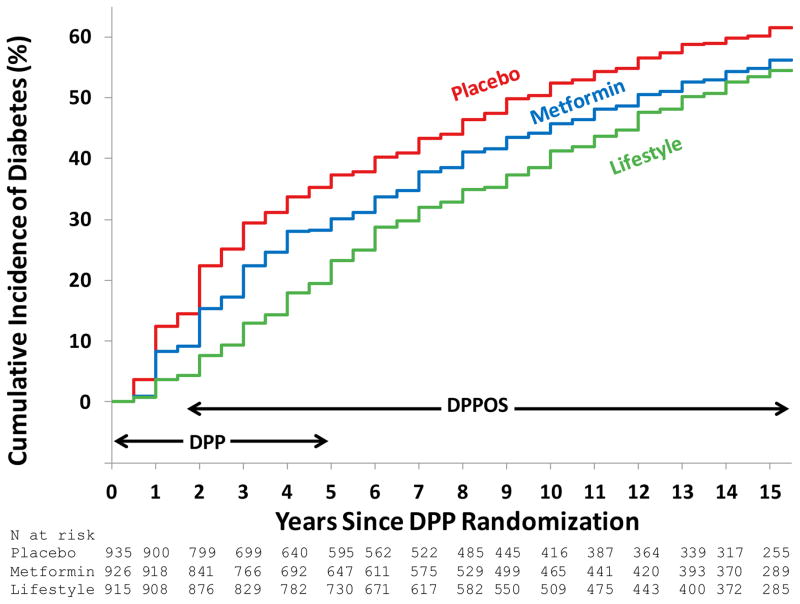
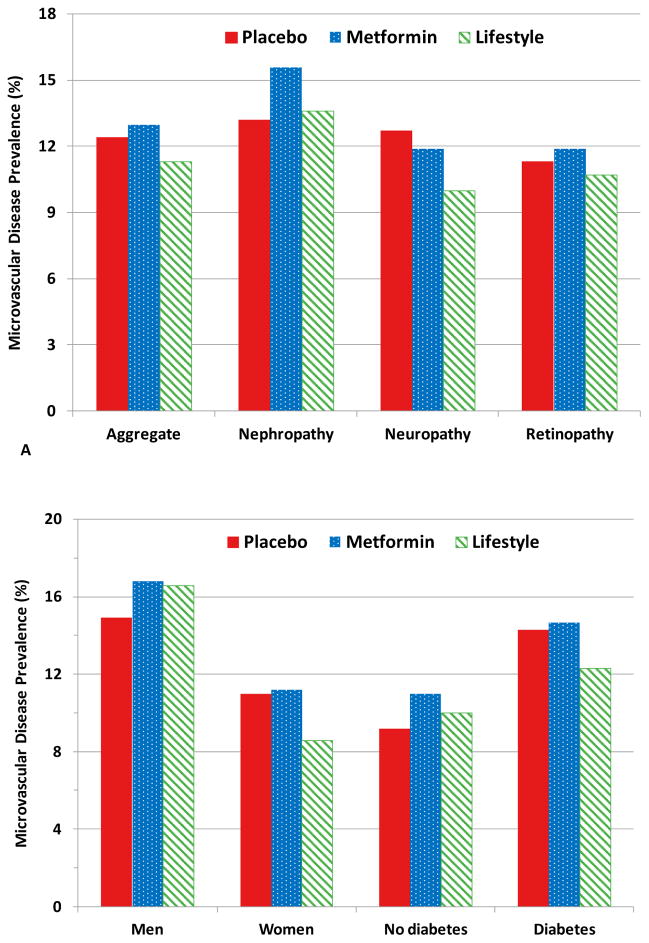
Background Effective prevention is needed to combat the worldwide epidemic of type 2 diabetes. We investigated the long-term extent of beneficial effects of lifestyle intervention and metformin on diabetes prevention, originally shown during the 3-year Diabetes Prevention Program (DPP), and assessed whether these interventions reduced diabetes-associated microvascular complications. Methods The DPP (1996-2001) was a randomised trial comparing an intensive lifestyle intervention or masked metformin with placebo in a cohort selected to be at very high risk of developing diabetes. All participants were offered lifestyle training at the end of the DPP. 2776 (88%) of the surviving DPP cohort were followed up in the DPP Outcomes Study (DPPOS, Sept 1, 2002, to Jan 2, 2014) and analysed by intention to treat on the basis of their original DPP assignment. During DPPOS, the original lifestyle intervention group was offered lifestyle reinforcement semi-annually and the metformin group received unmasked metformin. The primary outcomes were the development of diabetes and the prevalence of microvascular disease. For the assessment of microvascular disease, we used an aggregate microvascular outcome, composed of nephropathy, retinopathy, and neuropathy. Findings During a mean follow-up of 15 years, diabetes incidence was reduced by 27% in the lifestyle intervention group (hazard ratio 0·73, 95% CI 0·65-0·83; p<0·0001) and by 18% in the metformin group (0·82, 0·72-0·93; p=0·001), compared with the placebo group, with declining between-group differences over time. At year 15, the cumulative incidences of diabetes were 55% in the lifestyle group, 56% in the metformin group, and 62% in the placebo group. The prevalences at the end of the study of the aggregate microvascular outcome were not significantly different between the treatment groups in the total cohort (placebo 12·4%, 95% CI 11·1-13·8; metformin 13·0%, 11·7-14·5; lifestyle intervention 11·3%, 10·1-12·7). However, in women (n=1887) the lifestyle intervention was associated with a lower prevalence (8·7%, 95% CI 7·4-10·2) than in the placebo (11·0%, 9·6-12·6) and metformin (11·2%, 9·7-12·9) groups, with reductions in the lifestyle intervention group of 21% (p=0·03) compared with placebo and 22% (p=0·02) compared with metformin. Compared with participants who developed diabetes, those who did not develop diabetes had a 28% lower prevalence of microvascular complications (relative risk 0·72, 95% CI 0·63-0·83; p<0·0001). Interpretation Lifestyle intervention or metformin significantly reduced diabetes development over 15 years. There were no overall differences in the aggregate microvascular outcome between treatment groups; however, those who did not develop diabetes had a lower prevalence of microvascular complications than those who did develop diabetes. This result supports the importance of diabetes prevention. Funding National Institute of Diabetes and Digestive and Kidney Diseases.
Overview
CoChat Summary
TL;DR
In the DPP Outcomes Study, lifestyle intervention and metformin each reduced diabetes incidence over a mean 15 years compared with placebo, but neither reduced aggregate microvascular complications in the total cohort. Lifestyle intervention was associated with lower microvascular disease in women and in participants who remained free of diabetes.
Key findings
- Over an average 15 years, diabetes incidence was lower by 27% with lifestyle intervention (HR 0.73 [95% CI 0.65–0.83]) and 18% with metformin (HR 0.82 [0.72–0.93]) versus placebo. Cumulative diabetes incidence by year 15 was 560 (62%) in placebo, 499 (56%) in metformin, and 480 (55%) in lifestyle.
- Aggregate microvascular outcome prevalence at DPPOS-end did not differ significantly among the three treatment groups overall. In women, lifestyle intervention reduced microvascular disease by 21% versus placebo (RR 0.79) and 22% versus metformin (RR 0.78); metformin did not reduce microvascular disease in either sex.
- Participants who did not develop diabetes had a 28% lower prevalence of the aggregate microvascular outcome than those who developed diabetes (RR 0.72) across all treatment groups combined.
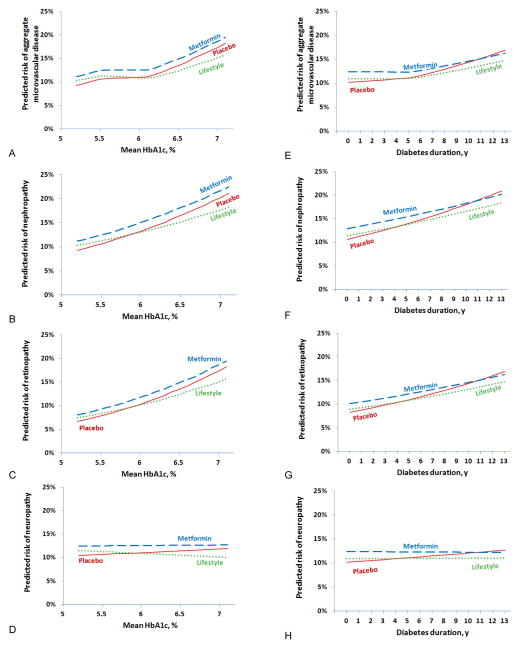
- In a post-hoc analysis among participants whose latest HbA1c was ≥6.5% (about 25% of the cohort), lifestyle showed significant reductions versus placebo in aggregate microvascular outcome (RR 0.59), retinopathy (RR 0.51), and neuropathy (RR 0.39); no significant metformin–placebo differences were seen.
Methods
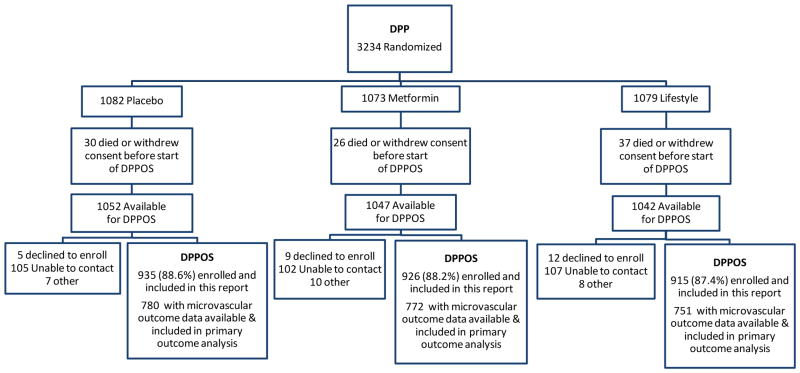
- DPP was a randomized controlled trial at 27 US centers comparing placebo, metformin 850 mg twice daily, and intensive lifestyle intervention (16-session curriculum targeting 7% weight loss and 150 minutes/week moderate activity). DPPOS followed 2776 (88%) of 3149 surviving DPP participants from all three arms, regardless of diabetes status, for a total mean follow-up of 15 years.
- Diabetes was diagnosed by 75 g OGTT annually and FPG every 6 months, with confirmation. The aggregate microvascular outcome included nephropathy, retinopathy, and neuropathy, measured during the final DPPOS year; analyses were intention-to-treat.
- Time to diabetes was compared with modified product-limit life-table distributions and log-rank tests. Aggregate microvascular outcomes were analyzed with GEE global tests; pairwise comparisons used Bonferroni-adjusted α=0.025. Analyses used SAS version 9.3.
Limitations
- Stated: therapeutic cross-over occurred because all three groups were offered group lifestyle intervention during the one-year bridge after DPP; lifestyle intervention after the first 24 weeks and during DPPOS was less intensive, likely contributing to weight regain; metformin use by lifestyle and placebo participants may have diminished relative metformin effects.
- Stated: the aggregate microvascular outcome combined three outcomes, one of which—neuropathy measured by monofilament—was more subjective and less sensitive for early neuropathy. Generalizability of a clinical trial with selected populations and protocol-driven interventions in academic centers may also be questioned.
- Stated/evident: the lack of an overall treatment effect on microvascular outcomes despite reduced diabetes development may be owing to limited power, the sex disparity in effects, or small separation in HbA1c among groups. Missing data were assumed missing at random, with 87% completion of microvascular components.
Model-written summary. Check it against the paper before relying on it.
Integrity signals
Registry
Cites
Statistics
Figures
Verification
Claims the paper makes
0 Valid · 0 Not valid · 4 Not checked · 57 Own results and interpretations
A result the paper reports from its own data — it cites no other source for it, so there is none to check. The quote shows it is in the paper.
In the paper
“There were no differences in the treatment effects on aggregate microvascular complications in other pre-specified subgroups defined by age and race or ethnicity”
plain- Asserted: passes — The authors put it forward as true.
- Checkable: passes — It can be checked against evidence.
- Load-bearing: unclear — It is unclear whether the paper’s conclusions depend on it.
- Based: passes — The paper gives a reason why it holds.
- Rests on 2 assumptions not shown here.
A result the paper reports from its own data — it cites no other source for it, so there is none to check. The quote shows it is in the paper.
In the paper
“Higher levels of baseline fasting glucose and HbA1c were associated with higher prevalence of microvascular complications”
plainstates an association- Asserted: passes — The authors put it forward as true.
- Checkable: passes — It can be checked against evidence.
- Load-bearing: unclear — It is unclear whether the paper’s conclusions depend on it.
- Based: passes — The paper gives a reason why it holds.
- Rests on 2 assumptions not shown here.
A result the paper reports from its own data — it cites no other source for it, so there is none to check. The quote shows it is in the paper.
In the paper
“lifestyle showed significant reductions compared with placebo in the aggregate microvascular outcome (relative risk 0.59), retinopathy (relative risk 0.51), and neuropathy (relative risk 0.39)”
plainstates a cause- Asserted: passes — The authors put it forward as true.
- Checkable: passes — It can be checked against evidence.
- Load-bearing: unclear — It is unclear whether the paper’s conclusions depend on it.
- Based: passes — The paper gives a reason why it holds.
- Rests on 2 assumptions not shown here.
A result the paper reports from its own data — it cites no other source for it, so there is none to check. The quote shows it is in the paper.
In the paper
“but was similar across racial/ethnic groups”
plain- Asserted: passes — The authors put it forward as true.
- Checkable: passes — It can be checked against evidence.
- Load-bearing: unclear — It is unclear whether the paper’s conclusions depend on it.
- Based: passes — The paper gives a reason why it holds.
- Rests on 2 assumptions not shown here.
A result the paper reports from its own data — it cites no other source for it, so there is none to check. The quote shows it is in the paper.
In the paper
“The average prevalence of the microvascular outcomes at DPPOS-end did not differ significantly among the three treatment groups”
plain- Asserted: passes — The authors put it forward as true.
- Checkable: passes — It can be checked against evidence.
- Load-bearing: passes — The paper’s conclusions depend on it.
- Based: passes — The paper gives a reason why it holds.
- Rests on 2 assumptions not shown here.
32 more claims
Create a free account to see all 61 claims and every source verdict.
- It may state two separate claims as one. 21
- The quote only partly states this claim. 1
- Probably not a substantial claim. 7
Claims other papers make about this one
Each is checked against this paper’s own text: does it say what the citing paper says it does?
The cited source doesn’t support the claim as written.
In the citing paper
“Despite an initial effect on lipoprotein subfractions, C-reactive protein and t-PA, with long-term follow-up there was no effect of metformin on cardiovascular risk factors.”
From The Vasculature in Prediabetes (2018) · cites this paper as [196]
Checked by a reasoning model — may be wrong.
Experimental — accuracy not yet measuredThe source backs part of the claim, not all of it — or backs it for a different population, condition or comparison.
In the citing paper
“Two recent meta-analyses revealed that metformin is effective in reducing the incidence of type 2 diabetes [3,36].”
From Economic evaluation of wearable fitness trackers versus metformin for preventing type 2 diabetes in the UK population (2025) · cites this paper as [36]
Experimental — accuracy not yet measuredThe source backs part of the claim, not all of it — or backs it for a different population, condition or comparison.
In the citing paper
“We derived our base case parameters (see Table 1) from the latter, as it used placebo as the comparator and had a longer time horizon (15 years), while the former used the lifestyle intervention (diet and exercise promotion) as the comparator.”
From Economic evaluation of wearable fitness trackers versus metformin for preventing type 2 diabetes in the UK population (2025) · cites this paper as [36]
Experimental — accuracy not yet measuredThe source backs part of the claim, not all of it — or backs it for a different population, condition or comparison.
In the citing paper
“Intensive Behavioral Counseling (IBC) interventions like the National Diabetes Prevention Program (NDPP), have demonstrated effectiveness in reducing excess body weight and lowering or delaying morbidity onset.”
From Clinical and Economic Impact of a Digital, Remotely-Delivered Intensive Behavioral Counseling Program on Medicare Beneficiaries at Risk for Diabetes and Cardiovascular Disease (2016) · cites this paper as [1]
Experimental — accuracy not yet measuredThe source backs part of the claim, not all of it — or backs it for a different population, condition or comparison.
In the citing paper
“Intensive Behavioral Counseling (IBC) has been widely accepted as an effective approach for compliant individuals to reduce body weight, improve clinical measures, and lower risk of obesity-related comorbidities [1–6].”
From Clinical and Economic Impact of a Digital, Remotely-Delivered Intensive Behavioral Counseling Program on Medicare Beneficiaries at Risk for Diabetes and Cardiovascular Disease (2016) · cites this paper as [1]
Experimental — accuracy not yet measured
14 more claims about this paper
Create a free account to see every claim other papers make about this one.
Citations
Cites
A New Equation to Estimate Glomerular Filtration Rate
Levey, A. S., Stevens, L. A., Schmid, C. H., Zhang, Y. (., Castro, A. F., Feldman, H. I., Kusek, J. W., Eggers, P., Van Lente, F., Greene, T., et al. (2009) · Annals of Internal Medicine · doi:10.7326/0003-4819-150-9-200905050-00006 · Cited by 25,603
Reduction in the incidence of type 2 diabetes with lifestyle intervention or metformin
(2002) · New England Journal of Medicine · doi:10.1056/nejmoa012512 · Cited by 19,011
Tuomilehto, J., Lindström, J., Eriksson, J. G., Valle, T. T., Hämäläinen, H., Ilanne-Parikka, P., Keinänen-Kiukaanniemi, S., Laakso, M., Louheranta, A., Rastas, M., et al. (2001) · New England Journal of Medicine · doi:10.1056/nejm200105033441801 · Cited by 10,873
Stratton, I. M. (2000) · BMJ · doi:10.1136/bmj.321.7258.405 · Cited by 9,059
Longitudinal Data Analysis for Discrete and Continuous Outcomes
Zeger, S. L., & Liang, K.-Y. (1986) · Biometrics · doi:10.2307/2531248 · Cited by 7,764
(2001) · Statistics for Psychologists · doi:10.4324/9781410605542-11 · Cited by 6,877
Pan, X.-R., Li, G.-W., Hu, Y.-H., Wang, J.-X., Yang, W.-Y., An, Z.-X., Hu, Z.-X., Juan-Lin, Xiao, J.-Z., Cao, H.-B., et al. (1997) · Diabetes Care · doi:10.2337/diacare.20.4.537 · Cited by 4,320
Economic Costs of Diabetes in the U.S. in 2002
American Diabetes Association (2003) · Diabetes Care · doi:10.2337/diacare.26.3.917 · Cited by 4,147
Diabetes Prevention Program Research Group (2009) · The Lancet · doi:10.1016/s0140-6736(09)61457-4 · Cited by 3,020
Economic Costs of Diabetes in the U.S. in 2012
American Diabetes Association (2013) · Diabetes Care · doi:10.2337/dc12-2625 · Cited by 2,163
Cited by
Items 401–500 of 1,022
Solving the Puzzle to Lasting Impact of the National Diabetes Prevention Program
Ritchie, N. D. (2020) · Diabetes Care · doi:10.2337/dci20-0031 · Cited by 17
How should one tackle prediabetes in India?
Jose, J. V., & Thomas, N. (2018) · The Indian Journal of Medical Research · doi:10.4103/ijmr.ijmr_1785_18 · Cited by 22
Exercise in the Prevention and Treatment of Type 2 Diabetes
Kirwan, J. P., Heintz, E. C., Rebello, C. J., & Axelrod, C. L. (2023) · Wiley eBooks · doi:10.1002/cphy.c220009 · Cited by 26
Role of Diabetes Self-management Education for Our Health Systems and Economy
Hatipoğlu, B., & Pronovost, P. J. (2025) · The Journal of Clinical Endocrinology & Metabolism · doi:10.1210/clinem/dgae913 · Cited by 21
Liu, M., Huang, R., Xu, L., Zhang, S., Zhong, X., Chen, X., Lin, Y., Xiong, Z., Wang, L., Liao, X., et al. (2022) · EClinicalMedicine · doi:10.1016/j.eclinm.2022.101451 · Cited by 18
Nicolaisen, S. K., Thomsen, R. W., Lau, C. J., Sørensen, H. T., & Pedersen, L. H. (2022) · BMJ Open Diabetes Research & Care · doi:10.1136/bmjdrc-2022-002946 · Cited by 18
“11 In a review, Jonas et al emphasized the current lack of evidence concerning diabetes screening and pre-diabetes interventions available from trials based on HbA1c values.”
Zare, H., Delgado, P., Spencer, M., Thorpe, R. J., Thomas, L., Gaskin, D. J., Werrell, L. K., & Carter, E. L. (2022) · Journal of Primary Care & Community Health · doi:10.1177/21501319221134563 · Cited by 18
Chronic Kidney Disease Management in Developing Countries
Badro, D. A. (2023) · Springer eBooks · doi:10.1007/978-3-030-74786-2_27-1 · Cited by 27
Thipsawat, S. (2023) · SAGE Open Nursing · doi:10.1177/23779608231175581 · Cited by 23
Peterson, K., & Roskos, M. S. (2023) · Health Education & Behavior · doi:10.1177/10901981231178697 · Cited by 21
Takase, M., Nakaya, N., Nakamura, T., Kogure, M., Hatanaka, R., Nakaya, K., Chiba, I., Kanno, I., Nochioka, K., Tsuchiya, N., et al. (2023) · Journal of Atherosclerosis and Thrombosis · doi:10.5551/jat.64425 · Cited by 19
Treat Obesity to Treat Type 2 Diabetes Mellitus
Sulu, C., & Yumuk, V. (2024) · Diabetes Therapy · doi:10.1007/s13300-024-01536-3 · Cited by 24
Metformin for preventing the progression of chronic kidney disease
El-Damanawi, R., Stanley, I. K., Staatz, C. E., Pascoe, E. M., Craig, J. C., Johnson, D. W., Mallett, A. J., Hawley, C. M., Milanzi, E., Hiemstra, T. F., et al. (2024) · Cochrane Database of Systematic Reviews · doi:10.1002/14651858.cd013414.pub2 · Cited by 26
Chen, H.-W., Liu, K., Cao, B., Zhong, Q., Zhou, R., Li, L., Wang, S.-A., Wei, Y., Liu, H., & Wu, X. (2024) · Cardiovascular Diabetology · doi:10.1186/s12933-024-02284-1 · Cited by 18
Qian, X., Wang, J., Gong, Q., An, Y., Feng, X., He, S., Chen, X., Wang, W., Zhang, L., Hui, Y.-C., et al. (2024) · PLoS Medicine · doi:10.1371/journal.pmed.1004419 · Cited by 15
Chai, X., Wang, Y., Yin, X., Gong, Q., Zhang, J., Shao, R., & Li, G. (2025) · Diabetes & Metabolic Syndrome Clinical Research & Reviews · doi:10.1016/j.dsx.2025.103184 · Cited by 18
Ruiz‐Canela, M., Corella, D., Martínez‐González, M. Á., Babió, N., Martínez, J. A., Forga, L., Alonso‐Gómez, Á. M., Wärnberǵ, J., Vioqué, J., Romaguera, D., et al. (2025) · Annals of Internal Medicine · doi:10.7326/annals-25-00388 · Cited by 29
O’Brien, M. J., Bullard, K. M., Zhang, Y., Gregg, E. W., Carnethon, M. R., Kandula, N. R., & Ackermann, R. T. (2018) · Journal of General Internal Medicine · doi:10.1007/s11606-018-4436-4 · Cited by 20
Prevention of type 2 diabetes—success story that is waiting for next steps
Uusitupa, M. I. J., Lindström, J., & Tuomilehto, J. O. (2018) · European Journal of Clinical Nutrition · doi:10.1038/s41430-018-0223-x · Cited by 16
Liu, Y., Zhang, J., Guo, H., Zhao, A., Shao, D., Dong, Z., Sun, Y., Fan, Y., Yang, F., Pin, L., et al. (2020) · Journal of Functional Foods · doi:10.1016/j.jff.2020.104117 · Cited by 16
Seetharaman, R., Pawar, S. R., & Advani, M. (2021) · British Journal of Clinical Pharmacology · doi:10.1111/bcp.15100 · Cited by 17
Sun, Z., Hu, Y., Yu, C., Guo, Y., Pang, Y., Sun, D., Pei, P., Yang, L., Chen, Y., Du, H., et al. (2022) · The Journal of Clinical Endocrinology & Metabolism · doi:10.1210/clinem/dgac264 · Cited by 15
Arnardóttir, E., Sigurðardóttir, Á. K., Graue, M., Kolltveit, B. H., & Skinner, T. C. (2023) · BMC Public Health · doi:10.1186/s12889-023-15122-y · Cited by 22
Soler, R. E., Proia, K. K., Jackson, M. C., Lanza, A., Klein, C., Leifer, J., & Darling, M. (2018) · Diabetes Spectrum · doi:10.2337/ds18-0022 · Cited by 17
Measures of depression and incident type 2 diabetes in a community sample
Graham, E. A., Deschênes, S. S., Rosella, L. C., & Schmitz, N. (2020) · Annals of Epidemiology · doi:10.1016/j.annepidem.2020.11.010 · Cited by 17
Ezendu, K., Pohl, G. M., Lee, C. J., Wang, H., Li, X., & Dunn, J. P. (2025) · Journal of Managed Care & Specialty Pharmacy · doi:10.18553/jmcp.2025.31.2.179 · Cited by 24
An update on renal tubular injury as related to glycolipid metabolism in diabetic kidney disease
Feng, A., Yin, R., Xu, R., Zhang, B., & Yang, L. (2025) · Frontiers in Pharmacology · doi:10.3389/fphar.2025.1559026 · Cited by 30
Nutritional Aspects to Cardiovascular Diseases and Type 2 Diabetes Mellitus
Billingsley, H., Heiston, E. M., Bellissimo, M. P., Lavie, C. J., & Carbone, S. (2024) · Current Cardiology Reports · doi:10.1007/s11886-023-02018-x · Cited by 17
Takase, M., Nakaya, N., Nakamura, T., Kogure, M., Hatanaka, R., Nakaya, K., Chiba, I., Kanno, I., Nochioka, K., Tsuchiya, N., et al. (2024) · Journal of Atherosclerosis and Thrombosis · doi:10.5551/jat.64906 · Cited by 13
Srinivasan, S., Jablonski, K. A., Knowler, W. C., Dagogo-Jack, S. E., Kahn, S. E., Boyko, E. J., Bray, G. A., Horton, E. S., Hivert, M., Goldberg, R. B., et al. (2019) · Journal of the Endocrine Society · doi:10.1210/js.2019-00069 · Cited by 13
Meng, Y., Xiang, R., Yan, H., Zhou, Y., Hu, Y., Yang, J., Zhou, Y., & Cui, Q. (2020) · Journal of Cellular and Molecular Medicine · doi:10.1111/jcmm.15472 · Cited by 14
de Mello, V. D., Selander, T. A., Lindström, J., Tuomilehto, J. O., Uusitupa, M. I. J., & Kaarniranta, K. (2021) · Nutrients · doi:10.3390/nu13124452 · Cited by 16
Schwartz, J. L., Tseng, E., Maruthur, N. M., & Rouhizadeh, M. (2021) · JMIR Medical Informatics · doi:10.2196/29803 · Cited by 15
Andellini, M., Manco, M., Esposito, M. T., Tozzi, A. E., Bergman, M., & Ritrovato, M. (2022) · Acta Diabetologica · doi:10.1007/s00592-022-01963-3 · Cited by 12
Rhodes, E., Chandrasekar, E. K., Patel, S. A., Narayan, K. M. V., Joshua, T. V., Williams, L. B., Marion, L. N., & Ali, M. K. (2018) · Diabetes Research and Clinical Practice · doi:10.1016/j.diabres.2018.09.016 · Cited by 15
Power of Prevention: The Pharmacist’s Role in Prediabetes Management
Hudspeth, B. (2018) · Diabetes Spectrum · doi:10.2337/ds18-0021 · Cited by 15
Risk factors and long-term consequences of new-onset diabetes after renal transplantation
Tomkins, M., Tudor, R. M., Cronin, K., O’Kelly, P., Williams, Y., Little, D. M., de Freitas, D. G., Denton, M., O’Seaghdha, C. M., Conlon, P. J., et al. (2019) · Irish Journal of Medical Science (1971 -) · doi:10.1007/s11845-019-02112-6 · Cited by 13
Pharmacologic Randomized Clinical Trials in Prevention of Type 2 Diabetes
Knowler, W. C., & Crandall, J. P. (2019) · Current Diabetes Reports · doi:10.1007/s11892-019-1268-5 · Cited by 14
Liu, Y., Guo, H., Wang, Q., Chen, J., Xuan, Y., Xu, J., Liu, Y., Sun, K., Gao, Q., Sun, Z., et al. (2021) · Primary care diabetes · doi:10.1016/j.pcd.2021.12.009 · Cited by 15
Dobbie, L. J., Coelho, C., Mgaieth, F., Chauhan, K., Campbell, S., Shuriye, S., Hollington, J., Appleton, S., Sen Gupta, P., Duncan, A., et al. (2024) · Clinical Obesity · doi:10.1111/cob.12649 · Cited by 12
Tomah, S., Zhang, H., Al-Badri, M. R., Salah, T., Dhaver, S., Khater, A., Tasabehji, M. W., & Hamdy, O. (2023) · BMJ Open Diabetes Research & Care · doi:10.1136/bmjdrc-2022-003179 · Cited by 18
Diabetes-induced peripheral neuropathy: Is prescribing physical exercise the answer?
Akhtar, S. (2024) · Biomolecules and Biomedicine · doi:10.17305/bb.2023.10188 · Cited by 20
Heckman‐Stoddard, B. M., Crandall, J. P., Edelstein, S. L., Prorok, P. C., Dabelea, D., Hamman, R. F., Hazuda, H. P., Horton, E. S., Hoskin, M. A., Perloff, M., et al. (2025) · Cancer Prevention Research · doi:10.1158/1940-6207.capr-23-0461 · Cited by 14
Bergman, M., Jagannathan, R., Buysschaert, M., Medina, J. L., Sevick, M. A., Katz, K., Dorcely, B., Roth, J., Chetrit, A., & Dankner, R. S. (2017) · Endocrine · doi:10.1007/s12020-017-1236-2 · Cited by 13
Value-based healthcare delivery through metabolomics-based personalized health platform
Anwar, M. A., Barrera, A., Calderón, N. A., Wang, W., Tausan, D., Vayali, T., Wishart, D. S., Cullis, P. R., & Fraser, R. (2020) · Healthcare Management Forum · doi:10.1177/0840470420904733 · Cited by 15
Sui, M., Long, X., & Ying, X. (2020) · International Journal of Environmental Research and Public Health · doi:10.3390/ijerph17217801 · Cited by 13
Santos‐Báez, L. S., Garbarini, A., Shaw, D., Cheng, B., Popp, C. J., Manoogian, E. N. C., Panda, S., & Laferrère, B. (2022) · Contemporary Clinical Trials · doi:10.1016/j.cct.2022.106872 · Cited by 16
Dhaver, S., Al-Badri, M. R., Salah, T., Kilroy, C., Shahar, J., Johnson, C., VOTTA, J. L., MITCHELL, C. M., BEATON, J. M., Khater, A., et al. (2023) · Frontiers in Endocrinology · doi:10.3389/fendo.2022.1050527 · Cited by 13
Peng, M., He, S., Wang, J., An, Y., Qian, X., Zhang, B., Zhang, L., Chen, B., Yang, Z., Li, G., et al. (2024) · Diabetes Obesity and Metabolism · doi:10.1111/dom.15547 · Cited by 14
Njike, V. Y., Yarandi, N., Petraro, P., Ayettey, R. G., Treu, J. A., & Katz, D. L. (2016) · BMJ Open Diabetes Research & Care · doi:10.1136/bmjdrc-2016-000293 · Cited by 13
Eguaras, S., Bes‐Rastrollo, M., Ruiz‐Canela, M., Carlos, S., de la Rosa, P. A., & Martínez‐González, M. Á. (2017) · British Journal Of Nutrition · doi:10.1017/s0007114517001404 · Cited by 21
Vascular adenosine monophosphate‐activated protein kinase: Enhancer, brake or both?
Chen, H., Vanhoutte, P. M., & Leung, S. W. S. (2019) · Basic & Clinical Pharmacology & Toxicology · doi:10.1111/bcpt.13357 · Cited by 15
Protocol for the Mason: Health Starts Here prospective cohort study of young adult college students
Cuellar, A. E., Adams, L. M., de Jonge, L., Espina, V. A., Espinoza, L., Fischer, S. F., Frankenfeld, C. L., Hines, D. A., Kornienko, O., Lawrence, H. Y., et al. (2021) · BMC Public Health · doi:10.1186/s12889-021-10969-5 · Cited by 14
Leal, J., Becker, F., Feenstra, T., Pagano, E., Jensen, T. M., Vistisen, D., Witte, D. R., & Jorgensen, M. E. (2022) · Diabetic Medicine · doi:10.1111/dme.14825 · Cited by 12
Tao, L., Yang, K. Y., Huang, F., Liu, X.-T., Li, X., Luo, Y., Wu, L., & Guo, X. (2017) · International Journal of Environmental Research and Public Health · doi:10.3390/ijerph14101208 · Cited by 14
Brunisholz, K. D., Conroy, M. B., Belnap, T. W., Joy, E. A., & Srivastava, R. (2020) · Journal for Healthcare Quality · doi:10.1097/jhq.0000000000000281 · Cited by 12
Is the Current Lifestyle Modification Approach to Diabetes Prevention in the U.S. a Success?
Echouffo-Tcheugui, J. B., Chakkalakal, R. J., & Ali, M. K. (2025) · Diabetes Care · doi:10.2337/dci24-0040 · Cited by 11
Risk factors associated with glycated hemoglobin A1c trajectories progressing to type 2 diabetes
Halalau, A., Roy, S., Hegde, A., Khanal, S., Langnas, E., Raja, M., & Homayouni, R. (2023) · Annals of Medicine · doi:10.1080/07853890.2022.2164347 · Cited by 13
Khadour, Y. A., Ebrahem, B. M., Alhatem, W., Yanne, E. O., & Khadour, F. A. (2024) · Scientific Reports · doi:10.1038/s41598-024-57050-w · Cited by 11
Richardson, K. M., Schembre, S. M., da Silva, V., Blew, R. M., Behrens, N., Roe, D. J., Marvasti, F. F., & Hingle, M. D. (2024) · Journal of Diabetes Research · doi:10.1155/2024/7687694 · Cited by 15
Chianelli, M., Armellini, M., Carpentieri, M. S., Coccaro, C., Cuttica, C. M., Fusco, A., Marucci, S., Nelva, A., Nizzoli, M., Ponziani, M. C., et al. (2024) · Endocrine Metabolic & Immune Disorders - Drug Targets · doi:10.2174/0118715303282327240507184902 · Cited by 17
Holm, T. F., Udsen, F. W., Giese, I. E., Færch, K., Jensen, M. H., von Scholten, B. J., & Hangaard, S. (2024) · Journal of Diabetes Science and Technology · doi:10.1177/19322968241292646 · Cited by 20
Singleton, J. R., Foster-Palmer, S. C., & Marcus, R. L. (2021) · Current Diabetes Reviews · doi:10.2174/1573399817666210923125832 · Cited by 15
Reach of a Fully Digital Diabetes Prevention Program in Health Professional Shortage Areas
Auster‐Gussman, L. A., Lockwood, K. G., Graham, S. A., Stein, N., & Branch, O. H. (2022) · Population Health Management · doi:10.1089/pop.2021.0283 · Cited by 18
Metabolomic markers of glucose regulation after a lifestyle intervention in prediabetes
Sevilla-González, M. D. R., Manning, A. K., Westerman, K. E., Aguilar-Salinas, C. A., Deik, A., & Clish, C. B. (2022) · BMJ Open Diabetes Research & Care · doi:10.1136/bmjdrc-2022-003010 · Cited by 11
Bullock, S. L., Menendez, T., Schwarte, L., Craypo, L., Mosst, J., Green, G., Barragan, N. C., & Kuo, T. (2023) · Diabetology · doi:10.3390/diabetology4010006 · Cited by 14
Metformin therapy in pediatric type 2 diabetes mellitus and its comorbidities: A review
Alfaraidi, H., & Samaan, M. C. (2023) · Frontiers in Endocrinology · doi:10.3389/fendo.2022.1072879 · Cited by 13
Garrib, A. V., Kivuyo, S. L., Bates, K., Ramaiya, K. L., Wang, D., Majaliwa, E., Simbauranga, R. H., Charles, G., van Widenfelt, E., Luo, H., et al. (2023) · Diabetologia · doi:10.1007/s00125-023-05968-7 · Cited by 12
Type 2 Diabetes Treatment in the Patient with Obesity
Malin, S. K., & Kashyap, S. R. (2016) · Endocrinology and Metabolism Clinics of North America · doi:10.1016/j.ecl.2016.04.007 · Cited by 15
Bjarnason, T. A., Kristinsdottir, L. B., Oskarsdottir, E. S., Hafthorsson, S. O., Ólafsson, Í., Lund, S. H., & Andersen, K. K. (2016) · European Heart Journal Acute Cardiovascular Care · doi:10.1177/2048872616669060 · Cited by 11
Therapy to Obese Type 2 Diabetes Mellitus: How Far Will We Go Down the Wrong Road?
Heng, X.-P., Li, X., Li, L., Yang, L., Wang, Z.-T., & Huang, S.-P. (2018) · Chinese Journal of Integrative Medicine · doi:10.1007/s11655-018-3053-8 · Cited by 11
The past decade in type 2 diabetes and future challenges
HADDAD, J. A., & Haddad, A. N. (2018) · HORMONES · doi:10.1007/s42000-018-0080-y · Cited by 12
Radcliff, T. A., Côté, M. J., Whittington, M. D., Daniels, M. J., Bobroff, L. B., Janicke, D. M., & Perri, M. G. (2020) · Journal of the Academy of Nutrition and Dietetics · doi:10.1016/j.jand.2019.10.025 · Cited by 11
New Insight into Metformin Mechanism of Action and Clinical Application
Yan, Y., Kover, K. L., & Moore, W. V. (2020) · IntechOpen eBooks · doi:10.5772/intechopen.91148 · Cited by 13
Siboto, A., Akinnuga, A. M., Khumalo, B., Ismail, M. B., Booysen, I. N., Sibiya, N. H., Ngubane, P. S., & Khathi, A. (2020) · Obesity Medicine · doi:10.1016/j.obmed.2020.100258 · Cited by 15
Laxy, M., Zhang, P., Ng, B. P., Shao, H., Ali, M. K., Albright, A. L., & Gregg, E. W. (2020) · Applied Health Economics and Health Policy · doi:10.1007/s40258-020-00565-w · Cited by 14
Clemmensen, K. K. B., Blond, M. B., Amadid, H., Bruhn, L., Vistisen, D., Karstoft, K., Persson, F., Ried‐Larsen, M., Holst, J. J., Albrechtsen, N. J. W., et al. (2020) · Diabetes Obesity and Metabolism · doi:10.1111/dom.14246 · Cited by 13
Varga, T. V., Liu, J., Goldberg, R. B., Chen, G., Dagogo-Jack, S. E., Lorenzo, C., Mather, K. J., Pi-Sunyer, X., Brunak, S., & Temprosa, M. G. (2021) · BMJ Open Diabetes Research & Care · doi:10.1136/bmjdrc-2020-001953 · Cited by 14
“21 After removing individuals who were initially randomized to the troglitazone arm and those with no NMR analytes measured, the total sample size for this study was 2590 at baseline.”
Optimizing lifestyle interventions in adult patients with comorbid asthma and obesity
Kuder, M. M., & Nyenhuis, S. M. (2020) · Therapeutic Advances in Respiratory Disease · doi:10.1177/1753466620906323 · Cited by 15
Bates, S. E., Thomas, C., Islam, N., Ahern, A. L., Breeze, P. R., Griffin, S. J., & Brennan, A. (2022) · BMC Public Health · doi:10.1186/s12889-022-12737-5 · Cited by 11
Challenges and Opportunities in Diagnosis and Management of Cardiometabolic Risk in Adolescents
Konuthula, D., Tan, M. M., & Burnet, D. L. (2023) · Current Diabetes Reports · doi:10.1007/s11892-023-01513-3 · Cited by 15
Lee, C. G., Ciarleglio, A., Edelstein, S. L., Crandall, J. P., Dabelea, D., Goldberg, R. B., Kahn, S. E., Knowler, W. C., Maxwell, T., White, N. H., et al. (2024) · Diabetes Care · doi:10.2337/dc23-2009 · Cited by 12
McManus, E. (2024) · PharmacoEconomics - Open · doi:10.1007/s41669-024-00487-6 · Cited by 10
Wilcox, J., Waite, C., Tomlinson, L., Driscoll, J., Karim, A., Day, E., & Sharif, A. (2016) · Trials · doi:10.1186/s13063-016-1543-6 · Cited by 11
Vettoretti, M., Longato, E., Zandonà, A., Li, Y., Pagán, J. A., Siscovick, D. S., Carnethon, M. R., Bertoni, A. G., Facchinetti, A., & Camillo, B. D. (2020) · BMJ Open Diabetes Research & Care · doi:10.1136/bmjdrc-2020-001223 · Cited by 11
Pre-diabetes in the elderly and the see-saw model of paternalism
Burch, P., & Holm, S. (2020) · Journal of Medical Ethics · doi:10.1136/medethics-2020-106573 · Cited by 11
1-h post-load plasma glucose for detecting early stages of prediabetes
Buysschaert, M., Bergman, M., & Valensi, P. E. (2022) · Diabetes & Metabolism · doi:10.1016/j.diabet.2022.101395 · Cited by 13
Perspectives on Prediabetes and Aging
Al‐Sofiani, M. E., Asiri, A. A., Alajmi, S., & Alkeridy, W. A. (2023) · Endocrinology and Metabolism Clinics of North America · doi:10.1016/j.ecl.2022.10.011 · Cited by 11
Fermín‐Martínez, C. A., Paz‐Cabrera, C. D., Basile‐Alvarez, M. R., Sánchez-Castro, P., Núñez-Luna, A., Perezalonso-Espinosa, J., Ramírez‐García, D., Antonio‐Villa, N. E., Vargas‐Vázquez, A., Fernández‐Chirino, L., et al. (2023) · The Lancet Regional Health - Americas · doi:10.1016/j.lana.2023.100640 · Cited by 16
“9 Given that prediabetes is the earliest identi fi able stage of glucose dysregulation and progression to diabetes mellitus can be prevented at this stage, 2,10,11 a more nuanced understanding of prediabetes epidemiology in Mexico could help inform diabetes prevention efforts.”
BackgroundPerez, A. M., Neag, E. J., Sridhar, J. S., & Williams, B. K. (2024) · Current Opinion in Ophthalmology · doi:10.1097/icu.0000000000001038 · Cited by 11
Zomer, E., Leach, R. J., Trimmer, C., Lobstein, T., Stephen Morris, A., James, W. P. T., & Finer, N. (2016) · Diabetes Obesity and Metabolism · doi:10.1111/dom.12792 · Cited by 13
JENKINS, C., Rittel, A. G., Sturdivant, R. X., Wan, J., CLERC, P. G., Manning, E., Jenkins, L. M., Wardian, J., & Graybill, S. D. (2021) · Andrology · doi:10.1111/andr.12990 · Cited by 15
The effect of the Covid-19 shutdown on glycemic testing and control
Sharma, A. R., Greene, D. N., Chambliss, A. B., Farnsworth, C. W., French, D., Herman, D. S., Kavsak, P. A., Merrill, A. E., Lo, S.-Y., Lyon, M. E., et al. (2021) · Clinica Chimica Acta · doi:10.1016/j.cca.2021.04.018 · Cited by 9
Metformin inhibits polyphosphate-induced hyper-permeability and inflammation
Asgharzadeh, F., Barneh, F., Fakhraie, M., barkhordar, S. L. A., Shabani, M., Soleimani, A., Rahmani, F., Ariakia, F., Mehraban, S., Avan, A., et al. (2021) · International Immunopharmacology · doi:10.1016/j.intimp.2021.107937 · Cited by 11
Park, J., Zhang, P., Shao, H., Laxy, M., & Imperatore, G. (2022) · Diabetic Medicine · doi:10.1111/dme.14847 · Cited by 10
Perreault, L., Færch, K., & Gregg, E. W. (2017) · Current Diabetes Reports · doi:10.1007/s11892-017-0899-7 · Cited by 12
Does addressing prediabetes help to improve population health?
Kivimäki, M., & Tabák, Á. G. (2018) · The Lancet Diabetes & Endocrinology · doi:10.1016/s2213-8587(18)30030-5 · Cited by 14
Alvarez-Canales, M. F. D. L. L., Salazar-López, S. S., Farfán-Vázquez, D., Martínez-López, Y. E., González-Mena, J. N., Jiménez-Ceja, L. M., Vargas‐Ortiz, K., Evia-Viscarra, M. L., de Oca-Loyola, M. L. M., Folli, F. B., et al. (2021) · Scientific Reports · doi:10.1038/s41598-021-88108-8 · Cited by 8
A closer look at weight loss interventions in primary care: a systematic review and meta-analysis
Perreault, L., Kramer, E. S., Smith, P. C., Schmidt, D. W., & Argyropoulos, C. (2023) · Frontiers in Medicine · doi:10.3389/fmed.2023.1204849 · Cited by 14
Yu, L., Wang, J., Gong, Q., An, Y., Chen, F., Chen, Y., Chen, X., He, S., Qian, X., Chen, B., et al. (2024) · Diabetes Obesity and Metabolism · doi:10.1111/dom.15413 · Cited by 13
Metadata
- Venue
- The Lancet Diabetes & Endocrinology
- Publisher
- Elsevier BV
- Published
- 2015-11
- Volume
- 3
- Issue
- 11
- Pages
- 866-875
- ISSN
- 2213-8587 (ISSN-L)
- PMC
- PMC4623946
- OpenAlex
- W1891939305
- Semantic Scholar
- c381343ab0ee26144aebc385219bf8a50f985787
- Cited by
- 1,029
- References
- 34
- Citations by year
- 2026: 71 · 2025: 110 · 2024: 95 · 2023: 124 · 2022: 99 · 2021: 124 · 2020: 104 · 2019: 93 · 2018: 96 · 2017: 69 · 2016: 39 · 2015: 2
- FWCI
- 59.60
- Type
- journal article
- Language
- en
- Open access
- green
- www.ncbi.nlm.nih.gov
- Licence
- cc-by-nc-nd
- www.elsevier.com/tdm/userlicense/1.0/ (tdm)
- Locations
- The Lancet Diabetes & Endocrinology (publishedVersion)
- PubMed (publishedVersion)
- Europe PMC (PubMed Central) (acceptedVersion, cc-by-nc-nd)
- PubMed Central (acceptedVersion, cc-by-nc-nd)
- Funders
- U.S. Department of Veterans Affairs
- National Institutes of Health
- National Institute of Diabetes and Digestive and Kidney Diseases (U01DK048339, U01DK048375, U01DK048397, U01DK048406, U01DK048413, DK048489, R01DK078907, U01DK048485, U01DK048400, U01DK048434, U01DK048380, U01DK048412, U01DK048411, U01DK048377, U01DK048437, U01DK048514, U01DK048489, U01DK048468, U01DK048407, U01DK048381, U01DK048443, U01DK048349, U01DK048387, U01DK048404, P30DK017047)
- National Center for Research Resources (UL1RR025758)
- National Center for Advancing Translational Sciences
- Topics
- Health Sciences › Medicine › Endocrinology, Diabetes and Metabolism › Diabetes, Cardiovascular Risks, and Lipoproteins
- Health Sciences › Medicine › Endocrinology, Diabetes and Metabolism › Diabetes Treatment and Management
- Health Sciences › Medicine › Endocrinology, Diabetes and Metabolism › Diabetes Management and Research
- Keywords
- type 2 diabetes prevention, lifestyle intervention, metformin, diabetes incidence, microvascular complications, diabetic nephropathy, diabetic retinopathy, diabetic neuropathy, long-term follow-up, women, Diabetes Prevention Program Outcomes Study, unmet medical needs, cost-effectiveness
- MeSH terms
- Diabetes Mellitus, Type 2, Female, Follow-Up Studies, Humans, Hypoglycemic Agents, Life Style, Male, Metformin, Middle Aged, Risk Factors, Vascular Diseases, Treatment Outcome, Microvessels
About these checks
Registry, retraction, Cites and statistics results are computed, not judged, with one exception: a printed reference that no index lists is read once by a model before it counts as a citation error. Claims are extracted by a model and kept only when their quote appears verbatim in the text; each cited source is then checked, with a model’s help, for whether it says what the claim relies on. Those verdicts can be wrong — read the claim’s quote and the cited source before relying on one.
A language model drew the claims from the paper on 2026-09-30, under version 3 of the claim definition (model deepseek-v4.1-flash, prompt extract-v3).
A second model labelled each claim on 2026-09-30 (model jev-1.13-20260917, definition revision gold-guideline-v0.2).
Statistics and arithmetic are recomputed, not judged.
Confidence bands are shown only for fields calibrated on our annotated test set. None is calibrated yet, so no band is shown.
What counts as a claim ›How we measure confidence ›How we check this ›
Are you an author, or do you see a problem with this page? Request a review
Data sources
Bibliographic data: Semantic Scholar, OpenAlex, Crossref.
Contains information from the Semantic Scholar Academic Graph Datasets, made available under the ODC Attribution License (ODC-BY 1.0).
Semantic Scholar’s data is described in: Kinney, R., et al. (2023). The Semantic Scholar Open Data Platform. arXiv:2301.10140.
