

Long-term effects of lifestyle intervention or metformin on diabetes development and microvascular complications over 15-year follow-up: the Diabetes Prevention Program Outcomes Study
Open accessThe DOI matches its Crossref record; 35 of the 35 references it cites were found in a registry or an index; none of the 4 sources its claims cite is checked for support yet.
Abstract
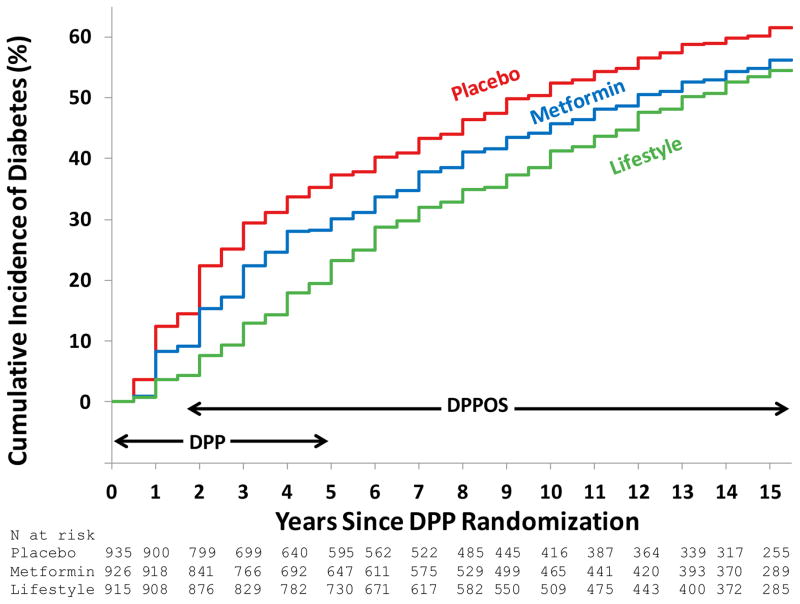
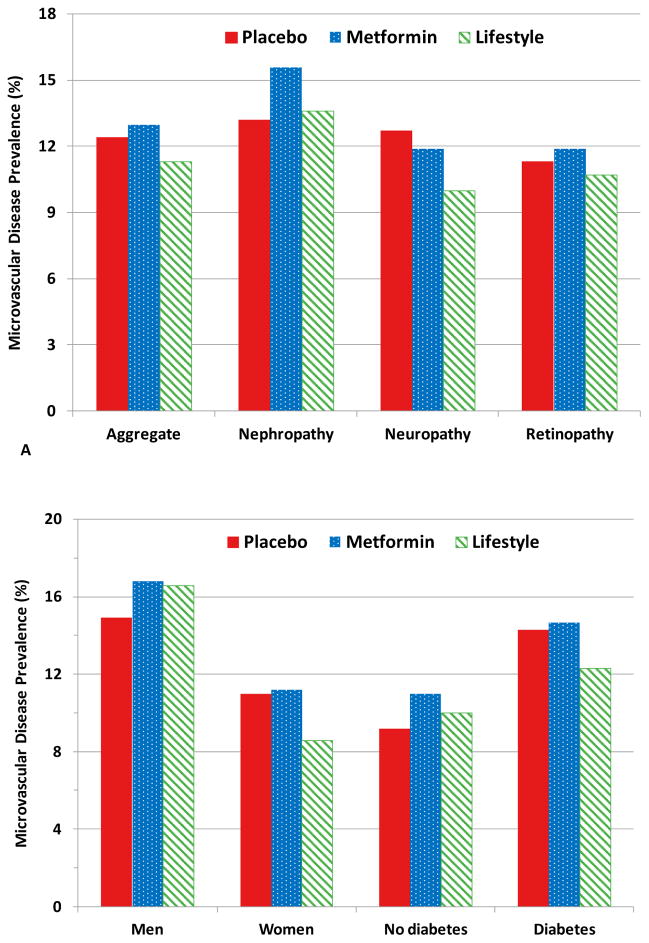
Background Effective prevention is needed to combat the worldwide epidemic of type 2 diabetes. We investigated the long-term extent of beneficial effects of lifestyle intervention and metformin on diabetes prevention, originally shown during the 3-year Diabetes Prevention Program (DPP), and assessed whether these interventions reduced diabetes-associated microvascular complications. Methods The DPP (1996-2001) was a randomised trial comparing an intensive lifestyle intervention or masked metformin with placebo in a cohort selected to be at very high risk of developing diabetes. All participants were offered lifestyle training at the end of the DPP. 2776 (88%) of the surviving DPP cohort were followed up in the DPP Outcomes Study (DPPOS, Sept 1, 2002, to Jan 2, 2014) and analysed by intention to treat on the basis of their original DPP assignment. During DPPOS, the original lifestyle intervention group was offered lifestyle reinforcement semi-annually and the metformin group received unmasked metformin. The primary outcomes were the development of diabetes and the prevalence of microvascular disease. For the assessment of microvascular disease, we used an aggregate microvascular outcome, composed of nephropathy, retinopathy, and neuropathy. Findings During a mean follow-up of 15 years, diabetes incidence was reduced by 27% in the lifestyle intervention group (hazard ratio 0·73, 95% CI 0·65-0·83; p<0·0001) and by 18% in the metformin group (0·82, 0·72-0·93; p=0·001), compared with the placebo group, with declining between-group differences over time. At year 15, the cumulative incidences of diabetes were 55% in the lifestyle group, 56% in the metformin group, and 62% in the placebo group. The prevalences at the end of the study of the aggregate microvascular outcome were not significantly different between the treatment groups in the total cohort (placebo 12·4%, 95% CI 11·1-13·8; metformin 13·0%, 11·7-14·5; lifestyle intervention 11·3%, 10·1-12·7). However, in women (n=1887) the lifestyle intervention was associated with a lower prevalence (8·7%, 95% CI 7·4-10·2) than in the placebo (11·0%, 9·6-12·6) and metformin (11·2%, 9·7-12·9) groups, with reductions in the lifestyle intervention group of 21% (p=0·03) compared with placebo and 22% (p=0·02) compared with metformin. Compared with participants who developed diabetes, those who did not develop diabetes had a 28% lower prevalence of microvascular complications (relative risk 0·72, 95% CI 0·63-0·83; p<0·0001). Interpretation Lifestyle intervention or metformin significantly reduced diabetes development over 15 years. There were no overall differences in the aggregate microvascular outcome between treatment groups; however, those who did not develop diabetes had a lower prevalence of microvascular complications than those who did develop diabetes. This result supports the importance of diabetes prevention. Funding National Institute of Diabetes and Digestive and Kidney Diseases.
Overview
CoChat Summary
TL;DR
In the DPP Outcomes Study, lifestyle intervention and metformin each reduced diabetes incidence over a mean 15 years compared with placebo, but neither reduced aggregate microvascular complications in the total cohort. Lifestyle intervention was associated with lower microvascular disease in women and in participants who remained free of diabetes.
Key findings
- Over an average 15 years, diabetes incidence was lower by 27% with lifestyle intervention (HR 0.73 [95% CI 0.65–0.83]) and 18% with metformin (HR 0.82 [0.72–0.93]) versus placebo. Cumulative diabetes incidence by year 15 was 560 (62%) in placebo, 499 (56%) in metformin, and 480 (55%) in lifestyle.
- Aggregate microvascular outcome prevalence at DPPOS-end did not differ significantly among the three treatment groups overall. In women, lifestyle intervention reduced microvascular disease by 21% versus placebo (RR 0.79) and 22% versus metformin (RR 0.78); metformin did not reduce microvascular disease in either sex.
- Participants who did not develop diabetes had a 28% lower prevalence of the aggregate microvascular outcome than those who developed diabetes (RR 0.72) across all treatment groups combined.
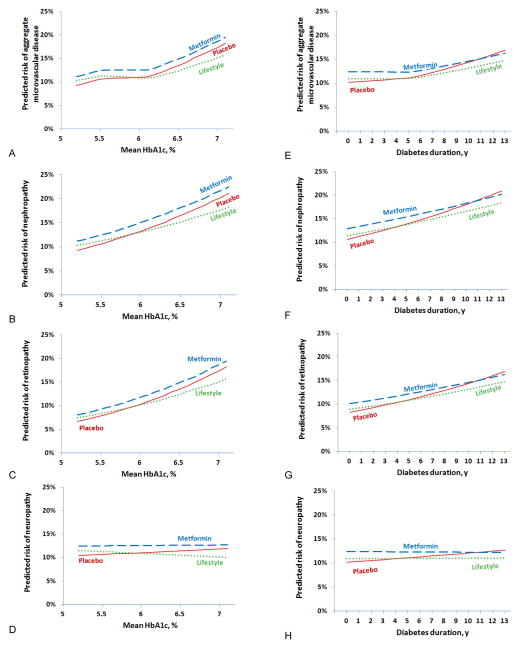
- In a post-hoc analysis among participants whose latest HbA1c was ≥6.5% (about 25% of the cohort), lifestyle showed significant reductions versus placebo in aggregate microvascular outcome (RR 0.59), retinopathy (RR 0.51), and neuropathy (RR 0.39); no significant metformin–placebo differences were seen.
Methods
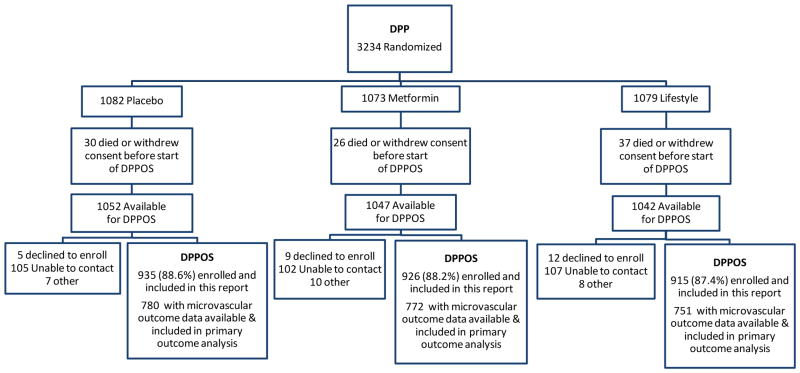
- DPP was a randomized controlled trial at 27 US centers comparing placebo, metformin 850 mg twice daily, and intensive lifestyle intervention (16-session curriculum targeting 7% weight loss and 150 minutes/week moderate activity). DPPOS followed 2776 (88%) of 3149 surviving DPP participants from all three arms, regardless of diabetes status, for a total mean follow-up of 15 years.
- Diabetes was diagnosed by 75 g OGTT annually and FPG every 6 months, with confirmation. The aggregate microvascular outcome included nephropathy, retinopathy, and neuropathy, measured during the final DPPOS year; analyses were intention-to-treat.
- Time to diabetes was compared with modified product-limit life-table distributions and log-rank tests. Aggregate microvascular outcomes were analyzed with GEE global tests; pairwise comparisons used Bonferroni-adjusted α=0.025. Analyses used SAS version 9.3.
Limitations
- Stated: therapeutic cross-over occurred because all three groups were offered group lifestyle intervention during the one-year bridge after DPP; lifestyle intervention after the first 24 weeks and during DPPOS was less intensive, likely contributing to weight regain; metformin use by lifestyle and placebo participants may have diminished relative metformin effects.
- Stated: the aggregate microvascular outcome combined three outcomes, one of which—neuropathy measured by monofilament—was more subjective and less sensitive for early neuropathy. Generalizability of a clinical trial with selected populations and protocol-driven interventions in academic centers may also be questioned.
- Stated/evident: the lack of an overall treatment effect on microvascular outcomes despite reduced diabetes development may be owing to limited power, the sex disparity in effects, or small separation in HbA1c among groups. Missing data were assumed missing at random, with 87% completion of microvascular components.
Model-written summary. Check it against the paper before relying on it.
Integrity signals
Registry
Cites
Statistics
Figures
Verification
Claims the paper makes
0 Valid · 0 Not valid · 4 Not checked · 57 Own results and interpretations
A result the paper reports from its own data — it cites no other source for it, so there is none to check. The quote shows it is in the paper.
In the paper
“There were no differences in the treatment effects on aggregate microvascular complications in other pre-specified subgroups defined by age and race or ethnicity”
plain- Asserted: passes — The authors put it forward as true.
- Checkable: passes — It can be checked against evidence.
- Load-bearing: unclear — It is unclear whether the paper’s conclusions depend on it.
- Based: passes — The paper gives a reason why it holds.
- Rests on 2 assumptions not shown here.
A result the paper reports from its own data — it cites no other source for it, so there is none to check. The quote shows it is in the paper.
In the paper
“Higher levels of baseline fasting glucose and HbA1c were associated with higher prevalence of microvascular complications”
plainstates an association- Asserted: passes — The authors put it forward as true.
- Checkable: passes — It can be checked against evidence.
- Load-bearing: unclear — It is unclear whether the paper’s conclusions depend on it.
- Based: passes — The paper gives a reason why it holds.
- Rests on 2 assumptions not shown here.
A result the paper reports from its own data — it cites no other source for it, so there is none to check. The quote shows it is in the paper.
In the paper
“lifestyle showed significant reductions compared with placebo in the aggregate microvascular outcome (relative risk 0.59), retinopathy (relative risk 0.51), and neuropathy (relative risk 0.39)”
plainstates a cause- Asserted: passes — The authors put it forward as true.
- Checkable: passes — It can be checked against evidence.
- Load-bearing: unclear — It is unclear whether the paper’s conclusions depend on it.
- Based: passes — The paper gives a reason why it holds.
- Rests on 2 assumptions not shown here.
A result the paper reports from its own data — it cites no other source for it, so there is none to check. The quote shows it is in the paper.
In the paper
“but was similar across racial/ethnic groups”
plain- Asserted: passes — The authors put it forward as true.
- Checkable: passes — It can be checked against evidence.
- Load-bearing: unclear — It is unclear whether the paper’s conclusions depend on it.
- Based: passes — The paper gives a reason why it holds.
- Rests on 2 assumptions not shown here.
A result the paper reports from its own data — it cites no other source for it, so there is none to check. The quote shows it is in the paper.
In the paper
“The average prevalence of the microvascular outcomes at DPPOS-end did not differ significantly among the three treatment groups”
plain- Asserted: passes — The authors put it forward as true.
- Checkable: passes — It can be checked against evidence.
- Load-bearing: passes — The paper’s conclusions depend on it.
- Based: passes — The paper gives a reason why it holds.
- Rests on 2 assumptions not shown here.
32 more claims
Create a free account to see all 61 claims and every source verdict.
- It may state two separate claims as one. 21
- The quote only partly states this claim. 1
- Probably not a substantial claim. 7
Claims other papers make about this one
Each is checked against this paper’s own text: does it say what the citing paper says it does?
The cited source doesn’t support the claim as written.
In the citing paper
“Despite an initial effect on lipoprotein subfractions, C-reactive protein and t-PA, with long-term follow-up there was no effect of metformin on cardiovascular risk factors.”
From The Vasculature in Prediabetes (2018) · cites this paper as [196]
Checked by a reasoning model — may be wrong.
Experimental — accuracy not yet measuredThe source backs part of the claim, not all of it — or backs it for a different population, condition or comparison.
In the citing paper
“Two recent meta-analyses revealed that metformin is effective in reducing the incidence of type 2 diabetes [3,36].”
From Economic evaluation of wearable fitness trackers versus metformin for preventing type 2 diabetes in the UK population (2025) · cites this paper as [36]
Experimental — accuracy not yet measuredThe source backs part of the claim, not all of it — or backs it for a different population, condition or comparison.
In the citing paper
“We derived our base case parameters (see Table 1) from the latter, as it used placebo as the comparator and had a longer time horizon (15 years), while the former used the lifestyle intervention (diet and exercise promotion) as the comparator.”
From Economic evaluation of wearable fitness trackers versus metformin for preventing type 2 diabetes in the UK population (2025) · cites this paper as [36]
Experimental — accuracy not yet measuredThe source backs part of the claim, not all of it — or backs it for a different population, condition or comparison.
In the citing paper
“Intensive Behavioral Counseling (IBC) interventions like the National Diabetes Prevention Program (NDPP), have demonstrated effectiveness in reducing excess body weight and lowering or delaying morbidity onset.”
From Clinical and Economic Impact of a Digital, Remotely-Delivered Intensive Behavioral Counseling Program on Medicare Beneficiaries at Risk for Diabetes and Cardiovascular Disease (2016) · cites this paper as [1]
Experimental — accuracy not yet measuredThe source backs part of the claim, not all of it — or backs it for a different population, condition or comparison.
In the citing paper
“Intensive Behavioral Counseling (IBC) has been widely accepted as an effective approach for compliant individuals to reduce body weight, improve clinical measures, and lower risk of obesity-related comorbidities [1–6].”
From Clinical and Economic Impact of a Digital, Remotely-Delivered Intensive Behavioral Counseling Program on Medicare Beneficiaries at Risk for Diabetes and Cardiovascular Disease (2016) · cites this paper as [1]
Experimental — accuracy not yet measured
14 more claims about this paper
Create a free account to see every claim other papers make about this one.
Citations
Cites
A New Equation to Estimate Glomerular Filtration Rate
Levey, A. S., Stevens, L. A., Schmid, C. H., Zhang, Y. (., Castro, A. F., Feldman, H. I., Kusek, J. W., Eggers, P., Van Lente, F., Greene, T., et al. (2009) · Annals of Internal Medicine · doi:10.7326/0003-4819-150-9-200905050-00006 · Cited by 25,603
Reduction in the incidence of type 2 diabetes with lifestyle intervention or metformin
(2002) · New England Journal of Medicine · doi:10.1056/nejmoa012512 · Cited by 19,011
Tuomilehto, J., Lindström, J., Eriksson, J. G., Valle, T. T., Hämäläinen, H., Ilanne-Parikka, P., Keinänen-Kiukaanniemi, S., Laakso, M., Louheranta, A., Rastas, M., et al. (2001) · New England Journal of Medicine · doi:10.1056/nejm200105033441801 · Cited by 10,873
Stratton, I. M. (2000) · BMJ · doi:10.1136/bmj.321.7258.405 · Cited by 9,059
Longitudinal Data Analysis for Discrete and Continuous Outcomes
Zeger, S. L., & Liang, K.-Y. (1986) · Biometrics · doi:10.2307/2531248 · Cited by 7,764
(2001) · Statistics for Psychologists · doi:10.4324/9781410605542-11 · Cited by 6,877
Pan, X.-R., Li, G.-W., Hu, Y.-H., Wang, J.-X., Yang, W.-Y., An, Z.-X., Hu, Z.-X., Juan-Lin, Xiao, J.-Z., Cao, H.-B., et al. (1997) · Diabetes Care · doi:10.2337/diacare.20.4.537 · Cited by 4,320
Economic Costs of Diabetes in the U.S. in 2002
American Diabetes Association (2003) · Diabetes Care · doi:10.2337/diacare.26.3.917 · Cited by 4,147
Diabetes Prevention Program Research Group (2009) · The Lancet · doi:10.1016/s0140-6736(09)61457-4 · Cited by 3,020
Economic Costs of Diabetes in the U.S. in 2012
American Diabetes Association (2013) · Diabetes Care · doi:10.2337/dc12-2625 · Cited by 2,163
Cited by
Items 201–300 of 1,022
Diabetes mellitus type 2 in adults
Dedov, I. I., Shestakova, M. V., Mayorov, A. Y., Шамхалова, М. Ш., Sukhareva, O. Y., Galstyan, G. R., Tokmakova, A. Y., Nikonova, T. V., Surkova, E. V., Кононенко, И. В., et al. (2020) · Diabetes Mellitus · doi:10.14341/dm12507 · Cited by 69
Metabolic syndrome — a new definition and management guidelines
Dobrowolski, P., Prejbisz, A., Kuryłowicz, A., Baska, A., Burchardt, P., Chlebus, K., Dzida, G. J., Jankowski, P., Jaroszewicz, J., Jaworski, P., et al. (2022) · Arterial Hypertension · doi:10.5603/ah.a2022.0012 · Cited by 79
Merino, J., Leong, A., Posner, D. C., Porneala, B., Masana, L., Dupuis, J., & Florez, J. C. (2017) · Diabetes Care · doi:10.2337/dc16-2625 · Cited by 53
Hartmann-Boyce, J., Theodoulou, A., Oke, J. L., Butler, A. R., Bastounis, A., Dunnigan, A., Byadya, R., Cobiac, L. J., Scarborough, P., Hobbs, F. D. R., et al. (2023) · Circulation: Cardiovascular Quality and Outcomes · doi:10.1161/circoutcomes.122.009348 · Cited by 53
Unnikrishnan, R., Shaw, J. E., Chan, J. C. N., Wild, S. H., Peters, A. L., Orrange, S., Roden, M., & Mohan, V. (2025) · Nature Reviews Disease Primers · doi:10.1038/s41572-025-00635-0 · Cited by 79
Kim, J., & Hur, M.-H. (2021) · International Journal of Environmental Research and Public Health · doi:10.3390/ijerph18168439 · Cited by 51
Herder, C., Roden, M., & Ziegler, D. (2019) · Trends in Endocrinology and Metabolism · doi:10.1016/j.tem.2019.02.007 · Cited by 54
Oh, T. J., Lee, J.-E., Choi, S. H., & Jang, H. C. (2019) · Journal of Obesity & Metabolic Syndrome · doi:10.7570/jomes.2019.28.2.112 · Cited by 59
Moin, T., Duru, O. K., Turk, N., Chon, J. S., Frosch, D. L., Martín, J. M., Jeffers, K. S., Castellon‐Lopez, Y., Tseng, C., Norris, K. C., et al. (2019) · Journal of General Internal Medicine · doi:10.1007/s11606-019-05238-6 · Cited by 57
Hilmarsdóttir, E., Sigurðardóttir, Á. K., & Arnardóttir, R. H. (2021) · Journal of Diabetes Science and Technology · doi:10.1177/1932296820942286 · Cited by 50
Juvenile murine models of prediabetes and type 2 diabetes develop neuropathy
O’Brien, P. D., Hinder, L. M., Rumora, A. E., Hayes, J. M., Dauch, J. R., Backus, C., Mendelson, F. E., & Feldman, E. L. (2018) · Disease Models & Mechanisms · doi:10.1242/dmm.037374 · Cited by 59
Random plasma glucose predicts the diagnosis of diabetes
Rhee, M. K., Ho, Y.-L. A., Raghavan, S., Vassy, J. L., Cho, K., GAGNON, D. R., Staimez, L. R., Ford, C. N., Wilson, P. W. F., & Phillips, L. S. (2019) · PLoS ONE · doi:10.1371/journal.pone.0219964 · Cited by 56
Insulin therapy, weight gain and prognosis
Hodish, I. (2018) · Diabetes, Obesity and Metabolism · doi:10.1111/dom.13367 · Cited by 48
Roberts, S., Craig, D., Adler, A., McPherson, K., & Greenhalgh, T. (2018) · BMC Medicine · doi:10.1186/s12916-017-0984-4 · Cited by 48
Ding, B., Gou, B., Guan, H., Wang, J., Bi, Y., & Hong, Z. (2021) · Archives of Gynecology and Obstetrics · doi:10.1007/s00404-021-05984-1 · Cited by 57
Mori, Y., Duru, O. K., Tuttle, K. R., Fukuma, S., Taura, D., Harada, N., Inagaki, N., & Inoue, K. (2022) · The Journal of Clinical Endocrinology & Metabolism · doi:10.1210/clinem/dgac591 · Cited by 55
Cagrilintide: A Long-Acting Amylin Analog for the Treatment of Obesity
D’Ascanio, A. M., Mullally, J. A., & Frishman, W. H. (2024) · Cardiology in Review · doi:10.1097/crd.0000000000000513 · Cited by 46
Life style intervention improves retinopathy status-the Finnish Diabetes Prevention Study
Aro, A., Kauppinen, A., Kivinen, N., Selander, T., Kinnunen, K., Tuomilehto, J., Keinänen-Kiukaanniemi, S., Lindström, J., Uusitupa, M., & Kaarniranta, K. (2019) · Nutrients · doi:10.3390/nu11071691 · Cited by 46
Quasi-experimental evaluation of a nationwide diabetes prevention programme
Lemp, J. M., Bommer, C., Xie, M., Michalik, F., Jani, A. R., Davies, J. I., Bärnighausen, T., Vollmer, S., & Geldsetzer, P. (2023) · Nature · doi:10.1038/s41586-023-06756-4 · Cited by 53
Himeno, T., Kamiya, H., & Nakamura, J. (2019) · Journal of Diabetes Investigation · doi:10.1111/jdi.13173 · Cited by 54
DeBruyn, L. M., Fullerton, L., Satterfield, D. W., & Frank, M. (2020) · Preventing Chronic Disease · doi:10.5888/pcd17.190213 · Cited by 60
Gabriel, R., Boukichou-Abdelkader, N., Acosta, T., Gilis‐Januszewska, A., Gómez‐Huelgas, R., Makrilakis, K., Kamenov, Z. A., Paulweber, B., Satman, İ., Djordjević, P., et al. (2020) · PLoS ONE · doi:10.1371/journal.pone.0231196 · Cited by 54
Prasad, M., Fine, K., Gee, A., Nair, N., Popp, C. J., Cheng, B., Manoogian, E. N. C., Panda, S., & Laferrère, B. (2021) · Nutrients · doi:10.3390/nu13072148 · Cited by 46
Life Course Cardiovascular Health: Risk Factors, Outcomes, and Interventions
Pedamallu, H., Zmora, R., Perak, A. M., & Allen, N. B. (2023) · Circulation Research · doi:10.1161/circresaha.123.321998 · Cited by 49
Sinha, A., Ning, H., Ahmad, F. S., Bancks, M. P., Carnethon, M. R., O’Brien, M. J., Allen, N. B., Wilkins, J. T., Lloyd‐Jones, D. M., & Khan, S. S. (2021) · Cardiovascular Diabetology · doi:10.1186/s12933-021-01265-y · Cited by 44
An, X., Zhang, Y., Sun, W., Kang, X., Ji, H., Sun, Y., Jiang, L., Zhao, X., Gao, Q., Lian, F., et al. (2024) · Frontiers in Endocrinology · doi:10.3389/fendo.2024.1294819 · Cited by 56
Kandula, N. R., Moran, M. R., Tang, J. W., & O’Brien, M. J. (2018) · Clinical Diabetes · doi:10.2337/cd17-0049 · Cited by 42
Ziegler, D., Herder, C., & Παπάνας, Ν. (2023) · Diabetes/Metabolism Research and Reviews · doi:10.1002/dmrr.3693 · Cited by 53
Carbone, S., Dixon, D. L., Buckley, L. F., & Abbate, A. (2018) · Mayo Clinic Proceedings · doi:10.1016/j.mayocp.2018.07.018 · Cited by 46
Zhang, Y., Wu, J., Li, T., Qu, Y., & Wang, Y. (2025) · Cardiovascular Diabetology · doi:10.1186/s12933-025-02616-9 · Cited by 52
Elkhatib, M. A. W., Mroueh, A., Rafeh, R. W., Sleiman, F., Fouad, H. H., Saad, E. I., Fouda, M. A., Elgaddar, O., Issa, K., Eid, A. H., et al. (2019) · Translational research · doi:10.1016/j.trsl.2019.07.009 · Cited by 43
Bennett, D., Du, H., Bragg, F., Guo, Y., Wright, N., Yang, L., Bian, Z., Chen, Y., Yu, C., Wang, S., et al. (2019) · BMJ Open Diabetes Research & Care · doi:10.1136/bmjdrc-2019-000835 · Cited by 47
Functional loss of pancreatic islets in type 2 diabetes: How can we halt it?
Marrano, N., Biondi, G., Cignarelli, A., Perrini, S., Laviola, L., Giorgino, F., & Natalicchio, A. (2020) · Metabolism · doi:10.1016/j.metabol.2020.154304 · Cited by 41
Continuous Glucose Monitoring for Prediabetes: What Are the Best Metrics?
Zahalka, S. J., Galindo, R. J., Shah, V. N., & Wang, C. C. L. (2024) · Journal of Diabetes Science and Technology · doi:10.1177/19322968241242487 · Cited by 233
3. Prevention or Delay of Diabetes and Associated Comorbidities: Standards of Care in Diabetes—2026
Bajaj, M. S., McCoy, R. G., Balapattabi, K., Bannuru, R. R., Bellini, N. J., Bennett, A. K., Beverly, E. A., Early, K. B., ChallaSivaKanaka, S., Echouffo-Tcheugui, J. B., et al. (2025) · Diabetes Care · doi:10.2337/dc26-s003 · Cited by 106
Kapo, S. M., Kusturica, J., Gušić, E., Rakanović-Todić, M., Šečić, D., Burnazović-Ristić, L., & Kulo, A. (2018) · Acta Medica Academica · doi:10.5644/ama2006-124.196 · Cited by 40
Liu, J., Zhao, Z., Mu, Y., Zou, X., Zou, D., Zhang, J., Chen, S., Tao, L., & Guo, X. (2018) · International Journal of Environmental Research and Public Health · doi:10.3390/ijerph15071560 · Cited by 41
Amin, S. V., Khanna, S., Parvar, S. P., Shaw, L. T., Dao, D., Hariprasad, S. M., & Skondra, D. (2022) · Experimental Biology and Medicine · doi:10.1177/15353702211069986 · Cited by 44
Prediction of type 2 diabetes mellitus onset using logistic regression-based scorecards
Edlitz, Y., & Segal, E. (2022) · eLife · doi:10.7554/elife.71862 · Cited by 48
Metformin beyond type 2 diabetes: Emerging and potential new indications
Petrie, J. R. (2024) · Diabetes Obesity and Metabolism · doi:10.1111/dom.15756 · Cited by 61
Inzucchi, S. E. (2017) · Diabetes Care · doi:10.2337/dc16-2372 · Cited by 50
Hartman, M. H. T., Prins, J. K. B., Schurer, R. A. J., Lipšic, E., Lexis, C. P. H., van der Horst‐Schrivers, A. N. A., van Veldhuisen, D. J., van der Horst, I. C. C., & van der Horst, I. C. C. (2017) · Clinical Research in Cardiology · doi:10.1007/s00392-017-1140-z · Cited by 41
Chronic Kidney Disease-Induced Insulin Resistance: Current State of the Field
Dave, N., Wu, J., & Thomas, S. S. (2018) · Current Diabetes Reports · doi:10.1007/s11892-018-1010-8 · Cited by 41
Lakka, T. A., Aittola, K., Järvelä‐Reijonen, E., Tilles‐Tirkkonen, T., Männikkö, R., Lintu, N., Karhunen, L. J., Kolehmainen, M., Harjumaa, M., Mattila, E., et al. (2022) · The Lancet Regional Health - Europe · doi:10.1016/j.lanepe.2022.100527 · Cited by 56
He, P., Li, H., Ye, Z., Liu, M., Zhou, C., Wu, Q., Zhang, Y., Yang, S., Zhang, Y., & Qin, X. (2023) · Journal of the American Heart Association · doi:10.1161/jaha.122.029441 · Cited by 48
Vascular Dysfunction in Diabetes and Obesity: Focus on TRP Channels
Moraes, R. D. A., Webb, R. C., & Silva, D. F. (2021) · Frontiers in Physiology · doi:10.3389/fphys.2021.645109 · Cited by 38
“Moreover, diabetes is strongly related with nephropathy, retinopathy, neuropathy (Nathan et al., 2015; Garofolo et al., 2019), and erectile dysfunction (Kouidrat et al.”
BackgroundBuckell, J., Mei, X. W., Clarke, P., Aveyard, P., & Jebb, S. A. (2021) · Obesity Reviews · doi:10.1111/obr.13317 · Cited by 39
Farmaki, A., Garfield, V., Eastwood, S. V., Farmer, R. E., Mathur, R., Giannakopoulou, O., Patalay, P., Kuchenbaecker, K. B., Sattar, N. A., Hughes, A. D., et al. (2021) · Diabetologia · doi:10.1007/s00125-021-05580-7 · Cited by 44
Durg, S., Bavage, S., & Shivaram, S. B. (2020) · Phytotherapy Research · doi:10.1002/ptr.6589 · Cited by 43
Type 2 Diabetes Prevention Focused on Normalization of Glycemia: A Two-Year Pilot Study
McKenzie, A. L., Athinarayanan, S. J., McCue, J. J., Adams, R. N., Keyes, M., McCarter, J. P., Volek, J. S., Phinney, S. D., & Hallberg, S. J. (2021) · Nutrients · doi:10.3390/nu13030749 · Cited by 37
Diabetes and Peripheral Nerve Disease
Zilliox, L. A. (2021) · Clinics in Geriatric Medicine · doi:10.1016/j.cger.2020.12.001 · Cited by 42
Zhuo, C., Zhang, Q., Wang, L., Ma, X., Li, R., Ping, J., Zhu, J., Tian, H., & Jiang, D. (2023) · CNS Drugs · doi:10.1007/s40263-023-01057-w · Cited by 48
Remission of type 2 diabetes: always more questions, but enough answers for action
Rothberg, A. E., Lean, M. E. J., & Laferrère, B. (2024) · Diabetologia · doi:10.1007/s00125-023-06069-1 · Cited by 58
“In the Diabetes Prevention Program (DPP) ( n =~3000), an intensive lifestyle intervention decreased CVD risk factors [40] and there was less microvascular disease in those who did not develop diabetes [41].”
BackgroundSang, H., Lee, H., Lee, M., Park, J., Kim, S., Woo, H. G., Rahmati, M., Koyanagi, A., Smith, L., Lee, S., et al. (2024) · Scientific Reports · doi:10.1038/s41598-024-63798-y · Cited by 36
Cancer prevention through weight control—where are we in 2020?
Anderson, A. S., Renehan, A. G., Saxton, J., Bell, J. A., Cade, J. E., Cross, A. J., King, A., Ríboli, E., Sniehotta, F. F., Treweek, S. P., et al. (2020) · British Journal of Cancer · doi:10.1038/s41416-020-01154-3 · Cited by 42
Osorio-Yáñez, C., Sanchez-Guerra, M., Cardenas, A., Lin, P.-I. D., Hauser, R., Gold, D. R., Kleinman, K. P., Hivert, M.-F., Fleisch, A. F., Calafat, A. M., et al. (2021) · Environment International · doi:10.1016/j.envint.2021.106446 · Cited by 36
Li, Y., Gappy, S. S., Liu, X., Sassalos, T. M., Zhou, T., Hsu, A., Zhang, A., Edwards, P. A., Gao, H., & Qiao, X. (2022) · PLoS ONE · doi:10.1371/journal.pone.0268451 · Cited by 43
Kent, S., Aveyard, P., Astbury, N., Mihaylova, B., & Jebb, S. A. (2019) · Obesity · doi:10.1002/oby.22407 · Cited by 35
Chakkalakal, R. J., Galaviz, K. I., Thirunavukkarasu, S., Shah, M. K., & Narayan, K. M. V. (2024) · Annual Review of Public Health · doi:10.1146/annurev-publhealth-060222-023417 · Cited by 35
Arreola, E. V., Gong, Q., Hanson, R. L., Wang, J., Sandforth, L., He, S., Sandforth, A., Qian, X., Giacca, M., Bornstein, S. R., et al. (2025) · The Lancet Diabetes & Endocrinology · doi:10.1016/s2213-8587(25)00295-5 · Cited by 59
Retat, L., Pimpin, L., Webber, L., Jaccard, A., Lewis, A. L., Tearne, S., Hood, K., Christian-Brown, A., Adab, P., Begh, R. A., et al. (2019) · International Journal of Obesity · doi:10.1038/s41366-018-0295-7 · Cited by 45
Muñóz-Hernández, L. L., Márquez-López, Z., Mehta, R., & Aguilar-Salinas, C. A. (2020) · Current Diabetes Reports · doi:10.1007/s11892-020-1295-2 · Cited by 39
Baucom, K. J. W., Pershing, M. L., Dwenger, K., Karasawa, M., Cohan, J. N., & Ozanne, E. M. (2021) · Women s Health Reports · doi:10.1089/whr.2020.0102 · Cited by 36
Weight loss in the prevention and treatment of diabetes
Delahanty, L. M. (2017) · Preventive Medicine · doi:10.1016/j.ypmed.2017.07.022 · Cited by 40
Kang, S., Kang, S. M., Choi, J. H., Ko, S., Koo, B. K., Kwon, H.-S., Kim, M. K., Kim, S. Y., Kim, S., Kim, Y., et al. (2025) · Diabetes & Metabolism Journal · doi:10.4093/dmj.2025.0469 · Cited by 85
on behalf of the StopDia study group, Pihlajamäki, J., Männikkö, R., Tilles‐Tirkkonen, T., Karhunen, L. J., Kolehmainen, M., Schwab, U., Lintu, N., Paananen, J., Järvenpää, R., et al. (2019) · BMC Public Health · doi:10.1186/s12889-019-6574-y · Cited by 51
Al‐Assi, O., Ghali, R., Mroueh, A., Kaplan, A., Mougharbil, N., Eid, A. H., Zouein, F. A., & EL‐Yazbi, A. F. (2018) · Oxidative Medicine and Cellular Longevity · doi:10.1155/2018/9389784 · Cited by 36
Knowledge about type 2 diabetes: its impact for future management
Ferreira, P. L., Morais, C., Pimenta, R. E., Ribeiro, I., Amorim, I., Alves, S. M., & Santiago, L. M. (2024) · Frontiers in Public Health · doi:10.3389/fpubh.2024.1328001 · Cited by 72
The role of the beta cell in type 2 diabetes: new findings from the last 5 years
Yau, B., Ghislain, J. J., Kebede, M. A., Hughes, J. W., & Poitout, V. (2025) · Diabetologia · doi:10.1007/s00125-025-06499-z · Cited by 54
Prevention of type 2 Diabetes Mellitus: Potential of pharmacological agents
Samson, S. L., & Garber, A. J. (2016) · Best Practice & Research Clinical Endocrinology & Metabolism · doi:10.1016/j.beem.2016.06.005 · Cited by 37
Diet quality, weight loss, and diabetes incidence in the Diabetes Prevention Program (DPP)
Allaire, B. T., Tjaden, A. H., Venditti, E. M., Apolzan, J. W., Dabelea, D., Delahanty, L. M., Edelstein, S. L., Hoskin, M. A., Temple, K. A., Wylie‐Rosett, J., et al. (2020) · BMC Nutrition · doi:10.1186/s40795-020-00400-4 · Cited by 40
Garibay-Nieto, N., Queipo-García, G. E., Álvarez, F. Á. O., Bustos, M., Villanueva-Ortega, E., Ramírez, F., León, M. P., Laresgoiti‐Servitje, E., Duggirala, R., Macías, T., et al. (2016) · The Journal of Clinical Endocrinology & Metabolism · doi:10.1210/jc.2016-2701 · Cited by 39
Guardado‐Mendoza, R., Salazar-López, S. S., Alvarez-Canales, M. F. D. L. L., Farfán-Vázquez, D., Martínez-López, Y. E., Jiménez-Ceja, L. M., Suárez-Pérez, E. L., Angulo-Romero, F., Evia-Viscarra, M. L., de Oca-Loyola, M. L. M., et al. (2019) · Metabolism · doi:10.1016/j.metabol.2019.154054 · Cited by 37
Nutritional Strategies in Prediabetes: A Scoping Review of Recent Evidence
Yau, J. W., Thor, S. M., & Ramadas, A. (2020) · Nutrients · doi:10.3390/nu12102990 · Cited by 39
Chivese, T., Werfalli, M., Magodoro, I. M., Chinhoyi, R. L., Kengne, A. P., Norris, S. A., & Levitt, N. S. (2019) · BMJ Open · doi:10.1136/bmjopen-2018-024345 · Cited by 36
Diabetes in Youth—Looking Backwards to Inform the Future: Kelly West Award Lecture 2017
Dabelea, D. (2018) · Diabetes Care · doi:10.2337/dci17-0031 · Cited by 35
Burd, C., Gruss, S. M., Albright, A. L., ZINA, A., Schumacher, P., & Alley, D. E. (2020) · Milbank Quarterly · doi:10.1111/1468-0009.12443 · Cited by 34
Epigenetic changes during ageing and their underlying mechanisms
Braga, D. L., Mousovich‐Neto, F., Tonon-da-Silva, G., Salgueiro, W. G., & Mori, M. A. (2020) · Biogerontology · doi:10.1007/s10522-020-09874-y · Cited by 34
von Schwartzenberg, R. J., Arreola, E. V., Sandforth, A., Hanson, R. L., & Birkenfeld, A. L. (2024) · Diabetologia · doi:10.1007/s00125-024-06178-5 · Cited by 34
Ndwiga, D. W., MacMillan, F., McBride, K. A., Thompson, R., Reath, J., Alofivae‐Doorbinnia, O., Abbott, P., McCafferty, C. E., Aghajani, M. J., Rush, E. C., et al. (2020) · Diabetes Research and Clinical Practice · doi:10.1016/j.diabres.2020.108000 · Cited by 32
Digital Health–Supported Lifestyle Change Programs to Prevent Type 2 Diabetes
Kirley, K., & Sachdev, N. (2018) · Diabetes Spectrum · doi:10.2337/ds18-0019 · Cited by 29
Crandall, J. P., Dabelea, D., Knowler, W. C., Nathan, D. M., Temprosa, M., DPP Research Group, Bray, G. A., Gadde, K. M., Culbert, I. W., Arceneaux, J., et al. (2025) · Diabetes Care · doi:10.2337/dc25-0014 · Cited by 29
Haber, R., Zarzour, F., Ghezzawi, M., Saadeh, N., Bacha, D. S., Jebbawi, L. A., Chakhtoura, M., & Mantzoros, C. S. (2024) · Diabetes Obesity and Metabolism · doi:10.1111/dom.15501 · Cited by 39
Li, J., Lv, J.-L., Cao, X.-Y., Zhang, H., Tan, Y., Chu, T., Zhao, L., Liu, Z., & Ren, Y. (2022) · Frontiers in Microbiology · doi:10.3389/fmicb.2022.1040846 · Cited by 39
The Effectiveness of Metformin in Diabetes Prevention: A Systematic Review and Meta-Analysis
Patel, D., Ayesha, I. E., Monson, N. R., Klair, N., Patel, U., Saxena, A., & Hamid, P. (2023) · Cureus · doi:10.7759/cureus.46108 · Cited by 29
Rodgers, L. R., Hill, A. V., Dennis, J., Craig, Z., May, B., Hattersley, A. T., McDonald, T. J., Andrews, R. C., Jones, A. G., & Shields, B. M. (2021) · BMC Medicine · doi:10.1186/s12916-021-02054-w · Cited by 32
Reframing prediabetes: A call for better risk stratification and intervention
Kim, S. H. (2024) · Journal of Internal Medicine · doi:10.1111/joim.13786 · Cited by 34
Battelino, T., Lalic, N. M., Hussain, S., Ceriello, A., Majanović, S. K., Davies, S., Topsever, P., Heverly, J., Ulivi, F., Brady, K., et al. (2025) · Diabetes Research and Clinical Practice · doi:10.1016/j.diabres.2025.112111 · Cited by 36
DiBenedetto, J. C., Blum, N. M., O’Brian, C. A., Kolb, L. E., & Lipman, R. D. (2016) · The Diabetes Educator · doi:10.1177/0145721716668415 · Cited by 28
Lentferink, Y. E., van der Aa, M. P., van Mill, E. G. A. H., Knibbe, C. A. J., & van der Vorst, M. M. J. (2018) · Nutrition and Diabetes · doi:10.1038/s41387-018-0057-6 · Cited by 31
Weng, S., Luo, Y., Zhang, Z., Su, X., & Peng, D. (2020) · Endocrine · doi:10.1007/s12020-020-02190-y · Cited by 34
Rintamäki, R. M., Rautio, N., Peltonen, M., Jokelainen, J. J., Keinanen-Kiukaanniemi, S. M., Oksa, H. H., Saaristo, T., Puolijoki, H., Saltevo, J. T., Tuomilehto, J. O., et al. (2021) · Primary care diabetes · doi:10.1016/j.pcd.2021.03.002 · Cited by 42
Metformin improves skeletal muscle microvascular insulin resistance in metabolic syndrome
Jahn, L. A., Hartline, L. M., Liu, Z., & Barrett, E. J. (2021) · American Journal of Physiology-Endocrinology and Metabolism · doi:10.1152/ajpendo.00287.2021 · Cited by 29
Jiang, Q., Li, J., Sun, P., Wang, L.-L., Sun, L.-Z., & Pang, S. (2022) · Archives of Endocrinology and Metabolism · doi:10.20945/2359-3997000000441 · Cited by 44
Boltri, J. M., Tracer, H. L., Strogatz, D. S., Idzik, S. R., Schumacher, P., Fukagawa, N. K., Leake, E., Powell, C., Shell, D., Wu, S. S., et al. (2023) · Diabetes Care · doi:10.2337/dc22-0620 · Cited by 32
Davies, M. J., Lim, S. K., Slater, T., Goldney, J., Philis‐Tsimikas, A., Franco, D. R., Lamptey, R., Yates, T. E., Tankova, T. I., & Lingvay, I. (2026) · Nature Reviews Disease Primers · doi:10.1038/s41572-026-00687-w · Cited by 64
Daniele, G., Tura, A., Dardano, A., Bertolotto, A., Bianchi, C., Giusti, L., Kurumthodathu, J. J., & Prato, S. D. (2019) · Diabetes Obesity and Metabolism · doi:10.1111/dom.13940 · Cited by 29
Changing the Concept of Type 2 Diabetes: Beta Cell Workload Hypothesis Revisited
Saisho, Y. (2018) · Endocrine Metabolic & Immune Disorders - Drug Targets · doi:10.2174/1871530318666180821161825 · Cited by 30
Kempf, K., Röhling, M., Martin, S., & Schneider, M. (2019) · BMJ Open · doi:10.1136/bmjopen-2018-022242 · Cited by 34
Барбараш, О. Л., Voyevoda, M. I., Galstyan, G. R., Shestakova, M. V., Boytsov, S. A., Aleksandrova, O. Y., Брызгалина, С. М., Друк, И. В., Каретникова, В. Н., Кашталап, В. В., et al. (2019) · Russian Journal of Cardiology · doi:10.15829/1560-4071-2019-4-83-91 · Cited by 32
Metadata
- Venue
- The Lancet Diabetes & Endocrinology
- Publisher
- Elsevier BV
- Published
- 2015-11
- Volume
- 3
- Issue
- 11
- Pages
- 866-875
- ISSN
- 2213-8587 (ISSN-L)
- PMC
- PMC4623946
- OpenAlex
- W1891939305
- Semantic Scholar
- c381343ab0ee26144aebc385219bf8a50f985787
- Cited by
- 1,029
- References
- 34
- Citations by year
- 2026: 71 · 2025: 110 · 2024: 95 · 2023: 124 · 2022: 99 · 2021: 124 · 2020: 104 · 2019: 93 · 2018: 96 · 2017: 69 · 2016: 39 · 2015: 2
- FWCI
- 59.60
- Type
- journal article
- Language
- en
- Open access
- green
- www.ncbi.nlm.nih.gov
- Licence
- cc-by-nc-nd
- www.elsevier.com/tdm/userlicense/1.0/ (tdm)
- Locations
- The Lancet Diabetes & Endocrinology (publishedVersion)
- PubMed (publishedVersion)
- Europe PMC (PubMed Central) (acceptedVersion, cc-by-nc-nd)
- PubMed Central (acceptedVersion, cc-by-nc-nd)
- Funders
- U.S. Department of Veterans Affairs
- National Institutes of Health
- National Institute of Diabetes and Digestive and Kidney Diseases (U01DK048339, U01DK048375, U01DK048397, U01DK048406, U01DK048413, DK048489, R01DK078907, U01DK048485, U01DK048400, U01DK048434, U01DK048380, U01DK048412, U01DK048411, U01DK048377, U01DK048437, U01DK048514, U01DK048489, U01DK048468, U01DK048407, U01DK048381, U01DK048443, U01DK048349, U01DK048387, U01DK048404, P30DK017047)
- National Center for Research Resources (UL1RR025758)
- National Center for Advancing Translational Sciences
- Topics
- Health Sciences › Medicine › Endocrinology, Diabetes and Metabolism › Diabetes, Cardiovascular Risks, and Lipoproteins
- Health Sciences › Medicine › Endocrinology, Diabetes and Metabolism › Diabetes Treatment and Management
- Health Sciences › Medicine › Endocrinology, Diabetes and Metabolism › Diabetes Management and Research
- Keywords
- type 2 diabetes prevention, lifestyle intervention, metformin, diabetes incidence, microvascular complications, diabetic nephropathy, diabetic retinopathy, diabetic neuropathy, long-term follow-up, women, Diabetes Prevention Program Outcomes Study, unmet medical needs, cost-effectiveness
- MeSH terms
- Diabetes Mellitus, Type 2, Female, Follow-Up Studies, Humans, Hypoglycemic Agents, Life Style, Male, Metformin, Middle Aged, Risk Factors, Vascular Diseases, Treatment Outcome, Microvessels
About these checks
Registry, retraction, Cites and statistics results are computed, not judged, with one exception: a printed reference that no index lists is read once by a model before it counts as a citation error. Claims are extracted by a model and kept only when their quote appears verbatim in the text; each cited source is then checked, with a model’s help, for whether it says what the claim relies on. Those verdicts can be wrong — read the claim’s quote and the cited source before relying on one.
A language model drew the claims from the paper on 2026-09-30, under version 3 of the claim definition (model deepseek-v4.1-flash, prompt extract-v3).
A second model labelled each claim on 2026-09-30 (model jev-1.13-20260917, definition revision gold-guideline-v0.2).
Statistics and arithmetic are recomputed, not judged.
Confidence bands are shown only for fields calibrated on our annotated test set. None is calibrated yet, so no band is shown.
What counts as a claim ›How we measure confidence ›How we check this ›
Are you an author, or do you see a problem with this page? Request a review
Data sources
Bibliographic data: Semantic Scholar, OpenAlex, Crossref.
Contains information from the Semantic Scholar Academic Graph Datasets, made available under the ODC Attribution License (ODC-BY 1.0).
Semantic Scholar’s data is described in: Kinney, R., et al. (2023). The Semantic Scholar Open Data Platform. arXiv:2301.10140.
