

Long-term effects of lifestyle intervention or metformin on diabetes development and microvascular complications over 15-year follow-up: the Diabetes Prevention Program Outcomes Study
Open accessThe DOI matches its Crossref record; 35 of the 35 references it cites were found in a registry or an index; none of the 4 sources its claims cite is checked for support yet.
Abstract
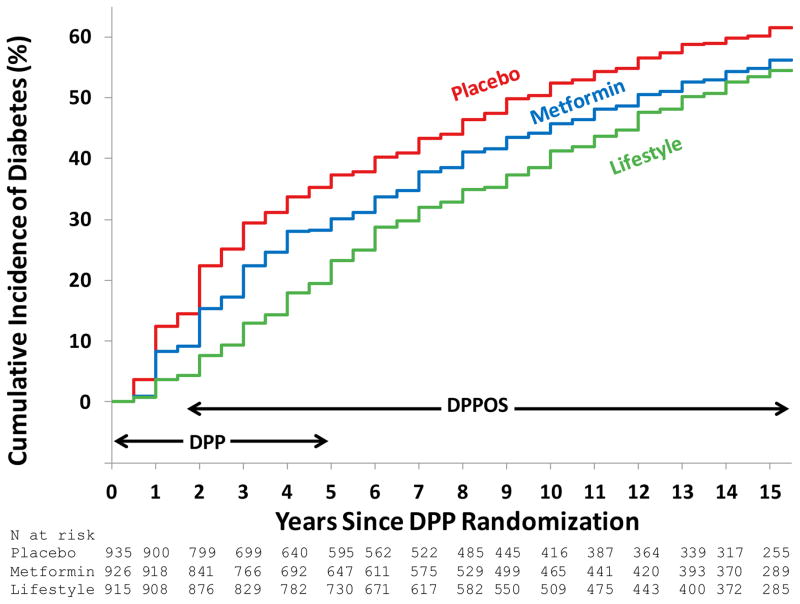
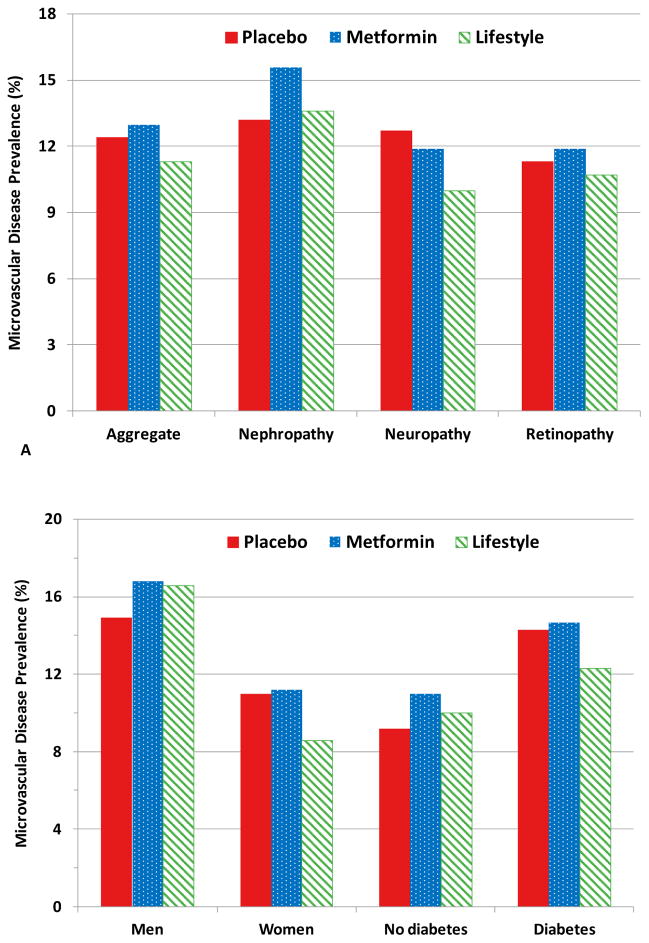
Background Effective prevention is needed to combat the worldwide epidemic of type 2 diabetes. We investigated the long-term extent of beneficial effects of lifestyle intervention and metformin on diabetes prevention, originally shown during the 3-year Diabetes Prevention Program (DPP), and assessed whether these interventions reduced diabetes-associated microvascular complications. Methods The DPP (1996-2001) was a randomised trial comparing an intensive lifestyle intervention or masked metformin with placebo in a cohort selected to be at very high risk of developing diabetes. All participants were offered lifestyle training at the end of the DPP. 2776 (88%) of the surviving DPP cohort were followed up in the DPP Outcomes Study (DPPOS, Sept 1, 2002, to Jan 2, 2014) and analysed by intention to treat on the basis of their original DPP assignment. During DPPOS, the original lifestyle intervention group was offered lifestyle reinforcement semi-annually and the metformin group received unmasked metformin. The primary outcomes were the development of diabetes and the prevalence of microvascular disease. For the assessment of microvascular disease, we used an aggregate microvascular outcome, composed of nephropathy, retinopathy, and neuropathy. Findings During a mean follow-up of 15 years, diabetes incidence was reduced by 27% in the lifestyle intervention group (hazard ratio 0·73, 95% CI 0·65-0·83; p<0·0001) and by 18% in the metformin group (0·82, 0·72-0·93; p=0·001), compared with the placebo group, with declining between-group differences over time. At year 15, the cumulative incidences of diabetes were 55% in the lifestyle group, 56% in the metformin group, and 62% in the placebo group. The prevalences at the end of the study of the aggregate microvascular outcome were not significantly different between the treatment groups in the total cohort (placebo 12·4%, 95% CI 11·1-13·8; metformin 13·0%, 11·7-14·5; lifestyle intervention 11·3%, 10·1-12·7). However, in women (n=1887) the lifestyle intervention was associated with a lower prevalence (8·7%, 95% CI 7·4-10·2) than in the placebo (11·0%, 9·6-12·6) and metformin (11·2%, 9·7-12·9) groups, with reductions in the lifestyle intervention group of 21% (p=0·03) compared with placebo and 22% (p=0·02) compared with metformin. Compared with participants who developed diabetes, those who did not develop diabetes had a 28% lower prevalence of microvascular complications (relative risk 0·72, 95% CI 0·63-0·83; p<0·0001). Interpretation Lifestyle intervention or metformin significantly reduced diabetes development over 15 years. There were no overall differences in the aggregate microvascular outcome between treatment groups; however, those who did not develop diabetes had a lower prevalence of microvascular complications than those who did develop diabetes. This result supports the importance of diabetes prevention. Funding National Institute of Diabetes and Digestive and Kidney Diseases.
Overview
CoChat Summary
TL;DR
In the DPP Outcomes Study, lifestyle intervention and metformin each reduced diabetes incidence over a mean 15 years compared with placebo, but neither reduced aggregate microvascular complications in the total cohort. Lifestyle intervention was associated with lower microvascular disease in women and in participants who remained free of diabetes.
Key findings
- Over an average 15 years, diabetes incidence was lower by 27% with lifestyle intervention (HR 0.73 [95% CI 0.65–0.83]) and 18% with metformin (HR 0.82 [0.72–0.93]) versus placebo. Cumulative diabetes incidence by year 15 was 560 (62%) in placebo, 499 (56%) in metformin, and 480 (55%) in lifestyle.
- Aggregate microvascular outcome prevalence at DPPOS-end did not differ significantly among the three treatment groups overall. In women, lifestyle intervention reduced microvascular disease by 21% versus placebo (RR 0.79) and 22% versus metformin (RR 0.78); metformin did not reduce microvascular disease in either sex.
- Participants who did not develop diabetes had a 28% lower prevalence of the aggregate microvascular outcome than those who developed diabetes (RR 0.72) across all treatment groups combined.
- In a post-hoc analysis among participants whose latest HbA1c was ≥6.5% (about 25% of the cohort), lifestyle showed significant reductions versus placebo in aggregate microvascular outcome (RR 0.59), retinopathy (RR 0.51), and neuropathy (RR 0.39); no significant metformin–placebo differences were seen.
Methods
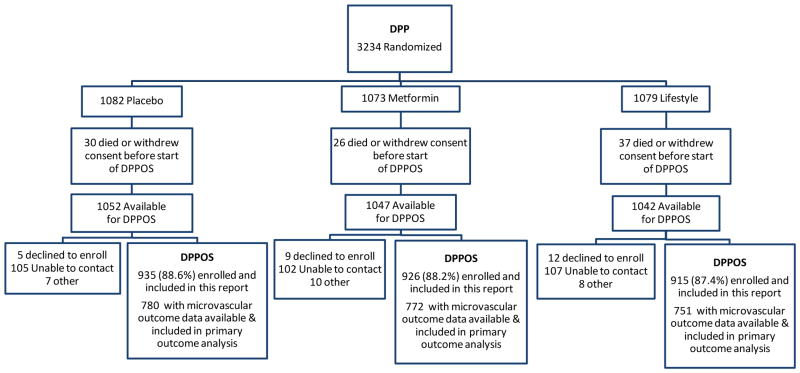
- DPP was a randomized controlled trial at 27 US centers comparing placebo, metformin 850 mg twice daily, and intensive lifestyle intervention (16-session curriculum targeting 7% weight loss and 150 minutes/week moderate activity). DPPOS followed 2776 (88%) of 3149 surviving DPP participants from all three arms, regardless of diabetes status, for a total mean follow-up of 15 years.
- Diabetes was diagnosed by 75 g OGTT annually and FPG every 6 months, with confirmation. The aggregate microvascular outcome included nephropathy, retinopathy, and neuropathy, measured during the final DPPOS year; analyses were intention-to-treat.
- Time to diabetes was compared with modified product-limit life-table distributions and log-rank tests. Aggregate microvascular outcomes were analyzed with GEE global tests; pairwise comparisons used Bonferroni-adjusted α=0.025. Analyses used SAS version 9.3.
Limitations
- Stated: therapeutic cross-over occurred because all three groups were offered group lifestyle intervention during the one-year bridge after DPP; lifestyle intervention after the first 24 weeks and during DPPOS was less intensive, likely contributing to weight regain; metformin use by lifestyle and placebo participants may have diminished relative metformin effects.
- Stated: the aggregate microvascular outcome combined three outcomes, one of which—neuropathy measured by monofilament—was more subjective and less sensitive for early neuropathy. Generalizability of a clinical trial with selected populations and protocol-driven interventions in academic centers may also be questioned.
- Stated/evident: the lack of an overall treatment effect on microvascular outcomes despite reduced diabetes development may be owing to limited power, the sex disparity in effects, or small separation in HbA1c among groups. Missing data were assumed missing at random, with 87% completion of microvascular components.
Model-written summary. Check it against the paper before relying on it.
Integrity signals
Registry
Cites
Statistics
Figures
Verification
Claims the paper makes
0 Valid · 0 Not valid · 4 Not checked · 57 Own results and interpretations
A result the paper reports from its own data — it cites no other source for it, so there is none to check. The quote shows it is in the paper.
In the paper
“There were no differences in the treatment effects on aggregate microvascular complications in other pre-specified subgroups defined by age and race or ethnicity”
plain- Asserted: passes — The authors put it forward as true.
- Checkable: passes — It can be checked against evidence.
- Load-bearing: unclear — It is unclear whether the paper’s conclusions depend on it.
- Based: passes — The paper gives a reason why it holds.
- Rests on 2 assumptions not shown here.
A result the paper reports from its own data — it cites no other source for it, so there is none to check. The quote shows it is in the paper.
In the paper
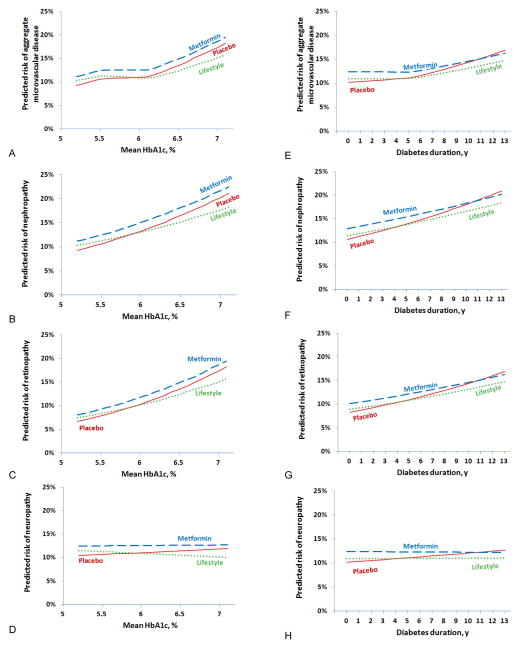
“Higher levels of baseline fasting glucose and HbA1c were associated with higher prevalence of microvascular complications”
plainstates an association- Asserted: passes — The authors put it forward as true.
- Checkable: passes — It can be checked against evidence.
- Load-bearing: unclear — It is unclear whether the paper’s conclusions depend on it.
- Based: passes — The paper gives a reason why it holds.
- Rests on 2 assumptions not shown here.
A result the paper reports from its own data — it cites no other source for it, so there is none to check. The quote shows it is in the paper.
In the paper
“lifestyle showed significant reductions compared with placebo in the aggregate microvascular outcome (relative risk 0.59), retinopathy (relative risk 0.51), and neuropathy (relative risk 0.39)”
plainstates a cause- Asserted: passes — The authors put it forward as true.
- Checkable: passes — It can be checked against evidence.
- Load-bearing: unclear — It is unclear whether the paper’s conclusions depend on it.
- Based: passes — The paper gives a reason why it holds.
- Rests on 2 assumptions not shown here.
A result the paper reports from its own data — it cites no other source for it, so there is none to check. The quote shows it is in the paper.
In the paper
“but was similar across racial/ethnic groups”
plain- Asserted: passes — The authors put it forward as true.
- Checkable: passes — It can be checked against evidence.
- Load-bearing: unclear — It is unclear whether the paper’s conclusions depend on it.
- Based: passes — The paper gives a reason why it holds.
- Rests on 2 assumptions not shown here.
A result the paper reports from its own data — it cites no other source for it, so there is none to check. The quote shows it is in the paper.
In the paper
“The average prevalence of the microvascular outcomes at DPPOS-end did not differ significantly among the three treatment groups”
plain- Asserted: passes — The authors put it forward as true.
- Checkable: passes — It can be checked against evidence.
- Load-bearing: passes — The paper’s conclusions depend on it.
- Based: passes — The paper gives a reason why it holds.
- Rests on 2 assumptions not shown here.
32 more claims
Create a free account to see all 61 claims and every source verdict.
- It may state two separate claims as one. 21
- The quote only partly states this claim. 1
- Probably not a substantial claim. 7
Claims other papers make about this one
Each is checked against this paper’s own text: does it say what the citing paper says it does?
The cited source doesn’t support the claim as written.
In the citing paper
“Despite an initial effect on lipoprotein subfractions, C-reactive protein and t-PA, with long-term follow-up there was no effect of metformin on cardiovascular risk factors.”
From The Vasculature in Prediabetes (2018) · cites this paper as [196]
Checked by a reasoning model — may be wrong.
Experimental — accuracy not yet measuredThe source backs part of the claim, not all of it — or backs it for a different population, condition or comparison.
In the citing paper
“Two recent meta-analyses revealed that metformin is effective in reducing the incidence of type 2 diabetes [3,36].”
From Economic evaluation of wearable fitness trackers versus metformin for preventing type 2 diabetes in the UK population (2025) · cites this paper as [36]
Experimental — accuracy not yet measuredThe source backs part of the claim, not all of it — or backs it for a different population, condition or comparison.
In the citing paper
“We derived our base case parameters (see Table 1) from the latter, as it used placebo as the comparator and had a longer time horizon (15 years), while the former used the lifestyle intervention (diet and exercise promotion) as the comparator.”
From Economic evaluation of wearable fitness trackers versus metformin for preventing type 2 diabetes in the UK population (2025) · cites this paper as [36]
Experimental — accuracy not yet measuredThe source backs part of the claim, not all of it — or backs it for a different population, condition or comparison.
In the citing paper
“Intensive Behavioral Counseling (IBC) interventions like the National Diabetes Prevention Program (NDPP), have demonstrated effectiveness in reducing excess body weight and lowering or delaying morbidity onset.”
From Clinical and Economic Impact of a Digital, Remotely-Delivered Intensive Behavioral Counseling Program on Medicare Beneficiaries at Risk for Diabetes and Cardiovascular Disease (2016) · cites this paper as [1]
Experimental — accuracy not yet measuredThe source backs part of the claim, not all of it — or backs it for a different population, condition or comparison.
In the citing paper
“Intensive Behavioral Counseling (IBC) has been widely accepted as an effective approach for compliant individuals to reduce body weight, improve clinical measures, and lower risk of obesity-related comorbidities [1–6].”
From Clinical and Economic Impact of a Digital, Remotely-Delivered Intensive Behavioral Counseling Program on Medicare Beneficiaries at Risk for Diabetes and Cardiovascular Disease (2016) · cites this paper as [1]
Experimental — accuracy not yet measured
14 more claims about this paper
Create a free account to see every claim other papers make about this one.
Citations
Cites
A New Equation to Estimate Glomerular Filtration Rate
Levey, A. S., Stevens, L. A., Schmid, C. H., Zhang, Y. (., Castro, A. F., Feldman, H. I., Kusek, J. W., Eggers, P., Van Lente, F., Greene, T., et al. (2009) · Annals of Internal Medicine · doi:10.7326/0003-4819-150-9-200905050-00006 · Cited by 25,603
Reduction in the incidence of type 2 diabetes with lifestyle intervention or metformin
(2002) · New England Journal of Medicine · doi:10.1056/nejmoa012512 · Cited by 19,011
Tuomilehto, J., Lindström, J., Eriksson, J. G., Valle, T. T., Hämäläinen, H., Ilanne-Parikka, P., Keinänen-Kiukaanniemi, S., Laakso, M., Louheranta, A., Rastas, M., et al. (2001) · New England Journal of Medicine · doi:10.1056/nejm200105033441801 · Cited by 10,873
Stratton, I. M. (2000) · BMJ · doi:10.1136/bmj.321.7258.405 · Cited by 9,059
Longitudinal Data Analysis for Discrete and Continuous Outcomes
Zeger, S. L., & Liang, K.-Y. (1986) · Biometrics · doi:10.2307/2531248 · Cited by 7,764
(2001) · Statistics for Psychologists · doi:10.4324/9781410605542-11 · Cited by 6,877
Pan, X.-R., Li, G.-W., Hu, Y.-H., Wang, J.-X., Yang, W.-Y., An, Z.-X., Hu, Z.-X., Juan-Lin, Xiao, J.-Z., Cao, H.-B., et al. (1997) · Diabetes Care · doi:10.2337/diacare.20.4.537 · Cited by 4,320
Economic Costs of Diabetes in the U.S. in 2002
American Diabetes Association (2003) · Diabetes Care · doi:10.2337/diacare.26.3.917 · Cited by 4,147
Diabetes Prevention Program Research Group (2009) · The Lancet · doi:10.1016/s0140-6736(09)61457-4 · Cited by 3,020
Economic Costs of Diabetes in the U.S. in 2012
American Diabetes Association (2013) · Diabetes Care · doi:10.2337/dc12-2625 · Cited by 2,163
Cited by
Ong, K. L., Stafford, L. K., McLaughlin, S. A., Boyko, E. J., Vollset, S. E., Smith, A. E., Dalton, B. E., Duprey, J., Cruz, J. A., Hagins, H., et al. (2023) · The Lancet · doi:10.1016/s0140-6736(23)01301-6 · Cited by 6,146
Cosentino, F., Grant, P. J., Aboyans, V., Bailey, C. J., Ceriello, A., Delgado, V., Federici, M., Filippatos, G., Grobbee, D. E., Hansen, T. B., et al. (2020) · European Heart Journal · doi:10.1093/eurheartj/ehz486 · Cited by 4,763
Chatterjee, S., Khunti, K., & Davies, M. J. (2017) · The Lancet · doi:10.1016/s0140-6736(17)30058-2 · Cited by 2,577
Abràmoff, M. D., Lavin, P. T., Birch, M., Shah, N., & Folk, J. C. (2018) · npj Digital Medicine · doi:10.1038/s41746-018-0040-6 · Cited by 1,638
Nutrition Therapy for Adults With Diabetes or Prediabetes: A Consensus Report
Evert, A. B., Dennison, M., Gardner, C. D., Garvey, W. T., Lau, K. H. K., MacLeod, J., Mitri, J., Pereira, R. F., Rawlings, K., Robinson, S., et al. (2019) · Diabetes Care · doi:10.2337/dci19-0014 · Cited by 1,496
Facing up to the global challenges of ageing
Partridge, L., Deelen, J., & Slagboom, P. E. (2018) · Nature · doi:10.1038/s41586-018-0457-8 · Cited by 1,475
Zhou, B., Rayner, A. W., Gregg, E. W., Sheffer, K. E., Carrillo-Larco, R. M., Bennett, J. E., Shaw, J. E., Paciorek, C. J., Singleton, R. K., Barradas Pires, A., et al. (2024) · The Lancet · doi:10.1016/s0140-6736(24)02317-1 · Cited by 1,013
“48–55 High-risk prevention requires identifying such people, and supporting them to achieve sustained changes in diet and exercise and to use effective medicines.”
The global burden of multiple chronic conditions: A narrative review
Hajat, C., & Stein, E. (2018) · Preventive Medicine Reports · doi:10.1016/j.pmedr.2018.10.008 · Cited by 959
KANALEY, J. A., COLBERG, S. R., CORCORAN, M. H., MALIN, S. K., RODRIGUEZ, N. R., CRESPO, C. J., KIRWAN, J. P., & ZIERATH, J. R. (2022) · Medicine & Science in Sports & Exercise · doi:10.1249/mss.0000000000002800 · Cited by 931
“The DPP outcomes study (DPPOS) has shown a higher incidence of T2D onset in those who gained weight at 10 and 15 yr after participating in the original ILS arm (49,50).”
Obesity Management in Adults: A Review
Elmaleh-Sachs, A., Schwartz, J. L., Bramante, C. T., Nicklas, J. M., Gudzune, K. A., & Jay, M. (2023) · JAMA · doi:10.1001/jama.2023.19897 · Cited by 813
Environmental/lifestyle factors in the pathogenesis and prevention of type 2 diabetes
Kolb, H., & Martin, S. (2017) · BMC Medicine · doi:10.1186/s12916-017-0901-x · Cited by 717
Obesity: Risk factors, complications, and strategies for sustainable long‐term weight management
Fruh, S. M. (2017) · Journal of the American Association of Nurse Practitioners · doi:10.1002/2327-6924.12510 · Cited by 709
Type 2 diabetes mellitus in adults: pathogenesis, prevention and therapy
Lu, X., Xie, Q., Pan, X., Zhang, R., Zhang, X., Peng, G., Zhang, Y., Shen, S., & Tong, N. (2024) · Signal Transduction and Targeted Therapy · doi:10.1038/s41392-024-01951-9 · Cited by 665
Gong, Q., Zhang, P., Wang, J., Ma, J., An, Y., Chen, Y., Zhang, B., Feng, X., Li, H., Chen, X., et al. (2019) · The Lancet Diabetes & Endocrinology · doi:10.1016/s2213-8587(19)30093-2 · Cited by 615
Treatment of Diabetes in Older Adults: An Endocrine Society* Clinical Practice Guideline
LeRoith, D., Biessels, G. J., Braithwaite, S. S., Casanueva, F. F., Draznin, B., Halter, J. B., Hirsch, I. B., McDonnell, M. E., Molitch, M. E., Murad, M. H., et al. (2019) · The Journal of Clinical Endocrinology & Metabolism · doi:10.1210/jc.2019-00198 · Cited by 568
Selvarajah, D., Kar, D., Khunti, K., Davies, M. J., Scott, A. R., Walker, J., & Tesfaye, S. (2019) · The Lancet Diabetes & Endocrinology · doi:10.1016/s2213-8587(19)30081-6 · Cited by 556
Multimorbidity in chronic disease: impact on health care resources and costs
McPhail, S. (2016) · Risk Management and Healthcare Policy · doi:10.2147/rmhp.s97248 · Cited by 549
Long-term complications in youth-onset type 2 diabetes
TODAY Study Group (2021) · New England Journal of Medicine · doi:10.1056/nejmoa2100165 · Cited by 546
Japanese clinical practice guideline for diabetes 2019
Araki, E., Goto, A., Kondo, T., Noda, M., Noto, H., Origasa, H., Osawa, H., Taguchi, A., Tanizawa, Y., Tobe, K., et al. (2020) · Diabetology International · doi:10.1007/s13340-020-00439-5 · Cited by 545
The health effects of vitamin D supplementation: Evidence from human studies
Bouillon, R., Manousaki, D., Rosen, C., Trajanoska, K., Rivadeneira, F., & Richards, J. B. (2022) · Nature Reviews Endocrinology · doi:10.1038/s41574-021-00593-z · Cited by 535
Pathogenesis, diagnosis and clinical management of diabetic sensorimotor peripheral neuropathy
Sloan, G., Selvarajah, D., & Tesfaye, S. (2021) · Nature Reviews Endocrinology · doi:10.1038/s41574-021-00496-z · Cited by 534
Blonde, L., Umpierrez, G. E., Reddy, S. S., McGill, J. B., Berga, S. L., Bush, M., Chandrasekaran, S., DeFronzo, R. A., Einhorn, D., Galindo, R. J., et al. (2022) · Endocrine Practice · doi:10.1016/j.eprac.2022.08.002 · Cited by 507
Ma, C., Avenell, A., Bolland, M., Hudson, J., Stewart, F., Robertson, C., Sharma, P., Fraser, C., & MacLennan, G. (2017) · BMJ · doi:10.1136/bmj.j4849 · Cited by 464
The Lancet Commission on diagnostics: transforming access to diagnostics
Fleming, K. A., Horton, S., Wilson, M. L., Atun, R., DeStigter, K., Flanigan, J., Sayed, S., Adam, P., Aguilar, B., Andronikou, S., et al. (2021) · The Lancet · doi:10.1016/s0140-6736(21)00673-5 · Cited by 471
An Update on the Epidemiology of Type 2 Diabetes
Tinajero, M. G., & Malik, V. S. (2021) · Endocrinology and Metabolism Clinics of North America · doi:10.1016/j.ecl.2021.05.013 · Cited by 471
Diagnosis and Management of Prediabetes: A Review
Echouffo-Tcheugui, J. B., Perreault, L., Ji, L., & Dagogo-Jack, S. (2023) · JAMA · doi:10.1001/jama.2023.4063 · Cited by 473
Lifestyle, cardiometabolic disease, and multimorbidity in a prospective Chinese study
Han, Y., Hu, Y., Yu, C., Guo, Y., Pei, P., Yang, L., Chen, Y., Du, H., Sun, D., Pang, Y., et al. (2021) · European Heart Journal · doi:10.1093/eurheartj/ehab413 · Cited by 470
Prevention of Type 2 Diabetes by Lifestyle Changes: A Systematic Review and Meta-Analysis
Uusitupa, M., Khan, T. A., Viguiliouk, E., Kahleova, H., Rivellese, A. A., Hermansen, K., Pfeiffer, A., Thanopoulou, A., Salas-Salvadó, J., Schwab, U., et al. (2019) · Nutrients · doi:10.3390/nu11112611 · Cited by 465
From NASH to diabetes and from diabetes to NASH: Mechanisms and treatment options
Gastaldelli, A., & Cusi, K. (2019) · JHEP Reports · doi:10.1016/j.jhepr.2019.07.002 · Cited by 455
Nielsen, L., Riddle, M., King, J. W., Aklin, W. M., Chen, W., Clark, D., Collier, E., Czajkowski, S., Esposito, L., Ferrer, R., et al. (2018) · Behaviour Research and Therapy · doi:10.1016/j.brat.2017.07.002 · Cited by 446
Obesity as a multisystem disease: Trends in obesity rates and obesity‐related complications
Sarma, S., Sockalingam, S., & Dash, S. (2021) · Diabetes, Obesity and Metabolism · doi:10.1111/dom.14290 · Cited by 435
Prediabetes and what it means: the epidemiological evidence
Echouffo-Tcheugui, J. B., & Selvin, E. (2021) · Annual Review of Public Health · doi:10.1146/annurev-publhealth-090419-102644 · Cited by 406
Consensus statement on vitamin D status assessment and supplementation: Whys, whens, and hows
Giustina, A., Bilezikian, J. P., Adler, R. A., Banfi, G., Bikle, D. D., Binkley, N. C., Bollerslev, J., Bouillon, R., Brandi, M. L., Casanueva, F. F., et al. (2024) · Endocrine Reviews · doi:10.1210/endrev/bnae009 · Cited by 392
Zhang, Y., Pan, X.-F., Chen, J., Xia, L., Cao, A., Zhang, Y., Wang, J., Li, H., Yang, K., Guo, K., et al. (2020) · Diabetologia · doi:10.1007/s00125-019-04985-9 · Cited by 356
Haw, J. S., Galaviz, K. I., Straus, A. N., Kowalski, A. J., Magee, M. J., Weber, M. B., Wei, J., Narayan, K. M. V., & Ali, M. K. (2017) · JAMA Internal Medicine · doi:10.1001/jamainternmed.2017.6040 · Cited by 354
Chemotherapy-induced peripheral neuropathy: where are we now?
Colvin, L. A. (2019) · Pain · doi:10.1097/j.pain.0000000000001540 · Cited by 352
Japanese Clinical Practice Guideline for Diabetes 2019
Araki, E., Goto, A., Kondo, T., Noda, M., Noto, H., Origasa, H., Osawa, H., Taguchi, A., Tanizawa, Y., Tobe, K., et al. (2020) · Journal of Diabetes Investigation · doi:10.1111/jdi.13306 · Cited by 341
Barry, E., Roberts, S., Oke, J., Vijayaraghavan, S., Normansell, R., & Greenhalgh, T. (2017) · BMJ · doi:10.1136/bmj.i6538 · Cited by 330
Hemmingsen, B., Gimenez-Perez, G., Mauricio, D., Roqué i Figuls, M., Metzendorf, M.-I., & Richter, B. (2017) · Cochrane Database of Systematic Reviews · doi:10.1002/14651858.cd003054.pub4 · Cited by 316
Lifestyle and the Prevention of Type 2 Diabetes: A Status Report
Galaviz, K. I., Narayan, K. M. V., Lobelo, F., & Weber, M. B. (2018) · American Journal of Lifestyle Medicine · doi:10.1177/1559827615619159 · Cited by 305
Current Psychosomatic Practice
Fava, G. A., Cosci, F., & Sonino, N. (2017) · Psychotherapy and Psychosomatics · doi:10.1159/000448856 · Cited by 302
Galaviz, K. I., Weber, M. B., Straus, A., Haw, J. S., Narayan, K. M. V., & Ali, M. K. (2018) · Diabetes Care · doi:10.2337/dc17-2222 · Cited by 289
Inter-organ cross-talk in metabolic syndrome
Priest, C., & Tontonoz, P. (2019) · Nature Metabolism · doi:10.1038/s42255-019-0145-5 · Cited by 279
Evidence-based European recommendations for the dietary management of diabetes
The Diabetes and Nutrition Study Group (DNSG) of the European Association for the Study of Diabetes (EASD), Aas, A.-M., Axelsen, M., Churuangsuk, C., Hermansen, K., Kendall, C. W. C., Kahleova, H., Khan, T., Lean, M. E. J., Mann, J. I., et al. (2023) · Diabetologia · doi:10.1007/s00125-023-05894-8 · Cited by 262
Thompson, M. A., Horberg, M. A., Agwu, A. L., Colasanti, J. A., Jain, M. K., Short, W. R., Singh, T., & Aberg, J. A. (2021) · Clinical Infectious Diseases · doi:10.1093/cid/ciaa1391 · Cited by 256
Romero, R., Erez, O., Hüttemann, M., Maymon, E., Panaitescu, B., Conde-Agudelo, A., Pacora, P., Yoon, B. H., & Grossman, L. I. (2017) · American Journal of Obstetrics and Gynecology · doi:10.1016/j.ajog.2017.06.003 · Cited by 253
Castellana, M., Conte, E., Cignarelli, A., Perrini, S., Giustina, A., Giovanella, L., Giorgino, F., & Trimboli, P. (2020) · Reviews in Endocrine and Metabolic Disorders · doi:10.1007/s11154-019-09514-y · Cited by 249
Emerging Biomarkers, Tools, and Treatments for Diabetic Polyneuropathy
Bönhof, G. J., Herder, C., Strom, A., Papanas, N., Roden, M., & Ziegler, D. (2019) · Endocrine Reviews · doi:10.1210/er.2018-00107 · Cited by 221
Liu, G., Li, Y., Hu, Y., Zong, G., Li, S., Rimm, E. B., Hu, F. B., Manson, J. E., Rexrode, K. M., Shin, H. J., et al. (2018) · Journal of the American College of Cardiology · doi:10.1016/j.jacc.2018.04.027 · Cited by 221
Ahern, A. L., Wheeler, G. M., Aveyard, P., Boyland, E. J., Halford, J. C. G., Mander, A. P., Woolston, J., Thomson, A. M., Tsiountsioura, M., Cole, D., et al. (2017) · The Lancet · doi:10.1016/s0140-6736(17)30647-5 · Cited by 218
Effects of lifestyle changes on adults with prediabetes: A systematic review and meta-analysis
Glechner, A., Keuchel, L., Affengruber, L., Titscher, V., Sommer, I., Matyas, N., Wagner, G., Kien, C., Klerings, I., & Gartlehner, G. (2018) · Primary Care Diabetes · doi:10.1016/j.pcd.2018.07.003 · Cited by 211
Ali, M. K., Bullard, K. M., Saydah, S., Imperatore, G., & Gregg, E. W. (2018) · The Lancet Diabetes & Endocrinology · doi:10.1016/s2213-8587(18)30027-5 · Cited by 208
Youth-Onset Type 2 Diabetes: The Epidemiology of an Awakening Epidemic
Perng, W., Conway, R., Mayer-Davis, E., & Dabelea, D. (2023) · Diabetes Care · doi:10.2337/dci22-0046 · Cited by 207
Basu, S., Sussman, J. B., Berkowitz, S. A., Hayward, R. A., & Yudkin, J. S. (2017) · The Lancet Diabetes & Endocrinology · doi:10.1016/s2213-8587(17)30221-8 · Cited by 206
Briggs Early, K., & Stanley, K. (2018) · Journal of the Academy of Nutrition and Dietetics · doi:10.1016/j.jand.2017.11.021 · Cited by 203
3. Prevention or Delay of Type 2 Diabetes:Standards of Medical Care in Diabetes—2021
American Diabetes Association (2021) · Diabetes Care · doi:10.2337/dc21-s003 · Cited by 200
“than lifestyle modification in the DPP, though group differences declined over time in the DPPOS (7), and metformin may be cost-saving over a 10-year period (34).”
BackgroundInfluential3. Prevention or Delay of Diabetes and Associated Comorbidities: Standards of Care in Diabetes—2023
ElSayed, N. A., Aleppo, G., Aroda, V. R., Bannuru, R. R., Brown, F. M., Bruemmer, D., Collins, B. S., Gaglia, J. L., Hilliard, M. E., Isaacs, D., et al. (2023) · Diabetes Care · doi:10.2337/dc23-s003 · Cited by 204
Dobrowolski, P., Prejbisz, A., Kuryłowicz, A., Baska, A., Burchardt, P., Chlebus, K., Dzida, G., Jankowski, P., Jaroszewicz, J., Jaworski, P., et al. (2022) · Archives of Medical Science · doi:10.5114/aoms/152921 · Cited by 201
Papakonstantinou, E., Oikonomou, C., Nychas, G., & Dimitriadis, G. D. (2022) · Nutrients · doi:10.3390/nu14040823 · Cited by 199
for the Diabetes Prevention Program Research Group, Aroda, V. R., Knowler, W. C., Crandall, J. P., Perreault, L., Edelstein, S. L., Jeffries, S. L., Molitch, M. E., Pi-Sunyer, X., Darwin, C., et al. (2017) · Diabetologia · doi:10.1007/s00125-017-4361-9 · Cited by 194
Knowler (2011) · doi:10.1001/archinternmed.2011.367 · Cited by 194
Knowler, W. C. (2018) · Endocrinology · doi:10.1007/978-3-319-27317-4_16-1 · Cited by 194
Stein, N., & Brooks, K. (2017) · JMIR Diabetes · doi:10.2196/diabetes.8590 · Cited by 191
Thyroid function and risk of type 2 diabetes: a population-based prospective cohort study
Chaker, L., Ligthart, S., Korevaar, T. I. M., Hofman, A., Franco, O. H., Peeters, R. P., & Dehghan, A. (2016) · BMC Medicine · doi:10.1186/s12916-016-0693-4 · Cited by 189
The Impact of Type 2 Diabetes on Bone Fracture Healing
Marin, C., Luyten, F. P., Van der Schueren, B., Kerckhofs, G., & Vandamme, K. (2018) · Frontiers in Endocrinology · doi:10.3389/fendo.2018.00006 · Cited by 181
Gruss, S. M., Nhim, K., Gregg, E., Bell, M., Luman, E., & Albright, A. (2019) · Current Diabetes Reports · doi:10.1007/s11892-019-1200-z · Cited by 179
Tarp, J., Støle, A. P., Blond, K., & Grøntved, A. (2019) · Diabetologia · doi:10.1007/s00125-019-4867-4 · Cited by 173
Goldberg, R. B., Orchard, T. J., Crandall, J. P., Boyko, E. J., Budoff, M., Dabelea, D., Gadde, K. M., Knowler, W. C., Lee, C. G., Nathan, D. M., et al. (2022) · Circulation · doi:10.1161/circulationaha.121.056756 · Cited by 173
Blüher, M. (2025) · Diabetes, Obesity and Metabolism · doi:10.1111/dom.16263 · Cited by 175
Bergman, M., Manco, M., Satman, I., Chan, J., Schmidt, M. I., Sesti, G., Vanessa Fiorentino, T., Abdul-Ghani, M., Jagannathan, R., Kumar Thyparambil Aravindakshan, P., et al. (2024) · Diabetes Research and Clinical Practice · doi:10.1016/j.diabres.2024.111589 · Cited by 171
Prevention of Diabetes and Cardiovascular Disease in Obesity
La Sala, L., & Pontiroli, A. E. (2020) · International Journal of Molecular Sciences · doi:10.3390/ijms21218178 · Cited by 168
3. Prevention or Delay of Type 2 Diabetes: Standards of Medical Care in Diabetes—2020
American Diabetes Association (2020) · Diabetes Care · doi:10.2337/dc20-s003 · Cited by 162
Astbury, N. M., Aveyard, P., Nickless, A., Hood, K., Corfield, K., Lowe, R., & Jebb, S. A. (2018) · BMJ · doi:10.1136/bmj.k3760 · Cited by 155
Evolving Trends in the Epidemiology, Risk Factors, and Prevention of Type 2 Diabetes: A Review
Weisman, A., Fazli, G. S., Johns, A., & Booth, G. L. (2018) · Canadian Journal of Cardiology · doi:10.1016/j.cjca.2018.03.002 · Cited by 159
Kim, K.-K., Haam, J.-H., Kim, B. T., Kim, E. M., Park, J. H., Rhee, S. Y., Jeon, E., Kang, E., Nam, G. E., Koo, H. Y., et al. (2023) · Journal of Obesity & Metabolic Syndrome · doi:10.7570/jomes23016 · Cited by 158
5. Prevention or Delay of Type 2 Diabetes: Standards of Medical Care in Diabetes—2018
American Diabetes Association (2018) · Diabetes Care · doi:10.2337/dc18-s005 · Cited by 157
“PreventionStudy (DPS) (3), and34% reduction at 10 years (4) and 27% reduction at 15 years (5) in the U.”
BackgroundApolzan, J. W., Venditti, E. M., Edelstein, S. L., Knowler, W. C., Dabelea, D., Boyko, E. J., Pi-Sunyer, X., Kalyani, R. R., Franks, P. W., Srikanthan, P., et al. (2019) · Annals of Internal Medicine · doi:10.7326/m18-1605 · Cited by 156
Fang, W., Zhang, J., Hong, L., Huang, W., Dai, X., Ye, Q., & Chen, X. (2019) · Journal of Affective Disorders · doi:10.1016/j.jad.2019.09.013 · Cited by 169
Pavlou, V., Cienfuegos, S., Lin, S., Ezpeleta, M., Ready, K., Corapi, S., Wu, J., Lopez, J., Gabel, K., Tussing-Humphreys, L., et al. (2023) · JAMA Network Open · doi:10.1001/jamanetworkopen.2023.39337 · Cited by 156
Reach and use of diabetes prevention services in the United States, 2016-2017.
Ali, M. K., McKeever Bullard, K., Imperatore, G., Benoit, S. R., Rolka, D. B., Albright, A. L., & Gregg, E. W. (2019) · JAMA Network Open · doi:10.1001/jamanetworkopen.2019.3160 · Cited by 153
Merino, J., Leong, A., Liu, C.-T., Porneala, B., Walford, G. A., von Grotthuss, M., Wang, T. J., Flannick, J., Dupuis, J., Levy, D., et al. (2018) · Diabetologia · doi:10.1007/s00125-018-4599-x · Cited by 144
Hutchison, A. T., Liu, B., Wood, R. E., Vincent, A. D., Thompson, C. H., O’Callaghan, N. J., Wittert, G. A., & Heilbronn, L. K. (2019) · Obesity · doi:10.1002/oby.22345 · Cited by 145
3. Prevention or Delay of Diabetes and Associated Comorbidities: Standards of Care in Diabetes—2025
American Diabetes Association Professional Practice Committee, ElSayed, N. A., McCoy, R. G., Aleppo, G., Balapattabi, K., Beverly, E. A., Briggs Early, K., Bruemmer, D., Ebekozien, O., Echouffo-Tcheugui, J. B., et al. (2025) · Diabetes Care · doi:10.2337/dc25-s003 · Cited by 144
3. Prevention or Delay of Diabetes and Associated Comorbidities: Standards of Care in Diabetes—2024
American Diabetes Association Professional Practice Committee, ElSayed, N. A., Aleppo, G., Bannuru, R. R., Bruemmer, D., Collins, B. S., Ekhlaspour, L., Gaglia, J. L., Hilliard, M. E., Johnson, E. L., et al. (2024) · Diabetes Care · doi:10.2337/dc24-s003 · Cited by 144
Cefalu, W. T., Buse, J. B., Tuomilehto, J., Fleming, G. A., Ferrannini, E., Gerstein, H. C., Bennett, P. H., Ramachandran, A., Raz, I., Rosenstock, J., et al. (2016) · Diabetes Care · doi:10.2337/dc16-0873 · Cited by 142
Joseph, J. J., Echouffo-Tcheugui, J. B., Golden, S. H., Chen, H., Jenny, N. S., Carnethon, M. R., Jacobs, D., Burke, G. L., Vaidya, D., Ouyang, P., et al. (2016) · BMJ Open Diabetes Research & Care · doi:10.1136/bmjdrc-2015-000185 · Cited by 140
Metformin; a review of its history and future: from lilac to longevity: THOMAS AND GREGG
Thomas, I., & Gregg, B. (2017) · Pediatric Diabetes · doi:10.1111/pedi.12473 · Cited by 140
Diabetes detection using deep learning techniques with oversampling and feature augmentation
García-Ordás, M. T., Benavides, C., Benítez‐Andrades, J. A., Aláiz‐Moretón, H., & García-Rodríguez, I. (2021) · Computer Methods and Programs in Biomedicine · doi:10.1016/j.cmpb.2021.105968 · Cited by 155
Mair, J. L., Salamanca-Sanabria, A., Augsburger, M., Frese, B. F., Abend, S., Jakob, R., Kowatsch, T., & Haug, S. (2023) · Annals of Behavioral Medicine · doi:10.1093/abm/kaad041 · Cited by 140
Long-Term Weight Loss Strategies for Obesity
Kheniser, K., Saxon, D. R., & Kashyap, S. R. (2021) · The Journal of Clinical Endocrinology & Metabolism · doi:10.1210/clinem/dgab091 · Cited by 139
“The −3.23 kgs were 53% lower than the 12-month weight loss outcomes: −6.82 kgs (76).”
InfluentialHong, F., Xu, P., & Zhai, Y. (2018) · International Journal of Molecular Sciences · doi:10.3390/ijms19082189 · Cited by 139
Goldberg, R. B., Aroda, V. R., Bluemke, D. A., Barrett-Connor, E., Budoff, M., Crandall, J. P., Dabelea, D., Horton, E. S., Mather, K. J., Orchard, T. J., et al. (2017) · Circulation · doi:10.1161/circulationaha.116.025483 · Cited by 137
The Vasculature in Prediabetes
Wasserman, D. H., Wang, T. J., & Brown, N. J. (2018) · Circulation Research · doi:10.1161/circresaha.118.311912 · Cited by 137
Beyond 2020: Modelling obesity and diabetes prevalence
Ampofo, A. G., & Boateng, E. B. (2020) · Diabetes Research and Clinical Practice · doi:10.1016/j.diabres.2020.108362 · Cited by 157
Effects of Vitamin D on Cardiovascular Risk and Oxidative Stress
Renke, G., Starling-Soares, B., Baesso, T., Petronio, R., Aguiar, D., & Paes, R. (2023) · Nutrients · doi:10.3390/nu15030769 · Cited by 160
American Diabetes Association Professional Practice Committee (2022) · Diabetes Care · doi:10.2337/dc22-s003 · Cited by 132
Michaelides, A., Raby, C., Wood, M., Farr, K., & Toro-Ramos, T. (2016) · BMJ Open Diabetes Research & Care · doi:10.1136/bmjdrc-2016-000264 · Cited by 128
Diabetes Prevention Program Research Group, Nathan, D. M., Knowler, W. C., Edelstein, S., Crandall, J. P., Dabelea, D., Goldberg, R. B., Kahn, S. E., Mather, K. J., Trandafirescu, G., et al. (2019) · Diabetes Care · doi:10.2337/dc18-1970 · Cited by 128
Rosenzweig, J. L., Bakris, G. L., Berglund, L. F., Hivert, M.-F., Horton, E. S., Kalyani, R. R., Murad, M. H., & Vergès, B. L. (2019) · The Journal of Clinical Endocrinology & Metabolism · doi:10.1210/jc.2019-01338 · Cited by 126
Carlsson, L. M. S., Sjöholm, K., Karlsson, C., Jacobson, P., Andersson-Assarsson, J. C., Svensson, P.-A., Larsson, I., Hjorth, S., Neovius, M., Taube, M., et al. (2017) · The Lancet Diabetes & Endocrinology · doi:10.1016/s2213-8587(17)30061-x · Cited by 126
Metadata
- Venue
- The Lancet Diabetes & Endocrinology
- Publisher
- Elsevier BV
- Published
- 2015-11
- Volume
- 3
- Issue
- 11
- Pages
- 866-875
- ISSN
- 2213-8587 (ISSN-L)
- PMC
- PMC4623946
- OpenAlex
- W1891939305
- Semantic Scholar
- c381343ab0ee26144aebc385219bf8a50f985787
- Cited by
- 1,029
- References
- 34
- Citations by year
- 2026: 71 · 2025: 110 · 2024: 95 · 2023: 124 · 2022: 99 · 2021: 124 · 2020: 104 · 2019: 93 · 2018: 96 · 2017: 69 · 2016: 39 · 2015: 2
- FWCI
- 59.60
- Type
- journal article
- Language
- en
- Open access
- green
- www.ncbi.nlm.nih.gov
- Licence
- cc-by-nc-nd
- www.elsevier.com/tdm/userlicense/1.0/ (tdm)
- Locations
- The Lancet Diabetes & Endocrinology (publishedVersion)
- PubMed (publishedVersion)
- Europe PMC (PubMed Central) (acceptedVersion, cc-by-nc-nd)
- PubMed Central (acceptedVersion, cc-by-nc-nd)
- Funders
- U.S. Department of Veterans Affairs
- National Institutes of Health
- National Institute of Diabetes and Digestive and Kidney Diseases (U01DK048339, U01DK048375, U01DK048397, U01DK048406, U01DK048413, DK048489, R01DK078907, U01DK048485, U01DK048400, U01DK048434, U01DK048380, U01DK048412, U01DK048411, U01DK048377, U01DK048437, U01DK048514, U01DK048489, U01DK048468, U01DK048407, U01DK048381, U01DK048443, U01DK048349, U01DK048387, U01DK048404, P30DK017047)
- National Center for Research Resources (UL1RR025758)
- National Center for Advancing Translational Sciences
- Topics
- Health Sciences › Medicine › Endocrinology, Diabetes and Metabolism › Diabetes, Cardiovascular Risks, and Lipoproteins
- Health Sciences › Medicine › Endocrinology, Diabetes and Metabolism › Diabetes Treatment and Management
- Health Sciences › Medicine › Endocrinology, Diabetes and Metabolism › Diabetes Management and Research
- Keywords
- type 2 diabetes prevention, lifestyle intervention, metformin, diabetes incidence, microvascular complications, diabetic nephropathy, diabetic retinopathy, diabetic neuropathy, long-term follow-up, women, Diabetes Prevention Program Outcomes Study, unmet medical needs, cost-effectiveness
- MeSH terms
- Diabetes Mellitus, Type 2, Female, Follow-Up Studies, Humans, Hypoglycemic Agents, Life Style, Male, Metformin, Middle Aged, Risk Factors, Vascular Diseases, Treatment Outcome, Microvessels
About these checks
Registry, retraction, Cites and statistics results are computed, not judged, with one exception: a printed reference that no index lists is read once by a model before it counts as a citation error. Claims are extracted by a model and kept only when their quote appears verbatim in the text; each cited source is then checked, with a model’s help, for whether it says what the claim relies on. Those verdicts can be wrong — read the claim’s quote and the cited source before relying on one.
A language model drew the claims from the paper on 2026-09-30, under version 3 of the claim definition (model deepseek-v4.1-flash, prompt extract-v3).
A second model labelled each claim on 2026-09-30 (model jev-1.13-20260917, definition revision gold-guideline-v0.2).
Statistics and arithmetic are recomputed, not judged.
Confidence bands are shown only for fields calibrated on our annotated test set. None is calibrated yet, so no band is shown.
What counts as a claim ›How we measure confidence ›How we check this ›
Are you an author, or do you see a problem with this page? Request a review
Data sources
Bibliographic data: Semantic Scholar, OpenAlex, Crossref.
Contains information from the Semantic Scholar Academic Graph Datasets, made available under the ODC Attribution License (ODC-BY 1.0).
Semantic Scholar’s data is described in: Kinney, R., et al. (2023). The Semantic Scholar Open Data Platform. arXiv:2301.10140.
