

National and regional under-5 mortality rate by economic status for low-income and middle-income countries: a systematic assessment
Open accessThe DOI matches its Crossref record; 35 of the 38 references it cites were found in a registry or an index.
Abstract
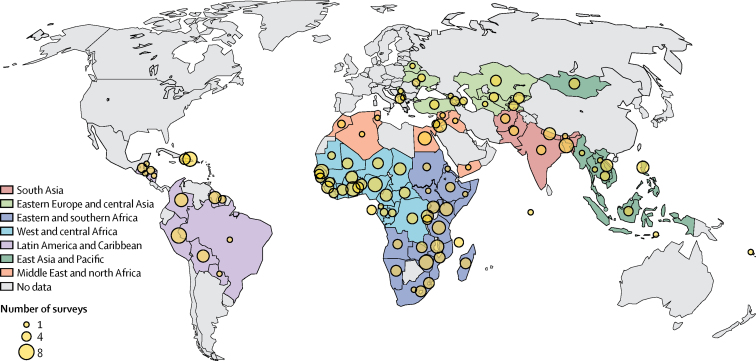
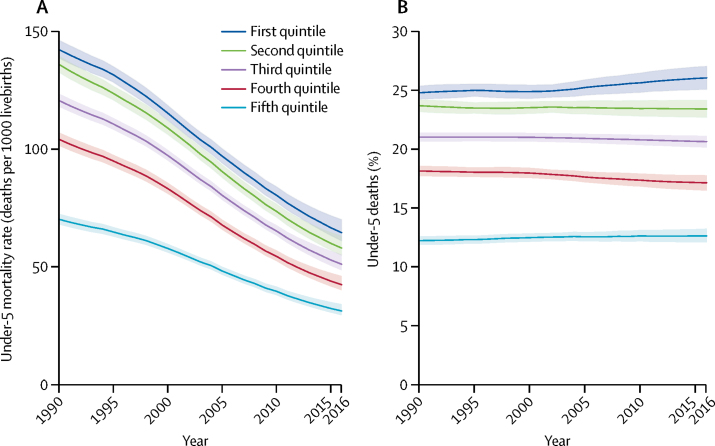
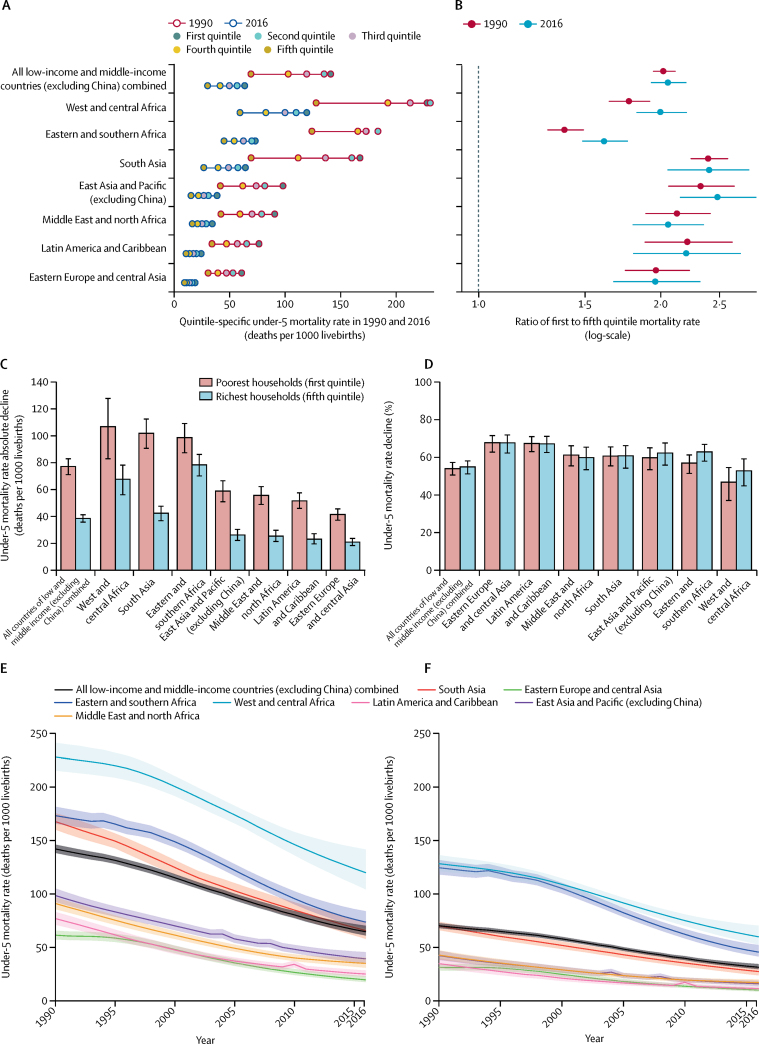
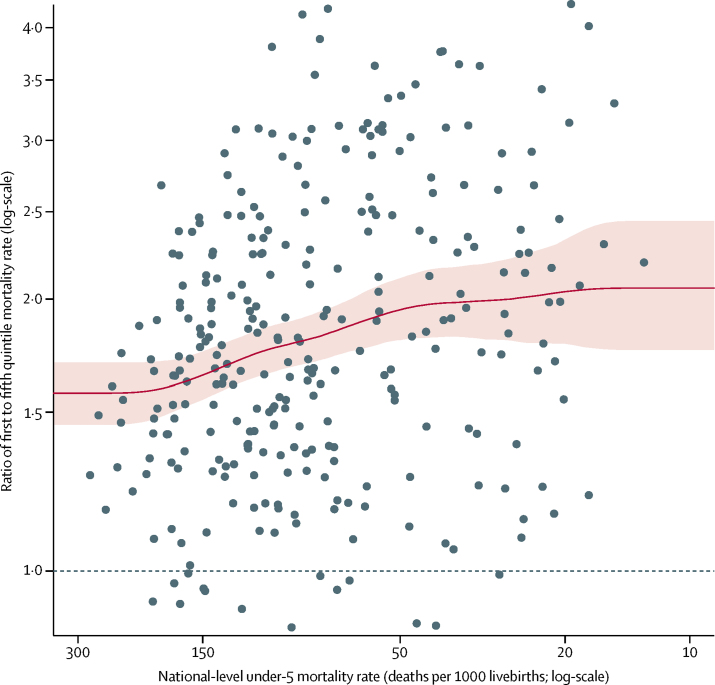
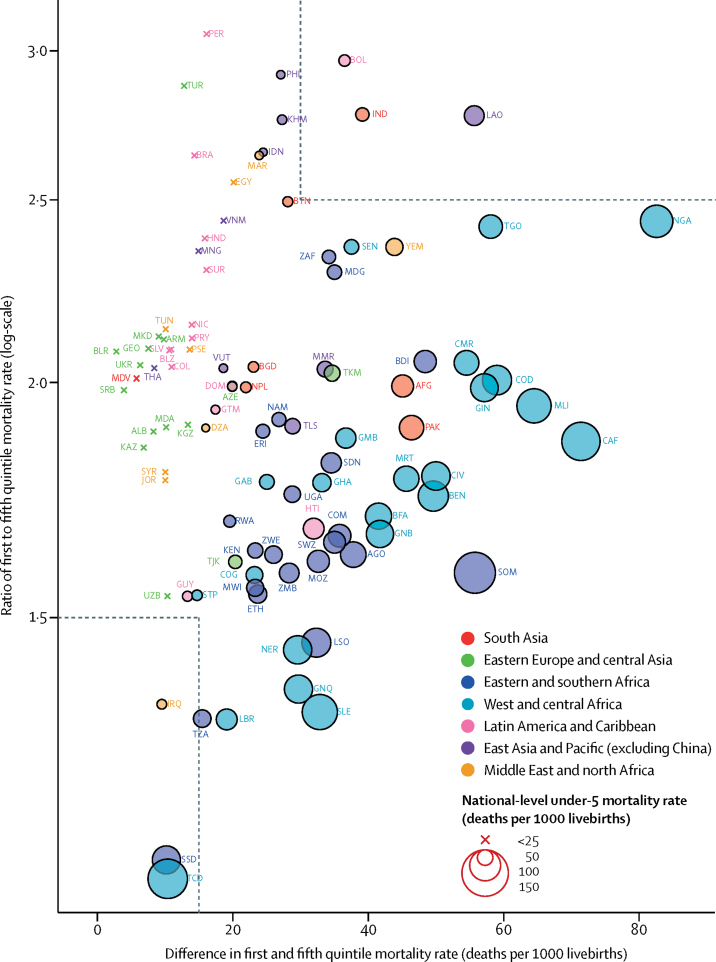
BACKGROUND: The progress to achieve the fourth Millennium Development Goal in reducing mortality rate in children younger than 5 years since 1990 has been remarkable. However, work remains to be done in the Sustainable Development Goal era. Estimates of under-5 mortality rates at the national level can hide disparities within countries. We assessed disparities in under-5 mortality rates by household economic status in low-income and middle-income countries (LMICs). METHOD: We estimated country-year-specific under-5 mortality rates by wealth quintile on the basis of household wealth indices for 137 LMICs from 1990 to 2016, using a Bayesian statistical model. We estimated the association between quintile-specific and national-level under-5 mortality rates. We assessed the levels and trends of absolute and relative disparity in under-5 mortality rate between the poorest and richest quintiles, and among all quintiles. FINDINGS: In 2016, for all LMICs (excluding China), the aggregated under-5 mortality rate was 64·6 (90% uncertainty interval [UI] 61·1-70·1) deaths per 1000 livebirths in the poorest households (first quintile), 31·3 (29·5-34·2) deaths per 1000 livebirths in the richest households (fifth quintile), and in between those outcomes for the middle quintiles. Between 1990 and 2016, the largest absolute decline in under-5 mortality rate occurred in the two poorest quintiles: 77·6 (90% UI 71·2-82·6) deaths per 1000 livebirths in the poorest quintile and 77·9 (72·0-82·2) deaths per 1000 livebirths in the second poorest quintile. The difference in under-5 mortality rate between the poorest and richest quintiles decreased significantly by 38·8 (90% UI 32·9-43·8) deaths per 1000 livebirths between 1990 and 2016. The poorest to richest under-5 mortality rate ratio, however, remained similar (2·03 [90% UI 1·94-2·11] in 1990, 1·99 [1·91-2·08] in 2000, and 2·06 [1·92-2·20] in 2016). During 1990-2016, around half of the total under-5 deaths occurred in the poorest two quintiles (48·5% in 1990 and 2000, 49·5% in 2016) and less than a third were in the richest two quintiles (30·4% in 1990, 30·5% in 2000, 29·9% in 2016). For all regions, differences in the under-5 mortality rate between the first and fifth quintiles decreased significantly, ranging from 20·6 (90% UI 15·9-25·1) deaths per 1000 livebirths in eastern Europe and central Asia to 59·5 (48·5-70·4) deaths per 1000 livebirths in south Asia. In 2016, the ratios of under-5 mortality rate in the first quintile to under-5 mortality rate in the fifth quintile were significantly above 2·00 in two regions, with 2·49 (90% UI 2·15-2·87) in east Asia and Pacific (excluding China) and 2·41 (2·05-2·80) in south Asia. Eastern and southern Africa had the smallest ratio in 2016 at 1·62 (90% UI 1·48-1·76). Our model suggested that the expected ratio of under-5 mortality rate in the first quintile to under-5 mortality rate in the fifth quintile increases as national-level under-5 mortality rate decreases. INTERPRETATION: For all LMICs (excluding China) combined, the absolute disparities in under-5 mortality rate between the poorest and richest households have narrowed significantly since 1990, whereas the relative differences have remained stable. To further narrow the rich-and-poor gap in under-5 mortality rate on the relative scale, targeted interventions that focus on the poorest populations are needed. FUNDING: National University of Singapore, UN Children's Fund, United States Agency for International Development, and the Bill & Melinda Gates Foundation.
Overview
The claims and statistics of this paper haven’t been checked yet.
Free: it reads the open-access text and checks the first 5 claims that cite a source we can check. Create a free account to check every claim.
Integrity signals
Registry
Cites
Statistics
Figures
Verification
Claims the paper makes
The claims and statistics of this paper haven’t been checked yet.
Free: it reads the open-access text and checks the first 5 claims that cite a source we can check. Create a free account to check every claim.
Claims other papers make about this one
Each is checked against this paper’s own text: does it say what the citing paper says it does?
In the citing paper
“Chao et al estimated that in 2016 the under-5 mortality rates were twice as high in the poorest households than the richest in low- and middle-income countries (excluding China). 72”
From Global health 2050: the path to halving premature death by mid-century (2024) · cites this paper as [72]
In the citing paper
“Despite significant absolute reductions in the gap since 1990, the relative gap remained similar.”
From Global health 2050: the path to halving premature death by mid-century (2024) · cites this paper as [72]
Self-check
Percentages, sums and reported differences re-computed from the paper’s own numbers.
The self-check needs the paper’s full text.
Citations
Cites
Transforming Our World: The 2030 Agenda for Sustainable Development
(2018) · A New Era in Global Health · doi:10.1891/9780826190123.ap02 · Cited by 19,351
Sampling-based approaches to calculating marginal densities
Gelfand, A. E., & Smith, A. F. M. (1990) · Journal of the American Statistical Association · doi:10.1080/01621459.1990.10476213 · Cited by 6,606
JAGS: A program for analysis of Bayesian graphical models using Gibbs sampling
Plummer, M. (2003) · Cited by 4,720
Cutler, D., Deaton, A., & Lleras-Muney, A. (2006) · Journal of Economic Perspectives · doi:10.1257/jep.20.3.97 · Cited by 1,555
Socioeconomic inequalities in health: Measurement, computation, and statistical inference
Kakwani, N., Wagstaff, A., & van Doorslaer, E. (1997) · Journal of Econometrics · doi:10.1016/s0304-4076(96)01807-6 · Cited by 1,378
Mackenbach, J. P., & Kunst, A. E. (1997) · Social Science & Medicine · doi:10.1016/s0277-9536(96)00073-1 · Cited by 1,343
Rutstein, S. O., & Johnson, K. (2004) · doi:10.13140/2.1.2806.4809 · Cited by 977
Levels and Trends in Child Mortality : Report 2018
Hug, L., Dharrow, D., Zhong, K., & You, D. (2017) · Cited by 848
Self-citationYou, D., Hug, L., Ejdemyr, S., Idele, P., Hogan, D., Mathers, C., Gerland, P., New, J. R., & Alkema, L. (2015) · The Lancet · doi:10.1016/s0140-6736(15)00120-8 · Cited by 830
Self-citationExplaining trends in inequities: evidence from Brazilian child health studies
Victora, C. G., Vaughan, J. P., Barros, F. C., Silva, A. C., & Tomasi, E. (2000) · The Lancet · doi:10.1016/s0140-6736(00)02741-0 · Cited by 768
Research works printed but not linked: 1
- Mohammad KA Tabassum T The impact of socio-economic and demographic factors on under-five child mortality in Bangladesh Imp J Interdiscip Res 2 2016 626 631
Cited by
Malderen, C. V., Amouzou, A., Barros, A. J. D., Masquelier, B., Oyen, H. J. V., & Speybroeck, N. (2019) · BMC Public Health · doi:10.1186/s12889-019-7111-8 · Cited by 169
Global health 2050: the path to halving premature death by mid-century
Jamison, D. T., Summers, L. H., Chang, A. Y., Karlsson, O., Mao, W., Norheim, O. F., Ogbuoji, O., Schäferhoff, M., Watkins, D., Adeyi, O., et al. (2024) · The Lancet · doi:10.1016/s0140-6736(24)01439-9 · Cited by 125
Victora, C. G., Hartwig, F. P., Vidaletti, L. P., Martorell, R., Osmond, C., Richter, L. M., Stein, A. D., Barros, A. J. D., Adair, L. S., Barros, F. C., et al. (2022) · The Lancet · doi:10.1016/s0140-6736(21)02716-1 · Cited by 117
Public Good or Private Wealth?
Lawson, M., Chan, M.-K., Rhodes, F., Butt, A. P., Marriott, A., Ehmke, E., Jacobs, D., Seghers, J., Atienza, J., & Gowland, R. L. (2018) · doi:10.21201/2019.3651 · Cited by 106
Mejía‐Guevara, I., Zuo, W., Bendavid, E., Li, N., & Tuljapurkar, S. D. (2019) · PLoS Medicine · doi:10.1371/journal.pmed.1002757 · Cited by 102
“between the poorest and richest households have declined in SSA [11,54], but persistent relative differences remain [11].”
BackgroundInfluentialImmune system development varies according to age, location, and anemia in African children
Hill, D. L., Carr, E. J., Rutishauser, T., Moncunill, G., Campo, J. J., Innocentin, S., Mpina, M., Nhabomba, A., Tumbo, A., Jairoce, C., et al. (2020) · Science Translational Medicine · doi:10.1126/scitranslmed.aaw9522 · Cited by 89
Khan, M. N., Harris, M. L., Shifti, D. M., Laar, A. S., & Loxton, D. J. (2019) · International Journal of Public Health · doi:10.1007/s00038-019-01238-9 · Cited by 90
Amouzou, A., Barros, A. J. D., Requejo, J. H., Fayé, C., Akseer, N., Bendavid, E., Blumenberg, C., Borghi, J., Baz, S. E., Federspiel, F., et al. (2025) · The Lancet · doi:10.1016/s0140-6736(25)00151-5 · Cited by 76
Self-citationHow effects on health equity are assessed in systematic reviews of interventions
Welch, V., Dewidar, O., Ghogomu, E. T., Abdisalam, S., Ameer, A. A., Barbeau, V. I., Brand, K., Kebedom, K., Benkhalti, M., Kristjansson, E., et al. (2022) · Cochrane Database of Systematic Reviews · doi:10.1002/14651858.mr000028.pub3 · Cited by 90
Association between early childhood caries and malnutrition in a sub-urban population in Nigeria
Foláyan, M. O., Arije, O., Tantawi, M. E., Kolawole, K. A., Obiyan, M. O., Arowolo, O., & Oziegbe, E. O. (2019) · BMC Pediatrics · doi:10.1186/s12887-019-1810-2 · Cited by 65
Li, Z., Karlsson, O., Kim, R., & Subramanian, S. V. (2021) · International Journal for Equity in Health · doi:10.1186/s12939-021-01449-8 · Cited by 57
Cha, S., & Jin, Y. (2019) · International Journal for Equity in Health · doi:10.1186/s12939-019-1102-3 · Cited by 53
Asefa, A., Gebremedhin, S., Marthias, T., Nababan, H. Y., Christou, A., Semaan, A. T., Banke-Thomas, A. O., Tabana, H., Al‐beity, F. M. A., Dossou, J., et al. (2023) · International Journal for Equity in Health · doi:10.1186/s12939-023-02015-0 · Cited by 57
Bizzego, A., Gabrieli, G., Bornstein, M. H., Deater-Deckard, K. D., Lansford, J. E., Bradley, R. H., Costa, M. E., & Esposito, G. (2021) · International Journal of Environmental Research and Public Health · doi:10.3390/ijerph18031315 · Cited by 55
“Under-5 mortality rates are, on average, twice as high for the poorest households in LMIC compared to the richest [29].”
BackgroundAl-Sheyab, N., Khader, Y. S., Shattnawi, K. K., Alyahya, M. S. I., & Batieha, A. M. (2020) · Frontiers in Public Health · doi:10.3389/fpubh.2020.595379 · Cited by 46
Child mortality levels and trends: A new compositional approach
Ezbakhe, F., & Foguet, A. P. (2020) · Demographic Research · doi:10.4054/demres.2020.43.43 · Cited by 49
“…models have been developed both at national (Rajaratnam et al. 2010; Hill et al. 2012; Wang et al. 2014; Alkema et al. 2014b) and subnational levels (Dwyer-Lindgren et al. 2014; Mercer et al. 2015; Pezzulo et al. 2016; Golding et al. 2017; Chao et al. 2018; Wakefield et al. 2018; Li et al. 2019).”
BackgroundKhan, M. M. A., Khan, M. N., Rahman, O., Mustagir, G., Hossain, K., Islam, M. R., & Khan, H. T. A. (2021) · PLoS ONE · doi:10.1371/journal.pone.0246210 · Cited by 47
Dasgupta, R. R., Mao, W., & Ogbuoji, O. (2022) · Malaria Journal · doi:10.1186/s12936-022-04113-w · Cited by 55
The greatest health problem of the Middle Ages? Estimating the burden of disease in medieval England
Robb, J., Cessford, C., Dittmar, J. M., Inskip, S. A., & Mitchell, P. D. (2021) · International Journal of Paleopathology · doi:10.1016/j.ijpp.2021.06.011 · Cited by 44
Khasawneh, W., Sindiani, A., Rawabdeh, S. A., Aleshawi, A. J., & Kanaan, D. (2020) · Journal of Multidisciplinary Healthcare · doi:10.2147/jmdh.s275267 · Cited by 32
Wahl, B., Gupta, M., Erchick, D. J., Patenaude, B., Holroyd, T. A., Sauer, M. A., Blunt, M., Santosham, M., & Limaye, R. J. (2021) · BMC Public Health · doi:10.1186/s12889-021-10849-y · Cited by 39
Guinsburg, R., Sañudo, A., Kiffer, C. R. V., Marinonio, A. S. S., Costa-Nobre, D. T., Areco, K. C. N., Kawakami, M. D., Miyoshi, M. H., Bandiera‐Paiva, P., Balda, R. D. C. X., et al. (2021) · BMC Pediatrics · doi:10.1186/s12887-021-02511-8 · Cited by 35
Differential impact of maternal education on under-five mortality in rural and urban India
Moradhvaj, & Samir, K. C. (2023) · Health & Place · doi:10.1016/j.healthplace.2023.102987 · Cited by 35
“The economic status is negatively associated with the risk of U5M (Chao et al., 2018).”
BackgroundUnder five and infant mortality in Chile (1990-2016): Trends, disparities, and causes of death
Aguilera, X., Delgado, I., Icaza, G., Apablaza, M., Pabón, L. V., & Castillo-Laborde, C. (2020) · PLoS ONE · doi:10.1371/journal.pone.0239974 · Cited by 26
“The inequality reduction in Chile https://doi.org/10.1371/journal.pone.0239974.g006 PLOS ONE | https://doi.org/10.1371/journal.pone.0239974 September 30, 2020 13 / 17 is similar to that reported by Chao and Amini Rarani [24, 25] concerning reduction in U5MR.”
ResultInfluentialIuliano, A., Aranda, Z., Colbourn, T., Agwai, I. C., Bahiru, S., Bakare, A. A., Burgess, R. A., Cassar, C. M., Shittu, F., Graham, H., et al. (2020) · Pediatric Pulmonology · doi:10.1002/ppul.24626 · Cited by 25
Sessions, K. L., Smith, A., Holmberg, P. J., Wahl, B., Mvalo, T., Chisti, M. J., Carroll, R. W., & McCollum, E. D. (2021) · Archives of Disease in Childhood · doi:10.1136/archdischild-2021-323041 · Cited by 25
Systems Human Immunology and AI: Immune Setpoint and Immune Health
Lei, Y., & Tsang, J. S. (2025) · Annual Review of Immunology · doi:10.1146/annurev-immunol-090122-042631 · Cited by 31
Insights from Disaggregating the Human Capital Index
World Bank Group (2020) · World Bank, Washington, DC eBooks · doi:10.1596/33143 · Cited by 28
Chaturvedi, S., Randive, B., Pathak, A., Agarkhedkar, S., Tillu, G. S., Darmstadt, G. L., & Patwardhan, B. (2020) · BMC Pediatrics · doi:10.1186/s12887-020-02416-y · Cited by 32
Portnoy, A., Jit, M., Helleringer, S., & Verguet, S. (2020) · Value in Health · doi:10.1016/j.jval.2020.03.012 · Cited by 24
Memon, Z., Fridman, D., Soofi, S. B., Ahmed, W., Muhammad, S., Rizvi, A., Ahmed, I., Wright, J. R., Cousens, S., & Bhutta, Z. A. (2023) · The Lancet Regional Health - Southeast Asia · doi:10.1016/j.lansea.2023.100231 · Cited by 31
Hove, J., D’Ambruoso, L., Twine, R., Mabetha, D., van der Merwe, M., Mtungwa, I., Khoza, S., Kahn, K., & Witter, S. (2021) · Global Health Action · doi:10.1080/16549716.2021.1973715 · Cited by 30
Spatiotemporal analysis of the effect of global development indicators on child mortality
Amegbor, P. M., & Addae, A. (2023) · International Journal of Health Geographics · doi:10.1186/s12942-023-00330-x · Cited by 29
“The evidence in existing studies show that persons of low socioeconomic status have higher morbidity and mortality compared to those of higher socioeconomic position [4, 6, 9].”
BackgroundHategeka, C., Tuyisenge, G., Bayingana, C., & Tuyisenge, L. (2019) · Global Health Research and Policy · doi:10.1186/s41256-019-0106-2 · Cited by 28
Modelling the Spatial Distribution and the Factors Associated with Under-Five Mortality in Nigeria
Fagbamigbe, A. F., & Nnanatu, C. C. (2021) · Spatial Demography · doi:10.1007/s40980-021-00078-7 · Cited by 26
Disentangling the rural-urban immunization coverage disparity in The Gambia: A Fairlie decomposition
Sowe, A., & Johansson, K. (2019) · Vaccine · doi:10.1016/j.vaccine.2019.04.062 · Cited by 23
Ahinkorah, B. O. (2021) · BMJ Open · doi:10.1136/bmjopen-2021-049337 · Cited by 30
An update on explaining the rural-urban gap in under-five mortality in India
Kumar, C., Mal, P., & Saikia, N. (2022) · BMC Public Health · doi:10.1186/s12889-022-14436-7 · Cited by 27
“India was identified as a high disparity country on absolute and relative scales on underfive mortality [3].”
BackgroundHone, T., Gonçalves, J., Seferidi, P., Moreno‐Serra, R., Rocha, R., Gupta, I., Bhardwaj, V., Hidayat, T. P., Cai, C., Suhrcke, M., et al. (2024) · The Lancet Global Health · doi:10.1016/s2214-109x(24)00040-8 · Cited by 34
Conceptualizing sustainable diets in Vietnam: Minimum metrics and potential leverage points
Mayton, H. M., Beal, T., Rubin, J., Sanchez, A., Heller, M., Hoey, L., de Haan, S., Duong, T. T., Huynh, T. T. T., Burra, D. D., et al. (2020) · Food Policy · doi:10.1016/j.foodpol.2020.101836 · Cited by 28
Khan, M. N., Trisha, N. I., & Rashid, M. M. (2022) · Journal of Global Health · doi:10.7189/jogh.12.04081 · Cited by 26
Analysis of the potential for a malaria vaccine to reduce gaps in malaria intervention coverage
Unwin, H. J. T., Mwandigha, L., Winskill, P., Ghani, A. C., & Hogan, A. B. (2021) · Malaria Journal · doi:10.1186/s12936-021-03966-x · Cited by 21
Andegiorgish, A. K., Woldu, H. G., Elhoumed, M., Zhu, Z., & Zeng, L. (2022) · BMC Pediatrics · doi:10.1186/s12887-022-03362-7 · Cited by 23
“Over the years up to 2016, the eastern and southern part of the SSA region had greater improvement in U5M [7].”
BackgroundYang, F. B., Katumba, K. R., & Griffin, S. C. (2021) · Expert Review of Pharmacoeconomics & Outcomes Research · doi:10.1080/14737167.2021.1954505 · Cited by 22
“ences in health between the poor and the better off found that the gap has remained appreciable, with the poor facing lower odds of receiving key health interventions and worse health outcomes [2,3].”
BackgroundFagbamigbe, A. F., Adeniji, F. I. P., & Morakinyo, O. M. (2022) · BMC Public Health · doi:10.1186/s12889-022-12988-2 · Cited by 17
“A study conducted to estimate the U5Ds by household economic status in LMICs revealed that the probability of U5D in the poorest households is twice that of richer ones [6].”
BackgroundBradley, S. E. K., Rosapep, L., & Shiras, T. (2020) · Global Health Science and Practice · doi:10.9745/ghsp-d-20-00115 · Cited by 23
“Progress in reducing child mortality has also been uneven: in an analysis across 137 low- and middle-income countries (LMICs), the under5 mortality rate was more than 2 times higher among children from the poorest than the wealthiest families (65 versus 31 deaths per 1,000 live births, respectively).(2) To meet global…”
BackgroundBixby, H., Bennett, J. E., Bawah, A. A., Arku, R. E., Annim, S. K., Anum, J. D., Mintah, S. E., Schmidt, A. M., Agyei‐Asabere, C., Robinson, B. E., et al. (2022) · BMJ Open · doi:10.1136/bmjopen-2021-054030 · Cited by 18
Bognini, J. D., Samadoulougou, S., Ouédraogo, M., Kangoye, D. T., Malderen, C. V., Tinto, H., & Kirakoya‐Samadoulougou, F. (2021) · International Journal for Equity in Health · doi:10.1186/s12939-021-01474-7 · Cited by 19
“The poorest subpopulations thus remain lagging compared to their richest counterparts [3, 4].”
BackgroundUnder age five children survival times in Nigeria: a Bayesian spatial modeling approach
Egbon, O. A., Bogoni, M. A., Babalola, B. T., & Louzada, F. (2022) · BMC Public Health · doi:10.1186/s12889-022-14660-1 · Cited by 28
“This finding is consistent with existing studies, [41, 42].”
ResultEmerson, E., & Llewellyn, G. M. (2022) · Disability and health journal · doi:10.1016/j.dhjo.2022.101364 · Cited by 15
Fakunle, A. G., Jafta, N., Bossers, A., Wouters, I. M., van Kersen, W., Naidoo, R. N., & Smit, L. A. M. (2023) · Environmental Research · doi:10.1016/j.envres.2023.116063 · Cited by 14
Truché, P., Botelho, F. M. N., Bowder, A. N., Levis, A. W., Greenberg, S. L. M., Smith, E. R., Corlew, S., Bickler, S. W., Rice, H. E., Ameh, E. A., et al. (2021) · World Journal of Surgery · doi:10.1007/s00268-021-06181-6 · Cited by 19
“metric and two of the United Nations Sustainable Development Goals [31, 32].”
BackgroundRotavirus Gastroenteritis Hospitalizations Among Under-Five Children in Bhubaneswar, Odisha, India
Mohanty, P., Kumar, D., Mansingh, A., Thiyagarajan, V., Samarasimha Reddy, N., & Ray, R. K. (2021) · The Indian Journal of Pediatrics · doi:10.1007/s12098-020-03607-2 · Cited by 13
Household factors and under-five mortality in Bankass, Mali: results from a cross-sectional survey
Boettiger, D. C., Treleaven, E., Kayentao, K., Guindo, M., Coumaré, M., Johnson, A., Whidden, C., Koné, N., Cissé, A., PADIAN, N. S., et al. (2021) · BMC Public Health · doi:10.1186/s12889-021-10242-9 · Cited by 15
“A large volume of literature has described the high rate of U5 mortality among poor households compared with wealthy households in low- and middle-income settings [34].”
BackgroundAssessing Africa’s child survival gains and prospects for attaining SDG target on child mortality
Adedini, S. A., Anjorin, S., Mobolaji, J. W., Okolie, E. A., & Yaya, S. (2024) · PLOS Global Public Health · doi:10.1371/journal.pgph.0003022 · Cited by 13
“Variations in the introduction and extent of implementation of under-five focused policies and interventions, socioeconomic determinants and prevalent mortality causes are plausible reasons for the structuring of African countries into high-and low-cluster areas in this study [27,28].”
BackgroundMortality at the pediatric emergency unit of the Mohammed VI teaching hospital of Marrakech
Lahmini, W., & Bourrous, M. (2020) · BMC Emergency Medicine · doi:10.1186/s12873-020-00352-9 · Cited by 18
Karlsson, O., Kim, R., Joe, W., & Subramanian, S. V. (2019) · Journal of Epidemiology & Community Health · doi:10.1136/jech-2018-211569 · Cited by 17
“Moreover, the poor and socioeconomically disadvantaged sections share a disproportionately higher burden of under-5 deaths.(11)”
BackgroundChao, F., & Yadav, A. K. (2019) · Foundations of Data Science · doi:10.3934/fods.2019008 · Cited by 11
“461 612 14,861 100 100 100 India [378; 544] [551; 672] [13,239; 16,465] 2 21 359 0.”
MethodSelf-citationSheikh, M. R., Khan, S. U., Ahmed, M., Ahmad, R., Abbas, A., & Ullah, I. (2023) · BMC Public Health · doi:10.1186/s12889-023-16526-6 · Cited by 12
“Such positive relationship is also obvious from the previous studies of [75–77].”
ResultAn analysis of the impact of newborn survival policies in Pakistan using a policy triangle framework
Ahmed, J., Schneider, C. H., Alam, A., & Raynes‐Greenow, C. H. (2021) · Health Research Policy and Systems · doi:10.1186/s12961-021-00735-9 · Cited by 11
“1), and disparities exist both between and within countries [4].”
BackgroundJacobs, C. N., Musukuma, M., Sikapande, B., Chooye, O., Wehrmeister, F. C., Boerma, T., Michelo, C., & Blanchard, A. K. (2023) · BMC Health Services Research · doi:10.1186/s12913-023-09086-3 · Cited by 14
Li, Z., Zhou, X., Ran, S., & Wehrmeister, F. C. (2021) · Journal of Global Health · doi:10.7189/jogh.11.04067 · Cited by 12
Chao, F., Samir, K. C., & Ombao, H. (2022) · BMC Public Health · doi:10.1186/s12889-022-12693-0 · Cited by 15
Self-citationPieterse, P., Matthews, A., Walsh, A., & Chirwa, E. M. (2020) · Systematic Reviews · doi:10.1186/s13643-020-01497-1 · Cited by 14
“The Sustainable Development Goals (SDGs) call for an end to preventable deaths due to treatable illness of newborns and children under five by 2030, with all countries aiming to reduce under-5 mortality rates to no more than 25 deaths per 1000 live births [2].”
BackgroundRotavirus vaccine protection in low-income and middle-income countries
Ramakrishnan, G., Ma, J. Z., Haque, R., & Petri, W. A. (2019) · The Lancet Infectious Diseases · doi:10.1016/s1473-3099(19)30263-4 · Cited by 11
van den Berg, M., Flavel, J., Schram, A., Friel, S., Gesesew, H. A., & Baum, F. E. (2024) · BMJ Global Health · doi:10.1136/bmjgh-2024-015694 · Cited by 14
Factors contributing to under-5 child mortality in Nigeria: A narrative review
Olawade, D. B., Wada, O. Z., Aderinto, N., Odetayo, A., Adebisi, Y. A., Esan, D. T., & Ling, J. (2025) · Medicine · doi:10.1097/md.0000000000041142 · Cited by 20
“[2] 6] Compared to children born in high-income countries (5 deaths per 1000 live births), children born in low-income countries (67 deaths per 1000 live births) had over 10 times higher risk of dying before reaching the age of 5.”
Zhu, H., Huang, K., Han, X., Pan, Z., Cheng, H., Wang, Q., Wang, Y., Sun, W., Mi, J., Yang, T., et al. (2025) · BMJ Global Health · doi:10.1136/bmjgh-2024-017409 · Cited by 10
Gebremariam, H., Tesfai, B., Tewelde, S., Abay, S., Tekeste, D., & Kibreab, F. (2022) · BMC Pediatrics · doi:10.1186/s12887-022-03779-0 · Cited by 10
“Studies have shown that neonatal deaths are responsible for the majority of mortalities in children under the age of 5 years with a reported rate of 35% in the USA and up to 50% in some low-income countries [12].”
BackgroundEquity dimensions of the decline in under‐five mortality in Ghana: a joinpoint regression analysis
Alhassan, J. A. K., Adeyinka, D. A., & Olakunde, B. O. (2020) · Tropical Medicine & International Health · doi:10.1111/tmi.13391 · Cited by 12
“Similar comparisons of declines in under-five mortality by wealth quintile show that the rate of decline among the poorest quintile in Ghana is higher than the rate for children in the same quintile in other countries in the western and central African region [33].”
BackgroundIs productive capacity a key factor to reduce inequalities in South America?
Olarte, S. H., Sosa, F. V., & Torrent‐Sellens, J. (2021) · Development Studies Research · doi:10.1080/21665095.2021.1890171 · Cited by 9
Fakunle, A. G., Jafta, N., Smit, L. A. M., & Naidoo, R. N. (2022) · BMC Pulmonary Medicine · doi:10.1186/s12890-022-02271-w · Cited by 12
“In 2017 community-acquired LRTI was the single largest cause of under-five mortality, accounting for 140,520 (19%) deaths in Nigeria [9].”
BackgroundInfluentialNguyen, C. M., & Nguyen, M. P. (2020) · Tropical Medicine & International Health · doi:10.1111/tmi.13475 · Cited by 10
de la Salud, O. P. (2022) · Pan American Health Organization eBooks · doi:10.37774/9789275326817 · Cited by 29
Mortalidad infantil y desigualdades sociales en Argentina, 1980-2017
Bossio, J. C., Sanchís, I., Herrero, M. B., Armando, G., & Arias, S. (2020) · Revista Panamericana de Salud Pública · doi:10.26633/rpsp.2020.127 · Cited by 8
“2003; 81(2): 140–145Mosley WH, Chen LC.”
BackgroundSocioeconomic determinants of child malnutrition: Evidence from Ethiopia
gebregergis, C. M. (2024) · Discover Global Society · doi:10.1007/s44282-024-00062-8 · Cited by 15
“Therefore, continued effort must be excreted to maintain a reduction in the inequalities of child health outcomes [12].”
Bogler, L., Bommer, C., Ebert, C. L., Kumar, A., Subramanian, S. V., Subramanyam, M. A., & Vollmer, S. (2023) · Journal of Development Effectiveness · doi:10.1080/19439342.2023.2217164 · Cited by 9
“In 2016, child mortality was 64.6 deaths per 1,000 live births among the poorest households, and it was 31.3 deaths among the richest households in low-and middle-income countries (Chao et al. 2018).”
BackgroundInfluentialQuality Indicators to Evaluate Essential Newborn Care in Low- and Middle-Income Countries
Diego, E. K., Ehret, D. E. Y., Ashish, K. C., & Bose, C. L. (2023) · PEDIATRICS · doi:10.1542/peds.2023-061527 · Cited by 10
The Trend of Children Mortality Rates in Indonesia
Soleman, S. R. (2020) · Jurnal Ilmu Kesehatan Masyarakat · doi:10.26553/jikm.2020.11.1.52-62 · Cited by 10
“The prevalence of preterm birth among under five children is influenced by age, demographic and socioeconomic factors particularly in poor regions.(30,31) Most of under five children who suffered preterm birth in neonates phase carried co-morbid factors and complication that increased the morbidity and mortality on un…”
BackgroundThe open‐and‐shut case against inequality
Vandemoortele, J. (2020) · Development Policy Review · doi:10.1111/dpr.12484 · Cited by 10
Jacques, N., Mesenburg, M. A., Murray, J., Bertoldi, A. D., Domingues, M. R., Stein, A. L., & da Silveira, M. F. (2021) · The Journal of Pediatrics X · doi:10.1016/j.ympdx.2021.100065 · Cited by 10
Impact of parental education on number of under five children death per mother in Bangladesh
Afroz, F., Akib, M. M. H., Pal, B., & Asha, A. S. (2025) · PLoS ONE · doi:10.1371/journal.pone.0318787 · Cited by 7
Fakunle, A. G., Jafta, N., Okekunle, A. P., Smit, L. A. M., & Naidoo, R. N. (2023) · Environmental Epidemiology · doi:10.1097/ee9.0000000000000247 · Cited by 7
Mugo, N. S., Mya, K. S., & Raynes‐Greenow, C. H. (2019) · Journal of Global Health Reports · doi:10.29392/joghr.3.e2019015 · Cited by 6
“Low income is associated with higher rates of infant and under-five mortality similarly to our findings (16-18).”
BackgroundResultUnveiling Injustice: Analyzing Child Mortality Inequality across decades in Peru (1981–2017)
Huaroto, C., Francke, P., & Vivas, C. (2025) · World Development · doi:10.1016/j.worlddev.2025.107198 · Cited by 6
Osei, C. K., & Nketiah‐Amponsah, E. (2024) · Discover Public Health · doi:10.1186/s12982-024-00131-y · Cited by 10
“At the global level, between 1990 and 2016, by relative difference, children in the poorest quintile were twice as likely to die before their fifth birthday compared to those in the richest quintile [26].”
Modelling cost benefit of community-oriented primary care in rural South Africa
Bennett, R., Marcus, T. S., Abbott, G., & Hugo, J. F. M. (2020) · African Journal of Primary Health Care & Family Medicine · doi:10.4102/phcfm.v12i1.2225 · Cited by 5
Sato, R., Bolongaita, S., Memirie, S. T., Harttgen, K., Neve, J. D., & Verguet, S. (2023) · Journal of Global Health · doi:10.7189/jogh.13.04009 · Cited by 6
Baek, Y., Ademi, Z., Tran, T. D., Owen, A. J., Nguyen, T. T., Luchters, S. M. F., Hipgrave, D. B., Hanieh, S., Tran, T., Ha, T. T., et al. (2023) · Health Policy and Planning · doi:10.1093/heapol/czad057 · Cited by 7
Paul, P., Nguemdjo, U., Ngami, A., Kovtun, N., & Ventelou, B. (2022) · Humanities and Social Sciences Communications · doi:10.1057/s41599-022-01271-9 · Cited by 8
“Using 12 years of data (2003–2014) from the selection of a number of low- and lower middle-income countries (Afghanistan, Bangladesh, Burkina Faso, Ghana, Indo- nesia, Mongolia, Mozambique, Tajikistan, Togo, Uzbekistan and Yemen Republic), we compute an index of Universal health coverage (UHC), measure the health syst…”
ResultInfluentialChao, F., Samir, K. C., & Ombao, H. (2020) · arXiv (Cornell University) · doi:10.48550/arxiv.2007.00437 · Cited by 5
“This approach has been used in other studies to validate the model’s predictive power for demographic indicators based on retrospective information.[42, 63, 64, 65] The validation and simulation results suggested that our model was reasonably well-calibrated, with generally conservative credible intervals (Additional…”
MethodSelf-citationIddrisu, A., & Boanyo, E. (2025) · PLOS Global Public Health · doi:10.1371/journal.pgph.0005179 · Cited by 7
“Children from middle-and high-income families had a significantly lower risk of mortality, reinforcing the well-established relationship between socioeconomic status and child survival [48,57–59].”
Health Systems Strengthening for Newborn Survival and Child Health in India: A Review
Lall, D. P., Shah, P. B., Saeed, S., Kaur, K. N., Mahalati, S., & Hussain, S. (2025) · Preventive Medicine Research & Reviews · doi:10.4103/pmrr.pmrr_16_25 · Cited by 4
Socio-economic factors affecting child mortality in hill tracts of chattogram division, Bangladesh
Hossain, S., Ara, A., Alamgir, F., Biswas, B., & Majumder, S. C. (2024) · GeoJournal · doi:10.1007/s10708-024-11082-x · Cited by 3
“The result is supported by these studies (Ahmed & Yunus, 2021; Chao et al., 2018; Khan et al., 2020; Majumder et al., 2022a, b; Rahman et al., 2020a, b; Taramsari et al., 2021).”
Ramos, A. P., Flores, M., & Weiss, R. E. (2020) · PLoS ONE · doi:10.1371/journal.pone.0238847 · Cited by 3
Igweonu-Nwakile, C. O., Adejimi, A. A., Roberts, A. A., Oluwole, E. O., Oridota, O. E., Oyeleye, O. A., & Onajole, A. T. (2023) · Journal of Community Medicine and Primary Health Care · doi:10.4314/jcmphc.v35i1.4 · Cited by 5
Tawiah, K., Asosega, K. A., Iddi, S., Opoku, A. A., Abdul, I. W., Ansah, R. K., Bukari, F. K., Okyere, E., & Adebanji, A. (2024) · Health Services Insights · doi:10.1177/11786329241258836 · Cited by 4
Khan, M. A., & Das, S. (2024) · International Journal of Environmental Research and Public Health · doi:10.3390/ijerph21101303 · Cited by 4
“Several attempts have been made to explore the sub-groups or regions that are at higher risk of U5MRs using previously available datasets and conventional methods [4–17].”
BackgroundMethodInequalities in child mortality: real data or modelled estimates?
Victora, C. G., & Boerma, T. (2018) · The Lancet Global Health · doi:10.1016/s2214-109x(18)30109-8 · Cited by 3
Al‐Sheyab, N., Khader, Y. S., Shattnawi, K. K., Alyahya, M. S. I., & Batieha, A. M. (2020) · Research Square · doi:10.21203/rs.3.rs-24128/v1 · Cited by 3
Metadata
- Authors
- Chao, F., You, D., Pedersen, J., Hug, L., & Alkema, L.
- Affiliations
- National University of Singapore (SG)
- United Nations Children's Fund (US)
- Fafo Foundation (NO)
- University of Massachusetts Amherst (US)
- Corresponding author
- Chao, Fengqing
- Venue
- The Lancet Global Health
- Publisher
- Elsevier BV
- Published
- 2018-05
- Volume
- 6
- Issue
- 5
- Pages
- e535-e547
- ISSN
- 2214-109X (ISSN-L)
- PMC
- PMC5905403
- OpenAlex
- W2798210555
- Semantic Scholar
- 454364baf3569be9f9a577da9ddee62f175bdd75
- Cited by
- 174
- References
- 38
- Citations by year
- 2026: 5 · 2025: 17 · 2024: 27 · 2023: 30 · 2022: 22 · 2021: 28 · 2020: 23 · 2019: 16 · 2018: 5
- FWCI
- 19.86
- Type
- journal article
- Language
- en
- Open access
- gold
- doi.org
- Licence
- cc-by
- www.elsevier.com/tdm/userlicense/1.0/ (tdm)
- www.elsevier.com/legal/tdmrep-license (tdm)
- creativecommons.org/licenses/by/4.0/ (vor)
- Locations
- The Lancet Global Health (publishedVersion, cc-by)
- Europe PMC (PubMed Central) (publishedVersion, cc-by)
- PubMed Central (publishedVersion, cc-by)
- PubMed (publishedVersion)
- National University of Singapore (submittedVersion, cc-by-nc-nd)
- DOAJ (DOAJ: Directory of Open Access Journals) (submittedVersion, cc-by-sa)
- Funders
- National University of Singapore
- Bill and Melinda Gates Foundation (OPP1135440)
- United States Agency for International Development
- Topics
- Health Sciences › Medicine › Pediatrics, Perinatology and Child Health › Global Maternal and Child Health
- Health Sciences › Nursing › Nutrition and Dietetics › Child Nutrition and Water Access
- Social Sciences › Development › Poverty, Education, and Child Welfare
- Keywords
- under-five mortality, child mortality, household wealth inequality, wealth quintiles, household wealth index, low- and middle-income countries, mortality disparities, Millennium Development Goal 4, Sustainable Development Goal 3, mortality trends, poverty and health, child health equity, maternal and child health policy
- MeSH terms
- Child, Preschool, Developing Countries, Goals, Humans, Infant, Infant Mortality, Infant, Newborn, Social Class, Child Mortality, Health Status Disparities
About these checks
Registry, retraction, Cites and statistics results are computed, not judged, with one exception: a printed reference that no index lists is read once by a model before it counts as a citation error. Claims are extracted by a model and kept only when their quote appears verbatim in the text; each cited source is then checked, with a model’s help, for whether it says what the claim relies on. Those verdicts can be wrong — read the claim’s quote and the cited source before relying on one.
Statistics and arithmetic are recomputed, not judged.
Confidence bands are shown only for fields calibrated on our annotated test set. None is calibrated yet, so no band is shown.
What counts as a claim ›How we measure confidence ›How we check this ›
Are you an author, or do you see a problem with this page? Request a review
Data sources
Bibliographic data: Semantic Scholar, OpenAlex, Crossref.
Contains information from the Semantic Scholar Academic Graph Datasets, made available under the ODC Attribution License (ODC-BY 1.0).
Semantic Scholar’s data is described in: Kinney, R., et al. (2023). The Semantic Scholar Open Data Platform. arXiv:2301.10140.
