

National, regional, and global trends in insufficient physical activity among adults from 2000 to 2022: a pooled analysis of 507 population-based surveys with 5·7 million participants
Open accessThe DOI matches its Crossref record; 17 of the 17 references it cites were found in a registry or an index; 8 of the 30 sources its claims cite were checked for support.
Abstract
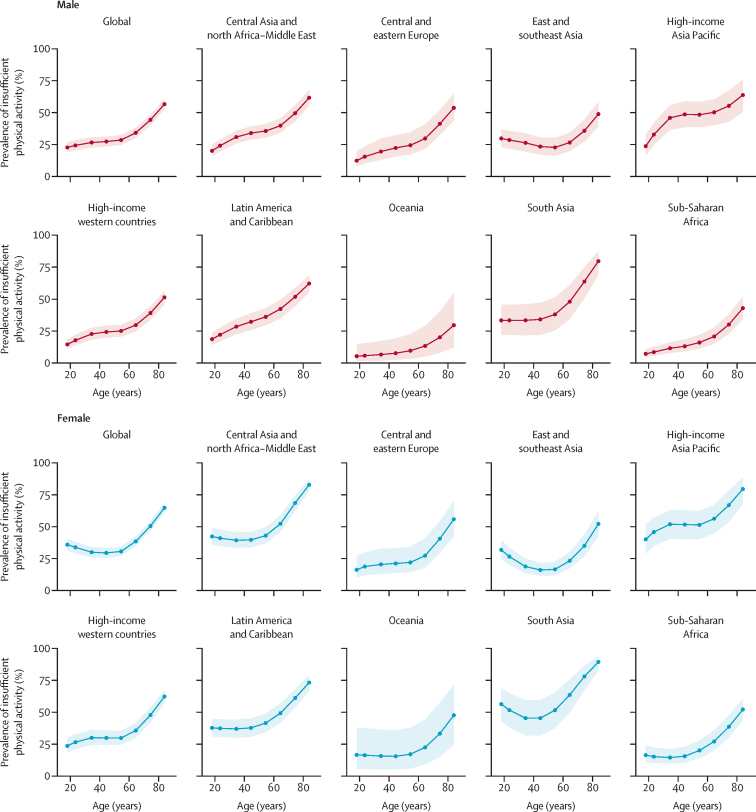
BACKGROUND: Insufficient physical activity increases the risk of non-communicable diseases, poor physical and cognitive function, weight gain, and mental ill-health. Global prevalence of adult insufficient physical activity was last published for 2016, with limited trend data. We aimed to estimate the prevalence of insufficient physical activity for 197 countries and territories, from 2000 to 2022. METHODS: We collated physical activity reported by adults (aged ≥18 years) in population-based surveys. Insufficient physical activity was defined as not doing 150 minutes of moderate-intensity activity, 75 minutes of vigorous-intensity activity, or an equivalent combination per week. We used a Bayesian hierarchical model to compute estimates of insufficient physical activity by country or territory, year, age, and sex. We assessed whether countries or territories, regions, and the world would meet the global target of a 15% relative reduction of the prevalence of insufficient physical activity by 2030 if 2010-22 trends continue. FINDINGS: We included 507 surveys across 163 countries and territories. The global age-standardised prevalence of insufficient physical activity was 31·3% (95% uncertainty interval 28·6-34·0) in 2022, an increase from 23·4% (21·1-26·0) in 2000 and 26·4% (24·8-27·9) in 2010. Prevalence was increasing in 103 (52%) of 197 countries and territories and six (67%) of nine regions, and was declining in the remainder. Prevalence was 5 percentage points higher among female (33·8% [29·9-37·7]) than male (28·7% [25·0-32·6]) individuals. Insufficient physical activity increased in people aged 60 years and older in all regions and both sexes, but age patterns differed for those younger than 60 years. If 2010-22 trends continue, the global target of a 15% relative reduction between 2010 and 2030 will not be met (posterior probability <0·01); however, two regions, Oceania and sub-Saharan Africa, were on track with considerable uncertainty (posterior probabilities 0·70-0·74). INTERPRETATION: Concerted multi-sectoral efforts to reduce insufficient physical activity levels are needed to meet the 2030 target. Physical activity promotion should not exacerbate sex, age, or geographical inequalities. FUNDING: Ministry of Public Health, Qatar, and World Health Organization. TRANSLATIONS: For the Spanish and Portuguese translations of the abstract see Supplementary Materials section.
Overview
CoChat Summary
TL;DR
This pooled analysis of 507 population-based surveys estimates that global age-standardised insufficient physical activity among adults rose from 23·4% in 2000 to 31·3% in 2022. If 2010–22 trends continue, the 2030 target of a 15% relative reduction will not be met (posterior probability <0·01), although Oceania and sub-Saharan Africa were on track with considerable uncertainty.
Key findings
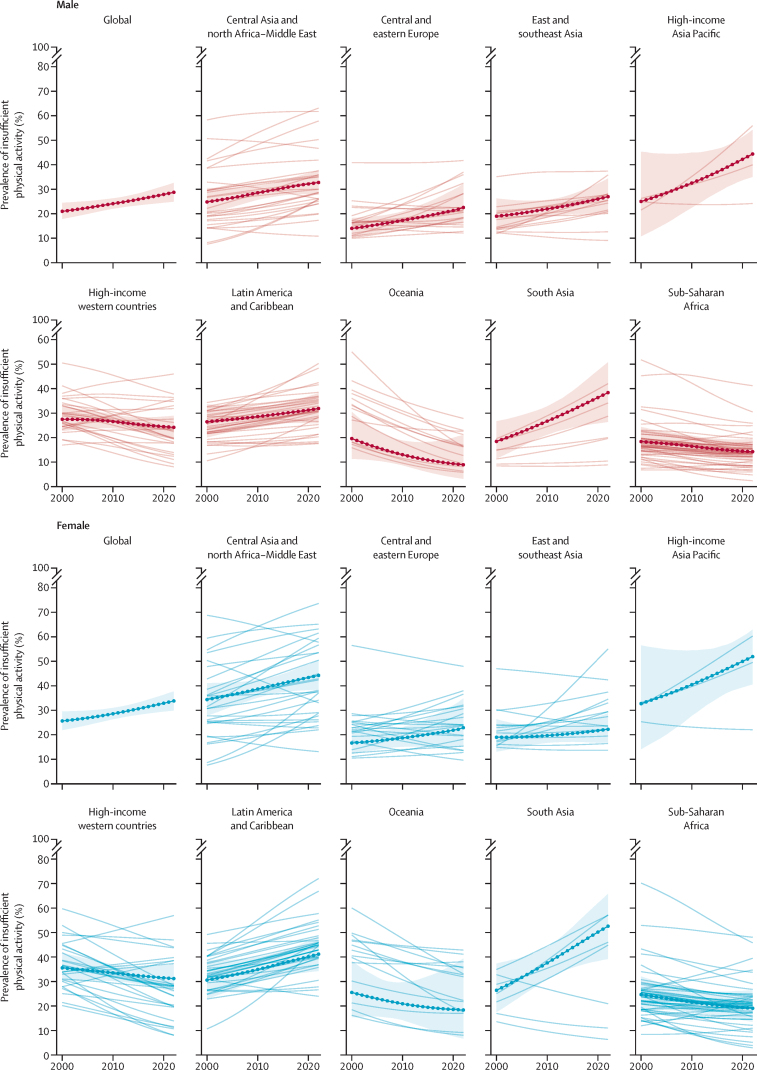
- Global age-standardised prevalence of insufficient physical activity was 31·3% (95% UI 28·6–34·0) in 2022, up from 23·4% (21·1–26·0) in 2000 and 26·4% (24·8–27·9) in 2010; the posterior probability of a true increase from 2010 to 2022 was >0·99.
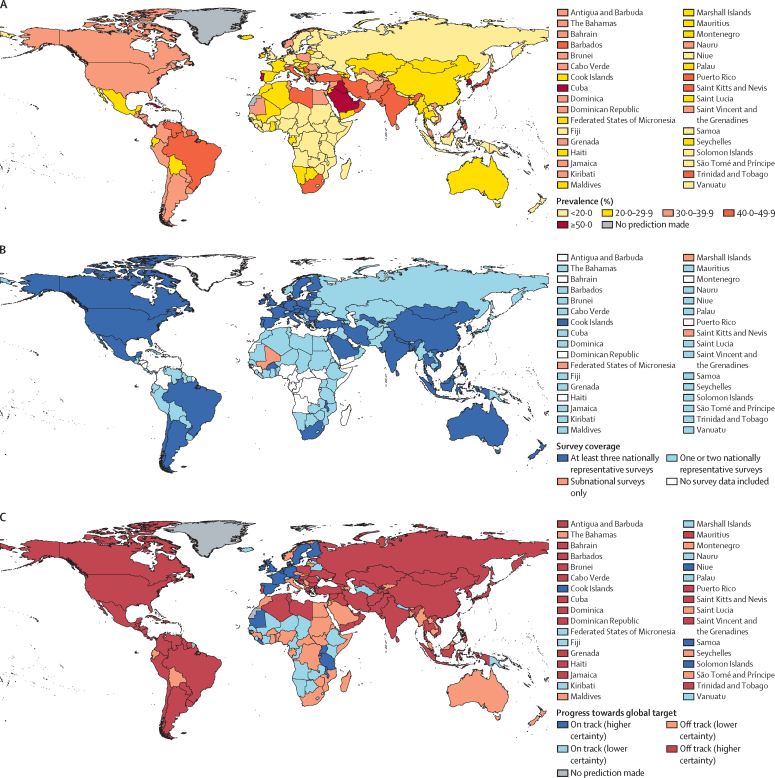
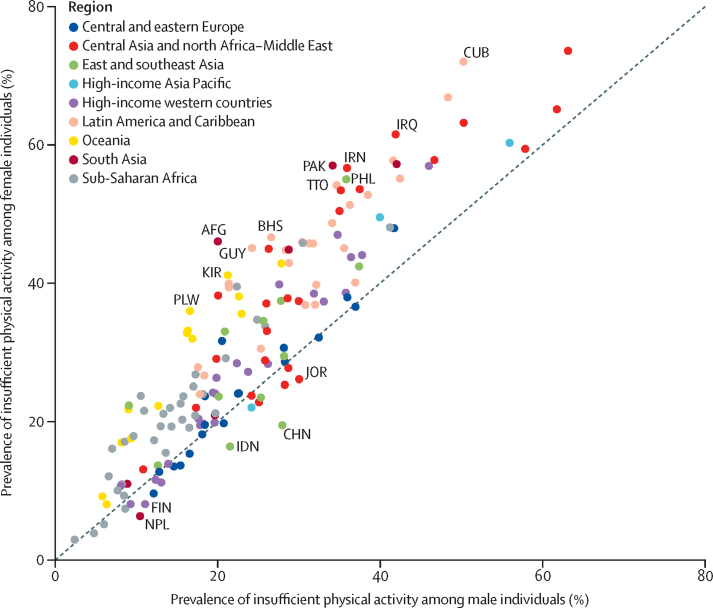
- Prevalence was increasing in 103 (52%) of 197 countries and territories and six (67%) of nine regions; it was 5 percentage points higher in female (33·8% [29·9–37·7]) than male (28·7% [25·0–32·6]) individuals, with the largest regional sex gap in south Asia (female 52·6% [39·2–65·8] vs male 38·4% [26·4–50·7]).
- Country-specific prevalence ranged from 2·7% (95% UI 1·1–5·3) in Malawi to 66·1% (54·6–76·8) in the United Arab Emirates; prevalence exceeded 40% in 32 countries and 50% in the United Arab Emirates and nine other countries.
- If 2010–22 trends continue, global prevalence in 2030 would be 34·7% (30·4–39·1); the 2030 target would not be met (posterior probability <0·01), while Oceania and sub-Saharan Africa were on track with lower certainty (posterior probabilities 0·70–0·74); 136 countries were not on track and 61 were on track.
Methods
- The study collated self-reported physical activity from population-based surveys of adults aged ≥18 years, including 507 surveys across 163 countries and territories representing 93·0% of the global population; data closed on Feb 5, 2024. Surveys used GPAQ (228 surveys), IPAQ (137), or another questionnaire (142).
- Insufficient physical activity was defined as not meeting WHO aerobic recommendations: at least 150 minutes of moderate-intensity activity per week, 75 minutes of vigorous-intensity activity, or an equivalent combination. Estimates were produced for 197 countries and territories by year (2000–22), seven age groups, and sex.
- Hierarchical Bayesian probit regression models were fit separately for males and females, using natural cubic splines for age with knots at 30 and 60 years, linear time trends, questionnaire indicators, and age-standardised adult obesity as a country-specific time-varying covariate. The models used 4000 posterior samples; 95% uncertainty intervals are Bayesian credible intervals. Progress toward the 2030 target was assessed by projecting 2010–22 trends and computing posterior probabilities of meeting a 15% relative reduction.
Limitations
- The paper states that data were not available for every country and year, and 34 countries had no eligible data; countries with no, limited, or inconsistent data could differ systematically from those with well-developed surveillance. Self-report data are subject to recall and social desirability biases, questionnaire variation, and uncertain statistical adjustments; data quality and representativeness may vary over time, and declining response rates or COVID-19 may have affected non-response bias. Estimates are not disaggregated by wealth, geographical location, or disability, and uncertainty intervals do not reflect all sources of uncertainty.
- The paper states that it could not detect differences due to the COVID-19 pandemic; no included data sources collected data from April to July 2020, and only 30 surveys from 24 countries collected data from August 2020 to December 2021. A linear time trend was modelled, and a sensitivity analysis found no evidence of a step change or non-linearity in post-August 2020 data.
- The text makes evident that fewer than 15 countries had nationally representative device-based physical activity data, with considerable protocol heterogeneity, and that consensus and data are lacking for muscle strengthening, balance, and sedentary recommendations.
Model-written summary. Check it against the paper before relying on it.
Integrity signals
Registry
Cites
Statistics
Figures
Verification
Claims the paper makes
7 Valid · 0 Not valid · 16 Not checked · 82 Own results and interpretations
The cited sources support only part of this claim — read each source’s verdict below.
In the paper
“There is inconsistent and insufficient monitoring of other behaviours included in the physical activity guidelines (muscle strengthening, balance activities [for older adults aged ≥65 years], and sedentary time2) to produce global estimates and targets.5, 6”
§ National, regional, and global trends in insufficient physical activity among adults from 2000 to 2022: a pooled analysis of 507 population-based surveys with 5·7 million participants > Introduction
What the sources say
- Not checked yetcites [5] Milton K Varela AR Strain T Cavill N Foster C Mutrie N A review of global surveillance on the muscle strengthening and balance elements of physical activity recommendations J Frailty Sarcopenia Falls 3 2018 114 124 32300699 PMC7155319 source
- Partly supportedcites [6] Mclaughlin M Atkin AJ Starr L Worldwide surveillance of self-reported sitting time: a scoping review Int J Behav Nutr Phys Act 17 2020 111 32883294 PMC7469304 sourceExperimental — accuracy not yet measured
Our copy of McLaughlin et al. (2020) supports only the sedentary-time component: the Discussion (p. 'Compared with other risk factors...') and Conclusion report that sitting time data were collected in just 62 of 215 countries covering 47% of the global adult population, that 'a comprehensive collation of sedentary behaviour data collected within the last 10 years does not currently exist' (Background), and that surveillance relies on heterogeneous, poorly accurate single-item IPAQ/GPAQ measures (Discussion, limitations). The claim's other two behaviours — muscle-strengthening activities and balance activities for adults aged ≥65 — are nowhere addressed: searches for 'muscle-strengthening', 'balance' and 'bone-loading' returned only reference-list and unrelated passages. The paper also frames the gap as limited coverage/measurement quality rather than an inability to set 'targets', so that framing is the citing authors' own extension. (LLM, conf=0.78)
plain- Asserted: passes — The authors put it forward as true.
- Checkable: passes — It can be checked against evidence.
- Load-bearing: passes — The paper’s conclusions depend on it.
- Based: passes — The paper gives a reason why it holds.
Every source the paper cites for this claim was checked and supports it.
In the paper
“We adjusted prevalences from surveys only representing urban areas and those reporting prevalence in the IPAQ low scoring category using regression equations developed by Guthold and colleagues (appendix 3 p 8).10”
§ National, regional, and global trends in insufficient physical activity among adults from 2000 to 2022: a pooled analysis of 507 population-based surveys with 5·7 million participants > Methods > Data sources
What the sources say
- Supportedcites [10] Guthold R Stevens GA Riley LM Bull FC Worldwide trends in insufficient physical activity from 2001 to 2016: a pooled analysis of 358 population-based surveys with 1·9 million participants Lancet Glob Health 6 2018 e1077 e1086 30193830 source
The Statistical analysis section of Guthold et al. (2018) states that 'We applied four key adjustments to survey data using linear regression modelling to improve comparability (appendix pp 17-27)', and specifies among them (second) an adjustment for over-reporting in the IPAQ, applied as an adjustment factor 'to surveys that used the International Physical Activity Questionnaire', and (third) adjustment of 'data from surveys that had only urban samples' (27 of 358 surveys), estimating rural prevalence from surveys reporting both. That is exactly what the citing sentence attributes to Guthold and colleagues: regression-derived adjustments for urban-only surveys and for IPAQ-reported prevalences. The equations themselves sit in the paper's appendix (pp 17-27), which our copy of the article text does not include, so the claim's finer characterisation of the IPAQ figures as the 'low scoring category' is not spelled out in the main text; the Study design section confirms the target indicator is insufficient activity (not meeting the WHO 150 min moderate/75 min vigorous recommendation). (LLM, conf=0.80)
plain- Asserted: passes — The authors put it forward as true.
- Checkable: passes — It can be checked against evidence.
- Load-bearing: passes — The paper’s conclusions depend on it.
- Based: passes — The paper gives a reason why it holds.
- Supported
Every source the paper cites for this claim was checked and supports it.
In the paper
“Nevertheless, our global prevalence estimate for 2016 (28·7% [95% UI 26·9–30·4]) is similar to the previous analysis (27·5% [25·0–32·2]).10”
§ National, regional, and global trends in insufficient physical activity among adults from 2000 to 2022: a pooled analysis of 507 population-based surveys with 5·7 million participants > Discussion
What the sources say
- Supportedcites [10] Guthold R Stevens GA Riley LM Bull FC Worldwide trends in insufficient physical activity from 2001 to 2016: a pooled analysis of 358 population-based surveys with 1·9 million participants Lancet Glob Health 6 2018 e1077 e1086 30193830 source
The element attributed to Guthold et al. (2018) is the 'previous analysis' figure of 27·5% (25·0–32·2) for global prevalence in 2016; the 28·7% (26·9–30·4) estimate is the citing authors' own result and the 'is similar to' comparison is their conclusion. Our copy states exactly that figure in the Abstract (Findings), the Results ('more than a quarter of adults (27·5%, 95% UI 25·0–32·2) were insufficiently physically active in 2016'), the 'Added value of this study' section, and Table 1/Table 2 (All countries 27·5% [25·0–32·2]). The paper does not report a 28·7% global estimate (its 2001 global value is 28·5%, 23·9–33·9), consistent with that number belonging to the citing study. (LLM, conf=0.90)
plain- Asserted: passes — The authors put it forward as true.
- Checkable: passes — It can be checked against evidence.
- Load-bearing: unclear — It is unclear whether the paper’s conclusions depend on it.
- Based: passes — The paper gives a reason why it holds.
- Supported
A result the paper reports from its own data — it cites no other source for it, so there is none to check. The quote shows it is in the paper.
In the paper
“The global age-standardised prevalence of insufficient physical activity was 31·3% (95% uncertainty interval 28·6–34·0) in 2022, an increase from 23·4% (21·1–26·0) in 2000 and 26·4% (24·8–27·9) in 2010.”
- Also stated in: § Results · plain
“Globally, nearly a third of adults were insufficiently physically active (age-standardised prevalence of 31·3% [95% uncertainty interval 28·6–34·0]) in 2022 (table 2).”
§ National, regional, and global trends in insufficient physical activity among adults from 2000 to 2022: a pooled analysis of 507 population-based surveys with 5·7 million participants > Abstract > Findings
plain- Asserted: passes — The authors put it forward as true.
- Checkable: passes — It can be checked against evidence.
- Load-bearing: passes — The paper’s conclusions depend on it.
- Based: passes — The paper gives a reason why it holds.
- Also stated in: § Results · plain
A result the paper reports from its own data — it cites no other source for it, so there is none to check. The quote shows it is in the paper.
In the paper
“The global age-standardised prevalence of insufficient physical activity was 31·3% (95% uncertainty interval 28·6–34·0) in 2022, an increase from 23·4% (21·1–26·0) in 2000 and 26·4% (24·8–27·9) in 2010.”
- Also stated in: § Results · plain
“Global | Global | 23·4% (21·1–26·0) | 26·4% (24·8–27·9) | 31·3% (28·6–34·0) | 34·7% (30·4–39·1) | Off track, higher certainty”
§ National, regional, and global trends in insufficient physical activity among adults from 2000 to 2022: a pooled analysis of 507 population-based surveys with 5·7 million participants > Abstract > Findings
plain- Asserted: passes — The authors put it forward as true.
- Checkable: passes — It can be checked against evidence.
- Load-bearing: passes — The paper’s conclusions depend on it.
- Based: passes — The paper gives a reason why it holds.
- Also stated in: § Results · plain
47 more claims
Create a free account to see all 105 claims and to verify the 19 references still open.
- Probably not a substantial claim. 20
- It may state two separate claims as one. 39
Claims other papers make about this one
Each is checked against this paper’s own text: does it say what the citing paper says it does?
In the citing paper
“showing that over 30% of adults do not meet the minimum recommendations for physical activity, and this percentage exceeds 40% among older adults [141].”
From Dietary and Behavioral Strategies for Weight Loss and Weight Loss Maintenance: A Narrative Review (2025) · cites this paper as [141]
Self-check
Percentages, sums and reported differences re-computed from the paper’s own numbers.
Each contradiction between two passages listed here was confirmed by an independent check.
Rated minor: it would not touch a result — a value no result rests on, a p-value that stays on the same side of the significance level, or a conflict that is clerical, resolved elsewhere in the paper, or outside its own findings.
In the paper
§ National, regional, and global trends in insufficient physical activity among adults from 2000 to 2022: a pooled analysis of 507 population-based surveys with 5·7 million participants > Results
“Our trend analysis shows the global age-standardised prevalence of insufficient physical activity has increased from 28·6% in 2010 to 31·3% in 2022 (table 1)”
§ National, regional, and global trends in insufficient physical activity among adults from 2000 to 2022: a pooled analysis of 507 population-based surveys with 5·7 million participants > Results
“| | Global | Global | 23·4% (21·1–26·0) | 26·4% (24·8–27·9) | 31·3% (28·6–34·0) | 34·7% (30·4–39·1) | Off track, higher certainty |”
Citations
Cites
World Health Organization 2020 guidelines on physical activity and sedentary behaviour
Bull, F. C., Al-Ansari, S. S., Biddle, S., Borodulin, K., Buman, M. P., Cardon, G., Carty, C., Chaput, J.-P., Chastin, S., Chou, R., et al. (2020) · British Journal of Sports Medicine · doi:10.1136/bjsports-2020-102955 · Cited by 11,657
Self-citationGlobal physical activity levels: surveillance progress, pitfalls, and prospects
Hallal, P. C., Andersen, L. B., Bull, F. C., Guthold, R., Haskell, W., & Ekelund, U. (2012) · The Lancet · doi:10.1016/s0140-6736(12)60646-1 · Cited by 5,711
Self-citationGuthold, R., Stevens, G. A., Riley, L. M., & Bull, F. C. (2018) · The Lancet Global Health · doi:10.1016/s2214-109x(18)30357-7 · Cited by 4,819
Self-citationEzzati, M., López, A. D., Rodgers, A., & Murray, C. J. L. (2004) · Cited by 3,319
Phelps, N. H., Singleton, R. K., Zhou, B., Heap, R. A., Mishra, A., Bennett, J. E., Paciorek, C. J., Lhoste, V. P., Carrillo-Larco, R. M., Stevens, G. A., et al. (2024) · The Lancet · doi:10.1016/s0140-6736(23)02750-2 · Cited by 2,544 · cited 1×
“17 An additional variance term accounted for unobserved design factors (eg, sample design and season) that would lead to variance beyond that expected due to sample size.”
BackgroundSelf-citationGuidelines for accurate and transparent health estimates reporting: the GATHER statement
Stevens, G. A., Alkema, L., Black, R. E., Boerma, J. T., Collins, G. S., Ezzati, M., Grove, J. T., Hogan, D. R., Hogan, M. C., Horton, R., et al. (2016) · The Lancet · doi:10.1016/s0140-6736(16)30388-9 · Cited by 1,798
Self-citationProgress in physical activity over the Olympic quadrennium
Sallis, J. F., Bull, F., Guthold, R., Heath, G. W., Inoue, S., Kelly, P., Oyeyemi, A. L., Perez, L. G., Richards, J., & Hallal, P. C. (2016) · The Lancet · doi:10.1016/s0140-6736(16)30581-5 · Cited by 935
Self-citationImpact of COVID-19 on physical activity: A rapid review
Park, A. H., Zhong, S., Yang, H., Jeong, J., & Lee, C. (2022) · Journal of Global Health · doi:10.7189/jogh.12.05003 · Cited by 232
Step Up! Tackling the Burden of Insufficient Physical Activity in Europe
OECD, & World Health Organization (2023) · OECD eBooks · doi:10.1787/500a9601-en · Cited by 178
Shifting the physical inactivity curve worldwide by closing the gender gap
Mielke, G. I., da Silva, I. C. M., Kolbe-Alexander, T. L., & Brown, W. J. (2018) · Sports Medicine · doi:10.1007/s40279-017-0754-7 · Cited by 164
Self-citation
Cited by
Palaniappan, L. P., Allen, N. B., Almarzooq, Z. I., Anderson, C. A. M., Arora, P., Avery, C. L., Baker-Smith, C. M., Bansal, N., Currie, M. E., Earlie, R. S., et al. (2026) · Circulation · doi:10.1161/cir.0000000000001412 · Cited by 242
Daily steps and health outcomes in adults: a systematic review and dose-response meta-analysis
Ding, D., Nguyen, B., Nau, T., Luo, M., Cruz, B. D. P., Dempsey, P. C., Munn, Z., Jefferis, B. J. M. H., Sherrington, C., Calleja, E. A., et al. (2025) · The Lancet Public Health · doi:10.1016/s2468-2667(25)00164-1 · Cited by 190
Self-citation2025 ACSM Worldwide Fitness Trends: Future Directions of the Health and Fitness Industry
Newsome, A. M., Batrakoulis, A., Camhi, S. M., McAvoy, C. R., Sansone, J., Reed, R., & Contributors: (2024) · ACSMʼs Health & Fitness Journal · doi:10.1249/fit.0000000000001017 · Cited by 166
Asthma: epidemiology, risk factors, and opportunities for prevention and treatment
Jayasooriya, S., Devereux, G. S., Soriano, J. B., Singh, N., Masekela, R., Mortimer, K. J., & Burney, P. (2025) · The Lancet Respiratory Medicine · doi:10.1016/s2213-2600(24)00383-7 · Cited by 133
The evolving landscape of cardiometabolic diseases
Eroglu, T., Capone, F., & Schiattarella, G. G. (2024) · EBioMedicine · doi:10.1016/j.ebiom.2024.105447 · Cited by 71
Alley, S., Waters, K., Parker, F., Peiris, D. L. I. H. K., Fien, S., Rebar, A. L., & Vandelanotte, C. (2024) · International Journal of Behavioral Nutrition and Physical Activity · doi:10.1186/s12966-024-01694-4 · Cited by 66
Owen, K., Corbett, L., Ding, D., Eime, R., & Bauman, A. E. (2024) · Annals of Epidemiology · doi:10.1016/j.annepidem.2024.12.011 · Cited by 71
Self-citationBiomarkers of aging: from molecules and surrogates to physiology and function
Furrer, R., & Handschin, C. (2025) · Physiological Reviews · doi:10.1152/physrev.00045.2024 · Cited by 74
Mostert, C. M., Udeh-Momoh, C., Winkler, A. S., McLaughlin, C., Eyre, H., Salama, M., Ranchod, K., Trepel, D., Vradenburg, G., Hynes, W., et al. (2025) · eBioMedicine · doi:10.1016/j.ebiom.2025.105950 · Cited by 42
Realigning the physical activity research agenda for population health, equity, and wellbeing
Ding, D., CHASTIN, S. F. M., Salvo, D., Nau, T., Gebel, K., Sánchez-Lastra, M. A., Luo, M., Crochemore‐Silva, I., Ekelund, U., & Bauman, A. E. (2024) · The Lancet · doi:10.1016/s0140-6736(24)01540-x · Cited by 42
Self-citationEnergy expenditure and obesity across the economic spectrum
McGrosky, A., Luke, A. H., Arab, L., Bedu-Addo, K., Bonomi, A., Bovet, P., Brage, S., Buchowski, M. S., Butte, N. F., Camps, S. G., et al. (2025) · Proceedings of the National Academy of Sciences · doi:10.1073/pnas.2420902122 · Cited by 45
“The central role of diet in the global obesity crisis does not mean that efforts to promote physical activity should be minimized.”
Self-citationChen, Y., Shah, S., Chen, Y., Owen, A. J., Ekegren, C. L., Ilić, D., & Gašević, D. (2025) · BMJ Open · doi:10.1136/bmjopen-2024-095260 · Cited by 49
Physical activity for public health in the 21st century
Salvo, D., Crochemore‐Silva, I., Wendt, A. T., Tarp, J., Shiroma, E. J., Simpson, R. J., Lee, I.-M. M., Ekelund, U., Cerin, E., Keïta, Y., et al. (2026) · Nature Medicine · doi:10.1038/s41591-026-04237-5 · Cited by 64
“It is estimated that, worldwide, almost one out of three adults 10 , and eight out of 10 adolescents 11 , do not meet WHO physical activity guidelines (150−300 weekly minutes of moderate-to-vigorous-intensity aerobic physical activity for adults and 60 daily minutes for children and adolescents 12…”
Self-citationBeyond “just” fun: The role of exergames in advancing health promotion and disease prevention
Manser, P., de Bruin, E. D., Temprado, J.-J., Bherer, L., & Herold, F. (2025) · Neuroscience & Biobehavioral Reviews · doi:10.1016/j.neubiorev.2025.106260 · Cited by 43
Rodríguez, M. Á., Quintana-Cepedal, M., Cheval, B., Thøgersen-Ntoumani, C., Crespo, I., & Olmedillas, H. (2026) · British Journal of Sports Medicine · doi:10.1136/bjsports-2025-110027 · Cited by 39
Public health interventions against childhood obesity in China
Yuan, C., Dong, Y., Chen, H., Ma, L., Jia, L., Luo, J., Liu, Q., Hu, Y., Ma, J., & Song, Y. (2024) · The Lancet Public Health · doi:10.1016/s2468-2667(24)00245-7 · Cited by 36
Barriers to physical activity in women from ethnic minority groups: a systematic review
Batalha, A. P. D. B., Marçal, I. R., Main, E., & Ghisi, G. L. D. M. (2025) · BMC Women s Health · doi:10.1186/s12905-025-03877-y · Cited by 31
“However, despite strong evidence supporting its positive impact, global PA levels remain suboptimal [5], particularly among women, who consistently engage in less PA than men [6].”
How valid is bandura's social cognitive theory to explain physical activity behavior?
Egele, V. S., Klopp, E., & Stark, R. (2025) · European Journal of Investigation in Health Psychology and Education · doi:10.3390/ejihpe15020020 · Cited by 30
“Yet, in a recent long-term study including data from nearly two million people in 168 countries, it was evident that 31.3 percent of adults worldwide do not reach the recommended level of physical activity, and consequently are at increased health risk (Strain et al., 2024).”
InfluentialDoes every move really count towards better health?
Varela, A. R., & Hallal, P. C. (2024) · The Lancet Global Health · doi:10.1016/s2214-109x(24)00173-6 · Cited by 42
Rouyard, T., Yoda, E., Akksilp, K., Dieterich, A. V., Sarin, K. C., Dabak, S. V., & Müller, A. M. (2025) · The Lancet Public Health · doi:10.1016/s2468-2667(25)00038-6 · Cited by 36
Hadji, P., Aapro, M., Al-Dagri, N., Alokail, M. S., Biver, E., Body, J.-J., Brandi, M. L., Brown, J. E., Confavreux, C. B., Cortet, B., et al. (2025) · Journal of bone oncology · doi:10.1016/j.jbo.2025.100694 · Cited by 33
“…be on ensuring they are having sufficient physical exercise (the World Health Organization has recently published guidelines on what constitutes adequate physical activity in adults [81]) and have an adequate intake of vitamin D and calcium, with risk and BMD monitored at 1 – 2 yearly intervals.”
Low global physical activity despite two decades of policy progress
Varela, A. R., Bauman, A. E., Woods, C. B., Shawar, Y. R., Hallal, P. C., Salvo, D., Siefken, K., Wendel‐Vos, W., Miranda, J. J., Mejía-Grueso, J., et al. (2026) · Nature Health · doi:10.1038/s44360-025-00044-3 · Cited by 36
Self-citationExercise as a Therapeutic Intervention for Chronic Disease Management: A Comprehensive Review
Fairag, M., Alzahrani, S. A., Alshehri, N., Alamoudi, A. O., Alkheriji, Y., Alzahrani, O. A., Alomari, A. J., Alzahrani, Y., Alghamdi, S. M., & Fayraq, A. (2024) · Cureus · doi:10.7759/cureus.74165 · Cited by 47
Sengupta, R., Bajpai, R. P., Shukla, S. K., Singh, N., & Singh, N. (2025) · BMC Public Health · doi:10.1186/s12889-025-21956-5 · Cited by 32
“[11].”
Sandri, E., Capoferri, M., Luciani, G., & Piredda, M. (2025) · Nutrients · doi:10.3390/nu17091486 · Cited by 36
“Despite these benefits, physical inactivity remains a global concern [7].”
Lee, E.-Y., Park, S., Kim, Y.-B., Liu, H., Mistry, P., Nguyen, K., Oh, Y., James, M. E., Lâm, S., de Lannoy, L., et al. (2025) · Environmental Research · doi:10.1016/j.envres.2025.122146 · Cited by 25
Harnessing exercise to combat chronic diseases: the role of Drp1-Mediated mitochondrial fission
Sun, Y.-X., He, J.-C., Bao, L., Shi, X., Wang, J., & Li, Q.-W. (2025) · Frontiers in Cell and Developmental Biology · doi:10.3389/fcell.2025.1481756 · Cited by 20
Zargar, A. H., Bhansali, A. K., Majumder, A., Maheshwari, A., Bhattacharyya, A., Dasgupta, A., Saboo, B., Sethi, B. K., Sanyal, D., Seshadri, K., et al. (2025) · Diabetes Obesity and Metabolism · doi:10.1111/dom.16496 · Cited by 29
“43 This further contributes to the disease burden of the country.”
Influential25 years of qualitative research in sport and exercise Psychology: How did it Go? and what now?
Smith, B. M., Roderick, M., Hockin‐Boyers, H., Monforte, J., Williams, T. L., Jachyra, P., Dodd-Reynolds, C. J., & Phoenix, C. (2025) · Psychology of sport and exercise · doi:10.1016/j.psychsport.2025.102958 · Cited by 25
Martinez, R., Venturelli, P. M., Ordúñez, P., Fregni, F., Abanto, C., Alet, M. J., Álvarez, T. F., Amaya, P. F., Ameriso, S. F., Araúz, A., et al. (2025) · The Lancet Regional Health - Americas · doi:10.1016/j.lana.2025.101017 · Cited by 36
Dietary and Behavioral Strategies for Weight Loss and Weight Loss Maintenance: A Narrative Review
Żurawski, T., & Bartosiewicz, A. (2025) · Nutrients · doi:10.3390/nu18010012 · Cited by 18
“Against this background, epidemiological observations are particularly concerning, showing that over 30% of adults do not meet the minimum recommendations for physical activity, and this percentage exceeds 40% among older adults [141].”
Harris, D., Dlima, S. D., Gluchowski, A., Hall, A., Elliott, E., & Munford, L. A. (2024) · International Journal of Behavioral Nutrition and Physical Activity · doi:10.1186/s12966-024-01666-8 · Cited by 29
“Despite this, global figures show physical activity declines with increasing age [11], with 43.5% of older adults aged 60 years and over not meeting recommended levels of physical activity [12].”
BackgroundInfluentialYi, Z., Wei, L., Xu, L., Pang, W., & Liu, Y. (2025) · BMC Psychology · doi:10.1186/s40359-025-02755-4 · Cited by 25
“This rate exhibits a persistent upward trajectory [12].”
Zhou, Z., & Tian, X. (2024) · BMC Public Health · doi:10.1186/s12889-024-20743-y · Cited by 20
Physical activity—the past, present and potential future: a state-of-the-art review
McLaughlin, M. J., McCue, P. A., Swelam, B. A., Murphy, J., & Edney, S. M. (2025) · Health Promotion International · doi:10.1093/heapro/daae175 · Cited by 25
Ciaccioni, S., Compernolle, S., Lerfald, M., Palumbo, F., Fadda, F., Toma, G., Akpınar, S., Borodulin, K., Çağlar, E., Cardon, G., et al. (2025) · European Review of Aging and Physical Activity · doi:10.1186/s11556-025-00373-y · Cited by 21
“A recent study, which analyzed self-reported PA data from 507 population-based studies, estimated that the global prevalence of insufficient PA among older adults is 43.5% [2].”
InfluentialFalbová, D., Sulis, S., Oravská, P., Hozáková, A., Švábová, P., Beňuš, R., & Vorobeľová, L. (2025) · Bratislavské lekárske listy/Bratislava medical journal · doi:10.1007/s44411-025-00273-8 · Cited by 22
“However, little is known about the complex relationships between various lifestyle factors such as frequency of physical activity, diet quality, timing of meals and body composition parameters in young adults, particularly in populations in Central Europe [19, 20].”
Yuan, Y., Yang, J., Huang, W., Hu, C., Zhang, W., & Chen, B. (2025) · Frontiers in Psychology · doi:10.3389/fpsyg.2025.1694344 · Cited by 23
Blended learning in physical education: application and motivation
Hrušová, D., Chaloupský, D., Chaloupská, P., & Hruša, P. (2024) · Frontiers in Psychology · doi:10.3389/fpsyg.2024.1380041 · Cited by 32
A Walk across Europe: Development of a high-resolution walkability index
Patel, N., Nguyen, H.-H., van de Geest, J. D. S., Wagtendonk, A., Raju, M. J. S., Dadvand, P., de Hoogh, K., Cirach, M., Nieuwenhuijsen, M. J., Lam, T. M., et al. (2025) · Health & Place · doi:10.1016/j.healthplace.2025.103544 · Cited by 23
Volume and Intensity of Walking and Risk of Chronic Low Back Pain
Haddadj, R., Nordstoga, A. L., Nilsen, T. I. L., Skarpsno, E. S., Kongsvold, A., Flaaten, M., Schipperijn, J., Bach, K., & Mork, P. J. (2025) · JAMA Network Open · doi:10.1001/jamanetworkopen.2025.15592 · Cited by 16
Aragón‐Vela, J., & Casuso, R. A. (2025) · American Journal of Physiology-Cell Physiology · doi:10.1152/ajpcell.00297.2025 · Cited by 16
Rhodes, R. E., Rebar, A. L., & Strachan, S. M. (2025) · Psychology of sport and exercise · doi:10.1016/j.psychsport.2025.102923 · Cited by 15
Zhang, D., Huang, J., Zhang, Y. H., Wei, Z., Long, T., Guo, X., & Li, M. (2025) · Diabetes Research and Clinical Practice · doi:10.1016/j.diabres.2025.112907 · Cited by 17
Exercise-Induced Molecular Adaptations in Chronic Non-Communicable Diseases—Narrative Review
Fuentes-Barría, H., Aguilera-Eguía, R. A., Alarcón-Rivera, M., López-Soto, O., Aristizábal-Hoyos, J. A., Roco-Videla, Á., Caviedes-Olmos, M., & Rojas-Gómez, D. M. (2025) · International Journal of Molecular Sciences · doi:10.3390/ijms262412096 · Cited by 20
“This condition is associated with nearly 3.2 million deaths annually [5].”
InfluentialChen, B., Hua, S., Tu, Z., Hu, C., & Yang, J. (2026) · Frontiers in Psychology · doi:10.3389/fpsyg.2025.1742211 · Cited by 16
Association between daily sitting time and sarcopenia in the US population: a cross-sectional study
Zhang, A., Li, Y., Zhou, J., Zhang, Y., Xie, S., Shao, H., Zhao, T., & Tang, T. (2025) · Archives of Public Health · doi:10.1186/s13690-025-01501-x · Cited by 17
Leung, W. K. C., Sum, R. K. W., & Lam, S. C. (2025) · BMC Public Health · doi:10.1186/s12889-025-21337-y · Cited by 15
“…factor formation that can be considerably tracked into adulthood [9, 10], fostering younger populations to become physically literate serves as a milestone to alleviate the increasing worldwide trend of inadequate PA, where almost one-third of the global population were having insufficient PA [11].”
An umbrella review of efficacy of digital health interventions for workers
Iwakura, M., Ozeki, C., Jung, S., Yamazaki, T., Miki, T., Nohara, M., & Nomura, K. (2025) · npj Digital Medicine · doi:10.1038/s41746-025-01578-2 · Cited by 21
Terra, L. F., de Rezende, L. M. T., Silva, R. M. F., da Costa, W. P., Miñana-Signes, V., Noll, M. A., & Noll, P. R. E. S. (2025) · International Journal of Environmental Research and Public Health · doi:10.3390/ijerph22060881 · Cited by 21
“…of this guideline, evidence shows a concerning decline in participation in PA during and after adolescence, with approximately three out of four being considered inactive [10–12], which is likely to be due to various barriers to the implementation of interventions at a global level [13,14].”
He, X., Su, J., Wang, K., Liang, Y., & Wang, L. (2025) · PLoS ONE · doi:10.1371/journal.pone.0329336 · Cited by 23
Owen, K., Clare, P. J., Eime, R., Ding, D., Nguyen, B., Luo, M., Nau, T., Reece, L. J., & Bauman, A. E. (2025) · BMC Public Health · doi:10.1186/s12889-025-24011-5 · Cited by 18
“%] of men [6], and 91% [90–93”
Self-citationBurden of metabolic diseases, 1990-2023, with forecasts to 2030 for the Asia-Pacific region
Zhang, H., Chen, Q.-F., Lip, G. Y. H., Tilg, H., Valenti, L. V. C., Somers, V. K., Byrne, C. D., Targher, G., Yang, W., Mantzoros, C. S., et al. (2026) · Metabolism · doi:10.1016/j.metabol.2026.156575 · Cited by 18
Neupane, B. K., Acharya, B. K., Cao, C., Xu, M., Bhattarai, H., Yang, Y., & Wang, S. (2024) · BMC Public Health · doi:10.1186/s12889-024-20431-x · Cited by 14
“Due to globalization, people’s behavior has changed, physical inactivity has increased [70], and rapid development has supported the increase in air pollution [4].”
BackgroundThinking about inequalities in physical activity as an emergent feature of complex systems
Jones, S. M., Porroche‐Escudero, A., Shearn, K., Hunter, R. F., & García, L. (2024) · International Journal of Behavioral Nutrition and Physical Activity · doi:10.1186/s12966-024-01659-7 · Cited by 16
“This is demonstrated by Strain and colleagues [51], who high-light the minimal progress in reducing the overall prevalence of insufficient (i.e., not meeting WHO, national or government recommendations) physical activity levels over the past two decades, with the prevalence of insufficient physical…”
BackgroundBastos, V., Ekkekakis, P., Andrade, A. J., & Teixeira, D. S. (2025) · Psychology of sport and exercise · doi:10.1016/j.psychsport.2025.102963 · Cited by 14
Gomez-Garcia, C., Maher, C. A., Sañudo, B., & Jurado‐Castro, J. M. (2025) · Journal of Functional Morphology and Kinesiology · doi:10.3390/jfmk10030292 · Cited by 17
“Recent estimates show that 31% of adults do not meet recommended PA levels [17,19], a figure confirmed by multiple large-scale surveys [17].”
A complex systems view on physical activity with actionable insights for behaviour change
Schüler, J., Heino, M. T. J., Balagué, N., Chater, A., Grüber, M., Kanning, M. K., Keim, D. A., Mier, D. U., Moreno‐Villanueva, M., Nußbeck, F. W., et al. (2025) · Nature Human Behaviour · doi:10.1038/s41562-025-02279-2 · Cited by 14
“Globally, 31.3% of adults do not meet the physical activity (PA) levels recommended by the World Health Organization 6,7 .”
InfluentialLi, M., Fan, C., Wang, C., Feng, Q., & Wang, J. (2025) · China CDC Weekly · doi:10.46234/ccdcw2025.004 · Cited by 15
Physical Activity and Sedentary Behavior Among Chinese Adults — 10 PLADs, China, 2022–2023
Ouyang, Y., Wang, H., He, Y., Su, C., Zhang, J., Du, W., Jia, X., Huang, F., Li, L., Bai, J., et al. (2025) · China CDC Weekly · doi:10.46234/ccdcw2025.002 · Cited by 17
Nutrition and Physical Activity in Musculoskeletal Health
Dominguez, L. J., Veronese, N., Smith, L., Ragusa, F. S., Bella, G. D., Battaglia, G., Bianco, A., & Barbagallo, M. (2025) · Endocrines · doi:10.3390/endocrines6010010 · Cited by 18
Russell, E., Kirk, A. F., Dunlop, M. D., Hodgson, W., Patience, M., & Egan, K. J. (2025) · Journal of Medical Internet Research · doi:10.2196/66294 · Cited by 15
“%) of the adults worldwide were not meeting the World Health Organization recommendations for moderate-to-vigorous aerobic activity in 2022 [9].”
Liao, D., Li, H., Chen, H., Lai, S., Tang, X., Qiu, C., Du, L., Huang, H.-X., Xiong, Z., Kuang, L., et al. (2025) · Journal of the American Heart Association · doi:10.1161/jaha.124.039225 · Cited by 16
“39,40 Previous studies have revealed potential mechanisms of PA with CVD and cancer death.”
Remskar, M., Ainsworth, B., Maynard, O., Malkowski, O. S., Birch, A., Burd, A., Caretu, T.-C., Assaad, L. E., Christodoulou-Tsiaoukkas, A., Menon, A., et al. (2025) · Mental health and physical activity · doi:10.1016/j.mhpa.2025.100680 · Cited by 13
Chen, J., Wang, Y., Zhong, Z., Chen, X., Zhang, L., Jie, L., Zhang, Y., & Wang, Y. (2025) · Nature Cardiovascular Research · doi:10.1038/s44161-025-00732-z · Cited by 21
“7–9 and Supplementary Tables 13 and 14).”
Latino, F., Romano, G., & Tafuri, F. (2024) · Education Sciences · doi:10.3390/educsci14111199 · Cited by 36
Chen, J., Lü, Y., Zhao, H., Liu, H., & Yao, J. (2025) · Frontiers in Cardiovascular Medicine · doi:10.3389/fcvm.2025.1643153 · Cited by 19
Arabic Translation and Psychometric Testing of the Physical Activity Index
Assaf, M., Hallit, R. R., Fawaz, M. A., Malaeb, D. N., Khatib, S. E., Fekih‐Romdhane, F., Obeïd, S., & Hallit, S. R. (2026) · Lifestyle Medicine · doi:10.1002/lim2.70052 · Cited by 22
Zhang, Y., Tian, M., Yang, J., Xi, Y., Li, Z., & Wang, L. (2024) · Frontiers in Psychology · doi:10.3389/fpsyg.2024.1433880 · Cited by 16
Arkkukangas, M., Bååthe, K. S., Hamilton, J., Hassan, A., & Tonkonogi, M. (2024) · BMC Geriatrics · doi:10.1186/s12877-024-05575-0 · Cited by 18
“Group-based exercises lead to increased physical activity [25], which is a positive outcome, as highlighted in a recent study published in Lancet and supported by the World Health Organization [26].”
The culture of healthy living – The international perspective
Jayasinghe, S. U., Byrne, N. M., & Hills, A. P. (2025) · Progress in Cardiovascular Diseases · doi:10.1016/j.pcad.2025.02.001 · Cited by 22
Veronese, N., Ragusa, F. S., Hajek, A., Stubbs, B., Smith, L., Barbagallo, M., Dominguez, L. J., Fontana, L., Soysal, P., Sabico, S., et al. (2025) · Journal of Cachexia Sarcopenia and Muscle · doi:10.1002/jcsm.13695 · Cited by 17
Guo, K., & Huang, Q. E. (2025) · Frontiers in Psychology · doi:10.3389/fpsyg.2025.1569009 · Cited by 19
Wearable data link urban green space to physical activity
Lu, Y., Reichert, M., Guerry, A. D., Yuan, Q., Li, Y., Rydström, A., Wu, T., Reinhard, I., Rehder, J., King, A. C., et al. (2025) · Nature Health · doi:10.1038/s44360-025-00011-y · Cited by 18
Hernández-Martínez, J., Cid-Calfucura, I., Herrera-Valenzuela, T., Fritz-Silva, N., Mello, J. B., Pérez-Cárcamo, J., Vásquez-Carrasco, E., Merellano-Navarro, E., Branco, B. H. M., & Valdés-Badilla, P. A. (2024) · Journal of Clinical Medicine · doi:10.3390/jcm13174987 · Cited by 12
“Low physical activity levels harm the health status of older people, with 31% of this aging population being physically inactive worldwide [1].”
BackgroundSantin, Y., Chiesa, M., Alfonso, A., Doghri, Y., Kang, R., Haidar, F., Oreja-Fuentes, P., Fousset, O., Zahreddine, R., Guardia, M., et al. (2024) · Science Advances · doi:10.1126/sciadv.adt1670 · Cited by 11
“For instance, the decline in spontaneous motor activity observed in mice reflects reduced physical activity levels in older adults ( 42 ), where women experience a greater reduction than men ( 43 ), supporting our findings of a steeper locomotion decrease in female mice.”
Jiang, Y., Fu, Y., & Dong, X. (2025) · Frontiers in Psychology · doi:10.3389/fpsyg.2025.1604725 · Cited by 10
Niu, M., Dong, M., Shi, P., Choi, Y., & Li, N. (2025) · Frontiers in Psychology · doi:10.3389/fpsyg.2025.1596841 · Cited by 16
“Recent research highlights its benefits: enhancing cardiovascular health, improving muscle strength, flexibility, aiding in weight management, and reducing risks of chronic diseases (Strain et al., 2024).”
König, L. M., Kanning, M. K., Hauptmann, H., Feuchtner, T., & Arigo, D. (2025) · Computers in Human Behavior · doi:10.1016/j.chb.2025.108562 · Cited by 13
What Time Will It Be? A Comprehensive Literature Review on Daylight Saving Time
Neumann, P., & von Blanckenburg, K. (2025) · Time & Society · doi:10.1177/0961463x241310562 · Cited by 13
Choi, S. M., Tomkinson, G. R., Lang, J. J., Cadenas‐Sánchez, C., Dong, H., Lei, S., & Poon, E. T. (2025) · Journal of Sports Sciences · doi:10.1080/02640414.2025.2505384 · Cited by 10
“This trend aligns with a broader rise in insufficient physical activity across East and Southeast Asia since the turn of the century (Strain et al., 2024), contrasting with data from the United States, which shows a simultaneous increase in participation in muscle-strengthening activities (National…”
Dong, D., He, B. H., Kong, J., Zhou, A., Lv, M., Zhang, D., & Dong, C. (2025) · Frontiers in Public Health · doi:10.3389/fpubh.2025.1610070 · Cited by 13
Younossi, Z. M., Wong, V. W., Tsochatzis, E. A., Castéra, L., Betel, M., Henry, L. L., & Zelber‐Sagi, S. (2025) · Liver International · doi:10.1111/liv.70311 · Cited by 14
Li, Q., Guan, J., & Wang, R. (2025) · BMC Geriatrics · doi:10.1186/s12877-025-06334-5 · Cited by 13
“According to the definition of physical inactivity outlined in the WHO physical activity guidelines, the prevalence of physical inactivity has increased among individuals aged 60 years and older in all regions and sexes [17].”
García-Witulski, C., Rabassa, M. J., Melo, Ó., & Sarmiento, J. H. (2026) · The Lancet Global Health · doi:10.1016/s2214-109x(25)00472-3 · Cited by 14
Arabic Translation and Psychometric Testing of the Physical Activity Index (PAI)Preprint
Assaf, M., Hallit, R. R., Fawaz, M. A., Malaeb, D. N., Khatib, S. E., Fekih‐Romdhane, F., Obeïd, S., & Hallit, S. R. (2025) · Research Square · doi:10.21203/rs.3.rs-5945662/v1 · Cited by 9
Alzahrani, A. A., Gelius, P. C., Bauman, A. E., & Gebel, K. (2024) · Health Research Policy and Systems · doi:10.1186/s12961-024-01192-w · Cited by 16
“For the Middle East and North Africa (MENA) region the rate is 38.5% and the global average is 31.3% [4].”
BackgroundInfluentialSelf-citationSu, Y., Pan, X., Li, Y., Li, G., & Zhang, G. (2024) · Frontiers in Psychology · doi:10.3389/fpsyg.2024.1465737 · Cited by 12
Single-Leg Balance and Lower Limb Strength: Quantitative Analysis with the Balance Master System
Delfa-de-la-Morena, J. M., Paes, P. P., de Oliveira, D. S., Júnior, F. C., Lima, B. D. M., García-González, M., Mijarra-Murillo, J.-J., & Riquelme-Aguado, V. (2024) · Journal of Functional Morphology and Kinesiology · doi:10.3390/jfmk9040282 · Cited by 8
van Hooijdonk, K. J. M., Reed, Z. E., van den Broek, N., Singh, M., Sallis, H., Gillespie, N. A., Munafo, M. R., & Vink, J. M. (2025) · Psychological Medicine · doi:10.1017/s0033291724003349 · Cited by 10
“Additionally, the global prevalence of insufficient physical activity 1 has increased from 23% in 2000 to 26% in 2010 and 31% in 2022 (Strain et al., 2024) and over several decades dietary quality has worsened globally (e.g., increased uptake of processed foods, away-from-home meals and…”
From Pregnancy to Breastfeeding: The Role of Maternal Exercise in Preventing Childhood Obesity
Calcaterra, V., Cena, H., Pirazzi, A., Sottotetti, F., Cordaro, E., Cavallo, C., Milanta, C., Masri, D. E., Conti, M. V., Vandoni, M., et al. (2025) · Nutrients · doi:10.3390/nu17040660 · Cited by 15
“Despite the established benefits of PA, approximately 75% of pregnant women fail to meet the recommended guidelines, and sedentary behaviors are expected to increase in the coming years [15,16].”
Liu, X., Du, Z., Wang, L., Tian, J., Zhang, L., & Li, Y. (2025) · Mental health and physical activity · doi:10.1016/j.mhpa.2025.100677 · Cited by 11
Santos, E., de Pinho, L. G., Proença, A. J. C. M., & do Arco, H. M. D. S. L. R. (2025) · PLoS ONE · doi:10.1371/journal.pone.0320309 · Cited by 13
“Interventions to promote healthy ageing in order to reduce frailty are particularly relevant in middle age, as this is a stage in the development of life that is ideal for developing preventive interventions [34,35,38,39].”
Qin, C., Fan, C., Wang, J., Li, Q., Liu, J., Wang, H., & Feng, Q. (2025) · The Lancet Regional Health - Western Pacific · doi:10.1016/j.lanwpc.2025.101542 · Cited by 15
Zhao, Z., Mi, J., Jin, H., Li, S., & Xia, B. (2025) · BMC Nephrology · doi:10.1186/s12882-025-04117-z · Cited by 13
“However, according to recent WHO data, 31% of adults worldwide do not meet these recommended levels, with the proportion expected to rise to 35% by 2030 [9].”
Emotion regulation interventions on physical activity: a systematic review and meta-analysis
Rhodes, R. E., Barton, J., Hough, S. B. E., & Wierts, C. M. (2025) · International Review of Sport and Exercise Psychology · doi:10.1080/1750984x.2025.2515568 · Cited by 10
Physical activities awareness and practice among the healthcare professions students in Saudi Arabia
Zahrani, E. M. A., Elsafi, S. H., Alharbi, A. H., Alotaibi, W. S. A., Alyahya, A. A., Alqahtani, S. A., Thabet, S. M. A., Harbi, S. O. A., Adam, A. A., & Shehri, A. A. A. (2025) · Frontiers in Public Health · doi:10.3389/fpubh.2025.1624914 · Cited by 10
Korivi, M., Ghanta, M. K., Nuthalapati, P., Natesh, N. S., Tang, J., & Bhaskar, L. V. (2025) · Life · doi:10.3390/life15081255 · Cited by 15
“%) do not meet the WHO recommended guidelines on physical activity, thereby increasing the risk of developing chronic metabolic disorders [3].”
Zhang, Y. (2025) · Acta Psychologica · doi:10.1016/j.actpsy.2025.105522 · Cited by 14
The Lancet Commission on improving population health post-COVID-19
Rutter, H., Wabnitz, K. J. P., Nambiar, D., Garde, A., Benton, T. G., Heymann, D. L., Yates, R., Friel, S., Hollands, G. J., Cai, W., et al. (2025) · The Lancet · doi:10.1016/s0140-6736(25)02061-6 · Cited by 13
Metadata
- Authors
- Strain, T., Flaxman, S., Guthold, R., Semenova, E., Cowan, M., Riley, L. M., Bull, F. C., Stevens, G. A., Abdul Raheem, R., Agoudavi, K., Alfred Anderssen, S., Alkhatib, W., Aly, E. A. H., Anjana, R. M., Bauman, A., Bovet, P., Brito Moniz, T., Bulotaitė, G., Caixeta, R., Castro Monteiro, E., Celis Morales, C., Chaves Cortes, C., Crochemore-Silva, I., Cyr-Philbert, S., Damasceno, A., Davaakhuu, N., Elimam Ahmed, M. A., Farnberger, C., Farzadfar, F., Fernando, D., Froboese, I., Frömel, K., Gage, R., Garcia, L., Guwatudde, D., Hamřík, Z., Herman Hansen, B., Irianto, J., Jazaa Aloufi, W., Jeon, J., Jáuregui, A., Kagaruki, G. B., Katewongsa, P., Katulanda, P., Khang, Y.-H., Malisoux, L., Massad, S., Mayige, M. T., Medina Garcia, C., Mielke, G. I., Montenegro Mendoza, R., Moosa, S., Msyamboza, K. P., Mutungi, G., Mwangi, K. J., Ndagijimana, A., Nyandwi, A., Obreja, G., Oh, K., Oliveira Werneck, A., Ondarsuhu, D., Palam, E., Pereira, E., Phy, M., Pisaryk, V., Põlajev, A., Qureshi, H., Razak, L., Riaz, B. K., Richards, J., Roa Rodriguez, R., Saamel, M., Savin, S., Schurink-van 't Klooster, T., Serrate Mengue, S., Shander Ganapathy, S., Shukurov, S., Sigmundová, D., Silva Matos, C., Somatunga, L., Spiroski, I., Titze, S., Tjandrarini, D. H., Turley, M., Ugel, E., Uwinkindi, F., Viali, S., Wallmann-Sperlich, B., Wendel-Vos, W., Widyastari, D. A., Yuldashev, R., & Zoma, L. R.
- Affiliations
- University of Edinburgh (GB)
- University of Oxford (GB)
- Imperial College London (GB)
- World Health Organization (CH)
- The University of Western Australia (AU)
- Corresponding author
- Stevens, Gretchen A
- ORCID
- Venue
- The Lancet Global Health
- Publisher
- Elsevier BV
- Published
- 2024-08
- Volume
- 12
- Issue
- 8
- Pages
- e1232-e1243
- ISSN
- 2214-109X (ISSN-L)
- PMC
- PMC11254784
- OpenAlex
- W4399993456
- Semantic Scholar
- f1d48225285ef148b332ceb7b90e7bd3cbdcdbe0
- Cited by
- 1,087
- References
- 16
- Citations by year
- 2026: 546 · 2025: 476 · 2024: 65
- FWCI
- 309.35
- Type
- journal article
- Language
- en
- Update notices
- erratum (2025-02-01)
- Open access
- gold
- doi.org
- Licence
- cc-by
- www.elsevier.com/tdm/userlicense/1.0/ (tdm)
- www.elsevier.com/legal/tdmrep-license (tdm)
- creativecommons.org/licenses/by/3.0/igo/ (vor)
- Locations
- The Lancet Global Health (publishedVersion, cc-by)
- PubMed Central (publishedVersion, cc-by)
- PubMed (publishedVersion)
- UWA Profiles and Research Repository (UWA) (submittedVersion, cc-by)
- Edinburgh Research Explorer (University of Edinburgh) (submittedVersion, cc-by)
- Research Portal (Queen's University Belfast) (submittedVersion, cc-by)
- Seoul National University Open Repository (Seoul National University) (submittedVersion)
- Funders
- World Health Organization
- Engineering and Physical Sciences Research Council (EP/V002910/2)
- Topics
- Health Sciences › Medicine › Public Health, Environmental and Occupational Health › Physical Activity and Health
- Health Sciences › Medicine › Public Health, Environmental and Occupational Health › Obesity, Physical Activity, Diet
- Social Sciences › Life-span and Life-course Studies › Recreational Sport and Physical Activity
- Keywords
- physical inactivity, global prevalence, country-level estimates, sex differences, age differences, older adults, non-communicable diseases, population survey, Bayesian hierarchical model, Oceania, sub-Saharan Africa, South Asia, Europe, North America, Latin America, Caribbean, Middle East
- MeSH terms
- Adolescent, Adult, Aged, Bayes Theorem, Female, Health Surveys, Humans, Male, Middle Aged, Global Health, Exercise, Prevalence, Young Adult
About these checks
Registry, retraction, Cites and statistics results are computed, not judged, with one exception: a printed reference that no index lists is read once by a model before it counts as a citation error. Claims are extracted by a model and kept only when their quote appears verbatim in the text; each cited source is then checked, with a model’s help, for whether it says what the claim relies on. Those verdicts can be wrong — read the claim’s quote and the cited source before relying on one.
The claim verdicts this report counts are experimental: their accuracy is not yet measured.
A language model drew the claims from the paper on 2026-10-05, under version 3 of the claim definition (model deepseek-v4.1-flash, prompt extract-v3).
A second model labelled each claim on 2026-10-05 (model jev-1.13-20260917, definition revision gold-guideline-v0.2).
Cited sources are checked with a language model’s help (qwen3.8-omni-flash).
Statistics and arithmetic are recomputed, not judged.
Confidence bands are shown only for fields calibrated on our annotated test set. None is calibrated yet, so no band is shown.
What counts as a claim ›How we measure confidence ›How we check this ›
Are you an author, or do you see a problem with this page? Request a review
Data sources
Bibliographic data: Semantic Scholar, OpenAlex, Crossref.
Contains information from the Semantic Scholar Academic Graph Datasets, made available under the ODC Attribution License (ODC-BY 1.0).
Semantic Scholar’s data is described in: Kinney, R., et al. (2023). The Semantic Scholar Open Data Platform. arXiv:2301.10140.
