

National, regional, and global trends in insufficient physical activity among adults from 2000 to 2022: a pooled analysis of 507 population-based surveys with 5·7 million participants
Open accessThe DOI matches its Crossref record; 17 of the 17 references it cites were found in a registry or an index; 8 of the 30 sources its claims cite were checked for support.
Abstract
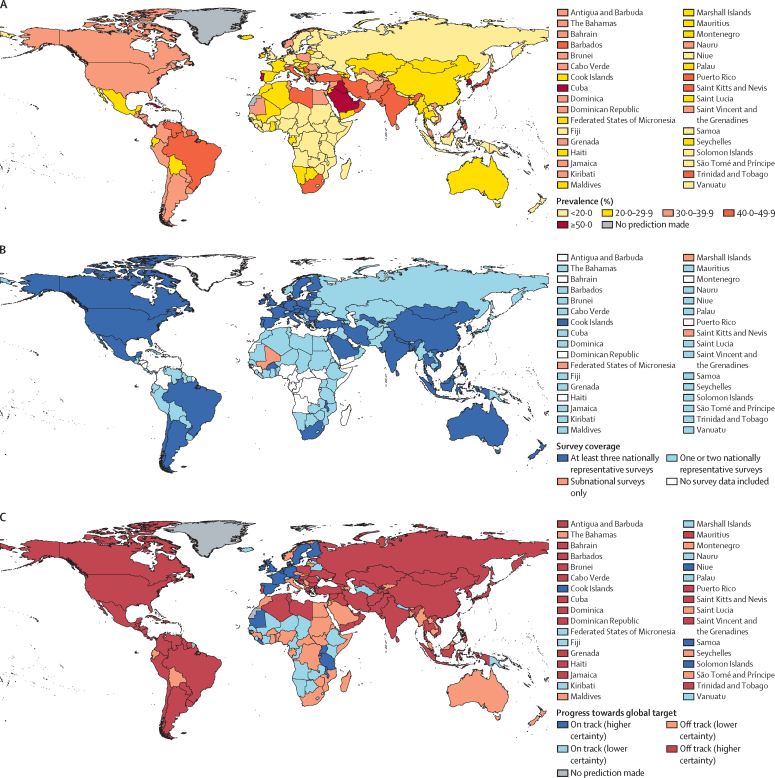
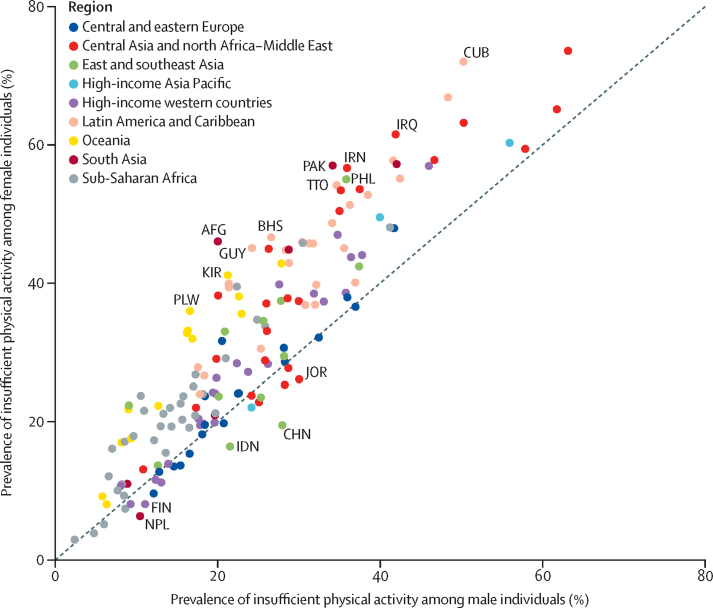
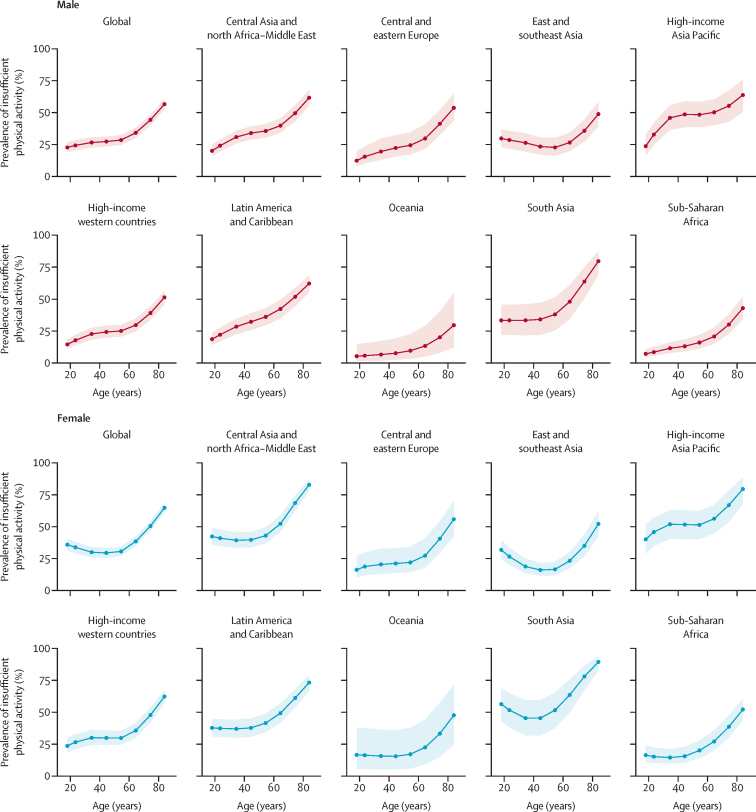
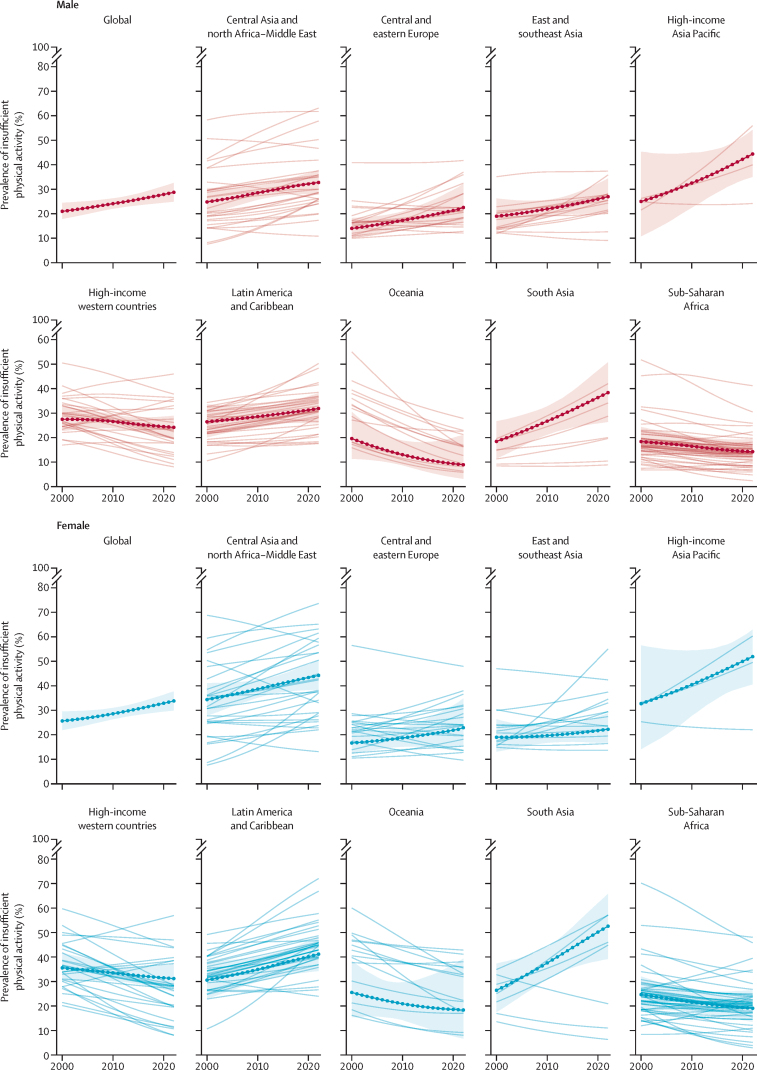
BACKGROUND: Insufficient physical activity increases the risk of non-communicable diseases, poor physical and cognitive function, weight gain, and mental ill-health. Global prevalence of adult insufficient physical activity was last published for 2016, with limited trend data. We aimed to estimate the prevalence of insufficient physical activity for 197 countries and territories, from 2000 to 2022. METHODS: We collated physical activity reported by adults (aged ≥18 years) in population-based surveys. Insufficient physical activity was defined as not doing 150 minutes of moderate-intensity activity, 75 minutes of vigorous-intensity activity, or an equivalent combination per week. We used a Bayesian hierarchical model to compute estimates of insufficient physical activity by country or territory, year, age, and sex. We assessed whether countries or territories, regions, and the world would meet the global target of a 15% relative reduction of the prevalence of insufficient physical activity by 2030 if 2010-22 trends continue. FINDINGS: We included 507 surveys across 163 countries and territories. The global age-standardised prevalence of insufficient physical activity was 31·3% (95% uncertainty interval 28·6-34·0) in 2022, an increase from 23·4% (21·1-26·0) in 2000 and 26·4% (24·8-27·9) in 2010. Prevalence was increasing in 103 (52%) of 197 countries and territories and six (67%) of nine regions, and was declining in the remainder. Prevalence was 5 percentage points higher among female (33·8% [29·9-37·7]) than male (28·7% [25·0-32·6]) individuals. Insufficient physical activity increased in people aged 60 years and older in all regions and both sexes, but age patterns differed for those younger than 60 years. If 2010-22 trends continue, the global target of a 15% relative reduction between 2010 and 2030 will not be met (posterior probability <0·01); however, two regions, Oceania and sub-Saharan Africa, were on track with considerable uncertainty (posterior probabilities 0·70-0·74). INTERPRETATION: Concerted multi-sectoral efforts to reduce insufficient physical activity levels are needed to meet the 2030 target. Physical activity promotion should not exacerbate sex, age, or geographical inequalities. FUNDING: Ministry of Public Health, Qatar, and World Health Organization. TRANSLATIONS: For the Spanish and Portuguese translations of the abstract see Supplementary Materials section.
Overview
CoChat Summary
TL;DR
This pooled analysis of 507 population-based surveys estimates that global age-standardised insufficient physical activity among adults rose from 23·4% in 2000 to 31·3% in 2022. If 2010–22 trends continue, the 2030 target of a 15% relative reduction will not be met (posterior probability <0·01), although Oceania and sub-Saharan Africa were on track with considerable uncertainty.
Key findings
- Global age-standardised prevalence of insufficient physical activity was 31·3% (95% UI 28·6–34·0) in 2022, up from 23·4% (21·1–26·0) in 2000 and 26·4% (24·8–27·9) in 2010; the posterior probability of a true increase from 2010 to 2022 was >0·99.
- Prevalence was increasing in 103 (52%) of 197 countries and territories and six (67%) of nine regions; it was 5 percentage points higher in female (33·8% [29·9–37·7]) than male (28·7% [25·0–32·6]) individuals, with the largest regional sex gap in south Asia (female 52·6% [39·2–65·8] vs male 38·4% [26·4–50·7]).
- Country-specific prevalence ranged from 2·7% (95% UI 1·1–5·3) in Malawi to 66·1% (54·6–76·8) in the United Arab Emirates; prevalence exceeded 40% in 32 countries and 50% in the United Arab Emirates and nine other countries.
- If 2010–22 trends continue, global prevalence in 2030 would be 34·7% (30·4–39·1); the 2030 target would not be met (posterior probability <0·01), while Oceania and sub-Saharan Africa were on track with lower certainty (posterior probabilities 0·70–0·74); 136 countries were not on track and 61 were on track.
Methods
- The study collated self-reported physical activity from population-based surveys of adults aged ≥18 years, including 507 surveys across 163 countries and territories representing 93·0% of the global population; data closed on Feb 5, 2024. Surveys used GPAQ (228 surveys), IPAQ (137), or another questionnaire (142).
- Insufficient physical activity was defined as not meeting WHO aerobic recommendations: at least 150 minutes of moderate-intensity activity per week, 75 minutes of vigorous-intensity activity, or an equivalent combination. Estimates were produced for 197 countries and territories by year (2000–22), seven age groups, and sex.
- Hierarchical Bayesian probit regression models were fit separately for males and females, using natural cubic splines for age with knots at 30 and 60 years, linear time trends, questionnaire indicators, and age-standardised adult obesity as a country-specific time-varying covariate. The models used 4000 posterior samples; 95% uncertainty intervals are Bayesian credible intervals. Progress toward the 2030 target was assessed by projecting 2010–22 trends and computing posterior probabilities of meeting a 15% relative reduction.
Limitations
- The paper states that data were not available for every country and year, and 34 countries had no eligible data; countries with no, limited, or inconsistent data could differ systematically from those with well-developed surveillance. Self-report data are subject to recall and social desirability biases, questionnaire variation, and uncertain statistical adjustments; data quality and representativeness may vary over time, and declining response rates or COVID-19 may have affected non-response bias. Estimates are not disaggregated by wealth, geographical location, or disability, and uncertainty intervals do not reflect all sources of uncertainty.
- The paper states that it could not detect differences due to the COVID-19 pandemic; no included data sources collected data from April to July 2020, and only 30 surveys from 24 countries collected data from August 2020 to December 2021. A linear time trend was modelled, and a sensitivity analysis found no evidence of a step change or non-linearity in post-August 2020 data.
- The text makes evident that fewer than 15 countries had nationally representative device-based physical activity data, with considerable protocol heterogeneity, and that consensus and data are lacking for muscle strengthening, balance, and sedentary recommendations.
Model-written summary. Check it against the paper before relying on it.
Integrity signals
Registry
Cites
Statistics
Figures
Verification
Claims the paper makes
7 Valid · 0 Not valid · 16 Not checked · 82 Own results and interpretations
The cited sources support only part of this claim — read each source’s verdict below.
In the paper
“There is inconsistent and insufficient monitoring of other behaviours included in the physical activity guidelines (muscle strengthening, balance activities [for older adults aged ≥65 years], and sedentary time2) to produce global estimates and targets.5, 6”
§ National, regional, and global trends in insufficient physical activity among adults from 2000 to 2022: a pooled analysis of 507 population-based surveys with 5·7 million participants > Introduction
What the sources say
- Not checked yetcites [5] Milton K Varela AR Strain T Cavill N Foster C Mutrie N A review of global surveillance on the muscle strengthening and balance elements of physical activity recommendations J Frailty Sarcopenia Falls 3 2018 114 124 32300699 PMC7155319 source
- Partly supportedcites [6] Mclaughlin M Atkin AJ Starr L Worldwide surveillance of self-reported sitting time: a scoping review Int J Behav Nutr Phys Act 17 2020 111 32883294 PMC7469304 sourceExperimental — accuracy not yet measured
Our copy of McLaughlin et al. (2020) supports only the sedentary-time component: the Discussion (p. 'Compared with other risk factors...') and Conclusion report that sitting time data were collected in just 62 of 215 countries covering 47% of the global adult population, that 'a comprehensive collation of sedentary behaviour data collected within the last 10 years does not currently exist' (Background), and that surveillance relies on heterogeneous, poorly accurate single-item IPAQ/GPAQ measures (Discussion, limitations). The claim's other two behaviours — muscle-strengthening activities and balance activities for adults aged ≥65 — are nowhere addressed: searches for 'muscle-strengthening', 'balance' and 'bone-loading' returned only reference-list and unrelated passages. The paper also frames the gap as limited coverage/measurement quality rather than an inability to set 'targets', so that framing is the citing authors' own extension. (LLM, conf=0.78)
plain- Asserted: passes — The authors put it forward as true.
- Checkable: passes — It can be checked against evidence.
- Load-bearing: passes — The paper’s conclusions depend on it.
- Based: passes — The paper gives a reason why it holds.
Every source the paper cites for this claim was checked and supports it.
In the paper
“We adjusted prevalences from surveys only representing urban areas and those reporting prevalence in the IPAQ low scoring category using regression equations developed by Guthold and colleagues (appendix 3 p 8).10”
§ National, regional, and global trends in insufficient physical activity among adults from 2000 to 2022: a pooled analysis of 507 population-based surveys with 5·7 million participants > Methods > Data sources
What the sources say
- Supportedcites [10] Guthold R Stevens GA Riley LM Bull FC Worldwide trends in insufficient physical activity from 2001 to 2016: a pooled analysis of 358 population-based surveys with 1·9 million participants Lancet Glob Health 6 2018 e1077 e1086 30193830 source
The Statistical analysis section of Guthold et al. (2018) states that 'We applied four key adjustments to survey data using linear regression modelling to improve comparability (appendix pp 17-27)', and specifies among them (second) an adjustment for over-reporting in the IPAQ, applied as an adjustment factor 'to surveys that used the International Physical Activity Questionnaire', and (third) adjustment of 'data from surveys that had only urban samples' (27 of 358 surveys), estimating rural prevalence from surveys reporting both. That is exactly what the citing sentence attributes to Guthold and colleagues: regression-derived adjustments for urban-only surveys and for IPAQ-reported prevalences. The equations themselves sit in the paper's appendix (pp 17-27), which our copy of the article text does not include, so the claim's finer characterisation of the IPAQ figures as the 'low scoring category' is not spelled out in the main text; the Study design section confirms the target indicator is insufficient activity (not meeting the WHO 150 min moderate/75 min vigorous recommendation). (LLM, conf=0.80)
plain- Asserted: passes — The authors put it forward as true.
- Checkable: passes — It can be checked against evidence.
- Load-bearing: passes — The paper’s conclusions depend on it.
- Based: passes — The paper gives a reason why it holds.
- Supported
Every source the paper cites for this claim was checked and supports it.
In the paper
“Nevertheless, our global prevalence estimate for 2016 (28·7% [95% UI 26·9–30·4]) is similar to the previous analysis (27·5% [25·0–32·2]).10”
§ National, regional, and global trends in insufficient physical activity among adults from 2000 to 2022: a pooled analysis of 507 population-based surveys with 5·7 million participants > Discussion
What the sources say
- Supportedcites [10] Guthold R Stevens GA Riley LM Bull FC Worldwide trends in insufficient physical activity from 2001 to 2016: a pooled analysis of 358 population-based surveys with 1·9 million participants Lancet Glob Health 6 2018 e1077 e1086 30193830 source
The element attributed to Guthold et al. (2018) is the 'previous analysis' figure of 27·5% (25·0–32·2) for global prevalence in 2016; the 28·7% (26·9–30·4) estimate is the citing authors' own result and the 'is similar to' comparison is their conclusion. Our copy states exactly that figure in the Abstract (Findings), the Results ('more than a quarter of adults (27·5%, 95% UI 25·0–32·2) were insufficiently physically active in 2016'), the 'Added value of this study' section, and Table 1/Table 2 (All countries 27·5% [25·0–32·2]). The paper does not report a 28·7% global estimate (its 2001 global value is 28·5%, 23·9–33·9), consistent with that number belonging to the citing study. (LLM, conf=0.90)
plain- Asserted: passes — The authors put it forward as true.
- Checkable: passes — It can be checked against evidence.
- Load-bearing: unclear — It is unclear whether the paper’s conclusions depend on it.
- Based: passes — The paper gives a reason why it holds.
- Supported
A result the paper reports from its own data — it cites no other source for it, so there is none to check. The quote shows it is in the paper.
In the paper
“The global age-standardised prevalence of insufficient physical activity was 31·3% (95% uncertainty interval 28·6–34·0) in 2022, an increase from 23·4% (21·1–26·0) in 2000 and 26·4% (24·8–27·9) in 2010.”
- Also stated in: § Results · plain
“Globally, nearly a third of adults were insufficiently physically active (age-standardised prevalence of 31·3% [95% uncertainty interval 28·6–34·0]) in 2022 (table 2).”
§ National, regional, and global trends in insufficient physical activity among adults from 2000 to 2022: a pooled analysis of 507 population-based surveys with 5·7 million participants > Abstract > Findings
plain- Asserted: passes — The authors put it forward as true.
- Checkable: passes — It can be checked against evidence.
- Load-bearing: passes — The paper’s conclusions depend on it.
- Based: passes — The paper gives a reason why it holds.
- Also stated in: § Results · plain
A result the paper reports from its own data — it cites no other source for it, so there is none to check. The quote shows it is in the paper.
In the paper
“The global age-standardised prevalence of insufficient physical activity was 31·3% (95% uncertainty interval 28·6–34·0) in 2022, an increase from 23·4% (21·1–26·0) in 2000 and 26·4% (24·8–27·9) in 2010.”
- Also stated in: § Results · plain
“Global | Global | 23·4% (21·1–26·0) | 26·4% (24·8–27·9) | 31·3% (28·6–34·0) | 34·7% (30·4–39·1) | Off track, higher certainty”
§ National, regional, and global trends in insufficient physical activity among adults from 2000 to 2022: a pooled analysis of 507 population-based surveys with 5·7 million participants > Abstract > Findings
plain- Asserted: passes — The authors put it forward as true.
- Checkable: passes — It can be checked against evidence.
- Load-bearing: passes — The paper’s conclusions depend on it.
- Based: passes — The paper gives a reason why it holds.
- Also stated in: § Results · plain
47 more claims
Create a free account to see all 105 claims and to verify the 19 references still open.
- Probably not a substantial claim. 20
- It may state two separate claims as one. 39
Claims other papers make about this one
Each is checked against this paper’s own text: does it say what the citing paper says it does?
In the citing paper
“showing that over 30% of adults do not meet the minimum recommendations for physical activity, and this percentage exceeds 40% among older adults [141].”
From Dietary and Behavioral Strategies for Weight Loss and Weight Loss Maintenance: A Narrative Review (2025) · cites this paper as [141]
Self-check
Percentages, sums and reported differences re-computed from the paper’s own numbers.
Each contradiction between two passages listed here was confirmed by an independent check.
Rated minor: it would not touch a result — a value no result rests on, a p-value that stays on the same side of the significance level, or a conflict that is clerical, resolved elsewhere in the paper, or outside its own findings.
In the paper
§ National, regional, and global trends in insufficient physical activity among adults from 2000 to 2022: a pooled analysis of 507 population-based surveys with 5·7 million participants > Results
“Our trend analysis shows the global age-standardised prevalence of insufficient physical activity has increased from 28·6% in 2010 to 31·3% in 2022 (table 1)”
§ National, regional, and global trends in insufficient physical activity among adults from 2000 to 2022: a pooled analysis of 507 population-based surveys with 5·7 million participants > Results
“| | Global | Global | 23·4% (21·1–26·0) | 26·4% (24·8–27·9) | 31·3% (28·6–34·0) | 34·7% (30·4–39·1) | Off track, higher certainty |”
Citations
Cites
World Health Organization 2020 guidelines on physical activity and sedentary behaviour
Bull, F. C., Al-Ansari, S. S., Biddle, S., Borodulin, K., Buman, M. P., Cardon, G., Carty, C., Chaput, J.-P., Chastin, S., Chou, R., et al. (2020) · British Journal of Sports Medicine · doi:10.1136/bjsports-2020-102955 · Cited by 11,657
Self-citationGlobal physical activity levels: surveillance progress, pitfalls, and prospects
Hallal, P. C., Andersen, L. B., Bull, F. C., Guthold, R., Haskell, W., & Ekelund, U. (2012) · The Lancet · doi:10.1016/s0140-6736(12)60646-1 · Cited by 5,711
Self-citationGuthold, R., Stevens, G. A., Riley, L. M., & Bull, F. C. (2018) · The Lancet Global Health · doi:10.1016/s2214-109x(18)30357-7 · Cited by 4,819
Self-citationEzzati, M., López, A. D., Rodgers, A., & Murray, C. J. L. (2004) · Cited by 3,319
Phelps, N. H., Singleton, R. K., Zhou, B., Heap, R. A., Mishra, A., Bennett, J. E., Paciorek, C. J., Lhoste, V. P., Carrillo-Larco, R. M., Stevens, G. A., et al. (2024) · The Lancet · doi:10.1016/s0140-6736(23)02750-2 · Cited by 2,544 · cited 1×
“17 An additional variance term accounted for unobserved design factors (eg, sample design and season) that would lead to variance beyond that expected due to sample size.”
BackgroundSelf-citationGuidelines for accurate and transparent health estimates reporting: the GATHER statement
Stevens, G. A., Alkema, L., Black, R. E., Boerma, J. T., Collins, G. S., Ezzati, M., Grove, J. T., Hogan, D. R., Hogan, M. C., Horton, R., et al. (2016) · The Lancet · doi:10.1016/s0140-6736(16)30388-9 · Cited by 1,798
Self-citationProgress in physical activity over the Olympic quadrennium
Sallis, J. F., Bull, F., Guthold, R., Heath, G. W., Inoue, S., Kelly, P., Oyeyemi, A. L., Perez, L. G., Richards, J., & Hallal, P. C. (2016) · The Lancet · doi:10.1016/s0140-6736(16)30581-5 · Cited by 935
Self-citationImpact of COVID-19 on physical activity: A rapid review
Park, A. H., Zhong, S., Yang, H., Jeong, J., & Lee, C. (2022) · Journal of Global Health · doi:10.7189/jogh.12.05003 · Cited by 232
Step Up! Tackling the Burden of Insufficient Physical Activity in Europe
OECD, & World Health Organization (2023) · OECD eBooks · doi:10.1787/500a9601-en · Cited by 178
Shifting the physical inactivity curve worldwide by closing the gender gap
Mielke, G. I., da Silva, I. C. M., Kolbe-Alexander, T. L., & Brown, W. J. (2018) · Sports Medicine · doi:10.1007/s40279-017-0754-7 · Cited by 164
Self-citation
Cited by
Items 701–800 of 1,000
Physical fitness and cognitive function: a cross-sectional study among adults in Qatar
Alabdulrazzak, A., Al-louzi, T., Rahhal, M. O., Albaloshi, A.-J., Al-Emadi, R. M., Al-Mohannadi, M., Abdulrahman, J., Farooqui, H. H., Pedersen, S., & Saady, R. M. A. (2026) · BMJ Open · doi:10.1136/bmjopen-2025-113261
“6 Prior research has documented a link between physical fitness and cognitive alterations.”
Shimizu, N., Ishigaki, T., Ogawa, T., Kimura, Y., Kinoshita, A., Kubo, H., Ikeda, K., Ashizawa, R., Masuda, Y., Yanagida, H., et al. (2026) · Research Square · doi:10.21203/rs.3.rs-8556119/v1
Nargesi, A. A., Dsouza, V., Shnitzer, T., Kadaifciu, A., Cremer, A., Jurgens, S. J., Mack, N., Lupi, R., Azuine, R. E., Ginsburg, G. S., et al. (2026) · medRxiv · doi:10.64898/2026.02.11.26346079
Biswas, A., Chen, C., Lang, J. J., Villeneuve, P. J., Smith, P. M., & Prince, S. A. (2026) · Journal of Transport & Health · doi:10.1016/j.jth.2026.102278 · Cited by 1
Li, J., Wu, Y., Gkitakou, A., Benz, E., Medina‐Gómez, C., Zillikens, M. C., Oei, L., Voortman, T., Rivadeneira, F., & Trajanoska, K. (2026) · Calcified Tissue International · doi:10.1007/s00223-026-01492-z · Cited by 1
“Nonetheless, nearly one-third of the global population remains inactive [ 10].”
Bidaurrazaga‐Letona, I., Lejonagoitia-Garmendia, M., Esain, I., Duñabeitia, I., Sanz, B., Monasterio, X., Torre-Sainz, J., & Gil, S. M. (2026) · PLoS ONE · doi:10.1371/journal.pone.0341913
“Given the rising global aging population and the well-documented risks of physical inactivity [6], WF presents a promising, scalable strategy to promote healthy aging and sustained physical activity in older adults [7].”
Physical Activity and Its Impact on Cardiometabolic Disorders
Vázquez-Jiménez, J. G., & Romero‐García, T. (2026) · Handbook of experimental pharmacology · doi:10.1007/164_2026_792
Yaremenko, K., Greenslade, K., Niven, A. G., & Baker, G. (2026) · Health Psychology and Behavioral Medicine · doi:10.1080/21642850.2026.2629646
“Despite the growing evidence for the benefits of physical activity on both mental and physical health; large numbers of people are insufficiently active to achieve these established health benefits (Strain et al., 2024) with global inactivity levels labelled as pandemic (Kohl et al., 2012).”
Leinonen, A., Huikari, S., Kärmeniemi, M., Kari, J. T., Korpelainen, R., Kujala, U. M., Ding, D., & Nurkkala, M. (2026) · Preventive Medicine · doi:10.1016/j.ypmed.2026.108542
Sannigrahi, S., Filian, K., Seenappa, B., Sathyamoorthy, H., Reddy, S., Gowda, M., Jeevitha, Sanju, R., Papanna, S., Satish Kumar, S. K., et al. (2026) · medRxiv · doi:10.64898/2026.02.17.26346488
Rombaldi, A. J., da Silva, L. S., Feter, N., Reichert, F. F., da Silva, M. C., Freitas, M. P., Delpino, F. M., Rocha, J. Q. S., Schröeder, N., Paz, I. D. A., et al. (2026) · Journal of Physical Activity and Health · doi:10.1123/jpah.2025-0158
Shrestha, R. K., Paudel, S., Rijal, A., Adhikari, T. B., Gradidge, P. J.-L., Khatri, B., Neupane, D., Skejø, S. D., Vaidya, A., Sanders, T., et al. (2026) · International Journal of Behavioral Nutrition and Physical Activity · doi:10.1186/s12966-026-01894-0
“Despite these well-established advantages, one in four adults globally does not achieve the World Health Organization (WHO) recommendation of 150–300 min of moderate-intensity or 75–150 min of vigorous-intensity PA weekly [2, 6].”
la Cámara, M. Á. D., de Larrea‐Baz, N. F., Pastor‐Barriuso, R., Fernández‐Navarro, P., Pollán, M., Pérez-Gómez, B., ENE-COVID Study Group, Azcárraga, P. A., Blanco, F., Fernández, R. G., et al. (2026) · BMC Public Health · doi:10.1186/s12889-025-26072-y
“In addition, if the estimated 2010 to 2022 trend continues, the global target of the WHO of reducing physical inactivity by a 15% in 2030 [11] will not be achieved [12].”
Venkata, R. K., & Meda, S. S. (2026) · Journal of Physical Activity and Health · doi:10.1123/jpah.2025-0955
Júnior, R. D. S. W., Sarti, F. M., Teixeira, I. P., & Florindo, A. A. (2026) · Journal of Physical Activity and Health · doi:10.1123/jpah.2024-0752
Boateng, D., Osei-Kwasi, H., Addo, P., Mogre, V., Assasie, E., Boakye, K., Zakariah-Akoto, S., Ojwang, A. A., Adjei, M. Y. B., Akparibo, R., et al. (2026) · BMJ Public Health · doi:10.1136/bmjph-2025-002680
Rossi, M., Bucci, T., Tartaglia, E., Askarinejad, A., Lam, S. H. M., Rigutini, A. G., Ferri, C., Boriani, G., Tse, H.-F. T., Chao, T., et al. (2026) · EP Europace · doi:10.1093/europace/euag032 · Cited by 1
Sers, S., Wäsche, H., Giurgiu, M., Hildebrand, C., Bachert, P., Wunsch, K., & Wöll, A. (2026) · German Journal of Exercise and Sport Research · doi:10.1007/s12662-026-01097-6
“However, following current global comparative estimates, approximately 30% of adults worldwide do not meet the recommended levels of PA and are therefore physically inactive (Strain et al., 2024).”
InfluentialSigcha, L., Swenne, A., Hayes, G., Kühnová, J., Cimler, R., Elavsky, S., Větrovský, T., Fezeu, L., Bouchan, J., Oppert, J., et al. (2026) · doi:10.2196/preprints.94302
Metabolic Dysfunction-Associated Steatotic Liver Disease in Africa
El‐Kassas, M., Spearman, C. W., Elsayed, M., & Younossi, Z. M. (2026) · Clinics in Liver Disease · doi:10.1016/j.cld.2026.01.011 · Cited by 2
van de Berg, N. J., Barnhoorn, E. M., de Smid, F. C., Dietz, R., Overdijk, R. H., Smolders, R. G. V., Maliepaard, M., van Beekhuizen, H. J., & van Doorn, H. C. (2026) · Applied Ergonomics · doi:10.1016/j.apergo.2026.104759 · Cited by 1
Mahirah, D., Ho, Y.-C. L., Chia, Z. H., Chew, M. S.-L., Koh, X. H., Lim, J.-J., Thumboo, J., & Doshi, K. (2026) · Healthcare · doi:10.3390/healthcare14050669
Weißensteiner, M., & Exel, J. (2026) · Int. J. Comput. Sci. Sport · doi:10.2478/ijcss-2026-0003
“In 2022, 1.8 billion adults were classified as physically inactive, representing an increase of 5% compared to 2010 (Strain et al., 2024).”
InfluentialKhezrpour, A., Sarrafzadeh, S., Ebrahimpur, M., Khojaste, M., Rezaei, N., Payab, M., & Sharifi, F. (2026) · Scientific Reports · doi:10.1038/s41598-026-42828-x
“These estimates are markedly above the global average of 43.5% insufficient activity reported in 2022 and also higher than contemporary figures for many high-income settings 25 .”
InfluentialAcute hot‐water immersion augments the diastolic blood pressure nocturnal dip in healthy adults
Leaney, S. F., Ponce, F. A. F., Owen, T. F., Harvey, B. L., Davies‐Wilson, O. N., Brand, O. M. A., Coombs, G. B., Moore, J. P., & Oliver, S. J. (2026) · Experimental Physiology · doi:10.1113/ep093583 · Cited by 1
Age- and sex-specific motives for physical activity in the Vojvodina region
Vuković, J., Jakšić, D., Tubić, T., Matic, R. M., Maričić, S., Marković, L., & Đorđić, V. (2026) · Health Problems of Civilization · doi:10.29316/hpc/218911
“Despite numerous efforts to address the problem of physical inactivity, the global prevalence of insufficient physical activity among adults increased from 23.4% in 2000 to 31.3% in 2022 [7].”
Influential24-hour Movement Behaviours and Multimorbidity in Malawi: protocol for a cross-sectional study
Warner, B., Gray, S. R., Nkoka, O., Price, A., & Crampin, A. C. (2026) · Wellcome Open Research · doi:10.12688/wellcomeopenres.25945.1
Gillham, G., Baker, G., Kelly, P., & Williamson, C. (2026) · Clinical and Public Health Guidelines · doi:10.1002/gin2.70066 · Cited by 1
Yang, J., Lou, L., Chen, X., Xiang, C., & Xu, W. (2026) · Social Science & Medicine · doi:10.1016/j.socscimed.2026.119172
Is Social Media Use a Blessing or Curse for Motor Function and Skill Acquisition? An Opinion Paper
Fricke, L., Wendeborn, T., & Ragert, P. (2026) · eNeuro · doi:10.1523/eneuro.0382-25.2026
Effah, E. S., Nai, A., & Bárdos, H. (2026) · Health & Place · doi:10.1016/j.healthplace.2026.103645
Silva-Júnior, C. D., Pires, G. N., Kakazu, V. A., Morelhao, P. K., Tufik, S. B., & Andersen, M. L. (2026) · Nutrire · doi:10.1186/s41110-026-00448-5
Crowther, J., Dogra, S. A., Barber, S., Ali, N., & Hall, J. (2026) · International Journal of Behavioral Nutrition and Physical Activity · doi:10.1186/s12966-026-01886-0 · Cited by 2
“Inequalities in young people’s Physical Activity (PA) participation persist globally, with girls, young women, and those from lower-income and racially minoritised communities consistently least active [1, 2].”
Liu, Z., Yang, Y., Chen, J., Zhang, S.-H., Zhang, X.-R., Zhuang, Y.-X., & Hu, R.-Z. (2026) · Systematic Reviews · doi:10.1186/s13643-026-03154-5 · Cited by 2
“%) of 197 countries and territories since 2010 [2].”
Varela, A. R., Salvo, D., Hallal, P. C., & Hinckson, E. A. (2026) · Journal of Physical Activity and Health · doi:10.1123/jpah.2026-0090
Australia’s new physical activity guidelines won’t shift the needle – here are 4 better ideas
McLaughlin, M. J., Salmon, J., & McCue, P. A. (2026) · doi:10.64628/aa.xm6mye569
Wu, J., Guo, Z., Tang, W., Sun, S., Sun, M.-W., Wang, Y., & Dou, G.-B. (2026) · BMC Psychology · doi:10.1186/s40359-026-04366-z
“A 2022 study covering 163 countries finds that approximately 31.3% of adults worldwide (around 1.8 billion) do not meet recommended PA levels—a rise from 23.4% in 2000 [5].”
InfluentialTomás-Gallego, G., Ibort, E. G., Torres, J. M. D., Sierra, J. O., & Boraita, R. J. (2026) · Journal of Public Health · doi:10.1007/s10389-026-02708-0 · Cited by 1
Evans, J. T., Cleland, V. J., Gall, S., Dwyer, T., Venn, A., & Climie, R. E. (2026) · European Heart Journal Open · doi:10.1093/ehjopen/oeag038
Walking handball as an exercise alternative to conventional walking and recreational team handball
Martins, R., Krustrup, P., Castagna, C., Mohr, M., Teixeira, J. M. M., Carneiro, I., & Póvoas, S. C. A. (2026) · Frontiers in Sports and Active Living · doi:10.3389/fspor.2026.1784474
Tenkanen, T., Pihlainen, K., Raitanen, J. A., Honkanen, T., Vaara, J. P., Kyröläinen, H., Levola, T., Lundell, R. V., Sievänen, H. T., & Vasankari, T. J. (2026) · BMJ Open Sport & Exercise Medicine · doi:10.1136/bmjsem-2025-002921
O’Reilly, S., Bhriain, O. N., Thabane, L., & Clifford, A. (2026) · BMJ Open · doi:10.1136/bmjopen-2025-106636
Chen, W., & Morazuki, S. R. (2026) · Pensar en Movimiento Revista de Ciencias del Ejercicio y la Salud · doi:10.15517/w7rzkx32
Groffik, D., Frömel, K., & Ziemba, M. (2026) · Healthcare · doi:10.3390/healthcare14070836
“Among adults worldwide, the prevalence of insufficient PA between 2000 and 2022 is alarming, and the global target of a 15% relative reduction by 2030 is unlikely to be achieved [1].”
Self-citationGeorges, D., Rakuša, E., Becher, H., Brandes, B., Brenner, H., Harth, V., Hebestreit, A., Heise, J.-K., Herbolsheimer, F., Keil, T., et al. (2026) · BMC Geriatrics · doi:10.1186/s12877-026-07357-2 · Cited by 1
“In recent decades, considerable shifts in environmental conditions, occupational demands, and patterns of leisure activities have contributed to significant changes in physical activity (PA) behaviors [52, 62].”
Promoting exercise adherence among older adults: An evidence-based process model from Singapore
Sng, H. L., & Ko, H. (2026) · Educational Gerontology · doi:10.1080/03601277.2026.2650509
Stähler, L., Günther, L., Baumer, L. N., Breuning, F., Weyers, S., & Pischke, C. R. (2026) · BMC Public Health · doi:10.1186/s12889-026-27110-z
“High-income Western countries are categorized as “off track”, although PA increased by almost 4% from 2000 to 2022, which is just below what is necessary to meet the 2030 target [4].”
Michalská, D., Zimovjanová, M., Přibylová, J., Svobodová, D., & Zikán, V. (2026) · Clinical Osteology · doi:10.36290/clo.2026.003
Loira, I. H., Giron-Cabrera, A. A., Yataco-Trelles, C. E., Parodi, J. F., & Runzer-Colmenares, F. M. (2026) · Medical Education & Clinical Practice · doi:10.21142/mecp.2026.1.1.e010
Turcotte, S.-A., Routhier-Guilmette, S., Harandian, K., Kazandjian, N., Privitera, M., & Pagani, L. S. (2026) · Advances in experimental medicine and biology · doi:10.1007/978-981-95-7000-3_22
Cardiovascular disease in China: epidemiological features and changing trends
FangChao, L. I. U., Su, S., & XiangFeng, L. U. (2026) · Scientia Sinica Vitae · doi:10.1360/ssv-2025-0221 · Cited by 1
“这一趋势背离了世界卫生组 织《 2018~2030 年促进身体活动全球行动计划》 “ 在 2010 年基线基础上相对降低 15%” 的目标 [63] .”
Hirai, M., Sato, S., Yamada, T., Takeda, N., Maruo, K., Kitabatake, Y., Tsuno, K., Narimatsu, H., Arao, T., & Nemoto, Y. (2026) · Journal of Aging and Environment · doi:10.1080/26892618.2026.2644318
Burin-Chu, S., Agbangla, N. F., Caby, I., & Bossede, F. (2026) · BMJ Open · doi:10.1136/bmjopen-2025-114665
“7 8 However, physical activity levels tend to decline with age, 9 making it difficult for many older adults to sustain regular exercise participation.”
Cereda, F. (2026) · Adapted Physical Activity Quarterly · doi:10.1123/apaq.2025-0121
Daily steps offset risks of sedentary behavior in the All of Us research program
Zheng, N. S., Huang, S. Y., Annis, J. S., Master, H., Full, K. M., & Brittain, E. L. (2026) · Nature Communications · doi:10.1038/s41467-026-71652-0 · Cited by 1
From IFSPT to ISEPA: how a change of name can be transformative!
Gard, S., Samukawa, M., & Bizzini, M. (2026) · British Journal of Sports Medicine · doi:10.1136/bjsports-2026-111827
Huang, X., Zhang, Y., Zou, T., Liu, J., Zhang, E., Lu, Y., Dong, A., Zhang, X., & Fang, Q. (2026) · Experimental Gerontology · doi:10.1016/j.exger.2026.113128
Frehlich, L., Lang, J. J., Prince, S. A., & McCormack, G. R. (2026) · BMC Public Health · doi:10.1186/s12889-026-27408-y
“Objective and perceived neighbourhood walkability: population-average associations with transportation and recreational physical activity in urban-dwelling Canadian adults Background Many adults globally accumulate less physical activity than recommended for optimal health [1].”
Cordeiro, D., Pinheiro, M. A., Pereira, G., Ponte, I. N. V., Luís, J., & Freitas, M. (2026) · Cureus · doi:10.7759/cureus.107345
“Recent pooled analyses indicate that 31% of adults and 80% of adolescents worldwide fail to meet the minimum physical activity recommendations [5,6].”
Raina, S. K. (2026) · Journal of Public Health and Primary Care · doi:10.4103/jphpc.jphpc_53_25
Diagnostic imaging interpretation by physical therapists: a clinical performance evaluation
Alghamdi, A., Alamrani, S. A., Alharbi, A. A., Amer, H. S. A., Albalwi, A. A., Aljammaz, M., Alasiri, A. I., & Alfaifi, I. (2026) · BMC Medical Education · doi:10.1186/s12909-026-09237-0
Watanabe, M., Kawaguchi, K., Ide, K., Kondo, K., Tsuji, T., Kanamori, S., Yamakita, M., & Nakagomi, A. (2026) · Journal of Physical Activity and Health · doi:10.1123/jpah.2025-0707
Ribeiro, T. C., Nascimento, A. L. O. S., Oliveira, M. R. N., Ramos, A. P., Vieira, M. E. C. D. M., Christófaro, D. G. D., Raposo, M. T., & Ohara, D. (2026) · Perceptual and Motor Skills · doi:10.1177/00315125261446365
Smedberg, K., Bergh, A., Roman, E., Spörndly-Nees, S., Eriksson, J. W., Kallings, L., & Söder, J. (2026) · PLoS ONE · doi:10.1371/journal.pone.0346895
“The global prevalence of insufficient PA, defined as the proportion of the population not meeting these recommendations, was estimated to 31.3% in 2022, which is an increase from previous estimates of 23.4% from 2000 and 26.4% from 2010 [15].”
InfluentialCİNCİ, M. B., Güllü, E., & Şengül, S. T. (2026) · Research Square · doi:10.21203/rs.3.rs-9027863/v1
Hansson, S. E., Abrahamsen, F. E., Haakstad, G., Gjestvang, C., Jørgensen, R. J. G., Brown, W. J., & Haakstad, L. A. H. (2026) · BMC Psychiatry · doi:10.1186/s12888-026-08117-7
“Maintaining regular physical activity is challenging for most people, as many struggle to meet the recommended 150 min of moderate-intensity exercise per week [50].”
Barnabas Theodore, A., Rahul, S., Soundararajan, K., Aseer, A. L., Kanthanathan, S., & Mohanan, C. (2026) · Global Journal of Medical Pharmaceutical and Biomedical Update · doi:10.25259/gjmpbu_104_2025
Seiterö, A., Ruiz-Moreno, A., Alcarazo, A., Garrido-Gonzalez, C. M. M., Ballesta-Rodríguez, M. I., Henriksson, P., Lima, R. A., Álvarez‐Pérez, Y., Garrido, R. E. R., Campos-Paíno, H., et al. (2026) · BMJ Open · doi:10.1136/bmjopen-2025-114465
Wibowo, R. A., Fawkner, S. G., Manner, J., Fachriansyah, K., & Baker, G. (2026) · International Journal of Qualitative Studies on Health and Well-Being · doi:10.1080/17482631.2026.2663573 · Cited by 1
“Yet, global inactivity rates have risen over the past two decades, from 28.5 in 2001 to 31.3% in 2022 (Strain et al., 2024).”
InfluentialSellars, P., Bennett, A., Crone, D., Mercer, J., & Clayton, D. (2026) · Mental Health Science · doi:10.1002/mhs2.70045
Wen, C., Nauman, J., Tsai, M. K., Wai, J. P. M., Tsai, S. P., Lee, J. H., Chiou, H. Y., Wen, C., Chu, T.-W. D., Chen, C. H., et al. (2026) · Mayo Clinic Proceedings · doi:10.1016/j.mayocp.2026.04.016 · Cited by 1
Rivera, R., Castaneda, R., Sobel, T., & Andrade, M. D. H. (2026) · Springer eBooks · doi:10.1007/978-3-032-18203-6_8 · Cited by 3
de Sousa, T. F., Pereira, K. M., Conceição, Y. D. S., Matos, C. D. S., Santana, D. P., Junior, A. D. F. S., Maciel, C. L., & Borges, G. F. (2026) · International Journal of Environmental Research and Public Health · doi:10.3390/ijerph23050599
“Previous evidence indicates that men and women may differ in both physical activity patterns and self-rated health [3,11].”
Chiba, I., Nakaya, N., Mugikura, S., Kogure, M., Hatanaka, R., Nakaya, K., Tokioka, S., Takase, M., Nakamura, T., Nagaie, S., et al. (2026) · Journal of Epidemiology · doi:10.2188/jea.je20250540
Pinto, A. S. M., & Cárdenas-Cordero, N. M. (2026) · Religación · doi:10.46652/rgn.v11i51.1672
Martínez-Aparicio, M., Lozano-Muñoz, L., Olaya-Sánchez, R., Marco-Marco, A. B., Ballesteros‐Frutos, J., & Forcada-Sánchez, V. (2026) · Fisioterapia · doi:10.1016/j.ft.2026.04.001
Ferraz, R., Neiva, H. P., Silva, F. M., & Duarte-Mendes, P. (2026) · Sports · doi:10.3390/sports14050183
Djedi, S., Ait-Challal, Y., Kamila, A.-Y. G., & Ghidouche, F. (2026) · Tourism Planning & Development · doi:10.1080/21568316.2026.2666274
Associations of exercise procrastination and exercise addiction with mental well-being
Ma, W., Zhao, Y., Deng, H., Li, Y., Mei, Z., Chen, L., Wang, C., Zhang, X., Zheng, W., & Li, H. (2026) · Frontiers in Psychology · doi:10.3389/fpsyg.2026.1818526
Dzhambov, A. M., Burov, A., Markevych, I., Kostadinov, K. R., Dimitrova, D., Helbich, M., & Nieuwenhuijsen, M. J. (2026) · International Journal of Hygiene and Environmental Health · doi:10.1016/j.ijheh.2026.114816
From 2002 to 2022: sex-specific trends in diabetes prevalence and risk factors in Switzerland
Bailer, G. S., Meier, C. R., & Schneider, C. (2026) · Journal of Public Health · doi:10.1007/s10389-026-02765-5
Magnusson, D., Boada, P., Webster, L. S., & Quezada, C. (2026) · Frontiers in Public Health · doi:10.3389/fpubh.2026.1834768
“In Ecuador, 20%–30% of adults are inactive (13), and physical inactivity’s contribution to disability-adjusted life years has risen over the last three decades (14).”
Testedzésfüggőség és egészségmagatartás a magyar közszolgálati hallgatók körében
Erdős, Á., & Mitiner, M. (2026) · Belügyi Szemle · doi:10.38146/bsz-ajia-ajia.2026.v74.i4.pp851-882
“A mozgásszegény életmód különösen a nők körében fordul elő, habár e téren a férfiak és nők kö-zötti különbség számottevő regionális és nemzeti eltéréseket mutat (Strain et al., 2024).”
Wahrhaftig, J., Ferrari, G., Claro, R., Antunes, A. B. S., Cardoso, L. D. O., & Rezende, L. F. M. (2026) · The Lancet Regional Health - Americas · doi:10.1016/j.lana.2026.101494 · Cited by 2
“23 In Brazil, the prioritization of physical activity by the Ministry of Health has been recognized globally, including in The Lancet ’s 2012 series on physical activity, with a notable example being the Health Academy Program ( Programa Academia da Saúde , PAS), launched in 2011, which expanded…”
Characteristics of Canadian Adult Physical Activity Persona Profiles
Hollman, H., Vanderloo, L. M., Duncan, M. J., Faulkner, G., Tremblay, M. S., O’Reilly, N., Lee, E., Spence, J. C., & Rhodes, R. E. (2026) · Journal of Physical Activity and Health · doi:10.1123/jpah.2025-0653
Psychometric Properties of a Virtual Physical Literacy Assessment for Preschool-Aged Children
Li, J., Potter, M., Hwang, Y., Boyd, M., Moldenhauer, R., Hills, J., Naylor, P., Rhodes, R. E., Liu, S., Buckler, E. J., et al. (2026) · Australasian Journal of Early Childhood · doi:10.1177/18369391261451273
Shabbir, U., O’Connor, R., Hannigan, A., Woods, C., Sharma, S., Maguire, N., Lynch, M., & O’Regan, A. (2026) · Research Square · doi:10.21203/rs.3.rs-9339520/v1
Bird, J. M., POTTS, H. W. W., Fisher, A., Mitchell, J. J., Blodgett, J. M., Steed, A. J., & Hamer, M. (2026) · Performance Enhancement & Health · doi:10.1016/j.peh.2026.100441
Sedentary behavior and stroke risk in US adults: The mediating role of central adiposity
Zhou, Y., Zhao, Q., Kang, H., Li, B., & Chen, A. (2026) · Medicine · doi:10.1097/md.0000000000048662 · Cited by 1
“[27,28] 29-32] It should be noted that both sedentary time and MVPA were self-reported and thus subject to recall and social desirability bias, which may have introduced nondifferential measurement error and attenuated the observed associations.”
Stocker, R., Russell, S., Taylor, G., Witham, M. D., Shaw, J. A. M., & West, D. J. (2026) · Diabetic Medicine · doi:10.1111/dme.70367
“16 Most adults with diabetes do not achieve recommended aerobic activity volumes, and typical free-living moderate- to-vigorous physical activity levels appear low, with a sizeable subgroup doing near-zero moderate- to-vigorous physical activity on many days, especially in older cohorts.”
Physical activity and periodontitis among US adults
Mohajeri, A., Torp, K., Simon, L. H., & Hung, M. (2026) · Journal of Public Health · doi:10.1007/s10389-026-02788-y
Tornberg, J., Ikäheimo, T., Kaikkonen, K., Pyky, R., Nurkkala, M., Hautala, A. J., Jämsä, T. J., & Korpelainen, R. (2026) · Physical Activity and Health · doi:10.5334/paah.538
Katagiri, H., Shimada, N., Mitomo, S., Ohmi, T., Miyagoshi, Y., Kaneoka, K., Akuzawa, H., Kobashi, G., Saito, R., & Murofushi, K. (2026) · Digital Health · doi:10.1177/20552076261453219
“1,8,9 Telemedicine healthcare services that utilize internet have gained significant attention during the coronavirus disease pandemic.”
Eryücel, M. E., & Akıl, M. (2026) · International Journal of Environmental Research and Public Health · doi:10.3390/ijerph23050666
“Global data indicate a rising trend in physical inactivity among individuals aged 18–29 years, with a substantial proportion of university students failing to meet recommended activity levels [2].”
Precision Physical Activity Prescription via Reinforcement Learning for Functional ActionsPreprint
Lin, G., Miao, R., Sacheck, J., & Zhang, X. (2026) · medRxiv · doi:10.64898/2026.05.18.26353525
“Despite its well-documented health benefits, the World Health Organization (WHO) reports that a large proportion of the population remains insufficiently active, with about 31% of adults worldwide failing to meet recommended levels [33, 42].”
Physical activity monitoring in Portugal: looking for a surveillance system
Pereira, J., Rodrigues, B., & Mendes, R. (2026) · Health Problems of Civilization · doi:10.29316/hpc/221687
Elevating sleep to a global health priority: The One Sleep Health framework
Tahmasian, M., Küppers, V., Genon, S., Eickhoff, S. B., Golombek, D. A., & Ibáñez, A. M. (2026) · Cell Reports Medicine · doi:10.1016/j.xcrm.2026.102828 · Cited by 6
Jiazhi, S., Ariffin, I. A., & Tham, J. (2026) · Journal of Health Psychology · doi:10.1177/13591053261445231
“Due to physical inactivity leading to a significant increase in morbidity and mortality from non-communicable diseases, among the 5 million new annual deaths, more than 3.9 million individuals could prevent such outcomes by increasing their physical activity (Lee et al., 2012; Strain et al., 2024).”
InfluentialIt’s not about the bike: a holistic view of the lifelong benefits of sport
O'Neill, K., & Mainsbridge, C. (2026) · Sport in Society · doi:10.1080/17430437.2026.2668290
“In recent decades, there has been a global trend towards insufficient physical activity across the lifespan in 163 countries, particularly for women and people over 60 years of age (Strain et al. 2024).”
Metadata
- Authors
- Strain, T., Flaxman, S., Guthold, R., Semenova, E., Cowan, M., Riley, L. M., Bull, F. C., Stevens, G. A., Abdul Raheem, R., Agoudavi, K., Alfred Anderssen, S., Alkhatib, W., Aly, E. A. H., Anjana, R. M., Bauman, A., Bovet, P., Brito Moniz, T., Bulotaitė, G., Caixeta, R., Castro Monteiro, E., Celis Morales, C., Chaves Cortes, C., Crochemore-Silva, I., Cyr-Philbert, S., Damasceno, A., Davaakhuu, N., Elimam Ahmed, M. A., Farnberger, C., Farzadfar, F., Fernando, D., Froboese, I., Frömel, K., Gage, R., Garcia, L., Guwatudde, D., Hamřík, Z., Herman Hansen, B., Irianto, J., Jazaa Aloufi, W., Jeon, J., Jáuregui, A., Kagaruki, G. B., Katewongsa, P., Katulanda, P., Khang, Y.-H., Malisoux, L., Massad, S., Mayige, M. T., Medina Garcia, C., Mielke, G. I., Montenegro Mendoza, R., Moosa, S., Msyamboza, K. P., Mutungi, G., Mwangi, K. J., Ndagijimana, A., Nyandwi, A., Obreja, G., Oh, K., Oliveira Werneck, A., Ondarsuhu, D., Palam, E., Pereira, E., Phy, M., Pisaryk, V., Põlajev, A., Qureshi, H., Razak, L., Riaz, B. K., Richards, J., Roa Rodriguez, R., Saamel, M., Savin, S., Schurink-van 't Klooster, T., Serrate Mengue, S., Shander Ganapathy, S., Shukurov, S., Sigmundová, D., Silva Matos, C., Somatunga, L., Spiroski, I., Titze, S., Tjandrarini, D. H., Turley, M., Ugel, E., Uwinkindi, F., Viali, S., Wallmann-Sperlich, B., Wendel-Vos, W., Widyastari, D. A., Yuldashev, R., & Zoma, L. R.
- Affiliations
- University of Edinburgh (GB)
- University of Oxford (GB)
- Imperial College London (GB)
- World Health Organization (CH)
- The University of Western Australia (AU)
- Corresponding author
- Stevens, Gretchen A
- ORCID
- Venue
- The Lancet Global Health
- Publisher
- Elsevier BV
- Published
- 2024-08
- Volume
- 12
- Issue
- 8
- Pages
- e1232-e1243
- ISSN
- 2214-109X (ISSN-L)
- PMC
- PMC11254784
- OpenAlex
- W4399993456
- Semantic Scholar
- f1d48225285ef148b332ceb7b90e7bd3cbdcdbe0
- Cited by
- 1,087
- References
- 16
- Citations by year
- 2026: 546 · 2025: 476 · 2024: 65
- FWCI
- 309.35
- Type
- journal article
- Language
- en
- Update notices
- erratum (2025-02-01)
- Open access
- gold
- doi.org
- Licence
- cc-by
- www.elsevier.com/tdm/userlicense/1.0/ (tdm)
- www.elsevier.com/legal/tdmrep-license (tdm)
- creativecommons.org/licenses/by/3.0/igo/ (vor)
- Locations
- The Lancet Global Health (publishedVersion, cc-by)
- PubMed Central (publishedVersion, cc-by)
- PubMed (publishedVersion)
- UWA Profiles and Research Repository (UWA) (submittedVersion, cc-by)
- Edinburgh Research Explorer (University of Edinburgh) (submittedVersion, cc-by)
- Research Portal (Queen's University Belfast) (submittedVersion, cc-by)
- Seoul National University Open Repository (Seoul National University) (submittedVersion)
- Funders
- World Health Organization
- Engineering and Physical Sciences Research Council (EP/V002910/2)
- Topics
- Health Sciences › Medicine › Public Health, Environmental and Occupational Health › Physical Activity and Health
- Health Sciences › Medicine › Public Health, Environmental and Occupational Health › Obesity, Physical Activity, Diet
- Social Sciences › Life-span and Life-course Studies › Recreational Sport and Physical Activity
- Keywords
- physical inactivity, global prevalence, country-level estimates, sex differences, age differences, older adults, non-communicable diseases, population survey, Bayesian hierarchical model, Oceania, sub-Saharan Africa, South Asia, Europe, North America, Latin America, Caribbean, Middle East
- MeSH terms
- Adolescent, Adult, Aged, Bayes Theorem, Female, Health Surveys, Humans, Male, Middle Aged, Global Health, Exercise, Prevalence, Young Adult
About these checks
Registry, retraction, Cites and statistics results are computed, not judged, with one exception: a printed reference that no index lists is read once by a model before it counts as a citation error. Claims are extracted by a model and kept only when their quote appears verbatim in the text; each cited source is then checked, with a model’s help, for whether it says what the claim relies on. Those verdicts can be wrong — read the claim’s quote and the cited source before relying on one.
The claim verdicts this report counts are experimental: their accuracy is not yet measured.
A language model drew the claims from the paper on 2026-10-05, under version 3 of the claim definition (model deepseek-v4.1-flash, prompt extract-v3).
A second model labelled each claim on 2026-10-05 (model jev-1.13-20260917, definition revision gold-guideline-v0.2).
Cited sources are checked with a language model’s help (qwen3.8-omni-flash).
Statistics and arithmetic are recomputed, not judged.
Confidence bands are shown only for fields calibrated on our annotated test set. None is calibrated yet, so no band is shown.
What counts as a claim ›How we measure confidence ›How we check this ›
Are you an author, or do you see a problem with this page? Request a review
Data sources
Bibliographic data: Semantic Scholar, OpenAlex, Crossref.
Contains information from the Semantic Scholar Academic Graph Datasets, made available under the ODC Attribution License (ODC-BY 1.0).
Semantic Scholar’s data is described in: Kinney, R., et al. (2023). The Semantic Scholar Open Data Platform. arXiv:2301.10140.
