

National, regional, and global trends in insufficient physical activity among adults from 2000 to 2022: a pooled analysis of 507 population-based surveys with 5·7 million participants
Open accessThe DOI matches its Crossref record; 17 of the 17 references it cites were found in a registry or an index; 8 of the 30 sources its claims cite were checked for support.
Abstract
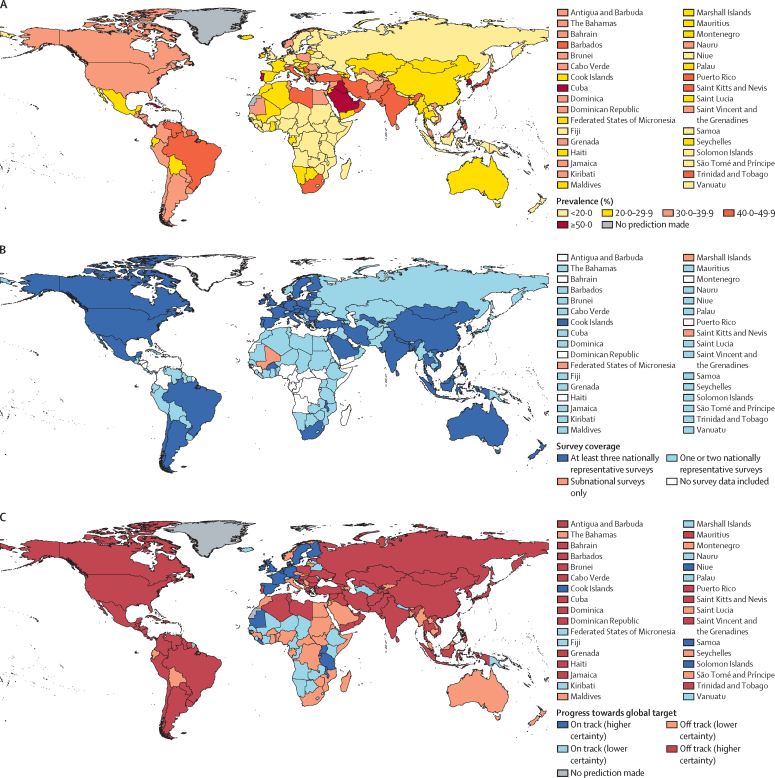
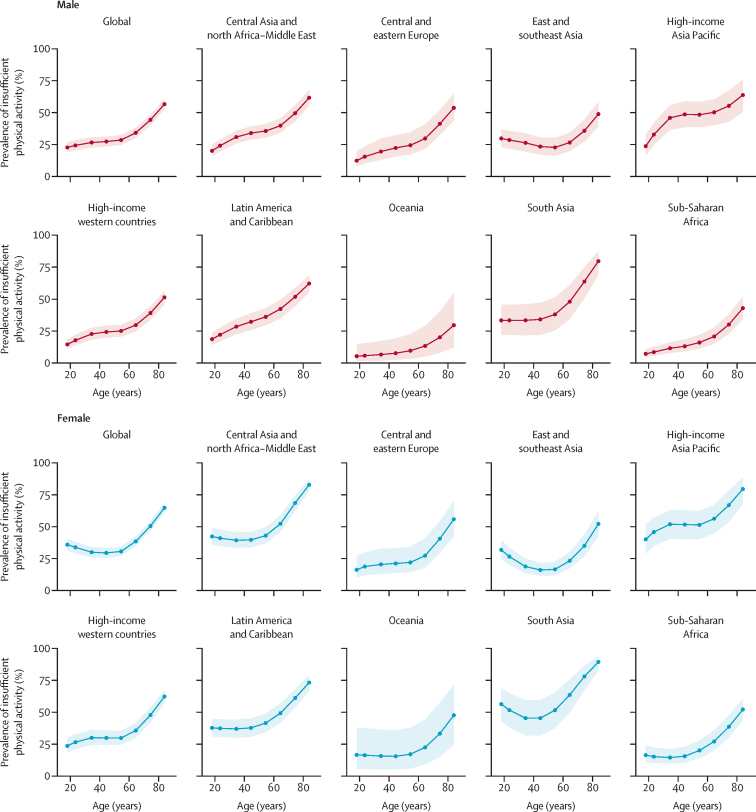
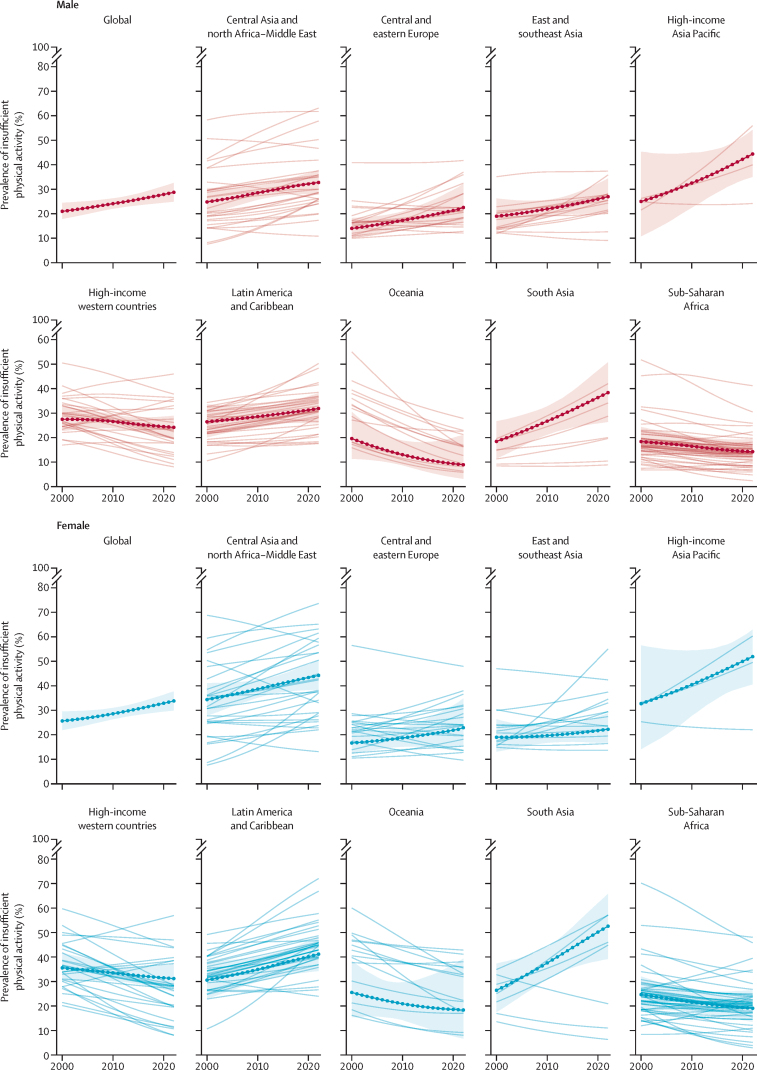
BACKGROUND: Insufficient physical activity increases the risk of non-communicable diseases, poor physical and cognitive function, weight gain, and mental ill-health. Global prevalence of adult insufficient physical activity was last published for 2016, with limited trend data. We aimed to estimate the prevalence of insufficient physical activity for 197 countries and territories, from 2000 to 2022. METHODS: We collated physical activity reported by adults (aged ≥18 years) in population-based surveys. Insufficient physical activity was defined as not doing 150 minutes of moderate-intensity activity, 75 minutes of vigorous-intensity activity, or an equivalent combination per week. We used a Bayesian hierarchical model to compute estimates of insufficient physical activity by country or territory, year, age, and sex. We assessed whether countries or territories, regions, and the world would meet the global target of a 15% relative reduction of the prevalence of insufficient physical activity by 2030 if 2010-22 trends continue. FINDINGS: We included 507 surveys across 163 countries and territories. The global age-standardised prevalence of insufficient physical activity was 31·3% (95% uncertainty interval 28·6-34·0) in 2022, an increase from 23·4% (21·1-26·0) in 2000 and 26·4% (24·8-27·9) in 2010. Prevalence was increasing in 103 (52%) of 197 countries and territories and six (67%) of nine regions, and was declining in the remainder. Prevalence was 5 percentage points higher among female (33·8% [29·9-37·7]) than male (28·7% [25·0-32·6]) individuals. Insufficient physical activity increased in people aged 60 years and older in all regions and both sexes, but age patterns differed for those younger than 60 years. If 2010-22 trends continue, the global target of a 15% relative reduction between 2010 and 2030 will not be met (posterior probability <0·01); however, two regions, Oceania and sub-Saharan Africa, were on track with considerable uncertainty (posterior probabilities 0·70-0·74). INTERPRETATION: Concerted multi-sectoral efforts to reduce insufficient physical activity levels are needed to meet the 2030 target. Physical activity promotion should not exacerbate sex, age, or geographical inequalities. FUNDING: Ministry of Public Health, Qatar, and World Health Organization. TRANSLATIONS: For the Spanish and Portuguese translations of the abstract see Supplementary Materials section.
Overview
CoChat Summary
TL;DR
This pooled analysis of 507 population-based surveys estimates that global age-standardised insufficient physical activity among adults rose from 23·4% in 2000 to 31·3% in 2022. If 2010–22 trends continue, the 2030 target of a 15% relative reduction will not be met (posterior probability <0·01), although Oceania and sub-Saharan Africa were on track with considerable uncertainty.
Key findings
- Global age-standardised prevalence of insufficient physical activity was 31·3% (95% UI 28·6–34·0) in 2022, up from 23·4% (21·1–26·0) in 2000 and 26·4% (24·8–27·9) in 2010; the posterior probability of a true increase from 2010 to 2022 was >0·99.
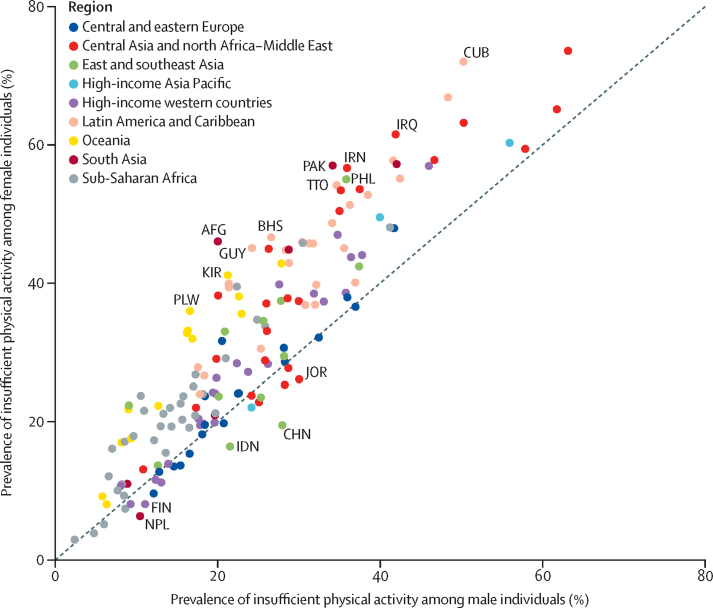
- Prevalence was increasing in 103 (52%) of 197 countries and territories and six (67%) of nine regions; it was 5 percentage points higher in female (33·8% [29·9–37·7]) than male (28·7% [25·0–32·6]) individuals, with the largest regional sex gap in south Asia (female 52·6% [39·2–65·8] vs male 38·4% [26·4–50·7]).
- Country-specific prevalence ranged from 2·7% (95% UI 1·1–5·3) in Malawi to 66·1% (54·6–76·8) in the United Arab Emirates; prevalence exceeded 40% in 32 countries and 50% in the United Arab Emirates and nine other countries.
- If 2010–22 trends continue, global prevalence in 2030 would be 34·7% (30·4–39·1); the 2030 target would not be met (posterior probability <0·01), while Oceania and sub-Saharan Africa were on track with lower certainty (posterior probabilities 0·70–0·74); 136 countries were not on track and 61 were on track.
Methods
- The study collated self-reported physical activity from population-based surveys of adults aged ≥18 years, including 507 surveys across 163 countries and territories representing 93·0% of the global population; data closed on Feb 5, 2024. Surveys used GPAQ (228 surveys), IPAQ (137), or another questionnaire (142).
- Insufficient physical activity was defined as not meeting WHO aerobic recommendations: at least 150 minutes of moderate-intensity activity per week, 75 minutes of vigorous-intensity activity, or an equivalent combination. Estimates were produced for 197 countries and territories by year (2000–22), seven age groups, and sex.
- Hierarchical Bayesian probit regression models were fit separately for males and females, using natural cubic splines for age with knots at 30 and 60 years, linear time trends, questionnaire indicators, and age-standardised adult obesity as a country-specific time-varying covariate. The models used 4000 posterior samples; 95% uncertainty intervals are Bayesian credible intervals. Progress toward the 2030 target was assessed by projecting 2010–22 trends and computing posterior probabilities of meeting a 15% relative reduction.
Limitations
- The paper states that data were not available for every country and year, and 34 countries had no eligible data; countries with no, limited, or inconsistent data could differ systematically from those with well-developed surveillance. Self-report data are subject to recall and social desirability biases, questionnaire variation, and uncertain statistical adjustments; data quality and representativeness may vary over time, and declining response rates or COVID-19 may have affected non-response bias. Estimates are not disaggregated by wealth, geographical location, or disability, and uncertainty intervals do not reflect all sources of uncertainty.
- The paper states that it could not detect differences due to the COVID-19 pandemic; no included data sources collected data from April to July 2020, and only 30 surveys from 24 countries collected data from August 2020 to December 2021. A linear time trend was modelled, and a sensitivity analysis found no evidence of a step change or non-linearity in post-August 2020 data.
- The text makes evident that fewer than 15 countries had nationally representative device-based physical activity data, with considerable protocol heterogeneity, and that consensus and data are lacking for muscle strengthening, balance, and sedentary recommendations.
Model-written summary. Check it against the paper before relying on it.
Integrity signals
Registry
Cites
Statistics
Figures
Verification
Claims the paper makes
7 Valid · 0 Not valid · 16 Not checked · 82 Own results and interpretations
The cited sources support only part of this claim — read each source’s verdict below.
In the paper
“There is inconsistent and insufficient monitoring of other behaviours included in the physical activity guidelines (muscle strengthening, balance activities [for older adults aged ≥65 years], and sedentary time2) to produce global estimates and targets.5, 6”
§ National, regional, and global trends in insufficient physical activity among adults from 2000 to 2022: a pooled analysis of 507 population-based surveys with 5·7 million participants > Introduction
What the sources say
- Not checked yetcites [5] Milton K Varela AR Strain T Cavill N Foster C Mutrie N A review of global surveillance on the muscle strengthening and balance elements of physical activity recommendations J Frailty Sarcopenia Falls 3 2018 114 124 32300699 PMC7155319 source
- Partly supportedcites [6] Mclaughlin M Atkin AJ Starr L Worldwide surveillance of self-reported sitting time: a scoping review Int J Behav Nutr Phys Act 17 2020 111 32883294 PMC7469304 sourceExperimental — accuracy not yet measured
Our copy of McLaughlin et al. (2020) supports only the sedentary-time component: the Discussion (p. 'Compared with other risk factors...') and Conclusion report that sitting time data were collected in just 62 of 215 countries covering 47% of the global adult population, that 'a comprehensive collation of sedentary behaviour data collected within the last 10 years does not currently exist' (Background), and that surveillance relies on heterogeneous, poorly accurate single-item IPAQ/GPAQ measures (Discussion, limitations). The claim's other two behaviours — muscle-strengthening activities and balance activities for adults aged ≥65 — are nowhere addressed: searches for 'muscle-strengthening', 'balance' and 'bone-loading' returned only reference-list and unrelated passages. The paper also frames the gap as limited coverage/measurement quality rather than an inability to set 'targets', so that framing is the citing authors' own extension. (LLM, conf=0.78)
plain- Asserted: passes — The authors put it forward as true.
- Checkable: passes — It can be checked against evidence.
- Load-bearing: passes — The paper’s conclusions depend on it.
- Based: passes — The paper gives a reason why it holds.
Every source the paper cites for this claim was checked and supports it.
In the paper
“We adjusted prevalences from surveys only representing urban areas and those reporting prevalence in the IPAQ low scoring category using regression equations developed by Guthold and colleagues (appendix 3 p 8).10”
§ National, regional, and global trends in insufficient physical activity among adults from 2000 to 2022: a pooled analysis of 507 population-based surveys with 5·7 million participants > Methods > Data sources
What the sources say
- Supportedcites [10] Guthold R Stevens GA Riley LM Bull FC Worldwide trends in insufficient physical activity from 2001 to 2016: a pooled analysis of 358 population-based surveys with 1·9 million participants Lancet Glob Health 6 2018 e1077 e1086 30193830 source
The Statistical analysis section of Guthold et al. (2018) states that 'We applied four key adjustments to survey data using linear regression modelling to improve comparability (appendix pp 17-27)', and specifies among them (second) an adjustment for over-reporting in the IPAQ, applied as an adjustment factor 'to surveys that used the International Physical Activity Questionnaire', and (third) adjustment of 'data from surveys that had only urban samples' (27 of 358 surveys), estimating rural prevalence from surveys reporting both. That is exactly what the citing sentence attributes to Guthold and colleagues: regression-derived adjustments for urban-only surveys and for IPAQ-reported prevalences. The equations themselves sit in the paper's appendix (pp 17-27), which our copy of the article text does not include, so the claim's finer characterisation of the IPAQ figures as the 'low scoring category' is not spelled out in the main text; the Study design section confirms the target indicator is insufficient activity (not meeting the WHO 150 min moderate/75 min vigorous recommendation). (LLM, conf=0.80)
plain- Asserted: passes — The authors put it forward as true.
- Checkable: passes — It can be checked against evidence.
- Load-bearing: passes — The paper’s conclusions depend on it.
- Based: passes — The paper gives a reason why it holds.
- Supported
Every source the paper cites for this claim was checked and supports it.
In the paper
“Nevertheless, our global prevalence estimate for 2016 (28·7% [95% UI 26·9–30·4]) is similar to the previous analysis (27·5% [25·0–32·2]).10”
§ National, regional, and global trends in insufficient physical activity among adults from 2000 to 2022: a pooled analysis of 507 population-based surveys with 5·7 million participants > Discussion
What the sources say
- Supportedcites [10] Guthold R Stevens GA Riley LM Bull FC Worldwide trends in insufficient physical activity from 2001 to 2016: a pooled analysis of 358 population-based surveys with 1·9 million participants Lancet Glob Health 6 2018 e1077 e1086 30193830 source
The element attributed to Guthold et al. (2018) is the 'previous analysis' figure of 27·5% (25·0–32·2) for global prevalence in 2016; the 28·7% (26·9–30·4) estimate is the citing authors' own result and the 'is similar to' comparison is their conclusion. Our copy states exactly that figure in the Abstract (Findings), the Results ('more than a quarter of adults (27·5%, 95% UI 25·0–32·2) were insufficiently physically active in 2016'), the 'Added value of this study' section, and Table 1/Table 2 (All countries 27·5% [25·0–32·2]). The paper does not report a 28·7% global estimate (its 2001 global value is 28·5%, 23·9–33·9), consistent with that number belonging to the citing study. (LLM, conf=0.90)
plain- Asserted: passes — The authors put it forward as true.
- Checkable: passes — It can be checked against evidence.
- Load-bearing: unclear — It is unclear whether the paper’s conclusions depend on it.
- Based: passes — The paper gives a reason why it holds.
- Supported
A result the paper reports from its own data — it cites no other source for it, so there is none to check. The quote shows it is in the paper.
In the paper
“The global age-standardised prevalence of insufficient physical activity was 31·3% (95% uncertainty interval 28·6–34·0) in 2022, an increase from 23·4% (21·1–26·0) in 2000 and 26·4% (24·8–27·9) in 2010.”
- Also stated in: § Results · plain
“Globally, nearly a third of adults were insufficiently physically active (age-standardised prevalence of 31·3% [95% uncertainty interval 28·6–34·0]) in 2022 (table 2).”
§ National, regional, and global trends in insufficient physical activity among adults from 2000 to 2022: a pooled analysis of 507 population-based surveys with 5·7 million participants > Abstract > Findings
plain- Asserted: passes — The authors put it forward as true.
- Checkable: passes — It can be checked against evidence.
- Load-bearing: passes — The paper’s conclusions depend on it.
- Based: passes — The paper gives a reason why it holds.
- Also stated in: § Results · plain
A result the paper reports from its own data — it cites no other source for it, so there is none to check. The quote shows it is in the paper.
In the paper
“The global age-standardised prevalence of insufficient physical activity was 31·3% (95% uncertainty interval 28·6–34·0) in 2022, an increase from 23·4% (21·1–26·0) in 2000 and 26·4% (24·8–27·9) in 2010.”
- Also stated in: § Results · plain
“Global | Global | 23·4% (21·1–26·0) | 26·4% (24·8–27·9) | 31·3% (28·6–34·0) | 34·7% (30·4–39·1) | Off track, higher certainty”
§ National, regional, and global trends in insufficient physical activity among adults from 2000 to 2022: a pooled analysis of 507 population-based surveys with 5·7 million participants > Abstract > Findings
plain- Asserted: passes — The authors put it forward as true.
- Checkable: passes — It can be checked against evidence.
- Load-bearing: passes — The paper’s conclusions depend on it.
- Based: passes — The paper gives a reason why it holds.
- Also stated in: § Results · plain
47 more claims
Create a free account to see all 105 claims and to verify the 19 references still open.
- Probably not a substantial claim. 20
- It may state two separate claims as one. 39
Claims other papers make about this one
Each is checked against this paper’s own text: does it say what the citing paper says it does?
In the citing paper
“showing that over 30% of adults do not meet the minimum recommendations for physical activity, and this percentage exceeds 40% among older adults [141].”
From Dietary and Behavioral Strategies for Weight Loss and Weight Loss Maintenance: A Narrative Review (2025) · cites this paper as [141]
Self-check
Percentages, sums and reported differences re-computed from the paper’s own numbers.
Each contradiction between two passages listed here was confirmed by an independent check.
Rated minor: it would not touch a result — a value no result rests on, a p-value that stays on the same side of the significance level, or a conflict that is clerical, resolved elsewhere in the paper, or outside its own findings.
In the paper
§ National, regional, and global trends in insufficient physical activity among adults from 2000 to 2022: a pooled analysis of 507 population-based surveys with 5·7 million participants > Results
“Our trend analysis shows the global age-standardised prevalence of insufficient physical activity has increased from 28·6% in 2010 to 31·3% in 2022 (table 1)”
§ National, regional, and global trends in insufficient physical activity among adults from 2000 to 2022: a pooled analysis of 507 population-based surveys with 5·7 million participants > Results
“| | Global | Global | 23·4% (21·1–26·0) | 26·4% (24·8–27·9) | 31·3% (28·6–34·0) | 34·7% (30·4–39·1) | Off track, higher certainty |”
Citations
Cites
World Health Organization 2020 guidelines on physical activity and sedentary behaviour
Bull, F. C., Al-Ansari, S. S., Biddle, S., Borodulin, K., Buman, M. P., Cardon, G., Carty, C., Chaput, J.-P., Chastin, S., Chou, R., et al. (2020) · British Journal of Sports Medicine · doi:10.1136/bjsports-2020-102955 · Cited by 11,657
Self-citationGlobal physical activity levels: surveillance progress, pitfalls, and prospects
Hallal, P. C., Andersen, L. B., Bull, F. C., Guthold, R., Haskell, W., & Ekelund, U. (2012) · The Lancet · doi:10.1016/s0140-6736(12)60646-1 · Cited by 5,711
Self-citationGuthold, R., Stevens, G. A., Riley, L. M., & Bull, F. C. (2018) · The Lancet Global Health · doi:10.1016/s2214-109x(18)30357-7 · Cited by 4,819
Self-citationEzzati, M., López, A. D., Rodgers, A., & Murray, C. J. L. (2004) · Cited by 3,319
Phelps, N. H., Singleton, R. K., Zhou, B., Heap, R. A., Mishra, A., Bennett, J. E., Paciorek, C. J., Lhoste, V. P., Carrillo-Larco, R. M., Stevens, G. A., et al. (2024) · The Lancet · doi:10.1016/s0140-6736(23)02750-2 · Cited by 2,544 · cited 1×
“17 An additional variance term accounted for unobserved design factors (eg, sample design and season) that would lead to variance beyond that expected due to sample size.”
BackgroundSelf-citationGuidelines for accurate and transparent health estimates reporting: the GATHER statement
Stevens, G. A., Alkema, L., Black, R. E., Boerma, J. T., Collins, G. S., Ezzati, M., Grove, J. T., Hogan, D. R., Hogan, M. C., Horton, R., et al. (2016) · The Lancet · doi:10.1016/s0140-6736(16)30388-9 · Cited by 1,798
Self-citationProgress in physical activity over the Olympic quadrennium
Sallis, J. F., Bull, F., Guthold, R., Heath, G. W., Inoue, S., Kelly, P., Oyeyemi, A. L., Perez, L. G., Richards, J., & Hallal, P. C. (2016) · The Lancet · doi:10.1016/s0140-6736(16)30581-5 · Cited by 935
Self-citationImpact of COVID-19 on physical activity: A rapid review
Park, A. H., Zhong, S., Yang, H., Jeong, J., & Lee, C. (2022) · Journal of Global Health · doi:10.7189/jogh.12.05003 · Cited by 232
Step Up! Tackling the Burden of Insufficient Physical Activity in Europe
OECD, & World Health Organization (2023) · OECD eBooks · doi:10.1787/500a9601-en · Cited by 178
Shifting the physical inactivity curve worldwide by closing the gender gap
Mielke, G. I., da Silva, I. C. M., Kolbe-Alexander, T. L., & Brown, W. J. (2018) · Sports Medicine · doi:10.1007/s40279-017-0754-7 · Cited by 164
Self-citation
Cited by
Items 301–400 of 1,000
Carlos, J., Nguyen, P. H., & Lipman, S. (2025) · JMIR Research Protocols · doi:10.2196/73766 · Cited by 2
“Despite the well-documented benefits of PA and risks associated with a sedentary lifestyle, 31% of the global adult population—equivalent to 1.8 billion adults—fail to meet the recommended levels of PA [5].”
InfluentialSapunova, D., Komprdová, K., Kohoutek, J., Puklová, V., Krsková, A., Černá, M., Zvonař, M., Reguli, Z., Andrýsková, L., Piler, P., et al. (2025) · Environmental Sciences Europe · doi:10.1186/s12302-025-01244-0 · Cited by 2
“For instance, gradual trends were observed in smoking habits, physical activity, dietary patterns, and consumer interest in organic products [38, 64, 98, 100].”
Shen, H. R., Zhang, J., Li, A., & Liu, Y. (2025) · Land · doi:10.3390/land14122315 · Cited by 2
The Health Survey of São Paulo – ISA-Physical Activity and Environment Longitudinal Study
Florindo, A. A., Onita, B. M., Teixeira, I. P., Miranda, A. M., & Hallal, P. C. (2025) · BMJ Open · doi:10.1136/bmjopen-2025-107842 · Cited by 3
“Comparisons between weighted and unweighted distributions were largely similar, but the use of weights helped attenuate minor imbalances observed in waves 2 and 3.”
Xue, D., Peng, J., Wei, L., Cui, C., Ye, Y., & Wang, Y. (2025) · BMJ Open · doi:10.1136/bmjopen-2025-109270 · Cited by 2
Zero-shot prediction of neighborhood health using multimodal large language models
Zhao, H., & Lai, Y. (2025) · Urban Informatics · doi:10.1007/s44212-025-00092-w · Cited by 3
“Recent global estimates indicate that 31.3% of the population is physically inactive (Strain et al., 2024).”
InfluentialSkerrett-Byrne, D. A., Ashton, L., Nixon, B., & Morgan, P. J. (2025) · The Lancet Regional Health - Western Pacific · doi:10.1016/j.lanwpc.2025.101716 · Cited by 8
“56 In contrast those who maintain a physically active lifestyle exhibit improved sperm quality including increased count, motility, and morphology, as well as favourable hormonal levels (increased testosterone, FSH and LH) compared to those of a sedentary nature.”
Hua, N., Qin, C., Wang, A., Yang, Y., Zhang, X., Zhang, Q., & Chen, J. (2025) · BMC Geriatrics · doi:10.1186/s12877-025-06633-x · Cited by 3
“Physical inactivity remains prevalent globally, with the prevalence being highest among older adults than other age groups [1, 2].”
Giannoni‐Luza, S., Urso, D., & Logroscino, G. (2025) · BMJ Public Health · doi:10.1136/bmjph-2025-003409 · Cited by 4
Zhu, Z., Zhou, X., Chen, M., Dou, C., Liu, D., Kong, L., Ye, C., Xu, M., Xu, Y. S., Li, M., et al. (2025) · The Lancet Regional Health - Western Pacific · doi:10.1016/j.lanwpc.2025.101780 · Cited by 2
Saha, A., Kasilingam, D. L., & Jublee, D. I. (2025) · Journal of Retailing and Consumer Services · doi:10.1016/j.jretconser.2025.104656 · Cited by 3
Cox, E. R., Beacroft, S., Jansson, A. K., Wade, L., Duncan, M., Lubans, D. R., Robards, S. L., Leitner, M., Gutberlet, N., & Plotnikoff, R. C. (2025) · International Journal of Behavioral Nutrition and Physical Activity · doi:10.1186/s12966-025-01868-8 · Cited by 4
Benincá, I. L., Gattuso, M., Butti, S., Caccia, D., & Morganti, F. (2025) · Journal of Applied Gerontology · doi:10.1177/07334648251410268 · Cited by 4
de Wolf, I., Toepoel, V., Kompier, M. E., Mulder, J., van Nassau, F., Schouten, B., Snoeker, B. A. M., Wendel‐Vos, W., & van der Ploeg, H. P. (2025) · Journal for the Measurement of Physical Behaviour · doi:10.1123/jmpb.2025-0026 · Cited by 3
Self-citationTello, M., Ibort, E. G., Torres, J. M. D., & Boraita, R. J. (2025) · BMC Public Health · doi:10.1186/s12889-025-26059-9 · Cited by 4
“Despite these well-documented benefits, physical inactivity has continued to rise globally, increasing from 23.4% in 2000 to 31.3% in 2022, with the sharpest growth observed in high-income countries [17].”
InfluentialLinden, P., Reibling, N., & Kühhirt, M. (2025) · Social Science Research · doi:10.1016/j.ssresearch.2025.103305 · Cited by 2
Wallmann-Sperlich, B., Lendt, C., Biallas, B., Baurecht, H., Jochem, C., Bucksch, J., Leitzmann, M. F., & Froboese, I. (2025) · BMC Public Health · doi:10.1186/s12889-025-26005-9 · Cited by 2
“GPAQ-based data from other European populations show similarly elevated physical activity levels [44].”
Self-citationMa, Y., Wu, X., Sun, Y., Wu, M., Tian, Q., Tian, J., Xu, D., Gong, M., Li, X., Liu, Y., et al. (2025) · Public Health · doi:10.1016/j.puhe.2025.106115 · Cited by 2
Lin, R., Zheng, H., Shuai, Z., Wang, M., Guo, X., Wang, Y., & Wu, W. (2026) · Frontiers in Sports and Active Living · doi:10.3389/fspor.2025.1679563 · Cited by 2
Zhao, K., Chen, Z. H., Huang, Q., Li, S., Tan, G., Guo, K., & Jiang, L. (2026) · Frontiers in Psychology · doi:10.3389/fpsyg.2025.1701201 · Cited by 4
Siegrist, M., Bakker, E. A., Timmermans, E. J., Lam, T. M., Moholdt, T. T., Løchen, M., Hanssen, H., Dalakoti, M., Lakerveld, J., Vaartjes, I. C. H., et al. (2026) · European Journal of Preventive Cardiology · doi:10.1093/eurjpc/zwag033 · Cited by 3
Physical activity and the aging brain: A narrative review
Klil‐Drori, S., Juneau, M., & Serlin, Y. (2026) · Journal of Health Psychology · doi:10.1177/13591053251408208 · Cited by 3
“Physical inactivity is a modifiable and preventable risk factor for numerous health conditions (Strain et al., 2024).”
Feasibility and usability of a ChatGPT-based app to support physical activity: A pilot study
Larbi, D., Zanaboni, P., Årsand, E., Randine, P., Trondsen, M. V., Denecke, K., Wynn, R., & Gabarrón, E. (2026) · Digital Health · doi:10.1177/20552076261417860 · Cited by 4
Lee, Y., Choi, T., Oh, J., Park, J., Yim, Y., Lee, S., Lee, H., Hajek, A., Li, Y., Kim, J., et al. (2026) · Medicine · doi:10.1097/md.0000000000047462 · Cited by 2
“[27,28]”
Gao, Y., Li, M., Jiang, L., Pan, X., Tian, Y., Zhang, Y., & Suzuki, K. (2026) · Frontiers in Public Health · doi:10.3389/fpubh.2026.1737196 · Cited by 3
Edholm, P., Wennberg, P., Ballin, M., Östgren, C. J., Daka, B., Berglind, D., Lenander, C., Ahlqvist, V. H., Rådholm, K., Henriksson, P., et al. (2026) · British Journal of Sports Medicine · doi:10.1136/bjsports-2025-110403 · Cited by 3
“5 Active commuting to and from work is a practical way to increase daily physical”
Physical Activity Experiences of People With Type 1 Diabetes Across the Life Course
Richardson, E. V., Bright, C., Farrow, D., & Nathan, H. (2026) · Adapted Physical Activity Quarterly · doi:10.1123/apaq.2025-0111 · Cited by 4
Bouchan, J., Fezeu, L., Větrovský, T., Elavsky, S., Delestre, F., Vylder, F. D., Buck, C., Hebestreit, A., Janas, H., Hayes, G., et al. (2026) · Journal for the Measurement of Physical Behaviour · doi:10.1123/jmpb.2025-0025 · Cited by 2
Adeyemi, O. J., Boatright, D. B., & Chodosh, J. (2026) · Sports · doi:10.3390/sports14020081 · Cited by 3
“Physical activity is a cornerstone of healthy aging, yet inactivity remains highly prevalent among U.S. older adults [1–3].”
Pina, I., Gallagher-Hamill, C., Divine, A., & Astill, S. L. (2026) · Psychology of sport and exercise · doi:10.1016/j.psychsport.2026.103091 · Cited by 2
dos Santos, E. B., Teixeira, J. A., Bird, J. M., Stubbs, B., & Schuch, F. B. (2026) · Psychology and Health · doi:10.1080/08870446.2026.2632073 · Cited by 3
Hamdani, N., Oliveira, J., Santana, P., Ferretti, G. M., Mehta, P., Stubbs, P. W., Sherrington, C., Verhagen, A. P., Tiedemann, A., & Saragiotto, B. T. (2026) · Journal of Orthopaedic and Sports Physical Therapy · doi:10.2519/jospt.2026.13825 · Cited by 2
Lin, F., & Lin, H.-T. (2026) · Journal of Transport & Health · doi:10.1016/j.jth.2026.102290 · Cited by 2
Chandrasekaran, B., Rao, C. R., Eswaran, T. P. M., Jadhav, R., Srivastav, P., & Bairapareddy, K. C. (2026) · Journal of Occupational Rehabilitation · doi:10.1007/s10926-026-10373-z · Cited by 2
Rico-González, M., Holsbrekken, E., Gómez‐Carmona, C. D., & Ardigò, L. P. (2026) · Journal of Primary Care & Community Health · doi:10.1177/21501319261431024 · Cited by 3
Rozier-Delgado, P., Vonderscher, M., Blervaque, L., Brivio, F., Buuveibaatar, B., Chamaillé‐Jammes, S., Ciuti, S., Christe, P., English, H. M., Eriksen, A., et al. (2026) · Journal of Experimental Biology · doi:10.1242/jeb.251129 · Cited by 4
A Bayesian Network Analysis of Exercise Experiences With Audio‐Visual Stimuli
Bird, J. M., Karageorghis, C. I., Hutchinson, J., & Harris, D. (2026) · Human Behavior and Emerging Technologies · doi:10.1155/hbe2/5892081 · Cited by 2
Fernando, D. R., Senarath, U., & Katulanda, P. (2026) · Journal of Diabetology · doi:10.4103/jod.jod_147_25 · Cited by 2
Self-citationPrince, S. A., Chaput, J., Colley, R. C., Dempsey, P. C., Ekelund, U., Janssen, I., Lang, J. J., Stamatakis, E., Tarp, J., Tremblay, M. S., et al. (2026) · British Journal of Sports Medicine · doi:10.1136/bjsports-2025-111179 · Cited by 6
Peng, H., Hadier, S. G., Zhang, Y., Hamdani, S. D., & Hamdani, S. M. Z. H. (2026) · Healthcare · doi:10.3390/healthcare14091246 · Cited by 3
“…from a public health perspective is not anxiety in isolation, but its downstream effect on health behaviour [1,5]: students experiencing higher anxiety tend to engage less in physical activity (PA), even though PA is well-established as protective for both physical and mental health [6,7].”
Rehder, J., Timm, I., Berretz, G., Reinhard, I., Neubauer, A. B., Güntürkün, O., Takano, K., Bierbauer, W., Cabrita, M., Bourke, M., et al. (2026) · Nature Human Behaviour · doi:10.1038/s41562-026-02427-2 · Cited by 7
“‘Mood’ was depending on whether it was assessed unipolarly (for example, DABS Mood 157 ) or bipolarly (that is, ‘very unpleasant’ to ‘very pleasant’, ‘sad’ to ‘happy’ and ‘very negative’ to ‘very positive’) assigned to positive affective states and negative affective states (unipolar) or to valence…”
Guo, J., Zhou, Z., Xu, C., & Li, Y. (2026) · Frontiers in Public Health · doi:10.3389/fpubh.2026.1854693 · Cited by 4
Zhide, L., Du, S., Zhao, S., Wang, X., Yan, Q., Xu, B., Ng, S., & Ning, Z. (2026) · British Journal of Sports Medicine · doi:10.1136/bjsports-2025-111351 · Cited by 4
“Given that large proportions of the population do not yet meet even this benchmark 77 , the primary public health message remains straightforward: achieving 150 min/week of MVPA delivers meaningful cardiovascular protection regardless of fitness level.”
An Ounce of Prevention and a Pound of Cardiac Rehabilitation
Reed, J., Mullen, K. A., Small, S. L., Moran, C., Mir, H., Tulloch, H. E., Terada, T., Heshmati, J., Harris, J., Coja, M., et al. (2026) · Canadian Journal of Cardiology · doi:10.1016/j.cjca.2026.02.036 · Cited by 2
Gong, J., Chiu, N., Clinch, K., Qian, Y., Ho, J. E., & Wadhera, R. K. (2026) · Journal of the American College of Cardiology · doi:10.1016/j.jacc.2026.04.031 · Cited by 4
Gray, S. R., Montoye, A. H. K., Vondrasek, J. D., Neph, S. E., Siebert, S., Paul, L., Bachmair, E. M., & Basu, N. (2024) · Rheumatology Advances in Practice · doi:10.1093/rap/rkae106 · Cited by 2
“Moderate–vigorous physical activity (MVPA), the target of most government physical activity guidelines, was calculated as the time spent at an intensity of > 80steps/min, and participants were defined as having insufficient physical activity if they performed 150min/week of MVPA [25].”
BackgroundBoekhout, J. M., Hut, R., van Uffelen, J. G. Z., Czwikla, G., & Peels, D. A. (2024) · Geriatrics · doi:10.3390/geriatrics9050113 · Cited by 3
Brice, J., & Thorpe, H. (2024) · International Review for the Sociology of Sport · doi:10.1177/10126902241288264 · Cited by 2
Maulida, R., Smith, A. D., Weimann, A., Oni, T., & van Sluijs, E. M. F. (2024) · Journal of Physical Activity and Health · doi:10.1123/jpah.2024-0117 · Cited by 2
Providing Physical Activity Access Through Health Care: The PA2TH Pilot Study
Levi, P., Hammond, S., Khalidi, S., Patel, B., & Bowen, P. G. (2024) · The Journal for Nurse Practitioners · doi:10.1016/j.nurpra.2024.105253 · Cited by 3
Body Composition Trend in Slovene Adults: A Two-Year Follow-Up
Jakše, B., Fras, Z., & Godnov, U. (2024) · Nutrients · doi:10.3390/nu16234123 · Cited by 3
“The degree of physical inactivity is increasing globally [76].”
InfluentialYang, X., & Wei, L. (2024) · Journal of Health Communication · doi:10.1080/10810730.2024.2438274 · Cited by 4
“Despite extensive efforts for promoting PA, a substantial portion of the aging population maintains inactive lifestyles (Strain et al., 2024).”
Li, W., Rang, Y., Shi, J. G., Mei, M., Qiu, H., Liu, Y., Liang, B., & Liu, C. (2025) · Food Bioscience · doi:10.1016/j.fbio.2024.105818 · Cited by 2
Ramachandran, A., Nanditha, A., Tuomilehto, J., Gabriel, R., Saboo, B., Mohan, V., Chawla, M. S., CHAWLA, P. M., Raghavan, A., Gupta, A. S., et al. (2025) · Diabetes Research and Clinical Practice · doi:10.1016/j.diabres.2025.111997 · Cited by 3
The role of exercise in bolstering cardiac resilience during aging
Saini, A. S., Foote, K., Bennett, M. R., & Vujić, A. (2025) · The Journal of Cardiovascular Aging · doi:10.20517/jca.2024.18 · Cited by 2
Li, K., Wang, J., Rao, Y., Zheng, F., Chen, Y., Zhai, B., Hong, J., Wang, D., Wang, C., & Liu, B. (2025) · BMC Geriatrics · doi:10.1186/s12877-025-05701-6 · Cited by 4
Mostert, C. M., Udeh‐Momoh, C. T., Kumar, M., Khan, M. M., Ali, S., Muchungi, K., Chemutai, G., Smith, C., Trépel, D., Eyre, H. A., et al. (2025) · Alzheimer s & Dementia · doi:10.1002/alz.70006 · Cited by 5
“…activity improvements as a primary prevention strategy for brain ill-health, as sug-gestedinthe2023WHOreport, 2 maynotbeaseffectiveindeveloping countries,wherethelevelofphysicalactivityisalreadyhigh, 49,50 which may limit its impact on preventing or reducing the impact of brain-related illnesses.”
Wang, W., & Liu, H. (2025) · Scientific Reports · doi:10.1038/s41598-025-91294-4 · Cited by 9
“Therefore the difference in scores in the non-anxiety group may be related to the fact that men exercise more than women 52 .”
Thinking and Acting Politically for Effective Policies for Physical Activity
Buse, K. (2025) · Journal of Physical Activity and Health · doi:10.1123/jpah.2025-0033 · Cited by 2
Thyroid Gland Disorders and Physical Activity: Can They Affect Each Other?
Gavriilidou, M., Chorti, A. G., Psomiadou, A., Koidou, E., Papaioannou, M., & Papavramidis, T. S. (2025) · Cureus · doi:10.7759/cureus.81489 · Cited by 11
Sandhu, S., Patel, J., Khadilkar, A. V., Bhawra, J., & Katapally, T. R. (2025) · Health & Place · doi:10.1016/j.healthplace.2025.103440 · Cited by 3
Rozier-Delgado, P., Garel, M., Rousset, C., Loison, A., & Morel, B. (2025) · Journal of Experimental Biology · doi:10.1242/jeb.250259 · Cited by 7
Augmented Auditory Feedback Towards Ball Sports Visual Skill Training
Masai, K., & Saitô, H. (2025) · IEEE Conference on Virtual Reality and 3D User Interfaces Abstracts and Workshops (VRW) · doi:10.1109/vrw66409.2025.00184 · Cited by 2
“Insufficient physical activity is associated with an increased risk of non-communicable diseases and mental and health problems, according to Strain et al. [18].”
Chukwuemeka, U. M., Chukwu, P. O., Anakor, A. C., Ukachi, P. N., Ayara, D., & Maruf, F. A. (2025) · Bulletin of Faculty of Physical Therapy · doi:10.1186/s43161-025-00287-x · Cited by 4
“Strain et al. [8] found a 31% global prevalence rate of physical inactivity in adults.”
Linsley, V. G., BISHOP, N. C., Roberts, M. J., Hamrouni, M., Demashkieh, M., & Paine, N. J. (2025) · Stress and Health · doi:10.1002/smi.70038 · Cited by 2
Dynamic neurocognitive adaptation: A follow‐up exposome investigation in aging
Cieri, F., Cross, C. L., Francesco, G. D., & Caldwell, J. (2025) · Alzheimer s & Dementia Translational Research & Clinical Interventions · doi:10.1002/trc2.70103 · Cited by 2
Hockey, B. L., Braun, J. L., Vandenboom, R., LeBlanc, P. J., MacPherson, R. E. K., & Fajardo, V. A. (2025) · Advanced Exercise and Health Science · doi:10.1016/j.aehs.2025.06.001 · Cited by 3
Mwakalebela, F. S., Minja, E. G., Mwalugelo, Y. A., Killel, E., Rajab, R. K., Mollel, G. J., Mponzi, W. P., Masanja, H., Okumu, F. O., Lang, C., et al. (2025) · Frontiers in Public Health · doi:10.3389/fpubh.2025.1552215 · Cited by 5
Carrillo-Larco, R. M., Guzman‐Vilca, W. C., Xu, X., & Bernabé‐Ortiz, A. (2025) · Primary care diabetes · doi:10.1016/j.pcd.2025.06.005 · Cited by 3
Shishira, K. B., Vaishali, K., Kadavigere, R., Sukumar, S., Nagri, S. K., Pullinger, S. A., Bommasamudram, T., & Hoogar, P. (2025) · F1000Research · doi:10.12688/f1000research.150772.4 · Cited by 2
de Victo, E. R., Pitta, R. M., Queiroga, L. D. L., Ferrari, G., Farías‐Valenzuela, C., Hernández, P. A. F., Kaufmann, O. G., & Wolosker, N. (2025) · Preventive Medicine · doi:10.1016/j.ypmed.2025.108352 · Cited by 2
González, S. A., Nieto, I., Domínguez‐Sánchez, M. A., Hernández, D., García, R. S., Hernández-Ángeles, D. F., Bauer, R., Mayo, X., Guanche, J. C., & Jiménez, A. (2025) · Journal of Physical Activity and Health · doi:10.1123/jpah.2024-0751 · Cited by 3
Siefken, K., Pratt, M., Mejía-Grueso, J., Bauman, A. E., Salvo, D., Woods, C. B., Wendel‐Vos, W., Richards, J. A., Miranda, J. J., Hallal, P. C., et al. (2025) · Journal of Physical Activity and Health · doi:10.1123/jpah.2024-0489 · Cited by 2
Self-citationGenetic risk factors modulate the association between physical activity and colorectal cancer
Peoples, A. R., Obón‐Santacana, M., Kim, A. E., Kawaguchi, E. S., Fu, Y., Qu, C., Moratalla-Navarro, F., Morrison, J., Lin, Y., Arndt, V., et al. (2026) · BMC Medicine · doi:10.21203/rs.3.rs-7350654/v1 · Cited by 2
No time to wait: daily step counts should be incorporated into physical activity guidelines.
Banach, M. (2025) · Archives of Medical Science · doi:10.5114/aoms/210673 · Cited by 2
“[15] and recent data [1, 4–6, 11, 14])”
Walk the Vote: Why Democracy Is Important for Promoting Physical Activity Worldwide
Reis, R. S. (2025) · Journal of Physical Activity and Health · doi:10.1123/jpah.2025-0672 · Cited by 2
Keikha, M., Ebrahimi, M. H., Dianatinasab, M., & Heidari‐Beni, M. (2024) · Frontiers in Public Health · doi:10.3389/fpubh.2024.1517367 · Cited by 2
Poirier, P. (2025) · Canadian Journal of Cardiology · doi:10.1016/j.cjca.2025.01.002 · Cited by 3
Editorial: Physical activity, sports and health: reflections and challenges based on sustainability
Pitanga, F. J. G., Matsudo, V. K. R., & Guedes, D. P. (2025) · Frontiers in Sports and Active Living · doi:10.3389/fspor.2025.1547197 · Cited by 3
FitFest: Designing a Narrative-driven Exergame to Engage Active Seniors in Physical Activity
Freitas, E., Noronha, H., França, C., Gouveia, É. R., Bala, P., Campos, P., & Dionísio, M. (2024) · International Academic Mindtrek Conference (Mindtrek) · doi:10.1145/3681716.3689453 · Cited by 1
Reyes‐Molina, D., Zapata‐Lamana, R., Bustos, C., Mella-Norambuena, J., Zañartu, I., Chávez-Castillo, Y., Aguayo, J. G., Castillo-Carreño, A., Cabezas, M.-F., Riquelme, V. C., et al. (2025) · Behavioral Sciences · doi:10.3390/bs15020114 · Cited by 2
“After these modifications, the online questionnaire was applied to university students from all over Chile through the snowball method.”
InfluentialExercise capacity after long-term physical activity on prescription provided by physiotherapists
Zotterman, D. K., Cider, Å., & Lundqvist, S. (2025) · Scandinavian Journal of Primary Health Care · doi:10.1080/02813432.2025.2450376 · Cited by 1
“…syndrome, cardiovascular disease (cVD), type 2 diabates and cancer and globally, one-third of adults are estimated to have insufficient Pa levels [1]. the World health Organization (WhO) has highlighted physical inactivity as a leading risk factor for mortality [2]. an increase of Pa level can…”
Baky, I., Bourke, A., Byrne, C., MacDonagh, J., Clifford, A. M., Niranjan, V. R., & O’Regan, A. (2025) · BMJ Open · doi:10.1136/bmjopen-2024-084301 · Cited by 2
Effects of the COVID-19 Pandemic on Children's Body Mass Index Trajectories in Sweden
Englund, J., & Olofsson, N. (2025) · The Journal of Pediatrics · doi:10.1016/j.jpeds.2025.114500 · Cited by 1
Dimitriadis, N., Arnaoutis, G., Tambalis, K. D., Chrysohoou, C. A., Barkas, F., Liberopoulos, E. N., Sfikakis, P. P., Pitsavos, C. E., Tsioufis, C. P., & Panagiotakos, D. B. (2025) · Journal of Physical Activity and Health · doi:10.1123/jpah.2024-0537 · Cited by 2
Intravaginal devices for running‐induced urinary incontinence symptoms in females: a study protocol
Vesting, S., Rodrigues, M. P., Collins, G., & McLean, L. (2025) · British Journal of Urology · doi:10.1111/bju.16708 · Cited by 1
“Despite widespread awareness of the need for physical activity, 31% of adults do not meet the recommended prescribed amount per week [2], with stress, lack of time, and accessibility issues being the most common barriers [3].”
Røynesdal, Ø. B., Andersen, E., Pereira, H. V., Wyke, S., Gray, C. M., Jelsma, J. G. M., Hunt, K., Mutrie, N., Silva, M. N., Sørensen, M., et al. (2025) · Health Education Journal · doi:10.1177/00178969251323509 · Cited by 1
“Sedentary lifestyles and low levels of physical activity (PA) remain important risk factors for men’s health, as a large proportion of men in developed countries are still not sufficiently physically active to harness the benefits of regular PA (Strain et al., 2024).”
Barboza, J. M., Esteves, G. P., Ribeiro, W. J. D., Fickert, V. R., Franco, A. S., Seguro, L. P. C., Roschel, H., Gualano, B., & Dolan, E. (2025) · Lupus · doi:10.1177/09612033251330116 · Cited by 1
“3 Individuals with chronic diseases, including rheumatic conditions, may have an even more urgent need to maintain physically active lives, as targeted exercise programs have the potential to alleviate many of the health-related challenges that their condition can bring.”
Imai, A., & Misaki, D. (2025) · CHI Conference Extended Abstracts on Human Factors in Computing Systems (CHI EA) · doi:10.1145/3706599.3719705 · Cited by 3
Ide, K., Kawaguchi, K., Matsumura, K., & Kondo, K. (2025) · Archives of Public Health · doi:10.1186/s13690-025-01601-8 · Cited by 1
“Physical inactivity is particularly prevalent among women than among men [5, 6].”
Clifford, L., Mars, A., & Hamer, O. (2025) · PLoS ONE · doi:10.1371/journal.pone.0324174 · Cited by 1
Emotional Reactions to Exercise
Brush, C. J., MacAlevy, G. M., & Knudson, K. (2025) · Springer eBooks · doi:10.1007/978-3-031-90034-1_12 · Cited by 1
Flaaten, M., Kongsvold, A., Skarpsno, E. S., Åsvold, B. O., Carslake, D., Mork, P. J., & Nilsen, T. I. L. (2025) · BMJ Open Sport & Exercise Medicine · doi:10.1136/bmjsem-2025-002504 · Cited by 1
Mo, H., & Li, Y. (2025) · Acta Psychologica · doi:10.1016/j.actpsy.2025.105207 · Cited by 2
Dietz, R. J., van de Berg, N. J., van der Vegt, A., van den Berg, C. B., van der Marel, I. C., van Wijk, F. H., Maliepaard, M., van Beekhuizen, H. J., & van Doorn, H. C. (2025) · Maturitas · doi:10.1016/j.maturitas.2025.108651 · Cited by 1
Bosch, M. R., Heras, A., Solà-Gonfaus, M., Márquez, B. D. P., Guarner, M., & Alòs, F. (2025) · Atención Primaria · doi:10.1016/j.aprim.2025.103321 · Cited by 1
Kulnik, S. T., Salbrechter, S., Radwanovsky, S., Garstenauer, U., Ebner, M., Fuhrmeister, T., Stainer-Hochgatterer, A., Wurhofer, D., & Roth, M. (2025) · Research Involvement and Engagement · doi:10.1186/s40900-025-00766-4 · Cited by 1
“…public involvement project in the city of Salzburg, Austria, comprising of four activities (stages) over the course of one year (April 2023 to March 2024): [1] a community conversation event [2], citizen interviews with peers [3], an ideas workshop, and [4] an exhibition with public voting (Fig.”
InfluentialOhara, D., Oliveira, M. R. N., Ribeiro, T. C., Silva, A. R. A. D. S., Nascimento, A. L. O. S., Vieira, M. E. C. D. M., Ramos, A. P., & Squarcini, C. F. R. (2025) · STUDIES IN HEALTH SCIENCES · doi:10.54022/shsv6n3-031 · Cited by 1
Henriksson, M., Nilsson, S., Berin, E., Hammar, M. L., Holm, A.-C. S., & Lindblom, H. (2025) · Maturitas · doi:10.1016/j.maturitas.2025.108696 · Cited by 2
Pratt, M., Mejía-Grueso, J., Reséndiz, E., Jakubec, A., Hamřík, Z., Salvo, D., Varela, A. R., & Mitáš, J. (2025) · Journal of Physical Activity and Health · doi:10.1123/jpah.2024-0878 · Cited by 1
Self-citation
Metadata
- Authors
- Strain, T., Flaxman, S., Guthold, R., Semenova, E., Cowan, M., Riley, L. M., Bull, F. C., Stevens, G. A., Abdul Raheem, R., Agoudavi, K., Alfred Anderssen, S., Alkhatib, W., Aly, E. A. H., Anjana, R. M., Bauman, A., Bovet, P., Brito Moniz, T., Bulotaitė, G., Caixeta, R., Castro Monteiro, E., Celis Morales, C., Chaves Cortes, C., Crochemore-Silva, I., Cyr-Philbert, S., Damasceno, A., Davaakhuu, N., Elimam Ahmed, M. A., Farnberger, C., Farzadfar, F., Fernando, D., Froboese, I., Frömel, K., Gage, R., Garcia, L., Guwatudde, D., Hamřík, Z., Herman Hansen, B., Irianto, J., Jazaa Aloufi, W., Jeon, J., Jáuregui, A., Kagaruki, G. B., Katewongsa, P., Katulanda, P., Khang, Y.-H., Malisoux, L., Massad, S., Mayige, M. T., Medina Garcia, C., Mielke, G. I., Montenegro Mendoza, R., Moosa, S., Msyamboza, K. P., Mutungi, G., Mwangi, K. J., Ndagijimana, A., Nyandwi, A., Obreja, G., Oh, K., Oliveira Werneck, A., Ondarsuhu, D., Palam, E., Pereira, E., Phy, M., Pisaryk, V., Põlajev, A., Qureshi, H., Razak, L., Riaz, B. K., Richards, J., Roa Rodriguez, R., Saamel, M., Savin, S., Schurink-van 't Klooster, T., Serrate Mengue, S., Shander Ganapathy, S., Shukurov, S., Sigmundová, D., Silva Matos, C., Somatunga, L., Spiroski, I., Titze, S., Tjandrarini, D. H., Turley, M., Ugel, E., Uwinkindi, F., Viali, S., Wallmann-Sperlich, B., Wendel-Vos, W., Widyastari, D. A., Yuldashev, R., & Zoma, L. R.
- Affiliations
- University of Edinburgh (GB)
- University of Oxford (GB)
- Imperial College London (GB)
- World Health Organization (CH)
- The University of Western Australia (AU)
- Corresponding author
- Stevens, Gretchen A
- ORCID
- Venue
- The Lancet Global Health
- Publisher
- Elsevier BV
- Published
- 2024-08
- Volume
- 12
- Issue
- 8
- Pages
- e1232-e1243
- ISSN
- 2214-109X (ISSN-L)
- PMC
- PMC11254784
- OpenAlex
- W4399993456
- Semantic Scholar
- f1d48225285ef148b332ceb7b90e7bd3cbdcdbe0
- Cited by
- 1,087
- References
- 16
- Citations by year
- 2026: 546 · 2025: 476 · 2024: 65
- FWCI
- 309.35
- Type
- journal article
- Language
- en
- Update notices
- erratum (2025-02-01)
- Open access
- gold
- doi.org
- Licence
- cc-by
- www.elsevier.com/tdm/userlicense/1.0/ (tdm)
- www.elsevier.com/legal/tdmrep-license (tdm)
- creativecommons.org/licenses/by/3.0/igo/ (vor)
- Locations
- The Lancet Global Health (publishedVersion, cc-by)
- PubMed Central (publishedVersion, cc-by)
- PubMed (publishedVersion)
- UWA Profiles and Research Repository (UWA) (submittedVersion, cc-by)
- Edinburgh Research Explorer (University of Edinburgh) (submittedVersion, cc-by)
- Research Portal (Queen's University Belfast) (submittedVersion, cc-by)
- Seoul National University Open Repository (Seoul National University) (submittedVersion)
- Funders
- World Health Organization
- Engineering and Physical Sciences Research Council (EP/V002910/2)
- Topics
- Health Sciences › Medicine › Public Health, Environmental and Occupational Health › Physical Activity and Health
- Health Sciences › Medicine › Public Health, Environmental and Occupational Health › Obesity, Physical Activity, Diet
- Social Sciences › Life-span and Life-course Studies › Recreational Sport and Physical Activity
- Keywords
- physical inactivity, global prevalence, country-level estimates, sex differences, age differences, older adults, non-communicable diseases, population survey, Bayesian hierarchical model, Oceania, sub-Saharan Africa, South Asia, Europe, North America, Latin America, Caribbean, Middle East
- MeSH terms
- Adolescent, Adult, Aged, Bayes Theorem, Female, Health Surveys, Humans, Male, Middle Aged, Global Health, Exercise, Prevalence, Young Adult
About these checks
Registry, retraction, Cites and statistics results are computed, not judged, with one exception: a printed reference that no index lists is read once by a model before it counts as a citation error. Claims are extracted by a model and kept only when their quote appears verbatim in the text; each cited source is then checked, with a model’s help, for whether it says what the claim relies on. Those verdicts can be wrong — read the claim’s quote and the cited source before relying on one.
The claim verdicts this report counts are experimental: their accuracy is not yet measured.
A language model drew the claims from the paper on 2026-10-05, under version 3 of the claim definition (model deepseek-v4.1-flash, prompt extract-v3).
A second model labelled each claim on 2026-10-05 (model jev-1.13-20260917, definition revision gold-guideline-v0.2).
Cited sources are checked with a language model’s help (qwen3.8-omni-flash).
Statistics and arithmetic are recomputed, not judged.
Confidence bands are shown only for fields calibrated on our annotated test set. None is calibrated yet, so no band is shown.
What counts as a claim ›How we measure confidence ›How we check this ›
Are you an author, or do you see a problem with this page? Request a review
Data sources
Bibliographic data: Semantic Scholar, OpenAlex, Crossref.
Contains information from the Semantic Scholar Academic Graph Datasets, made available under the ODC Attribution License (ODC-BY 1.0).
Semantic Scholar’s data is described in: Kinney, R., et al. (2023). The Semantic Scholar Open Data Platform. arXiv:2301.10140.
