

National, regional, and global trends in insufficient physical activity among adults from 2000 to 2022: a pooled analysis of 507 population-based surveys with 5·7 million participants
Open accessThe DOI matches its Crossref record; 17 of the 17 references it cites were found in a registry or an index; 8 of the 30 sources its claims cite were checked for support.
Abstract
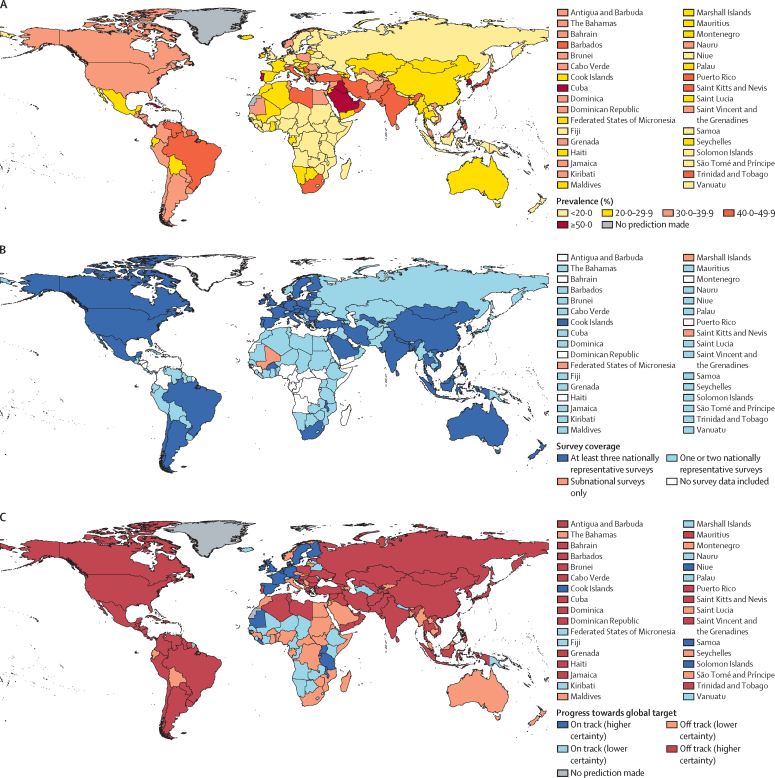
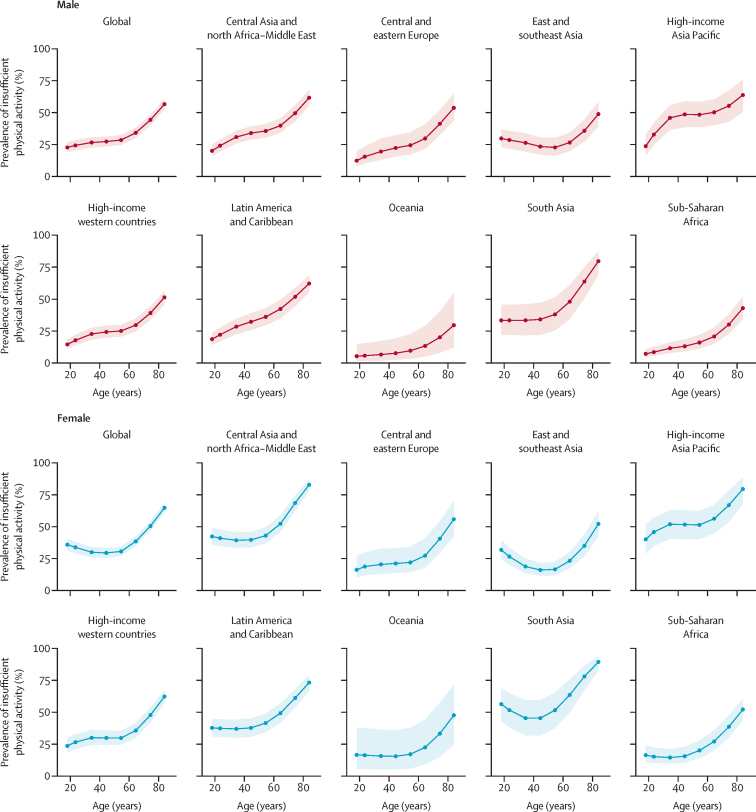
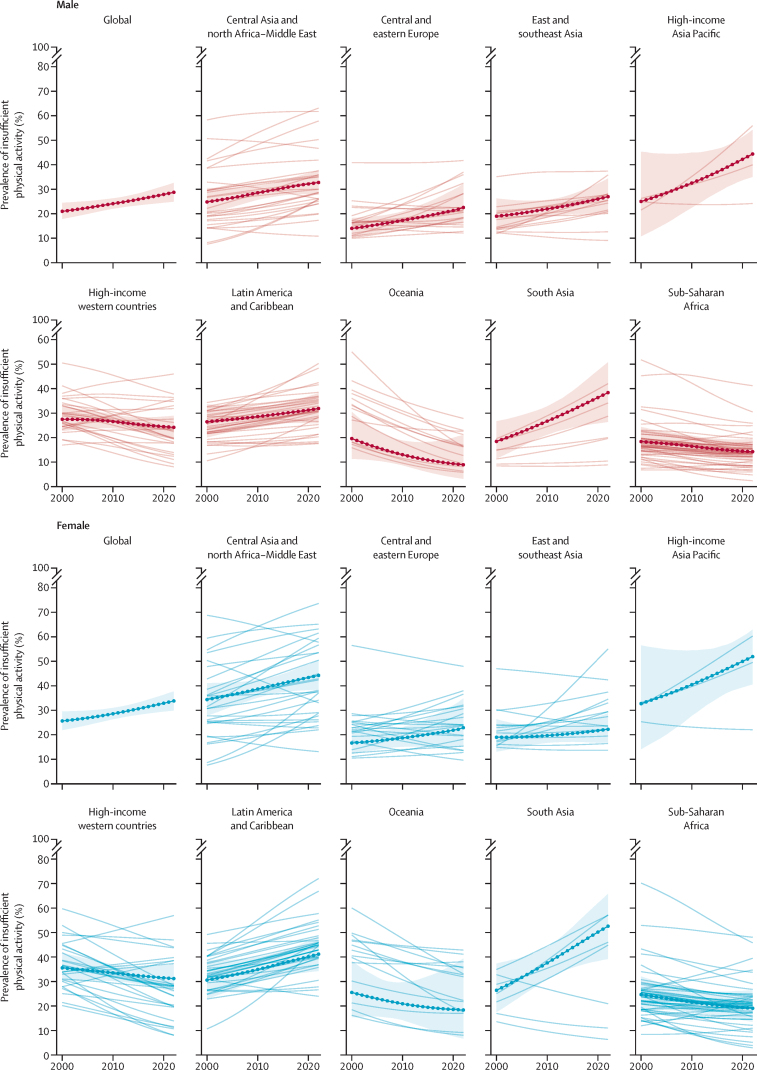
BACKGROUND: Insufficient physical activity increases the risk of non-communicable diseases, poor physical and cognitive function, weight gain, and mental ill-health. Global prevalence of adult insufficient physical activity was last published for 2016, with limited trend data. We aimed to estimate the prevalence of insufficient physical activity for 197 countries and territories, from 2000 to 2022. METHODS: We collated physical activity reported by adults (aged ≥18 years) in population-based surveys. Insufficient physical activity was defined as not doing 150 minutes of moderate-intensity activity, 75 minutes of vigorous-intensity activity, or an equivalent combination per week. We used a Bayesian hierarchical model to compute estimates of insufficient physical activity by country or territory, year, age, and sex. We assessed whether countries or territories, regions, and the world would meet the global target of a 15% relative reduction of the prevalence of insufficient physical activity by 2030 if 2010-22 trends continue. FINDINGS: We included 507 surveys across 163 countries and territories. The global age-standardised prevalence of insufficient physical activity was 31·3% (95% uncertainty interval 28·6-34·0) in 2022, an increase from 23·4% (21·1-26·0) in 2000 and 26·4% (24·8-27·9) in 2010. Prevalence was increasing in 103 (52%) of 197 countries and territories and six (67%) of nine regions, and was declining in the remainder. Prevalence was 5 percentage points higher among female (33·8% [29·9-37·7]) than male (28·7% [25·0-32·6]) individuals. Insufficient physical activity increased in people aged 60 years and older in all regions and both sexes, but age patterns differed for those younger than 60 years. If 2010-22 trends continue, the global target of a 15% relative reduction between 2010 and 2030 will not be met (posterior probability <0·01); however, two regions, Oceania and sub-Saharan Africa, were on track with considerable uncertainty (posterior probabilities 0·70-0·74). INTERPRETATION: Concerted multi-sectoral efforts to reduce insufficient physical activity levels are needed to meet the 2030 target. Physical activity promotion should not exacerbate sex, age, or geographical inequalities. FUNDING: Ministry of Public Health, Qatar, and World Health Organization. TRANSLATIONS: For the Spanish and Portuguese translations of the abstract see Supplementary Materials section.
Overview
CoChat Summary
TL;DR
This pooled analysis of 507 population-based surveys estimates that global age-standardised insufficient physical activity among adults rose from 23·4% in 2000 to 31·3% in 2022. If 2010–22 trends continue, the 2030 target of a 15% relative reduction will not be met (posterior probability <0·01), although Oceania and sub-Saharan Africa were on track with considerable uncertainty.
Key findings
- Global age-standardised prevalence of insufficient physical activity was 31·3% (95% UI 28·6–34·0) in 2022, up from 23·4% (21·1–26·0) in 2000 and 26·4% (24·8–27·9) in 2010; the posterior probability of a true increase from 2010 to 2022 was >0·99.
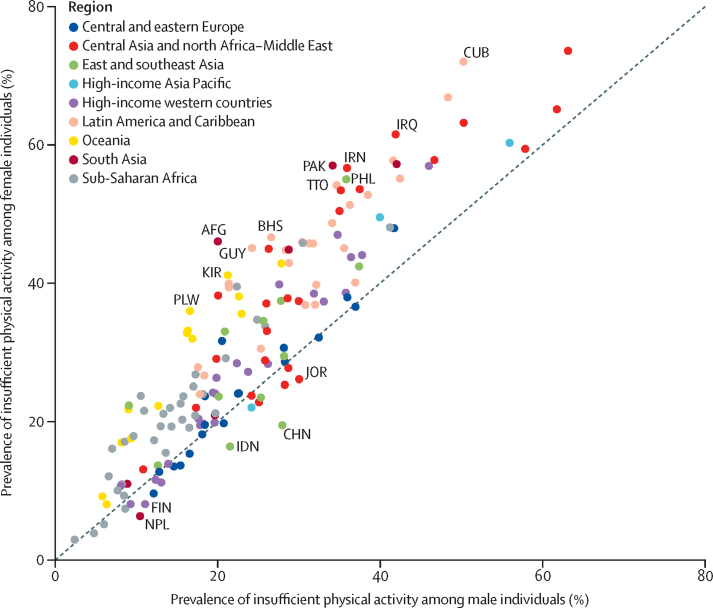
- Prevalence was increasing in 103 (52%) of 197 countries and territories and six (67%) of nine regions; it was 5 percentage points higher in female (33·8% [29·9–37·7]) than male (28·7% [25·0–32·6]) individuals, with the largest regional sex gap in south Asia (female 52·6% [39·2–65·8] vs male 38·4% [26·4–50·7]).
- Country-specific prevalence ranged from 2·7% (95% UI 1·1–5·3) in Malawi to 66·1% (54·6–76·8) in the United Arab Emirates; prevalence exceeded 40% in 32 countries and 50% in the United Arab Emirates and nine other countries.
- If 2010–22 trends continue, global prevalence in 2030 would be 34·7% (30·4–39·1); the 2030 target would not be met (posterior probability <0·01), while Oceania and sub-Saharan Africa were on track with lower certainty (posterior probabilities 0·70–0·74); 136 countries were not on track and 61 were on track.
Methods
- The study collated self-reported physical activity from population-based surveys of adults aged ≥18 years, including 507 surveys across 163 countries and territories representing 93·0% of the global population; data closed on Feb 5, 2024. Surveys used GPAQ (228 surveys), IPAQ (137), or another questionnaire (142).
- Insufficient physical activity was defined as not meeting WHO aerobic recommendations: at least 150 minutes of moderate-intensity activity per week, 75 minutes of vigorous-intensity activity, or an equivalent combination. Estimates were produced for 197 countries and territories by year (2000–22), seven age groups, and sex.
- Hierarchical Bayesian probit regression models were fit separately for males and females, using natural cubic splines for age with knots at 30 and 60 years, linear time trends, questionnaire indicators, and age-standardised adult obesity as a country-specific time-varying covariate. The models used 4000 posterior samples; 95% uncertainty intervals are Bayesian credible intervals. Progress toward the 2030 target was assessed by projecting 2010–22 trends and computing posterior probabilities of meeting a 15% relative reduction.
Limitations
- The paper states that data were not available for every country and year, and 34 countries had no eligible data; countries with no, limited, or inconsistent data could differ systematically from those with well-developed surveillance. Self-report data are subject to recall and social desirability biases, questionnaire variation, and uncertain statistical adjustments; data quality and representativeness may vary over time, and declining response rates or COVID-19 may have affected non-response bias. Estimates are not disaggregated by wealth, geographical location, or disability, and uncertainty intervals do not reflect all sources of uncertainty.
- The paper states that it could not detect differences due to the COVID-19 pandemic; no included data sources collected data from April to July 2020, and only 30 surveys from 24 countries collected data from August 2020 to December 2021. A linear time trend was modelled, and a sensitivity analysis found no evidence of a step change or non-linearity in post-August 2020 data.
- The text makes evident that fewer than 15 countries had nationally representative device-based physical activity data, with considerable protocol heterogeneity, and that consensus and data are lacking for muscle strengthening, balance, and sedentary recommendations.
Model-written summary. Check it against the paper before relying on it.
Integrity signals
Registry
Cites
Statistics
Figures
Verification
Claims the paper makes
7 Valid · 0 Not valid · 16 Not checked · 82 Own results and interpretations
The cited sources support only part of this claim — read each source’s verdict below.
In the paper
“There is inconsistent and insufficient monitoring of other behaviours included in the physical activity guidelines (muscle strengthening, balance activities [for older adults aged ≥65 years], and sedentary time2) to produce global estimates and targets.5, 6”
§ National, regional, and global trends in insufficient physical activity among adults from 2000 to 2022: a pooled analysis of 507 population-based surveys with 5·7 million participants > Introduction
What the sources say
- Not checked yetcites [5] Milton K Varela AR Strain T Cavill N Foster C Mutrie N A review of global surveillance on the muscle strengthening and balance elements of physical activity recommendations J Frailty Sarcopenia Falls 3 2018 114 124 32300699 PMC7155319 source
- Partly supportedcites [6] Mclaughlin M Atkin AJ Starr L Worldwide surveillance of self-reported sitting time: a scoping review Int J Behav Nutr Phys Act 17 2020 111 32883294 PMC7469304 sourceExperimental — accuracy not yet measured
Our copy of McLaughlin et al. (2020) supports only the sedentary-time component: the Discussion (p. 'Compared with other risk factors...') and Conclusion report that sitting time data were collected in just 62 of 215 countries covering 47% of the global adult population, that 'a comprehensive collation of sedentary behaviour data collected within the last 10 years does not currently exist' (Background), and that surveillance relies on heterogeneous, poorly accurate single-item IPAQ/GPAQ measures (Discussion, limitations). The claim's other two behaviours — muscle-strengthening activities and balance activities for adults aged ≥65 — are nowhere addressed: searches for 'muscle-strengthening', 'balance' and 'bone-loading' returned only reference-list and unrelated passages. The paper also frames the gap as limited coverage/measurement quality rather than an inability to set 'targets', so that framing is the citing authors' own extension. (LLM, conf=0.78)
plain- Asserted: passes — The authors put it forward as true.
- Checkable: passes — It can be checked against evidence.
- Load-bearing: passes — The paper’s conclusions depend on it.
- Based: passes — The paper gives a reason why it holds.
Every source the paper cites for this claim was checked and supports it.
In the paper
“We adjusted prevalences from surveys only representing urban areas and those reporting prevalence in the IPAQ low scoring category using regression equations developed by Guthold and colleagues (appendix 3 p 8).10”
§ National, regional, and global trends in insufficient physical activity among adults from 2000 to 2022: a pooled analysis of 507 population-based surveys with 5·7 million participants > Methods > Data sources
What the sources say
- Supportedcites [10] Guthold R Stevens GA Riley LM Bull FC Worldwide trends in insufficient physical activity from 2001 to 2016: a pooled analysis of 358 population-based surveys with 1·9 million participants Lancet Glob Health 6 2018 e1077 e1086 30193830 source
The Statistical analysis section of Guthold et al. (2018) states that 'We applied four key adjustments to survey data using linear regression modelling to improve comparability (appendix pp 17-27)', and specifies among them (second) an adjustment for over-reporting in the IPAQ, applied as an adjustment factor 'to surveys that used the International Physical Activity Questionnaire', and (third) adjustment of 'data from surveys that had only urban samples' (27 of 358 surveys), estimating rural prevalence from surveys reporting both. That is exactly what the citing sentence attributes to Guthold and colleagues: regression-derived adjustments for urban-only surveys and for IPAQ-reported prevalences. The equations themselves sit in the paper's appendix (pp 17-27), which our copy of the article text does not include, so the claim's finer characterisation of the IPAQ figures as the 'low scoring category' is not spelled out in the main text; the Study design section confirms the target indicator is insufficient activity (not meeting the WHO 150 min moderate/75 min vigorous recommendation). (LLM, conf=0.80)
plain- Asserted: passes — The authors put it forward as true.
- Checkable: passes — It can be checked against evidence.
- Load-bearing: passes — The paper’s conclusions depend on it.
- Based: passes — The paper gives a reason why it holds.
- Supported
Every source the paper cites for this claim was checked and supports it.
In the paper
“Nevertheless, our global prevalence estimate for 2016 (28·7% [95% UI 26·9–30·4]) is similar to the previous analysis (27·5% [25·0–32·2]).10”
§ National, regional, and global trends in insufficient physical activity among adults from 2000 to 2022: a pooled analysis of 507 population-based surveys with 5·7 million participants > Discussion
What the sources say
- Supportedcites [10] Guthold R Stevens GA Riley LM Bull FC Worldwide trends in insufficient physical activity from 2001 to 2016: a pooled analysis of 358 population-based surveys with 1·9 million participants Lancet Glob Health 6 2018 e1077 e1086 30193830 source
The element attributed to Guthold et al. (2018) is the 'previous analysis' figure of 27·5% (25·0–32·2) for global prevalence in 2016; the 28·7% (26·9–30·4) estimate is the citing authors' own result and the 'is similar to' comparison is their conclusion. Our copy states exactly that figure in the Abstract (Findings), the Results ('more than a quarter of adults (27·5%, 95% UI 25·0–32·2) were insufficiently physically active in 2016'), the 'Added value of this study' section, and Table 1/Table 2 (All countries 27·5% [25·0–32·2]). The paper does not report a 28·7% global estimate (its 2001 global value is 28·5%, 23·9–33·9), consistent with that number belonging to the citing study. (LLM, conf=0.90)
plain- Asserted: passes — The authors put it forward as true.
- Checkable: passes — It can be checked against evidence.
- Load-bearing: unclear — It is unclear whether the paper’s conclusions depend on it.
- Based: passes — The paper gives a reason why it holds.
- Supported
A result the paper reports from its own data — it cites no other source for it, so there is none to check. The quote shows it is in the paper.
In the paper
“The global age-standardised prevalence of insufficient physical activity was 31·3% (95% uncertainty interval 28·6–34·0) in 2022, an increase from 23·4% (21·1–26·0) in 2000 and 26·4% (24·8–27·9) in 2010.”
- Also stated in: § Results · plain
“Globally, nearly a third of adults were insufficiently physically active (age-standardised prevalence of 31·3% [95% uncertainty interval 28·6–34·0]) in 2022 (table 2).”
§ National, regional, and global trends in insufficient physical activity among adults from 2000 to 2022: a pooled analysis of 507 population-based surveys with 5·7 million participants > Abstract > Findings
plain- Asserted: passes — The authors put it forward as true.
- Checkable: passes — It can be checked against evidence.
- Load-bearing: passes — The paper’s conclusions depend on it.
- Based: passes — The paper gives a reason why it holds.
- Also stated in: § Results · plain
A result the paper reports from its own data — it cites no other source for it, so there is none to check. The quote shows it is in the paper.
In the paper
“The global age-standardised prevalence of insufficient physical activity was 31·3% (95% uncertainty interval 28·6–34·0) in 2022, an increase from 23·4% (21·1–26·0) in 2000 and 26·4% (24·8–27·9) in 2010.”
- Also stated in: § Results · plain
“Global | Global | 23·4% (21·1–26·0) | 26·4% (24·8–27·9) | 31·3% (28·6–34·0) | 34·7% (30·4–39·1) | Off track, higher certainty”
§ National, regional, and global trends in insufficient physical activity among adults from 2000 to 2022: a pooled analysis of 507 population-based surveys with 5·7 million participants > Abstract > Findings
plain- Asserted: passes — The authors put it forward as true.
- Checkable: passes — It can be checked against evidence.
- Load-bearing: passes — The paper’s conclusions depend on it.
- Based: passes — The paper gives a reason why it holds.
- Also stated in: § Results · plain
47 more claims
Create a free account to see all 105 claims and to verify the 19 references still open.
- Probably not a substantial claim. 20
- It may state two separate claims as one. 39
Claims other papers make about this one
Each is checked against this paper’s own text: does it say what the citing paper says it does?
In the citing paper
“showing that over 30% of adults do not meet the minimum recommendations for physical activity, and this percentage exceeds 40% among older adults [141].”
From Dietary and Behavioral Strategies for Weight Loss and Weight Loss Maintenance: A Narrative Review (2025) · cites this paper as [141]
Self-check
Percentages, sums and reported differences re-computed from the paper’s own numbers.
Each contradiction between two passages listed here was confirmed by an independent check.
Rated minor: it would not touch a result — a value no result rests on, a p-value that stays on the same side of the significance level, or a conflict that is clerical, resolved elsewhere in the paper, or outside its own findings.
In the paper
§ National, regional, and global trends in insufficient physical activity among adults from 2000 to 2022: a pooled analysis of 507 population-based surveys with 5·7 million participants > Results
“Our trend analysis shows the global age-standardised prevalence of insufficient physical activity has increased from 28·6% in 2010 to 31·3% in 2022 (table 1)”
§ National, regional, and global trends in insufficient physical activity among adults from 2000 to 2022: a pooled analysis of 507 population-based surveys with 5·7 million participants > Results
“| | Global | Global | 23·4% (21·1–26·0) | 26·4% (24·8–27·9) | 31·3% (28·6–34·0) | 34·7% (30·4–39·1) | Off track, higher certainty |”
Citations
Cites
World Health Organization 2020 guidelines on physical activity and sedentary behaviour
Bull, F. C., Al-Ansari, S. S., Biddle, S., Borodulin, K., Buman, M. P., Cardon, G., Carty, C., Chaput, J.-P., Chastin, S., Chou, R., et al. (2020) · British Journal of Sports Medicine · doi:10.1136/bjsports-2020-102955 · Cited by 11,657
Self-citationGlobal physical activity levels: surveillance progress, pitfalls, and prospects
Hallal, P. C., Andersen, L. B., Bull, F. C., Guthold, R., Haskell, W., & Ekelund, U. (2012) · The Lancet · doi:10.1016/s0140-6736(12)60646-1 · Cited by 5,711
Self-citationGuthold, R., Stevens, G. A., Riley, L. M., & Bull, F. C. (2018) · The Lancet Global Health · doi:10.1016/s2214-109x(18)30357-7 · Cited by 4,819
Self-citationEzzati, M., López, A. D., Rodgers, A., & Murray, C. J. L. (2004) · Cited by 3,319
Phelps, N. H., Singleton, R. K., Zhou, B., Heap, R. A., Mishra, A., Bennett, J. E., Paciorek, C. J., Lhoste, V. P., Carrillo-Larco, R. M., Stevens, G. A., et al. (2024) · The Lancet · doi:10.1016/s0140-6736(23)02750-2 · Cited by 2,544 · cited 1×
“17 An additional variance term accounted for unobserved design factors (eg, sample design and season) that would lead to variance beyond that expected due to sample size.”
BackgroundSelf-citationGuidelines for accurate and transparent health estimates reporting: the GATHER statement
Stevens, G. A., Alkema, L., Black, R. E., Boerma, J. T., Collins, G. S., Ezzati, M., Grove, J. T., Hogan, D. R., Hogan, M. C., Horton, R., et al. (2016) · The Lancet · doi:10.1016/s0140-6736(16)30388-9 · Cited by 1,798
Self-citationProgress in physical activity over the Olympic quadrennium
Sallis, J. F., Bull, F., Guthold, R., Heath, G. W., Inoue, S., Kelly, P., Oyeyemi, A. L., Perez, L. G., Richards, J., & Hallal, P. C. (2016) · The Lancet · doi:10.1016/s0140-6736(16)30581-5 · Cited by 935
Self-citationImpact of COVID-19 on physical activity: A rapid review
Park, A. H., Zhong, S., Yang, H., Jeong, J., & Lee, C. (2022) · Journal of Global Health · doi:10.7189/jogh.12.05003 · Cited by 232
Step Up! Tackling the Burden of Insufficient Physical Activity in Europe
OECD, & World Health Organization (2023) · OECD eBooks · doi:10.1787/500a9601-en · Cited by 178
Shifting the physical inactivity curve worldwide by closing the gender gap
Mielke, G. I., da Silva, I. C. M., Kolbe-Alexander, T. L., & Brown, W. J. (2018) · Sports Medicine · doi:10.1007/s40279-017-0754-7 · Cited by 164
Self-citation
Cited by
Items 501–600 of 1,000
Ghazvini, N., Hamar, P., Takács, J., Petridis, L., & Soós, I. (2026) · Health Science Reports · doi:10.1002/hsr2.72696 · Cited by 1
Radhyan, F. B., Tomar, R., Bursais, A. K., & Alaqil, A. I. (2026) · Frontiers in Public Health · doi:10.3389/fpubh.2026.1871762 · Cited by 5
“This issue is particularly acute in the Eastern Mediterranean region, where population-based studies report that over 60% of adolescents do not meet the recommended daily physical activity levels (1, 9, 10).”
Physical activity as leisure: legal/human rights, public health, and phenomenological perspectives
Maciel, M. G., Uvinha, R. R., Andrade, D. R., Bendíková, E., Mola, D. W., & Ortuzar, A. M. (2026) · Annals of Leisure Research · doi:10.1080/11745398.2026.2691038 · Cited by 1
Exergames revisited: A narrative review and classification framework for application-specific design
Schumacher, T., Geisen, M., & Klatt, S. (2026) · Psychology of sport and exercise · doi:10.1016/j.psychsport.2026.103200 · Cited by 2
Das, T., & Bandyopadhyay, N. (2026) · Слобожанський науково-спортивний вісник · doi:10.15391/snsv.2026-2.08 · Cited by 1
Global dietary estimates for conducting health, environmental and economic impact assessments
Springmann, M. (2026) · Nature Food · doi:10.1038/s43016-026-01388-z · Cited by 1
“Efforts are currently underway to use more objective measures for estimating physical activity (for example, accelerometers 47 ), which will allow us to more accurately determine overall levels of energy intake.”
Yan, S., & Liang, Y. (2026) · Frontiers in Public Health · doi:10.3389/fpubh.2026.1828942 · Cited by 1
“Recent studies indicate that, despite national variations, global adolescent physical activity levels have generally plateaued at a con-cerningly low level over the past decade (5–7).”
Fu, Y., & Jiang, Y. (2026) · Frontiers in Psychology · doi:10.3389/fpsyg.2026.1846593 · Cited by 2
Asiimwe, J. B., Nuwabaine, L., Namulema, A., Sserwanja, Q., Kawuki, J., & Nambozi, G. (2026) · PLoS ONE · doi:10.1371/journal.pone.0327266 · Cited by 1
“The findings concur with a global study which reported that a sedentary lifestyle is associated with inactivity and poor eating habits that increase the risk of type 2 diabetes [58,59].”
Zeng, J., Li, H., & Zhang, X. (2026) · Frontiers in Public Health · doi:10.3389/fpubh.2026.1878053 · Cited by 2
“Nevertheless, insufficient PA remains a major and growing global challenge (7, 8).”
InfluentialThe Global Physical Literacy Action Framework: Process and Outcomes
Carl, J., Barnett, L. M., Jerebine, A., Mazzoli, E., Mouton, A., Barratt, J., Elsborg, P., Green, N., Niederberger, M., Sum, R. K. W., et al. (2026) · Sports Medicine · doi:10.1007/s40279-026-02485-6 · Cited by 4
“The broad field of physical activity has developed policy-and behaviour-related evaluations [1, 77], with the proposed methods potentially inspiring similar endeavours for the PL field.”
Self-citationZou, K., & van Ameijde, J. (2026) · Cities & Health · doi:10.1080/23748834.2026.2706994 · Cited by 1
Inorganic phosphate: a link between processed food and exercise intolerance in the modern world
Giacona, J. M., Kim, H., & Vongpatanasin, W. (2026) · Clinical Science · doi:10.1042/cs20250837 · Cited by 1
“The 2024 Lancet Global Health pooled analysis of 507 population-based surveys across 163 countries (5.7 million participants) demonstrated that insufficient physical activity prevalence increased from 23.4% in 2000 to 31.3% in 2022, with the rate of increase accelerating in recent years [1].”
InfluentialZhang, X., & Li, W. (2026) · Frontiers in Public Health · doi:10.3389/fpubh.2026.1889919 · Cited by 1
“Pooled estimates indicate that 31.3% of adults did not meet recommended activity levels in 2022 and that progress remains insufficient to meet the global target (6).”
InfluentialOng, J. L., Qin, S., Martin, T. H., Chua, X. Y., Soon, C. S., Yılmaz, G., Ling, L. H., Müller‐Riemenschneider, F., Koh, W., & Chee, M. W. L. (2026) · BMC Medicine · doi:10.1186/s12916-026-05192-1 · Cited by 1
“Our findings of greater inactivity among university students contrast with earlier Singaporean surveys [38], past actigraphic studies [39], and Western data showing age-related declines in physical activity [40].”
de Souza-Lima, J., Winckler, C., Olasagasti-Ibargoien, J., Sepulveda, R. A. Y., Godoy-Tapia, C., Parra-Saldías, M., Bastías, D. M. D., Godoy-Cumillaf, A. E. R., Merellano-Navarro, E., Bruneau-Chávez, J., et al. (2026) · Frontiers in Sports and Active Living · doi:10.3389/fspor.2026.1969080 · Cited by 1
Gobbetti, A., Gjoreski, M., Gjoreski, H., Lane, N. D., & Langheinrich, M. (2024) · IEEE pervasive computing · doi:10.1109/mprv.2024.3475473 · Cited by 2
Shen, H. R., Shu, B., Zhang, J., Liu, Y., & Li, A. (2025) · Frontiers in Public Health · doi:10.3389/fpubh.2025.1511129 · Cited by 4
Verdaguer-Rodríguez, M., Comas, J. O., Garreta, F., Garcia, B., Haro, J. M., Ribas, B., Romero, R., Nicolau, L., Mateo, B., Marcos, S., et al. (2025) · Women · doi:10.3390/women5010008 · Cited by 3
“It seems that women show higher rates of SB than men, which is already apparent during adolescence [40,41].”
Shishira, K. B., Vaishali, K., Kadavigere, R., Sukumar, S., Bommasamudram, T., & Hoogar, P. (2024) · F1000Research · doi:10.12688/f1000research.150772.1 · Cited by 2
Tegegne, T. K., Rawstorn, J. C., Skärsäter, I., Hertz, A.-C., & Maddison, R. (2025) · Journal of Aging and Physical Activity · doi:10.1123/japa.2024-0122 · Cited by 1
Activity Patterns among Young Women: A Time Budget Perspective
Winkler, R., & Moczulska, M. (2025) · Krakow Review of Economics and Management/Zeszyty Naukowe Uniwersytetu Ekonomicznego w Krakowie · doi:10.15678/krem.18121 · Cited by 1
Solberg, A., Aspvik, N. P., Lydersen, S., Midttun, S., Reitlo, L. S., Steinshamn, S., Ingebrigtsen, J. E., Helbostad, J. L., Wisløff, U., & Stensvold, D. (2025) · Journal of Physical Activity and Health · doi:10.1123/jpah.2024-0767 · Cited by 1
Risk aversion or adaptation? Public choices in sports participation under climate risks
Zhang, Q., Luo, L., Guan, X., Cao, Y., Lin, Y., & Xiong, Y. (2025) · Frontiers in Public Health · doi:10.3389/fpubh.2025.1578845 · Cited by 3
Shishira, K. B., Vaishali, K., Kadavigere, R., Sukumar, S., Bommasamudram, T., & Hoogar, P. (2025) · F1000Research · doi:10.12688/f1000research.150772.3 · Cited by 1
Fuss, F. K., Scharl, T., & Nagengast, N. D. (2025) · Bioengineering · doi:10.3390/bioengineering12050467 · Cited by 1
Palma-Leal, X., Chillón, P., Corral‐Pérez, J., Velázquez‐Díaz, D., & Camiletti‐Moirón, D. (2025) · Journal of Transport & Health · doi:10.1016/j.jth.2025.102060 · Cited by 1
한국판 신체활동 근린환경 평가도구(K-PANES)의 개발 및 온라인 타당성 검증*
권, 영. (2025) · 한국체육학회지 · doi:10.23949/kjpe.2025.5.64.3.41 · Cited by 1
A bibliometric analysis of the effects of aerobic exercise on overweight (1978–2025)
Chen, W., & Morazuki, S. R. (2025) · Pensar en Movimiento Revista de Ciencias del Ejercicio y la Salud · doi:10.15517/3g5zkb09 · Cited by 1
Lack of progress in physical activity in Australia: decades of national inertia?
Bauman, A. E., & Ding, D. (2024) · Australian and New Zealand Journal of Public Health · doi:10.1016/j.anzjph.2024.100180 · Cited by 1
Self-citationAinsworth, B. E., & Tian, H. (2024) · Journal of sport and health science/Journal of Sport and Health Science · doi:10.1016/j.jshs.2024.101011 · Cited by 2
Ballin, M., Ahlqvist, V. H., Berglind, D., Brunström, M., Herráiz-Adillo, Á., Henriksson, P., Neovius, M., Ortega, F. B., Nordström, A., & Nordström, P. (2024) · medRxiv · doi:10.1101/2024.11.26.24318038 · Cited by 1
Empowering older adults for physical health and strength programme
Teo, S. P., Husaini, A., & Sharbini, S. H. (2025) · British Journal of Sports Medicine · doi:10.1136/bjsports-2024-109476 · Cited by 1
All the right moves: physical activity promotion for people with musculoskeletal pain
Fernandez, M., de Luca, K. E., Stanton, R., Alley, S., Serpiello, F. R., & Vandelanotte, C. (2025) · British Journal of Sports Medicine · doi:10.1136/bjsports-2024-108941 · Cited by 2
Advancing neuromuscular electrical stimulation optimizing comfort and hemodynamic efficiency
Juthberg, R. (2025) · doi:10.69622/28443620.v1 · Cited by 1
DNA Methylation Dynamics of Dose-dependent Acute Exercise, Training Adaptation, and DetrainingPreprint
Hariharan, M., Patel, S., Song, H., Rehman, A., Barragan, C., Bartlett, A., Castanon, R., Nery, J. R., Rothenberg, V., Chen, H., et al. (2025) · bioRxiv (Cold Spring Harbor Laboratory) · doi:10.1101/2025.04.22.650067 · Cited by 1
Bissett, M., Koemel, N. A., Ahmadi, M. N., Atsiaris, K., Liu, S., Thøgersen‐Ntoumani, C., Gray, C. M., Gill, J. M. R., Stamatakis, E., & Ryde, G. C. (2025) · medRxiv · doi:10.1101/2025.10.29.25339035 · Cited by 2
Measurement design and the apparent inactivity of women in urban ChilePreprint
de Souza-Lima, J., Farias-Valenzuela, C., Yáñez-Sepúlveda, R., Giakoni-Ramírez, F., Muñoz-Strale, C., Alarcón-Aguilar, J., Parra-Saldías, M., Godoy-Cumillaf, A. E. R., Merellano-Navarro, E., Bruneau-Chávez, J., et al. (2026) · Research Square · doi:10.21203/rs.3.rs-10501852/v1 · Cited by 1
Messing, S., Tcymbal, A., Birkholz, L., Bauman, A. E., Whiting, S., O'Hehir, C., & Woods, C. B. (2026) · medRxiv · doi:10.64898/2026.09.04.26361720 · Cited by 1
Self-citationAlves, A. J., & Viana, J. L. (2024) · Portuguese Journal of Public Health · doi:10.1159/000540039
“According to the latest estimates, the global prevalence of physical inactivity among adults is 31.3% [2].”
BackgroundInfluentialActividad Física, Ejercicio y Salud: Retos Actuales y Desafíos Futuros
Jiménez‐Pavón, D. (2024) · Revista Andaluza de Medicina del Deporte · doi:10.33155/ramd.v17i1-2.1172 · Cited by 1
Lawrence, A., Wardle, J., & Yoxall, J. (2024) · medRxiv · doi:10.1101/2024.10.22.24315903
Facing stress and inflammation: From the cell to the planet
Cavaillon, J., & Chaudry, I. H. (2024) · World Journal of Experimental Medicine · doi:10.5493/wjem.v14.i4.96422
“Insufficient physical activity increased in people aged 60 years and older in all regions and both sexes[236].”
Filho, J. E. F. (2024) · Revista de Educação Física / Journal of Physical Education · doi:10.37310/ref.v93i3.2989
Positive impact of dance-related interventions on adults with intellectual disabilities
Chue, P. S., & Tate, M. (2024) · Evidence-Based Nursing · doi:10.1136/ebnurs-2024-103999
Feter, N., de Paula, D., dos Reis, R. C. P., Raichlen, D. A., Barreto, S. M., Suemoto, C. K., Schmidt, M. I., & Duncan, B. B. (2024) · Public Health · doi:10.1016/j.puhe.2024.11.008 · Cited by 2
Studies on Skeletal Muscle Health and Functional Food Components
Yamaji, R. (2024) · Nippon Eiyo Shokuryo Gakkaishi · doi:10.4327/jsnfs.77.397
de Leão, E. R. L. P., da Costa, V. O., de Souza, M. C., Moraes, L. B., da Silva, L. S., Dias, L. P. F., Jardim, N. Y. V., & Neto, J. B. T. (2024) · Caderno Pedagógico · doi:10.54033/cadpedv21n13-406 · Cited by 1
Zadarko-Domaradzka, M., Nizioł-Babiarz, E., Barabasz, Z., & Zadarko, E. (2024) · Physical Education of Students · doi:10.15561/20755279.2024.0605
“According to the latest data, in 2022, 31% of adults globally did not meet the WHO’s recommended level of physical activity [6, 7].”
Topothai, T., Topothai, C., & Suphanchaimat, R. (2024) · Outbreak Surveillance Investigation & Response (OSIR) Journal · doi:10.59096/osir.v17i4.270477
Sales, D. R. L., Ferrari, G., da Silva, J. P., Bergamo, R. R., Moda, P. P. O., dos Santos, A., dos Santos, M., & Matsudo, V. K. R. (2025) · Scientific Reports · doi:10.1038/s41598-025-85601-2 · Cited by 2
Wang, N., Lee, J.-H., & Cho, H. (2024) · Korean Journal of Leisure, Recreation & Park · doi:10.26446/kjlrp.2024.6.48.4.79
Hollings, M., & Trevor, C. (2025) · Trends in Cardiovascular Medicine · doi:10.1016/j.tcm.2025.01.004
Birmpili, P., Brocklebank, L. A., Portas, L., Littlejohns, T. J., & Doherty, A. (2026) · European Journal of Preventive Cardiology · doi:10.1093/eurjpc/zwag306
The Ripple Effect: The Impact of Narrative on Team Culture and Lifelong Exercise Adherence
Busanich, R., Nelson, P. E., & Koren, A. (2025) · Case Studies in Sport and Exercise Psychology · doi:10.1123/cssep.2024-0031
Exercise in prevention and recovery—continued growth
Edwards, C. D., & Wilkinson, M. (2025) · British Journal of Sports Medicine · doi:10.1136/bjsports-2024-109592
Martínez, M. I., Moreno‐Llamas, A., & Martín, U. (2025) · Gaceta Sanitaria · doi:10.1016/j.gaceta.2024.102443
Eskandarnejad, M., & Alimohammadi, T. (2024) · Physical activity in children. · doi:10.61186/pach.2024.489767.1040
Health professionals as champions of movement—promoting physical activity for a healthier world
Moore, J. A. M., & Napier, C. (2025) · British Journal of Sports Medicine · doi:10.1136/bjsports-2025-109736
Reljic, D., Herrmann, H. J., & Zopf, Y. (2025) · Die Gastroenterologie · doi:10.1007/s11377-025-00877-0
Addressing the Paradox of Rest with Innovative Technologies
Pišot, R., Marušič, U., & Šlosar, L. (2025) · Slovenian Journal of Public Health · doi:10.2478/sjph-2025-0009 · Cited by 1
LETRAMENTO CORPORAL NO BRASIL: UMA REVISÃO DOS ESTUDOS ASSOCIADOS À EDUCAÇÃO FÍSICA
Melo, A. C. A. G., Nunes, N. M., Nogueira, P. H. S., & Martins, R. M. (2025) · Revista Multidisciplinar do Nordeste Mineiro · doi:10.61164/rmnm.v4i1.3601
Barka, N., Nagy, V., & Boros, S. (2025) · Pedagógusképzés · doi:10.37205/tel-hun.2024.3.04
“A világ népességének közel egyharmada nem teljesített e a filzikai aktivitás ajánlott szintjét 2022-ben (Strain et al., 2024).”
König, M. (2025) · neuroreha · doi:10.1055/a-2515-6000 · Cited by 1
Yaşlı Bireylerde Fiziksel Aktivite
Kılınç, H. (2025) · Özgür Yayınları eBooks · doi:10.58830/ozgur.pub707.c3016
Women’s heart health: should the physical activity recommendations be different?
Freene, N., Lönn, A., Bäck, M., & Reed, J. L. (2025) · European Journal of Cardiovascular Nursing · doi:10.1093/eurjcn/zvaf058
Influence of Self Efficacy on Soccer Engagement among Female University Students in Tanzania
Nnko, E. E., & Hussen, L. H. (2025) · African Journal of Sports and Physical Sciences · doi:10.62154/ajsps.2025.03.010664
Hough, S. B. E., Graham, C. A., Lee, A., & Rhodes, R. E. (2025) · Behavioral Sciences · doi:10.3390/bs15050607 · Cited by 1
“Despite these considerable benefits, there is a rising prevalence of individuals who are not meeting the suggested physical activity guidelines of 150 min of moderate-intensity physical activity per week (Guthold et al., 2019; Strain et al., 2024).”
de Goveia, J. C., Vargas, L. M., de Freitas, M. A., Pedroso, B., & do Carmo, G. C. M. (2025) · Revista Brasileira de Atividade Física & Saúde · doi:10.12820/rbafs.30e0386
Li, X., Costa, S., & Giulianotti, R. (2025) · SSRN Electronic Journal · doi:10.2139/ssrn.5264567
A qualitative analysis of female sport experiences in soccer
Smith, K. L., El-Haj, N., & Weir, P. L. (2025) · Frontiers in Sports and Active Living · doi:10.3389/fspor.2025.1585654 · Cited by 4
Policy Action for CVD Prevention: A Call to Action for Nurses Globally
Fitzsimons, D., Commodore-Mensah, Y. Y., Creighton, L., Thompson, G., & Ferranti, E. P. (2025) · The Journal of Cardiovascular Nursing · doi:10.1097/jcn.0000000000001224
Terashima, M., Rebar, A. L., Naredi, H., Khafi, N., Maltagliati, S., de Chanaleilles, M., Zenko, Z., Cheval, B., & Gardner, B. (2025) · Peer Community Journal · doi:10.24072/pcjournal.569 · Cited by 2
Sustainable mobility indicators based on micro-scale urban form: the case of Monterrey City, Mexico
Castro-Sánchez, L.-E., & Ramos, G. C. D. (2025) · Frontiers in Sustainable Cities · doi:10.3389/frsc.2025.1605835
Asiimwe, J. B., Nuwabaine, L., Namulema, A., Sserwanja, Q., Kawuki, J., & Nambozi, G. (2025) · medRxiv · doi:10.1101/2025.06.13.25329608
Fernandez, M., Di, K., Pinheiro, M. B., de Luca, K. E., Hébert, J. J., & Stilwell, P. (2025) · Journal of Back and Musculoskeletal Rehabilitation · doi:10.1177/10538127251350848
“” (Chiro 2) “ Like physical ailments and ageing bodies and arthritis and heart disease and, yeah, all of those kinds of things (are barriers).”
Beyer, M., Boyen, J., Wussow-Hampel, S., Stein, L., Schmidt, L. S., Tegtbur, U., & Haufe, S. (2025) · BMJ Open Sport & Exercise Medicine · doi:10.1136/bmjsem-2025-002665
Lima, R., Antunes, C., Ribeiro, F., Teixeira, A., & Martins, C. (2025) · Preventive Medicine Reports · doi:10.1016/j.pmedr.2025.103144
Zadeh, P. J. S., & Thompson, S. (2025) · Journal of Geoscience and Environment Protection · doi:10.4236/gep.2025.136017
Ljubic, P. L., Broda, B., Windmann, S., & Englert, C. (2025) · German Journal of Exercise and Sport Research · doi:10.1007/s12662-025-01050-z · Cited by 1
“However, more than one-third of the global adult population fails to meet the WHO recommendations (Strain et al., 2024).”
Virtual Education Protocol for Sustainable Lifestyle Modifications
Anaraki, K. T., Heidari‐Beni, M., Saber, F., Abdollahpour, E., & Kelishadi, M. R. (2025) · International Journal of Preventive Medicine · doi:10.4103/ijpvm.ijpvm_389_24
“[1,2] According to a pooled analysis of 5.7 million adults, approximately one‑third of them did not reach the recommended levels of PA. [3,4] Tobacco use is one of the serious health crises worldwide, killing more than 8 million people per year, including an estimated 1.3 million secondhand smokers.”
InfluentialMultidimensional exercise amotivation beliefs across exercise stages of change
Vlachopoulos, S. P., & Biddle, S. (2025) · Performance Enhancement & Health · doi:10.1016/j.peh.2025.100358
Veneros, D. L., Caceres, B. A., Jackman, K., Belloir, J. A., Sharma, Y., Henry, S. B., & Ensari, I. (2025) · BMC Public Health · doi:10.1186/s12889-025-23425-5 · Cited by 1
Sex-Specific Leisure-Time Physical Activity and Sedentary Behavior Patterns in French Adults
Bouchan, J., Verdot, C., Charreire, H., Deschamps, V., & Oppert, J. (2025) · Journal of Physical Activity and Health · doi:10.1123/jpah.2025-0029
Rejeki, P. S., Pranoto, A., Argarini, R., Hakim, F. A., Nazmuddin, M., van Laar, T., & Boidin, M. (2025) · Physical Education Theory and Methodology · doi:10.17309/tmfv.2025.4.20
“Physical exercise has long been recommended as a primary approach to addressing obesity (Johnson et al., 2021; Strain et al., 2024).”
Kanev, A. F., Александрович, К. Ф., & Леонидовна, К. Р. (2025) · Public Health · doi:10.21045/2782-1676-2025-5-2-17-30 · Cited by 1
Human Rights and Sport Participation
Veal, A. J. (2025) · Leisure studies in a global era. · doi:10.1007/978-3-031-86394-3_7
Fondacaro, D. V., Bonkova, V., & Grech, A. (2025) · The Journal of Sports Medicine and Physical Fitness · doi:10.23736/s0022-4707.25.16897-7 · Cited by 1
Egele, V. S., & Stark, R. (2025) · PubMed Central · doi:10.3390/sports13080249 · Cited by 1
“The studies revealed that approximately 30% of adults globally fail to attain the physical activity level recommended by the World Health Organization (WHO) [16] for adults to be at least 150 min moderately physically active or 75 min vigorously physically active per week.”
InfluentialBora, N., Sinha, M. K., & Vaishali, K. (2025) · European Journal of Physiotherapy · doi:10.1080/21679169.2025.2537438
“Globally, 28.7% of men and 33.8% of women above 18 years have insufficient physical activity in 2022 [7]. in indian adults, 41.4% of men and 52.4% of women have inadequate physical activity [8]. this uneven distribution of physical inactivity between genders created a need for authors to…”
InfluentialKim, Y. J., Caison, M., Vianueva, S., Vitagliano, M., & Whitehurst, L. (2025) · British Journal of Occupational Therapy · doi:10.1177/03080226251355810
“However, the prevalence of physical inactivity was 31.3% globally with the highest prevalence in the high-incoming Asia Pacific region (Strain et al., 2024), and 50% of adults in the United States reported excessive sedentary time in the nationwide survey (Matthews et al., 2021).”
InfluentialAtan, R. M., & Azim, D. (2025) · Irish Journal of Medical Science (1971 -) · doi:10.1007/s11845-025-04055-7
“Current global estimates suggest that approximately one-third of the world’s adult population is physically inactive, and women are 5% less active than men [1].”
Schneider, S., Ebner‐Priemer, U., & Giurgiu, M. (2025) · European Journal of Sport Science · doi:10.1002/ejsc.70037
“…prevalence of physical inactivity (i.e., not meeting PA recommendations) increased from 23.4% in 2000 and 26.4% in 2010 to 31.3% in 2022 (Strain et al. 2024). either social‐cognitive models (e.g., the theory of planned behavior) (Ajzen 1991) or humanistic/organismic models (e.g.,…”
InfluentialVitolo, M., Proietti, M., Mantovani, M., Imberti, J. F., Mei, D. A., Bonini, N., Romiti, G. F., Corica, B., Diemberger, I., Fauchier, L., et al. (2025) · Revista Española de Cardiología (English Edition) · doi:10.1016/j.rec.2025.07.005 · Cited by 3
Tang, L. H., Zangger, G., Holm, P. M., Hamborg, T. G., Skou, S. T., Simonÿ, C., & Mortensen, S. R. (2025) · Journal of Public Health · doi:10.1007/s10389-025-02569-z
Smaller birth size may be associated with lower physical activity in adult women
Słojewska, K., Galbarczyk, A., Klimek, M., Mijas, M. E., Tubek-Krokosz, A., Miłkowska, K., Ścibor, M., & Jasieńska, G. (2025) · Scientific Reports · doi:10.1038/s41598-025-14620-w
“It is estimated that about 40% of members of modern societies worldwide have insufficient levels of physical activity 6 .”
Iliano, E., Cardon, G., & Latomme, J. (2025) · Journal of Aging and Physical Activity · doi:10.1123/japa.2024-0257 · Cited by 1
Hives, B. A., Zumbo, B. D., Beauchamp, M. R., Liu, Y., & Puterman, E. M. (2025) · Annals of Behavioral Medicine · doi:10.1093/abm/kaaf068 · Cited by 1
Influencing Factors of Physical Activity in Chinese University Students Based on Random ForestPreprint
Zhang, D.-Y., Lou, H., Liu, J., & Li, B. (2025) · Research Square · doi:10.21203/rs.3.rs-6738454/v1
Milton, K. E., Pearsons, A., Hanson, C. L., Chou, R., & Stamatakis, E. (2025) · Journal of Physical Activity and Health · doi:10.1123/jpah.2025-0175
Metadata
- Authors
- Strain, T., Flaxman, S., Guthold, R., Semenova, E., Cowan, M., Riley, L. M., Bull, F. C., Stevens, G. A., Abdul Raheem, R., Agoudavi, K., Alfred Anderssen, S., Alkhatib, W., Aly, E. A. H., Anjana, R. M., Bauman, A., Bovet, P., Brito Moniz, T., Bulotaitė, G., Caixeta, R., Castro Monteiro, E., Celis Morales, C., Chaves Cortes, C., Crochemore-Silva, I., Cyr-Philbert, S., Damasceno, A., Davaakhuu, N., Elimam Ahmed, M. A., Farnberger, C., Farzadfar, F., Fernando, D., Froboese, I., Frömel, K., Gage, R., Garcia, L., Guwatudde, D., Hamřík, Z., Herman Hansen, B., Irianto, J., Jazaa Aloufi, W., Jeon, J., Jáuregui, A., Kagaruki, G. B., Katewongsa, P., Katulanda, P., Khang, Y.-H., Malisoux, L., Massad, S., Mayige, M. T., Medina Garcia, C., Mielke, G. I., Montenegro Mendoza, R., Moosa, S., Msyamboza, K. P., Mutungi, G., Mwangi, K. J., Ndagijimana, A., Nyandwi, A., Obreja, G., Oh, K., Oliveira Werneck, A., Ondarsuhu, D., Palam, E., Pereira, E., Phy, M., Pisaryk, V., Põlajev, A., Qureshi, H., Razak, L., Riaz, B. K., Richards, J., Roa Rodriguez, R., Saamel, M., Savin, S., Schurink-van 't Klooster, T., Serrate Mengue, S., Shander Ganapathy, S., Shukurov, S., Sigmundová, D., Silva Matos, C., Somatunga, L., Spiroski, I., Titze, S., Tjandrarini, D. H., Turley, M., Ugel, E., Uwinkindi, F., Viali, S., Wallmann-Sperlich, B., Wendel-Vos, W., Widyastari, D. A., Yuldashev, R., & Zoma, L. R.
- Affiliations
- University of Edinburgh (GB)
- University of Oxford (GB)
- Imperial College London (GB)
- World Health Organization (CH)
- The University of Western Australia (AU)
- Corresponding author
- Stevens, Gretchen A
- ORCID
- Venue
- The Lancet Global Health
- Publisher
- Elsevier BV
- Published
- 2024-08
- Volume
- 12
- Issue
- 8
- Pages
- e1232-e1243
- ISSN
- 2214-109X (ISSN-L)
- PMC
- PMC11254784
- OpenAlex
- W4399993456
- Semantic Scholar
- f1d48225285ef148b332ceb7b90e7bd3cbdcdbe0
- Cited by
- 1,087
- References
- 16
- Citations by year
- 2026: 546 · 2025: 476 · 2024: 65
- FWCI
- 309.35
- Type
- journal article
- Language
- en
- Update notices
- erratum (2025-02-01)
- Open access
- gold
- doi.org
- Licence
- cc-by
- www.elsevier.com/tdm/userlicense/1.0/ (tdm)
- www.elsevier.com/legal/tdmrep-license (tdm)
- creativecommons.org/licenses/by/3.0/igo/ (vor)
- Locations
- The Lancet Global Health (publishedVersion, cc-by)
- PubMed Central (publishedVersion, cc-by)
- PubMed (publishedVersion)
- UWA Profiles and Research Repository (UWA) (submittedVersion, cc-by)
- Edinburgh Research Explorer (University of Edinburgh) (submittedVersion, cc-by)
- Research Portal (Queen's University Belfast) (submittedVersion, cc-by)
- Seoul National University Open Repository (Seoul National University) (submittedVersion)
- Funders
- World Health Organization
- Engineering and Physical Sciences Research Council (EP/V002910/2)
- Topics
- Health Sciences › Medicine › Public Health, Environmental and Occupational Health › Physical Activity and Health
- Health Sciences › Medicine › Public Health, Environmental and Occupational Health › Obesity, Physical Activity, Diet
- Social Sciences › Life-span and Life-course Studies › Recreational Sport and Physical Activity
- Keywords
- physical inactivity, global prevalence, country-level estimates, sex differences, age differences, older adults, non-communicable diseases, population survey, Bayesian hierarchical model, Oceania, sub-Saharan Africa, South Asia, Europe, North America, Latin America, Caribbean, Middle East
- MeSH terms
- Adolescent, Adult, Aged, Bayes Theorem, Female, Health Surveys, Humans, Male, Middle Aged, Global Health, Exercise, Prevalence, Young Adult
About these checks
Registry, retraction, Cites and statistics results are computed, not judged, with one exception: a printed reference that no index lists is read once by a model before it counts as a citation error. Claims are extracted by a model and kept only when their quote appears verbatim in the text; each cited source is then checked, with a model’s help, for whether it says what the claim relies on. Those verdicts can be wrong — read the claim’s quote and the cited source before relying on one.
The claim verdicts this report counts are experimental: their accuracy is not yet measured.
A language model drew the claims from the paper on 2026-10-05, under version 3 of the claim definition (model deepseek-v4.1-flash, prompt extract-v3).
A second model labelled each claim on 2026-10-05 (model jev-1.13-20260917, definition revision gold-guideline-v0.2).
Cited sources are checked with a language model’s help (qwen3.8-omni-flash).
Statistics and arithmetic are recomputed, not judged.
Confidence bands are shown only for fields calibrated on our annotated test set. None is calibrated yet, so no band is shown.
What counts as a claim ›How we measure confidence ›How we check this ›
Are you an author, or do you see a problem with this page? Request a review
Data sources
Bibliographic data: Semantic Scholar, OpenAlex, Crossref.
Contains information from the Semantic Scholar Academic Graph Datasets, made available under the ODC Attribution License (ODC-BY 1.0).
Semantic Scholar’s data is described in: Kinney, R., et al. (2023). The Semantic Scholar Open Data Platform. arXiv:2301.10140.
