

National, regional, and global trends in insufficient physical activity among adults from 2000 to 2022: a pooled analysis of 507 population-based surveys with 5·7 million participants
Open accessThe DOI matches its Crossref record; 17 of the 17 references it cites were found in a registry or an index; 8 of the 30 sources its claims cite were checked for support.
Abstract
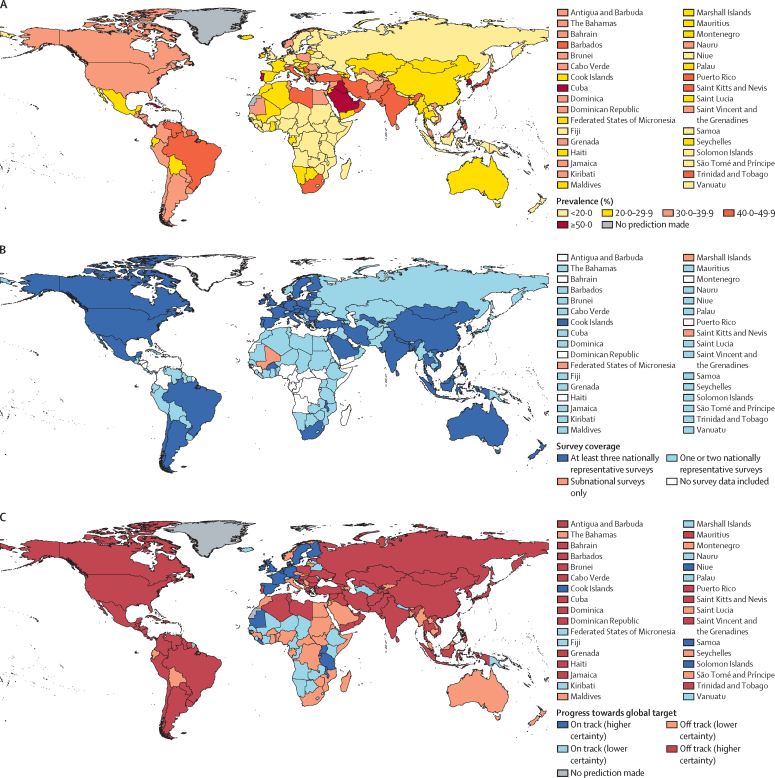
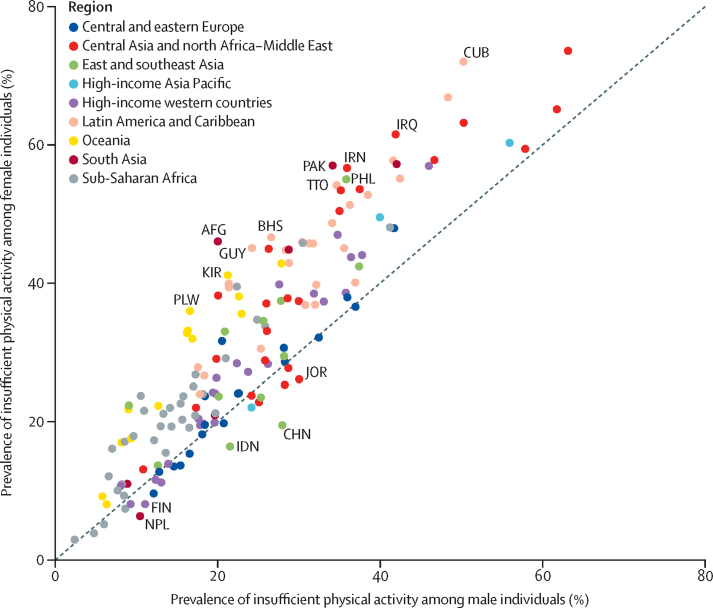
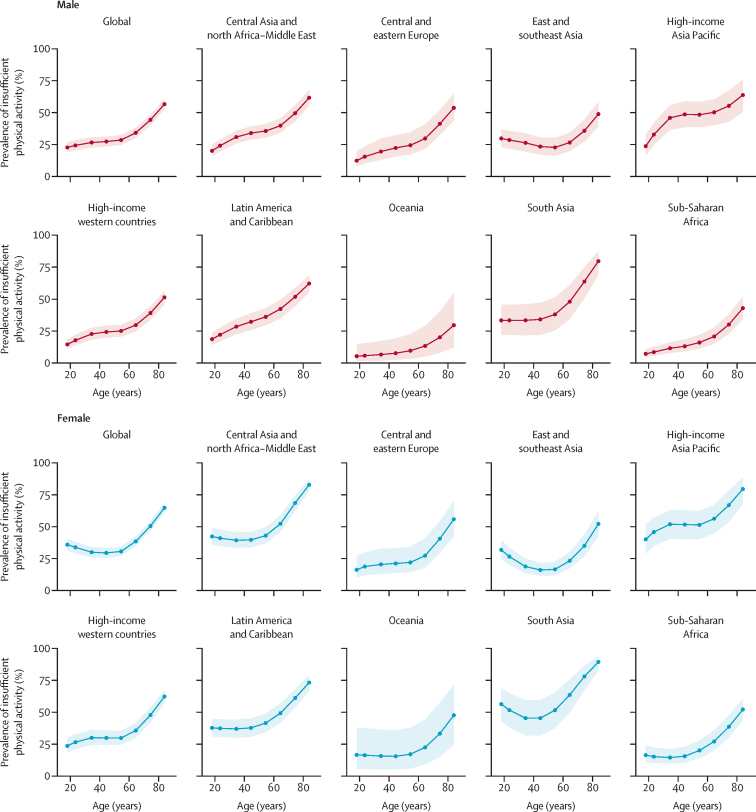
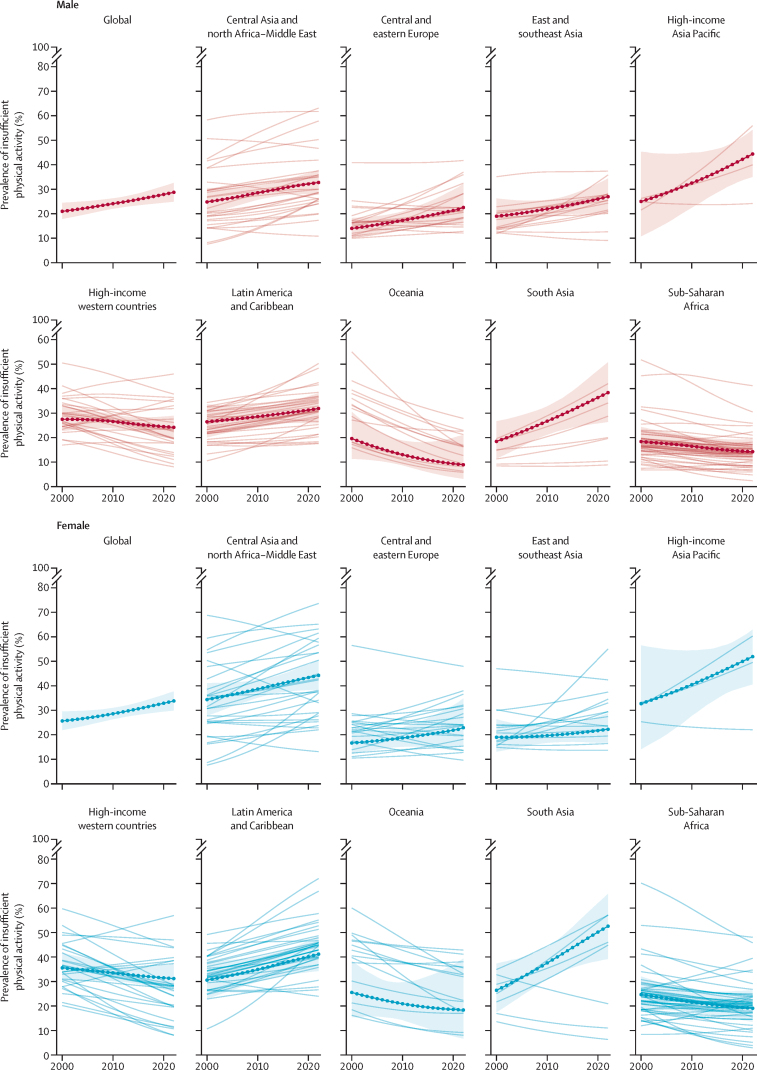
BACKGROUND: Insufficient physical activity increases the risk of non-communicable diseases, poor physical and cognitive function, weight gain, and mental ill-health. Global prevalence of adult insufficient physical activity was last published for 2016, with limited trend data. We aimed to estimate the prevalence of insufficient physical activity for 197 countries and territories, from 2000 to 2022. METHODS: We collated physical activity reported by adults (aged ≥18 years) in population-based surveys. Insufficient physical activity was defined as not doing 150 minutes of moderate-intensity activity, 75 minutes of vigorous-intensity activity, or an equivalent combination per week. We used a Bayesian hierarchical model to compute estimates of insufficient physical activity by country or territory, year, age, and sex. We assessed whether countries or territories, regions, and the world would meet the global target of a 15% relative reduction of the prevalence of insufficient physical activity by 2030 if 2010-22 trends continue. FINDINGS: We included 507 surveys across 163 countries and territories. The global age-standardised prevalence of insufficient physical activity was 31·3% (95% uncertainty interval 28·6-34·0) in 2022, an increase from 23·4% (21·1-26·0) in 2000 and 26·4% (24·8-27·9) in 2010. Prevalence was increasing in 103 (52%) of 197 countries and territories and six (67%) of nine regions, and was declining in the remainder. Prevalence was 5 percentage points higher among female (33·8% [29·9-37·7]) than male (28·7% [25·0-32·6]) individuals. Insufficient physical activity increased in people aged 60 years and older in all regions and both sexes, but age patterns differed for those younger than 60 years. If 2010-22 trends continue, the global target of a 15% relative reduction between 2010 and 2030 will not be met (posterior probability <0·01); however, two regions, Oceania and sub-Saharan Africa, were on track with considerable uncertainty (posterior probabilities 0·70-0·74). INTERPRETATION: Concerted multi-sectoral efforts to reduce insufficient physical activity levels are needed to meet the 2030 target. Physical activity promotion should not exacerbate sex, age, or geographical inequalities. FUNDING: Ministry of Public Health, Qatar, and World Health Organization. TRANSLATIONS: For the Spanish and Portuguese translations of the abstract see Supplementary Materials section.
Overview
CoChat Summary
TL;DR
This pooled analysis of 507 population-based surveys estimates that global age-standardised insufficient physical activity among adults rose from 23·4% in 2000 to 31·3% in 2022. If 2010–22 trends continue, the 2030 target of a 15% relative reduction will not be met (posterior probability <0·01), although Oceania and sub-Saharan Africa were on track with considerable uncertainty.
Key findings
- Global age-standardised prevalence of insufficient physical activity was 31·3% (95% UI 28·6–34·0) in 2022, up from 23·4% (21·1–26·0) in 2000 and 26·4% (24·8–27·9) in 2010; the posterior probability of a true increase from 2010 to 2022 was >0·99.
- Prevalence was increasing in 103 (52%) of 197 countries and territories and six (67%) of nine regions; it was 5 percentage points higher in female (33·8% [29·9–37·7]) than male (28·7% [25·0–32·6]) individuals, with the largest regional sex gap in south Asia (female 52·6% [39·2–65·8] vs male 38·4% [26·4–50·7]).
- Country-specific prevalence ranged from 2·7% (95% UI 1·1–5·3) in Malawi to 66·1% (54·6–76·8) in the United Arab Emirates; prevalence exceeded 40% in 32 countries and 50% in the United Arab Emirates and nine other countries.
- If 2010–22 trends continue, global prevalence in 2030 would be 34·7% (30·4–39·1); the 2030 target would not be met (posterior probability <0·01), while Oceania and sub-Saharan Africa were on track with lower certainty (posterior probabilities 0·70–0·74); 136 countries were not on track and 61 were on track.
Methods
- The study collated self-reported physical activity from population-based surveys of adults aged ≥18 years, including 507 surveys across 163 countries and territories representing 93·0% of the global population; data closed on Feb 5, 2024. Surveys used GPAQ (228 surveys), IPAQ (137), or another questionnaire (142).
- Insufficient physical activity was defined as not meeting WHO aerobic recommendations: at least 150 minutes of moderate-intensity activity per week, 75 minutes of vigorous-intensity activity, or an equivalent combination. Estimates were produced for 197 countries and territories by year (2000–22), seven age groups, and sex.
- Hierarchical Bayesian probit regression models were fit separately for males and females, using natural cubic splines for age with knots at 30 and 60 years, linear time trends, questionnaire indicators, and age-standardised adult obesity as a country-specific time-varying covariate. The models used 4000 posterior samples; 95% uncertainty intervals are Bayesian credible intervals. Progress toward the 2030 target was assessed by projecting 2010–22 trends and computing posterior probabilities of meeting a 15% relative reduction.
Limitations
- The paper states that data were not available for every country and year, and 34 countries had no eligible data; countries with no, limited, or inconsistent data could differ systematically from those with well-developed surveillance. Self-report data are subject to recall and social desirability biases, questionnaire variation, and uncertain statistical adjustments; data quality and representativeness may vary over time, and declining response rates or COVID-19 may have affected non-response bias. Estimates are not disaggregated by wealth, geographical location, or disability, and uncertainty intervals do not reflect all sources of uncertainty.
- The paper states that it could not detect differences due to the COVID-19 pandemic; no included data sources collected data from April to July 2020, and only 30 surveys from 24 countries collected data from August 2020 to December 2021. A linear time trend was modelled, and a sensitivity analysis found no evidence of a step change or non-linearity in post-August 2020 data.
- The text makes evident that fewer than 15 countries had nationally representative device-based physical activity data, with considerable protocol heterogeneity, and that consensus and data are lacking for muscle strengthening, balance, and sedentary recommendations.
Model-written summary. Check it against the paper before relying on it.
Integrity signals
Registry
Cites
Statistics
Figures
Verification
Claims the paper makes
7 Valid · 0 Not valid · 16 Not checked · 82 Own results and interpretations
The cited sources support only part of this claim — read each source’s verdict below.
In the paper
“There is inconsistent and insufficient monitoring of other behaviours included in the physical activity guidelines (muscle strengthening, balance activities [for older adults aged ≥65 years], and sedentary time2) to produce global estimates and targets.5, 6”
§ National, regional, and global trends in insufficient physical activity among adults from 2000 to 2022: a pooled analysis of 507 population-based surveys with 5·7 million participants > Introduction
What the sources say
- Not checked yetcites [5] Milton K Varela AR Strain T Cavill N Foster C Mutrie N A review of global surveillance on the muscle strengthening and balance elements of physical activity recommendations J Frailty Sarcopenia Falls 3 2018 114 124 32300699 PMC7155319 source
- Partly supportedcites [6] Mclaughlin M Atkin AJ Starr L Worldwide surveillance of self-reported sitting time: a scoping review Int J Behav Nutr Phys Act 17 2020 111 32883294 PMC7469304 sourceExperimental — accuracy not yet measured
Our copy of McLaughlin et al. (2020) supports only the sedentary-time component: the Discussion (p. 'Compared with other risk factors...') and Conclusion report that sitting time data were collected in just 62 of 215 countries covering 47% of the global adult population, that 'a comprehensive collation of sedentary behaviour data collected within the last 10 years does not currently exist' (Background), and that surveillance relies on heterogeneous, poorly accurate single-item IPAQ/GPAQ measures (Discussion, limitations). The claim's other two behaviours — muscle-strengthening activities and balance activities for adults aged ≥65 — are nowhere addressed: searches for 'muscle-strengthening', 'balance' and 'bone-loading' returned only reference-list and unrelated passages. The paper also frames the gap as limited coverage/measurement quality rather than an inability to set 'targets', so that framing is the citing authors' own extension. (LLM, conf=0.78)
plain- Asserted: passes — The authors put it forward as true.
- Checkable: passes — It can be checked against evidence.
- Load-bearing: passes — The paper’s conclusions depend on it.
- Based: passes — The paper gives a reason why it holds.
Every source the paper cites for this claim was checked and supports it.
In the paper
“We adjusted prevalences from surveys only representing urban areas and those reporting prevalence in the IPAQ low scoring category using regression equations developed by Guthold and colleagues (appendix 3 p 8).10”
§ National, regional, and global trends in insufficient physical activity among adults from 2000 to 2022: a pooled analysis of 507 population-based surveys with 5·7 million participants > Methods > Data sources
What the sources say
- Supportedcites [10] Guthold R Stevens GA Riley LM Bull FC Worldwide trends in insufficient physical activity from 2001 to 2016: a pooled analysis of 358 population-based surveys with 1·9 million participants Lancet Glob Health 6 2018 e1077 e1086 30193830 source
The Statistical analysis section of Guthold et al. (2018) states that 'We applied four key adjustments to survey data using linear regression modelling to improve comparability (appendix pp 17-27)', and specifies among them (second) an adjustment for over-reporting in the IPAQ, applied as an adjustment factor 'to surveys that used the International Physical Activity Questionnaire', and (third) adjustment of 'data from surveys that had only urban samples' (27 of 358 surveys), estimating rural prevalence from surveys reporting both. That is exactly what the citing sentence attributes to Guthold and colleagues: regression-derived adjustments for urban-only surveys and for IPAQ-reported prevalences. The equations themselves sit in the paper's appendix (pp 17-27), which our copy of the article text does not include, so the claim's finer characterisation of the IPAQ figures as the 'low scoring category' is not spelled out in the main text; the Study design section confirms the target indicator is insufficient activity (not meeting the WHO 150 min moderate/75 min vigorous recommendation). (LLM, conf=0.80)
plain- Asserted: passes — The authors put it forward as true.
- Checkable: passes — It can be checked against evidence.
- Load-bearing: passes — The paper’s conclusions depend on it.
- Based: passes — The paper gives a reason why it holds.
- Supported
Every source the paper cites for this claim was checked and supports it.
In the paper
“Nevertheless, our global prevalence estimate for 2016 (28·7% [95% UI 26·9–30·4]) is similar to the previous analysis (27·5% [25·0–32·2]).10”
§ National, regional, and global trends in insufficient physical activity among adults from 2000 to 2022: a pooled analysis of 507 population-based surveys with 5·7 million participants > Discussion
What the sources say
- Supportedcites [10] Guthold R Stevens GA Riley LM Bull FC Worldwide trends in insufficient physical activity from 2001 to 2016: a pooled analysis of 358 population-based surveys with 1·9 million participants Lancet Glob Health 6 2018 e1077 e1086 30193830 source
The element attributed to Guthold et al. (2018) is the 'previous analysis' figure of 27·5% (25·0–32·2) for global prevalence in 2016; the 28·7% (26·9–30·4) estimate is the citing authors' own result and the 'is similar to' comparison is their conclusion. Our copy states exactly that figure in the Abstract (Findings), the Results ('more than a quarter of adults (27·5%, 95% UI 25·0–32·2) were insufficiently physically active in 2016'), the 'Added value of this study' section, and Table 1/Table 2 (All countries 27·5% [25·0–32·2]). The paper does not report a 28·7% global estimate (its 2001 global value is 28·5%, 23·9–33·9), consistent with that number belonging to the citing study. (LLM, conf=0.90)
plain- Asserted: passes — The authors put it forward as true.
- Checkable: passes — It can be checked against evidence.
- Load-bearing: unclear — It is unclear whether the paper’s conclusions depend on it.
- Based: passes — The paper gives a reason why it holds.
- Supported
A result the paper reports from its own data — it cites no other source for it, so there is none to check. The quote shows it is in the paper.
In the paper
“The global age-standardised prevalence of insufficient physical activity was 31·3% (95% uncertainty interval 28·6–34·0) in 2022, an increase from 23·4% (21·1–26·0) in 2000 and 26·4% (24·8–27·9) in 2010.”
- Also stated in: § Results · plain
“Globally, nearly a third of adults were insufficiently physically active (age-standardised prevalence of 31·3% [95% uncertainty interval 28·6–34·0]) in 2022 (table 2).”
§ National, regional, and global trends in insufficient physical activity among adults from 2000 to 2022: a pooled analysis of 507 population-based surveys with 5·7 million participants > Abstract > Findings
plain- Asserted: passes — The authors put it forward as true.
- Checkable: passes — It can be checked against evidence.
- Load-bearing: passes — The paper’s conclusions depend on it.
- Based: passes — The paper gives a reason why it holds.
- Also stated in: § Results · plain
A result the paper reports from its own data — it cites no other source for it, so there is none to check. The quote shows it is in the paper.
In the paper
“The global age-standardised prevalence of insufficient physical activity was 31·3% (95% uncertainty interval 28·6–34·0) in 2022, an increase from 23·4% (21·1–26·0) in 2000 and 26·4% (24·8–27·9) in 2010.”
- Also stated in: § Results · plain
“Global | Global | 23·4% (21·1–26·0) | 26·4% (24·8–27·9) | 31·3% (28·6–34·0) | 34·7% (30·4–39·1) | Off track, higher certainty”
§ National, regional, and global trends in insufficient physical activity among adults from 2000 to 2022: a pooled analysis of 507 population-based surveys with 5·7 million participants > Abstract > Findings
plain- Asserted: passes — The authors put it forward as true.
- Checkable: passes — It can be checked against evidence.
- Load-bearing: passes — The paper’s conclusions depend on it.
- Based: passes — The paper gives a reason why it holds.
- Also stated in: § Results · plain
47 more claims
Create a free account to see all 105 claims and to verify the 19 references still open.
- Probably not a substantial claim. 20
- It may state two separate claims as one. 39
Claims other papers make about this one
Each is checked against this paper’s own text: does it say what the citing paper says it does?
In the citing paper
“showing that over 30% of adults do not meet the minimum recommendations for physical activity, and this percentage exceeds 40% among older adults [141].”
From Dietary and Behavioral Strategies for Weight Loss and Weight Loss Maintenance: A Narrative Review (2025) · cites this paper as [141]
Self-check
Percentages, sums and reported differences re-computed from the paper’s own numbers.
Each contradiction between two passages listed here was confirmed by an independent check.
Rated minor: it would not touch a result — a value no result rests on, a p-value that stays on the same side of the significance level, or a conflict that is clerical, resolved elsewhere in the paper, or outside its own findings.
In the paper
§ National, regional, and global trends in insufficient physical activity among adults from 2000 to 2022: a pooled analysis of 507 population-based surveys with 5·7 million participants > Results
“Our trend analysis shows the global age-standardised prevalence of insufficient physical activity has increased from 28·6% in 2010 to 31·3% in 2022 (table 1)”
§ National, regional, and global trends in insufficient physical activity among adults from 2000 to 2022: a pooled analysis of 507 population-based surveys with 5·7 million participants > Results
“| | Global | Global | 23·4% (21·1–26·0) | 26·4% (24·8–27·9) | 31·3% (28·6–34·0) | 34·7% (30·4–39·1) | Off track, higher certainty |”
Citations
Cites
World Health Organization 2020 guidelines on physical activity and sedentary behaviour
Bull, F. C., Al-Ansari, S. S., Biddle, S., Borodulin, K., Buman, M. P., Cardon, G., Carty, C., Chaput, J.-P., Chastin, S., Chou, R., et al. (2020) · British Journal of Sports Medicine · doi:10.1136/bjsports-2020-102955 · Cited by 11,657
Self-citationGlobal physical activity levels: surveillance progress, pitfalls, and prospects
Hallal, P. C., Andersen, L. B., Bull, F. C., Guthold, R., Haskell, W., & Ekelund, U. (2012) · The Lancet · doi:10.1016/s0140-6736(12)60646-1 · Cited by 5,711
Self-citationGuthold, R., Stevens, G. A., Riley, L. M., & Bull, F. C. (2018) · The Lancet Global Health · doi:10.1016/s2214-109x(18)30357-7 · Cited by 4,819
Self-citationEzzati, M., López, A. D., Rodgers, A., & Murray, C. J. L. (2004) · Cited by 3,319
Phelps, N. H., Singleton, R. K., Zhou, B., Heap, R. A., Mishra, A., Bennett, J. E., Paciorek, C. J., Lhoste, V. P., Carrillo-Larco, R. M., Stevens, G. A., et al. (2024) · The Lancet · doi:10.1016/s0140-6736(23)02750-2 · Cited by 2,544 · cited 1×
“17 An additional variance term accounted for unobserved design factors (eg, sample design and season) that would lead to variance beyond that expected due to sample size.”
BackgroundSelf-citationGuidelines for accurate and transparent health estimates reporting: the GATHER statement
Stevens, G. A., Alkema, L., Black, R. E., Boerma, J. T., Collins, G. S., Ezzati, M., Grove, J. T., Hogan, D. R., Hogan, M. C., Horton, R., et al. (2016) · The Lancet · doi:10.1016/s0140-6736(16)30388-9 · Cited by 1,798
Self-citationProgress in physical activity over the Olympic quadrennium
Sallis, J. F., Bull, F., Guthold, R., Heath, G. W., Inoue, S., Kelly, P., Oyeyemi, A. L., Perez, L. G., Richards, J., & Hallal, P. C. (2016) · The Lancet · doi:10.1016/s0140-6736(16)30581-5 · Cited by 935
Self-citationImpact of COVID-19 on physical activity: A rapid review
Park, A. H., Zhong, S., Yang, H., Jeong, J., & Lee, C. (2022) · Journal of Global Health · doi:10.7189/jogh.12.05003 · Cited by 232
Step Up! Tackling the Burden of Insufficient Physical Activity in Europe
OECD, & World Health Organization (2023) · OECD eBooks · doi:10.1787/500a9601-en · Cited by 178
Shifting the physical inactivity curve worldwide by closing the gender gap
Mielke, G. I., da Silva, I. C. M., Kolbe-Alexander, T. L., & Brown, W. J. (2018) · Sports Medicine · doi:10.1007/s40279-017-0754-7 · Cited by 164
Self-citation
Cited by
Items 601–700 of 1,000
Cassinelli, E. H., Kent, L., Eastwood, K., Schoenaker, D. A. J. M., McKinley, M. C., & McGowan, L. J. (2025) · European Journal of Public Health · doi:10.1093/eurpub/ckaf141 · Cited by 2
Counteracting the Inactivity Epidemic: Should We Ring-Fence Paid Work Time for Physical Activity?
Funnell, M. P., Chauntry, A. J., Hutson, M. J., Tyne, W. P., Khunti, K., & Routen, A. C. (2025) · Journal of Physical Activity and Health · doi:10.1123/jpah.2025-0470
Health and productivity benefits of a multicomponent workplace program by gender in small companies
Díaz-Benito, V. J., Bonal, J., Fernández‐Luna, Á., Burillo, P., Macías, R., & León-Quismondo, J. (2025) · Frontiers in Sports and Active Living · doi:10.3389/fspor.2025.1672619
Valente, P. A., Mota, S. I., Cova, T. F. G. G., Santos, J. P., Grilo, L. F., Barata, B., Cipriano, I. N., Teixeira, A. M., Campos, J. R., Pais, A. A. C. C., et al. (2025) · SSRN Electronic Journal · doi:10.2139/ssrn.5434609
Farrahi, V., & Farhang, E. (2026) · Journal for the Measurement of Physical Behaviour · doi:10.1123/jmpb.2025-0054 · Cited by 2
Røynesdal, Ø. B., Smith, O. R. F., Sørensen, M., van Nassau, F., Jelsma, J. G. M., Wyke, S., Gray, C. M., Pereira, H. V., Andersen, E., Silva, M. N., et al. (2025) · International Journal of Sport and Exercise Psychology · doi:10.1080/1612197x.2025.2547364
“…and sustained PA. Men’s health is significantly impacted by sedentary lifestyles and insufficient physical activity (PA) in many European countries (Strain et al., 2024) and men are often underre-presented in health behaviour interventions designed to improve these behaviours, especially those…”
How adding sprints to your usual jogs can boost the health benefits of running
Gaffney, C. J. (2025) · The Conversation · doi:10.64628/ab.c6ejy5mmn
Enhancement of Squat Motivation through Fuzzy Inference-based Performance Scoring and Feedback
Okamoto, Y., Maulana, M. F., OKABE, K., Sato-Shimokawara, E., & Yeung, C. (2025) · IEEE International Conference on Fuzzy Systems (FUZZ-IEEE) · doi:10.1109/fuzz62266.2025.11152201
“However, the proportion of physically inactive individuals worldwide exceeded 30% in 2022 [3], indicating a significant health concern as many fail to meet the recommended exercise levels.”
Requirements and Design Options for Adaptive Step Goals in Health Recommender Systems
Michael Fellmann, M. A., & Schmidt, A. C. (2025) · Lecture notes in business information processing · doi:10.1007/978-3-032-04375-7_6
Watanabe, N., KAMIJO, M., Sasamori, F., Ashida, K., Okuhara, M., Tabuchi, H., Maruo, S. J., & Terasawa, K. (2025) · Research Square · doi:10.21203/rs.3.rs-7220243/v1
Adams, E., Murray, K., Bauman, A. E., & Christian, H. E. (2025) · Journal of Physical Activity and Health · doi:10.1123/jpah.2024-0797 · Cited by 3
Self-citationGonçalves, N. G., Coelho, P. H. L., Feter, N., Lotufo, P. A., Benseñor, I. M., & Suemoto, C. K. (2025) · Alzheimer Disease & Associated Disorders · doi:10.1097/wad.0000000000000690
Ergonomic Exercise-Based Nursing Care for Addressing Community Health Deficits in Rural Areas
Kamila, N., Istifada, R., Rasni, H., & Mustapa, G. W. (2025) · Journal of Rural Community Nursing Practice · doi:10.58545/jrcnp.v3i2.577
Determining patient eligibility for a physical activity referral scheme through EHR data extraction
Rosemeyer, J., Trilk, J. L., Jindal, M., Brooks, J. M., McNulty, L. K., & Stoutenberg, M. (2025) · BMC Medical Informatics and Decision Making · doi:10.1186/s12911-025-03122-4
“It is estimated that 31.3% of adults worldwide were physically inactive in 2022; if this trend continues, inactivity levels are expected to rise to 34.7% by 2030 [1].”
InfluentialMitchell, J. J., Biswas, R. K., Koemel, N. A., Ahmadi, M. N., Blodgett, J. M., Canfell, K., Lee, I.-M. M., Friedenreich, C. M., Teixeira-Pinto, A. M., Cistulli, P. A., et al. (2026) · BMC Medicine · doi:10.1186/s12916-026-05069-3
“Given the high-proportion of individuals globally who remain physically inactive [25], and the need to accommodate for the needs of those for whom find it challenging to meet the intensity-based guidelines, we sought to explore multiple dimensions of movement behaviour.”
Montemurro, A., Ruiz-Cárdenas, J. D., Gruet, M., & Souron, R. (2025) · European Journal of Applied Physiology · doi:10.1007/s00421-025-06010-x · Cited by 1
Suzuki, M., & Saito, Y. (2025) · Journal of Public Health · doi:10.1007/s10389-025-02612-z
Thylefors, J., Gershater, M. A., Mangrio, E., & Zdravkovic, S. (2025) · Scandinavian Journal of Primary Health Care · doi:10.1080/02813432.2025.2572514
“…an increase in risk factors for developing t2D, such as rising obesity rates [10] and a more sedentary lifestyle is common in Western societies [11]. these factors likely contribute to the rise in t2D in Malmö. although t2D is typically a self-managed disease [12], the affected persons rely on…”
Daily steps and life expectancy: a life table analysis of NHANES 2005-2006 and 2011-2014Preprint
Ma, T., Zhuang, J., Liu, T., Holzapfel, S. D., Lei, J., Li, G., & Pang, M. Y. C. (2025) · Research Square · doi:10.21203/rs.3.rs-7654206/v1
Toxværd, C. G., Elsborg, P., Birke, H., Thomsen, T., Jørgensen, S. M., Fromberg, E. B., Håkansson, H. N., Dahlerup, J., Stage, A., & Aadahl, M. (2025) · Scandinavian Journal of Public Health · doi:10.1177/14034948251383396
“However, approximately one in three women and one in four men do not engage in sufficient PA globally [5].”
Pillon, N. J., de Zevallos, J. O., Zierath, J. R., & Ainsworth, B. E. (2025) · Journal of sport and health science/Journal of Sport and Health Science · doi:10.1016/j.jshs.2025.101098 · Cited by 1
Physical Activity for Human and Planetary Health
Andonian, B. J., & Lassell, R. (2025) · Rheumatic Disease Clinics of North America · doi:10.1016/j.rdc.2025.08.009
Oh, S.-E., Lee, S., & Kang, M. (2025) · Journal of Physical Activity and Health · doi:10.1123/jpah.2025-0326
How gender-based violence undermines women's right to move
de Lira, C. A. B., Vancini, R. L., & Andrade, M. S. (2025) · The Lancet Public Health · doi:10.1016/s2468-2667(25)00221-x
Harris, D., Gluchowski, A., Hall, A., Elliott, E., & Munford, L. A. (2025) · BMC Public Health · doi:10.1186/s12889-025-24981-6
“%) of older adults aged 60 years and over globally are not doing sufficient physical activity [13].”
Balla, S., Chakraborti, K., Jain, N., Ruske, J., & Shah, K. (2025) · Journal of clinical lipidology · doi:10.1016/j.jacl.2025.08.016
Masagca, R. C. (2025) · Physical Education of Students · doi:10.15561/20755279.2025.0508
“Trends of increasing inactivity were most evident in high-income nations [10, 11].”
Bertiato, F. (2025) · SSRN Electronic Journal · doi:10.2139/ssrn.5688402
From host genome to the gut microbiome: an Indian lens on the global diabetes genomics landscape
Arjun, S., & Mohan, V. (2025) · Proceedings of the Indian National Science Academy · doi:10.1007/s43538-025-00565-1
“Studies indicate that men are generally more physically active than women, consistent with global patterns (Strain et al. 2024; Verma et al. 2025).”
InfluentialTakahashi, M., Amagasa, S., Fukushima, N., Taguri, M., Fukuda, Y., Gebel, K., Ding, D., & Inoue, S. (2025) · Journal of Physical Activity and Health · doi:10.1123/jpah.2025-0499
Danielsen, K. K., Rexha, D., & Sveaas, S. H. (2025) · Journal of Physical Activity and Health · doi:10.1123/jpah.2024-0582 · Cited by 1
Gries, K. J., McGraw, J. E., Goetz-Sutinen, E. C., Grimm, J., Baranowski, J. B., & Berres, M. E. (2025) · American Journal of Physiology-Endocrinology and Metabolism · doi:10.1152/ajpendo.00379.2025 · Cited by 1
Bayati, M., Amani-Shalamzari, S., & علافان, ن. (2025) · Journal of Motor Control and Learning · doi:10.5812/jmcl-163553
Fiber Type and Stimulus Determine Progression of Skeletal Muscle AtrophyPreprint
Maas, G., Mullen, M. P., Shepard, B. D., Gugel, J. F., Hunt, D. R., Ferguson, V. L., Calve, S., Martin, T. G., & Leinwand, L. A. (2025) · bioRxiv (Cold Spring Harbor Laboratory) · doi:10.1101/2025.11.13.687882
Aggregation Periods Influence Step Count Error in Low-Power Wearables
Lundell, S., & Kaufman, K. R. (2025) · Sensors · doi:10.3390/s25226998
“Movement and activity—which are known to be directly correlated to overall physical, cardiovascular, and mental health—are the primary focus of these wearable health monitors [5].”
Alghafri, T. S., Harthi, S. A., Harasi, S. A., & McCallum, M. (2025) · IntechOpen eBooks · doi:10.5772/intechopen.1012977
The working population’s health literacy and changes in physical activity over one year
Morikawa, Y., Teranishi, K., Sakurai, M., Ishizaki, M., Kido, T., & Nakagawa, H. (2025) · BMC Public Health · doi:10.1186/s12889-025-25162-1 · Cited by 1
“However, nearly a third of adults globally do not meet the recommended level of physical activity [7].”
Shrestha, R. K., Paudel, S., Rijal, A., Adhikari, T. B., Khatri, B., Dhakal, L., Neupane, D., Dahal, K. B., Nielsen, R. O., Skejø, S. D., et al. (2025) · Archives of Public Health · doi:10.1186/s13690-025-01788-w · Cited by 3
“Globally, 31.3% of adults have insufficient physical activity, below WHO-recommended 150 min of at least moderate intensity physical activity (PA) per week [1, 2].”
InfluentialBlanco-Martínez, N., Delgado‐Lobete, L., & Ayán, C. (2025) · International Journal of Sport and Exercise Psychology · doi:10.1080/1612197x.2025.2584540
Physical activity and post-COVID symptoms: Findings from the EPICOVID 2.0 survey in Brazil
Felix, D. M., Mohandas, V. J., Leão, O. A. D. A., Siqueira, F. V., & Hallal, P. C. (2025) · Preventive Medicine · doi:10.1016/j.ypmed.2025.108471
Hung, W. Y., Árva, D., Mózes, N., Major, D., Pártos, K., Terebessy, A., Horváth, F., Fehér, Á., Fekete, M., Dósa, N., et al. (2025) · GeroScience · doi:10.1007/s11357-025-02011-y · Cited by 1
Sujan, M. A. J., Skarstad, H. M. S., Rosvold, G., Lund, H. N., Oladewa, A. P., Fougner, S. L., Follestad, T., Salvesen, K. Å., & Moholdt, T. T. (2026) · BMJ Open Sport & Exercise Medicine · doi:10.1101/2025.11.25.25340951
Seiterö, A., Ruiz-Moreno, A., Alcarazo, A., Garrido-Gonzalez, C. M. M., Ballesta-Rodríguez, M. I., Henriksson, P., Lima, R. A., Álvarez‐Pérez, Y., Reigal, R. E., Campos-Paíno, H., et al. (2025) · medRxiv · doi:10.1101/2025.11.25.25340945
Fernandez, M., & Seiler, S. (2025) · Frontiers in Sports and Active Living · doi:10.3389/fspor.2025.1641818
Gierbolini-Rivera, R. D., Silva, M. F., Pineda, L. F., Weiner, B. J., Powell, B. J., Brownson, R. C., & Parra, D. C. (2025) · Frontiers in Public Health · doi:10.3389/fpubh.2025.1667559 · Cited by 1
Dammand, M. G., Bueno, S. V., & Skejø, S. D. (2025) · medRxiv · doi:10.1101/2025.11.28.25341203
Formation of competences to strengthen human health in students of specialty A7
Synytsya, T., Synytsya, S., & Shesterova, L. (2025) · Scientific Journal of National Pedagogical Dragomanov University Series 15 Scientific and pedagogical problems of physical culture (physical culture and sports) · doi:10.31392/udu-nc.series15.2025.11(198).39
LIFETRACE: A Longitudinal Multimodal Dataset on Daily Physical Activity, Well-Being, and Habits
Bona, F. B. D., Câmpanu, I. A., Langheinrich, M., Gjoreski, M., & Juravle, G. (2025) · Proceedings of the ACM on Interactive Mobile Wearable and Ubiquitous Technologies · doi:10.1145/3770676 · Cited by 1
Pirkle, C. M., Thompson, M. D., Rodericks, R., Schmid, S. M., Ching, L. K., Look, M. A., Wu, Y. Y., Phillips, M. M., & Sentell, T. L. (2026) · Journal of Physical Activity and Health · doi:10.1123/jpah.2025-0938
Bengoechea, E. G., Doyle, C. B., Clifford, A. M., Hobbins, A. P., Glynn, L. G., O’Regan, A., Forte, C., Murphy, A. W., Gillespie, P., & Woods, C. B. (2025) · Frontiers in Public Health · doi:10.3389/fpubh.2025.1681089
Hoppe, H., Brender, R., Walter, U., & Röding, D. (2025) · Journal of Public Health · doi:10.1007/s10389-025-02658-z
Lesser, I., Bean, C. N., Sangha, H., Mahmood, B., & Lear, S. A. (2025) · Canadian Journal of Nursing Research · doi:10.1177/08445621251395348
“Physical activity levels continue to decline globally with noted disparities across regions and sex, with females engaging in less physical activity than males (Strain et al., 2024).”
Steps to longevity: Association of daily total steps and bouted steps with all-cause mortality
Wang, X. H., Ma, T., Xie, Y. J., Yang, Q., Yang, L., Li, Y., Wang, Q., & Yu, C. (2025) · Journal of Sports Sciences · doi:10.1080/02640414.2025.2600814
“Physical inactivity remains a major public health challenge that contributes substantially to the alarming prevalence of chronic diseases and premature death (Strain et al., 2024).”
Macniven, R., Blazek, K. D., Ware, L. J., Mels, C. M. C., van Vuren, E. J., & Schutte, A. E. (2025) · Journal of Sports Sciences · doi:10.1080/02640414.2025.2600807 · Cited by 1
“There are also variations in participation by age and sex where females have lower physical activity levels than males and there is a general decrease in participation with increasing age (Strain et al., 2024).”
Zhang, H., Wang, S., Liu, C., Li, Y., Tang, S., & Liu, M. (2025) · Systematic Reviews · doi:10.1186/s13643-025-02993-y
“Exercise, a subcomponent of physical activity, denotes planned, structured, repetitive, and purposeful movements intended to improve or maintain physical fitness [10, 11].”
Ahrensberg, H., Ekholm, O., Eghøj, M., Bauman, A. E., & Petersen, C. B. (2025) · Scandinavian Journal of Public Health · doi:10.1177/14034948251384427
“Understanding national trends is essential, as global benchmarks [7] do not Sociodemographic trends in leisure-time physical activity in the adult Danish population from 2010 to 2023 capture country-specific developments. national studies, with their consistent methodology and longitudinal data,…”
InfluentialSelf-citationŠtrbac, S., Milutinović, D., Stojković, E., Živanović, N., Stojadinović, S., Antić, N., & Kašanin-Grubin, M. (2025) · Urban forestry & urban greening · doi:10.1016/j.ufug.2025.129232
Gender Gap in Physical Activity: The Role of Conflicts and Political Instability
Domizio, M. D. (2025) · Peace Economics Peace Science and Public Policy · doi:10.1515/peps-2025-0040
A Simple Tool to Assess Outdoor Gym Use
Jansson, A. K., Duncan, M. J., Beacroft, S., Lubans, D. R., Attia, J. R., Bauman, A. E., Smith, J. J., & Plotnikoff, R. C. (2025) · Journal of Physical Activity and Health · doi:10.1123/jpah.2025-0434 · Cited by 1
Self-citationSharp, C., Hughes, K. E., Pilkington, P., & Bradley, J. C. (2025) · International Journal of Environmental Research and Public Health · doi:10.3390/ijerph23010005 · Cited by 1
“Unfortunately, despite an extensive range of national and international actions to promote physical activity, the global prevalence of physical inactivity is estimated to have increased from 23.4% in 2000 to 31.3% in 2022 [4].”
InfluentialBamert, M., Inauen, J., & Ruf, A. (2026) · Psychology of sport and exercise · doi:10.1016/j.psychsport.2026.103243
Park, J., & Shon, C. (2025) · PLoS ONE · doi:10.1371/journal.pone.0338875
“%) of adults worldwide did not meet WHO recommendations for physical activity in 2022, and that the global prevalence of insufficient activity has increased since 2010 [22].”
THE IMPACT OF PHYSICAL ACTIVITY ON DEMENTIA IN ELDERLY AGE
Starosta, B., Brzychcy, B., Gajda, Z., Pelczar, M., Brzychcy, K., Paks, K., Jench, E., Musialik, N., & Magiera, M. (2025) · International Journal of Innovative Technologies in Social Science · doi:10.31435/ijitss.3(47).2025.3857
Unveiling Trips—A LABDA Consortium Study
Heidler, J., Marchiori, M., Carlson, J. A., & Schipperijn, J. (2025) · Journal for the Measurement of Physical Behaviour · doi:10.1123/jmpb.2025-0009
Shi, Y., Yu, X., Mitsuhashi, R., Wan, J., Mizushima, R., & Nakata, Y. (2025) · Discover Public Health · doi:10.1186/s12982-025-01232-y
“The proportion of adults failing to meet these recommended levels of physical activity is predicted to increase by 35% by 2030 [6].”
Krstonošić, B., Prpa, A., & Babovic, S. S. (2025) · Journal of Public Health Research · doi:10.1177/22799036251401949
Brown, R. C. C., Ross, M. H., Coombes, J. S., Hickman, I. J., Burton, N. W., Kelly, J. T., Russell, T. G., & Keating, S. E. (2025) · Digital Health · doi:10.1177/20552076251410986
GÜNER, O., & Kalkavan, A. (2025) · Gümüşhane Üniversitesi Sağlık Bilimleri Dergisi · doi:10.37989/gumussagbil.1733486 · Cited by 1
Predictive value of the EHIS-PAQ for all-cause mortality
Martínez-Portillo, A., la Cámara, M. Á. D., Granero-Melcón, B., Ortíz, C., Neira-León, M., & Galán, I. (2025) · Journal of Public Health · doi:10.1093/pubmed/fdaf158
Leveraging the Global Growth of Running to Promote Physical Activity at the Populational Level
Thuany, M., Petreça, D. R., & de Lira, C. A. B. (2025) · Journal of Physical Activity and Health · doi:10.1123/jpah.2025-0827 · Cited by 3
Variation in Clinician Advice to Modify Health Risk Behaviors: A Cross-Sectional Study
Sullenger, R. D., & Sommers, B. D. (2025) · American Journal of Preventive Medicine · doi:10.1016/j.amepre.2025.108252
Dangaa, B., Enkh-Amgalan, E., Batjargal, A., Yadamsuren, E., Namdag, B., Gidaagaya, S., Bayartsogt, B., Lkhagva, B., Enebish, O., & Dambadarjaa, D. (2025) · Central Asian Journal of Medical Sciences · doi:10.24079/cajms.2025.04.003
Shidqi, M. I., Idayati, R., & Yusni, Y. (2025) · Jurnal Gizi Indonesia (The Indonesian Journal of Nutrition) · doi:10.14710/jgi.14.1.59-67
Brain serotonin circuit reverses decline in physical activity with age
de Morentin, P. B. M., Leeson-Payne, A. T. S., Mu, S., Martynova, Y. V., Mohammadkhani, A., Neyens, D. M., Gonzalez, J. A., Lazovskis, J., Cristiano, C., Crabtree, D. R., et al. (2026) · Metabolism · doi:10.64898/2025.12.27.695444
“86, 87 Second, caloric intake was self-reported, and recall bias cannot be excluded, although objective accelerometer data strengthen our conclusions about PA patterns.”
Swärdh, E., & Hagströmer, M. (2026) · European Journal of Physiotherapy · doi:10.1080/21679169.2026.2610151
Locations of leisure-time physical activity and well-being in middle-aged and older women in Japan
Sato, M., Inoue, Y., Lock, D., Aizawa, K., Kohno, N., Mikura, A., & Ogasawara, E. (2026) · World Leisure Journal · doi:10.1080/16078055.2025.2606802
Vicioso, M. P. F.-F., Vicente-Herrero, M. T., Gallegos, A. R., Ramírez‐Manent, J. I., López, P. T., del-Barrio, J. L., & López‐González, Á. A. (2026) · Medicina de Familia SEMERGEN · doi:10.1016/j.semerg.2025.102671
Somrak, K., Hemarachatanon, P., Manunyanon, S., Pechpan, K., Khlongdi, P., Wattanapisit, S., Photia, A., & Wattanapisit, A. (2026) · International Journal of Environmental Research and Public Health · doi:10.3390/ijerph23010087
“%) engage in insufficient PA [1].”
Schleef, J., Ortíz, M. S., & Castellanos-Alvarenga, L. M. (2026) · Journal of Health Psychology · doi:10.1177/13591053251405118 · Cited by 1
Arlauskas, R., Austys, D., Stukas, R., Dobrovolskij, V., Rimkevičius, A., & Bulotaitė, G. (2026) · Medicina · doi:10.3390/medicina62010131
“…though some of them revealed the occurrence of positive changes [1,6–8], there were studies highlighting unfavorable lifestyle changes [1–5,9 The COVID-19 pandemic may have contributed to the long-lasting prevalence of insufficient physical activity registered in many populations worldwide [10].”
Self-citationPhysical activity enhances university students’ subjective well-being: A moderated mediation model
Wang, Y., Zou, R., Si, W., Kang, W., Mengting, Y. I. N. G., & Hong, X. (2026) · Journal of Health Psychology · doi:10.1177/13591053251396479 · Cited by 1
“By 2022, almost a third of the world’s population was not achieving the recommended levels of physical activity (Strain et al., 2024).”
Grillo, D., Cecconi, M., Ossola, G., Stefanello, A., Ciceri, S., Romano, V., Zitti, M., Basso, G., Pavan, R., Perrucchini, M., et al. (2026) · Disability and Rehabilitation Assistive Technology · doi:10.1080/17483107.2025.2607046
“…conditions [28–32], and diabetes [33–38] has been well-established. the “Global action plan on physical activity 2018–2030” was created to reduce physical inactivity by 15% by 2030 [39]. however, 31% of adults remained insufficiently active in 2022, reflecting an upward trend since 2000 [12,40].”
Fialho, P. M. M., Weyers, S., Schmitz, E., Vomhof, M., Icks, A., Lang, A., Kuß, O., & Pischke, C. R. (2026) · Journal of Public Health · doi:10.1007/s10389-025-02664-1
Chiossi, S. L., Corazza, I., Small, R., Kulikov, A., & Banatvala, N. (2026) · Frontiers in Public Health · doi:10.3389/fpubh.2025.1741538
Kovács, B. P., Balog, J., Judit Szigeti, F., Sebők, B., Török, M., & Várbíró, S. (2026) · Life · doi:10.3390/life16010120 · Cited by 1
“Since the COVID-19 pandemic, global sedentary behavior and physical inactivity have increased [45–47], with evidence indicating that women have been affected to a greater extent [48].”
Sverdrup, K., Ustad, A., Tangen, G. G., Kongsvold, A., Vereijken, B., Strand, B. H., Selbæk, G., Ernstsen, L., & Mork, P. J. (2026) · Scientific Reports · doi:10.1038/s41598-026-36355-y · Cited by 1
David, F., Rácz, K., & Salamon, P. (2026) · Children · doi:10.3390/children13010135 · Cited by 1
Prentice, D. M., Bingaman, S. S., Ural, S., Menon, P., Silberman, Y., Browning, K. N., & Arnold, A. C. (2026) · Pregnancy · doi:10.1002/pmf2.70237
“Despite substantial evidence supporting the health benefits of physical activity, a large proportion of the US population remains in the low physical activity category, with this trend worsening across generations [2].”
Alhasan, H. S., Alshehri, M. A., & Alenazi, A. M. (2026) · Frontiers in Public Health · doi:10.3389/fpubh.2026.1727241
Li, Y., Wang, R., Zhang, X., Hu, X., Liu, Z., & Zhang, J. (2026) · BMC Geriatrics · doi:10.1186/s12877-026-07002-y · Cited by 1
“Globally, approximately 30% of adults fail to achieve the recommended levels of physical activity [11].”
Rocha, A. C. R., Noll, M., Vieira, C. A., Clemente, F. M., Rodrigues, M. C. J., Corrêa, J. F., de Lira, C. A. B., Weiss, K., Rosemann, T. J., Knechte, B., et al. (2026) · Systematic Reviews · doi:10.1186/s13643-026-03073-5 · Cited by 1
“…approximately 26.4% of the global population was classified as physically inactive; by 2022, this figure had risen to 31.3%, representing nearly 1.8 billion people, and if current trends persist, projections indicate that by 2030, 34.7% of the global population will be insufficiently active [4].”
InfluentialPinheiro, J. C. D. S. M., Costa, A., Pedrosa, P., & Marques-Vieira, C. M. A. (2026) · International Journal of Orthopaedic and Trauma Nursing · doi:10.1016/j.ijotn.2026.101258 · Cited by 3
Kise, S. (2026) · Physiotherapy Theory and Practice · doi:10.1080/09593985.2026.2621961
Legrand, F. D., Hudson, J., & RHODES, R. E. (2026) · Physiological Reviews · doi:10.1152/physrev.00030.2025
“Regular physical activity (PA) is a cornerstone of physical and mental health, yet sustained engagement remains challenging for a substantial proportion of adults worldwide (1).”
Adulthood in Urban India: A Dharmic, Developmental Perspective
Bhangaokar, R., Pandya, N., Mohammedi, Z., & Gokhale, A. (2026) · Springer eBooks · doi:10.1007/978-981-95-4037-2_12
Xie, Z., & Duan, Z. (2026) · BMC Public Health · doi:10.1186/s12889-026-26537-8
“The latest research shows that nearly one-third of the global adult population, approximately 1.8 billion people, has not met the World Health Organization (WHO) recommended standards for physical activity [1].”
InfluentialChand, V., Bhatia, N., & Toteja, G. S. (2025) · The Indian Journal of Nutrition and Dietetics · doi:10.21048/ijnd.2025.62.2.45811
Augustin, A., Gruet, M., Chalabaev, A., & Mulin, E. (2026) · International Journal of Psychiatry in Clinical Practice · doi:10.1080/13651501.2026.2622538
Table Tennis for Health and Wellbeing: A Rapid Scoping Review
Moustakas, L., & Patzsch, K. (2026) · Sports · doi:10.3390/sports14020063 · Cited by 1
“In turn, the growth in physical inactivity contributes to rising rates of non-communicable disease while making the management of other conditions more challenging [4,5].”
Are there reliable primary indicators of cardiorespiratory fitness in physically active students?
Haggenmueller, K., Freilinger, S., Olson, N., Weil, J., Schulz, T., Oberhoffer, R., & Reiner, B. (2026) · International Journal of Cardiology Cardiovascular Risk and Prevention · doi:10.1016/j.ijcrp.2026.200589 · Cited by 1
Metadata
- Authors
- Strain, T., Flaxman, S., Guthold, R., Semenova, E., Cowan, M., Riley, L. M., Bull, F. C., Stevens, G. A., Abdul Raheem, R., Agoudavi, K., Alfred Anderssen, S., Alkhatib, W., Aly, E. A. H., Anjana, R. M., Bauman, A., Bovet, P., Brito Moniz, T., Bulotaitė, G., Caixeta, R., Castro Monteiro, E., Celis Morales, C., Chaves Cortes, C., Crochemore-Silva, I., Cyr-Philbert, S., Damasceno, A., Davaakhuu, N., Elimam Ahmed, M. A., Farnberger, C., Farzadfar, F., Fernando, D., Froboese, I., Frömel, K., Gage, R., Garcia, L., Guwatudde, D., Hamřík, Z., Herman Hansen, B., Irianto, J., Jazaa Aloufi, W., Jeon, J., Jáuregui, A., Kagaruki, G. B., Katewongsa, P., Katulanda, P., Khang, Y.-H., Malisoux, L., Massad, S., Mayige, M. T., Medina Garcia, C., Mielke, G. I., Montenegro Mendoza, R., Moosa, S., Msyamboza, K. P., Mutungi, G., Mwangi, K. J., Ndagijimana, A., Nyandwi, A., Obreja, G., Oh, K., Oliveira Werneck, A., Ondarsuhu, D., Palam, E., Pereira, E., Phy, M., Pisaryk, V., Põlajev, A., Qureshi, H., Razak, L., Riaz, B. K., Richards, J., Roa Rodriguez, R., Saamel, M., Savin, S., Schurink-van 't Klooster, T., Serrate Mengue, S., Shander Ganapathy, S., Shukurov, S., Sigmundová, D., Silva Matos, C., Somatunga, L., Spiroski, I., Titze, S., Tjandrarini, D. H., Turley, M., Ugel, E., Uwinkindi, F., Viali, S., Wallmann-Sperlich, B., Wendel-Vos, W., Widyastari, D. A., Yuldashev, R., & Zoma, L. R.
- Affiliations
- University of Edinburgh (GB)
- University of Oxford (GB)
- Imperial College London (GB)
- World Health Organization (CH)
- The University of Western Australia (AU)
- Corresponding author
- Stevens, Gretchen A
- ORCID
- Venue
- The Lancet Global Health
- Publisher
- Elsevier BV
- Published
- 2024-08
- Volume
- 12
- Issue
- 8
- Pages
- e1232-e1243
- ISSN
- 2214-109X (ISSN-L)
- PMC
- PMC11254784
- OpenAlex
- W4399993456
- Semantic Scholar
- f1d48225285ef148b332ceb7b90e7bd3cbdcdbe0
- Cited by
- 1,087
- References
- 16
- Citations by year
- 2026: 546 · 2025: 476 · 2024: 65
- FWCI
- 309.35
- Type
- journal article
- Language
- en
- Update notices
- erratum (2025-02-01)
- Open access
- gold
- doi.org
- Licence
- cc-by
- www.elsevier.com/tdm/userlicense/1.0/ (tdm)
- www.elsevier.com/legal/tdmrep-license (tdm)
- creativecommons.org/licenses/by/3.0/igo/ (vor)
- Locations
- The Lancet Global Health (publishedVersion, cc-by)
- PubMed Central (publishedVersion, cc-by)
- PubMed (publishedVersion)
- UWA Profiles and Research Repository (UWA) (submittedVersion, cc-by)
- Edinburgh Research Explorer (University of Edinburgh) (submittedVersion, cc-by)
- Research Portal (Queen's University Belfast) (submittedVersion, cc-by)
- Seoul National University Open Repository (Seoul National University) (submittedVersion)
- Funders
- World Health Organization
- Engineering and Physical Sciences Research Council (EP/V002910/2)
- Topics
- Health Sciences › Medicine › Public Health, Environmental and Occupational Health › Physical Activity and Health
- Health Sciences › Medicine › Public Health, Environmental and Occupational Health › Obesity, Physical Activity, Diet
- Social Sciences › Life-span and Life-course Studies › Recreational Sport and Physical Activity
- Keywords
- physical inactivity, global prevalence, country-level estimates, sex differences, age differences, older adults, non-communicable diseases, population survey, Bayesian hierarchical model, Oceania, sub-Saharan Africa, South Asia, Europe, North America, Latin America, Caribbean, Middle East
- MeSH terms
- Adolescent, Adult, Aged, Bayes Theorem, Female, Health Surveys, Humans, Male, Middle Aged, Global Health, Exercise, Prevalence, Young Adult
About these checks
Registry, retraction, Cites and statistics results are computed, not judged, with one exception: a printed reference that no index lists is read once by a model before it counts as a citation error. Claims are extracted by a model and kept only when their quote appears verbatim in the text; each cited source is then checked, with a model’s help, for whether it says what the claim relies on. Those verdicts can be wrong — read the claim’s quote and the cited source before relying on one.
The claim verdicts this report counts are experimental: their accuracy is not yet measured.
A language model drew the claims from the paper on 2026-10-05, under version 3 of the claim definition (model deepseek-v4.1-flash, prompt extract-v3).
A second model labelled each claim on 2026-10-05 (model jev-1.13-20260917, definition revision gold-guideline-v0.2).
Cited sources are checked with a language model’s help (qwen3.8-omni-flash).
Statistics and arithmetic are recomputed, not judged.
Confidence bands are shown only for fields calibrated on our annotated test set. None is calibrated yet, so no band is shown.
What counts as a claim ›How we measure confidence ›How we check this ›
Are you an author, or do you see a problem with this page? Request a review
Data sources
Bibliographic data: Semantic Scholar, OpenAlex, Crossref.
Contains information from the Semantic Scholar Academic Graph Datasets, made available under the ODC Attribution License (ODC-BY 1.0).
Semantic Scholar’s data is described in: Kinney, R., et al. (2023). The Semantic Scholar Open Data Platform. arXiv:2301.10140.
