

The DOI matches its Crossref record; 43 of the 46 references it cites were found in a registry or an index.
Effects of cognitive behaviour therapy for worry on persecutory delusions in patients with psychosis (WIT): a parallel, single-blind, randomised controlled trial with a mediation analysis.
Open accessAbstract
BACKGROUND: Worry might be a contributory causal factor in the occurrence of persecutory delusions in patients with psychotic disorders. Therefore we postulated that reducing worry with cognitive behaviour therapy (CBT) would reduce persecutory delusions. METHODS: For our two-arm, assessor-blinded, randomised controlled trial (Worry Intervention Trial [WIT]), we recruited patients aged 18-65 years with persistent persecutory delusions but non-affective psychosis from two centres: the Oxford Health National Health Service (NHS) Foundation Trust (Oxford, UK) and the Southern Health NHS Foundation Trust (Southampton, UK). The key inclusion criteria for participants were a score of at least 3 on the Psychotic Symptoms Rating Scale (PSYRATS) denoting a current persecutory delusion; that the delusion had persisted for at least 3 months; a clinical diagnosis of schizophrenia, schizoaffective disorder, or delusional disorder; and a clinically significant level of worry. We randomly assigned (1:1) eligible patients, using a randomly permuted block procedure with variable block sizes and division by four strata, to either six sessions of worry-reduction CBT intervention done over 8 weeks added to standard care (the CBT-intervention group), or to standard care alone (the control group). The assessors were masked to patient allocations and did their assessments at week 0 (baseline), 8 weeks (end of treatment), and 24 weeks, follow-up. The primary outcomes were worry measured by the Penn State Worry Questionnaire (PSWQ) and delusions measured by the PSYRATS-delusion scale; we did the analyses in the intention-to-treat population, and also did a planned mediation analysis. This trial is registered with the ISRCTN Registry (number ISRCTN23197625) and is closed to new participants. FINDINGS: From Nov 1, 2011, to Sept 9, 2013, we recruited 150 eligible participants and randomly assigned 73 to the CBT intervention group, and 77 to the control group. 143 patients (95%) provided primary outcome follow-up data. Compared with standard care alone, at 8 weeks the CBT intervention significantly reduced worry (mean difference 6·35 [SE 1·56] PSWQ units, 95% CI 3·30-9·40; p<0·001) and persecutory delusions (2·08 [SE 0·73] PSYRATS units, 95% CI 0·64-3·51; p=0·005). The reductions were maintained to 24 weeks follow-up. The mediation analysis suggested that the change in worry accounted for 66% of the change in delusion. No patients died or were admitted to secure units during our study. Six suicide attempts (two in the CBT intervention group, and four in the control group) and two serious violent incidents (one in each group) were noted, but no adverse events were deemed related to the treatments or the assessments. INTERPRETATION: To our knowledge, this is the first large trial focused on persecutory delusions. We have shown that long-standing delusions were significantly reduced by a brief intervention targeted on worry, although the limitations for our study include no determination of the key elements within the intervention. Our results suggest that worry might cause paranoia, and that worry intervention techniques might be a beneficial addition to the standard treatment of psychosis. FUNDING: Efficacy and Mechanism Evaluation programme, which is a UK Medical Research Council and National Institute of Health Research partnership.
Overview
The claims and statistics of this paper haven’t been checked yet.
Run the check — free, no account needed. It reads the open-access text and checks the sources it cites.
Integrity signals
Registry
Cites
Statistics
Figures
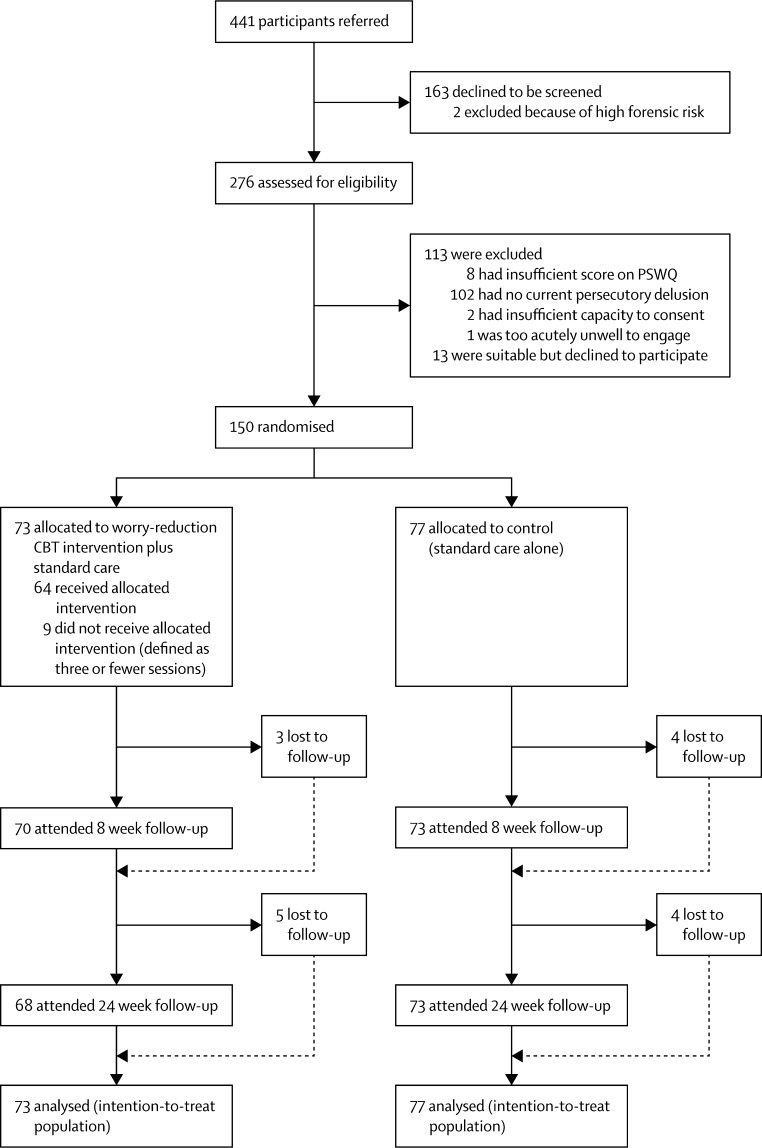
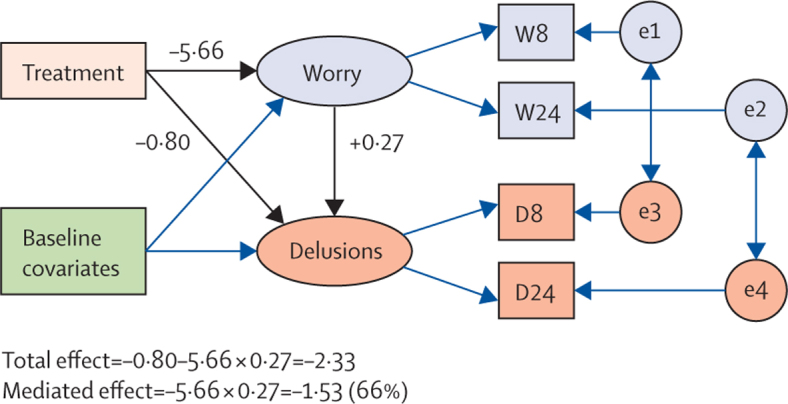
Verification
Claims the paper makes
The claims and statistics of this paper haven’t been checked yet.
Run the check — free, no account needed. It reads the open-access text and checks the sources it cites.
Claims other papers make about this one
Each is checked against this paper’s own text: does it say what the citing paper says it does?
The source backs part of the claim, not all of it — or backs it for a different population, condition or comparison.
In the citing paper
“A controlled trial also found that an intervention targeting rumination in patients with psychosis significantly reduced paranoid delusions relative to standard care over 8 weeks.18”
From Dispositional Mindfulness and Psychotic Symptoms in Schizophrenia Spectrum Disorders: The Mediating Roles of Rumination and Negative Emotion (2022) · cites this paper as [18]
Experimental — accuracy not yet measuredThe cited source says what the claim attributes to it.
In the citing paper
“A different working group could have created a different needs analysis and chosen a different treatment focus, change methods and practical applications (see for example the CRISIS-, the WIT- or the OASIS-study) (150–152).”
From Developing a mechanism-based therapy for acute psychiatric inpatients with psychotic symptoms: an Intervention Mapping approach (2023) · cites this paper as [151]
The cited source says what the claim attributes to it.
In the citing paper
“with some promising early results [12–15]”
Self-check
Percentages, sums and reported differences re-computed from the paper’s own numbers.
The self-check needs the paper’s full text.
Citations
Cites
Baron, R. M., & Kenny, D. A. (1986) · Journal of Personality and Social Psychology · doi:10.1037/0022-3514.51.6.1173 · Cited by 91,532
Statistical Analysis With Missing Data
Lahiff, M., Little, R. J. A., & Rubin, D. B. (1989) · Journal of the American Statistical Association · doi:10.2307/2289883 · Cited by 17,385
Wechsler Abbreviated Scale of Intelligence
Dumont, R., Willis, J. O., Veizel, K., & Zibulsky, J. (2014) · Wiley eBooks · doi:10.1002/9781118660584.ese2519 · Cited by 5,546
Development and validation of the Penn State Worry Questionnaire
Meyer, T. J., Miller, M. L., Metzger, R. L., & Borkovec, T. D. (1990) · Behaviour Research and Therapy · doi:10.1016/0005-7967(90)90135-6 · Cited by 5,099
The Warwick-Edinburgh Mental Well-being Scale (WEMWBS): development and UK validation
Tennant, R., Hiller, L., Fishwick, R., Platt, S., Joseph, S., Weich, S., Parkinson, J., Secker, J., & Stewart-Brown, S. (2007) · Health and Quality of Life Outcomes · doi:10.1186/1477-7525-5-63 · Cited by 5,031
Statistical Analysis With Missing Data
Lazar, N. A. (2003) · Technometrics · doi:10.1198/tech.2003.s167 · Cited by 2,477
Latent Variable Modeling of Differences and Changes with Longitudinal Data
McArdle, J. J. (2009) · Annual Review of Psychology · doi:10.1146/annurev.psych.60.110707.163612 · Cited by 1,952
Weinman, J. A., Petrie, K. J., Moss-Morris, R. E., & Horne, R. (1996) · Psychology and Health · doi:10.1080/08870449608400270 · Cited by 1,557
HADDOCK, G., McCARRON, J., TARRIER, N., & FARAGHER, E. B. (1999) · Psychological Medicine · doi:10.1017/s0033291799008661 · Cited by 1,461
Yes, but what’s the mechanism? (don’t expect an easy answer).
Bullock, J. G., Green, D. P., & Ha, S. E. (2010) · Journal of Personality and Social Psychology · doi:10.1037/a0018933 · Cited by 1,063
Cited by
Sorted by citations
Items 101–200 of 294
Comorbidity of obsessive-compulsive and psychotic experiences: A systematic review and meta-analysis
Mawn, L., Campbell, T. S., Aynsworth, C., Beckwith, H., Luce, A., Barclay, N. L., Dodgson, G., & Freeston, M. H. (2020) · Journal of Obsessive-Compulsive and Related Disorders · doi:10.1016/j.jocrd.2020.100539 · Cited by 16
Webb, R., Bartl, G., James, B., Skan, R., PETERS, E. R., Bibby-Jones, A.-M., Garety, P. A., Kuipers, E., Hayward, M., & Greenwood, K. (2020) · Schizophrenia Bulletin · doi:10.1093/schbul/sbaa173 · Cited by 20
Ricarte, J. J., Rey, F. D., Ros, L., Latorre, J. M., & Berna, F. S. (2017) · Schizophrenia Research · doi:10.1016/j.schres.2017.04.007 · Cited by 18
Jamalamadaka, T., Griffith, E., Steer, H., & Salkovskis, P. (2020) · British Journal of Clinical Psychology · doi:10.1111/bjc.12253 · Cited by 15
Hazell, C. M., Hayward, M., Cavanagh, K., Jones, A.-M., & Strauss, C. (2016) · Trials · doi:10.1186/s13063-016-1494-y · Cited by 15
Moderne kognitive Verhaltenstherapie bei psychotischen Störungen
Pillny, M., & Lincoln, T. M. (2020) · Der Nervenarzt · doi:10.1007/s00115-019-00831-w · Cited by 15
Sellers, R., Adrian Wells, A., Parker, S., & Morrison, A. P. (2017) · Psychiatry Research · doi:10.1016/j.psychres.2017.10.032 · Cited by 15
Hikmat, R., Suryani, S., Yosep, I., Jeharsae, R., Widianti, E., Hidayati, N. O., Sutini, T., Hernawaty, T., Sriati, A., & Rafiyah, I. (2025) · BMC Psychiatry · doi:10.1186/s12888-025-06962-6 · Cited by 14
Paranoia: From Passive Social-Threat Perception to Misattunement in Social Interaction
Hajdúk, M., Sasson, N. J., Park, S., & Pinkham, A. E. (2024) · Clinical Psychological Science · doi:10.1177/21677026231218639 · Cited by 16
The journey to psychosis: an exploration of specific psychological pathways
Beards, S., & Fisher, H. L. (2014) · Social Psychiatry and Psychiatric Epidemiology · doi:10.1007/s00127-014-0953-6 · Cited by 14
Post-psychotic depression: Paranoia and the damage done
Moritz, S., Schmidt, S. J., Lüdtke, T., Braunschneider, L., Manske, A., Schneider, B. C., & Veckstenstedt, R. (2019) · Schizophrenia Research · doi:10.1016/j.schres.2019.06.022 · Cited by 14
Lam, A. H. Y., Cheung, Y. T. D., Wong, K. H., Leung, S. F., & Chien, W. T. (2022) · Neuropsychiatric Disease and Treatment · doi:10.2147/ndt.s338133 · Cited by 13
“A controlled trial also found that an intervention targeting rumination in patients with psychosis significantly reduced paranoid delusions relative to standard care over 8 weeks.(18) Mindfulness, which refers to awareness that arises through consciously paying attention to one’s moment-to-moment experiences with nonj…”
BackgroundMetacognitive Interpersonal Therapy for Treating Persecutory Delusions in Schizophrenia
Salvatore, G., Buonocore, L., Ottavi, P., Popolo, R., & Dimaggio, G. (2018) · American Journal of Psychotherapy · doi:10.1176/appi.psychotherapy.20180039 · Cited by 13
Leitlinienkonforme psychiatrisch-psychotherapeutische Behandlung für Patienten mit Schizophrenie
Mehl, S., Falkai, P., Berger, T., Löhr, M. J., Rujescu, D., Wolff, J., & Kircher, T. T. J. (2016) · Der Nervenarzt · doi:10.1007/s00115-015-0056-y · Cited by 12
Wood, L., Williams, C., Pinfold, V., Nolan, F., Morrison, A. P., Morant, N., Lloyd-Evans, B., Lewis, G., Lay, B., Jones, R., et al. (2022) · Pilot and Feasibility Studies · doi:10.1186/s40814-022-01160-7 · Cited by 12
Griffiths, R., Mansell, W., Carey, T. A., Edge, D., Emsley, R., & Tai, S. (2018) · BJPsych Open · doi:10.1192/bjo.2018.44 · Cited by 12
Lüdtke, T., Platow-Kohlschein, H., Rüegg, N., Berger, T., Moritz, S., & Westermann, S. (2020) · Frontiers in Psychiatry · doi:10.3389/fpsyt.2020.00228 · Cited by 12
Clarke, P., Bibby-Jones, A.-M., & Hayward, M. (2021) · The Cognitive Behaviour Therapist · doi:10.1017/s1754470x21000143 · Cited by 12
Mehl, S., Werner, D., & Lincoln, T. M. (2019) · Frontiers in Psychology · doi:10.3389/fpsyg.2019.01868 · Cited by 13
The Role of Emotion in Psychosis Onset and Symptom Persistence: A Systematic Review
Gurnani, R., & Georgiades, A. (2025) · Early Intervention in Psychiatry · doi:10.1111/eip.70096 · Cited by 13
Wahlund, T., Jolstedt, M., Andersson, E., Vigerland, S., Perrin, S. G., Öst, L., Högström, J., & Serlachius, E. (2020) · mHealth · doi:10.21037/mhealth.2019.09.10 · Cited by 12
Lüdtke, T., Hedelt, K. S., & Westermann, S. (2023) · Journal of Behavior Therapy and Experimental Psychiatry · doi:10.1016/j.jbtep.2023.101885 · Cited by 11
Murphy, E., Tully, S., Pyle, M., Gumley, A. I., Kingdon, D., Schwannauer, M., Turkington, D., & Morrison, A. P. (2016) · Psychiatry Research · doi:10.1016/j.psychres.2016.11.012 · Cited by 11
Self-citationSleep problems and worrying precede psychotic symptoms during an online intervention for psychosis
Lüdtke, T., Pfuhl, G., Moritz, S., Rüegg, N., Berger, T., & Westermann, S. (2020) · British Journal of Clinical Psychology · doi:10.1111/bjc.12270 · Cited by 10
Emotional earthquakes in the landscape of psychosis: an interpretative phenomenology
Hutchins, J., Rhodes, J., & Keville, S. (2016) · The Cognitive Behaviour Therapist · doi:10.1017/s1754470x16000167 · Cited by 11
Andersson, E., Ljótsson, B., Hedman-Lagerlöf, M., Nygren, L., Persson, M., Rosengren, K., Gezelius, A., Andersson, L., Sundquist, T., Ivanov, V. Z., et al. (2021) · Psychological Medicine · doi:10.1017/s0033291720000781 · Cited by 10
Fazio, L., Raio, A., Banaschewski, T., Bokde, A. L. W., Desrivières, S., Flor, H., Garavan, H., Gowland, P. A., Grigis, A., Heinz, A., et al. (2024) · Frontiers in Psychology · doi:10.3389/fpsyg.2024.1434470 · Cited by 11
von Hardenberg, L., Leopold, K., Stenzel, N., Kallenbach, M., Aliakbari, N., Bechdolf, A., & Mehl, S. (2022) · Frontiers in Psychiatry · doi:10.3389/fpsyt.2022.943488 · Cited by 12
Andersson, E., Holmes, E. A., & Kavanagh, D. J. (2018) · mHealth · doi:10.21037/mhealth.2018.09.11 · Cited by 11
Greenwood, K., Alford, K., O’Leary, I., PETERS, E. R., Hardy, A., Cavanagh, K., Field, A. P., de Visser, R. O., Fowler, D. G., Davies, M., et al. (2018) · Trials · doi:10.1186/s13063-018-3023-7 · Cited by 10
So, S. H., Zhu, C., Lincoln, T. M., Gaudiano, B. A., Kingston, J. L., Ellett, L., & Morris, E. M. J. (2022) · Schizophrenia Research · doi:10.1016/j.schres.2022.01.045 · Cited by 11
The Impact of Irrational Beliefs on Paranoid Thoughts
Șoflău, R., & David, D. O. (2018) · Behavioural and Cognitive Psychotherapy · doi:10.1017/s1352465818000565 · Cited by 10
Wahlund, T., Hesser, H., Perrin, S. G., Johansson, S., Huhn, V., Sörhus, S., Lindskog, S., Serlachius, E., Hedman‐Lagerlöf, E., Ljótsson, B., et al. (2021) · Cognitive Behaviour Therapy · doi:10.1080/16506073.2021.1937695 · Cited by 11
Virtual Reality for Individuals with Occasional Paranoid Thoughts
Ascone, L., Ney, K., Mostajeran, F., Steinicke, F., Moritz, S., Gallinat, J., & Kühn, S. (2020) · CHI Conference Extended Abstracts on Human Factors in Computing Systems (CHI EA) · doi:10.1145/3334480.3382918 · Cited by 9
Pondering on how great I am: Does rumination play a role in grandiose ideas?
Bortolon, C., & Raffard, S. (2020) · Journal of Behavior Therapy and Experimental Psychiatry · doi:10.1016/j.jbtep.2020.101596 · Cited by 9
Ward, T., Hardy, A., Holm, R. L., Collett, N., Rus‐Calafell, M., Sacadura, C., McGourty, A., Vella, C., East, A., Rea, M., et al. (2022) · Psychology and Psychotherapy Theory Research and Practice · doi:10.1111/papt.12377 · Cited by 7
Self-citationPipkin, A., Hogg, L. I., & Armitage, S. (2021) · Clinical Psychology & Psychotherapy · doi:10.1002/cpp.2578 · Cited by 8
Bennetts, A., Stopa, L. L., & Newman‐Taylor, K. (2021) · Psychosis · doi:10.1080/17522439.2021.1909112 · Cited by 10
Lüdtke, T., Rüegg, N., Moritz, S., Berger, T., & Westermann, S. (2021) · Psychiatry Research · doi:10.1016/j.psychres.2021.114223 · Cited by 8
Pathways from insecure attachment to paranoia: the mediating role of emotion regulation
Partridge, O., Maguire, T., & Newman‐Taylor, K. (2022) · Behavioural and Cognitive Psychotherapy · doi:10.1017/s1352465822000029 · Cited by 10
Bond, J., Kenny, A., Mesarič, A., Wilson, N., Pinfold, V., Kabir, T., Freeman, D. H., Waite, F., Larkin, M., & Robotham, D. (2022) · Psychology and Psychotherapy Theory Research and Practice · doi:10.1111/papt.12421 · Cited by 8
Self-citationStrakeljahn, F., Lincoln, T., Hennig, T., & Schlier, B. (2023) · Schizophrenia Research · doi:10.1016/j.schres.2023.03.037 · Cited by 8
Ward, T., Garety, P. A., Jackson, M. C., & PETERS, E. R. (2019) · Psychological Medicine · doi:10.1017/s0033291719000576 · Cited by 8
Beyond Belief—New Approaches to the Treatment of Paranoia
Garety, P. A., Ward, T., & Rus‐Calafell, M. (2019) · Elsevier eBooks · doi:10.1016/b978-0-12-815012-2.00025-0 · Cited by 8
Hayward, M., Berry, C., Cameron, B., Arnold, K., Berry, K., Bremner, S., Cavanagh, K., Fowler, D., Gage, H., Greenwood, K., et al. (2020) · Trials · doi:10.1186/s13063-020-4181-y · Cited by 7
Prior Expectations of Volatility Following Psychotherapy for Delusions
Sheffield, J. M., Sloan, A. F., Corlett, P. R., Rogers, B. P., Vandekar, S., Liu, J., Beals, K., Hall, L. M., Gautier, T., Moussa‐Tooks, A. B., et al. (2025) · JAMA Network Open · doi:10.1001/jamanetworkopen.2025.17132 · Cited by 7
Self-citationDewa, L. H., Thibaut, B., Pattison, N. A., Campbell, S. J., Woodcock, T. M., Aylin, P. P., & Archer, S. (2024) · SLEEP Advances · doi:10.1093/sleepadvances/zpae003 · Cited by 8
Pozza, A., Domenichetti, S., & Dèttore, D. (2019) · The Cognitive Behaviour Therapist · doi:10.1017/s1754470x19000229 · Cited by 7
Ravari, A., Mirzaei, T., Hosieni, F., & Hassanshahi, E. (2021) · Europe PMC (PubMed Central) · doi:10.30476/ijcbnm.2021.88217.1497 · Cited by 7
Mehl, S., Hautmann, C., Nittel, C. M., Rief, W., Kircher, T. T. J., & Lincoln, T. M. (2021) · Schizophrenia Bulletin Open · doi:10.1093/schizbullopen/sgab035 · Cited by 8
A Bayesian predictive processing account of Othello syndrome in Parkinson’s disease
Foley, J. A., Chen, C., Paget, A., & Cipolotti, L. (2023) · Cognitive Neuropsychiatry · doi:10.1080/13546805.2023.2229080 · Cited by 8
Psychotic-like experiences and happiness in the English general population
Koyanagi, A. (2017) · Journal of Affective Disorders · doi:10.1016/j.jad.2017.07.013 · Cited by 8
Cognitive Behavioural Therapies for Psychosis
Johns, L., Isham, L., & Manser, R. (2019) · Elsevier eBooks · doi:10.1016/b978-0-12-815012-2.00015-8 · Cited by 10
Group-based worry intervention for persecutory delusions: an initial feasibility study.
Isham, L., Grafahrend, H., Nickless, A., Pugh, K., Pleasants, S., Smedley, N., Freeman, D., & Mulligan, A. (2018) · Behavioural and Cognitive Psychotherapy · doi:10.1017/s1352465818000383 · Cited by 6
Self-citationMoussa‐Tooks, A. B., Sheffield, J. M., Freeman, D. H., & Brinen, A. P. (2023) · Clinical Case Studies · doi:10.1177/15346501231190920 · Cited by 6
Self-citationSchütz, A., Salahuddin, N. H., Priller, J., Bighelli, I., & Leucht, S. (2024) · Psychiatry Research · doi:10.1016/j.psychres.2024.116069 · Cited by 6
Moffa, G., Kuipers, J., Kuipers, E., McManus, S., & Bebbington, P. (2023) · Psychological Medicine · doi:10.1017/s003329172300185x · Cited by 6
A 6-month supported online program for the treatment of persecutory delusions: Feeling Safer
Freeman, D. H., Isham, L., Freeman, J. D., Rosebrock, L. E., Kabir, T., Kenny, A., Diamond, R., Beckley, A., Rouse, N., Ahmed, M., et al. (2025) · Psychological Medicine · doi:10.1017/s0033291725100676 · Cited by 6
Self-citationLange, T., & Starkopf, L. (2016) · Epidemiology · doi:10.1097/ede.0000000000000518 · Cited by 6
Kumar, D., & Venkatasubramanian, G. (2018) · Journal of Cognitive Psychotherapy · doi:10.1891/0889-8391.32.3.192 · Cited by 7
Wang, W., Zhou, Y., Chai, N., & Liu, D. (2019) · General Psychiatry · doi:10.1136/gpsych-2018-100040 · Cited by 7
RetractedSaarinen, A. I. L., Granö, N., Hintsanen, M., Lehtimäki, T. J., Cloninger, C. R., & Keltikangas‐Järvinen, L. (2020) · Development and Psychopathology · doi:10.1017/s0954579420001030 · Cited by 9
Promoting insight into delusions: Issues and challenges in therapy
Kumar, D. (2020) · International Journal of Psychiatry in Clinical Practice · doi:10.1080/13651501.2019.1711420 · Cited by 6
Brief psychological interventions for schizophrenia: a systematic review and meta-analysis
Pike, B., Ambrosio, L., & Ellett, L. (2025) · Psychological Medicine · doi:10.1017/s0033291725001126 · Cited by 5
Delusional Distress is Associated With Emotion Dysregulation in Schizophrenia-Spectrum Disorders
Leslie, E., Weittenhiller, L. P., Sloan, A. F., & Sheffield, J. M. (2025) · Schizophrenia Bulletin Open · doi:10.1093/schizbullopen/sgaf010 · Cited by 5
Isham, L., Loe, B. S., Hicks, A., Wilson, N., Bentall, R. P., & Freeman, D. H. (2023) · Schizophrenia Bulletin · doi:10.1093/schbul/sbad016 · Cited by 5
Self-citationFreeman, D. H., Emsley, R., Rosebrock, L. E., Morrison, A. P., Chapman, K., Common, S., Dudley, R. E. J., Isham, L., Kabir, T., Kenny, A., et al. (2025) · BMJ Open · doi:10.1136/bmjopen-2025-104580 · Cited by 5
Self-citationPsychological treatments for schizophrenia spectrum disorder: What is around the corner?
Turkington, D., & Lebert, L. (2017) · BJPsych Advances · doi:10.1192/apt.bp.115.014787 · Cited by 5
Moritz, S., Lüdtke, T., Pfuhl, G., Balzan, R. P., & Andreou, C. (2017) · Verhaltenstherapie · doi:10.1159/000464256 · Cited by 5
Sexual abuse and psychosis: The security of research findings
Bebbington, P. (2018) · Schizophrenia Research · doi:10.1016/j.schres.2018.04.038 · Cited by 5
Cowles, M., & Hogg, L. I. (2018) · Behavioural and Cognitive Psychotherapy · doi:10.1017/s1352465818000401 · Cited by 7
The Management of Sleep Disturbances in Patients with Schizophrenia: A Case Series
Vaněk, J., Praško, J. P., Genzor, S., & Mizera, J. (2022) · Psychology Research and Behavior Management · doi:10.2147/prbm.s388702 · Cited by 6
So, S. H., Chau, A. K. C., PETERS, E. R., Swendsen, J. D., Garety, P. A., & Kapur, S. (2017) · European Psychiatry · doi:10.1016/j.eurpsy.2017.01.1653 · Cited by 5
Wood, L., Morrison, A. P., Lay, B., Williams, C., & Johnson, S. (2024) · Psychosis · doi:10.1080/17522439.2024.2386176 · Cited by 5
Fear and Anxiety in Schizophrenia: A Focus on Development, Assessment, and Mechanisms
Feola, B., Jenkins, M., Sheffield, J. M., & Blackford, J. U. (2024) · Current topics in behavioral neurosciences · doi:10.1007/7854_2024_558 · Cited by 4
Delusions, Harmful Dysfunctions, and Treatable Conditions
Clutton, P., & Gadsby, S. (2017) · Neuroethics · doi:10.1007/s12152-017-9347-2 · Cited by 4
Insomnia and psychiatric disorders
Vargas, I., Garland, S. N., Kloss, J. D., & Perlis, M. L. (2019) · Elsevier eBooks · doi:10.1016/b978-0-12-815373-4.00028-9 · Cited by 4
Beale, S., Vitoratou, S., & Liness, S. (2021) · Behavioural and Cognitive Psychotherapy · doi:10.1017/s1352465820000983 · Cited by 4
Visual worry in patients with schizophrenia
Kowalski, J., & Styła, R. (2022) · Journal of Psychiatric Research · doi:10.1016/j.jpsychires.2022.07.007 · Cited by 4
Barriers to Implementation of a Technology-Based Mental Health Intervention in a Rural Setting
Antle, B. F., Harris, L. M., Wright, J. H., Eells, T. D., Cappiccie, A., Williams, S. M., Katz, R., Logsdon, A. R., & Owen, J. J. (2021) · Contemporary Rural Social Work Journal · doi:10.61611/2165-4611.1220 · Cited by 3
Clemmensen, L., Lund, C. N., Andresen, B. S., Midtgaard, J., & Glenthøj, L. B. (2024) · PLoS ONE · doi:10.1371/journal.pone.0297118 · Cited by 4
Cognitive behavioural therapy for anxiety in psychosis: a systematic review and meta-analysis
Heavens, D., Odgers, K., & Hodgekins, J. (2019) · Psychosis · doi:10.1080/17522439.2019.1618380 · Cited by 4
Анатольевна, С. О., Zhirnova, O. V., & Truevtsev, D. V. (2020) · Clinical Psychology and Special Education · doi:10.17759/cpse.2020090202 · Cited by 4
Holthoff‐Detto, V., & Seifert, K. (2021) · Zeitschrift für Gerontologie und Geriatrie · doi:10.1007/s00391-021-01992-7 · Cited by 4
Brief Cognitive Behavior Therapy for Psychosis
Naeem, F., & Kingdon, D. (2016) · Springer eBooks · doi:10.1007/978-3-319-30521-9_3 · Cited by 4
Self-citationTowards a Multi-Level Phenomenology of Delusional Disorder: The Dissociative Thought-Script
Treise, C., Brown, R. J., & Pérez, J. (2019) · Psychopathology · doi:10.1159/000499596 · Cited by 4
The Role of Dissociative Compartmentalization in Difficult-to-Treat Psychotic Phenomena
Treise, C., & Pérez, J. (2021) · Frontiers in Psychology · doi:10.3389/fpsyg.2021.533884 · Cited by 4
Premature commitment to uncertain beliefs during human NMDA receptor hypofunctionPreprint
Salvador, A., Arnal, L. H., Vinckier, F., Domenech, P., Raphaël Gaillard, B., & Wyart, V. (2020) · bioRxiv (Cold Spring Harbor Laboratory) · doi:10.1101/2020.06.17.156539 · Cited by 4
Varese, F., Sudell, M., Morrison, A. P., Longden, E., & Smith, C. T. (2024) · Health Technology Assessment · doi:10.3310/ncfr5074 · Cited by 4
Lincoln, T. M., Romberg, H., Torrents‐Rodas, D., & Bott, A. (2025) · Clinical Psychology Review · doi:10.1016/j.cpr.2025.102687 · Cited by 3
Pilot study of a group worry intervention for recent onset psychosis
Mackintosh, T., Lean, M., & Hardy, K. V. (2021) · The Cognitive Behaviour Therapist · doi:10.1017/s1754470x21000106 · Cited by 3
Psychological treatments for psychosis
Greenwood, K. (2017) · BJPsych Advances · doi:10.1192/apt.bp.116.015917 · Cited by 3
Tolmeijer, E., Waite, F., Isham, L., Bringmann, L. F., Timmers, R., van den Berg, A., Schuurmans, H., Staring, A. B. P., de Bont, P. A. J. M., van Grunsven, R., et al. (2023) · Trials · doi:10.1186/s13063-023-07661-x · Cited by 4
Self-citationMindfulness Interventions in Managing Paranoia: A Scoping Review
Saber, A. F., Hussein, S. H., Ahmed, S. K., & Manookian, A. (2025) · BioMed Target Journal · doi:10.59786/bmtj.312 · Cited by 4
Worrying in people with schizophrenia
Golędzinowska, M., Sawicka, M., & Żochowska, A. (2018) · Postępy Psychiatrii i Neurologii · doi:10.5114/ppn.2018.74324 · Cited by 3
Cognitive Behaviour Therapy for Psychosis: Insights from Neuroimaging
Kumari, V., & Terca, T. (2017) · Journal of Neuroimaging in Psychiatry and Neurology · doi:10.17756/jnpn.2017-014 · Cited by 3
Gussmann, E., Lucae, S., Falkai, P., Padberg, F., Egli, S., & Kopf-Beck, J. (2023) · Frontiers in Psychiatry · doi:10.3389/fpsyt.2023.1160075 · Cited by 2
Bagrowska, P., Małecki, J., Piwińska, J., Thiele, M., Nalberczak‐Skóra, M., & Gawęda, Ł. (2024) · Psychosis · doi:10.1080/17522439.2024.2401571 · Cited by 2
Wahlund, T., Spångberg, F., Lundqvist, V. V., & Andersson, E. (2025) · Internet Interventions · doi:10.1016/j.invent.2025.100842 · Cited by 1
How do people recover from persecutory delusions? An interpretative phenomenological analysis
Sher, D. A., Craythorne, S., Kabir, T., Freeman, D. H., & Waite, F. (2025) · Psychosis · doi:10.1080/17522439.2025.2516469 · Cited by 3
Self-citation
Metadata
- Authors
- Freeman, D., Dunn, G., Startup, H., Pugh, K., Cordwell, J., Mander, H., Černis, E., Wingham, G., Shirvell, K., & Kingdon, D.
- Affiliations
- University of Oxford (GB)
- University of Liverpool (GB)
- Sussex Partnership NHS Foundation Trust (GB)
- University of Southampton (GB)
- Corresponding author
- Freeman, Daniel
- Venue
- The Lancet Psychiatry
- Publisher
- Elsevier BV
- Published
- 2015-04
- Volume
- 2
- Issue
- 4
- Pages
- 305-313
- ISSN
- 2215-0366 (ISSN-L)
- PMC
- PMC4698664
- OpenAlex
- W2135509506
- Cited by
- 295
- References
- 46
- Citations by year
- 2026: 27 · 2025: 20 · 2024: 19 · 2023: 17 · 2022: 19 · 2021: 27 · 2020: 27 · 2019: 31 · 2018: 36 · 2017: 32 · 2016: 24 · 2015: 13
- FWCI
- 28.38
- Type
- journal article
- Language
- en
- Open access
- hybrid
- doi.org
- Locations
- The Lancet Psychiatry (publishedVersion, cc-by)
- Europe PMC (PubMed Central) (publishedVersion, cc-by)
- PubMed Central (publishedVersion, cc-by)
- PubMed (publishedVersion)
- Research Explorer (The University of Manchester) (publishedVersion)
- ePrints Soton (University of Southampton) (acceptedVersion)
- University of Birmingham Research Portal (University of Birmingham) (submittedVersion)
- Funders
- UK MRC Senior Clinical Fellowship (G0902308)
- MRC (MR/K006185/1)
- Topics
- Health Sciences › Medicine › Psychiatry and Mental health › Schizophrenia research and treatment
- Social Sciences › Psychology › Experimental and Cognitive Psychology › Anxiety, Depression, Psychometrics, Treatment, Cognitive Processes
- Social Sciences › Psychology › Clinical Psychology › Psychological Treatments and Assessments
- Keywords
- cognitive behavioral therapy, worry reduction, persecutory delusions, psychosis, schizophrenia, schizoaffective disorder, delusional disorder, Penn State Worry Questionnaire, mediation analysis, medication adherence, relapse prevention, relapse prevention training
- MeSH terms
- Adolescent, Adult, Aged, Anxiety, Delusions, Female, Humans, Male, Middle Aged, Paranoid Disorders, Psychiatric Status Rating Scales, Psychotic Disorders, Schizophrenia, Schizophrenia, Paranoid, Cognitive Behavioral Therapy, Single-Blind Method
About these checks
Registry, retraction, Cites and statistics results are computed, not judged, with one exception: a printed reference that no index lists is read once by a model before it counts as a citation error. Claims are extracted by a model and kept only when their quote appears verbatim in the text; each cited source is then checked, with a model’s help, for whether it says what the claim relies on. Those verdicts can be wrong — read the claim’s quote and the cited source before relying on one.
Statistics and arithmetic are recomputed, not judged.
Confidence bands are shown only for fields calibrated on our annotated test set. None is calibrated yet, so no band is shown.
What counts as a claim ›How we measure confidence ›How we check this ›
Are you an author, or do you see a problem with this page? Request a review
