

The epidemiology of trauma and post-traumatic stress disorder in a representative cohort of young people in England and Wales
Open accessThe DOI matches its Crossref record; 31 of the 33 references it cites were found in a registry or an index.
Abstract
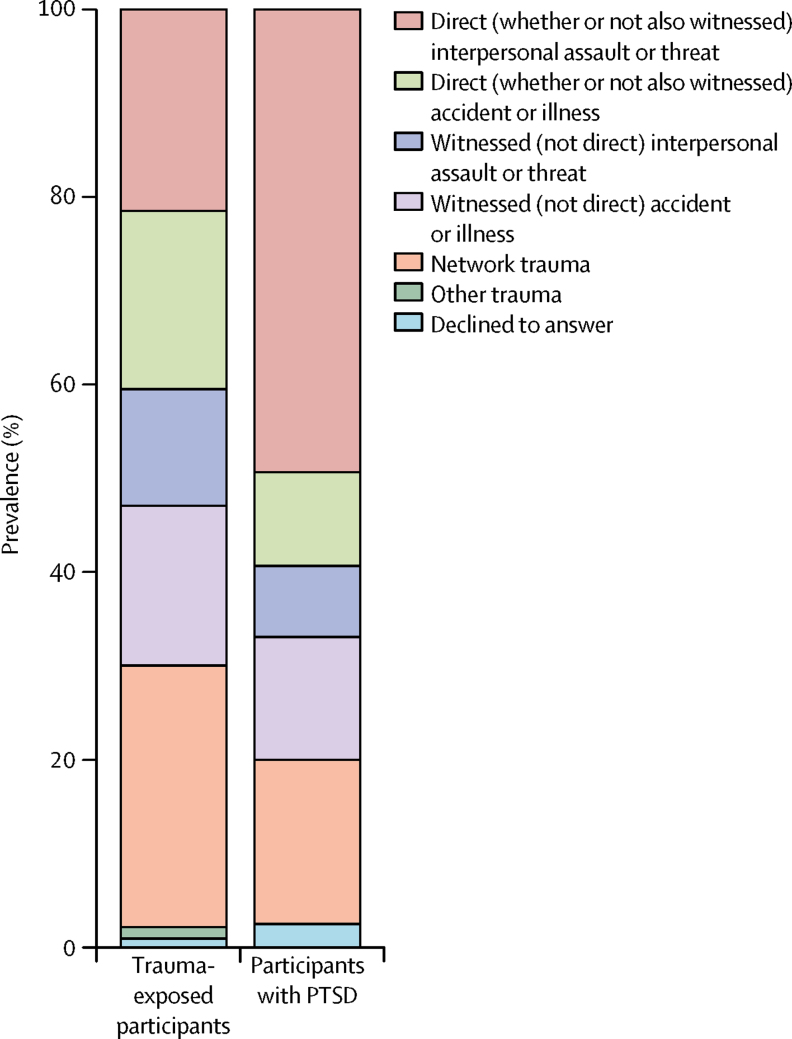
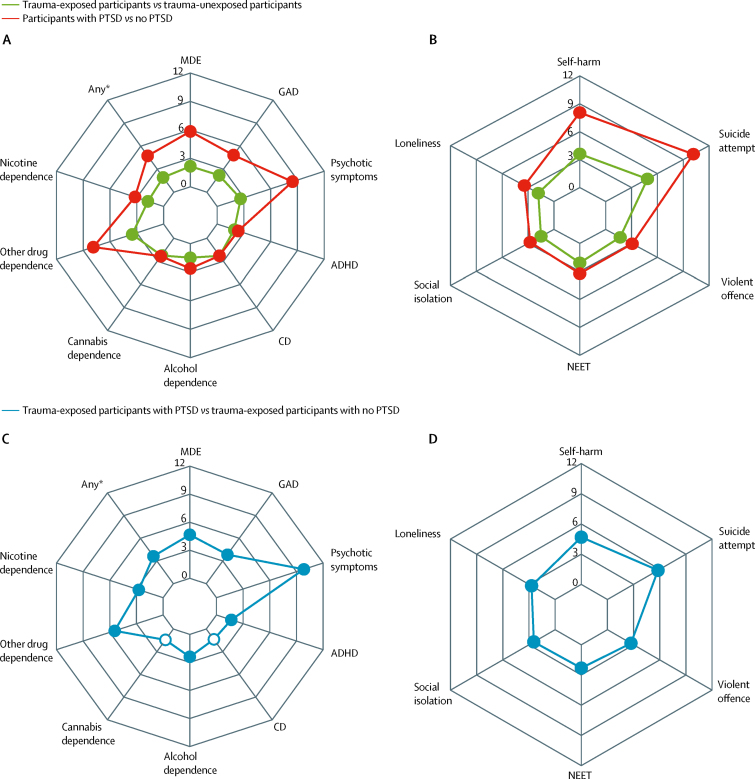
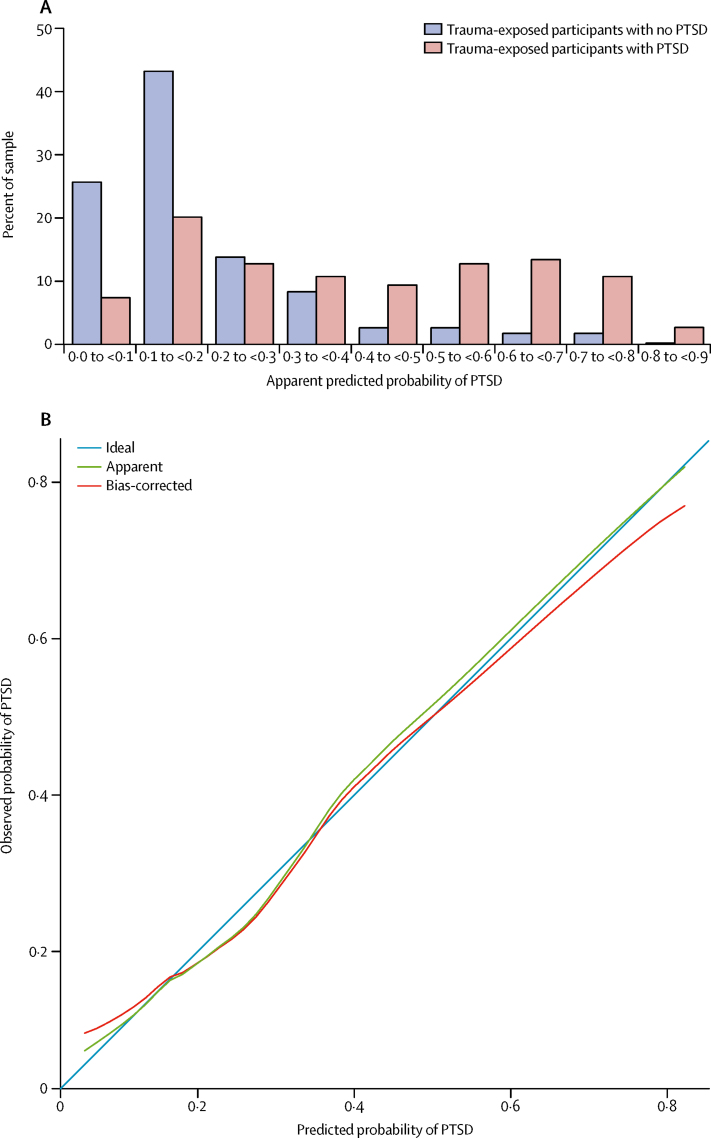
BACKGROUND: Despite the emphasis placed on childhood trauma in psychiatry, comparatively little is known about the epidemiology of trauma and trauma-related psychopathology in young people. We therefore aimed to evaluate the prevalence, clinical features, and risk factors associated with trauma exposure and post-traumatic stress disorder (PTSD) in young people. METHODS: We carried out a comprehensive epidemiological study based on participants from the Environmental Risk Longitudinal Twin Study, a population-representative birth-cohort of 2232 children born in England and Wales in 1994-95. At the follow-up home visit at age 18 years, participants were assessed with structured interviews for trauma exposure, PTSD, other psychopathology, risk events, functional impairment, and service use. Risk factors for PTSD were measured prospectively over four previous assessments between age 5 and 12 years. The key outcomes were the prevalence, clinical features, and risk factors associated with trauma exposure and PTSD. We also derived and tested the internal validity of a PTSD risk calculator. FINDINGS: We found that 642 (31·1%) of 2064 participants reported trauma exposure and 160 (7·8%) of 2063 experienced PTSD by age 18 years. Trauma-exposed participants had high rates of psychopathology (187 [29·2%] of 641 for major depressive episode, 146 [22·9%] of 638 for conduct disorder, and 102 [15·9%] of 641 for alcohol dependence), risk events (160 [25·0%] of 641 for self-harm, 53 [8·3%] of 640 for suicide attempt, and 42 [6·6%] of 640 for violent offence), and functional impairment. Participants with lifetime PTSD had even higher rates of psychopathology (87 [54·7%] of 159 for major depressive episode, 43 [27·0%] of 159 for conduct disorder, and 41 [25·6%] of 160 for alcohol dependence), risk events (78 [48·8%] of 160 for self-harm, 32 [20·1%] of 159 for suicide attempt, and 19 [11·9%] of 159 for violent offence), and functional impairment. However, only 33 (20·6%) of 160 participants with PTSD received help from mental health professionals. The PTSD risk calculator had an internally validated area under the receiver operating characteristic curve of 0·74, indicating adequate discrimination of trauma-exposed participants with and without PTSD, and internally validated calibration-in-the-large of -0·10 and calibration slope of 0·90, indicating adequate calibration. INTERPRETATION: Trauma exposure and PTSD are associated with complex psychiatric presentations, high risk, and significant impairment in young people. Improved screening, reduced barriers to care provision, and comprehensive clinical assessment are needed to ensure that trauma-exposed young people and those with PTSD receive appropriate treatment. FUNDING: The Medical Research Council, the National Institute of Child Health and Development, the Jacobs Foundation, the Nuffield Foundation, the National Society for Prevention of Cruelty to Children, the Economic and Social Research Council, the National Institute for Health Research, MQ, and Canadian Institutes for Advanced Research.
Overview
The claims and statistics of this paper haven’t been checked yet.
Free: it reads the open-access text and checks the first 5 claims that cite a source we can check. Create a free account to check every claim.
Integrity signals
Registry
Cites
Statistics
Figures
Verification
Claims the paper makes
The claims and statistics of this paper haven’t been checked yet.
Free: it reads the open-access text and checks the first 5 claims that cite a source we can check. Create a free account to check every claim.
Claims other papers make about this one
Each is checked against this paper’s own text: does it say what the citing paper says it does?
The source backs part of the claim, not all of it — or backs it for a different population, condition or comparison.
In the citing paper
“the significant association between childhood trauma and the later occurrence of psychiatric disorders such as major depressive disorder (MDD), bipolar affective disorder (BD) and psychosis (2, 14, 15).”
From Childhood Trauma, the HPA Axis and Psychiatric Illnesses: A Targeted Literature Synthesis (2022) · cites this paper as [15]
Experimental — accuracy not yet measured
Self-check
Percentages, sums and reported differences re-computed from the paper’s own numbers.
The self-check needs the paper’s full text.
Citations
Cites
Diagnostic and Statistical Manual of Mental Disorders
Williams, J. B. W., & First, M. (2013) · Encyclopedia of Social Work · doi:10.1093/acrefore/9780199975839.013.104 · Cited by 109,519
Genetics of Food Intake Self-Regulation in Childhood: Literature Review and Research Opportunities
Faith, M. S., Carnell, S., & Kral, T. V. E. (2013) · Human Heredity · doi:10.1159/000353879 · Cited by 7,601
Effects of stress throughout the lifespan on the brain, behaviour and cognition
Lupien, S. J., McEwen, B. S., Gunnar, M. R., & Heim, C. (2009) · Nature Reviews Neuroscience · doi:10.1038/nrn2639 · Cited by 6,256
Meta-analysis of risk factors for posttraumatic stress disorder in trauma-exposed adults
Brewin, C. R., Andrews, B., & Valentine, J. D. (2000) · Journal of Consulting and Clinical Psychology · doi:10.1037/0022-006x.68.5.748 · Cited by 5,243
Trauma and Posttraumatic Stress Disorder in the Community: The 1996 Detroit Area Survey of Trauma
Breslau, N., Kessler, R. C., Chilcoat, H. D., Schultz, L. R., Davis, G. C., & Andreski, P. (1998) · Archives of General Psychiatry · doi:10.1001/archpsyc.55.7.626 · Cited by 2,407
Kilpatrick, D. G., Ruggiero, K. J., Acierno, R., Saunders, B. E., Resnick, H. S., & Best, C. L. (2003) · Journal of Consulting and Clinical Psychology · doi:10.1037/0022-006x.71.4.692 · Cited by 1,590
Traumatic Events and Posttraumatic Stress in Childhood
Copeland, W. E., Keeler, G., Angold, A., & Costello, E. J. (2007) · Archives of General Psychiatry · doi:10.1001/archpsyc.64.5.577 · Cited by 1,544
Prognosis and prognostic research: what, why, and how?
Moons, K. G. M., Royston, P., Vergouwe, Y., Grobbee, D. E., & Altman, D. G. (2009) · BMJ · doi:10.1136/bmj.b375 · Cited by 1,337
Avenevoli, S. (2012) · Archives of General Psychiatry · doi:10.1001/archgenpsychiatry.2011.160 · Cited by 1,149
Perkonigg, A., Kessler, R. C., Storz, S., & Wittchen, H. (2000) · Acta Psychiatrica Scandinavica · doi:10.1034/j.1600-0447.2000.101001046.x · Cited by 970
Cited by
Items 201–300 of 583
Tanaka, E., Kameoka, S., Suga, Y., Otsuka, M., Momoda, M., Matsumoto, K., Otomo, R., & Katō, H. (2024) · European Journal of Psychotraumatology · doi:10.1080/20008066.2024.2424607 · Cited by 9
“Despite the profound negative impact of traumatic experiences on mental health during childhood and adolescence, individuals with such experiences are often underdiagnosed and lack professional support (Lewis et al., 2019).”
Visualizing traumatic stress-induced structural plasticity in a medial amygdala pathway using mGRASP
Bartsch, C. J., Jacobs, J. T., Mojahed, N., Qasem, E., Smith, M. B., Caldwell, O., Aaflaq, S., & Nordman, J. C. (2023) · Frontiers in Molecular Neuroscience · doi:10.3389/fnmol.2023.1313635 · Cited by 8
“These effects are possibly attributed to the brain’s inherent plasticity, especially during postnatal development (Nemeroff et al., 2006; Sherin and Nemeroff, 2011; Trickey et al., 2012; Lewis et al., 2019).”
BackgroundAfzal, N., Lyttle, M. D., Rajabi, M., Rushton-Smith, F., Varghese, R., Trickey, D., Halligan, S. L., & (PERUKI), O. B. O. T. P. E. R. I. T. U. A. I. (2024) · European Journal of Psychotraumatology · doi:10.1080/20008066.2023.2300586 · Cited by 9
“However, despite the signi fi cant disability associated with PTSD, only a minority of trauma-exposed children seek help for PTSS, and even fewer have received support from mental health professionals (Lewis et al., 2019).”
BackgroundChildren’s mental health at times of disasters: a narrative review
OLNESS, K. N. (2022) · Pediatric Medicine · doi:10.21037/pm-20-85 · Cited by 11
“Prevalence of PTSD reported varies depending on levels of exposure and types of disaster ranging from 10% to 90% (14-17).”
BackgroundAye, W. T., Lien, L., Stigum, H., & Bjertness, E. (2021) · BMJ Open · doi:10.1136/bmjopen-2020-045870 · Cited by 11
Compton, S. E., Slavish, D. C., Weiss, N. H., Bowen, H. J., & Contractor, A. A. (2023) · Journal of Clinical Psychology · doi:10.1002/jclp.23495 · Cited by 8
Utilizing screening as a trauma-responsive approach in pediatric health care settings
Chaplo, S. D., Abdulahad, L., & Keeshin, B. R. (2024) · Current problems in pediatric and adolescent health care · doi:10.1016/j.cppeds.2023.101548 · Cited by 11
Soleimanpour, S., Schapiro, N. A., Faxio, A., & Brindis, C. D. (2020) · Journal of Nursing Measurement · doi:10.1891/jnm-d-19-00043 · Cited by 8
ALVARES, L. G. G. S., Alves, M. T. S. S. D. B. E., dos Santos, A. M., de Oliveira, B. L. C. A., & das Chagas, D. C. (2021) · Cadernos de Saúde Pública · doi:10.1590/0102-311x00286020 · Cited by 15
Bentovim, A., Chorpita, B. F., Daleiden, E. L., Gray, J., Pizzey, S., & Vizard, E. (2020) · Child Abuse & Neglect · doi:10.1016/j.chiabu.2020.104703 · Cited by 9
“Complex adversity leads to clusters of symptoms and multiple different types of disorders rather than specific disorders - ‘trauma-related psychopathology ’ (Lewis et al., 2019).”
BackgroundPTSD in an era of uncertainty and challenge
Jones, E. (2019) · International Review of Psychiatry · doi:10.1080/09540261.2019.1603663 · Cited by 8
“A study of a population-representative birth cohort of 2232 children born in England and Wales between 1994 and 1995 found that one in 13 have experienced PTSD before reaching the age of 18, a prevalence of 7.8% (Lewis et al., 2019).”
BackgroundInfluentialInternalizing Pathways to Adolescent Substance Use from Adverse Childhood Experiences
Villar, M. G., Fava, N. M., Zucker, R. A., & Trucco, E. M. (2024) · International Journal of Environmental Research and Public Health · doi:10.3390/ijerph21111408 · Cited by 9
“ACEs typically co-occur [4,5] in a graded association with negative outcomes [4,6].”
Smith, P. A., Ehlers, A., Carr, E., Clark, D. M., Dalgleish, T., Forbes, G., Goldsmith, K., Griffiths, H., Gupta, M., King, D. X., et al. (2025) · Journal of Child Psychology and Psychiatry · doi:10.1111/jcpp.14124 · Cited by 8
“Unfortunately, most young people with PTSD do not receive an evidence-based therapy (Lewis et al., 2019).”
Autistic traits in childhood and post‐traumatic stress disorder as young adults: a cohort study
Quinton, A. M. G., Rumball, F., Ronald, A., Fisher, H. L., Arseneault, L., Happe, F. G. E., & Danese, A. (2025) · Journal of Child Psychology and Psychiatry · doi:10.1111/jcpp.14163 · Cited by 7
Self-citationWhite, S. F., Gonzalez, S. M. E., & Moriarty, E. M. (2022) · Frontiers in Behavioral Neuroscience · doi:10.3389/fnbeh.2022.853697 · Cited by 12
Reed, J., Taylor, J., Randall, G., Burgess, A., & Meiser‐Stedman, R. (2023) · Journal of Traumatic Stress · doi:10.1002/jts.22903 · Cited by 8
Vandewouw, M. M., Pang, E. W., Lai, M., Kelley, E. A., Ayub, M., Lerch, J. P., Taylor, M. J., & Anagnostou, E. A. (2023) · iScience · doi:10.1016/j.isci.2023.106384 · Cited by 7
Community trauma exposure and post-traumatic stress disorder in Chinese children and adolescents
Yuan, T., Li, X., Liu, H., Guo, L., Li, J., Xu, G., Li, X., Sun, L., Wang, C., Liu, Y., et al. (2023) · Frontiers in Psychiatry · doi:10.3389/fpsyt.2023.1151631 · Cited by 9
Long term effects of childhood trauma and abuse: narrative on functional neurological disorder
Ilyas, U., Khanum, A., & Fatima, K. (2024) · Journal of the Pakistan Medical Association · doi:10.47391/jpma.10083 · Cited by 8
Peach, N., Kihas, I., Isik, A., Cassar, J., Barrett, E. L., Cobham, V. E., Back, S. E., Perrin, S. G., Bendall, S., Brady, K. T., et al. (2024) · Advances in Dual Diagnosis · doi:10.1108/add-11-2023-0021 · Cited by 7
Sharp, T. H., Chideya, Y., Giuliani, A., Hunt, X., Tomlinson, M., Seedat, S., Creswell, C., Fearon, P. R. M., Hamilton-Giachritsis, C. E., Hiller, R. M., et al. (2024) · BMJ Open · doi:10.1136/bmjopen-2024-085129 · Cited by 7
Trauma-informed practices and physical education: A scoping literature review
Robinson, D. B., Gilham, C., Fuller, K., Randall, L. M., Carter, E., Rogers, S., & Vukosa, C. (2025) · European Physical Education Review · doi:10.1177/1356336x251370270 · Cited by 7
“Similar fi ndings have been reported in many other Global North nations, including Australia, England, France, Spain, and Wales, among others (see Bendall et al., 2018; Lewis et al., 2019; Perada et al., 2014; Schäfer et al., 2018).”
Written Exposure Therapy for Korean Adolescents With PTSD: Four Case Studies
Yun, J.-A., & Lee, C.-H. (2022) · Clinical Case Studies · doi:10.1177/15346501221074316 · Cited by 7
The top-100 cited articles on post-traumatic stress disorder: a historical bibliometric analysis
Mendlowicz, M. V., Gekker, M., de Araújo, A. X. G., Oliveira, L., Pereira, M. G., Berger, W., Luz, M. P., Vilete, L. M. P., Marques‐Portella, C., Figueira, I. L. D. V., et al. (2022) · Psychology Health & Medicine · doi:10.1080/13548506.2022.2147555 · Cited by 9
“…nosology only in 1980, PTSD, the most common and well-established psychiatric consequence of trauma exposure (Mueser & Rosenberg, 2003), is a severe and prevalent disorder associated with a large health burden and with limited provision of care by mental health professionals (Lewis et al., 2019).”
BackgroundSchmitz, J. C. S., Prenoveau, J. M., Papadakis, A. A., Johnson, A. J., Lating, J. M., Mendelson, T., & Dariotis, J. K. (2020) · Psychiatric Quarterly · doi:10.1007/s11126-020-09774-x · Cited by 8
Cornelisse, S., Biermann, M., Enning, F., Schmahl, C. G., & Kleindienst, N. (2021) · Der Nervenarzt · doi:10.1007/s00115-021-01151-8 · Cited by 8
Somma, A., Krueger, R. F., Markon, K. E., Gialdi, G., Boscaro, L., & Fossati, A. (2021) · Personality and Mental Health · doi:10.1002/pmh.1525 · Cited by 7
Campos, S., Núñez, D., Bravo, P., Fresno, A., & Olff, M. (2023) · Canadian Journal of Behavioural Science/Revue canadienne des sciences du comportement · doi:10.1037/cbs0000322 · Cited by 8
Davis, R. S., Halligan, S. L., Meiser‐Stedman, R., Elliott, E., Ward, G., & Hiller, R. M. (2022) · Research on Child and Adolescent Psychopathology · doi:10.1007/s10802-022-01005-0 · Cited by 10
“The prevalence rates of other internalising difficulties, such as depression, as well as externalising difficulties (e.g., conduct disorder), are often higher than rates of PTSD (Bronsard et al., 2016; Lewis et al., 2019).”
BackgroundInfluentialBaumann‐Larsen, M., Dyb, G. A., Wentzel‐Larsen, T., Zwart, J., Storheim, K., & Stensland, S. Ø. (2023) · BMJ Open · doi:10.1136/bmjopen-2022-066058 · Cited by 7
Knefel, M., Karatzias, T., Spinazzola, J., Shevlin, M. E., & Ford, J. D. (2023) · Journal of Anxiety Disorders · doi:10.1016/j.janxdis.2023.102766 · Cited by 9
PTSD During Childhood, Childhood Trauma, Childhood Maltreatment and How They Relate to Adult PTSD
Moser, D. A., Suardi, F., & Schechter, D. S. (2020) · Springer eBooks · doi:10.1007/978-3-030-49414-8_11 · Cited by 8
Allardyce, J., Hollander, A., Rahman, S. G., Dalman, C., & Zammit, S. (2021) · Psychological Medicine · doi:10.1017/s0033291721003287 · Cited by 7
“However, people with PTSD do not always present to secondary care (Lewis et al., 2019) and where they do they are likely to receive treatment for their PTSD symptoms; therefore our results may under-estimate the mediation effect of PTSD symptoms.”
BackgroundMethodClancy, K. J., Ravichandran, C. T., Jobson, S. A., May, V., Hammack, S. E., Carlezon, W. A., Ressler, K. J., Rauch, S. L., & Rosso, I. M. (2026) · Neuropsychopharmacology · doi:10.1038/s41386-026-02396-0 · Cited by 6
“Ouridenti fi cation of an IH clinical phenotype aligns with existing neurocognitive models of PTSD symptoms that highlight the intersection of arousal, memory, and attention.”
Schmitz, G., & Tandonnet, L. (2023) · Neuropsychiatrie de l Enfance et de l Adolescence · doi:10.1016/j.neurenf.2023.01.006 · Cited by 7
Skandsen, A., Hysing, M., Askeland, K. G., Teicher, M. H., Sand, L., & Bøe, T. (2023) · Journal of Traumatic Stress · doi:10.1002/jts.22996 · Cited by 6
“Cumulative PTEs were significantly higher among adolescents with anxiety compared to the reference group, which corresponds with previous findings of an association between anxiety and PTEs (Lewis et al., 2019).”
InfluentialFagermoen, E. M., Skjærvø, I., Birkeland, M. S., Jensen, T. K., & Ormhaug, S. M. (2023) · Behaviour Research and Therapy · doi:10.1016/j.brat.2023.104459 · Cited by 8
Stoppelbein, L., McRae, E. M., & Smith, S. B. (2024) · Child Abuse & Neglect · doi:10.1016/j.chiabu.2024.106916 · Cited by 6
Lin, J., Xing, Q., Zhang, C., Luo, Y., Chen, X., Xie, Y., & Wang, Y. (2024) · PubMed Central · doi:10.5152/alphapsychiatry.2024.241587 · Cited by 6
Janes, K., Vernon, P., Estefan, D., Sheibani, F., Caesar, G., & Burgess, R. A. (2024) · SSM - Mental Health · doi:10.1016/j.ssmmh.2024.100352 · Cited by 6
Trauma, Resilience, and Substance Use in Adolescents: A Review Article
Anona, K., Onigu-Otite, E., Conner, C., & Saxena, K. (2024) · Adolescent Psychiatry · doi:10.2174/0122106766318176241024065029 · Cited by 7
Hoppen, T. H., Wessarges, L., Jehn, M., Mutz, J., Kip, A., Schlechter, P., Meiser‐Stedman, R., & Nexhmedin Morina, B. (2025) · World Psychiatry · doi:10.1002/wps.21291 · Cited by 6
Burgess, A., Rushworth, I., & Meiser‐Stedman, R. (2022) · Child & Youth Care Forum · doi:10.1007/s10566-022-09689-7 · Cited by 6
“Trauma exposure among children and adolescents is common (Lewis et al., 2019; Taylor & Weems, 2009).”
BackgroundInfluentialDissociation: An overlooked concern in military training and an important factor in suicide
Campbell, K. A. (2023) · European Journal of Trauma & Dissociation · doi:10.1016/j.ejtd.2023.100351 · Cited by 8
Ormhaug, S. M., Skjærvø, I., Dyrdal, G. M., Fagermoen, E. M., Haabrekke, K., Jensen, T. K., Knutsen, M., Næss, A., Päivärinne, H. M., & Martinsen, M. (2024) · Research on Child and Adolescent Psychopathology · doi:10.1007/s10802-024-01199-5 · Cited by 6
“Identifying effective and accessible interventions allowing children to regain a healthy development and function is therefore crucial (Lewis et al., 2019).”
BackgroundRisk factors for PTSD symptoms following PICU admission for childhood septic shock
Burcher, G. C., O’Dea, L. A., Cooper, M., Lancaster, R., McCutcheon, R. A., Garralda, M. E., & Nadel, S. (2024) · European Child & Adolescent Psychiatry · doi:10.1007/s00787-024-02496-6 · Cited by 6
“The risk for PTSD in our sample was high when compared with expected population rates [4] indicating prolonged psychological vulnerability in this cohort and pointing to the importance of supporting families and attending to these problems as they develop, rather than simply waiting for them to…”
Psychometric properties of the Global Psychotrauma Screen (GPS) in the Brazilian general population
Brunnet, A. E., Coimbra, B. M., Hoeboer, C. M., Malachias, M. V. B., Kristensen, C. H., & Olff, M. (2024) · Trends in Psychiatry and Psychotherapy · doi:10.47626/2237-6089-2024-0913 · Cited by 6
Cancilliere, M. K., Kavanaugh, B. C., Bodzy, M. E., & Holler, K. A. (2021) · Child Psychiatry & Human Development · doi:10.1007/s10578-021-01209-3 · Cited by 6
Pediatric PTSD is characterized by age- and sex-related abnormalities in structural connectivity
Russell, J. D., Heyn, S. A., Dean, D. C., III, & Herringa, R. J. (2021) · Neuropsychopharmacology · doi:10.1038/s41386-021-01083-6 · Cited by 6
“INTRODUCTION Although as many as one of every three children will experience a traumatic event before reaching adulthood, most will show resilience over time [1].”
BackgroundSalter, M., Conroy, E., Dragiewicz, M., Burke, J., Ussher, J. M., Middleton, W., Vilenica, S., Monzon, B. M., & Noack-Lundberg, K. (2020) · UNSWorks (UNSW Sydney) · doi:10.26190/unsworks/27996 · Cited by 8
Ferrara, P., Cammisa, I., Zona, M., Pacucci, I., Grimaldi, M. T., Scaltrito, F., Giardino, I., Verrotti, A., & Pettoello-Mantovani, M. (2025) · Current Pediatric Reviews · doi:10.2174/0115733963316599240704061209 · Cited by 5
Patel, H., Easterbrook, B., Ralston, F. A., Shariff, D., Lester, H., Landaverde, D., Lau, E., Davis, I. S., Aks, I. R., Brown, S. A., et al. (2025) · Early Intervention in Psychiatry · doi:10.1111/eip.70051 · Cited by 5
Kothgassner, O. D., Macura, S., Goreis, A., Klinger, D., Pfeffer, B., Oehlke, S., Prillinger, K., Kafka, J. X., Zesch, H. E., Felnhofer, A., et al. (2025) · European Journal of Psychotraumatology · doi:10.1080/20008066.2025.2532273 · Cited by 6
“…both disorders are rather persistent, disabling, and associated with increased psychiatric comorbidity alongside compromised physical health (Hiller et al., 2016; Ho et al., 2021; Kazlaus-kas et al., 2024; Lewis et al., 2019; Lofthouse et al., 2024; Morina et al., 2014; Redican et al., 2022).”
Bdier, D., & Mahamid, F. (2022) · Journal of Psychosocial Rehabilitation and Mental Health · doi:10.1007/s40737-022-00305-4 · Cited by 6
“In addition, children and adolescents who survive victimization, have a history of psychopathology, or were exposed to interpersonal types of index trauma are more vulnerable to PTSD (Lewis et al., 2019).”
BackgroundTapia, G., Kaouane, N., Hingray, C., & El‐Hage, W. (2023) · European Journal of Trauma & Dissociation · doi:10.1016/j.ejtd.2023.100314 · Cited by 6
van Ee, E., de Beijer, D., Florisson, D., & Geuskens, F. (2024) · Child and Adolescent Psychiatry and Mental Health · doi:10.1186/s13034-024-00781-5 · Cited by 35
Lapseen kohdistuva lähisuhdeväkivalta – keskiössä lasten traumaperäisten oireiden ehkäisy ja hoito
Laajasalo, T., & Peltonen, K. (2021) · Kasvun tuki -aikakauslehti · doi:10.61259/kt.126968 · Cited by 23
“” prosenttia [35].”
Şimşek, M. K. (2023) · Psikiyatride Guncel Yaklasimlar - Current Approaches in Psychiatry · doi:10.18863/pgy.1209460 · Cited by 7
Sassoon, S. A., Fama, R., Berre, A. L., Müller‐Oehring, E. M., Zahr, N. M., Pfefferbaum, A., & Sullivan, E. V. (2023) · Journal of Psychiatric Research · doi:10.1016/j.jpsychires.2023.05.033 · Cited by 6
Lewis, S. J., & Danese, A. (2022) · Elsevier eBooks · doi:10.1016/b978-0-323-91709-4.00011-1 · Cited by 5
Self-citationMarchese, S., Cuddleston, W. H., Seah, C., Johnson, J., & Huckins, L. M. (2022) · medRxiv · doi:10.1101/2022.08.28.22279306 · Cited by 5
Meiser‐Stedman, R., Allen, L. R., Ashford, P., Beeson, E., Byford, S., Danese, A., Farr, A., Finn, J., Goodall, B., Grainger, L., et al. (2025) · World Psychiatry · doi:10.1002/wps.21355 · Cited by 6
“In youth, it is usually comorbid with other psychiatric conditions 1 , and may persist for years or even decades if untreated 2,3 .”
Self-citationTomaszewska, W., Apanasewicz, A., Gomółka, M., Matyas, M., Rojek, P., Szołtysik, M., Babiszewska-Aksamit, M., Gielniewski, B., Wojtaś, B., Ziomkiewicz, A., et al. (2025) · Translational Psychiatry · doi:10.1038/s41398-025-03491-4 · Cited by 4
“Females are more likely to experience certain forms of ACE, such as sexual abuse, and also have a greater risk of depression and PTSD after ACE [12, 14].”
Violência parental, trauma e o impacto na construção da identidade adulta
Ferreira, L. C. P., & dos Santos, J. L. (2025) · Revista on line de Política e Gestão Educacional · doi:10.22633/rpge.v29i00.20814 · Cited by 4
Experiences of Trauma and PTSD Symptoms in Autistic Adolescents: Preliminary Findings
Lau‐Zhu, A., Quinton, A. M. G., Stacey, J., Roberts-Davis, R., Cooper, M. J., Chan, C., & Happe, F. G. E. (2026) · Clinical Child Psychology and Psychiatry · doi:10.1177/13591045261418319 · Cited by 4
“…14% of autistic children and adolescents and 44% of autistic adults (Quinton et al., 2024; Rumball, 2018), compared to 7.8% developing PTSD by age 18 in non-autistic samples (Lewis et al., 2019) and 6.8 – -9.2% of adults in the general population (Goldstein et al., 2016; Kessler & Berglund, 2005).”
InfluentialGameiro, S., Dummer, A., Copeland, L., McCluskey, G., Ross, R., McLaughlin, D. F., McGowan, I., & Knight, H. (2026) · Human Reproduction · doi:10.1093/humrep/deag030 · Cited by 5
“Around 90% of adults report a history of at least one traumatic experience, including violence, racism, or medical trauma, with 8% subsequently developing PTSD (Lewis et al. , 2019).”
Kasparek, S. W., Rosen, M. L., Lurie, L. A., Cikara, M., Sambrook, K., Cvencek, D., Meltzoff, A. N., & McLaughlin, K. A. (2023) · Research on Child and Adolescent Psychopathology · doi:10.1007/s10802-023-01035-2 · Cited by 8
“, experiencing abuse or assault) or witnessing violence (Finkelhor et al., 2009; Lewis et al., 2019; McLaughlin et al., 2013).”
BackgroundRoss, D., McCallum, N., Truuvert, A. K., Butt, A., Behdinan, T., Rojas, D., Soklaridis, S., & Vigod, S. N. (2024) · Journal of Mental Health · doi:10.1080/09638237.2024.2332797 · Cited by 5
“However, the efficacy of virtual interventions for trauma and PTSD remains unclear (Lungu et al., 2022; Rasing et al., 2019; Søgaard Neilsen & Wilson 2019; Wu et al., 2021).”
InfluentialÇimen, F., Seçer, İ., Alberici, A., & Meiser‐Stedman, R. (2025) · Clinical Child Psychology and Psychiatry · doi:10.1177/13591045251396299 · Cited by 5
“Additionally, a signi fi cant proportion of children experience trauma before the age of 18 (Copeland et al., 2007; Lewis et al., 2019), with reports indicating that more than two-thirds have encountered at least one traumatic event by the age of 16 (Copeland et al., 2007).”
Thomsen, K. N., Howell, K. H., Gilliam, H. C., & Wamser‐Nanney, R. A. (2022) · Journal of Interpersonal Violence · doi:10.1177/08862605221141930 · Cited by 4
“Lewis et al. (2019) found 31.1% of their young adult sample had experienced trauma, and 7.8% had PTSD by 18 years of age.”
BackgroundInfluentialFung, H. W., Lam, C. C., Yuan, G. F., Chan, C. T. L., Liu, C., & Wang, E. K. S. (2024) · European Journal of Trauma & Dissociation · doi:10.1016/j.ejtd.2024.100393 · Cited by 4
Loneliness and posttraumatic stress in U.S. adolescents: A longitudinal study
Stickley, A., Isaksson, J., Koposov, R. A., Schwab‐Stone, M., Sumiyoshi, T., & Ruchkin, V. V. (2024) · Journal of Affective Disorders · doi:10.1016/j.jad.2024.06.015 · Cited by 5
Psychopathological symptoms in school-aged children after a traumatic event
Plümacher, K. S., Loy, J. K., Bender, S., & Krischer, M. (2025) · Child and Adolescent Psychiatry and Mental Health · doi:10.1186/s13034-025-00869-6 · Cited by 5
Lin, Y., Alias, H., Luo, X., Hu, Z., & Wong, L. P. (2020) · Journal of the Academy of Consultation-Liaison Psychiatry · doi:10.1016/j.psym.2020.09.005 · Cited by 4
“Posttraumatic distress has been recognized as an important public health concern after a traumatic event, as it may cause various functional impairments, including a person’s work ability and daily performance.(16,17) The previous SARS outbreak evidenced serious consequences of long-term psychiatric morbidities among…”
BackgroundMinimal use of ICD social determinant or phenomenological codes in mental health care records
Kinderman, P., Allsopp, K., Zero, R., Handerer, F., & Tai, S. (2021) · Journal of Mental Health · doi:10.1080/09638237.2021.1952944 · Cited by 4
“This contrasts with 31% of participants reporting trauma events in childhood (Lewis et al., 2019) in epidemiological studies.”
ResultFreitag, G. F., Urcuyo, A. E., & Comer, J. S. (2022) · Advances in Psychiatry and Behavioral Health · doi:10.1016/j.ypsc.2022.06.004 · Cited by 4
Bailey, M., Meiser‐Stedman, R., Hiller, R. M., Haag, K., Lobo, S. E. M., & Halligan, S. L. (2023) · Journal of Traumatic Stress · doi:10.1002/jts.22913 · Cited by 4
Turgoose, D., Wilkinson, S., Shevlin, M. E., & Karatzias, T. (2024) · Developmental Child Welfare · doi:10.1177/25161032241230980 · Cited by 5
“Past research has suggested that only a small proportion of children with PTSD access formal support (Lewis et al., 2019).”
BackgroundInfluentialCunha, D. G. F., & Vecchia, F. A. D. S. (2007) · LA Referencia (Red Federada de Repositorios Institucionales de Publicaciones Científicas) · doi:10.5902/2179460x9767 · Cited by 4
Green, W. M., Raut, S. B., James, F., Benedek, D. M., Ursano, R. J., & Johnson, L. R. (2023) · medRxiv · doi:10.1101/2023.08.17.23293955 · Cited by 7
“While the aggregate lifetime prevalence of PTSD is estimated to be approximately 8% (Ahmadi et al., 2022; Kilpatrick et al., 2013; Lewis et al., 2019; Yehuda et al., 2015), the rate is substantially higher in certain populations.”
BackgroundChildhood Trauma and Mental Health: Never Too Early to Intervene
Trotta, A. (2022) · Springer eBooks · doi:10.1007/978-3-030-97906-5_5 · Cited by 3
Rosser, B. A., Agostinis, A., & Bond, J. (2023) · Journal of EMDR Practice and Research · doi:10.1891/emdr-2023-0009 · Cited by 3
Trauma exposure and ICD-11 PTSD and CPTSD in a Greenlandic adolescent population
Banzon, T., Vang, M. L., Løkkegaard, S. S., & Elklit, A. (2024) · European Journal of Psychotraumatology · doi:10.1080/20008066.2024.2425242 · Cited by 4
“Studies also support gender differences in PTSD and CPTSD prevalence rates with girls more frequently reporting PTSD and CPTSD than boys (Elklit, 2002; Kazlauskas et al., 2022; Lewis et al., 2019; Redican et al., 2022).”
Zhou, Z.-H., Mao, J., & Cao, D. (2025) · World Journal of Psychiatry · doi:10.5498/wjp.v15.i7.105742 · Cited by 3
Wang, C. C. Q., Uddin, M., Wani, A. H., Graham, Z., Ratanatharathorn, A. D., Aiello, A. M., Koenen, K. C., Maggio, M., & Wildman, D. E. (2026) · Nature Mental Health · doi:10.1038/s44220-025-00581-6 · Cited by 3
“Several earlier studies have shown that prior PTSS has the highest predictive capability for the future risk of PTSS 40,45–48 .”
Xiao, S., & Chen, W. (2026) · Child Abuse & Neglect · doi:10.1016/j.chiabu.2026.107977 · Cited by 3
Parfenov, V. A., Kamchatnov, P. R., Khasanova, D. R., Bogdanov, E. I., Lokshtanova, T. M., Amelin, A. V., Maslova, N. N., Pizova, N. V., Belskaya, G. N., Barantsevich, E. R., et al. (2021) · Scientific Reports · doi:10.1038/s41598-021-03727-5 · Cited by 3
RetractedPeck, A., Hutchinson, M., & Provost, S. (2023) · Frontiers in Child and Adolescent Psychiatry · doi:10.3389/frcha.2023.1074861 · Cited by 16
The effectiveness of web-based training for parents on post-traumatic stress disorder in children
Ashkalak, Z. O., Parvizy, S., Seyedfatemi, N., Haghani, H., & Nazari, H. (2024) · Frontiers in Psychology · doi:10.3389/fpsyg.2024.1325475 · Cited by 4
Loheide‐Niesmann, L., Beijers, R., de Weerth, C., & Cima, M. (2025) · Developmental Psychobiology · doi:10.1002/dev.70029 · Cited by 5
“Traumatic childhood experiences can have severe, long-lasting mental health consequences for survivors (Lewis et al. 2019), but also for survivors’ children.”
Pediatric SARS-CoV-2 infection and development of anxiety and depression
Dun-Dery, F., Xie, J., Zemek, R. L., Winston, K., Burstein, B., Sabhaney, V. J., Emsley, J. G., Gravel, J., Kam, A. J., Mater, A., et al. (2025) · Frontiers in Pediatrics · doi:10.3389/fped.2025.1524617 · Cited by 3
Aboujaoude, E. N., & Bouguettaya, A. (2025) · Child and Adolescent Mental Health · doi:10.1111/camh.70016 · Cited by 3
Chobhthaigh, S. N., Mkhwanazi, S., Willan, S., Mannell, J., Washington, L., Gibbs, A., & Burgess, R. A. (2025) · PLOS mental health. · doi:10.1371/journal.pmen.0000394 · Cited by 3
“From a bio-medical perspective, many, although not all, individuals with exposure to potentially traumatic events meet some diagnostic criteria for mental health diagnoses such as anxiety, depression, or post-traumatic stress disorder [9].”
Fonseca, A., Vagos, P., Moreira, H., Pereira, J., Canavarro, M. C., & Rijo, D. (2020) · Child Psychiatry & Human Development · doi:10.1007/s10578-020-00965-y · Cited by 3
The Management of Procedure-Induced Anxiety in Children
Martin, R. (2021) · Cambridge University Press eBooks · doi:10.1017/9781108913317 · Cited by 3
Hiller, R. M., Davis, R. S., Devaney, J., Halligan, S. L., Meiser‐Stedman, R., Smith, P. A., Stallard, P. N., Kandiyali, R., & MacNeill, S. (2021) · Pilot and Feasibility Studies · doi:10.1186/s40814-021-00936-7 · Cited by 3
“If left unaddressed, PTSD can become chronic, with enduring effects on well-being across the lifespan [20].”
BackgroundRevisão sistemática sobre o impacto social e de saúde da violência doméstica para os adolescentes
Luis, M. A., Fiorotti, K. F., Ribeiro, L. E. P., & Leite, F. M. C. (2022) · Revista Brasileira de Pesquisa em Saúde/Brazilian Journal of Health Research · doi:10.47456/rbps.v24i1.35617 · Cited by 3
From Trauma to Post-Traumatic Stress Disorder: Identification of the Risk Factors
Şahin, E. K., & Sevil, F. (2023) · Ankara Medical Journal · doi:10.5505/amj.2023.90699 · Cited by 5
Haag, K., Halligan, S. L., Hiller, R. M., Skeen, S., & Tomlinson, M. (2023) · Journal of Child Psychology and Psychiatry · doi:10.1111/jcpp.13930 · Cited by 3
Shramko, M., Lucke, C. M., & Piescher, K. N. (2024) · Prevention Science · doi:10.1007/s11121-023-01638-7 · Cited by 3
“In childhood, each of these domains has implications for health and well-being (Hodgkinson al, 2017; Lewis et al., 2019; McLaughlin et al., 2012, 2020; Pavlakis, 2018; Rosenberg & Kim, 2018; Spencer, 2021).”
Metadata
- Authors
- Lewis, S. J., Arseneault, L., Caspi, A., Fisher, H. L., Matthews, T., Moffitt, T. E., Odgers, C. L., Stahl, D., Teng, J. Y., & Danese, A.
- Affiliations
- King's College London (GB)
- Duke University (US)
- University of California, Irvine (US)
- National University of Singapore (SG)
- National Health Service (GB)
- Corresponding author
- Danese, Andrea
- ORCID
- Venue
- The Lancet Psychiatry
- Publisher
- Elsevier BV
- Published
- 2019-03
- Volume
- 6
- Issue
- 3
- Pages
- 247-256
- ISSN
- 2215-0366 (ISSN-L)
- PMC
- PMC6384243
- OpenAlex
- W2916625049
- Semantic Scholar
- fcc7c89382d0d3ce33fe52adf6e0a28517eba29d
- Cited by
- 512
- References
- 33
- Citations by year
- 2026: 74 · 2025: 74 · 2024: 90 · 2023: 66 · 2022: 84 · 2021: 60 · 2020: 44 · 2019: 19
- FWCI
- 60.44
- Type
- journal article
- Language
- en
- Open access
- hybrid
- doi.org
- Licence
- cc-by
- www.elsevier.com/tdm/userlicense/1.0/ (tdm)
- creativecommons.org/licenses/by/4.0/ (vor)
- Locations
- The Lancet Psychiatry (publishedVersion, cc-by)
- Europe PMC (PubMed Central) (publishedVersion, other-oa)
- PubMed Central (publishedVersion, cc-by)
- PubMed (publishedVersion)
- Research Portal (King's College London) (submittedVersion, cc-by)
- Funders
- Medical Research Council (G1002190)
- National Institute of Child Health and Development (HD077482)
- MQ Fellows Award (MQ14F40)
- Topics
- Social Sciences › Psychology › Clinical Psychology › Posttraumatic Stress Disorder Research
- Social Sciences › Psychology › Clinical Psychology › Child Abuse and Trauma
- Social Sciences › Psychology › Clinical Psychology › Child and Adolescent Psychosocial and Emotional Development
- Keywords
- post-traumatic stress disorder, childhood trauma, trauma exposure, youth, prevalence, risk factors, psychopathology, major depressive episode, conduct disorder, alcoholism, self-harm, suicide attempts, functional disability, mental health service utilization, Environmental Risk Longitudinal Twin Study, birth cohort, internal validity, England and Wales
- MeSH terms
- Adolescent, Alcoholism, Child, Major Depressive Disorder, Depressive Disorder, Major, England, Female, Humans, Life Change Events, Longitudinal Studies, Male, Risk Factors, Stress Disorders, Post-Traumatic, Suicide, Attempted, Violence, Wales, Prevalence, Multivariate Analysis, Logistic Models
About these checks
Registry, retraction, Cites and statistics results are computed, not judged, with one exception: a printed reference that no index lists is read once by a model before it counts as a citation error. Claims are extracted by a model and kept only when their quote appears verbatim in the text; each cited source is then checked, with a model’s help, for whether it says what the claim relies on. Those verdicts can be wrong — read the claim’s quote and the cited source before relying on one.
Statistics and arithmetic are recomputed, not judged.
Confidence bands are shown only for fields calibrated on our annotated test set. None is calibrated yet, so no band is shown.
What counts as a claim ›How we measure confidence ›How we check this ›
Are you an author, or do you see a problem with this page? Request a review
Data sources
Bibliographic data: Semantic Scholar, OpenAlex, Crossref.
Contains information from the Semantic Scholar Academic Graph Datasets, made available under the ODC Attribution License (ODC-BY 1.0).
Semantic Scholar’s data is described in: Kinney, R., et al. (2023). The Semantic Scholar Open Data Platform. arXiv:2301.10140.
