

The epidemiology of trauma and post-traumatic stress disorder in a representative cohort of young people in England and Wales
Open accessThe DOI matches its Crossref record; 31 of the 33 references it cites were found in a registry or an index.
Abstract
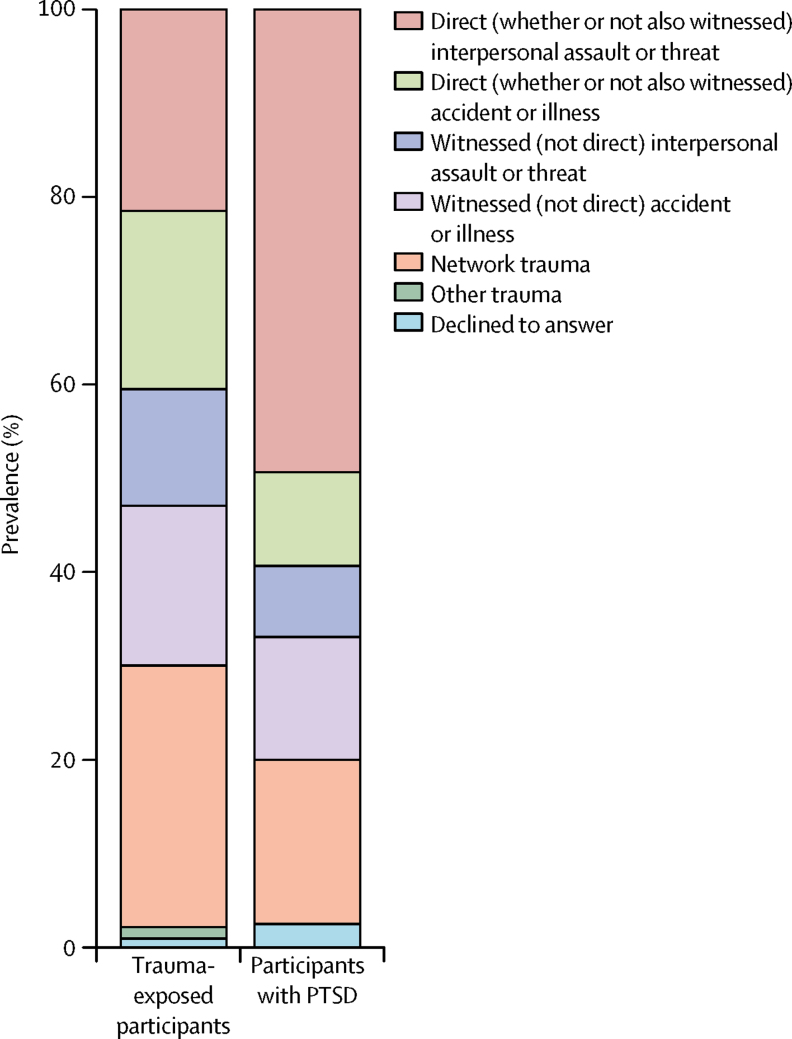
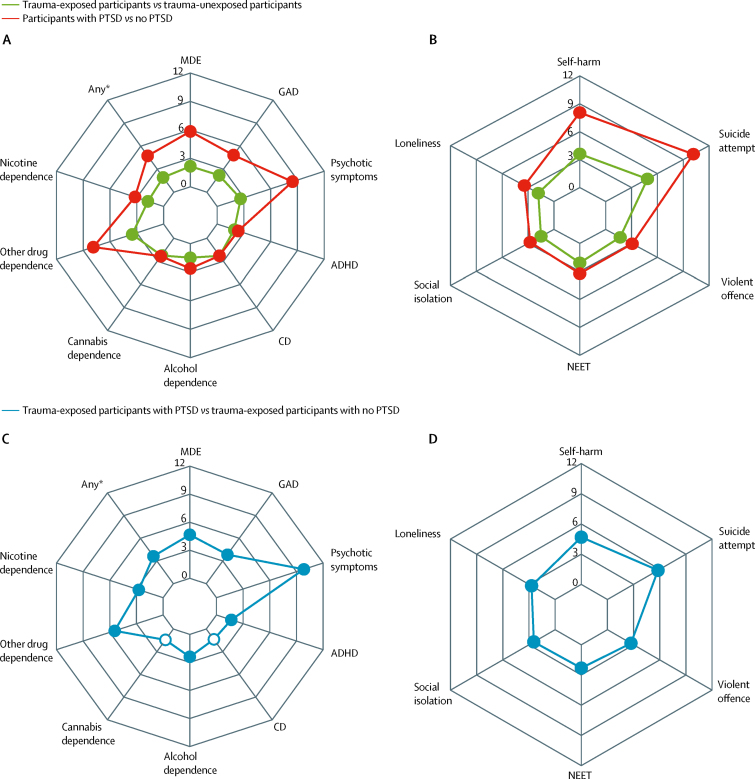
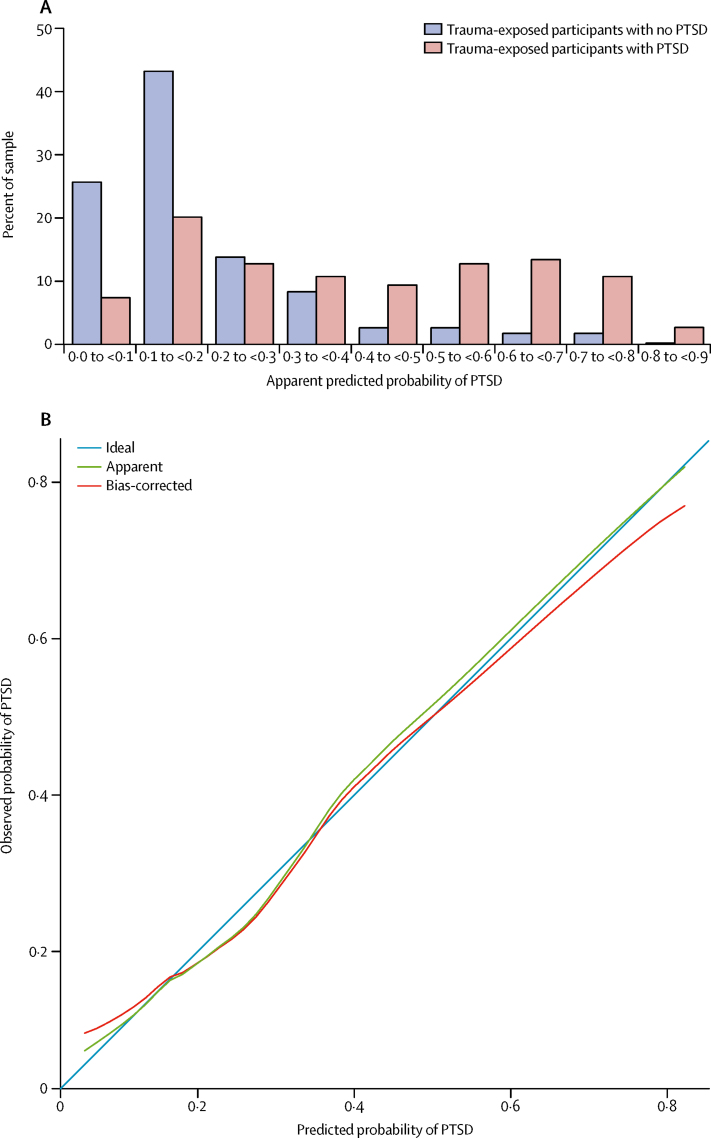
BACKGROUND: Despite the emphasis placed on childhood trauma in psychiatry, comparatively little is known about the epidemiology of trauma and trauma-related psychopathology in young people. We therefore aimed to evaluate the prevalence, clinical features, and risk factors associated with trauma exposure and post-traumatic stress disorder (PTSD) in young people. METHODS: We carried out a comprehensive epidemiological study based on participants from the Environmental Risk Longitudinal Twin Study, a population-representative birth-cohort of 2232 children born in England and Wales in 1994-95. At the follow-up home visit at age 18 years, participants were assessed with structured interviews for trauma exposure, PTSD, other psychopathology, risk events, functional impairment, and service use. Risk factors for PTSD were measured prospectively over four previous assessments between age 5 and 12 years. The key outcomes were the prevalence, clinical features, and risk factors associated with trauma exposure and PTSD. We also derived and tested the internal validity of a PTSD risk calculator. FINDINGS: We found that 642 (31·1%) of 2064 participants reported trauma exposure and 160 (7·8%) of 2063 experienced PTSD by age 18 years. Trauma-exposed participants had high rates of psychopathology (187 [29·2%] of 641 for major depressive episode, 146 [22·9%] of 638 for conduct disorder, and 102 [15·9%] of 641 for alcohol dependence), risk events (160 [25·0%] of 641 for self-harm, 53 [8·3%] of 640 for suicide attempt, and 42 [6·6%] of 640 for violent offence), and functional impairment. Participants with lifetime PTSD had even higher rates of psychopathology (87 [54·7%] of 159 for major depressive episode, 43 [27·0%] of 159 for conduct disorder, and 41 [25·6%] of 160 for alcohol dependence), risk events (78 [48·8%] of 160 for self-harm, 32 [20·1%] of 159 for suicide attempt, and 19 [11·9%] of 159 for violent offence), and functional impairment. However, only 33 (20·6%) of 160 participants with PTSD received help from mental health professionals. The PTSD risk calculator had an internally validated area under the receiver operating characteristic curve of 0·74, indicating adequate discrimination of trauma-exposed participants with and without PTSD, and internally validated calibration-in-the-large of -0·10 and calibration slope of 0·90, indicating adequate calibration. INTERPRETATION: Trauma exposure and PTSD are associated with complex psychiatric presentations, high risk, and significant impairment in young people. Improved screening, reduced barriers to care provision, and comprehensive clinical assessment are needed to ensure that trauma-exposed young people and those with PTSD receive appropriate treatment. FUNDING: The Medical Research Council, the National Institute of Child Health and Development, the Jacobs Foundation, the Nuffield Foundation, the National Society for Prevention of Cruelty to Children, the Economic and Social Research Council, the National Institute for Health Research, MQ, and Canadian Institutes for Advanced Research.
Overview
The claims and statistics of this paper haven’t been checked yet.
Free: it reads the open-access text and checks the first 5 claims that cite a source we can check. Create a free account to check every claim.
Integrity signals
Registry
Cites
Statistics
Figures
Verification
Claims the paper makes
The claims and statistics of this paper haven’t been checked yet.
Free: it reads the open-access text and checks the first 5 claims that cite a source we can check. Create a free account to check every claim.
Claims other papers make about this one
Each is checked against this paper’s own text: does it say what the citing paper says it does?
The source backs part of the claim, not all of it — or backs it for a different population, condition or comparison.
In the citing paper
“the significant association between childhood trauma and the later occurrence of psychiatric disorders such as major depressive disorder (MDD), bipolar affective disorder (BD) and psychosis (2, 14, 15).”
From Childhood Trauma, the HPA Axis and Psychiatric Illnesses: A Targeted Literature Synthesis (2022) · cites this paper as [15]
Experimental — accuracy not yet measured
Self-check
Percentages, sums and reported differences re-computed from the paper’s own numbers.
The self-check needs the paper’s full text.
Citations
Cites
Diagnostic and Statistical Manual of Mental Disorders
Williams, J. B. W., & First, M. (2013) · Encyclopedia of Social Work · doi:10.1093/acrefore/9780199975839.013.104 · Cited by 109,519
Genetics of Food Intake Self-Regulation in Childhood: Literature Review and Research Opportunities
Faith, M. S., Carnell, S., & Kral, T. V. E. (2013) · Human Heredity · doi:10.1159/000353879 · Cited by 7,601
Effects of stress throughout the lifespan on the brain, behaviour and cognition
Lupien, S. J., McEwen, B. S., Gunnar, M. R., & Heim, C. (2009) · Nature Reviews Neuroscience · doi:10.1038/nrn2639 · Cited by 6,256
Meta-analysis of risk factors for posttraumatic stress disorder in trauma-exposed adults
Brewin, C. R., Andrews, B., & Valentine, J. D. (2000) · Journal of Consulting and Clinical Psychology · doi:10.1037/0022-006x.68.5.748 · Cited by 5,243
Trauma and Posttraumatic Stress Disorder in the Community: The 1996 Detroit Area Survey of Trauma
Breslau, N., Kessler, R. C., Chilcoat, H. D., Schultz, L. R., Davis, G. C., & Andreski, P. (1998) · Archives of General Psychiatry · doi:10.1001/archpsyc.55.7.626 · Cited by 2,407
Kilpatrick, D. G., Ruggiero, K. J., Acierno, R., Saunders, B. E., Resnick, H. S., & Best, C. L. (2003) · Journal of Consulting and Clinical Psychology · doi:10.1037/0022-006x.71.4.692 · Cited by 1,590
Traumatic Events and Posttraumatic Stress in Childhood
Copeland, W. E., Keeler, G., Angold, A., & Costello, E. J. (2007) · Archives of General Psychiatry · doi:10.1001/archpsyc.64.5.577 · Cited by 1,544
Prognosis and prognostic research: what, why, and how?
Moons, K. G. M., Royston, P., Vergouwe, Y., Grobbee, D. E., & Altman, D. G. (2009) · BMJ · doi:10.1136/bmj.b375 · Cited by 1,337
Avenevoli, S. (2012) · Archives of General Psychiatry · doi:10.1001/archgenpsychiatry.2011.160 · Cited by 1,149
Perkonigg, A., Kessler, R. C., Storz, S., & Wittchen, H. (2000) · Acta Psychiatrica Scandinavica · doi:10.1034/j.1600-0447.2000.101001046.x · Cited by 970
Cited by
Childhood Adversity and Neural Development: A Systematic Review
McLaughlin, K. A., Weissman, D., & Bitrán, D. (2019) · Annual Review of Developmental Psychology · doi:10.1146/annurev-devpsych-121318-084950 · Cited by 892
“Children who experience adversity are about twice as likely to develop a mental disorder as those who have not, and the odds of developing psychopathology increase dramatically as exposure to adversity increases (Lewis et al. 2019,McLaughlin et al. 2012).”
BackgroundAdversity in childhood is linked to mental and physical health throughout life
Nelson, C. A., Bhutta, Z. A., Burke Harris, N., Danese, A., & Samara, M. (2020) · BMJ · doi:10.1136/bmj.m3048 · Cited by 741
Self-citationMcLaughlin, K. A., Colich, N. L., Rodman, A. M., & Weissman, D. G. (2020) · BMC Medicine · doi:10.1186/s12916-020-01561-6 · Cited by 596
“Evidence from population-based studies suggests that children who have experienced trauma are about twice as likely to develop a mental disorder compared to those who have never experienced trauma [10, 14].”
BackgroundChild and adolescent mental health amidst emergencies and disasters
Danese, A., Smith, P., Chitsabesan, P., & Dubicka, B. (2020) · The British Journal of Psychiatry · doi:10.1192/bjp.2019.244 · Cited by 190
Self-citationThe effects of early life adversity on children’s mental health and cognitive functioning
Wade, M., Wright, L., & Finegold, K. E. (2022) · Translational Psychiatry · doi:10.1038/s41398-022-02001-0 · Cited by 154
“Moreover, recent epidemiological studies demonstrate that children who experience a traumatic event, defined as experiences that are harmful and involve threatened death or violence, are two times more likely to develop a psychiatric disorder than non-trauma exposed children [24].”
BackgroundChildhood Trauma, the HPA Axis and Psychiatric Illnesses: A Targeted Literature Synthesis
Murphy, F., Nasa, A., Cullinane, D., Raajakesary, K., Gazzaz, A., Sooknarine, V., Haines, M., Roman, E., Kelly, L., O'Neill, A., et al. (2022) · Frontiers in Psychiatry · doi:10.3389/fpsyt.2022.748372 · Cited by 181
“These prevalence rates are a major cause of concern given the strong evidence supporting the persistent harmful effects of early traumatic experiences on adult psychological wellbeing (13), and the significant association between childhood trauma and the later occurrence of psychiatric disorders such as major depressi…”
BackgroundDanese, A. (2020) · Journal of Child Psychology and Psychiatry · doi:10.1111/jcpp.13160 · Cited by 157
Self-citationTreatment with psychedelics is psychotherapy: beyond reductionism
Gründer, G., Brand, M., Mertens, L. J., Jungaberle, H., Kärtner, L., Scharf, D., Spangemacher, M., & Wolff, M. (2023) · The Lancet Psychiatry · doi:10.1016/s2215-0366(23)00363-2 · Cited by 129
Panagou, C., & MacBeth, A. M. (2022) · Clinical Psychology & Psychotherapy · doi:10.1002/cpp.2732 · Cited by 111
“Exposure to childhood adversity and its associated consequences constitutes a global problem (e.g., Finkelhor et al., 2015; Kessler et al., 2010; Lewis et al., 2019; Manyema & Richter, 2019).”
BackgroundWoolgar, F., Garfield, H., Dalgleish, T., & Meiser‐Stedman, R. (2021) · Journal of the American Academy of Child & Adolescent Psychiatry · doi:10.1016/j.jaac.2021.05.026 · Cited by 110
Generalization of fear in post‐traumatic stress disorder
Lis, S., Thome, J., Kleindienst, N., Müller‐Engelmann, M., Steil, R., Priebe, K., Schmahl, C. G., Hermans, D., & Bohus, M. (2019) · Psychophysiology · doi:10.1111/psyp.13422 · Cited by 115
Levin, R. Y., & Liu, R. T. (2024) · Translational Psychiatry · doi:10.1038/s41398-024-02868-1 · Cited by 88
Pollok, T. M., Kaiser, A., Kraaijenvanger, E. J., Monninger, M., Brandeis, D., Banaschewski, T., Eickhoff, S. B., & Holz, N. E. (2022) · Neuroscience & Biobehavioral Reviews · doi:10.1016/j.neubiorev.2022.104589 · Cited by 86
Pitkänen, J., Remes, H. M., Moustgaard, H., & Martikainen, P. (2019) · Journal of Youth Studies · doi:10.1080/13676261.2019.1679745 · Cited by 96
“…in the context of NEET are less studied but there is evidence that living with a single parent (Duck-worth and Schoon 2012), childhood trauma (Lewis et al. 2019) and childhood psychological distress (Egan, Daly, and Delaney 2015) increase the risk of NEET, which indicates that diverse…”
BackgroundSleep disturbance and the long-term impact of early adversity
Fuligni, A. J., Chiang, J. J., & Tottenham, N. (2021) · Neuroscience & Biobehavioral Reviews · doi:10.1016/j.neubiorev.2021.03.021 · Cited by 85
Posttraumatic stress disorder (PTSD) prevalence: an umbrella review
Schincariol, A., Orrù, G., Otgaar, H., Sartori, G., & Scarpazza, C. (2024) · Psychological Medicine · doi:10.1017/s0033291724002319 · Cited by 95
Child maltreatment and cardiovascular disease: quantifying mediation pathways using UK Biobank
Ho, F. K. W., Celis-Morales, C. A., Gray, S. R., Petermann-Rocha, F. E., Lyall, D. M., Mackay, D., Sattar, N. A., Minnis, H., & Pell, J. P. (2020) · BMC Medicine · doi:10.1186/s12916-020-01603-z · Cited by 84
Lewis, S. J., Koenen, K. C., Ambler, A., Arseneault, L., Caspi, A., Fisher, H. L., Moffitt, T. E., & Danese, A. (2021) · The British Journal of Psychiatry · doi:10.1192/bjp.2021.57 · Cited by 80
Self-citationPosttraumatic stress disorder and risk of suicidal behavior: A systematic review and meta‐analysis
Akbar, R., Arya, V., Conroy, E., Wilcox, H. C., & Page, A. (2022) · Suicide and Life-Threatening Behavior · doi:10.1111/sltb.12931 · Cited by 84
Ahmadi, R., Rahimi, S., Olfati, M., Javaheripour, N., Emamian, F., Ghadami, M. R., Khazaie, H., Knight, D. C., Tahmasian, M., & Sepehry, A. A. (2022) · Neuroscience & Biobehavioral Reviews · doi:10.1016/j.neubiorev.2022.104850 · Cited by 76
Neurobiology and Treatment of Posttraumatic Stress Disorder
Shalev, A. Y., Cho, D., & Marmar, C. R. (2024) · American Journal of Psychiatry · doi:10.1176/appi.ajp.20240536 · Cited by 82
Turgoose, D., Kerr, S., Coppi, P. D., Blackburn, S., Wilkinson, S., Rooney, N., Martin, R., Gray, S., & Hudson, L. D. (2021) · BMJ Paediatrics Open · doi:10.1136/bmjpo-2021-001147 · Cited by 71
Poor Individual Risk Classification From Adverse Childhood Experiences Screening
Meehan, A. J., Baldwin, J. R., Lewis, S. J., MacLeod, J. G., & Danese, A. (2021) · American Journal of Preventive Medicine · doi:10.1016/j.amepre.2021.08.008 · Cited by 76
Self-citationTranscranial magnetic stimulation as a treatment for posttraumatic stress disorder: A meta-analysis
Harris, A. D., & Reece, J. (2021) · Journal of Affective Disorders · doi:10.1016/j.jad.2021.04.003 · Cited by 66
du Bois, N., Bigirimana, A. D., Korik, A., Kéthina, L. G., Rutembesa, E., Mutabaruka, J., Mutesa, L., Prasad, G., Jansen, S., & Coyle, D. (2021) · Journal of Affective Disorders · doi:10.1016/j.jad.2021.08.071 · Cited by 61
Solberg, Ø., Nissen, A., Vaez, M., Cauley, P., Eriksson, A.-K., & Saboonchi, F. (2020) · Conflict and Health · doi:10.1186/s13031-020-00311-y · Cited by 65
Davis, R. S., Meiser‐Stedman, R., Afzal, N., Devaney, J., Halligan, S. L., Lofthouse, K., Smith, P. A., Stallard, P. N., Ye, S., & Hiller, R. M. (2023) · Journal of the American Academy of Child & Adolescent Psychiatry · doi:10.1016/j.jaac.2023.02.013 · Cited by 94
“Journal of t Volume - / pidemiological studies have shown that trauma exposure is common in childhood, with prevalence estimates ranging from 30% to 70%.(1,2) Trauma exposure spans a wide range of experiences, including accidental injury (eg, motor vehicle accidents), witnessing violence, assault or maltreatment, natu…”
BackgroundPredicting susceptibility and resilience in an animal model of post-traumatic stress disorder (PTSD)
Colucci, P., Marchetta, E., Mancini, G. F., Alva, P., Chiarotti, F., Hasan, M. T., & Campolongo, P. (2020) · Translational Psychiatry · doi:10.1038/s41398-020-00929-9 · Cited by 57
Janiri, D., Moccia, L., Dattoli, L., Pepe, M., Molinaro, M., Martin, V. D., Chieffo, D. R. P., Nicola, M. D., Fiorillo, A., Janiri, L., et al. (2021) · Australian & New Zealand Journal of Psychiatry · doi:10.1177/0004867421998802 · Cited by 58
“, 2018; Hailes and Yu, 2020), including mood, anxiety and post-traumatic stress disorders (PTSD) (Janiri et al., 2019; Lewis et al., 2019).”
BackgroundThe hippocampus in stress susceptibility and resilience: Reviewing molecular and functional markers
Larosa, A., & Wong, T. P. (2022) · Progress in Neuro-Psychopharmacology and Biological Psychiatry · doi:10.1016/j.pnpbp.2022.110601 · Cited by 55
Debate: Recognising and responding to the mental health needs of young people in the era of COVID-19
Danese, A., & Smith, P. (2020) · Child and Adolescent Mental Health · doi:10.1111/camh.12414 · Cited by 50
“For example, it is plausible that pre-existing psychosocial vulnerabilities (e.g. child victimisation, social–economic disadvantage, history of psychopathology; Lewis et al., 2019) will amplify the detrimental impact of the COVID19 pandemic on young people’s mental health, thereby widening the already evident inequali…”
BackgroundSelf-citationLifetime prevalence and treatment of mental disorders in Saudi youth and adolescents
Altwaijri, Y. A., Kazdin, A. E., Al‐Subaie, A., Alhabeeb, A. A., Hyder, S., Bilal, L., Naseem, M. T., & Devol, E. B. (2023) · Scientific Reports · doi:10.1038/s41598-023-33005-5 · Cited by 54
Velasco, J., Sanmartín, F. J., Gálvez‐Lara, M., Cuadrado, F., & Moriana, J. A. (2022) · Trauma Violence & Abuse · doi:10.1177/15248380221074314 · Cited by 57
“Hence, data suggest that the prevalence of PTSD in professionals might be closer to percentages found in clinical samples (see Lewis et al., 2019; Tang et al., 2020), which may reflect the deep impact of occupational exposure to suffering.”
BackgroundCohort profile: Norwegian youth study on child maltreatment (the UEVO study)
Hafstad, G. S., Sætren, S. S., Myhre, M. C., Bergerud-Wichstrøm, M., & Augusti, E. (2020) · BMJ Open · doi:10.1136/bmjopen-2020-038655 · Cited by 48
Xiang, Y., Cipriani, A., Teng, T., Del Giovane, C., Zhang, Y., Weisz, J. R., Li, X., Cuijpers, P., Liu, X., Barth, J., et al. (2021) · Evidence-Based Mental Health · doi:10.1136/ebmental-2021-300346 · Cited by 47
Gerger, H., Werner, C. P., Gaab, J., & Cuijpers, P. J. (2021) · Psychological Medicine · doi:10.1017/s0033291721000143 · Cited by 52
PACAP-PAC1R modulates fear extinction via the ventromedial hypothalamus
Velasco, E. R., Florido, A., Flores, Á., Senabre, E., Gomez‐Gómez, À., Torres, A., Roca, A., Norrholm, S. D., Newman, E. L., Das, P., et al. (2022) · Nature Communications · doi:10.1038/s41467-022-31442-w · Cited by 47
A Review of ADHD and Childhood Trauma: Treatment Challenges and Clinical Guidance
Boodoo, R., Lagman, J. G., Jairath, B., & Baweja, R. K. (2022) · Current Developmental Disorders Reports · doi:10.1007/s40474-022-00256-2 · Cited by 48
Hoppen, T. H., Wessarges, L., Jehn, M., Mutz, J., Kip, A., Schlechter, P., Meiser‐Stedman, R., & Morina, N. (2024) · JAMA Psychiatry · doi:10.1001/jamapsychiatry.2024.3908 · Cited by 48
Hiller, R. M., Meiser‐Stedman, R., Elliott, E. J., Banting, R., & Halligan, S. L. (2020) · Journal of Child Psychology and Psychiatry · doi:10.1111/jcpp.13232 · Cited by 50
“…negative implications for broader well-being and development, including increased risk of developing other psychological difficulties and consequences for educational outcomes and relationships (Lewis et al., 2019) – all outcomeswhereyoungpeople incare oftenexperience problems (DfE, 2018).”
BackgroundInfluentialde Haan, A., Meiser‐Stedman, R., Landolt, M. A., Kuhn, I. L., Black, M., Klaus, K., Patel, S. D., Fisher, D. J., Haag, C., Ukoumunne, O. C., et al. (2023) · The Lancet Child & Adolescent Health · doi:10.1016/s2352-4642(23)00253-5 · Cited by 51
“…effect sizes with the 25 included studies that did provide individual participant data; risk-of-bias ratings did not significantly differ ( x ²[1]=2·11, p=0·15; see appendix 1 pp 13–14 for individual study ratings), and no significant difference was seen in aggregate-level treatment effects (…”
BackgroundCampbell, K. A. (2022) · European Journal of Psychotraumatology · doi:10.1080/20008066.2022.2131969 · Cited by 46
“They also reported that the risk of developing PTSD was greatest after ‘direct interpersonal index traumas’, including bullying by peers (Lewis et al., 2019).”
BackgroundBauer, A., Fairchild, G., Hammerton, G., Murray, J., Santos, I. S., Tovo Rodrigues, L., Munhoz, T. N., Barros, A. J. D., Matijasevich, A., & Halligan, S. L. (2022) · The Lancet Psychiatry · doi:10.1016/s2215-0366(22)00337-6 · Cited by 41
Association between trait mindfulness and symptoms of post-traumatic stress: A meta-analysis
Harper, L., Jones, A., Goodwin, L., & Gillespie, S. M. (2022) · Journal of Psychiatric Research · doi:10.1016/j.jpsychires.2022.05.027 · Cited by 43
Kribakaran, S., Danese, A., Bromis, K., Kempton, M. J., & Gee, D. G. (2019) · Biological Psychiatry Cognitive Neuroscience and Neuroimaging · doi:10.1016/j.bpsc.2019.08.006 · Cited by 114
“Given the heterogeneity in volumetric brain differences in pediatric PTSD (17) and the fact that not all children and adolescents who experience traumatic events develop PTSD (3,23), it is important to disentangle the neurobiological effects of trauma from those of PTSD itself.”
BackgroundInfluentialSelf-citationChildhood Environmental Instability and Social-Emotional Outcomes in Emerging Adults
Babad, S., Zwilling, A. L., Carson, K. W., Fairchild, V. P., & Nikulina, V. (2020) · Journal of Interpersonal Violence · doi:10.1177/0886260520948147 · Cited by 43
“For example, only 8% of childhood trauma survivors develop post-traumatic stress disorder (Lewis et al., 2019).”
BackgroundAdherence to Medication During Transition to Adult Services
Campagna, B. R., Weatherley, K., Shemesh, E., & Annunziato, R. A. (2020) · Pediatric Drugs · doi:10.1007/s40272-020-00414-2 · Cited by 42
Allen, L. R., Jones, C. A., Fox, A. P., Copello, A. G., Jones, N., & Meiser‐Stedman, R. (2021) · Journal of Affective Disorders · doi:10.1016/j.jad.2021.07.028 · Cited by 45
“8% fulfilled criteria for Post-Traumatic Stress Disorder (PTSD) by age 18 years (Lewis et al., 2019).”
BackgroundOvenstad, K. S., Ormhaug, S. M., Shirk, S. R., & Jensen, T. K. (2020) · Journal of Consulting and Clinical Psychology · doi:10.1037/ccp0000465 · Cited by 45
Wani, A. H., Aiello, A. E., Kim, G. S., Xue, F., Martin, C. L., Ratanatharathorn, A. D., Qu, A., Koenen, K. C., Galea, S., Wildman, D. E., et al. (2020) · Journal of Affective Disorders · doi:10.1016/j.jad.2020.12.076 · Cited by 41
Kazlauskas, E., Jovarauskaitė, L., Abe, K., Brewin, C. R., Cloître, M., Daniunaite, I., Haramaki, Y., Hihara, S., Kairytė, A., Kamite, Y., et al. (2022) · Epidemiology and Psychiatric Sciences · doi:10.1017/s2045796022000336 · Cited by 42
Psychological outcomes in patients with rare cancers: a systematic review and meta-analysis
Low, C. E., Loke, S., Pang, G. E., Sim, B., & Yang, V. S. (2024) · EClinicalMedicine · doi:10.1016/j.eclinm.2024.102631 · Cited by 41
Afzal, N., Ye, S., Page, A. C., Trickey, D., Lyttle, M. D., Hiller, R. M., & Halligan, S. L. (2022) · European Journal of Psychotraumatology · doi:10.1080/20008066.2022.2156053 · Cited by 68
“It is estimated that at least one third of individuals will experience a traumatic event during childhood, with the prevalence varying widely across different populations and types of trauma exposures (Lewis et al., 2019).”
BackgroundInfluentialQuinton, A. M. G., Ali, D., Danese, A., Happe, F. G. E., & Rumball, F. (2024) · Review Journal of Autism and Developmental Disorders · doi:10.1007/s40489-024-00430-9 · Cited by 45
“In the UK, a large nationally representative birth cohort of 2232 twins at age 18 years showed that 4.4% had experienced PTSD in the past 12 months, and 7.8% had experienced PTSD at some point (Lewis et al., 2019).”
InfluentialSelf-citationMental health of children and young people in the WHO Europe region
Tarasenko, A., Josy, G., Minnis, H., Hall, J., Danese, A., Lau, J. Y. F., Cortese, S., Stringaris, A. K., Redlich, C., & Ougrin, D. (2025) · The Lancet Regional Health - Europe · doi:10.1016/j.lanepe.2025.101459 · Cited by 46
“50 In 2017, out of 27 countries, ten were reported to provide access to refugees, seven to orphans or victims of natural or man-made disasters, and four to minority groups.”
Self-citationStupar, D., Stevanović, D., Vostanis, P., Atilola, O., Moreira, P., Dodig‐Ćurković, K., Franić, T., Đorić, A., Davidović, N., Avicenna, M., et al. (2021) · Child and Adolescent Psychiatry and Mental Health · doi:10.1186/s13034-021-00378-2 · Cited by 39
“The epidemiology of trauma and post‑ traumatic stress disorder in a representative cohort of young people in England and Wales.”
BackgroundMaurer, J., Meyrose, A., Kaman, A., Mauz, E., Ravens‐Sieberer, U., & Reiß, F. (2023) · Child Psychiatry & Human Development · doi:10.1007/s10578-023-01582-1 · Cited by 43
“However, a successful and positive adaptation in development, whereby the focus is on mental health may be influenced by various factors (e.g., trauma [ 32 ], adverse childhood experiences [ 33 ], self-regulation [ 34 ], and emotion regulation [ 35 ]) [ 27 , 29 ].”
Traumatic and Adverse Childhood Experiences and Developmental Differences in Psychiatric Risk
Russell, J. D., Heyn, S. A., Peverill, M., DiMaio, S., & Herringa, R. J. (2024) · JAMA Psychiatry · doi:10.1001/jamapsychiatry.2024.3231 · Cited by 40
Senior, M., Fanshawe, T. R., Fazel, M. S., & Fazel, S. (2021) · JCPP Advances · doi:10.1002/jcv2.12034 · Cited by 40
Leroy, A., Véry, E., Birmes, P. J., Yger, P., Szaffarczyk, S., Lopes, R., Outteryck, O., Faure, C., Duhem, S., Grandgenèvre, P., et al. (2022) · NeuroImage Clinical · doi:10.1016/j.nicl.2022.102964 · Cited by 40
“PTSD may lead to chronic psychiatric or addictive morbidities, loss of normal daily functioning, and increased risk of suicide (Lewis et al., 2019).”
BackgroundVisser, I., van der Mheen, M., Dorsman, H., Knipschild, R., Staaks, J. P. C., Hein, I. M., van Dongen, N. N. N., Staal, W., Assink, M., & Lindauer, R. (2025) · The British Journal of Psychiatry · doi:10.1192/bjp.2025.30 · Cited by 43
A Systematic Review of Controlled-Trials for PTSD in Maltreated Children and Adolescents
Bennett, R., Denne, M., McGuire, R., & Hiller, R. M. (2020) · Child Maltreatment · doi:10.1177/1077559520961176 · Cited by 41
“One well-documented consequence of exposure to child maltreatment is increased rates of mental health difficulties across the lifespan (Ford et al., 2007; Hillberg et al., 2011; Leeb et al., 2011; Lewis et al., 2019).”
BackgroundInvestigating Individual Pre-trauma Susceptibility to a PTSD-Like Phenotype in Animals
Shanazz, K., Nalloor, R., Bunting, K. M., & Vazdarjanova, A. I. (2020) · Frontiers in Systems Neuroscience · doi:10.3389/fnsys.2019.00085 · Cited by 36
“This is especially important in light of the findings that increased number of traumatic experiences lead to increased probability of developing PTSD and comorbid diseases (Duncan et al., 1996; Sledjeski et al., 2008; Lewis et al., 2019).”
BackgroundSkar, A. S., Jensen, T. K., & Harpviken, A. N. (2021) · Research on Child and Adolescent Psychopathology · doi:10.1007/s10802-021-00788-y · Cited by 36
“Nevertheless, trauma is a significant risk factor for mental illness among children, including somatic problems, depression, anxiety, alcohol misuse, conduct disorder, self-harm, posttraumatic stress disorder (PTSD), and functional impairment (Alsic et al., 2014; Lewis et al., 2019; McLaughlin et al., 2012).”
BackgroundDanese, A., McLaughlin, K. A., Samara, M. M., & Stover, C. S. (2020) · BMJ · doi:10.1136/bmj.m3073 · Cited by 71
Self-citationThe Role and Clinical Correlates of Complex Post-traumatic Stress Disorder in People With Psychosis
Panayi, P., Berry, K., Sellwood, W., Campodonico, C., Bentall, R. P., & Varese, F. (2022) · Frontiers in Psychology · doi:10.3389/fpsyg.2022.791996 · Cited by 37
Brewerton, T. D., Gavidia, I., Suro, G., Perlman, M. M., Genet, J., & Bunnell, D. W. (2021) · European Eating Disorders Review · doi:10.1002/erv.2864 · Cited by 33
Xiong, L., Zhong, B., Cao, X., Xiong, H., Huang, M. X., Ding, J., Li, W.-T., Tong, J., Shen, H., Xia, J., et al. (2021) · Translational Psychiatry · doi:10.1038/s41398-021-01503-7 · Cited by 34
“There is convincing evidence that persons with untreated PTSD are more likely to have a prolonged disease course [27].”
BackgroundFan, T., Twayigira, M., Song, L., Luo, X., Huang, C., Gao, X., & Shen, Y. (2023) · Frontiers in Public Health · doi:10.3389/fpubh.2023.1172109 · Cited by 33
“Based on previous research, experiencing childhood trauma is not only associated with a variety of mental health problems such as conduct disorders, alcohol dependence, selfharm, suicide attempt (39), depressive symptoms (40), psychosis (41), but also with IA.”
BackgroundCommon elements of evidence-based trauma therapy for children and adolescents
Kooij, L. H., van der Pol, T. M., Daams, J. G., Hein, I. M., & Lindauer, R. (2022) · European Journal of Psychotraumatology · doi:10.1080/20008198.2022.2079845 · Cited by 34
“PTSD remains a complex construct nonetheless, and is associated with pervasive problems and high comorbidity (Copeland et al., 2007; Lewis et al., 2019; Rijkers et al., 2019).”
BackgroundRienecke, R. D., Blalock, D. V., Duffy, A., Manwaring, J. L., Grange, D. L., Johnson, C., Mehler, P. S., & McClanahan, S. F. (2020) · International Journal of Eating Disorders · doi:10.1002/eat.23455 · Cited by 31
“Approximately 30–80% of the general population report having experienced a traumatic event (Lewis et al., 2019).”
BackgroundFava, N. M., Meldrum, R. C., Villar, M. G., Zucker, R. A., & Trucco, E. M. (2022) · Development and Psychopathology · doi:10.1017/s0954579422000530 · Cited by 33
The bridge symptoms of childhood trauma, sleep disorder and depressive symptoms: a network analysis
Guo, W., Zhao, Y., Chen, H., Liu, J., Chen, X., Tang, H., Zhou, J., & Wang, X. (2023) · Child and Adolescent Psychiatry and Mental Health · doi:10.1186/s13034-023-00635-6 · Cited by 32
Machlin, L., Sheridan, M. A., Tsai, A., & McLaughlin, K. A. (2025) · Journal of Child Psychology and Psychiatry · doi:10.1111/jcpp.14170 · Cited by 31
Stensland, S. Ø., Thoresen, S., Jensen, T. K., Wentzel‐Larsen, T., & Dyb, G. A. (2020) · Journal of Traumatic Stress · doi:10.1002/jts.22562 · Cited by 31
“, 2014), as well as background factors, such as age, sex, ethnicity, financial resources, and prior trauma exposure, may impact posttraumatic health development (Alisic et al., 2014; George et al., 2016; Lewis et al., 2019; Pacella et al., 2013; Shalev et al., 2017; Trickey et al., 2012; Yehuda et al., 2015).”
BackgroundQi, J., Sun, R., & Zhou, X. (2021) · Journal of Affective Disorders · doi:10.1016/j.jad.2021.08.080 · Cited by 29
The impact of childhood maltreatment on adaptive emotion regulation strategies
Wooten, W., Laubaucher, C., George, G. C., Heyn, S. A., & Herringa, R. J. (2022) · Child Abuse & Neglect · doi:10.1016/j.chiabu.2022.105494 · Cited by 31
Mondragón, N. I., Fernández, I. L., Ozamiz-Etxebarria, N., Lipnicki, D. M., Villagrasa, B., & Santabárbara, J. (2022) · Sustainability · doi:10.3390/su14137914 · Cited by 31
Rogerson, O., O’Connor, R. C., & O'Connor, D. B. (2024) · Journal of Affective Disorders · doi:10.1016/j.jad.2024.02.029 · Cited by 34
Scoping Review: Digital Mental Health Interventions for Children and Adolescents Affected by War
Danese, A., Martsenkovskyi, D., Remberk, B., Khalil, M. Y., Diggins, E., Keiller, E., Masood, S., Awah, I., Barbui, C., Beer, R., et al. (2024) · Journal of the American Academy of Child & Adolescent Psychiatry · doi:10.1016/j.jaac.2024.02.017 · Cited by 68
“8,9 During and after war, these effects are compounded by ongoing threat, grief following the loss of loved ones, and parental psychopathology.”
Self-citationLlorca-Bofí, V., Adrados-Pérez, M., Sánchez-Cazalilla, M., Torterolo, G., Arenas‐Pijoan, L., Buil-Reiné, E., Nicolau-Subires, E., Albert-Porcar, C., Ibarra-Pertusa, L., Puigdevall-Ruestes, M., et al. (2022) · Revista de Psiquiatría y Salud Mental · doi:10.1016/j.rpsm.2022.03.003 · Cited by 30
Childhood trauma doubles risk of mental health conditions
Torjesen, I. (2019) · BMJ · doi:10.1136/bmj.l854 · Cited by 28
Želvienė, P., Daniunaite, I., Hafstad, G. S., Thoresen, S., Truskauskaitė‐Kunevičienė, I., & Kazlauskas, E. (2020) · Child Abuse & Neglect · doi:10.1016/j.chiabu.2020.104684 · Cited by 27
Editorial: Measuring and Buffering the Mental Health Impact of the War in Ukraine in Young People
Danese, A., & Martsenkovskyi, D. (2022) · Journal of the American Academy of Child & Adolescent Psychiatry · doi:10.1016/j.jaac.2022.11.001 · Cited by 28
Self-citationImai, R., Hori, H., Itoh, M., Lin, M., Niwa, M., Ino, K., Ogawa, S., Sekiguchi, A., Kunugi, H., Akechi, T., et al. (2019) · Scientific Reports · doi:10.1038/s41598-019-54508-0 · Cited by 26
Posttraumatic stress and medication adherence in pediatric transplant recipients
Duncan, S. E., Danziger‐Isakov, L. A., Armstrong, B., Williams, N. M., Odim, J. N. K., Shemesh, E., Sweet, S. C., & Annunziato, R. A. (2021) · American Journal of Transplantation · doi:10.1111/ajt.16896 · Cited by 28
Liu, J., Lim, M. S. M., Ng, B. T., Chong, S. A., Subramaniam, M., & Mahendran, R. (2020) · Schizophrenia Research · doi:10.1016/j.schres.2020.05.040 · Cited by 26
Szota, K., Schulte, K. L., & Christiansen, H. (2022) · Clinical Child and Family Psychology Review · doi:10.1007/s10567-022-00415-2 · Cited by 27
“Other relevant outcomes after trauma exposure are anxiety and depressive disorders (Asselmann et al., 2018; Lewis et al., 2019).”
BackgroundStewart, T. M., Fry, D., McAra, L., Hamilton, S., King, A., Laurie, M., & McCluskey, G. (2022) · PLoS ONE · doi:10.1371/journal.pone.0266818 · Cited by 24
Pfeiffer, E., Ormhaug, S. M., Tutus, D., Holt, T., Rosner, R., Wentzel Larsen, T., & Jensen, T. K. (2020) · European Journal of Psychotraumatology · doi:10.1080/20008198.2020.1776048 · Cited by 23
“By the time they reach adulthood, up to 56% of children and adolescents living in Europe have experienced at least one potentially traumatizing event (Landolt, Schnyder, Maier, Schoenbucher, & Mohler-Kuo, 2013; Lewis et al., 2019; Perkonigg, Kessler, Storz, & Wittchen, 2000).”
BackgroundJittayuthd, S., & Karl, A. (2022) · European Journal of Psychotraumatology · doi:10.1080/20008198.2022.2027676 · Cited by 26
“In England and Wales, PTSD has a 8% prevalence in young adults (Lewis et al., 2019).”
BackgroundKim, K., Tsai, A. C., Sumner, J. A., & Jung, S. J. (2022) · Journal of Affective Disorders · doi:10.1016/j.jad.2022.09.117 · Cited by 23
Frearson, A., & Duncan, M. (2024) · Journal of Child & Adolescent Trauma · doi:10.1007/s40653-024-00614-9 · Cited by 23
Sprang, G., & Garcia, A. R. (2022) · Journal of Child & Adolescent Trauma · doi:10.1007/s40653-022-00465-2 · Cited by 24
“Posttraumatic Stress Disorder (PTSD) prevalence rates determined by epidemiological studies note that 30% to 70% of children with such exposures will develop PTSD (Lewis et al., 2019; McLaughlin et al., 2013).”
BackgroundInfluentialAntolasic, E. J., Jaehne, E. J., & van den Buuse, M. (2023) · Current Neuropharmacology · doi:10.2174/1570159x21666230724101321 · Cited by 23
“As females are more likely to develop PTSD and tend to have greater severity of symptoms [2-5], a sex-specific vulnerability is important to investigate.”
BackgroundKolar, D. R., Monteleone, A. M., Cascino, G., Ertl, S., Meule, A., Naab, S., & Voderholzer, U. (2024) · Research on Child and Adolescent Psychopathology · doi:10.1007/s10802-024-01172-2 · Cited by 24
“Child maltreatment has a tremendous negative impact on the lives of adolescents and adults: For example, it is an important risk factor for the onset and course of mental disorders (Chen et al., 2010; Lewis et al., 2019; McLaughlin et al., 2012).”
BackgroundPatterns of adversity and post-traumatic stress among children adopted from care
Anthony, R., Paine, A. L., Westlake, M. F., Lowthian, E., & Shelton, K. H. (2020) · Child Abuse & Neglect · doi:10.1016/j.chiabu.2020.104795 · Cited by 25
Bachmann, C., Czwikla, J., Jacobs, H., Fegert, J. M., & Hoffmann, F. (2021) · Psychiatrische Praxis · doi:10.1055/a-1347-5410 · Cited by 23
“[29] Lewis SJ, Arseneault L, Caspi A et al.”
BackgroundBailey, M., Fairchild, G. F., Hammerton, G., Bauer, A., Carpena, M. X., Murray, J., Santos, I. S., Barros, A. J. D., Tovo‐Rodrigues, L., Danese, A., et al. (2025) · The Lancet Global Health · doi:10.1016/s2214-109x(24)00452-2 · Cited by 24
“4 In addition, adolescents in our cohort were asked about more interpersonal trauma items than were caregivers, which might also have contributed to stronger associations when adolescent self-report data were used.”
InfluentialSelf-citationThe future of pastoral care in schools: exploring whole-school trauma-informed approaches
Long, E. (2022) · Pastoral Care in Education · doi:10.1080/02643944.2022.2093958 · Cited by 25
“Appropriate mental health supervision and emotional support for staff is also essential as part of a whole-school approach, though this is not yet recognised or readily available in the field of education (Berger & Quiros, 2014; Lucas, 2020).”
Background
Metadata
- Authors
- Lewis, S. J., Arseneault, L., Caspi, A., Fisher, H. L., Matthews, T., Moffitt, T. E., Odgers, C. L., Stahl, D., Teng, J. Y., & Danese, A.
- Affiliations
- King's College London (GB)
- Duke University (US)
- University of California, Irvine (US)
- National University of Singapore (SG)
- National Health Service (GB)
- Corresponding author
- Danese, Andrea
- ORCID
- Venue
- The Lancet Psychiatry
- Publisher
- Elsevier BV
- Published
- 2019-03
- Volume
- 6
- Issue
- 3
- Pages
- 247-256
- ISSN
- 2215-0366 (ISSN-L)
- PMC
- PMC6384243
- OpenAlex
- W2916625049
- Semantic Scholar
- fcc7c89382d0d3ce33fe52adf6e0a28517eba29d
- Cited by
- 512
- References
- 33
- Citations by year
- 2026: 74 · 2025: 74 · 2024: 90 · 2023: 66 · 2022: 84 · 2021: 60 · 2020: 44 · 2019: 19
- FWCI
- 60.44
- Type
- journal article
- Language
- en
- Open access
- hybrid
- doi.org
- Licence
- cc-by
- www.elsevier.com/tdm/userlicense/1.0/ (tdm)
- creativecommons.org/licenses/by/4.0/ (vor)
- Locations
- The Lancet Psychiatry (publishedVersion, cc-by)
- Europe PMC (PubMed Central) (publishedVersion, other-oa)
- PubMed Central (publishedVersion, cc-by)
- PubMed (publishedVersion)
- Research Portal (King's College London) (submittedVersion, cc-by)
- Funders
- Medical Research Council (G1002190)
- National Institute of Child Health and Development (HD077482)
- MQ Fellows Award (MQ14F40)
- Topics
- Social Sciences › Psychology › Clinical Psychology › Posttraumatic Stress Disorder Research
- Social Sciences › Psychology › Clinical Psychology › Child Abuse and Trauma
- Social Sciences › Psychology › Clinical Psychology › Child and Adolescent Psychosocial and Emotional Development
- Keywords
- post-traumatic stress disorder, childhood trauma, trauma exposure, youth, prevalence, risk factors, psychopathology, major depressive episode, conduct disorder, alcoholism, self-harm, suicide attempts, functional disability, mental health service utilization, Environmental Risk Longitudinal Twin Study, birth cohort, internal validity, England and Wales
- MeSH terms
- Adolescent, Alcoholism, Child, Major Depressive Disorder, Depressive Disorder, Major, England, Female, Humans, Life Change Events, Longitudinal Studies, Male, Risk Factors, Stress Disorders, Post-Traumatic, Suicide, Attempted, Violence, Wales, Prevalence, Multivariate Analysis, Logistic Models
About these checks
Registry, retraction, Cites and statistics results are computed, not judged, with one exception: a printed reference that no index lists is read once by a model before it counts as a citation error. Claims are extracted by a model and kept only when their quote appears verbatim in the text; each cited source is then checked, with a model’s help, for whether it says what the claim relies on. Those verdicts can be wrong — read the claim’s quote and the cited source before relying on one.
Statistics and arithmetic are recomputed, not judged.
Confidence bands are shown only for fields calibrated on our annotated test set. None is calibrated yet, so no band is shown.
What counts as a claim ›How we measure confidence ›How we check this ›
Are you an author, or do you see a problem with this page? Request a review
Data sources
Bibliographic data: Semantic Scholar, OpenAlex, Crossref.
Contains information from the Semantic Scholar Academic Graph Datasets, made available under the ODC Attribution License (ODC-BY 1.0).
Semantic Scholar’s data is described in: Kinney, R., et al. (2023). The Semantic Scholar Open Data Platform. arXiv:2301.10140.
