

The epidemiology of trauma and post-traumatic stress disorder in a representative cohort of young people in England and Wales
Open accessThe DOI matches its Crossref record; 31 of the 33 references it cites were found in a registry or an index.
Abstract
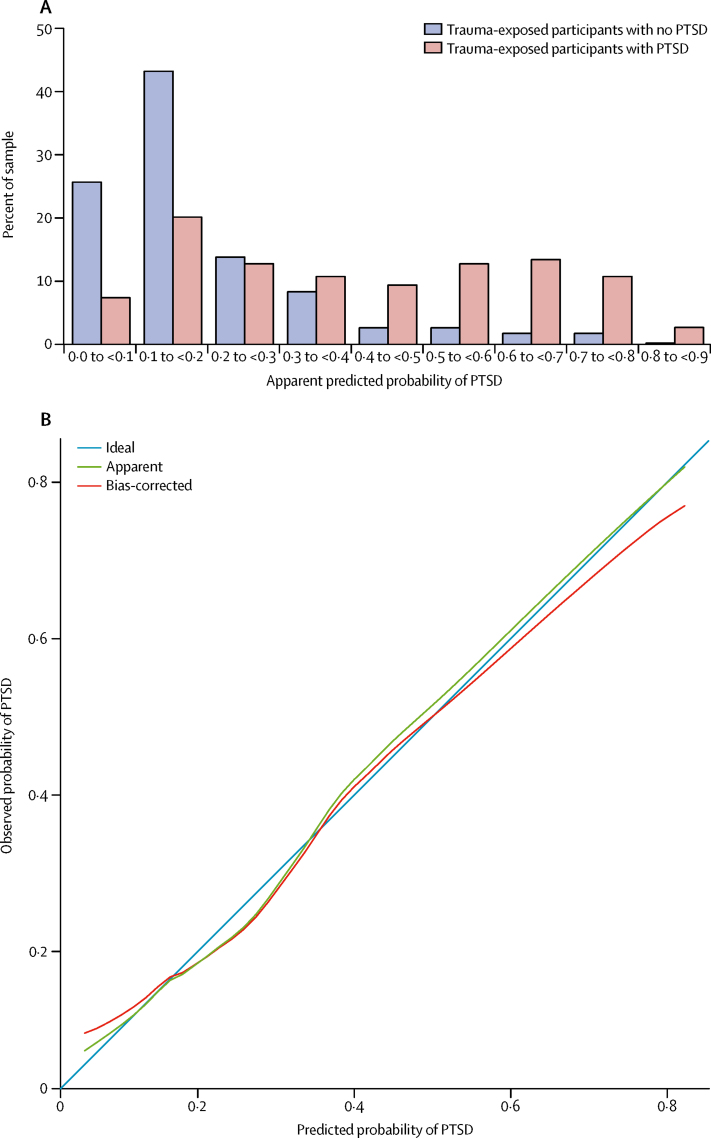
BACKGROUND: Despite the emphasis placed on childhood trauma in psychiatry, comparatively little is known about the epidemiology of trauma and trauma-related psychopathology in young people. We therefore aimed to evaluate the prevalence, clinical features, and risk factors associated with trauma exposure and post-traumatic stress disorder (PTSD) in young people. METHODS: We carried out a comprehensive epidemiological study based on participants from the Environmental Risk Longitudinal Twin Study, a population-representative birth-cohort of 2232 children born in England and Wales in 1994-95. At the follow-up home visit at age 18 years, participants were assessed with structured interviews for trauma exposure, PTSD, other psychopathology, risk events, functional impairment, and service use. Risk factors for PTSD were measured prospectively over four previous assessments between age 5 and 12 years. The key outcomes were the prevalence, clinical features, and risk factors associated with trauma exposure and PTSD. We also derived and tested the internal validity of a PTSD risk calculator. FINDINGS: We found that 642 (31·1%) of 2064 participants reported trauma exposure and 160 (7·8%) of 2063 experienced PTSD by age 18 years. Trauma-exposed participants had high rates of psychopathology (187 [29·2%] of 641 for major depressive episode, 146 [22·9%] of 638 for conduct disorder, and 102 [15·9%] of 641 for alcohol dependence), risk events (160 [25·0%] of 641 for self-harm, 53 [8·3%] of 640 for suicide attempt, and 42 [6·6%] of 640 for violent offence), and functional impairment. Participants with lifetime PTSD had even higher rates of psychopathology (87 [54·7%] of 159 for major depressive episode, 43 [27·0%] of 159 for conduct disorder, and 41 [25·6%] of 160 for alcohol dependence), risk events (78 [48·8%] of 160 for self-harm, 32 [20·1%] of 159 for suicide attempt, and 19 [11·9%] of 159 for violent offence), and functional impairment. However, only 33 (20·6%) of 160 participants with PTSD received help from mental health professionals. The PTSD risk calculator had an internally validated area under the receiver operating characteristic curve of 0·74, indicating adequate discrimination of trauma-exposed participants with and without PTSD, and internally validated calibration-in-the-large of -0·10 and calibration slope of 0·90, indicating adequate calibration. INTERPRETATION: Trauma exposure and PTSD are associated with complex psychiatric presentations, high risk, and significant impairment in young people. Improved screening, reduced barriers to care provision, and comprehensive clinical assessment are needed to ensure that trauma-exposed young people and those with PTSD receive appropriate treatment. FUNDING: The Medical Research Council, the National Institute of Child Health and Development, the Jacobs Foundation, the Nuffield Foundation, the National Society for Prevention of Cruelty to Children, the Economic and Social Research Council, the National Institute for Health Research, MQ, and Canadian Institutes for Advanced Research.
Overview
The claims and statistics of this paper haven’t been checked yet.
Free: it reads the open-access text and checks the first 5 claims that cite a source we can check. Create a free account to check every claim.
Integrity signals
Registry
Cites
Statistics
Figures
Verification
Claims the paper makes
The claims and statistics of this paper haven’t been checked yet.
Free: it reads the open-access text and checks the first 5 claims that cite a source we can check. Create a free account to check every claim.
Claims other papers make about this one
Each is checked against this paper’s own text: does it say what the citing paper says it does?
The source backs part of the claim, not all of it — or backs it for a different population, condition or comparison.
In the citing paper
“the significant association between childhood trauma and the later occurrence of psychiatric disorders such as major depressive disorder (MDD), bipolar affective disorder (BD) and psychosis (2, 14, 15).”
From Childhood Trauma, the HPA Axis and Psychiatric Illnesses: A Targeted Literature Synthesis (2022) · cites this paper as [15]
Experimental — accuracy not yet measured
Self-check
Percentages, sums and reported differences re-computed from the paper’s own numbers.
The self-check needs the paper’s full text.
Citations
Cites
Diagnostic and Statistical Manual of Mental Disorders
Williams, J. B. W., & First, M. (2013) · Encyclopedia of Social Work · doi:10.1093/acrefore/9780199975839.013.104 · Cited by 109,519
Genetics of Food Intake Self-Regulation in Childhood: Literature Review and Research Opportunities
Faith, M. S., Carnell, S., & Kral, T. V. E. (2013) · Human Heredity · doi:10.1159/000353879 · Cited by 7,601
Effects of stress throughout the lifespan on the brain, behaviour and cognition
Lupien, S. J., McEwen, B. S., Gunnar, M. R., & Heim, C. (2009) · Nature Reviews Neuroscience · doi:10.1038/nrn2639 · Cited by 6,256
Meta-analysis of risk factors for posttraumatic stress disorder in trauma-exposed adults
Brewin, C. R., Andrews, B., & Valentine, J. D. (2000) · Journal of Consulting and Clinical Psychology · doi:10.1037/0022-006x.68.5.748 · Cited by 5,243
Trauma and Posttraumatic Stress Disorder in the Community: The 1996 Detroit Area Survey of Trauma
Breslau, N., Kessler, R. C., Chilcoat, H. D., Schultz, L. R., Davis, G. C., & Andreski, P. (1998) · Archives of General Psychiatry · doi:10.1001/archpsyc.55.7.626 · Cited by 2,407
Kilpatrick, D. G., Ruggiero, K. J., Acierno, R., Saunders, B. E., Resnick, H. S., & Best, C. L. (2003) · Journal of Consulting and Clinical Psychology · doi:10.1037/0022-006x.71.4.692 · Cited by 1,590
Traumatic Events and Posttraumatic Stress in Childhood
Copeland, W. E., Keeler, G., Angold, A., & Costello, E. J. (2007) · Archives of General Psychiatry · doi:10.1001/archpsyc.64.5.577 · Cited by 1,544
Prognosis and prognostic research: what, why, and how?
Moons, K. G. M., Royston, P., Vergouwe, Y., Grobbee, D. E., & Altman, D. G. (2009) · BMJ · doi:10.1136/bmj.b375 · Cited by 1,337
Avenevoli, S. (2012) · Archives of General Psychiatry · doi:10.1001/archgenpsychiatry.2011.160 · Cited by 1,149
Perkonigg, A., Kessler, R. C., Storz, S., & Wittchen, H. (2000) · Acta Psychiatrica Scandinavica · doi:10.1034/j.1600-0447.2000.101001046.x · Cited by 970
Cited by
Items 301–400 of 583
Eilers, R., Ertl, V., Kasparik, B., Kost, A., & Rosner, R. (2024) · Bundesgesundheitsblatt - Gesundheitsforschung - Gesundheitsschutz · doi:10.1007/s00103-024-03860-2 · Cited by 3
Trauma-Informed Care for Children: A Scoping Review
Bang, K., Choe, J.-H., Choi, S., Jeong, Y., & Kim, S. (2024) · Korean Journal of Stress Research · doi:10.17547/kjsr.2024.32.2.94 · Cited by 3
Junewicz, A., Dhir, S., Guo, F., Song, Y., Stein, C. R., & Baroni, A. (2024) · Autism · doi:10.1177/13623613241274832 · Cited by 3
“By comparison, an epidemiological study of youth reported that 7% to 8% experienced PTSD by age 18 (Lewis et al., 2019).”
Childhood Trauma as a Public Health Issue
Urbina-Johanson, S., Meza, R. D., Martin, P., Fearey, E., Lambert, H., & McLaughlin, K. A. (2024) · Springer eBooks · doi:10.1007/978-3-031-77215-3_3 · Cited by 4
Gaudiešiūtė, E., Skabeikytė‐Norkienė, G., & Barkauskienė, R. (2025) · Child and Adolescent Mental Health · doi:10.1111/camh.12781 · Cited by 3
Green, W., Raut, S. B., James, F. E., Benedek, D. M., Ursano, R. J., Capaldi, V. F., & Johnson, L. R. (2026) · Harvard Review of Psychiatry · doi:10.1097/hrp.0000000000000478 · Cited by 3
The Role of Trauma in Addiction and Recovery: A Qualitative Meta-Synthesis
Kim, J., Kim, M.-S., Shin, Y., Kim, B., & Kim, S. (2021) · Korean Journal of Stress Research · doi:10.17547/kjsr.2021.29.1.45 · Cited by 3
“장기간에 걸쳐 트라우마의 영향을 추적한 코호트 연구에서 어린시절의 트 라우마가 삶에 미치는 정신적인 폐해를 증명하였으며[4,5], 최신 연구[6]에서는 트라우마와 후성 유전(epigenetic alteration)과의 관련성을 밝히고 있다.”
Würtz, F., Blackwell, S. E., Margraf, J., & Woud, M. L. (2022) · Journal of Experimental Psychopathology · doi:10.1177/20438087221124737 · Cited by 3
Childhood Trauma and Trajectories of Depressive Symptoms Across AdolescencePreprint
Kwong, A. S. F., Maddalena, J. M., Croft, J., Heron, J. E., & Leckie, G. (2019) · medRxiv · doi:10.1101/19002519 · Cited by 3
(2021) · Wiley eBooks · doi:10.1002/9781119870203.mpg005 · Cited by 3
Lewis, S. J., & Danese, A. (2023) · Journal of the American Academy of Child & Adolescent Psychiatry · doi:10.1016/j.jaac.2023.06.001 · Cited by 3
Self-citationButcher, I., Mankee‐Williams, A., Hugh‐Jones, S., Cooke, P. A., Teasdale, B., Shaughnessy, N., Pavarini, G., Smith, L., & Bhui, K. S. (2023) · medRxiv · doi:10.1101/2023.12.21.23300349 · Cited by 4
Behdinan, T., Truuvert, A. K., Adekunte, A., McCallum, N., Vigod, S. N., Butt, A., Rojas, D., Soklaridis, S., & Ross, D. (2024) · Telemedicine Reports · doi:10.1089/tmr.2024.0020 · Cited by 2
“2,29,30 To our knowledge, blended psychoeducational e-health interventions for adults dealing with the mental health consequences related to CIT have not been previously evaluated.”
Trauma informed career counseling for young adults with mental health conditions
Lu, W., Yanos, P. T., Oursler, J. D., Beninato, J., Topitzes, D., Banko, A., Chung, W. E., & Stone, B. (2024) · Journal of Employment Counseling · doi:10.1002/joec.12236 · Cited by 3
Lofthouse, K., Beeson, E., Dalgleish, T., Danese, A., Hodgekins, J., Mahoney‐Davies, G., Smith, P. A., Stallard, P. N., Wilson, J., & Meiser‐Stedman, R. (2024) · European Journal of Psychotraumatology · doi:10.1080/20008066.2024.2435790 · Cited by 2
Self-citationEpidemiology of Trauma and Trauma-Related Disorders in Children and Adolescents
Mangelsdorf, S. N., Alisic, E., & Hitchcock, C. (2024) · Springer eBooks · doi:10.1007/978-3-031-77215-3_2 · Cited by 3
Psychological therapies for post-traumatic stress disorder in children and adolescents
Illum, D. B., Døssing, S. C. B., Quistgaard, M., Jørgensen, M. S., Møller, L., Gillies, D. M., Kristensen, M. T. T., Nestved, S. K., Schaug, J. P., Gluud, C. N., et al. (2025) · Cochrane Database of Systematic Reviews · doi:10.1002/14651858.cd015983 · Cited by 5
“Nevertheless, studies estimate that 7% to 25% of trauma-exposed children and adolescents develop PTSD (Alisic 2014; Landolt 2013; Lewis 2019; McLaughlin 2013).”
A Bifactor Model of Childhood Adversity in a Longitudinal South African Birth Cohort Study
de Leeuw, J. S. H., Lake, M. T., Gering, M., Hoffman, N., Donald, K. A., Zar, H. J., Stein, D. J., & Malcolm‐Smith, S. (2025) · Assessment · doi:10.1177/10731911251340221 · Cited by 2
“This highlights the need for specificity in identifying childhood exposure to adversity and especially to check for the exposures’ subsequent impact (Lewis et al., 2019).”
Leickert, J., Zillmer, S., Bachmann, C., Vivirito, A., Enders, D., Correll, C. U., & Jaite, C. (2025) · European Journal of Psychotraumatology · doi:10.1080/20008066.2025.2512683 · Cited by 2
“…adolescents in the USA aged 13–17 years: 61.8% (McLaughlin et al., 2013)); population-representative birth-cohort in the UK: 31.1% by the age of 18 (Lewis et al., 2019); adolescents aged 14–24 years in Germany: 17.7% of females, 26.0% of males (Perkonigg et al., 2000), and are found to be lower in…”
InfluentialThe vulnerable role of empathy in children who live in conflict zones
Kab, E., Porat-Butman, S., Rachmani, M., & Levy‐Gigi, E. (2025) · European Journal of Psychotraumatology · doi:10.1080/20008066.2025.2527548 · Cited by 3
“Exposure to childhood trauma is a potent risk factor for multiple psychopathologies (Copeland et al., 2018; Lewis et al., 2019; McLaughlin et al., 2020).”
Misitano, A., Tarantino, A., Geddo, F., Oppo, A., & Forresi, B. (2025) · Children · doi:10.3390/children12111516 · Cited by 2
“Furthermore, research shows that children exposed to PTEs are twice as likely to develop a psychiatric disorder compared to those who have not experienced such events [1].”
Effects of childhood trauma on indicators of daily suicide risk: The role of stress and sleep
Wang, L., Keyworth, C., & O'Connor, D. B. (2026) · Child Abuse & Neglect · doi:10.1016/j.chiabu.2026.108142 · Cited by 2
Hartford, L., & Horrocks, M. (2023) · Counselling and Psychotherapy Research · doi:10.1002/capr.12644 · Cited by 2
Frankowiak, J. K. (2023) · Problemy Wczesnej Edukacji · doi:10.26881/pwe.2023.56.11 · Cited by 2
Wong, S. M. Y., Lau, T. T. Y., Hui, C. L. M., Suen, Y. N., Chan, S. K. W., Lee, E. H. M., & Chen, E. Y. H. (2024) · Journal of Loss and Trauma · doi:10.1080/15325024.2024.2316108 · Cited by 2
“Although some individuals tend to recover over time after the subsiding of external stressors, some continue to show persistent experiences of symptoms (Lewis et al., 2019).”
Želvienė, P., Daniunaite, I., Elklit, A., Kazlauskas, E., Løkkegaard, S. S., & Geležėlytė, O. (2024) · Journal of Aggression Maltreatment & Trauma · doi:10.1080/10926771.2024.2332599 · Cited by 2
“Potentially traumatic events (PTEs) and abuse in childhood are common (Lewis et al., 2019; Nikolaidis et al., 2018; Zelviene et al., 2020).”
BackgroundYeni Kurulan Bir Adli Tıp Polikliniğine Başvuran Şiddet Mağduru Olguların Değerlendirilmesi
Özdemir, M. (2024) · The Bulletin of Legal Medicine · doi:10.17986/blm.1685 · Cited by 2
Kuzmenko, A., & Makarenko, S. M. (2024) · International Journal of Statistics in Medical Research · doi:10.6000/1929-6029.2024.13.15 · Cited by 2
“Studies have linked PTSD to changes in brain function, including hyperactivation of the amygdala, which is responsible for processing fear perceptions, and disruption of the hippocampus, a key node in memory formation and retention [13, 14].”
BackgroundTahsin, C. T., Ahmed, Z., Mohamed, A., Tahmin, C. I., Wattero, R., Corbin, C., & Fonkoue, I. T. (2024) · Discover Mental Health · doi:10.1007/s44192-024-00108-y · Cited by 2
Allen, L. R., Fox, A. P., Copello, A. G., Meiser‐Stedman, R., & Morant, N. J. (2024) · Psychology and Psychotherapy Theory Research and Practice · doi:10.1111/papt.12558 · Cited by 2
“…to actual or threatened death, serious injury or sexual violence (DSM-5; American Psychiatric Association, 2013), are experienced by nearly a third of children and young people in the United Kingdom, with one-fifth of them developing post-traumatic stress disorder (PTSD) (Lewis et al., 2019).”
Silveira, R., Eleti, S., Saruchera, E., Mwamuka, R., Whitwell, S., Abas, M., & Jack, H. E. (2024) · BJPsych Open · doi:10.1192/bjo.2024.720 · Cited by 2
Smith, B. D., Cadet, K., & Powell, T. W. (2025) · Injury Epidemiology · doi:10.1186/s40621-025-00574-0 · Cited by 2
“Traumatic events are broadly defined as events that can cause significant distress or physical and emotional harm [18].”
Psychological Trauma, Adolescence, and Post-traumatic Stress Disorder
Satapathy, S. S. (2022) · Springer eBooks · doi:10.1007/978-981-16-9881-1_8 · Cited by 2
Cognitive behavioral therapy for posttraumatic stress disorder in Pakistan
Khan, A. (2023) · Elsevier eBooks · doi:10.1016/b978-0-323-85726-0.00010-7 · Cited by 4
Reichhart, T., & Pusch, C. (2023) · Springer eBooks · doi:10.1007/978-3-658-37432-7_2 · Cited by 2
Redican, E., Vang, M. L., Shevlin, M. E., Ghazali, S. R., & Elklit, A. (2023) · Acta Psychologica · doi:10.1016/j.actpsy.2023.103896 · Cited by 2
Devaney, J., Walsh, C., Bunting, L., Best, P., Davidson, G., Mulholland, C. C., French, D., & Duffy, M. (2023) · Child & Family Social Work · doi:10.1111/cfs.13044 · Cited by 2
Russell, K., Moghaddam, N. G., Tickle, A., Campion, G., Cobley, C. S., Page, S., & Langthorne, P. (2024) · Mental Health Review Journal · doi:10.1108/mhrj-07-2023-0037 · Cited by 3
Javakhishvili, J. D., Ruzek, J. I., Fréel, S., Punski‐Hoogervorst, J. L., Hoeboer, C. M., & Olff, M. (2026) · European Journal of Psychotraumatology · doi:10.1080/20008066.2026.2678655 · Cited by 3
“Transitioning to a measurement-based care model is increasingly recognized as a global mental health priority (Jensen-Doss et al., 2020; Lewis et al., 2019) and is equally relevant in contexts of ongoing armed conflict.”
Can the mammalian dive response override posttraumatic stress disorder?
Speciale, A. C. (2020) · Journal of Evolution and Health An Ancestral Health Society Publication · doi:10.15310/j35152613 · Cited by 1
Posttraumatic Stress Disorder, Personality Disorders, and Complex Posttraumatic Stress Disorder
Paris, J. (2022) · Oxford University Press eBooks · doi:10.1093/med/9780197615768.003.0007 · Cited by 1
Srivastava, M., Chawla, T., Tharani, T., Prasadh, N. L., Singhania, R., & Shah, S. (2024) · Advances in Human Biology · doi:10.4103/aihb.aihb_83_24 · Cited by 1
Diagnostic Spectrum of Trauma-Related Disorders in Children and Adolescents
Jensen, T. K., & Sachser, C. (2024) · Springer eBooks · doi:10.1007/978-3-031-77215-3_1 · Cited by 1
Overcoming barriers to children accessing trauma specific therapy: A process map approach
Gervasio, M., Paul, E., Brown, E. J., Bergman, A. J., Milani, N., Zaheer, I., Murphy, K., & Goodman, R. F. (2025) · International Journal of School & Educational Psychology · doi:10.1080/21683603.2024.2441819 · Cited by 1
“Children with trauma histories are about twice as likely to develop a mental disorder, compared to children without trauma histories (Lewis et al., 2019).”
Thomas, J. L., Yarrington, J. S., Chen, T., Benedicto, R. C., Sumner, J. A., & Keenan‐Miller, D. (2025) · American Journal of Psychotherapy · doi:10.1176/appi.psychotherapy.20240030 · Cited by 1
Pfitscher, G., Taferner, C., Marketz, C., Sevecke, K., & Exenberger, S. (2025) · Journal of Happiness Studies · doi:10.1007/s10902-025-00891-7 · Cited by 1
“An epidemiological study providing estimates using the DSM-5 classification in a contemporary European cohort showed that 31.1% of children and adolescents experienced trauma, and 7.8% developed PTSD by the age of 18 years (Lewis et al., 2019).”
InfluentialGarnsey, C. L., Park, C. L., Magin, Z. E., Russell, B. S., & Milan, S. (2025) · Anxiety Stress & Coping · doi:10.1080/10615806.2025.2539169 · Cited by 1
“Exposure to a range of traumatic 1 events is common and associated with myriad negative mental, physical, and behavioral health effects (Lewis et al., 2019; Sowder et al., 2018).”
Opoku, M. P., Gyimah, E. M., Nur, S., Miezah, D., Frimpomaa, L., Yusuf, R., Babiker, T., Alblooshi, M. M., September, E., & Moustafa, A. (2025) · International Journal of Adolescence and Youth · doi:10.1080/02673843.2025.2546927 · Cited by 1
“The prevalence of mental health conditions – such as depression, anxiety and posttraumatic stress disorder – is frequently associated with traumatic experiences during formative years (Isaac et al., 2024; Lewis et al., 2019).”
France, J. M., Valbrun, S., Grasser, L. R., Wiltshire, C., Basarkod, S., Davie, W., Reda, M., George, S. A., Winters, S., Bradley, B., et al. (2025) · Biological Psychiatry Cognitive Neuroscience and Neuroimaging · doi:10.1016/j.bpsc.2025.08.007 · Cited by 1
PTSD, Anxiety, and Depressive Reactions Among Iranian Adolescent Girls After Community Trauma
Azimisefat, P., Glass, P., Kanske, P., & Herzog, P. (2025) · Journal of Loss and Trauma · doi:10.1080/15325024.2025.2552262 · Cited by 1
“Similar findings were observed in the UK, where 7.8% of adolescents had PTSD by age 18, accompanied by elevated rates of depression, conduct disorder, suicidality, and functional impairment; however, only 20.6% had accessed mental health services (Lewis et al., 2019).”
InfluentialWalsh, C. (2025) · Palgrave's Frontiers in Criminology Theory · doi:10.1007/978-3-031-99414-2_6 · Cited by 1
Trauma-informed approaches for research in higher education: a guiding framework
McChesney, K. (2025) · International Journal of Research & Method in Education · doi:10.1080/1743727x.2025.2593664 · Cited by 1
“By age 18, over 30% of young people will have been exposed to one or more traumatic experiences, and a quarter of that group will have experienced post-traumatic stress disorder (Lewis et al .”
Cognard-Bessette, S., Myre, G., Tarabulsy, G. M., Bernier, A., St‐Laurent, D., Dubois‐Comtois, K., & Cyr, C. P. (2026) · Child Abuse & Neglect · doi:10.1016/j.chiabu.2026.108168 · Cited by 1
Lindsay, E. K., Damon, S., Low, C. A., & Marsland, A. L. (2025) · Behavior Therapy · doi:10.1016/j.beth.2025.08.004 · Cited by 1
“Still, nearly half of the sample demonstrated psychological resilience to adverse childhood experiences, consistent with prior work showing that nearly half of trauma-exposed emerging adults are resilient to psychopathology (e.g., Lewis et al., 2019).”
Ma, Y., Hu, Q., Wang, Y., & Yang, X. (2025) · Children and Youth Services Review · doi:10.1016/j.childyouth.2025.108744 · Cited by 1
Sang, X., Hou, X., Long, N., & Mao, P. (2025) · PubMed Central · doi:10.11817/j.issn.1672-7347.2025.250153 · Cited by 2
Kyei, E. A., Asare, J. W., Modey, P., Ujakpa, M. M., Mutasa, L. S., Freeman, E., Brown‐Acquaye, W. L., Лемпого, Ф., & Koi-Akrofi, G. Y. (2026) · Communications in computer and information science · doi:10.1007/978-3-032-12313-8_29 · Cited by 1
Keynejad, R. C., Gaifém, F., Nikolic, I. Z., Belay, S., Amare, H. H., Areru, H. A., Mautner, M.-C., Lichtwarck, H. O., & Eick, F. (2026) · Frontiers in Sociology · doi:10.3389/fsoc.2026.1612133 · Cited by 4
“Adverse childhood experiences, the majority of which take place in the home, including maltreatment, witnessing domestic abuse, parental mental ill-health and substance use disorders are risk factors for a range of future mental health conditions (Lewis et al., 2019).”
Morrison, M., Weatherly, C., & Trautmann, A. (2026) · Trauma Violence & Abuse · doi:10.1177/15248380261421968 · Cited by 1
Corlătianu, M., & Măirean, C. (2026) · Journal of Child & Adolescent Trauma · doi:10.1007/s40653-026-00875-6 · Cited by 2
Leštarević, S., Lero, M., Drin, S. S., Calam, R. M., Danese, A., El‐Khani, A., Fetsyk, M., Nesmashna, H., Radchuk, H., Tarasenko, A., et al. (2026) · JAACAP Open · doi:10.1016/j.jaacop.2026.04.007 · Cited by 2
Self-citationKjell, O., Ganesan, A. V., Boyd, R. L., Oltmanns, J. R., Rivero, A., Feltman, S. M., Carr, M. A., Alves, J., Luft, B. J., Kotov, R., et al. (2026) · Clinical Psychological Science · doi:10.1177/21677026261439026 · Cited by 1
Hesapçıoğlu, S. T., DABAK, S., Aburşu, H., & Ceylan, M. F. (2026) · Annals of Clinical Psychiatry · doi:10.1177/10401237261453591 · Cited by 1
Kerbage, H., Bui, É., Revet, A., Denis, H., Purper‐Ouakil, D., & Rolling, J. (2026) · Discover Mental Health · doi:10.1007/s44192-026-00488-3 · Cited by 1
Using Instagram for public education in trauma prevention: experience of an academic Trauma League
dos Santos, H. A. F., Aguilar, J. M. H., dos Santos, A. V. Q., Boaventura, A. P., Calderan, T. R. A., & Fraga, G. P. (2026) · Trauma Surgery & Acute Care Open · doi:10.1136/tsaco-2024-001675 · Cited by 1
Grummitt, L. R., Rowlinson, K., Rockett, B., Birrell, L., Daher, R., Mackenzie, N., Newton, N. C., & Barrett, E. L. (2026) · Frontiers in Health Services · doi:10.3389/frhs.2026.1818783 · Cited by 1
Stability of childhood maltreatment self-reports: a systematic review and meta-analysis
Coleman, O., Al-Jaber, M., Aponsu, G., Stahl, D. R., & Danese, A. (2026) · Nature Mental Health · doi:10.1038/s44220-026-00677-7 · Cited by 1
Self-citationKhan, A., Karamanos, A., & Khanolkar, A. R. (2026) · Journal of Multimorbidity and Comorbidity · doi:10.1177/26335565261466283 · Cited by 1
Sumner, J. A., Rosellini, A. J., Szentkúti, P., Horváth–Puhó, E., Bøtker, H. E., Lash, T. L., Schnurr, P. P., Galea, S., Sørensen, H. T., & Gradus, J. L. (2026) · Journal of the American Heart Association · doi:10.1161/jaha.126.049492 · Cited by 1
Quidé, Y. (2019) · Biological Psychiatry Cognitive Neuroscience and Neuroimaging · doi:10.1016/j.bpsc.2019.06.005 · Cited by 1
Compassionate Design: A methodology for advanced dementia
Treadaway, C., Fennell, J., & Taylor, A. (2020) · Cardiff Metropolitan Research Repository (Cardiff Metropolitan University) · Cited by 2
Ajio, D. K., Ehiemere, O. I., & Iheanacho, N. P. (2021) · EPRA International Journal of Research & Development (IJRD) · doi:10.36713/epra5340 · Cited by 1
“These everyday traumatic experiences are evident in contemporary times and are categorised as either, human-made or natural disasters (Brooks et al., 2019; Lewis et al., 2019).”
BackgroundTrauma and PTSD in Children Who Are Refugees or Immigrants
OLNESS, K. N. (2021) · Springer eBooks · doi:10.1007/978-3-030-74906-4_5 · Cited by 2
Posttraumatic Stress Disorder in Children and Adolescents
de Haan, A., Perrin, S. G., Smith, P. A., & Yule, W. (2021) · Elsevier eBooks · doi:10.1016/b978-0-12-818697-8.00094-7 · Cited by 1
Development of a Checklist of Potentially Traumatic Events in Children and Adolescents (CEPT-CA)
Barroca, I., Santos, C. M., Velosa, A., Cotovio, G., Kozlowska, K., Pinto, I., & Carvalho, P. S. (2022) · Portuguese Journal of Public Health · doi:10.1159/000522221 · Cited by 1
Trauma-Related Mental Illness in Children and Adolescents
Lewis, S. J., & Danese, A. (2020) · Mental health and illness worldwide · doi:10.1007/978-981-10-2348-4_64 · Cited by 1
Self-citationAdverse Childhood Experiences: Impact on PTSD and Aggression
Stoppelbein, L., McRae, E. M., & Smith, S. B. (2022) · Springer eBooks · doi:10.1007/978-3-030-98711-4_74-1 · Cited by 1
Adverse Childhood Experiences: Impact on PTSD and Aggression
Stoppelbein, L., McRae, E. M., & Smith, S. B. (2023) · Springer eBooks · doi:10.1007/978-3-031-31547-3_74 · Cited by 1
Temporomandibular trauma and reflections on personal evaluation
Côrte-Real, A., de Abreu, J. M., Figueiredo, J. P., & Nunes, T. (2023) · Forensic Science Medicine and Pathology · doi:10.1007/s12024-023-00745-9 · Cited by 1
The link between daily affective complexity and anxiety is altered by oral contraceptive use
Le, E., Chaku, N., Foster, K. T., Weigard, A. S., & Beltz, A. M. (2024) · International Journal of Psychophysiology · doi:10.1016/j.ijpsycho.2024.112310 · Cited by 1
Blakey, S. M., Dillon, K. H., McFARLANE, A. C., & Beckham, J. C. (2023) · Springer eBooks · doi:10.1007/978-3-030-42825-9_59-1 · Cited by 1
Edukacja wrażliwa na traumę z perspektywy teorii przywiązania
Jezierski, K. (2024) · Edukacja Elementarna w Teorii i Praktyce · doi:10.35765/eetp.2024.1973.12 · Cited by 1
Blakey, S. M., Dillon, K. H., McFARLANE, A. C., & Beckham, J. C. (2024) · Springer eBooks · doi:10.1007/978-3-030-51366-5_59 · Cited by 1
Smith, C., Ford, C. E. L., Dalgleish, T., Smith, P., McKinnon, A., Goodall, B., Wright, I. M., Pile, V., & Meiser‐Stedman, R. (2024) · Behavioural and Cognitive Psychotherapy · doi:10.1017/s1352465824000444 · Cited by 1
“Trauma exposure is common in children and young people (CYP); epidemiological surveys indicate that by the time a child reaches 16 years of age, more than 30% will have been exposed to trauma (Copeland et al ., 2007; Lewis et al ., 2019; McLaughlin et al ., 2013).”
Murphy, A., Melia, Y., & Srejic, G. (2025) · Psychology and Psychotherapy Theory Research and Practice · doi:10.1111/papt.12572 · Cited by 1
Preventive Early Intervention for Children and Adolescents Exposed to Trauma
Young, A. D., Keleher, S., Baldwin, A. R., & Kenardy, J. A. (2024) · Springer eBooks · doi:10.1007/978-3-031-77215-3_6 · Cited by 1
Li, H., Gao, J., Sun, H., Wang, P., Keyi, Z., Liang, W., & Liu, F. (2025) · The Journal of Psychology · doi:10.1080/00223980.2025.2542565 · Cited by 2
“Notably, empirical evidence consistently identified maltreatment as a significant risk factor for both the development and progression of various mental disorders (Lewis et al., 2019; McLaughlin et al., 2012).”
Rohde, E., Bentz, L. K., Hübler, R., Dippel, N., & Winter, S. (2025) · European Journal of Psychotraumatology · doi:10.1080/20008066.2025.2585640 · Cited by 1
“Approximately one third to two thirds of children and adolescents experience or witness an interpersonal traumatic event in their childhood or adolescence (Copeland et al., 2007; Lewis et al., 2019).”
InfluentialAbramson, P. R., & Bland-Abramson, S. (2021) · The Wrongful Conviction Law Review · doi:10.29173/wclawr55 · Cited by 2
Burgess, A. (2019) · UEA Digital Repository (University of East Anglia) · Cited by 2
Difficult Conversations during COVID-19
Bocioaga, A. (2020) · doi:10.31583/esss.20200424 · Cited by 1
Clarke, A. L. (2020) · ORCA Online Research @Cardiff (Cardiff University) · Cited by 1
The psychological impact of trauma on preschool children and their parents
Woolgar, F. (2020) · UEA Digital Repository (University of East Anglia) · Cited by 3
Boyd-MacMillan, E., & DeMarinis, V. (2020) · Apollo (University of Cambridge) · doi:10.17863/cam.63237 · Cited by 1
Fritz, J. (2020) · Apollo (University of Cambridge) · doi:10.17863/cam.63930 · Cited by 1
Ashkalak, Z. O., Nazari, H., Seyedfatemi, N., Haghani, H., & Parvizy, S. (2020) · doi:10.21203/rs.3.rs-17354/v1 · Cited by 1
Individual Differences in Response to Trauma
Paris, J. (2022) · Oxford University Press eBooks · doi:10.1093/med/9780197615768.003.0002 · Cited by 1
Childhood Trauma and Posttraumatic Stress Disorder
Paris, J. (2022) · Oxford University Press eBooks · doi:10.1093/med/9780197615768.003.0005 · Cited by 1
Daniunaite, I. (2022) · doi:10.15388/vu.thesis.410 · Cited by 1
Metadata
- Authors
- Lewis, S. J., Arseneault, L., Caspi, A., Fisher, H. L., Matthews, T., Moffitt, T. E., Odgers, C. L., Stahl, D., Teng, J. Y., & Danese, A.
- Affiliations
- King's College London (GB)
- Duke University (US)
- University of California, Irvine (US)
- National University of Singapore (SG)
- National Health Service (GB)
- Corresponding author
- Danese, Andrea
- ORCID
- Venue
- The Lancet Psychiatry
- Publisher
- Elsevier BV
- Published
- 2019-03
- Volume
- 6
- Issue
- 3
- Pages
- 247-256
- ISSN
- 2215-0366 (ISSN-L)
- PMC
- PMC6384243
- OpenAlex
- W2916625049
- Semantic Scholar
- fcc7c89382d0d3ce33fe52adf6e0a28517eba29d
- Cited by
- 512
- References
- 33
- Citations by year
- 2026: 74 · 2025: 74 · 2024: 90 · 2023: 66 · 2022: 84 · 2021: 60 · 2020: 44 · 2019: 19
- FWCI
- 60.44
- Type
- journal article
- Language
- en
- Open access
- hybrid
- doi.org
- Licence
- cc-by
- www.elsevier.com/tdm/userlicense/1.0/ (tdm)
- creativecommons.org/licenses/by/4.0/ (vor)
- Locations
- The Lancet Psychiatry (publishedVersion, cc-by)
- Europe PMC (PubMed Central) (publishedVersion, other-oa)
- PubMed Central (publishedVersion, cc-by)
- PubMed (publishedVersion)
- Research Portal (King's College London) (submittedVersion, cc-by)
- Funders
- Medical Research Council (G1002190)
- National Institute of Child Health and Development (HD077482)
- MQ Fellows Award (MQ14F40)
- Topics
- Social Sciences › Psychology › Clinical Psychology › Posttraumatic Stress Disorder Research
- Social Sciences › Psychology › Clinical Psychology › Child Abuse and Trauma
- Social Sciences › Psychology › Clinical Psychology › Child and Adolescent Psychosocial and Emotional Development
- Keywords
- post-traumatic stress disorder, childhood trauma, trauma exposure, youth, prevalence, risk factors, psychopathology, major depressive episode, conduct disorder, alcoholism, self-harm, suicide attempts, functional disability, mental health service utilization, Environmental Risk Longitudinal Twin Study, birth cohort, internal validity, England and Wales
- MeSH terms
- Adolescent, Alcoholism, Child, Major Depressive Disorder, Depressive Disorder, Major, England, Female, Humans, Life Change Events, Longitudinal Studies, Male, Risk Factors, Stress Disorders, Post-Traumatic, Suicide, Attempted, Violence, Wales, Prevalence, Multivariate Analysis, Logistic Models
About these checks
Registry, retraction, Cites and statistics results are computed, not judged, with one exception: a printed reference that no index lists is read once by a model before it counts as a citation error. Claims are extracted by a model and kept only when their quote appears verbatim in the text; each cited source is then checked, with a model’s help, for whether it says what the claim relies on. Those verdicts can be wrong — read the claim’s quote and the cited source before relying on one.
Statistics and arithmetic are recomputed, not judged.
Confidence bands are shown only for fields calibrated on our annotated test set. None is calibrated yet, so no band is shown.
What counts as a claim ›How we measure confidence ›How we check this ›
Are you an author, or do you see a problem with this page? Request a review
Data sources
Bibliographic data: Semantic Scholar, OpenAlex, Crossref.
Contains information from the Semantic Scholar Academic Graph Datasets, made available under the ODC Attribution License (ODC-BY 1.0).
Semantic Scholar’s data is described in: Kinney, R., et al. (2023). The Semantic Scholar Open Data Platform. arXiv:2301.10140.
