

Optimal dose of selective serotonin reuptake inhibitors, venlafaxine, and mirtazapine in major depression: a systematic review and dose-response meta-analysis
Open accessThe DOI matches its Crossref record; 30 of the 30 references it cites were found in a registry or an index.
Abstract
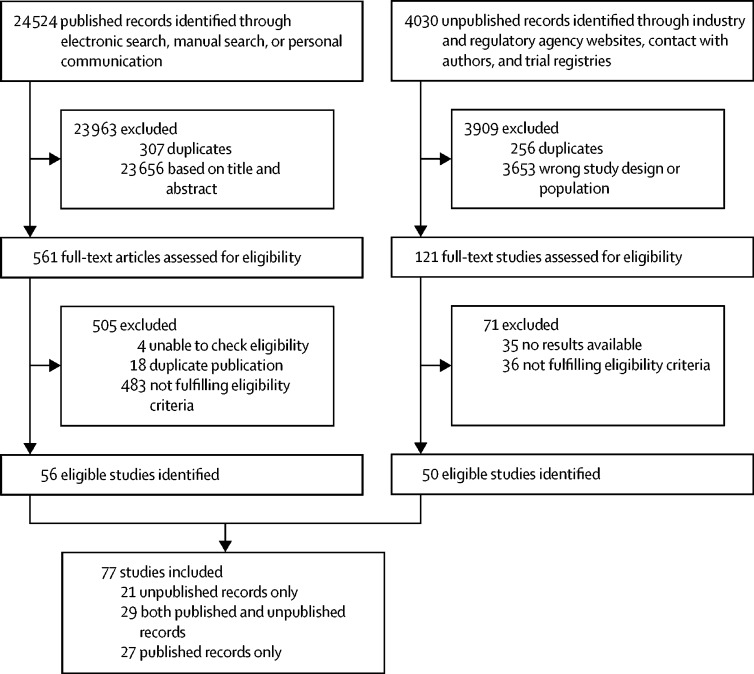
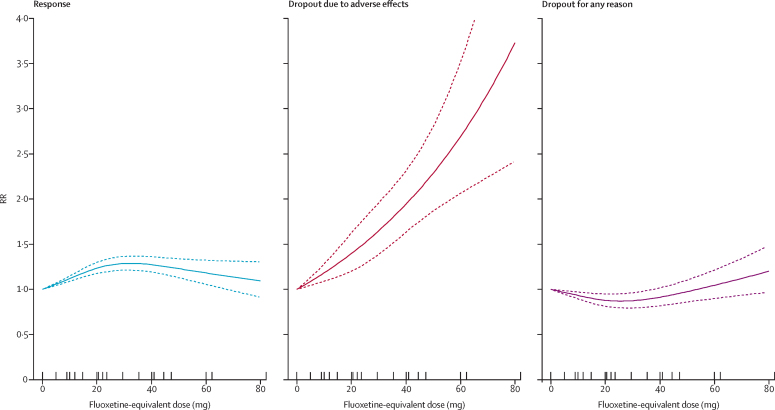
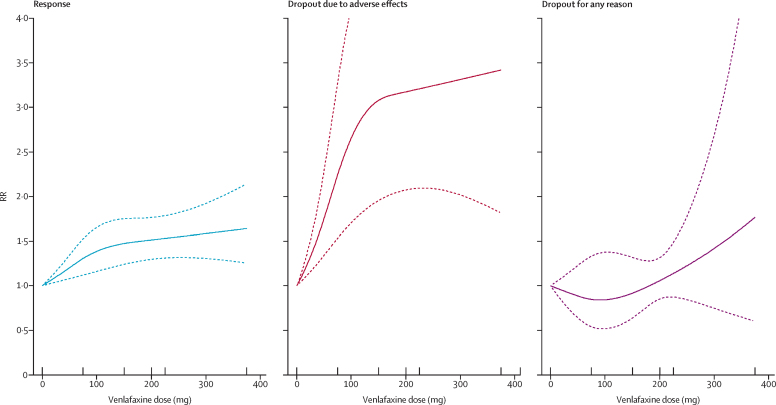
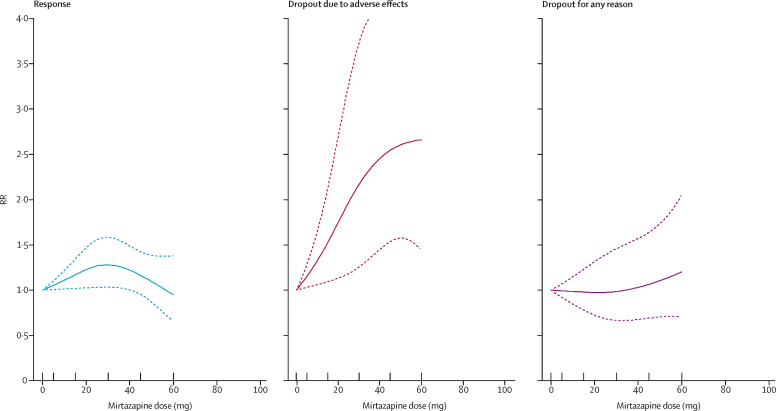
BACKGROUND: Depression is the single largest contributor to non-fatal health loss worldwide. Second-generation antidepressants are the first-line option for pharmacological management of depression. Optimising their use is crucial in reducing the burden of depression; however, debate about their dose dependency and their optimal target dose is ongoing. We have aimed to summarise the currently available best evidence to inform this clinical question. METHODS: We did a systematic review and dose-response meta-analysis of double-blind, randomised controlled trials that examined fixed doses of five selective serotonin reuptake inhibitors (SSRIs; citalopram, escitalopram, fluoxetine, paroxetine, and sertraline), venlafaxine, or mirtazapine in the acute treatment of adults (aged 18 years or older) with major depression, identified from the Cochrane Central Register of Controlled Trials, CINAHL, Embase, LILACS, MEDLINE, PsycINFO, AMED, PSYNDEX, websites of drug licensing agencies and pharmaceutical companies, and trial registries. We imposed no language restrictions, and the search was updated until Jan 8, 2016. Doses of SSRIs were converted to fluoxetine equivalents. Trials of antidepressants for patients with depression and a serious concomitant physical illness were excluded. The main outcomes were efficacy (treatment response defined as 50% or greater reduction in depression severity), tolerability (dropouts due to adverse effects), and acceptability (dropouts for any reasons), all after a median of 8 weeks of treatment (range 4-12 weeks). We used a random-effects, dose-response meta-analysis model with flexible splines for SSRIs, venlafaxine, and mirtazapine. FINDINGS: 28 554 records were identified through our search (24 524 published and 4030 unpublished records). 561 published and 121 unpublished full-text records were assessed for eligibility, and 77 studies were included (19 364 participants; mean age 42·5 years, SD 11·0; 7156 [60·9%] of 11 749 reported were women). For SSRIs (99 treatment groups), the dose-efficacy curve showed a gradual increase up to doses between 20 mg and 40 mg fluoxetine equivalents, and a flat to decreasing trend through the higher licensed doses up to 80 mg fluoxetine equivalents. Dropouts due to adverse effects increased steeply through the examined range. The relationship between the dose and dropouts for any reason indicated optimal acceptability for the SSRIs in the lower licensed range between 20 mg and 40 mg fluoxetine equivalents. Venlafaxine (16 treatment groups) had an initially increasing dose-efficacy relationship up to around 75-150 mg, followed by a more modest increase, whereas for mirtazapine (11 treatment groups) efficacy increased up to a dose of about 30 mg and then decreased. Both venlafaxine and mirtazapine showed optimal acceptability in the lower range of their licensed dose. These results were robust to several sensitivity analyses. INTERPRETATION: For the most commonly used second-generation antidepressants, the lower range of the licensed dose achieves the optimal balance between efficacy, tolerability, and acceptability in the acute treatment of major depression. FUNDING: Japan Society for the Promotion of Science, Swiss National Science Foundation, and National Institute for Health Research.
Overview
The claims and statistics of this paper haven’t been checked yet.
Free: it reads the open-access text and checks the first 5 claims that cite a source we can check. Create a free account to check every claim.
Integrity signals
Registry
Cites
Statistics
Figures
Verification
Claims the paper makes
The claims and statistics of this paper haven’t been checked yet.
Free: it reads the open-access text and checks the first 5 claims that cite a source we can check. Create a free account to check every claim.
Claims other papers make about this one
Each is checked against this paper’s own text: does it say what the citing paper says it does?
The source backs part of the claim, not all of it — or backs it for a different population, condition or comparison.
In the citing paper
“Common treatment strategies in patients with depression for whom antidepressant treatment has not been effective include increasing the antidepressant dose or switching to a different antidepressant”
From The relationship between dose and serotonin transporter occupancy of antidepressants—a systematic review (2022) · cites this paper as [4]
Experimental — accuracy not yet measuredThe source backs part of the claim, not all of it — or backs it for a different population, condition or comparison.
In the citing paper
“such strategies may, however, also largely be ineffective [4–7].”
From The relationship between dose and serotonin transporter occupancy of antidepressants—a systematic review (2022) · cites this paper as [4]
Experimental — accuracy not yet measuredThe cited source says what the claim attributes to it.
In the citing paper
“Other recent meta-analyses for acute depression reported a correlation between antidepressant dosage or the type of antidepressant and efficacy [3, 4].”
From Relapse and its modifiers in major depressive disorder after antidepressant discontinuation: meta-analysis and meta-regression (2023) · cites this paper as [3]
In the citing paper
“It is likely that inequality may impact on depression through several different mechanisms - one such pathway being lack of access to financial resources, making it difficult for women to leave relationships where there is intimate partner violence. 479-481”
From Time for united action on depression: a Lancet–World Psychiatric Association Commission (2022) · cites this paper as [481]
In the citing paper
“there is a limited benefit associated with increasing doses of SSRIs above the lower range of the licensed dose in general, whether using a fixed dosing regimen [4, 5], a flexible dosing regimen [46], or as a second-step strategy in patients not responding to standard dosing [6, 45].”
From The relationship between dose and serotonin transporter occupancy of antidepressants—a systematic review (2022) · cites this paper as [4]
2 more claims about this paper
Create a free account to see every claim other papers make about this one.
Self-check
Percentages, sums and reported differences re-computed from the paper’s own numbers.
The self-check needs the paper’s full text.
Citations
Cites
Preferred Reporting Items for Systematic Reviews and Meta-Analyses: the PRISMA statement
Moher, D., Liberati, A., Tetzlaff, J., Altman, D. G., & for the PRISMA Group (2009) · BMJ · doi:10.1136/bmj.b2535 · Cited by 83,823
Preferred Reporting Items for Systematic Reviews and Meta-Analyses: The PRISMA Statement
Moher, D., Liberati, A., Tetzlaff, J., Altman, D. G., & The PRISMA Group (2009) · PLoS Medicine · doi:10.1371/journal.pmed.1000097 · Cited by 64,042
Preferred reporting items for systematic reviews and meta-analyses: the PRISMA Statement.
(2009) · PubMed Central · Cited by 44,859
Hamilton, M. (1960) · Journal of Neurology, Neurosurgery & Psychiatry · doi:10.1136/jnnp.23.1.56 · Cited by 32,817
Wang, G., Ma, R., Qiao, G., Wada, K., Aizawa, Y., & Satoh, T. (2015) · Integrative Medicine International · doi:10.1159/000368408 · Cited by 18,657
A new depression scale designed to be sensitive to change
Montgomery, S. A., & Åsberg, M. (1979) · British Journal of Psychiatry · doi:10.1192/bjp.134.4.382 · Cited by 13,962
Cipriani, A., Furukawa, T. A., Salanti, G., Chaimani, A., Atkinson, L. Z., Ogawa, Y., Leucht, S., Ruhe, H. G., Turner, E. H., Higgins, J. P. T., et al. (2018) · The Lancet · doi:10.1016/s0140-6736(17)32802-7 · Cited by 3,541
Self-citationPRACTICE GUIDELINE FOR THE Treatment of Patients With Major Depressive Disorder
Gelenberg, A. J., Freeman, P. B., Markowitz, J. C., Rosenbaum, J. F., Thase, M. E., Trivedi, M. H., & Rhoads, R. S. (2010) · Cited by 1,521
Farde, L. (1992) · Archives of General Psychiatry · doi:10.1001/archpsyc.1992.01820070032005 · Cited by 1,419
Research works printed but not linked: 1
- NICE Depression: the treatment and management of depression in adults (partial update of NICE clinical guideline 23) 2009 National Institute for Health and Clinical Excellence London 31886986 NICE. Depression: the treatment and management of depression in adults (partial update of NICE clinical guideline 23). London: National Institute for Health and Clinical Excellence, 2009.
Cited by
Items 101–200 of 323
Trinh, N. T., Nordeng, H., Bandoli, G., Palmsten, K. K., Eberhard‐Gran, M., & Lupattelli, A. (2022) · Clinical Epidemiology · doi:10.2147/clep.s379370 · Cited by 13
“Second, we performed sensitivity analysis assuming consumption of two DDDs per day as suggested by previous work, if the patient filled a package with unit strength = DDD (eg, tablets of 10 mg escitalopram).(22,32,33) The main analysis assumed consumption of one DDD per day if the standard unit strength of the dispens…”
MethodZhou, S., Li, P., Lyu, X., Lai, X., Liu, Z., Zhou, J., Liu, F., Tao, Y., Zhang, M., Yu, X., et al. (2024) · Chinese Medical Journal · doi:10.1097/cm9.0000000000003138 · Cited by 13
“This analysis, including a larger new dataset as well as the largest dataset of RCTs, [4] was based on the updated trials that were conducted in the recent years.”
Wada, M., Nakajima, S., Taniguchi, K., Honda, S., Mimura, Y., Takemura, R., Thorpe, K. E., Tsugawa, S., Tarumi, R., Moriyama, S., et al. (2024) · Brain stimulation · doi:10.1016/j.brs.2024.12.1474 · Cited by 15
Chen, M., Qin, D., Huang, S., Tang, T., & Zheng, H. (2021) · Neurogastroenterology & Motility · doi:10.1111/nmo.14107 · Cited by 14
Liang, C., Chen, P., Tang, Y., Zhang, C., Lei, N., Luo, Y., Duan, S., & Zhang, Y. (2022) · Frontiers in Psychiatry · doi:10.3389/fpsyt.2022.880058 · Cited by 14
Ye, Y., Wang, C., Lan, X., Li, W., Fu, L., Zhang, F., Liu, H., Wu, K., Zhou, Y., & Ning, Y. (2022) · NeuroImage Clinical · doi:10.1016/j.nicl.2022.103230 · Cited by 13
Johnson, C. F. A., & Earle-Payne, K. (2022) · International Journal of Clinical Pharmacy · doi:10.1007/s11096-022-01486-5 · Cited by 13
Hart, X. M., Amann, F., Brand, J., Eichentopf, L., & Gründer, G. (2023) · Pharmacopsychiatry · doi:10.1055/a-2039-2829 · Cited by 12
“Dose-response meta-analyses report conflicting results, but, in general, do not support high dose ranges for SSRIs [10, 11].”
Shariff, J. A., Abud, D. G., Bhave, M. B., & Tarnow, D. P. (2023) · Journal of Oral Implantology · doi:10.1563/aaid-joi-d-22-00170 · Cited by 12
Low SSRI dosing in clinical practice—a register‐based longitudinal study
Lisinski, A., Hieronymus, F., Eriksson, E., & Wallerstedt, S. M. (2021) · Acta Psychiatrica Scandinavica · doi:10.1111/acps.13275 · Cited by 13
Hart, X. M., Spangemacher, M., Defert, J., Uchida, H., & Gründer, G. (2024) · Therapeutic Drug Monitoring · doi:10.1097/ftd.0000000000001142 · Cited by 14
Li, B., Guo, S., Xu, H. Y., Zhou, Y., Zhang, M., Wang, J., Chen, Y., Chen, H., Song, J., & Tan, S. (2024) · Journal of Affective Disorders · doi:10.1016/j.jad.2024.06.102 · Cited by 18
Yang, X., Fang, S., Lyu, W., Hu, Y., Xu, H., Jiang, X., Zhao, Y., Zhang, Y., Li, J., & Kuang, W. (2024) · Psychiatry and Clinical Neurosciences · doi:10.1111/pcn.13709 · Cited by 15
“54 Our study suggested that vortioxetine may potentially provide increased ef fi cacy beyond the current maximum licensed dosage without signi fi cant effects on its acceptability, tolerability, and safety.”
Gougoulaki, M., Lewis, G., Nutt, D. J., Peters, T. J., Wiles, N., & Lewis, G. (2021) · Journal of Psychopharmacology · doi:10.1177/0269881120986417 · Cited by 16
“Participants randomized to citalopram were prescribed 20 mg daily, which has been shown to be sufficient dosage for treatment (Furukawa et al., 2019).”
BackgroundMethodInfluentialPerspectives in Psychopharmacology
(2021) · FOCUS The Journal of Lifelong Learning in Psychiatry · doi:10.1176/appi.focus.19106 · Cited by 11
Kasper, S. F., Volz, H., Möller, H., Schläfke, S., Klement, S., Anghelescu, I., & Seifritz, E. (2024) · European Archives of Psychiatry and Clinical Neuroscience · doi:10.1007/s00406-024-01783-2 · Cited by 12
“…for the treatment of mild-to-moderate MDD in the majority of cases, and that a ceiling effect for efficacy occurs already at the ‘standard’ dose (e. g., [37]), whereas a dose increase beyond the ‘standard’ dose may lead to a significant increase of treatment withdrawals due to adverse effects [38].”
Qin, Y., Chen, H., Liu, F., Zou, T., Jin, K., Teng, Z., Liu, J., Yuan, H., Yang, J., Huang, C., et al. (2025) · Molecular Psychiatry · doi:10.1038/s41380-025-03183-x · Cited by 13
“Linear mixed models also revealed signi fi cant main effects of the interaction between time and group on the DSHI-AR-behavior subscale score (F = 5.2, df = 3, 31.0, p = 0.005) and DSHI-AR-severity subscale score (F = 3.3, df = 3, 32.4, p = 0.031).”
InfluentialNodari, C. H., Quadros, N. D. D., Chiarentin, R., da Silva, F. P., Morisso, F. D. P., Charão, M. F., Fleck, J. D., de Mattos, C. B., Betti, A. H., & Verza, S. G. (2022) · Pharmacological Reports · doi:10.1007/s43440-022-00412-w · Cited by 10
“In addition, optimizing the use of antidepressants is crucial for treatment and there is an ongoing debate about dose dependency, the optimal dose response, and risk of treatment resistance [1, 5].”
BackgroundSchneider, C., Breilmann, J., Reuter, B., Becker, T. M., & Kösters, M. (2021) · Acta Psychiatrica Scandinavica · doi:10.1111/acps.13293 · Cited by 14
Tveit, K., Hermann, M., Waade, R. B., Nilsen, R. M., Wallerstedt, S. M., & Molden, E. (2020) · Drugs & Aging · doi:10.1007/s40266-020-00784-9 · Cited by 13
Evaluation of Emotional Adverse Effects of Antidepressants: A Follow-up Study
Aşçıbaşı, K., Çökmüş, F. P., Dikici, D. S., Özkan, H. M., Alçı, D., Altunsoy, N., Kuru, E., Yüzeren, S., & Aydemır, Ö. (2020) · Journal of Clinical Psychopharmacology · doi:10.1097/jcp.0000000000001300 · Cited by 35
“Treatment planning was decided according to various meta-analysis and depression treatment guidelines.(8,9) Oxford Questionnaire on the Emotional Side-effects of Antidepressants was applied to the patients at the 8th and 16th weeks.”
MethodHou, M., Wang, S., Yu, D., Lu, X., Zhao, X., Chen, Z., & Yan, C. (2022) · Frontiers of Medicine · doi:10.1007/s11684-021-0896-8 · Cited by 10
“The pharmacological inhibition or genetic ablation of neurogenesis can block the effects of fluoxetine, indicating that immature granule cells are involved in the antidepressant effect of SSRIs [37].”
BackgroundShi, Y., Li, W., Chen, C., Yuan, X., Yang, Y., Wang, S., Liu, Z., Geng, F., Wang, J., Luo, X., et al. (2023) · Psychiatry Investigation · doi:10.30773/pi.2023.0013 · Cited by 11
“Doses of antipsychotics, antidepressants, benzodiazepines, and hypnotics were converted using chlorpromazine, 45 fluoxetine, 46 and diazepam equivalents, 47 respectively.”
MethodKamp, C. B., Petersen, J. J., Faltermeier, P., Juul, S., Sillassen, C. D. B., Siddiqui, F., Andersen, R. K., Moncrieff, J., Horowitz, M. A., Hengartner, M. P., et al. (2025) · BMC Psychiatry · doi:10.1186/s12888-024-06396-6 · Cited by 15
Ju, Y., Ou, W., Chen, H., Yang, L., Long, Y., Liang, H., Xi, Z., Huang, M. H., Chen, W., Lv, G., et al. (2025) · BMC Medicine · doi:10.1186/s12916-025-03951-0 · Cited by 11
“Moreover, to explore the impact of initial antidepressant dosage on the augmentation effect of agomelatine, we converted the antidepressant dosages to fluoxetine 20 mg equivalents, as described by previous research [43, 44].”
Terao, I., & Kodama, W. (2025) · Journal of Psychopharmacology · doi:10.1177/02698811251340901 · Cited by 15
“As observed with antidepressants and antipsychotics (Furukawa et al., 2019; Leucht et al., 2020), the relationship between dose and efficacy may follow a bell-shaped rather than linear curve.”
Ameringen, M. V., Fineberg, N. A., Ravindran, A. V., Arnold, P. D., Beaulieu, S., Brakoulias, V., Brietzke, E. M., Dowlati, Y., Drummond, L. M., Ferretti, C. J., et al. (2026) · Journal of Psychiatric Research · doi:10.1016/j.jpsychires.2025.12.039 · Cited by 15
Wang, X., Ren, H., Zhang, Z., Zhong, X., Luo, Q., Huang, Y., & Qiu, H. (2024) · Asian Journal of Psychiatry · doi:10.1016/j.ajp.2024.103998 · Cited by 14
Kong, X., Zhang, P., Xiao, F., Fang, S., Ji, X., Wang, X., Lin, P., Li, H., Yao, S., & Wang, X. (2022) · Journal of Affective Disorders · doi:10.1016/j.jad.2022.04.120 · Cited by 13
Zhou, H., Xiong, T., Dai, Z., Zou, H., Wang, X., Tang, H., Huang, Y., Sun, H., You, W., Yao, Z., et al. (2023) · European Archives of Psychiatry and Clinical Neuroscience · doi:10.1007/s00406-023-01628-4 · Cited by 10
“In the MDD group, the mean fluoxetine-equivalent dose was 28.5 (1.2) mg/d, as calculated according to a recent study [48].”
InfluentialTsuda, B., Pate, S. C., Tye, K. M., Siegelmann, H. T., & B, T. J. S. A. (2021) · bioRxiv (Cold Spring Harbor Laboratory) · doi:10.1101/2021.05.31.446462 · Cited by 9
Pharmacological Mechanism and Drug Research Prospects of Ginsenoside Rb1 as an Antidepressant
Zhuang, S., Shi, F., Cannella, N., Ubaldi, M., Ciccocioppo, R., Li, H., & Qin, D. (2025) · Antioxidants · doi:10.3390/antiox14020238 · Cited by 12
“These have fewer side effects than first-generation antidepressants [12–14].”
Burning Mouth Syndrome: Unlocking the Future of Pharmacological Treatment
Adamo, D. (2025) · Journal of Oral Pathology and Medicine · doi:10.1111/jop.13641 · Cited by 11
Liu, Y., Yu, Z. Y., Ye, X., Zhang, J., Hao, X., Gao, F., Yu, J., & Zhou, C. (2024) · International Journal of Clinical Pharmacy · doi:10.1007/s11096-024-01729-7 · Cited by 8
“A previous study has suggested that the efficacy benefit of venlafaxine is more pronounced, and the risk of adverse reactions is lower within the dose range of 75–150 mg [20].”
Sun, Y., Liu, X., Li, Y., Zhi, Q., & Xia, Y. (2024) · Frontiers in Psychiatry · doi:10.3389/fpsyt.2024.1485878 · Cited by 10
Which antidepressant doses are optimal?
Hieronymus, F. (2019) · The Lancet Psychiatry · doi:10.1016/s2215-0366(19)30221-4 · Cited by 8
Vanicek, T., Reed, M. B., Unterholzner, J., Klöbl, M., Godbersen, G. M., Handschuh, P. A., Spurny‐Dworak, B., Ritter, V., Gryglewski, G., Kraus, C., et al. (2022) · Journal of Affective Disorders · doi:10.1016/j.jad.2021.12.135 · Cited by 11
Wu, Z., Wang, G., Wang, H., Xiao, L., Wei, Y., & Yang, C. (2020) · Brain Research Bulletin · doi:10.1016/j.brainresbull.2020.02.007 · Cited by 9
An epidemic or a plague of common mental disorders?
Furukawa, T. A. (2019) · Acta Psychiatrica Scandinavica · doi:10.1111/acps.13108 · Cited by 8
“The number of people living with depression increased by around 18% between 2005 and 2015, and now affects 322 million people or about 4% of the world’s entire population’, just to quote one recent case of mine (1).”
BackgroundSelf-citationZheng, S., Shen, Y., Geng, F., Ye, M., Song, S., Wang, R., Zhang, S., Ou, Y., & Zhou, X. (2025) · European Journal of Psychotraumatology · doi:10.1080/20008066.2025.2488558 · Cited by 9
“In addition, we converted the dose of anti-depressant medication used by the patient at discharge to fluoxetine equivalents by the internationally recognised method of defined daily doses (DDDs) (Furukawa et al., 2019).”
Machine learning prediction will be part of future treatment of depression
Lennon, M. J., & Harmer, C. J. (2023) · Australian & New Zealand Journal of Psychiatry · doi:10.1177/00048674231158267 · Cited by 9
Rethinking the medication management of major depression
Mann, J. J., & Rizk, M. (2023) · Expert Review of Neurotherapeutics · doi:10.1080/14737175.2023.2190886 · Cited by 10
Paton, C., Anderson, I. M., Cowen, P. J., Delgado, O., & Barnes, T. R. E. (2020) · Therapeutic Advances in Psychopharmacology · doi:10.1177/2045125320930492 · Cited by 8
Self-citationNeglected but not negligible aspects of antidepressants and their availability in bipolar depression
Terao, T. (2021) · Brain and Behavior · doi:10.1002/brb3.2308 · Cited by 7
“However, recentmeta-analyses have disproved the existence of a linear relationship (Braun et al., 2020; Dold et al., 2017; Furukawa et al., 2019).”
BackgroundZhan, D., Jin, T., Zhao, H., Zhu, H., Fu, J., Zhang, X., Sun, W., Zhang, X., & Chen, P. (2026) · Journal of Affective Disorders · doi:10.1016/j.jad.2025.121120 · Cited by 7
Huang, C., Yuan, F., Yan, F., Wang, T., Cai, D.-B., Zhang, Z., Li, X., & Wang, J. (2024) · BMJ Open · doi:10.1136/bmjopen-2024-084130 · Cited by 7
“8 9 Antidepressants, specifically selective serotonin reuptake inhibitors, 10 are pivotal in treating LLD.”
BackgroundAdamo, D., Canfora, F., Pecoraro, G., Leuci, S., Coppola, N., Marenzi, G., Ottaviani, G., Rupel, K., Pellegrini, L., Aria, M., et al. (2025) · Current Neuropharmacology · doi:10.2174/1570159x22999240729103717 · Cited by 10
“All antidepressants were administered at a fixed dose for 52 weeks; the dosage of antidepressants was chosen in line with the optimal dosage considered in the treatment of MDD in terms of efficacy, acceptability, and tolerability [35].”
The use of sequential pharmacotherapy for the treatment of acute major depression: a scoping review
Jones, B. D. M., Husain, M. I., & Mulsant, B. H. (2021) · Expert Opinion on Pharmacotherapy · doi:10.1080/14656566.2021.1878144 · Cited by 7
“etine equivalents), the dose–response relationship was flat or decreasing with increased adverse effects [26].”
BackgroundGenistein, a Natural Isoflavone, Alleviates Seizure-Induced Respiratory Arrest in DBA/1 Mice
Guo, J., Min, D., & Feng, H.-J. (2021) · Frontiers in Neurology · doi:10.3389/fneur.2021.761912 · Cited by 6
“However, it was reported that selective serotonin reuptake inhibitors (SSRIs) are not dosedependent when used as antidepressants (44, 45), which may be due to complicated factors that include autoreceptor regulation (46, 47).”
BackgroundHøstmælingen, A., Ulvenes, P., Nissen‐Lie, H. A., Eielsen, M., & Wampold, B. E. (2021) · Clinical Psychology & Psychotherapy · doi:10.1002/cpp.2561 · Cited by 7
Høstmælingen, A., Ulvenes, P., Nissen‐Lie, H. A., Eielsen, M., & Wampold, B. E. (2022) · Journal of Counseling Psychology · doi:10.1037/cou0000572 · Cited by 5
Depression and Anxiety Disorders
Karamustafalıoğlu, O., & Yumrukçal, H. (2025) · Wiley eBooks · doi:10.1002/9781119870203.mpg003.pub2 · Cited by 8
Sheng, H.-Y., Liu, W., Liu, Y., Han, Q.-R., Chen, D.-Y., Zhang, L., Chu, X.-R., He, S., Li, J., Zhang, Z.-Q., et al. (2025) · The Journal of Headache and Pain · doi:10.1186/s10194-025-02110-3 · Cited by 6
“Selective serotonin reuptake inhibitors, while remaining the first-line option for pharmacological management of depression [38], have a slow action onset and are ineffective for a considerable number of patients [39].”
Гареева, А. Э., Borodina, L., Pozdnyakov, S. A., & Тимербулатов, И. Ф. (2024) · S S Korsakov Journal of Neurology and Psychiatry · doi:10.17116/jnevro202412406126 · Cited by 6
The dose-response relationship of vortioxetine on major depressive disorder: an umbrella review
Wang, P., Wang, W., Liu, Y., Li, W., Hu, J., Su, Y., Li, J., Li, N., & Si, T. (2024) · Psychiatry Research · doi:10.1016/j.psychres.2024.116118 · Cited by 6
“…relationships across the entire therapeutic dose range for SSRIs (Selective Serotonin Reup-take Inhibitors) (Bollini et al. 1999; Braun et al. 2020; Furukawa et al. 2019), SNRIs (Serotonin-Norepinephrine Reuptake Inhibitors) (Rink et al. 2022; Furukawa et al. 2019), and NaSSAs (Noradrenergic and…”
InfluentialShen, R., Wang, J., Zhao, Y., Dang, Z., Zhang, K., Li, M., Yang, Q., & Gao, L. (2025) · International Journal of Biological Macromolecules · doi:10.1016/j.ijbiomac.2025.140445 · Cited by 6
Kotake, K., So, R., Hashimoto, N., Imai, E., Kaneko, T., Banno, M., & Furukawa, Y. (2025) · CNS Drugs · doi:10.1007/s40263-025-01188-2 · Cited by 6
“Dose–response meta-analysis can draw dose-response curve mathematically [21], and has been utilized to identify optimal target doses in other clinical fields (antipsychotic drugs and selective serotonin reuptake inhibitors) [22, 23].”
Shang, J., Xu, J., Xie, T., Ji, J. S., Tang, X., Wang, J., Wang, T., Liu, Y., Zhu, D., & Huang, C. (2025) · Environment International · doi:10.1016/j.envint.2025.109523 · Cited by 7
Impact of age on optimal dose of antidepressants
Hashimoto, K. (2020) · EClinicalMedicine · doi:10.1016/j.eclinm.2019.12.003 · Cited by 6
“In contrast, off-label use of the N-methyl-D-aspartate receptor (NMDAR) antagonist (R,S)-ketamine in treatment-resistant patients with depression is common in the United States (US) because ketamine has rapid-acting and sustained antidepressant effects in treatmentresistant patients with MDD or bipolar disorder.”
BackgroundInfluentialJin, S.-Y., Zhang, J.-Z., Sun, R.-H., Jiang, C., Wang, J., & Zhou, Z. (2022) · Frontiers in Psychiatry · doi:10.3389/fpsyt.2022.1003491 · Cited by 7
Jiang, W., Yao, J., Wang, Y., Su, S., Zheng, Z., Yang, Y., & Qiu, J. (2025) · General Psychiatry · doi:10.1136/gpsych-2024-101774 · Cited by 8
Ren, H., Wang, X., Zhang, Z., Zhong, X., Luo, Q., Qiu, H., & Huang, Y. (2024) · Child and Adolescent Psychiatry and Mental Health · doi:10.1186/s13034-023-00701-z · Cited by 7
Shi, Y., Zhu, J., Hou, C., Li, X., & Tong, Q. (2024) · Aging · doi:10.18632/aging.205930 · Cited by 4
Effects of sMRI-guided rTMS on brain function and structure in major depressive disorder
Guo, P., Liu, X., Sun, Y., Zhi, Q., & Xia, Y. (2025) · Journal of Affective Disorders · doi:10.1016/j.jad.2025.119772 · Cited by 6
Alsoqih, N. S., Elmorsy, E. A., Abu‐Khudir, R., Saber, S., Keshk, N., Elnaghy, F., Hamad, R. S., El-kott, A. F., Negm, S., AlShehri, M. A., et al. (2025) · The FASEB Journal · doi:10.1096/fj.202501829rr · Cited by 6
“At about 75 mg daily, venlafaxine works chiefly as an SSRI, selectively inhibiting SERT and increasing the amount of serotonin within the synaptic cleft [103].”
Sappani, M., Islam, S., D'Souza, R., & Beyene, J. (2025) · Journal of Clinical Epidemiology · doi:10.1016/j.jclinepi.2025.111981 · Cited by 4
Brexpiprazole versus placebo or other antidepressive agents for treating depression
Ralovska, S., Koychev, I. G., Marinov, P., Furukawa, T. A., Mulsant, B. H., & Cipriani, A. (2023) · Cochrane Database of Systematic Reviews · doi:10.1002/14651858.cd013866.pub2 · Cited by 4
Self-citationRapid response to antidepressants and correlation with response and remission after acute treatment
Fernandes, F. D. S., Pimentel, F. C., Carneiro, A. M., & Moreno, R. A. (2024) · Journal of Affective Disorders Reports · doi:10.1016/j.jadr.2024.100725 · Cited by 7
Telemedication Reviews to Optimize Medication Prescription for Older People in Nursing Homes
Bérard, C., Mascio, T. D., Montaleytang, M., Couderc, A., Villani, P., Honoré, S., Daumas, A., & Corréard, F. (2021) · Telemedicine Journal and e-Health · doi:10.1089/tmj.2021.0288 · Cited by 4
Gan, Y., Huang, S., Luo, M.-Q., Chen, M., & Zheng, H. (2022) · Acupuncture in Medicine · doi:10.1177/09645284221085280 · Cited by 6
Surface-regulated injection dose response of ultrasmall luminescent gold nanoparticles
Zhu, J., Zhao, Z., Chen, H., Chen, X., & Liu, J. (2022) · Nanoscale · doi:10.1039/d2nr01784a · Cited by 4
Shi, W., Ren, Y., Chen, J., & Ye, X. (2022) · Advances in Wound Care · doi:10.1089/wound.2022.0076 · Cited by 5
Precision Medicine in Antidepressants Treatment
Tsermpini, E. E., Serretti, A., & Dolžan, V. (2023) · Handbook of experimental pharmacology · doi:10.1007/164_2023_654 · Cited by 4
Zhuang, Q., Wang, J., Li, X., Zhang, X., & Wang, Y. (2023) · The International Journal of Neuropsychopharmacology · doi:10.1093/ijnp/pyad024 · Cited by 4
“Consequently, relatively few effective molecular targets have been identified for the clinical diagnosis and treatment of MDD (Furukawa et al., 2019).”
BackgroundDavid, A., Fernandez, A., Ménard, M.-L., Dor, E., Dugand, N., Verstuyft, C., Askenazy-Gittard, F., & Thümmler, S. (2019) · Neuropsychiatrie de l Enfance et de l Adolescence · doi:10.1016/j.neurenf.2019.10.002 · Cited by 4
Zhang, C., Yuan, Y., Han, X., Yang, L., Zeng, X., Yang, F., Lu, Z., Wang, C., Deng, H., Zhao, J., et al. (2020) · Frontiers in Psychiatry · doi:10.3389/fpsyt.2020.00566 · Cited by 5
Pharmacological Profile of Prescriptions Containing Antidepressants
Mohan, P., Singh, H., Sinha, S., & Prabhakaran, K. (2021) · Journal of Marine Medical Society · doi:10.4103/jmms.jmms_85_20 · Cited by 6
Mirtazapine for agitation in dementia: moving forward
Lanctôt, K. L., & Herrmann, N. (2021) · The Lancet · doi:10.1016/s0140-6736(21)01421-5 · Cited by 4
Optimal dosing of antidepressant drugs
Burchi, E., & D, M. F. M. (2019) · The Lancet Psychiatry · doi:10.1016/s2215-0366(19)30303-7 · Cited by 4
Lukow, P. B., Lowther, M., Pike, A. C., Yamamori, Y., Chavanne, A. V., Gormley, S., Aylward, J., McCloud, T., Goble, T., Rodriguez-Sanchez, J., et al. (2024) · Journal of Psychopharmacology · doi:10.1177/02698811241286773 · Cited by 3
“Thus, 10 mg was chosen to employ a dose of clinical efficacy, while limiting side effects which have been found to increase with higher dosages of antidepressants (Furukawa et al., 2019).”
MethodZhong, L., Hu, L., Li, Y., Wang, T., Chen, S., Gao, Y., Yuan, Y., & Shao, H. (2024) · Journal of Psychopharmacology · doi:10.1177/02698811241278779 · Cited by 3
“In treating MDD, selective serotonin reuptake inhibitors (SSRIs) and serotonin-norepinephrine reuptake inhibitors (SNRIs) are widely recognized for their broad safety profiles and therapeutic efficacy (Furukawa et al., 2019).”
Sun, N., Liu, Z., Sun, L., Sun, F., Sun, L., Zhang, J., Yang, R., Yao, G., & Liu, Y. (2025) · Frontiers in Psychiatry · doi:10.3389/fpsyt.2025.1557451 · Cited by 4
Uncovering safety signals of duloxetine: Real-world evidence from the FAERS database
Liu, D., Li, N., Liu, L., Qiu, L., Zhou, Z., & Wu, J. (2025) · Journal of Affective Disorders · doi:10.1016/j.jad.2025.119517 · Cited by 5
CHALLA, T., Akula, K., Arasavilli, K., Baratam, M., Guntamukkala, J., Malluri, N., Patnana, M., Chintala, T., & Raghunadha Gupta, C. (2024) · Palestinian medical and pharmaceutical journal/Palestinian medical & pharmaceutical journal · doi:10.59049/2790-0231.10.1.2277 · Cited by 3
Pérez, V., Puigdemont, D., de Diego-Adeliño, J., Elices, M., Leal, I., Cabello, M., Rodríguez–Jiménez, R., Álvarez-Mon, M. Á., Fernandez, L. G., Aguilar, E. J., et al. (2025) · The British Journal of Psychiatry · doi:10.1192/bjp.2025.13 · Cited by 4
Wen, S., Yan, Y., Shao, J., Xie, H., Wang, M., Dou, Y., Liu, D., Xiao, Y., & Ma, X. (2025) · Translational Psychiatry · doi:10.1038/s41398-025-03751-3 · Cited by 7
“The majority of previous studies on the dose ‒ response relationship between antidepressants and adverse effects have focused on overall drug tolerance, with relatively few studies conducted on the relationship with speci fi c adverse effects [17].”
Lisinski, A., Hieronymus, F., Nilsson, S., & Eriksson, E. (2022) · Translational Psychiatry · doi:10.1038/s41398-022-01882-5 · Cited by 3
“While the dose–response curve for the SSRIs have often been described as flat [23, 24], and while most trial-based metaanalyses have included all SSRI doses as if they be equally effective [16, 25], using the same data set as in the present study, we have previously reported [6] 50 mg of sertraline, 20 mg of citalopra…”
ResultA framework for inferring and analyzing pharmacotherapy treatment patterns
Rush, E. N., Özmen, Ö., Kim, M., Ortegon, E. R., Jones, M., Park, B. H., Pizer, S. D., Trafton, J. A., Brenner, L. A., Ward, M. C., et al. (2024) · BMC Medical Informatics and Decision Making · doi:10.1186/s12911-024-02469-4 · Cited by 5
“We normalize all drug doses into their fluoxetine equivalent so that we can compare prescription patterns across drugs.”
MethodLow-dose venlafaxine-induced erythema multiforme: a case report
Rezapour, M., & Mesgarankarimi, A. (2025) · Journal of Medical Case Reports · doi:10.1186/s13256-025-05209-y · Cited by 3
“Optimal doses for achieving a balance between efficacy and tolerability range from 75 to 150 mg daily, with higher doses increasing adverse effects without a corresponding increase in efficacy [4].”
Liu, Y., Xu, F., Lv, Z., Li, K., & Dong, X. (2025) · Environmental Research · doi:10.1016/j.envres.2025.122192 · Cited by 3
Özdemir, F., Dural, E., Baskak, N. S., Kır, Y., Başkak, B., & Suzen, H. S. (2020) · Combinatorial Chemistry & High Throughput Screening · doi:10.2174/1386207323666200402081512 · Cited by 3
Naltrexone for High-Dose Venlafaxine-Associated Kleptomania
Mouaffak, F. (2020) · Journal of Clinical Psychopharmacology · doi:10.1097/jcp.0000000000001194 · Cited by 3
“This “triple reuptake inhibition”(3) might be responsible for the observed increase in efficacy in higher venlafaxine doses.(4) However, dose increments are also associated with growing adverse effects.”
BackgroundWang, T., Gao, C., Li, J., Li, L., Yue, Y., Liu, X., Chen, S., Hou, Z., Yin, Y., Jiang, W., et al. (2023) · The Canadian Journal of Psychiatry · doi:10.1177/07067437231210787 · Cited by 3
O’Neill, J. R., Jameson, A., McLean, S. L., Dixon, M., Cardno, A. G., & Lawrence, C. (2024) · Journal of Psychopharmacology · doi:10.1177/02698811241239543 · Cited by 4
“Plateauing clinical response at doses lower than licensed maximums has also been noted for other psychotropics such as serotonin reuptake inhibitors (Furukawa et al., 2019; Johnson et al., 2022).”
BackgroundFerraguti, G., Francati, S., Codazzo, C., Blaconà, G., Testino, G., Angeloni, A., Fiore, M., Ceccanti, M., & Lucarelli, M. (2024) · International Journal of Molecular Sciences · doi:10.3390/ijms25158089 · Cited by 3
“It has been found that 5-HTT, a molecular target of many antidepressant drugs, plays a pivotal role in serotonergic transmission and is associated with many psychiatric diseases as well as alcohol addiction [39–41].”
BackgroundSilva, A. Á., Rodríguez–Manzo, G., Reyes, R., & Fernández‐Guasti, A. (2024) · Psychopharmacology · doi:10.1007/s00213-024-06661-2 · Cited by 4
Hu, S., Chen, K., Xu, Q., Wang, F., & Na, W.-Q. (2024) · General Hospital Psychiatry · doi:10.1016/j.genhosppsych.2024.09.001 · Cited by 3
Shi, W., Dong, J., Chen, J., & Yu, H. (2022) · International Wound Journal · doi:10.1111/iwj.14002 · Cited by 3
“The overall assessment of the study would be classified as low risk of bias if none of domains was rated as high or if less than three domains were rated as unclear.(11) In addition, the methodological quality for each pooled outcome was assessed using the Grades of Recommendation, Assessment, Development, and Evaluat…”
MethodRetractedInoue, T., Fujimoto, S., Marumoto, T., Kitagawa, T., Ishida, K., Nakajima, T., Moriguchi, Y., Fujikawa, K., & Watanabe, K. (2021) · Neuropsychiatric Disease and Treatment · doi:10.2147/ndt.s335028 · Cited by 3
“may be most effective when used at a low dose within their approved dose range, suggesting that treatment policy may need to be reconsidered in favor of an alternative antidepressant over dose uptitration.(36) Terao et al hypothesized that negative feedback by excess SSRI doses through 5-HT1A auto-receptors may accoun…”
BackgroundDampening antidepressant effects via 5‐HT 1A auto‐receptors
Terao, T. (2020) · Acta Psychiatrica Scandinavica · doi:10.1111/acps.13244 · Cited by 3
Metadata
- Authors
- Furukawa, T. A., Cipriani, A., Cowen, P. J., Leucht, S., Egger, M., & Salanti, G.
- Affiliations
- Kyoto University (JP)
- Oxford Health NHS Foundation Trust (GB)
- Warneford Hospital (GB)
- Technical University of Munich (DE)
- University of Bern (CH)
- Corresponding author
- Cipriani, Andrea
- Venue
- The Lancet Psychiatry
- Publisher
- Elsevier BV
- Published
- 2019-07
- Volume
- 6
- Issue
- 7
- Pages
- 601-609
- ISSN
- 2215-0366 (ISSN-L)
- PMC
- PMC6586944
- OpenAlex
- W2948548704
- Cited by
- 322
- References
- 30
- Citations by year
- 2026: 26 · 2025: 54 · 2024: 59 · 2023: 39 · 2022: 46 · 2021: 50 · 2020: 33 · 2019: 15
- FWCI
- 4.62
- Type
- journal article
- Language
- en
- Open access
- hybrid
- doi.org
- Licence
- cc-by
- www.elsevier.com/tdm/userlicense/1.0/ (tdm)
- www.elsevier.com/legal/tdmrep-license (tdm)
- creativecommons.org/licenses/by/4.0/ (vor)
- Locations
- The Lancet Psychiatry (publishedVersion, cc-by)
- PubMed Central (publishedVersion, cc-by)
- PubMed (publishedVersion)
- Institutional Repositories DataBase (IRDB) (submittedVersion, cc-by)
- BORIS (University Library Bern) (submittedVersion, cc-by)
- mediaTUM – the media and publications repository of the Technical University Munich (Technical University Munich) (submittedVersion, other-oa)
- mediaTUM – the media and publications repository of the Technical University Munich (Technical University Munich) (submittedVersion)
- Kyoto University Research Information Repository (Kyoto University) (submittedVersion, cc-by)
- Bristol Research (University of Bristol) (submittedVersion, cc-by)
- Funders
- NIHR Oxford Biomedical Research Centre (BRC-1215-20005)
- National Institute for Health Research (RP-2017-08-ST2-006)
- Schweizerischer Nationalfonds zur Förderung der Wissenschaftlichen Forschung (179158)
- Japan Society for the Promotion of Science (17K19808)
- Topics
- Health Sciences › Medicine › Pharmacology (medical) › Treatment of Major Depression
- Social Sciences › Psychology › Experimental and Cognitive Psychology › Anxiety, Depression, Psychometrics, Treatment, Cognitive Processes
- Health Sciences › Medicine › Psychiatry and Mental health › Mental Health Treatment and Access
- Keywords
- major depressive disorder, selective serotonin reuptake inhibitors, venlafaxine, mirtazapine, dose optimization, treatment response, tolerability, acceptability, citalopram, escitalopram, paroxetine, sertraline, fluoxetine, adverse effects
- MeSH terms
- Venlafaxine Hydrochloride, Mirtazapine, Major Depressive Disorder, Depressive Disorder, Major, Dose-Response Relationship, Drug, Double-Blind Method, Humans, Randomized Controlled Trials as Topic, Selective Serotonin Reuptake Inhibitors, Serotonin Agents
About these checks
Registry, retraction, Cites and statistics results are computed, not judged, with one exception: a printed reference that no index lists is read once by a model before it counts as a citation error. Claims are extracted by a model and kept only when their quote appears verbatim in the text; each cited source is then checked, with a model’s help, for whether it says what the claim relies on. Those verdicts can be wrong — read the claim’s quote and the cited source before relying on one.
Statistics and arithmetic are recomputed, not judged.
Confidence bands are shown only for fields calibrated on our annotated test set. None is calibrated yet, so no band is shown.
What counts as a claim ›How we measure confidence ›How we check this ›
Are you an author, or do you see a problem with this page? Request a review
Data sources
Bibliographic data: Semantic Scholar, OpenAlex, Crossref.
Contains information from the Semantic Scholar Academic Graph Datasets, made available under the ODC Attribution License (ODC-BY 1.0).
Semantic Scholar’s data is described in: Kinney, R., et al. (2023). The Semantic Scholar Open Data Platform. arXiv:2301.10140.
